Grains of sand prove people – not glaciers – transported Stonehenge rocks

Source: The Conversation – Global Perspectives – By Anthony Clarke, Research Associate, School of Earth and Planetary Sciences, Curtin University

Ask people how Stonehenge was built and you’ll hear stories of sledges, ropes, boats and sheer human determination to haul stones from across Britain to Salisbury Plain, in south-west England. Others might mention giants, wizards, or alien assistance to explain the transport of Stonehenge’s stones, which come from as far as Wales and Scotland.

But what if nature itself did the heavy lifting in transporting Stonehenge’s megaliths? In this scenario, vast glaciers that once covered Britain carried the bluestones and the Altar Stone to southern England as “glacial erratics”, or rocks moved by ice, leaving them conveniently behind on Salisbury Plain for the builders of Stonehenge.

This idea, known as the glacial transport theory, often appears in documentaries and online discussions. But it has never been tested with modern geological techniques.

Our new study, published today in Communications Earth and Environment, provides the first clear evidence glacial material never reached the area. This demonstrates the stones did not arrive through natural ice movement.

While previous research had cast doubt on the glacial transport theory, our study goes further and applies cutting-edge mineral fingerprinting to trace the stones’ true origins.

A clear mineral fingerprint

Giant ice sheets are messy, leaving behind piles of rock, scratched bedrock and carved landforms.

However, near Stonehenge, these tell-tale clues are either missing or ambiguous. And because the southern reach of ice sheets remains unclear, the glacial transport idea is open to debate.

So, if no big and obvious clues are present, could we look for tiny ones instead?

If glaciers had carried the stones all the way from Wales or Scotland, they would also have left behind millions of microscopic mineral grains, such as zircon and apatite, from those regions.

When both minerals form, they trap small amounts of radioactive uranium – which, at a known rate, will decay into lead. By measuring the ratios of both elements using a technique called U–Pb dating, we can measure the age of each zircon and apatite grain.

Because Britain’s rocks have very different ages from place to place, a mineral’s age can indicate its source. This means that if glaciers had carried stones to Stonehenge, the rivers of Salisbury Plain, which gather zircon and apatite from across a wide area, should still contain a clear mineral fingerprint of that journey.

Searching for tiny clues

To find out, we got our feet wet and collected sand from the rivers surrounding Stonehenge. What we discovered was striking.

Despite analysing more than seven hundred zircon and apatite grains, we found virtually no mineral ages that matched the bluestone sources in Wales or the Altar Stone’s Scottish source.

Zircon is exceptionally tough: grains can survive being weathered, washed into a river, buried in rocks, and recycled again millions of years later. As such, zircon crystals from Salisbury Plain rivers span an enormous stretch of geological time, covering half the age of the Earth, from around 2.8 billion years ago to 300 million years ago.

However, the vast majority fell within a tight band, spanning between 1.7 and 1.1 billion years old. Intriguingly, Salisbury River zircon ages match those from the Thanet Formation, a blanket of loosely compacted sand that covered much of southern England millions of years ago before being eroded.

This means zircon in river sand today is the leftovers from ancient blankets of sedimentary rocks, not freshly delivered sand from glaciers during the last Ice Age 26,000 to 20,000 years ago.

Apatite tells a different story. All grains are about 60 million years old, at a time when southern England was a shallow, subtropical sea. This age doesn’t match any potential source rocks in Britain.

Instead, apatite ages reflect the squeezing and uplifting caused by distant mountain-building in the European Alps, causing fluids to move through the chalk and “reset” apatite’s uranium-lead clock. In other words, the heating and chemical changes erased the mineral’s previous radioactive signature and started the clock ticking again.

Much like zircon, apatite isn’t a visitor brought in by glaciers but is local and has been sitting on Salisbury Plain for tens of millions of years.

A new piece of the Stonehenge story

Stonehenge sits at the crossroads of myth, ancient engineering and deep-time geology.

The ages of microscopic grains in river sand have now added a new piece to its story. This gives us further evidence the monument’s most exotic stones did not arrive by chance but were instead deliberately selected and transported.

The Conversation

Anthony Clarke receives funding from the Australian Research Council.

Chris Kirkland does not work for, consult, own shares in or receive funding from any company or organisation that would benefit from this article, and has disclosed no relevant affiliations beyond their academic appointment.

ref. Grains of sand prove people – not glaciers – transported Stonehenge rocks – https://theconversation.com/grains-of-sand-prove-people-not-glaciers-transported-stonehenge-rocks-271310

Shooting of Alex Pretti in Minneapolis has put America’s gun lobby at odds with the White House

Source: The Conversation – UK – By Andrew Gawthorpe, Lecturer in History and International Studies, Leiden University

Another US citizen has allegedly been killed by immigration agents in Minnesota, raising tensions between state and federal governments. The actions of the federal agencies involved has drawn fierce criticism not only from former Democratic presidents Barack Obama and Bill Clinton, but also America’s powerful pro-gun lobby, the National Rifle Association (NRA).

If you were to think it unusual that the people named in the previous sentence appear to be on the same side over this issue, you’d be right. But these aren’t usual times in America.

Video footage taken at the scene reportedly shows agents of the US Customs and Border Protection (CBP) – working with the Immigration and Customs Enforcement Agency (ICE) in Minnesota to detain people they suspect of being illegal migrants – tackling 37-year-old nurse, Alex Pretti.

The footage reportedly shows they wrestled him to the ground, beat him and apparently removed a handgun from a holster he was wearing, before firing ten shots at him.

Since his killing a lot of attention has focused on his gun. Carrying a handgun, whether openly or holstered, is legal in Minnesota, and Pretti had a license for his gun. So he was perfectly within his rights to be carrying it. And there is nothing to suggest from the footage that he attempted to draw it or use it while being tackled by the ICE agents.

Of course, in the United States, the right to keep and bear arms – the second amendment – is a pretty big deal to a lot of people, especially conservatives. So when various figures in the Trump regime suggested that CBP agents had been justified in shooting Pretti because he was carrying a holstered weapon, they provoked outrage from gun rights activists. And, significantly, many of these people are usually on the same page as the White House about pretty much anything.

First there was FBI director Kash Patel, who told Fox News: “You cannot bring a firearm loaded with multiple magazines to any sort of protest that you want.” Dead wrong, replied the Minnesota Gun Owners Caucus and the group Gun Owners of America – you’re legally entitled to bring a gun to a protest.

Then a Trump-appointed district attorney waded in, arguing: “If you approach law enforcement with a gun, there is a high likelihood they will be legally justified in shooting you.”

This drew a rebuke from the NRA, one of the most prolific and important right-wing groups in America and a big donor to Trump’s campaigns, which replied that: “This sentiment … is dangerous and wrong. Responsible public voices should be awaiting a full investigation, not making generalizations and demonizing law-abiding citizens.”

The problem that the Trump regime has is that it appears from abundant video evidence that Pretti was not handling his gun irresponsibly. He wasn’t waving it around, he wasn’t threatening anyone, in fact he wasn’t even touching it. He didn’t approach the federal agents – they appeared to pile on him. And he was disarmed of his holstered weapon by one of them before he was killed.

Second amendment vs tyrannical government

The reason that this touches such a raw nerve, even with many people who usually support Trump’s agenda, is that this cuts to the core of what the second amendment is about. In the eyes of the right, the amendment’s whole legitimacy rests on the idea that it allows the populace to arm in order to protect itself against a tyrannical government.

This means that Pretti was doing exactly what second amendment advocates say they need guns for. And while some gun rights advocates may have been willing to keep quiet while federal agents were trampling on the rights of migrants and brown-skinned citizens, the murder of Pretti is a bridge too far.

That’s not to say that the gun lobby is turning on the Trump administration – at least, not yet. But it is notable that ICE’s outrages (and those of the related Customs and Border Protection Agency) are becoming so hard to ignore that they’re increasingly drawing opposition not just from the left but also from traditionally right-wing groups.

The NRA is not about to flip and start fundraising for the next Democratic party presidential candidate. But its willingness to call out the regime is unusual to say the least. And it increases pressure on Trump to change course and damages the credibility of key people in the regime among conservatives.

The whole sequence of events also reveals something more concerning – the fact that more and more people in America on both left and right are carrying weapons. The idea of arming for self-defense has been quietly gaining ground in left-wing circles for around a decade.

Gun clubs have sprung up to serve LGBTQ+ people, black people, white liberals – anyone who fears they might one day be a target of violence from the Trump-ified federal authorities or right-wing militia. Nearly one-third of self-identified liberals now live in a gun-owning household.

And while it’s hard to find fault with their fears, this is another reason why America’s knife-edge politics is so terrifying. What happens when things fall apart in a country in which hatred and fear have driven so many people to arm themselves?

Let’s hope that Alex Pretti’s death serves as a reminder of the importance of stepping back from the brink rather than pushing the country closer to it.


A version of this article also appears on the author’s Substack series, America Explained.

The Conversation

Andrew Gawthorpe is affiliated with the Foreign Policy Centre, a London-based think tank.

ref. Shooting of Alex Pretti in Minneapolis has put America’s gun lobby at odds with the White House – https://theconversation.com/shooting-of-alex-pretti-in-minneapolis-has-put-americas-gun-lobby-at-odds-with-the-white-house-274343

Ontario’s Bill 33 raises serious concern about campus equity and student rights

Source: The Conversation – Canada – By Aasiya Satia, Doctoral candidate, Higher Education Leadership, Western University

Ontario’s Bill 33, passed in November 2025, could change how post-secondary admissions decisions are made, as well as how student fees are managed and what campus services they fund.

Each year, tens of thousands of university and college applicants come from communities that are historically underrepresented in higher education.

These policy changes could shape who gains access to programs, supports and opportunities for success.

The Council of Ontario Universities (COU) and many other educational groups and advocates and students have raised serious concerns about how the bill reaches into educational affairs. Some note that the bill comes at a time when there are ongoing public debates about institutional independence and decision-making.


Read more:
Ontario’s Bill 33 expands policing in schools and will erode democratic oversight


The provincial government says Bill 33, which it termed the Supporting Children and Students Act, will make education more transparent and consistent. The law affects school boards, colleges and universities.

For us as scholars whose combined expertise spans strategic planning, equity, anti-oppressive forms of education and learning accessibility, the bill’s reach into admissions raises serious concerns about equity and student rights.

Discussion of ‘merit’

A section of the bill “requires colleges of applied arts and technology and publicly assisted universities to assess applicants based on merit and to publish the criteria and process to be used for assessment into programs of study.”

Greater transparency in admissions is positive. But if merit is defined too narrowly, it could block diverse pathways to post-secondary admissions that recognize different kinds of achievement, leaving out students from marginalized communities.

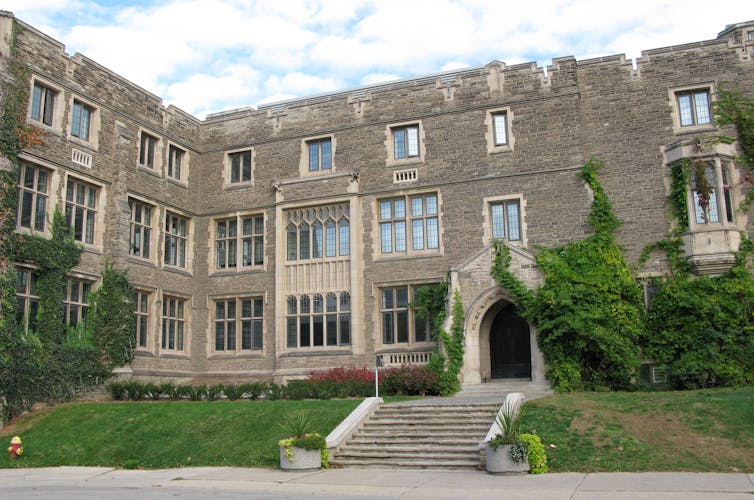
Steps leading up to an archway.
If merit is defined too narrowly, it could block diverse pathways to post-secondary admissions.
(Saforrest/Wikimedia Commons), CC BY-SA

Studies in professional and medical education show that relying only on grades can miss other signs of potential, like life experience, community work and meeting the needs of society.


Read more:
Resisting the backlash against equity in medicine will improve health outcomes for all


Grades seem objective, but they depend on many factors like family income and access to school and community resources — along with teacher and parent expectations and how much time students have to study while balancing work, family, community and other responsibilities.

Students from low-income, Black, Indigenous, rural or otherwise marginalized communities often face big challenges even before applying to college or university. These challenges reflect longstanding gaps in income and education.

Bill 33 doesn’t explain what “merit” means. Without a clear definition, admissions could end up favouring students who already have advantages. New rules will soon define how merit is measured, and these rules will be very important. If they don’t protect equity-focused pathways, the law could make existing gaps even worse.

Student fees and risk to campus services

Fair admissions are only part of the story. Bill 33 also changes how student fees are handled. These changes could harm students from marginalized communities.

Student groups have raised strong concerns about how Bill 33 could affect ancillary fees and the services they fund.

According to the Ontario Undergraduate Student Alliance, “ancillary fees are democratically approved by students, for students.” These are extra student fees that fund essential services such as food banks, wellness centres, accessibility programs, cultural programs, transportation and safety programs. These services could be at risk if the province gains more control over how fees are defined and charged.

In 2019, student groups successfully challenged Ontario’s Student Choice Initiativ. Through this measure, the province tried to limit ancillary fees but the court ruled it didn’t have the legal authority to do so at the time. Bill 33 responds to that ruling by changing the law itself, giving the province clear authority to regulate student fees.

The Canadian Federation of Students in Ontario has warned that focusing on fee oversight may distract from deeper problems in higher education, including chronic underfunding and high tuition costs.

Could weaken student-led supports, harm equity

Under Bill 33, the government can decide which fees can be charged and under what rules. Most universities clearly list how ancillary fees are used. For example, at McMaster University, these fees help fund transit passes, wellness services, career supports and refugee student programs.

How fees are managed is closely linked to the government’s broader oversight of universities, linking financial decisions to questions of accountability, governance and whose voices are heard in decision-making.

Student groups have long played a key role in raising equity concerns and ensuring local needs are addressed. If more decisions are made at the provincial level, student voices could carry less weight unless students are clearly included in new rules and decision-making processes.

Looking ahead: Equity is not automatic

As universities begin to apply Bill 33, students and faculty may notice changes in how admissions decisions are explained, how student fees are handled and how transparency rules are used.

These changes will not look the same at every campus. Their impact will depend on how the rules are interpreted and whether universities make equity a clear priority in their policies.

While the law may seem neutral, its real impact will depend on how it is put into practice and whose experiences are considered.

Ensuring equitable access to higher education requires careful planning, enough funding and meaningful input from students, faculty and communities most affected by these changes.

Equity will not happen by chance. It will depend on the choices universities and policymakers make now, and on whose voices are heard in those decisions.

The Conversation

The authors do not work for, consult, own shares in or receive funding from any company or organisation that would benefit from this article, and have disclosed no relevant affiliations beyond their academic appointment.

ref. Ontario’s Bill 33 raises serious concern about campus equity and student rights – https://theconversation.com/ontarios-bill-33-raises-serious-concern-about-campus-equity-and-student-rights-272548

Uganda’s boda-boda drivers: the digital economy hasn’t been the route to formal work and better protection – research

Source: The Conversation – Africa – By Rich Mallett, Research Associate and Independent Researcher, ODI Global

Digital labour platforms – like fast food delivery and cab hailing services – are having a dramatic impact on people’s labour rights and working conditions around the world.

In western countries like the UK and the US, their rise has intensified a process of labour casualisation already several decades in the making. Under the guise of “flexibility”, platforms have heralded a return to insecure, temporary forms of employment that offer few rights or benefits to workers.

But in “less developed” countries like Uganda, the growth of the digital gig economy is often considered a boon. Across the global south, it has been claimed that platforms are not only creating millions of new jobs, but they are actually helping to formalise an informal economy so vast it accounts for an estimated 70% of total employment in low- and middle-income countries.

Existing research suggests that by guiding informal workers towards compliance with registration and licensing requirements or making them more visible to state authorities, digital labour platforms are capable of “counteracting informal economic activity”.

But is it all as straightforward as it seems?

In a new research paper I put this claim to the test through a case study of moto-taxi work in the Ugandan capital city, Kampala.

Moto-taxi (or boda boda) work is a hugely important source of income in Uganda, providing livelihoods for an estimated 350,000 people in the capital alone. Over the past decade, ride-hail platforms have descended upon this vast industry, claiming to offer safer, better paid work and a step towards formality.

Drawing on 112 interviews, 370 driver surveys and scans of relevant media, my research reaches a different conclusion. Despite shifting online, digital moto-taxi drivers remain as they always were – informal workers in an unprotected labour market.

This raises fundamental questions about the capacity of digital labour platforms to bring about positive transformations in the global informal economy.

Fallacies of ‘plat-formalisation’

As the new paper shows, moto-taxi workers’ inclusion within the new platform economy brings them no closer to formal labour status in any meaningful way.

This is illustrated by three key insights from my findings.

First, despite early collaborative engagement with state actors, Uganda’s ride-hail companies have tended to operate in unilateral, platform-specific ways that undermine prospects for sectoral standardisation. Each platform enforces its own rules over drivers, and these do not always line up with government legislation.

Take driver licensing, for example. While some companies insist that drivers must have a valid driving permit before working through their apps, others bypass this requirement completely. Market leader SafeBoda, for instance, instead chooses to enrol new drivers in road safety training at a purpose-built “academy”. Though a positive step towards safer driving standards, this is not the same as formalisation.

Second, Uganda’s ride-hail platforms accept zero legal responsibility for the welfare and safety of those using their apps, including cases of “bodily injuries, death, and emotional distress and discomfort”. Despite claiming to help regulate the industry, these companies’ designation of informal moto-taxi workers as independent “gig workers” keeps drivers distanced from state labour regulation.

And third, my findings indicate corporate reluctance to share data with government. According to one city planner I talked with, while the platforms tended to talk positively about public-private collaboration, when push came to shove they would often “withhold their data”. Recent evidence suggests this is continuing to happen, further highlighting the limits of private data ownership and non-binding agreements around data sharing. Without access to this information, it is difficult for governments to register workers, tax them effectively and extend labour protections.

Profiting from informality

Ride-hailing may not have led to better, more formalised work for Uganda’s moto-taxis. But what is has done is open up new revenue streams for the various local and international companies involved. The result: a formalisation not of drivers’ labour but of their wealth.

As detailed in the paper, some of the techniques here include:

  • Commissions. Drivers regularly lose 15%-20% of their trip fares in the form of company commission fees. With digital technology, these are increasingly being captured via cashless payment systems that deduct fees and other equipment-related debts automatically.

  • Equipment. Many companies operate by selling drivers the gear they need to function in the ride-hail economy. SafeBoda, for instance, regularly charges new riders somewhere in the region of US$140 for a smartphone, crash helmets and branded uniforms. Drivers often take this on as debt and pay it back incrementally over time, only to later discover that this does not, in all cases, entitle them to actual ownership. As one former employee at the company told me:

The helmet itself is a business. It’s on the side, you can’t see it. The phone is a business. It’s about business besides riders. It’s all about getting commission on things.

  • Corporate tie-ins. Through a series of funding relationships and “private-private partnerships”, Uganda’s ride-hail platforms make drivers visible and accessible to a whole host of banks, insurance agencies and alternative credit lenders. These financial actors are all keen to find lucrative new markets at the “bottom of the pyramid”. Ride-hailing is simply the vehicle for this.

The formalisation agenda remains important. It is central to achieving better working conditions and stronger labour protections for hundreds of millions of workers around the world.

But for private digital platforms operating across Africa’s informal economies, the bottom line is often not about “counteracting informal economic activity” at all. It is about profiting from it.

The Conversation

This article draws on doctoral research, for which the author received funding from the UK’s Economic and Social Research Council (ESRC).

ref. Uganda’s boda-boda drivers: the digital economy hasn’t been the route to formal work and better protection – research – https://theconversation.com/ugandas-boda-boda-drivers-the-digital-economy-hasnt-been-the-route-to-formal-work-and-better-protection-research-270993

Crime-fighting in Lagos: community watch groups are the preferred choice for residents, but they carry risks

Source: The Conversation – Africa (2) – By Adewumi I. Badiora, Senior Lecturer, Department of Urban and Regional Planning, Olabisi Onabanjo University

Criminal activities have developed into a security crisis in Nigeria. Alongside the responses of security agencies such as the police and military, there has been a huge local response, with community groups mobilising in the face of criminal attacks.

For example, communities in Zamfara State, north-west region, repelled a bandit attack, causing the death of 37 bandits in August 2024. In Sokoto State, north-west region, residents rescued kidnapped individuals and recovered the body of the deceased village head in August 2024. In Kwara state, north-central region, community groups rescued people from their abductors in December 2025.

But how effective are these community-organised interventions?

I’m an urban and community safety researcher who has studied various aspects of insecurity in Nigeria, particularly in the country’s south-west, for more than a decade now.

In a recent paper I sought to answer this question in relation to Lagos. As Nigeria’s largest city with an estimated population exceeding 20 million, Lagos faces severe, complex crime challenges driven by rapid, poorly managed urbanisation and high unemployment rates. I surveyed 62 stakeholders in a bid to evaluate community-driven crime prevention strategies. Respondents included residents, members of the state and community groups who were playing important roles in the city’s security processes. This was qualitative research.

Many respondents expressed little or no trust in formal security agencies. Their expectations that the police could protect them were low.

A resident interviewed for the study said that while people like politicians got police protection, ordinary citizens did not:

That is why everyone has devised ways to protect themselves and family.

My research found that these commmunity-organised interventions have emerged in different forms. The commonest is community vigilante groups. These are self-appointed resident security volunteers who take it upon themselves to confront criminals in their neighbourhood. This is common in low-income neighbourhoods of Lagos because they have to deal with crime but feel they can’t rely on the police to patrol, unlike elite neighbourhoods.

A successful urban security strategy

Lagos community vigilante groups range from small groups of volunteers on streets, and informal neigbourhood watches, to well structured local community bodies. Community vigilante members are mostly men. But women are not explicitly excluded, and they are an important source of information.

The groups were using local knowledge to help the police. They compiled information on crimes, suspicious activity and criminal suspects in their area and provided it to the police as needed. In some cases, they joined the police intelligence response team to raid hideouts of criminals in their areas.

A resident interviewed for the study said:

We are local people. We know our community very well. We can easily spot strangers and suspicious movements. This local knowledge is what we have, that the police do not have. So, we complement their efforts by providing dependable intelligence for their work. Beyond that, we also escort police patrol, and our presence has helped them to penetrate streets they would not have been able to navigate by themselves.

The relationship between the police and community groups was “semi-formal”. Arrangements were made by the communities with little or no intervention by the state. The collaborations were owned, structured and sustained by residents.

Some of those involved in the groups were remunerated through financial contributions by residents. However, they “occasionally” received financial support from the local government authorities, individual local politicians and donors.

Successes

My research showed there had been some positive results. Residents confirmed that the collaborations brought safety to their community and had helped to reduce crime and insecurity, particularly where the police were lacking.

A resident interviewed for the study said:

Things are a little better. Before now, it was dreadful as criminals and hoodlums operate openly. Although there is still a long way to go, there has been a commendable level of improvements in our security in the last five years.

Some ongoing issues

Despite its success, several concerns were raised in my study.

First, community vigilante groups are a patchwork of isolated groups. Organisations are fragmented and weak. This could be dangerous because it creates unaccountable groups that can easily change from being protectors to being a threat. That can be seen in the Bakassi Boys (south-east Nigeria), Yan Sakai (north-west Nigeria) and global examples like Mungiki (Kenya) and Autodefensas (Mexico).

Second is the question of the legality of community groups in terms of the provisions of the Nigerian constitution, the Police Act and the Public Order Act. Their legal status is “complex” as they operate in a grey area. Most of them do not have the backing of the federal government, which has the constitutional authority to manage policies regarding them.

Third, while community vigilante groups fill security gaps created by an under-resourced police force, their activities sometimes lead to conflicts because they act as judge, jury and executioner.

A police officer interviewed for the study said:

The activities of vigilantes are usually unlawful in the way and manner they deal with suspected criminals … The lawful thing for them is to report suspected criminals to the police, but many times, they take law into their own hands.

Still, residents view the groups as legitimate because of their perceived effectiveness, deep local knowledge, community ties and quick action.

Fourth, relationships between community groups and the police range from amiable and collaborative to distrustful and hostile. Mutual distrust risks escalating violence rather than reducing it.

A member of a vigilante group put it this way:

We cannot totally entrust suspects and our community to the police. We have situations where suspects were released without any investigation and prosecution. Not only that, corrupt police officers do give hints to these suspects about key vigilante members behind their arrests, and these criminals go all-out for them after their unlawful freedom from the police custody.

Moving forward

To overcome the challenges, the following steps should be taken:

  • reform of Nigeria’s security governance, allowing states to create their own police forces

  • formal recognition and support of community groups

  • adopting policies to curb the proliferation of the groups

  • working more closely with community groups to deal with some of the underlying reasons for insecurity. These include political negligence, youth unemployment, poverty and inequality.

The Conversation

Adewumi I. Badiora does not work for, consult, own shares in or receive funding from any company or organisation that would benefit from this article, and has disclosed no relevant affiliations beyond their academic appointment.

ref. Crime-fighting in Lagos: community watch groups are the preferred choice for residents, but they carry risks – https://theconversation.com/crime-fighting-in-lagos-community-watch-groups-are-the-preferred-choice-for-residents-but-they-carry-risks-273667

Why too much phosphorus in America’s farmland is polluting the country’s water

Source: The Conversation – USA (2) – By Dinesh Phuyal, Postdoctoral Associate in Soil, Water and Ecosystem Sciences, University of Florida

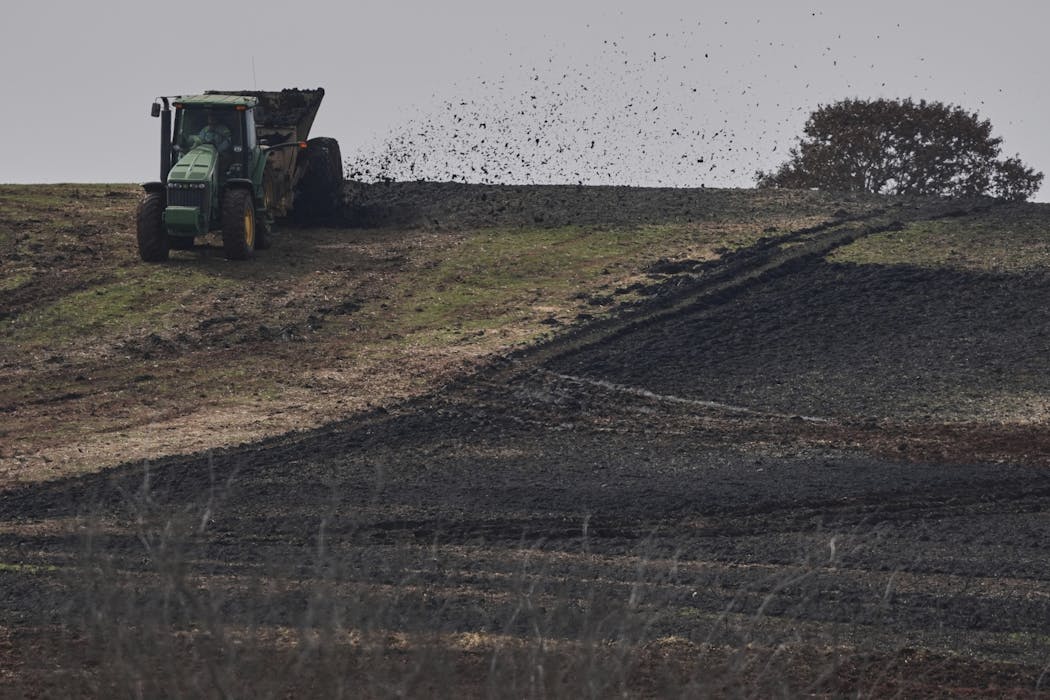
A spreader sprays sewage sludge, which is rich in phosphorus, across a farm in Oklahoma. AP Photo/Joshua A. Bickel

When people think about agricultural pollution, they often picture what is easy to see: fertilizer spreaders crossing fields or muddy runoff after a heavy storm. However, a much more significant threat is quietly and invisibly building in the ground.

Across some of the most productive farmland in the United States, a nutrient called phosphorus has been accumulating in the soil for decades, at levels far beyond what crops actually require. While this element is essential for life-supporting root development and cellular chemistry to grow food, too much of it in the wrong places has become a growing environmental liability.

I’m part of a research effort to figure out how much phosphorus is already in the soil, to then determine how much more, if any, to add to particular fields.

Why farmers add phosphorus in the first place

Small dark pellets.
Pellets of monoammonium phosphate fertilizer.
AP Photo/Paul Sancya

Phosphorus is one of the three primary nutrients plants require for growth, along with nitrogen and potassium. Without enough phosphorus, crops struggle and production suffers.

For decades, applying phosphorus fertilizer has been a kind of insurance policy in American agriculture. If farmers weren’t sure how much was already in the soil, adding a little extra seemed safer than risking a shortfall. Fertilizer was relatively inexpensive, and the long-term consequences were poorly understood.

Unlike nitrogen, which easily escapes from soil into the air or groundwater, phosphorus sticks to soil particles. Once it’s added, it tends to remain in place. That trait made phosphorus seem environmentally benign.

However, phosphorus can still be carried off fields when rain or irrigation water erodes phosphorus-rich soil, or some of the built-up phosphorus dissolves into runoff.

Years of application have led to something no one initially planned for: accumulation.

How much phosphorus has built up?

Since the mid-20th century, farmers across the United States have applied hundreds of millions of tons of phosphorus fertilizer. From 1960 to 2007, phosphate fertilizer consumption in the U.S. increased from approximately 5.8 million metric tons per year to over 8.5 million metric tons annually.

In more recent decades, fertilizer use has continued to rise. In corn production alone, phosphorus applications increased by nearly 30% between 2000 and 2018. Crops absorb some of that phosphorus as they grow, but not all of it. Over time, the excess has piled up in soils.

In many regions across the United States, soil phosphorus levels are now far higher than what crops actually require. In parts of Florida, for example, some agricultural soils contain phosphorus concentrations more than 10 times above levels considered sufficient for healthy plant growth.

Scientists call this buildup “legacy phosphorus.” It’s a reminder that today’s environmental challenges are often the result of yesterday’s well-intentioned decisions.

Green algae float on the surface of water.
Algae float on the surface of Lake Erie.
AP Photo/Paul Sancya, File

When soil phosphorus becomes a water problem

If phosphorus stayed locked in the soil, farmers would have wasted money on fertilizer they didn’t need. And excess phosphorus in soil can hinder the uptake of essential plant micronutrients and alter the soil microbial community, reducing diversity that is important for good soil health.

Unfortunately, phosphorus doesn’t always remain in place. Rainfall, irrigation and drainage can transport phosphorus – either dissolved in water or attached to eroded soil particles – into nearby canals, streams, rivers and lakes. Once there, it becomes food for algae.

The result can be explosive algal growth, known as eutrophication, which turns clear water a cloudy green. When these algae blooms die, their decomposition consumes oxygen, sometimes creating low-oxygen “dead zones” where fish and other aquatic life struggle to survive. This process is primarily driven by phosphorus leaching, as seen in the Florida Everglades.

Another prime example is the largest dead zone in the United States, covering about 6,500 square miles (16,835 square kilometers), which forms each summer in the Gulf of Mexico. Cutting back on nitrogen without lowering phosphorus can worsen eutrophication.

Some algal blooms also produce toxins that threaten drinking water supplies. Communities downstream may be told not to drink or touch the water, and face high treatment costs and lost recreational opportunities. National assessments document toxins associated with algal blooms in many states, particularly where warm temperatures and nutrient pollution overlap.

Rising global temperatures are exacerbating the problem. Warmer waters hold less oxygen than colder waters, increasing the likelihood that phosphorus pollution will trigger eutrophication and dead zones.

A small white box sits in a field of grass, with a solar panel behind it.
A phosphorus monitor operates next to a small stream near an agricultural field in Ohio.
AP Photo/Joshua A. Bickel

Flawed testing hid the problem

Given the risks, a natural question arises: Why don’t farmers simply stop adding phosphorus where it isn’t needed?

Part of the answer lies in how the amount of phosphorus in the soil is measured. Most soil tests used today were developed decades ago and were designed to work reasonably well across many soil types. But soils are incredibly diverse. Some are sandy; others are rich in organic matter formed from centuries of decayed plants.

And those traditional soil tests use acids to extract phosphorus from the soil, delivering inaccurate findings of how much phosphorus plants can actually access. For instance, in soils that have more than 20% organic matter, like those found in parts of Florida and other agricultural regions, the tests’ acids may be partially neutralized by other compounds in the soil. That would mean they don’t collect as much phosphorus as really exists.

In addition, the tests determine a total quantity of phosphorus in the soil, but not all of that is in a form plants can take up through their roots. So soil where tests find high phosphorus levels may have very little available to plants. And low levels can be found in soil that has sufficient phosphorus for plant growth.

When farmers follow the recommendations that result from these inaccurate tests, they may apply fertilizer that provides little benefit to crops while increasing the risk of pollution. This isn’t a failure of farmers. It’s a mismatch between outdated tools and complex soils.

Three plastic containers show different levels of different chemicals.
Soil testing determines levels of various nutrients, but the results don’t always line up with what’s available to plants.
Wayan Vota via Flickr, CC BY-NC-SA

A smarter way forward

The solution isn’t to eliminate phosphorus fertilization. Crops still need it, and many soils genuinely require additional nutrients. The challenge is knowing when enough is truly enough.

Researchers, including me, are developing improved testing methods that better reflect how plants actually interact with soil. Some approaches mimic plants’ root behavior directly, estimating how much phosphorus crops can realistically take up from any given field or type of soil – rather than only measuring how much exists chemically.

Other tests look at the amount of phosphorous a field’s soil can hold before releasing excess nutrients into waterways. These approaches can help identify fields where farmers can use less phosphorus or pause it altogether, allowing crops to draw down the legacy phosphorus already present.

The phosphorus problem is a slow-moving one, built over decades and hidden below ground. However, its effects are increasingly visible in the form of algal blooms, fish kills and contamination of drinking water supplies. Farmers can measure and manage soil nutrients differently and reduce pollution, save money and protect water resources without sacrificing agricultural productivity.

The Conversation

Dinesh Phuyal does not work for, consult, own shares in or receive funding from any company or organization that would benefit from this article, and has disclosed no relevant affiliations beyond their academic appointment.

ref. Why too much phosphorus in America’s farmland is polluting the country’s water – https://theconversation.com/why-too-much-phosphorus-in-americas-farmland-is-polluting-the-countrys-water-273326

Marine protected areas aren’t in the right places to safeguard dolphins and whales in the South Atlantic

Source: The Conversation – USA (2) – By Guilherme Maricato, Pós-doutorando no Programa de Pós-Graduação em Ecologia, UFRJ

Whales have become increasingly common in regions such as the northern coast of São Paulo, which also has heavy ship traffic. Julio Cardoso/Projeto Baleia à Vista

The ocean is under increasing pressure. Everyday human activities, from shipping to oil and gas exploration to urban pollution, are affecting the marine environment. Extensive research shows how this combination of stressors represents one of the greatest threats to marine wildlife, potentially affecting biodiversity on a global scale.

To protect the ocean, one of the primary tools we have is marine protected areas. But are they truly protecting species in the most critical locations?

In an attempt to answer this question in Brazil, we conducted a comprehensive study focusing on two key species: the Bryde’s whale, a nonmigratory species, and the bottlenose dolphin, found in coastal and oceanic waters around the world. We chose these species because they do not migrate and stay in the same areas all year long, where they are exposed to harmful human activities.

bottlenose dolphins swim with a ship in the background.
Bottlenose dolphins swim off the coast of Rio de Janeiro, an area with intense maritime activity.
Guilherme Maricato

The news is unfortunately not good: Our findings, recently published in Marine Pollution Bulletin, show that the areas critical for these species’ survival are also the most threatened.

Where whales and dolphins eat and play

Through spatial analysis, specifically species distribution models, we uncovered these animals’ preferences. We cross-referenced thousands of occurrence records for Bryde’s whales and bottlenose dolphins with environmental data that can influence their presence. This included factors such as water temperature, depth and even food availability.

Two Bryde's whales swimming.
Two Bryde’s whales off the coast of Cabo Frio, Rio de Janeiro.
Israel Maciel

From this data, we created a map showing the most suitable habitats for these species. The results strongly indicated that southeastern Brazil is their “preferred area.” On the continental shelf, these areas are located in shallower waters rich in nutrients, often associated with colder waters and steep seabed slopes that bring food to the surface.

The problem with overlap

The preferred areas we identified, however, are not exclusive to whales and dolphins. Southeastern Brazil is also an economically vital marine region for the country, driven by activities in the Santos and Campos basins, where a new oil reserve was recently discovered.

In the second stage of our research, we overlaid our map of the most suitable habitats for these species with a map of human activity. This included the presence of ports, areas of oil and gas exploration, and various shipping routes.

The result is a near-perfect overlap. The areas where Bryde’s whales and bottlenose dolphins are most frequently found coincide exactly with where human activity is most intense.

Why protected areas aren’t helping them

Brazil has expanded its conservation coverage in recent years by creating four large marine protected areas, which we think is excellent news. However, the crux of the matter lies in the quality of that protection.

In 2024, we also participated in a global collaborative effort to evaluate marine protected area effectiveness, the results of which were published in Marine Policy. The findings revealed that the vast majority of Brazil’s designated protected areas actually permit activities that are incompatible with biodiversity conservation.

This quality gap was also evident in our study. Most marine protected areas in southeastern Brazil, even the most effective ones, are coastal. They do not encompass the suitable habitats for Bryde’s whales and bottlenose dolphins, which are more heavily affected by oil and gas exploration.

And what about the oceanic protected areas Brazil created?

For the most part, they are located in areas that are either not the most suitable for these two species or lack significant conflicts with human activity. There is an ongoing debate about whether governments are protecting the right places or leaving the most critical biodiversity hot spots and conflict zones unprotected.

The real impacts of the conflict

The risk of ship strikes is constant. Whales and dolphins must come to the surface to breathe, and in areas of heavy traffic such as southeastern Brazil, the risk of being hit by vessels is high. Meanwhile, constant noise – from both ship engines and oil and gas exploration – interferes with the navigation, communication and foraging of these animals.

Additionally, there is the risk of entanglement in fishing nets, particularly in areas with intense fishing activity, resulting in bycatch, the incidental capture of nontarget species. Finally, pollution from ports along with potential spills can degrade the health of these animals and weaken their immune systems.

a map of Brazil shows lots of overlap between offshore animal habitats and human activity, particularly in the south and southwest
How the preferred habitats of Bryde’s whales, left, and bottlenose dolphins, right, overlap with human activity. Dark colors indicate a higher exposure index.
Guilherme Maricato

A road map for the future

Our findings serve as a critical warning: Simply creating marine protected areas is not enough. They must be placed in the right locations, protecting species where they are most vulnerable. We have shown that there is an urgent need to rethink conservation strategies in Brazil.

In addition to strengthening the network of marine protected areas, our findings suggest the need for specific management actions to reduce conflicts. While reducing ship speeds can protect whales from collisions, establishing fishing exclusion zones and using acoustic deterrents can prevent dolphins from becoming entangled in nets.

Most importantly, however, we believe these actions must be applied in the areas of highest exposure for conservation to be truly effective. Protecting biodiversity while maintaining economic activity is a complex challenge, but we now have a map to begin this conversation.


This project was funded by the Foundation for Research Support of the State of Rio de Janeiro (Faperj), Brazilian Federal Agency for Support and Evaluation of Graduate Education (Capes) and the National Council for Scientific and Technological Development (CNPq). We also acknowledge the support of the Marine Ecology and Conservation Lab (ECoMAR-UFRJ), Brazilian Humpback Whale Project, Ilhas do Rio Project, Cetacean Monitoring Project, Marine Mammal Monitoring Support System, Marine Conservation Institute and Coral Vivo Project. The publication of this article was also supported by Capes.

The Conversation

Maria Alice S. Alves receives research funding from the National Council for Scientific and Technological Development and the Carlos Chagas Filho Foundation for Research Support of the State of Rio de Janeiro.

Rodrigo Tardin receives funding from the Young Scientist of Our State program of FAPERJ.

Clinton N. Jenkins and Guilherme Maricato do not work for, consult, own shares in or receive funding from any company or organization that would benefit from this article, and have disclosed no relevant affiliations beyond their academic appointment.

ref. Marine protected areas aren’t in the right places to safeguard dolphins and whales in the South Atlantic – https://theconversation.com/marine-protected-areas-arent-in-the-right-places-to-safeguard-dolphins-and-whales-in-the-south-atlantic-274256

A more complete Latin American history, including centuries of US influence, helps students understand the complexities surrounding Nicolás Maduro’s arrest

Source: The Conversation – USA (2) – By Lightning Jay, Assistant Professor of Teaching, Learning and Educational Leadership, Binghamton University, State University of New York

A woman shows a portrait of ousted Venezuelan President Nicolás Maduro during a demonstration in Caracas on Jan. 21, 2026. Pedro Mattey/AFP via Getty Images

Many of our college freshman students will have seen and read about the Jan. 3, 2026, U.S. military operation in Venezuela that culminated in the arrest of its leader, Nicolás Maduro, and his wife, Cilia Flores. The U.S. has charged Maduro and Flores with conspiracy and drug trafficking. Maduro and Flores are imprisoned in New York City, awaiting trial.

Some freshmen this semester will likely say Maduro’s unusual arrest violates international law. Others may view it as a decisive step in the U.S.’s fight against narco-terrorism.

That’s in part because the U.S has no national curriculum, and high school history courses often rely on teachers’ discretion, even more so than in other content areas. This results in history being taught a lot of different ways across schools.

As scholars of Latin American history and history education in the U.S., we know that most American high school students learn about the ancient civilizations in Latin America and a few other key flash points in history.

But few, we suspect, will understand Maduro’s arrest as part of a long history of the U.S.’s interventions in Latin America, stretching back to the Monroe Doctrine in the 1800s. President James Monroe introduced this foreign policy in an 1823 speech, saying that the U.S. would not allow European colonization or interference in the Western Hemisphere.

A man wearing a beige outfit is held on either arm by two men in uniform, while a woman behind him is held by the arm by one man. They walk near a grey river.
Nicolás Maduro and his wife, Cilia Flores, are seen in handcuffs after landing at a Manhattan helipad on Jan. 5, 2026.
XNY/Star Max/Contributor via Getty Images

A partial, skewed history

In high school world history courses, teachers in the U.S. often rely on case studies and examples to indicate historical trends.

High school students are likely to learn about the Inca, Maya and Aztec civilizations as representatives of pre-Columbian Latin America. They read about Spanish conquistadors such as Hernán Cortés, who overthrew the Aztec empire, and Francisco Pizarro, who conquered the Incas in the early 1500s.

They will learn about how most Latin American countries, including Mexico, Argentina, Colombia and Guatemala, gained independence in the early 1800s.

Often, students learn about these countries’ fights for independence, with the case example of the Haitian Revolution. They may learn about Simón Bolívar, the grand Venezuelan military officer and liberator who played a decisive role in the independence movements of countries including Venezuela, Colombia and Bolivia.

Students also often learn about more recent eras, including the Cuban missile crisis, a dangerous tipping point between the U.S. and the Soviet Union that brought the world close to nuclear war in 1962.

But overall, in U.S. history courses the U.S. is typically the main character and Latin America is treated as a place where the U.S. exerts power.

An example of this narrative includes the U.S.’s failed attempt to overthrow the Cuban government in 1961, during the Bay of Pigs invasion.

What US high school students miss

It is no surprise that students who learned this version of Latin American history in high school would have many questions about Maduro’s recent arrest – including who the longtime leader is.

A fuller exposure to Latin American history would include, among other things, lessons about neoliberal capitalism, which has long shaped the politics, economies and societies of Latin America. This is a U.S.-government supported policy that promotes less internal government intervention and more free-market capitalism.

Even though most Latin American countries achieved independence just 30 to 40 years after the U.S., not all presidential administrations in the U.S. fully accepted these nations’ freedom.

In 1904, Theodore Roosevelt added an additional text called a corollary to the Monroe Doctrine, stating that the U.S. could intervene in the internal affairs of any Latin American country in cases of wrongdoing.

By the late 1800s, the U.S. had conquered more than half of Mexico’s territory and annexed Puerto Rico. It also began occupying Cuba in 1898, after Spain lost the Spanish-American War and control over the island.

The U.S. militarily and politically then backed a 1903 revolution that gave Panama independence from Colombia. Panama’s independence led to a treaty that let the U.S. build and control the Panama Canal for nearly a century.

A cartoon shows a man wearing a red and white shirt, blue pants with stars and a hat riding a bicycle that has two globes for wheels down a dirt path with a horse behind it.
A political cartoon from 1898 criticizing American foreign policy shows Uncle Sam riding a bicycle with globes of the western and eastern hemispheres for wheels.
Bettmann/Contributor via Getty Images

A strong influence

Overall, the U.S. intervened in Latin America more than 40 times from 1898 to the mid-1990s.

Some of these interventions involved coups against democratically elected officials – including Jacobo Árbenz Guzmán in Guatemala in 1954 and Salvador Allende in Chile in 1973. These coups often led to civil wars or enduring military regimes that the U.S. claimed were necessary to fight the spread of communism.

Chile was then among the countries – including Argentina and Uruguay – that implemented economic policies in the 1970s that kept markets open to foreign businesses and governments, fostering dependence on wealthier nations.

Some Latin American countries, including Mexico and Brazil, struggled financially in the 1990s.

The U.S. and international financial institutions gave conditional loans that promoted austerity – meaning raising taxes and cutting public spending – and market liberalization, which reduces governmental restrictions over an economy. These loans stabilized some economies in the short term, but also made other problems, such as inequality and debt, worse.

In the early 2000s, several countries, including Brazil, Ecuador and Bolivia, elected left-leaning leaders who advocated for alternatives to this U.S.-backed economic policy. Ultimately, though, their reforms were often limited and not politically stable.

A more complete history

During a Jan. 4, 2026, press conference, President Donald Trump used a new term, the “Donroe Doctrine,” to describe his administration’s plans to claim dominance in the Western Hemisphere.

One day later, Vice President JD Vance doubled down: “This is in our neighborhood,” he said in an interview about Maduro’s capture. “In our neighborhood, the United States calls the shots. That’s the way it has always been. That’s the way it is again under the president’s leadership.”

Learning a more complete version of Latin American history in high school won’t prevent our college students from bringing questions to class about the U.S.’s capture of Maduro, and why Trump has said the U.S. will “run” Venezuela.

But this knowledge might help our students ask more complex, nuanced questions, such as whom national security strategies actually benefit the most.

Understanding Latin America is not merely a requirement for interpreting headlines about Venezuela but a prerequisite for Americans to understand themselves and their place in the world.

The Conversation

The authors do not work for, consult, own shares in or receive funding from any company or organization that would benefit from this article, and have disclosed no relevant affiliations beyond their academic appointment.

ref. A more complete Latin American history, including centuries of US influence, helps students understand the complexities surrounding Nicolás Maduro’s arrest – https://theconversation.com/a-more-complete-latin-american-history-including-centuries-of-us-influence-helps-students-understand-the-complexities-surrounding-nicolas-maduros-arrest-272984

Political polarization in Pittsburgh communities is rooted in economic neglect − not extremism

Source: The Conversation – USA (2) – By Ilia Murtazashvili, Professor of Public Policy, University of Pittsburgh

Pittsburgh is a city where your politics often depend on how your community and neighborhood are doing. Rebecca Droke/AFP Collection via Getty Images

When it comes to political polarization in the United States, the Pittsburgh region offers a useful window into what communities can do about it.

Pittsburgh is a “comeback city.” The once-prosperous steel industry may have declined, but universities, hospitals and technology are driving reinvention and a new emphasis on manufacturing.

It’s also a city where people’s economic situation and political orientation often depend on where they live and how their community and neighborhood are doing. Different neighborhoods experience different levels of safety, school quality, housing stability and responsiveness from public services. In the region’s hardest-hit communities, this shows up not only in frustration with local institutions, but in shifting voting patterns and growing openness to populist messages of renewal.

Protestors block intersection in the East Liberty neighborhood of Pittsburgh.
Pittsburgh’s political polarization is often less about ideology and more about whether people think local institutions still work for them.
Gene J. Puskar/AP

Our research at the University of Pittsburgh’s Center for Governance and Markets examines Rust Belt revitalization and how economic decline reshapes civic life and political conflict in communities such as Pittsburgh and its surrounding mill towns.

It also shows how local government performance shapes trust and political conflict in distressed communities across the Pittsburgh region.

We’ve found that the region’s polarization is often less about culture war debates and political ideology and more about whether people think local institutions still work for them. It also grows out of economic despair, eroding trust and the feeling that the rules of the game no longer produce a future worth believing in.

This polarization plays out most visibly in practical disputes about safety, housing, schools and basic public services. Residents split between calls for tougher law enforcement and demands for alternative approaches to criminal justice; between building more housing and regulating affordability; between consolidating schools and maintaining neighborhood anchors; and between higher spending on basic services such as construction costs and frustration over government’s ability to deliver.

National politics do matter here, but local conflicts are where politics become tangible and where trust rises or falls based on performance. Those decisions happen locally through city departments, school boards, neighborhood meetings and county agencies.

Not just ‘blue city, red suburbs’

At its core, Pittsburgh is really about the differences in the neighborhoods and communities. This shapes how communities perceive fairness and whether they trust that the government is capable of solving problems.

In some neighborhoods, civic institutions are strong and residents feel empowered in public life. In others, decades of disinvestment have weakened the foundations of everyday governance.

Man holding
A sign reads ‘No Place For Hate’ at a vigil held for the Tree of Life synagogue victims.
SOPA Images/Contributor/Getty Images

Squirrel Hill is one of Pittsburgh’s most civically vibrant neighborhoods. It is affluent and educated, and it has a number of synagogues, bookstores, immigrant service organizations and active civic groups. When political conflict emerged in the aftermath of the Tree of Life synagogue mass shooting, residents had networks to absorb disagreement rather than let it spiral into hostility.

Now shift to the South Side, where gentrification shapes politics differently. The South Side Flats evolved from a blue-collar neighborhood into a place with many renters and younger residents. People are civic-minded, though local debates often revolve around nightlife, public safety, rising costs and development.

Carrick remains politically mixed, reflecting tensions in a working- and middle-class community navigating demographic change and uncertainty about the future. Local concerns include schools, traffic, infrastructure and neighborhood stability, but national polarization shapes how issues are interpreted. Potholes become a service complaint and a symbol of being left behind. Housing projects become flash points for who belongs.

Homewood is a historically Black neighborhood shaped by decades of disinvestment. Deep challenges include poverty, blight and long-standing concerns about safety. Yet it also shows civic resilience through churches, nonprofits, health centers and grassroots leaders who have kept public life intact even when government capacity falls short. Even in heavily democratic neighborhoods like Homewood, citizens feel a sense of being overlooked.

Different neighborhoods experience “Pittsburgh” through different governing realities. The suburbs and mill towns are part of the story, too.

Braddock sign lit up across from steel building
Braddock has suffered economically after the collapse of the steel economy.
Jeff Swensen/Getty Images

In Braddock, where U.S. Sen. John Fetterman once served as mayor, the collapse of the steel economy severely damaged the tax base and weakened local capacity to provide reliable services. When municipal governments are forced to govern with fewer resources, politics become a battle over shortages of basic services, such as trash collection. Civic participation declines, and frustration is unabating.

In Aliquippa, the closure of major steel employers contributed to long-term economic contraction and political realignment. Communities once firmly Democratic have become more open to conservative populism, including among working-class and minority voters attracted to messages of economic renewal. This shift often involves less dramatic ideological conversation than a search for a political language that takes economic loss seriously.

Young girls celebrate Kamala Harris visiting their Aliquippa, PA neighborhood
Young supporters of U.S. Vice President Kamala Harris celebrate as her motorcade departs from Aliquippa High School during her 2024 presidential campaign .
Anna Moneymaker/Getty Images

And in McKeesport, a former manufacturing hub, economic distress combines with infrastructure decay and opioid addiction. Yet McKeesport also shows that polarization does not erase cooperation. Community organizations build partnerships around practical concerns, such as youth programming, small-business support and downtown development.

The Pittsburgh region is not “blue city, red suburbs.” Deindustrialization did more than eliminate jobs: It reduced mobility, strained families, shrank tax bases, weakened local civic institutions and made daily life feel less stable.

A lesson from Pittsburgh’s new mayor

Corey O’Connor, Pittsburgh’s new mayor, has emphasized economic revitalization, but also has argued what many officials forget or ignore: Residents judge government first by whether it delivers basic competence.

For many Pittsburghers, a government that cannot clear streets after a storm, fill potholes or maintain a functional snow removal fleet does not feel capable of managing large-scale economic revitalization or building civic trust. Snow removal and filling potholes aren’t trivial issues, but a test of whether public authority is reliable and fair.

When basic services cannot be provided in real time, mistrust becomes almost inevitable.

Rebuilding legitimacy from the bottom up

Escaping polarization requires a long-term strategy to rebuild opportunity, restore institutional credibility and strengthen civic infrastructure.

For Pittsburgh and its region, this depends on fostering frameworks for civic participation by expanding job training programs and delivering public services effectively, including through municipalities helping each other out to provide them.

Research shows that competence in the everyday work of government is a significant way to rebuild trust in public institutions. Starting with the basics in local government demonstrates that cooperation is possible and institutions can solve problems.

The lesson of Pittsburgh is that economic stability is civic stability. When it collapses, politics become less about disagreement than respect and recognition. Polarization is a consequence of people not feeling seen, heard or treated fairly by the institutions that govern them. Communities cannot wait for Washington to solve problems that are experienced – and addressed – locally.

The Conversation

Ilia Murtazashvili does not work for, consult, own shares in or receive funding from any company or organization that would benefit from this article, and has disclosed no relevant affiliations beyond their academic appointment.

ref. Political polarization in Pittsburgh communities is rooted in economic neglect − not extremism – https://theconversation.com/political-polarization-in-pittsburgh-communities-is-rooted-in-economic-neglect-not-extremism-273175

Ending tax refunds by check will speed payments, but risks sidelining people who don’t have bank accounts

Source: The Conversation – USA (2) – By Beverly Moran, Professor Emerita of Law, Vanderbilt University

More than 6 million Americans receive paper tax refund checks annually. Often, those refunds go to purchase groceries or pay the bills. But this year, those taxpayers may be surprised to learn that the paper check they’re waiting for no longer exists.

That’s because of executive order 14247, which President Donald Trump signed in 2025. It directed the Treasury Department to stop issuing paper checks for tax refunds.

The executive order has its fans. Nacha, the organization that runs the network that electronically moves money between financial institutions, says the new rules could save the government US$68 million each year. The American Bankers Association is also excited, predicting the move will help people save on check-cashing fees. Other supporters argue the change will prevent mail theft and check fraud.

But what about the 6 million Americans without bank accounts – the so-called “unbanked”? Watchdogs warn that they will suffer if exceptions and outreach fall short.

As a professor who specializes in tax law, I think those concerns are valid.

Reform could leave the unbanked behind

Shifting to electronic payments is a classic modernization effort. So how could that be bad?

The problem is that a sizable number of Americans have no bank account. Twenty-three percent of people who earn under $25,000 were unbanked in 2023. Only 1% of people earning over $100,000 in 2023 lacked a bank account.

Black and Hispanic Americans, young adults, and people with disabilities are more likely to be unbanked than other people, and 1 in 5 unbanked households include someone with a disability.

Low-income families often use their refunds to pay for basics such as food and rent. And under the status quo, unbanked people already lose a large slice of those refunds to fees. Check cashers, for example, can charge up to 1.5% for government checks in New York, up to 3% in California, and even more in other states.

But the unbanked might find that they’re paying even higher fees in a post-check world. They might, for example, use paid tax preparation services to access refund loans. The federal courts and investigative journalists have discussed ways that prepaid tax preparers engage in false advertising and overpriced services.

Or they might forgo their tax refunds entirely.

Geography, race and the digital-banking divide

Where people live affects their access to banking.

Gaps in broadband coverage and lack of public transportation to reach libraries make computer access a problem for poor and rural people.

In so-called “banking deserts” – communities with few or no bank branches – people are more likely to use costly alternatives such as payday lenders and check-cashing services. Black-majority communities face distinct banking desert challenges, for both poor and middle class Black families. That’s because a middle-income Black family is more likely to live in a low-income neighborhood than a low-income white family.

Taken together, these barriers mean that many Americans who are legally entitled to tax refunds could soon struggle to receive them.

What should government do now?

The government is aware of the problem. The IRS promises that “limited exceptions” will be available to people who don’t have bank accounts, and that more guidance is on the way.

In the meantime, the agency stepped up on the day after Thanksgiving to urge people without bank accounts to open them, or to check whether their digital wallets can accept direct deposits, while the Bureau of the Fiscal Service has provided a website with all sorts of information for people who need to get up to speed on electronic payments.

For the moment, it’s unclear just how effective these efforts will be. Perhaps this is why the American Bar Association is urging Treasury to keep issuing paper refund checks unless Congress passes a law rather than relying on an executive order.

Consumer groups have urged the Treasury Department to fund robust exceptions, plain-language help lines and no-fee default payment options while also banning junk fees on refund- related cards and mandating easy access to cash-out at banks or retailers.

The problem is that the Treasury Department has lost over 30,000 employees and $20.2 billion in funding since January 2025. Add in the lingering effects of the last government shutdown, adopting a new system for tax filing and refunds might be too much to expect for the 2026 tax season.

The Conversation

Beverly Moran does not work for, consult, own shares in or receive funding from any company or organization that would benefit from this article, and has disclosed no relevant affiliations beyond their academic appointment.

ref. Ending tax refunds by check will speed payments, but risks sidelining people who don’t have bank accounts – https://theconversation.com/ending-tax-refunds-by-check-will-speed-payments-but-risks-sidelining-people-who-dont-have-bank-accounts-266562