Companies are already using agentic AI to make decisions, but governance is lagging behind

Source: The Conversation – USA (2) – By Murugan Anandarajan, Professor of Decision Sciences and Management Information Systems, Drexel University

Businesses are acting fast to adopt agentic AI – artificial intelligence systems that work without human guidance – but have been much slower to put governance in place to oversee them, a new survey shows. That mismatch is a major source of risk in AI adoption. In my view, it’s also a business opportunity.

I’m a professor of management information systems at Drexel University’s LeBow College of Business, which recently surveyed more than 500 data professionals through its Center for Applied AI & Business Analytics. We found that 41% of organizations are using agentic AI in their daily operations. These aren’t just pilot projects or one-off tests. They’re part of regular workflows.

At the same time, governance is lagging. Only 27% of organizations say their governance frameworks are mature enough to monitor and manage these systems effectively.

In this context, governance is not about regulation or unnecessary rules. It means having policies and practices that let people clearly influence how autonomous systems work, including who is responsible for decisions, how behavior is checked, and when humans should get involved.

This mismatch can become a problem when autonomous systems act in real situations before anyone can intervene.

For example, during a recent power outage in San Francisco, autonomous robotaxis got stuck at intersections, blocking emergency vehicles and confusing other drivers. The situation showed that even when autonomous systems behave “as designed,” unexpected conditions can lead to undesirable outcomes.

This raises a big question: When something goes wrong with AI, who is responsible – and who can intervene?

Why governance matters

When AI systems act on their own, responsibility no longer lies where organizations expect it. Decisions still happen, but ownership is harder to trace. For instance, in financial services, fraud detection systems increasingly act in real time to block suspicious activity before a human ever reviews the case. Customers often only find out when their card is declined.

So, what if your card is mistakenly declined by an AI system? In that situation, the problem isn’t with the technology itself – it’s working as it was designed – but with accountability. Research on human-AI governance shows that problems happen when organizations don’t clearly define how people and autonomous systems should work together. This lack of clarity makes it hard to know who is responsible and when they should step in.

Without governance designed for autonomy, small issues can quietly snowball. Oversight becomes sporadic and trust weakens, not because systems fail outright, but because people struggle to explain or stand behind what the systems do.

When humans enter the loop too late

In many organizations, humans are technically “in the loop,” but only after autonomous systems have already acted. People tend to get involved once a problem becomes visible – when a price looks wrong, a transaction is flagged or a customer complains. By that point, the system has already been decided, and human review becomes corrective rather than supervisory.

Late intervention can limit the fallout from individual decisions, but it rarely clarifies who is accountable. Outcomes may be corrected, yet responsibility remains unclear.

Recent guidance shows that when authority is unclear, human oversight becomes informal and inconsistent. The problem is not human involvement, but timing. Without governance designed upfront, people act as a safety valve rather than as accountable decision-makers.

How governance determines who moves ahead

Agentic AI often brings fast, early results, especially when tasks are first automated. Our survey found that many companies see these early benefits. But as autonomous systems grow, organizations often add manual checks and approval steps to manage risk.

Over time, what was once simple slowly becomes more complicated. Decision-making slows down, work-arounds increase, and the benefits of automation fade. This happens not because the technology stops working, but because people never fully trust autonomous systems.

This slowdown doesn’t have to happen. Our survey shows a clear difference: Many organizations see early gains from autonomous AI, but those with stronger governance are much more likely to turn those gains into long-term results, such as greater efficiency and revenue growth. The key difference isn’t ambition or technical skills, but being prepared.

Good governance does not limit autonomy. It makes it workable by clarifying who owns decisions, how systems function is monitored, and when people should intervene. International guidance from the OECD – the Organization for Economic Cooperation and Development – emphasizes this point: Accountability and human oversight need to be designed into AI systems from the start, not added later.

Rather than slowing innovation, governance creates the confidence organizations need to extend autonomy instead of quietly pulling it back.

The next advantage is smarter governance

The next competitive advantage in AI will not come from faster adoption, but from smarter governance. As autonomous systems take on more responsibility, success will belong to organizations that clearly define ownership, oversight and intervention from the start.

In the era of agentic AI, confidence will accrue to the organizations that govern best, not simply those that adopt first.

The Conversation

Murugan Anandarajan does not work for, consult, own shares in or receive funding from any company or organization that would benefit from this article, and has disclosed no relevant affiliations beyond their academic appointment.

ref. Companies are already using agentic AI to make decisions, but governance is lagging behind – https://theconversation.com/companies-are-already-using-agentic-ai-to-make-decisions-but-governance-is-lagging-behind-272792


AI-induced cultural stagnation is no longer speculation − it’s already happening

Source: The Conversation – USA (2) – By Ahmed Elgammal, Professor of Computer Science and Director of the Art & AI Lab, Rutgers University

When generative AI was left to its own devices, its outputs landed on a set of generic images – what researchers called ‘visual elevator music.’ Wang Zhao/AFP via Getty Images

Generative AI was trained on centuries of art and writing produced by humans.

But scientists and critics have wondered what would happen once AI became widely adopted and started training on its outputs.

A new study points to some answers.

In January 2026, artificial intelligence researchers Arend Hintze, Frida Proschinger Åström and Jory Schossau published a study showing what happens when generative AI systems are allowed to run autonomously – generating and interpreting their own outputs without human intervention.

The researchers linked a text-to-image system with an image-to-text system and let them iterate – image, caption, image, caption – over and over and over.

Regardless of how diverse the starting prompts were – and regardless of how much randomness the systems were allowed – the outputs quickly converged onto a narrow set of generic, familiar visual themes: atmospheric cityscapes, grandiose buildings and pastoral landscapes. Even more striking, the system quickly “forgot” its starting prompt.

The researchers called the outcomes “visual elevator music” – pleasant and polished, yet devoid of any real meaning.

For example, they started with the image prompt, “The Prime Minister pored over strategy documents, trying to sell the public on a fragile peace deal while juggling the weight of his job amidst impending military action.” The resulting image was then captioned by AI. This caption was used as a prompt to generate the next image.

After repeating this loop, the researchers ended up with a bland image of a formal interior space – no people, no drama, no real sense of time and place.

A collage of AI-generated images that begins with a politician surrounded by policy papers and progresses to a room with fancy red curtains.
A prompt that begins with a prime minister under stress ends with an image of an empty room with fancy furnishings.
Arend Hintze, Frida Proschinger Åström and Jory Schossau, CC BY

As a computer scientist who studies generative models and creativity, I see the findings from this study as an important piece of the debate over whether AI will lead to cultural stagnation.

The results show that generative AI systems themselves tend toward homogenization when used autonomously and repeatedly. They even suggest that AI systems are currently operating in this way by default.

The familiar is the default

This experiment may appear beside the point: Most people don’t ask AI systems to endlessly describe and regenerate their own images. The convergence to a set of bland, stock images happened without retraining. No new data was added. Nothing was learned. The collapse emerged purely from repeated use.

But I think the setup of the experiment can be thought of as a diagnostic tool. It reveals what generative systems preserve when no one intervenes.

A rolling, green field with a tree and a clear, blue sky.
Pretty … boring.
Chris McLoughlin/Moment via Getty Images

This has broader implications, because modern culture is increasingly influenced by exactly these kinds of pipelines. Images are summarized into text. Text is turned into images. Content is ranked, filtered and regenerated as it moves between words, images and videos. New articles on the web are now more likely to be written by AI than humans. Even when humans remain in the loop, they are often choosing from AI-generated options rather than starting from scratch.

The findings of this recent study show that the default behavior of these systems is to compress meaning toward what is most familiar, recognizable and easy to regenerate.

Cultural stagnation or acceleration?

For the past few years, skeptics have warned that generative AI could lead to cultural stagnation by flooding the web with synthetic content that future AI systems then train on. Over time, the argument goes, this recursive loop would narrow diversity and innovation.

Champions of the technology have pushed back, pointing out that fears of cultural decline accompany every new technology. Humans, they argue, will always be the final arbiter of creative decisions.

What has been missing from this debate is empirical evidence showing where homogenization actually begins.

The new study does not test retraining on AI-generated data. Instead, it shows something more fundamental: Homogenization happens before retraining even enters the picture. The content that generative AI systems naturally produce – when used autonomously and repeatedly – is already compressed and generic.

This reframes the stagnation argument. The risk is not only that future models might train on AI-generated content, but that AI-mediated culture is already being filtered in ways that favor the familiar, the describable and the conventional.

Retraining would amplify this effect. But it is not its source.

This is no moral panic

Skeptics are right about one thing: Culture has always adapted to new technologies. Photography did not kill painting. Film did not kill theater. Digital tools have enabled new forms of expression.

But those earlier technologies never forced culture to be endlessly reshaped across various mediums at a global scale. They did not summarize, regenerate and rank cultural products – news stories, songs, memes, academic papers, photographs or social media posts – millions of times per day, guided by the same built-in assumptions about what is “typical.”

The study shows that when meaning is forced through such pipelines repeatedly, diversity collapses not because of bad intentions, malicious design or corporate negligence, but because only certain kinds of meaning survive the text-to-image-to-text repeated conversions.

This does not mean cultural stagnation is inevitable. Human creativity is resilient. Institutions, subcultures and artists have always found ways to resist homogenization. But in my view, the findings of the study show that stagnation is a real risk – not a speculative fear – if generative systems are left to operate in their current iteration.

They also help clarify a common misconception about AI creativity: Producing endless variations is not the same as producing innovation. A system can generate millions of images while exploring only a tiny corner of cultural space.

In my own research on creative AI, I found that novelty requires designing AI systems with incentives to deviate from the norms. Without it, systems optimize for familiarity because familiarity is what they have learned best. The study reinforces this point empirically. Autonomy alone does not guarantee exploration. In some cases, it accelerates convergence.

This pattern already emerged in the real world: One study found that AI-generated lesson plans featured the same drift toward conventional, uninspiring content, underscoring that AI systems converge toward what’s typical rather than what’s unique or creative.

A cityscape of tall buildings on a fall morning.
AI’s outputs are familiar because they revert to average displays of human creativity.
Bulgac/iStock via Getty Images

Lost in translation

Whenever you write a caption for an image, details will be lost. Likewise for generating an image from text. And this happens whether it’s being performed by a human or a machine.

In that sense, the convergence that took place is not a failure that’s unique to AI. It reflects a deeper property of bouncing from one medium to another. When meaning passes repeatedly through two different formats, only the most stable elements persist.

But by highlighting what survives during repeated translations between text and images, the authors are able to show that meaning is processed inside generative systems with a quiet pull toward the generic.

The implication is sobering: Even with human guidance – whether that means writing prompts, selecting outputs or refining results – these systems are still stripping away some details and amplifying others in ways that are oriented toward what’s “average.”

If generative AI is to enrich culture rather than flatten it, I think systems need to be designed in ways that resist convergence toward statistically average outputs. There can be rewards for deviation and support for less common and less mainstream forms of expression.

The study makes one thing clear: Absent these interventions, generative AI will continue to drift toward mediocre and uninspired content.

Cultural stagnation is no longer speculation. It’s already happening.

The Conversation

Ahmed Elgammal does not work for, consult, own shares in or receive funding from any company or organization that would benefit from this article, and has disclosed no relevant affiliations beyond their academic appointment.

ref. AI-induced cultural stagnation is no longer speculation − it’s already happening – https://theconversation.com/ai-induced-cultural-stagnation-is-no-longer-speculation-its-already-happening-272488

Paying attention to birdsong while walking in nature can boost wellbeing, my research shows

Source: The Conversation – UK – By Christoph Randler, Professor, Department of Biology, University of Tübingen

Listening to the sounds of birdsong may help to reduce stress. BalanceFormCreative/ Shutterstock

There’s no question that being in nature is good for wellbeing. Research shows that experiencing nature and listening to natural sounds can relax us.

A key reason for these benefits may be because of the appeal of birds and their pleasant songs that we hear when in nature.

Studies show that people feel better in bird-rich environments. Even life satisfaction may be related to the richness of the bird species in an area.

My colleagues and I wanted to better study the relationship between wellbeing and birdsong. We conducted an experiment in which 233 people walked through a park – specifically the University of Tübingen’s botanical garden. The walk took about half an hour.

Participants filled out questionnaires on their psychological wellbeing both before and after their walk. We also measured blood pressure, heart rate and cortisol levels (in their saliva) to get a better understanding of the physiological effects the walk had on wellbeing. Cortisol is considered an important stress hormone that can change within just a few minutes.

In order to get a good understanding of the effect birdsong had on wellbeing, we also hung loudspeakers in the trees that played the songs of rare species of birds – such as the golden oriole, tree pipit, garden warbler or mistle thrush.

To decide which additional bird songs should be played by the loudspeakers, we looked at the results of a previous study we had conducted. In that study, volunteers listened to more than 100 different bird songs and rated them based on how pleasant they found them to be.

We used the bird songs that had been most liked by participants in that experiment. However, to avoid annoying the birds living in the garden, we only chose bird songs that did not disturb the environment. We also mapped all resident species in the area and avoided broadcasting their songs.

Participants were randomly split into five distinct groups. The first and second groups went for a walk through the garden with birdsong being played on loudspeakers. The second group was also instructed to pay attention to birdsong.

The third and fourth groups also walked through the garden, but this time they only heard natural birdsong – we did not have additional speakers playing birdsong in the area. The fourth group was also instructed to pay attention to the natural birdsong.

A middle-aged woman walks through a forest alone, while looking up at the trees.
Those who focused on birdsong reported better mental wellbeing.
edchechine/ Shutterstock

The fifth group was the control group. These participants went for a walk through the garden while wearing noise-cancelling headphones.

Benefits of birdsong

In all groups (even the control group), blood pressure and heart rate dropped – indicating that physiological stress was reduced after the walk. Cortisol levels also fell by an average of nearly 33%.

Self-reported mental wellbeing, as measured by the questionnaires, was also higher after the walks.

The groups who focused their attention on the birdsong saw even greater increases in wellbeing. So while a walk in nature had clear, physiological benefits for reducing stress, paying attention to birdsong further boosted these benefits.

However, the groups who went for a walk with the loudspeakers playing birdsong did not see any greater mental and physiological wellbeing improvements compared to the other groups.

This was a surprise, given previous studies have shown birdsong enriches wellbeing. Bird species diversity has also been shown to further improve restoration and relaxation.

One possible explanation for this finding may be that participants recognised the playback sounds as being fake – whether consciously or unconsciously. Another explanation could be that there might be a threshold – and having a higher number of bird species singing in an area does not improve wellbeing any further.

Appreciating birdsong

Our results show that a walk in nature is beneficial in and of itself – but the sounds of natural birdsong can further boost these wellbeing benefits, especially if you make a concerted effort to pay attention it.

You don’t even need to know a lot about birds to get these benefits, as our study showed. The positive effect was seen in everyone from casual birdwatchers through to bird nerds.

Our study’s results are a good message for everyday life. You don’t need a visit to bird-rich environments to make you happy. It seems more important to focus on the birds that are already there, listen to them and enjoy them.

The results also have implications for park design, showing that the sound of birdsong in general – rather than the number of species living there or how rare they are – is of key importance when it comes to wellbeing.

So even just a half hour walk outside while taking the time to notice birdsong could reduce your stress and improve wellbeing.

The Conversation

Christoph Randler does not work for, consult, own shares in or receive funding from any company or organisation that would benefit from this article, and has disclosed no relevant affiliations beyond their academic appointment.

ref. Paying attention to birdsong while walking in nature can boost wellbeing, my research shows – https://theconversation.com/paying-attention-to-birdsong-while-walking-in-nature-can-boost-wellbeing-my-research-shows-273165

Mark Carney invoked ancient Greek writer Thucydides at Davos – what people get wrong about his writing on power

Source: The Conversation – UK – By Neville Morley, Professor in Classics, Ancient History, Religion, and Theology, University of Exeter

In his speech to this year’s World Economic Forum at Davos, Canadian prime minister Mark Carney mourned the demise of international cooperation by evoking an authority from ancient Greece.

“It seems that every day we’re reminded that we live in an era of great power rivalry, that the rules-based order is fading, that the strong can do what they can, and the weak must suffer what they must. And this aphorism of Thucydides is presented as inevitable, as the natural logic of international relations reasserting itself.”

Journalists and academics from Denmark, Greece and the United States have quoted the same line from the ancient Greek historian when discussing Donald Trump’s demand for Greenland. It is cited as inspiration for his adviser Stephen Miller’s aggressive foreign policy approach, not least towards Venezuela.

In blogs and social media, the fate of Gaza and Russia’s invasion of Ukraine have been interpreted through the same frame. It’s clearly difficult to contemplate today’s world and not react as W.H. Auden did to the collapse of the old order in 1939: “Exiled Thucydides knew.”

The paradox of the “strong do what they can” line is that it’s understood in radically different ways. On the one hand, it’s presented as a description of the true nature of the world (against naive liberals) and as a normative statement (the weak should submit).

On the other hand, it’s seen as an image of the dark authoritarian past we hoped was behind us, and as a condemnation of unfettered power. All these interpretations claim the authority of Thucydides.

That is a powerful imprimatur.

Thucydides’ insistence on the importance of seeking out the truth about the past, rather than accepting any old story, grounded his claim that such inquiry would help readers understand present and future events.

As a result, in the modern era he has been praised both as the forerunner of critical scientific historiography and as a pioneering political theorist. The absence of anything much resembling theoretical rules in his text has not stopped people from claiming to identify them.

The strong/weak quote is a key example. It comes from the Melian dialogue from Thucydides’ History of the Peloponnesian War. In 416BC, an Athenian force arrived at the neutral island of Melos and demanded its surrender. The Melian leaders asked to negotiate, and Thucydides presents a fictional reconstruction of the subsequent exchange.

The quote comes from the beginning, when the Athenians stipulated that they would not claim any right to seize Melos, other than the power to do so, and conversely would not listen to any arguments from principle. “Questions of justice apply only to those equal in power,” they stated bluntly. “Otherwise, such things as are possible, the superior exact and the weak give up.”

Within modern international relations theory, this is sometimes interpreted as the first statement of the realist school of thought.

Scholars like John Mearsheimer claim that Thucydides identified the basic principle of realist theory that, in an “anarchic” world, international law applies only if it’s in powerful states’ strategic interest, and otherwise might makes right. The fate of the Melians, utterly destroyed after they foolishly decided to resist, reinforces the lesson.

But these are the words of characters in Thucydides’ narrative, not of Thucydides himself. We cannot simply assume that Thucydides believed that “might makes right” is the true nature of the world, or that he intended his readers to draw that conclusion.

The Athenians themselves may not have believed it, since their goal was to intimidate the Melians into surrendering without a fight. More importantly, Thucydides and his readers knew all about the disastrous Athenian expedition to Sicily the following year, which showed the serious practical limits to the “want, take, have” mentality.

So, we shouldn’t take this as a realist theoretical proposition. But if Thucydides intended instead simply to depict imperialist arrogance, teach “pride comes before a fall”, or explore how Athenian attitudes led to catastrophic miscalculation, he could have composed a single speech.

His choice of dialogue shows that things are more complicated, and not just about Athens. He is equally interested in the psychology of the “weak”, the Melians’ combination of pleading, bargaining, wishful thinking and defiance, and their ultimate refusal to accept the Athenian argument.

This doesn’t mean that the Melian arguments are correct, even if we sympathise with them more. Their thinking can be equally problematic. Perhaps they have a point in suggesting that if they give in immediately, they lose all hope, “but if we resist you then there is still hope we may not be destroyed”.

Their belief that the gods will help them “because we are righteous men defending ourselves against aggression”, however, is naive at best. The willingness of the ruling clique to sacrifice the whole city to preserve their own position must be questioned.

The back and forth of dialogue highlights conflicting world views and values, and should prompt us to consider our own position. What is the place of justice in an anarchic world? Is it right to put sovereignty above people’s lives? How does it feel to be strong or weak?

It’s worthwhile engaging with the whole episode, not just isolated lines – or even trying to find your own way through the debate to a less bad outcome.

The English political philosopher Thomas Hobbes, introducing his classic 1629 translation, noted that Thucydides never offered rules or lessons but was nevertheless “the most politic historiographer that ever writ”. Modern readers have too often taken isolated quotes out of context, assumed that they represent the author’s own views and claimed them as timeless laws. Hobbes saw Thucydides as presenting complex situations that we need to puzzle out.

It’s remarkable that an author famed for his depth and complexity gets reduced to soundbites. But the contradictions in how those soundbites are interpreted – the way that Thucydides presents us with a powerful and controversial idea but doesn’t tell us what to think about it – should send us back to the original.


Looking for something good? Cut through the noise with a carefully curated selection of the latest releases, live events and exhibitions, straight to your inbox every fortnight, on Fridays. Sign up here.


The Conversation

Neville Morley does not work for, consult, own shares in or receive funding from any company or organisation that would benefit from this article, and has disclosed no relevant affiliations beyond their academic appointment.

ref. Mark Carney invoked ancient Greek writer Thucydides at Davos – what people get wrong about his writing on power – https://theconversation.com/mark-carney-invoked-ancient-greek-writer-thucydides-at-davos-what-people-get-wrong-about-his-writing-on-power-274086

Hacking the grid: How digital sabotage turns infrastructure into a weapon

Source: The Conversation – USA – By Saman Zonouz, Associate Professor of Cybersecurity and Privacy and Electrical and Computer Engineering, Georgia Institute of Technology

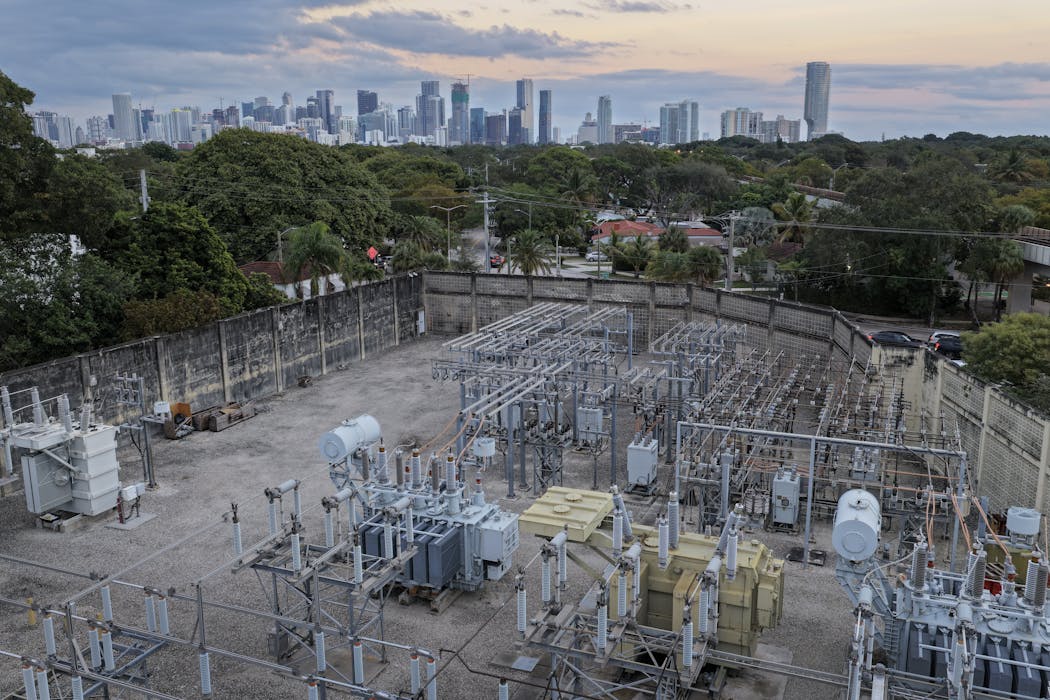
Today’s power grid equipment incorporates internet-connected – and therefore hackable – computers. Joe Raedle/Getty Images

The darkness that swept over the Venezuelan capital in the predawn hours of Jan. 3, 2026, signaled a profound shift in the nature of modern conflict: the convergence of physical and cyber warfare. While U.S. special operations forces carried out the dramatic seizure of Venezuelan President Nicolás Maduro, a far quieter but equally devastating offensive was taking place in the unseen digital networks that help operate Caracas.

The blackout was not the result of bombed transmission towers or severed power lines but rather a precise and invisible manipulation of the industrial control systems that manage the flow of electricity. This synchronization of traditional military action with advanced cyber warfare represents a new chapter in international conflict, one where lines of computer code that manipulate critical infrastructure are among the most potent weapons.

To understand how a nation can turn an adversary’s lights out without firing a shot, you have to look inside the controllers that regulate modern infrastructure. They are the digital brains responsible for opening valves, spinning turbines and routing power.

For decades, controller devices were considered simple and isolated. Grid modernization, however, has transformed them into sophisticated internet-connected computers. As a cybersecurity researcher, I track how advanced cyber forces exploit this modernization by using digital techniques to control the machinery’s physical behavior.

Hijacked machines

My colleagues and I have demonstrated how malware can compromise a controller to create a split reality. The malware intercepts legitimate commands sent by grid operators and replaces them with malicious instructions designed to destabilize the system.

For example, malware could send commands to rapidly open and close circuit breakers, a technique known as flapping. This action can physically damage massive transformers or generators by causing them to overheat or go out of sync with the grid. These actions can cause fires or explosions that take months to repair.

Simultaneously, the malware calculates what the sensor readings should look like if the grid were operating normally and feeds these fabricated values back to the control room. The operators likely see green lights and stable voltage readings on their screens even as transformers are overloading and breakers are tripping in the physical world. This decoupling of the digital image from physical reality leaves defenders blind, unable to diagnose or respond to the failure until it is too late.

people wearing hardhats in front of electrical equipment the size of a small house
Today’s electrical transformers are accessible to hackers.
GAO

Historical examples of this kind of attack include the Stuxnet malware that targeted Iranian nuclear enrichment plants. The malware destroyed centrifuges in 2009 by causing them to spin at dangerous speeds while feeding false “normal” data to operators.

Another example is the Industroyer attack by Russia against Ukraine’s energy sector in 2016. Industroyer malware targeted Ukraine’s power grid, using the grid’s own industrial communication protocols to directly open circuit breakers and cut power to Kyiv.

More recently, the Volt Typhoon attack by China against the United States’ critical infrastructure, exposed in 2023, was a campaign focused on pre-positioning. Unlike traditional sabotage, these hackers infiltrated networks to remain dormant and undetected, gaining the ability to disrupt the United States’ communications and power systems during a future crisis.

To defend against these types of attacks, the U.S. military’s Cyber Command has adopted a “defend forward” strategy, actively hunting for threats in foreign networks before they reach U.S. soil.

Domestically, the Cybersecurity and Infrastructure Security Agency promotes “secure by design” principles, urging manufacturers to eliminate default passwords and utilities to implement “zero trust” architectures that assume networks are already compromised.

Supply chain vulnerability

Nowadays, there is a vulnerability lurking within the supply chain of the controllers themselves. A dissection of firmware from major international vendors reveals a significant reliance on third-party software components to support modern features such as encryption and cloud connectivity.

This modernization comes at a cost. Many of these critical devices run on outdated software libraries, some of which are years past their end-of-life support, meaning they’re no longer supported by the manufacturer. This creates a shared fragility across the industry. A vulnerability in a single, ubiquitous library like OpenSSL – an open-source software toolkit used worldwide by nearly every web server and connected device to encrypt communications – can expose controllers from multiple manufacturers to the same method of attack.

Modern controllers have become web-enabled devices that often host their own administrative websites. These embedded web servers present an often overlooked point of entry for adversaries.

Attackers can infect the web application of a controller, allowing the malware to execute within the web browser of any engineer or operator who logs in to manage the plant. This execution enables malicious code to piggyback on legitimate user sessions, bypassing firewalls and issuing commands to the physical machinery without requiring the device’s password to be cracked.

The scale of this vulnerability is vast, and the potential for damage extends far beyond the power grid, including transportation, manufacturing and water treatment systems.

Using automated scanning tools, my colleagues and I have discovered that the number of industrial controllers exposed to the public internet is significantly higher than industry estimates suggest. Thousands of critical devices, from hospital equipment to substation relays, are visible to anyone with the right search criteria. This exposure provides a rich hunting ground for adversaries to conduct reconnaissance and identify vulnerable targets that serve as entry points into deeper, more protected networks.

The success of recent U.S. cyber operations forces a difficult conversation about the vulnerability of the United States. The uncomfortable truth is that the American power grid relies on the same technologies, protocols and supply chains as the systems compromised abroad.

The U.S. power grid is vulnerable to hackers.

Regulatory misalignment

The domestic risk, however, is compounded by regulatory frameworks that struggle to address the realities of the grid. A comprehensive investigation into the U.S. electric power sector my colleagues and I conducted revealed significant misalignment between compliance with regulations and actual security. Our study found that while regulations establish a baseline, they often foster a checklist mentality. Utilities are burdened with excessive documentation requirements that divert resources away from effective security measures.

This regulatory lag is particularly concerning given the rapid evolution of the technologies that connect customers to the power grid. The widespread adoption of distributed energy resources, such as residential solar inverters, has created a large, decentralized vulnerability that current regulations barely touch.

Analysis supported by the Department of Energy has shown that these devices are often insecure. By compromising a relatively small percentage of these inverters, my colleagues and I found that an attacker could manipulate their power output to cause severe instabilities across the distribution network. Unlike centralized power plants protected by guards and security systems, these devices sit in private homes and businesses.

Accounting for the physical

Defending American infrastructure requires moving beyond the compliance checklists that currently dominate the industry. Defense strategies now require a level of sophistication that matches the attacks. This implies a fundamental shift toward security measures that take into account how attackers could manipulate physical machinery.

The integration of internet-connected computers into power grids, factories and transportation networks is creating a world where the line between code and physical destruction is irrevocably blurred.

Ensuring the resilience of critical infrastructure requires accepting this new reality and building defenses that verify every component, rather than unquestioningly trusting the software and hardware – or the green lights on a control panel.

The Conversation

Saman Zonouz receives funding from the Department of Energy Office of Cybersecurity, Energy Security, and Emergency Response (DOE CESER) and the National Science Foundation (NSF).

ref. Hacking the grid: How digital sabotage turns infrastructure into a weapon – https://theconversation.com/hacking-the-grid-how-digital-sabotage-turns-infrastructure-into-a-weapon-272874

‘Expertise’ shouldn’t be a bad word – expert consensus guides science and society

Source: The Conversation – USA – By Micah Altman, Research Scientist, MIT Libraries, Massachusetts Institute of Technology (MIT)

Training and experience are the foundation for a group of experts to provide solid guidance. Tashi-Delek/E+ via Getty Images

A growing distrust of expertise is reshaping the terrain of science in the United States.

Since the pandemic, the partisan divide over science has widened dramatically. While 77% of Americans have at least a fair amount of confidence that scientists act in the best interests of the public, that breaks down to 90% of Democrats and 65% of Republicans.

If people think scientists are trying to impose their political beliefs rather than expressing honest scientific judgments in the pursuit of truth, public trust in expert consensus will continue to erode.

With recent events, such as Robert F. Kennedy Jr. replacing the expert vaccine panel at the Department of Health and Human Services, and the Trump administration threatening to withdraw research funding from universities that don’t follow its ideological dictates, the political divide in public perception may grow even deeper.

As social scientists who study the role of science in society, we are deeply concerned about the decline of public trust in expertise, which is often fueled by politicians who manipulate people’s suspicions about experts. Skepticism is sometimes justified, of course. But a system based on expertise is the best one modern democracies have come up with to offer guidance on the various complex issues they face.

younger man smiles putting on a short white doctor's coat with two older men behind
Education and training within accredited programs help people gain expertise.
Anthony Souffle/Star Tribune via Getty Images

Who is an expert?

Before you can place your trust in a community of experts, you need a way to determine who counts as an expert. Modern societies usually do this through a sequence of training within accredited schools and universities – institutions whose reputations depend on their ability to train reliable and trustworthy experts.

Unlike the ancient alchemists’ guilds or modern elites, science is not secret, nor gated by family descent or social ties. Today anyone is permitted to become a scientific expert by attaining academic degrees and certifications and establishing a public track record of published research, teaching and contributions to one’s field.

The government also plays a critical role by requiring doctors or engineers to hold certain degrees or by granting universities formal quality certifications, such as accreditation. As an individual, you can’t evaluate the trustworthiness of every person claiming to have expertise – whether a heart surgeon or an electrician. The governmental license carried by these professionals makes that unnecessary.

In any field of knowledge, there is a web of legitimacy, knotted together by visible signals of trust, such as degrees, publications, affiliations and accreditations. Expertise is a team sport.

What is expert consensus?

The most reliable guidance is based on a rigorous group decision-making process, in which people with diverse training and experience contribute their expertise to a dialogue aimed at reaching consensus. The scientific approach to consensus is transparent and deliberate: Scientific consensus processes – such as the National Academies consensus study process, or a PRISMA review – are systematic in incorporating the credible evidence that is available and synthesizing different expert judgments.

The system, honed over decades, is based on the theory that better decisions can be achieved by systematically aggregating many independent opinions – if the group is well trained, draws from a common body of evidence, relies on a common understanding of research practices, and each of its members are able to independently weigh the evidence.

Such communities of experts arise in many settings, from engineers recommending building codes to epidemiologists proposing policies to contain a viral epidemic.

An expert community doesn’t need everyone to be right – or even to agree – in every case for the process to generate useful results. As long as each person is usually right and the community deliberates systematically on the basis of reason and evidence, the resulting consensus will be the best that can be achieved within the limits of current knowledge.

In short, expert consensus requires trained experts, common evidence and systematic deliberation.

Professional consensus vs. individual opinion

Expert consensus doesn’t mean that experts agree on everything, or that everyone must agree with the experts. In a democracy, expert advice is valuable, but it’s not the last word.

The U.S. Bill of Rights enshrines the idea that freedom of speech is fundamental to good government and to leading good lives. But there’s a distinction between speaking one’s mind and speaking from authority. Experts have a right to express their personal opinions and also a duty to exercise care when speaking in areas of their expertise.

This distinction is at issue in the Chiles vs Salazar case before the Supreme Court. It centers on a Colorado state law that prohibits so-called “conversion therapy” for gay or trans children.

Does doing so violate the free speech rights of therapists? It’s not illegal to believe trans children can be talked out of being trans, it’s just illegal to pursue that practice as a licensed professional, because medical experts have reached a consensus that conversion therapy is both useless and harmful.

Expert consensus is necessary to make sound decisions based on science and evidence, but that doesn’t mean experts must abstain from politics or refrain from expressing dissenting opinions. In fact, political restrictions on scientific debate weaken science, as seen in repressive societies.

people seated around a meeting-room table seen through a glass wall
Experts can disagree in good faith – and that doesn’t mean the system doesn’t work.
FangXiaNuo/E+ via Getty Images

What does expert consensus provide?

In our fractious political climate, people sometimes think divergent expert opinions mean that consensus does not exist, or no experts can be trusted. Some people say, “Do your own research,” which often leads to rejecting consensus and falling victim to conspiracies and disinformation.

In practice, consensus is compatible with substantial disagreement. In many fields, scientific consensus deals with broad patterns rather than individual cases. For example, medical experts may agree on the nature of a specific condition, and the average efficacy of a given treatment, yet make different predictions about the benefits for a specific patient.

Society faces pressing questions about the behavior of complex and uncertain systems: How much is climate likely to change if CO₂ emissions continue at the current rate – and what ecological changes should we expect? What accounts for changing cancer rates – and what are the most promising paths to develop a broad “cure”? Are AIs developing intelligence and self-awareness – and how can they be designed to be behave safely? What social institutions are essential for human flourishing – and how can they be preserved?

It’s the fundamental role of democratic government to determine which goals we as a society pursue and how to balance competing values. And when we face high-stakes issues involving complex systems and uncertain approaches, scientific expert consensus can act as an honest broker to provide a menu of possible approaches and predictions for each one’s likely consequences.

The Conversation

Micah Altman received research funding from the National Science Foundation and the Andrew W Mellon Foundation to conduct research related to the science of science, and related to open science.

Philip N. Cohen does not work for, consult, own shares in or receive funding from any company or organization that would benefit from this article, and has disclosed no relevant affiliations beyond their academic appointment.

ref. ‘Expertise’ shouldn’t be a bad word – expert consensus guides science and society – https://theconversation.com/expertise-shouldnt-be-a-bad-word-expert-consensus-guides-science-and-society-271467

Why the establishment of a national school for civil servants matters

Source: The Conversation – UK – By Matthew Flinders, Founding Director of the Sir Bernard Crick Centre for the Public Understanding of Politics, University of Sheffield

Public administration has never been the glitziest or most immediately attractive discipline to study. With this in mind, the government’s announcement that it intends to establish a new National School of Government and Public Services (NSGPS) – in-house training for civil servants – is easily overlooked as little more than administrative tinkering in a world beset by uncertainty and turbulence.

And yet to see this announcement as little more than peripheral politics would be wrong: it matters. Since the previous National School of Government was abolished in 2012 (and the Civil Service College abolished in 1995), the UK has struggled to ensure that its public service professional development and support structures are fit for the future.

This is necessary if the UK is to build an inclusive economy, deliver its industrial strategy, deal with its “productivity puzzle”, and manage those issues that now sit within the UK’s National Risk Register (such as the threat from extreme weather events). More generally, if it is to escape the dominant “broken Britain” doom-loop narrative, then it needs to radically rethink how it supports politicians and officials across different governments and at all levels of the UK to govern effectively. This is why the creation of a NSGPS matters.

The slight concern is the UK government’s plan to move quickly. A promise to “move fast and fix things” – as made in chief secretary to the prime minister Darren Jones’ speech introducing the measure – is only a good approach once you are clear what actually needs to be put in place to fix the problem. In some ways the creation of a new NSGPS is too important to rush, and a more moderated design and delivery plan is possibly needed.

Five questions could help take this discussion forward.

1. What does success look like?

The creation of an internationally recognised centre of excellence for training, supporting and nurturing politicians and public servants across the UK in an inclusive and positive manner that is responsive to changes in context, society and technology.

Business meeting top down view
It’s important to learn from past successes.
Summit Art Creations/Shutterstock

Critically, it should offer a capacity to identify and learn from successful public policies across the UK, and from different countries in the world. As Pat McFadden argued when he was chancellor of the Duchy of Lancaster in December 2024, public services needs to get better at learning from “things that have gone right”.

2. What does it need?

Stability. If the NSGPS is to flourish and thrive then it cannot be established based on short-term funding guarantees. Ideally it needs an endowment-based model of funding which is managed by an independent trust to facilitate innovation and flexibility. The churn and change that has defined reform in this area cannot continue. It’s a total waste of money.

3. What structure might it adopt?

A flexible one. Not a large country house but a hub-and-spoke model where different providers (universities, consultancies, professional associations) provide a patchwork of services which range from one-to-one mentorship and support right through to action-based learning opportunities and crucible-type initiatives that bring people from different specialisms together.

The Australian and New Zealand School of Government can provide information and inspiration but a bold and ambitious approach in the UK might look to go even further, especially as lots of relevant investments have already been funded.

4. What’s the USP?

Simple – the NSGPS must facilitate mobility. That is, the mobility of people, knowledge and talent across traditional professional, organisation, geographical and sectoral boundaries.

The “public services” dimension of the NSGPS signals a massive opportunity to connect and catalyse with leadership support structures in many sectors (local government, NHS, regional mayors). It cannot be focused on the civil service and must deliver policy learning by building relationships.

5. Where’s the pinch?

Culture. Any minister who is announcing a bold new training initiative for the civil service is almost bound to concede that they will work with the civil service to change the system. However, this creates an obvious risk in the sense that continuity may end up defeating the need for change. Social scientists have for some time recognised the disruptive value of “cultural strangers” – radical new thinking – and a NSGPS must somehow inject a degree of criticality and challenge.

The minister’s announcement that the NSGPS would be “a new centre for world class learning and development within the Cabinet Office” arguably jarred with the broader emphasis on innovation, connectivity and change. Where is the evidence from previous initiatives that the Cabinet Office possesses the capacity to facilitate the mobility of people, ideas and knowledge?

Despite these hurdles, thought, the government’s commitment to establish a new NSGPS matters because dangerous populist narratives are based on claims of governing incompetence. Public trust in political institutions and political processes are at worrying low levels.

Investing in the professional support systems that will help enable politicians and public servants at all levels of government to deliver on their commitments is long overdue. It provides an opportunity to focus not on specific issues or problems, but on systemic improvement and systems leadership based on the realities of working in a quasi-federal, multi-level governance system.

The Conversation

Rebecca Riley receives funding from ESRC as Principle Investigator on the Local Policy Innovation Partnership Strategic Hub . She is affiliated with the Labour Party.

Ian C Elliott and Matthew Flinders do not work for, consult, own shares in or receive funding from any company or organisation that would benefit from this article, and have disclosed no relevant affiliations beyond their academic appointment.

ref. Why the establishment of a national school for civil servants matters – https://theconversation.com/why-the-establishment-of-a-national-school-for-civil-servants-matters-273938

Trump at Davos marks the start of a new era in world affairs

Source: The Conversation – UK – By Robert Dover, Professor of Intelligence and National Security & Dean of Faculty, University of Hull

Donald Trump’s concern about the strategic positioning of Greenland is rational. But the way the US president has approached the issue is not – and could still rupture Nato and cause enduring harm to North Atlantic political and economic relations. The question for those attending the World Economic Forum in Davos all week has been how to respond to Trump’s ambition for the US to own Greenland by hook or by crook.

His speech on January 21 – which appeared to concede that the US will not take Greenland by force – and his subsequent claim of having negotiated what he referred to as a “framework agreement” with the Nato secretary-general, Mark Rutte, have at least given the assembled heads of state something to work with.

But America’s allies are faced with a series of options. They could try to wait out the 1,093 days left in Trump’s term in the hope that nothing drastic happens. They could appease Trump by conceding to some of his demands. Or alternatively they could activate the economic “bazooka” threatened by the French president Emmanuel Macron – although this is now less likely due to Trump’s decision to row back back on his threat to impose additional sanctions on countries that opposed his Greenland plans.

Finally, they could try to actively resist US aggression towards Greenland. Although, thankfully, Trump appears to have backtracked – for now – on his threat to use force.

A key strategic location

The US president’s Davos speech pitched his interest in Greenland in strategic terms. The Pituffik space base (formerly Thule air base) is a prime location to monitor Russian and Chinese aerospace and maritime activities as well as being an early warning base for missile protection.
This is increasingly important, given Russian military activity and stated claims to the polar region and China’s reference to the Arctic in its “Polar Silk Road” strategy.

In economic terms, Greenland’s melting ice has revealed the world’s eighth-largest deposits of rare earth elements and an estimated 31 billion barrels of oil. These are important to the US, which is seeking to reduce its dependency on China and to exert its own mineral and energy dominance. In the Davos speech, Trump emphasised US energy requirements while claiming not to covet Greenland’s mineral wealth.

Melting ice has similarly opened up Arctic shipping routes. This has made Greenland a strategic location both for influencing global trade and for projecting military power.

Trump has framed his desire to acquire Greenland in terms of his ambition to provide security for the west as a whole. Owning Greenland, he told the WEF, would allow him to build the “greatest Golden Dome ever built” – a missile defence shield which he claims would provide security for the whole world.

His speech revealingly framed his intentions towards Greenland in existential terms which also had echoes of his real estate origins. He said: “And all we’re asking for is to get Greenland, including right, title and ownership, because you need the ownership to defend it. You can’t defend it on a lease.”

This, of course, is wrong. Denmark has made it clear that the US is welcome to grow its military presence on the island, pointing out that during the cold war it had tens of thousands of troops stationed there. Equally the US would be welcome to invest in mineral exploration and investment with Denmark’s blessing. And
the fact is that Denmark cannot sell Greenland without the consent of the 57,000 Greenlandic people.

But in turning the whole thing into a raw power struggle, the situation has become akin to the 19th-century “great game” played out by the colonial powers.

Stephen Miller, a senior Trump advisor throughout his time in office, said recently that the world has always been ruled by “strength” and “power”, not the “niceties of international law”. Trump has gone further, telling the New York Times in a two-hour interview published on January 11, “I don’t need international law”, and that he is only constrained by: “My own morality. My own mind. It’s the only thing that can stop me, and that’s very good.”

An American world?

If it comes down to it, Europe will find it very hard to resist America. Europe is almost inextricably intertwined – economically and militarily – with the US. A separation would have severe consequences, with military and intelligence capabilities compromised and access to modern computing and finance seriously curtailed. For the UK outside of the EU, since Brexit, the position is – if anything – even worse.

There is a dawning realisation that the US might be Europe’s adversary, not ally. The Belgian prime minister, Bart De Wever, commented in a panel discussion at Davos that a “number of red lines are being crossed” by Trump and Europe now appeared to be facing the loss of its self-respect: “Being a happy vassal is one thing, being a miserable slave is something else. If you back down now you’re going to lose your dignity.”

Much is being made of the contrast between the US president’s speech on January 21 and the speech delivered by the Canadian prime minister, Mark Carney, the day before. Carney’s speech was hailed by many as being epoch-defining, in the words of one journalist on a par with Churchill’s Iron Curtain speech.


Read more:
One venue, two speeches – how Mark Carney left Donald Trump in the dust in Davos


Carney talked of “a rupture in the world order, the end of a pleasant fiction and the beginning of a harsh reality”. The rules-based order, Carney said, was “fading” and that the multilateral institutions on which the world depended were under serious threat from great power dominance. It was now up to the rest of the world to stop pretending and face up to the new harsh reality.

It is in this context that America’s Nato partners need to decide whether Trump should be appeased or resisted. Once we know more about his mooted “framework” for the future of Greenland, that choice should become clearer.

The Conversation

Robert Dover does not work for, consult, own shares in or receive funding from any company or organisation that would benefit from this article, and has disclosed no relevant affiliations beyond their academic appointment.

ref. Trump at Davos marks the start of a new era in world affairs – https://theconversation.com/trump-at-davos-marks-the-start-of-a-new-era-in-world-affairs-274007

The pandemic’s hidden toll: millions of chronic conditions left undiagnosed

Source: The Conversation – UK – By Mark Russell, NIHR Advanced Fellow, Rheumatology and Epidemiology, King’s College London

ITS/Shutterstock.com

When COVID hit, healthcare systems around the world were turned upside down. Hospitals cleared beds, routine appointments were cancelled and people were told to stay at home unless it was urgent. In England, visits to family doctors and hospital admissions for non-COVID reasons fell by a third in the early months of the pandemic. Medical staff were redeployed, routine clinics were cancelled and diagnostic tests were postponed.

Against this backdrop, the number of people newly diagnosed with long-term health conditions fell sharply, as our new study, published in the BMJ, has found. My colleagues and I used anonymised health data for nearly 30 million people in England to evaluate what happened to new diagnoses across a wide range of chronic diseases.

The drop in diagnoses during the early pandemic was most pronounced for conditions that usually rely on routine tests or specialist review for diagnosis. New diagnoses of asthma fell by over 30% in the first year of the pandemic, while diagnoses of chronic obstructive pulmonary disease (COPD) dropped by more than half. Both conditions depend on breathing tests that were widely disrupted during the pandemic, causing large backlogs in testing.

Similarly affected were skin conditions such as psoriasis and atopic dermatitis. While some people may have delayed seeking medical attention for these conditions during a time of unprecedented disruption, others will have been affected by delays in referral for specialist review and diagnosis.

For many conditions, delays in diagnosis matter. Osteoporosis is a common condition in which bone thinning can lead to serious fractures. There are highly effective drugs that can prevent fractures from osteoporosis, but they are usually only prescribed after the condition has been diagnosed.

New diagnoses of osteoporosis fell by a third early in the pandemic and did not return to expected levels for almost three years. As a result, more than 50,000 fewer people than expected were diagnosed with osteoporosis in England between March 2020 and November 2024.

Patterns of recovery

As the immediate disruption during the early pandemic eased, diagnosis rates for many conditions slowly recovered. The differences in recovery patterns across different diseases have been striking, however. Two conditions stand out: depression and chronic kidney disease.

New diagnoses of depression fell by nearly 30% in the first year of the pandemic. Rates then partially recovered, but have dropped again considerably since 2022. This does not necessarily mean that fewer people are experiencing symptoms of depression. A doubling in the number of disability claims for mental health conditions in England between 2020 and 2024 suggests otherwise.

Several factors could help explain this disconnect. Continuing pressure on healthcare services may mean that people are waiting longer for formal diagnoses.

People may also be accessing healthcare services differently. In 2022, guidelines for depression management in England were updated to recommend talking therapies (such as cognitive behavioural therapy) as an initial treatment for mild depression, rather than antidepressants.

In England, people can refer themselves directly for talking therapy without needing to see a doctor first. As a result, some people receiving support for depression symptoms may never receive a formal diagnosis in their medical records, giving the impression that diagnosis rates are falling.

Changes in disease classification may also be playing a role. While depression diagnoses have declined, new diagnoses of attention deficit hyperactivity disorder (ADHD) and autism spectrum disorder have risen sharply in England. This may reflect a shift in how overlapping symptoms are being interpreted and labelled, rather than sudden changes in how common they are.

Chronic kidney disease shows a very different pattern. Diagnosis rates have doubled since 2022, making it one of the few conditions in the study to have increased above pre-pandemic levels. There are several different ways of interpreting this finding.

The recent increase in diagnoses might result from improved detection of undiagnosed kidney disease. Recommendations in England were updated in 2021, recommending routine testing for kidney disease in people at higher risk, such as those with diabetes or high blood pressure.

Importantly, new treatments for chronic kidney disease mean that earlier detection can improve outcomes for patients.

Another possibility is that the pandemic itself has contributed to an increase in chronic kidney disease, directly or indirectly. COVID infection has been linked to lasting reductions in kidney function in some people. Delayed diagnosis and treatment of other conditions, including diabetes, may also have had knock-on effects on kidney-related complications from these diseases.

One of the most important messages from the study is that it is now possible to detect changes in disease patterns far earlier and more comprehensively than was previously imaginable. Until recently, data often became available years after events had already unfolded. By the time patterns were recognised, opportunities to respond had often passed.

Secure, anonymised analysis of medical records allows researchers to track diagnoses and treatments in near real time, revealing the effects of disruptions, recoveries, and new guidelines as they happen. While the findings highlight ongoing challenges for healthcare, they also show that timely data can help guide more effective responses.

And so, while many of the findings from this study are sobering at a time when healthcare systems remain under enormous strain, they also point to a new opportunity. The pandemic may have disrupted care, but it has also driven innovations that have revealed patterns that would once have taken years to detect.

The Conversation

Mark Russell receives research funding from the National Institute for Health and Care Research (NIHR).

ref. The pandemic’s hidden toll: millions of chronic conditions left undiagnosed – https://theconversation.com/the-pandemics-hidden-toll-millions-of-chronic-conditions-left-undiagnosed-273418

Mark Carney’s Davos speech marks a major departure from Canada’s usual approach to the U.S.

Source: The Conversation – Canada – By Stewart Prest, Lecturer, Political Science, University of British Columbia

It was a moment of global clarity. Prime Minister Mark Carney’s speech to the world’s political and economic elite gathered in Davos this week described global realities, past and present, with a candour and nuance rarely heard from a serving politician.

The message was twofold.

First, Carney made clear that the world has changed, and the old comfortable ways of global politics are not coming back. Those who wait for sanity to return are waiting in vain. We are in a world increasingly shaped by the threat and the use of hard power. All states must accept that reality.

Despite this, Carney’s second and more hopeful message was that while the globally powerful may act unilaterally, others — notably “middle powers” like Canada — are not helpless.

By finding ways to co-operate on areas of shared interest, states like Canada can pool their limited resources to build what amounts to a flexible network of co-operative ties. Taken together they can provide an alternative to simply rolling over and taking whatever great powers like the United States dole out.

There’s also little choice in the matter if countries want to remain independent. As he eloquently put it: “If we’re not at the table, we’re on the menu.

From ‘elbows up’ to capitulation, and back

The speech represented a remarkable departure from Canada’s usual approach to its relationship its neighbour to the south.

For all the talk of “elbows up” during the 2025 federal election campaign, the Carney government has been somewhat ambivalent since then. It’s placed its hopes in achieving a renewed trading relationship and normalized relations with the U.S. through a combination of good faith negotiations and a steady stream of conciliatory gestures on issues that seemed to matter most to U.S. President Donald Trump.


Read more:
Mark Carney’s apology to Donald Trump: Far from ‘elbows up,’ it seems Canada has no elbows at all


That resulted in Canada committing significant funds to combat a largely non-existent fentanyl trafficking problem and to meet American demands for increased military funding. At times the conciliation verged on placation, as when Canada unilaterally ended relatiatory tariffs on American goods to no discernible effect.

This strategy clearly was not working, however, as Carney made clear in Davos.

While neither America, nor Trump, were mentioned by name, there’s no doubt who’s driving the dramatic global changes Carney was describing. At times the veneer became very thin as Carney reiterated Canada’s support for the sovereignty of Greenland as a territory of Denmark.

In fact, the speech was remarkably blunt in its rebuke of America’s foreign policy during Trump’s second term, drawing attention, as others have, to how U.S. actions leave almost everyone, including Americans, worse off.

Trump’s response

That not-so-subtle barb was not lost on the audience, either in the room or across the Atlantic in the White House.

Trump wasted little time in firing back in the manner and style the world has become accustomed to. During his own address to the World Economic Forum the next day, Trump delivered a rambling and at times confusing speech.

He reiterated his intent to annex Greenland while confusing the island multiple times with neighbouring and also sovereign Iceland, and he took time to single out Carney by name.

“Canada lives because of the United States,” he said. “Remember that, Mark, next time you make your statements.”

The comments provided helpful proof of Carney’s argument, demonstrating the naked threat of power by the American president to coerce its neighbour and ostensible ally. It revealed the kind of “gangster” mindset we see often from Trump, as he effectively said: “Nice country, Mark. Be a shame if something happened to it.”

Critique of past

As blunt as Carney’s assessment of the present was — that the rules-based, liberal international order has faded away — in some ways his critique of the past was even more remarkable. The prime minister spoke with a candour one wouldn’t expect to find at the podium at Davos.

Effectively, Carney correctly characterized the old order as one defined as much by its hypocrisy as by its rules. He acknowledged that countries like Canada benefited from a system in which rules are applied unevenly, and superpowers continue to shape outcomes.

This idea, along with the the need to look ahead in order to survive a new order, appeared to underpin Carney’s exhortation not to mourn the rapidly vanishing old order.

Carney clearly hopes a new system may emerge that is not only more resilient to diverse and unpredictable threats, but is more honest and just.

By finding common ground on shared issues, middle powers can act in accordance with their own values and interests, instead of deferring to the proclaimed values of global power that are frequently violated in practice. Power will always matter, but it doesn’t have to be all that matters.

History in the making?

Carney’s Davos remarks were powerful by any measure. But will he back up his words with action in the months and years ahead?

His speech was met with a rousing standing ovation, and has justly received plaudits from around the world for its clear-eyed description of a less forgiving world order and its vision for how states like Canada can continue to thrive within it.

Whether it proves a speech for the ages, however, depends on what happens next. If Canada is serious about charting a new path, distinct from the great powers of the world, it must do more than talk. Acts like deploying symbolic forces to Greenland if necessary will show a seriousness of purpose. Canada cannot expect others to stand with it if it doesn’t stand with them.

Similarly, Canada must reject schemes like Trump’s “board of peace,” a thinly disguised attempt to replace institutions of global governance with a body composed by and serving at the president’s whim.

Carney has captured the world’s attention with this speech. There’s a lot hanging on what he does with that attention.

The Conversation

Stewart Prest does not work for, consult, own shares in or receive funding from any company or organisation that would benefit from this article, and has disclosed no relevant affiliations beyond their academic appointment.

ref. Mark Carney’s Davos speech marks a major departure from Canada’s usual approach to the U.S. – https://theconversation.com/mark-carneys-davos-speech-marks-a-major-departure-from-canadas-usual-approach-to-the-u-s-274090