The Netherlands is trying to draw a line under a year of chaos with fresh elections – will it work?

Source: The Conversation – UK – By Léonie de Jonge, Professor of Research on Far-Right Extremism, Institute for Research on Far-Right Extremism (IRex), University of Tübingen

Dutch voters are to elect a new parliament for the third time in just five years on October 29. Prime Minister Dick Schoof called a snap election following the collapse of his cabinet in June, just 11 months after it was sworn in.

The immediate trigger was the withdrawal of Geert Wilders’s far-right Party for Freedom (PVV) from the governing coalition. The PVV quit after coalition partners rejected its controversial ten-point plan on migration, which included using the army to secure borders and turning back all asylum seekers.

The Schoof government continued in a caretaker capacity, made up of the remaining three coalition parties: the liberal-conservative People’s Party for Freedom and Democracy (VVD), the newcomer Christian-democratic New Social Contract (NSC), and the agrarian populist Farmer–Citizen Movement (BBB).

However, on August 22, the caretaker government unravelled when NSC foreign affairs minister Caspar Veldkamp resigned over internal disagreements about policy toward Israel. His departure prompted the entire NSC delegation to step down, triggering the second cabinet collapse in as many months.

To understand the current political turmoil, we have to go back to the formation of the Schoof cabinet following the election of November 2023. That resulted in a landslide victory for Wilders’ PVV, paving the way for the most rightwing government in Dutch post-war history.

After months of tense and protracted negotiations, all four coalition party leaders, including Wilders, opted against taking the prime minister role themselves. Instead, they appointed Dick Schoof, a civil servant and former intelligence chief, as prime minister. This unusual “one-foot-in, one-foot-out” arrangement allowed Wilders to exert significant influence over policy without assuming executive responsibility – an unprecedented level of access to power for the far right.

Parliamentary debates soon reflected this shift, with previously fringe ideas like “remigration” and “omvolking” (akin to the great replacement conspiracy) being openly discussed.

The four-party structure was inherently fragile. Deep ideological divisions meant the coalition stumbled from one crisis to another. The inexperience of the cabinet members and the unpredictability of the PVV only made this situation more volatile.

Legislatively, the cabinet achieved little during its 11 months in office, leaving key structural problems such as housing shortages unresolved. Meanwhile, the coalition attempted to bypass parliamentary checks to push through its immigration proposals.

The overall result of a year of chaos: the erosion of democratic norms and principles, and the rapid normalisation of far right ideas.

A gravitational shift to the right

For the past 50 years, rightwing parties such as the VVD, the Christian-democratic CDA and the far-right PVV have consistently outnumbered their leftwing counterparts in Dutch politics – a trend that runs counter to the popular image of the Netherlands as a progressive beacon.

On average, rightwing parties have held around half of the 150 parliamentary seats. This gives them an advantage once votes are counted since they can often form coalitions among themselves. Leftwing parties generally have to seek coalition partners beyond their own bloc.

This pattern is largely driven by voter behaviour. Most voters stay within their ideological lane, switching only between parties on the same side of the spectrum. The only party that regularly attracts support from both sides is the centrist-progressive D66.

Since 2021, a third bloc has emerged: the far right, led by Wilders’ PVV and including the extreme-right Forum for Democracy (FvD) and the FvD-splinter party JA21. This bloc appears to have permanently shifted the political centre of gravity to the right.

As in 2023, the far right is set to play a major role in the 2025 election. Despite a turbulent year in government, the PVV continues to lead the polls. Voters appear undeterred by the party’s failure to govern effectively. This time, Wilders has explicitly said he wants to be the prime minister.

But Wilders isn’t the far right’s only contender. JA21 presents itself as a more “reasonable” alternative on the right, while FvD has undergone a key leadership change: controversial founder Thierry Baudet has handed over the reins to Lidewij de Vos. This move that reflects a broader far-right trend of using female leadership to soften the party’s image.

The centre-right camp, meanwhile, is in flux. The VVD has been slipping in the polls. At the same time, party leader Dilan Yeşilgöz has ruled out further partnerships with Wilders and signalled scepticism towards cooperation with the GreenLeft–Labour alliance. These positions have narrowed the VVD’s coalition prospects and raised questions about the party’s strategy.

The NSC is in free fall. After winning 20 seats from scratch in its 2023 debut, the party now appears likely to secure at most one seat – or potentially none at all. In contrast, the long-struggling CDA is staging a surprising comeback.

Following a historic low of just five seats in 2023, the party is now polling at 22 to 26 seats. This surge has been attributed to the so-called “Bontenbal effect,” named after the party’s popular leader, Henri Bontenbal.

The main contender on the left is the GreenLeft–Labour alliance, led by former European Commissioner Frans Timmermans, which is currently polling in third place behind the PVV and CDA. But the broader picture remains unchanged: the left is a structural minority, facing long odds of governing without support from the centre-right.

Finally, after significant losses in 2023, D66 appears to be recovering. Now polling between 11 and 14 seats, the party may once again play a pivotal role in coalition talks, potentially bridging the centre-left and centre-right blocs.

An uncertain outcome

No fewer than 27 parties are running in this election, and in a political landscape that has become notoriously fragmented and volatile, many voters make their final decisions only at the last minute.

With many medium-sized and smaller parties in the mix, and the PVV effectively barred from government participation, it is difficult to envision what a viable coalition might look like – so protracted coalition talks after election day are likely.

But beyond this uncertainty, the stakes for Dutch democracy are unusually high. The Netherlands has seen an alarmingly rapid normalisation of far-right rhetoric. This election may prove more than just another chapter in political instability, but a defining moment for the country’s democratic future.

The Conversation

The authors do not work for, consult, own shares in or receive funding from any company or organisation that would benefit from this article, and have disclosed no relevant affiliations beyond their academic appointment.

ref. The Netherlands is trying to draw a line under a year of chaos with fresh elections – will it work? – https://theconversation.com/the-netherlands-is-trying-to-draw-a-line-under-a-year-of-chaos-with-fresh-elections-will-it-work-267076


Trump-Putin Budapest summit would have posed threat to international rule of law and Ukraine’s relations with Hungary

Source: The Conversation – UK – By Marc Roscoe Loustau, Affiliated Fellow at the Institute for Advanced Study, Central European University

The US president, Donald Trump, was expected to meet his Russian counterpart, Vladimir Putin, in the Hungarian capital of Budapest in coming weeks for more talks on ending the war in Ukraine.

However, the summit appears to have been cancelled following a call between the US secretary of state, Marco Rubio, and the Russian foreign minister, Sergei Lavrov. The White House gave no reason for the cancellation but some reports suggest the two country’s positions on Ukraine were seen as too far apart to make a face-to-face meeting worthwhile.

While the summit may yet be revived, scepticism that any progress will be made towards peace is probably the right response. Putin’s own actions have shown how little stock he places in summits and negotiations.

Within hours of his August meeting with Trump in Alaska, for example, Russia launched a barrage of strikes against Ukraine. Russian forces staged another series of drone and missile attacks on Ukrainian cities a few days later.

If the Budapest summit were to go ahead, above all it would be a boon for Hungarian prime minister Viktor Orbán, who has long been Putin’s strongest ally in the EU. His invitation to Putin risks causing further damage to the international rules-based order and the already strained relationship between Hungary and Ukraine.

A meeting in Budapest would also pose a threat to the International Criminal Court (ICC), which aims to place checks on the power of national leaders by prosecuting them for grave crimes. The ICC issued a warrant for Putin’s arrest in 2023 for his alleged involvement in the war crime of forcibly deporting children from Ukraine to Russia.

Hungary’s government has announced its intention to withdraw from the ICC treaty. This decision came shortly after it decided to flout an arrest warrant for Israel’s prime minister, Benjamin Netanyahu, in April 2025. But as Hungary has not yet completed this process, it remains obliged to detain the Russian leader.

In response to a question from the New York Times about Putin’s visit to Hungary, the ICC’s public affairs office reinforced the legal obligation of its member states to enforce arrest warrants. It added that in the “case of noncooperation, the court may make a finding” and alert an oversight group to take action.

But the ICC is regularly criticised for being powerless to effect real justice, and the Hungarian government’s invitation to Putin and refusal to detain him in Budapest will only weaken its standing further.

Worsening strained relations

A Budapest summit would also be a death knell for diplomacy between Hungary and Ukraine. Relations between the two neighbouring countries have been suffering for years due to Orbán’s attempts to cultivate stronger ties with Russia.

Most of the western world sought to isolate Russia diplomatically after its full-scale invasion of Ukraine in 2022. However, Orbán flew to China to meet with Putin in 2023 and his foreign minister, Péter Szijjártó, has subsequently been sent on repeated missions to Moscow.

Hungary’s real value for Putin lies in shaping EU foreign policy. And, at every step, Orbán has used Hungary’s veto power to block or delay the EU’s efforts to support Ukraine and tighten the screws on Russia’s economy. Despite efforts by the EU to reduce the bloc’s reliance on Russian energy, Orbán continues to import Russian natural gas.

Budapest has also repeatedly accused Kyiv of discriminating against western Ukraine’s ethnic Hungarian minority. The dispute centres around Ukraine’s language laws, which require at least 70% of education above fifth grade to be conducted in Ukrainian.

Hungary has used this to cast aspersions on the international reputation of Ukraine as a democracy that fosters pluralism, and has blocked Ukraine’s EU accession talks. EU accession requires candidate countries to provide human rights and protection guarantees for national minorities.

As I learned while reporting in the western Ukrainian city of Uzhhorod in June, minority community leaders themselves point out that they have had success negotiating directly with Kyiv.

Ukraine has also introduced an action plan to protect the rights of minorities. This plan is based on recommendations from national minority organisations, the European Commission and the Council of Europe. But Orbán, intent on maintaining his leverage over Ukraine, has ignored this progress.

Bilateral relations were dealt another blow in May 2025 when Ukrainian authorities arrested two people, claiming they were collecting sensitive information about air-defence systems. Ukraine’s security service said the spy ring was run by a “staff officer of Hungarian military intelligence”, an allegation Hungary denies.

Several months later, after Russia sent drones into Nato airspace over Poland and Romania, Hungary targeted Ukraine with a similar manoeuvre. It sent several of its own drones across the border into Ukraine’s Zakarpattia region, prompting an angry demand from Ukrainian president Volodymyr Zelensky for an explanation.

A total breakdown in Hungarian-Ukrainian relations now could cut direct communication between the two countries entirely, just when they might be needed to avoid a conflict resulting from Hungary’s continuous provocations.

Weathering the fallout

Orbán’s fiercest critics have long called for the EU to take action against Hungary, beyond what the bloc has already done by withholding funds from Budapest for consistently flouting EU standards and democratic principles.

But European policymakers should not focus only on punishments. They could give Zelensky a major geopolitical win by, for example, announcing that Ukraine has met a major accession benchmark.

If this were a benchmark concerning protection for national minorities, it would have the additional benefit of undermining one of Hungary’s major claims against Ukraine’s integration efforts.

Regardless of the specifics, pushing ahead swiftly with Ukraine’s EU accession would be a bold and constructive reply to Trump and Orbán’s attempts at rapprochement with Putin.

This article has been updated to include the cancellation of the summit.

The Conversation

Marc Roscoe Loustau does not work for, consult, own shares in or receive funding from any company or organisation that would benefit from this article, and has disclosed no relevant affiliations beyond their academic appointment.

ref. Trump-Putin Budapest summit would have posed threat to international rule of law and Ukraine’s relations with Hungary – https://theconversation.com/trump-putin-budapest-summit-would-have-posed-threat-to-international-rule-of-law-and-ukraines-relations-with-hungary-267881

Fertility: the ovaries play a key role in reproductive decline, new research shows

Source: The Conversation – UK – By Anna Murray, Professor of Human Genetics, Department of Clinical and Biomedical Sciences, University of Exeter

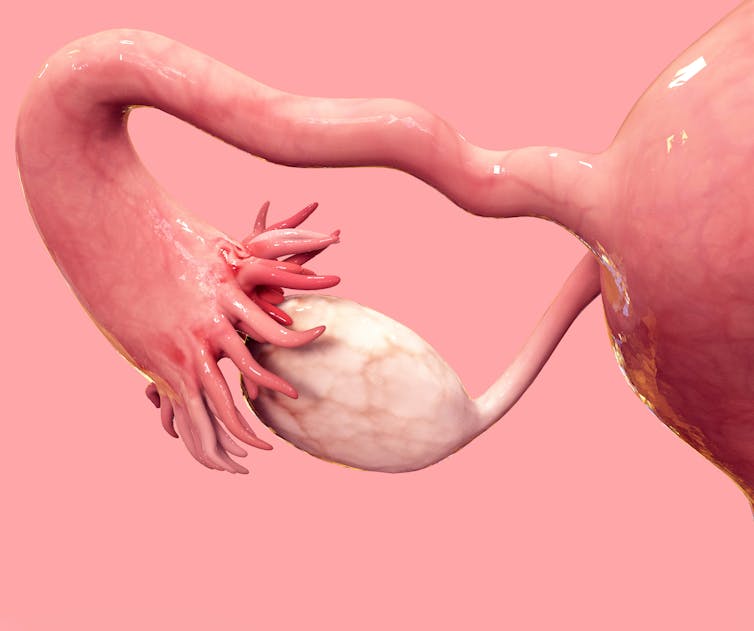
The ovaries play a bigger role in fertility’s decline than once thought. simonizt/ Shutterstock

A woman’s fertility usually begins to decline in her mid-30s. This means the chances of becoming pregnant decreases drastically each month.

For a long time, scientists thought that the key culprit behind this rapid decline in fertility was egg quality. This is understandable, since women are born with all of the eggs they will ever have – and as they get closer to the menopause, the number of eggs in the ovary decreases. So too does the quality of these eggs.

But a recent study shows that the ovary’s cells and tissues play a bigger role than previously thought in how fertility wanes. This finding could have major implications for how we understand the fundamental process of reproductive ageing and how fertility might be preserved.

Studying fertility has long been difficult to do. Not only is women’s health research historically underfunded, it’s also difficult to study because the ovaries and ovarian tissues are hard to access.

In such cases, scientists typically use laboratory animals whose biology closely resembles a human’s. But it’s again tough to do this, given humans are one of only a handful of species that go through menopause. The only other animal species that go through the menopause are certain types of whales — including orcas and belugas.

But while only a few animal species actually go through the menopause, many animals share a similar ovarian biology as humans. This is why the research team began their investigation into reproductive ageing by using mice.

The research team took ovary tissue from young and old mice, and compared it to ovaries from women in their 20s, 30s and 50s. They then used 3D-imaging and compared the gene profiles of the cells in the ovaries to generate detailed maps of the different cell types and their functions across the lifespan.

They found both similarities and differences in ovarian function and ageing between mice and humans. These initial findings were important in confirming which instances mice might be useful as a model when studying human fertility.

They found that older eggs were more similar in humans and mice than younger eggs were. Human and mouse ovaries also contain similar cell types which support the growth of the egg.

In humans, granulosa cells surround the egg and produce oestrogen. Mice appear to have a similar type of cell, which performs a similar function.

However, theca cells, which in humans produce testosterone and stimulate the granulosa cells, appear to operate differently in mice.

A digital rendering of the ovary.
The ovary’s tissues and cells contribute to the decline in fertility that occurs after 30.
Shot4Sell/ Shutterstock

The researchers found evidence that a particular nerve support cell, called a glial cell, is present within both mouse and human ovaries – and that this cell develops early in foetal life. In both humans and mice, the glial cells appear to stimulate the ovary to produce eggs.

They also genetically manipulated the development of glial cells in mice and found the ovaries mimicked what is seen in polycystic ovarian syndrome (PCOS). Doing this led to more early-stage eggs developing in the ovary – but these failed to mature properly. The result provides hope that mouse models could help develop new, much-needed treatments for PCOS.

By comparing ovaries in the old and young, researchers found that the tissue structure in humans and mice differed. Humans develop gaps between the eggs – and the ovary becomes stiffer as more fibrous tissue is laid down, probably due to ovulation and repair of the tissue over a woman’s reproductive life.

These changes in the ovary’s cells and tissues could explain why human ovaries age relatively earlier than other species. This study’s findings also show that it isn’t just the eggs, but rather the broader ecosystem of the ovary, that contributes to the decline in fertility that occurs after 30.

Being able to use animal models for research into women’s health will advance our understanding of conditions such as PCOS and infertility, which have been historically underfunded and under-researched. It will allow researchers to better study the reproductive diseases which affect women and develop new drugs that can treat these debilitating conditions.

This knowledge improves understandings of the fundamental processes of ovarian ageing which will enable better diagnosis and treatments of infertility.

The Conversation

Anna Murray is a co-founder and consultant for OvartiX Limited. She receives funding from the MRC and Wellcome Trust. She is affiliated with the University of Exeter.

ref. Fertility: the ovaries play a key role in reproductive decline, new research shows – https://theconversation.com/fertility-the-ovaries-play-a-key-role-in-reproductive-decline-new-research-shows-267460

Stirling prize 2025: Appleby Blue pioneers affordable social housing tackling elderly loneliness

Source: The Conversation – UK – By John Flint, Professor of Town and Regional Planning, University of Sheffield

The winner of the 2025 RIBA Stirling prize offers an inspiring blueprint for addressing some of our current housing crises. It is also an opportunity to reflect on long-standing dilemmas in providing appropriate accommodation for all.

Architects Witherford Watson and Mann won the prize, for the second time, for the Appleby Blue development. Run by the United St Saviours Charity in Bermondsey, South London, it provides 57 units of one and two bedroom apartments for residents aged over 65, with 11 units fully wheelchair accessible.

It is explicitly a new take on urban almshouses, which date back to the Middle Ages. Throughout their history, almshouses have primarily provided accommodation for the elderly.


Read more:
How the high-rise tower block came to symbolise the contradictions of modern Britain


The almshouse was historically called a “hospital for the poor”. One of the architect’s behind Appleby Blue, Stephen Witherford, points out the intersections between housing and health crises. Often hospital beds are occupied by elderly people because of a lack of appropriate accommodations that fit their needs, paired with a wider lack of mechanisms enabling elderly residents to downsize from their existing homes, Witherford notes.

United St Saviours Charity can be traced back to 1541. The charity’s modern day specialist staff carry a lineage going back to the initial wardens charged with managing the estate and looking after the poor of the parish.

Appleby Blue attempts to address two intersecting crises: the lack of accessible and affordable housing, especially in London and growing levels of loneliness among older people. We face a paradox, while cities like London become more densely populated social connections between us are seen to have reduced, particularly since COVID-19.

The development was partly funded through Section 106 agreements between Southwark Council and the developer JTRE. These legal agreements ensure infrastructure, services, or affordable housing to mitigate the impact of a new development. This is an important agreement when developers are challenging the financial viability of providing affordable social housing or infrastructure as part of new development programmes.

In addition to a design focused on light and space and technical adaptions enabling residents to live as independently as possible, its principal aim is to foster connections – both between residents and with the wider community.

The new development retains the courtyard that has often been a feature of almshouses. As well as the shared courtyard there is a rooftop garden, and spacious balconies, which are provided as spaces for interaction. Britain has a somewhat chequered history of attempts to engineer sociability through the architecture of public housing, including the use of wide deck access in high rise developments.

However, the development seeks, in the words of the judges, to “combine function and community”. This mission recognises that the cohesive design needs to be complemented by shaping daily practices in a way that reduces isolation. The communal kitchen is at the heart of this and while the development includes resident-only spaces, it also emphasises public communal areas, a welcome contrast to “poor door” mechanisms to segregate social and private homes in some other London developments.

There is a deliberate attempt to promote interactions with the wider local community, including shared cooking and dance classes and singing groups. Intergenerational engagement is particularly emphasised, with a toddler’s group and local school children involved in the social activities. This offers an innovative take on a longstanding dilemma in social housing about whether to aim for allocations that mixed generations and household types or to provide more specialist, but separate, accommodation.


Read more:
Stirling Prize 2024: a welcome turn towards reuse and retrofit but too safe to represent the UK’s ‘best’ architecture


Encouraging residents to engage in communal activities has been a constant feature, for example of the housing cooperative movement, with mixed results. But here, the focus is on shared interests and mutual skills development, for example cooking, rather than on volunteering or involvement in the management of the development.

Appleby Blue is also deliberately an ongoing site of research. It includes accommodation spaces for researchers. A study by the University of Bournemouth has evaluated the impact of the development on its residents and other studies are ongoing. This is a welcome reminder about how important robust scientific evidence is in understanding what works in housing for the elderly.

There is much to admire, architecturally and socially, about Appleby Blue. An obvious challenge is the extent to which its specific elements, from affordability to design and specialist support, could be scaled up or replicated more widely given the extent of the crises we face. But that doesn’t mean we shouldn’t celebrate and learn from its pioneering features, including its lessons for tackling loneliness, which is certainly not confined to the elderly.


Looking for something good? Cut through the noise with a carefully curated selection of the latest releases, live events and exhibitions, straight to your inbox every fortnight, on Fridays. Sign up here.


The Conversation

John Flint is not currently receiving funding from an organisation. He has previously received research funding from the UKRI, Joseph Rowntree Foundation, Nuffield Foundation, a number of UK Government Departments, the Scottish Executive/ Government, the Welsh Assembly Government and local authorities He is a Trustee of the Housing Studies Charitable Trust.

ref. Stirling prize 2025: Appleby Blue pioneers affordable social housing tackling elderly loneliness – https://theconversation.com/stirling-prize-2025-appleby-blue-pioneers-affordable-social-housing-tackling-elderly-loneliness-268017

The maps of Ursula K Le Guin reveal a fascinating insight into world-building in fantasy fiction

Source: The Conversation – UK – By Mike Duggan, Lecturer in Digital Culture and Technology, King’s College London

One of the most prolific science-fiction writers of the last century, Ursula K. Le Guin was revered for her inventive, genre-defying novels. Exploring humanity through philosophy, gender, race and society, her stories were rooted in fantasy worlds for which she often created original maps. Now a new exhibition in London is celebrating the cartographic imagination of this groundbreaking American author.

The Word for World: The Maps of Ursula K. Le Guin reveals how maps were central to the other-world building she was so famous for. Fans will find much to enjoy here, including the opportunity to walk around enlarged screenprints of well-known maps from books such as Earthsea and Always Coming Home. They will also have the chance to pore over unpublished maps and artworks from the Le Guin Foundation archive.

Thanks to the accompanying book of the same name, readers will be be able to absorb a deeper sense of maps as world-making and storytelling devices, as scholars and commentators discuss their significance in Le Guin’s oeuvre.

Much has been said about the ways Le Guin began her writing process by drawing a map, where she would place characters and narratives in the bounded space of an world etched out in cartographic form. This was as much a way for her to imagine a world as it was a technique to structure a story about it.

There is now an established field of maps studies called literary cartography that explores the way writers of fiction, poetry and folklore use maps in storytelling. It also examines how literary maps, printed alongside the stories they shape, are used by the reader as a way into a world and a device for understanding it.

It is here that maps take on a life of their own as they seep into the imagination of the reader, becoming a well-loved and remembered part of the story.

How literary maps circulate

The exhibition tells us about the context in which maps are understood and how maps circulate in society, creating new meanings along the way.

In the gallery space, Le Guin’s maps are looked at in isolation rather than relating directly to a text. They demand a different kind of attention, for there is a different form of visual connection between a viewer and a gallery object than between a reader and a book. So the maps are taken out of their original context and placed in another. But this isn’t to say this new context is any less significant.

My research has shown that the circulation of maps in a society is as important as what’s on the maps themselves. The context of where a map is used, and who it is used by, matters. Those with the power to shape a narrative with a map can have more impact than those that do not.

Consider, for example, the way maps are used in migration debates to show clear delineation of who belongs and who does not. Those with the ability to enforce and debate the border lines shown on the map have far greater power than the migrants that might use the same maps to try and cross them.

Bruno Latour’s immutable mobiles theory resonates here – the idea that what’s on a map remains stable, but the map itself is mobile as it circulates amongst different people with different interests.

Who maps are seen by, how they are understood, and where they end up are key considerations for map scholars. The Word for World exhibition is a good example of where literary cartographies circulate in society, and where new meanings emerge.

Much of Le Guin’s work is grounded in a belief that humans and other species are completely entangled with their natural environments. When read within the context of the story, Le Guin’s maps illustrate these entanglements by showing how the landscapes of her fictional worlds shape the actions of the characters.

When read outside of the book, in the context of the gallery, the role of the map changes despite it showing the exact same thing. It makes me wonder how Le Guin would understand the new ways that her maps are being read here.

This is even more the case when we think about the function of the maps in her stories – creating other-worlds that tell fictional, but no less real, narratives about racial, gendered and environmental politics. What does it mean to extract a map from the thorny issues of these politics, to be recontextualised as an aesthetic gallery object?

There will forever be a tension between the map exhibition and the ways that maps are encountered in books. By definition they are being “exhibited” and put at the centre. And there’s no doubt Le Guin’s maps look impressive here, masterfully hung, printed on deep blue cotton, bathed in warm lighting.

Draped thoughtfully in rows throughout the space is perhaps a nod to being immersed in the cartographic imagination of Le Guin. They are certainly a spectacle that encourages a closer look. But is that enough?

There is a common fascination with maps, partly to do with their complexity and invitation to view one’s self in them, which makes them popular objects to exhibit. It’s no surprise then, that the maps do the heavy lifting here, but they are only half the story of the show.

Understanding them more fully means viewing them alongside reading Le Guin’s books, and the show’s accompanying book, which is so much more than an exhibition glossary. It puts the maps into conversation with critical texts on what they meant to Le Guin, but also how they fit into broader discussions about what maps do in the worlds of our imagination.

The Word for World: Maps of Ursula K Le Guin is showing in the Architectural Association Gallery, London until December 6


Looking for something good? Cut through the noise with a carefully curated selection of the latest releases, live events and exhibitions, straight to your inbox every fortnight, on Fridays. Sign up here.


The Conversation

Mike Duggan does not work for, consult, own shares in or receive funding from any company or organisation that would benefit from this article, and has disclosed no relevant affiliations beyond their academic appointment.

ref. The maps of Ursula K Le Guin reveal a fascinating insight into world-building in fantasy fiction – https://theconversation.com/the-maps-of-ursula-k-le-guin-reveal-a-fascinating-insight-into-world-building-in-fantasy-fiction-267561

Why Canada’s next big infrastructure investment should be in biomanufacturing

Source: The Conversation – Canada – By Megan Levings, Professor of Surgery and Biomedical Engineering, University of British Columbia

While Canada invests billions in infrastructure projects and national defence, a critical area of investment remains overlooked:
biomanufacturing.

Biomanufacturing is the production of biological products like vaccines and cell therapies at the scale and quality needed for human use. It encompasses everything needed to reliably produce and deliver safe, effective biological products from development to commercial-scale production.

This sector requires not only physical infrastructure like bioreactors, clean rooms and equipment, but also the availability of skilled personnel, robust supply chains and quality control — all operating under strict regulatory requirements.

Amid Canada’s ongoing tariff tensions with the United States, investing in domestic biomanufacturing is a way for Canada to strengthen its economic independence while securing critical health infrastructure.

A wake-up call for Canada

Canada once boasted world-class biomanufacturing capacity, particularly in vaccine production. Over the past few decades, however, domestic investment in this sector withered away.

Funding for research, training and infrastructure declined, and as a result, much of the industry migrated to the United States, where more start-up capital, larger markets and more extensive infrastructure supported its growth.

The COVID-19 pandemic made the consequences of this decline painfully clear. Billions of dollars were spent importing life-saving vaccines and therapeutics that could have been made here. While Canada’s dependence on foreign manufacturing predates the pandemic, the crisis highlighted the urgent need for domestic capacity.

Future pandemics are unpredictable, and new Canadian manufacturing infrastructure needs to be poised to act. This is especially important given ongoing vaccine skepticism and hesitancy.

If Canadians need a new vaccine, the country must be able to produce it domestically and support other countries lacking access.

Missed opportunities

Biomanufacturing has expanded beyond vaccines and monoclonal antibodies to include cell and gene therapies and new drug types, such as those based on RNA.

These advanced therapeutic products are highly innovative, but don’t fit neatly into traditional developmental pipelines or regulatory frameworks. Without the necessary manufacturing processes and infrastructure, countries can miss out on economic and health benefits and are vulnerable to future pandemics.

For example, the research to develop the lipid nanoparticle component of an mRNA vaccine was conducted in Canada. Yet when it came time to manufacture, test and distribute the vaccine, Canada lacked the infrastructure and had to rely on foreign suppliers.

Historically, Canada has excelled at research but has struggled to translate breakthroughs into domestic production. With the right investment, Canada could actually reap the benefits of its own innovations.

Recognizing this gap, the federal government has invested $2.3 billion since 2023 to build new facilities capable of manufacturing biologics at the speed and scale for future pandemic responses. These investments also aim to revitalize Canada’s capacity for producing other, more conventional drugs.


Read more:
Canada needs to invest more money into science innovation to help prevent the next global crisis


But more sustained investments are needed — ones on par with funding for other infrastructure projects and national defence. The biomanufacturing sector offers tremendous opportunity for economic growth, significant health benefits for Canadians, and pandemic-preparedness.

The biotech boom

Gaps in Canada’s biomanufacturing capacity spurred the creation of a new coalition led by the University of British Columbia. Known as Canada’s ImmunoEngineering and Biomanufacturing Hub, it brings together more than 50 organizations from the private, public, not-for-profit and academic sectors to strengthen life sciences and biomanufacturing capacity in B.C.

It aims to accelerate applied biomedical research, train highly skilled workers and expand domestic infrastructure.

It’s part of a broader $574 million federal commitment supporting 19 projects at 14 research institutions across Canada. Investing in new infrastructure is an important step toward rebuilding and bolstering domestic biomanufacturing in Canada.

We are part of the coalition’s research leadership group and the leads on its flagship infrastructure project, the Advanced Therapeutics Manufacturing Facility, which is being built on the UBC campus. This facility, spanning approximately 20,000 square feet, will support the production of advanced therapeutic products like vaccines, cell therapies and regenerative medicines.

It will accelerate the commercialization of Canadian innovations, enhance patient care and position Canada as a global epicentre of biomanufacturing while leveraging Vancouver’s biotech boom.

Construction of the facility has begun, with an estimate of March 2028 for opening operations. Projects will include modifying immune cells to fight cancer and protect against autoimmune disease and transplant rejection, as well as turning stem cells into therapies that heal or replace terminally damaged organs.

From research to market

Pandemic-prepared facilities have the potential to generate wide-ranging health benefits for Canada. A critical function of facilities like the Advanced Therapeutics Manufacturing Facility is moving innovative therapies from early-stage research to clinical trials and, ultimately, market approval.

In addition to their health benefits, advanced therapeutics can have significant economic impact. Their curative potential allows companies to benefit from premium pricing, with high upfront costs justified by reduced long-term health-care costs.

Subsequent generic versions of these biological products, termed biosimilars, can provide safe, effective and economical alternatives. Ultimately, domestic manufacturing allows greater pricing control and allows health-care dollars to stay in Canada.

The biomanufacturing industry also creates high-quality jobs, boosts national innovation ecosystems, attracts large-scale venture capital funding and supports pharmaceutical partnerships.

Canada’s bioeconomy is expected to need approximately 65,000 jobs by 2029, making workforce training a critical priority. State-of-the-art training facilities will produce a highly qualified workforce and ensure these skilled personnel remain in Canada.

Investing in domestic infrastructure also strengthens Canada’s export potential. Adding advanced therapeutic products into the country’s export portfolio will give it an important trade advantage and allow Canada to become a global player in biomanufacturing.

The Conversation

Megan Levings receives funding from the Canadian Foundation for Innovation and BC Knowledge Development Fund for the ATMF Project.

Robert A. Holt receives funding from the Canadian Foundation for Innovation and BC Knowledge Development Fund for the ATMF Project.

ref. Why Canada’s next big infrastructure investment should be in biomanufacturing – https://theconversation.com/why-canadas-next-big-infrastructure-investment-should-be-in-biomanufacturing-254377

Madagascar protests: how ousted president Andry Rajoelina’s urban agenda backfired

Source: The Conversation – Africa – By Fanny Voélin, PhD candidate in geography, University of Bern

The youth-led protests that eventually brought down Madagascar’s President Andry Rajoelina were sparked, in part, by his attempt to use large-scale urban infrastructure projects as a means of consolidating power.

Rajoelina’s government placed urban mega-projects at the centre of its strategy to assert power and legitimacy. These projects enabled him to create and channel rents to key allies, while anchoring his rule in Malagasy history and territory. They were also meant to transform the spatial and political imaginaries of the state through monumental visions of modernity and development. By spatial and political imaginaries, I mean the contested ways leaders and citizens imagine space and power, and what a modern city and a legitimate government should look like.

Yet these projects did little to meet the needs of most Malagasy citizens. Those that might have done so, such as social housing schemes, were left unfinished or poorly realised.

By the time Rajoelina, who came into power via a coup in 2009, was re-elected for a third term in late 2023, his legitimacy was already deeply contested. Months of daily power and water cuts in the capital city, Antananarivo, combined with the launch of a highly energy-consuming cable car, sparked protests that ultimately led to his overthrow.

After three weeks of intense protests in major cities, Rajoelina fled the country. The army seized power, suspended the constitution, and dissolved key political and judicial institutions. It announced a transitional period.

It is not the first time since independence in 1960 that the military has intervened. Rajoelina was ousted by the same elite unit, the CAPSAT, that helped him seize power in 2009.

For the past four years, I have conducted doctoral research on the politics of urban planning and urban development in Antananarivo. Drawing on this work, this article shows how the very urban strategies through which Rajoelina sought to consolidate power contributed to his downfall. Once it became clear that urban infrastructure projects weren’t going to meet pressing social needs, they quickly generated disillusionment and anger.


Read more:
Megaprojects in Addis Ababa raise questions about spatial justice


Both my research and the regime’s collapse highlight the pitfalls of relying on large-scale infrastructure projects to gain political authority in a highly unstable and competitive political system.

Building power and legitimacy through the capital

Tapping into youth disillusioned with the approach of his predecessor, President Marc Ravalomanana, Rajoelina rose to power in 2009 through a coup.

At only 35, Rajoelina, a former DJ and head of print and media companies, embodied renewal and the hopes of the Malagasy youth. He led a transitional government until 2013. He was then elected into office in 2018. The opposition boycotted the 2023 elections amid growing popular discontent.


Read more:
Madagascar’s next president must put public safety and job creation first


From the outset, Rajoelina placed large-scale infrastructure construction at the centre of his political agenda.

In Antananarivo, numerous “presidential projects” were launched. These included a cable car, an urban train, a new city, colosseums, stadiums and social housing. Most of them were painted in the regime’s orange colours. They were strategically located in highly visible areas of the capital and its periphery. In parallel, Rajoelina reworked the national history and territory by renaming key sites in the city.

As I have argued elsewhere, these initiatives played a crucial role in Rajoelina’s attempts to build political authority. Infrastructure development served as an important source of rents he used to secure the loyalty of key allies and further centralise power in the presidency.

The projects were also symbolic, combining elements of tradition and modernity. They were an opportunity for staging state spectacles that aimed at legitimising his increasingly authoritarian rule.

When symbols of power backfire

Yet the spectacle turned against its orchestrator. While some projects had long been contested, the disillusionment reached its peak in 2025. Presidential projects crystallised growing popular anger over the corruption of the regime and the deteriorating living conditions.

In February 2025, in the municipality of Imerintsiatosika, 30km west of the capital city, demonstrations erupted in response to the threat of land seizure and eviction. It is here that the new city of Tanamasoandro was planned to serve as a potential new capital.

In late August 2025, the cable car, finally put into operation for a few hours a day more than a year after its completion, reignited controversy over government spending priorities. The vast majority of the population can’t afford the cable car – 80% of the people live below the poverty line.

The cable car costs an estimated €162,000 (US$188,725) per month in electricity bills. This in a city where power cuts have become a daily occurrence.

Far from serving as a symbol of progress and modernity, the “longest cable car in Africa” came to embody Rajoelina’s disconnection from the needs of the population and the corruption of a regime perceived as serving only its elites.

The battle for urban space

The spark that ignited the current crisis was the violent arrest of opposition municipal councillors on 19 September. The councillors had demanded that the Senate address the water and electricity shortages and their severe impact on the population.

More than 50% of businesses reported electricity outages, with
6.3 outages in a typical month lasting an average of 3.9 hours each, costing firms an average of 24% of annual sales, according to a February 2025 World bank review of the country’s economy. About 20.5% of firms experienced an average of two water shortages a month. Power cuts lasted up to 12 hours a day over the weeks preceding the coup. Students, poor families, and street traders were hit hard as they could not afford generators.

Inspired by Gen Z uprisings around the globe, Malagasy youth took to the streets on 25 September. What began as protests over basic utilities quickly expanded into a broader contestation of Rajoelina’s regime. Artists, trade unions, civil society organisations and politicians joined the movement.

At the spatial heart of the protests were two of Antananarivo’s most politically symbolic squares. The garden of Ambohijatovo, renamed Democracy Square (Kianjan’ny demokrasia) by Rajoelina himself in 2009, had previously hosted 35,000 of his supporters against Ravalomanana. On 1 October, demonstrators managed to gain access to the square after confronting the police, marking an important symbolic victory for the movement.

Ten days later, on 11 October, protesters, now joined by elements of the army, took over 13 May Square (Kianjan’ny 13 mai), the symbolic centre of Malagasy political protests since the 1970s.

Rajoelina attempted to counter the movement. He called his supporters to gather at the Colosseum Antsonjombe, built during the transition (2009-2013). It was presented at the time as the “biggest socio-cultural venue in the Indian Ocean and in Africa”.

However, the colosseum, which was full at its inauguration in 2012, was now empty, illustrating the president’s isolation.

Protesters also targeted key symbols of the presidency. The headquarters of Rajoelina’s printing company was burned down. So were the cable car and the urban train stations. The urban trains had never been put into service.

What Rajoelina had intended as symbols of power and modernity had thus become symbols of failure. They exposed Rajoelina’s vanished legitimacy and the fragile foundations of a power largely built on representation.

The afterlife of urban infrastructures

Rajoelina’s case illustrates that infrastructure construction can be a double-edged strategy. It can be used to assert power in authoritarian contexts, but it risks backfiring when a regime lacks the means to realise its ambitions. Rajoelina’s urban projects initially captured the imagination of the youth and the wider population. But as they failed to meet pressing social needs, they quickly generated disillusionment and anger.

An official from the Antananarivo municipality told me in late 2022 the cable car, unilaterally imposed by the presidency, was a “thorn in the side” of municipal authorities and “risks becoming a white elephant”. The same could be said of all presidential infrastructure projects, inseparable from a regime that had fallen out of favour.

The case of Madagascar raises broader questions about the afterlife of urban infrastructure projects closely associated with fallen leaders. How will they be maintained, repurposed, or abandoned? What consequences will they have for urban and national governance, residents’ lives and hopes, and the imaginaries of power in the years ahead?

The Conversation

Fanny Voélin does not work for, consult, own shares in or receive funding from any company or organisation that would benefit from this article, and has disclosed no relevant affiliations beyond their academic appointment.

ref. Madagascar protests: how ousted president Andry Rajoelina’s urban agenda backfired – https://theconversation.com/madagascar-protests-how-ousted-president-andry-rajoelinas-urban-agenda-backfired-267654

Madagascar coup: why turning a blind eye to an unpopular president weakens regional bodies

Source: The Conversation – Africa (2) – By Jonathan Powell, Visiting assistant professor, University of Kentucky

What began in late September as Madagascar’s student demonstrations over crippling electricity outages and water shortages quickly evolved into broader demands for political reform. It became a call to dismantle a system widely seen as corrupt and unaccountable, and for President Andry Rajoelina to resign.

As demonstrations swelled across the country, the embattled president sought to restore order through curfews, the dismissal of his energy minister, and ultimately the dissolution of his government. To no avail.

Eventually, the elite CAPSAT unit – the same corps that had propelled Rajoelina to power during the 2009 coup – overthrew him. Once CAPSAT soldiers joined protesters, seized control of the armed forces and exchanged fire with loyalist troops, Rajoelina fled the country.

From abroad, he attempted to dissolve parliament in a bid to block impeachment proceedings. Mere hours later, CAPSAT announced it had seized power, dissolved most state institutions, and assumed control of the government.

Yet while Rajoelina’s domestic legitimacy faced severe challenges, he continued to enjoy regional recognition, most notably as the current chair of the Southern African Development Community (SADC). This suggests that leaders whose authority is widely contested at home can still receive regional and international validation.

Even as Malagasy citizens mobilised to demand accountability, institutions like the SADC repeatedly conferred legitimacy on a president with dubious democratic credentials. That’s despite their ostensible commitment to democratic governance and constitutional order.

As scholars who have published extensively on coups and political instability in Africa, we contend that this disconnect between regional endorsement and domestic opposition undermines the credibility of such organisations.

In turn, this limits their ability to deter antidemocratic behaviour, including coups, executive overreach, and the erosion of institutional checks and balances.

Elected, but illegitimate?

Questions over Rajoelina’s democratic legitimacy were far from new. In February 2009, then the mayor of Antananarivo, he attempted to declare himself president in the midst of mass demonstrations against the Marc Ravalomanana regime. He didn’t succeed but a subsequent military coup installed him as the interim leader.

That was widely condemned as an unconstitutional takeover. Madagascar was suspended from both the African Union and the SADC. His unwillingness to step down contributed to a stalled transition process that took nearly five years.

Rajoelina prevailed in the 2018 vote. While that election was widely regarded as legitimate, despite some irregularities, the 2023 electoral cycle was not. There were accusations of a pre-determined process, protests, a legal challenge to Rajoelina’s eligibility, limitations on opposition rallies and calls to delay until a more credible process could be organised.

In an especially revealing act, National Assembly president Christine Razanamahasoa – a prominent member of Rajoelina’s own party – made a public request for the SADC to push for a delay in the election and for pressure on Rajoelina to allow a freer process.

Such calls went unheeded. Rajoelina prevailed in a vote boycotted by the opposition and accompanied by historically low turnout.

Competing legitimacies

Though public confidence in the political system had plummeted, and frustration skyrocketed, international bodies that purport to defend democratic norms in the region welcomed Rajoelina.

Rajoelina was actively serving as chair of the SADC at the time of his removal. This was a shift from his previous status as a thorn in the organisation’s side in the 2009-2013 transition period.

The SADC refrained from criticising the flawed 2023 election and, in spite of the electoral issues, selected Rajoelina to serve as its chair.

Rajoelina’s case isn’t an exception. It illustrates a tendency in which leaders with dubious domestic credentials are welcomed internationally by supposedly democracy-promoting organisations. There’s also Zimbabwe’s Emmerson Mnangagwa, who rose to Zimbabwe’s presidency following the 2017 coup against Robert Mugabe.

Unlike Rajoelina, the SADC did not require Mnangagwa to take a sabbatical and he has retained power via flawed processes. Neither consistent allegations of electoral malpractice, nor rampant repression, deterred the regional body from selecting Mnangagwa as chair. Nor have such issues deterred the Common Market for Eastern and Southern Africa, which has selected Mnangagwa as its next chair.

Rajoelina’s ouster is the first time an SADC chair has been forced from power. If the organisation continues to endorse leaders who hold power through illegitimate means, it will not be the last.

The cost of legitimising illegitimacy

Accepting leaders with questionable democratic credentials deepens the damage on multiple fronts. Most directly, regional organisations can act as clubs of incumbents, with long-term negative consequences.

The 2023 Africa Governance Report on unconstitutional changes of government warned – in bold lettering – “instability may result if elections are not considered credible”.

Inconsistency on this front sends a clear signal to entrenched incumbents and would-be authoritarians: external validation may serve as a substitute for genuine domestic legitimacy. If leaders expect regional recognition despite their violations of constitutional order at home, they may feel they can ignore democratic norms, suppress dissent, or manipulate institutions.

But as Rajoelina’s fall from power shows, acceptance by regional and international bodies offers little protection when internal pressures finally erupt.

Beyond undermining domestic politics, such acts also undermine the credibility of regional organisations. When these same bodies later attempt to mediate political disputes or condemn unconstitutional actions, domestic audiences will be far less likely to see them as impartial or legitimate.

Recent developments in west Africa show how deeply this disillusionment can take root. Mass publics in Burkina Faso, Mali and Niger have rallied behind coup leaders while denouncing the Economic Community of West African States (Ecowas).

Seen in this light, the SADC’s condemnation of the coup against Rajoelina and its decision to send a fact-finding mission will likely ring hollow to many Malagasy.

The organisation’s refusal to speak up during the 2023 electoral crisis, despite a direct appeal from the National Assembly president, exposed its reluctance to challenge incumbents. Its sudden defence of constitutional order now seems reactive rather than principled.

Until such bodies apply their standards consistently, their efforts will do little to deter future power grabs – or to restore public confidence in the regional project of democratic governance.

The Conversation

The authors do not work for, consult, own shares in or receive funding from any company or organisation that would benefit from this article, and have disclosed no relevant affiliations beyond their academic appointment.

ref. Madagascar coup: why turning a blind eye to an unpopular president weakens regional bodies – https://theconversation.com/madagascar-coup-why-turning-a-blind-eye-to-an-unpopular-president-weakens-regional-bodies-267897

Turkey’s charm offensive in Senegal: migration scholar unpacks the relationship

Source: The Conversation – Africa (2) – By Papa Sow, Senior Researcher, The Nordic Africa Institute

Turkey has been trying to establish a stronghold in Africa, using the “Opening up to Africa” policy it adopted in 1998.

Its Africa Action Plan, based on humanitarian aid, politics and economic cooperation, has turned toward west Africa.

As a scholar of migration studies, I’ve analysed the forms of agencies, social networks and transnational e-commerce between Dakar and Istanbul. I also look at the people involved, including migrants, networks of traders and “gratis passengers” – people who use their baggage allowance to transport small packages between Istanbul and Dakar.

My study highlights active transnational trade and a circular, yet strategic, migration that is less visible. The interviews focused primarily on the back-and-forth of traders between Dakar and Istanbul, the gratis passengers (mainly Senegalese), and other Senegalese businessmen. Using the power of social media such as WhatsApp, TikTok, and Facebook, some of them regularly trade with Turkey while residing in Senegal. Others go back and forth between the two countries.

I conclude that the ease of people’s movement between Senegal and Turkey has enabled growth in the circulation of goods between Turkey and Senegal.

A number of factors have been responsible for this success. They include ease of getting Turkish visas and airline travel (and the discounts Turkish Airlines offers to the so-called gratis passengers). There are also historically rooted Muslim networks (Muridiyya and Tijaniya Sufi Muslims) in both countries.

In 2021, the volume of commercial, industrial and investment exchanges between the two countries reached more than US$540 million, compared with more than US$91 million in 2008. During the last visit of Senegalese prime minister Ousmane Sonko to Turkey in August 2025, both countries said they wanted to increase the bilateral trade to more than US$1 billion.

Historical ties

Cooperation and diplomatic relations between Senegal and Turkey go back to the early 1900s when an honorary consulate was opened in Dakar to preserve the contacts established with Istanbul. These early contacts are the beginnings of a Turkish diplomacy aimed at exploring the economic prospects of west Africa.

The first Turkish ambassador was posted to Senegal in 1963. The first Senegalese embassy opened in Turkey in 2006.

Senegal’s exports to Turkey include cotton, fishery resources, cereals, fruits and skins. It imports steel, furniture and spare parts.

This cooperation also extends to defence, security and culture. In 2020, the construction of a Turkish cultural centre was planned for Senegal in the coming years.

In 2017, Turkey regularised more than 1,400 Senegalese living in the country. The numbers of Senegalese in Turkey varies according to different sources. We estimate that several thousand Senegalese live in or have passed through Turkish territory since the mid-2000s.

Many Senegalese traders and social network entrepreneurs, especially women, have seized the opportunity in the last 15 years to take business trips to Istanbul and to promote trade exchanges without even leaving Senegal. This has changed the landscape of Senegalese migration to Europe and also allowed certain types of traders to specialise in Turkish imports.

These imports, and specifically the Turkish products, are commonly known as bagassu Turkii in Senegal. They include cosmetics, household accessories, clothing and technology.

Round-trip dynamics between Dakar and Istanbul

The traders interviewed said they had chosen İstanbul as a wholesale supply centre because of the high cost of travel to China and visa problems with China. In Istanbul, most of the Senegalese work as freight “shippers” or gratis passengers and, by extension, carriers of tax-free parcels to Senegal and other west African countries.

We differentiate them from the “kargo” migrants, who transport large quantities of goods and products from Turkey by sea freight to reach Senegal.

Gratis passengers, carrying smaller quantities, travel by plane. But they also often send the rest of their goods by boat or overland through kargo migrants.

The round-trip dynamics they have developed between Dakar and Istanbul rely on the fact that they benefit from preferential rates for plane tickets. They have set up a paid parcel transport system based on their baggage allowance.

Unlike normal passengers who cannot exceed the authorised 46kg, gratis passengers can carry up to 100kg per trip. This is often with 50% reductions on their fares because of travel offers and loyalty cards with companies such as Turkish Airlines and Air Algérie. Due to the often excessive luggage, it is still not possible for them to benefit from a normal import agreement, hence the use of preferential tariffs.

Gratis passengers also have the option of carrying additional baggage to be charged as cargo. They regularly take two or three return flights per month.

Steps forward

This work opens four avenues for further analysis.

Firstly, studies on the volume of goods shipped from Senegal to Turkey, and vice versa, who transports them, and how much they earn. Both states would then be better able to support them in various ways (data collection, access to appropriate services, platforms for exchange, skills and experience) in the creation of new jobs.

Secondly, the e-commerce sector deserves greater consideration. It has not only contributed to lowering the cost of goods in local markets for consumers but has also made bagassu Turkii more widely available in Senegal.

Thirdly, local artisans accuse the bagassu Turkii of undermining local textile production and creative skills. Several Senegalese artisans – shoemakers, jewelers, tailors – told us, for example, that Turkish products – shoes, leather bags and clothes, above all – are serious competition for certain local products. The more elaborate and refined bagassu Turkii sell easily in the Senegalese market because of their affordable prices, unlike local products that are handmade and often require many hours of work.

Fourthly, short-term circular migration can boost the economies of low-income countries and gradually allay the concerns that currently dominate the political debate over international migration.

The Conversation

Papa Sow does not work for, consult, own shares in or receive funding from any company or organisation that would benefit from this article, and has disclosed no relevant affiliations beyond their academic appointment.

ref. Turkey’s charm offensive in Senegal: migration scholar unpacks the relationship – https://theconversation.com/turkeys-charm-offensive-in-senegal-migration-scholar-unpacks-the-relationship-264420

Madagascar coup: how turning a blind eye to an unpopular president weakens regional bodies

Source: The Conversation – Africa (2) – By Jonathan Powell, Visiting assistant professor, University of Kentucky

What began in late September as Madagascar’s student demonstrations over crippling electricity outages and water shortages quickly evolved into broader demands for political reform. It became a call to dismantle a system widely seen as corrupt and unaccountable, and for President Andry Rajoelina to resign.

As demonstrations swelled across the country, the embattled president sought to restore order through curfews, the dismissal of his energy minister, and ultimately the dissolution of his government. To no avail.

Eventually, the elite CAPSAT unit – the same corps that had propelled Rajoelina to power during the 2009 coup – overthrew him. Once CAPSAT soldiers joined protesters, seized control of the armed forces and exchanged fire with loyalist troops, Rajoelina fled the country.

From abroad, he attempted to dissolve parliament in a bid to block impeachment proceedings. Mere hours later, CAPSAT announced it had seized power, dissolved most state institutions, and assumed control of the government.

Yet while Rajoelina’s domestic legitimacy faced severe challenges, he continued to enjoy regional recognition, most notably as the current chair of the Southern African Development Community (SADC). This suggests that leaders whose authority is widely contested at home can still receive regional and international validation.

Even as Malagasy citizens mobilised to demand accountability, institutions like the SADC repeatedly conferred legitimacy on a president with dubious democratic credentials. That’s despite their ostensible commitment to democratic governance and constitutional order.

As scholars who have published extensively on coups and political instability in Africa, we contend that this disconnect between regional endorsement and domestic opposition undermines the credibility of such organisations.

In turn, this limits their ability to deter antidemocratic behaviour, including coups, executive overreach, and the erosion of institutional checks and balances.

Elected, but illegitimate?

Questions over Rajoelina’s democratic legitimacy were far from new. In February 2009, then the mayor of Antananarivo, he attempted to declare himself president in the midst of mass demonstrations against the Marc Ravalomanana regime. He didn’t succeed but a subsequent military coup installed him as the interim leader.

That was widely condemned as an unconstitutional takeover. Madagascar was suspended from both the African Union and the SADC. His unwillingness to step down contributed to a stalled transition process that took nearly five years.

Rajoelina prevailed in the 2018 vote. While that election was widely regarded as legitimate, despite some irregularities, the 2023 electoral cycle was not. There were accusations of a pre-determined process, protests, a legal challenge to Rajoelina’s eligibility, limitations on opposition rallies and calls to delay until a more credible process could be organised.

In an especially revealing act, National Assembly president Christine Razanamahasoa – a prominent member of Rajoelina’s own party – made a public request for the SADC to push for a delay in the election and for pressure on Rajoelina to allow a freer process.

Such calls went unheeded. Rajoelina prevailed in a vote boycotted by the opposition and accompanied by historically low turnout.

Competing legitimacies

Though public confidence in the political system had plummeted, and frustration skyrocketed, international bodies that purport to defend democratic norms in the region welcomed Rajoelina.

Rajoelina was actively serving as chair of the SADC at the time of his removal. This was a shift from his previous status as a thorn in the organisation’s side in the 2009-2013 transition period.

The SADC refrained from criticising the flawed 2023 election and, in spite of the electoral issues, selected Rajoelina to serve as its chair.

Rajoelina’s case isn’t an exception. It illustrates a tendency in which leaders with dubious domestic credentials are welcomed internationally by supposedly democracy-promoting organisations. There’s also Zimbabwe’s Emmerson Mnangagwa, who rose to Zimbabwe’s presidency following the 2017 coup against Robert Mugabe.

Unlike Rajoelina, the SADC did not require Mnangagwa to take a sabbatical and he has retained power via flawed processes. Neither consistent allegations of electoral malpractice, nor rampant repression, deterred the regional body from selecting Mnangagwa as chair. Nor have such issues deterred the Common Market for Eastern and Southern Africa, which has selected Mnangagwa as its next chair.

Rajoelina’s ouster is the first time an SADC chair has been forced from power. If the organisation continues to endorse leaders who hold power through illegitimate means, it will not be the last.

The cost of legitimising illegitimacy

Accepting leaders with questionable democratic credentials deepens the damage on multiple fronts. Most directly, regional organisations can act as clubs of incumbents, with long-term negative consequences.

The 2023 Africa Governance Report on unconstitutional changes of government warned – in bold lettering – “instability may result if elections are not considered credible”.

Inconsistency on this front sends a clear signal to entrenched incumbents and would-be authoritarians: external validation may serve as a substitute for genuine domestic legitimacy. If leaders expect regional recognition despite their violations of constitutional order at home, they may feel they can ignore democratic norms, suppress dissent, or manipulate institutions.

But as Rajoelina’s fall from power shows, acceptance by regional and international bodies offers little protection when internal pressures finally erupt.

Beyond undermining domestic politics, such acts also undermine the credibility of regional organisations. When these same bodies later attempt to mediate political disputes or condemn unconstitutional actions, domestic audiences will be far less likely to see them as impartial or legitimate.

Recent developments in west Africa show how deeply this disillusionment can take root. Mass publics in Burkina Faso, Mali and Niger have rallied behind coup leaders while denouncing the Economic Community of West African States (Ecowas).

Seen in this light, the SADC’s condemnation of the coup against Rajoelina and its decision to send a fact-finding mission will likely ring hollow to many Malagasy.

The organisation’s refusal to speak up during the 2023 electoral crisis, despite a direct appeal from the National Assembly president, exposed its reluctance to challenge incumbents. Its sudden defence of constitutional order now seems reactive rather than principled.

Until such bodies apply their standards consistently, their efforts will do little to deter future power grabs – or to restore public confidence in the regional project of democratic governance.

The Conversation

The authors do not work for, consult, own shares in or receive funding from any company or organisation that would benefit from this article, and have disclosed no relevant affiliations beyond their academic appointment.

ref. Madagascar coup: how turning a blind eye to an unpopular president weakens regional bodies – https://theconversation.com/madagascar-coup-how-turning-a-blind-eye-to-an-unpopular-president-weakens-regional-bodies-267897