How a new online game helps imagine life on Earth in 2100

Source: The Conversation – UK – By Lynda Dunlop, Senior Lecturer in Science Education, University of York

What will the world look like in 2100? This question is central to a new free online game called FutureGuessr. Launched in June 2025, this new form of climate communication combines gameplay with visual climate imagery and encourages players to explore future scenarios.

Players are shown an image from the future and asked to guess the location. Information is revealed about how close they are, what the climate change consequences would be, what will happen if no action is taken and how things could be different.

Available to play in English and French, the game takes inspiration from GeoGuessr, the online geography game that has enabled millions of people to travel virtually from their phone and guess where they are. FutureGuessr uses pictures to give users a visual representation of how familiar landscapes will look in 2100 as a result of climate change.

FutureGuessr is part of a broader trend in the use of games in climate communication. Creative board games and video games can reach diverse audiences and communicate climate change in serious, playful, thought-provoking and surprising ways.

Games played for pleasure, like Game Changers (an online story-based game produced by Megaverse) can generate conversations on climate actions by creating an innovative visual game world and integrating climate change into the plot. Collective decision making in the game allows players to learn and discuss climate change with others.

Our research suggests that this helps players critique corporate power, learn about greenwashing and enjoy an aesthetic experience. In the world of board games, Daybreak challenges players to cooperate and stop climate change by trying out different technical, social and economic projects.

Play with purpose

Serious games go beyond entertainment to connect with real-world problems. The most successful ones are fun while engaging with social, environmental and economic issues that players really care about.

Games can support players in thinking about becoming disaster ready and building disaster resilience. A game called The Flood Recovery Game is being used by researchers to identify disaster recovery gaps. It can also help policymakers create more comprehensive strategies to address flooding.

In terms of climate education, interactive in-person game-based workshops like the Climate Fresk already connects millions of people with science from the Intergovernmental Panel on Climate Change (IPCC), the UN body that assesses the science on climate change. These three-hour workshops also enable people to consider how they might act to create positive climate solutions.

FutureGuessr is a game for pleasure with a serious purpose: to make climate change data visible. Produced in partnership with Résau Action Climat, a network of non-governmental organisations, it shows the negative effects of climate change in familiar locations such as Antarctica and Easter Island.


Read more:
How interactive ‘climate fresk’ workshops are trying to accelerate environmental awareness around the globe


Research on visual climate communication found that images showing climate impacts such as extreme weather and floods moved people, especially when it featured localised impacts. There is a balance to be struck between highlighting local relevance and linking to the bigger picture. Showing the future of recognisable places we care about might be powerful in building support for climate action.

But photographs from the future don’t exist. FutureGuessr uses images generated from a bespoke AI model which combines maps with photographs of locations and data from IPCC reports.

This has a cost. The climate cost of the AI revolution is increasingly measured and documented, and image generation is one of the most energy intensive tasks you can do with AI. Experts in computing have called for “frugal AI”: to treat AI as finite, only to be used when necessary, and even then, as effectively as possible.

It is important to consider not just the message, but the medium, and the environmental effects of game production. The Playing for the Planet Alliance has produced a carbon calculator for the industry and offers awards and game jams to support the video game industry to take climate action.

Now that the images have been created, an effective use of FutureGuessr might be to generate conversations about the effects of climate change, and about how research, game design and communication can be carried out in the most environmentally sensitive way.

People won’t act just based on facts alone. The development of creative ways to communicate the climate emergency that connect people with why this matters is essential for people and communities. Already, some games are making an increasingly visible contribution to the conversation but we need greater transparency in the environmental impacts of game production, and consideration of how to minimise these impacts through visible commitments to sustainability as modelled by Daybreak.
FutureGuessr demonstrates value of bringing games and visual climate communication together to raise awareness of how climate change affects landscapes everywhere on the planet. We all need to play for the planet. Our research shows that whether played for purpose or pleasure, games can create space for serious conversations about how to tackle climate change.


Don’t have time to read about climate change as much as you’d like?

Get a weekly roundup in your inbox instead. Every Wednesday, The Conversation’s environment editor writes Imagine, a short email that goes a little deeper into just one climate issue. Join the 45,000+ readers who’ve subscribed so far.


The Conversation

Lynda Dunlop has received funding from the Economic and Social Research Council, the Education Endowment Foundation, British Educational Research Association, the Engineering and Physical Sciences Research Council, the Templeton World Charity Foundation, Wellcome and UK Research and Innovation.

Steven Forrest works for the University of Hull. He has received funding from the Aviva Foundation and Ferens Education Trust to carry out serious gaming projects.

ref. How a new online game helps imagine life on Earth in 2100 – https://theconversation.com/how-a-new-online-game-helps-imagine-life-on-earth-in-2100-267353

Côte d’Ivoire’s elections have already been decided: Ouattara will win and democracy will lose

Source: The Conversation – Africa (2) – By Sebastian van Baalen, Associate Senior Lecturer, Uppsala University

Even before the ballot, the 25 October presidential polls in Côte d’Ivoire can already be described as a loss to democracy and democratic values. Incumbent president Alassane Ouattara is running for a fourth term. With his two main contenders barred from participating, the president will most likely win by a landslide.

Ouattara has previously claimed three electoral victories. The first, in 2010, was marred by widespread violence and a re-escalation of armed conflict that led to the loss of more than 1,500 lives.

His second electoral victory, in 2015, was carried on the back of a broad coalition that later broke apart. The third, in 2020, ended in a violent opposition boycott.

Accusations of constitutional capture by the incumbent have only increased since then. In this way, the otherwise divided political opposition is unanimous in condemning the president’s fourth-term bid.

Ouattara announced his candidacy for a fourth five-year term in office in August 2025. The political opposition has condemned the announcement and the international community has remained silent.

Ouattara and his supporters argue that he is eligible because the 2016 constitutional revision has reset the count and allows him a second term. His opponents insist that the constitutional limit is of one five-year term renewable once, and that Ouattara’s third and fourth-term bids are constitutional coups, which have precedents across the continent.

Undermining democracy

Regardless of the legal reasoning, Ouattara’s fourth-term bid is a loss for democracy at the hands of a politician who, in the run-up to the 2020 election, himself insisted that Ivorian politics was in dire need of a generational change.

In addition to the principle of adhering to a two-term mandate limit, the 2025 election undermines Ivorian democracy because the contest is heavily tilted in the incumbent’s favour. In September, the constitutional council confirmed that the two main opposition candidates, Tidjane Thiam and Pascal Affi N’Guessan, would be excluded from contesting the election on technical grounds.

Thiam is the new leader of the country’s oldest party, the Democratic Party of Ivory Coast – African Democratic Rally (PDCI), and was expected to give Ouattara a run for his money. He was excluded on the grounds that his renouncement of his French citizenship was finalised too late.

N’Guessan inherited the second major opposition party, the Ivorian Popular Front, from the polarising former president Laurent Gbagbo when the latter was indicted at the International Criminal Court in the Hague. This was for his alleged role in crimes against humanity in the wake of the 2010 elections.

Gbagbo, and his long-time collaborator Charles Blé Goudé, were both acquitted of all charges in 2021, and they have both gone on to found new political parties in Côte d’Ivoire, despite being ineligible due to criminal rulings against them in the Ivorian courts.

N’Guessan has been unable to mend the fractures within his party – between Gbagbo-loyal hardliners and his own support base of Ivorian Popular Front moderates – but with Thiam out of the race, he could have been a serious contender. N’Guessan was excluded because he allegedly lacked the number of patron signatures needed to support his candidacy.

Whether these technical knock-outs of the two main opposition candidates were due to negligence on their part or due to bureaucratic foul play by the regime is secondary to the fact that the absence of the two main opposition candidates casts a worrying shadow over the 2025 election.

The political climate is already polarised and rife with conspiracy theories about Ouattara’s corruption and more genuine allegations of his political divisiveness. The amputated political contest only serves to deepen the fault lines between the government and the opposition and spur further voter disillusionment. Such polarisation and disillusionment may also trigger violence, a serious risk in a country where elections are regularly marred by violence.

To complete the autocratic hat-trick, the National Security Council has banned public gatherings, citing concerns over public safety. It seems likely that the authorities were acting preemptively in light of the 2020 election, during which the political opposition called on its supporters to engage in street protests and “civil disobedience”. Those events left at least 83 people dead and 633 people injured in clashes between protesters and security forces and between rivalling communities.

Banning protests may easily backfire as opposition supporters take to the streets anyway. The opposition has called for daily protests during the brief official electoral campaign.

Silence from the international community

Despite this threefold blow to democracy playing out ahead of the 25 October vote, international reactions have been muted at best. Ouattara is a favourite among international partners such as France and the EU. Since coming to power, he has presided over continent-leading economic growth rates large-scale infrastructure investments, and an unlikely victory in the Africa Cup of Nations on home soil.

His popularity in Europe has been further galvanised by the virtual collapse of French influence in its other former colonies. Ouattara is now one of the few west African leaders still pursuing its diplomatic relations with Paris in a “business as usual” manner.

Afraid of rattling anti-French sentiment in yet another former colony, the French government has remained silent on Ouattara’s slow deconstruction of Ivorian democracy. The rest of the EU follows suit, as it has yet to establish a position in the sub-region independent of France’s unspoken leadership.

Both France and the EU are losing further credibility by lending support to Ouattara’s constitutional capture. Accusations of double standards and hypocrisy when insisting on democratic norms are central to the anti-French rhetoric of leaders such as Burkina Faso’s junta leader Ibrahim Traoré. By remaining silent on the slow death of democracy in Côte d’Ivoire, western leaders undermine their own position in the sub-region.

A similar impasse characterises the regional economic community, Ecowas, which is still coming to terms with the withdrawal of the three Sahelian states currently under military rule. With Côte d’Ivoire and Nigeria the most important Ecowas members still insisting on its relevance and credibility, the regional bloc is unlikely to take a strong stand on Ouattara’s fourth-term bid or electoral foul play.

What the future hold

Much is still unknown with regard to Côte d’Ivoire’s upcoming election. Coalitions are forming among the opposition candidates left in the race.

Some of the excluded candidates are joining forces in a “common front” to call for street protests and demand their inclusion on the electoral list. And street protests are growing. More than 200 protestors were arrested on 11 October during a peaceful rally in Abidjan.

While street protests failed to sway the incumbent’s anti-democratic tendencies in 2020, recent events in Madagascar and Kenya indicate that governments ignore the popular appetite for change at their own peril.

Regardless of how the final days of the electoral campaign play out, democracy has already suffered a loss in Côte d’Ivoire. The most pressing question may not be about the outcome of the vote but about the more enduring marks on Ivorian electoral politics.

The incumbent, the opposition and the international community all share a responsibility to pave the way for a peaceful and constitutional transfer to a post-Ouattara era. We hope that democracy can recover, and a younger generation can gain more genuine influence.

The Conversation

Sebastian van Baalen receives funding from the Swedish Research Council (grant VR2020-00914, VR2020-03936, and VR2024-00989. He is a member of the Conflict Research Society steering council, a not-for-profit academic organization.

Jesper Bjarnesen receives funding from the Swedish Research Council (grant VR2024-00989).

ref. Côte d’Ivoire’s elections have already been decided: Ouattara will win and democracy will lose – https://theconversation.com/cote-divoires-elections-have-already-been-decided-ouattara-will-win-and-democracy-will-lose-267798

Cancer drug quality in Africa is a worry: what we found in a 4-country study

Source: The Conversation – Africa (2) – By Marya Lieberman, Nancy Dee Professor, Department of Chemistry and Biochemistry, University of Notre Dame

The number of people receiving treatment for cancer has risen dramatically in the last decade in many African countries. For example, 10 years ago in Ethiopia and Kenya, cancer care was available to only a few thousand patients per year in a few hospitals. Today, over 75,000 people receive cancer treatment each year in each of these countries.

Over 800,000 people on the continent are diagnosed with this disease each year.

But medicine regulatory agencies in many countries don’t have the capacity to measure the quality of anticancer drugs. This is particularly problematic for two reasons. Firstly, the high cost of the drugs is an incentive to opt for unverified ones. And secondly, they are highly toxic.

The combination of high demand but low capacity for regulatory oversight in a market renders it vulnerable to substandard and falsified medical products. There have been disturbing reports of substandard or falsified products causing harm to patients in a number of countries, including Brazil, the US and Kenya. But no systematic studies of anticancer drug quality across low and middle income countries have been done. As a result little is known about the quality of the drugs being used to treat cancer in Africa.

I am a cancer researcher in the US and I develop technologies for finding substandard or fake medicines in low-resource settings. In 2017, I teamed up with Ayenew Ashenef at Addis Ababa University to test a device designed to evaluate quality of cancer medicines. We were dismayed to find that most of the drug in use at a hospital in Ethiopia was substandard. We then extended the study.

Our recent study investigated the quality of seven anticancer drugs in four African countries. The drugs were cisplatin, oxaliplatin, methotrexate, doxorubicin, cyclophosphamide, ifosfamide, and leucovorin. Most of these drugs are given to patients intravenously. They are used to treat breast cancer, cervical cancer, cancers of the head and neck, cancers of the digestive system, and many other types. Some are also used to treat autoimmune diseases such as lupus.

Members of our research team collected 251 anticancer products in Cameroon, Ethiopia, Kenya and Malawi in 2023 and 2024. Products were collected both covertly and overtly from 12 hospitals and 25 private or community pharmacies, covering both public and private healthcare systems in each country.

We assessed the assay value – the quantity of the active pharmaceutical
ingredient in each dose – of the samples we had collected.

We found substandard or falsified anticancer medicines in all four countries. We discovered that 32 (17%) of 191 unique lots of seven anticancer products did not contain the correct amount of active pharmaceutical ingredient. Substandard or falsified products were present in major cancer hospitals and in the private market in all four countries.

Based on our findings it’s clear that oncology practitioners and health systems in sub-Saharan Africa need to be aware of the possible presence of substandard anticancer products. We also recommend that regulatory systems be strengthened to provide better surveillance.


Read more:
Genetic tests for cancer can give uncertain results: new science is making the picture clearer to guide treatment


The research

To measure the amount of active pharmaceutical ingredient present in a vial or tablet, we used high-performance liquid chromatography, or HPLC. This separates and quantifies molecules and is the “gold standard” method for testing the amount of active pharmaceutical ingredients in tablets, capsules and vials of medicine.

Before we prepared the medicines for analysis, we inspected the medicines and their packaging materials. Then we used the HPLC to measure the amount of active pharmaceutical ingredient present to see if it matched the claim on the label. Every pharmaceutical product has a target assay range that is defined in its pharmacopeial monograph. This is usually 90%-110% of the amount of active pharmaceutical ingredient claimed on the package. So, for example, if a vial claims to contain 100 milligrams of doxorubicin, it is still counted as “good quality” if it has 93 milligrams of doxorubicin, but not if it contains 38mg or 127mg.

Out of the 191 unique batch numbers, 32 failed assay – about one in six.

There were several manufacturers whose products failed assay at higher rates. There were no significant differences in failure rate for products collected in different countries, in hospitals versus pharmacies, or even for products that were tested after their expiration date vs before their expiration date.

Most countries in Africa use visual inspection to identify suspect anticancer medicines. Products can fail visual inspection if they are the wrong colour when reconstituted or contain visible particles, or if there are irregularities related to the packaging. One surprising result from our study was that products that failed high-performance liquid chromatography could not be distinguished visually from products that passed the test. Only three of the 32 failed products showed any visible irregularities.


Read more:
Africa imports over 70% of its medicines. Making active ingredients locally would change this


Moving forward

The situation we uncovered is likely to be similar in other low income countries. Our hope is that the global research community can focus more attention on the quality of this class of medicines through increased research. This was done for antimalarials in the 2000s, and resulted in a turnaround in quality for those drugs.

We have shared our findings with regulators in the four countries where the samples were collected, and are working to build capacity for post market surveillance of these critical medicines.

Information about the quality of anticancer medicines is critical because cancer chemotherapy is a careful balance between killing the cancer and killing the patient. If the patient’s dose is too large, they can be harmed by toxic side effects of the drug. If the patient’s dose is too small, the cancer may continue to grow or spread to other locations, and the patient may lose their precious window for treatment.

The Conversation

Marya Lieberman receives funding from the US National Institutes of Health (NIH). Research reported in this publication was supported by the National Cancer Institute of the NIH under Award Number U01CA269195. The content is solely the responsibility of the author and does not necessarily represent the official views of NIH.

ref. Cancer drug quality in Africa is a worry: what we found in a 4-country study – https://theconversation.com/cancer-drug-quality-in-africa-is-a-worry-what-we-found-in-a-4-country-study-262529

Why some populist supporters want a strong-arm leader and others just want change

Source: The Conversation – Canada – By Dr. Andrea Wagner, Associate Professor, Political Science, MacEwan University

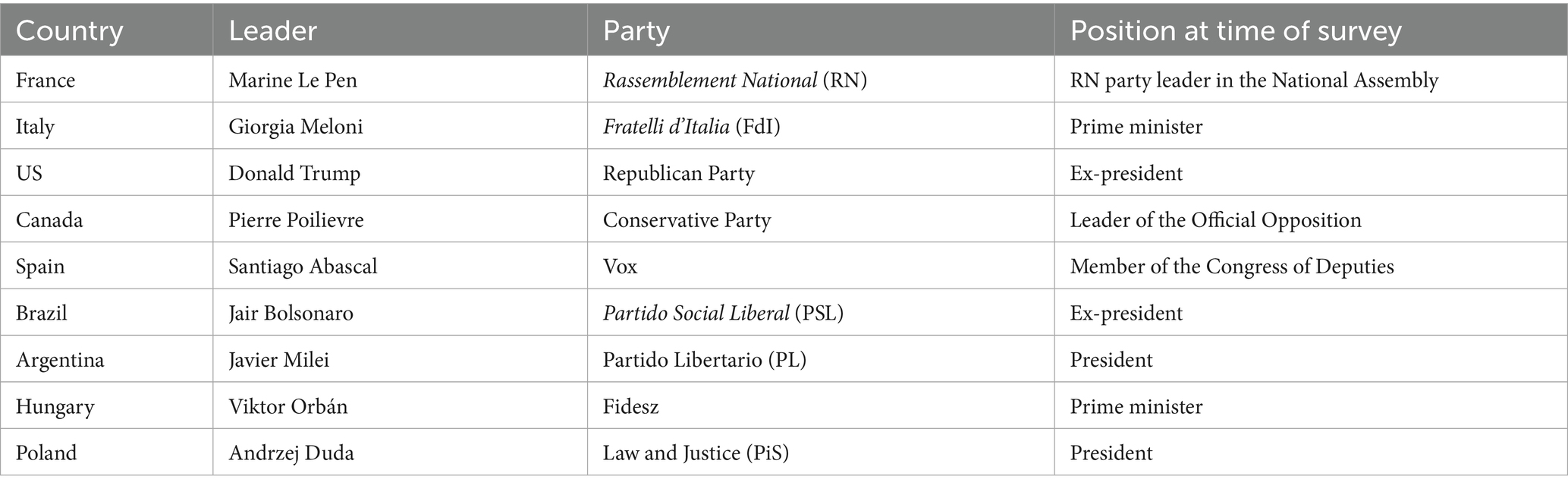
The rise of populist leaders has drawn significant attention over the past two decades. Around the world, they have reshaped politics, from Donald Trump in the United States to Viktor Orbán in Hungary, Marine Le Pen in France, Giorgia Meloni in Italy, Santiago Abascal in Spain and Jair Bolsonaro in Brazil.

These leaders often rise to power by promising to speak for “the people” against the established “corrupt elites.” But our recent research shows that not all populist voters want the same things.

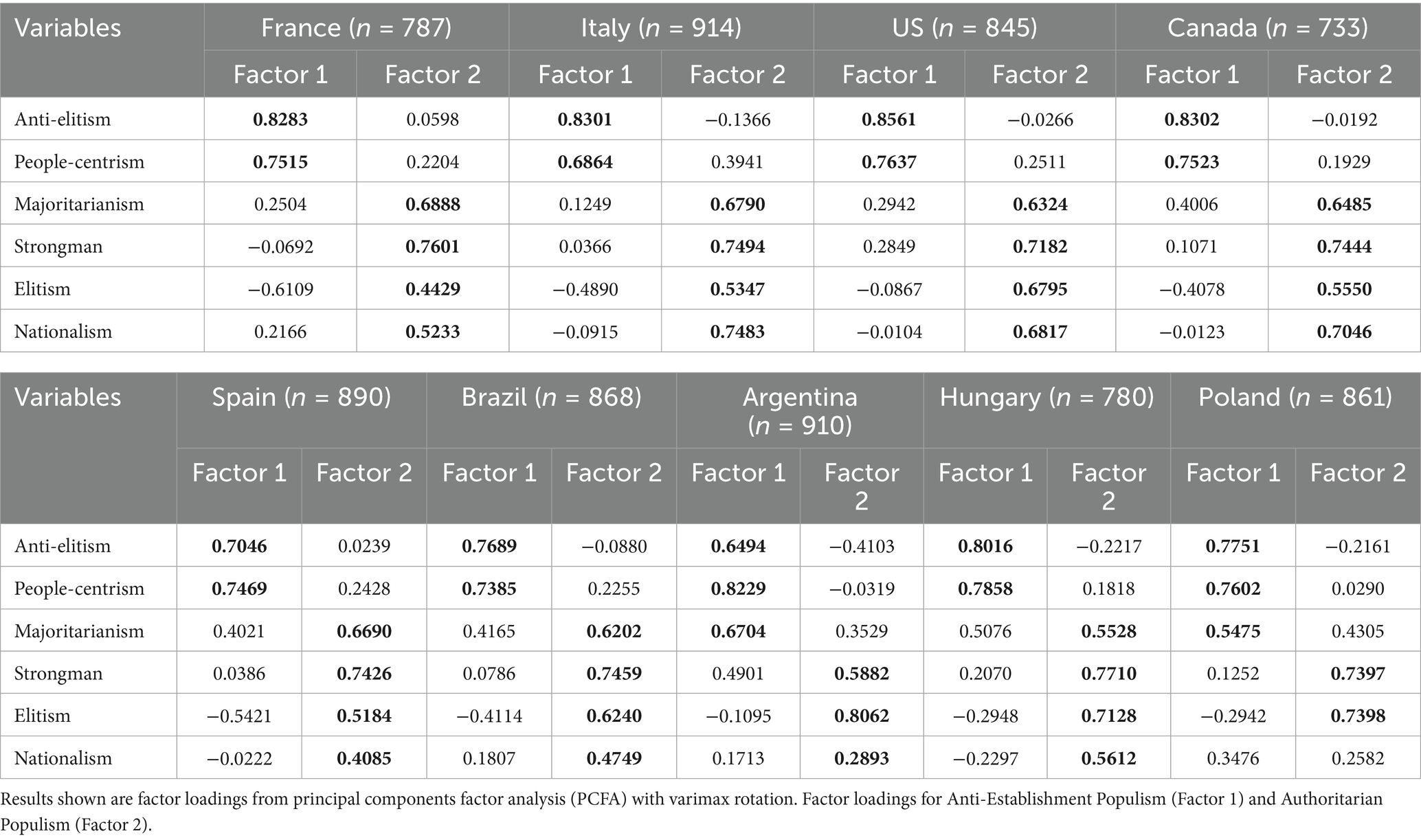
Our study examined public opinion data from nine countries to better understand what drives support for “strongman” populist leaders. The findings reveal that there are two very different kinds of populist attitudes, and the authoritarian variety most strongly predicts whether people will support a leader who is willing to bend the rules.

Nine-country comparison

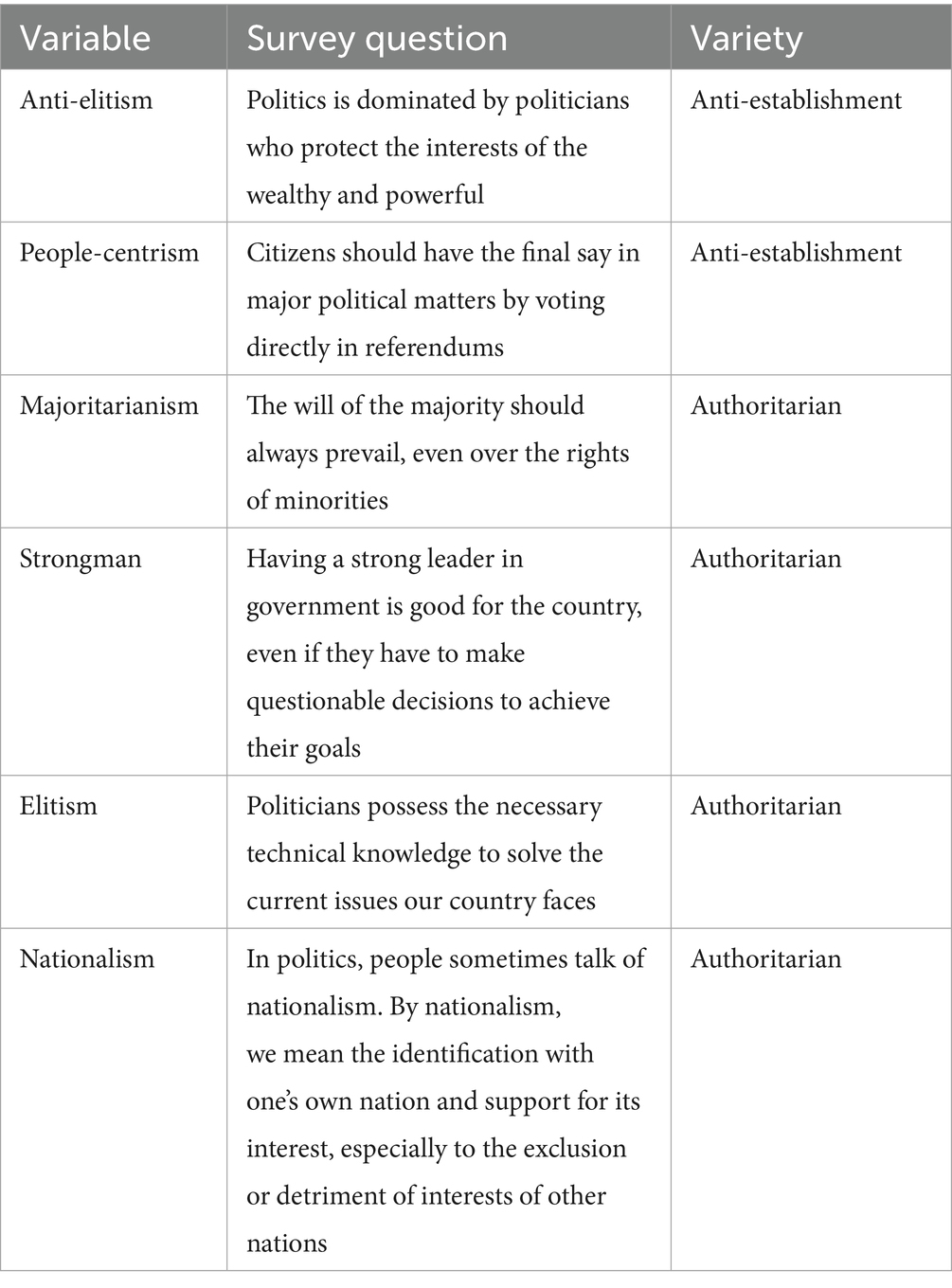
We conducted public opinion surveys in France, Italy, Spain, Hungary, Poland, Canada, the United States, Brazil and Argentina. Our Varieties of Populist Attitudes (VoPA) survey included multiple questions designed to tap into the two varieties of populism.

Respondents were asked about their trust in politicians, their support for referendums, their belief that the majority should always prevail and their preference for strong leadership — even if it means violating rules and norms — as well as their degree of nationalism.

Factor analysis confirmed that the variables associated with the above questions clustered into two distinct dimensions — anti-establishment and authoritarian populism — rather than forming a single populist attitude. This suggests that populist attitudes come in two distinct forms.

Next, we examined how each type of populist attitude predicted support for prominent populist leaders in each country who had positioned themselves as speaking on behalf of citizens against corrupt elites.

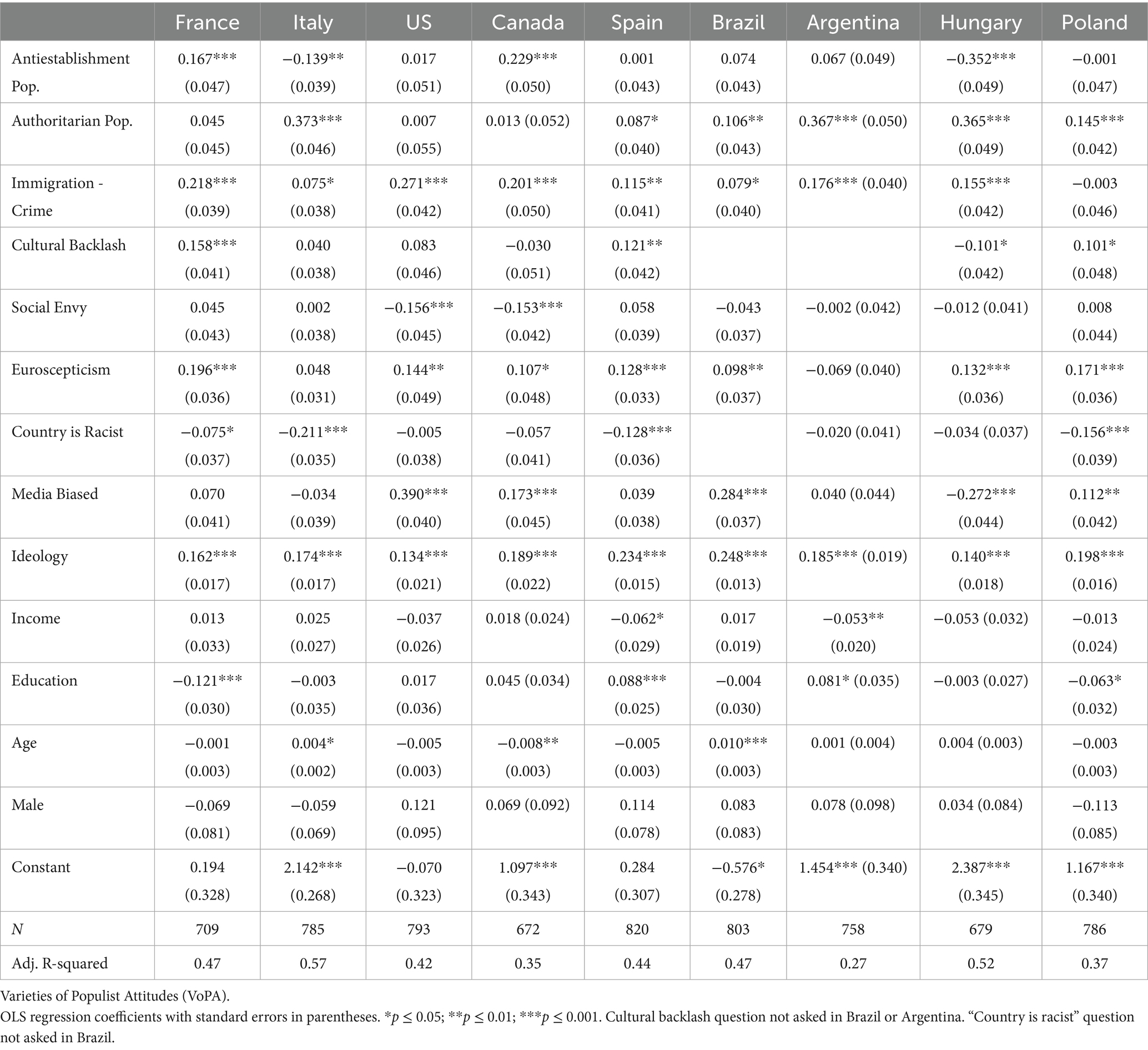
The results were striking. In most countries, including Italy, Spain, Brazil, Argentina, Hungary and Poland, authoritarian populism was the strongest predictor of support for populist leaders. In other words, people who subscribed to majoritarianism, nationalism and strong leadership were most likely to back leaders willing to centralize power and challenge liberal democratic norms.

By contrast, anti-establishment populism played a weaker role, and in some countries even a negative one. In other words, citizens who simply disliked elites or wanted more direct democracy were not drawn to strongman figures. In fact, in Italy and Hungary, anti-establishment populists rejected Meloni and Orbán.

Anti-establishment populism

France and Canada stood out as exceptions. In these countries, anti-establishment populism played a more important role than authoritarianism in explaining support for populist figures like Le Pen and Pierre Poilievre.

In Canada, multiculturalism, the unpopularity of overtly anti-immigrant rhetoric and the existence of the more authoritarian People’s Party of Canada limit the appeal of strongman politics, positioning Poilievre as an anti-establishment rather than authoritarian figure.

In France, Le Pen’s focus on referendums and institutional reform, combined with the presence of Éric Zemmour as an authoritarian alternative, reinforces that her base is motivated more by democratic discontent than authoritarianism.

In the U.S., surprisingly, neither dimension significantly predicted support for Trump. This suggests that Trump’s appeal may depend more on other dynamics such as partisanship, racial and anti-immigrant attitudes or cultural identity and backlash.

These findings shed light on the different democratic implications of the two kinds of populism.

Anti-establishment populism can be understood as a demand for more responsiveness and accountability in democratic institutions. While it can disrupt existing political systems, it doesn’t necessarily threaten the basic principles of pluralism, minority rights or checks and balances. In fact, some scholars argue that this kind of populism can serve as a corrective when elites become too insulated from the public.

Why this matters for democracy

Authoritarian populism is another story. It is linked to a preference for strong leaders who are willing to bypass institutional constraints, weaken independent oversight bodies or undermine minority protections, ostensibly in the name of the people.

This kind of populism is associated with democratic backsliding of the type seen in places like Hungary and Brazil, where populist leaders have concentrated power in the executive branch and eroded liberal democratic norms.

Our research reveals that the real threat to liberal democracy comes less from people who simply dislike elites, and more from those who desire a leader they regard as tough to embody and enforce the will of the majority at the expense of minority rights.

Recognizing this difference is important when designing democratic safeguards that distinguish between legitimate demands for accountability and more direct participation or more dangerous authoritarian impulses.


Read more:
Do you know what populism is? Research suggests most don’t, but some view it with disdain anyway


Populism is not monolithic

For years, populism scholars have debated whether populism is inherently dangerous or potentially democratic.

Our findings show that both views can be correct, depending on which variety of populism is at play. Anti-establishment populism reflects widespread frustration with elites but does not automatically lead to democratic erosion. Authoritarian populism, on the other hand, is more likely to support leaders who chip away at democratic safeguards.

This reminds us that defending democracy requires more than just countering populism in general. It requires recognizing and addressing the authoritarian currents that run through some forms of populist politics.

The Conversation

Dr. Andrea Wagner received funding from Erasmus + Jean Monnet Chair and MacEwan University

Anna Brigevich does not work for, consult, own shares in or receive funding from any company or organisation that would benefit from this article, and has disclosed no relevant affiliations beyond their academic appointment.

ref. Why some populist supporters want a strong-arm leader and others just want change – https://theconversation.com/why-some-populist-supporters-want-a-strong-arm-leader-and-others-just-want-change-266765

Satellite data shows methane emissions are declining in part of Canada’s oil patch, but more monitoring is needed

Source: The Conversation – Canada – By Chris Hugenholtz, Professor, Geography, University of Calgary

Governments in Canada’s major oil and gas producing provinces, Alberta and Saskatchewan, have touted their efforts in recent years to reduce methane emissions.

Methane is a greenhouse gas released into the atmosphere at oil and gas facilities through leaks, vents, maintenance activities and incomplete combustion. Methane traps significantly more heat than carbon dioxide, making it a potent climate pollutant.

We set out to independently verify if government claims of decreasing oil and gas methane emissions were accurate. Our new study shows that the answer is yes — but with important caveats and valuable lessons for Canada’s energy sector.

We studied satellite observations between 2019 and 2023 to understand how methane emissions rates in Canada’s main oil-producing region were changing. We focused on the heavy oil belt near Lloydminster, Alta., where a distinctive extraction method known as CHOPS (cold heavy oil production with sand) has long been associated with notable methane emissions.

CHOPS brings a mix of oil, water, sand and gas to the surface. The oil is collected, but the co-produced gas — which is mainly methane — has historically been vented or flared.

Observing emissions from space

Methane emissions can now be monitored from space, offering a powerful vantage point. Satellites can be used to independently measure and monitor emissions, helping to better understand and confirm emissions in regions where ground-based or other data are lacking.

To track changes over time, we evaluated the ratio of methane emissions to the energy produced, a measure known as emissions intensity. This metric provides an important benchmark for understanding how efficiently energy is being produced and how effectively emissions are being managed, regardless of production rates, which can change over time.

Satellites also pass over the same locations repeatedly, over days or weeks, enabling tracking of emissions over time. This can capture how emissions may be responding to policy changes, new technology or economic shifts. The large scale of satellites can average out day-to-day fluctuations from individual sites.

While satellite data provide unique coverage, they have limitations. Cloud cover, sun angle, terrain and other atmospheric or surface conditions can reduce effectiveness. In our study, we overcame these limitations with new techniques using data from the European Space Agency’s Tropospheric Monitoring Instrument aboard the Sentinel-5 Precursor satellite.

We combined those with a mass balance emissions flux model to estimate emissions from 2019 to 2023. This method was effective within the context of this study, but it may not work elsewhere, particularly where satellite observations are even more limited.

What we found was striking. Methane emissions in the Lloydminster heavy oil region declined by approximately 71 per cent between 2019 and 2023, and the intensity of methane emissions dropped by 63 per cent, reaching 0.69 gCH₄ per megajoule of energy produced.

The reasons for these reductions are likely multifaceted. Improved regulations, greater adoption of gas capture and combustion systems and enhanced operator compliance have all likely contributed to lower emissions. At the same time, a decline in oil production during portions of the study period likely played a role in driving emissions downward.

Distinguishing between efficiency-driven and production-driven reductions remains an important focus for future research, as rising production could reverse some of these gains.

These findings indicate that between 2019 to 2023, CHOPS operations are becoming less polluting and progress toward emission reductions is being achieved, even within one of Canada’s most methane-intensive oil-producing areas.

Measurement-reporting gap

Our satellite-based emissions estimates, however, were about 4.5 times higher than industry-reported values for the region. This gap underscores the flaws in traditional emissions reporting frameworks, which may not fully capture all emissions, sources or reflect real-time changes in operations.

This difference highlights the importance of independent measurement. Satellite and other measurement-based data can complement conventional reporting, providing a clearer and more dynamic picture of regional methane trends.

The study shows that substantial emissions reductions are achievable, even in mature oil fields with complex infrastructure, without fully curtailing production. This finding provides a valuable example for energy-producing regions pursuing practical pathways to decarbonization.

Reducing methane emissions

Methane is a short-lived but highly potent greenhouse gas and can trap much more heat than carbon dioxide. However, it breaks down relatively quickly in the atmosphere — around 12 years. Cutting methane emissions offers one of the fastest and most cost-effective ways to slow global warming.

Unlike many emerging climate technologies that remain costly or unproven at scale, methane mitigation can be implemented immediately using existing tools and proven methods. For example, a fraction of proposed private sector investment into expensive and highly uncertain emissions reduction technologies and projects could yield substantial and quick greenhouse gas emissions reductions from Canada’s oil and gas sector if redirected to mitigating methane.

There are benefits to industry for taking strong action on methane, including cost savings through efficiency improvements, increasing marketable gas volumes and securing access to premium markets demanding increasingly low-carbon oil and gas.

While Canada has struggled to meet its climate goals, progress is evident at the regional level. The reductions observed near Lloydminster suggest that emissions control and energy production can coexist when supported by sound policy, modern technology and transparent monitoring.

If Canada wants to achieve its commitment of cutting oil and gas methane emissions by 75 per cent by 2030 relative to 2012 levels, more independent measurement and monitoring efforts, such as those demonstrated in our study, are needed.

These are necessary to confirm whether regulations and other initiatives are delivering results, to guide future policy developments and to credibly demonstrate reductions.

The Conversation

Chris Hugenholtz receives funding from the Natural Sciences and Engineering Research Council of Canada. In the past, he has received funding from the oil and gas industry, but not for this project.

Coleman Vollrath receives funding from a Natural Sciences and Engineering Research Council of Canada CGS-D scholarship and performs occasional part-time work on methane emissions for the Pembina Institute in Calgary.

Thomas Barchyn receives funding from the Natural Sciences and Engineering Research Council of Canada. In the past, he has received funding from the oil and gas industry, but not for this project.

Zhenyu Xing does not work for, consult, own shares in or receive funding from any company or organisation that would benefit from this article, and has disclosed no relevant affiliations beyond their academic appointment.

ref. Satellite data shows methane emissions are declining in part of Canada’s oil patch, but more monitoring is needed – https://theconversation.com/satellite-data-shows-methane-emissions-are-declining-in-part-of-canadas-oil-patch-but-more-monitoring-is-needed-265940

The disgraceful history of erasing Black cemeteries in the United States

Source: The Conversation – USA – By Chip Colwell, Associate Research Professor of Anthropology, University of Colorado Denver

The Shockoe Hill African Burying Ground in Richmond, Va. CC BY-SA 4.0, CC BY

The burying ground looks like an abandoned lot.

Holding the remains of upward of 22,000 enslaved and free people of color, the Shockoe Hill African Burying Ground in Richmond, Virginia, established in 1816, sits amid highways and surface roads. Above the expanse of unmarked graves loom a deserted auto shop, a power substation, a massive billboard. The bare ground of the cemetery is strewn with weeds.

In contrast, across the way sits Shockoe Hill Cemetery. Established in 1822, it remains a peaceful cemetery with grass, large trees and bright marble headstones. This cemetery was created for white Christians.

I am an archaeologist who studies how the past shapes public life. Several years ago, I wrote with colleagues about the legacies of stolen human remains of African Americans in museums. During this time, I learned more about how African Americans often had to bury their dead in unsanctioned spaces that received few protections.

As I dug into this history, what struck me the most was that the different treatment of African Americans in death paralleled their long mistreatment in life. Places like Shockoe have not been accidentally forgotten.

Although its purpose has endured and graves survive, Shockoe Hill African Burying Ground, the largest burial ground for enslaved and free people of color in the United States, has witnessed deliberate acts of violence. As the historian Ryan K. Smith writes, Shockoe “was not, as some would say, abandoned – it was actively destroyed.”

African burying grounds found and lost

This issue of protecting Black cemeteries first came to popular attention in 1991, when the African Burial Ground in downtown New York City was rediscovered and nearly obliterated by a construction project. It was preserved only through the valiant efforts of African American leaders and scientists.

In recent years, similar threats to Black cemeteries and questions about preservation have been reported at the Whitney Plantation in Louisiana, the Morningstar Tabernacle No. 88 in Maryland and a rediscovered graveyard in Florida, among many others.

Like these other cemeteries, the Shockoe Hill African Burying Ground has long faced constant perils, from grave robbing to construction projects.

Lenora McQueen, whose ancestor Kitty Cary was buried there in 1857, has been leading the effort to protect the cemetery. McQueen’s tireless work – like the efforts needed at any disregarded Black cemetery in the country – has ranged from collaborating with city officials to purchase part of the site, establishing a marker and mural, and assembling a team to earn the burying ground the recognition of the National Register of Historic Places.

Smith has detailed how, ever since Richmond’s founding in the 1730s, people of European and African descent in the city lived divided lives. By the early 1800s, officials formalized different cemeteries for Richmond’s different ethnic and racial communities.

A 1-acre cemetery for free Black people and another one for enslaved people were situated near the city poorhouse and gunpowder depot. Yet, these grounds were hallowed to the African American community. Burial rituals included long processions, biblical-inflected homilies, spirituals and public displays of grief.

However, the violations of these graves were easy enough. The cemetery was neither fenced nor formally tended. In the 1830s, medical schools began robbing the burying ground for cadavers. At the close of the Civil War, retreating Confederates exploded the gunpowder magazine, reportedly destroying a section of the cemetery.

City officials formally closed the cemetery in 1879, and the site’s systematic destruction began, despite constant objections of Black residents. Road and construction projects cut through the burial grounds. An African American editor at the time denounced the “people who profited by the desecration of the burial ground … when graves were dug into, bones scattered, coffins exposed and the hearts of the surviving families made to bleed by the desecration of the remains of their loved ones.”

In the years that followed, a railroad track and an elevated highway were built on portions of the cemetery. In 1960, Richmond city officials sold a portion of the burying ground to Shell, and a gas station was built atop the remains of human beings.

The struggle to preserve Shockoe

In 2011, the Virginia Department of Historic Resources conducted a survey to determine the eligibility of the deserted auto shop for the National Register of Historic Places. It did not even consider the history of the Shockoe Hill African Burying Ground beneath and around the building as part of the site’s evaluation.

Six years later, McQueen learned that her ancestor was interred at the burying ground. Horrified by the cemetery’s state of disarray, she became its leading advocate. Eventually, McQueen put together a team of scholars and preservationists to pursue their own study of the site’s eligibility for the national register. They found the cultural landscape – the traces of human activity that give a place its history and meaning – to be highly significant.

Additionally, the site’s history of destruction was a vital record of the unequal treatment shown toward Black burying grounds in the U.S. The team formally pursued its own nomination to the National Register of Historic places.

In 2022, Shockoe Hill Burying Ground Historic District was successfully listed is on the national register.

Even with this success, the threats continue. Being listed on the national register provides prestige, grant opportunities and reviews for federal projects, but few guaranteed protections. In the same year Shockoe was listed on the national register, utility lines were installed in the area without consulting heritage officials.

A high-speed rail project, if implemented as planned, could violate the cemetery’s historical landscape. Designs for a memorial, while well intentioned, might further harm the site and threaten its national register status if it is not treated as a cemetery with graves.

What the Shockoe Hill African Burying Ground reveals is the need for the U.S. to provide dignity to all its citizens, in life and in death. A cemetery does not need famous inhabitants or marble tombstones to be significant.

As McQueen has said of her ancestor’s eternal resting ground, “Burial spaces are sacred.”

The Conversation

I have sat in on some meetings about the burial ground’s preservation as a heritage expert, at the request of the descendant Lenora McQueen.

ref. The disgraceful history of erasing Black cemeteries in the United States – https://theconversation.com/the-disgraceful-history-of-erasing-black-cemeteries-in-the-united-states-264864

Office of Space Commerce faces an uncertain future amid budget cuts and new oversight

Source: The Conversation – USA – By Michael Liemohn, Professor of Climate and Space Sciences and Engineering, University of Michigan

The OSC advocates for commercial activities in space, including commercial satellite launches. AP Photo/John Raoux

When I imagine the future of space commerce, the first image that comes to mind is a farmer’s market on the International Space Station. This doesn’t exist yet, but space commerce is a growing industry. The Space Foundation, a nonprofit organization for education and advocacy of space, estimates that the global space economy rose to US$613 billion in 2024, up nearly 8% from 2023, and 250 times larger than all business at farmer’s markets in the United States. This number includes launch vehicles, satellite hardware, and services provided by these space-based assets, such as satellite phone or internet connection.

Companies involved in spaceflight have been around since the start of the Space Age. By the 1980s, corporate space activity was gaining traction. President Ronald Reagan saw the need for a federal agency to oversee and guide this industry and created the Office of Space Commerce, or OSC.

The logo of the OSC, which is circular and has three stars and nine black and white stripes.
The Office of Space Commerce is under the National Oceanic and Atmospheric Administration.
Office of Space Commerce − National Oceanic and Atmospheric Administration

So, what exactly does this office do and why is it important?

As a space scientist, I am interested in how the U.S. regulates commercial activities in space. In addition, I teach a course on space policy. In class, we talk about the OSC and its role in the wider regulatory landscape affecting commercial use of outer space.

The OSC’s focus areas

The Office of Space Commerce, an office of about 50 people, exists within the Department of Commerce’s National Oceanic and Atmospheric Administration. To paraphrase its mission statement, its chief purpose is to enable a robust U.S. commercial interest in outer space.

OSC has three main focus areas. First, it is the office responsible for licensing and monitoring how private U.S. companies collect and distribute orbit-based images of Earth. There are many companies launching satellites with special cameras to look back down at the Earth these days. Companies offer a variety of data products and services from such imagery – for instance, to improve agricultural land use.

A second primary job of OSC is space advocacy. OSC works with the other U.S. government agencies that also have jurisdiction over commercial use of outer space to make the regulatory environment easier. This includes working with the Federal Aviation Administration on launch licensing, the Federal Communications Commission on radio wavelength usage and the Environmental Protection Agency on rules about the hazardous chemicals in rocket fuel.

This job also includes coordinating with other countries that allow companies to launch satellites, collect data in orbit and offer space-based services.

In 2024, for example, the OSC helped revise the U.S. Export Administration Regulations, one of the main documents restricting the shipping of advanced technologies out of the country. This change removed some limitations, allowing American companies to export certain types of spacecraft to three countries: Australia, Canada and the United Kingdom.

The OSC also coordinates commercial satellites’ flight paths in near-Earth space, which is its third and largest function. The Department of Defense keeps track of thousands of objects in outer space and issues alerts when the probability of a collision gets high. In 2018, President Donald Trump issued Space Policy Directive-3, which included tasking OSC to take this role over for nongovernment satellites – that is, those owned by companies, not NASA or the military. The Department od Defense wants out of the job of traffic management involving privately owned satellites, and Trump’s directive in 2018 started the process of handing off this task to OSC.

A rocket launching from a structure, with a plume of smoke beneath it.
When companies launch satellites into orbit, as on this SpaceX Falcon 9 rocket, the OSC helps manage the satellites’ flight paths in orbit to avoid collisions.
AP Photo/John Raoux

To prevent satellites from colliding, OSC has been developing the traffic coordination system for space, known as TraCSS. It went into beta testing in 2024 and has some of the companies with the largest commercial constellations – such as SpaceX’s Starlink – participating. Progress on this has been slower than anticipated, though, and an audit in 2024 revealed that the plan is way behind schedule and perhaps still years away.

Elevating OSC

Deep in the text of Trump’s Aug. 13, 2025, executive order called Enabling Competition in the Commercial Space Industry, there’s a directive to elevate OSC to report directly to the office of the secretary of commerce. This would make OSC equivalent to its current overseer, NOAA, with respect to importance and priority within the Department of Commerce. It would give OSC higher stature in setting more of the rules regarding commercial use of space, and it would make space commerce more visible across the broader economy.

So, why did Trump include this line about elevating OSC in his Aug. 13 executive order?

An astronaut pointing a camera out a circular window in the International Space Station at a
European Space Agency astronaut Alexander Gerst, Expedition 41 flight engineer, uses a still camera at a window in the cupola of the International Space Station as the SpaceX Dragon commercial cargo craft approaches the station on Sept. 23, 2014.
Alex Gerst/Johnson Space Center

Back in 2018, Trump issued Space Policy Directive-2 during his first term, which included a task to create the Space Policy Advancing Commerce Enterprise Administration, or SPACE. SPACE would have been an entity reporting directly to the secretary of commerce. While it was proposed as a bill in the House of Representatives later that year, it never became law.

The Aug. 13 executive order essentially directs the Department of Commerce to make this move now. Should the secretary of commerce enact the order, it would bypass the role of Congress in promoting OSC. The 60-day window that Trump placed in the executive order for making this change has closed, but with the government shutdown it is unclear whether the elevation of OSC might still occur.

Troubles for OSC

While all of this sounds good for promoting space as a place for commercial activity, OSC has been under stress in 2025. In February, the Department of Government Efficiency targeted NOAA for cuts, including firing eight people from OSC. Because about half of the people working in OSC are contractors, this represented a 30% reduction of force.

The dome of the Congress building in the dark.
Many space industry professionals have urged Congress to restore funding to the OSC, but its future remains uncertain.
AP Photo/J. Scott Applewhite

In March, Trump’s presidential budget request for the 2026 fiscal year proposed a cut of 85% of the $65 million annual budget of OSC. In July, space industry leaders urged Congress to restore funding to OSC.

The Aug. 13 executive order appeared to be good news for OSC. On Sept. 9, however, Bloomberg reported that the Department of Commerce requested a 40% rescission to OSC’s fiscal year 2025 budget.

Rescissions are “clawbacks” of funds already approved and appropriated by Congress. The promised funding is essentially put on hold. Once proposed by the president, rescissions have to be voted on by both chambers of Congress to be enacted. This must occur within 45 days, or before the end of the fiscal year, which was Sept. 30.

This rescission request came so close to that deadline that Congress did not act to stop it. As a result, OSC lost this funding. The loss could mean additional cutbacks to staff and perhaps even a shrinking of its focus areas.

Will OSC be elevated? Will OSC be restructured or even dismantled? The future is still uncertain for this office.

The Conversation

Michael Liemohn receives or has received funding from NASA, NSF, Department of Defense, Department of Energy, and the European Union. He is currently the President-Elect of the Space Physics and Aeronomy section of the American Geophysical Union and has served in other leadership roles with that society.

ref. Office of Space Commerce faces an uncertain future amid budget cuts and new oversight – https://theconversation.com/office-of-space-commerce-faces-an-uncertain-future-amid-budget-cuts-and-new-oversight-265710

College faculty are under pressure to say and do the right thing – the stress also trickles down to students

Source: The Conversation – USA (2) – By Lee Ann Rawlins Williams, Clinical Assistant Professor of Education, Health and Behavior Studies, University of North Dakota

Professors and other faculty were under a lot of strain even before the Trump administration took office. Spiffy J/iStock/Getty Images Plus

Heavy teaching loads, shrinking university budgets and expanding workload expectations have fueled stress and burnout among professors and other university employees in recent years.

Now, an increasingly polarized political climate, as well as emerging concerns around university funding cuts, self-censorship and academic freedom, has created new pressures for university and college employees.

The result is an academic profession caught in the crosscurrents of culture and politics, with implications that extend far beyond the classroom.

What faculty say

Since June 2025, I have spoken with 33 faculty members across disciplines and institutions in the U.S. about how they are managing their careers and day-to-day lives at work and home.

Their accounts reveal common themes: persistent anxiety about job security, uncertainty around how to teach controversial subjects, and frustration that institutional support is often fragmented or short-lived.

“We’re asked to make room for students’ struggles, but are rarely acknowledged when we crack under the same weight,” one professor told me.

A 2024 National Education Association survey found that 33% of 900 public administration faculty are “often” or “always” physically exhausted, while 38% of faculty say they are “often” or “always” emotionally exhausted.

Another 40% of faculty from this survey say they are simply “worn out.”

Other research shows that growing workloads and constant role juggling are taking a toll on faculty members’ well-being and ability to teach effectively.

Burnout among educators can have ripple effects on the university and college students they teach, leading to students feeling less motivated and engaged in school.

As a scholar of education, health and behavior studies, I know that when universities and colleges invest in supporting their faculty’s mental health and well-being, they’re not just helping their employees. They are protecting the quality of education that their students receive.

Several adults stand together and look serious, holding a sign that says 'Academic freedom is not negotiable.'
Faculty members and professors attend a rally outside Columbia University in New York for academic freedom in September 2025.
Mostafa Bassim/Anadolu via Getty Images

When politics enters the classroom

Surveys spanning 2017 through 2021 found that 6,269 faculty members have increasingly self-censored and avoided controversial topics or moderated their language when talking with their students and colleagues in order to avoid backlash from legislators, university boards or school administrators.

The result is a form of burnout, in which protecting one’s mental health and job security can mean speaking more carefully when teaching.

A January 2025 Inside Higher Ed survey published shortly before President Donald Trump’s second inauguration found that over half of 8,460 surveyed U.S. professors have altered what they said or wrote, whether it was course materials or emails, to avoid expressing a possibly controversial opinion.

Nearly half of surveyed professors have also withheld opinions in the classroom entirely, according to the same survey, which was conducted from December 2023 to February 2024.

Scholars call this a “chilling effect” on academic freedom, where self-censorship becomes part of daily decision-making.

In the current political climate, faculty in many institutions continue to express reluctance to speak openly, citing concerns about professional or public repercussions. Even though comprehensive research since January 2025 is still emerging, early findings already suggest a further narrowing of what feels safe to say.

One-third of faculty reported in January that they feel they have less freedom to express their views, reflecting an environment in which faculty members’ voices are increasingly constrained

Faculty I spoke with over the past few months described “navigating sensitive boundaries” in their lectures, avoiding having any discussion about race, gender and religion. They also talked about not using terms like diversity, equity and inclusion.

Watching what you say

For professors on contingent contracts – meaning they are not on a track to receive tenure, a secure work position that typically lasts a lifetime – the fear is heightened. The same is true for other faculty members like adjunct professors, who depend on short-term or renewable contracts.

Without the protection of tenure, even a single complaint or potential controversy can jeopardize a professor’s position – and recent cases of tenured professors suggest that even tenure no longer offers the same level of security it once did.

One adjunct professor put it bluntly: “When your next contract depends on staying in bounds, watching what you say is survival.”

For many instructors, the need to continually reassess how a comment, reading or assignment might be received changes the experience of teaching in subtle but meaningful ways.

Faculty members I spoke with described heightened anxiety, sleepless nights and a persistent fear that a misstep could derail their careers. This psychological strain, compounded by workload and financial stress, leaves little space for creativity, innovation or joy in teaching.

A black-and-white photo of an older man wearing a blazer has different-colored squiggle lines coming out from his head, forming a cloudlike shape above him
Many faculty members report that they are increasingly self-censoring in order to avoid potential controversy.
master1350/iStock via Getty Images Plus

The downstream effects on students

Faculty members’ well-being is inseparable from how students experience college. Burnout and disengagement ripple outward, reducing students’ motivation and eroding the quality of students’ classroom interactions, as noted in a 2025 study.

When professors self-censor, students can also lose exposure to complex or controversial perspectives that might challenge their thinking and deepen discussions.

Restrictions on free expression and debate can also stifle students’ intellectual curiosity, curb engagement and hinder critical-thinking development.

Equally concerning is the long-term impact on innovation.

When academic freedom is restricted or self-censored, there is a greater potential that research questions will become more narrow, classroom discussions will flatten, and students will lose exposure to the breadth of perspectives that higher education promises.

A new kind of academic life

Faculty mental health is a pressing concern across higher education.

Expanding workloads, shifting public expectations and uncertainty around job security have created an environment of sustained strain.

The professors I have spoken with say they feeling caught between professional demands and personal limits, navigating burnout, self-censorship and ongoing attention to what they teach and say.

The cumulative effect is reshaping academic life, altering how faculty teach, communicate and engage with students, with a very careful eye on how others are perceiving them.

The Conversation

Lee Ann Rawlins Williams does not work for, consult, own shares in or receive funding from any company or organization that would benefit from this article, and has disclosed no relevant affiliations beyond their academic appointment.

ref. College faculty are under pressure to say and do the right thing – the stress also trickles down to students – https://theconversation.com/college-faculty-are-under-pressure-to-say-and-do-the-right-thing-the-stress-also-trickles-down-to-students-267400

Can AI keep students motivated, or does it do the opposite?

Source: The Conversation – USA (2) – By Yurou Wang, Associate Professor of Educational Psychology, University of Alabama

AI-based tools can be effective in motivating students but require proper design and thoughtful implementation. Associated Press

Imagine a student using a writing assistant powered by a generative AI chatbot. As the bot serves up practical suggestions and encouragement, insights come more easily, drafts polish up quickly and feedback loops feel immediate. It can be energizing. But when that AI support is removed, some students report feeling less confident or less willing to engage.

These outcomes raise the question: Can AI tools genuinely boost student motivation? And what conditions can make or break that boost?

As AI tools become more common in classroom settings, the answers to these questions matter a lot. While tools for general use such as ChatPGT or Claude remain popular, more and more students are encountering AI tools that are purpose-built to support learning, such as Khan Academy’s Khanmigo, which personalizes lessons. Others, such as ALEKS, provide adaptive feedback. Both tools adjust to a learner’s level and highlight progress over time, which helps students feel capable and see improvement. But there are still many unknowns about the long-term effects of these tools on learners’ progress, an issue I continue to study as an educational psychologist.

What the evidence shows so far

Recent studies indicate that AI can boost motivation, at least for certain groups, when deployed under the right conditions. A 2025 experiment with university students showed that when AI tools delivered a high-quality performance and allowed meaningful interaction, students’ motivation and their confidence in being able to complete a task – known as self-efficacy – increased.

For foreign language learners, a 2025 study found that university students using AI-driven personalized systems took more pleasure in learning and had less anxiety and more self-efficacy compared with those using traditional methods. A recent cross-cultural analysis with participants from Egypt, Saudi Arabia, Spain and Poland who were studying diverse majors suggested that positive motivational effects are strongest when tools prioritize autonomy, self-direction and critical thinking. These individual findings align with a broader, systematic review of generative AI tools that found positive effects on student motivation and engagement across cognitive, emotional and behavioral dimensions.

A forthcoming meta-analysis from my team at the University of Alabama, which synthesized 71 studies, echoed these patterns. We found that generative AI tools on average produce moderate positive effects on motivation and engagement. The impact is larger when tools are used consistently over time rather than in one-off trials. Positive effects were also seen when teachers provide scaffolding, when students maintain agency in how they use the tool, and when the output quality is reliable.

But there are caveats. More than 50 of the studies we reviewed did not draw on a clear theoretical framework of motivation, and some used methods that we found were weak or inappropriate. This raises concerns about the quality of the evidence and underscores how much more careful research is needed before one can say with confidence that AI nurtures students’ intrinsic motivation rather than just making tasks easier in the moment.

When AI backfires

There is also research that paints a more sobering picture. A large study of more than 3,500 participants found that while human–AI collaboration improved task performance, it reduced intrinsic motivation once the AI was removed. Students reported more boredom and less satisfaction, suggesting that overreliance on AI can erode confidence in their own abilities.

Another study suggested that while learning achievement often rises with the use of AI tools, increases in motivation are smaller, inconsistent or short-lived. Quality matters as much as quantity. When AI delivers inaccurate results, or when students feel they have little control over how it is used, motivation quickly erodes. Confidence drops, engagement fades and students can begin to see the tool as a crutch rather than a support. And because there are not many long-term studies in this field, we still do not know whether AI can truly sustain motivation over time, or whether its benefits fade once the novelty wears off.

Not all AI tools work the same way

The impact of AI on student motivation is not one-size-fits-all. Our team’s meta-analysis shows that, on average, AI tools do have a positive effect, but the size of that effect depends on how and where they are used. When students work with AI regularly over time, when teachers guide them in using it thoughtfully, and when students feel in control of the process, the motivational benefits are much stronger.

We also saw differences across settings. College students seemed to gain more than younger learners, STEM and writing courses tended to benefit more than other subjects, and tools designed to give feedback or tutoring support outperformed those that simply generated content.

Young student working on tablet at school.
Specialized AI-based tools designed for learning tend to work better for students with proper teacher support compared to general-purpose chatbots such as ChatGPT and Claude. But those specialized products typically cost money, raising questions over equity and quality of education.
Charlie Riedel/AP

There is also evidence that general-use tools like ChatGPT or Claude do not reliably promote intrinsic motivation or deeper engagement with content, compared to learning-specific platforms such as ALEKS and Khanmigo, which are more effective at supporting persistence and self-efficacy. However, these tools often come with subscription or licensing costs. This raises questions of equity, since the students who could benefit most from motivational support may also be the least likely to afford it.

These and other recent findings should be seen as only a starting point. Because AI is so new and is changing so quickly, what we know today may not hold true tomorrow. In a paper titled The Death and Rebirth of Research in Education in the Age of AI, the authors argue that the speed of technological change makes traditional studies outdated before they are even published. At the same time, AI opens the door to new ways of studying learning that are more participatory, flexible and imaginative. Taken together, the data and the critiques point to the same lesson: Context, quality and agency matter just as much as the technology itself.

Why it matters for all of us

The lessons from this growing body of research are straightforward. The presence of AI does not guarantee higher motivation, but it can make a difference if tools are designed and used with care and understanding of students’ needs. When it is used thoughtfully, in ways that strengthen students’ sense of competence, autonomy and connection to others, it can be a powerful ally in learning.

But without those safeguards, the short-term boost in performance could come at a steep cost. Over time, there is the risk of weakening the very qualities that matter most – motivation, persistence, critical thinking and the uniquely human capacities that no machine can replace.

For teachers, this means that while AI may prove a useful partner in learning, it should never serve as a stand-in for genuine instruction. For parents, it means paying attention to how children use AI at home, noticing whether they are exploring, practicing and building skills or simply leaning on it to finish tasks. For policymakers and technology developers, it means creating systems that support student agency, provide reliable feedback and avoid encouraging overreliance. And for students themselves, it is a reminder that AI can be a tool for growth, but only when paired with their own effort and curiosity.

Regardless of technology, students need to feel capable, autonomous and connected. Without these basic psychological needs in place, their sense of motivation will falter – with or without AI.

The Conversation

Yurou Wang does not work for, consult, own shares in or receive funding from any company or organization that would benefit from this article, and has disclosed no relevant affiliations beyond their academic appointment.

ref. Can AI keep students motivated, or does it do the opposite? – https://theconversation.com/can-ai-keep-students-motivated-or-does-it-do-the-opposite-264728

Is it wrong to have too much money? Your answer may depend on deep-seated values – and your country’s economy

Source: The Conversation – USA (3) – By Jackson Trager, Ph.D. Candidate in Psychology, USC Dornsife College of Letters, Arts and Sciences

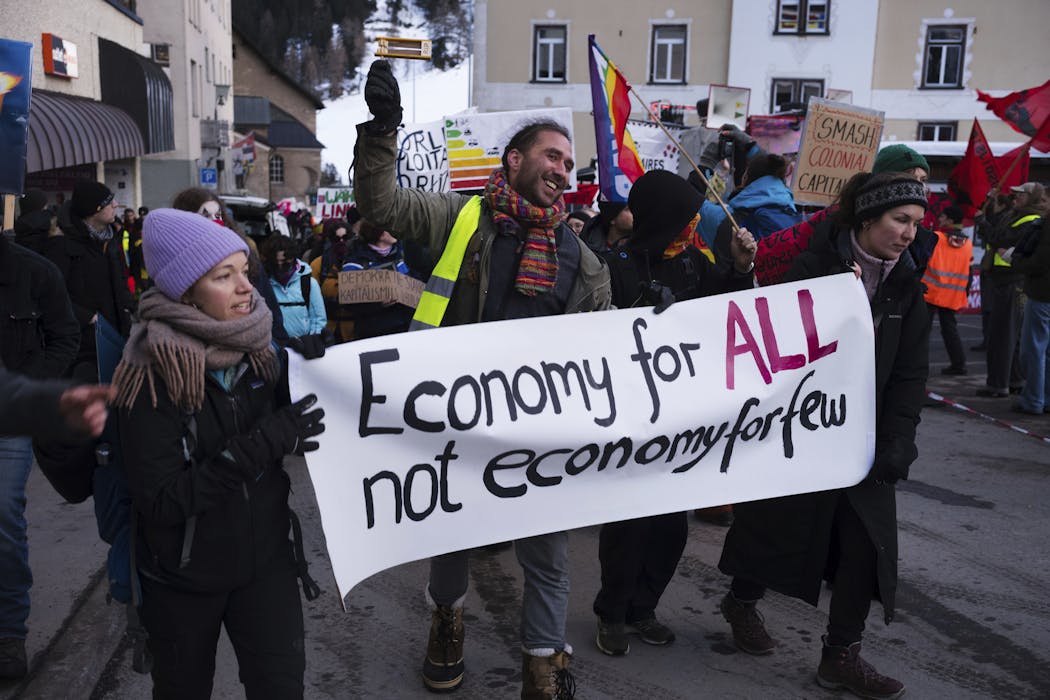
Demonstrators arrive for a protest ahead of the World Economic Forum in Davos, Switzerland, on Jan. 19, 2025. AP Photo/Markus Schreiber

Across cultures, people often wrestle with whether having lots of money is a blessing, a burden or a moral problem. According to our new research, how someone views billionaires isn’t just about economics. Judgment also hinges on certain cultural and moral instincts, which helps explain why opinions about wealth are so polarized.

The study, which my colleague Mohammad Atari and I published in the research journal PNAS Nexus in June 2025, examined survey data from more than 4,300 people across 20 countries. We found that while most people around the world do not strongly condemn having “too much money,” there are striking cultural differences.

In wealthy, more economically equal countries such as Switzerland and Belgium, people were more likely to say that having too much money is immoral. In countries that are poorer and more unequal, such as Peru or Nigeria, people tended to view wealth accumulation as more acceptable.

Beyond economics, we found that judgments about excessive wealth are also shaped by deeper moral intuitions. Our study drew on moral foundations theory, which proposes that people’s sense of right and wrong is built on six core values – care, equality, proportionality, loyalty, authority and purity. We found that people who highly value equality and purity were more likely to see excessive wealth as wrong.

The equality result was expected, but the role of purity was more surprising. Purity is usually associated with ideas about cleanliness, sanctity or avoiding contamination – so finding that it is associated with negative views about wealth gives new meaning to the phrase “filthy rich.”

As a social psychologist who studies morality, culture and technology, I’m interested in how these kinds of judgments differ across groups and societies. Social and institutional systems interact with individual moral beliefs, shaping how people view culture war issues such as wealth and inequality − and, in turn, how they engage with the policies and conflicts that emerge around them.

Why it matters

Billionaires wield growing influence in politics, technology and global development. The richest 1% of people on Earth own more wealth than 95% of people combined, according to Oxfam, an organization focused on fighting poverty.

Efforts to address inequality by taxing or regulating the rich may, however, rest on a mistaken assumption — that the public generally condemns extreme wealth. If most people instead view amassing wealth as morally justifiable, such reforms could face limited support.

Our findings suggest that in countries where inequality is highly visible and persistent, people may adapt by morally justifying their structural economic system, arguing that it is fair and legitimate. In wealthier, more equal societies, people appear more sensitive to the potential harms of excess.

While our study shows that most people around the world do not view excessive wealth as morally wrong, those in wealthier and more equal countries are far more likely to condemn it.

That contrast raises a sharper question: When people in privileged societies denounce and attempt to limit billionaires, are they shining a light on global injustice − or projecting their own sense of guilt? Are they projecting a moral principle shaped by their own prosperity onto poorer countries, where wealth may represent survival, progress or even hope?

What still isn’t known

One open question: How do these views change over time? Do attitudes shift when societies become wealthier or more equal? Are young people more likely than older generations to condemn billionaires? Our study offers a snapshot, but long-term research could reveal whether moral judgments track broader economic or cultural changes.

Another uncertainty is the unexpected role of purity. Why would a value tied to cleanliness and sanctity shape how people judge billionaires? Our follow-up study found that purity concerns extended beyond money to other forms of “excess,” such as disapproving of having “too much” ambition, sex or fun. This suggests that people may see excess itself – not just inequality – as corrupting.

What’s next

We’re continuing to study how cultural values, social systems and moral intuitions shape people’s judgments of fairness and excess – from views of wealth and ambition to knowledge and AI computing power.

Understanding these gut-level, moral reactions within larger social systems matters for debates about inequality. But it can also help explain how people evaluate technologies, leaders and institutions that accumulate disproportionate, excessive power or influence.

The Research Brief is a short take on interesting academic work.

The Conversation

Jackson Trager does not work for, consult, own shares in or receive funding from any company or organization that would benefit from this article, and has disclosed no relevant affiliations beyond their academic appointment.

ref. Is it wrong to have too much money? Your answer may depend on deep-seated values – and your country’s economy – https://theconversation.com/is-it-wrong-to-have-too-much-money-your-answer-may-depend-on-deep-seated-values-and-your-countrys-economy-265247