Iran protests are not just about economics – they’re a full-blown ideological crisis

Source: The Conversation – UK – By Mahsa Ghaffari, Senior Lecturer in Marketing, University of Portsmouth

Iran’s latest wave of unrest is often explained in familiar terms: economic collapse, sanctions, inflation, or sudden political anger. But this framing misses what is actually unfolding.

What we are witnessing is not simply another protest cycle. It is the result of a decades-long erosion of belief in the ideological foundations of the Islamic Republic. It is about the slow disintegration of a worldview that once claimed to explain everything: how people should dress, think and live.

Totalitarian systems rarely fall through dramatic revolutions alone. More often, they unravel from within, as the distance grows between what the state demands and what people actually live by.

Today, if you walk through Tehran, you’ll see many women not wearing the hijab. Even when they walk past morality police – who, by law, should enforce its wearing – nothing happens.

I’m a researcher who looks at how the relationship between socio-cultural conditions and consumer behaviour in Iran leads to social conflicts. My work has suggested that, as in the situation described above, where overt acts of actual resistance are brutally suppressed, people rely on mundane and everyday small acts of defiance to navigate or moderate their institutional restrictions.

In healthy societies, laws, norms and everyday practices tend to evolve together. But in totalitarian systems this is not possible. As political philosopher Hannah Arendt argued in The Origins of Totalitarianism, ideology replaces facts. Once that ideology is challenged, it cannot be revised – because revising it would jeopardise the state’s legitimacy.

We see this clearly in Iran. When there is drought or economic hardship, people are told that God is testing them, rather than being given structural or political explanations.

In this way in Iran, the hijab takes on a particular significance. The regulations around how this head covering should be worn are not simply a dress code, but a political apparatus of control.

Despite growing public demands to relax the mandatory hijab rules, the state remains reluctant to do so because any such reform would threaten its own claim to be an Islamic state where people adhere to the rules.

This is where the contradiction becomes clear. On the one hand, people are becoming more educated, more connected, and more able to compare different ways of living. They can see how people in other countries dress, work and live. This exposure can challenge the ideology.

On the other hand, the state cannot revise its ideology without undermining its own legitimacy. It cannot admit that its foundational beliefs were wrong, because those beliefs are what justify its right to rule.

As a result, the legal pillar of the system becomes increasingly rigid. But this rigidity produces something very important – plasticity within institutions.

My research in how this has worked in Iran shows it has created a growing gap between different layers of social life: between what is legally required, what feels socially normal, and what people cognitively accept as reasonable. In other words, the system gets out of sync with itself.

Over time, this introduces a kind of malleability. People begin to sense this gap. They learn how to navigate it, bend it and quietly push against it. This is often where change begins, not with dramatic revolutions, but through everyday acts of adjustment and defiance.

At the same time, this legal rigidity leaves state authorities with no choice but to rely on coercion and force to safeguard their institutions.

Violence is not power

This brings us to another key insight, also from Hannah Arendt: the distinction between power and violence. Power, she argued, comes from collective legitimacy, from people believing in a system. Violence is what is used when the legitimacy is gone.

So, when a government increasingly relies on surveillance, intimidation and punishment, it’s is not a sign of strength. It is a sign of weakness.

This can be seen in what the German chancellor, Friedrich Merz, recently said about Iran: “If a regime can only stay in power through violence, then it is effectively finished.” And over time, the use of force tends to backfire

Some state custodians begin to doubt. Some begin to disagree. Some begin to resist internally leading to fragmentation within the system. When coercive measures are coupled with wrongdoing, such as corruption by state custodians, it further widens this fragmentation.

This tends to create uncertainty inside the system itself. People no longer trust their custodians. And when trust disappears, institutions become fragile. And any shock – economic, political, environmental – can cause societal rupture.

This pattern is not unique to Iran. In China, for instance, secondhand luxury consumption has become a way to challenge hyper-capitalist hierarchies.

In totalitarian systems, everyday life becomes a political arena. And that is existentially dangerous for a totalitarian system. Eventually, a point will be reached where people no longer follow rules because they believe in them. They may still comply, but only under threat of punishment if they don’t.

Across the world, totalitarian regimes face a similar challenge: how to control educated, connected populations who can compare realities. Ideological control becomes harder when people can see alternatives. This is why such systems obsess over the internet. Education destabilises ideologies.

Iran shows that totalitarian ideologies do not crumble overnight. They erode through decades of quiet resistance. Through what might be called the politics of ordinary life.

This is what makes this moment historically significant. The crisis in Iran is not merely economic. Economic hardship exists everywhere. What makes Iran different is that the institutional trust has already collapsed.

What we are witnessing is not simply unrest. It is the slow death of an ideology. And once belief is gone, no amount of force can bring it back.

The Conversation

Mahsa Ghaffari is affiliated with University of Portsmouth

ref. Iran protests are not just about economics – they’re a full-blown ideological crisis – https://theconversation.com/iran-protests-are-not-just-about-economics-theyre-a-full-blown-ideological-crisis-273955

Proposed new mission will create artificial solar eclipses in space

Source: The Conversation – UK – By Nicola Baresi, Lecturer in Orbital Mechanics, Surrey Space Centre, University of Surrey

The solar corona viewed by Proba-3, a European Space Agency-led mission. ESA/Proba-3/ASPIICS/WOW algorithm, CC BY-NC-SA

When a solar storm strikes Earth, it can disrupt technology that’s vital for our daily lives. Solar storms occur when magnetic fields and electrically charged particles collide with the Earth’s magnetic field. This type of event falls into the category known as “space weather”.

The Earth is currently experiencing one of the most intense solar storms of the past two decades, reminding us of the need for ways to understand these events.

An international team of researchers (including us) is working on a spacecraft mission that would enable researchers to study the conditions that create solar storms, leading to improved forecasts of space weather.

The proposed mission, known as Mesom (Moon-enabled Sun Occultation Mission), aims to create total solar eclipses in space. This would allow researchers to view the Sun’s atmosphere in more detail than ever before.

The need for a better understanding of solar storms is evident from looking at past disruptions. In 1989, for example, the Canadian province of Quebec was forced into a nine-hour electricity blackout by a coronal mass ejection (CME) – a huge burst of hot plasma and magnetic field thrown off from the Sun’s atmosphere towards space.

The event, which affected both Canada and the US, is estimated to have cost tens of millions of US and Canadian dollars – both in lost business productivity and the need to replace damaged power equipment.

In May 2024, a succession of similar solar eruptions caused thousands of satellites in low-Earth orbit to abruptly drop in altitude. GPS outages cost US farmers alone an estimated US$500 million (£370 million).

But these storms were significantly weaker than one in 1859, also the result of a CME, which is known as the Carrington Event. Electrical currents flowing through telegraph wires caused a range of effects in telegraph offices across North America and Europe. Operators received electric shocks – with one in Washington DC receiving a serious injury – and sparks triggered small fires in some telegraph offices.

Today, a Carrington-like event would have far more dramatic consequences on our
technology-dependent world, as has been recognised by different UK governments since 2012.

Yet, our view of the Sun’s outer atmosphere, the solar corona – from which CMEs and other adverse space weather events originate – remains dazzled by the bright light emanated from the Sun itself. A new UK-led spacecraft mission aims to change that by recreating total solar eclipse conditions in space.

Better forecasting

During total solar eclipses, the incredibly high-intensity radiation emanating from the visible surface of the Sun is occulted (covered) by the Moon, leaving behind a faint glow of light that comes directly from the outer layers of the Sun’s atmosphere, the corona.

Observing the physical processes in the corona at different timescales and wavelengths is key to enabling better forecasting of space weather – a crucial part of protecting Earth against Carrington-like events – as well as solving longstanding mysteries of our star. These include how the hot plasma of its volatile atmosphere is confined and released by the evolving magnetic fields that thread through it.

Coronal mass ejections explained.

Unfortunately, total solar eclipses are predictable yet rare events that only last for a few minutes. All total eclipses predicted in the 21st century will last less than seven minutes each, and will occur only once every 18 months, on average.

Total solar eclipse measurements from the ground are also subject to weather conditions and suffer from distortions and loss of detail, caused by the interaction of the faint coronal light with the Earth’s atmosphere.

For decades, scientists and engineers have observed the corona by artificially
covering the Sun using clever optics and instrument design inspired by the
pioneering work of Bernard Lyot, a French astronomer who first come up with the
idea of a “coronagraph”.

Coronagraphs are telescopes equipped with an occulting disk to block out the overwhelming radiation emanated from the visible surface of the Sun, along with optical stops and filters that are positioned to suppress the light diffracted (scattered) by the disk itself.

In a coronagraph, the faint coronal light can finally reach the instrument’s focal plane, where it is converted into digital signals using photoelectric sensors. This is the working principle of the Large Angle and Spectrometric Coronagraph (Lasco 3) onboard the Solar and Heliospheric Observatory (Soho 4) spacecraft, which has returned stunning images of the Sun’s corona since its launch in 1995.

However, even ground-based and space-based coronagraphs cannot capture images of the deepest layers of the Sun’s atmosphere, due to artifacts – artificial effects such as streaks of light that appear in images – and instrument limitations that significantly degrade the quality of the measurements closer to the Sun’s surface.

Neither is the recently launched Proba-3 able to image the solar atmosphere’s deepest layers. Proba-3 is a European Space Agency-led technology demonstration mission that relies on a pair of satellites flying in a close formation (up to 150m apart during observations) to recreate total solar eclipse conditions in space.

Celestial neighbour

An alternative approach, first proposed by UK Airbus engineers Steve Eckersley and
Stephen Kemble, advocates the use of celestial bodies as natural occulters (covers).

The idea is to fly a spacecraft mission in the shadow cast by a celestial object to enable prolonged and high-quality measurements of the corona down to the Sun’s chromosphere – the layer of the Sun’s atmosphere located just below the corona. This would effectively recreate the same total solar eclipse conditions we experience occasionally on Earth, but without the degradations caused by the atmosphere of our planet.

Our celestial neighbour, the Moon, is a more perfect sphere (its polar radius is only 2km shorter than the equatorial one) and does not have a thick atmosphere, which makes it among the best natural occulting disks found in the solar system.

A pool of engineers at the Surrey Space Centre has investigated the possibility of using the Moon as a natural occulting disk for studying the solar corona, and came up with the Mesom concept.

Mesom is a mini-satellite mission that capitalises on the chaotic dynamics of the Sun-Earth-Moon system to collect high-quality measurements of the inner Sun corona once a month, for observation windows as long as 48 minutes – much longer than the sporadic total solar eclipse on Earth.

Funded by the UK Space Agency, the feasibility study of Mesom has grown into a wider international consortium led by UCL’s Mullard Space Science Laboratory and including the Universities of Surrey and Aberystwyth, plus partners from Spain, the US and Australia.

The project has recently been submitted to the European Space Agency for consideration as a future mission. The current mission design proposes a launch in the 2030s, returning at least 400 minutes of high-resolution, low-altitude coronal observations during its two-year nominal science operations.

To collect the same amount of data on Earth, eclipse hunters would have to wait for more than 80 years. This makes Mesom a once-in-a-lifetime opportunity to unravel some of the secrets of the Sun’s atmosphere.

The Conversation

The authors do not work for, consult, own shares in or receive funding from any company or organisation that would benefit from this article, and have disclosed no relevant affiliations beyond their academic appointment.

ref. Proposed new mission will create artificial solar eclipses in space – https://theconversation.com/proposed-new-mission-will-create-artificial-solar-eclipses-in-space-272092

Are meat eaters really more likely to live to 100 than non-meat eaters, as a recent study suggests?

Source: The Conversation – UK – By Chloe Casey, Lecturer in Nutrition and Behaviour, Bournemouth University

Bondar Illia/Shutterstock.com

People who don’t eat meat may be less likely than meat eaters to reach the age of 100, according to a recent study. But before you reconsider your plant-based diet, there’s more to these findings than meets the eye.

The research tracked over 5,000 Chinese adults aged 80 and older who participated in the Chinese Longitudinal Healthy Longevity Survey, a nationally representative study that began in 1998. By 2018, those following diets that don’t contain meat were less likely to become centenarians compared with meat eaters.

On the surface, this appears to contradict decades of research showing that plant-based diets are good for your health. Vegetarian diets, for example, have been consistently linked to lower risks of heart disease and stroke, type 2 diabetes and obesity. These benefits come partly from higher fibre intake and lower saturated fat consumption.

So what’s going on? Before drawing any firm conclusions, there are several important factors to consider.

Your body’s needs change as you age

This study focused on adults aged 80 and older, whose nutritional needs differ markedly from those of younger people. As we age, physiological changes alter both how much we eat and what nutrients we need. Energy expenditure drops, while muscle mass, bone density and appetite often decline. These shifts increase the risk of malnutrition and frailty.

Most evidence for the health benefits of diets that exclude meat comes from studies of younger adults rather than frail older populations. Some research suggests older non-meat eaters face a higher risk of fractures due to lower calcium and protein intake.

In later life, nutritional priorities shift. Rather than focusing on preventing long-term diseases, the goal becomes maintaining muscle mass, preventing weight loss and ensuring every mouthful delivers plenty of nutrients.

The study’s findings may, therefore, reflect the nutritional challenges of advanced age, rather than any inherent problems with plant-based diets. Crucially, this doesn’t diminish the well-established health benefits of these diets for younger and healthier adults.

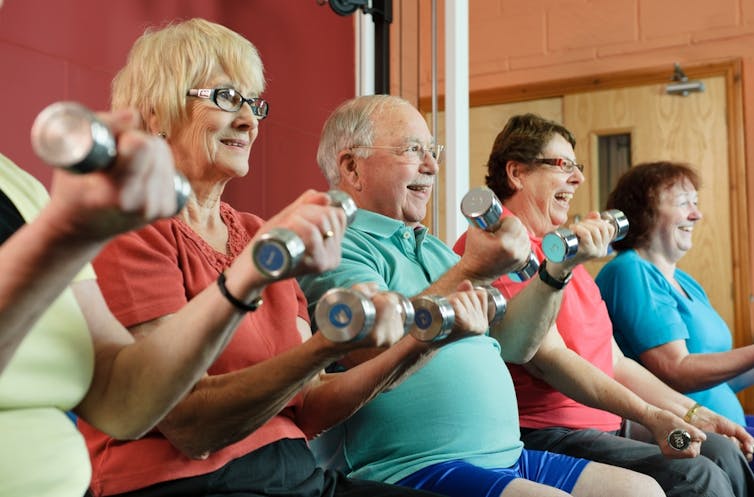
Older adults lifting light dumbbells.
Maintaining muscle mass in older age is important, and that requires protein.
CCISUL/Shutterstock.com

Here’s a crucial detail: the lower likelihood of reaching 100 among non-meat eaters was only observed in underweight participants. No such association was found in older adults of healthy weight.

Being underweight in older age is already strongly linked with increased risks of frailty and death. Body weight therefore appears to be a key factor in explaining these findings.

It’s also worth remembering that this was an observational study, meaning it shows associations rather than cause and effect. Just because two things occur together doesn’t mean one causes the other.

The findings also align with the so-called “obesity paradox” in ageing, where a slightly higher body weight is often linked to better survival in later life.

Notably, the reduced likelihood of reaching 100 observed among non-meat eaters was not evident in those who included fish, dairy or eggs in their diets. These foods provide nutrients that are essential for maintaining muscle and bone health, including high-quality protein, vitamin B12, calcium and vitamin D.

Older adults following these diets were just as likely to live to 100 as meat eaters. The researchers suggested that including modest amounts of animal-source foods may help prevent undernutrition and loss of lean muscle mass in very old age, compared with strictly plant-based diets.

What this means for healthy ageing

Rather than focusing on whether one diet is universally better than another, the key message is that nutrition should be tailored to your stage of life. Energy needs decline with age (due to decreased resting energy expenditure), but some nutrient requirements increase.

Older adults still require adequate protein, vitamin B12, calcium and vitamin D – especially to preserve muscle mass and prevent frailty. In older adulthood, preventing malnutrition and weight loss often becomes more important than long-term chronic disease prevention.

Plant-based diets can still be healthy choices, but they may require careful planning and, in some cases, supplementation to ensure nutritional adequacy, particularly in later life.

The bottom line is that our nutritional needs at 90 may look very different from those at 50, and dietary advice should reflect these changes across the lifespan. What works for you now might need adjusting as you age – and that’s perfectly normal.

The Conversation

Chloe Casey does not work for, consult, own shares in or receive funding from any company or organisation that would benefit from this article, and has disclosed no relevant affiliations beyond their academic appointment.

ref. Are meat eaters really more likely to live to 100 than non-meat eaters, as a recent study suggests? – https://theconversation.com/are-meat-eaters-really-more-likely-to-live-to-100-than-non-meat-eaters-as-a-recent-study-suggests-273861

One country is trying to outlaw political lying, without curbing free speech

Source: The Conversation – UK – By Stephen Clear, Lecturer in Constitutional and Administrative Law, and Public Procurement, Bangor University

Lightspring/Shutterstock

For the past two years, the Welsh parliament – or Senedd – has been grappling with how to tackle deliberate lying by politicians and how to rebuild public trust in democracy.

There is broad agreement across parties in Wales that the current system offers few real consequences for dishonesty. As one Senedd member put it: “Lying flourishes in politics because we can get away with it”.

That frustration has now translated into legislative action. A bill that would make it illegal to make false or misleading statements during Welsh election campaigns has passed its first stage in the Senedd. But while the principle behind the law commands support, the detail – and the speed at which it is being pushed forward – has triggered growing unease.

The proposed ban will not be ready in time for the next Welsh election in May. Even if the legislation survives its remaining stages, it would not come into force until the 2030 election at the earliest. Ministers have suggested even that timetable may be optimistic.

This has led some Senedd members, including from the governing Labour party, to warn that Wales risks rushing through legislation that may feel symbolically satisfying but is legally flawed. One member cautioned against passing “bad law in a poor way” simply to “make people feel good about themselves”. Others have warned that the bill could unintentionally curtail free speech. If passed, Wales would become the first country in the world to ban political lying.

At the heart of the concern is this: how do you outlaw political lies without undermining democratic debate itself?

What does the bill actually do?

The bill follows recommendations made by the Senedd’s standards committee in February 2025. It called for practical reforms by 2026, alongside longer-term measures to deter deliberate deception by both Senedd members and election candidates.

Crucially, however, the bill does not introduce a general ban on lying by politicians once elected. Instead, it focuses narrowly on statements made during election campaigns. It also gives Welsh ministers the power to create a new criminal offence for false or misleading statements intended to influence election outcomes.

Some safeguards already exist. It is already illegal to make false statements about a candidate’s personal character or conduct during an election. The new proposal goes further. It potentially captures a much wider range of political speech, although exactly how wide remains unclear.

For conduct outside election periods, the committee recommended strengthening the existing system of investigation by the Senedd’s standards commissioner, rather than introducing criminal sanctions.

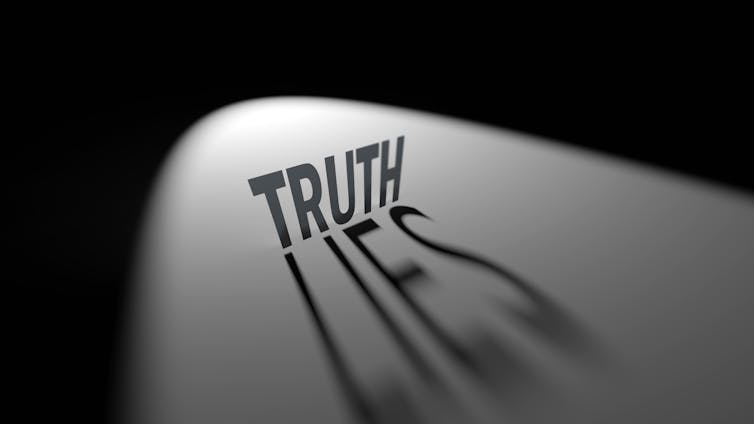
3D Illustration of shadowed words Truth and Lies
How do you outlaw political lies without undermining democratic debate itself?
Layne Harris/Shutterstock

Why free speech is now the sticking point

The bill’s critics are not objecting to the aim of honesty in politics. Their concern is that the legislation, as currently drafted, does not define what counts as a “false or misleading” statement.

Without clear boundaries, some Senedd members fear politicians may simply choose not to speak – or avoid contentious issues altogether – rather than risk prosecution. This concern is especially acute in areas where evidence is evolving, statistics are contested, or political judgement is required.

Political debate often involves thinking on one’s feet, interpreting incomplete information, or presenting one side of a complex argument. These are not the same as deliberate lies. But critics argue that, without precision, the law could struggle to distinguish between intentional deception and legitimate disagreement.

The Senedd’s standards committee – which was asked by the Welsh government to examine the proposal – went further. It said it was “not convinced” that creating a new criminal offence would restore public trust, warning instead that “the risks and unintended consequences currently outweigh the benefits”.

Among those risks are the pressure already facing the justice system. There is also difficulty proving that a statement is objectively false and there are potential conflicts with freedom of expression.

Under article 10 of the European convention on human rights, people – including politicians – have a right to freedom of expression, particularly in political debate. While that right is not absolute, any restriction must be clearly defined, proportionate and necessary. The committee warned that a vaguely drafted offence targeting political speech could be vulnerable to legal challenge on these grounds.

Even those who support tougher standards in Welsh politics accept this tension. If politicians fear that honest mistakes, forceful opinions presented as fact or strategic campaign arguments could later be judged criminally false, debate itself may be cooled. This may weaken democracy rather than strengthening it.


Read more:
Wales is overhauling its democracy – here’s what’s changing


Supporters of legal enforcement argue that these risks can be managed, but only with a much tighter definition and stronger safeguards. They emphasise that any offence must target deliberate, factual deception intended to influence voters, not opinion, rhetoric or political forecasting.

Drawing that line is easier said than done, however. Would competing interpretations of economic data be criminalised? What about optimistic promises based on uncertain forecasts? If such speech were caught by the law, it could narrow the space for open political disagreement.

For that reason, some experts and policy groups have suggested alternative models. These include systems overseen by independent bodies rather than criminal courts, or sanctions focused on correction and transparency rather than punishment.

The challenge facing the Senedd is a delicate one. It must decide whether it can craft a law that is narrow enough to target intentional deception, robust enough to withstand legal scrutiny, and flexible enough to preserve the rough-and-tumble of democratic debate.

Whether that balance can be achieved – and whether the bill survives its next stages – will determine whether Wales becomes a pioneer in political honesty or a cautionary tale about legislating in haste.

The Conversation

Stephen Clear does not work for, consult, own shares in or receive funding from any company or organisation that would benefit from this article, and has disclosed no relevant affiliations beyond their academic appointment.

ref. One country is trying to outlaw political lying, without curbing free speech – https://theconversation.com/one-country-is-trying-to-outlaw-political-lying-without-curbing-free-speech-273526

Love, fear, anger and hope: how emotions influence climate action

Source: The Conversation – UK – By Katie Keddie, PhD Candidate, Urban Transformation, Environment and Society, University of Nottingham

Fida Olga/Shutterstock

Climate targets have long been treated as technical challenges, focused on infrastructure and behaviour change. Yet as climate movements show, people often need to connect emotionally to the facts in order to be compelled to act by them. Whether goals mobilise action or not depends on how they are felt and negotiated in everyday life.

Nottingham, a city in the East Midlands region of the UK, is one of the most deprived local authority areas in England. Yet the city aims to become the UK’s first carbon-neutral city by 2028 by prioritising social justice as well as environmental sustainability.

My PhD research is based on interviews and collaborative workshops with 50 residents, activists, businesses, third sector organisations and elected officials in Nottingham.

My findings highlight how four emotions frequently shape how people have engaged with action towards a sustainable future, be it through love for place, fear of loss or risk, anger at injustice or hope for something better. These emotional reactions reveal why transformation rarely follows neat plans or frameworks.

Many people in Nottingham are involved in climate action because they care deeply about where they live. Love for neighbourhoods, green spaces and future generations motivates people to grow food, protect parks and work together on local projects.

This kind of care helps turn climate change from a distant, abstract problem into something rooted in place and everyday life.

Love here is a verb. It is about taking action with characteristics of care, affection, responsibility, respect and commitment in service of the futures we want to see and the things we want to protect.

Yet love can also exclude. Strong attachments to place can lead to protection in ways that shut others out.

In community green spaces, for example, efforts to protect allotments have led to suspicion of newcomers and resistance to change, resulting in the exclusion of certain community members. Love can both support and complicate just, city-wide action.

Fear and anger

Fear shapes people’s responses too. Worry about rising bills, the knock-on effects of climate change and political instability pushed some people to act, while for others this fear is paralysing.

Activists spoke about burnout, personal risk due to increasingly draconian policing over activism, and feeling stretched too thin when involved in several projects. Fear shaped how people related in communal spaces.

Much like love, fear around “others”, ownership and control sometimes led to exclusion. These anxieties were often amplified by media narratives about threat and scarcity, making collaboration more difficult. Fear can motivate action but can also limit who is allowed or able to take part.


Read more:
Why anger, anxiety and anguish are understandable psychological reactions to the climate crisis


My conversations with people in the city show that anger is prevalent. Citizens expressed frustration with local decision-making, national policy failures and economic systems seen to prioritise profit over people and the environment, signalling important unmet justice claims.

This anger often became a catalyst for action. It fuelled campaigns, community organising and challenges to existing power structures. Yet, if ignored, anger can lead to disillusionment and disengagement.

Hope also plays an important part in transformation efforts in the city. However, citizens note an important distinction between hope and blind optimism. Their hope is often practical and grounded, helping people keep going despite slow progress and uncertainty.

Community gardens, food projects, DIY retrofitting and other local initiatives became places where people could see change taking shape, however small. Yet hope remains fragile – continued austerity, lack of long-term funding and institutional commitments that fail to deliver real change often undermined trust and can threaten hope.

blue background, six round colourful discs with faces expressing different emotions
Emotions are complex and do not operate in isolation.
Fida Olga/Shutterstock

These emotions do not operate in isolation or have fixed consequences. Love often coexists with fear. Anger can fuel hope. Together, they produce complex and non-linear pathways to change.

Nottingham’s experience shows that achieving carbon neutrality is not just about technology or targets. Its success depends on whether people feel included, heard and supported.

When emotions are ignored, climate policies risk becoming superficial or exclusionary. When they are taken seriously, transformation becomes more just and practical for the places in which it is occurring.

This can be achieved through participatory processes and co-production that make space for emotional expression, recognise the labour involved, and resist technocratic approaches that sideline people’s experiences. For Nottingham and other cities around the globe facing similar pressures, attending to how transformation is felt may matter just as much as how progress is measured.


Don’t have time to read about climate change as much as you’d like?

Get a weekly roundup in your inbox instead. Every Wednesday, The Conversation’s environment editor writes Imagine, a short email that goes a little deeper into just one climate issue. Join the 47,000+ readers who’ve subscribed so far.


The Conversation

Katie Keddie does not work for, consult, own shares in or receive funding from any company or organisation that would benefit from this article, and has disclosed no relevant affiliations beyond their academic appointment.

ref. Love, fear, anger and hope: how emotions influence climate action – https://theconversation.com/love-fear-anger-and-hope-how-emotions-influence-climate-action-270925

Saipan: the story behind Roy Keane’s World Cup walkout on Ireland’s football team

Source: The Conversation – UK – By Brian Thornton, Senior Lecturer in Journalism, University of Winchester

Don’t make the mistake of thinking Saipan is a film about the brutal second world war battle on this small Pacific island. It is, in fact, the tale of a ridiculous and heartbreaking football bust-up that almost tore a country apart.

On one side was Irishman Roy Keane, one of the greatest footballers of his generation. Captain of the Ireland team, he was a man with a volcanic temper and an insatiable will to win. On the other was mild-mannered manager Mick McCarthy, a Yorkshireman of Irish descent who had made his name as a brave, no-nonsense defender during his time as captain of Ireland.

The row that exploded on Saipan before the 2002 World Cup had even started was a slow-motion tragicomedy, lurching from one excruciating episode to the next. It began with a spat between Keane and McCarthy over training facilities. It escalated to a national crisis thanks to an ill-timed media interview – then developed into a full-blown international furore after one of the most brutal personal attacks ever seen in sport.

Now the story is being told in a new film starring Steve Coogan as McCarthy and rising star Éanna Hardwicke as Keane.

The row had – and possibly still has – the power to divide people into team McCarthy or team Keane. At the time, battles raged in pubs, on radio phone-ins and in countless newspaper articles.

The level of antagonism the row ignited underlined that this was about more than just football. The “battle of Saipan” somehow exposed deep faultlines in a country that was at a social, political and economic crossroads.

Before qualifying for the 2002 World Cup, Ireland hadn’t been to a major tournament since 1994. While those were wilderness years for the football team, the country was experiencing an astonishing economic miracle.

This once-impoverished country had transformed itself into one of the richest in Europe. GDP growth regularly hit a jaw-dropping 10% a year. Nicknamed the “Celtic tiger”, this economic transformation turned Ireland into a society that valued ambition and despised mediocrity. Keane epitomised this new Ireland – he was a self-made man, rich and with a ruthless drive to succeed.

McCarthy, though born and raised in England, represented old Ireland. He had been captain of the Irish team led by Jack Charlton that took the country on glorious boozy adventures to the European Championship in 1988 and the World Cup in 1990 and in 1994.

A green Irish army travelled the globe like a vast mobile party, while those left at home watched in disbelief as their little nation took its place among the elite footballing nations. It turned the gruff, flat-cap wearing Charlton into a living saint.

It was almost inevitable that these two versions of Ireland would eventually clash – but no one expected it to happen on a small Pacific island on the eve of a World Cup.

The Irish squad arrived in Saipan on May 18 2002 to acclimatise ahead of the tournament in Japan and Korea. Keane’s mood darkened immediately when he saw the training and catering facilities on the island. The pitch was rock hard. There were no goal posts – or footballs. Breakfast consisted of cheese sandwiches.

Keane was outraged at such amateurism, and the next day confronted McCarthy. He said he was going to leave the camp – but was persuaded to stay by others including his Manchester United manager, Alex Ferguson.

Keane, still struggling to keep a lid on his rage, then agreed to do an interview with two Irish newspaper journalists. He told them in no uncertain terms what he thought of Ireland’s preparations. “I believed the people at home had a right to know the truth,” Keane would later say in his book.

The interview was explosive, and the story blew up immediately – causing a sensation around the world, but most particularly in Saipan. McCarthy, utterly shocked, called a meeting with the whole squad. To clear the air, the Ireland manager thought Keane should apologise for what he had said in the articles.

But Keane, surrounded by the entire squad, saw this as an ambush and lashed out. His visceral ten-minute attack on McCarthy in the ballroom of Saipan’s Hyatt Hotel has become legendary:

I didn’t rate you as a player, I don’t rate you as a manager, and I don’t rate you as a person. I’ve got no respect for you. The only reason I have any dealings with you is that somehow you are the manager of my country. You can stick it up your bollocks.

A visibly shaken McCarthy replied: “Roy, either you go or I go – and I am going nowhere.”

Keane left and returned to his Cheshire home, which was now besieged by reporters. His daily walks with his dog Triggs were broadcast live on rolling news channels, as the world waited to see if the player would rethink his decision and return. Despite an offer from Irish prime minister Bertie Ahern to mediate, Keane made it clear there would be no U-turn.

McCarthy and the Irish team went on to perform respectably in the World Cup, losing in a penalty shoot-out to Spain in the last 16. But how far would they have gone in the tournament if Keane had played?

What happened in Saipan is still hotly debated. In Ireland, it is seen as a battle between old and new – the dynamic new age railing against the staid, complacent past. Outside of Ireland, the story is usually framed as a clash between the ideal and the reality – between purity and pragmatism.

As the Irish journalist Fintan O’Toole wrote at the time: “The battle of Saipan is thus a classical tragedy: the inevitable clash of two inexorable forces, each of which has right on its side.”

Saipan is in cinemas from January 23


Looking for something good? Cut through the noise with a carefully curated selection of the latest releases, live events and exhibitions, straight to your inbox every fortnight, on Fridays. Sign up here.


The Conversation

Brian Thornton does not work for, consult, own shares in or receive funding from any company or organisation that would benefit from this article, and has disclosed no relevant affiliations beyond their academic appointment.

ref. Saipan: the story behind Roy Keane’s World Cup walkout on Ireland’s football team – https://theconversation.com/saipan-the-story-behind-roy-keanes-world-cup-walkout-on-irelands-football-team-273420

Stealth tax rises are on the horizon for Scotland ahead of its election

Source: The Conversation – UK – By Karl Matikonis, Assistant Professor in Accountancy and Taxation, University College Dublin

Route66/Shutterstock

When Scotland’s finance secretary, Shona Robison, delivered the Scottish budget for 2026-27 on January 13, she framed it as a budget for families that would ease pressure on household finances. Coming only a few months before the Scottish parliamentary elections in May, this budget is especially significant.

On income tax, the message from the Scottish National Party-led government was clear. Hitting out at recent UK national budgets, Robison argued, correctly, that freezing income tax thresholds means that more of people’s pay is taxed, or taxed at a higher rate. She told the Scottish Parliament: “I am making a different choice.”

While it’s true there is a difference, in reality that difference is limited. The Scottish parliament sets income tax rates and bands on most income earned by taxpayers in Scotland. Unlike in the rest of the UK, there are six rates – starter, basic, intermediate, higher, advanced and top – ranging from 19% to 48%.

What matters is not the number of bands but the size of the jump between them. Income in the intermediate band is taxed at 21% up to £43,662. Income above that point is taxed at 42%.

However, the UK parliament still controls key elements of the system, including allowances, reliefs and tax on savings and dividend income.

While some of Scotland’s income tax thresholds have been raised in this budget, others were left frozen. This means many people will still see their tax bills rise over time, even though headline tax rates have not changed. The mechanism behind this is known as fiscal drag.

Fiscal drag occurs when tax thresholds remain fixed while wages rise. As earnings increase, more income falls into higher tax bands and more people cross into higher rates. As such, governments generate more revenue without any explicit tax rise.

This matters because wages in Scotland have been rising in cash terms. In 2024, the median weekly pay for full-time employees was £739.70 (around £38,500 a year), with nominal earnings rising by 4.3% over the previous year. Median pay for men working full-time was closer to £40,000.

And those figures are already dated. Further pay settlements, particularly in the public sector, mean typical earnings in the years 2026 to 2029 are likely to go up further. Scotland’s higher-rate income tax threshold, however, remains frozen at £43,663.

That leaves a narrow gap between average earnings and the higher-rate tax band (42%). A few years of ordinary pay rises can be enough to push someone over the threshold, even if their job and living standards feel largely unchanged. As a result, fiscal drag increasingly affects mid-career professionals in areas like teaching, nursing and the civil service, rather than solely very high earners.

What the budget changed and what it did not

The recent Scottish budget raises the lower limits of the starter, basic and intermediate income tax thresholds, meaning more income is taxed at lower rates. This goes some way to protecting those whose pay falls in these bands. Ministers can say, accurately, that many lower- and middle-income earners will pay less tax than they would elsewhere in the UK.

But the higher-rate threshold remains frozen until 2028–29 at £43,663. Income above that level will be taxed at 42%. The advanced and top-rate thresholds are also unchanged. By freezing these, the Scottish government is ensuring that rising wages continue to translate into higher tax bills over time.

In design terms, it is using the same fiscal drag mechanism (albeit more selectively) that it criticises when Westminster deploys it.

Here’s a simple example. Consider a full-time worker earning £38,500 in 2024, close to the Scottish median. With annual pay rises of around 4.3%, their salary would reach roughly £40,200 in 2025, £41,900 in 2026, and just over £43,700 by 2027. Note that most of this increase in pay reflects inflation, rather than a real improvement in living standards.

But the freeze on the higher-rate threshold remains in place. So by 2027, the worker is already at or just above this higher-rate threshold. A modest further pay rise or promotion would push part of their income into the 42% band (or potentially 45%), where it had previously been taxed at 21% in the intermediate tax band.

No headline tax rate has changed, but more income is taxed – and taxed at a higher rate. This matters politically because it is the point where economics turns into politics.

exterior shot of the scottish parliament building in edinburgh with wider cityscape in the background.
Voters will go to the polls in the Scottish parliamentary elections on May 7.
Alexey Fedorenko/Shutterstock

Fiscal drag is not a technical quirk. It is a political instrument. As my research on UK budgets shows, when governments commit to avoiding headline tax rises, attention shifts to thresholds and design instead.

Politically, the approach allows the SNP to present the budget as both fair and responsible ahead of the May Scottish parliament elections. Ministers can point to tax cuts for lower earners while maintaining that headline tax rates have not increased.

The strategy is also shaped by tight fiscal constraints. The Scottish budget relies on a block grant from Westminster that has been squeezed by inflation, while borrowing powers are limited and spending cuts are difficult. As such, additional revenue has to come from the tax system, making fiscal drag through frozen higher thresholds an attractive option.

Freezing thresholds while nominal wages rise brings in revenue quietly and predictably, without the backlash associated with explicit tax increases. It also blurs responsibility, as higher tax bills can be attributed to inflation or pay growth, rather than deliberate policy choices. In an election year, that combination is especially attractive.

The budget cuts income tax for many people on lower incomes. Further up, it tells a different story. By freezing the higher, advanced and top-rate thresholds – which include many people who are not what most would consider “high earners” – the Scottish government has chosen to let rising nominal wages do the work of a tax increase. The effect is gradual and uneven – and people often notice it only when it appears on a payslip.

The Conversation

Karl Matikonis previously received funding from the Economic and Social Research Council for unrelated research.

ref. Stealth tax rises are on the horizon for Scotland ahead of its election – https://theconversation.com/stealth-tax-rises-are-on-the-horizon-for-scotland-ahead-of-its-election-274163

‘We want you arrested because we said so’ – how ICE’s policy on raiding whatever homes it wants violates a basic constitutional right, according to a former federal judge

Source: The Conversation – USA – By John E. Jones III, President, Dickinson College

Teyana Gibson Brown, wife of Liberian immigrant Garrison Gibson, reacts after a federal immigration officer arrested her husband in a warrantless raid in Minneapolis, Jan. 11, 2026, in what a judge later ruled was a violation of Gibson’s Fourth Amendment rights. AP Photo/John Locher

As Immigration and Customs Enforcement, or ICE, agents continued to use aggressive and sometimes violent methods to make arrests in its mass deportation campaign, including breaking down doors in Minneapolis homes, a bombshell report from the Associated Press on Jan. 21, 2026, said that an internal ICE memo – acquired via a whistleblower – asserted that immigration officers could enter a home without a judge’s warrant. That policy, the report said, constituted “a sharp reversal of longstanding guidance meant to respect constitutional limits on government searches.”

Those limits have long been found in the Fourth Amendment to the U.S. Constitution. Politics editor Naomi Schalit interviewed Dickinson College President John E. Jones III, a former federal judge appointed by President George W. Bush and confirmed unanimously by the U.S. Senate in 2002, for a primer on the Fourth Amendment, and what the changes in the ICE memo mean.

Okay, I’m going to read the Fourth Amendment – and then you’re going to explain it to us, please! Here goes:

“The right of the people to be secure in their persons, houses, papers, and effects, against unreasonable searches and seizures, shall not be violated, and no Warrants shall issue, but upon probable cause, supported by Oath or affirmation, and particularly describing the place to be searched, and the persons or things to be seized.” Can you help us understand what that means?

Since the beginning of the republic, it has been uncontested that in order to invade someone’s home, you need to have a warrant that was considered, and signed off on, by a judicial officer. This mandate is right within the Fourth Amendment; it is a core protection.

In addition to that, through jurisprudence that has evolved since the adoption of the Fourth Amendment, it is settled law that it applies to everyone. That would include noncitizens as well.

What I see in this directive that ICE put out, apparently quite some time ago and somewhat secretly, is something that, to my mind, turns the Fourth Amendment on its head.

A dark-haired man looking grim and fiddling with his white-collared shirt.
Todd Lyons, the acting head of ICE, whose memorandum on May 12, 2025, authorized ICE agents to forcibly enter into certain people’s homes without a judicial warrant, consent or an emergency.
Brendan Smialowski/AFP via Getty Images

What does the Fourth Amendment aim to protect someone from?

In the context of the ICE search, it means that a person’s home, as they say, really is their castle. Historically, it was meant to remedy something that was true in England, where the colonists came from, which was that the king or those empowered by the king could invade people’s homes at will. The Fourth Amendment was meant to establish a sort of zone of privacy for people, so that their papers, their property, their persons would be safe from intrusion without cause.

So it’s essentially a protection against abuse of the government’s power.

That’s precisely what it is.

Has the accepted interpretation of the Fourth Amendment changed over the centuries?

It hasn’t. But Fourth Amendment law has evolved because the framers, for example, didn’t envision that there would be cellphones. They couldn’t understand or anticipate that there would be things like cellphones and electronic surveillance. All those modalities have come into the sphere of Fourth Amendment protection. The law has evolved in a way that actually has made Fourth Amendment protections greater and more wide-ranging, simply because of technology and other developments such as the use of automobiles and other means of transportation. So there are greater protected zones of privacy than just a person’s home.

ICE says it only needs an administrative warrant, not a judicial warrant, to enter a home and arrest someone. Can you briefly describe the difference and what it means in this situation?

It’s absolutely central to the question here. In this context, an administrative warrant is nothing more than the folks at ICE headquarters writing something up and directing their agents to go arrest somebody. That’s all. It’s a piece of paper that says ‘We want you arrested because we said so.’ At bottom that’s what an administrative warrant is, and of course it hasn’t been approved by a judge.

This authorized use of administrative warrants to circumvent the Fourth Amendment flies in the face of their limited use prior to the ICE directive.

A judicially approved warrant, on the other hand, has by definition been reviewed by a judge. In this case, it would be either a U.S. magistrate judge or U.S. district judge. That means that it would have to be supported by probable cause to enter someone’s residence to arrest them.

So the key distinction is that there’s a neutral arbiter. In this case, a federal judge who evaluates whether or not there’s sufficient cause to – as is stated clearly in the Fourth Amendment – be empowered to enter someone’s home. An administrative warrant has no such protection. It is not much more than a piece of paper generated in a self-serving way by ICE, free of review to substantiate what is stated in it.

ICE agents continued raids in Minnesota on Jan. 18, 2026, pulling a man who was wearing only underwear and a blanket out of a house in St. Paul.

Have there been other kinds of situations, historically, where the government has successfully proposed working around the Fourth Amendment?

There are a few, such as consent searches and exigent circumstances where someone is in danger or evidence is about to be destroyed. But generally it’s really the opposite and cases point to greater protections. For example, in the 1960s the Supreme Court had to confront warrantless wiretapping; it was very difficult for judges in that age who were not tech-savvy to apply the Fourth Amendment to this technology, and they struggled to find a remedy when there was no actual intrusion into a structure. In the end, the court found that intrusion was not necessary and that people’s expectation of privacy included their phone conversations. This of course has been extended to various other means of technology including GPS tracking and cellphone use generally.

What’s the direction this could go in at this point?

What I fear here – and I think ICE probably knows this – is that more often than not, a person who may not have legal standing to be in the country, notwithstanding the fact that there was a Fourth Amendment violation by ICE, may ultimately be out of luck. You could say that the arrest was illegal, and you go back to square one, but at the same time you’ve apprehended the person. So I’m struggling to figure out how you remedy this.

The Conversation

John E. Jones III is affiliated with Keep Our Republic’s Article Three Coalition.

ref. ‘We want you arrested because we said so’ – how ICE’s policy on raiding whatever homes it wants violates a basic constitutional right, according to a former federal judge – https://theconversation.com/we-want-you-arrested-because-we-said-so-how-ices-policy-on-raiding-whatever-homes-it-wants-violates-a-basic-constitutional-right-according-to-a-former-federal-judge-274164

Starmer’s response to Trump’s Greenland outburst shows good old British pragmatism only goes so far

Source: The Conversation – UK – By Nick Whittaker, Tutor of International Relations, University of Sussex

Having thus far taken a highly cautious line with the capricious Donald Trump, Keir Starmer broke with the US president this week over the latter’s desire to acquire Greenland.

With the dust settling on Trump’s address to Davos and his ruling out of military force and tariffs, the UK prime minister congratulated his own approach. Starmer remarked: “We’ve got through the last few days with a mix of British pragmatism, common sense, but also that British sense of sticking to our values and our principles.”

In foreign policy, pragmatism means a lack of ideology or simply “doing what works”. It is related to conservative traditions in political thought, with roots in political philosopher Edmund Burke’s scepticism of the French Revolution.

Twentieth century philosopher Michael Oakeshott characterised his ideal, pragmatic society as a ship in a boundless ocean. The crew should simply be trying to keep afloat and on an even keel, rather than being guided by any grand ideological framework.

Pragmatism has long been associated with UK foreign policy, as both an explanatory framework and something that UK foreign policymakers claim to embody. This was exemplified by Lord Salisbury’s 19th-century posture of “splendid isolation” – having no permanent allies or friends, just permanent interests.

But, as I have written, this approach is problematic – not least because of the significant geopolitical identity that has coloured centuries of UK foreign policy.

All foreign policy is guided by values of some sort, and the UK’s is no exception. Think of the oft-repeated notions of fair play, trading and sovereignty. Prime ministers may come into office wanting to reshape the global or local landscape, only to quickly come up against the need to act in a pragmatic way in response to a sudden crisis.

Pragmatism v idealism

In recent decades, British foreign policymakers have wrestled with an ongoing tension between pragmatism and more ideological approaches. Margaret Thatcher contrasted her own apparently steely-eyed approach to European integration with the “romantic” and “misty” Europeanism of one of her foreign secretaries, Geoffrey Howe.

Thatcher’s successor, John Major, argued that it was his far more positive approach to the EU that represented the truly British posture of pragmatism.

Tony Blair too was wont to burnish his pragmatic credentials, not least over Europe. But this sat uncomfortably alongside his brief flirtation with foreign secretary Robin Cook’s “ethical foreign policy”, and his subsequent part in the highly ideological war on terror, with its unshakeable beliefs in democracy promotion and regime change.

David Cameron rejected the crusading influences of Blair by putting the UK’s involvement in strikes against Bashar al-Assad’s Syria to a Commons vote, which he lost. His subsequent calling of a referendum on the UK’s membership of the EU defined anew a long-running debate between pragmatists and idealists. Here, both sides claimed pragmatism as their own.

For Remainers, continued membership of an EU that broadly “worked” for the UK was the sensible, rational and pragmatic course. They saw those who wanted to leave as overly dogmatic and willing to throw the baby out with the bathwater for so-called principles.

Brexiteers pointed to growing patterns of prosperity in markets beyond Europe. They argued that regaining lost sovereignty was nothing if not pragmatic – and that their opponents had been hopelessly duped by the unrealistic (and in their eyes, dangerous) schemes of Europeans and globalists.

Starmer’s pragmatism?

How then can we characterise Starmer’s foreign policy?

The closer alignment with the EU that he has led can be read as the ideological move of a convinced Remainer. Like his Conservative predecessors, he has made much of the UK’s support for Ukraine in its war with Russia. This signifies the foregrounding of values such as sovereignty, nationhood and the rules-based international order.

Similarly, the 2024 deal with Mauritius over the Chagos islands has been represented as the righting of a historic colonial wrong.

Yet there is a trace of pragmatism in all these policies, too. The realignment with the EU has taken place slowly, with great caution and many accompanying reassurances of red lines. The tough stance over Ukraine can also be read in a pragmatic fashion, given the perceived need to align with European and Nato allies amid Trump’s ratcheting up of tensions.

For all of the appealing whiff of decolonial justice surrounding the Chagos deal, this too was infused with a healthy dose of pragmatism. In spite of Trump’s sudden condemnation of it, he had initially backed the deal precisely because of its pragmatism. It protected the US-led base at Diego Garcia and ensured a vital strategic foothold in the Indian Ocean.

Further instances of foreign policy under Starmer ultimately demonstrate the limits of idealism in British foreign policy. The reaction to Russia’s invasion of Ukraine has been characterised by outrage and (especially under Boris Johnson) a Churchillian “whatever it takes” attitude in favour of self-determination. But other situations have been approached with far more caution.

Starmer and his first foreign secretary, the usually loudly principled David Lammy, dragged their feet over condemnation of Israel in Gaza, infuriating some of the Labour party’s leftwing base. Lammy had earlier sought to resurrect Cook’s ethical foreign policy. Yet, whatever their instincts, pragmatically siding with the US tends to win out when it comes to Israel.

Statements on Venezuela were also couched with extreme caution: pragmatism recognising the lack of British interest, let alone clout, in South America.

Starmer’s post-Davos remarks exemplify the seemingly contradictory melding of pragmatism with principle. In reality, these concepts can be difficult to entangle. They are (as with Brexit) often a matter for the eye of the beholder: one man’s pragmatism is another’s principle.

When it comes to the cornerstones of UK policy, such as Nato and the transatlantic alliance, the line is particularly blurry. But over Greenland and the rollercoaster relationship with Trump, Starmer has indeed had to walk a careful line between pragmatism and principle. This is a rare example of a politician’s comment that one can take at face value.


Want more politics coverage from academic experts? Every week, we bring you informed analysis of developments in government and fact check the claims being made.

Sign up for our weekly politics newsletter, delivered every Friday.


The Conversation

Nick Whittaker does not work for, consult, own shares in or receive funding from any company or organisation that would benefit from this article, and has disclosed no relevant affiliations beyond their academic appointment.

ref. Starmer’s response to Trump’s Greenland outburst shows good old British pragmatism only goes so far – https://theconversation.com/starmers-response-to-trumps-greenland-outburst-shows-good-old-british-pragmatism-only-goes-so-far-274137

Rheumatoid arthritis has no cure – but researchers are homing in on preventing it

Source: The Conversation – USA (3) – By Kevin Deane, Professor of Medicine and Rheumatology, University of Colorado Anschutz Medical Campus

Gentle massaging can help ease the joint pain and swelling from rheumatoid arthritis. Toa55/iStock via Getty Images Plus

More than 18 million people worldwide suffer from rheumatoid arthritis, including nearly 1.5 million Americans.

Rheumatoid arthritis is an autoimmune, inflammatory form of arthritis, meaning a person’s immune system attacks their joints, causing substantial inflammation. This inflammation can cause pain, stiffness and swelling in the joints, and in many cases, patients report fatigue and a flu-like feeling.

If left untreated, rheumatoid arthritis can lead to damage of the joints. But even when treated, this condition can lead to significant disability. In highly active disease or advanced stages, patient may have difficulty performing daily tasks, such as preparing food, caring for children and getting dressed.

Up to now, this condition has been treated once patients have already developed symptoms. But a growing body of evidence suggests this disease can be identified earlier – and maybe even ultimately prevented.

I’m a physician specializing in rheumatoid arthritis and a researcher who has conducted a clinical trial on treatments for this condition. I believe this research is moving us toward being able to identify people who are at risk for rheumatoid arthritis before the disease fully develops, and to finding treatments that will delay or prevent it altogether. My hope is that this could lead to changes in how we manage rheumatoid arthritis in the next several years.

Finding the disease before it causes harm

Currently, when someone visits their health care provider because they are experiencing joint pain or other symptoms of an immune attack, health care providers can make a diagnosis by examining the joints for swelling. The health care provider will also run tests to find blood markers called autoantibodies, which help in confirming the diagnosis. While not all people with rheumatoid arthritis will have abnormal blood markers, the two autoantibodies that are seen in up to 80% of people with rheumatoid arthritis are rheumatoid factor and anti-cyclic citrullinated peptide.

In addition to joint pain, rheumatoid arthritis affects a person’s entire immune system.

But multiple studies have now confirmed that rheumatoid arthritis has a preclinical stage of development. This is a time about three to five years or longer, prior to the onset of swollen joints when markers like rheumatoid factor and anti-cyclic citrullinated peptide are detectable in the blood. The presence of these markers indicates that autoimmunity is occurring, yet the body and organs are still functioning well, and a person who is at risk of getting rheumatoid arthritis may not feel sick yet.

Now that researchers have identified this preclinical stage, health care providers can use markers such as autoantibodies and symptoms like prolonged early morning joint stiffness to identify people who are at risk for rheumatoid arthritis but do not yet have joint inflammation.

At this point, predicting future rheumatoid arthritis is still in the research stage, although the field is working toward established ways to test for risk for rheumatoid arthritis as a routine part of health care. This is akin to how cardiovascular disease risk is assessed through measuring cholesterol levels.

Ongoing research

Because of advances in the ability to predict who may get rheumatoid arthritis in the future, researchers are now working on identifying treatments that can delay or prevent the full-blown condition from developing.

In particular, trials have been performed in people who tested positive for anti-cyclic citrullinated peptide, or who have other risk factors for rheumatoid arthritis. These risk factors include joint pain and subclinical joint inflammation, which is when an imaging study, like magnetic resonance imaging, sees joint inflammation that can’t be seen by a clinician examining the joints.

To date, almost all of these trials have used immune drugs that are commonly used to treat full-blown rheumatoid arthritis, such as methotrexate, hydroxychloroquine and rituximab. Researchers have been testing whether a short course of any of these drugs could lead to a lasting reset of the immune system and prevent rheumatoid arthritis from developing.

While there is not yet an approved drug for rheumatoid arthritis prevention, these studies offer hope that researchers are on track to find the right drug – as well as the right dosage and duration of that drug.

Researching the preclinical stage of rheumatoid arthritis

Some challenges remain to be addressed before preventive treatments become the norm in clinical care.

First, researchers need to better understand the biology of the preclinical stage of disease. Until recently, most studies have focused on patients with full-blown arthritis and generally ignored people at risk for developing the disease.

But now, researchers can use blood markers like anti-cyclic citrullinated peptide antibodies to identify those who are at risk much more easily. And a growing number of studies of people with this marker are informing how scientists understand the biology of rheumatoid arthritis development.

In particular, it is now apparent that the preclinical stage is marked by multiple circulating immune system abnormalities in cells, autoantibodies and inflammation. The hope is that researchers will find interventions that effectively target the immune system abnormalities driving the development of rheumatoid arthritis before the patient’s joints begin to swell.

Researchers are also finding that the abnormalities in the immune system during the preclinical stage may be coming from sites in the body other than the joints. An emerging idea called the mucosal origins hypothesis posits that the early autoimmunity of rheumatoid arthritis is caused by inflammation at mucosal surfaces of the body, such as the gums, the lungs and the gut. According to this theory, the joints are involved only later as the disease progresses.

More research is needed, but the mucosal origins hypothesis may help explain why periodontal disease, emphysema or other forms of lung disease and exposure to tobacco or forest fire smoke are risk factors for rheumatoid arthritis. It would also explain why certain bacteria have been associated with the disease. Future trials targeting interventions to a mucosal process could help researchers better understand the nature of this disease.

nurse draws blood from patient with outstretched arm
At some point, testing for biomarkers of rheumatoid arthritis may become routine. For now, it can still be difficult for health care providers to determine which of their patients may be at risk for rheumatoid arthritis.
MoMo Productions/DigitalVision via Getty Images

Making predictions

But while biomarkers like the anti-cyclic citrullinated peptide antibodies are strongly predictive for future rheumatoid arthritis, one difficulty remains: Some people who test positive for them never develop the full-blown disease.

Studies have shown that about 20% to 30% of people who are positive for anti-cyclic citrullinated peptide antibodies develop rheumatoid arthritis within two to five years, although the presence of combinations of risk factors can identify people who have a greater than 50% risk for developing the condition within one year.

This makes it difficult to find participants for clinical trials for rheumatoid arthritis prevention. If you can’t predict who will get the disease, it’s hard to know whether you’re preventing it.

So far, researchers have tried to recruit people who have already come to their health care provider with early joint symptoms of rheumatoid arthritis but still no swollen joints. That has worked well, but there are likely far more people at risk for rheumatoid arthritis who have not yet sought care. Since health care providers are not yet testing everyone for blood markers for rheumatoid arthritis, researchers will need larger, international networks that can test for risk factors like autoantibodies to identify candidates for participation in prevention trials.

More needs to be done, but it’s exciting to see the field advancing toward the point where prevention may be part of routine clinical care for rheumatoid arthritis.

The Conversation

Dr. Deane has received grant funding from the Arthritis Foundation, the National Institutes of Health, Boehringer Ingelheim, Gilead and ThermoFisher, and has had consulting/advisory board participation with Werfen, Boehringer Ingelheim, AllInBio, and Lilly. Dr. Deane also part of task forces for prediction of rheumatoid arthritis that are sponsored by the American College of Rheumatology and the European Alliance of Associations for Rheumatology.

ref. Rheumatoid arthritis has no cure – but researchers are homing in on preventing it – https://theconversation.com/rheumatoid-arthritis-has-no-cure-but-researchers-are-homing-in-on-preventing-it-268472