Trump wants to shutter the Kennedy Center for 2 years – an arts management professor explains what that portends

Source: The Conversation – USA (2) – By E. Andrew Taylor, Associate Professor and Director of Arts Management, American University

President Donald Trump attends the premiere of the ‘Melania’ documentary at the Kennedy Center on Jan. 29, 2026. Brendan Smialowski/AFP via Getty Images

President Donald Trump announced on Feb. 1, 2026, that he would shut down the John F. Kennedy Center for the Performing Arts for two years. Trump said this closure would begin on July 4 and was necessary for “Construction, Revitalization and Complete Rebuilding.” The next day, he denied that this meant he would demolish the facility altogether. The multi-venue arts center has endured cancellations by performing artists and boycotts by patrons throughout the first year of Trump’s second term, during which he made himself chairman of its board. Trump’s handpicked board members then voted to rebrand the center to include his name.

To help readers understand what this upheaval means, The Conversation U.S. asked E. Andrew Taylor, an arts management professor at American University – which like the Kennedy Center is located in Washington, D.C. – to explain whether Trump has the power or justification to carry out a complete overhaul of this living memorial to President Kennedy.

Does Trump have the authority to shut the center?

Trump wears many hats in this drama.

None of them give him individual or direct authority over the Kennedy Center’s buildings, grounds or operations. However, those hats give him multiple points of leverage.

As president of the United States, Trump has authority to appoint about half of the members of the Kennedy Center governing board – which he stacked with his appointees in February 2025. As chair, appointed by that newly constructed board, Trump has significant influence over how the governing body works.

By law, the Kennedy Center is governed by its full board, while its federal funding for operations and facilities is reviewed and approved by Congress. In practice, both the board and Congress appear to have deferred to the President, as have most of the enforcement agencies that might challenge him here.

In yet another twist, the center’s board reportedly changed its bylaws in 2025 to limit voting by the 23 board members not appointed by the president. One of those members, Rep. Joyce Beatty, an Ohio Democrat, sued the board and the center’s executive leadership team in December. In her lawsuit, she claimed the board had exceeded its statutory authority and improperly excluded active board members when it renamed the center to add the president’s name. That lawsuit is pending in federal court; no rulings have been issued.

A view of the Kennedy Center, with a sign saying 'The Trump Kennedy Center' in the foreground.
Kennedy Center signs are gradually getting new branding.
Mandel Ngan/AFP via Getty Images

Why is his actual authority hard to define?

The Kennedy Center was established by Congress as “a living memorial to John Fitzgerald Kennedy.” Since its opening in 1971, it has remained a complex public-private enterprise that is both a part of the federal government and a tax-exempt nonprofit.

The center was built with a and long-term revenue bonds held by the Treasury Department. Its ongoing operations have always been funded by a mix of public money, private contributions and earned revenue from ticket sales, events, food service, parking and the like.

To oversee this complex enterprise, Congress established and authorized a governing board, granting it authority to “plan, design, and construct each capital repair, replacement, improvement, rehabilitation, alteration, or modification necessary to maintain the functionality of the building and site at current standards of life, safety, security, and accessibility.”

Until now, major expansions and updates of the campus have been approved by Congress.

Is Trump’s claim that the center needs major upgrades accurate?

There are two claims here that deserve separate attention.

One is that the center needs major upgrades. That is true. The other is that those upgrades require full closure of the entire campus for multiple years. That is suspect.

As for upgrades, the original Kennedy Center building is a sprawling and complex facility with more than 50 years of wear and tear.

A comprehensive engineering and architectural review of the center in 2021 identified 323 capital and minor repair projects that would cost roughly US$252 million to carry out. Only about $45 million has been spent on those projects so far.

The remaining big-ticket items include fully replacing seats in the Concert Hall, replacing the original Opera House pit lift system, dealing with parking garage and loading dock structural issues, and attending to long-deferred elevator repair and replacement.

At the same time, many parts of the Kennedy Center campus are fairly new. The REACH, a $250 million complex with all new buildings and infrastructure, opened in 2019 to increase capacity for community and educational events.

While the need for major upgrades is well supported, the dramatic and disruptive closure of the entire campus for two years is not. A thoughtful, phased renovation and repair strategy would allow for major improvements while the lifeblood of the center – the artists, audiences and donors – could still flow through the campus with at least some performances, programs and events taking place.

In fact, that phasing was the plan in the most recent budget request the center delivered to Congress, until Trump pivoted.

A long post by Donald Trump.
In a Feb. 1, 2026, Truth Social post, President Donald Trump said the ‘Trump Kennedy Center’ would close for two years, beginning on July 4, 2026.

How have Trump’s interventions affected the center so far?

That depends on who you ask.

Ticket sales and attendance have reportedly dropped dramatically, and multiple artists and arts organizations have canceled their planned performances, including singer Renée Fleming, composer Philip Glass, banjoist Béla Fleck and “Wicked” composer Stephen Schwartz. The Washington National Opera, a longtime resident organization, announced its separation and departure from the center in January.

Kennedy Center communications leader Roma Daravi blamed declining attendance on “liberal intolerance.” She also claimed the center’s renaming “recognizes that the current Chairman saved the institution from financial ruin and physical destruction.” Kennedy Center President Richard Grenell dismissed the artists canceling their shows as being “booked by the previous far left leadership.”

What would happen should the center shut down altogether?

The Kennedy Center is not only a venue for its own productions, programs and touring performances.

It’s a hub for live performing arts and arts education for the entire region and the nation as a whole. Independent producers and promoters rent its venues for their performances and events. Each year, it serves over 2.1 million students, educators and school administrators in all 50 states with professional development, summer intensives for young artists and performances for young audiences. And its free and public performances have been a mainstay of cultural life in Washington for decades.

Where all of this activity would relocate for years is unclear. There are few comparable venues in the region, and those available are already booked with productions and tours that were bypassing the Kennedy Center. The National Symphony Orchestra would be particularly vulnerable to a two-year closure of its primary venue. It is not obvious where a large ensemble with such an active rehearsal and concert schedule would be able to perform.

There are also touring productions currently scheduled to perform after the proposed closing date, including “The Outsiders,” “Back to the Future: The Musical” and “Mrs. Doubtfire.” Although those tickets were still for sale as of Feb. 3, whether those performances will take place is now in doubt. Those shows’ national tours may be disrupted if the center shuts down.

The center itself, like all such arts venues, survives and thrives on an enduring and connected network of relationships – among artists, touring productions, artist managers, production teams, technical staff, venue management, audiences and donors.

These relationships are sustained through trust and consistency. My three decades of experience teaching and studying arts management suggest that once those relationships are betrayed or delayed, it’s a long road to build them back.

What might be next? And what does it mean?

It’s anyone’s guess whether Trump’s Truth Social post about closing the center will prove true or merely provocative. The board, the center’s leaders, its staff and the people scheduled to perform there after July 4 appeared to be surprised by the announcement.

As a rule, any multi-hundred-million-dollar renovation or demolition requires deliberate and collaborative effort, rather than a decree.

In the short term, the sudden announcement is yet another twist in a wrenching narrative for makers and lovers of the arts across the Washington region and around the country. While a few years and a few hundred million dollars might restore the building’s physical infrastructure, it may take much more time, effort and energy to restore its reputation.

The Conversation

E. Andrew Taylor does not work for, consult, own shares in or receive funding from any company or organization that would benefit from this article, and has disclosed no relevant affiliations beyond their academic appointment.

ref. Trump wants to shutter the Kennedy Center for 2 years – an arts management professor explains what that portends – https://theconversation.com/trump-wants-to-shutter-the-kennedy-center-for-2-years-an-arts-management-professor-explains-what-that-portends-274906
An epic border: Finland’s poetic masterpiece, the Kalevala, has roots in 2 cultures and 2 countries

Source: The Conversation – USA (3) – By Thomas A. DuBois, Professor of Scandinavian Studies, Folklore, and Religious Studies, University of Wisconsin-Madison

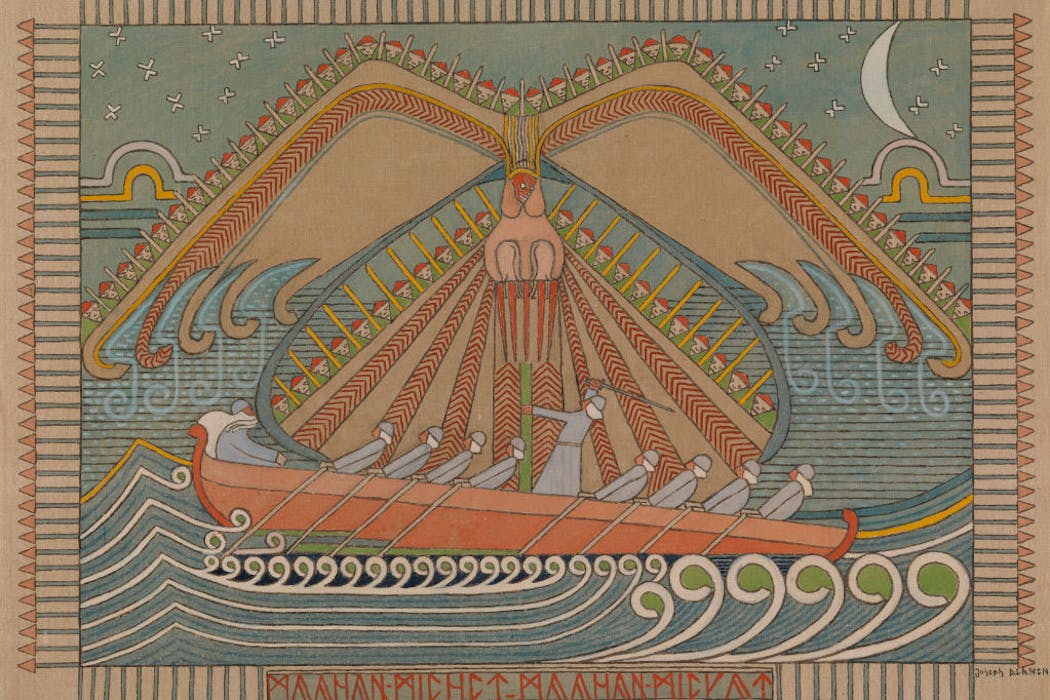
‘The Defense of the Sampo,’ by early-20th-century Finnish painter Joseph Alanen, was inspired by tales from the Kalevala. Heritage Images/Hulton Archive via Getty Images

At the outset of the Kalevala, Finland’s national epic, a singer bemoans his separation from a beloved friend who grew up beside him. Today, the friends rarely meet “näillä raukoilla rajoilla, poloisilla Pohjan mailla” – lines which translator Keith Bosley renders “on these poor borders, the luckless lands of the North.”

The Kalevala, a poetic masterpiece of nearly 23,000 lines, first appeared in 1835. Now, nearly 200 years later, those “luckless lands of the North” are an increasingly tense border zone.

On one side sits Finland, affluent and famously “happy.” The Nordic nation of 5.6 million is a member of the European Union and, more recently, the NATO alliance. On the other side sits the Republic of Karelia, with a population of around a half-million. Originally home to the Karelians, a people closely related to the Finns, today Karelia is part of the Russian Federation – and the percentage of Karelian speakers is in the single digits.

Finland celebrates Feb. 28 as Kalevala Day, or the “Day of Finnish Culture.” Yet the epic’s songs were collected in both Finland and Karelia, reflecting a cultural affinity sundered by the politics of empire. And as Russia’s war in Ukraine drags on, that border zone has become more tense.

Shared roots

The people of Finland and Karelia – “Suomi” and “Karjala,” in their own languages – have lived in the forests, lakes, marshes and farmlands of northeastern Europe since time immemorial. Their languages are closely related, but they differ markedly from Swedish and Russian, the idioms of the empires that usurped control over the region in the Middle Ages. Finns came under the dominion of Sweden and were converted to Roman Catholicism – and later Lutheranism. Karelians came under the dominion of Russia and were converted to Orthodox Christianity.

Centuries of wars and saber-rattling between the Swedish and Russian empires created hardship for Finns and Karelians alike. Their lands became battlegrounds for warring forces, and their men served as conscripted soldiers for opposing sides in conflicts like the Great Northern War of 1700–1721, which devastated both lands and populations.

Despite the enmity of rival emperors, over the course of centuries daily life and culture had remained remarkably similar for Finns and Karelians. Both sang songs of a mythic past, colorful heroes and powerful magic using a distinctive poetic meter – one that Henry Wadsworth Longfellow later imitated in “The Song of Hiawatha.”

Karelian singer Anni Kiriloff, born in 1886, sings about the mythical creation of the kantele, a five-stringed harp.

Mythic songs

In 1809, after yet another war, Russia acquired Finland as an autonomous grand duchy, bringing its people under the same crown as Karelians.

Finnish physician and admirer of folklore Elias Lönnrot took advantage of this political union to collect folk songs across the region. Wandering from village to village, writing down songs from dictation, he amassed a body of texts out of which to make an epic.

A painting in teal and brown shades depicts a boatful of men fighting a winged creature.
‘The Defense of the Sampo,’ by Finnish artist Akseli Gallen-Kallela.
Turku Art Museum via Wikimedia Commons

The contents of the Kalevala are varied and intriguing – starting with the creation of the Earth from an egg, and the felling of a primordial oak tree that threatened to block out the sun.

One of the epic’s most famous tales is the forging of a mysterious object, the Sampo – a sort of magic mill that will produce whatever its owner wishes. It becomes an object of conflict between the people of “Kalevala” and the people of “Pohjola,” the “north.”

The Kalevala hero Väinämöinen, a wizened worker of magic – along with Ilmarinen, the skilled but brooding blacksmith who originally created the Sampo, and their incorrigible friend, Lemminkäinen – attempt to steal the Sampo away from Pohjola, where Louhi, the stern Mistress of the North, has sequestered it. The resulting struggle destroys the Sampo, and its promised life of ease and prosperity.

A woman with her hair in a kerchief stares up toward the sky as she sits near a pale, thin young man laid out on a riverbank.
‘Lemminkäinen’s Mother,’ by Finnish painter Akseli Gallen-Kallela, depicts her bringing one of the Kalevala’s heroes back to life.
Ateneum via Wikimedia Commons

Lönnrot hoped to unearth a history and an identity for Finns and Karelians, one separate from that of either Sweden or Russia. On the Finnish side of the border, in particular, the epic helped convince people that they were a valuable and creative nation, distinct from the empires that sought to control them.

As the 19th century wore on, the Russian government became less friendly to its cultural minorities. Authorities attempted to “Russify” Finland and other parts of the empire. But Finns resisted, drawing on images from Lönnrot’s Kalevala to articulate their cultural and historical independence.

The paintings of Akseli Gallen-Kallela drew on the epic for themes and inspiration at the turn of the 20th century. Composer Jean Sibelius’ famed Lemminkäinen Suite of 1896, or “Four Legends from the Kalevala,” made elements of the story familiar to audiences around the world and helped bolster international awareness of Finland’s culture. An early Finnish photographer, I.K. Inha, retraced Lönnrot’s wanderings through Finland and Karelia in a book entitled “Finland in Pictures.”

A black-and-white photograph of two men with beards sitting across from each other and holding hands.
Brothers Poavila and Triihvo Jamanen recite traditional folk poetry in a Karelian village in 1894.
I. K. Inha/Wikimedia Commons

Independent Finland

Finland achieved independence in 1917, in the aftermath of Russia’s Bolshevik Revolution. But civil war soon broke out between the “Finnish Whites” and socialist “Finnish Reds.” It was the first of several conflicts that shifted borders and forced hundreds of thousands of people from their homes.

After the Whites’ victory in Finland’s civil war, many socialist-minded Finns moved to Karelia hoping to build a workers’ paradise. After the rise of Soviet leader Josef Stalin, however, they were labeled as dangerous foreign influences. Thousands were arrested and deported, as Stalin sought to replace the population with Russian-speaking loyalists.

After decades of Russification, assimilation and migration, Karelian-speakers today represent only a small minority of the Republic of Karelia. Another small population resides in Finland, where they were resettled after the wars.

During World War II, Finland fought the Soviet Union several more times, striving to maintain its independence and even incorporate parts of Karelia. Finland managed to remain outside of the Soviet Union, but lost portions of its territory close to the Karelian border.

The Treaty of Friendship, Cooperation and Mutual Assistance, signed in 1948, encouraged cultural exchanges between Finland and the Soviet Union. The first joint Finnish-Soviet feature film, 1959’s “Sampo,” was a recounting of the Kalevala spearheaded by Aleksandr Ptushko, the “Disney of Soviet film” – but stripped of any nationalist symbolism.

Rising tension

In the years following the dissolution of the Soviet Union in 1991, the Finnish-Karelian border became once again a place of lively meeting and exchange. Through the work of organizations like Finland’s Juminkeko foundation, the heritage of the Kalevala has been explored and celebrated on both sides of the border. Finnish and Karelian folk revival and heavy metal bands drew on the Kalevala for inspiration and materials. Shopping centers developed in border towns, and tourists began crossing the border in ever increasing numbers.

The runic song traditions of the Kalevala have also inspired contemporary artists.

Yet Russia’s war in Ukraine has turned the Finnish-Russian border once again into a place of tension. Finland became a member of NATO in 2023, concerned by Vladimir Putin’s regime’s disregard for the rights of other sovereign nations. In December 2023, the Finnish government indefinitely closed the 835-mile (1,344-kilometer) land border, and is now building a fence along part of it. Meanwhile, Russia is expanding military infrastructure near the border, as European countries raise alarm about threats to NATO.

On Feb. 28, the anniversary of the day on which Lönnrot completed the first edition of the Kalevala, public buildings in Finland will fly the country’s flag. Schools and cultural institutions will organize events to celebrate the Kalevala and the cultural and political independence it helped achieve. On the other side of the border, perhaps Karelian speakers and some other inhabitants will celebrate as well. In a Russia where cultural and ethnic minorities’ activism can attract suspicion, though, any observance is likely to be far more muted: The situation remains regrettably tense “on these poor borders, the luckless lands of the North.”

The Conversation

Thomas A. DuBois does not work for, consult, own shares in or receive funding from any company or organization that would benefit from this article, and has disclosed no relevant affiliations beyond their academic appointment.

ref. An epic border: Finland’s poetic masterpiece, the Kalevala, has roots in 2 cultures and 2 countries – https://theconversation.com/an-epic-border-finlands-poetic-masterpiece-the-kalevala-has-roots-in-2-cultures-and-2-countries-261444

Anti-poverty programmes can change how people see the state and each other

Source: The Conversation – Africa – By Katrina Kosec, Lecturer, Johns Hopkins University

When floodwaters washed away Woudou Oumar’s home in northern Cameroon, he and his family lost not only shelter but hope. Then a government-supported cash transfer arrived. “The money transfer was a real boost for me and my family,” he says, explaining how he rebuilt his house, bought seeds for farming, paid for his daughters’ schooling, covered his son’s medical care after the disaster, and became more hopeful.

Stories like Woudou’s highlight how social transfers can shape more than incomes: they anchor people in their communities and influence how they experience and judge governmental support.

Governments and development partners around the world are now pouring unprecedented resources into social protection. From rural Bangladesh to urban Brazil, more than 120 low- and middle-income countries now provide some form of cash transfer to their poorest citizens. These programmes have succeeded in reducing poverty in both the short term and long term, improving education outcomes and promoting better health.

But what else are they doing and at what cost, or benefit, to social and political life?

Our new study reveals that social transfers are systematically reshaping how citizens relate to their governments and to one another. We reviewed nearly 90 empirical studies across six continents in a bid to establish causal effects of social transfers on outcomes beyond welfare and livelihoods. We found that these programmes influenced how people voted, how much they trusted institutions, whether they participated in civic life, and even how they felt about their neighbours.

The studies spanned Africa, Asia, Australia, Europe, North America and South America. The review included studies in 11 African countries – some in fragile and conflict-affected settings. Our findings identified consistent patterns alongside important contextual variation.

The effects weren’t always what policymakers expected, and they depended heavily on programme design, recipient characteristics, and political context.


Read more:
Over 26 million South Africans get a social grant. Fear of losing the payment used to be a reason to vote for the ANC, but no longer – study


As governments and donors expand safety nets, one reality deserves more attention: social transfers don’t operate in a vacuum. They shape how citizens perceive authority, belonging, and the fairness of their political institutions. They can strengthen political and social trust or erode it, build cohesion or fuel resentment.

Our review shows that design, delivery, and local context shape whether transfers unify or divide societies. While many effects are positive, they are neither automatic nor uniform. Getting this right means seeing social protection not only as a tool to fight poverty, but as a force that can help – or hinder – the building of political trust and community life.

Across settings, three things stood out: how transfers reshape state legitimacy, how they affect trust and political behaviour, and how they alter relationships within communities.

Reshaping relationships with the state

Social transfer programmes, such as cash transfers or food aid, are designed to reduce poverty and cushion households against income shocks. But they also shape how people understand the social contract between citizens and the state.

In fragile settings especially, even small benefits can become symbols of state presence and capacity. Good delivery looks boring – but it is powerful. Programmes that pay on time and apply clear eligibility rules tend to build political trust. In these settings, recipients understand not only that help is coming, but why – and from whom.

Bad delivery, by contrast, often involves delays, opaque targeting, or inconsistent payments. When citizens cannot predict whether benefits will arrive, or suspect that selection is arbitrary or politicised, transfers lose their legitimising effect and may even undermine confidence in public institutions.

When citizens perceive these programmes as fairly targeted and effectively delivered, they often respond with higher satisfaction with public services and their political leaders, and increased political participation. Many begin to see their governments as more legitimate and responsive.

In fact, the most consistent empirical finding across nearly 90 studies was that social transfers boosted support for political incumbents, particularly when programmes were seen as credible, well targeted, and appropriately delivered.

Still, not all effects were positive.

We identified conditions under which social transfers had little effect – or even negative consequences – for state-citizen relations. In some cases, this reflected poor implementation capacity. In others, citizens credited NGOs or donors rather than their government for programme delivery. Where attribution was unclear, benefits didn’t necessarily translate into political support.

A mixed picture at community level

We also examined how transfers shaped relationships between citizens themselves. Here, the evidence was more mixed.

In some settings, transfers increased community engagement, strengthened informal support networks, and built trust between groups.

But in other cases, transfers fuelled jealousy or worsened inter-group tensions. The evidence suggests, for instance, that transfers can increase crime or conflict when benefits leak to better-off households or are perceived to help outsiders.

Equity and deservingness concerns emerged as especially important. When programmes excluded those who perceived themselves as equally needy, or when non-beneficiaries perceived recipients as undeserving, political resentment built. These dynamics were especially salient in contexts of high displacement, high inequality, or deep social cleavages.

Design details matter

One of the clearest takeaways from our review is that the design and delivery of anti-poverty programmes makes a real difference for political and social outcomes.

Inclusive programmes that reached broader populations were less likely to generate resentment than narrowly targeted ones. Programmes that come with conditions that promote the acquisition of civic skills (through job training, for example) and increase engagement with state and community organisations (through the receipt of a national identification card, for example) serve to more effectively boost political participation.

Attribution is also crucial. When citizens clearly associated benefits with their government, transfers were more likely to build trust in institutions. And having mechanisms for grievance redress, feedback and community dialogue amplified the positive effects.

We also found that trust and social cohesion impacts were greater among marginalised groups such as women, unskilled workers and the very poor. Citizens like these often have the most to gain from the material support and the recognition that programmes represent.

Policy lessons for expansion

As social protection becomes more central to development strategies, understanding these effects is critical. Cash transfers are not just economic tools. They shape political attitudes, community cohesion, and perceptions of fairness.

The core message is simple but consequential: social protection is never politically or socially neutral. Its effects depend not only on how much is transferred, but on who receives it, how programmes are explained, and whether citizens experience them as fair, corruption-free, and delivered by a state that is accountable to them.

To maximise the benefits of social transfer programmes and minimise unintended harms, governments and donors should consider five key principles:

Target transparently and fairly. Programmes should strive for clear eligibility rules that are well communicated. Programmes must also actually deliver what is promised in a timely way that is visibly free from graft.

Design for dignity and civic engagement. Programmes that provide opportunities for feedback, or positive interactions with those providing public services, can promote social inclusion.

Ensure state visibility and attribution. When recipients understand the government’s role in delivering benefits, they are more likely to see the state as responsive and capable, reinforcing positive relations and encouraging more political participation.

Promote social cohesion through complementary efforts. Transfers may strengthen community ties when paired with initiatives like local meetings or community-based trainings. These features can be just as important as the cash itself for ensuring broad programme acceptance.

Measure relational impacts, not just economic ones. Evaluation should go beyond income and consumption to assess how transfers affect trust, cohesion, political efficacy and perceptions of fairness – among both beneficiaries and non-beneficiaries.

As social protection scales globally, the question is no longer whether transfers reduce poverty – they do. The harder question is whether they help build the kinds of states and societies that can sustain development over time. Getting the design right is not just good policy. It can meaningfully strengthen bonds among citizens and between citizens and the state.

The Conversation

Katrina Kosec receives funding from the CGIAR Science Program on Food Frontiers and Security.

Cecilia Hyunjung Mo does not work for, consult, own shares in or receive funding from any company or organisation that would benefit from this article, and has disclosed no relevant affiliations beyond their academic appointment.

ref. Anti-poverty programmes can change how people see the state and each other – https://theconversation.com/anti-poverty-programmes-can-change-how-people-see-the-state-and-each-other-274303

Medicare is experimenting with having AI review claims – a cost-saving measure that could risk denying needed care

Source: The Conversation – USA (3) – By Grace Mackleby, Research scientist of Health Policy and Economics, University of Southern California

A new pilot brings some automated treatment decisions from Medicare Advantage to traditional Medicare. Doomu/iStock via Getty Images

Medicare has launched a six-year pilot program that could eventually transform access to health care for some of the millions of people across the U.S. who rely on it for their health insurance coverage.

Traditional Medicare is a government-administered insurance plan for people over 65 or with disabilities. About half of the 67 million Americans insured through Medicare have this coverage. The rest have Medicare Advantage plans administered by private companies.

The pilot program, dubbed the Wasteful and Inappropriate Service Reduction Model, is an experimental program that began to affect people enrolled in traditional Medicare from six states in January 2026.

During this pilot, medical providers must apply for permission, or prior authorization, before giving 14 kinds of health procedures and devices. The program uses artificial intelligence software to identify treatment requests it deems unnecessary or harmful and denies them. This is similar to the way many Medicare Advantage plans work.

As health economists who have studied Medicare and the use of AI in prior authorization, we believe this pilot could save Medicare money, but it should be closely monitored to ensure that it does not harm the health of patients enrolled in the traditional Medicare program.

Prior authorization

The pilot marks a dramatic change.

Unlike other types of health insurance, including Medicare Advantage, traditional Medicare generally does not require health care providers to submit requests for Medicare to authorize the treatments they recommend to patients.

Requiring prior authorization for these procedures and devices could reduce wasteful spending and help patients by steering them away from unnecessary treatments. However, there is a risk that it could also delay or interfere with some necessary care and add to the paperwork providers must contend with.

Prior authorization is widely used by Medicare Advantage plans. Many insurance companies hire technology firms to make prior authorization decisions for their Medicare Advantage plans.

Pilots are a key way that Medicare improves its services. Medicare tests changes on a small number of people or providers to see whether they should be implemented more broadly.

The six states participating are Arizona, New Jersey, Ohio, Oklahoma, Texas and Washington. The 14 services that require prior authorization during this pilot include steroid injections for pain management and incontinence-control devices. The pilot ends December 2031.

If the Centers for Medicare & Medicaid Services, which administers Medicare, deems the pilot successful, the Department of Health and Human services could expand the program to include more procedures and more states.

Introducing a hurdle

This pilot isn’t changing the rules for what traditional Medicare covers. Instead, it adds an extra hurdle for medical providers before they can administer, for example, arthroscopic treatment for an osteoarthritic knee.

If Medicare issues a denial rather than authorizing the service, the patient goes without that treatment unless their provider files an appeal and prevails.

Medicare has hired tech companies to do the work of denying or approving prior authorization requests, with the aid of artificial intelligence.

Many of these are the same companies that do prior authorizations for Medicare Advantage plans.

The government pays the companies a percentage of what Medicare would have spent on the denied treatments. This means companies are paid more when they deny more prior authorization requests.

Medicare monitors the pilot program for inappropriate denials.

What to watch for

Past research has shown that when insurers require prior authorization, the people they cover get fewer services. This pilot is likely to reduce treatments and Medicare spending, though how much remains unknown.

The Centers for Medicare & Medicaid Services chose the services targeted by the pilot because there is evidence they are given excessively in many cases.

If the program denies cases where a health service is inappropriate, or of “low value” for a patient’s health, people enrolled in traditional Medicare could benefit.

But for each treatment targeted by the pilot, there are some cases where that kind of health care is necessary.

If the program’s AI-based decision method has trouble identifying these necessary cases and denies them, people could lose access to care they need.

The pilot also adds to the paperwork that medical providers must do. Paperwork is already a major burden for providers and contributes to burnout.

AI’s role

No matter how the government evaluates prior authorizations, we think this pilot is likely to reduce use of the targeted treatments.

The impact of using AI to evaluate these prior authorizations is unclear. AI could allow tech companies to automatically approve more cases, which could speed up decisions. However, companies could use time saved by AI to put more effort into having people review cases flagged by AI, which could increase denials.

Many private insurers already use AI for Medicare Advantage prior authorization decisions, although there has been limited research on these models, and little is known about how accurate AI is for this purpose.

What evidence there is suggests that AI-aided prior authorization leads to higher denial rates and larger reductions in health care use than when insurers make prior authorization decisions without using AI.

Two wooden cubes marked yes and no with robot hand pointing to no
Traditional Medicare is experimenting with using AI to assist in deciding whether treatment recommended by health providers is necessary.
Dragon Claws/iStock via Getty Images

The bottom line

Any money the government saves during the pilot will depend on whether and how frequently these treatments are used inappropriately and how aggressively tech companies deny care.

In our view, this pilot will likely create winners and losers. Tech companies may benefit financially, though how much will depend on how big the treatment reductions are. But medical providers will have more paperwork to deal with and will get paid less if some of their Medicare requests are denied.

The impact on patients will depend on how well tech companies identify care that probably would be unnecessary and avoid denying care that is essential.

Taxpayers, who pay into Medicare during their working years, stand to benefit if the pilot can cut long-term Medicare costs, an important goal given Medicare’s growing budget crisis.

Like in Medicare Advantage, savings from prior authorization requirements in this pilot are split with private companies. Unlike in Medicare Advantage, however, this split is based on a fixed, observable percentage so that payments to private companies cannot exceed total savings, and the benefits of the program are easier for Medicare to quantify.

In our view, given the potential trade-offs, Medicare will need to evaluate the results of this pilot carefully before expanding it to more states – especially if it also expands the program to include services where unnecessary care is less common.

The Conversation

Grace Mackleby receives funding from Arnold Ventures and the Commonwealth Foundation.

Jeff Marr receives funding from Arnold Ventures and the National Institute on Aging.

ref. Medicare is experimenting with having AI review claims – a cost-saving measure that could risk denying needed care – https://theconversation.com/medicare-is-experimenting-with-having-ai-review-claims-a-cost-saving-measure-that-could-risk-denying-needed-care-273754

Lüften sounds simple – but ‘house-burping’ is more complicated in Pittsburgh

Source: The Conversation – USA (3) – By William Bahnfleth, Professor of Architectural Engineering, Penn State

Lüften refers to the German practice of opening windows and sometimes doors to rapidly fill a house with outdoor air, at least a couple of times daily. Jan Nevidal/Getty Images

Recently, the German term “lüften” has been circulating on social media and trending on Google. The term refers to the practice of opening windows and doors to replace stale indoor air with outdoor air, a longtime practice in many European homes. Americans have dubbed it “house burping” in many videos on Instagram, TikTok and YouTube.

William Bahnfleth, a professor of architectural engineering at Penn State, has personal and professional experience with lüften. He spoke to The Conversation’s Pittsburgh Editor Cassandra Stone about the science behind it and how Pittsburgh homeowners can best navigate the “house burping” trend.

What does “lüften” actually mean in Germany and other parts of Europe, and how is it different from the way Americans typically ventilate homes?

Literally, “lüften” means “to air out.” It refers to opening windows – and sometimes doors – to rapidly flush a house with outdoor air, typically at least twice daily. This improves indoor air quality and controls humidity to prevent condensation, which can damage buildings and promote mold growth.

The practice is not unique to Germany, although it may not go by that name in other regions. I spent a sabbatical leave at the Technical University of Denmark in Copenhagen, and upon arriving at the house I’d been assigned, I found instructions to air it twice a day for about 15 minutes. The stated purpose in this case was to prevent excessive humidity, because the climate in Denmark can be cool and damp. Moisture produced by bathing, laundry and cooking can raise indoor humidity to high levels if not controlled. The house also had a shower squeegee to remove water from walls and a sensor-controlled bathroom exhaust fan. Without mechanical cooling, opening windows for a bit early in the day kept the house comfortable as weather warmed.

Lüften is uncommon in the U.S., even in older, naturally ventilated homes. Americans tend to rely on HVAC systems for thermal comfort with windows closed, disconnecting indoor air quality from temperature control. The way American buildings are heated and cooled actually discourages window opening. After returning from Denmark, I started opening windows during mornings in cooling season – and leaving them open until it became too hot or humid indoors – and briefly in winter. This reduced summer cooling costs and improved indoor air quality all year – I was surprised how many days I could skip the air conditioner.

Is there scientific evidence that short, intense “airing out” improves air quality more effectively than just cracking a window all day?

It depends on whether a “cracked” window admits a lot of outdoor air or a little. Opening windows continuously provides better ventilation than brief, 5- to 10-minute periods, but with potential downsides for thermal comfort and energy use.

The best approach today is continuous outdoor air supply at design standard levels via an energy recovery ventilator. The ventilator uses fans to bring in a reliable outdoor air supply that’s partially conditioned by exchanging heat and moisture with exhausted air, providing good indoor air quality with low energy impact and stable indoor conditions. Researchers have also investigated “smart ventilation” systems that maintain desired average ventilation rates by bringing in more outdoor air to reduce operational strain and reduce energy costs– a kind of “next-generation lüften.”

One important aspect of indoor air quality that may not be improved by lüften is indoor particle control. Small particles that come from cooking, some cleaning activities or burning candles, for example, are the most harmful contaminants in most indoor environments. In urban areas, outdoor particle levels may exceed acceptable limits, so opening windows may release indoor pollutants such as cooking fumes and lower humidity inside, but it can also let in bad air from cars and industry.

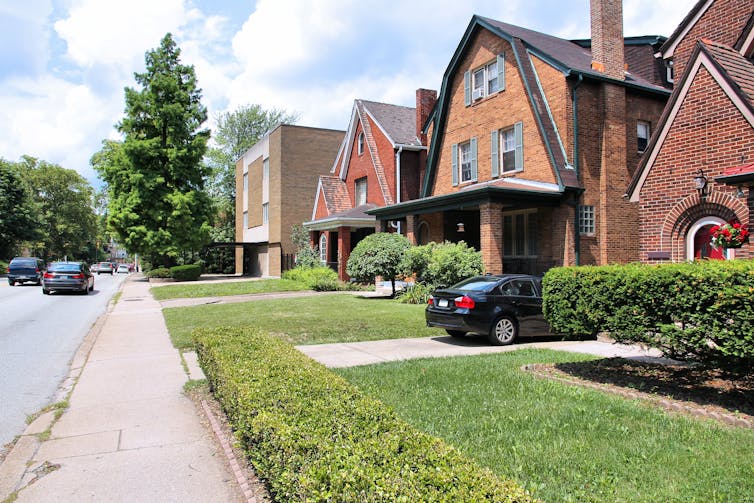
Historic, stately homes in a Pittsburgh area neighborhood.
Pittsburgh has older homes that could benefit from lüften to balance out the dampness, but the city struggles with outdoor air pollution and poor air quality at times.
tupungato/Getty Images

Pittsburgh struggles with outdoor air pollution at times. How should locals think about the trade-off between bringing in outdoor air and introducing pollutants into the home?

“Fresh air” isn’t a synonym for outdoor air because it’s not actually “fresh” in many locations. It’s best to filter outdoor air to remove particles before bringing it into the house, which can be done with an energy recovery ventilator. Unit prices range from $600 to $1,500 on average, but these ventilators can reduce utility bills by 10% or more by preconditioning incoming fresh air with the outgoing air’s energy.

If that isn’t possible, portable air purifiers are a good solution with many benefits, such as a reduced risk of transmitting airborne respiratory infections, control of seasonal allergens such as pollen, resilience during wildfires, better air quality when you are using your wood-burning fireplace, and capturing emissions from cooking.

Can lüften make an older, damp home more comfortable?

It can lower humidity in the air, which reduces the potential concentration, but it doesn’t eliminate indoor sources of moisture. If a house is damp, especially if there are specific wet spots, the owner should try to identify and fix the causes. Lüften, and ventilation in general, are mitigation measures, not solutions.

Why do you think practices like lüften persist culturally?

The simplest answer is that they actually work. It’s a good place to start with taking responsibility for managing the air quality in your home. The better understanding of the causes and effects of poor indoor air quality, and the technology available to measure and control it, can beneficially update a good historical practice to obtain even more value from it.

The Conversation

William Bahnfleth does not work for, consult, own shares in or receive funding from any company or organization that would benefit from this article, and has disclosed no relevant affiliations beyond their academic appointment.

ref. Lüften sounds simple – but ‘house-burping’ is more complicated in Pittsburgh – https://theconversation.com/luften-sounds-simple-but-house-burping-is-more-complicated-in-pittsburgh-274507

How to ensure affordable, safe and culturally grounded housing for Indigenous older adults

Source: The Conversation – Canada – By Hai Luo, Associate Professor, Faculty of Social Work, University of Manitoba

A good home, or Minosin Kikiwa in Cree, is the foundation of dignity in later life, according to the Indigenous seniors who spoke to us. Yet “every year the rent goes sky-high and it’s tough to be homeless,” an anonymous participant said.

As members of the Indigenous Seniors Research Committee, we came together in the fall of 2022 with the goal of examining the housing and care needs of older Indigenous adults in Winnipeg. In 2023-24, we spoke with 48 Indigenous older adults between the ages of 55 and 83 and nine knowledge keepers. What we found out, and compiled in our report Minosin Kikiwa – “A Good Home”: Indigenous Older Adults in Winnipeg, is critical to share.

It turns out that many Indigenous Elders are struggling to find affordable and safe homes to age with dignity after decades of contributing to their families and communities. The evidence we’ve collected suggests a housing crisis that is not only economic but also cultural.

Affordability at the breaking point

A little more than half of the older Indigenous participants rented their housing, and 21 per cent were precariously housed or homeless. Many relied on social or income assistance they found lacking.

One participant who used a walker described having to keep working to afford the $1,050 monthly rent for a one-bedroom apartment. Another senior told us:

“[You] can’t move because [you] can’t afford it. You can’t afford it. You can’t even get a stinking room at the hotel [per month]. They’re charging over $650 for a bedbug-infested party room and people breaking in.”

Others described paying most of their fixed income for apartments with poor or unsafe conditions. One participant recalled living in a rooming house where individuals with questionable unsafe behaviours were allowed to move in. “My ex-landlady didn’t care who was in there…she was not maintaining the place.”

As committee co-chair Joanne Mason put it: “Getting a place to rent is impossible, and the ones that are for rent are dilapidated and often not well-kept at very high prices.”

Colonial legacies on housing

Indigenous older adults’ housing challenges cannot be separated from Canada’s history. Child welfare removals, residential schools and racism disrupted education, employment and the transfer of intergenerational wealth. As a result, many Indigenous older adults entered later life with mortgages or debts, and without personal savings.

As committee member Kathy Mallet explained: “The colonial system gave us (Indigenous Peoples) that legacy, and so now we’re paying for it.”

Cumulative poverty and other disadvantages compound this problem. As one participant shared, “You don’t raise four children and be wealthy when you retire.” Other low-income Indigenous participants told us they had no choice but to keep working in paid employment into their later years. Seventy-three per cent of our participants reported they either have “some difficulty” or “great difficulty” making ends meet.

These were no golden years of retirement.

Home is more than family

Housing is more than physical buildings, it is also about community and wellness.

Minosin Kikiwa for Indigenous older adults is defined as a safe, affordable and accessible space that fosters a holistic balance of physical, spiritual, mental and emotional well-being through deep connections to family, kin, community and culture.

Homes are places where one connects with family, passes on culture and finds rest. Yet restrictive housing policies frequently undermine this. One participant shared that overnight guests were forbidden in their building. “Visitors have to be out of the building by 10:30…that’s not a home.”

As Lucille Bruce, co-chair of the Indigenous Seniors Research Committee, explained: “They want to be within their communities where families can visit and where services are delivered in culturally relevant ways by Indigenous agencies.”

Intergenerational connections are disrupted when grandchildren and other family members are prevented from staying with renters due to these culturally insensitive policies, which worsens the isolation and cultural deprivation experienced by many.

When policy fails community

Winnipeg has one of the largest populations of urban Indigenous Peoples in Canada with 12.4 per cent of Winnipegers (90,990) identifying as Indigenous in 2021. The housing and later-life struggles of Indigenous older adults in the city reflect those faced by Indigenous older adults in urban settings across Canada.

Statistics Canada found that the life expectancy of an Indigenous person is about 7.8 years shorter than that of non-Indigenous Canadians. Other researchers have linked precarious housing to poor health, food insecurity and social isolation, all of which increase mortality.

Governments need to be accountable to Indigenous older adults. Public funds currently flow into dilapidated spaces and rooming houses that function as de facto “nursing homes” for low-income Indigenous older adults. As one participant stated, shelters and transitional housing too often become places “where our people come to die.”

Researchers note that government programs framed as reconciliation often amount to tokenistic gestures, with a lack of meaningful Indigenous leadership. Policy frameworks have failed to address deep-rooted challenges such as generational poverty, inadequate financial support that does not adjust for inflation, and the lack of safe, affordable and culturally representative housing options for urban Indigenous seniors.

Institutional systems, including the historical trauma of residential schools and restrictive modern housing policies (for example, prohibiting overnight guests), continue to displace Indigenous seniors from their families and communities, creating significant barriers to accessing necessary resources.

Moving toward dignity and justice

We believe that housing policy must prioritize Indigenous leadership in design, construction, ownership and governance. Housing programs should also be connected with stable and publicly funded supports for health, income and community well-being, shifting away from short-term or symbolic solutions toward lasting and transformative change.

In light of Minosin Kikiwa, we call for governments and housing providers to help ensure affordability while centring Indigenous values and leadership. Affordability should extend beyond just subsidies to building and sustaining safe, accessible and culturally relevant housing.

Housing for Indigenous older adults must transcend basic shelter to become a sanctuary of dignity and cultural sovereignty, a place where ceremonies, traditional foods and the passing of sacred knowledge are protected, not prohibited. This is no longer merely a policy suggestion, it is a fundamental requirement of reconciliation to ensure that aging in community is a right, not a privilege, for Indigenous seniors.

The Conversation

Hai Luo receives funding from the Manitoba Research Alliance’s Partnership Grant (SSHRC) – Community-Driven Solutions to Poverty: Challenges and Possibilities and the Winnipeg Friendship Centre. She is affiliated with Indigenous Seniors Research Committee of Winnipeg and Centre on Aging, University of Manitoba.

Laura Funk has received past funding for research, from the Social Sciences and Humanities Research Council of Canada and similar agencies. She is affiliated with the University of Manitoba and is a board member of the community-based Manitoba Seniors Equity Action Coalition.

Malcolm Disbrowe received funding from the Social Sciences and Humanities Research Council. He is affiliated with the College of Community and Global Health at the University of Manitoba and First Nations Health and Social Secretariat of Manitoba.

ref. How to ensure affordable, safe and culturally grounded housing for Indigenous older adults – https://theconversation.com/how-to-ensure-affordable-safe-and-culturally-grounded-housing-for-indigenous-older-adults-265949

An ‘AI afterlife’ is now a real option – but what becomes of your legal status?

Source: The Conversation – Global Perspectives – By Wellett Potter, Senior Lecturer in Law, University of New England

ziphaus/Unsplash

Would you create an interactive “digital twin” of yourself that can communicate with loved ones after your death?

Generative artificial intelligence (AI) has made it possible to seemingly resurrect the dead. So-called griefbots or deathbots – an AI-generated voice, video avatar or text-based chatbot trained on the data of a deceased person – proliferate in the booming digital afterlife industry, also known as grief tech.

Deathbots are usually created by the bereaved, often as part of the grieving process. But there are also services that allow you to create a digital twin of yourself while you’re still alive. So why not create one for when you’re gone?

As with any application of new technology, the idea of such digital immortality raises many legal questions – and most of them don’t have a clear answer.

Your AI afterlife

To create an AI digital twin of yourself, you can sign up for a service that provides this feature, and answer a series of questions to provide data about who you are. You also record stories, memories and thoughts in your own voice. You might also upload your visual likeness in the form of images or video.

The AI software then creates a digital replica based on that training data. After you die and the company is notified of your death, your loved ones can interact with your digital twin.

But in doing this, you’re also delegating agency to a company to create a digital AI simulation of yourself after death.

From the get go, this is different to using AI to “resurrect” a dead person who can’t consent to this. Instead, a living person is essentially licensing data about themselves to an AI afterlife company before they’ve died. They’re engaging in a deliberate, contractual creation of AI-generated data for posthumous use.

However, there are many unanswered questions. What about copyright? What about your privacy?. What happens if the technology becomes outdated or the business closes? Does the data get sold on? Does the digital twin also “die”, and what effect does this have for a second time on the bereaved?

What does the law say?

Currently, Australian law doesn’t protect a person’s identity, voice, presence, values or personality as such. In contrast to the United States, Australians don’t have a general publicity or personality right. This means, for an Australian citizen, there’s currently no legal right for you to own or control your identity – the use of your voice, image or likeness.

In short, the law doesn’t recognise a proprietary right in most of the unique things that make you “you”.

Under copyright law, the concept of your presence or self is abstract, much like an idea is. Copyright doesn’t offer protection for “your presence” or “the self” as such. That’s because there has to be material form in specific categories of works for copyright to exist: these are tangible things, such as books or photos.

However, typed responses or the voice recordings submitted to the AI for training are material. This means the data used to train the AI to create your digital twin would likely be protectable. But fully autonomous AI generated output is unlikely to have any copyright attached to it. Under current Australian law, it would likely be considered authorless because it didn’t originate from the “independent intellectual effort” of a human, but from a machine.

Moral rights in copyright protect a creator’s reputation against false attribution and against derogatory treatment of their work. However, they wouldn’t apply to a digital twin. This is because moral rights attach to actual works created by a human author, not any AI-generated output.

So where does that leave your digital twin? Although it’s unlikely copyright applies to AI-generated output, in their terms and conditions companies may assert ownership of the AI-generated data, users may be granted rights in outputs, or the company may reserve extensive reuse rights. It’s something to look out for.

There are ethical risks, too

Using AI to make digital copies of people – living or dead – also raises ethical risks. For example, even though the training data for your digital twin might be locked upon your death, others will be accessing it in the future by interacting with it. What happens if the technology misrepresents the deceased person’s morals and ethics?

As AI is usually probabilistic and based on algorithms, there may be risk of creep or distortion, where the responses drift over time. The deathbot could lose its resemblance to the original person. It’s not clear what recourse the bereaved may have if this happens.

AI-enabled deathbots and digital twins can help people grieve, but the effects so far are largely anecdotal – more study is needed. At the same time, there’s potential for bereaved relatives to form a dependence on the AI version of their loved one, rather than processing their grief in a healthier way. If the outputs of AI-powered grief tech cause distress, how can this be managed, and who will be held responsible?

The current state of the law clearly shows more regulation is needed in this burgeoning grief tech industry. Even if you consent to the use of your data for an AI digital twin after you die, it’s difficult to anticipate new technologies changing how your data is used in the future.

For now, it’s important to always read the terms and conditions if you decide to create a digital afterlife for yourself. After all, you are bound by the contract you sign.

The Conversation

Wellett Potter is a member of the Copyright Society of Australia and the Asia-Pacific Copyright Association.

ref. An ‘AI afterlife’ is now a real option – but what becomes of your legal status? – https://theconversation.com/an-ai-afterlife-is-now-a-real-option-but-what-becomes-of-your-legal-status-274021

Firefighters face repeat trauma. We learned how to reduce their risk of PTSD

Source: The Conversation – Global Perspectives – By Meaghan O’Donnell, Professor and Head, Research, Phoenix Australia, Centre for Posttraumatic Mental Health, The University of Melbourne

In their day-to-day work, first responders – including police, firefighters, paramedics and lifesavers – often witness terrible things happening to other people, and may be in danger themselves.

For some people, this can lead to post-traumatic stress disorder (PTSD), which usually involves intrusive memories and flashbacks, negative thoughts and emotions, feeling constantly on guard, and avoiding things that remind them of the trauma.

But our research – which tested a mobile app focused on building resilience with firefighters – shows PTSD isn’t inevitable. We found depression, anxiety and PTSD symptoms were less likely when firefighters used a mental health program that was self-led, specifically addressed trauma and focused on teaching practical skills.

First responders’ mental health

First responders report high rates of psychiatric disorders and often have symptoms of depression (such as persistent feelings of sadness), anxiety (such as nervousness or restlessness) and post-traumatic stress (including distressing flashbacks).

Sometimes symptoms aren’t severe enough for a diagnosis.

But left untreated,these “sub-clinical” symptoms can escalate into PTSD, which can severely impact day-to-day life. So targeting symptoms early is important.

However, stigma – as well as concerns about confidentiality and career implications – can prevent first responders from seeking help.

What we already knew about building resilience

For the past decade, we have been testing a program designed to give people exposed to traumatic events the skills to manage their distress and foster their own recovery.

The “Skills for Life Adjustment and Resilience” (SOLAR) program is:

  • skills-based – it teaches people specific strategies and tools to improve their mental health
  • trauma-informed, meaning it has been designed for people who have been exposed to trauma, and avoids re-traumatisation
  • and has a psychosocial focus, focusing on what people can do in their relationships, behaviour and thinking to improve their mental health.

Participants complete modules focused on:

  • the connection between physical health and mental health
  • staying socially connected
  • managing strong emotions
  • engaging and re-engaging in meaningful activities
  • coming to terms with traumatic events
  • managing worry and rumination.

The SOLAR program trains coaches to deliver these modules in their communities. Importantly, these coaches don’t necessarily have specific mental health training, such as Australian Red Cross volunteers, community nurses and case workers.

What our new research did

The evidence shows the SOLAR program is effective at improving wellbeing and reducing depression, post-traumatic stress and anxiety symptoms.

But working with firefighters in New South Wales, they told us they wanted a self-led program they could complete confidentially, independently of their employer, and in their own time – a mobile app. So we wanted to test if the program would still be effective delivered this way.

A total of 163 firefighters took part in our recent randomised control trial, either using the app we co-designed with them, or a mood monitoring app.

A mood monitoring app tracks daily emotions to help understand patterns in how someone is feeling. There is evidence to show it can be useful for some people in reducing symptoms.

But this kind of app doesn’t teach a person practical skills that can be applied to different situations. And it does not specifically address stressful or traumatic experiences. So we wanted to test if taking a skills approach made a significant difference.

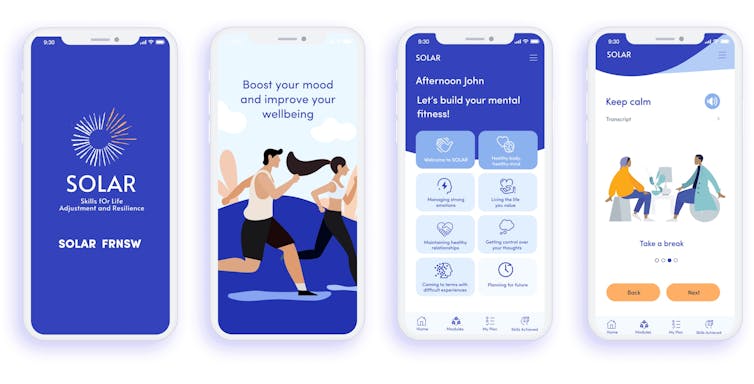
Four screenshots of the mobile app modules in progress.
The app was self-directed, so firefighters could complete modules in their own time.
Spark Digital

What we found

Eight weeks after they started using one of the two apps, we followed up with the firefighters.

The study found those who used the SOLAR app had significantly lower symptoms of depression, anxiety and post-traumatic stress, compared to those in the mood monitoring group.

We followed up with participants again three months after their post-treatment assessment.

We found:

  • depression was much lower in the group who learned practical skills about trauma, compared to those who used the mood monitoring app, and
  • anxiety and post-traumatic stress symptoms had reduced significantly for both groups since starting their program (but there was no real difference between them).

What does this mean?

Both apps improved mental health.

But the results show using the SOLAR app, which focused on building skills and specifically addressing trauma, reduced mental symptoms more quickly. It was especially useful for tackling depression longer term.

Firefighters also told us they liked the app. This is important – an app is only effective when people use it.

Around half of the firefighters started using it completed all the modules. This is much higher than usual for mental health apps. Typically, only around 3% of those who start using a mental health app complete them.

The more modules a firefighter completed, the more their mental health improved.

The takeaway

It’s common for firefighters and other first responders to struggle with mental health symptoms. Our study demonstrates the importance of intervening early and teaching practical skills for resilience, so that those symptoms don’t develop into a disorder such as PTSD.

A program that is self-led, confidential and evidence-based can help protect the mental health of first responders while they do the work they love, protecting us.

The Conversation

Meaghan O’Donnell (Phoenix Australia) receives funding from government funding bodies such as National Health and Medical Research Council, and Department of Veterans’ Affairs, and philanthropic bodies such as Wellcome Trust Fund (UK), Latrobe Health Foundation, and Ramsay Health Foundation. Funding for this study in this Conversation article was from icare, NSW.

Tracey Varker (Phoenix Australia) receives funding from government funding bodies such as Department of Veterans’ Affairs, and philanthropic foundations such as Latrobe Health Services Foundation. Funding for the study described in this Conversation article was from icare NSW.

ref. Firefighters face repeat trauma. We learned how to reduce their risk of PTSD – https://theconversation.com/firefighters-face-repeat-trauma-we-learned-how-to-reduce-their-risk-of-ptsd-269283

The penis evolved to be noticed – but the artful fig leaf has hidden it for centuries

Source: The Conversation – Global Perspectives – By Darius von Guttner Sporzynski, Professor of History, Australian Catholic University

Wawel Royal Castle National Art Collection, Kraków/Wikimedia Commons, CC BY

A new evolutionary study has found human penises are large compared with other primates: for two reasons. The first is reproduction. The second is that size works as a signal, attracting potential mates and intimidating rivals. In evolutionary terms, the penis is big because it is meant to be noticed.

That finding lands awkwardly in a world that has spent centuries hiding, shrinking, censoring or symbolically neutralising the penis whenever it becomes too visible.

A single object captures this tension between biological display and cultural embarrassment: the fig leaf.

The fig leaf’s story begins, as so many Western stories do, in Genesis. Adam and Eve eat from the tree of knowledge, realise they are naked, and stitch fig leaves together to cover themselves. Nakedness becomes linked with moral awareness, guilt and self-consciousness.

Nudity no longer neutral

Early Christian art absorbed this lesson. In late antique mosaics and medieval manuscripts, Adam and Eve clutch leaves over their groins with a mixture of alarm and regret. Nudity is no longer neutral. It signals sin, punishment, or humiliation. The only bodies shown naked are the damned.

A naked man and woman, touching hands, with fig leaves covering their genitals
Workshop of Giovanni della Robbia Adam and Eve Walters Front Installation.
Wikimedia Commons

Then comes a sharp reversal. Ancient Greek and Roman sculpture, rediscovered in Renaissance Italy, presents the naked male body as strong, balanced, and admirable. Heroes, gods, and athletes are unclothed because they have nothing to hide. Their genitals are visible, proportioned, and unremarkable. This is not erotic display so much as confidence made stone.

Michelangelo’s David sits squarely in this tradition. Carved between 1501 and 1504, he is naked, alert and physically present. His body is not idealised into abstraction. It is specific, human, and unmistakably male. Florentines reportedly threw stones when the statue was first installed. Before long, authorities added a garland of metal fig leaves to protect public sensibilities, which remained in place until around the 16th century.

This was not an isolated decision. Over the next century, the Reformation fractured Christian Europe, giving birth to Protestantism, and the Catholic Church doubled down on moral discipline. Naked bodies in art became political liabilities. The Council of Trent’s decrees on religious imagery reflected concerns that the prominent display of naked bodies in sacred art risked drawing attention to human physicality rather than directing devotion towards God. This led to what later historians have called the “Fig Leaf Campaign”.

Across Rome and beyond, sculpted genitals were chipped away, painted over, draped, or concealed with leaves. Michelangelo’s Last Judgement in the Sistine Chapel was altered after his death by Daniele da Volterra, who was hired to cover up visible genitalia with drapery. He earned the nickname “the breeches maker” for his efforts.

Classical statues in the Vatican acquired permanent marble underwear. A literal drawer of removed stone penises is rumoured to have existed. Whether or not that is true, the impulse behind it certainly was.

Strikingly, the fig leaf does not erase the penis. It points to it. The cover announces the presence of something that must not be seen. As several writers note, concealment tends to sharpen attention rather than dull it. The fig leaf becomes a visual alarm bell.

Resisting biology

This brings us back to the present. The new evolutionary research argues human penis size evolved partly because it is visible.

For most of our species’ history, before clothes, the penis was on display during daily life. It became a cue others learned to read quickly and unconsciously. Larger size was associated with attractiveness and with competitive threat.

From that perspective, centuries of fig leaves look less like moral refinement and more like cultural resistance to biology. The body insists on signalling. Society keeps trying to mute the signal.

This fig leaf was designed to cover the plaster cast of Michaelangelo’s David presented to Queen Victoria, around 1857.
V&A Museum/Wikimedia, CC BY

Victorian Britain provides a late and almost comic example. When Queen Victoria was presented with a plaster cast of David, in around 1857, a detachable fig leaf was hastily produced and kept on standby for royal visits.

The leaf survives today, displayed separately in the Victoria and Albert Museum. The statue stands naked again, but the object designed to hide him has become a museum piece in its own right.

Even now, museums still debate whether to remove historic coverings. Social media platforms struggle to define what kinds of nudity are acceptable. Statues are boxed up for diplomatic visits. The anxiety persists, even if the fig leaf itself has become unfashionable.

Evolutionary biology suggests the human penis became prominent because it mattered socially – but our cultural history shows centuries of effort devoted to pretending it does not. The fig leaf sits at the centre of this contradiction: a small, awkward object carrying an enormous cultural load.

The Conversation

Darius von Guttner Sporzynski does not work for, consult, own shares in or receive funding from any company or organisation that would benefit from this article, and has disclosed no relevant affiliations beyond their academic appointment.

ref. The penis evolved to be noticed – but the artful fig leaf has hidden it for centuries – https://theconversation.com/the-penis-evolved-to-be-noticed-but-the-artful-fig-leaf-has-hidden-it-for-centuries-274286

Winter Olympic security tightens as US-European tensions grow

Source: The Conversation – Global Perspectives – By Keith Rathbone, Senior Lecturer, Modern European History and Sports History, Macquarie University

Since the murder of 11 Israeli hostages at the 1972 Munich Summer Olympics, security has been fundamental for games stakeholders.

The 2024 Paris games set new benchmarks for security at a mega-event, and now the presence of American security officials in Milan Cortina threatens to darken this year’s Winter Olympics before they even start.

Security at the games

The scale of security at the games has magnified considerably since the 1970s.

For the 2024 Olympics, the French government mobilised an unprecedented 45,000 police officers from around the nation.

For the opening ceremony, these forces cordoned off six kilometres of the Seine River.

Advocates point to Paris as an example of security done correctly.

Milipol Paris – one of the world’s largest annual conferences on policing and security – pointed to lower crime across the country during the games and a complete absence of any of the feared large security events. It stated:

The operation demonstrated the effectiveness of advanced planning, inter-agency cooperation and strong logistical coordination. Authorities and observers are now reflecting on which elements of the Paris 2024 model might be applied to future large-scale events.

However, critics complained the security measures infringed on civil liberties.

Controversy as ICE heads to Italy

Ahead of the Milan Cortina games, which run from February 4-23, Italian officials promised they were “ready to meet the challenge of security”.

A newly established cybersecurity headquarters will include officials from around the globe, who will sift through intelligence reports and react to issues in real time.

As well as this, security will feature:

  • 6,000 officers to protect the two major locations – Milan and Cortina d’Ampezzo
  • a no-fly zone around key sites
  • a constant restricted access cordon around some sites (as seen in Paris).

Some of the security officers working in the cybersecurity headquarters will come from the United States.

Traditionally the US diplomatic security service provides protection for US athletes and officials attending mega-events overseas. It has been involved in the games since 1976.

Late last month, however, news broke that some of the officers will be from “a unit of US Immigration and Customs Enforcement (ICE)”.

US and Italian officials were quick to differentiate between Homeland Security Investigations (HSI), which handles cross-border crime, and Enforcement and Removal Operations, the department responsible for the brutal crackdown on immigrant communities across the US.

The HSI has helped protect athletes at previous events and will be stationed at the US Consulate in Milan to provide support to the broader US security team at the games.

But the organisation’s reputation precedes them, and Italians are wary.

In Milan, demonstrators expressed outrage. Left-wing Mayor Giuseppe Sala called ICE a “a militia that kills” while protests broke out in the host cities.


Read more:
Shooting of Alex Pretti in Minneapolis has put America’s gun lobby at odds with the White House


US-European relations are stretched

The presence of ICE has also illuminated fractures within Italian Prime Minister Giorgia Meloni’s governing coalition.

Foreign Minister Antonio Tajani defended the inclusion of the US officers, saying “it’s not like the SS are coming”, referring to the Nazis paramilitary force in Germany.

However, local officials, including those from Meloni’s centre-right coalition, expressed concerns.

The tension inside Meloni’s government reflects broader concerns on the continent about US-European relations.

US Vice President JD Vance and Secretary of State Marco Rubio will attend the opening ceremony in Milan, despite some Europeans viewing Vance as the mouthpiece for US President Donald Trump’s imperial agenda.


Read more:
The Making of an Autocrat: podcast out now


Trump’s desire to take over Greenland has undermined American and European support for trans-Atlantic amity and the NATO alliance.

Just ahead of the Olympics, Danish veterans marched outside the US Embassy after Trump disparaged NATO’s contribution to US-led operations in Iraq and Afghanistan. These protests added to Danes’ fears about Trump’s Greenland ambition.

Tensions in Denmark remain high as the Americans and the Danes gear up to play ice hockey in the opening round robin of the men’s competition.

Elsewhere, politicians in the US on both sides have raised concerns that Trump’s bombastic rhetoric will make it harder for American athletes to compete and win.

A double standard?

Critics argue there is an American exception when it comes to global politics interfering in international sport.

Under Trump, the US has attacked Iran and Venezuela, called on Canada to become its 51st state, threatened to occupy Greenland and engaged in cross-border operations in Mexico.

Despite this, US competitors can still wear their nation’s colours at the Olympics.

Compare this to Belarussian and Russian athletes, who are only eligible to compete as Individual Neutral Athletes after the Russian invasion of Ukraine, and only under the condition they have not been publicly supportive of the invasion. An International Olympic Committee (IOC) body assesses each competitor’s eligibility.

Israeli athletes have also been under the spotlight amid geopolitical tensions in the region.

Following the Israeli invasion of Gaza in October 2023, a panel of independent experts at the United Nations urged soccer’s governing body FIFA to ban Israeli athletes, stating:

sporting bodies must not turn a blind eye to grave human rights violations.

But FIFA, and the IOC, have recently defended Israeli athletes’ right to participate in international sport in the face of boycotts and protests.

Competitors from Israel can represent their country at the Winter Olympics.

The political developments which have caused ructions worldwide ironically come after the IOC’s 2021 decision to update the Olympic motto to supposedly recognise the “unifying power of sport and the importance of solidarity”.

The change was a simple one, adding the word “together” after the original three-word motto: “faster, higher, stronger”.

It remains to be seen whether the Milan Cortina games live up to every aspect of the “faster, higher, stronger – together” motto, not just the first three words.

The Conversation

Keith Rathbone does not work for, consult, own shares in or receive funding from any company or organisation that would benefit from this article, and has disclosed no relevant affiliations beyond their academic appointment.

ref. Winter Olympic security tightens as US-European tensions grow – https://theconversation.com/winter-olympic-security-tightens-as-us-european-tensions-grow-274530