China’s panda diplomacy is becoming a liability for Beijing

Source: The Conversation – UK – By Chee Meng Tan, Assistant Professor of Business Economics, University of Nottingham

Japan said goodbye to its last two giant pandas on January 27, as twins Xiao Xiao and Lei Lei were returned from their host country to China. Their departure has left Japan without any pandas for the first time since 1972, when Tokyo and Beijing normalised diplomatic ties.

The Chinese government has long pursued a strategy of giving or loaning giant pandas, which are found exclusively in China, to other countries to strengthen international ties and boost its global image. Widely known as “panda diplomacy”, this practice has seen more than 30 pandas sent to – or born in – Japan over the past 50 or so years.

However, relations between Tokyo and Beijing are currently tense. Comments made in November by Japan’s prime minister, Sanae Takaichi, that her country could respond militarily to a Chinese attack on Taiwan prompted an angry response from officials in Beijing.

And soon after, China announced it would be recalling Japan’s last two pandas from the Ueno Zoo in Tokyo a month ahead of schedule. The Tokyo metropolitan government had been negotiating with China to extend the pandas’ stay or loan new bears in their place. But these talks were put on hold and the pandas have subsequently been returned.

Panda diplomacy

China’s practice of sending pandas to foreign countries can be traced to the 7th century, when Empress Wu Zetian gifted two bears to Japan as a gesture of goodwill. However, modern panda diplomacy is often associated with the 1970s. That decade saw China open up and gift pandas to a number of major economies in an attempt to build ties, including the US and Japan in 1972, France in 1973 and the UK in 1974.

Due to declining wild panda populations, China stopped gifting pandas to other countries by 1984. Pandas were instead sent to foreign zoos on long-term loans, often lasting up to 15 years, with countries paying as much as US$1 million (£738,000) in “conservation fees” per year to keep them.

By the peak of panda diplomacy in 2019, a total of 21 countries or territories outside of China, Macau and Hong Kong had pandas. These were South Korea, Indonesia, Malaysia, Singapore, Qatar, Russia, Taiwan, Germany, Spain, Austria, Denmark, Belgium, Mexico, Australia, Thailand, Finland, Canada, Japan, the Netherlands, US and UK. That number has now dropped to 16.

One reason for this decline is that China has to be careful about which countries it chooses to engage in panda diplomacy with. Many Chinese people regard the giant panda as a national treasure, with the animal carrying deep emotional significance. Because of their status, the perceived mistreatment of pandas abroad can cause Beijing to receive intense backlash from nationalist circles at home.

For instance, when panda Le Le died of natural causes at Memphis Zoo in the US in 2023 and photos of his female companion Ya Ya looking thin and sickly surfaced online, speculation arose on Chinese social media that the US had mishandled the pandas. Some went as far as to accuse Chinese authorities of colluding with the zoo to cover up the incident.

For many of these people, the alleged mistreatment of the pandas was symbolic of what they saw as the US’s bullying of China. As one comment on the Weibo Chinese social media platform put it: “Treating our national treasure with such an attitude is an outright provocation of China”. Despite insistence by the Chinese foreign ministry that both pandas had been “well taken care of” in the US, Ya Ya’s stay was not extended.

The desire to avoid more public backlash may help explain why China recalled Japan’s last two pandas early and did not extend their stay. With tensions between China and Japan running high, it would have been difficult for officials in Beijing to justify why these cherished national symbols should stay in the hands of what many Chinese people see as a belligerent rival.

Panda diplomacy remains an effective tool of soft power for China. This was demonstrated by the 178,000 visitors that flocked to Ueno Zoo to catch a glimpse of Xiao Xiao and Lei Lei in the month after it was announced they would be returned. The public response was so strong that the zoo had to restrict visitor numbers to the panda viewing area to 4,800 people per day, with each visit limited to one minute.

Yet there are limits to using pandas as diplomatic tools, and not just due to the strength of nationalist feeling within China towards them. China’s practice of sending pandas to foreign nations has been heavily criticised by conservationists and animal advocates, who argue the bears are used as pawns in a game of geopolitical chess.

There are also question marks over whether the practice enhances conservation. While foreign zoos that host pandas send China millions of US dollars a year in conservation fees, the species is currently listed as “vulnerable” by the International Union for Conservation of Nature.

Panda diplomacy is a delicate balancing act. While it can help strengthen China’s international relationships, it also exposes Beijing to public backlash whenever its furry ambassadors become entangled in political disputes or welfare controversies.

The Conversation

Chee Meng Tan does not work for, consult, own shares in or receive funding from any company or organisation that would benefit from this article, and has disclosed no relevant affiliations beyond their academic appointment.

ref. China’s panda diplomacy is becoming a liability for Beijing – https://theconversation.com/chinas-panda-diplomacy-is-becoming-a-liability-for-beijing-274658

Reform has been warned that defecting Tories will damage its brand – and the first evidence is in

Source: The Conversation – UK – By Matthew Barnfield, Postdoctoral Research Fellow, Department of Politics and International Relations, Queen Mary University of London

Since Reform UK took in several high-profile Conservative defectors in the space of a few weeks, a debate has arisen about whether these new recruits benefit or harm Nigel Farage’s party.

Some suggest that the loss of Suella Braverman and Robert Jenrick, among others, hastens the demise of the Conservative party, to Reform’s benefit. But there’s also the risk that in embracing high-profile Conservatives, Reform is tying its image to the unpopular government they once represented. Apparently there is danger for Farage in becoming “Tory party 2.0” – a new version of the same party the electorate roundly rejected in 2024.

Polling since the defections should indeed give Farage some pause here. Recent figures from YouGov show that significantly fewer people now see Reform and the Conservatives as all that different from each other. The proportion who see the parties as different has fallen by ten percentage points since September.

Polling also shows that 63% of Labour voters 67% of Liberal Democrat voters and 64% of Green voters didn’t like Reform anyway and therefore haven’t changed their opinions about the party since the defections. No surprises there.

Conservatives are the only group for whom this is not a majority position. As a percentage, the group of Conservative voters whose negative opinion of Reform UK remains unchanged is about half that of other parties.

That’s partly because a bigger chunk of Conservative voters are positive about Reform UK in general. Almost a quarter say they were already, and remain, positive about Reform, compared to around 5% for supporters of other parties. But it’s also because the defections have had a much bigger effect on Conservative voters. While the proportion whose opinion has worsened is similar to other parties, over a fifth of Conservatives say they now have a more favourable view of Reform as a result of the defections. Negligible numbers of other parties’ supporters feel that way.

That the Conservatives stand out here matters. If Reform is going to push past its recent plateau in the polls, it will mostly likely be by winning over more Conservative voters. And if “Tory party 2.0” is likely to appeal to anyone, it’s Tory voters.

As political scientists have been arguing for a while, Reform is not going to win over many people who currently intend to vote Labour, Liberal Democrat, or Green. Those voters are in the so-called “left bloc”. Reform and the Conservatives form the “right bloc”. Voters rarely move between blocs; they move within them.

This bloc structure suggests that Reform needs two things to work in its favour. First, it needs to look more viable than the Conservatives. If voters can’t tell which of the two has a better chance of forming a government, it becomes harder to unite behind either. Second, Reform needs enough right-bloc voters’ preference for the Conservatives to be weak enough that they would consider switching to Reform in a pinch.

The defections help on both fronts. High-profile Conservatives moving to Reform make it look like those politicians see Reform as a viable route into government. On the preference side, the defections are improving more Conservatives’ opinions of Reform than they are worsening.

Conservatives are also coming to see the two parties as less different, and that is just as plausibly a good thing as a bad thing for Reform. If Reform looks closer to a party they already like, Conservative voters may have fewer qualms about switching.

But the risk here is that potential Reform voters will be turned off. And indeed, 17% of Reform supporters say the defections have made them more negative about the party – the highest figure for any party’s supporters.

Reform has done especially well at attracting people who did not vote at all in 2024. No surprise there: the arrival of a radical right-wing challenger party has been shown to boost turnout by mobilising voters who feel their views are not represented by the mainstream.

Another risk is that these voters may be more prone to disengaging again if Reform starts to look too much like part of the traditional party system. Both theory and evidence suggest that when parties are too similar, voters are less likely to turn out as the perceived difference made by their vote reduces. Populist parties are especially vulnerable here because their voters tend to share a common disillusionment about democracy with non-voters.

Coming to look ever more like Tory party 2.0 might not dent Reform’s chances of bringing Tory voters on board. But it does risk disenchanting people who were on board before, when they looked like something completely different from the status quo – or those yet to be convinced of voting at all in the next election.

The Conversation

Matthew Barnfield receives funding from The British Academy.

ref. Reform has been warned that defecting Tories will damage its brand – and the first evidence is in – https://theconversation.com/reform-has-been-warned-that-defecting-tories-will-damage-its-brand-and-the-first-evidence-is-in-275201

There’s a competition crisis in America’s state legislatures – and that’s bad for democracy

Source: The Conversation – USA – By Charlie Hunt, Associate Professor of Political Science, Boise State University

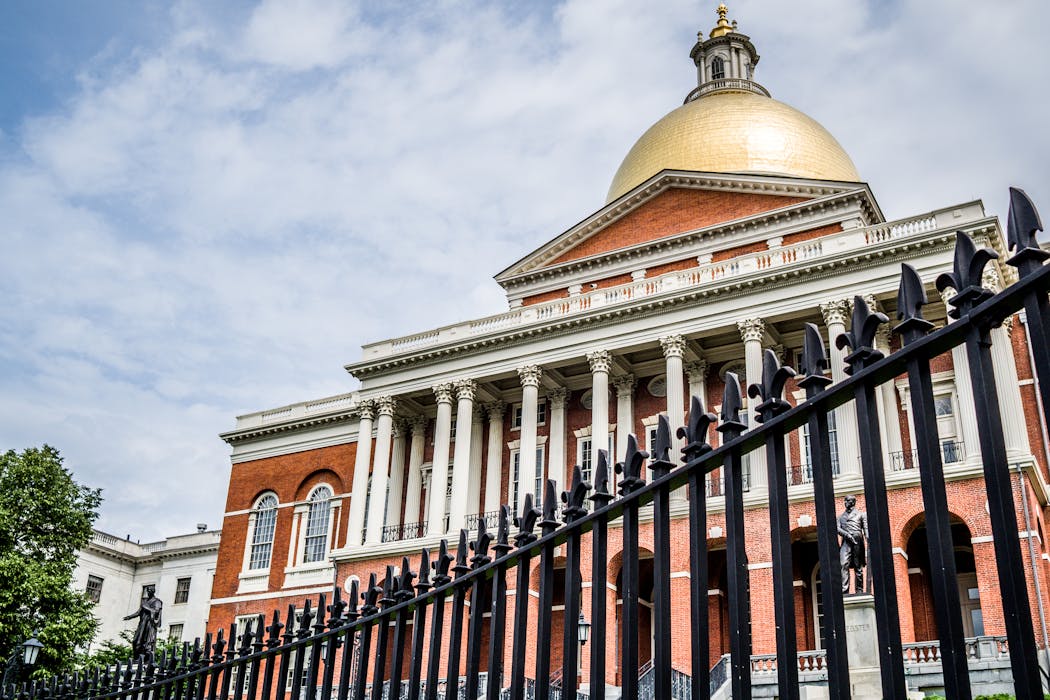
More than half the races for Massachusetts state House seats have gone uncontested by one of the two major parties in every election since at least 2010. Phil Roeder/Getty Images

Many Americans report frustration with the two-party system, in which the Democratic and Republican candidates are seen as the only viable options for elective office.

But an alarming trend in many state legislative elections is lowering the bar even further, to something more like a one-party system. In dozens of states, an increasing number of state legislative seats are going completely uncontested by one of the two major parties.

State legislatures play a crucial role in American governance. As congressional gridlock has intensified over recent decades, state governments have increasingly picked up the slack on policymaking.

Yet in many states, competition over who serves in these legislatures has deteriorated significantly.

The result is a genuine crisis for political representation, policy innovation and candidate recruitment.

Scale of the problem

In many cases, one of the only two viable parties can’t field enough candidates for the state legislature to mount a credible challenge to the other, more dominant party.

While uncontested seats for Congress remain relatively rare – approximately 3% to 4% of U.S. House districts in recent cycles were uncontested – the phenomenon has become endemic in state legislatures. In recent election cycles, between 30% and 50% of lower-chamber state legislative seats nationwide went uncontested by one of the two major parties.

Even more astounding is the lack of competition in individual states, some of which see far less competition than others. Some states, like Michigan and Minnesota, regularly field candidates for both parties in nearly all their state legislative races.

Massachusetts is a different story: In their lower legislative chamber, more than half the races have gone uncontested by one of the two major parties in every election since at least 2010. In the 2024 elections, four out of every five seats went uncontested in races for the Massachusetts House. In Mississippi, out of the 174 seats in the state Legislature, only 25 of them – 14% – had actual contests with both parties participating.

In practice, this means that for many state legislative chambers each election cycle, the party that will control the majority in the next legislative session – a major prerequisite for governing and passing legislation – is literally a foregone conclusion. In these chambers, one party or the other has fielded candidates for less than half of the legislative seats.

In other words, it’s mathematically impossible for that party to win a majority, even if its candidates win every seat they compete in.

In the 2022 cycle, for example, simple majorities were guaranteed for either the Democrats or Republicans in 22 chambers across 16 states. In some of these cases, one party was guaranteed a veto-proof majority – meaning that party had enough lawmakers to override a governor’s veto if necessary – before a single vote had even been counted in the election.

What is and isn’t behind lack of competition

Several factors contribute to the prevalence of uncontested races, including the individual decision-making processes of potential candidates.

Running for office requires substantial investments of time and money, as well as major sacrifices of privacy and, in many cases, public and personal reputation. Even many individuals who are interested in serving decide that the cost isn’t worth it, especially when winning isn’t a guarantee.

The calculus is even more straightforward in heavily partisan districts, where the other party’s presidential candidate may have won by 40 or 50 percentage points in a previous election. Here, even well-qualified candidates face near-certain defeat. It’s easy to see why would-be candidates might reasonably decide to opt out.

Structural explanations for this lack of competition are more complex. For example, gerrymandering – the practice of drawing district boundaries to favor one party – is frequently cited as the main culprit.

But while gerrymandering does occur and merits concern, the evidence suggests it is not the principal driver of uncontested seats. Many states with independent redistricting commissions, such as Idaho, have experienced high rates of non-contestation despite having drawn competitive districts. Meanwhile, many states where legislatures control redistricting, such as Minnesota and Florida, maintain robust competition.

The phenomenon is also not correlated with whether a state is red, blue or somewhere in between, indicating that partisan control of redistricting alone cannot explain the trend.

Two complementary factors are more likely important. First, geographic partisan sorting – the concentration of politically like-minded people in communities – has accelerated over the past three decades. Democrats have consolidated in urban centers while losing ground in rural areas, particularly in the South and Midwest. This residential sorting creates naturally uncompetitive districts regardless of how boundaries are drawn.

Second, state and local party organizations have experienced significant decline in power and influence, particularly in states where one party holds an overwhelming advantage. These organizations historically served as recruitment and support networks for candidates challenging incumbent officeholders.

Without robust local party infrastructure, even qualified potential candidates in minority parties lack the resources and institutional backing necessary to mount viable campaigns.

A large, multifloor public space with gilded arches and polished floors.
In Mississippi’s state Legislature, whose building interior is shown here, out of the 174 seats, only 25 of them – 14% – had actual contests in 2024 with both parties participating.
Kickstand/Getty Images Plus

Competition is fundamental to a functioning democracy

Regardless of underlying causes, the consequences of uncontested races extend beyond the immediate lack of choice on the ballot.

When one party faces no meaningful electoral threat, research shows that policy innovation and responsiveness suffers. Dominant parties lack incentives to develop proposals that address the concerns of all constituents, or to engage seriously with opposition ideas.

More fundamentally, the prevalence of uncontested races raises questions about democratic legitimacy. Elections serve not merely as mechanisms for selecting officeholders, but as opportunities for citizens to evaluate governance and hold officials accountable. When voters face no choice – when a candidate wins by default and not by persuasion – the basic requirements of democratic representation go unmet.

Obstacles to renewed competition

Reversing this trend requires overcoming significant practical obstacles.

Recruiting qualified candidates to run for office is famously difficult; recruiting them for seemingly unwinnable seats is nearly impossible. And convincing national party organizations, interest groups and donors to invest resources in what they see as “hopeless” races is equally challenging.

But the consequences are too significant to ignore, and go beyond democracy or policy considerations.

State legislatures serve as the primary training ground for candidates who later seek higher office. When parties and their candidate talent decline to compete in entire states, they forfeit not only immediate electoral contests, but also the opportunity to cultivate future leaders at the federal level.

Competition cannot be superficially manufactured, and both the causes of and solutions to its recent decline are complex. Both, however, must be reckoned with. Without real competition, elections risk going from true exercises in popular sovereignty to a mere administrative formality.

The Conversation

Charlie Hunt does not work for, consult, own shares in or receive funding from any company or organization that would benefit from this article, and has disclosed no relevant affiliations beyond their academic appointment.

ref. There’s a competition crisis in America’s state legislatures – and that’s bad for democracy – https://theconversation.com/theres-a-competition-crisis-in-americas-state-legislatures-and-thats-bad-for-democracy-273436

What is the American Dream, and has it become harder to achieve in recent years?

Source: The Conversation – USA – By Mark Robert Rank, Professor of Social Welfare, Washington University in St. Louis

Homeownership, often considered key to the American Dream, is difficult to achieve for many families due to rising housing costs. Kingfisher Productions via Getty Images

Few ideas are as central to the nation’s identity as that of the American Dream.

With the 250th birthday of the United States coming up in July 2026, it’s worth stepping back to examine a concept essential to the nation’s self-image.

The term “American Dream” was actually coined in the 1930s by historian James Truslow Adams. Ever since the establishment of the Colonies, however, America has been viewed as a land where individual and collective hopes and aspirations can be realized.

From the idea of America as a shining “city on a hill” to the Declaration of Independence’s guarantee of “life, liberty, and the pursuit of happiness,” the nation has been premised on high aspirations. The concept of the American Dream has epitomized these hopes, and it continues to be present throughout our cultural landscape.

As a social scientist, I set out to explore what Americans thought about the American Dream in today’s society. I interviewed scores of people, from an elderly man sleeping on the street to a billionaire entrepreneur.

I wanted to know exactly how they defined the American Dream – and whether it has become harder to achieve today than in the past.

Defining the dream

From pickup trucks and lawn tractor ads to the labeling of undocumented immigrant children as Dreamers, references to the American Dream in contemporary life are ubiquitous. Washington, D.C., is now home to a brand-new, US$500 million museum, the Milken Center for Advancing the American Dream, devoted to celebrating the idea and its history.

It turns out that for most people I interviewed, the American Dream consists of three basic ideas.

The first is what might be called an economic bargain: If you work hard and play by the rules, you should expect to have a financially secure life. This includes owning a home, being able to afford raising kids and retiring in comfort.

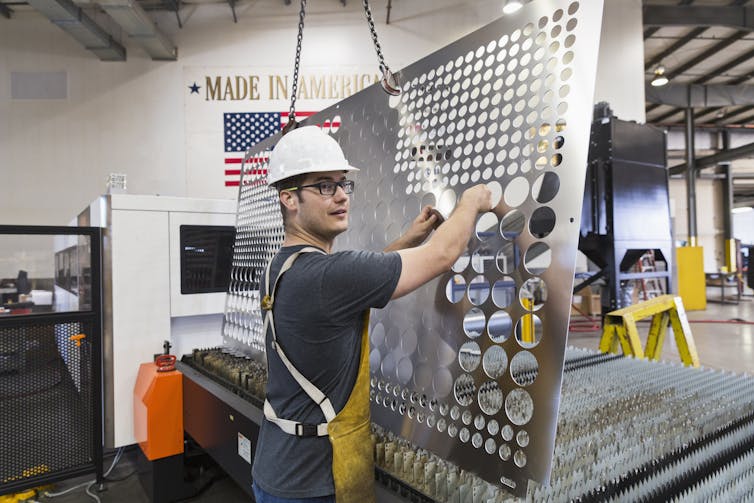
A man wearing a white safety helmet holds up a piece of sheet metal with holes punched through it.
With the shift of the U.S. economy from manufacturing to service, many jobs are inadequate for paying household bills.
Tetra Images/Don Mason via Getty Images

Second, the American Dream is centered on hope and optimism. It is about personal progress and the belief that the nation’s best days lie ahead. It’s the idea that each generation should do better than the previous one, and that upward economic mobility is essential for bringing this about.

The third and final idea people expressed was having the freedom to pursue their hopes to reach their full potential. For many, this is the epitome of the American Dream.

At its best, the U.S. is seen as allowing individuals the freedom to live the life they want. Liberty and rugged individualism have been hallmarks of America since its beginnings, so it should come as no surprise that they are also central to the American Dream.

Economically more elusive?

Given this, has the American Dream become more or less difficult to achieve over time? Unfortunately, for a growing number of Americans, it appears to be more difficult.

First, the goal of leading an economically secure life in exchange for hard work has become more elusive. Data from the Census Bureau indicates that median wages for full-time male workers have essentially flatlined since 1973. The economy has been producing more low-wage and part-time jobs. Many of these lack benefits, such as health insurance.

Less-skilled workers, such as truck drivers and postal clerks, have actually lost ground in terms of income. At the same time, housing, medical care, child care and higher education costs have dramatically increased over the past 40 years.

A woman holding a paper program listens attentively as part of a ceremony.
A small group of individuals prepare to take the naturalization oath to become U.S. citizens.
O2O Creative via Getty Images

What about upward mobility and the hope for each generation to do better economically than the previous one? There is some evidence that one reason the middle class is shrinking is that more people have entered upper-income tiers.

Still, younger generations will actually earn, on average, less as adults than their parents did. This is the first time in U.S. history that this is the case. The formerly taken-for-granted idea of generational progress and moving forward appears to have stalled.

Upward economic mobility for lower-income workers has also slowed over the past 50 years, making it harder to climb the ladder of opportunity.

Dissatisfied, not dreaming

Finally, what about personal freedom? Survey data indicates that greater numbers of Americans feel they have less control over their lives and futures than in the past.

For more than 20 years, Gallup has asked the question, “In this country, are you satisfied or dissatisfied with your freedom to choose what you do with your life?” The percentage of Americans reporting being satisfied has dropped notably over the past two decades. In 2007 it was 87%, but by 2024 it had fallen to 72%. For women, the number was even lower, declining from 85% in 2007 to 66% in 2024.

By comparison, the average for the wealthiest countries in the Gallup survey was 86%. Consequently, on all three counts it appears that the American Dream is becoming harder to achieve.

An aspirational hope

These trends are important for making sense of the polarization and general negativity found in America today. Too many Americans feel that they’ve been left behind and that the American Dream has become a distant reality.

For these Americans, the words of the late comedian and social commentator George Carlin ring true: “It’s called the American Dream because you have to be asleep to believe it.”

Yet the American Dream is a powerful metaphor and aspiration that continues to inspire many in this country. Among those I interviewed, there was a strong consensus that it represents the very best of what America has to offer.

There is no other country that has quite the equivalent of the American Dream. As the nation enters its next 250 years, working toward reestablishing the concept as a reality for millions of people who have fallen behind may be vital to maintaining the essence of the American promise.

The Conversation

Mark Robert Rank does not work for, consult, own shares in or receive funding from any company or organization that would benefit from this article, and has disclosed no relevant affiliations beyond their academic appointment.

ref. What is the American Dream, and has it become harder to achieve in recent years? – https://theconversation.com/what-is-the-american-dream-and-has-it-become-harder-to-achieve-in-recent-years-271607

How much trouble is Keir Starmer in?

Source: The Conversation – UK – By Thomas Caygill, Senior Lecturer in Politics, Nottingham Trent University

FLickr/House of Commons, CC BY-NC-ND

Keir Starmer is in the middle of his worst crisis yet following further damaging revelations about Peter Mandelson’s friendship with convicted paedophile Jeffrey Epstein.

Emails released by the US government revealed the depth of Mandelson’s friendship with Epstein and confirmed that it continued after Epstein’s conviction in 2008.

Starmer insists that Mandelson lied to him and to the team responsible for vetting him as a candidate to be the UK ambassador to the United States. According to Starmer, Mandelson’s answers gave the impression that he barely knew Epstein.

When emails came to light in September showing that the relationship was deeper than claimed, the prime minister dismissed him. Starmer has, however, now admitted that he knew at the time of the vetting that Mandelson had remained in contact with Epstein after he was convicted of sex offences.


Read more:
What exactly is misconduct in public office and could Peter Mandelson be convicted?


The prime minister’s judgement over appointing Mandelson as his ambassador was being called into question even before these latest revelations. Mandelson had previously resigned twice (in 1998 and 2001) from Tony Blair’s government following scandals, and it was public knowledge that he had been friends with Epstein. All of this should have ruled him out of consideration.

Pressure has been mounting on the government to release documents detailing Mandelson’s vetting to show how much was really known about his ties to Epstein. It is these documents specifically that are at the centre of the latest speculation that Starmer cannot survive in his job.

The Conservative party tabled a humble address motion in the House of Commons on February 4 calling for all vetting documents and related correspondence to be made public. Humble address motions, if passed, compel the government to carry out the actions specified in the motion.

Starmer has a large majority and could have fought off this manoeuvre had he had the support of his own MPs. But they are furious with him. Some have briefed that this scandal is the final straw after a series of poor judgement calls from the prime minister (previously mostly in relation to policy, where U-turns have been required).

They made it clear to the whips that they would rebel if instructed to vote against the Conservative motion. As a result, the government decided to table an amendment to the motion to give itself control over which documents would be released.

Its stated aim was to prevent any material that could be prejudicial to national security or international relations from being made public. Starmer has also said that a police investigation into Mandelson also precludes publication of some documents because they may prejudice any case against him.

This amendment was tabled the night before the debate and vote but it quickly became clear that trust in the prime minister and his government had completely evaporated and that Labour MPs would not support the amendment. In response, a last-minute manuscript amendment was drafted and tabled to ensure that documents pertaining to Mandelson’s appointment would instead be given to the (cross-party) Intelligence and Security Committee for review and publication. That would prevent the government from deciding what to release.

This amendment was suggested in the chamber by Angela Rayner (the former deputy prime minister and deputy Labour leader) and is a sign of how serious the situation has become for the prime minister. It signals clearly that his own MPs no longer trust him or his government to handle the release of documents appropriately.

Peter Mandelson and Keir Starmer.
Peter Mandelson and Keir Starmer pictured in February 2025.
Flickr/Number 10, CC BY-NC-ND

The government has now lost control of the process, and this could lead to the publication of documents that further damage its reputation — not only regarding what the government did or did not know about Mandelson’s relationship with Epstein, but also potentially embarrassing correspondence about Donald Trump and members of his administration.

The wording of the government’s initial amendment attempted to block the release of documents that might affect international relations. That suggests there may be damaging revelations of the kind that forced one of Mandelson’s predecessors as US ambassador, Kim Darroch, to resign. Darroch was forced to stand down as ambassador in 2019 after leaked emails showed he’d called the first Trump administration “”clumsy and inept”.

Labour MPs have had enough

The level of frustration on the Labour backbenches is now comparable to that of Conservative MPs during the final months of Boris Johnson’s premiership. The focus of retribution is currently directed at the prime minister’s chief of staff, Morgan McSweeney, who MPs blame for this error of judgement (as he was a political ally of Mandelson). They see McSweeney has having given poor advice to the prime minister and blame him for the poor operation of Downing Street over the past 18 months.

Even if the immediate pressure is on McSweeney, losing him would still be destabilising for the prime minister. A similar dynamic played out under Theresa May when her party forced her joint chiefs of staff, Fiona Hill and Nick Timothy, from office after the 2017 election.

Either way, Starmer’s days as prime minister appear to be numbered. The real question is how long he can remain in office. Labour MPs are not naturally inclined toward regicide – indeed, the party has never removed a sitting prime minister from office before. Any challenger needs the support of 80 MPs to trigger a leadership election – one in which Starmer would be entitled to stand himself. That remains a high threshold.

And, in the first instance, none of the apparent heirs to the leadership are currently positioned to launch a credible challenge. Andy Burnham was prevented from standing in the upcoming Gorton and Denton byelection, so won’t become an MP any time soon. Angela Rayner has yet to resolve the tax issues that forced her resignation from government last year. Wes Streeting is viewed as being too closely aligned politically with Mandelson to mount a challenge over this scandal.

There are, however, further moments of danger on the horizon. The loss of the Gorton and Denton byelection could weaken the prime minister further. Some in the party are still angry over Burnham being blocked, which many believe may have cost Labour a winnable seat.

Upcoming local elections in England, as well as the parliamentary elections in Scotland and Wales, also look set to be torrid for Labour. It is likely that Starmer will limp on into the local elections, but beyond that his future will depend on his MPs – specifically, whether they choose to fire the starting gun on a leadership challenge or whether they can talk him into announcing his resignation as leader of the party, thereby triggering a leadership election.

Labour’s 2024 manifesto front cover simply read “Change”, but in recent weeks politics has felt uncomfortably reminiscent of 2022. That is Labour’s problem.

The Conversation

Thomas Caygill has previously received funding from the British Academy/Leverhulme Trust and the Economic and Social Research Council.

ref. How much trouble is Keir Starmer in? – https://theconversation.com/how-much-trouble-is-keir-starmer-in-275292

New technologies are stepping up the global fight against wildlife trafficking

Source: The Conversation – USA – By Eve Bohnett, Assistant Research Scholar, Center for Landscape Conservation Planning, University of Florida

A baby orangutan was seized by Thai police in an anti-trafficking operation in May 2025. Thai police Central Investigation Bureau via AP

In late 2025, Interpol coordinated a global operation across 134 nations, seizing roughly 30,000 live animals, confiscating illegal plant and timber products, and identifying about 1,100 suspected wildlife traffickers for national police to investigate.

Wildlife trafficking is one of the most lucrative illicit industries worldwide. It nets between US$7 billion and $23 billion per year, according to the Global Environment Facility, a group of nearly 200 nations as well as businesses and nonprofits that funds environmental improvement and protection projects.

People buy and sell a wide range of items, including live animals, plant powders and oils, ivory carvings and musical instruments.

Historically, enforcement has been largely reactive. There is so much global trade that fewer than 1 in 10 international cargo shipments of any kind are physically inspected. Traffickers also avoid detection by using false or generic names instead of proper species identification, employing coded language in online listings, rerouting shipments and shifting to different messaging platforms when enforcement pressure increases. Emerging digital tools are helping authorities link online monitoring, legal reference tools and on-the-ground investigations.

As a researcher at the University of Florida working at the intersection of conservation science and applied technology, I observed these advancements firsthand at an international meeting of governments and partner organizations under the Convention on International Trade in Endangered Species of Wild Fauna and Flora, often known by its acronym, CITES. This treaty – the cornerstone for international regulation of trade in endangered plants and animals – is enforced by national customs and wildlife agencies.

An image with artificial coloring shows the contents of a suitcase, including two long pointed solid objects.
An X-ray image of luggage shows rhinoceros horns packed in a bag.
Interpol via AP

AI and digital tools for inspection

A huge challenge for officials seeking to prevent wildlife trafficking is knowing where to look – and then figuring out what they’ve found.

Cargo screening: Advanced X-ray screeners, similar to those used in airport security but designed for cargo, are being paired with software that helps spot unusual shapes or materials inside packages.

Trials conducted at major ports and mail processing centers in Australia have detected animals concealed in various kinds of shipments. The software does not identify species but highlights anomalies, helping inspectors decide which packages deserve closer inspection.

Assisted identification: A software program supported by the Chinese Academy of Sciences uses artificial intelligence to help identify the species of animals or animal parts found in shipments. Inspectors can use chatbot-style interfaces to describe what they have found to a system trained on technical documents with detailed descriptions of a wide range of species.

This type of work can help inspectors tell the difference between closely related species whose legal protections differ. For example, trade of African grey parrots (Psittacus erithacus) is strictly regulated. There are different, often less stringent protections for similar-looking species, such as the Timneh parrot (Psittacus timneh) and the brown-necked parrot (Poicephalus fuscicollis).

Portable DNA testing: Enforcement efforts don’t always happen in offices and labs. One company aims to provide small, handheld kits that can detect up to five species in about 20 or 30 minutes without needing traditional lab equipment. The kits show their results on a simple strip that changes color when the DNA of a particular species appears in a sample. Conceptually, it’s similar to a pregnancy test, which changes color when a hormone is detected.

Timber identification: Handheld scanners use software to quickly identify timber species by examining the internal cellular structure of the wood. This can help to distinguish protected hardwoods from legal alternatives in regions where illegal logging is widespread, such as South America, Southeast Asia and Africa.

Several animals are positioned in a wooden crate.
Taxidermied animals were among items seized in Argentina in an October 2023 anti-trafficking effort.
Interpol via AP

Background research and risk profiling

Even before wildlife-related items appear at national borders, there can be signs of illegal trafficking that technology can help identify.

Monitoring online trade: Large volumes of wildlife trafficking now occur through online transactions. To avoid detection, sellers often use vague descriptions or coded language, such as listings that omit species names entirely or use emojis instead of words. Others hide key details in images or brief text that say little about what is being sold, even just showing a photo with no description.

Anti-trafficking organizations such as the World Wildlife Fund collaborate with tech companies to scan online listings using AI and content moderation tools. Between 2018 and 2023, the tech companies blocked or removed more than 23 million listings and accounts related to protected species, including live reptiles, birds and primates, and elephant products.

Early warnings from paperwork: Shipping documents often provide early warning signs of illegal trade. Wildlife enforcement officers, transport sector personnel, government tax officers and others are using new software tools to analyze millions of manifests and permits, looking for species names that aren’t usually traded on particular routes; shipments that are unusually heavy or underpriced; and complex routing through multiple transit countries. Instead of inspecting shipments at random, these systems help enforcement agencies identify the consignments most likely to contain illegal materials.

Two men look at a large bin holding tusks and other white-colored material.
Nigerian officials examine elephant tusks seized from wildlife traffickers and set for destruction.
Emmanuel Osodi/Anadolu via Getty Images

Navigating wildlife trade laws: Enforcement officers have to navigate vast legal complexity. New tools seek to compile laws from multiple countries, helping inspectors understand regulations across export, transit and destination nations.

Using trade data to identify other species to monitor: Researchers at the University of Oxford have developed a method that uses wildlife trade records to identify thousands of highly vulnerable endangered species that could benefit from stricter international trade protections and stronger law enforcement to limit exploitation.

Taken together, these devices and systems extend – but do not replace – human expertise. They help officers decide which shipments or sites to focus on, identify what they find, and share information internationally. No single technology will end wildlife trafficking, but these digital tools can enable a shift from reactive enforcement toward proactive, coordinated action, helping authorities keep pace with adaptive criminal networks.

The Conversation

Eve Bohnett does not work for, consult, own shares in or receive funding from any company or organization that would benefit from this article, and has disclosed no relevant affiliations beyond their academic appointment.

ref. New technologies are stepping up the global fight against wildlife trafficking – https://theconversation.com/new-technologies-are-stepping-up-the-global-fight-against-wildlife-trafficking-272137

From ski jumps and sliding bobsleds to engineering snow, here are 5 essential reads on the science of the Winter Olympics

Source: The Conversation – USA – By Mary Magnuson, Associate Science Editor, The Conversation

The 2026 Winter Olympics will be held in Milan and Cortina d’Ampezzo, Italy. AP Photo/Hassan Ammar

Thousands of the world’s best athletes will flock to Milan and Cortina d’Ampezzo in Italy in February 2026 for the 25th Winter Olympics. While sports fans are focused on the athletic feats of the Olympians, science enthusiasts can also have fun watching them.

Lots of winter sports are governed by unique laws of physics – from skaters speeding across the ice to skiers and snowboarders seemingly floating through the air. The artificial snow that athletes ski or board over is an engineering feat. The Winter Olympics even have math: Mathematicians have found that luck plays a larger role in hockey games than in other sports, such as baseball, basketball and football.

To help our readers follow both the sports and the science while watching the Games this year, The Conversation U.S. has compiled a set of stories from our archive.

1. The physics of ski jumping

Olympic ski jumping is not for the faint of heart. Athletes plummet down a jump about 300 feet (100 meters) tall, before taking off into the air. They then can fly more than the length of a football field before touching down.

As physicist Amy Pope wrote in her article, three key physics concepts allow them to float through the air: gravity, lift and drag.

The regulations around the sport reinforce these ideas. Athletes must wear form-fitting suits to ensure they’re not getting even a little extra lift from any loose or flapping cloth. The skis athletes use must have a length proportional to their height and weight, as well.

A ski jumper flying through the air.
The tight suits ski jumpers wear prevent them from gaining an unfair advantage by using drag and lift from loose fabric.
AP Photo/Matthias Schrader

“By turning their skis and bodies into what is essentially a wing, ski jumpers are able to fight gravity and stay airborne for five to seven seconds,” Pope wrote.


Read more:
Ski jump: Flying or falling with style?


2. The physics of sliding sports

Unlike the ski jumpers, athletes in Olympic sliding sports – luge, bobsled and skeleton – don’t get any air, but they reach a more blistering speed while ripping down the icy track, around 90 miles per hour (145 kilometers per hour).

But just like ski jumping, gravity plays a part in sliding sports. As physicist John Eric Goff described in his article, it acts as the thrust sending them down the track. Sliders also wear skintight suits, which help them gain more speed by slicing through the air. Unlike the ski jumpers, they’re attempting to avoid drag and will lie as flat as possible on the sled. Bobsledders turn using steering controls, while luge and skeleton athletes turn using subtle body movements.

A luge racer lying on his back in an aerodynamic pose.
Luge racers need to be as aerodynamic as possible to minimize drag and go faster.
AP Photo/Ricardo Mazalan

“All of these subtle movements are hard to see on television, but the consequences can be large – oversteering may lead to collisions with the track wall or even crashes,” wrote Goff. “Though it may appear that the riders simply slide down the icy track at great speeds after they get going, there is a lot more going on.”


Read more:
The high-speed physics of how bobsled, luge and skeleton send humans hurtling faster than a car on the highway


3. The mathematics of hockey

As hockey players slide across the ice, they’re contending with similar forces, such as friction and drag. However, there’s also another concept at play on the rink: luck.

Mark Robert Rank is a social scientist who wrote a book about luck. In his research, he found that compared to other popular team sports, luck plays a larger role in a hockey team’s likelihood to win a game.

“Anyone who has ever watched a professional hockey game can grasp the randomness that’s taking place on the ice. Skates or sticks often randomly deflect shots when players cross in the path of a puck’s trajectory. Pucks can take strange bounces as they travel across the rink. Goalies might just happen to be in the right place at the right time,” Rank wrote.

While Rank focused on National Hockey League games in his studies, Olympic athletes may see a similar effect as they take to the ice in Italy.


Read more:
The luck of the puck in the Stanley Cup – why chance plays such a big role in hockey


4. The engineering behind fake snow

While the Winter Olympics normally take place in countries that receive a sizable snowfall, the host city can’t always count on Mother Nature to create prime conditions for competition. It’s now commonplace for skiers and boarders to compete on artificially generated snow, and Milan and Cortina d’Ampezzo will be no exception.

A brightly colored snow gun sprays a plume of snow into the air, with mountains in the background.
A snow gun sprays artificial snow at the Stelvio Ski Center, venue for the alpine ski and ski mountaineering disciplines at the 2026 Milan Cortina Winter Olympics, in Bormio, Italy.
AP Photo/Luca Bruno, File

Engineering a phenomenon as intricate and delicate as snow isn’t easy, as atmospheric scientist Peter Veals explained in his article. Natural snowflakes are delicate, pronged crystals that fit together only loosely. Their structures create a light, airy texture.

Artifical snow is created by blowing pressurized water into cold air, where it quickly freezes into little icy droplets. These droplets don’t take on the same structure as natural snowflakes and end up packing together tightly.

An athlete’s preference might depend on their sport – dense artificial snow might serve a slalom skier carving tight turns more than a jumper who wants a fluffy cushion of powder to land on.

“Artificial snow often feels hard and icy. Fresh natural ‘powder’ snow, on the other hand, provides skiers and snowboarders an almost weightless feeling as they soar down the mountainside,” Veals explained.


Read more:
Olympic skiers and snowboarders are competing on 100% fake snow – the science of how it’s made and how it affects performance


5. Psychological biases

In many Winter Olympics sports, athletes take turns, competing in a set order. As psychologist Robin Kramer explained in his article, the first and last events in a sequence tend to stick out more in your brain. You might remember the first snowboarder to drop into the half pipe more clearly than the sixth, for example.

And you’re more likely to judge a performance based on how you judged the previous one in the sequence.

Even Olympic judges aren’t immune to these decision-making effects. Some sports have pushed for computer analysis for judging to reduce human biases. But usually it’s impossible to entirely remove the human elements of scoring.

“Realizing that athletes could win or lose Olympic medals based upon where in a sequence they compete is both surprising and worrying,” Kramer wrote. “With more research into these biases, we can figure out how to prevent them from influencing important outcomes like who goes home with the gold.”


Read more:
Our psychological biases mean order matters when we judge items in sequence


This story is a roundup of articles from The Conversation’s archives.

The Conversation

ref. From ski jumps and sliding bobsleds to engineering snow, here are 5 essential reads on the science of the Winter Olympics – https://theconversation.com/from-ski-jumps-and-sliding-bobsleds-to-engineering-snow-here-are-5-essential-reads-on-the-science-of-the-winter-olympics-274805

Fears about TikTok’s policy changes point to a deeper problem in the tech industry

Source: The Conversation – USA – By Casey Fiesler, Associate Professor of Information Science, University of Colorado Boulder

Users’ fears about TikTok might be a bit off the mark, but nonetheless justified. Noushad Thekkayil/NurPhoto via Getty Images

A little over a year after TikTok temporarily went dark in the United States and users were greeted with a message explaining that “a law banning TikTok has been enacted,” those same U.S. users opened the app to find a pop-up message requiring them to agree to new terms before they could continue scrolling.

The new terms of service and privacy policy went into effect on Jan. 22, 2026, following the app’s sale from ByteDance to TikTok USDS Joint Venture LLC, a majority American-owned company that reportedly will control U.S. users’ data and content and the app’s recommendation algorithm.

People see this kind of pop-up all the time, and according to research, the “biggest lie on the internet” is that people ever read anything before clicking “agree.” But given many users’ unease about the ownership change – including fears of swapping Chinese surveillance for U.S. surveillance – it is unsurprising that this time, people paid attention. Screenshots of legal language spread quickly online, accompanied by warnings about sweeping new data collection.

I’m both a TikTok content creator and a tech ethics and policy researcher who has studied website terms and conditions, especially whether people read them (they don’t) and how well they understand them (they also don’t). When I saw the outrage on social media, I immediately dove down a terms of service and privacy policy rabbit hole that had me tumbling into the wayback machine and also looking at similar policies on other apps and TikTok’s policies in other countries.

In the end, I discovered that in the most widely shared examples, the language that sounded most alarming had either hardly changed at all or described practices that are fairly standard across social media.

Some changes aren’t really changes

Consider the list of “sensitive personal information” in TikTok’s new privacy policy, which includes items like sexual orientation and immigration status. Many users interpreted this list as evidence that TikTok had begun collecting more personal data. However, this exact same list appeared in the previous version of TikTok’s U.S. privacy policy, which was last updated in August 2024. And in both cases, the language focuses on “information you disclose” – for example, in your content or in responses to user surveys.

This language is in place presumably to comply with state privacy laws such as California’s Consumer Privacy Act, which includes requirements for disclosure of the collection of certain categories of information. TikTok’s new policy specifically cited the California law. Meta’s privacy policy lists very similar categories, and this language overall tends to signal regulatory compliance by disclosing existing data collection rather than additional surveillance.

Location tracking also prompted concerns. The new policy states that TikTok may “collect precise location data, depending on your settings.” This is a change, but it’s also common practice for the major social media apps.

The change also brings the company’s U.S. policy in line with TikTok policies in other countries. For example, the company’s European Economic Area privacy policy has very similar language, and users in the U.K. have to grant precise location access to use a “Nearby Feed” for finding events and businesses near them.

Though apps have other ways to approximate location, such as IP address, a user will have to grant permission through their phone’s location services in order for TikTok to access precise location via GPS – permission that TikTok has not yet requested from U.S. users. However, the new policy opens the door for users having the option to grant that permission in the future.

This CBC report describes the aftermath of the TikTok sale and why many users are deleting the app.

No news does not equal good news

None of this is to say that users are wrong to be cautious. Even if TikTok’s legal language around data privacy is standard for the industry, who controls your data and your feed is still very relevant. Uninstalls for the app spiked 130% in the days following the change, with many users expressing concern about the ties that the new owners have to President Donald Trump – notably Oracle, the company led by Trump supporter Larry Ellison.

It also didn’t help that TikTok’s first week under American ownership was a complete disaster. Severe technical problems – later attributed by TikTok to a data center power failure – happened to coincide with the new ownership announcement, fueling widespread concerns about censorship of content critical of the U.S. government. Perhaps some users remembered that Trump once joked about making the platform “100% MAGA.”

But regardless of what actually happened, at this point distrusting tech companies isn’t exactly irrational.

Clarity and trust

Conflating very real structural risks with unfamiliar sentences in legal documents, however, can obscure what is actually changing and what isn’t. The misleading information about TikTok’s policy changes that spread across social media is also evidence of a well-known design failure: Most tech policies aren’t made to be read.

My own work revealed that these documents are often written at a college or even graduate school reading level. Another analysis once calculated that if every American read the privacy policy for each website they visit for just a year, it would cost US$785 billion in lost leisure and productivity time.

So the discussion about TikTok’s policies is a case study in the deep mismatch between how tech companies communicate and how people interpret risk, particularly in an era of exceptionally low trust in both Big Tech and government. Right now, ambiguity doesn’t feel neutral. It feels threatening.

Instead of dismissing these reactions as overblown, I believe that companies should recognize that if a huge portion of their user base assumes the worst, that’s not a reading comprehension problem; it’s a trust problem. So writing data privacy policies more legibly is a start, but rebuilding any kind of inherent trust in the stewardship of that data is probably the more important challenge.

The Conversation

Casey Fiesler receives some direct payments from social media platforms for views on her content, including TikTok.

ref. Fears about TikTok’s policy changes point to a deeper problem in the tech industry – https://theconversation.com/fears-about-tiktoks-policy-changes-point-to-a-deeper-problem-in-the-tech-industry-274721

Has globalization lessened the importance of physical distance? For economic shocks, new research suggests ‘yes’

Source: The Conversation – USA (2) – By Josh Ederington, Professor of Economics, Miami University

Distance may not be dead, but it’s certainly lost its shine.
AP Photo / Shizuo Kambayashi

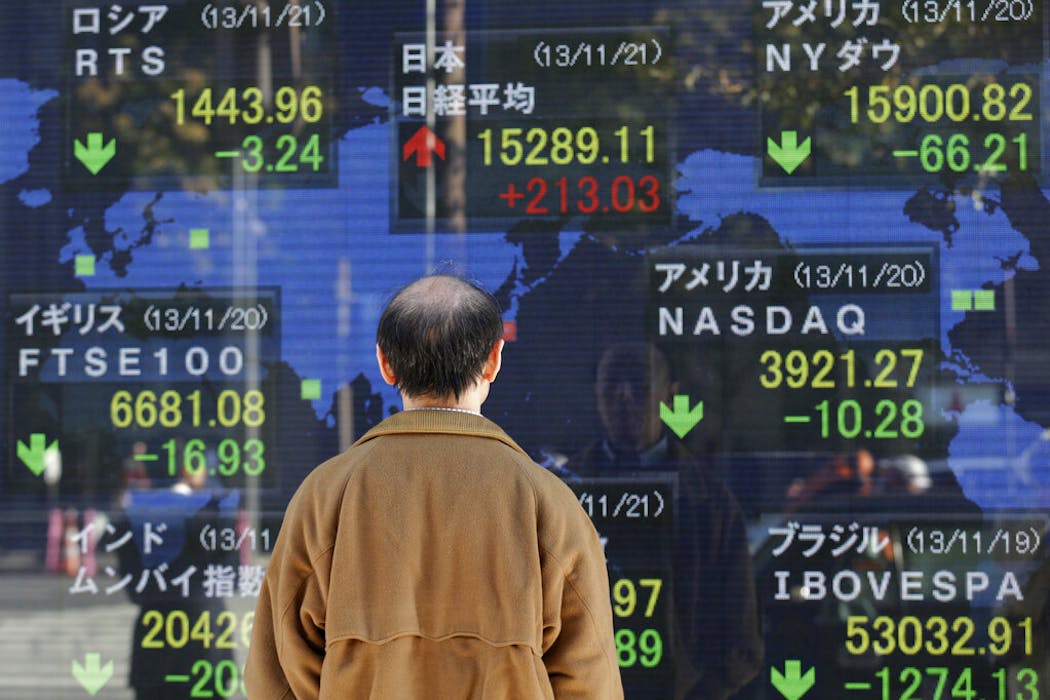
National economies are increasingly moving in sync and responding to the same booms and busts as a result of near-instantaneous communications and interdependent global supply chains. This is a sharp change from much of the 21st century, when economies were primarily affected by economic shocks in neighboring countries.

That’s what we found in a paper published in the journal Economic Letters, in which we calculated measures of economic correlation using data on gross domestic product for 70 countries over the past 60 years. Along with fellow economic scholars Yoonseon Han and David Lindequist, we found that physical distance was indeed less important than it used to be, particularly with regard to how interconnected countries are to one another.

Specifically, we measured the extent to which countries have found their business cycles — the traditional boom-bust intervals of economic performance — in sync. For example, when there is a positive shock to production in Germany, to what extent does this affect incomes in the United States?

We were interested in whether the relationship between distance and economic correlation has changed over time.

What we found was that from 1960-1999, business cycles were strongly localized. That is, a country’s economy was much more likely to be impacted by shocks to nearby countries than by shocks in faraway countries. For example, the U.S. was more affected by economic conditions in Canada or Mexico than it was to economic conditions in the United Kingdom or South Korea.

This finding is not surprising and fits well with a long economic literature showing that countries are more likely to trade with nearby countries and that the volume of trade between two countries is a significant predictor of how synchronized their business cycles are.

However, we went on to find that this relationship between physical distance and economic correlation started to break down after 2000. Specifically, for the past 20 years, there has been no statistically significant relationship between the geographic distance between two countries and the extent to which incomes in the two countries move together — what economists refer to as their economic covariance.

Why it matters

In the late 1990s and early 2000s, a number of economists, including Frances Cairncross and Thomas Friedman, popularized the idea that new technologies like the internet and containerization had led to the death of distance, in which our new lives would be increasingly globalized. They imagined a future in which these new technologies not only impacted how goods were produced — like global supply chains — but also how we work and live.

Such theories were met with some skepticism by trade researchers at the time, and not all of the predictions have come true. For example, the link between distance and trade flows has proved stubbornly persistent. Even today, the top-two trading partners of the U.S. remain Canada and Mexico. And one only has to look at housing prices in major urban centers in the U.S. to see that physical location remains highly valued to most people.

However, our research suggests that at least some of the popular predictions about the globalized economy might be coming true. For instance, the world economy appears to have made countries increasingly susceptible to global, as opposed to localized, shocks.

This was made devastatingly clear to millions of people during the pandemic, when supply chain bottlenecks reverberated across the globe, subsequently generating a worldwide rise in prices. As a result, U.S. economic and trade policy discussions have been increasingly focused on potential vulnerabilities to foreign shocks. Indeed, a new buzzword during the Biden administration was “supply chain resiliance.”

What still isn’t known

Our work provides evidence that business cycles and economic shocks have become more globalized over the past couple of decades. Many of the main economic events from 1960-2000 – like the 1980s savings and loan crisis or the 1997 Asian currency crisis – had primarily localized effects. But more recently, the principal economic events of the past two decades — like the 2008 financial crisis — have had far more global implications.

What we don’t know is whether this pattern will continue, resulting in a new era in which most of the world’s economies move in tandem. Or will a new turn toward economic nationalism lead to a reversal in which economies – and economic shocks – become more localized once again?

The Research Brief is a short take on interesting academic work.

The Conversation

The authors do not work for, consult, own shares in or receive funding from any company or organization that would benefit from this article, and have disclosed no relevant affiliations beyond their academic appointment.

ref. Has globalization lessened the importance of physical distance? For economic shocks, new research suggests ‘yes’ – https://theconversation.com/has-globalization-lessened-the-importance-of-physical-distance-for-economic-shocks-new-research-suggests-yes-272213

Aldi is coming to Colorado, and the disruption could lead to lower food prices

Source: The Conversation – USA (2) – By Jack Buffington, Associate Professor of Practice in Supply Chain Management, University of Denver

Aldi plans to open 50 stores in Colorado in the next few years. SOPA Images/Getty Images

Grocery prices have risen by 25% in Colorado over the past five years, more than wages have grown over that same period.

One of the top issues facing Americans is the cost of living relative to housing, health care and food, according to a Reuters/Ipsos survey from December 2025.

Food prices are a more acute problem in Colorado than in many U.S. states due to a highly concentrated retail and supply chain system. King Soopers, which is part of Kroger, and Walmart control nearly half of the total market share. Safeway/Albertsons is losing market share and closing stores, Costco and Sam’s Club are limited, members-only warehouses, and the remaining stores are niche providers and small independents.

Other than raising concerns about food prices with politicians, consumers can’t do much to address this kitchen table topic.

But food shoppers in Colorado are about to get a new option. Grocery store giant Aldi announced that 50 stores and a distribution center will be built in the state over the next five years.

A woman stands near a grocery store sign that reads: 'Looking for the lowest of our low Prices? Aldi Savers'
Aldi keeps prices low by including private label products, building its own distribution centers and offering fewer products overall.
Kevin Dietsch/Getty Images

Opportunity for market disruption

It’s true that Aldi’s 50 stores will barely make a dent in a state with well over 1,000 places to buy groceries. But when entering a market, Aldi doesn’t try to compete head-to-head against the giants. Nationwide, it controls just 3% of market share versus Walmart’s 21% and Kroger’s 9%. Instead, Aldi enters a market as a lowest-cost retailer, something that is desperately needed in Colorado.

I spent 20 years in the food industry and research the supply chain.

From my experience, I’ve seen retailers consolidate their market share by lowering prices – only to raise those prices again once the competition has gone out of business. Quite possibly, Aldi’s supply chain strategy is the greatest opportunity to disrupt the stagnation in Colorado’s food market and create positive change for consumers.

Competition in Colorado

Making Colorado’s grocery market more competitive isn’t as simple as adding new stores. There’s a chicken-and-egg, no pun intended, conundrum between retailers and the food supply chain, leading to a lack of healthy market competition.

Colorado isn’t a particularly attractive market for food supply chains because it lies in the sparsely populated and remote Mountain West region, and other than beef, it isn’t a significant food producer. The state is largely a food importer. Its vegetables come from California, Arizona and Mexico, processed meats from Nebraska, Kansas and Texas, and packaged foods from the Midwest.

Colorado has a stable retail market through the two largest grocery chains in the U.S. – Kroger and Walmart – but the state does not offer an attractive opportunity for new entrants or even those existing players. Walmart, for example, has a lower market share of 11% in Colorado than its average U.S. share of 21%. These two companies have little incentive to compete by bringing costs down for Colorado’s consumers.

A Safeway gas station sign is in foreground and in the background a King Soopers storefront sign is visible.
A proposed merger between Kroger, parent company of King Soopers, and Albertsons, parent company of Safeway, was blocked by a federal court due to concerns over reduced competition, effects on workers and potential price hikes.
Hyoung Chang/Getty Images

The grocer market was weakened in 2024 in Colorado and other parts of the U.S. due to a failed merger attempt between Kroger and Safeway/Albertsons. The merger, blocked by a federal court, left these companies in a no-man’s-land in the American food system: not large or efficient enough to compete against Walmart, and not nimble and focused enough to compete against the new upstarts, such as Trader Joe’s and Aldi.

Aldi to upset the market

Nontraditional supermarkets, such as Walmart and Aldi, pose an existential threat to the traditional American supermarket. Nontraditional supermarkets hold 63% of U.S. market share versus 37% for traditional.

It is becoming increasingly difficult for the traditional American supermarket, such as King Soopers, to compete with nontraditional stores that operate on razor-thin margins, pay higher wages and operate massive stores that offer a huge selection of offerings, such as 100 kinds of salad dressing.

In the face of the new realities of higher food costs, I believe that only Walmart can survive in this supercenter model. The alternative is a trend toward smaller, more nimble stores with lower costs and a smaller number of products.

9News Denver reports on Aldi’s plans to come to Colorado.

Aldi’s arrival in Colorado may be the necessary catalyst for disruption. It has the lowest costs – and the lowest profit margins – of any grocery retailer in the U.S. Aldi mainly operates relatively small stores, which means it has lower overhead and sells fewer products than many of its competitors. The key to its low-cost strategy is that nearly all of its product lines are private label. They are produced by a manufacturer and sold under Aldi’s brand name, lowering marketing costs.

Aldi announced plans to build a distribution center in Aurora, Colorado, by 2029. The new center will join ones owned by Walmart and Kroger, creating a more robust, local food supply chain infrastructure that is necessary for lower food prices.

Supply chain innovation coming to Colorado

Americans spend 10% of their income on food, one of the lowest rates worldwide, but many feel like they are becoming less able to afford the groceries they need.

In Colorado, food insecurity affects 1 in 8 people. Rural areas of the state and pockets within cities have become food deserts where the largest supermarkets choose not to enter.

Aldi’s smaller stores, private label products and Colorado-based supply chain system could have a ripple effect on retailers in low-income areas where Dollar Tree and regional independents currently dominate. A stronger emphasis on nimble and efficient food supply chains in places with many supermarkets will inevitably spill into underserved communities with very few or none at all. It’s even possible that this could improve food affordability and accessibility across the state.

The Conversation

Jack Buffington does not work for, consult, own shares in or receive funding from any company or organization that would benefit from this article, and has disclosed no relevant affiliations beyond their academic appointment.

ref. Aldi is coming to Colorado, and the disruption could lead to lower food prices – https://theconversation.com/aldi-is-coming-to-colorado-and-the-disruption-could-lead-to-lower-food-prices-274186