Love stories of the Berlin Wall – couples reunited via tunnels, hot air balloons and zip wires

Source: The Conversation – UK – By Kelly Hignett, Senior Lecturer in History, Leeds Beckett University

An East German guard talks to a Westerner through a hole in the Wall in November 1989. Sharon Emerson, CC BY-SA

The people of Berlin woke on August 13 1961 to discover that their city had been split in two.

Despite the earlier cold war division of Germany into east and west after 1945, the border between the two halves of Berlin had remained open, allowing most Germans to travel, mix and mingle freely across the city. This abruptly changed in 1961 when the East German authorities closed the Berlin border and began constructing a wall across the city, a formidable barrier which would stand for almost 30 years. Overnight, families, friends and lovers were cruelly separated.

The Berlin Wall inspired David Bowie’s song Heroes (1977), with its poignant lyrics about two lovers, divided by the wall, dreaming of freedom together. However, there are many real-life examples of couples who found themselves divided by the wall, forced to undertake dangerous, daring escape attempts to overcome their separation.

East German propaganda portrayed the division of Berlin as an act of “fraternal love”, necessary to protect their citizens from the dangerous influences of the capitalist west. In reality, the construction of the wall was more like the jealous actions of a spurned lover, as East German authorities tried to halt the increasing number of people who were fleeing the communist state via Berlin, estimated to have reached 3.5 million, or around one-sixth of the East German population, by 1961.

The border closure meant countless German families, friends and lovers were cut off overnight.

Faced with the prospect of indefinite separation from their loved ones in the West, many East Germans tried to cross the border illegally. The risks were high. If intercepted, they could be arrested, imprisoned or even killed. The guards stationed along the wall were ordered to “shoot to kill” and at least 140 escapees died.

Despite the heightened stakes, around 5,000 East Germans successfully escaped through Berlin from 1961-89, utilising an array of daring methods, such as tunnelling, travelling over the wall by zipline or hot air balloon and concealing themselves in specially modified vehicles. For many of these people, their desire to escape was fuelled by love.

The love stories of the wall

Many east-west German couples who refused to see the Berlin Wall as a barrier to their love have shared stories of their daring escapes. Leslie Colitt’s East German fiancée Ingrid disguised herself as his sister and used her American passport to bluff her way past the border guards and into West Berlin.

When Heinz Meixner decided to smuggle both his fiancée Margarete and her mother out of East Berlin in 1963, he did it in style, using a specially modified sports car. With both women carefully concealed inside the vehicle, Heinz casually drove up to the border, before suddenly zooming past the unsuspecting guards, ducking underneath the checkpoint barrier with only two inches to spare and skidding to safety in West Berlin.

In 1971, Regina Albrecht faced a long and perilous journey to happiness, when she escaped East Germany to reunite with her boyfriend, Eckhard. Albrecht endured cramped conditions hidden behind the fuel tank of a modified car, as she travelled through Romania, Yugoslavia and into Austria, before travelling on to West Germany, where she and Eckhard married.

Over 70 tunnels were constructed underneath the Berlin Wall, although many were ultimately unsuccessful. In 1962, a tunnel constructed by a group of engineering students in West Berlin allowed 29 East Germans to crawl to freedom, reuniting many loved ones.

Tunneller Claus’s wife Inge and baby son both made it safely through, while group leader Joachim later fell in love with Eveline, a young woman who had escaped through the tunnel that night. However, another group member, Wolfdieter, who had acted as a courier in exchange for securing his girlfriend Renate’s safe passage from East Berlin, had to wait a little longer for his happy ending. Both Wolfdieter and Renate were caught and imprisoned in East Berlin, although they later reunited and married in 1966.

Similarly, while Joachim Neumann had escaped to West Berlin using a fake passport in 1961, his girlfriend Christa had been caught, imprisoned and was stuck in the east. In 1964, Joachim oversaw construction of a tunnel which enabled 57 East Germans to cross to West Berlin, including Christa. The couple went on to marry and have a family together.

Two become one

The fall of the Berlin Wall in November 1989 was widely celebrated across West and East Germany, leading to many joyous and jubilant reunions. This included former lovers Sigrid and Erik Krause, who had married in 1957, been separated by the division of Berlin in 1961 and subsequently divorced. However, 30 years later, the fall of the wall allowed them to rekindle their romance and remarry.

A couple shares their story of love separated by the Wall – and eventual reunion.

Personal reunions were accompanied by political fusion, with German reunification in October 1990. However, the subsequent decades of integration have produced challenges as well as opportunities. One recent survey indicated that today, while public opinion still perceives reunification positively, around one-third of Germans are unsatisfied with the level of unity that exists, a figure that rises to half among people in the former East Germany.

Recent research also suggests that the cold war division of Germany may have had an enduring legacy on romantic relations. Only 5% of German couples are composed of East-West partnerships, some of whom have spoken about the challenges they have faced. So, while the Berlin Wall may have crumbled, there are indications that an “invisible wall” continues to divide German minds – and hearts – today.


Looking for something good? Cut through the noise with a carefully curated selection of the latest releases, live events and exhibitions, straight to your inbox every fortnight, on Fridays. Sign up here.


The Conversation

Kelly Hignett does not work for, consult, own shares in or receive funding from any company or organisation that would benefit from this article, and has disclosed no relevant affiliations beyond their academic appointment.

ref. Love stories of the Berlin Wall – couples reunited via tunnels, hot air balloons and zip wires – https://theconversation.com/love-stories-of-the-berlin-wall-couples-reunited-via-tunnels-hot-air-balloons-and-zip-wires-275351

Vagus nerve stimulation: from TikTok tips to clinical trials

Source: The Conversation – UK – By Arshad Majid, Professor of Cerebrovascular Neurology, School of Medicine and Population Health, University of Sheffield

Manu5/Wikimedia, CC BY-SA

The vagus nerve has quietly shaped how our bodies function for thousands of years. Recently, it has moved into the spotlight, especially in wellness culture, where manipulating it is often described as a way to calm the body, reset the nervous system or even treat a wide range of conditions.

As someone who researches the vagus nerve in clinical settings, I think it is important to explain what it actually does, what we know so far and where claims run ahead of the evidence.

The vagus nerve is one of 12 cranial nerves that emerge directly from the brain. It is the longest of them, extending from the brainstem through the neck and into the chest and abdomen. Along the way it connects to the heart, lungs, gastrointestinal tract and liver. You cannot see or feel it directly, but it helps regulate everything from your heartbeat to digestion.

Its name comes from the Latin word for “wanderer”, reflecting its long route through the body. One of the most important things to understand is that it is primarily a sensory nerve. Roughly 80% of its fibres carry information from the body back to the brain, acting as a constant internal monitoring system. Only about 20% of the fibres send signals from the brain to the organs.

In practice, this means the vagus nerve continually informs the brain about what is happening inside the body, including heart rate, digestion and inflammation.

Rest and digest

The vagus nerve is a major component of the autonomic nervous system, which controls functions we do not consciously regulate. This system has two main branches.

The sympathetic nervous system drives the fight-or-flight response. It increases heart rate, raises blood pressure and prepares the body for action.

The parasympathetic nervous system has the opposite effect. It slows the heart, supports digestion and promotes a calmer physiological state. The vagus nerve is the primary nerve of this system and is often described as supporting “rest and digest” functions.

This connection explains why the vagus nerve is linked to relaxation and stress regulation. But the relationship is often oversimplified in popular culture.

Many techniques promoted online, such as slow breathing, humming, singing or splashing cold water on the face, are said to stimulate the vagus nerve. These activities do not switch the vagus nerve on or off.

What these activities can do is indirectly influence vagal activity by signalling that the body is safe. Slow breathing with a long exhale, for example, can reduce heart rate and promote a calmer state. You might notice a slowing pulse or a general sense of settling.


Read more:
Conscious breathing can reduce anxiety and depression – tips for how to do it


In some people this effect is clear. In others it is minimal. Importantly, strong evidence on how reliably these techniques influence vagus nerve activity is still limited, and responses vary widely between people.

Medical vagus nerve stimulation

In clinical medicine, vagus nerve stimulation has been used for decades. There are two main approaches.

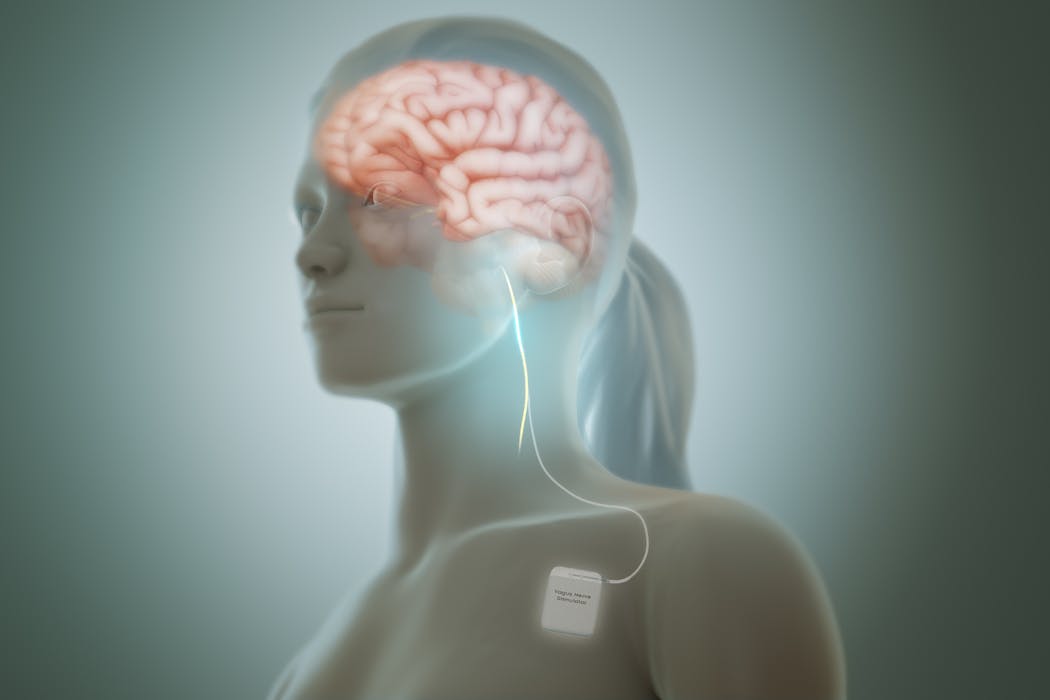
The first is invasive vagus nerve stimulation. This involves surgically implanting a small pacemaker-like device in the chest, with wires wrapped around the vagus nerve in the neck. The device delivers regular electrical stimulation directly to the nerve.

In the US, this treatment is approved for drug-resistant epilepsy and depression. It can be effective but is used less often in the UK because it requires surgery, ongoing care and significant cost.

The second approach, and the focus of much current research, is non-invasive vagus nerve stimulation. Studies show that a small branch of the vagus nerve supplies part of the outer ear. By placing electrodes on specific areas of the ear, researchers can stimulate this branch electrically without surgery.

Brain imaging studies suggest this produces patterns of activity similar to those seen with implanted devices. This gives researchers confidence that similar neural systems are being influenced, even if it is not always possible to confirm that only the vagus nerve is involved.

Medical vagus nerve stimulation devices must meet strict safety and evidence standards. They have to demonstrate clinical benefit in trials and continue to be monitored after approval.

Consumer wellness devices are not held to the same standards. Many can be sold without strong evidence that they stimulate the vagus nerve or improve health outcomes. This does not mean they are necessarily harmful, but claims about their effects should be treated cautiously.

Stroke recovery

One of the most promising areas of research is stroke rehabilitation. After a stroke, many patients experience weakness in one arm that can affect independence for years.

In ongoing research, my colleagues and I are investigating whether non-invasive vagus nerve stimulation, paired with physical rehabilitation, can improve arm function after stroke. The aim is to enhance neuroplasticity, the brain’s ability to reorganise and form new connections, allowing healthy areas to take over lost functions.

This is being tested in a large clinical trial, in which neither participants nor researchers know who is receiving active stimulation until the end of the study. This helps reduce bias. If the results are positive, this approach could change how stroke rehabilitation is delivered.

Vagus nerve stimulation does not work the same for everyone. Some people experience headaches or worsening migraines. A small minority report changes in mood. In my own case, stimulation produces low mood, which is a recognised but uncommon response.

This variability is one reason why one-size-fits-all advice about stimulating the vagus nerve can be misleading.

The vagus nerve is not a cure-all. Most conditions involve multiple biological and psychological factors, and no single nerve explains or fixes them all.

It is, however, a crucial pathway linking the brain and body. As research progresses, we are likely to see more targeted, properly tested therapies using vagus nerve stimulation for specific conditions.

For now, the key message is caution without cynicism. The vagus nerve is real and important. The science is advancing. But meaningful benefits depend on careful research, appropriate use and an honest understanding of what the evidence does and does not yet show.


Strange Health is hosted by Katie Edwards and Dan Baumgardt. The executive producer is Gemma Ware, with video and sound editing for this episode by Anouk Millet. Artwork by Alice Mason.

In this episode, Dan and Katie talk about social media clips via TikTok from drjoedamiani, ayuswellness and prettyspatricia.

Listen to Strange Health via any of the apps listed above, download it directly via our RSS feed or find out how else to listen here. A transcript is available via the Apple Podcasts or Spotify apps.

The Conversation

Arshad Majid receives funding from the National Institute of Health research (NIHR) EME Programme for the TRICEPS trial which is investigating tVNS in stroke recovery.

ref. Vagus nerve stimulation: from TikTok tips to clinical trials – https://theconversation.com/vagus-nerve-stimulation-from-tiktok-tips-to-clinical-trials-274240

Valentine’s day: can 36 questions really change your love life?

Source: The Conversation – UK – By Viren Swami, Professor of Social Psychology, Anglia Ruskin University

LightField Studios/Shutterstock

About a decade ago, author Mandy Len Catron wrote an essay for the New York Times about “36 questions that lead to love”. The idea suggests that two people can grow closer – and even fall in love – by answering a series of increasingly intimate questions.

Catron described how in 2014 she and an acquaintance went on a date together. During the evening, they took turns asking and answering 36 questions. Before that meeting the pair both admitted to a slight mutual attraction, but the exercise changed this fairly dramatically.

Within weeks they had developed strong feelings for each other. The following year they moved in together, had children in 2021 and in 2025, more than a decade after their first date, they got married – and the 36 questions were included in a bowl at the reception bar.

The idea behind the 36 questions is simple enough – that by answering a series of intimate questions, two people become vulnerable and develop a close connection. But can the 36 questions really cause two people to fall in love?

In the 1990s, US psychologist Arthur Aron and his colleagues developed a sharing game that could be used to develop feelings of closeness between strangers. They wanted to provide researchers with a fast track to developing closeness in the lab, for studies involving participants who didn’t know each other.

The task is simple. Two strangers sit across from each other and take turns asking and answering 36 questions arranged in three sets. The task takes about 45 minutes to complete, with the questions becoming increasingly intimate and personal.

One question from the first set asks the strangers to describe their perfect day, while a question from the final set asks them to describe whose death they would find most disturbing.

Why does it work?

The main mechanism that helps build closeness in the 36 questions is reciprocal self-disclosure. This is when sharing intimate information about oneself prompts the other person to share similarly intimate information about themselves.

Reciprocal self-disclosure is an important part of relationship development. When people engage in reciprocal self-disclosure, they signal to each other that they’re willing to be responsive and share their vulnerabilities. In turn, this process helps to build mutual trust and liking, leading to greater feelings of closeness and intimacy.

Imagine that, over the course a conversation, I share with you that I’ve been struggling with my mental health. In sharing this information, you infer that I trust you and that I want to have an authentic, honest and meaningful relationship with you. This, in turn, might encourage you to share something intimate about your own mental health, which encourages deeper trust and connection between us.

Woman and man sitting on sofa talking together.
Just how magic are those 36 questions?
Prostock-studio/Shutterstock

What about romantic love?

But can the 36 questions really cause people to fall in love? In the original study, Aron and his co-researchers suggested that the 36 questions – sometimes called the “fast friends procedure” – could create real feelings of “interpersonal closeness” between strangers.

To test this, they randomly assigned strangers to take part in the fast friends procedure or to a small-talk exercise, which also included 36 questions but that did not increase in intensity over the sets. In a series of studies, Aron and his fellow researchers found that participants who’d completed the fast friends task felt closer to each other than those who had engaged in small talk.

A 2021 study found that participants engaging in the fast friends task not only felt closer than those who engaged in small talk, but also felt greater liking for their partners, believed their partners were more responsive, enjoyed the interaction more and had more fun.

However, Aron and his co-researchers also cautioned that the fast friends procedure does not produce feelings of loyalty, dependence or commitment between strangers – key ingredients for love. The procedure also does necessarily produce respect for the other person, which takes time to develop, nor does it produce feelings of passion, romance and physical and sexual attraction.

Although the fast friends procedure might not cause strangers to fall in love, it could help existing couples maintain their feelings for each other.

In studies where existing couples take part in the procedure with other couples they haven’t met before, the participants later report greater closeness to the couples they interacted with. But they also report greater closeness to and passionate love for their own partners.

The procedure could actually help foster loving relationships of all kinds. One group of researchers adapted the 36 questions to make them suitable for children aged eight to 13 and their parents. When the researchers asked parents and their children to take turns asking and answering the question, the children seemed to end the task feeling more loved.

The fast friends procedure also shows promise in developing closeness outside the lab and in different circumstances. In educational settings such as schools and universities, the task seems to be both an effective ice-breaker and a way to promote closeness and friendship formation. There’s even some evidence that tasks that promote closeness could increase productivity and creativity among team members working together.

The fast friends procedure could also be used to reduce prejudice and stigmatising views. In a 2015 study, heterosexual people took part in the fast friends task with a stranger who revealed they were gay or a lesbian.

These heterosexual participants reported stronger feelings of closeness and lower sexual prejudice at the end of the task compared to the start. Other studies have suggested that the procedure could also reduce racial prejudice and ageism.

So don’t let romantic couples usurp the 36 questions. If you’re spending Valentine’s day with friends, it could be a great way to deepen your bond.

The Conversation

Viren Swami does not work for, consult, own shares in or receive funding from any company or organisation that would benefit from this article, and has disclosed no relevant affiliations beyond their academic appointment.

ref. Valentine’s day: can 36 questions really change your love life? – https://theconversation.com/valentines-day-can-36-questions-really-change-your-love-life-273611

Will artificial snow save the ski industry in the long run – or curse it?

Source: The Conversation – UK – By Paolo Aversa, Professor of Strategy, King’s College London

At the Winter Olympics, athletes race down immaculate white slopes. The snow looks perfect. But it is largely manufactured.

In Italy, where rising temperatures and declining snowfall were felt earlier than in other Alpine regions, technological fixes began in the 1990s. Today, reliance on artificial snow is widespread: around 95% of Italian ski resorts use snowmaking, and more than 70% of slopes are covered by artificial snow during the season.

Modern snowmaking uses a large fan-like “snow canon” to spray tiny droplets of water into cold air, where they freeze before landing on the ground. Vehicles known as piste bashers (in Europe) or snowcats (in North America) then compress and groom that new snow until it forms a more stable base. The process does not rely on chemical additives. It has become so effective that it can now guarantee competition-grade conditions even when natural snowfall is increasingly unreliable.

Together with colleagues at the Universities of Oxford and Trento, I have been part of the Hot Snow project, investigating what all this means for the ski industry.

Snow canon with mountain backdrop
A ‘snow canon’ blasts tiny droplets into the air, where they freeze into snowflakes before landing.
Gherzak / shutterstock

We know that continuous innovation – often referred to by the industry as “technical snow” – has helped protect winter sports. Yet we found it also carries a less visible risk: successful adaptation through artificial snow can make the ski industry complacent about climate change.

How artificial snow really works

In leading resorts, artificial snowmaking process is data-driven and highly automated. At the touch of a tablet, operators can adjust the quality and density of new snow, depending on temperature, humidity and the sort of surface they want to create. This produces snow that can be more controllable and durable than natural snowfall.

Snowmaking systems have become more energy efficient over time. Production is optimised to exploit the coldest possible weather windows, reducing energy use per cubic metre of snow. In regions such as the Dolomites, where the Olympic ski races are being held, resorts largely rely on renewable electricity and rainwater stored in artificial basins.

close up of snow cannon
A snow cannon fires out water mist that will fall as snow.
Beekeepx / shutterstock

Even so, artificial snow remains energy intensive. In Italian ski resorts, snowmaking accounts for around 30–40% of total energy consumption, with annual costs of €50 million to €100 million (£44 million to €88 million). Across the Alps, total energy demand for artificial snow is estimated at around 2,100 gigawatt-hours per winter season – roughly equivalent to the total annual domestic electricity use of Milan.

The water footprint is just as significant. Artificial snow production in Italy alone consumes around 100-150 million cubic metres of water each year – roughly equivalent to the annual water use of between 1 million and 1.5 million people.

In regions where winter precipitation is becoming less reliable and summers are growing hotter and drier, this growing competition for water adds another layer of pressure, particularly for mountain communities and downstream users. For this reason, ski resorts increasingly rely on artificial reservoirs to store water which, though useful in dry seasons, are often harmful to mountain landscapes and ecosystems.

When adaptation becomes a trap

The effectiveness of snowmaking is both a blessing and a curse.

Across Europe, artificial snow now underpins much of the ski industry. In many regions, slopes depend on it to open at all. This technological success creates what economists call a lock-in effect. Resorts continue to invest heavily in snow cannons, reservoirs and grooming vehicles, even in areas where artificial snow may soon become unviable.

Bare mountainside with single strip of snow
In a dry or warm winter, snowmaking is crucial. This photo was taken in the Dolomites in January 2018: a bare mountainside with machine-made snow.
Stefano Politi Markovina / shutterstock

At the same time, rising infrastructure costs requires a constant increase in consumer prices. Ski pass prices have increased by around 40% since 2021, further turning skiing into a sport accessible only to those with deep pockets. Each new investment further entrenches this trajectory, making it progressively harder to step back and rethink alternatives for the future of these resorts.

The illusion of control

Some snowmaking systems can technically operate even when air temperatures rise above freezing, albeit at a very high energy cost. One manufacturer has demonstrated technology capable of producing snow at ambient temperatures of up to 20°C. That possibility reinforces a dangerous narrative: that innovation alone will solve the problem.

But climate projections suggest there will come a point when even artificial snow cannot compensate for warming conditions at many altitudes. In Italy, most resorts located around 1,000 metres above sea level have abandoned hopes of operating consistently, while skiing in the Apennines – once a preferred destination for central and southern Italy – has largely shut down.

When artificial snow stops being viable, the transition is often abrupt. Resorts are left with stranded assets and communities face sudden economic shocks. This is what we describe as an “expiring industry”, one that can appear economically healthy today while facing a clear climate-driven end date.

The danger is not collapse tomorrow, but delay today. As long as slopes remain open and bookings stay strong, there is little incentive to invest in alternatives. After all, winter tourism is still worth over €11 billion (£9.6 billion) a year to the Italian economy alone.

What should change

Those who benefit from the status quo are unlikely to propose alternative futures. Public policy therefore plays a crucial role in shaping which futures remain possible.

Continuing to subsidise ski infrastructure may keep slopes open for a few more seasons, but it also deepens reliance on winter snow in places where long-term viability is increasingly uncertain. It risks diverting public money, attention and political capital away from transitions that could actually endure.

A different approach would make public support conditional. Resorts could be required to disclose water and energy use transparently, and to present credible plans to diversify beyond winter-only tourism rather than simply extending it. This would also mean scrutinising claims that lift infrastructure can function as sustainable, year-round transport — a justification often used to secure public funding, but rarely realised in practice.

I’m a passionate skier myself. As a Veneto native, the Dolomites are my favourite place to ski. So this is not about blaming skiers or dismissing snowmaking technology, which has helped sustain jobs in the mountain communities of my region.

The problem is mistaking successful short-term adaptation for a viable long-term strategy. When technological fixes stand in for long-term planning, they delay investment in alternatives and leave regions more exposed when climate limits are finally reached.

As long as artificial snow keeps slopes white against an increasingly green landscape, it is easy to believe alpine skiing will always be there. But this is not simply kicking the can down the road. It is pushing it uphill. And metre by metre, the slope is getting steeper.

The Conversation

Paolo Aversa works on the Hot Snow project with professor Juliane Reinecke at the University of Oxford and professor Alberto Nucciarelli and Dr Edoardo Trincanato at the University of Trento.

The research has been supported by The Center of Sustainable Business at King’s Business School, The Fondazione CARITRO, and the Center for Sports and Business at the Stockholm School of Economics.

ref. Will artificial snow save the ski industry in the long run – or curse it? – https://theconversation.com/will-artificial-snow-save-the-ski-industry-in-the-long-run-or-curse-it-275270

Toronto’s Project South charges point to systemic issues beyond police corruption

Source: The Conversation – Canada – By Tandeep Sidhu, Assistant Professor, Department of Sociology and Criminology, University of Manitoba

The Toronto Police Service is embroiled in an unprecedented crisis following a criminal investigation that led to several officers being charged with a list of drug trafficking, theft, conspiracy, fraud and other offences related to an organized crime investigation.

Project South was a seven-month long investigation that disrupted a criminal network that used information supplied to them via police databases.

The details of Project South were disclosed during a news conference that featured senior police officers bizarrely wearing bullet-proof vests. The core of these allegations involve claims of officers leaking information to this network that contributed to a series of violent crimes, including a conspiracy to murder a correctional officer.

Image management strategies activated

Toronto police Chief Myron Demkiw promised that no stone would be left unturned in the investigation and said the actions of a few officers did not define the force. He requested an independent external investigation before announcing the Project South charges.

The head of the Toronto Police Association, Clayton Campbell, similarly said there is “nothing our members hate more than a corrupt cop.”

Ontario’s inspector general of policing announced the province will lead a review of police services to address corruption in policing.

These public statements and requests for a probe are best understood through the lens of police image management, which refers to the array of what are essentially marketing strategies employed by police services to maintain their public image.

The police employ a series of strategic communications in times of crisis, and in their routine corporate communications, to convey a curated image to the public. Like other public relations strategies, this can obscure systemic issues in policing.

The statements from Demkiw and Campbell serve several functions, all of which are intended to safeguard the public image of policing. They disavow the charged officers, protect the reputation of the larger policing community and demonstrate a public-facing commitment to change.

Demkiw’s request for an external investigation, outlined during the news conference, is a strategy that allows the Toronto Police Service to be seen as taking the issue seriously and pre-empts public calls for such a response.

Police misconduct in Toronto and beyond

Allegations of misconduct against the Toronto Police Service have persisted for decades and include charges of corruption, theft, evidence management, misleading the court and fraud, among other offences.

A 2020 study investigating the experiences of inner-city Toronto residents subjected to police raids also demonstrated that allegations of theft, violence and intentional property damage are commonplace.

Some researchers have argued that a double standard exists for police services in terms of officers accused of corruption and other forms of misconduct. They argue that police often demand harsh sentences and punishment for members of the public, but face less severe consequences when misconduct is addressed internally.

A lesser-known form of police misconduct surrounds the abuse of police databases. Officers across Canada have used databases to stalk former partners, interfere in investigations for friends and family, form intimate relationships, access the personal information of and monitor lawyers and leak information.

While Campbell noted that searches on police databases leave digital footprints, this does little to prevent their abuse.

Like ticket-fixing, database abuse is difficult to detect. The true scope of database abuse is immeasurable, owing to the vast volume of data and searches officers perform, which makes it difficult to distinguish legitimate policing activity from illegitimate activity. What is known about its prevalence should be regarded as the tip of the iceberg.

Why bother?

So what value does an “independent” probe into Ontario police services offer? Considering the hard-to-detect nature of many forms of police misconduct, the efficacy of such an initiative is debatable.

There is also an inherent contradiction at play. The probe is being directed at all Ontario police services, suggesting that these forms of misconduct are systemic.

But Ontario Premier Doug Ford referred to a “few bad apples” in response to the public uproar following the Project South charges, suggesting there’s no systemic issue in place.

So why launch such an expansive probe that will likely cost taxpayers millions of dollars if these acts of misconduct are limited to a select few officers?

Demkiw’s request for an independent probe is an admission that police misconduct is systemic, but places the onus for repair onto an independent institutional body. As I’ve argued previously, police services cannot be trusted to repair these issues. This strategy not only allows police forces to appear as though they take internal corruption seriously, but insulates them from future criticism when officers engage in misconduct.

Considering there are already calls for Demkiw to resign, inaction would mark the end of his career.

Nonetheless, while the probe promises to investigate the “totality of the landscape” of policing in Ontario, the public should regard these efforts as a form of image management that insulates police forces from serious, genuine scrutiny.

Better ways to prevent corruption

While the police are mitigating the damage stemming from Project South, the question of how to prevent these abuses arises.

The existing mechanisms for detecting database abuse, for example, are inherently reactive. These issues are brought to the attention of the police following the misconduct.

One strategy to address this issue is a more robust system of random audits that function as a general “integrity check” on the police use of databases. This would function in tandem with a requirement that officers provide a detailed explanation of why searches on people are performed, creating a more substantive digital footprint that may be audited.

This strategy will inherently be met with resistance from police unions and researchers who partner with the police who have drawn attention to the occupational stress stemming from police reporting requirements.

But the research drawing attention to report writing and its proposed relationship to occupational stress fails to adequately consider that report writing is not only an expected function of the police — it may also be a critical avenue for accountability.

The Conversation

The authors do not work for, consult, own shares in or receive funding from any company or organisation that would benefit from this article, and have disclosed no relevant affiliations beyond their academic appointment.

ref. Toronto’s Project South charges point to systemic issues beyond police corruption – https://theconversation.com/torontos-project-south-charges-point-to-systemic-issues-beyond-police-corruption-275408

What the troubling use of the term ‘ghettos’ reveals about Denmark’s attitude towards immigration

Source: The Conversation – UK – By Garbi Schmidt, Professor of Cultural Encounter Studies and a member of the inter-institutional research group on migration, Roskilde University

Few countries talk about “ghettos” the way Denmark does. For more than a decade, the term has shaped national debates about migration, integration and who truly belongs.

What began as a policy tool to identify struggling neighbourhoods has evolved into a social experiment in how to manage so-called “parallel societies”. These are predominantly migrant communities considered by politicians to be functioning separately from mainstream Danish life.

In 2010 the then government created a “ghetto list”. This list ranks public housing areas with more than 1,000 residents where unemployment levels and crime rates are higher than average. These areas are also ranked on income and education levels, along with whether more than half of the residents come from non‑western countries.

Over the years, these areas have become shorthand for failed integration. Danish politicians use the list as a roadmap for intervention: tearing down apartment blocks, forcing long-term tenants to relocate. The goal, they say, is to “mix” populations and prevent segregation.

While the government replaced the official term “ghettoområder” (ghetto areas) with “parallelsamfundsområder” (parallel-society areas) in 2021 to reduce stigma, the criteria and policies affecting these neighbourhoods have largely stayed the same.

The first ghetto

For anyone outside Denmark, this language of “the ghetto” or “parallel societies” can sound unsettling. In most European countries, the word still evokes a dark past. From medieval Jewish quarters, to the Nazi-era ghettos where Jews were confined before being deported to death camps – the word ghetto has such a complex history.

Modern housing estates were once a point of pride in the Danish welfare model – clean, affordable and surrounded by green space. So why use such a charged term to describe them?

As part of my research, I look at the historical development of the ghetto in Denmark and Danish culture, and how this has changed over the years.

Indeed, it was back in 1692 when the idea of the ghetto first emerged in Denmark. This was after police constable Claus Rasch proposed confining the city’s Jewish population – of which there were very few – to a designated district. In a long letter to King Christian V, he suggested that all Jews be moved to the Christianshavn area.

There, he argued, they could continue their businesses, but their daily lives should be closely regulated so they would not disturb their Christian neighbours or cause “a scandal”.

The Jewish quarter Rasch imagined strongly resembled the ghettos across Europe that had existed for more than 150 years. Such ghettos were established specifically to enforce a clear boundary between Christians and Jews. And their creation was driven by prejudice and fear.


Read more:
Think twice before copying Denmark’s asylum policies


The answer from the king was a firm no. But a little more than two centuries later, in 1908, Danish newspapers began writing about a ghetto in a squalid part of Copenhagen. This ghetto had, the press reported, been established by Russian Jews in the slum then existing in the streets just east of Kongens Have, in the inner city of the capital.

Black and white photo of people standing on the street.
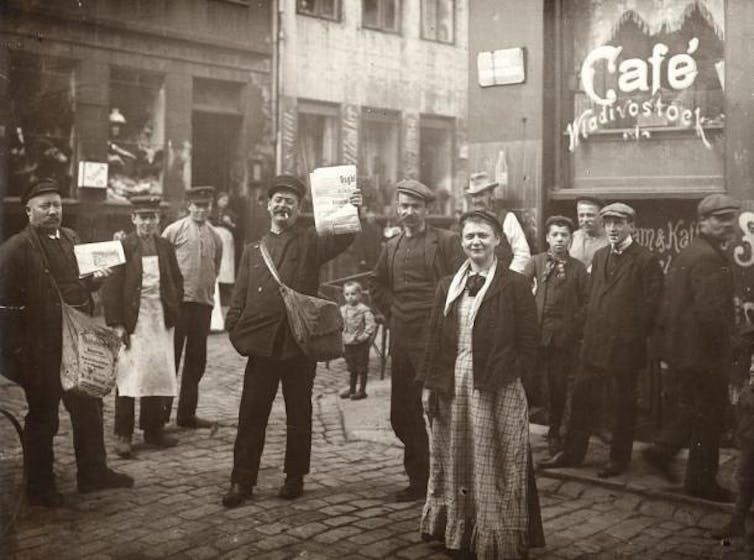
A Jewish newspaper vendor in the last century’s Eastern European ghetto in Vognmagergade, Copenhagen.
Copenhagen Museum and Josefine Ørskov

Inhabitants of this ghetto included Jewish immigrants who had fled the Russian empire due to religious and political persecution, along with others who wanted to find jobs and a better life. Emigration to North America was the final goal. A life in the slums of Copenhagen was only seen as a stop on the way.

Danish newspapers wrote with a mix of curiosity and excitement about the new “exotic” residents, who looked different and spoke Yiddish and Russian. Though these articles didn’t encourage people to visit the ghetto for a Sunday outing.
Quite the opposite. The area was poor and considered to be full of people with bad morals. Crime, drunkenness and suspicious political ideas were all part of its reputation. In other words, the ghetto was seen as dangerous.

Building division

Today’s “ghetto” or parallel society policies are built on that same instinct: that certain groups must be managed or dispersed to preserve cohesion.

Officially, the Danish government says it wants to break down parallel societies and promote integration. But in practice, the strategy has meant displacement. Families who have lived in the same neighbourhoods for decades are being moved, sometimes against their will, to prevent “concentrations” of non-western residents.

View of Superkilen park
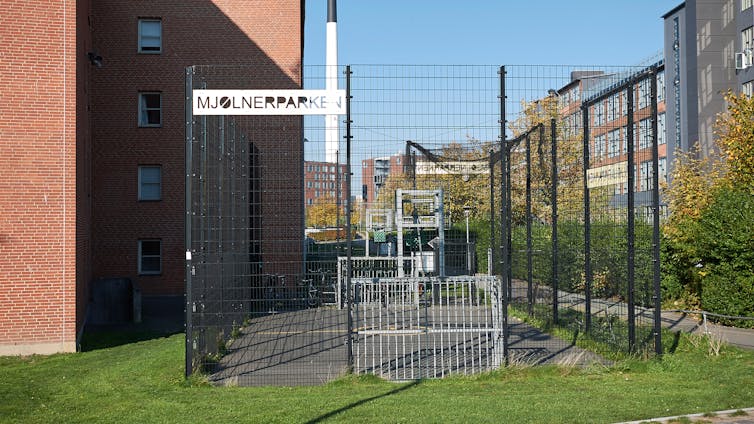
Mjølnerparken in Copenhagen, a public housing estate that for years appeared on Denmark’s official ‘ghetto list’. The area has since undergone extensive renovation and social interventions as part of state efforts to dismantle so-called ‘parallel societies’.
Shutterstock/simona flamigni, CC BY

In 2024, the European Court of Justice (ECJ) ruled that Denmark’s housing policy – used to reshape these districts – amounted to racial discrimination. And at the end of last year, the ECJ said the legislation may be unlawful.

As Britain’s Labour government looks to Denmark for inspiration on asylum and migration reform, it’s worth paying attention to this parallel story. Denmark’s housing and asylum systems are two sides of the same coin: both built on the idea that tighter control creates cohesion.

But the Danish experience suggests something different – that in trying to dismantle “parallel societies”, the country may be building new divisions of its own.


This article was commissioned as part of a partnership between
Videnskab.dk and The Conversation. You can read the article in Danish here.

The Conversation

Garbi Schmidt has received funding from the Carlsberg Research Foundation

ref. What the troubling use of the term ‘ghettos’ reveals about Denmark’s attitude towards immigration – https://theconversation.com/what-the-troubling-use-of-the-term-ghettos-reveals-about-denmarks-attitude-towards-immigration-268581

Sudan’s latest peace plan: what’s in it and does it stand a chance?

Source: The Conversation – Africa (2) – By Samir Ramzy, Researcher, Helwan University

US president Donald Trump’s advisor on Arab and African Affairs, Massad Boulos, announced in February 2026 that Washington and three Middle East states – Saudi Arabia, Egypt and the United Arab Emirates (collectively known as the Quad) – were close to finalising a detailed initiative aimed at ending Sudan’s war. The plan resembled the roadmap shared by the Quad in September 2025.

According to Boulos, the proposal had received preliminary approval from the two warring parties in the civil war: Sudan’s Armed Forces and the paramilitary Rapid Support Forces (RSF).

Civil war erupted in the country in mid-April 2023 over disputes surrounding military reform and the future configuration of Sudan’s political system. Since then, more than 14 million Sudanese have been displaced inside and outside the country. Tens of thousands have been killed and more than half of the population – around 21 million people – are facing acute hunger.

Meanwhile, the battlefield has produced a de facto territorial split. The army and its allies remain entrenched in eastern, northern and central Sudan, including the capital, Khartoum. The RSF controls much of western Sudan, including all Darfur states.

Active fighting is now largely concentrated in Kordofan, which lies between the two zones of control. The region represents 20% of Sudan’s territory, extends over roughly 390,000 square kilometres and has a population of around 8 million.

Based on my research on Sudan’s political and conflict dynamics, I argue that the prospects for the Quad-led initiative remain limited in the short term, even if it could, over time, help pave the way for a ceasefire.

Continued military escalation, deep mistrust between the Sudanese army and the paramilitary forces, and the army’s refusal to legitimise the RSF undermine prospects for de-escalation.

Additionally, regional and international actors have yet to generate sufficient pressure for peace. Competing regional interests and continued external support for the warring parties reduce incentives for compromise. As a result, the most realistic outcome for now is a temporary humanitarian pause rather than a lasting political settlement.

The obstacles

The latest Quad framework has five main parts:

  • an immediate ceasefire

  • unhindered humanitarian access

  • civilian protection

  • the launch of a political process leading to civilian governance

  • a reconstruction pathway supported by a pledged US$1.5 billion.

Media leaks suggest the proposal includes coordinated withdrawals by Sudanese warring parties from major cities.

Under the proposal, the RSF would pull back from key positions in South Kordofan and around El-Obeid, the closest RSF-controlled area to Khartoum. Army units in the capital would, meanwhile, be replaced by local police as part of efforts to prepare urban centres for civilian governance.

A UN-led mechanism would monitor the ceasefire and secure humanitarian corridors.

Despite the seriousness of this proposal, developments on the ground indicate that neither side is ready to de-escalate. The biggest obstacles continue to be:

1. The army’s refusal to legitimise the RSF

Within hours of the initiative’s announcement, army commander Abdel Fattah al-Burhan publicly reiterated that he would not accept any political or military role for the RSF.

This stance aligns with reports that senior army figures objected to key provisions of the Quad proposal, particularly those allowing the RSF to retain local governance structures in areas under its control to facilitate aid delivery.

For the army, recognising such arrangements would amount to legitimising the RSF as a political actor.

2. The army’s broader insistence that it alone should oversee any reform of Sudan’s military institutions

This is the very issue that triggered the war in 2023.

3. Escalation on the battlefield

Neither side appears to be preparing for withdrawals. On the contrary, recent weeks have seen escalating clashes and the opening of new fronts.

For instance, the Sudan People’s Liberation Movement–North, an RSF ally, has launched new attacks against army forces in Blue Nile state.

At the same time, the army has succeeded in lifting sieges on key towns in South Kordofan that had been encircled by the RSF for nearly two years. This increasingly complex military map makes agreement on withdrawal zones exceptionally difficult.

4. Deep mistrust between the warring parties

This mistrust derailed previous efforts. In May 2023, the US-Saudi mediated Jeddah agreement collapsed after both sides reneged on commitments to withdraw from civilian areas.

5. External actors are not yet incentivising peace

Regional and international dynamics remain a major obstacle. This includes some of the Quad’s members, who publicly endorse a ceasefire even as battlefield realities suggest otherwise. These actors have repeatedly denied accusations of providing military support to one side or the other.

As long as both Sudanese warring parties retain access to regional backing, there is little incentive to halt the fighting. Continued war allows them to compete over territory and extract resources while sidelining any meaningful civilian political alternative.

Chances of breakthrough

A breakthrough is possible. But it won’t happen quickly. A meaningful shift would require stronger international pressure.

Washington appears to be moving gradually in this direction as part of a broader effort to consolidate western influence in Sudan while curbing rival regional and global actors. This is happening most notably amid concerns over Russia’s reported interest in establishing a naval facility in Port Sudan.

A pillar of this approach is drying up the drivers of war, especially arms flows. In December 2025, the US Congress passed legislation expanding American intelligence engagement in Sudan to monitor and expose external actors fuelling the conflict. The language of the bill suggests that all suppliers are potential targets.

In this context, media leaks about external involvement in Sudan can be seen as a form of political pressure on arms suppliers. This places current providers in a difficult position: either align with Washington’s framework or risk confrontation with it.

Regional actors may gradually follow suit if Washington demonstrates sustained resolve. Egypt, in particular, could pivot towards a ceasefire as the conflict edges closer to Blue Nile state near Ethiopia’s Grand Renaissance Dam, a core national security concern for Cairo.

These dynamics could eventually restrict external military support to both Sudanese parties, narrowing their options and increasing the geopolitical cost of continued war. In this context, maintaining current suppliers of Russian, Chinese and Iranian weapons could provoke countermeasures by Washington and its allies, a costly gamble for both sides.

Over time, this may push the army and the RSF towards negotiations, at least to secure a humanitarian ceasefire.

The Conversation

Samir Ramzy does not work for, consult, own shares in or receive funding from any company or organisation that would benefit from this article, and has disclosed no relevant affiliations beyond their academic appointment.

ref. Sudan’s latest peace plan: what’s in it and does it stand a chance? – https://theconversation.com/sudans-latest-peace-plan-whats-in-it-and-does-it-stand-a-chance-275456

Four symbolic moments in Bad Bunny’s Super Bowl halftime show

Source: The Conversation – UK – By Natalia Rodríguez Vicente, Lecturer in Translation & Interpreting Studies, University of Essex

The Super Bowl halftime show is one of the most watched cultural events in the US. Every year, tens of millions of viewers tune in, many of them less for the sport than for the spectacle. That reach makes halftime a rare moment in which ideas about national identity and belonging are staged for a global audience.

At the 2026 Super Bowl in Santa Clara, Puerto Rican artist Bad Bunny delivered a halftime performance almost entirely in Spanish and packed with carefully staged symbolism. To understand what the show was communicating, it helps to look closely at four key moments.

1. Sugar cane fields

The show opened in a landscape of sugar cane fields and performers dressed as jíbaros (rural farmers) wearing traditional pava hats. These elements nod to the island’s agricultural roots and carry deep historical and cultural weight, as sugar cane points directly to the plantation economy, first under Spanish colonial rule and later reorganised under US governance.

2. Ricky Martin and Lo Que Le Pasó a Hawái

Ricky Martin is a Puerto Rican singer best known internationally for hits like Livin’ la Vida Loca. Instead of performing one of his global anthems, he sang an excerpt from Bad Bunny’s song Lo Que Le Pasó a Hawái, which frames Hawaii as a cautionary tale for Puerto Rico, warning against the consequences of over-tourism and gentrification:

Quieren quitarme el río
Y también la playa.
Quieren el barrio mío
Y que abuelita se vaya.

No, no suelte’ la bandera
ni olvide’ el lelolai.
Que no quiero que hagan contigo
lo que le pasó a Hawái.

They want to take my river,
and want the beach as well.
They want my neighbourhood,
and want Grandma gone.

No, don’t let go of the flag,
and don’t forget the lelolai.
As I don’t want them to do to you
what they did to Hawaiʻi.

The lyrics trace loss as a gradual process that begins with land and natural resources (“the river” and “the beach”), then moves inward to community space (“my neighbourhood”), family continuity (“grandma”), and cultural memory itself (“lelolai”, a traditional refrain), urging listeners not to “let go of the flag”, as a symbol of identity.

3. Electricity poles sparking

The staging of jíbaros climbing sparking electricity poles, suggesting overload and failure, during El Apagón, Bad Bunny’s protest song about chronic power outages on the island, can be read as a visual reference to Puerto Rico’s fragile power grid following Hurricane Maria.

According to the latest data from the US Energy Information Administration, Puerto Rico experienced an average of around 27 hours of power outages per year between 2021 and 2024. By contrast, customers in the mainland US typically had about two hours of outages per year. The poles thus functioned as signs of uneven material conditions.

4. A continental roll call after God Bless America

The performance closed with Bad Bunny saying: “God Bless America” followed by a roll call of countries across South, Central and North America, as well as parts of the Caribbean. The sequence challenged a familiar assumption about who counts as “America”. In everyday US English, America is often used as shorthand for the United States as in Donald Trump’s slogan “Make America Great Again.” Across much of Latin America, América refers to the continent.

Why the symbolism matters

These four moments form one narrative: the sugar cane fields root the performance in Puerto Rico’s colonial history. Ricky Martin’s lyrics name the risk of cultural erasure. The electricity poles tie questions of identity to material inequality. Finally, the roll call after God Bless America expands the frame outward, celebrating the continent as a shared, plural space.

The show has provoked strong reactions, including Donald Trump dismissing it as “absolutely terrible, one of the worst, ever”.

On the biggest stage in US popular culture, the performance pushed Latin visibility at the highest mainstream level. Against the scale of the spectacle, and the controversy it provoked, a message glowed quietly in the background: “The only thing more powerful than hate is love.”


Looking for something good? Cut through the noise with a carefully curated selection of the latest releases, live events and exhibitions, straight to your inbox every fortnight, on Fridays. Sign up here.


The Conversation

Natalia Rodríguez Vicente does not work for, consult, own shares in or receive funding from any company or organisation that would benefit from this article, and has disclosed no relevant affiliations beyond their academic appointment.

ref. Four symbolic moments in Bad Bunny’s Super Bowl halftime show – https://theconversation.com/four-symbolic-moments-in-bad-bunnys-super-bowl-halftime-show-275527

Is Wuthering Heights actually romantic? Heathcliff would say no

Source: The Conversation – Global Perspectives – By Jodi McAlister, Senior Lecturer in Writing, Literature and Culture, Deakin University

Margot Robbie and Jacob Elordi in Wuthering Heights. Photo Courtesy Warner Bros Pictures

Emerald Fennell’s film of Wuthering Heights, starring Australian actors Jacob Elordi as Heathcliff and Margot Robbie as Catherine, bills itself as the “greatest love story of all time”. A poll of British readers agreed.

But what would Heathcliff think?

Heathcliff, if you’ve not read the book, seen one of the many adaptations, or heard Kate Bush’s iconic song, is the protagonist of Wuthering Heights, Emily Brontë’s sole novel (published originally under the pseudonym Ellis Bell). He’s the ethnically ambiguous foster child of the Earnshaw family, who live in the titular Wuthering Heights on the windswept, desolate Yorkshire moors: the backdrop for his obsessive, doomed relationship with his foster-sister Catherine.

In the 14th chapter of the novel, Heathcliff has just married another woman (Isabella Linton, sister of Catherine’s husband Edgar). The novel’s narrator, housekeeper Nelly Dean, chastises him for how badly he’s treating her. Isabella loves him, Nelly tells Heathcliff reproachfully, or she would not have abandoned the comforts of her home in the warm, welcoming, comfortable Thrushcross Grange to marry him and live him in the cold, dreary Wuthering Heights.

“She abandoned them under a delusion,” Heathcliff sneers in response, “picturing in me a hero of romance, and expecting unlimited indulgences from my chivalrous devotion.”

The new film poster evokes a romance ‘clinch cover’.

Here, Heathcliff explicitly rejects the idea he is any kind of romantic hero. However, for more than a century, he has been interpreted as one, with his intense connection with Catherine – a passion that endures long past her death – captivating audiences.

Indeed, this kind of romantic positioning is evident on the film poster, depicting Heathcliff and Catherine. It is strongly reminiscent of a “clinch cover”: common among historical romance novels published in the late 20th and early 21st century (most infamously associated with male model Fabio).

Plenty of modern readers agree with Heathcliff’s self-assessment, though. “Heathcliff from ‘Wuthering Heights’ isn’t a romantic anti-hero,” reads the headline of one article by Christopher Shultz, “he’s a f#$%ing monster”.

A romance?

People regularly claim Wuthering Heights as their favourite romance novel, to the exasperation of romance readers and writers. It might be considered a love story, but Wuthering Heights is not a romance.

This is clear if we look at it against the (embattled) Romance Writers of America definition: a romance novel needs a central love plot and an emotionally satisfying and optimistic ending. Other 19th-century classics fit the bill – Jane Austen’s Pride and Prejudice, for instance – but Wuthering Heights does not.

The love story between Heathcliff and Catherine is certainly the element of the book most readers remember – and, indeed, many adaptations focus on it almost entirely. However, the couple are never actually together in any formal way, and their tortured relationship consumes surprisingly little page space.

Jacob Elordi as Heathcliff: a darkly brooding, well-dressed man sits on an ornate blue couch with gold, arm outstretched
People regularly claim Wuthering Heights as their favourite romance novel.
Photo Courtesy Warner Bros. Pictures

Notably, Catherine dies approximately halfway through the book. While Heathcliff is tormented by grief for the rest of it, the primary action shifts to their children. This makes it difficult to argue theirs is a “central” love story.

Given Catherine’s death and Heathcliff’s subsequent misery, it is also difficult to make a case that Wuthering Heights has an optimistic ending.

The book ends with a potentially happy union between Catherine’s daughter (also named Catherine) and her cousin Hareton, and the suggestion Heathcliff and his Catherine might be wandering the moors together as ghosts. This is arguably emotionally satisfying – they are together in death the way they were never in life – but not really optimism, especially taking into account the many lives they destroyed along the way.

Dark dynamics

So – if Wuthering Heights is not a romance per se, can we argue that it is romantic?

This hinges on how we define romantic. There’s no doubt that it’s Romantic, with a capital R. Wuthering Heights is deeply influenced by Romanticism, a literary and artistic movement which emphasised intense feeling and passion over logic and reason.

Modern conceptions of romance, though, place more of an emphasis on intimacy, closeness and overall functionality. Britain’s Romantic Novel of the Year awards, for instance, require a “healthy relationship dynamic between the main characters” – and even the biggest fans of the book would find it hard to argue Heathcliff and Catherine’s relationship is in any way healthy.

A tall, handsome, brooding man and a beautiful blonde woman in a red leatherette and blousy white gown
Even the biggest fans of the book would probably not argue Heathcliff and Catherine’s relationship is in any way healthy.
Photo Courtesy Warner Bros Pictures

This said, some of the most popular romance subgenres at the moment revel in dynamics which are – like Heathcliff and Catherine’s – dangerous, intense, destructive and toxic. Dark romance is the most notable example.

Amoral people, illicit passion

As English professor David Shumway notes in his book Modern Love, romantic love was long considered a “destructive passion” – something that was a threat to marriage, rather than its building block. He writes:

In the nineteenth century, romance became grafted onto marriage, but it has never become entirely at ease with the union. This combination produced a tension within the discourse because [romance’s] essential characteristics derive from adulterous love.

Wuthering Heights was published in 1847, right in the middle of the 19th century. In it, we see this tension between companionate marital love and adulterous passion played out. Catherine swears repeatedly that she loves her husband Edgar, but this is at best an uneasy love: a pale shadow of the immense, destructive passion she has for Heathcliff.

“You loved me — then what right had you to leave me?” Heathcliff demands of Catherine on her deathbed.

What right — answer me — for the poor fancy you felt for Linton? […] I have not broken your heart — you have broken it; and in breaking it, you have broken mine.

The appeal of a genre like dark romance – of which Wuthering Heights is surely an ancestor – is its excessive intensity. While dark romance today ends happily, the intensity of Heathcliff and Catherine’s adulterous passion might have been muted if they had ended up together in romantic bliss – and, as a result, this book might not be half so compelling.

Speaking broadly, Heathcliff and Catherine are two mostly amoral people who bring destruction to the lives of everyone around them (as well as each other). Whether or not we consider it “romantic”, it is the force of their illicit passion that has made Wuthering Heights memorable.

The Conversation

Jodi McAlister received an Romance Writers of America academic grant in 2019.

ref. Is Wuthering Heights actually romantic? Heathcliff would say no – https://theconversation.com/is-wuthering-heights-actually-romantic-heathcliff-would-say-no-273689

Exercise can be as effective as medication for depression and anxiety – new study

Source: The Conversation – Global Perspectives – By Neil Munro, PhD Candidate in Psychology, James Cook University

Organic Media/Getty

Depression and anxiety affect millions of people worldwide.

While treatments such as medication and psychotherapy (sometimes called talk therapy) can be very effective, they’re not always an option. Barriers include cost, stigma, long waiting lists for appointments, and potential drug side effects.

So what about exercise? Our new research, published today, confirms physical activity can be just as effective for some people as therapy or medication. This is especially true when it’s social and guided by a professional, such as a gym class or running club.

Let’s take a look at the evidence.

What we already knew

Physical activity has long been promoted as a treatment option for anxiety and depression, largely because it helps release “feel good” chemicals in the brain which help boost mood and reduce stress.

But the evidence can be confusing. Hundreds of studies with diverse results make it unclear how much exercise is beneficial, what type, and who it helps most.

Over the past two decades, researchers have conducted dozens of separate meta-analyses (studies that combine results from multiple trials) examining exercise for depression and anxiety. But these have still left gaps in understanding how effective exercise is for different age groups and whether the type of exercise matters.

Many studies have also included participants with confounding factors (influences that can distort research findings) such as other chronic diseases, for example, diabetes or arthritis. This means it can be hard to apply the findings more broadly.

What we did

Our research aimed to resolve this confusion by conducting a “meta-meta-analysis”. This means we systematically reviewed the results of all the existing meta-analyses – there were 81 – to determine what the evidence really shows.

Together, this meant data from nearly 80,000 participants across more than 1,000 original trials.

We examined multiple factors that might explain why their results varied. These included differences in:

  • who they studied (for example, people with diagnosed depression or anxiety versus those just experiencing symptoms, different age groups, and women during pregnancy and after birth)

  • what the exercise involved (for example, comparing aerobic fitness to resistance training and mind-body exercises, such as yoga; whether it was supervised by a professional; intensity and duration)

  • whether the exercise was individual or in a group.

We also used advanced statistical techniques to accurately isolate and estimate the exact impact of exercise, separate from confounding factors (including other chronic diseases).

Our data looked at the impact of exercise alone on depression and anxiety. But sometimes people will also use antidepressants and/or therapy – so further research would be needed to explore the effect of these when combined.

What did the study find?

Exercise is effective at reducing both depression and anxiety. But there is some nuance.

We found exercising had a high impact on depression symptoms, and a medium impact on anxiety, compared to staying inactive.

The benefits were comparable to, and in some cases better than, more widely prescribed mental health treatments, including therapy and antidepressants.

Importantly, we discovered who exercise helped most. Two groups showed the most improvement: adults aged 18 to 30 and women who had recently given birth.

Many women experience barriers to exercising after giving birth, including lack of time, confidence or access to appropriate and affordable activities.

Our findings suggest making it more accessible could be an important strategy to address new mothers’ mental health in this vulnerable time.

How you exercise matters

We also found aerobic activities – such as walking, running, cycling or swimming – were best at reducing both depression and anxiety symptoms.

However, all forms of exercise reduced symptoms, including resistance training (such as lifting weights) and mind-body practices (such as yoga).

For depression, there were greater improvements when people exercised with others and were guided by a professional, such as a group fitness class.

Unfortunately, there wasn’t available data on group or supervised exercise for anxiety, so we would need more research to find out if the impact is similar.

Exercising once or twice a week had a similar effect on depression as exercising more frequently. And there didn’t seem to be a significant difference between exercising vigorously or at a low intensity – all were beneficial.

But for anxiety, the best improvements in anxiety symptoms were when exercise was done:

  • consistently, for up to eight weeks, and

  • at a lower intensity, such as walking or swimming laps at a gentle pace.

So, what does all this mean?

Our research shows exercise is a legitimate and evidence-based treatment option for depression and anxiety, particularly for people with diagnosed conditions.

However, simply telling patients to “exercise more” is unlikely to be effective.

The evidence shows structured, supervised exercise with a social component is best for improving depression and anxiety. The social aspect and the accountability may help keep people motivated.

Clinicians should keep this in mind, offering referrals to specific programs – such as aerobic fitness classes or supervised walking and running programs – rather than general advice.

The findings also suggest this kind of exercise can be particularly effective when targeted to depression in younger adults and women who’ve recently given birth.

The takeaway

For people who are hesitant about medication, or facing long waits for therapy, supervised group exercise may be an effective alternative. It’s evidence-based, and you can start any time.

But it’s still best to get advice from a professional. If you have anxiety or depression symptoms, you should talk to your GP or psychologist. They can advise where exercise fits in your treatment plan, potentially alongside therapy and/or medication.

The Conversation

Samantha Teague receives funding from the National Health and Medical Research Council (NHMRC).

James Dimmock, Klaire Somoray, and Neil Munro do not work for, consult, own shares in or receive funding from any company or organisation that would benefit from this article, and have disclosed no relevant affiliations beyond their academic appointment.

ref. Exercise can be as effective as medication for depression and anxiety – new study – https://theconversation.com/exercise-can-be-as-effective-as-medication-for-depression-and-anxiety-new-study-272243