With Valentine’s Day around the corner, romance is in the air. And what could be more romantic than a picnic under the stars, pointing up to the night sky, and gazing at a star you’ve named for your Valentine?
A quick online search reveals multiple paid services for naming a star, usually accompanied by a certificate and a star map for finding the star.
However, these names are not official and are not used by astronomers. According to the International Astronomical Union’s Working Group on Star Names, the official body that leads selecting star names: “the sky is not owned by anyone”.
So what names do astronomers use for stars and how are official star names selected?
Pay to name a star
Star-naming services offer a range of paid packages – some costing just A$40 – and add-ons to name a star or two.
If you dig into the FAQs you can usually find a disclaimer stating that the star names are recorded in their private database. They have to include this, as the International Astronomical Union explicitly states stars cannot be named after people (except for rare cases). Even without these rules and disclaimers, these websites have too many customers and not enough stars.
Many websites that sell star names claim the star will be visible to the naked eye. For those with excellent vision star-gazing on a dark night, roughly 2,500 stars are visible to the naked eye (5,000 in both hemispheres).
And if you pay for a higher-price package including only “extra bright stars” or visible binary systems (two stars orbiting each other), the number is even smaller.
Yet some of these websites claim to have 100,000-plus, or even 500,000-plus, satisfied customers.
This means that each star has been named at least 20 times. It’s a smidge less romantic when your Valentine’s name is the 20th, or even 100th, name for a star.
The proper process of naming stars
Astronomers never use these purchased names.
Instead we use proper names and designations for stars. Stars can only have one, official proper name, such as the stars Sirius, Betelgeuse and Polaris.
But many have a whole bunch of designations. Designations are unique combinations of letters and numbers used by astronomers when creating surveys and catalogues of stars. Most stars don’t have a proper name, but all known stars have at least one designation.
Fewer than 600 stars have a proper name. This is out of more than one billion stars that have been identified by astronomers.
The International Astronomical Union’s Working Group on Star Names keeps an up-to-date list. New stars were most recently added on December 25 2025. The working group has guidelines and rules for naming stars, sometimes including the public in the process.
Typically, star names are rooted in history and culture. Collecting historical and indigenous constellations is part of the working group’s strategy. For example, one of the most recently named stars is called “Sarvvis”, a name used by the Sami people of Northern Scandinavia.
Designations tell astronomers which telescope saw the star. This tells us information about the star, such as what types of light it emits.
The numbers “J06450887-1642566” are the coordinates of the star, and “32349” and “1676” are unique numbers to identify Sirius specifically in those catalogues.
In that case, “MKT” stands for “MeerKAT” and the numbers give the coordinates of the star at the time we detected it. That star only has designations, no proper name. Stars can always get new designations when a new survey of the sky is performed or a new catalogue constructed. This is why some stars have tens of designations.
The International Astronomical Union’s Working Group on Star Names guidelines prohibit commercial, political or military names and even prohibit naming stars after pet animals.
Since official star naming is focused on historical and cultural names, it is rare for new star names to emerge.
Even for naming campaigns open to the public run by the International Astronomical Union, only stars too faint to be seen by the naked eye are considered. A very recent official star name is “Siwarha” – a name suggested by the team that discovered the star. The name means “her bracelet” and is the name for Betelgeuse’s small companion star.
So it is rare, but not impossible, for astronomers to name the stars they discover.
You can’t officially name a star after your Valentine. But you can plan a romantic evening of star-gazing and point out the officially named stars visible at this time of year. Betelgeuse, Sirius and Rigel can be seen in Australia in the early evening on Valentine’s day.
Laura Nicole Driessen is an ambassador for the Orbit Centre of Imagination at the Rise and Shine Kindergarten, in Sydney’s Inner West.
“Butterflies in the stomach” is that fluttery, nervous feeling you might have before a job interview, giving a speech or at the start of a romance.
It’s a cute description for one part of the fight-or-flight response that can kick in if you’re excited or afraid.
But what exactly are these butterflies? Why can we feel them in our stomach? And is there anything we can do about them?
Threat alert
These “butterflies” – along with a raised heart rate, sweating and feeling “jumpy” – are part of your survival mode. That’s when the part of your body known as the autonomic nervous system gets involved.
When you sense a possible threat – whether it’s physical or social, real or imagined – information is sent to the brain’s amygdala region for emotional processing. If the amygdala perceives danger, it sends a distress signal to another part of the brain, the hypothalamus, which kick-starts a cascade of changes to help the body prepare.
The adrenal glands on top of each kidney send the chemical messengers adrenaline and noradrenaline into the bloodstream, activating receptors in the blood vessels, muscles, lungs and heart. The heart rate and blood flow increase, blood sugar levels go up, and muscles are primed for strength (fight) and speed (flight).
Digestion can wait
Digestion can wait until after you have escaped from the tiger (or the job interview). So while all this is happening, your body reduces blood flow to your stomach and intestines, and pauses the constant digestive pulsing of the gut (known as peristalsis).
The autonomic nervous system also stimulates the stomach (and other organs) via the vagus nerve, the nerve that runs down from the brainstem alongside the vertebra, sending signals back and forth between the brain, heart and digestive system.
There isn’t direct evidence to explain which part of this cascade leads to the feeling of butterflies. But it is likely to be related to how the autonomic nervous system pauses the pulsing of the gut, and the vagus nerve sends signals about this change up to the brain.
The feeling of butterflies is technically a “gut feeling” but it’s just one of the signs of the gut communicating back and forth with the brain, along the so-called gut-brain axis. This is the system of communication pathways that shares signals about stress and mood, as well as digestion and appetite.
Gut microbes are one part of this complex communication system. It’s tempting to think that the action of microbes is what causes the fluttery, butterfly feeling, but it’s unlikely to be that simple.
Microbes are, well, microscopic, as are the actions and changes they undergo from moment to moment. There would need to be coordinated microbial movements en masse to explain the sudden onset of that anxious feeling, like a flock of geese in formation, and there isn’t any evidence that microbes work like that.
In humans, there is modest evidence from a small study linking microbes with the stress response. This showed that sticking to a microbiome-targeted diet – a diet, rich in prebiotic fibres, designed to feed fibre-loving members of your gut microbiome – could reduce perceived stress compared to a standard healthy diet.
But this single study isn’t enough on its own to definitively tell us exactly how this would work, or if this diet would work for everyone.
What can I do about the butterflies?
How can we manage those nervous bodily feelings?
The first thing to consider is if you need to manage them at all. If it’s a once in a blue-moon, high-stress situation, you might be able to just say “hi” to those butterflies and keep going about your day until your body’s rest-and-digest response kicks in to bring your body back to baseline.
Self-guided techniques can also help.
Mindfully observing your fluttery butterflies may help you notice subtle cues in your body about how you’re feeling, before you become overwhelmed.
By then moving through any actions in your control – from noticing your breath through to taking the next steps towards the plunge you fear most – you show your brain you can overcome the threat.
Sometimes it can be worth turning to the cause of the anxiety-causing situation itself. Could some extra interview prep (for example) help you feel more in control? Or is it more about reminding yourself of how getting through these situations aligns with your values? Sometimes a shift in perspective makes all the difference.
If anxiety is more frequent or is getting in the way of doing the things that matter to you, try the evidence-based method of “dropping the struggle”.
This means sitting with, instead of trying to fight or resist, anxiety and any other bothersome feelings. You might even thank your mind (and body) for its attempt to help, and for the reminder about what is important to you.
Or you can seek help from a psychologist to ease anxiety (as well as other common mental health struggles) using an evidence-based approach commonly known as ACT or acceptance and commitment therapy. This involves developing skills for living a meaningful life in spite of difficult emotions and situations. It helps people work with, rather than control, tricky thoughts and feelings.
In addition to her academic role, Amy Loughman delivers therapies including ACT (acceptance and commitment therapy) as a psychologist in private practice.
Turns out, grand juries − usually rubber stamps for prosecutors − might not indict a ham sandwich. ilbusca/iStock Getty Images Plus
The word “unprecedented” is getting a workout after a grand jury in Washington on Feb. 10, 2026, rebuffed an attempt by federal prosecutors to get an indictment against perceived enemies of President Donald Trump.
It began with an unprecedented video in November 2025 featuring six Democratic lawmakers alerting military and intelligence community members that they had the duty to disobey illegal orders. That enraged Trump, who in an unprecedented move said the lawmakers were guilty of sedition, which is punishable by death. The U.S. attorney for the District of Columbia, Jeanine Pirro, made the unprecedented attempt to indict the lawmakers. The final element in this drama – the federal grand jury’s rejection of Pirro’s request – wasn’t itself unprecedented. That’s because it’s only the latest in an unprecedented string of losses for the Trump administration before grand juries.
Dickinson College President John E. Jones III, a former federal judge, spoke with The Conversation politics editor Naomi Schalit about the role of grand juries, why a grand jury would not indict someone – and how all of this is a reflection of the administration’s remarkable loss of credibility with judges and the citizens who make up grand juries.
Six Democratic lawmakers advising the military and intelligence community that they do not need to obey illegal orders.
Ordinary citizens, not fewer than 16 or more than 23, have the facts presented to them by a United States attorney or assistant United States attorney. They must make a determination as to whether or not there is probable cause to believe that a crime has been committed. It is not the purview of grand jurors to determine guilt or innocence, but merely to determine whether there is probable cause sufficient to indict.
So that means that a prosecutor will come to a grand jury and present them with the facts that they have chosen to present them with. There’s no defense at that point, and the grand jury then, relatively routinely, says OK, “Indict that person,” or “Indict those people”?
That’s correct. It’s a very one-sided process. There are no defense attorneys present. There’s a court reporter, the grand jury, the United States attorney, and such witnesses as the United States attorney decides to call. While the target of a grand jury can endeavor to present witnesses, including themselves, that generally never happens because of the danger of self-incrimination. The grand jurors can ask questions of the witnesses, but the United States attorney can choose the evidence that it wants to present to the grand jury, and typically they present only such evidence as is necessary in order to establish probable cause that a crime has been committed.
Does the public know what is presented in a grand jury room by the prosecutor?
The grand jury proceedings are absolutely secret and they remain that way, unless a federal judge authorizes that they be unsealed. So in the case involving the six lawmakers, we don’t know what the prosecutor presented to the grand jury. We just know that the grand jury refused to return an indictment. As far as I know, we don’t even know what crimes were put before the grand jury, let alone what testimony was presented. What we do know is that in all six cases, the grand jury refused to vote in favor of the indictment that was requested by the United States attorney.
Why would a grand jury refuse to give the prosecutor what they want?
It’s unprecedented, although we now see a wave of grand juries pushing back against the government. I don’t recall a single instance, during the almost 20 years I served as a U.S. District judge, when a grand jury refused to return a true bill, an indictment. It just is completely aberrational. The grand jury would have to totally reject the whole premise of the case that’s being presented to them by the United States attorney because, remember, there are typically no witnesses appearing before the grand jury to dispute the facts. The grand jury is clearly saying, “Even accepting the facts you’re putting before us as true, we don’t think under these circumstances this case is worthy of a federal indictment.”
Can a prosecutor just try again?
They can return to the well, so to speak, and they did that in Virginia in the case of Letitia James. But it’s pretty perilous because, bluntly, it’s a way that a prosecutor can get their head handed to them twice.
Originally, as set out in the Fifth Amendment to the Constitution, the grand jury was supposed to be a vigorous and robust check against prosecutors simply charging people with crimes. But over time, it’s become far less than that. And there is the famous quote by Judge Sol Wachtler in New York that a grand jury can be made to “indict a ham sandwich.”
So to see a grand jury fail to return true bills multiple times over the past couple of months is remarkable and unprecedented. It occurs to me that what is happening here is kind of parallel to what’s taking place with the administration and federal judges. I think we now have entered a world where the Department of Justice has lost its credibility with the judiciary.
We’re seeing that time and again in appearances in court where judges simply don’t believe what U.S. attorneys are telling them, based on past demonstrable falsehoods that have been stated in open court. And now we see grand juries that are also doubting the credibility of federal prosecutors. And these grand jurors are not blind to what is taking place in the world around them.
I think that this is further polluted by the fact that the president of the United States, for example, in the case of the six defendants from Congress and the Senate, said that they had committed seditious acts – which is punishable by death.
Obviously, this tilts the scales and is fundamentally unfair because it is destroying the concept of due process of law. People notice what the president says, and I am happy to see that the average citizen serving on a grand jury has retained what I think is a fundamental sense of fairness, even in the face of a pretty stacked deck.
President Donald Trump’s social media post of Nov. 20, 2025, responding to the lawmakers’ video. Truth Social
What does it mean if you have a court system, judges and the grand juries who do not have faith in the administration and its legal claims?
It’s a complete drag on our system of justice. For all of the time that I sat on the federal bench, I had great respect for the Department of Justice, and the department had tremendous credibility. They were straight shooters. The prosecutors who appeared in front of me were professionals. I didn’t always agree with their arguments, of course, nor did I agree with a few of their charging decisions, but I can tell you that not once did I see a federal prosecution in front of me that I felt strongly should never have been brought at its inception.
But we now have a system where, because of the whims of the president, the Department of Justice has become utterly weaponized against his perceived enemies, and that’s a gross misuse of our prosecutorial power at the federal level.
Also, if, for example, these members of Congress had been indicted, they’d have to lawyer up, they’d have to fight their way out. That would take a lot of resources.
So, yes, the judiciary can be a bulwark against improvident prosecutions. But that comes at a cost to the defendant, and it’s been said that the process itself is the punishment. I suspect that’s what the president wants; it’s the trauma that you put somebody through that can be almost as bad as being convicted. And, of course, there’s the reputational harm as well.
John E. Jones III is affiliated with Keep Our Republic’s Article Three Coalition.
People with brain disorders, including Parkinson’s disease and dementia, are often misdiagnosed as having depression, when in fact what they’re experiencing is apathy. This can delay an accurate diagnosis, which has negative outcomes for patients as well as for their families and caregivers.
Apathy and depression may look alike from the outside, but they arise from different neurobiological pathways and have different implications for treatment, functioning and quality of life for those affected.
Understanding and identifying the differences is crucial. My recent research focused on developing a simple assessment tool to differentiate apathy from depression.
We will see more cases as people age
Brain disorders, particularly Alzheimer’s disease and other dementias, as well as Parkinson’s disease, are common in Canada.
According to a 2017 Public Health Agency of Canada (PHAC) report, an estimated 3.6 million Canadians have been diagnosed with brain disorders. More recently, the Canadian Brain Research Strategy estimates that one in five Canadians is affected by these conditions, with a total estimate of more than 7.5 million people currently living with brain conditions.
As the Canadian population ages due to demographic shifts and improved survival rates from once-fatal illnesses, the number of people living with these disorders will increase significantly.
Similarly, Parkinson’s disease currently affects more than 100,000 Canadians aged 40 and older, with about 38 new diagnoses each day. Current projections predict that by 2050, the rate may rise by nearly 70 per cent.
The lack of Canada’s preparedness for the rapidly growing number of people with brain disorders is harmful in many ways. These include delayed diagnosis and missed opportunities for early intervention, as well as an unsustainable reliance on emergency departments when crises occur.
Fewer than half of Canadians currently living with dementia receive a formal diagnosis. In many regions, wait times for specialist assessments exceed one to two years, further delaying care planning and symptom management. These delays cause significant stress and strain on patients and their family members, many of whom are left to provide a high level of unpaid caregiving without sufficient supports or resources.
As a result, family caregivers often experience both mental and physical health issues that can profoundly reduce their quality of life and place further strain on existing health-care systems. One of the biggest sources of stress is a lack of diagnosis or misdiagnosis.
The key to diagnosis
One of the biggest barriers in accessing timely and accurate diagnoses is the fact that symptoms of brain disorders, particularly apathy, can present very similarly to symptoms of depression. While depression may accompany brain disorders, focusing too narrowly on the symptoms can lead to inappropriate care plans and unsuitable medications, as depression becomes the primary diagnosis while underlying brain disorders remain undetected and undiagnosed.
Understanding apathy is central in addressing current gaps treatment and prognosis. Research shows that symptoms traditionally associated with depression, such as reduced activity and social withdrawal, commonly manifest in people who have brain disorders but it does not always involve sadness or hopelessness, which are core features of depression.
Large international studies show that apathy on its own is linked to a higher risk of cognitive decline and dementia, even when depression is not present, meaning it’s an important warning sign that can be missed if symptoms are mislabelled. When apathy is mistaken for depression, people may receive treatments that worsen their apathy, leading to decreased daily functioning, higher caregiver stress, increased safety risks and poorer health over time.
One solution is to adopt a brief apathy-specific tool that is quick to administer in both care settings and at home. This tool consists of three questions:
Have you dropped many of your activities and interests?
Do you prefer to stay in your room/home rather than going out and doing new things? and
Do you feel full of energy?
If the answers are “Yes” to question one or question two (or both) and “No” to question three, apathy — not depression — should be suspected.
Another important solution is to put training and awareness at the centre of clinical practice, education and caregiver support to improve care and quality of life for people with brain disorders.
Research shows that many clinicians, caregivers and health professionals lack specific training on how to recognize and differentiate apathy from depression, which contributes to misdiagnosis and suboptimal care.
Increasing education about apathy including how it presents, why it differs from mood disorders and how to use appropriate assessment tools helps clinicians make more accurate diagnoses and develop tailored care plans.
Training should also extend to multidisciplinary teams and family caregivers, because apathy often goes unrecognized in routine interactions and can be misinterpreted as laziness, resistance or depression.
In brain disorders where cognitive changes complicate the overlap of symptoms, differentiating between apathy and depression is essential to optimal living. Using appropriate screening tools to distinguish these symptoms can lead to better, more personalized care, improved use of health-care resources and, most importantly, can be lifesaving for people navigating complex brain disorders.
The authors do not work for, consult, own shares in or receive funding from any company or organisation that would benefit from this article, and have disclosed no relevant affiliations beyond their academic appointment.
A blue-spotted salamander on the forest floor surrounding Bat Lake, Algonquin Provincial Park, Ontario.(Danilo Giacometti), CC BY-NC-ND
It’s a cold night in a Canadian forest. Temperatures are below freezing, snow is on the ground and most animals remain hidden to avoid the harsh conditions. But one creature is braving the cold weather.
Blue-spotted salamanders (Ambystoma laterale) are on the move. These small amphibians have left their underground winter refuges and started migrating toward breeding pools, often risking freezing.
For animals whose body temperature closely follows the environment, like salamanders, freezing can be deadly, as the formation of ice inside the body can damage cells and disrupt vital functions. However, blue-spotted salamanders remain active and apparently unharmed under the freezing conditions.
In a recent study, colleagues and I documented salamanders migrating with body temperatures below 0 C in the wild. Our findings highlight field-based evidence that these amphibians can function at sub-zero temperatures without freezing. In doing so, salamanders are possibly extending their breeding season.
Survival strategies
Many amphibians rely on different strategies to cope with winter. (Danilo Giacometti)
Amphibians have a thin skin that is supported by many blood vessels. This allows them to breathe through their skin; however, it also means they lose a lot of water through evaporation, especially under warm conditions. That means both exposure to extremely cold (risk of freezing) and warm temperatures (risk of desiccation) can be harmful. Consequently, amphibians are often described as extremely vulnerable to environmental change.
At the same time, amphibians are not passive victims of their environment. Many species rely on different strategies to cope with winter, a season that can last several months in parts of Canada. As winters become more unpredictable, with frequent freeze–thaw cycles and reduced snow cover, understanding these strategies is key.
Amphibians generally survive winter through freeze tolerance or freeze avoidance. Freeze-tolerant species can survive even if parts of their bodies are frozen solid. The wood frog (Lithobates sylvatica) is a well-known example: during winter, the frogs allow ice to form in their tissues while their cells are shielded by large amounts of natural antifreeze, like glucose. As temperatures rise in spring, the frogs thaw and resume their normal activity.
Instead of tolerating ice formation, freeze-avoidant animals avoid freezing altogether by keeping their body fluids in a liquid state. This can be achieved by moving to underground refuges, or, as in the case of blue-spotted salamanders, through a physiological process called super-cooling.
An explainer on how the wood frog uses antifreeze to stay alive in the winter. (Smithsonian Channel)
Supercooling: staying liquid below zero
To understand how blue-spotted salamanders cope with early spring cold, we studied migrating individuals in Ontario’s Algonquin Provincial Park. We used infrared thermal cameras to measure salamanders’ skin temperatures (an approximation of body temperature) as they moved naturally across the forest floor to make their way to Bat Lake.
As freeze-avoiders, blue-spotted salamanders would likely die if their body fluids were to freeze. This makes their early spring movement particularly risky, but this is where super-cooling comes in. Super-cooling occurs when liquids inside the animal’s body remain unfrozen below their normal freezing point.
This strategy occurs through a combination of processes. The animal removes surfaces in its body where water molecules can collect and start crystallizing through gut evacuation and partial dehydration. Producing antifreeze (typically sugars) and accumulating them in certain body parts (like the liver) also help in the process, although this occurs in smaller proportions than in freeze-tolerant species.
Previous lab-based research had shown that blue-spotted salamanders could super-cool down to about -1.5 C. Our field measurements not only validated the importance of super-cooling under natural conditions, but also demonstrated that salamanders can remain active at temperatures far below their known minimum super-cooling point, with values as low as –3.6 C.
Since we recorded individuals actively moving over ice, our observations confirm that the animals were not frozen. These results show that salamanders can push their limits further in nature than expected from lab tests alone.
Why do salamanders take the risk?
Blue-spotted salamanders use a process of super-cooling to keep liquids in their bodies from freezing in winter. (Peter Paplanus/flickr), CC BY
Super-cooling is unstable. Contact with ice or sudden temperature changes can trigger rapid freezing. That means salamanders moving over ice are operating close to their physiological limit. Why take the risk, then?
The answer lies in timing. Blue-spotted salamanders breed in temporary ponds formed by snowmelt and spring rain, and their breeding season lasts only a few weeks. Arriving at the ponds early increases access to suitable egg-laying sites and reduces competition. Although waiting for consistently warm nights would be safer, it could also mean missing the breeding window altogether.
Early migration appears to be a trade-off: higher short-term risk of freezing in exchange for long-term reproductive success. This behaviour also shows that salamanders respond to small changes in environmental conditions, not just average temperatures.
Winter brings with it various challenges, and opportunities, for animals. Whether they hibernate, develop antifreeze or stay super-cooled, various species have developed fascinating ways of surviving the freezing temperatures.
Danilo Giacometti receives funding from the São Paulo Research Foundation (Brazil).
Source: The Conversation – Canada – By Margaret McKinnon, Professor and Homewood Research Chair in Mental Health and Trauma, Department of Psychiatry and Behavioural Neurosciences, McMaster University
Following this tragedy, our communities may feel less safe and we may worry about family and loved ones.
The mental health and well-being of many Canadians will be impacted by this mass victimization event, including students and teachers present during the attack and their families, friends and peers. Supporters, including first responders and victim support providers, may also experience mental-health difficulties in the aftermath of the shooting.
Many survivors of mass shootings will experience symptoms of post-traumatic stress, anxiety and depression following the incident, with symptoms persisting one year or longer in a smaller group of survivors.
Reactions to traumatic events may manifest as emotional, cognitive, interpersonal and physical symptoms.
Emotionally, individuals may become more irritable, experience trauma-related nightmares or struggle with feelings of guilt for not having done more to prevent or mitigate the event.
Cognitive reactions can involve difficulties with concentration, memory or making decisions.
Interpersonally, trauma survivors may find it harder to trust others who were not involved in the incident, or they may notice increased tension and conflict within family relationships.
Physical reactions can include gastrointestinal issues, headaches and difficulty sleeping.
The mental health and well-being of these groups, along with that of all survivors, should be carefully monitored, and early access to mental-health and well-being supports provided.
Community impacts
Communities are also impacted by mass shootings, including via mental distress associated with fear and anxiety and through school and business closures.
These impacts can persist past the immediate aftermath of the incident, pointing to the need for not only individual mental-health supports for survivors and supporters, but also public health interventions that can support the needs of the community.
Following mass victimization events like school shootings, promoting a sense of physical and emotional safety and providing opportunities for social support from family, friends and the community can assist in healing.
This may include providing for physical needs, such as blankets, and nourishing food, as well as promoting community connection through groups and organizations. Metaphorically speaking, it’s important for survivors and their supporters to remember to put their oxygen mask on first to best assist others.
Family support also contributes to recovery. Parents are encouraged to provide warmth and support, spend time and encourage talking to one another, and maintain routines and social connections as much as possible.
Support network resource
For a directory of mental health services across Canada, a mental health self-assessment tool and individual and community mental health tool kits, see The Canadian Emergency Response Psychosocial Support Network (CanEMERG), which can can connect you with mental-health resources from coast to coast to coast.
CanEMERG was developed at McMaster University and is supported by financial contributions from the Public Health Agency of Canada.
Margaret McKinnon receives funding from the Public Health Agency of Canada, the Canadian Institutes of Health Research, National Defence, Veterans Affairs Canada, the Canadian Institute of Military and Veteran Health Research, the Worker’s Safety Insurance Board, Homewood Health and Homewood Research Institute, the AllOne Foundation, the FDC Foundation, the True Patriot Love, the Military Casualty Support Foundation, the Cowan Foundation and St. Joseph’s Healthcare Hamilton.
Source: The Conversation – Canada – By Emma G Duerden, Canada Research Chair, Neuroscience & Learning Disorders, Associate Professor, Western University
Alarm clocks, maps, books, flashlights, watches, radios, MP3 players, Palm Pilots, remote controls, cameras, handheld recorders and other devices have all been gradually absorbed into a single one: the smartphone.
This convergence has brought unparalleled convenience into our fast-paced lives. Free internet-based calls and messaging, navigation, documentation, entertainment and even authenticator apps required to access work email have become essential daily functions and tasks.
For most of us, smartphones are no longer optional; they’re constant companions that have restructured how we work, communicate and move through the world.
Yet, as smartphones have become increasingly central to everyday life, a counter-trend has begun to take shape. In an effort to combat the attentional drain of smartphones, teens and young adults are deliberately reintroducing single-purpose technologies into their lives.
No one’s 20s and 30s look the same. You might be saving for a mortgage or just struggling to pay rent. You could be swiping dating apps, or trying to understand childcare. No matter your current challenges, our Quarter Life series has articles to share in the group chat, or just to remind you that you’re not alone.
Several overlapping factors appear to be fuelling this move to digital minimalism. One is digital burnout and choice overload. Smartphones collapse multiple roles into a single interface, making it difficult to disengage from them. Persistent notifications and algorithmically curated feeds intensify this effect.
Rather than abandoning technology altogether, people are increasingly seeking to use it with greater intention. Instead of accumulating thousands of photos and screenshots on their phones, many young adults are purchasing cameras to capture the important moments, people and places in their lives.
Likewise, there’s a resurgence in iPod and MP3 player sales. These devices allow people to listen to music without advertisements, notifications or algorithmic recommendations.
A 2022 Statistics Canada report found just over half of Canadians said they checked their smartphone first thing in the morning, and the last thing before bed. Forty-three per cent said they typically check their smartphone at least every 30 minutes.
Canadian adolescents are among the most digitally dependent, with a smartphone penetration rate of 87 per cent in 2021 and about 88 per cent of those aged 15 to 24 reporting that they check their phones at least once every hour.
By comparison, those in the United States and United Kingdom tend to spend slightly less time on their screens, but still a significant proportion of their waking hours engaged with digital devices.
A new trend or old habit?
The turn toward single-purpose devices may appear to be a reaction to smartphones specifically, but efforts to unplug from technology long predate them.
Research on digital disconnection shows that people are most likely to disengage when they experience persistent time pressure, cognitive overload, blurred work–life boundaries or emotional fatigue from constant exposure to online content.
In that sense, the turn to dumb phones, dedicated cameras or e-readers is less about nostalgia and more about an attempt to use digital tools that help us focus and create, rather than platforms that are designed to constantly capture our attention.
Stepping back from screens
Reducing screen time and social media use can have profound benefits on cognition and well-being. One study found that limiting social media use to around one hour per day reduced symptoms of anxiety, depression and fear of missing out, while improving sleep among young people aged 17 to 25.
Another study blocked internet access on participants’ smartphones for two weeks. A staggering 91 per cent of participants reported improvements in their mental health, life satisfaction and ability to sustain attention, with the effects comparable to reversing 10 years of age-related cognitive decline.
Participants spent more time socializing, exercising and spending time in nature, all of which are associated with improved well-being.
Research on forced digital disconnection also offers insight into the immediate effects of removing internet-enabled devices. In Swedish detention centres, for example, inmates are issued basic mobile phones with no internet access. Ethnographic research shows this eliminated compulsive phone checking and made communication slower and more deliberate.
While the context is extreme, it highlights that once devices designed for endless engagement are removed, patterns of attention and behaviour can change almost immediately.
If you’re curious about experimenting with single-purpose devices, a full break from smartphones isn’t necessary. Many people begin by identifying the functions that feel most disruptive, such as social media or constant messaging and relocating others to separate tools.
Simple steps include using an e-reader for reading, a standalone alarm clock to keep phones out of the bedroom or a dedicated music player for commuting.
A more moderate approach includes installing an app that can monitor screen time use, like Brick, or switching smartphone displays to greyscale to mitigate distractions and boost focus by removing colours that grab attention and trigger dopamine loops.
If all the hours spent scrolling were suddenly yours, an entire extra month a year, what would you do with that time? Perhaps it’s time to think about stepping off the feed and reclaiming the moments that are intrinsically meaningful and chosen by you.
Emma G Duerden receives funding from the Canada Research Chairs program.
Rubina Malik does not work for, consult, own shares in or receive funding from any company or organisation that would benefit from this article, and has disclosed no relevant affiliations beyond their academic appointment.
For most young people, learning about social and political issues doesn’t start with a textbook. It starts with a phone.
While debates intensify about whether to impose a social media ban on under-16s in the UK, it’s important to consider how social media can be a route for learning as well as potential harm.
Young people aged 14-15 are at a crucial stage in terms of their developing awareness of and engagement with political issues. Our research with more than 3,000 young people in year ten (ages 14 and 15) in schools across England found that 75% said they learned most about social and political issues online, including on social media.
This is far more than the 47% who (also) said they learned most about this at school. At the same time, though, only 21% said they were comfortable sharing their views on such issues online: 60% don’t share their views online.
Learning about race and faith equality doesn’t just mean learning about anti-racist movements like Black Lives Matter, for example. It also refers to the ways that young people, including those from diasporic and global majority backgrounds, develop their identities and values as citizens of the UK and the world.
Young people in our study described various ways they used online spaces to engage around race and faith issues. These included looking things up on established news sources like the BBC, and using news alerts on their phone. Apps like Instagram and TikTok were useful to some for updates from their extended family abroad, or to get direct information. This could include information from Gaza, for instance, where outside journalists have not been allowed in.
Some were wary of getting information from apps such as TikTok and YouTube, because they were regarded as potentially spreading false information and stereotypes about particular migrant communities, or presenting extremes. This wariness led them to crosscheck what they had seen on social media with news journalism that verifies its sources.
Further analysis of the survey – to be published in our forthcoming book – showed that most were cautious about sharing their views on social issues online. Statistically speaking, girls were also less comfortable than boys, and young people with Black, African and Caribbean backgrounds were less comfortable than their white peers sharing their views online.
But social media could also act as a sounding board for critically reflecting on, and emotionally processing events. For instance, a south-Asian Muslim girl felt that hearing other people’s opinions on an experience of discrimination can allow one to have multiple perspectives on what happened.
Learning from social media
Arguably, the fact that young people are often sceptical about what they see online is a positive outcome of their secondary online and media literacy education. But our research suggests that young people go online because they can’t get the information they need at school. Young people in rural areas, as well as those with Black, African and Caribbean backgrounds, raised particular concerns about school as a place to discuss race and faith issues. Those in lower-income areas also showed lower expectations that such issues would be discussed at school.
Government policy has for many years made it hard for schools to teach about race and faith equality in particular. One reason for this is that exam pressure in years ten and eleven (aged 14-16) leads schools to consign direct teaching about equality issues to years seven to nine.
But more fundamentally, the content of the curriculum, including history, is heavily geared towards a white British and European worldview. Citizenship education has been neglected in favour of traditional academic subjects, and so equality issues are addressed in occasional Personal, Social and Health Education (PSHE) lessons.
Teens are wary of sharing their views on race and faith both online and at school. Rido/Shutterstock
More problematically, schools have had to walk a delicate line when it comes to talking about political issues. In recent years, schools have been warned that teaching white privilege as a fact in schools is unlawful, and that they must ensure they teach topics relating to Israel and Palestine neutrally.
We found education stakeholders including local authority advisers, teacher unions and community organisations are concerned about the lack of support for teachers to engage these and other issues accurately. This concern is something current policymaking, including the curriculum and assessment review, has not meaningfully addressed.
It’s not surprising, then, that only 38% of young people felt comfortable sharing their views at school. While this is a higher proportion than shared their views online, we would expect a much higher result from school if obstacles to sharing views there were removed. Such obstacles include concern about peer judgement, being disciplined, or because they felt they had to sideline their feelings, have a “thick skin” and focus on their studies to – paradoxically – get ready for “the real world”.
We need to carefully consider and balance young people’s rights both to protection and to information in school and online. Our recommendations call for much greater support for schools to negotiate race and faith issues, as taking away under-16s’ access to social media without greater school-based support could be more counterproductive than protective.
Karl Kitching works at University of Birmingham and has received funding from the Leverhulme Trust RPG-2022-063 for this research.
Aslı Kandemir works at the University of Birmingham. She receives funding from Birmingham City Council.
Shajedur Rahman works for the University of Birmingham and Milton Keynes College.
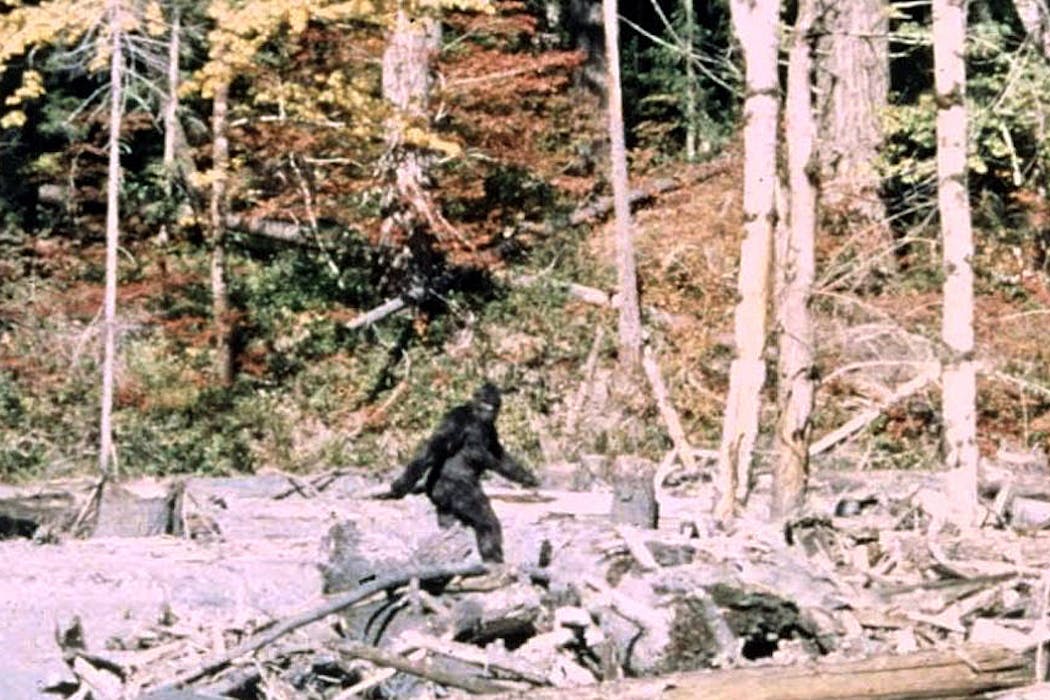
Frame 352 from the Patterson-Gimlin Bigfoot film in 1962.wikipedia
It was the image that launched a cultural icon. In 1967, in the northern Californian woods, a seven foot tall, ape-like creature covered in black fur and walking upright was captured on camera, at one point turning around to look straight down the lens. The image is endlessly copied in popular culture – it’s even become an emoji. But what was it? A hoax? A bear? Or a real-life example of a mysterious species called the Bigfoot?
The film has been analysed and re-ananlysed countless times. Although most people believe it was some sort of hoax, there are some who argue that it’s never been definitively debunked. One group of people, dubbed Bigfooters, are so intrigued that they have taken to the forests of Washington, California, Oregon, Ohio, Florida and beyond to look for evidence of the mythical creature.
But why? That’s what sociologists Jamie Lewis and Andrew Bartlett wanted to uncover. They were itching to understand what prompts this community to spend valuable time and resources looking for a beast that is highly unlikely to even exist. During lockdown, Lewis started interviewing more than 130 Bigfooters (and a few academics) about their views, experiences and practices, culminating in the duo’s recent book Bigfooters and Scientific Inquiry: on the borderlands of legitimate science.
Here, we talk to them about their academic investigation.
What was it about the Bigfoot community that you found so intriguing?
Lewis: It started when I was watching either the Discovery Channel or Animal Planet and a show called Finding Bigfoot was advertised. I was really keen to know why this programme was being scheduled on what certainly at the time was a nominally serious and sober natural history channel. The initial plan was to do an analysis of these television programmes, but we felt that wasn’t enough. It was lockdown and my wife was pregnant and in bed a lot with sickness, so I needed to fill my time.
Bartlett: One of the things that I worked on when Jamie and I shared an office in Cardiff was a sociological study of fringe physicists. These are people mostly outside of academic institutions trying to do science. I was interviewing these people, going to their conferences. And that led relatively smoothly into Bigfoot, but it was Jamie’s interest in Bigfoot that brought me to this field.
The Insights section is committed to high-quality longform journalism. Our editors work with academics from many different backgrounds who are tackling a wide range of societal and scientific challenges.
How big is this community?
Lewis: It’s very hard to put a number on it. There is certainly a divide between what are known as “apers”, who believe that Bigfoot is just a primate unknown to science, and those that are perhaps more derogatorily called “woo-woos”, who believe that Bigfoot is some sort of interdimensional traveller, an alien of sort. We’re talking in the thousands of people. But there are a couple of hundred really serious people of which I probably interviewed at least half.
Many people back them. A YouGov survey conducted as recently as November 2025, suggested that as many as one quarter of Americans believe that Bigfoot either definitely or probably exists.
Were the interviewees suspicious of your intentions?
Lewis: I think there was definitely a worry that they would be caricatured. And I was often asked, “Do I believe in Bigfoot?” I had a standard answer that Andy and I agreed on, which was that mainstream, institutional science says there is absolutely no compelling evidence that Bigfoot exists. We have no reason to dissent with that consensus. But as sociologists what does exist is a community (or communities) of Bigfooting, and that’s what interests us.
Bartlett: One of the things that at least a couple of people reacted to once the book was published was the way we phrased that. On the blurb on the back of the book we say something along the lines of “Bigfoot exists if not as a physical biological creature then certainly as an object around which hundreds of people organise their lives”. A couple of people took that to be some kind of slight against them. It wasn’t.
Do these people have any sort of shared personality traits or other things that connected them?
Lewis: The community is very white, male, rural and blue collar – often ex-military. I think Bigfooting is growing among the female population, but there’s a sense of the kind of ‘masculine hunter in the dark’ persona.
Bartlett: In America, you find a lot more veterans in the general population. But I think there’s also the issue of how they like to present themselves, because when you’re dealing with witness testimony, you’ve got to present yourself as credible. If you can say something like, “I was in the service” or “I was in the armed forces”, then at least you’re not likely to be spooked by a moose.
What surprised you the most about them, did they challenge any stereotypes?
Lewis: Some were very articulate, which did surprise me a little. I guess that’s my own prejudice. I was also very surprised about how open people were; I expected them to not tell me about their encounters. But a fair few of them did. Many of them wanted to be named in the book. I was also surprised about how much empirical data they collect and how much they attempt to try and analyse and make sense of it. And how they were willing to admit that a certain idea was bunk or a hoax. I expected them to be defending bad evidence.
Bartlett: There are extracts of this in our book, people saying “I was fooled by these tracks for ages. I thought they were real and then I found this and that and the other out about it and I revised my opinion.” So that did surprise me too.
If they collect empirical evidence, does that make what they do science?
Bartlett: When you’re working in institutional science you’re working to get grants, you’re working to get good quality publications. You might want your name associated with particular ideas, but you do that through peer-reviewed papers and by working with PhD students who go off to other labs. In Bigfooting, you’ve got self-published books, you’ve got Bigfoot conferences, you’ve got YouTube channels, you’ve got podcasts and things like this, and they’re not necessarily a good way of making and testing knowledge claims. This is an aspect where Bigfooting is quite different to mainstream science.
It was interesting to study the fringe physicists and seeing where the common deviation from science was. And that’s a focus on individualism; the idea that an individual alone can collect and assess evidence in some kind of asocial fashion. The physicists I studied were quite clear that ideas like consensus in science were dangerous, when in reality consensus, continuity and community are the basis of most of science.
What is the most common form of evidence in this community?
Lewis: Witness testimonies. Without those reported testimonies, Bigfooting would not exist. A large part of the work of a Bigfooter is to collect and make sense of these testimonies. They get upset when these testimonies don’t have much weight within institutional science. They’ll make the comparison to court and how testimonies alone can put someone on death row. So they don’t understand why testimonies don’t have much weight in science. Beyond the testimony, footprint evidence is probably the most famous and also the most pervasive sort of trace evidence.
Photograph of an alleged Bigfoot footprint taken in Hoopa, California in September 1962 and featured in a Humboldt Times newspaper article. wikipedia
Bartlett: One of the reasons footprints are so important is that there’s the legacy of the Yeti and footprint evidence which proved to be relatively persuasive, convincing some institutional scientists that there was something in the Himalayas. And then there was the fact that the sort of two major academic champions of Bigfoot were persuaded by the footprint evidence: the late Grover Krantz (around 1970) and Jeffrey Meldrum (in the 1990s).
Lewis: These days you also see camera traps, audio recorders even DNA testing of hairs and those sorts of things. They’re capturing anomalous sounds and often blurry images. Some believe that a Bigfoot communicates through infrasound, although that is certainly disputed within the community. So what you’re getting now is more and more different types of evidence.
How can you know whether an image or a sound really points to Bigfoot?
Bartlett: What they do is go out into the forest and record a sound, for example, and compare it to databases of birds and other animals. And they may find there is nothing that matches it. Is it something that doesn’t sound like a car or a person or a bear or a moose? In which case, there’s the space for Bigfoot. And it’s the same with images to some degree.
Would you say that this interpretation is the biggest weakness or contradiction in their evidence?
Lewis: It allows them to create space for Bigfoot. Because if you can’t match it to something else, what could it be? You have this absence and then from that absence you create a presence. They believe it’s a scientific argument. In fact, it’s kind of interesting how Bigfooters will always enrol other kinds of magical beasts to strengthen the case for Bigfoot. So, one sentence I hear quite a lot is “it ain’t no unicorn”.
Jeffrey Meldrum. wikipedia
What’s the hierarchy in this community? Who’s at the top?
Lewis: A-listers tend to be anyone associated with academia. So Andy’s already mentioned Jeff Meldrum, unfortunately he passed away very recently, but he was their route to contemporary academia. So in any conference, if Jeff Meldrum was speaking, he’d be last. Anyone who’s on TV, such as the Finding Bigfoot and the Expedition Bigfoot presenters would also be in the A-list category. And then you’ve got various different groups just below. For example, the Bigfoot Field Researchers Organization, which is probably the most well known group.
What could Bigfooters learn from scientists and vice versa?
Lewis: From reading books and from discussing it with people, there was a sense that Bigfooters are anti-science. We did not find that. What we argue in the book is that they’re not anti-science. In fact, I would say a lot of them are pro-science, but they’re counter establishment. I think academia should be thinking about these people as citizen scientists and what they’re doing as a kind of gateway into understanding your local area.
For example, they found an animal, I think it was a pine marten, on a camera trap that was not supposed to be in the area. So they are collecting lots of data. They are not irrational. It’s different from, for example, ghost hunting, because you don’t have to imagine there’s something entirely new in the world. It’s just an animal that exists out there that hasn’t been found. Implausible, yes. But not impossible. What they do lack, however, is academic discipline; anyone can be a Bigfooter.
Was there a specific encounter you heard about that was particularly compelling?**
Lewis: Did I get caught up in the moment? Sometimes, of course, you do, just as you do in a film. If you’re in the pitch dark night and you’re watching a horror film, you take it away with you for a while until you settle back down. I often went to bed buzzing, thinking I don’t know what I just heard; they were great stories at the end of the day. But I learned to separate the interview from my thoughts on the interview.
If you encountered Bigfoot in the woods, how would you go about convincing others?**
Lewis: A lot of Bigfooters would begin with qualifiers like, “My dad doesn’t believe in Bigfoot,” or “I have questioned myself for years thinking about this incident and what it was.” So, they would set themselves up as a rational, logical individual. That then created a connection between me and them. And of course, I’d probably be doing the same.
Bartlett: If I were to encounter Bigfoot, I would probably draw on all the techniques of proving that I’m a credible, hard-headed, rational person that we see in those witness encounters. I would expect to be disbelieved. And so therefore I would stress I was putting my credibility as an academic on the line here. So I’d deploy all those kinds of rhetorical techniques that are used by Bigfooters, aside from just the description of the encounter.
To hear about new Insights articles, join the hundreds of thousands of people who value The Conversation’s evidence-based news. Subscribe to our newsletter.
The authors do not work for, consult, own shares in or receive funding from any company or organisation that would benefit from this article, and have disclosed no relevant affiliations beyond their academic appointment.
Source: The Conversation – UK – By Kristin Skare Orgeret, Professor of Journalism and Media Studies, Oslo Metropolitan University
When the billionaire owner of Amazon, Jeff Bezos, bought the Washington Post from the Graham family in 2013, he promised a “golden era to come”. In February 2017, one month into Donald Trump’s first term as US president, the paper adopted the motto: “Democracy Dies in Darkness”, reflecting the perceived threat posed by Trump’s authoritarian leanings and the suggestion that Moscow had interfered in the 2016 election.
That motto was turned against Bezos last week when it was announced that the Post was laying off one-third of its editorial staff, including its sports section and several of its foreign bureaus. The news was greeted with dismay in America’s journalistic circles. Marty Baron, a celebrated former executive editor of the Post, called the layoffs “among the darkest days in the history of one of the world’s greatest news organisations”.
But in the years since Bezos acquired the Post it has become a symbol of a global wave of democratic backsliding in the US which accelerated as the prospect of a second Trump presidency grew through 2024. After an initial period of investing in the Post and hiring more reporters, he has now overseen a long period of decline.
Political concerns began seriously to mount in 2024 when, in the run up to that year’s presidential election, the newspaper broke a 36-year precedent by refusing to endorse a candidate (which most readers, given the paper’s traditionally liberal leanings, had assumed would be Democrat Kamala Harris).
Since Trump has returned to the White House further evidence of this backsliding at the Post includes suppression of a cartoon critical of Trump’s relationship with US tech oligarchs by the Pulitzer Prize winning artist Ann Telnaes and a refocusing of the opinion pages to centre them on “personal liberties and free markets”. The changes have reportedly cost the Post many thousands of subscribers.
The cartoon that led to Ann Telnaes quitting the Washington Post. Facebook
But the malaise in US journalism is a much broader story than just the travails of the Washington Post. There’s a sustained campaign of cultural and structural violence against a profession that is under economic and political strain, yet essential to democracy.
Trump’s hostility toward certain sections of the press is not new. During his first term he used non-journalistic platforms to brand mainstream media outlets “the enemy of the people”. His hostility was directed at both institutional and personal level, launching attacks against individual journalists and their employers (the “failing New York Times”, his clash with CNN’s Jim Acosta, etc).
In his second term this hostility has intensified, its impact often obscured by the rapid pace of news emanating from the White House. We’re seeing press freedom in the US under attack on three distinct fronts: restricted access to information, threats to the safety of journalists and use of legal pressure to discourage dissenting voices.
Controlling the message
Restrictions began as soon as Trump was inaugurated for his second term in January 2025. Within a month, the Associated Press lost access to the Oval Office and Air Force One (in other words, to direct contact with the president) after refusing to adopt an executive order renaming the Gulf of Mexico the “Gulf of America”.
Accreditation rules soon tightened. In October, the newly minted secretary of war Pete Hegseth announced that henceforth journalists reporting from inside the Pentagon would be allowed to only report official government pronouncements. Many mainstream reporters handed back their Pentagon accreditation in protest. In response, Hegseth announced what he called the “next generation of the Pentagon press corps”, mainly comprising journalist from far-right outlets.
Meanwhile the president’s verbal attacks on journalists have escalated, particularly targeting women and especially women of colour. Incidents such as the “quiet Piggy” remark (directed at Bloomberg journalist Catherine Lucey) exemplify a broader pattern of public humiliation of female journalists. Research suggests that such conduct contributes to the normalisation of hostility toward female journalists, who were already disproportionately quitting journalism.
‘Quiet piggy’: Donald Trump targets a female reporter on Air Force One.
Journalists covering protests also face heightened risks. During the “no kings” demonstrations in October 2025, multiple incidents were reported in which police used force against accredited reporters. In November 2025 the White House escalated the pressure, launching a “Hall of Shame” site naming journalists and outlets it said had misrepresented the administration.
‘Lawfare’
The Trump administration has also brought considerable legal pressure to bear on the news media over the first year of its second term. The US president has filed multiple lawsuits alleging bias on the part of one or another media organisation that had attracted his disfavour.
In July, Paramount reached a US$16 million (£11.69 million) settlement over a 60 Minutes interview with Kamala Harris in 2024 that the president accused of bias. At stake was a US$8.4 billion merger that required approval from the Federal Communications Commission, a public body headed by Trump loyalist Brendan Carr.
The president also has active suits against the Wall Street Journal and the BBC (an episode which led to the resignation of director general, Tim Davie, and its head of news, Deborah Turness). By the middle of 2025, Axios reported that Trump-related media and defamation suits had already matched the annual historical record.
Taken together, these developments reflect a broader pattern of institutional stress affecting US democratic structures. The pressure on these established media organisations has created a situation in which they manage to survive with their independence eroded.
Comparative research consistently demonstrates that journalists are among the first actors targeted in such processes because of their frontline work. Control over information remains central to the success of an authoritarian government.
What, then, should journalists and media organisations do? Standing together matters. We saw that in 2018, when about 350 American newspapers jointly defended press independence against Trump’s “fake news” attacks. This prompted the US Senate to adopt a resolution supporting a free press and declaring that “the press is not the enemy of the people”.
But the danger is that this structural violence against the news media and its attempt to hold power to account becomes normalised. If the Trump administration’s contempt for the fourth estate continues to percolate through to the public at large, a population already struggling to tell truth from lies will be further blindfolded and darkness will fall over American democracy.
The authors do not work for, consult, own shares in or receive funding from any company or organisation that would benefit from this article, and have disclosed no relevant affiliations beyond their academic appointment.