Why is violence pathologized for trans people but individualized for cis men?

Source: The Conversation – Canada – By Kimberly A. Williams, Professor of Women’s and Gender Studies, Mount Royal University

When a trans person commits violence, their gender identity is often framed as evidence of the collective threat of transgender people, while the more prevalent pattern of cisgender male-perpetrated violence is attributed to individual factors.

This double standard redirects attention away from masculinity as a driver of violence.

Masculinity refers to the socially produced set of norms that define what being a man requires. In Canada’s settler-colonial culture, these traits include dominance, heterosexual prowess, independence, competitiveness and the suppression of vulnerability. Masculinity is a rules system cis boys encounter early and repeatedly, and that cis men are expected to enact and reinforce.

Far-right influencers, partisan media figures and some politicians routinely blame mass shootings on the transgender community long before any information about the suspect is released, even though fewer than one per cent of mass shooters are transgender.

In the rare cases when a transgender person does commit an act of violence, the perpetrator’s gender identity is treated as the cause of the violence, and trans people are framed as a threat. This dynamic surfaced recently after 18-year-old Jesse Van Rootselaar shot and killed eight people in Tumbler Ridge, B.C., before turning the gun on herself.

Why does one rare act of violence by a trans person quickly become a referendum on all trans people? Yet the well-documented, ongoing violence of cisgender boys and men — who commit the vast majority of violence against women, children, gender-diverse people and each other — prompts little scrutiny of men and masculinity.

Lone wolves and structural invisibility

If we consistently generalized from behaviour to gender, masculinity’s role in violence would be obvious. But it is not. We don’t ask what role cis men’s gender identity plays in their violence. Men’s violence is often explained by individual concepts like the “lone wolf,” personal grievance or mental illness. This holds true across recent history.

Canadian data offers repeated consistently missed opportunities to highlight masculinity as a driver of violence.

The 2019 National Inquiry into Missing and Murdered Indigenous Women and Girls, for example, documented ongoing violence against Indigenous women, girls and Two-Spirit people. The report identified cis men as the majority of perpetrators along with colonialism, racism and institutional failures as the cause of that violence. Yet this did not trigger a moral panic about white settler men.

When Alek Minassian invoked incel ideology before killing 10 people in Toronto in 2018, public debate focused on online radicalization and mental health. Far less attention was paid to the gendered entitlement at the core of that ideology: the belief that men are owed sexual access to women’s bodies. Even when masculinity was named by the perpetrator himself, scrutiny shifted to technology.

A 2022 CBC News Fifth Estate investigation found that since 1989, police have investigated at least 15 alleged group sexual assaults involving men’s junior hockey players. These revelations have sparked debate about consent and hockey culture but no blanket condemnation of men as a category.

Another CBC News analysis recently revealed that more than 600 RCMP officers have been disciplined for gender-based violence since 2014. Settlements have been paid and reforms promised, but the issue has been framed as workplace culture and accountability. Masculinity remains largely unexamined.

The pattern appears consistent: when a member of a marginalized community (such as transgender people) is violent, the entire group becomes suspect. But when members of dominant groups are violent, the violence is normalized or explained away as an exception.

If prevention matters, the questions must change

If violence prevention is the goal, we need different questions. And the pattern, not the exceptions, must guide our analysis.

Just as living under a political system does not make every citizen equally responsible for its injustices, being socialized into masculinity does not make every man violent. But it does mean masculinity operates as a widespread framework that shapes boys’ and men’s responses to shame and rejection, their definitions of worth and the social meaning of power.

Since violence repeatedly comes from white cisgender men, we must ask what that pattern reveals.


Read more:
Let’s call the Nova Scotia mass shooting what it is: White male terrorism


How do boys learn anger, shame and power? What emotional skills are discouraged? How are dominance, aggression and sexual conquest rewarded in teams, fraternities, online spaces and workplaces? What counts as “weakness,” and what are boys taught to do with their vulnerability?

Institutional questions matter too. Who knew about past behaviour? How are complaints handled? What reputational or financial incentives protect insiders? What systems allow men to retain power after repeated misconduct?

These are structural questions, not ones of blame.

Some may contend that cis men’s violence is hardwired, a result of testosterone, evolution or sex-based brain differences. These arguments are not supported by research. And if they were accurate, there should be more consideration of men as a public health hazard.

The call to follow patterns, not exceptions

Cisgender men commit the overwhelming majority of violence, legitimating the examination of masculinity as a cause of that violence.

No comparable pattern exists for trans people. They do not commit violence at disproportionate rates. By contrast, because cis men do, masculinity is part of the pattern, so it must also be part of the analysis.

A call to examine masculinity as a structural factor in cis men’s violence is not an argument that we are facing a “crisis” of masculinity. The issue is that dominant, settler-colonial models of masculinity encourage violence by being organized around control, entitlement and hierarchy.

The Conversation

Kimberly A. Williams is a registered social worker and a member of the Social Workers Association of Alberta, the Ontario Association of Social Workers, and the Canadian Association of Social Workers. She has previously received SSHRC funding for her current project documenting the people, places, and politics of Calgary’s historic sex industry. Williams is a member of the NDP and the Board of Directors for Amethyst Centre in Ottawa.

ref. Why is violence pathologized for trans people but individualized for cis men? – https://theconversation.com/why-is-violence-pathologized-for-trans-people-but-individualized-for-cis-men-275882

Why people say they care about ethical shopping but often buy differently

Source: The Conversation – Canada – By Mehak Bharti, Assistant Professor of Marketing, Toronto Metropolitan University

Many Canadians say they care about ethical products. They want coffee that supports farmers, chocolate made without child labour and everyday goods that are better for the environment.

Many also say they are willing to pay more for ethically produced goods. Yet those values often fade once people are standing in front of a shelf of seemingly identical products.

This gap between what consumers say they value and what they actually buy is often described as hypocrisy. That explanation is tempting, but it misses something important. In most shopping situations, people are not choosing between right and wrong — they are choosing between prices.

That tension has become harder to ignore as food prices in Canada have risen sharply, squeezing household budgets and making cost the dominant concern in everyday decisions.

At the same time, Canadians continue to express concern for sustainability and ethical production. Caring has not disappeared. Acting on it simply feels harder now.

When good intentions meet the checkout

Consumer research has long documented a gap between stated preferences and actual behaviour. In surveys, people tend to express stronger ethical intentions than they act on in real shopping situations. That does not mean those values are insincere, but that values are pushed aside when everyday constraints take over.

This gap shows up most clearly in routine purchases like groceries, coffee and chocolate. These are items people buy often, and even small price differences add up quickly. In those moments, price becomes the easiest decision shortcut, especially as food costs continue to rise in Canada.

Ethical products usually cost more because they support higher wages, safer working conditions and lower environmental harm. While those benefits matter socially, they don’t directly benefit the person paying at the checkout.

As household budgets tighten, choosing the ethical option can start to feel less like a moral decision and more like a financial burden.

Rethinking the ethical premium

Much of the debate around ethical consumption assumes that supporting better practices necessarily requires paying more. Ethical products are often framed as “premium” goods, with higher prices justified by their social or environmental benefits.

In our recent research study, we asked whether the ethical premium always had to be paid in money. Instead of focusing on higher prices, we examined whether consumers would respond differently if ethical products were offered at the same price as conventional ones, but in smaller quantities.

To explore this, we ran a series of experiments with more than 2,300 participants in Canada, the United States and Europe. Participants were asked to choose between ethical options (such as Fair Trade or sustainably produced goods) and conventional alternatives for everyday products like coffee and soap.

Participants were then randomly assigned to conditions that framed the ethical premium either through price or quantity. In the price-premium condition, participants chose between a higher-priced ethical option and a conventional alternative of the same quantity. In the quantity-premium condition, the ethical option was offered at the same price as the conventional alternative, but in a smaller quantity.

Across our experiments, consumers were consistently more likely to choose ethical products when the premium was framed as giving up quantity rather than paying a higher price.

Choosing less instead of paying more

Across our experiments, people reacted more strongly to price increases than to size changes. Consumers are more sensitive to price information than quantity information.

When ethical products cost the same as conventional ones, consumers no longer feel financially penalized for acting on their values. Rather, paying the premium with quantity makes the ethical product feels more affordable.

Importantly, this approach is not the same as shrinkflation, where companies quietly reduce package sizes over time without informing consumers. In our studies, the smaller size was explicitly visible, and consumers knew exactly what they were choosing.

Making ethical choices affordable

With grocery prices remaining high in Canada, expecting consumers to close the ethical gap by paying more money may be unrealistic. Ethical consumption does not fail because consumers are indifferent or hypocrites.

It fails because ethical choices are often presented in ways that make them feel financially out of reach.

Rethinking how the ethical premium is paid will not solve the problem overnight. Structural issues, such as supply chains, corporate practices and regulation, still matter deeply. But our findings suggest that design choices and pricing strategies can make a meaningful difference in whether consumers are able to act on their values.

If ethical consumption is to become more than an aspiration, it may need to be integrated into everyday affordability rather than positioned as an added cost. How we ask consumers to support ethical practices matters more than we often assume.

The Conversation

Jing Wan received funding from The Social Sciences and Humanities Research Council (SSHRC) of Canada.

Mehak Bharti does not work for, consult, own shares in or receive funding from any company or organisation that would benefit from this article, and has disclosed no relevant affiliations beyond their academic appointment.

ref. Why people say they care about ethical shopping but often buy differently – https://theconversation.com/why-people-say-they-care-about-ethical-shopping-but-often-buy-differently-273893

Sixth year of drought in Texas and Oklahoma leaves ranchers facing wildfires and bracing for another tough year

Source: The Conversation – USA (2) – By Joel Lisonbee, Senior Associate Scientist, Cooperative Institute for Research in the Environmental Sciences, University of Colorado Boulder

Cattle auctions aren’t often all-night affairs. But in Texas Lake Country in June 2022, ranchers facing dwindling water supplies and dried out pastures amid a worsening drought sold off more than 4,000 animals in an auction that lasted nearly 24 hours – about 200 cows an hour.

It was the height of a drought that has gripped the Southern Plains for the past six years – a drought that is still holding on in much of the region in 2026.

The drought cost the agriculture industry across Kansas, Oklahoma and Texas an estimated US$23.6 billion in lost crops, higher feed costs and selling off cattle from 2020 through 2024 alone. As rangeland dried out, it has also fueled wildfires, including several in Texas in early 2026.

Historically, droughts of this magnitude happen in the Southern Plains about once a decade, but the severe droughts of this century have been lasting longer, leaving water supplies, native rangelands and farms with little time to recover before the next one hits.

Many cattle producers and rangelands were still recovering from a severe 2010-2015 drought when a flash drought hit western Texas in spring 2020, marking the beginning of the current multibillion-dollar, multiyear and multistate drought. Ample spring rainfall in 2025 and severe flooding in central Texas that year weren’t enough to end the drought, and a powerful winter storm in late January 2026 missed the driest parts of the region.

A map shows heavy precipitation across a large part of the country, but it mostly missed the areas facing the worse drought in the Southern Plains.
Precipitation from a severe winter storm in late January 2026, shown in blue and measured in inches, largely missed the areas with the worst drought conditions, indicated by red contour lines.
UC Merced, NDMC

In a recent study with colleagues at the Southern Regional Climate Center and the National Integrated Drought Information System, we assessed the causes and damage from the ongoing drought in the Southern Plains.

We found three key reasons for the enduring drought and its damage: rising temperatures and a La Niña climate pattern; water supply shortages; and lingering economic impacts from the previous drought.

Weather and climate helped drive the drought

The Southern Plains is known to be a hot spot for rapid drought development, and the ongoing drought that started in 2020 is no exception.

Documented “flash droughts” – defined as periods of rapid drought onset or intensification of existing droughts – occurred at least five times in the region from 2020 to 2025. As global temperatures rise and climates warm, research warns that the frequency and severity of flash drought events will increase.

Maps show how the current drought progressed and moved around the region. It was at its height in 2022.
The U.S. Drought Monitor’s monthly updates from January 2020 through January 2026 show how drought moved around in the Southern Plains over those years but never let go. Darker colors reflect the intensity of drought in each location.
Joel Lisonbee; compiled from U.S. Drought Monitor

For the southern part of the Southern Plains, winter precipitation is closely linked to the El Niño–Southern Oscillation, a climate pattern that affects weather around the world. Five of the past six years exhibited a La Niña pattern, which typically means the region sees winters that are warmer and drier than normal.

La Niña was likely the primary driver – although not the only driver – of the drought for Texas and southwest Oklahoma, and one of the reasons drought conditions have continued into 2026.

The Southern Plains have a long history with severe droughts. The Dust Bowl of the early 1930s may be the best-known example. But a history with drought doesn’t make it any easier to manage when crops and water supplies dry up.

Deeply rooted water shortages

The heat and dryness since 2020 have left many of the region’s rivers, reservoirs and even groundwater reserves well below average.

San Antonio’s reservoirs all reached record-low levels in 2024 and 2025, as did the Edwards Aquifer, which provides water for roughly 2.5 million people. They were still low as 2026 began. Surface water and groundwater resources across central and western Texas have been depleted to the point that even a few big storms can’t replenish them.

A few major rivers flow into the Southern Plains from other drought-affected regions. Consider the Rio Grande, which begins in Colorado and winds through New Mexico and along Texas’ southern border: Not only has the Lower Rio Grande valley in southern Texas missed out on needed precipitation this winter, so did the Rio Grande headwaters in southern Colorado.

Colorado is facing a snow drought in winter 2026, as is much of the western U.S. If it continues, there will be less snowmelt come summer to feed rivers, such as the Rio Grande, or fill reservoirs. In early February, the Elephant Butte, Amistad and Falcon reservoirs, along the Rio Grande, were only 11%, 34%, and 20% full, respectively.

Lingering economic impacts

Like water supplies, the economy doesn’t just recover when the rains return.

One of the reasons the current drought has been so costly is that parts of the region had not fully recovered from the 2010-2015 drought when the latest one began in 2020. With only a five-year break between droughts, the landscape behaved like someone with an already weakened immune system who caught a cold.

Severe droughts over time in the Southern Plains
The percentage of land in different levels of drought or wetness for each month based on the nine-month Standardized Precipitation Index leading up to the selected date. Reds indicate drier conditions; blues indicate wetter conditions.
National Integrated Drought Information System, NOAA Drought.gov

During the 2010-2015 drought, cattle producers in Texas sold off about 20% of the statewide herd as water became scarce and rangeland dried up. Rebuilding a herd after a drought is a slow process. Pasture recovery can take a year or more, and a newborn heifer will take two years to mature and produce her own first calf.

Cattle herds had still not returned to pre-2010 levels when the 2022 drought peak forced another mass sell-off. From 2020 through 2024, Texas’s herd size declined from 13.1 million to 12 million; Oklahoma’s declined from 5.3 million to 4.7 million; and Kansas’ declined from 6.5 million to 6.15 million.

Looking beyond livestock, a large percentage of the Southern Plains’ crops failed in 2022, the peak year of the drought. In Texas, 25% of the corn crop was planted but never harvested, and 45% of the soybean crop was similarly abandoned. A normal season would have yielded a $2.4 billion cotton crop in Texas, but 74% of that crop was abandoned, slashing its value to roughly $640 million.

Ending the Southern Plains drought

Is the end in sight? With La Niña fading in early 2026 and its opposite, El Niño, potentially on the horizon, there’s a chance for wetter conditions that could reduce the drought in the fall and winter months of 2026.

But the Southern Plains still have to get through spring and summer first. Ending a drought like this requires consistent precipitation over several months, and drought conditions are likely to get worse before they get better.

This article, originally published Feb. 9, 2026, has been updated with new wildfires in Texas.

The Conversation

The authors do not work for, consult, own shares in or receive funding from any company or organization that would benefit from this article, and have disclosed no relevant affiliations beyond their academic appointment.

ref. Sixth year of drought in Texas and Oklahoma leaves ranchers facing wildfires and bracing for another tough year – https://theconversation.com/sixth-year-of-drought-in-texas-and-oklahoma-leaves-ranchers-facing-wildfires-and-bracing-for-another-tough-year-275219

How Putin turned Russia’s post-Soviet ‘national humiliation’ into military aggression in Ukraine

Source: The Conversation – UK – By Gemma Ware, Host, The Conversation Weekly Podcast, The Conversation

As the 21st century dawned, a newly elected Vladmir Putin was making friends on the world stage. He smiled for photo ops at G8 meetings, and was the first foreign leader to call George W. Bush after the attacks of 9/11, offering his support against terrorism.

So what changed? To understand Russia’s view of the world now – and its continued aggression towards Ukraine – it helps to know more about the psyche of the country and its leader.

In today’s episode of The Conversation Weekly podcast, we talk to James Rodgers, a reader in international journalism at City St George’s, University of London, about how a festering sense of national humiliation after the collapse of the Soviet Union hardened Putin’s tough man regime and led Russia to turn its back on the west.

In 1991, when the Soviet Union collapsed, many in the west believed liberal democracy and free markets had won in Russia. The cold war was over and Russia would join the community of democratic nations. But that’s not what happened.  Instead, Russians experienced economic freefall, large-scale poverty and a sense of national humiliation.

“People felt this great loss of status,” says Rodgers, who has just written a new book called The Return of Russia about why it came into confrontation with the west.

“With the coming of new western ideas of the free market, a lot of people lost their jobs and the status that went with them,” says Rodgers. “Russia also lost the standing on the world stage that the Soviet Union had enjoyed.”

Putin became president on the eve of the new millennium. Rodgers says, Putin had not forgotten the economic pain and humiliation of the 1990s, and understood its importance to his constituency in Russia. “He understood the political potential of that humiliation in a way that I think some western policymakers did not understand the possible political consequences of it.”

Soon after, the 9/11 attacks in 2001 pushed the US to war in the Middle East. Whatever support Putin had pledged western governments began to crumble, particularly over the invasion of Iraq. Through interviews with former top western officials, Rodgers pinpoints that Russian foreign intelligence knew Iraq’s leader Saddam Hussein did not have weapons of mass destruction, and they were certain that the CIA and other western intelligence agencies knew that.

“Russia determined that the west was acting in bad faith about the reason that they’d given for going to war in Iraq, and this was actually about regime change and not at all about weapons of mass destruction,” says Rodgers. He says the invasion made Putin deeply suspicious of western motives in foreign relations, who began to think: “If they can do this to Saddam Hussein, then maybe one day the west will try to decide to do it for me.”

Listen to the interview with James Rodgers on The Conversation Weekly podcast. This episode was written and produced by Mend Mariwany and Gemma Ware with editing help from Ashlynne McGhee. Mixing by Eleanor Brezzi and theme music by Neeta Sarl. Gemma Ware is the executive producer.

Newsclips in this episode from BBC News, AP Archive, ABC News, C-Span, CNN, The Phoenix ReNasCor, DW News and
Voice of America.

Listen to The Conversation Weekly via any of the apps listed above, download it directly via our RSS feed or find out how else to listen here. A transcript of this episode is available via the Apple Podcasts or Spotify apps.

The Conversation

James Rodgers does not work for, consult, own shares in or receive funding from any company or organisation that would benefit from this article, and has disclosed no relevant affiliations beyond their academic appointment.

ref. How Putin turned Russia’s post-Soviet ‘national humiliation’ into military aggression in Ukraine – https://theconversation.com/how-putin-turned-russias-post-soviet-national-humiliation-into-military-aggression-in-ukraine-276292

Streetlights in Lagos can boost safety and grow the economy. Why not everyone benefits

Source: The Conversation – Africa – By Adewumi Badiora, Senior Lecturer, Department of Urban and Regional Planning, Olabisi Onabanjo University

Nigeria is urbanising at a remarkable speed. Some of the world’s fastest growing cities are in the west African country.

With the current rate of urbanisation, Kano, Ibadan, Abuja and Port Harcourt will surpass the 10 million inhabitants mega city threshold by 2050. According to United Nations estimates, Lagos will be the largest city in the world by 2100, accommodating more than 88 million people, up from the present population of about 25 million.

The rapid urbanisation and other issues, such as climate change, limited public finance and extreme poverty, are putting pressure on the government to provide better basic public infrastructure, especially in informal settlements.

Street lighting is one area of public infrastructure where there is a clear need, and potential, for improvement.

Street lighting plays a crucial role in public safety and security, and it promotes inclusive social and economic development by boosting local commerce, street businesses and community engagement.

Conventional grid-based street lights and other technologies like LED lights powered by solar energy have been installed in parts of Nigeria but are still lacking in many cities.

I have been researching various aspects of urban and community safety in Nigeria, particularly in the country’s south-west. I currently lead the African Cities Research Consortium safety and security domain action research in Lagos.

I co-authored a recent research report about the condition of street lights in Lagos. I interviewed 17 key informants in a bid to understand the provision, challenges, quality and impact of street lighting in Africa’s foremost mega city. Respondents included residents and community associations, state agencies, private sector companies, and nongovernmental agencies.

We found that street light provision by the state has been orientated towards elite neighbourhoods, while households in disadvantaged settlements have less access.

Nevertheless, low-income communities across the city have come together to drive progress. They have enabled residents to achieve some level of street light infrastructure in their neighbourhood by working with the local government, civil society organisations and NGOs.

We argue that solutions will only be found through inclusive engagements that push against established approaches to infrastructure development.

Multiple paybacks of street lighting

Research was conducted in three selected communities: Ilaje-Bariga on the Mainland, Brazilian Quarters on the Island and Ajegunle-Ikorodu in the
peri-urban area. The three communities have either past or ongoing street light projects being delivered via sponsorship or collaboration between the Community Development Association, state or nonstate institutions.

Economic and social benefits were particularly prominent. Residents feel safer going out after dark when streets are well lit, while workers feel safer walking to and from their homes early in the morning and at night.

Businesses on newly lit streets have seen increased revenue as a result of vendors and traders being able to operate for longer after nightfall.

A previous case study established that extending trading times beyond daylight hours could add tens of thousands of working hours daily to the economy.

A respondent commented: “Policing work is now better in the night and we do not need to rely on battery-powered torchlight while on street patrol or checks.”

Another added: “We used to have cases of robbery, but the street light makes everywhere lit like daytime … the hoodlums are no longer able to perpetrate their act.”

Hurdles of street light provisions

Some obstacles remain, however. Our research uncovered many reasons as to why street light projects are not long-lasting or are unsuccessful. Limited budgeting and politically driven procurement are key challenges.

We found that the high costs and limited state budgets mean that certain areas of the city are prioritised and other areas neglected. The ruling class receives more political and economic support.

Across the three communities researched, the average cost of installation of one solar street light pole is US$200-800, compared to US$1,150 for a conventional grid powered streetlight. The difference in operating costs is where the economics of solar powered, compared to conventional, street lighting becomes most compelling.

Politically driven procurement spotlights the need to favour cronies on the selection, awarding and implementation of street light infrastructure. Projects are awarded in favour of individuals (usually party members and not necessarily an expert) in exchange for political support.

The lack of technical expertise at the local and state levels remains a critical barrier, according to our study. This is displayed in poor procurement processes, infrastructure maintenance issues and inefficient use of limited public funds.

Because of corruption, the full value of project allocation is rarely received by suppliers. As one respondent explained: “In most cases, the money allocated for projects does not get to us. There are bottlenecks here and there that will drain off most of the project fund.” This leaves limited capital to deliver quality infrastructure and streetlight projects are poorly delivered or abandoned before completion, for want of funds.

Other street lighting projects are abandoned because succeeding regimes refuse to continue predecessor projects.

There is also the challenge of vandalism and theft involving street light equipment. There have been situations where “area boys” – Lagos street gangs – restricted street light installation and where equipment parts were stolen.

Overcoming the obstacles

The solutions can only be found through inclusive engagements. Our study recommends the following steps:

  • Involve a wide range of players, particularly local communities, in planning and delivering street lighting.

  • Build an enabling environment for private-sector-led renewable solutions and investment in sustainable lighting technologies, such as LED lights.

  • Create a robust regulatory framework to produce sustainable lighting technologies locally.

  • Improve state budget and investment funding for street lighting.

  • Develop capacity in the public sector to plan, design, finance and deliver projects.

  • Support low-income neighbourhoods and informal communities.

  • Separate political, personal interests from good governance and ensure transparency in the procurement process in practice.

So far, the large-scale initiative involving the deployment of over 22,000 solar street lights has engaged with residents in areas like Ikotun, Alausa, Ketu, Kosofe, Marina, Lekki and Surulere. Community feedback on the safety and environmental benefits has been integrated into the project. The project adopted LED lighting, which is more cost effective and energy-efficient.

The Conversation

Adewumi Badiora does not work for, consult, own shares in or receive funding from any company or organisation that would benefit from this article, and has disclosed no relevant affiliations beyond their academic appointment.

ref. Streetlights in Lagos can boost safety and grow the economy. Why not everyone benefits – https://theconversation.com/streetlights-in-lagos-can-boost-safety-and-grow-the-economy-why-not-everyone-benefits-275581

African Union: how does it make a difference in everyday life and what would happen if it didn’t exist?

Source: The Conversation – Africa (2) – By Ulf Engel, Professor, Institute of African Studies, University of Leipzig

The African Union held its 39th Assembly of Heads of State and Government in Addis Ababa, Ethiopia, in February 2026. The two-day assembly produced the usual number of decisions and declarations across African peace and security, trade, governance and development.

Such gatherings, however, can feel distant from the everyday realities of African citizens. They are a showcase of high-level diplomacy that can feel far removed from public life.

Since the Union’s establishment in July 2002, the AU Assembly and the AU Executive Council (the meeting of ministers) have taken more than 2,000 decisions. Usually decisions are prepared by ambassadors to the African Union, and then adopted by the assembly or the executive council.

If one were to go by media reports, the AU would be largely seen as ineffective and irrelevant, a political project driven by elites who are detached from citizens in the 55 member states. But the reality is more multifaceted and complex.

In its 2000 Constitutive Act the AU aimed at becoming a union of and for African people. So have its decisions and processes translated into meaningful change for African people?

Very little is known about how African citizens think about the African Union. In 2025, Afrobarometer, a survey research network, polled thousands of respondents in 30 African countries. Of these, 57% said their country’s interests were recognised in continental affairs. But this doesn’t say anything about how they as citizens feel represented and served by the union. Further, an average of 55% of respondents thought that the AU’s economic and political influence on their own country was positive. This varied between 79% (Liberia) and 30% (Tunisia).

Following conflicts and power grabs across parts of the continent, criticism of the AU’s effectiveness is growing. This is particularly in the vital area of peace and security, which affects millions of people’s lives.

In my view as a researcher of the AU, and a long-standing observer and advisor on its political affairs, peace and security department, I would argue that the AU is making a difference for African citizens. I’ll highlight three areas that are not usually the focus of attention but that make my point.

These are climate change, governance and public health. In my view, these three stand out because each of them really shows how the continental organisation can make a difference for the people.

The AU in people’s lives

1. Climate change

The challenges arising from the consequences of climate change in Africa are enormous and can be observed in many parts of the continent. Just think of the torrential rains and floods in southern Africa in early 2026.

Climate mitigation and adaption are negotiated in global forums. This mainly happens at the annual Conference of the Parties (COP). This is the decision-making body of the United Nations Framework Convention on Climate Change.

Without a common African position – which is developed by the AU – citizens would have no chance of being heard internationally or have their interests addressed. The system is not perfect, but the AU empowers its member states and enables several African NGOs to come into these international processes.

2. Governance

The AU has opened and secured considerable legal opportunities for citizens in the area of governance through the establishment of several institutions and policies. These include the African Commission on Human and Peoples’ Rights (located in Gabon), the African Court on Human and Peoples’ Rights (Tanzania) and the African Peer Review Mechanism (South Africa). These structures allow African citizens to make legal claims. NGOs can shadow report on their governments’ submissions to these bodies. Additionally, civil society organisations can contribute to a country’s governance self-assessment.

In this way, the AU is a driving force in the further development of the rights of its citizens.

It is also driving the Africanisation of international law. This refers to development or co-production of international legal norms and standards.

What’s needed now is for member states to ratify existing legal provisions so citizens can reap the intended rewards.

3. Public health

The establishment of Africa Centres for Disease Control and Prevention (Africa CDC) following the Ebola epidemic in west Africa in 2014-2016 was a turning point for public health in Africa.

During the COVID-19 pandemic in 2020-2022, the Africa CDC enabled member countries to prepare their national health systems to respond better to the pandemic. This was done by, among other things, rolling out a response fund and providing access to health equipment. The gradual build-up of African vaccination capacity after the pandemic would hardly have been possible without a pan-African organisation.

The Africa CDC is now focusing on strengthening public health systems, and building and harmonising disease surveillance systems across countries. It is also developing and implementing emergency preparedness plans for a wide range of diseases, including malaria and tuberculosis.

These are just three out of many more examples that showcase the AU’s impact in everyday life. Others include policies around the free movement of people, free trade, women’s rights and infrastructure development.

These structures demonstrate the usefulness of an organisation that negotiates relations between Africa and the rest of the world, and that also exerts influence within the continent.

What if the AU didn’t exist?

The AU still struggles with numerous challenges, internal tensions and contradictions.

But in the end, member states are the ones that decide how efficient the organisation can be. They also decide how well financed it is to implement the many decisions that member states take at the AU Assembly or Executive Council sessions. Currently, member states’ contributions are capped at US$200 million, which was done to address the economic impacts of COVID-19 but has never been revised. This amount is less than 27% of the AU’s 2026 budget. The remainder is provided by the AU’s international partners, such as the European Union.

Still, the question of what would happen if the AU did not exist does not really arise. It is the body that represents a (particular) vision of pan-African unity and develops common African norms (such as on governance and women rights). It devises practical responses to specific challenges (like health, infrastructure and trade).

Without the AU, the continent would have weaker bargaining power and slower coordination around issues that touch on public life. It offers a way to give 55 countries a common voice in global politics, and to bring together often-conflicting national interests.

In an increasingly volatile global environment, the negotiating and decision-making power of the eight officially recognised regional economic communities alone would not be sufficient for this – even if it sometimes seems as if the distance between the AU headquarters in Addis Ababa and the people of the continent remains great.

The Conversation

Ulf Engel receives funding from the German Federal Ministry of Research, Technology and Space for a research project on African non-military conflict intervention practices (2022-2028).

ref. African Union: how does it make a difference in everyday life and what would happen if it didn’t exist? – https://theconversation.com/african-union-how-does-it-make-a-difference-in-everyday-life-and-what-would-happen-if-it-didnt-exist-276185

Should South Africa use the army to fight gangs? The short answer is no

Source: The Conversation – Africa (2) – By Lindy Heinecken, Professor of Sociology in the Department of Sociology and Social Anthropology., Stellenbosch University

When President Cyril Ramaphosa announced the deployment of the South African National Defence Force to the provinces of Gauteng and the Western Cape in his 2026 State of the Nation Address, he was met with desperate applause by a crime-weary nation. This is largely due to police failure in almost every aspect of their duties in protecting citizens from crime and violence. Hence the call to bring in the army.

But my research in the field of armed forces and society suggests this “show of force” creates a dangerous moral hazard. If the army is always available to “stablise” a hot spot, there’s no pressure on the South African Police Service to root out corruption, improve intelligence-gathering and rebuild community trust.

All three are weak spots in the country’s police service, affecting their ability to deal with criminal and violent crime.

Gang violence – one of the areas the defence force has been called on to control – is the byproduct of systemic neglect such as unemployment, lack of infrastructure and poor education. As long as the structural violence (lack of jobs and infrastructure) and cultural violence (the need for gang identity) remain, the military can only provide a temporary “lid” on the violence. But constantly relying on the military when core governance and policing institutions fail places the country on a dangerous, remilitarised path where military solutions begin to dominate civilian life.

An extensive international comparative study which drew in experts from 26 different countries shows that domestic military use raises concerns about democratic backsliding and extra-judicial abuse of coercive power. It shows most countries avoid using the military internally for coercive law enforcement roles due to these concerns.

The façade of action

South Africans voice the same concerns, yet the South African National Defence Force has increasingly found itself deployed to “safeguard the nation”, which includes combating gang violence.

In the 2019 deployment to the Cape Flats, gang-affected neighbourhoods in Cape Town, the initial presence of troops saw a temporary dip in crime. In 2019, the situation in the Cape Flats was described as “war zone”. In the first six months of 2019 alone, over 1,800 murders were recorded in the Western Cape.

The intervention showed that the South African National Defence Force could stabilise and bring about a “negative peace” by temporarily stopping the shooting and violence, but this was not lasting. Once the troops withdrew, the murder rate surged back to – and in some areas exceeded – pre-deployment levels.

Similar trends have been found in countries such as Brazil, El Salvador and Mexico, where the army is deployed.

An initial visible drop is frequently short-lived. It’s also costly to civil liberties and prone to fragmenting criminal groups into even more violent factions.

Military trained for combat

While the president may order the South African National Defence Force to deploy and the generals can command them into “battle”, troops on the ground express major misgivings.

The views of soldiers were presented to the Joint Standing Committee on Defence in Parliament on 13 February 2026 in Cape Town. These were based on a soon-to-be-published study of the experiences of soldiers on external and internal deployments.

Their responses reveal a deep conflict.

Soldiers overwhelmingly said they believed that this was not what the South African National Defence Force was established for.

My research shows four major challenges.

Firstly, there is inherent conflict between military training and policing roles.

Soldiers are trained to use lethal force, not for the restraint, negotiation and minimum force required in civilian law enforcement.

Secondly, they also lack the necessary “minimum force” tools (body cameras, non-lethal restraints) necessary for urban operations. Instead, they’re equipped with assault rifles like the R4. In dense urban environments like the Cape Flats, using such a weapon creates a massive risk of collateral damage. A single bullet can travel through multiple shack walls or bystanders.

Thirdly, they haven’t been trained in the “soft skills” of policing, such as persuasion and de-escalation. The result is that soldiers often resort to intimidation to maintain control. In the absence of handcuffs or the legal power to process arrests, soldiers sometimes resort to “street justice”. For example, during the COVID-19 lockdown, the public witnessed soldiers forcing citizens to “frog jump” or do push-ups as punishment.

These incidents severely damaged the military’s professional reputation.

Fourth, the mandate and rules of engagement for soldiers are often limited. Criminals and “zama zamas” (illegal artisanal miners – the other area Ramaphosa listed for troop deployment) have morphed into criminal syndicates. These exploit the fact that soldiers are not legally empowered to shoot unless their lives are directly threatened.

This creates a “toothless tiger” effect where the military is present but unable to intervene in active property crimes or smuggling without risking murder charges.

Lastly, these deployments prevent the army from meeting its primary mandate: while soldiers are diverted to “gangbusting”, South Africa’s borders remain porous, allowing criminals and illegal immigrants to flow into the country. The South African Defence Force has few dedicated resources for domestic operations. It has to draw equipment and personnel from other units, which are needed elsewhere.

Currently, the defence force has only 15 companies to protect a land border approximately 4,470km long. This requires at least 22 companies.

In 2023, the president authorised some 3,300 soldiers to be deployed at an estimated cost of roughly R492 million (over US$30 million) against illegal mining across all provinces.

Troops are being used to guard holes in the ground, tying up elite infantry units in static guard duties, causing their primary combat skills to atrophy.

The way forward

If the state continues to use the military internally, the current “one-size-fits-all” combat model must be abandoned. The soldiers themselves suggest a need for a specialised, multi-role component, akin to Italy’s Carabiniere or the United States National Guard, trained specifically for internal security and non-lethal force. This requires a change in military doctrine and the core mandate of the South African National Defence Force.

What this implies is that the military must develop a specific Urban Constabulary Doctrine that integrates human rights frameworks and community-centric policing strategies into its training. This demands a doctrinal pivot. A revision in the military’s core mandate is essential to ensure that soldiers are trained in proportionality, de-escalation and civil-military cooperation, rather than purely kinetic combat operations.

Until then, the goal must be a “task-oriented” approach – intervene, contain, and exit. The details and timeframe of the latest deployment are yet to be confirmed. The military should be a temporary shield, not a permanent crutch for a failing police service. South Africa must stop asking its soldiers to be the police before they lose the pride and dignity that defines a professional army.

The Conversation

Lindy Heinecken does not work for, consult, own shares in or receive funding from any company or organisation that would benefit from this article, and has disclosed no relevant affiliations beyond their academic appointment.

ref. Should South Africa use the army to fight gangs? The short answer is no – https://theconversation.com/should-south-africa-use-the-army-to-fight-gangs-the-short-answer-is-no-276286

Why the ‘Streets of Minneapolis’ have echoed with public support – unlike the campus of Kent State in 1970

Source: The Conversation – USA – By Gregory P. Magarian, Thomas and Karole Green Professor of Law, Washington University in St. Louis

Ohio National Guardsmen on the Kent State University campus prepare to disperse student protesters on May 4, 1970. Troops later opened fire on students, killing four. Howard Ruffner/Getty Images

The president announces an aggressive, controversial policy. Large groups of protesters take to the streets. Government agents open fire and kill protesters.

All of these events, familiar from Minneapolis in 2026, also played out at Ohio’s Kent State University in 1970. In my academic writing about the First Amendment, I have described Kent State as a key moment when the government silenced free speech.

In Minneapolis, free speech has weathered the crisis better, as seen in the protests themselves, the public’s responses – and even the protest songs the two events inspired.

Protests and shootings, then and now

In 1970, President Richard Nixon announced he had expanded the Vietnam War by bombing Cambodia. Student anti-war protests, already fervent, intensified.

In Ohio, Gov. James Rhodes deployed the National Guard to quell protests at Kent State University. Monday, May 4, saw a large midday protest on the main campus commons. Students exercised their First Amendment rights by chanting and shouting at the Guard troops, who dispersed protesters with tear gas before regrouping on a nearby hill.

A video compilation of the deadly events at Kent State University on May 4, 1970.

With the nearest remaining protesters 20 yards from the Guard troops and most more than 60 yards away, 28 guardsmen inexplicably fired on students, killing four students and wounding nine others.

After the killings, the government sought to shift blame to the slain students. Nixon stated: “When dissent turns to violence, it invites tragedy.”

Minneapolis in 2026 presents vivid parallels.

As part of a sweeping campaign to deport undocumented immigrants, President Donald Trump in early January 2026 deployed armed U.S. Immigration and Customs Enforcement and Customs and Border Protection agents to Minneapolis.

Many residents protested, exercising their First Amendment rights by using smartphones and whistles to record and call out what they saw as ICE and CBP abuses. On Jan. 7, 2026, an ICE agent shot and killed activist Renee Good in her car. On Jan. 24, two CBP agents shot and killed protester Alex Pretti on the street.

The government sought to blame Good and Pretti for their own killings.

Different public reactions

After Kent State, amid bitter conservative opposition to student protesters, most Americans blamed the fallen students for their deaths. When students in New York City protested the Kent State shootings, construction workers attacked and beat the students in what became known as the “hard hat riot.” Afterward, Nixon hosted construction union leaders at the White House, where they gave him an honorary hard hat.

A huge crowd of protesters carrying anti-ICE signs.
Protesters march through the streets of downtown Minneapolis on Jan. 25, 2026, one day after federal agents shot dead U.S. citizen Alex Pretti.
Roberto Schmidt/AFP via Getty Images

In contrast, most Americans believe the Trump administration has used excessive force in Minneapolis. Majorities both oppose the federal agents’ actions against protesters and approve of protesting and recording the agents.

The public response to Minneapolis has made a difference. The Trump administration has announced an end to its immigration crackdown in the Twin Cities. Trump has backed off attacks on Good and Pretti. Congressional opposition to ICE funding has grown. Overall public support for Trump and his policies has fallen.

Free speech in protests, recordings and songs

What has caused people to view the killings in Minneapolis so differently from Kent State? One big factor, I believe, is how free speech has shaped the public response.

The Minneapolis protests themselves have sent the public a more focused message than what emerged from the student protests against the Vietnam War.

Anti-war protests in 1970 targeted military action on the other side of the world. Organizers had to plan and coordinate through in-person meetings and word of mouth. Student protesters needed the institutional news media to convey their views to the public.

In contrast, the anti-ICE protests in Minneapolis target government action at the protesters’ doorsteps. Organizers can use local networks and social media to plan, coordinate and communicate directly with the public. The protests have succeeded in deepening public opposition to ICE.

In addition, the American people have witnessed the Minneapolis shootings.

Kent State produced a famous photograph of a surviving student’s anguish but only hazy, chaotic video of the shootings.

In contrast, widely circulated video evidence showed the Minneapolis killings in horrifying detail. Within days of each shooting, news organizations had compiled detailed visual timelines, often based on recordings by protesters and observers, that sharply contradicted government accounts of what happened to Good and Pretti.

Finally, consider two popular protest songs that emerged from Kent State and Minneapolis: Crosby, Stills, Nash & Young’s “Ohio” and Bruce Springsteen’s “Streets of Minneapolis.”

Bruce Springsteen sings ‘Streets of Minneapolis.’

Crosby, Stills, Nash & Young recorded, pressed and released “Ohio” with remarkable speed for 1970. The vinyl single reached record stores and radio stations on June 4, a month after the Kent State shootings. The song peaked at No. 14 on the Billboard chart two months later.

Neil Young’s lyrics described the Kent State events in mythic terms, warning of “tin soldiers” and telling young Americans: “We’re finally on our own.” Young did not describe the shootings in detail. The song does not name Kent State, the National Guard or the fallen students. Instead, it presents the events as symbolic of a broader generational conflict over the Vietnam War.

Springsteen released “Streets of Minneapolis” on Jan. 28, 2026 – just four days after CBP agents killed Pretti. Two days later, the song topped streaming charts worldwide.

The internet and social media let Springsteen document Minneapolis, almost in real time, for a mass audience. Springsteen’s lyrics balance symbolism with specificity, naming not just “King Trump” but also victims Pretti and Good, key Trump officials Stephen Miller and Kristi Noem, main Minneapolis artery Nicollet Avenue, and the protesters’ “whistles and phones,” before fading on a chant of “ICE out!”

Critics offer compelling arguments that 21st-century mass communication degrades social relationships, elections and culture. In Minneapolis, disinformation has muddied crucial facts about the protests and killings.

At the same time, Minneapolis has shown how networked communication can promote free speech. Through focused protests, recordings of government action, and viral popular culture, today’s public can get fuller, clearer information to help critically assess government actions.

The Conversation

Gregory P. Magarian does not work for, consult, own shares in or receive funding from any company or organization that would benefit from this article, and has disclosed no relevant affiliations beyond their academic appointment.

ref. Why the ‘Streets of Minneapolis’ have echoed with public support – unlike the campus of Kent State in 1970 – https://theconversation.com/why-the-streets-of-minneapolis-have-echoed-with-public-support-unlike-the-campus-of-kent-state-in-1970-274917

Last nuclear weapons limits expired – pushing world toward new arms race

Source: The Conversation – USA – By Matthew Bunn, Professor of the Practice of Energy, National Security and Foreign Policy, Harvard Kennedy School

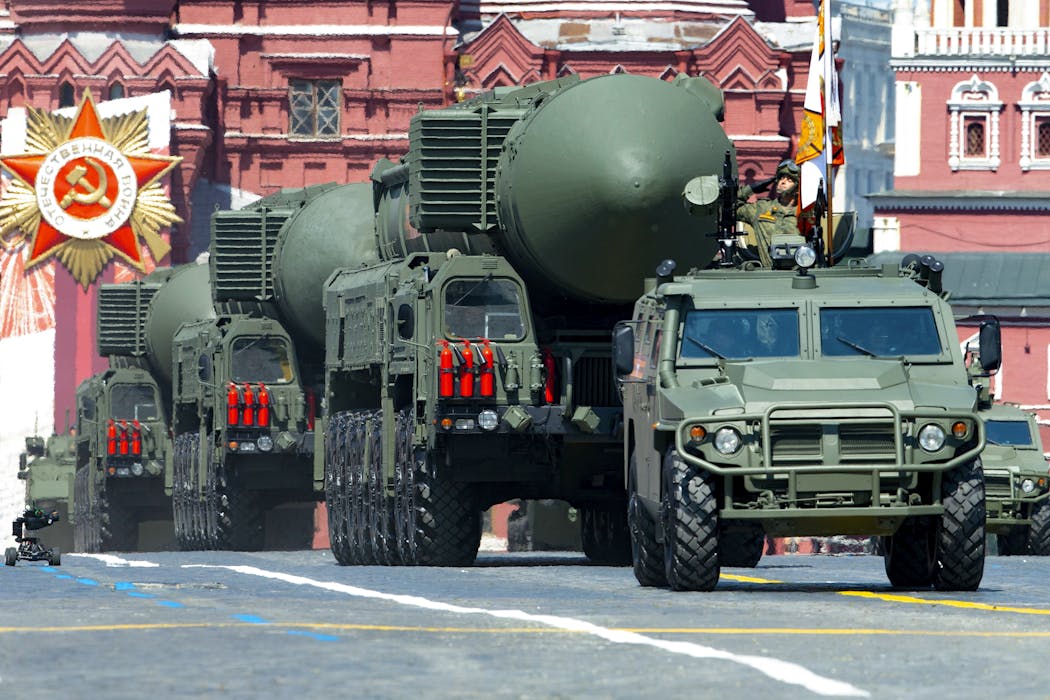
Russian ballistic missiles roll in Red Square during a Victory Day military parade. AP Photo/Alexander Zemlianichenko

For the first time in more than half a century, there are no binding restraints on the buildup of the largest nuclear forces on Earth. The New START treaty expired on Feb. 5, 2026, ending the last agreed limits on U.S. and Russian nuclear forces.

New START limited the number of strategic nuclear weapons the United States and Russia could deploy to 1,550 each. It also limited the missiles and bombers those warheads were loaded on, required on-site inspections and data exchanges, barred interference with satellite monitoring, and established a joint commission to discuss disputes. It did not limit the number of nuclear weapons each side could hold in reserve.

With China rapidly building up its nuclear forces, intense rivalry between the United States, China and Russia, and evolving technologies – from precision conventional weapons to artificial intelligence complicating nuclear balances – there is a real potential of an unpredictable three-way nuclear arms competition.

Such a competition could increase the danger of nuclear conflict, which I believe is higher than it has been in decades.

The security of agreed restraint

While the particular numbers of warheads and delivery vehicles an accord specifies may not make an immense difference, nuclear agreements offer important advantages in four key areas:

  • Predictability, limiting the pressures to build up nuclear arsenals that come from worst-case analysis of what adversaries might build and the destabilization that unexpected new weapons can bring.

  • Transparency, elements such as data exchanges, on-site inspections and limits on interfering with satellite monitoring, giving each side a better ability to understand what is going on with the others’ nuclear forces.

  • Reduced first-strike incentives, from banning or limiting particularly dangerous types of weapons.

  • Improved relations, through the mere fact that the other side is willing to limit the nuclear forces arrayed against you, which undermines the belief that they are implacably bent on your utter destruction. This reduces the intensity of hostility that can drive crises and escalation.

The expiration of the New START treaty upends decades of international nuclear stability.

After 1962’s Cuban missile crisis, President John F. Kennedy realized that relying on nuclear deterrence without any agreed nuclear restraints or risk-reduction measures is just too dangerous. He moved quickly to negotiate the Limited Test Ban Treaty in 1963 and put in place a U.S.-Soviet hotline for crisis communication.

He also launched a series of initiatives that led to reductions in defense spending on both sides, cuts in production of nuclear materials for weapons, and even troop pullbacks in Europe. Every subsequent U.S. president has pursued nuclear arms control accords.

Moreover, the countries that have promised not to get nuclear weapons under the Nuclear Nonproliferation Treaty want to see the nuclear-armed nations living up to their treaty obligation to negotiate in good faith toward nuclear disarmament. As pressure builds for countries to get their own nuclear weapons, maintaining the nonproliferation regime and getting the non-nuclear countries’ votes for stronger nuclear safeguards or export controls is likely to require the nuclear-armed nations to accept at least some constraints of their own.

Critics of arms control point out that Russia has violated many past accords – and the Trump administration has accused both Russia and China of carrying out illicit nuclear tests, though his administration has not offered solid evidence in public so far. But despite these very real issues, key elements of these agreements were implemented, and they “left the United States safer,” as Secretary of State Marco Rubio has noted. More than four-fifths of the nuclear weapons that used to exist in the world have been dismantled.

New limits or buildup?

a miissile breaks the surface of the ocean
The U.S. is developing a new type of cruise missile that can carry a nuclear warhead and, like this Tomahawk, can be launched from submerged submarines.
U.S. Navy via Getty Images

So, what’s next? President Donald Trump ignored Russian President Vladimir Putin’s proposal that both sides stay within the limits of New START while they explored options for new steps. But Trump said he wants to negotiate a “better” deal on fewer nuclear weapons – a deal that would not only limit U.S. and Russian strategic forces but also China’s much smaller but rapidly growing nuclear forces and Russia’s large force of nonstrategic nuclear weapons – that is, ones for battlefield or regional use.

So far, though, no negotiations on follow-on accords are underway, and the administration has not offered to negotiate about any of the U.S. weapons systems that worry Russia and China.

Moreover, there is strong pressure in Washington to build up U.S. nuclear forces rather than reduce them, to deter both Russia and China – while also dealing with the smaller but still dangerous North Korean nuclear force. The United States has many hundreds of nuclear weapons in storage that could be brought out and put on existing missiles, along with empty missile tubes on submarines that could again be filled with missiles. And the U.S. is developing new weapons, such as a nuclear-armed, sea-launched cruise missile.

Constraints and challenges

In my view, the more than 1,500 strategic nuclear weapons the United States already has deployed – with a major modernization underway – provide a sufficient deterrent to aggression. And if the United States begins to build up, Russia will respond in kind, and China may go even further. Once a multisided buildup is underway, its momentum will be more difficult to reverse.

Fortunately, the United States, Russia and China all have strong national interests in avoiding an unrestrained nuclear race, which would leave all of them poorer and no more secure. While the United States has quite a few nuclear weapons in storage, its nuclear modernization is struggling with enormous delays and cost overruns, and its industrial base is simply not prepared for a major nuclear expansion.

Putin is building a war economy that can churn out a lot of weapons – but he knows his economy is a 10th the size of the U.S.’s, and he wants to focus on rebuilding the conventional forces being chewed up in his war on Ukraine, making nuclear competition a bad idea. China has an economy to match the U.S.’s and an unrivaled manufacturing capacity, but it, too, would be worse off if its buildup provokes a U.S. buildup in response and a collapse of nuclear restraints.

Despite these common interests, finding a path to new accords among at least three parties, rather than two, will not be easy. Coalitions in each capital will have to win arguments that an accord is in their nation’s interest at the same time. The parties will have to address in some way the non-nuclear technologies that affect nuclear balances, and technologies such as cyber weapons and artificial intelligence would be hard to count or verify.

U.S. political polarization might make it very difficult to get a two-thirds vote in the Senate to ratify a treaty – though there are many other possible approaches, from reciprocal political commitments to executive agreements.

Famously unpredictable, Trump might still reverse course and agree to some version of Putin’s proposal for a “strategic pause” in which neither the United States nor Russia would build up its nuclear capabilities for the time being, while talks on next steps were underway. That would have the advantage of offering time to explore the options before new nuclear buildups got locked in.

And that would give him more chance of reaching his oft-stated goal of being the one to bring home a deal to reduce nuclear weapons and the dangers they pose.

The Conversation

Matthew Bunn is a member of the Board of Directors of the Arms Control Association; is a member of the Committee on International Security and Arms Control of the National Academy of Sciences; has consulted for several U.S. national laboratories; and has served on the Academic Alliance of U.S. Strategic Command.

ref. Last nuclear weapons limits expired – pushing world toward new arms race – https://theconversation.com/last-nuclear-weapons-limits-expired-pushing-world-toward-new-arms-race-275749

The greatest risk of AI in higher education isn’t cheating – it’s the erosion of learning itself

Source: The Conversation – USA (2) – By Nir Eisikovits, Professor of Philosophy and Director, Applied Ethics Center, UMass Boston

Will AI hollow out the pipeline of students, researchers and faculty that is the basis of today’s universities? Hill Street Studios/DigitalVision via Getty Images

Public debate about artificial intelligence in higher education has largely orbited a familiar worry: cheating. Will students use chatbots to write essays? Can instructors tell? Should universities ban the tech? Embrace it?

These concerns are understandable. But focusing so much on cheating misses the larger transformation already underway, one that extends far beyond student misconduct and even the classroom.

Universities are adopting AI across many areas of institutional life. Some uses are largely invisible, like systems that help allocate resources, flag “at-risk” students, optimize course scheduling or automate routine administrative decisions. Other uses are more noticeable. Students use AI tools to summarize and study, instructors use them to build assignments and syllabuses and researchers use them to write code, scan literature and compress hours of tedious work into minutes.

People may use AI to cheat or skip out on work assignments. But the many uses of AI in higher education, and the changes they portend, beg a much deeper question: As machines become more capable of doing the labor of research and learning, what happens to higher education? What purpose does the university serve?

Over the past eight years, we’ve been studying the moral implications of pervasive engagement with AI as part of a joint research project between the Applied Ethics Center at UMass Boston and the Institute for Ethics and Emerging Technologies. In a recent white paper, we argue that as AI systems become more autonomous, the ethical stakes of AI use in higher ed rise, as do its potential consequences.

As these technologies become better at producing knowledge work – designing classes, writing papers, suggesting experiments and summarizing difficult texts – they don’t just make universities more productive. They risk hollowing out the ecosystem of learning and mentorship upon which these institutions are built, and on which they depend.

Nonautonomous AI

Consider three kinds of AI systems and their respective impacts on university life:

AI-powered software is already being used throughout higher education in admissions review, purchasing, academic advising and institutional risk assessment. These are considered “nonautonomous” systems because they automate tasks, but a person is “in the loop” and using these systems as tools.

These technologies can pose a risk to students’ privacy and data security. They also can be biased. And they often lack sufficient transparency to determine the sources of these problems. Who has access to student data? How are “risk scores” generated? How do we prevent systems from reproducing inequities or treating certain students as problems to be managed?

These questions are serious, but they are not conceptually new, at least within the field of computer science. Universities typically have compliance offices, institutional review boards and governance mechanisms that are designed to help address or mitigate these risks, even if they sometimes fall short of these objectives.

Hybrid AI

Hybrid systems encompass a range of tools, including AI-assisted tutoring chatbots, personalized feedback tools and automated writing support. They often rely on generative AI technologies, especially large language models. While human users set the overall goals, the intermediate steps the system takes to meet them are often not specified.

Hybrid systems are increasingly shaping day-to-day academic work. Students use them as writing companions, tutors, brainstorming partners and on-demand explainers. Faculty use them to generate rubrics, draft lectures and design syllabuses. Researchers use them to summarize papers, comment on drafts, design experiments and generate code.

This is where the “cheating” conversation belongs. With students and faculty alike increasingly leaning on technology for help, it is reasonable to wonder what kinds of learning might get lost along the way. But hybrid systems also raise more complex ethical questions.

A college student in discussion in a classroom
If students rely on generative AI to produce work for their classes, and feedback is also generated by AI, how does that affect the relationship between student and professor?
Eric Lee for The Washington Post via Getty Images

One has to do with transparency. AI chatbots offer natural-language interfaces that make it hard to tell when you’re interacting with a human and when you’re interacting with an automated agent. That can be alienating and distracting for those who interact with them. A student reviewing material for a test should be able to tell if they are talking with their teaching assistant or with a robot. A student reading feedback on a term paper needs to know whether it was written by their instructor. Anything less than complete transparency in such cases will be alienating to everyone involved and will shift the focus of academic interactions from learning to the means or the technology of learning. University of Pittsburgh researchers have shown that these dynamics bring forth feelings of uncertainty, anxiety and distrust for students. These are problematic outcomes.

A second ethical question relates to accountability and intellectual credit. If an instructor uses AI to draft an assignment and a student uses AI to draft a response, who is doing the evaluating, and what exactly is being evaluated? If feedback is partly machine-generated, who is responsible when it misleads, discourages or embeds hidden assumptions? And when AI contributes substantially to research synthesis or writing, universities will need clearer norms around authorship and responsibility – not only for students, but also for faculty.

Finally, there is the critical question of cognitive offloading. AI can reduce drudgery, and that’s not inherently bad. But it can also shift users away from the parts of learning that build competence, such as generating ideas, struggling through confusion, revising a clumsy draft and learning to spot one’s own mistakes.

Autonomous agents

The most consequential changes may come with systems that look less like assistants and more like agents. While truly autonomous technologies remain aspirational, the dream of a researcher “in a box” – an agentic AI system that can perform studies on its own – is becoming increasingly realistic.

A biotech researcher working on a computer in a lab
Growing sophistication and autonomy of technology systems means that scientific research can increasingly be automated, potentially leaving people with fewer opportunities to gain skills practicing research methods.
NurPhoto/Getty Images

Agentic tools are anticipated to “free up time” for work that focuses on more human capacities like empathy and problem-solving. In teaching, this may mean that faculty may still teach in the headline sense, but more of the day-to-day labor of instruction can be handed off to systems optimized for efficiency and scale. Similarly, in research, the trajectory points toward systems that can increasingly automate the research cycle. In some domains, that already looks like robotic laboratories that run continuously, automate large portions of experimentation and even select new tests based on prior results.

At first glance, this may sound like a welcome boost to productivity. But universities are not information factories; they are systems of practice. They rely on a pipeline of graduate students and early-career academics who learn to teach and research by participating in that same work. If autonomous agents absorb more of the “routine” responsibilities that historically served as on-ramps into academic life, the university may keep producing courses and publications while quietly thinning the opportunity structures that sustain expertise over time.

The same dynamic applies to undergraduates, albeit in a different register. When AI systems can supply explanations, drafts, solutions and study plans on demand, the temptation is to offload the most challenging parts of learning. To the industry that is pushing AI into universities, it may seem as if this type of work is “inefficient” and that students will be better off letting a machine handle it. But it is the very nature of that struggle that builds durable understanding. Cognitive psychology has shown that students grow intellectually through doing the work of drafting, revising, failing, trying again, grappling with confusion and revising weak arguments. This is the work of learning how to learn.

Taken together, these developments suggest that the greatest risk posed by automation in higher education is not simply the replacement of particular tasks by machines, but the erosion of the broader ecosystem of practice that has long sustained teaching, research and learning.

An uncomfortable inflection point

So what purpose do universities serve in a world in which knowledge work is increasingly automated?

One possible answer treats the university primarily as an engine for producing credentials and knowledge. There, the core question is output: Are students graduating with degrees? Are papers and discoveries being generated? If autonomous systems can deliver those outputs more efficiently, then the institution has every reason to adopt them.

But another answer treats the university as something more than an output machine, acknowledging that the value of higher education lies partly in the ecosystem itself. This model assigns intrinsic value to the pipeline of opportunities through which novices become experts, the mentorship structures through which judgment and responsibility are cultivated, and the educational design that encourages productive struggle rather than optimizing it away. Here, what matters is not only whether knowledge and degrees are produced, but how they are produced and what kinds of people, capacities and communities are formed in the process. In this version, the university is meant to serve as no less than an ecosystem that reliably forms human expertise and judgment.

In a world where knowledge work itself is increasingly automated, we think universities must ask what higher education owes its students, its early-career scholars and the society it serves. The answers will determine not only how AI is adopted, but also what the modern university becomes.

The Conversation

The Applied Ethics Center at UMass Boston receives funding from the Institute for Ethics and Emerging Technologies. Nir Eisikovits serves as the data ethics advisor to MindGuard, a startup focused on AI integration into companies’ workflow.

Jacob Burley receives funding from The Applied Ethics Center at UMass Boston.

ref. The greatest risk of AI in higher education isn’t cheating – it’s the erosion of learning itself – https://theconversation.com/the-greatest-risk-of-ai-in-higher-education-isnt-cheating-its-the-erosion-of-learning-itself-270243