Why Stephen Colbert is right about the ‘equal time’ rule, despite warnings from the FCC

Source: The Conversation – USA – By Seth Ashley, Professor of Communication, Boise State University

CBS says it warned Stephen Colbert that an interview with a politician could trigger an FCC rule requiring broadcasters to give political candidates equal access to the airwaves. The Late Show With Stephen Colbert/YouTube

Talk show host Stephen Colbert made headlines on Feb. 17, 2026, when he wrapped a network statement in a dog-waste bag and tossed it in the trash.

He did it live, while on air.

The move came after CBS lawyers reportedly told him he could not broadcast a scheduled interview with Democratic Texas Senate candidate James Talarico on his show, Late Night with Stephen Colbert. According to Colbert, the network warned him that broadcasting the interview could trigger the Federal Communications Commission’s equal time rule, which requires broadcasters to allow political candidates equal access to the nation’s airwaves.

CBS said it gave Colbert “legal guidance” that airing the segment could raise equal time concerns and suggested other options.

Colbert countered that in decades of late-night television, he could not find a single example of the rule being enforced against a talk show interview. He ultimately posted his Talarico interview on YouTube instead, where broadcasting rules don’t apply.

As a media scholar, I believe Colbert is right about the law. Congress has deliberately protected editorial discretion to prevent equal time rules from chilling political speech. And the FCC has extended this privilege to shows like his.

To understand why, you have to go back to 1959 and to a forgotten fight over the role of broadcasting in a democratic society.

Amending ‘equal time’

Because the airwaves have been viewed as a scarce public resource, radio and television broadcasting have been regulated to balance the First Amendment rights of the press with public interest obligations. That includes the need to provide reasonable access to the airwaves for candidates for office – so citizens can hear what they have to say, whether in the form of paid advertising or unpaid news coverage.

After first appearing in the Radio Act of 1927, the equal time provision was codified in Section 315 of the Communications Act of 1934.

That law created the FCC and still governs the use of the nation’s airwaves today. It requires broadcast licensees to provide “equal opportunities” to legally qualified candidates in a given election if they allow one candidate to “use” their facilities. The requirement was intended to prevent broadcasters from favoring one candidate over another and to foster robust political debate that would serve the public interest.

But the statute did not clearly define what counted as a “use.”

That ambiguity was a known issue, but it came to a head in 1959, when Lar Daly, a fringe Chicago mayoral candidate, filed a complaint with the FCC. He argued that if stations aired news clips of his opponents – including the incumbent mayor – as part of their routine coverage, he was entitled to equal time on air.

A man holding a placard and wearing a hat speaks for another man in a black and white photo.
Sen. Charles Percy, R-Ill., left, talks with Lar Daly, who protests the lack of equal time on television.
AP Photo/Paul Cannon

The FCC agreed. And it created a ruling that meant even routine news coverage of a candidate could trigger equal time obligations.

Broadcasters immediately warned that the decision would make political journalism nearly impossible. If every news interview or campaign clip required providing comparable time to every rival – including minor or fringe candidates – stations would either have to book everyone or drastically scale back political coverage.

NBC president Robert Sarnoff issued a thinly veiled threat in a message that was not lost on politicians who would be affected by the change: “Unless the gag is lifted during the current session of the Congress, a major curtailment of television and radio political coverage in 1960 is inevitable.”

Later that year, Congress stepped in and amended Section 315 to create explicit exemptions for “bona fide” newscasts, news interviews, news documentaries and on-the-spot coverage of news events. As my colleague Tim P. Vos and I note in our research on the history of the amendment, Congress rejected calls to repeal equal time altogether.

Instead, lawmakers preserved the rule for candidate-sponsored advertising while shielding news programming. Persuaded by broadcasters, lawmakers determined that professional journalism, guided by norms of balance and fairness, would best serve democratic discourse.

In signing the 1959 legislation, President Dwight D. Eisenhower highlighted the “continuing obligation of broadcasters to operate in the public interest and to afford reasonable opportunity for the discussion of conflicting views on important public issues.”

Eisenhower concluded by appealing to the good intentions of the nation’s broadcasters: “There is no doubt in my mind that the American radio and television stations can be relied upon to carry out fairly and honestly the provisions of this Act without abuse or partiality to any individual, group, or party.”

The talk show exemption

Over the decades, the FCC has interpreted the 1959 exemptions broadly.

Programs ranging from Meet the Press to The Jerry Springer Show to The Tonight Show and other interview-based broadcasts have been treated as “bona fide news interviews,” even when hosted by comedians. That’s why Colbert’s claim that there is no enforcement history against late-night talk shows is accurate.

It’s important to remember that equal time still applies in other contexts. If a candidate purchases or receives airtime for an advertisement, opponents are entitled to comparable access.

Equal time also applies to non-exempt entertainment programming, such as Saturday Night Live. Donald Trump’s hosting gig on SNL in November 2015 triggered an equal time request from four opposing primary candidates. And NBC obliged by providing a comparable amount of airtime for their campaign messages.

A man in suit in tie speaks in front of a microphone.
Federal Communications Commission chairman Brendan Carr testifies before Congress in Washington on Jan. 14, 2026.
AP Photo/Jose Luis Magana

FCC Chairman Brendan Carr recently signaled he was considering eliminating the talk-show exemption, arguing that some programs are “motivated by partisan purposes.”

As of now, no legal change has occurred. And it seems to me that CBS has acted out of caution, responding to political and regulatory pressure rather than to an actual rule change. That makes this episode unusual: The equal time rule was perhaps applied indirectly, through corporate self-censorship, not through direct FCC enforcement.

Why this moment matters

Either way, the Colbert incident highlights the growing restrictions on editorial independence during the second Trump administration – either imposed by government threat or corporate fear.

Whether through direct regulatory intervention or indirect corporate influence, this incident and others like it show an increased willingness to interfere with the editorial independence of media producers.

The dispute is part of what some critics view as an ongoing effort by the Trump administration to silence criticism. Trump is no fan of Colbert and has targeted comedians before.

CBS already announced in 2025 that Colbert’s show will be canceled in May 2026, leading many to suggest CBS was trying to appease Trump and his FCC, particularly ahead of a then-pending merger that required FCC approval.

The 1959 amendment that created the equal time exemption aimed to preserve editorial independence and protect free expression by limiting equal time claims and ensuring vibrant political discourse. The decision reflected a judgment that professional editorial discretion, not mandatory equivalence, best served citizens.

If the FCC alters the exemption, it would represent a major shift in U.S. media policy and would almost certainly face legal challenges. The government has an important role to play in promoting free expression and protecting free speech, but this is a good time to be wary of efforts to alter regulations to control content.

The Conversation

Seth Ashley does not work for, consult, own shares in or receive funding from any company or organization that would benefit from this article, and has disclosed no relevant affiliations beyond their academic appointment.

ref. Why Stephen Colbert is right about the ‘equal time’ rule, despite warnings from the FCC – https://theconversation.com/why-stephen-colbert-is-right-about-the-equal-time-rule-despite-warnings-from-the-fcc-276559

Invasive mesquite plants do more than deplete water reserves – new research in South Africa shows they damage soil too

Source: The Conversation – Africa – By Siviwe Malongweni, Research Scientist, Sol Plaatje University

Mesquite (Neltuma juliflora), a woody plant native to parts of South America, was introduced into South Africa’s drylands in the 1880s with good intentions.

Bringing it to South Africa was meant to stabilise soils, provide shade, and offer a source of fuelwood in some of the country’s most water-limited landscapes. But today, particularly in the Northern Cape province, it’s a clear example of how an introduced species can quietly transform ecosystems, livelihoods and local climates in ways that are difficult and costly to reverse.

Across the Northern Cape’s arid and semi-arid rangelands, mesquite has spread extensively along riverbanks, floodplains and grazing areas. Unlike many indigenous plants that lie dormant during dry periods, mesquite remains active year-round. Its deep root system allows it to extract water from far below the surface, steadily depleting soil moisture and groundwater reserves.

I am an environmental and climate scientist in the Northern Cape, where agriculture contributes about 8% of the provincial GDP and employs roughly 16% of the workforce. My work focuses on addressing invasive species, land degradation and climate impacts to protect ecosystems, support rural livelihoods and strengthen the regional economy.

My team and I conducted research into the effect that invasive mesquite has had on the soils in this dry area of South Africa.

We found that mesquite drains moisture and nutrients from the soil, making it hard for other plants to grow. The dense roots and thick canopy also reduce water availability for livestock and people, while the soil becomes compacted and less fertile. All of this together makes farming much more difficult and threatens local livelihoods.

What the science shows

Our study compared soils from mesquite-invaded areas with those from nearby uninvaded rangelands. Our findings show striking differences.

In mesquite-dominated landscapes, soils tended to hold less moisture, had altered nutrient balances and displayed changes in physical structure compared with soils under native vegetation.

This may not sound dramatic at first, but soil moisture and nutrient balance are foundational to how ecosystems function. Soil that stays moist supports grass growth. Grass protects soil from erosion, feeds livestock, and keeps water in the landscape. When mesquite replaces grass with dense thickets, that entire cascade of benefits begins to unravel.

Mesquite roots dig deep and draw water year-round. Where native plants go dormant in dry seasons, mesquite continues to transpire (release water from its leaves), reducing soil moisture. Over time, this leads to drier soils that struggle to support the plants crucial for grazing and wildlife.

The outcome is a quieter, slower form of ecosystem change; one that doesn’t always show up in dramatic headlines but that steadily degrades land and undermines livelihoods dependent on healthy soil.


Read more:
How South Africa’s second most invasive tree can be managed better


Why this matters for climate and livelihoods

Soil and climate are intimately connected. Dryland systems like the Northern Cape are already vulnerable to climate change due to hotter temperatures, more erratic rainfall and longer droughts. In this context, invasive species with high drought tolerance gain an edge. Mesquite, which is native to Central and South America, thrives where native vegetation falters. But that advantage comes at a cost of reduced water availability for human consumption, agricultural use and wildlife, altered carbon cycles and increased land degradation.

For pastoralist communities and smallholder farmers, the effects are tangible. Our team carried out a skills assessment and facilitated workshops in collaboration with the Northern Cape provincial government and the International Union for Conservation of Nature, and documented evidence of these impacts (it is not yet online).

Livestock grazing depends on grass cover. Our direct observations and assessments in the Northern Cape show that as mesquite thickets grow, grazing land shrinks. Farmers find themselves forced to reduce herd sizes or travel longer distances for forage. Over time, income declines, pressure on household food security increases, and people become more vulnerable to climatic and economic shocks.

The human dimension

The invasion of mesquite isn’t just an ecological problem; it’s a social one. Reduced grazing and degraded land translate into fewer resources for families that depend on livestock. In regions where economic opportunities are already limited, this can exacerbate inequality, increase rural poverty and push people towards unsustainable coping strategies.


Read more:
Nearly 25% of land in Africa has been damaged – what’s to blame, and what can be done


In our ongoing research, communities across the Northern Cape have told us similar stories: land that used to support healthy herds now supports thorny thickets that livestock avoid; water points dry faster; and the rhythm of life shifts as people adapt to a changed landscape. These are not abstract scientific outcomes; they are lived experiences.

Yet, amid these challenges, there are also opportunities.

Repurposing pathways for mesquite

The same biological traits that make mesquite a problem can also be harnessed for benefit, if approached thoughtfully. Mesquite pods are rich in sugars and have been used as supplementary livestock feed in dry seasons. They could also potentially be used for flour and baking, natural sweeteners, coffee substitutes, snacks, and traditional medicine for regulating blood sugar. The wood is dense and burns hot, making it valuable for charcoal and energy. Craft industries can use mesquite timber for artisanal products, creating potential income streams for rural communities. Mesquite biomass can be processed into low-carbon, climate-adaptive building materials with a net negative carbon footprint, and into biochar that can be used to restore degraded soils after invasive species removal.

The key is to repurpose eradicated mesquite in support of ecological restoration. Overharvesting without a plan can worsen the situation if it encourages regrowth or fails to address underlying ecosystem changes. But when combined with targeted clearing and rehabilitation, utilisation can be part of a broader, sustainable strategy.


Read more:
Black wattle as firewood: how South African communities are putting invasive species to work


What needs to happen next

Clearing mesquite is possible, but expensive. Mechanical removal requires labour, machinery and follow-up work to prevent regrowth. If land is cleared but not rehabilitated, grasses and native vegetation may struggle to return because the soil has already changed. That means investment must be long-term, not just a one-off effort.

South Africa needs an integrated approach that includes:

  • early detection and mapping

  • community-led clearing and rehabilitation, so that efforts are sustained and rooted in local knowledge

  • soil restoration efforts, reintroducing native grasses and shrubs

  • economic integration, developing value chains for mesquite products

  • climate-responsive planning and land management that improves water retention and soil health.

Mesquite invasion in the Northern Cape is more than a botanical curiosity. It is a transformation of land that affects soil, water, climate resilience and human wellbeing. The research on soil properties makes it clear that the impacts are real and measurable, but it also points to pathways for action.

The Conversation

Siviwe Malongweni works for the Centre for Global Change. This research is implemented by the IUCN in partnership with the DFFE and funded by the Global Environment Facility (GEF-7).

ref. Invasive mesquite plants do more than deplete water reserves – new research in South Africa shows they damage soil too – https://theconversation.com/invasive-mesquite-plants-do-more-than-deplete-water-reserves-new-research-in-south-africa-shows-they-damage-soil-too-274126

Killer beetles in the baobabs: researcher warns of risk to African trees

Source: The Conversation – Africa – By Sarah Venter, Baobab Ecologist, University of the Witwatersrand

Baobabs aren’t supposed to fall. They can live for up to 2,500 years. Famous for their resilience, these huge trees have stood tall across Africa, weathering droughts and winds that flatten everything else.

A small population of 102 baobabs is also found in Oman on the south-eastern tip of the Arabian Peninsula, where baobabs were introduced over 1,500 years ago by traders from Africa.

However, several baobabs have recently collapsed and died in Oman, not from disease, drought or old age, but from infestation by a beetle that has suddenly proven deadly to baobab trees – the mango stem-borer (Batocera rufomaculata).

I’m a baobab ecologist who worked with two environmental scientists from Oman, Ali Salem Musallm Akaak and Mohammed Mubarak Suhail Akaak, to investigate how many trees had been infected by the beetle, how the infestation had affected the trees and how many had died as a result.

We surveyed 91 baobab trees in Oman and found that six had been killed by the beetle. A further 12 baobab trees were infested by the beetle’s larvae.

This is the first time that an insect has been found to kill adult baobab trees. The same beetle is known to damage and kill other species of trees.

Our findings have important implications for the conservation and management of baobabs throughout Africa. The mango-borer beetle has not been found in mainland Africa yet but it may become a new threat to baobabs if it disperses.

Our findings allow for early detection as well as research into effective ways to control the beetle before it spreads to Africa.

If the mango stem-borer were to reach mainland Africa, where the baobab is considered a keystone species, it could devastate both ecosystems and livelihoods. Baobabs have over 300 uses for people, including fibre made from the bark, food from the leaves and the fruit, which is harvested for its nutritious pulp and sold in local and global markets.

Meet the killer

The mango stem-borer is native to south-east Asia. Adults live for only two to three months, feeding on shoots and bark. During that time females can lay up to 200 eggs, cutting small slits in tree bark and sealing each egg inside.

The grubs or larvae spend almost a year hidden within the wood, tunnelling through the living tissue that carries water and nutrients. As they feed, they weaken the tree and eventually kill it.

This beetle has long been one of Asia’s most damaging fruit-tree pests. It attacks mango, jackfruit, mulberry and fig trees, often killing mature hosts. It spread to the Middle East, where it was first recorded in 1950 and has damaged fig plantations.

In 2021, an adult baobab in Wadi Hinna, a semi-arid valley in Oman’s Dhofar Mountains, collapsed and died. When researchers examined the fallen trunk, they discovered it was infested by mango stem-borer larvae.

By 2025, seven baobabs had died, and many more were infected, confirming that a seemingly innocuous fruit-tree pest had found a new host.


Read more:
Madagascar’s ancient baobab forests are being restored by communities – with a little help from AI


The very qualities that make baobabs extraordinary survivors in dry climates also make them ideal nurseries for borer beetle larvae. Their stored water, soft trunks and nutrient rich tissue feed and protect larvae for nearly a year until they mature.

As the larvae feed, they hollow out the interior of the baobab, leaving the outer bark intact and the infestation hidden, until the stem suddenly collapses.

Battling the beetle

When the first deaths were recorded, Oman’s Environment Authority launched an emergency control programme with help from local communities and researchers.

Infested trees were treated with systemic insecticides, larvae were manually removed from trunks, and light traps were set to attract and kill adult beetles at night. Tree stems were also coated with agricultural lime and fungicide to deter further egg-laying.

These actions seem to have slowed the outbreak, but they are labour-intensive and feasible only for a small area. Across a continent, such methods would be impossible to maintain.


Read more:
The secret life of baobabs: how bats and moths keep Africa’s giant trees alive


In Asia, scientists have identified natural enemies of the mango stem-borer, including parasitic mites and nematodes. These could be used as the base of a long-term biological control strategy.

My research argues that using biological control to stop the beetle reproducing must be developed as a priority before infestations cross into Africa.

Preventing a spread to Africa

Adult beetles can fly up to 14 kilometres in a single night, and global trade makes it easy for insects to cross borders unnoticed, hidden in plants and ornamentals destined for the agriculture and garden sector.


Read more:
Baobab trees all come from Madagascar – new study reveals that their seeds and seedlings floated to mainland Africa and all the way to Australia


The beetle already occurs on islands such as Madagascar, Réunion and Mauritius. Baobab researchers do not know if the mango stem-borer has attacked the local baobab populations of Madagascar, where the trees are an indigenous plant.

Early detection and prevention are far cheaper, and far more effective, than trying to stop an outbreak once it begins. Stronger biosecurity inspections and other measures are needed at African ports and borders to stop the beetle crossing borders, particularly in shipments of wood and live plants.

Collaboration between research institutions, agricultural departments and the baobab industry will also help: sharing data, testing biological controls and setting up monitoring systems before further outbreaks occur.

A warning – and an opportunity

The death of baobabs in Oman is more than a localised problem. It’s a warning of what could happen elsewhere if the beetle spreads unchecked.

But it also offers a chance to prepare. If African countries act now, tightening biosecurity, supporting research and raising awareness, they can protect one of the continent’s most iconic and life-sustaining trees before this threat ever reaches African shores.

The Conversation

Sarah Venter receives funding from the Baobab Foundation.
Sarah Venter is an advisory member of the African Baobab Alliance

ref. Killer beetles in the baobabs: researcher warns of risk to African trees – https://theconversation.com/killer-beetles-in-the-baobabs-researcher-warns-of-risk-to-african-trees-275715

Africa’s public finances are in a mess: a new book explains why and what to do

Source: The Conversation – Africa – By Lyla Latif, Co-Founder & Research Lead, Committee on Fiscal Studies, University of Nairobi

Public finance, or how governments at all levels raise and allocate money, is in evidence everywhere you look. That pothole destroying your car. The health clinic without medicine. The dilapidated school. Public money is not government money. It is yours, writes Kenyan finance scholar Lyla Latif in her new book Governing Public Money. Drawing on a decade of experience across 32 countries, the author sets out what ails Africa’s public finances and what could change. The Conversation Africa asked her about the book’s main themes.

What prompted you to write this book?

Most books on public finance are written by men, from institutions in the global north, about systems designed in the global north. There is not a single comprehensive treatment of public finance law focused on Kenya or, for that matter, on any African country. I wanted to change that.

But the deeper motivation was a question that had been forming across more than a decade of working inside fiscal systems. As an international tax expert and scholar, I have spent years watching how public money actually moves: through revenue authorities and treasury departments, through regional customs unions and international treaty negotiations, through county governments and sovereign debt markets.

What struck me is that everyone assumes they know what public finance is. Fewer people understand how it is governed, and fewer still appreciate how profoundly interconnected its parts are. That interconnectedness is what the book’s 11 chapters try to capture. Revenue policy shapes debt sustainability. Debt sustainability constrains budgeting. Budgeting determines what devolution can deliver. Regional integration reshapes revenue options. International treaty regimes limit domestic policy space. Technology transforms administration. Corruption corrodes everything.

No single chapter can be understood in isolation, just as no fiscal challenge can be solved in isolation.

The final chapter examines Islamic public finance. Here, I discuss:

  • zakat, a mandatory wealth based contribution used to support social welfare

  • waqf, an endowment dedicated to public benefit such as education or health

  • sukuk, asset backed Islamic financial certificates often compared to bonds but structured without interest.

I argue that these are fiscal institutions within a legal tradition that colonial administration suppressed but never displaced. Writing that chapter felt like an act of intellectual justice.

What are the key messages on public finance?

The book opens with a memory. During the frequent power cuts of my childhood in Nairobi, my father would gather us around candles and draw. One evening he sketched a woman carrying water on her head and a child on her back, walking toward a distant horizon.

I did not then understand that the darkness itself was fiscal: the consequence of under-investment, deferred maintenance, and policy choices that left entire communities without reliable electricity. That image captures the book’s central argument. Public finance is not a technical subject confined to treasury officials and economists. It is the means through which societies either raise living standards or entrench dependence.

Every unbuilt school, every underfunded clinic, every collapsed road is a fiscal failure before it is anything else. And every act of governance, from defending a nation’s borders to delivering clean water, ultimately resolves into a fiscal question.

The book argues that law does not merely regulate public finance; it constitutes it. The authority to tax, to borrow, to spend, and to hold officials accountable derives from legal instruments. Kenya’s 2010 constitution devotes an entire chapter to public finance, establishing principles of equity, transparency and public participation. These are not decorative provisions. They are the architecture through which fiscal power is authorised, constrained and contested.

Yet the book is equally insistent that legal frameworks do not determine outcomes. The gap between what constitutions promise and what citizens experience is shaped by political economy: by who holds power, whose interests prevail, and what international forces constrain domestic choices.

How is Africa disadvantaged in the international fiscal system?

Africa’s disadvantage is not accidental or temporary. It reflects a continuing structure shaped by history and reproduced through modern international rules. Colonial fiscal systems were designed for extraction, not development.

In Kenya, the Native Hut and Poll Tax Ordinance of 1910 compelled African populations into wage labour to meet obligations denominated in colonial currency. Revenue was directed towards the Uganda Railway and export corridors serving London rather than towards African education or health.

As Kenyan scholars George Ndege, Ahmed Mohiddin and I have documented, colonial administrations relied on indirect taxes that fell hardest on African populations. They directed expenditure towards export infrastructure serving metropolitan markets and concentrated authority in executive hands with minimal accountability.

Independence brought formal sovereignty but did not dismantle the international architecture within which African fiscal governance operates. Tax treaties, negotiated primarily among developed countries, allocate taxing rights in ways that systematically favour capital exporters. The status quo allows multinational enterprises to derive substantial income from African markets without triggering source country taxation.

Investment treaties expose African governments to billion dollar arbitration claims when they adjust fiscal policy. Trade agreements constrain tariff choices that might support industrial development. African countries have been positioned as passive recipients of rules rather than their authors. The frameworks that govern cross border taxation, sovereign debt restructuring and investment protection were designed in forums where African states had little or no voice.

For over 60 years, the rules governing cross border taxation have been written principally within the OECD, a body of wealthy capital-exporting states where African countries had no seat.

Thanks to African advocacy, a new UN Framework Convention on International Tax Cooperation adopted in 2023 is changing that. The convention creates space for binding obligations on cross border services, digital economy taxation and illicit financial flows. These are areas where voluntary frameworks have consistently failed the continent.

This represents the most significant shift in international tax governance in decades.

African states are beginning to write rules rather than merely absorb them.

What could countries and citizens change?

The most consequential shift would be for African countries to look inward. That means confronting the revenue gap that defines African fiscal governance. The continent’s average tax-to-GDP ratio remains below 16%, well beneath what is needed to fund basic public goods without chronic dependence on external financing.

This requires building professionally independent revenue authorities, transparent public financial management, and the political will to tax wealth and rents that elite capture has long shielded. It also means developing indigenous fiscal scholarship rather than importing policy knowledge from Washington, Paris and Geneva.

Looking inward is not autarky, meaning a withdrawal into economic self sufficiency and disengagement from global exchange. Rather, it is about consolidating internal clarity and capacity so that engagement outward happens on African terms. My colleague Daniel Nuer, a senior official at the Ghana Revenue Authority, once said to me:

If Africa starts looking inward, every non-African state will be forced to comply with African approaches.

There is a quiet but powerful logic in that observation. When African countries strengthen domestic revenue mobilisation, they reduce dependence on aid and on borrowing from international markets on terms set by creditors. When they build effective tax administrations, they create the institutional capacity that underpins state legitimacy.

When they coordinate regionally, such as through the East African Community or the African Continental Free Trade Area, they create the scale that individual economies cannot achieve alone. As African revenue systems become more effective, the current international architecture, built on the assumption that developing countries will remain rule takers, becomes unsustainable.

A continent that mobilises its own resources, governs its own debt, and taxes its own digital economy does not need to accept frameworks designed elsewhere for the benefit of others. That is not merely a hope. In 2024, African states voted for a multilateral tax convention over the opposition of the world’s wealthiest countries. The African Continental Free Trade Area is building the coordinated market that no single African economy can sustain alone.

But fiscal sovereignty does not emerge in ideal conditions. It must contend with structural pressures that continue to narrow policy space. Sovereign debt repayments are absorbing resources that should be financing development, while illicit financial flows drain more from the continent each year than it receives in aid. What is shaping Africa’s fiscal future, then, is not the abstract market logics often associated with Adam Smith, but deliberate political choices about how public money is governed and how power over it is exercised.

Consequently, citizens have a role that extends beyond compliance. The fiscal contract between state and citizen depends on both sides. Governments must mobilise resources equitably and deploy them transparently. Citizens must demand accountability and participate in the budget processes that constitutions – such as Kenya’s – now require.

Civil society organisations and investigative journalists have proven essential in exposing fiscal failures that formal institutions missed. The work ahead is neither simple nor quick. But the direction is clear. African fiscal governance must be built from African foundations, informed by African needs, and accountable to African citizens. That is what governing public money should mean.

The Conversation

Lyla Latif does not work for, consult, own shares in or receive funding from any company or organisation that would benefit from this article, and has disclosed no relevant affiliations beyond their academic appointment.

ref. Africa’s public finances are in a mess: a new book explains why and what to do – https://theconversation.com/africas-public-finances-are-in-a-mess-a-new-book-explains-why-and-what-to-do-275761

As war in Ukraine enters a 5th year, will the ‘Putin consensus’ among Russians hold?

Source: The Conversation – Global Perspectives – By Peter Rutland, Professor of Government, Wesleyan University

Does the nation stand behind him? Vyacheslav Prokofyev/AFP via Getty Images

Perceived wisdom has it that the longer a war goes on, the less enthusiastic a public becomes for continuing the conflict. After all, it is ordinary citizens who tend to bear the economic and human costs.

And yet, as the war following Russia’s full-scale invasion of Ukraine in February 2022 enters its fifth year, the attitude of the Russian public remains difficult to gauge: Just over half of Russians, according to one recent poll, expect the war to end in 2026; yet a majority say that should negotiations fail, Moscow needs to “escalate” with greater use of force.

As observers of Russian society, we believe this ambiguity in Russian public opinion gives President Vladimir Putin the cover to continue pushing hard for his goals in Ukraine. Yet at the same time, a deeper dive into the Russian public’s apparent support for the war suggests that it is more fragile than the Russian president would like to believe.

Putin’s social contract

From Day 1 of the conflict, Western strategy has been predicated on the belief that economic sanctions would eventually cause either the Russian elite or its society to persuade Putin to abandon the war.

This, in turn, is based on the assumption that the legitimacy of Putinism rests on a social contract of sorts: The Russian people will be loyal to the Kremlin if they enjoy a stable standard of living and are allowed to pursue their private lives without interference from the state.

The Russian economy has been struggling since 2014, so many analysts believed that this social contract was coming under strain even before the full-scale invasion of Ukraine. However, after four years of war, the combination of exclusion from European markets and a tripling of military spending has led to economic stagnation and mounting pressure on living standards.

One problem with the social contract approach is that it tends to downplay the role of ideology.

It is possible that Putin’s “Make Russia Great Again” propaganda resonates with a significant part of the Russian public. Polling has consistently placed Putin’s approval rating above 80% since the beginning of the Ukraine conflict.

Of course, the validity of the results of polls in an authoritarian society at war cannot be taken at face value. Yet, one shouldn’t rule out that some of that support is genuine and rests not just on a stable economy but also on popular endorsement of Putin’s pledge to restore Russia’s power and influence on the world stage.

A group of people walk down some steps
Is Putin leading Muscovites down a dark alley?
Hector Teramal/AFP via Getty Images

Rallying Russians

Some scholars point to a “rally around the flag” effect. There was an apparent surge in Putin’s approval rating after the use of military force against Ukraine in 2014 and 2022.

It is hard to tell whether the surge in support for Putin reflects a genuine shift in opinion or just a response to media coverage and what people perceive as the acceptable response.

The Kremlin has tried to hide the costs of the war from the public: concealing the true death toll and avoiding full-scale mobilization of conscripts by recruiting highly paid volunteers. It is also trying to keep the economy stable by drawing down the country’s reserve funds.

That leaves open the question of whether the “Putin consensus” will break down at some point in the future if the costs of the war start to hit home for a majority of Russians.

The problem with polls

The consensus view among observers is that a small minority of Russians oppose the war, a slightly larger minority enthusiastically support the war, and the majority passively go along with what the state is doing.

There are still some independent pollsters conducting surveys in Russia that report a high level of support among respondents for the “special military operation” against Ukraine, with figures ranging between 60% and 70%.

A number of researchers have pointed out the difficulty in getting an accurate snapshot of Russian public opinion, given that the polling questions might make the respondent fearful of being accused of breaking laws that penalize “spreading fake news” and “discrediting the army” with a lengthy prison sentence.

The Levada Center, which is still regarded as an independent and relatively reliable pollster, conducts its interviews face to face in people’s homes but has a very low response rate. Polls conducted online, in return for monetary rewards, can try to find demographically balanced respondents, but the problem of wariness about giving answers that are critical of the regime remains. In Russia’s current political environment, refusing to answer or giving a socially acceptable response is a rational strategy.

Some scholars, such as those associated with the Public Sociology Laboratory, which looks at public sentiment in post-Soviet states, still conduct fieldwork inside Russia, sending researchers to live incognito in provincial towns and observe social practices involving support for the war.

Their ethnographic research finds little evidence for a “rally around the flag” effect in provincial Russian society. Other analysts have turned to digital ethnography of social media as an alternative source of insight. But analysts unfamiliar with the local and digital context risk mistaking performative loyalty for genuine belief.

‘Internal emigration’

Most Russian citizens try to avoid political discussion altogether and retreat into what is often described as “internal emigration” – living their own lives while keeping interactions with the authorities to a minimum.

This practice dates back to the Soviet period but resurfaced as political repression increased after Putin’s return to the presidency in 2012.

There is no doubt that there are many fervent war supporters in Russia. They are quite vocal and visible because the state allows them to be – such as the military bloggers reporting from the front lines.

Apart from looking at opinion polls and social media, one can also probe the level of genuine support for the war by looking at everyday practices. If popular support for the war were enthusiastic, recruitment offices would be overwhelmed. They are not.

Instead, Russia has relied heavily on financial incentives, aggressive advertising, prison recruitment and coercive mobilization. At the same time, hundreds of thousands of men have sought to avoid conscription by leaving the country, hiding from authorities or exploiting legal exemptions.

Symbolic participation follows a similar pattern. State-sponsored Z symbols continue to dominate public space – the letter Z is used as a symbol of support for the war, in slogans such as “Za pobedu,” which translates to “for victory.” But privately displayed signs of support have largely disappeared.

A giant star with a letter Z on it is in front of a building.
A Kremlin star, bearing a Z letter, on display in front of the U.S. Embassy in Moscow on Dec. 15, 2025.
Alexander Nemenov/AFP via Getty Images

Humanitarian aid to be sent to soldiers on the front lines or occupied Ukraine is often collected through schools and churches, where participation is shaped by social or administrative pressure. But many participants frame their involvement as helping individuals rather than supporting the war itself.

Reality vs. lived experience

High-profile propaganda products frequently fail to resonate. Music charts and streaming platforms in Russia are dominated not by patriotic anthems but by an eclectic mix of songs about personal relationships, such as Jakone’s moody ballad “Eyes As Wet As Asphalt,” songs in praise of “Hoodies” and even a catchy Bashkir folk song.

Book sales show strong demand for works such as George Orwell’s “1984” and Viktor Frankl’s Holocaust memoir “Man’s Search for Meaning,” suggesting that readers are searching for ways to understand authoritarianism, trauma and moral responsibility rather than celebrating militarism.

And instead of watching the state-backed film “Tolerance,” a dystopian tale of moral decay in the West, Russians are streaming the “Heated Rivalry” gay hockey romance.

Putin’s campaign to promote what he sees as traditional values appears not to be cutting through. Divorce rates are among the highest in the world – and birth rates continue to fall.

Heading into the Ukraine war’s fifth year, the gulf between the Kremlin version of reality and the lived experience of ordinary Russians remains. It echoes a pattern we have seen before: In the final decade of the Soviet Union the Kremlin became increasingly out of touch with the views of its people.

History will not necessarily repeat itself – but the masters of the Kremlin should be conscious of the parallels.

The Conversation

Elizaveta Gaufman receives funding from European Union’s Horizon Research and Innovative Programme under Grant Agreement No. 101132671.

Peter Rutland does not work for, consult, own shares in or receive funding from any company or organization that would benefit from this article, and has disclosed no relevant affiliations beyond their academic appointment.

ref. As war in Ukraine enters a 5th year, will the ‘Putin consensus’ among Russians hold? – https://theconversation.com/as-war-in-ukraine-enters-a-5th-year-will-the-putin-consensus-among-russians-hold-275666

Supreme Court rules against Trump’s emergency tariffs – but leaves key questions unanswered

Source: The Conversation – USA (2) – By Kent Jones, Professor Emeritus, Economics, Babson College

It has been raining tariffs … until now? Aaron Schwartz/Getty Images

President Donald Trump’s economic agenda took a major hit when the Supreme Court struck down many of his most sweeping tariffs. While Trump has options to restore some of the tariffs, he’s losing his most powerful tool to impose them almost at will as a bargaining chip with other countries.

In a 6-3 decision on Feb. 20, 2026, the court ruled that Trump’s use of the International Emergency Economic Powers Act of 1977 to unilaterally impose tariffs on other countries was unconstitutional. Since January 2025, Trump has used the act to impose tariffs on nearly every other country.

As a trade economist, I wasn’t particularly surprised by the ruling. In the oral arguments, several justices were openly skeptical about the president’s ability to claim virtually unlimited powers to set tariffs without specific congressional language to authorize them. While the ruling answers some questions about the legality of Trump’s tariffs, it leaves many others unanswered.

What are the tariffs the court ruled against?

The tariffs that the court ruled are illegal include the “reciprocal” tariffs Trump imposed to match the value of trade barriers set by other countries. They ranged from 34% on China to a baseline of 10% for the rest of the world.

They also include a 25% tariff on some goods from Canada, China and Mexico over those countries’ supposed failure to curb the flow of fentanyl into the U.S.

By striking down these tariffs, the Supreme Court will presumably force U.S. tariff schedules to revert to the status quo before they were imposed on April 2, 2025, or “liberation day,” as Trump called it.

Why did the Supreme Court rule against the tariffs?

Most of the tariffs Trump has imposed used the International Emergency Economic Powers Act to provide legal justification. While the law allows the president to respond to economic emergencies with measures such as embargoes and asset seizures, it does not specifically authorize the use of tariffs imposed unilaterally.

This was a major point made in the Supreme Court decision. In every other statute available to the president to use tariffs, there is specific language stating the way in which tariffs can be imposed, language that is absent in the International Emergency Economic Powers Act statute.

The majority decision, in which the court’s liberal justices were joined by three of its conservatives, determined that the president overreached his powers to set tariffs, based on Article 1, Section 8, of the U.S Constitution. Any delegation of tariff-making powers in an emergency to the president must be consistent with this provision.

It is also noteworthy that Trump openly declared that one of the benefits of the tariffs was how much revenue they bring in. But the majority decision noted that this represented an unauthorized presidential power to tax, which is also governed by the Article 1, Section 8, provision that assigns this power exclusively to Congress.

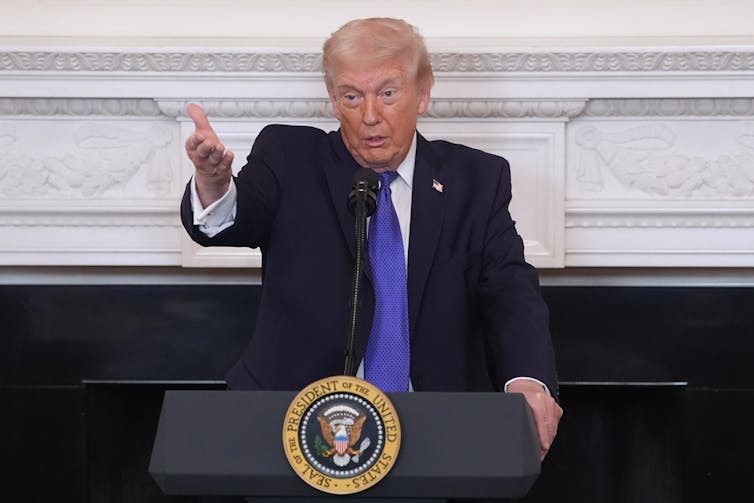
a white man in a suit gestures in front of a podium with the presidential seal on it
President Donald Trump, during a meeting with governors, called the ruling a ‘disgrace.’
AP Photo/Evan Vucci

What does this mean for Trump’s trade policy?

Trump used the International Emergency Economic Powers Act tariffs as leverage to negotiate numerous bilateral deals with U.S. trading partners. Now that the tariffs have been declared unconstitutional, many countries may demand that the deals be renegotiated.

The decision does not cover all of the administration’s tariffs, including national security tariffs imposed under Section 232 for specific industries such as autos, steel and aluminum, and Section 301, a statute that allows the president to impose tariffs against individual countries if they have imposed unfair or discriminatory trade actions against the U.S. This covers some of the tariffs on imports from China.

What other options does Trump have to achieve similar results?

Trump has often used or threatened to use International Emergency Economic Powers Act tariffs for political reasons, including against Brazil over its prosecution of a former president, Mexico over immigration and Canada over its plans to sign a trade deal with China, and other reasons.

The Supreme Court decision will make it more difficult for Trump to use tariffs and tariff threats in that way. One outcome is that constitutional limits the justices set on presidential tariff-making powers should constrain the justification of tariffs for political reasons.

The main avenues for new tariffs in response to the Supreme Court decision are sections 232 and 301. The president could potentially try to get Congress to pass new legislation expanding his tariff powers, but that seems unlikely in an election year.

However, it is important to understand that he chose to use the International Emergency Economic Powers Act as the mainspring of his trade policy because he interpreted it as providing him with full discretion in the unlimited power to impose tariffs without further congressional constraints.

In order to impose similar tariffs under Section 232, for example, each tariff order must be focused on a single industry, and the Commerce Department must issue a report documenting the emergency as it applies to that industry. Presumably, Trump will be preparing to use Section 232 for a large numbers of industries in addition to those currently covered by that statute.

For at least some of the countries with which Trump has already negotiated bilateral trade deals, many of their exports would not be covered by Section 232 tariffs, hence the likelihood that those countries will demand a renegotiation.

Will US companies get refunds for the tariffs they’ve already paid?

The Supreme Court decision appears not to address the question of tariff rebates, but many companies have already indicated that they will demand them.

In principle, any U.S. company in possession of tariff receipts documenting their payment of tariffs would be eligible for a refund if the Supreme Court approves this remedy.

What are the political consequences of this decision?

Since public opinion about Trump’s tariffs is already negative, the president will have to deal with a likely backlash against any attempts to replace the rejected tariffs with new ones.

It will be interesting to see how Republicans in Congress react to Trump’s tariff strategy in view of the upcoming midterm elections. For example, Republicans from states that border Canada may push back against further efforts to curb trade with their northern neighbor.

This may impose a further constraint on Trump’s tariff policy.

The Conversation

Kent Jones does not work for, consult, own shares in or receive funding from any company or organization that would benefit from this article, and has disclosed no relevant affiliations beyond their academic appointment.

ref. Supreme Court rules against Trump’s emergency tariffs – but leaves key questions unanswered – https://theconversation.com/supreme-court-rules-against-trumps-emergency-tariffs-but-leaves-key-questions-unanswered-276561

Can losing weight improve psoriasis? What the evidence shows

Source: The Conversation – UK – By Sarah Morrow, NIHR Doctoral Fellow and Dermatology Specialist Registrar, University of Oxford

wisely/shutterstock

For many people living with psoriasis, the red, scaly skin patches are only part of the story. Another challenge is the uncertainty about whether there is anything they can do themselves to help manage their skin.

Treatments have improved greatly in recent years. Creams, tablets and injectable medicines can all help control symptoms. Even so, many people still ask a straightforward question in clinic: is there anything I can do alongside my medication that might make a difference? Weight often comes up in that discussion. Psoriasis is more common in people who are overweight or living with obesity.

Research now shows that, for people who are overweight, losing weight can improve both the severity of psoriasis and overall quality of life.

Doctors have long suspected that weight loss could help, but earlier research was inconsistent. Many studies were small, short term and did not always measure how people felt in everyday life. As newer weight loss treatments have become more widely available, it has been important to take another look at the evidence.

Body weight and psoriasis severity

To provide a clearer picture, my colleagues and I reviewed the highest quality studies available on weight loss support for people with psoriasis. In these studies, participants were randomly assigned to one of two groups. One group received structured support to help with weight management alongside their usual psoriasis care. The other group continued with usual care alone. Random assignment helps ensure that any differences seen are likely to be due to the support itself, rather than other factors.

The programmes varied. Some focused on reduced calorie diets. Others combined diet with exercise or behavioural support, such as coaching and goal setting to help people stick with changes. A small number included weight loss medicines. In all cases, researchers carefully measured both weight change and changes in the skin.

Man with psoriasis on leg does home exercises
Some weight loss programmes included exercise as well as reduced calorie diets.
NinaKulagina/Shutterstock

Across the studies, people who received weight management support lost about seven kilograms more on average than those who did not. Their psoriasis improved more as well. Doctors’ assessments of skin severity showed greater improvement, and participants were more likely to experience a substantial reduction in their plaques, which are the thick, inflamed patches of skin typical of psoriasis. They also reported better day to day wellbeing, suggesting the changes were noticeable in everyday life, not only in clinical measurements.

Two patterns stood out. Greater weight loss was generally linked with greater improvement in psoriasis. People who started with more severe psoriasis often saw larger benefits.

This does not mean weight is the sole cause of psoriasis. Psoriasis is a complex condition involving the immune system, which is the body’s defence against infection, and it is influenced by both genetics and environmental factors. However, body fat is biologically active. It produces chemicals that promote inflammation, which is the body’s response to injury or illness. These chemicals circulate in the bloodstream and can affect many organs, including the skin. Reducing excess weight may lower this background inflammation and help calm the overactive immune response seen in psoriasis.

No single diet emerged as clearly superior. The studies used different approaches, yet the common factor linked with skin improvement was weight loss itself. This suggests there is no single diet that everyone must follow. Instead, supported and sustainable weight loss appears to be the key factor.

Happy mature man with a weight scale and a measuring tape
The common factor linked with skin improvement was weight loss.
Ljupco Smokovski/Shutterstock

For patients, this is important. People with psoriasis were involved in shaping how we interpreted the findings. Some said they had wondered whether changing their diet or losing weight might help, but were unsure whether there was solid evidence. Others said they would feel more motivated knowing that weight management could benefit both their general health and their skin.


Read more:
Five things I wish everyone knew about weight loss – by an expert in nutrition


For clinicians, clearer evidence also helps. Conversations about weight can be sensitive. Without strong data, it can be difficult to raise the topic in a confident and constructive way. Bringing together the available trial evidence provides a stronger basis for these discussions when they are relevant to the person.

Another treatment tool

There are still limits to what we know. Most of the studies lasted only a few months. Psoriasis is a long term condition, and maintaining weight loss over time can be difficult. We cannot yet say with certainty how long the skin improvements last over several years.

Weight management is also shaped by many factors, including access to affordable healthy food, safe places to exercise, mental health and other medical conditions. Support needs to be practical, realistic and free from judgement.


Read more:
Obesity care: why “eat less, move more” advice is failing


Even with these limits, a consistent picture emerges when the trials are considered together. Adding structured weight management support to usual psoriasis treatment is likely to improve skin severity and quality of life for many people who are overweight.

This does not replace medical treatment. It also does not mean that everyone with psoriasis needs to focus on weight. But for those who are interested, there is now clearer evidence that weight loss can form part of overall care.

For someone living with psoriasis, that knowledge can change how much control they feel they have. Alongside prescribed treatments, there may be another tool available that benefits both the skin and overall health.

The Conversation

Sarah Morrow receives funding from the National Institute for Health and Care Research (NIHR) and has previously received funding from the British Skin Foundation.

ref. Can losing weight improve psoriasis? What the evidence shows – https://theconversation.com/can-losing-weight-improve-psoriasis-what-the-evidence-shows-276113

The furore over Grok’s sexualised images has begun an AI reckoning

Source: The Conversation – UK – By Dareen Toro, Research Leader, Defence, Security and Justice team, RAND Europe

Controversy over the chatbot Grok escalated rapidly through the early weeks of 2026. The cause was revelations about its alleged ability to generate sexualised images of women and children in response to requests from users on the social media platform X.

This prompted the UK media regulator Ofcom and, subsequently, the European Commission, to launch formal investigations. These developments come at a pivotal moment for digital regulation in the UK and the EU. Governments are moving from aspirational regulatory frameworks to a new phase of active enforcement, particularly with legislation such as the UK’s Online Safety Act.

The central question here is not whether individual failures by social media companies occur, but whether voluntary safeguards – those devised by the social media companies rather than enforced by a regulator – remain sufficient where the risks are foreseeable. These safeguards can include such measures as blocking certain keywords in the user prompts to AI chatbots, for example.

Grok is a test case because of the integration of the AI produced within the X social media platform. X (formerly Twitter) has had longstanding challenges around content moderation, political polarisation and harassment.

Unlike standalone AI tools, Grok operates inside a high velocity social media environment. Controversial responses to user requests can be instantly amplified, stripped of context and repurposed for mass circulation.

In response to the concerns about Grok, X issued a statement saying the company would “continue to have zero tolerance for any forms of child sexual exploitation, non-consensual nudity, and unwanted sexual content”.

The statement added that image creation and the ability to edit images would now only be available to paid subscribers globally. Furthermore, X said it was “working round the clock” to apply additional safeguards and take down problematic and illegal content.

This last assurance – of building in additional safeguards – echoes earlier platform responses to extremist content, sexual abuse material and misinformation. That framing, however, is increasingly being rejected by regulators.

Under the UK’s Online Safety Act (OSA), the EU’s AI Act and codes of practice and the EU Digital Services Act (DSA), platforms are legally required to identify, assess and mitigate foreseeable risks arising from the design and operation of their services.

These obligations extend beyond illegal content. They include harms associated with political polarisation, radicalisation, misinformation and sexualised abuse.

Step by step

Research on online radicalisation and persuasive technologies has long emphasised that harm often emerges cumulatively, through repeated validation, normalisation and adaptive engagement rather than through isolated exposure. It is possible that AI systems like Grok could intensify this dynamic.

In the general sense, there is potential for conversational systems to legitimise false premises, reinforce grievances and adapt responses to users’ ideological or emotional cues.

The risk is not simply that misinformation exists, but that AI systems may materially increase its credibility, durability or reach. Regulators must therefore assess not only individual results from AI, but whether the AI system itself enables escalation, reinforcement or the persistence of harmful interactions over time.

Safeguards used on social media with regard to AI-generated content can include the screening of user prompts, blocking certain keywords and moderating posts. Such measures used alone may be insufficient if the overall social media platform continues to amplify false or polarising narratives indirectly.

Woman working on laptop
Women are disproportionately targeted by sexualised content and the harms are enduring.
Kateryna Ivaskevych

Generative AI alters the enforcement landscape in important ways. Unlike static feeds, conversational AI systems may engage users privately and repeatedly. This makes harm less visible, harder to find evidence for and more difficult to audit using tools designed for posts, shares or recommendations. This poses new challenges for regulators aiming to measure exposure, reinforcement or escalation over time.

These challenges are compounded by practical enforcement constraints, including limited regulator access to interaction logs.

Grok operates in an environment where AI tools can generate sexualised content and deepfakes without consent. In general, women are disproportionately targeted in terms of sexualised content, and the resulting harms are severe and enduring.

These harms frequently intersect with misogyny, extremist narratives and
coordinated misinformation, illustrating the limits of siloed risk assessments that
separate sexual abuse from radicalisation and information integrity.

Ofcom and the European Commission now have the authority not only to impose fines, but to mandate operational changes and restrict services under the OSA, DSA and AI Act.

Grok has become an early test of whether these powers will be used to address
large-scale risks, rather than simply failures to remove content. narrow content takedown failures.

Enforcement, however, cannot stop at national borders. Platforms such as Grok operate globally, while regulatory standards and oversight mechanisms remain fragmented. OECD guidance has already underscored the need for common approaches, particularly for AI systems with significant societal impact.

Some convergence is now beginning to emerge through industry-led safety frameworks such as the one initiated by Open AI, and Anthropic’s articulated risk tiers for advanced models. It is also emerging through the EU AI Act’s classification of high-risk systems and development of voluntary codes of practice.

Grok is not merely a technical glitch, nor just another chatbot controversy. It raises a fundamental question about whether platforms can credibly self-govern where the risks are foreseeable. It also questions whether governments can meaningfully enforce laws designed to protect users, democratic processes and the integrity of information in a fragmented, cross-border digital ecosystem.

The outcome will indicate whether generative AI will be subject to real accountability in practice, or whether it will repeat the cycle of harm, denial and delayed enforcement that we have seen from other social media platforms.

The Conversation

Dareen Toro does not work for, consult, own shares in or receive funding from any company or organisation that would benefit from this article, and has disclosed no relevant affiliations beyond their academic appointment.

ref. The furore over Grok’s sexualised images has begun an AI reckoning – https://theconversation.com/the-furore-over-groks-sexualised-images-has-begun-an-ai-reckoning-275448

How immigrants hoping for a better life in Britain came to be viewed as ‘colonisers’ or ‘invaders’

Source: The Conversation – UK – By Simon Peplow, Associate Professor in Modern British History, University of Warwick

Discussions of migration in Britain often portray immigrants as “invaders”. This is evident in from the narrative around migrants arriving on small boats, to recent comments by Jim Ratcliffe, the billionaire co-owner of Manchester United.

Ratcliffe, who relocated to the tax haven of Monaco in 2020, blamed immigrants for the country’s economic challenges and claimed the UK had been “colonised”. After a public backlash, he apologised “that his choice of language has offended some people”.

A look at the history of immigration policy and rhetoric shows how this narrative came to play such a big role – and why it is so harmful.

Britain’s history is intertwined with empire and colonialism. The UK was forged as a nation-state alongside, and partly to facilitate, the growth of a global empire sustained through violence, brutality and war. It also led to immigration from Britain’s current and former colonies.

Although empire-related immigration began hundreds of years earlier, it accelerated after the second world war. Thousands of workers were recruited from the Caribbean and south Asia, as well as from Ireland and continental Europe, to relieve labour shortages and help staff the newly-formed National Health Service.

The 1948 British Nationality Act essentially allowed the entry of all subjects of the British empire. However, this did not reflect widespread acceptance of mass immigration. Rather, it was an attempt to maintain control over Britain’s colonial territories by formalising a specifically imperial identity for them.

Groups such as those onboard the ship Empire Windrush arrived under these conditions. However, increased immigration fuelled local anxieties, and controls were gradually tightened. Britain’s colonial and Commonwealth citizens were now recast as “immigrants”. This did not stop people from wanting to move to the UK, drawn by family or cultural ties – forged by a history of empire.

Themes of invasion

Immigration in the following decades was greater in scale and different than previous migration movements. Alongside this, a rhetoric of invasion began to solidify, one that is still politically influential today.

This narrative developed off the back of national myths that emerged during the second world war. The war was seen as a “people’s war” for Britain – a small, isolated island overcoming foreign enemies. Historians like Paul Ward argue that such national myths shaped ideas of a socially and ethnically homogenous British national identity. One that apparently needed “defending against foreign invasion”.

We can see this theme in key historical moments, such as Enoch Powell’s 1968 “Rivers of Blood”, one of modern Britain’s most notorious speeches. Powell recounted supposed conversations with white Britons fearful of being ruled by immigrants and their descendants.

A similar message was created in response to the so-called Kenyan Asian crisis (1968) and Uganda Asian crisis (1972).
These newly-independent countries were attempting to remove Britain’s imperial influences, including by expelling people of Asian descent whose families had been brought there by colonial governments.

The panic in Britain of a possible “invasion” of African Asian immigrants led to the 1968 Commonwealth Immigrants Act passing in just three days. This act restricted the rights of Commonwealth citizens to migrate to the UK.

The mood around immigration was hardening. Shortly before becoming prime minister, Margaret Thatcher appeared on television in 1978 sympathising with voters afraid of being “rather swamped by people with a different culture”. Immediately afterwards, Thatcher’s Conservatives gained a 11-point poll lead over Labour.

Thatcher’s governments overhauled the UK immigration system. The 1981 British Nationality Act removed citizenship for Commonwealth citizens, formally ending the link between British nationality and a shared history of empire.

Views today

In the last two decades, immigration from within and outside of the European Union has been a key response to the economic and demographic challenges of Britain’s ageing population. Workers from overseas have been recruited to fill gaps in areas such as hospitality, health and social care.

Similarly, Britain’s involvement in conflict zones, such as Afghanistan, Iraq and Libya led to increased applications from people seeking asylum in the UK. In response, anti-immigration sentiment has only grown. Ukip’s infamous “breaking point” poster portrayed refugees fleeing the Syrian conflict as a mass of people headed towards British shores, setting the tone for a debate that ultimately led to Brexit.

Such attitudes have continued as immigration from non-EU countries has grown since Brexit. Many contemporary anxieties around immigration stem from beliefs that a traditional British way of life is under threat. But these views are often based on information that is inaccurate or distorts general demographic change.

The suggestion that immigration is acting like a form of colonisation risks legitimising the “great replacement” far-right conspiracy theory. A recent study found that nearly a third of people in the UK believe this view, which contends that white populations are being deliberately replaced by people of colour.

Immigrants, meanwhile, have experienced not the privileges of colonisers, but discrimination. Immigration benefits Britain in various ways. Most migrants to the UK make a net positive contribution to the economy over their lifetime, paying more in taxes than they consume in public services. Yet they have faced increasing levels of hostility, policies designed to make their life in the UK harder, violence and other systemic disadvantages.

Recent years have seen the consequences of these views, in the form of more overt racism, and violent protests. The “invasion” or “coloniser” narrative is not just rhetoric – it can have harmful, physical consequences.

The Conversation

Simon Peplow has received funding from the AHRC and Institute of Historical Research.

ref. How immigrants hoping for a better life in Britain came to be viewed as ‘colonisers’ or ‘invaders’ – https://theconversation.com/how-immigrants-hoping-for-a-better-life-in-britain-came-to-be-viewed-as-colonisers-or-invaders-275860

Why Islamic finance could provide an ethical model for funding the green transition

Source: The Conversation – UK – By Abdul Wase Samim, PhD Candidate, Aston University

Lois GoBe/Shutterstock

In recent years, green finance has become a key policy in developed countries. The term refers to the loans and investments that fund the transition to a low-carbon economy. But one of the main challenges in this area is the gap between environmental claims and realities – so-called “greenwashing”.

Because of this, alternative finance models that emphasise a direct link between capital and actual economic activities have been receiving more attention. The Islamic financial system is one such alternative. In this system, financing (in other words, lending) is legitimate when it is linked to real economic activities that benefit people and society.

Islamic finance, with its core values of fairness and social responsibility, could be a means of enhancing credibility and transparency within green finance. In other words, its principles could be seen as more than just an ideological or faith alternative to the conventional system.

Unlike other models, Islamic finance emphasises a direct link between financing and actual assets or activities. Profits must come from work – simply lending money to make a profit is not permitted. This allows for a clearer definition of green projects, helping to ensure that resources are spent on activities with a specific economic and social purpose.


Ever wondered how to spend or invest your money in ways that actually benefit people and planet? Or are you curious about the connection between insurance and the climate crisis?

Green Your Money is a new series from the business and environment teams at The Conversation exploring how to make money really matter. Practical and accessible insights from financial experts in the know.


The requirement for transparency, the prohibition on excessive uncertainty, speculation, and the emphasis on social responsibility mean that the “green” claim must be linked to observable and measurable financial activities.

Green finance and green sukuk

One of the most tangible links between Islamic finance and green finance is green sukuk (Islamic bonds). Conventional bonds are based on a debt commitment – the investor provides money and receives regular fixed interest payments before the debt is repaid. But sukuk represent real ownership or a real interest in an asset or project.

In simple terms, sukuk’s investors will focus on real economic activities rather than an abstract financial contract. For example, the invested capital could be directed into projects like renewable energy, sustainable infrastructure, solar power plants, wind energy initiatives, water treatment facilities or clean technology. This means earning profit from a tangible work in real financial projects.

Conversely, with a conventional bond, a significant part of the invested capital might go into “non-real” projects. For example, a stakeholder might use the invested capital to buy shares. They might expect the shares to increase in value and they could then sell them for a profit. The earnings here would come from the fluctuations in the share price, not from real economic activities like industries, production or entrepreneurship.

Through green sukuk, assets and economic activities must be environmentally focused – things like solar power plants, wind projects or clean transport initiatives. This makes the project’s greenness an intrinsic part of the financial instrument.

ESG (environmental, social and governance) sukuk is expected to surpass US$70 billion (£52 billion) globally this year. Green sukuk could play a bridging role in the UK – the country is a global hub for both green and Islamic finance.

The UK’s green sukuk market would not have to replace the green bond market. But it could complement it, particularly for investors (both Muslim and non-Muslim) who value transparency and a direct link between capital and environmental impact.

wind and solar farms side by side against a blue sky and mountains in the distance.
In green sukuk, there must be a direct link between the investment and climate-friendly activities.
hrui/Shutterstock

Islamic fintech (financial technology) also has a role. Fintech is not just about digitising financial services; by using technology to make transactions cheaper, more convenient and more secure, it changes how finance products are accessed, monitored and trusted.
Islamic fintech operates in accordance with Islamic finance principles and values.

In green finance, Islamic fintech allows crowdfunding, asset tokenisation (turning real assets into digital currency), and rapid information sharing with investors. This can cut costs and increase transparency, and provide a foundation for individual investors and small institutions such as credit unions to access investment opportunities.

Islamic fintech’s main difference lies in its ethical framework. Conventional fintech mainly focuses on speed, scalability and profitability. But from the outset, Islamic fintech is shaped by ethical limitations – things like avoiding speculation, emphasising transparency and linking crowdfunding to projects that make profits from real economic activities.

The UK has strong fintech infrastructure, flexible and supportive financial regulation and a prominent place in Islamic finance. This environment gives the country a unique opportunity to test ethical finance in a modern and secular context. This in turn could create more opportunities for green finance projects.

Measuring, monitoring and verifying the environmental impact of projects over time are significant challenges. Initially, most green financial commitments are clear, but determining whether a project reduces carbon and improves sustainability is time consuming and costly.

In these situations, AI can also play a role. Ethical AI in this context means that algorithms are used for analysis and accountability within green projects. Machine-learning algorithms, for instance, can continuously analyse the environmental data for projects financed through green sukuk and identify deviations between goals and results. This reduces the risk of greenwashing and can increase investor confidence.

To comply with Islamic finance, the use of AI must serve specific ethical purposes. This means AI decision-making should not compromise transparency, justice or accountability. This view is consistent with emerging UK approaches to AI regulation, which emphasise trustworthy AI aligned with the public interest.

Applying Islamic finance does not have to be an identity or political project. Rather, it can be a practical and ethical framework for financing the green transition. In short, it can complement current financial systems to address some of humanity’s most pressing economic and environmental challenges.

The Conversation

Abdul Wase Samim does not work for, consult, own shares in or receive funding from any company or organisation that would benefit from this article, and has disclosed no relevant affiliations beyond their academic appointment.

ref. Why Islamic finance could provide an ethical model for funding the green transition – https://theconversation.com/why-islamic-finance-could-provide-an-ethical-model-for-funding-the-green-transition-274691