How I brought a lost fanfare by Ethel Smyth back to life

Source: The Conversation – UK – By Christopher Wiley, Head of Music and Media; School of Arts, Humanities and Creative Industries, University of Surrey

Like a voice from the grave, an important part of Surrey’s cultural heritage has sounded again. It is a short ceremonial brass fanfare by Dame Ethel Smyth (1858–1944).

Fanfares are short, rousing pieces for brass instruments. Late last year I was asked to find one to open the installation ceremony for the University of Surrey’s new vice chancellor, Professor Stephen Jarvis. As this was going to be a high-profile public event attended by hundreds of people in Guildford Cathedral, I knew I needed a unique piece of music.

Rather than commission a new work, I revived a forgotten piece instead: Smyth’s Hot Potatoes fanfare. I chose this composer because she had strong local ties and links to university research.

In 1930, eight of the most prominent British composers of the day were commissioned to write short fanfares for the Musicians’ Benevolent Fund. Each lasted about a minute.

The last of the set was written by Smyth. She based it on a military bugle call, formally titled the Men’s Meal (2nd call). The call signalled that the troops could collect their rations. It is colloquially known as Hot Potatoes. Soldiers added comic words to help remember its meaning: “Oh, pick ’em up, pick ’em up, hot potatoes …”

Three months ago, the university’s department of music and media presented a major orchestral concert for the annual nationwide Being Human Festival. Several of Smyth’s works received their modern UK premiere.

One year prior, the university installed a maquette of Smyth outside its main music performance space on campus. It is a smaller replica of the lifesize-plus statue unveiled in 2022 a few miles away in the centre of her home town, Woking. My research revealed it to be one of few statues to women composers in the world.

At the pinnacle of Smyth’s impressive musical output lies her six operas, several of which are available in modern recordings. Her other compositions include a Mass (a musical setting of the Christian liturgy), a concerto for violin and horn and a symphony-cum-oratorio. Smyth is widely known in Britain and internationally as one of the greatest women composers in classical music history. She was also an influential suffragette and a much-published author of autobiographical and other prose writings.

Yet little is known of her Hot Potatoes fanfare, possibly the last piece she ever wrote, other than its original instrumentation: four trumpets, four trombones and percussion. It is rarely even mentioned in literature on Smyth.

Composed when she was in her 70s, experiencing profound hearing difficulties and with the greatest achievements of her career behind her, its manuscript has long been lost and for many years it seems to have been generally assumed that it could never be performed again.

The piece would have held particular significance for Smyth. She was familiar with military fanfares from childhood, since her father had attained the rank of Major-General in the British Army. She quoted such bugle calls in her own music, Hot Potatoes having previously appeared in the overture to her final opera, Entente Cordiale, the centenary of the first performance of which fell last year.

While the use of Hot Potatoes is not explicitly identified in the opera’s published vocal score, an archival copy now held in the Beecham Collection at the University of Sheffield is annotated in Smyth’s own hand to indicate its origin.

Smyth’s fanfare from past to present

Smyth’s Hot Potatoes and the other fanfares in the set were first performed by students from the Royal Military School of Music (Kneller Hall Musicians) under Captain H.E. Adkins. The occasion was the Musicians’ Benevolent Fund Annual Dinner held in London’s Savoy Hotel on May 8 1930 (coincidentally the same date on which Smyth died 14 years later), from where the performance was relayed for broadcast on the BBC National Programme.

The fanfares were reprised at this annual event a couple more times, including on St Cecilia’s Day, November 22 1932. The previous June, it had also been recorded by the same ensemble for release by His Master’s Voice (HMV) toward the end of that year. But thereafter the trail runs cold.

However, the HMV recording of the fanfares yielded sufficient information for me to transcribe and arrange Smyth’s piece for students of the University of Surrey Brass Ensemble. I based this work on my wider knowledge of the composer’s output, which proved invaluable in identifying and replicating her musical idiosyncracies.

The idea came to me during research undertaken for my most recent journal article, which takes one of Smyth’s early piano pieces as a case study for exploring questions of performance and interpretation in the rediscovery of “lost” music by historically marginalised composers.

Instead of a faithful transcription, I changed the scoring (though in a nod to the original, I retained four separate trumpet parts) as well as the key of the piece. I even recomposed one bar in its entirety.

Certain details were simply too difficult to make out on the recording, while others naturally lent themselves to being enhanced (and I was convinced that there was at least one wrong note). Nonetheless, this project demonstrates the creative possibilities for bringing back music assumed to be lost to history, and for celebrating diversity by resurrecting works by neglected artists.

Fittingly, since Professor Jarvis’s installation ceremony was an official university event, I conducted the Brass Ensemble from the Cathedral’s South Balcony while wearing my doctoral robes, as had been Smyth’s own practice when wielding the baton. I hope this recovery of Smyth’s Hot Potatoes fanfare will now lead to repeat performances.


Looking for something good? Cut through the noise with a carefully curated selection of the latest releases, live events and exhibitions, straight to your inbox every fortnight, on Fridays. Sign up here.


The Conversation

Christopher Wiley does not work for, consult, own shares in or receive funding from any company or organisation that would benefit from this article, and has disclosed no relevant affiliations beyond their academic appointment.

ref. How I brought a lost fanfare by Ethel Smyth back to life – https://theconversation.com/how-i-brought-a-lost-fanfare-by-ethel-smyth-back-to-life-276479

The biology of body odour, from sweat glands to skin bacteria

Source: The Conversation – UK – By Primrose Freestone, Senior Lecturer in Clinical Microbiology, University of Leicester

PeopleImages/Shutterstock

Sweat rarely smells on its own. Body odour develops when bacteria on the skin break down compounds in sweat and release volatile chemicals that evaporate into the air.

This interaction between sweat and microbes explains why some areas of the body smell more strongly than others, why odour varies between people and how deodorants and antiperspirants reduce it.

Sweat is a clear, salty liquid produced by glands across almost the entire surface of the skin. Its production is controlled by the autonomic nervous system, which regulates automatic bodily functions such as temperature and heart rate. The main function of sweat is cooling. When body temperature rises during exercise, stress or hot weather, sweat evaporates from the skin and carries heat away.

There are three main types of sweat gland, each producing slightly different fluids. Eccrine glands sit across most of the body and release a thin, watery sweat made mostly of water and salt. Apocrine glands, found mainly in the armpits and groin, produce a thicker fluid that contains fats, proteins and sugars. Apoeccrine glands, also concentrated in the armpits, produce sweat that is more similar to the watery type but in larger amounts.


Read more:
Anhidrosis: why some people – apparently like Prince Andrew – just can’t sweat


Odour develops when bacteria on the skin break down the substances in sweat. The skin naturally hosts many kinds of bacteria. Groups with names such as Corynebacteriaceae, Staphylococcaceae and Propionibacteriaceae are commonly involved. As they feed on sweat, they break its ingredients into smaller chemicals that evaporate easily and reach the nose, creating smell.

Different bacteria produce different scents. Staphylococcus hominis, commonly found in the armpits, creates chemicals that smell similar to onions. Corynebacterium and Staphylococcus epidermidis break down a building block of proteins called leucine into isovaleric acid, a compound produced when bacteria break down sweat that has a strong, cheese-like smell.

Some Corynebacterium species produce compounds often described as goat-like. These smell-producing chemicals can stick to clothing, which absorbs both sweat and bacteria, allowing odours to linger. Research confirms that specific bacteria are linked to characteristic odours.

Armpits and feet tend to smell more strongly because they combine dense sweat glands with warmth and moisture, creating favourable conditions for bacterial growth.

Washing removes sweat and reduces bacterial numbers, helping to limit odour. Changing clothes after heavy sweating is also important, as fabrics can trap sweat and microbes. Regular bathing and clean clothing reduce the build-up of odour-causing compounds.

Some people sweat excessively without heat or exercise. This condition, known as hyperhidrosis, affects around 2% of the population and often requires medical treatment rather than improved hygiene alone. Treatment options include prescription-strength antiperspirants, medications that reduce nerve signals to sweat glands, botulinum toxin injections, and iontophoresis, a treatment that uses a mild electrical current passed through water to temporarily reduce activity in sweat glands. In severe cases, surgery may be considered.


Read more:
7 things you can do if you think you sweat too much


Deodorants and antiperspirants tackle odour in different ways. Deodorants mainly target bacteria, using antimicrobial ingredients to slow their growth and fragrances to mask residual smells. Some plant-based products contain substances such as tea tree oil, potassium alum or pentagalloyl glucose, which also have antimicrobial effects.

Antiperspirants reduce the amount of sweat reaching the skin. Aluminium salts, such as aluminium chlorohydrate, form temporary plugs in eccrine sweat gland openings, limiting moisture and reducing the resources bacteria need to produce odour. Many products combine both approaches.

Body odour varies between people and can be influenced by genetics, age, diet, stress and health conditions. Food and drink can also play a role. Compounds from garlic, onions and some spices can circulate in the bloodstream and be released through sweat, altering its smell. Alcohol is partly excreted through breath and skin and can increase sweating, giving bacteria more material to break down.

Medications can affect body odour in similar ways. Some increase sweating, while others alter metabolism or change the balance of bacteria on the skin. Antibiotics, for example, can shift microbial communities, and certain antidepressants and diabetes medications may increase perspiration. These changes are usually temporary.

Men generally have larger sweat glands and tend to produce more sweat, which can support larger bacterial populations and higher levels of volatile fatty acids such as isovaleric acid, a compound produced when bacteria break down sweat that has a strong, cheese-like smell.


Read more:
The dirty truth about what’s in your socks: bacteria, fungi and whatever lives between your toes


Occasionally, changes in body odour signal an underlying condition. Trimethylaminuria is a rare inherited disorder in which the body cannot properly break down trimethylamine, resulting in a strong fish-like smell. There is no cure, but symptoms can often be managed through diet, specialised soaps, antibiotics that reduce certain gut bacteria and supplements that can help limit production of the chemical.

Other medical conditions can also alter body odour. Uncontrolled diabetes can produce a sweet or fruity smell on the breath, liver disease can cause a musty odour, and advanced kidney disease may lead to a urine-like smell. Certain infections and metabolic disorders can also change how the body smells.

For example, researchers have investigated whether analysing volatile chemicals released from the body could help detect infections such as malaria. One study examined whether odour profiles might assist diagnosis through chemical signatures in breath and skin emissions.

Sweat remains essential for regulating body temperature. It does not meaningfully remove toxins, despite common claims. Detoxification is carried out primarily by the liver and kidneys. This means you cannot “sweat off” a hangover or “sweat out” a cold. Alcohol is broken down by the liver, and viral infections are cleared by the immune system, not through sweat.


Read more:
The truth about detoxes – by a liver specialist


However, prolonged sweating during intense exercise or hot weather can lead to fluid and electrolyte loss. To prevent dehydration, it is important to drink enough fluids, and during sustained exertion drinks containing electrolytes may help replace what has been lost.

Body odour is not simply a matter of cleanliness. It reflects the complex interaction between sweat glands, skin bacteria, clothing, diet, medication and individual biology. For most people it is manageable and normal. In some cases, persistent or unusual changes in smell may warrant medical advice.


Strange Health is hosted by Katie Edwards and Dan Baumgardt. The executive producer is Gemma Ware, with video and sound editing for this episode by Anouk Millet. Artwork by Alice Mason.

In this episode, Dan and Katie talk about a social media clip via YouTube from Alexandrasgirly.

Listen to Strange Health via any of the apps listed above, download it directly via our RSS feed or find out how else to listen here. A transcript is available via the Apple Podcasts or Spotify apps.

The Conversation

Primrose Freestone does not work for, consult, own shares in or receive funding from any company or organisation that would benefit from this article, and has disclosed no relevant affiliations beyond their academic appointment.

ref. The biology of body odour, from sweat glands to skin bacteria – https://theconversation.com/the-biology-of-body-odour-from-sweat-glands-to-skin-bacteria-275491

What makes a city beautiful? Here’s what ratings of thousands of urban landscapes reveal

Source: The Conversation – UK – By Eugene Malthouse, Research Fellow, Centre for Decision Research and Experimental Economics, University of Nottingham

Some buildings leave such an impression when you visit them that they can be forever summoned to the mind’s eye. For us, these include the soaring dome of St Paul’s cathedral in London, the Georgian grandeur of Royal Crescent in Bath, and the ascending towers and pinnacles of King’s College Chapel in Cambridge.

As psychologists with a particular focus on wellbeing, we are fascinated by the feelings these buildings instil in us – a sense of being grounded, of momentary stillness, even of awe.

But while the effects of experiencing beautiful surroundings on people’s wellbeing has been extensively researched, these studies have mainly focused on natural landscapes and settings.

We wanted to understand how people value different urban settings – and which types of building they view most positively. In England, 83 out of every 100 people now live in towns and cities, so variations in these urban landscapes can hold important consequences for wellbeing.

Our study, published in Frontiers in Psychology, found a particularly powerful effect when people viewed older buildings, particularly those classified as being of special historic or architectural interest. Indeed, we found these listed buildings are comparable with forests and lakes in terms of how people rated their scenic quality.

How we tested urban scenicness

Our study combined two large datasets – the first from Scenic-Or-Not, a website where people rate the scenicness of photographs taken throughout Britain on a scale from 1 (“not scenic”) to 10 (“very scenic”). For our analysis, we used only photographs taken within English urban areas, giving us 28,547 ratings of 3,843 images.

We combined this with Historic England’s dataset of more than 370,000 listed buildings throughout England and Wales, plus their grade – I (of exceptional interest), II* (particularly important) or II (special interest) – and the century in which the building was constructed.

Scenic-Or-Not website shows a photo of a church
A photo of a Nottinghamshire church on the Scenic-Or-Not website.
B Hilton

This enabled us to compare the ratings of views with and without listed buildings, and to explore other questions such as how the grade or century of construction influences the scenicness rating. Sometimes these buildings featured prominently in the photographs, other times only marginally – we counted them all the same.

We also used Google’s Vision AI tool to detect other features in photographs that might influence scenicness. This allowed us to rule out the possibility that photographs containing historic buildings were judged more scenic because they also tended to contain trees, for example.

In our study, the average scenicness of English urban areas was 2.43 out of 10 – significantly lower than how people rate the scenicness of natural environments. In another study that used the same platform to rate British rural scenes, these averaged 4.16.

But we also found that when a listed building was present in the photograph, this score was on average 0.61 points higher – a 25% increase. As shown in this table, this “historic building effect” was comparable to that of forests and lakes.

Impact of different features on scenicness rating:

Table showing the effect of different elements of a view on how scenic it is rated.
The effect of a listed building is similar to that of a forest or lake.
Eugene Malthouse, CC BY-SA

Photographs in which the most prominent listed building was either grade I or grade II* listed were perceived more scenic than those featuring slightly less historically or architecturally significant (grade II) buildings. Images featuring buildings constructed in earlier centuries were also judged more scenic.

What makes historic buildings so valued?

The scenic quality of urban areas has previously been linked with variations in happiness and health. Our study shows old buildings in particular make important contributions to urban scenicness. This suggests that historic buildings may be worth preserving not only for their architectural significance but for their effect on people’s wellbeing.

But it also raises the question of whether the sheer age of these buildings makes them so impactful – or is it also the nature of their design?

Experts in architecture have speculated on the reasons old buildings continue to be valued so highly. For example, the apparent timeless popularity of certain historic styles, such as the symmetry of Georgian architecture in Bath’s Royal Crescent, has been contrasted with modern architecture that disregards or rejects traditional proportional guidelines.

But there are also psychological reasons why many people value historic buildings so much. These might include their reassuring sense of permanence; their weathered and imperfect nature; the stories of past lives they hold; or their ability to conjure feelings of nostalgia within us.

We hope to learn more about why people feel so strongly about historic buildings, and the effects such buildings can have on their wellbeing, in our future research. In the meantime, please share your thoughts and experiences in the comments below.

The Conversation

Eugene Malthouse received funding from the European Research Council.

Sidney Sherborne received funding from the European Research Council.

ref. What makes a city beautiful? Here’s what ratings of thousands of urban landscapes reveal – https://theconversation.com/what-makes-a-city-beautiful-heres-what-ratings-of-thousands-of-urban-landscapes-reveal-276319

Good maternity care needs good science – but there’s more research on marathon running than giving birth

Source: The Conversation – UK – By Anastasia Topalidou, Associate Professor in Perinatal Biomechanics and Health Technologies, University of Lancashire

Dmitry Naumov/Shutterstock

For years, debates about maternity care have centred on how women give birth. But the more important question has always been safety.

Vaginal birth, assisted birth and caesarean section are different clinical routes, not measures of success. The outcome that matters is the wellbeing of both mother and baby, guided by individual risk and informed decision making.

In the wake of maternity investigations, public debate has focused on staffing levels, organisational culture and accountability. These are essential concerns. But there is another, less visible issue. We still do not fully measure or understand what physically happens during childbirth itself.

Labour is one of the most physically demanding processes the human body experiences. It involves coordinated muscle activity, shifting pressure through the pelvis and spine, and joints adapting under intense physiological stress. Yet there are currently no studies directly measuring how labour positions, movement, hands-on techniques and physical forces affect the mother and baby in real time during active labour.

As a result, many positioning strategies are based largely on tradition and accumulated clinical experience rather than direct measurement.

Guidance sometimes suggests certain positions are better than others. But bodies do not behave in one-size-fits-all ways. Research examining upright birthing positions shows there is no single ideal mechanical pattern. The same position can distribute strain differently depending on flexibility, spinal curvature, previous injury and joint mobility.

Despite this complexity, active labour is still not measured biomechanically in real time, while other demanding physical activities have been studied in great detail. Marathon running, for example, has been analysed extensively. Researchers have mapped muscle activity, joint forces and how the body interacts with the ground. Birth has not received the same level of mechanical study.


Read more:
Why we still don’t understand what happens to women’s bodies during labour


This gap reflects long-standing research priorities. Women were historically excluded from large areas of clinical research, and funding for women’s health remains comparatively limited. In England, a dedicated Women’s Health Strategy was introduced only in 2022.

Foetal movement

One of the most common reasons women seek urgent maternity assessment is reduced or absent foetal movement. Yet foetal movement itself is not directly measured.

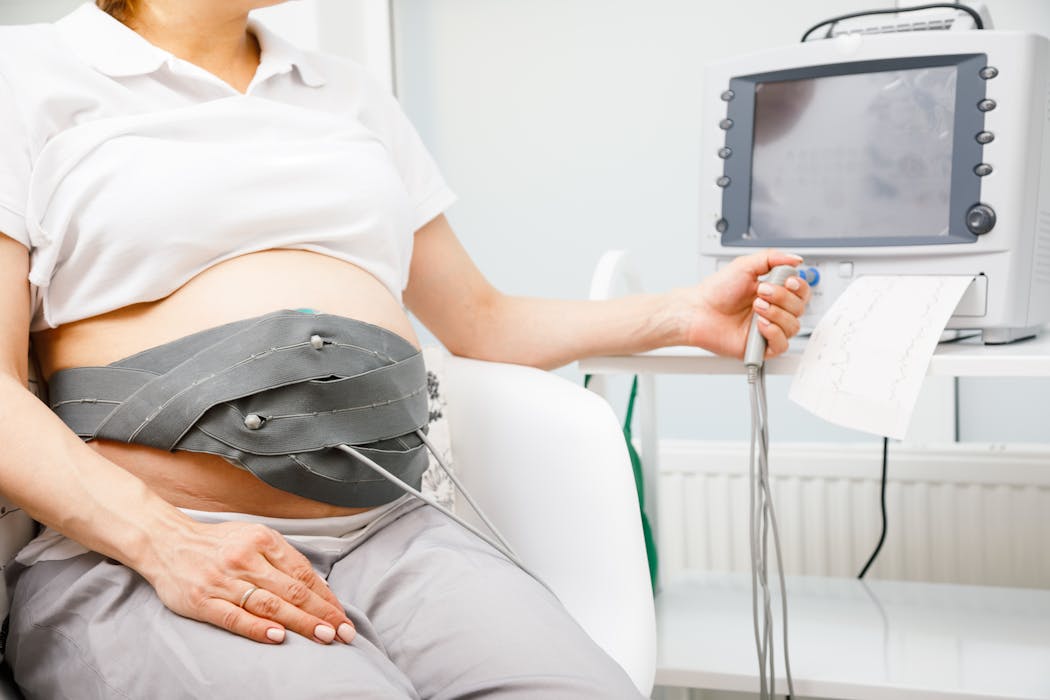
The main monitoring tool used in pregnancy and labour is cardiotocography, often called CTG. It tracks the baby’s heart rate and the mother’s contractions. It does not capture how the baby moves, such as limb activity, rotation or developing movement patterns. In practice, assessment still relies largely on what the pregnant woman feels and reports.

When someone says, “My baby is not moving normally,” she is describing a change we cannot objectively measure in real time. If detecting change early is central to safe care, this gap matters. When reassurance is given, it is based on the measurements we currently have, but not always the ones we need.

The education gap

Midwives, obstetricians and maternity teams support one of the most physically demanding processes the human body undergoes. Yet formal education in biomechanics is limited. Biomechanics is the study of how forces move through the body, how joints interact and how changing one angle affects another.

Understanding how altering hip position affects the pelvis and spine is not abstract theory. It can influence comfort, pressure on tissues and potentially safety.

Embedding biomechanics into maternity education is not about criticising clinicians. It is about giving them more precise tools and knowledge to support decision making.

Improving maternity safety requires care to be guided by evidence rather than shaped mainly by tradition.

The NHS spends substantial sums each year on maternity-related negligence payments. Investing even a fraction of this in rigorous childbirth research, alongside improvements to staffing and systems, could strengthen the scientific foundation of care and support safer, more personalised decisions.

Behind every statistic is a family living with loss, trauma or unanswered questions. Improving maternity safety is not only about accountability or workforce pressures. It is also about understanding what happens during labour, equipping clinicians with better knowledge and ensuring women’s concerns are supported by reliable tools.

Birth is one of the most significant physical events in human life. It deserves to be studied and understood with the same scientific rigour applied to any other complex medical process.

The Conversation

Anastasia Topalidou received funding from the NIHR Applied Research Collaboration North West Coast (NIHR ARC NWC) for the completion of the scoping review referenced in this article.

ref. Good maternity care needs good science – but there’s more research on marathon running than giving birth – https://theconversation.com/good-maternity-care-needs-good-science-but-theres-more-research-on-marathon-running-than-giving-birth-276093

Lifting the lid on unknown coral microbiomes living in the Pacific ocean

Source: The Conversation – France – By Shinichi Sunagawa, Associate Professor at the Department of Biology, Swiss Federal Institute of Technology Zurich

Reef-building coral colonies serve as structured habitats for diverse microbiomes, forming a
hidden reservoir of taxonomic, genetic and chemical diversity (photo supplied by the author).
Shinichi Sunagawa, Fourni par l’auteur

For decades, we have thought of coral reefs as the “rainforests of the sea:” vibrant, complex ecosystems full of fish, sponges, and coral. However, our recent findings suggest we’ve been overlooking a crucial part of this picture. By looking beyond the colourful life into the microscopic world, we have uncovered a “hidden chemical universe” that could hold the key to the next generation of life-saving medicines.

Our work, published in Nature, is the result of an international collaborative effort between the Sunagawa, Paoli, and Piel labs, alongside the Tara Ocean Foundation: France’s first foundation to be recognised as promoting public interest in the world’s oceans, founded by Agnès Troublé alias French Fashion designer agnès b. By combining our expertise in marine ecology, microbiology, and biotechnology, we have taken a closer look at corals. Far more than just individual animals, we prefer to think of them as super-organisms: bustling cities where the coral animal provides the living architecture, while trillions of microbes inhabit them, carrying out vital services.

What we found within these microscopic communities was staggering. After analysing 820 samples from 99 coral reefs across the Pacific, we reconstructed the genomes of 645 microbial species living within the corals. The surprise? More than 99% of them were completely new to science. Deciphering their genetic code revealed that these tiny residents are not silent “germs,” but prolific chemical engineers. They harbour a greater variety of biosynthetic blueprints for natural products than has been documented in the entire global open ocean so far.

How we found out

Our discovery didn’t happen in a single laboratory. It began aboard the 118-foot research schooner Tara, designed to withstand Arctic ice. After completing an extensive exploration of plankton across the global ocean, Tara served as our floating laboratory for the Tara Pacific mission. Over several years, our team visited 99 reefs across the Pacific. Life on Tara combined rugged seafaring with high-tech biology: while the crew managed the ship, teams of divers collected coral samples from remote archipelagos thousands of miles apart.

carte
The Tara Expedition and sample-collecting mission’s ship route.
tara, Fourni par l’auteur

Back on land, the real detective work began. DNA sequencing at the French National Center of Sequencing (Genoscope) and genome reconstruction using ETH Zurich’s supercomputers allowed us to decode the genetic information from these microbes.

This enabled us to map Pacific coral microbiomes at an unprecedented scale. We found that microbes are highly specific to their coral hosts; each coral species has its own unique microbial fingerprint, shaped over millions of years of evolution.

Why it matters

Most current medical drugs were originally discovered in nature, many from soil bacteria. But we are running out of new “soil” leads, and antibiotic-resistant “superbugs” pose a growing global threat.

Here is where the tiny but mighty “chemical engineers” come in. Within their DNA, these microbes encode Biosynthetic Gene Clusters: instruction manuals for building diverse biochemical molecules, including antibiotics. Because coral-associated microbes live in the highly competitive reef environment, they have evolved sophisticated chemical weapons to defend their hosts or fight rivals. By identifying these Biosynthetic Gene Clusters, we have uncovered a “molecular library” written in a language we are only just beginning to translate. These chemicals may provide solutions to biotechnological challenges and human diseases.

What is next

Our discovery of new microbial species and biochemical diversity in corals is just the beginning. The Tara Pacific expedition studied only a handful of coral species, while at least 1,500 have been described worldwide, highlighting the enormous potential for scientific breakthroughs. But a tragedy is unfolding: as climate change warms the oceans, reefs are dying. When a reef disappears, we don’t just lose a beautiful ecosystem, we witness the “burning” of this library before we’ve had a chance to read the books.

The journey that began on Tara is now a race against time to unlock the secrets contained in the microbiomes of coral and other reef organisms before they are lost forever. Protecting reefs is critical, not only for the environment and the millions of people who directly depend on them, but also for preserving the biological pharmacy that could safeguard human health for generations to come.

The Conversation

Shinichi Sunagawa received funding from the Swiss National Science Foundation.

Chris Bowler ne travaille pas, ne conseille pas, ne possède pas de parts, ne reçoit pas de fonds d’une organisation qui pourrait tirer profit de cet article, et n’a déclaré aucune autre affiliation que son organisme de recherche.

ref. Lifting the lid on unknown coral microbiomes living in the Pacific ocean – https://theconversation.com/lifting-the-lid-on-unknown-coral-microbiomes-living-in-the-pacific-ocean-276770

New global study: long after war, injuries from landmines and explosives kill nearly 4 in 10 victims

Source: The Conversation – Global Perspectives – By Stacey Pizzino, Lecturer, School of Public Health, The University of Queensland

When a war ends and peace agreements are signed, most people assume the danger is over. But for many communities around the world the danger remains in the ground, waiting.

Landmines and other explosives left behind after a conflict can stay active for decades – buried in the paths to school, in the fields that feed families and in the areas where children play.

In some countries, such as Laos and the Solomon Islands, bombs from conflicts decades ago still injure and kill.

This quiet danger isn’t a distant problem. Today, at least 57 countries are contaminated by landmines and other explosive ordnance, including mortars and grenades.

At the same time, some governments are stepping back from the Landmine Ban Treaty, the first comprehensive treaty aimed at eliminating landmines in conflicts. Decisions made in parliaments today can translate into hazards underfoot for years to come.

Our new research is aimed at understanding the ongoing risk landmines pose. The study is the world’s largest analysis of landmine and explosive ordnance casualties. And the data allows us to answer critical questions: who dies from these weapons, and why?

What do the numbers tell us?

In our study, we analysed 105,913 casualties across 17 conflict-affected countries, using operational data. These are the real world operational records routinely collected by national mine action authorities, the UN and other humanitarian organisations.

These records let us see what communities are facing without adding any burden to these often stretched services.

Across all settings, the case fatality rate was 38.8%. Put simply: for every ten people injured by landmines or other explosive ordnance around the world, nearly four die. This is extraordinarily high.

For comparison, the fatality rate for blast injuries among military personnel or civilians treated in well-resourced trauma centres is around 2%.

The gap highlights the brutal disparity between those who are injured in environments with functioning surgical and trauma care and those who are not.

Not all explosive threats are equal, either.

Improvised explosive devices (IEDs) were the most lethal weapon type in our analysis.

IEDs are increasingly used in many modern conflicts and are often remotely detonated to maximise casualties. Their explosive force and unpredictability cause devastating injuries that many local health systems are simply not equipped to manage.

Who is most affected?

Although most casualties from landmines and explosive ordnance are men, women had significantly higher odds of dying from their injuries. This likely reflects unequal access to health care, delayed treatment, and social barriers that limit mobility and decision making in many conflict-affected settings.

Children’s risks are different – they are both vulnerable and resilient.

Children are particularly at risk of detonating landmines when playing, when caught up in active conflict, or simply as bystanders.

The reason is often tragic.
Children tend to play together in groups, meaning when one child encounters an explosive remnant, several are injured at once.

Yet, overall, children in our data were more likely to survive their injuries than adults, perhaps because they sustain different injury patterns or receive care sooner when adults rush to assist.

But survival is only the beginning. Children may need multiple surgeries, new prostheses as they grow up, long-term rehabilitation and lifelong disability support. These are needs that many health systems struggle to meet.

Age also shapes outcomes. The highest odds of death were observed in adults aged 45–64. Older people may have pre-existing health issues and face greater barriers to reaching medical care, yet their needs can often be overlooked.

The human cost of explosives

The impact of landmines and explosive ordnance extends far beyond immediate injuries. These injuries disrupt people’s daily lives in ways that can entrench communities in poverty.

For example, farmers cannot safety cultivate their land because of the threat of landmines. Women gathering water or food can trigger explosives, too.

When injuries occur, families lose breadwinners and care-giving roles change, pushing households deeper into poverty.

How can we strengthen care for survivors?

There are ways to mitigate the impacts of landmines and explosive ordnance, though. This is a preventable public health crisis.

Our findings highlight the urgent need to strengthen emergency, critical and surgical care in conflict-affected areas to reduce preventable deaths.

Reliable pre-hospital care, transport and basic surgical care saves lives. So does long-term rehabilitation and disability support, especially for children who will live with the consequences of these explosive weapons and injuries for decades.

As old conflicts continue and new ones emerge, explosive ordnance keep contaminating the places where people live, play, work and travel.

Understanding who dies, and why, is essential to preventing future deaths and ensuring that peace, when it comes, offers real safety.

The Conversation

Stacey Pizzino received funding from the Australian government Research Training Program.

Michael Waller does not work for, consult, own shares in or receive funding from any company or organisation that would benefit from this article, and has disclosed no relevant affiliations beyond their academic appointment.

ref. New global study: long after war, injuries from landmines and explosives kill nearly 4 in 10 victims – https://theconversation.com/new-global-study-long-after-war-injuries-from-landmines-and-explosives-kill-nearly-4-in-10-victims-276062

A cosmic explosion with the force of a billion Suns went unseen – until we caught its echo

Source: The Conversation – Global Perspectives – By Ashna Gulati, PhD Candidate, Radio Astronomy, University of Sydney

NASA’s Goddard Space Flight Center Conceptual Image Lab

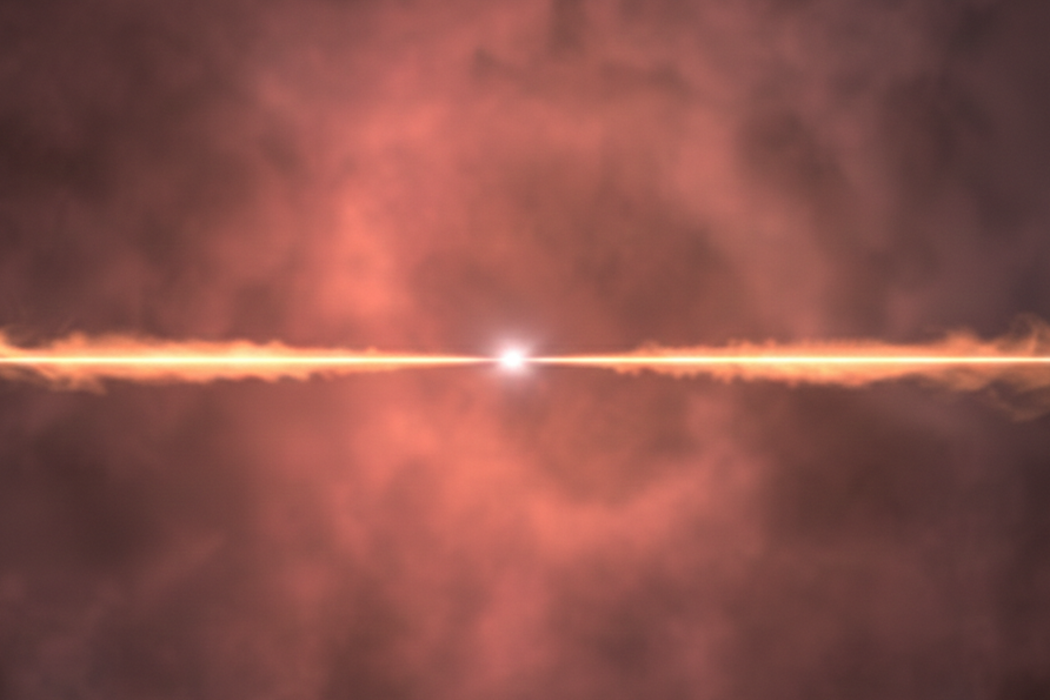
Some of the universe’s most extreme explosions leave behind almost no trace. The original explosion is unseen, but our observations can capture the long-lived echo it leaves behind as the shock front ploughs into its surrounding environment.

In new research accepted for publication in The Astrophysical Journal, we have discovered what may be the clearest example yet of one of these hidden explosions: the radio afterglow of a powerful gamma-ray burst whose initial blast went unnoticed.

The only other viable explanation for what we see is an extraordinarily rare event in which a star is torn apart by an intermediate-mass black hole: a long-hypothesised, elusive class of black holes that has proven difficult to detect.

Either way, we’re watching the slow-motion aftermath of one of the most extreme, rare events the cosmos can produce.

The explosions we usually miss

Gamma-ray bursts are brief but powerful jets of high-energy radiation. Within seconds, they release as much energy as the Sun will emit over its entire lifetime. They are caused when massive stars die and form black holes.

While these jets are launched in all directions, we only observe the small fraction whose emission is directed towards us. When it is directed away from us, the initial flash goes unseen, and all we can observe is the slowly fading afterglow.

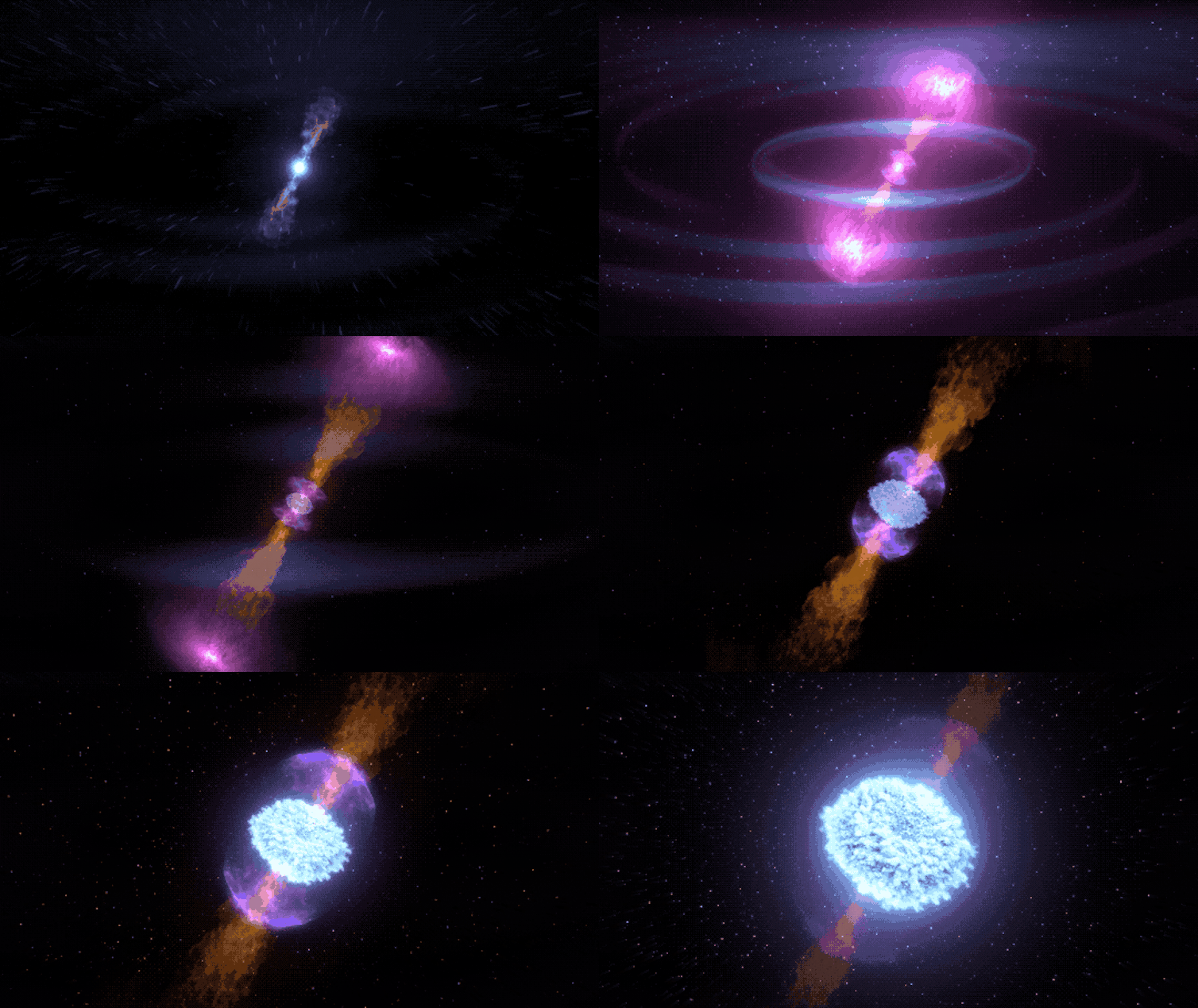
Animation of a gamma-ray burst showing the narrow, high-energy jets.
NASA

Although these so-called “orphan afterglows” of gamma-ray bursts have been predicted for decades, finding them has proven extraordinarily difficult. Without a high-energy flash to announce their arrival, astronomers have to search thousands of square degrees of sky.

As a result, these cosmic explosions are easy to miss, and hard to recognise when they do appear – until now.

A cosmic ghost appears

Using the Australian SKA Pathfinder (ASKAP), a 36-antenna radio telescope at Inyarrimanha Ilgari Bundara in Western Australia, we scanned vast regions of sky for unexpected long-lived radio transients (astronomical objects that appear and change over weeks to years). We were trying to catch rare events that reveal themselves only through their fading radio emission.

In data from one of these wide-field surveys, we noticed a radio source (named ASKAP J005512-255834), that hadn’t been there before.

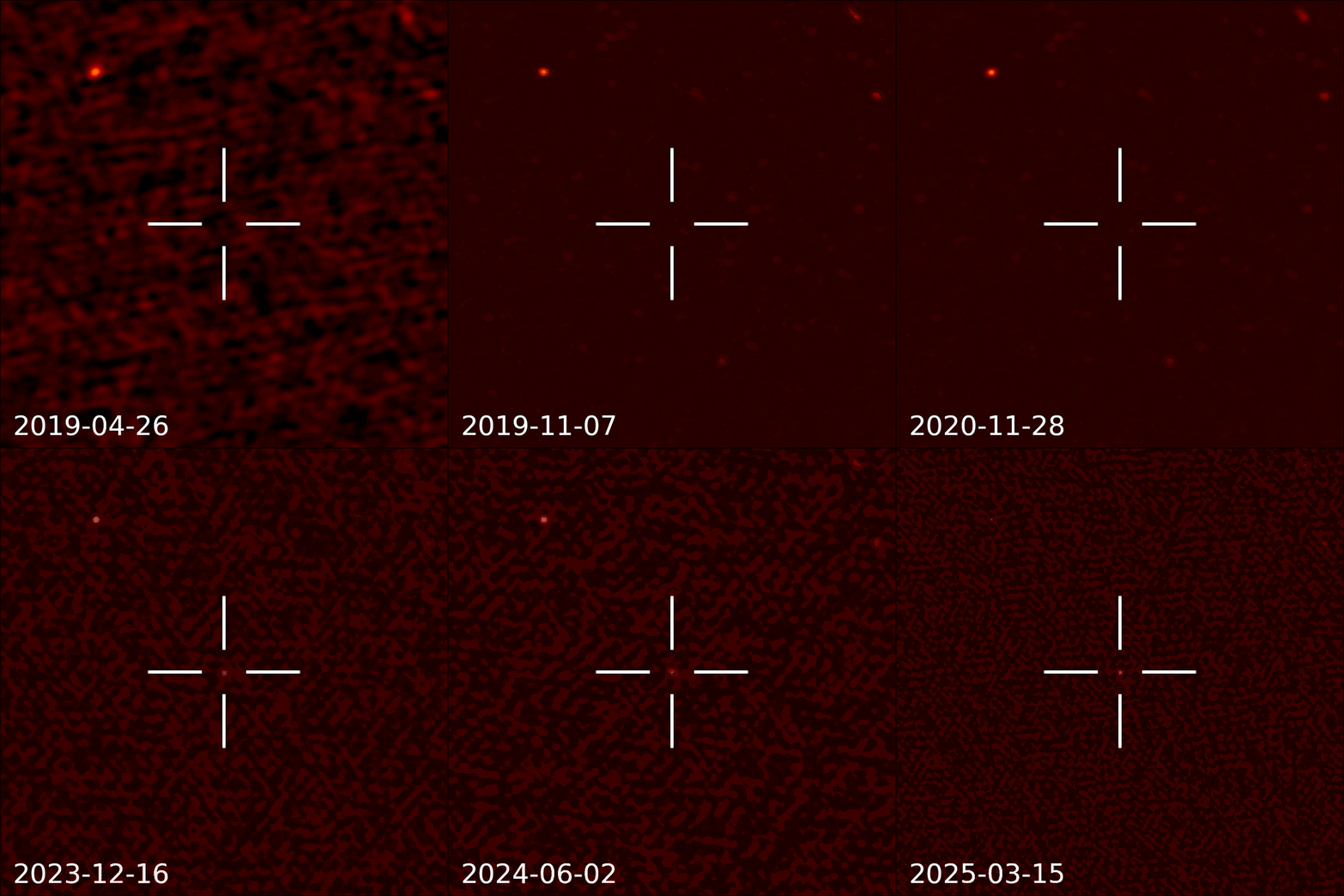
It brightened rapidly, releasing 10³² Watts of energy into space – comparable to the total radio energy output of billions of Suns – and then began to fade slowly over time.

Brightening of the radio afterglow detected in the RACS survey with ASKAP. Observations beginning in 2022 capture the source turning on, after which it remains detectable for more than 1,000 days.
Emil Lenc

This behaviour immediately set it apart. Most radio transients either evolve quickly or flare repeatedly. This source did neither. Instead, it behaved like the lingering echo of a single, immensely powerful explosion.

Although ASKAP J005512-255834 was bright at radio wavelengths, it left almost no signal at other wavelengths. We could not see a counterpart in visible light or X-rays.

This is exactly what astronomers expect from an orphan afterglow: the fading, widening glow of a tightly focused cosmic jet that was not initially pointed towards Earth, becoming visible only after it slows and spreads.

A busy neighbourhood, billions of light-years away

This rare transient is located in a small but bright galaxy around 1.7 billion light-years from Earth. The galaxy has an irregular structure and is actively forming stars, making it a natural environment for extreme stellar events such as stellar collapse or violent stellar disruption.

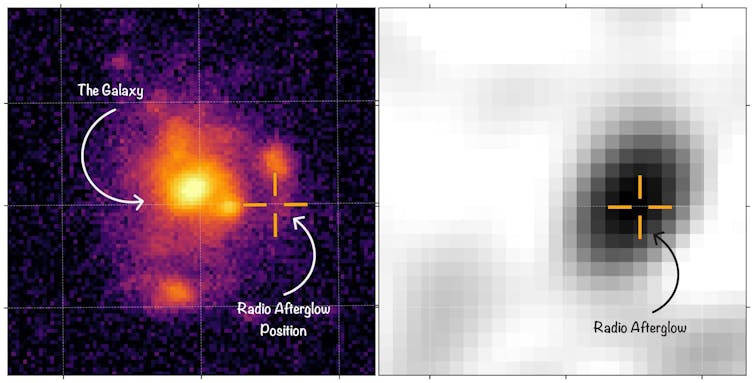
The image on the left shows the location of the radio afterglow within the galaxy 2dFGRS TGS143Z140, captured with the Magellan Telescope in Chile. On the right, we see the same radio source detected by the Giant Metrewave Radio Telescope in India.
Ashna Gulati

The position of the explosion is off to one side, not aligned with the galaxy’s central nucleus. Instead, it appears to lie within a compact star-forming region, possibly a nuclear star cluster.

This raises new questions about what kinds of environments can host such powerful cosmic events.

Could it be something else?

Because ASKAP J005512-255834 is so unusual, we had to do some detective work to figure out what it might be. We carefully examined (and ruled out) some alternative explanations, including stars, pulsars and supernovae.

The only other scenario capable of reproducing the observed radio behaviour involves a star being torn apart by an intermediate-mass black hole. These are a rare class of black holes that sit between stellar remnants and the supermassive giants found in galaxy centres.

Such events are thought to be extremely rare at radio wavelengths, but we cannot completely rule out this explanation. Confirming it would make this the first example of its kind, a discovery just as interesting as an orphan gamma-ray burst.

A hidden universe revealed by radio waves

Was this discovery a stroke of luck, or the first glimpse of a long-hidden population? Until recently, we simply didn’t have the tools to know.

ASKAP J005512-255834 is the most convincing orphan gamma-ray burst afterglow yet identified. It was found by using our radio telescope to search for the long-lived echo of an explosion we didn’t know had occurred.

Using the same approach, we now hope to uncover many more of these orphan afterglows and finally give them a place in our cosmic story.

In doing so, we may be able to build a full picture of the gamma-ray burst population, including those that never announced themselves with a flash, but lingered quietly as ghosts in the radio sky.

The Conversation

Ashna Gulati receives funding from the Australian Research Training Program and the Australian Research Council Centre of Excellence for Gravitational Wave Discovery (OzGrav).

Tara Murphy receives funding from the Australian Research Council.

ref. A cosmic explosion with the force of a billion Suns went unseen – until we caught its echo – https://theconversation.com/a-cosmic-explosion-with-the-force-of-a-billion-suns-went-unseen-until-we-caught-its-echo-275565

A new space race could turn our atmosphere into a ‘crematorium for satellites’

Source: The Conversation – Global Perspectives – By Laura Revell, Professor of Atmospheric Chemistry, University of Canterbury

Alan Dyer/Getty Images

When we look up at the night sky and see a satellite glide past, we might not consider climate change or the ozone layer.

Space may feel separate from the environmental systems that sustain life on Earth. But increasingly, the way we build, launch and dispose of satellites is starting to change that.

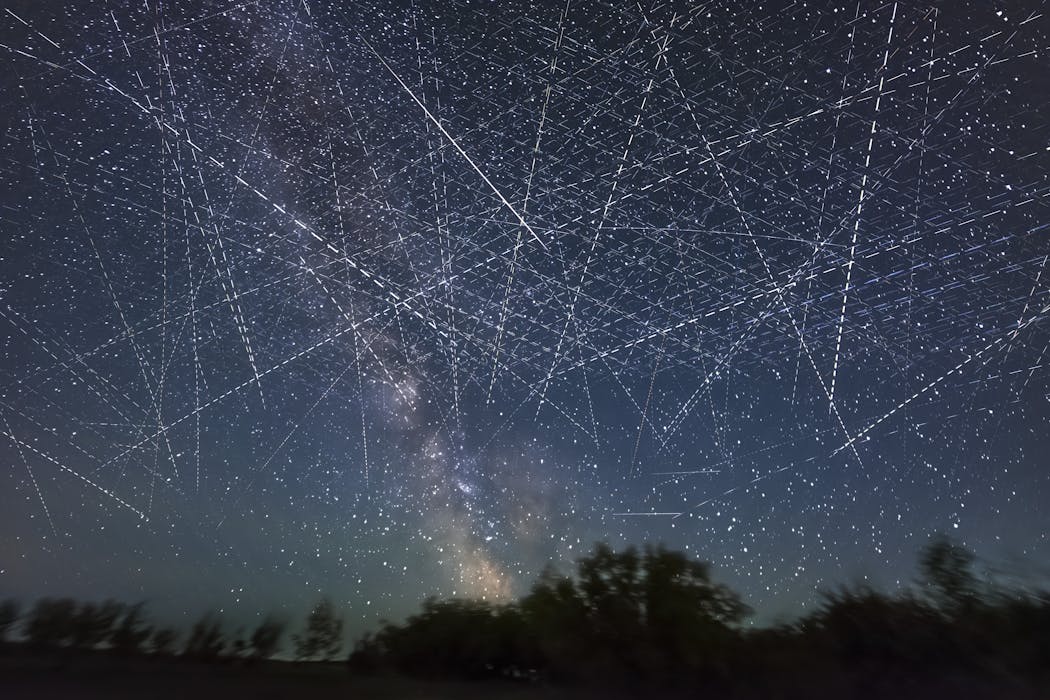
Over the past few years, the number of satellite launches has skyrocketed. There are now nearly 15,000 active satellites in orbit around the Earth, most of them part of “mega-constellations” in which each satellite has a service life of only a few years.

New satellites must be quickly launched as replacements. To avoid leaving old, dead satellites in Earth’s already-crowded low orbits, most satellite operators deliberately de-orbit them into Earth’s upper atmosphere.

Here, they burn up or break apart into smaller pieces: a process known as “demisability”. In effect, satellites have become part of throwaway culture.

That approach is now being taken to a vastly larger scale. We are concerned about the implications for Earth’s climate and atmosphere.

A sleeper risk for our climate and ozone layer

Last month, SpaceX applied to the US Federal Communications Commission (FCC) for permission to launch one million more satellites for untested “AI data centres”.

That sheer number isn’t the only issue. SpaceX’s Starlink V2 “mini” satellites happen to weigh about 800 kilograms (kg) – roughly the mass of a small car – with later versions expected to reach around 1,250 kg. The planned V3 satellites are larger still, comparable in scale to a Boeing 737 airliner.

Rocket launches already contribute to climate change and ozone depletion. Scaling them up to deploy a million aircraft-sized satellites would push upper-atmosphere heating and ozone loss far beyond previous estimates, with the steady burn-up of dead satellites compounding the impacts.

This comes as burnt satellite dust is already being found in the atmosphere. In 2023, scientists studying aerosols in the upper atmosphere found metals from re-entering spacecraft. Just recently, lithium has been detected from the uncontrolled re-entry of a Falcon 9 rocket.

This is just a fraction of what is to come if planned megaconstellations go ahead – and SpaceX is far from the only player. Other operators worldwide have already asked for a combined total of over one million satellites.

All the while, the full environmental consequences remain poorly understood because satellite builders rarely disclose what their spacecraft are made of.

Scientists assume a large fraction is aluminium, which burns up into alumina particles, but the exact mix of materials – and the size of the particles produced – remains poorly constrained.

But we know the very smallest particles, finer than a human hair, can stay suspended in the atmosphere for years, contributing to ozone depletion and climate change.

Following similar assumptions to a previous study, we estimate that a million satellites could mean that a teragram (one billion kgs) of alumina accumulates in the upper atmosphere – enough, alongside launch emissions, to significantly alter atmospheric chemistry and heating in dramatic ways we do not yet understand.

There is no public mandate for a single company in one country to make changes on that scale to the planet’s atmosphere.

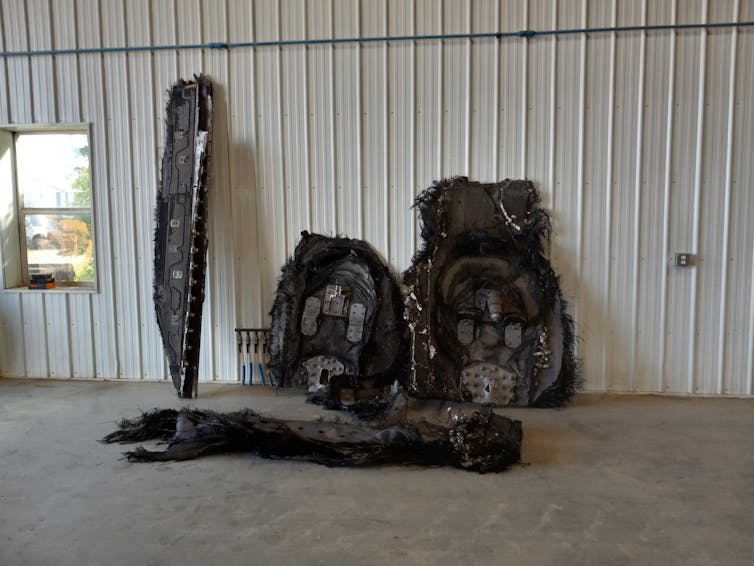
The consequences are not confined to the atmosphere. Not all re-entering satellites burn up; debris is already hitting the ground and the chance of a casualty from megaconstellation re-entries is now about 40% per five-year cycle – rising for both people and aircraft as more satellites are added to orbit.

Five person-sized pieces of shredded space debris, leaning on a wall inside a metal-sided building.
These pieces of shredded debris, which came from an expendable trunk module attached to one of SpaceX’s Dragon spacecraft, fell on farmland in Saskatchewan, Canada, in April 2024.
Samantha Lawler, CC BY-NC

In space, the picture is no less stark: the Outer Space Institute’s CRASH Clock suggests a collision would occur within 3.8 days if satellites stopped avoiding each other.

Many experts agree we are in the early stages of the Kessler Syndrome: a cascading chain reaction of collisions that multiplies space debris.

Our skies are not a dumping ground

Our night sky, especially cherished in New Zealand, is one of the few things everyone on Earth still shares.

According to simulations built by astronomers, constellations on the scale proposed by SpaceX would fill the sky with many thousands of satellites visible to the naked eye anywhere on Earth. Eventually, there could be more visible satellites than visible stars.

For scientists, observing the deaths of stars and searching for new planets would become much harder. Stargazing, astrotourism and cultural astronomy would similarly be disrupted worldwide.

All of this means the FCC’s ruling on the SpaceX proposal, now open to public submissions, could affect everyone – whether through changes to the atmosphere, growing collision risks in orbit or the loss of an unspoilt night sky.

One solution being discussed is to dispose of dead satellites in orbits away from Earth. But this would require much more fuel per satellite to escape Earth’s gravity, increasing both payload and the environmental impact of rocket launches. Some debris would still return to Earth.

With SpaceX and others planning rapid expansion, global regulation is needed: in an uncapped system, regulating one firm just shifts the problem elsewhere. As the largest operator, SpaceX is best placed to lead on an environmentally sustainable solution, just as Du Pont did with phasing out CFCs in the 1980s.

A first step is to define a safe atmospheric carrying capacity for satellite launches and re-entries. Environmental assessments should cover the full lifecycle, including atmospheric effects, and address both orbital safety and impacts on cultural and research astronomy.

Whatever the regulatory outcome, using the atmosphere as a crematorium for satellites at this scale cannot be a solution.

The Conversation

Laura Revell receives funding from the Marsden Fund and Rutherford Discovery Fellowships, administered from New Zealand Government funding by the Royal Society Te Apārangi. She is a member of the International Ozone Commission, UN Environmental Effects Assessment Panel, UN Nuclear War Effects Panel, and a lead author on the IPCC’s 7th Assessment Report.

Michele Bannister receives funding from the Rutherford Discovery Fellowships, administered from New Zealand Government funding by the Royal Society Te Apārangi. She is a member of the International Astronomical Union’s Centre for Dark and Quiet Skies.

Samantha Lawler receives funding from the Natural Sciences and Engineering Research Council of Canada. She is a fellow of the Outer Space Institute, and a Visiting Erskine Fellow at the University of Canterbury.

ref. A new space race could turn our atmosphere into a ‘crematorium for satellites’ – https://theconversation.com/a-new-space-race-could-turn-our-atmosphere-into-a-crematorium-for-satellites-276366

20 billion galaxies: new survey of the sky will reveal the universe in unprecedented detail

Source: The Conversation – Global Perspectives – By Anais Möller, Senior Lecturer and ARC DECRA Fellow, School of Science, Computing and Emerging Technologies, Swinburne University of Technology

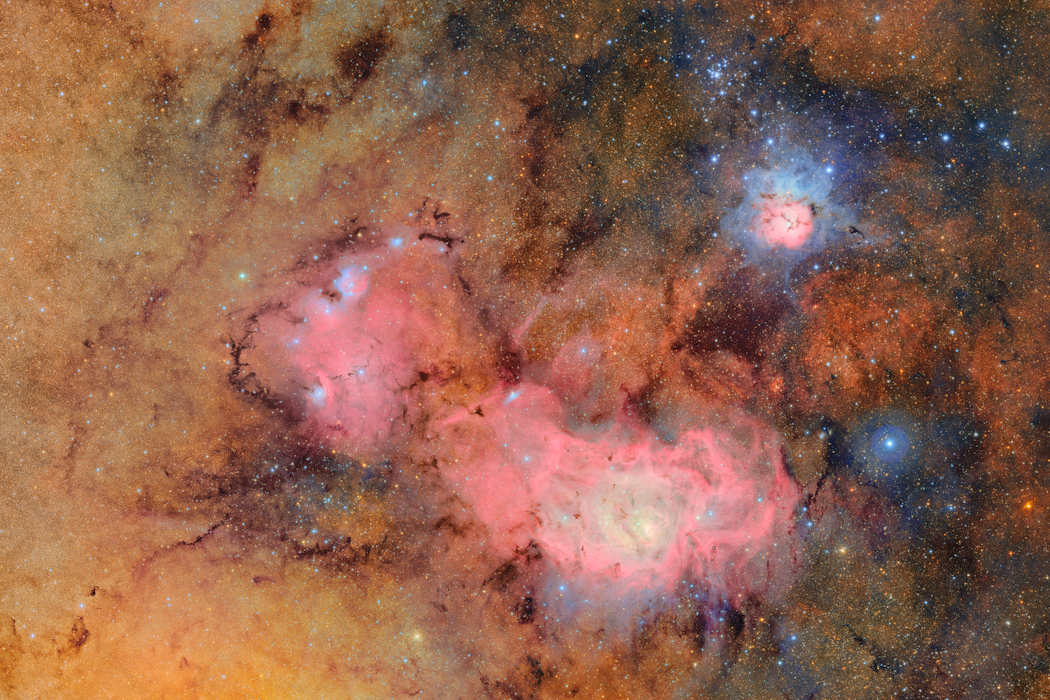
Trifid nebula (top) and the Lagoon nebula, which are several thousand light-years away from Earth. NSF–DOE Vera C. Rubin Observatory

When you look up at the night sky, it appears unchanging. But if you look deep enough you will find that the sky is in fact constantly shifting. Satellites, asteroids and interstellar objects pass by. Stars not only shine brightly, they can suddenly burst with energy or explode in bright supernovae.

There is a plethora of explosive and cataclysmic phenomena waiting to be witnessed. For physicists, this is an opportunity to study our universe and physics that we can’t reproduce on Earth.

A whole new era of discovery is opening with the NSF-DOE Vera C. Rubin Observatory. For the next ten years, Rubin will create a high-definition video of the southern sky, revealing our universe in an unprecedented way. Many of the objects it finds will have never before been seen by human eyes.

More than 20 years in the making

This moment has been more than 20 years in the making, from the concept to completion of the Rubin Observatory.

Located on a dark sky mountaintop in Chile, the observatory represents a generational leap in astronomy with its ultra-wide, deep and high-resolution imaging capabilities.

Rubin has the largest camera ever built, with 3,200 megapixels. Each image scans an area equivalent to 40 full moons. The resolution of the images is so high that if we pointed the camera toward a lime located 24 kilometres away, it would be able to resolve exactly what type of fruit it is.

Last year, Rubin amazed us with its first test images. These images revealed a swarm of new asteroids never before detected, stars varying in our Milky Way and beautiful deep images of galaxies. This is just a taster on what is to come; this week Rubin started publicly sharing hundreds of thousands changing sky objects per night.

The telescope will be uniquely used for the Legacy Survey of Space and Time. This ten-year-long survey aims to solve the biggest mysteries of the universe – and the nature of the physics out there.

Three separate squares, each with a blue background and a patch of bright white light.
Spot the cosmic difference! A new science observation (left) is compared against a reference template built from archival data (centre). Subtracting the two leaves only what has changed, a new source visible in the difference image (right). This is a supernova candidate found with the Fink broker using Vera C. Rubin data.
Rubin Observatory/Fink broker

20 billion galaxies

With its advanced imaging capabilities and its systematic scan of the sky, Rubin will image an incredible number of objects in our universe over the next decade.

Starting in our cosmic backyard, our Solar System, it will make 6 million detections of asteroids. Moving toward our galaxy, it will catalogue 17 billion stars. Farther away, it will gather colour images of 20 billion galaxies.

The same patch of the sky will be imaged up to 100 times each year. With an expected 10 terrabytes of image data per night, the amount of data Rubin will deliver in a single year will be greater than all optical observatories combined.

With this data, we aim to answer fundamental questions. These include the nature of the most mysterious components of our universe: dark matter and dark energy.

I am particularly interested in using the data to measure whether the universe expansion maintains a constant acceleration or changes with cosmic time. This accelerated cosmic expansion is attributed to dark energy, which comprises 70% of our universe. Yet we still don’t know what it is.

By itself, this measurement would be amazing, especially since recent observations have hinted the expansion rate may be changing. From the physics point of view, this will allow us to narrow down which potential theories can explain dark energy.

A firehose of cosmic treasures

To find changing sky objects, we compare a new image to an “old” or reference image. The difference between the two images can reveal a new object or a change of brightness.

So how do we find the most interesting exploding stars or asteroids within this mass of detections?

Rubin has selected seven “community brokers”. A broker is both the infrastructure and the team that receives this data firehose within minutes of detection, processes it to find the most exciting objects, and makes them publicly available.

One of these community brokers is Fink, which I have the privilege of co-leading.

Fink is made up of hundreds of scientists and engineers around the world working together to understand our universe. With the incredible Rubin data, comes a great opportunity but also a big challenge.

We need state-of-the-art technologies such as distributed computing (a network of computers, similar to commercial cloud services) and artificial intelligence tools to process the data very fast. We are talking about analysing thousands of detections from Rubin every minute or two, and up to 10 million every night for ten years.

Become a Rubin citizen scientist

You can also engage with Rubin right now.

Rubin’s first images are available online and you can use apps such as Orbitviewer to track asteroids, as well as look at deep images with SkyViewer.

You can also become a Rubin citizen scientist. For example, you can help to identify changing objects in our universe with Rubin Difference Detectives and find comets with Rubin Comet Catchers.

The data from community brokers is also publicly available. Through our Fink portal, you will be able to inspect the latest detections from Rubin just minutes after an image has been taken.

The data may not look like the stunning Rubin first light images. But they come directly from the telescope and are full of universe treasures.


Correction: this article originally stated the Legacy Survey of Space and Time has started. It has been amended to make clear the survey has not yet started but that the Rubin Observatory has started publicly sharing data.

The Conversation

Anais Möller receives funding from the Australian Research Council and the French National Centre for Scientific Research.

ref. 20 billion galaxies: new survey of the sky will reveal the universe in unprecedented detail – https://theconversation.com/20-billion-galaxies-new-survey-of-the-sky-will-reveal-the-universe-in-unprecedented-detail-273574

New global study: long after war, nearly 4 in 10 people injured by landmines and explosives die

Source: The Conversation – Global Perspectives – By Stacey Pizzino, Lecturer, School of Public Health, The University of Queensland

When a war ends and peace agreements are signed, most people assume the danger is over. But for many communities around the world the danger remains in the ground, waiting.

Landmines and other explosives left behind after a conflict can stay active for decades – buried in the paths to school, in the fields that feed families and in the areas where children play.

In some countries, such as Laos and the Solomon Islands, bombs from conflicts decades ago still injure and kill.

This quiet danger isn’t a distant problem. Today, at least 57 countries are contaminated by landmines and other explosive ordnance, including mortars and grenades.

At the same time, some governments are stepping back from the Landmine Ban Treaty, the first comprehensive treaty aimed at eliminating landmines in conflicts. Decisions made in parliaments today can translate into hazards underfoot for years to come.

Our new research is aimed at understanding the ongoing risk landmines pose. The study is the world’s largest analysis of landmine and explosive ordnance casualties. And the data allows us to answer critical questions: who dies from these weapons, and why?

What do the numbers tell us?

In our study, we analysed 105,913 casualties across 17 conflict-affected countries, using operational data. These are the real world operational records routinely collected by national mine action authorities, the UN and other humanitarian organisations.

These records let us see what communities are facing without adding any burden to these often stretched services.

Across all settings, the case fatality rate was 38.8%. Put simply: for every ten people injured by landmines or other explosive ordnance around the world, nearly four die. This is extraordinarily high.

For comparison, the fatality rate for blast injuries among military personnel or civilians treated in well-resourced trauma centres is around 2%.

The gap highlights the brutal disparity between those who are injured in environments with functioning surgical and trauma care and those who are not.

Not all explosive threats are equal, either.

Improvised explosive devices (IEDs) were the most lethal weapon type in our analysis.

IEDs are increasingly used in many modern conflicts and are often remotely detonated to maximise casualties. Their explosive force and unpredictability cause devastating injuries that many local health systems are simply not equipped to manage.

Who is most affected?

Although most casualties from landmines and explosive ordnance are men, women had significantly higher odds of dying from their injuries. This likely reflects unequal access to health care, delayed treatment, and social barriers that limit mobility and decision making in many conflict-affected settings.

Children’s risks are different – they are both vulnerable and resilient.

Children are particularly at risk of detonating landmines when playing, when caught up in active conflict, or simply as bystanders.

The reason is often tragic.
Children tend to play together in groups, meaning when one child encounters an explosive remnant, several are injured at once.

Yet, overall, children in our data were more likely to survive their injuries than adults, perhaps because they sustain different injury patterns or receive care sooner when adults rush to assist.

But survival is only the beginning. Children may need multiple surgeries, new prostheses as they grow up, long-term rehabilitation and lifelong disability support. These are needs that many health systems struggle to meet.

Age also shapes outcomes. The highest odds of death were observed in adults aged 45–64. Older people may have pre-existing health issues and face greater barriers to reaching medical care, yet their needs can often be overlooked.

The human cost of explosives

The impact of landmines and explosive ordnance extends far beyond immediate injuries. These injuries disrupt people’s daily lives in ways that can entrench communities in poverty.

For example, farmers cannot safety cultivate their land because of the threat of landmines. Women gathering water or food can trigger explosives, too.

When injuries occur, families lose breadwinners and care-giving roles change, pushing households deeper into poverty.

How can we strengthen care for survivors?

There are ways to mitigate the impacts of landmines and explosive ordnance, though. This is a preventable public health crisis.

Our findings highlight the urgent need to strengthen emergency, critical and surgical care in conflict-affected areas to reduce preventable deaths.

Reliable pre-hospital care, transport and basic surgical care saves lives. So does long-term rehabilitation and disability support, especially for children who will live with the consequences of these explosive weapons and injuries for decades.

As old conflicts continue and new ones emerge, explosive ordnance keep contaminating the places where people live, play, work and travel.

Understanding who dies, and why, is essential to preventing future deaths and ensuring that peace, when it comes, offers real safety.

The Conversation

Stacey Pizzino received funding from the Australian government Research Training Program.

Michael Waller does not work for, consult, own shares in or receive funding from any company or organisation that would benefit from this article, and has disclosed no relevant affiliations beyond their academic appointment.

ref. New global study: long after war, nearly 4 in 10 people injured by landmines and explosives die – https://theconversation.com/new-global-study-long-after-war-nearly-4-in-10-people-injured-by-landmines-and-explosives-die-276062