Google recently unveiled Project Suncatcher, a research “moonshot” aiming to build a data centre in space. The tech giant plans to use a constellation of solar-powered satellites which would run on its own TPU chips and transmit data to one another via lasers.
Google’s TPU chips (tensor processing units), which are specially designed for machine learning, are already powering Google’s latest AI model, Gemini 3. Project Suncatcher will explore whether they can be adapted to survive radiation and temperature extremes and operate reliably in orbit. It aims to deploy two prototype satellites into low Earth orbit, some 400 miles above the Earth, in early 2027.
Google’s rivals are also exploring space-based computing. Elon Musk has said that SpaceX “will be doing data centres in space”, suggesting that the next generation of Starlink satellites could be scaled up to host such processing. Several smaller firms, including a US startup called Starcloud, have also announced plans to launch satellites equipped with the GPU chips (graphics processing units) that are used in most AI systems.
The logic of data centres in space is that they avoid many of the issues with their Earth-based equivalents, particularly around power and cooling. Space systems have a much lower environmental footprint and it’s potentially easier to make them bigger.
As Google CEO Sundar Pichai has said: “We will send tiny, tiny racks of machines and have them in satellites, test them out, and then start scaling from there … There is no doubt to me that, a decade or so away, we will be viewing it as a more normal way to build data centres.”
Assuming Google does manage to launch a prototype in 2027, will it simply be a high-stakes technical experiment – or the dawning of a new era?
The scale of the challenge
I wrote an article for The Conversation at the start of 2025 laying out the challenges of putting data centres into space, in which I was cautious about them happening soon.
Now, of course, Project Suncatcher represents a concrete programme rather than just an idea. This clarity, with a defined goal, launch date and hardware, marks a significant shift.
The satellites’ orbits will be “sun synchronous”, meaning they’ll always be flying over places at sunset or sunrise so that they can capture sunlight nearly continuously. According to Google, solar arrays in such orbits can generate significantly more energy per panel than typical installations on Earth because they avoid losing sunlight due to clouds and the atmosphere, as well as night times.
Hello spaceboy: Google CEO Sundar Pichai. FotoField
The TPU tests will be fascinating. Whereas hardware designed for space normally requires to be heavily shielded against radiation and extreme temperatures, Google is using the same chips used in its Earth data centres.
The company has already done laboratory tests exposing the chips to radiation from a proton beam that suggest they can tolerate almost three times the dose they’ll receive in space. This is very promising, but maintaining a reliable performance for years, amidst solar storms, debris and temperature swings is a far harder test.
Another challenge lies in thermal management. On Earth, servers are cooled with air or water. In space, there is no air and no straightforward way to dissipate heat. All heat must be removed through radiators, which often become among the largest and heaviest parts of a spacecraft.
Nasa studies show that radiators can account for more than 40% of total power system mass at high power levels. Designing a compact system that can keep dense AI hardware within safe temperatures is one of the most difficult aspects of the Suncatcher concept.
A space-based data centre must also replicate the high bandwidth, low latency network fabric of terrestrial data centres. If Google’s proposed laser communication system (optical networking) is going to work at the multi-terabit capacity required, there are major engineering hurdles involved.
These include maintaining the necessary alignment between fast-moving satellites and coping with orbital drift, where satellites move out of their intended orbit. The satellites will also have to sustain reliable ground links back on Earth and ovecome weather disruptions. If a space data-centre is to be viable for the long term, it will be vital that it avoids early failures.
Maintenance is another unresolved issue. Terrestrial data centres rely on continual hardware servicing and upgrades. In orbit, repairs would require robotic servicing or additional missions, both of which are costly and complex.
Then there is the uncertainty around economics. Space-based computing becomes viable only at scale, and only if launch costs fall significantly. Google’s Project Suncatcher paper suggests that launch costs could drop below US$200 (£151) per kilogram by the mid 2030s, seven or eight times cheaper than today. That would put construction costs on par with some equivalent facilities on Earth. But if satellites require early replacement or if radiation shortens their lifespan, the numbers could look quite different.
In short, a two-satellite test mission by 2027 sounds plausible. It could validate whether TPUs survive radiation and thermal stress, whether solar power is stable and whether the laser communication system performs as expected.
However, even a successful demonstration would only be the first step. It would not show that large-scale orbital data centres are feasible. Full-scale systems would require solving all the challenges outlined above. If adoption occurs at all, it is likely to unfold over decades.
For now, space-based computing remains what Google itself calls it, a moonshot: ambitious and technically demanding, but one that could reshape the future of AI infrastructure, not to mention our relationship with the cosmos around us.
Domenico Vicinanza does not work for, consult, own shares in or receive funding from any company or organisation that would benefit from this article, and has disclosed no relevant affiliations beyond their academic appointment.
Source: The Conversation – UK – By Chris Waugh, Lecturer in Sociology and Criminology, Manchester Metropolitan University
In 2024, along with 20,000 others, I attended a sold-out metal show in Manchester. Unlike most concerts at the Co-op Live Arena, however, none of us in the packed-out venue knew who we were actually seeing. The band was Sleep Token – a masked and anonymous collective formed in London in 2016, now selling out arenas across the UK and the US with their distinctive blend of progressive metal, indie pop and trap.
A few months later, I stood among thousands to watch the Swedish band Ghost, famous for dressing as a satanic clergy led by their masked frontman Papa Emeritus. Their show was an extravagant parody of religion. Theirs was an entirely different performance of concealment from Sleep Token, but one just as emotionally charged.
Then, earlier this year, I found myself in a concert hall on the outskirts of Antwerp, Belgium. In a room filled with billowing smoke and illuminated only by the snap of strobe lighting and a single candelabra, I watched the death-metal outfit Dragged into Sunlight thrash and shriek through their gloriously misanthropic album Hatred for Mankind. Once again, I had absolutely no idea what they looked like.
In a cultural moment where visibility in popular music is at its zenith – where all eyes and screens fixate on Taylor Swift’s Eras tour or Oasis’s long-awaited reunion – something interesting is happening in the metal scene. Metal musicians are refusing to reveal their identities, names and faces, or (in the case of Dragged into Sunlight) even acknowledging that they have an audience at all, by playing with their backs to the crowd, and never speaking between songs.
Dragged into Sunlight perform with their backs to the audience.
Rock and metal musicians have concealed their identities before, of course. Kiss and Alice Cooper strut the stage in elaborate makeup. Slipknot and Gwar perform in grotesque masks or full-body costumes. And the use of “corpse paint” (skull-like facial makeup) and occult pseudonyms is par for the course in certain kinds of Black Metal, an extreme offshoot of heavy metal, characterised by shrieked vocals, tremello guitar playing and Satanic imagery.
However, anonymous metal bands such as Ghost, Sleep Token and Dragged into Sunlight draw attention to a paradox – concealment is what gives their performances their emotional power.
Researchers of the “affective turn” in social science argue that emotion isn’t just something we have; it is something that moves between us. Cultural theorist Sara Ahmed describes affect – those intensities that we feel, often before we fully know what we’re feeling – as “what sticks”. Affects are the energy that circulates between people, objects and ideas, binding them together.
As literary critic Raymond Williams has noted, affect often emerges before it’s fully articulated – inarticulate, but powerful. This is precisely what is at play in anonymous metal bands. When performers hide their faces and identities, they strip away one of the most recognisable cues in performance. In that absence, the audience and listeners become part of the emotional work – projecting, imagining and collectively generating meaning.
My research, due for publication next year, draws on ideas from affect theory to explore how hiding a performer’s face or identity creates new ways of generating shared emotion. Anonymous metal bands show how concealment itself can become a tool for feeling.
How bands use their anonymity
In the case of Sleep Token, the effect is a sense of both devotion and intimacy. Sleep Token’s lyrics explore spiritual and religious experiences, desire (both sexual and for connection) and vulnerability. Yet, at the same time, their lyrics are often ambiguous.
The lack of clear meaning, along with a lack of identity among the band members, leaves space for audiences to interpret and process their own emotions – even those that they cannot fully verbalise. Evidence of this is clear in Sleep Token’s active digital fanbases, where frequent posts on a Reddit fan page attest to how the absence of identity becomes a conduit for intimacy.
Sleep Token performing in masks.
In the case of Ghost, concealment lends itself to irony and parody. Ghost presents itself as a kind of Satanic clergy, with their front man, Papa Emeritus, playing the part of a Satanic pope-like figure, flanked by masked musicians, known as the “nameless ghouls”. This rather menacing presence is a means of satire. Ghost mocks the bureaucracy and power dynamics of the Catholic Church, promotes self-discovery, consent and mutual pleasure, and keeps its tongue firmly planted in its cheek. Ghost’s anonymity, then, takes the austere and the totalitarian, turns it on its head, and creates a space for fun, transgression and communal ritual.
If Sleep Token’s anonymity invites connection and Ghost’s invites laughter and collective joy, then Dragged into Sunlight weaponises their lack of identity.
Unlike the other bands, Dragged into Sunlight doesn’t wear masks, but instead performs with their backs to the audience, in poorly lit stages filled with billowing smoke. Their music, which blends black metal, death metal and grindcore, is blistering, chaotic and misanthropic.
By refusing to acknowledge the crowd and refusing to adopt clear identities, Dragged into Sunlight’s music – which focuses on mass killing, cruelty and social disarray – pummels the audience with pure affect. It consists of overwhelming volume, deafening distortion and indecipherable screaming fury, underpinned by a rigorous contempt for the subject matter of their lyrics. There is emotion here, but it is stripped of empathy, a kind of anti-performance that paradoxically heightens the experience.
Across these examples, concealment produces different emotional registers – intimacy, joy, rage – but in each case, it’s what makes feeling possible. These bands remind us that emotion doesn’t always depend on recognition. Sometimes it’s the very act of not knowing that allows us to feel more deeply. The face, once the centre of performance, gives way to atmosphere, sound and sensation.
Perhaps that is why audiences respond so strongly to these bands. In a world obsessed with being seen, they offer the relief of not being known – the freedom to lose yourself in something larger.
Looking for something good? Cut through the noise with a carefully curated selection of the latest releases, live events and exhibitions, straight to your inbox every fortnight, on Fridays. Sign up here.
Chris Waugh does not work for, consult, own shares in or receive funding from any company or organisation that would benefit from this article, and has disclosed no relevant affiliations beyond their academic appointment.
In 2025, 70% of people struggle to trust online information, and 64% fear AI-generated content could influence elections. We are entering an era where seeing is no longer believing.
In such a world, learning to critically decode media is key to safeguarding truth, trust and democracy. “Visual thinking strategies”, a discussion technique originally developed for art education, offers a simple but powerful framework for navigating today’s complex media landscape.
It is based on three open-ended questions around a piece of visual media (like a painting, photograph or video):
ehat’s going on in this picture?
What do you see that makes you say that?
What more can we find?
These questions prompt people to slow down, observe carefully and justify their interpretations with evidence. The approach is not only about looking, it’s about thinking together.
It usually happens in a group, guided by a facilitator – often a teacher – who paraphrases and connects participants’ ideas. Participants share and listen to individual observations, build on each other’s contributions, challenge assumptions and refine their thinking. This process surfaces biases, mitigates groupthink and promotes critical engagement.
Imagine you are shown a picture of a protest and asked “What is going on in this picture?” You say, “It looks like a climate march.” When asked, “what is it that you see makes you say that it is a climate march?”, you point to the signs. Others notice the police presence, the age of the crowd, the place where it’s happening or the lighting.
As the discussion unfolds, the group begins to see the image from multiple angles. This approach is exactly what’s needed in a world of manipulated images and political polarisation.
This strategy doesn’t guarantee “truth.” It cultivates habits of mind that resist manipulation: curiosity, evidence-based reasoning and tolerance for ambiguity. Even if someone responds in bad faith, its structure – especially the second question, which is intended to trigger critical analysis – requires them to explain their reasoning. This opens space for others to question, clarify and reframe.
Early classroom observations in the 1990s revealed that children carried these reasoning habits beyond the art class, asking, “what’s going on in this text?” or “in this maths problem?” Learners internalise this protocol and apply it intuitively to other activities in their everyday lives.
Why this approach matters now
The visual thinking strategies approach has positive implications not just for media literacy, but for fostering dialogue in divided societies and improving decision-making at a policy level.
Polarisation thrives on certainty and echo chambers. This strategy creates space for multiple interpretations and respectful disagreement, modelling the kind of dialogue democratic societies need. Participants consider alternative viewpoints and revise their thinking as new observations emerge. By showing how to disagree constructively, this technique can help rebuild trust in public discourse.
Amid mass migration, climate crises, cultural conflict and growing inequality, empathy is not just a moral virtue: it’s a strategic asset for education and social cohesion. Stepping into others’ perspectives through interpreting images that reflect diverse experiences and worldviews can help people navigate this, engaging with the emotions and contexts behind the images.
Leaders and policymakers increasingly rely on visual data such as maps, infographics and dashboards. Organisations like the OECD, World Bank and UN acknowledge this trend. Yet visual literacy is rarely taught in business or political science education, despite the growing use of visual materials in courses.
The benefits extend to fields where visual data drives critical action: humanitarian organisations using satellite imagery to track displacement, or climate scientists analysing environmental impact models. It can be used to train teams to notice patterns, question assumptions and surface alternative perspectives, supporting more informed, equitable outcomes.
As AI, climate change and economic disruption reshape our societies, we need tools that help us think clearly, communicate effectively and collaborate across divides. This is one such tool that requires no expensive technology or background in art; only a willingness to look, listen, and learn. In doing so, it cultivates the capacities – curiosity, humility and critical thinking – that our world urgently needs.
Try it yourself
Take a moment to look at the above picture. Then, alone or with a group, ask:
What’s going on in this picture? What’s your first impression? Is this a protest? A moment of mourning? A celebration?
What do you see that makes you say that? Look closely. Are you focusing on the clothing? The facial expressions or the way the people are standing? Do you recognise the language on the signs?
What more can we find? What’s happening in the background? Who is included – and who might be missing? Are there many people? What assumptions are you making about the people or the event? Why?
This image shows indigenous activists and students who forced their way into the COP30 venue in Belém, Brazil, on November 11, 2025. They clashed with security personnel at the entrance while demanding stronger climate action and better protection of indigenous lands. The questions above – and others you might ask – will help you understand what’s depicted, and deepen your thinking about this image.
Visual thinking strategies aren’t about finding the “correct” answer. It’s about slowing down, noticing more and explaining your reasoning. Try doing this exercise with a group – others may notice what you missed, challenge your interpretation or build on it. Together, you all begin to see more clearly.
Shaun Nolan does not work for, consult, own shares in or receive funding from any company or organisation that would benefit from this article, and has disclosed no relevant affiliations beyond their academic appointment.
Imagine trying to enjoy your favourite meal but finding that your gums hurt, your mouth feels dry and chewing has become uncomfortable. For people living with diabetes, this can be a daily reality that often goes unrecognised.
Diabetes care routinely focuses on the heart, feet, eyes, liver and kidneys. The mouth, however, is frequently overlooked, even though oral health both affects and is affected by diabetes in important ways.
One in nine adults worldwide has diabetes, and more than four in ten do not know they have the condition. By 2050, global projections indicate that one in eight adults, around 853 million people, will be affected, an increase of 46%.
Understanding the two-way connection between diabetes and oral health is therefore essential. It is not about achieving a Hollywood smile. Keeping diabetes under control supports good general and oral health in turn helps improve overall wellbeing.
Diabetes influences how the body processes sugar. When blood sugar levels remain high for long periods, they damage blood vessels and nerves, slow healing and weaken the body’s ability to fight infection. The mouth having soft and hard tissues and naturally diverse community of bacteria, becomes particularly vulnerable.
Oral health complications linked to diabetes include dry mouth caused by reduced saliva, high risk of tooth decay, gum disease involving inflammation and bone loss around the teeth, oral infections such as thrush, mouth ulcers, difficulty wearing dentures, changes in taste and ultimately tooth loss. These problems can affect nutrition, confidence and even blood sugar control.
My latest study showed a clear association between type 2 diabetes and severe dental decay. High blood sugar, combined with changes in saliva quantity and quality, may contribute to this progression. Many people are unaware of this link, which creates a vicious cycle. However, dry mouth and the dental decay that follows can often be prevented if awareness is increased among the public and healthcare professionals.
Gum disease and diabetes
People with diabetes are more likely to experience gum disease, and the relationship works both ways. Diabetes increases the risk of gum disease because high blood sugar leads to more sugar in saliva. Bacteria in the mouth feed on sugar and produce acids that irritate and damage the gums. Once the gums become infected, the supporting bone around the teeth can shrink. As bone is lost, teeth may become loose or fall out. Keeping blood sugar within a healthy range and maintaining good oral hygiene significantly lowers this risk.
Dry mouth and tooth decay
Dry mouth is another common issue for people with diabetes. Around 20% of the general population experiences dry mouth, with higher numbers seen in women and older adults. Certain medications used for treating blood pressure, depression or nerve pain can make dryness worse.
Saliva is the mouth’s natural protection. It washes away food particles, neutralises acids and helps prevent infection. Without enough saliva, the mouth becomes more acidic and teeth lose minerals, which increases the risk of decay. Dentists can offer personalised prevention plans for people at higher risk. These may include fluoride varnishes, specialist mouthwashes or high-fluoride toothpaste.
Saliva also plays a vital role for denture wearers. It cushions the gums, stabilises dentures and reduces irritation. When the mouth is dry, dentures can rub and cause discomfort, ulcers and infections such as oral thrush. Good denture care can greatly improve comfort, eating and overall health, including cleaning dentures daily, removing them at night, brushing the gums and tongue, using suitable cleaning solutions rather than hot water and attending regular dental check-ups to ensure a proper fit.
Dental implants are another option for replacing missing teeth, but diabetes must be well controlled before they are considered because high blood sugar slows healing, increases infection risk and makes it harder for the bone to fuse properly with the implant. Healthy gums, stable bone levels and good oral hygiene are essential for implant success. Dentists need to assess each person’s situation to determine whether implants are appropriate.
Good mouth care can make eating easier, support blood sugar control and improve quality of life. Staying informed, building healthy daily habits and attending regular dental check-ups all help manage the oral health complications linked to diabetes.
Aylin Baysan is the third inventor of an ozone delivery system for the management of root caries. She is co-recipient of a Life Science Initiative Award of £50,000 to work on a novel bioactive membrane for the regeneration of dental hard tissues.
Source: The Conversation – UK – By Paul Behrens, British Academy Global Professor, Future of Food, Oxford Martin School, University of Oxford
I joined eight other experts to deliver a national emergency briefing in late November on the climate and nature to around 1,200 of the UK’s leaders — across politics, business, faith and culture — in Central Hall Westminster.
Much like the televised national briefings delivered during COVID, the aim was to deliver sober, science-based overviews of the various climate and nature crises that the UK faces. Chaired by the academic and author Mike Berners-Lee, the aim was to set off a tipping point of engagement among politicians, faith leaders, CEOs, sport and cultural figures. TV presenter and naturalist Chris Packham opened the event.
The alignment among the scientists speaking was clear. Several of us had never met before, yet our research all linked to tell a story of unprecedented threat and opportunity.
Nathalie Seddon, a professor of biodiversity at the University of Oxford, laid bare the nature crisis. Nature, she emphasised, is not a luxury. It is critical infrastructure, and the state of depleted nature across the country is a national security issue.
Kevin Anderson, a professor in energy and climate change at the University of Manchester, presented the clear carbon arithmetic of how quickly we need to cut emissions. He pointed out what our political discourse studiously avoids: “It is now too late for non-radical futures.”
Hayley Fowler, spoke about how Valencia-style flooding is perfectly possible in the UK. Tim Lenton, a professor of Earth system science at the University of Exeter, spoke about how climate-driven changes in ocean currents may impact the UK.
I spoke about food security and the great food transformation that’s needed, including dietary change, waste reductions, production improvements and increased resilience. I explained how more plants in our diets are necessary to reduce climate and nature impacts, improve our health, increase food resilience and reduce reliance on imports.
Hugh Montgomery, chair of intensive care medicine at UCL, said: “You don’t respond to an emergency with talk and homeopathy. You respond with genuine action. … Climate change is the greatest threat to human health in the 21st century.”
Lieutenant General Richard Nugee, a retired senior British Army officer, spoke on national security implications and how the energy transition means greater stability and security for the UK, as the country would be less vulnerable to petrostates and the inherent volatility of fossil fuels.
Angela Francis, director of policy solutions at the environmental charity World Wide Fund for Nature, spoke about how innovation is the key to productivity and healthy economies. She highlighted how faster energy transitions are cheaper, and the cost of the UK energy transition is now 73% cheaper than what was thought five years ago. Had we made the transition already, recent inflation would have been 7% lower.
Tessa Khan is an environmental lawyer and the co-founder of the Climate Litigation Network: a global coalition of organisations using litigation to compel governments to ramp up their climate mitigation ambition. She described how the price of renewables has dramatically reduced, their efficiency has soared, and how investment in renewables pays dividends.
The science was news to many
The message was consistent: these are not distant projections but rapidly accelerating realities that will profoundly affect every aspect of British life.
There was anger too. Frustration at vested interests blocking action, and at the inequality of climate impacts. The UN’s annual climate summit, Cop30, had just concluded in Belém, Brazil, attended by a record 1,600 fossil fuel lobbyists.
The words “fossil fuel” were removed from the final Cop30 text. Our current collective response could not be more inadequate.
Some people I spoke to suggested that the panel at this event was preaching to the choir. It’s important to remember that MPs radically underestimate the urgency of the situation. Fewer than 15% of the 100 MPs surveyed in one study knew that global emissions needed to peak by 2025 to have any chance of limiting warming to 1.5°C.
The science was news to many present. The planet is heading into dangerous overshoot above 1.5°C within the next few years. As Anderson pointed out: for the UK to meet its fair share obligations in emissions reductions without relying on highly speculative and costly carbon dioxide removal, we would need to see roughly 13% year-on-year reductions for just 2°C – let alone 1.5°C.
There was a catharsis during the briefing. Knowing that people with the power to act were finally hearing the full picture: the health effects, the extreme weather, the collapsing nature, the food insecurity, the economic and geopolitical risks. As Rabbi Jonathan Wittenberg, senior rabbi of Masorti Judaism (a traditional movement for modern Jews), wrote afterwards in the Observer: “Those facts were hard to hear, but I also felt thank goodness, we’re being told it as it is.”
A just, equitable transition to a clean economy would improve countless aspects of our lives, from creating jobs and improving health to strengthening communities and increasing resilience. We will look back on this moment bewildered that we did not act sooner, if we are able to act in time.
This is why we are calling for a televised national emergency briefing, so that what happened in Central Hall Westminster can reach the public. Anyone can sign this open letter, calling on the prime minister, Keir Starmer, and the heads of the BBC, ITV, Channel 4, Channel 5, S4C and the media regulator Ofcom, for urgent, honest communication about the scale of the crisis and the solutions available.
Don’t have time to read about climate change as much as you’d like?
Prada will become the new owners of the Versace brand, under a €1.25 billion (A$2.2 billion) deal.
Versace has recently struggled both financially and in keeping up with the larger luxury fashion houses. Before the sale, Versace was owned by Capri Holdings, which also holds brands including Michael Kors and Jimmy Choo.
In March, Donatella Versace stepped down as the brand’s creative director and was replaced by Dario Vitale, who previously worked for the Prada Group. This marked the first time in 47 years that Versace was not led by a family member.
The Prada Group has made a move to save the Italian brand from possibly being consolidated into the larger French groups Louis Vuitton Moët Hennessy (LVMH) and Kering, which own considerable luxury fashion brands.
Will the luxury fashion house rivals be able to survive each other’s style?
The ‘sexy’ Versace
The iconic and sexy Versace brand was founded by Gianni Versace in 1978 in Milan, when he launched his first women’s wear collection.
The establishment of the luxury fashion house was a family affair. Gianni’s brother Santo ran the commercial side of the business, and his younger sister Donatella also became a designer and creative director with the brand.
After Gianni was tragically murdered outside his Miami beach mansion by Andrew Cunanan in 1997, his sister Donatella continued the Versace legacy.
Under her creative leadership, the fashion house saw extravagant runways and advertising campaigns. But, over time, the fashion house struggled to maintain scale like its competitors.
The ‘luxury’ Prada
Mario Prada founded Prada in 1913 as a luxury leather-goods business.
The business didn’t find its luxury fashion house status until Miuccia Prada took over the business from her grandfather in 1978. Miuccia came to the brand with no prior design experience and with a PhD in political science.
Her background as an outsider to the fashion industry has been seen as her ultimate strength, affording her the ability to take risks and challenge every style under the Prada brand.
Miuccia Prada adjusts clothes on Italian-French top model Carla Bruni in 1994. Vittoriano Rastelli/Corbis via Getty Images
In 1978, Miuccia became the fashion designer for Prada and, in 1993, its sister brand Miu Miu. Both Prada and Miu Miu would come to be known for a clean and minimalist style of fashion, while also being shocking.
Miuccia invented the “ugly chic” style: taking unconventional items or materials that are considered ugly and adding high fashion value to them, such as the iconic Prada Vela bag made from nylon instead of leather. Introducing nylon fabric into luxury fashion was a shocking move in 1984.
Miuccia Prada has dressed many celebrities, including Miu Miu “it girl” Sabrina Carpenter and Nicole Kidman, who loves a Prada dress.
The Prada Group is now a public traded company valued at approximately US$15.27 billion (A$23.2 billion), with majority ownership in the hands of Miuccia and her husband Patrizio Bertelli.
The ultimate rivalry
As family-owned Italian fashion houses with markedly different styles, Prada and Versace have often been called “rivals” by Vogue journalists and business analysts. Prada is minimalist; Versace is loud and flashy. Prada is a northern Italian brand; Versace is a southern Italian brand.
While there may be a localised rivalry, the true competition is between the Italian and French luxury fashion houses.
Until the mid 20th century, Paris held a monopoly over women’s fashion. Italian fashion houses gradually grew after the second world war as the French struggled with material shortages. But the French brands continued to dominate the fashion hierarchy with the release of Dior’s “new look”.
The rise of Italian fashion provided a philosophical rivalry with French fashion houses, who focused on couture compared to Italy’s more ready-to-wear domestic luxury goods.
Prada owning Versace ends an era of rivalry between two of the most influential Italian fashion houses. But it does provide a united front of Italian fashion.
What of the future?
Prada has been known for its investment in other luxury fashion houses. It previously bought a stake in Fendi for US$245 million in 1999 before selling in 2001 for US$265 million, and bought a 9.5% stake in Gucci in 1998 before selling in 1999.
The Versace deal is just another complex acquisition within the fashion landscape.
In today’s competitive market, luxury fashion brands such as Prada are increasingly focusing on “selling to the 1%”, targeting ultra-wealthy customers. This stands in contrast to Versace’s historical focus on serving the middle market with more “accessible luxury” pricing.
The brand’s identities will remain separate, but Prada is likely to capitalise on the strengths of each brand, with Prada’s excellent craftsmanship and local manufacturing being utilised for the Versace brand. The Prada Group will have considerable work to do to relaunch the Versace brand and remain globally competitive, including deciding which market they wish to appeal to.
So, will Versace lose its sexiness? Will Prada mess with its ultra cool “ugly minimalist” style? It is unlikely fashion followers will see much change in either brand. But it remains to be seen if they can survive in partnership in the tough global fashion market.
Jye Marshall does not work for, consult, own shares in or receive funding from any company or organisation that would benefit from this article, and has disclosed no relevant affiliations beyond their academic appointment.
A youth carries an elderly man as they wade through a flooded street after heavy rainfall in Wellampitiya on the outskirts of Colombo on November 30, 2025.Photo: AFP/SUPPLIED
Governments and aid groups in Indonesia and Sri Lanka worked to rush aid on Tuesday to hundreds of thousands stranded by deadly flooding that has killed around 1300 people in four countries.
Torrential monsoon season deluges paired with two separate tropical cyclones last week dumped heavy rain across all of Sri Lanka and parts of Indonesia’s Sumatra, southern Thailand and northern Malaysia.
Climate change is producing more intense rain events because a warmer atmosphere holds more moisture, and warmer oceans can turbocharge storms.
The floodwaters have now largely receded, but the devastation means hundreds of thousands of people are now living in shelters and struggling to secure clean water and food.
In Indonesia’s Aceh, one of the worst-affected regions, residents told AFP that survivors who could afford to were stockpiling supplies.
“Road access is mostly cut off in flood-affected areas,” 29-year-old Erna Mardhiah said as she joined a long queue at a petrol station in Banda Aceh.
“People are worried about running out of fuel,” she added from the line she had been in for two hours.
The pressure has caused skyrocketing prices.
“Most things are already sky-high… chillies alone are up to 300,000 rupiah per kilo (NZ$31), so that’s probably why people are panic-buying,” she said.
On Monday, Indonesia’s government said it was sending 34,000 tons of rice and 6.8 million litres of cooking oil to the three worst-affected provinces, Aceh, North Sumatra and West Sumatra.
“There can be no delays,” Agriculture Minister Andi Amran Sulaiman said.
Food shortage risk
Aid groups said they were working to ship supplies to affected areas, warning that local markets were running out of essential supplies and prices had tripled already.
“Communities across Aceh are at severe risk of food shortages and hunger if supply lines are not reestablished in the next seven days,” charity group Islamic Relief said.
A man walks across mud and debris in a flood affected area in Meureudu, Pidie Jaya district in Indonesia’s Aceh province on November 30, 2025.Photo: AFP/SUPPLIED
A shipment of 12 tonnes of food from the group aboard an Indonesian navy vessel was due to arrive in Aceh on Tuesday.
At least 631 people were killed in the floods across Sumatra, and 472 are still listed as missing. A million people have evacuated from their homes, according to the disaster agency.
Survivors have described terrifying waves of water that arrived without warning.
In East Aceh, Zamzami said the floodwaters had been “unstoppable, like a tsunami wave”.
“We can’t explain how big the water seemed, it was truly extraordinary,” said the 33-year-old, who like many Indonesians goes by one name.
People in his village sheltered atop a local two-storey fish market to escape the deluge and were now trying to clean the mud and debris left behind while battling power and telecommunications outages.
“It’s difficult for us (to get) clean water,” he told AFP on Monday.
“There are children who are starting to get fevers, and there’s no medicine.”
The weather system that inundated Indonesia also brought heavy rain to southern Thailand, where at least 176 people were killed.
Across the border in Malaysia, two more people were killed.
Colombo floodwaters recede
A separate storm brought heavy rains across all of Sri Lanka, triggering flash floods and deadly landslides that killed at least 465 people.
Another 352 remain missing, and some of the worst-hit areas in the country’s centre are still difficult to reach.
President Anura Kumara Dissanayake has declared a state of emergency to deal with what he called the “most challenging natural disaster in our history”.
Unlike his Indonesian counterpart, he has called for international aid.
Sri Lanka’s air force, backed by counterparts from India and Pakistan, has been evacuating stranded residents and delivering food and other supplies.
In the mountainous Welimada region, security forces on Monday recovered the bodies of 11 residents buried by mudslides, a local official said.
In the capital Colombo meanwhile, floodwaters were slowly subsiding on Tuesday.
The speed with which waters rose around the city surprised local residents used to seasonal flooding.
“Every year we experience minor floods, but this is something else,” delivery driver Dinusha Sanjaya told AFP.
“It is not just the amount of water, but how quickly everything went under.”
Rains have eased across the country, but landslide alerts remain in force across most of the hardest-hit central region, officials said.
– AFP
– Published by EveningReport.nz and AsiaPacificReport.nz, see: MIL OSI in partnership with Radio New Zealand
As headlines about heatwaves, floods and wildfires become more frequent, many people report a growing sense of worry about what climate change means for their future. Some recent media reports have even suggested that emotions like “eco-grief” could drive people toward unhealthy coping strategies, including increased use of alcohol or drugs.
But this framing misses the bigger picture. Research shows that climate change affects mental health in several ways – yet it also reveals something more hopeful.
Here is what the science tells us.
Direct effects: when extreme weather hits
Experiencing a flood, heatwave or wildfire can have a major effect on mental health. Direct and often life-threatening experiences of extreme weather can markedly raise the risk of anxiety, depression and post-traumatic stress disorder.
Rises in temperature are associated with increased hospital visits for mental health problems, even on days that don’t qualify as an official heatwave. Hotter weather can disrupt sleep, increase agitation and risk-taking, and interact with common psychiatric medications in ways that make it harder for the body to regulate heat.
For people already living with conditions such as depression, psychosis or dementia, that extra physical stress can be enough to trigger a crisis. As the climate warms, we not only see more extreme events, but also more hot days overall and those background temperature rises are increasingly recognised as a direct stressor on mental health, not just a trigger for floods and wildfires.
Indirect effects: financial strain and disrupted lives
Climate change affects our daily life. Droughts are strongly linked with higher levels of depression and anxiety, especially among farmers and rural communities that face lost harvests, mounting debts and uncertainty about the future.
People who lose homes, livelihoods or community networks after extreme weather often experience emotional consequences that last for years. In Fiji, for example, climate-driven relocation, damaged infrastructure and unstable incomes are already placing strain on mental health at the community level.
Extreme weather can also intensify pressures at home. It may lead to more financial problems, housing instability and even domestic violence, adding significant psychological stress to families already under strain.
Psychological effects: worry, grief and climate-related distress
The ongoing awareness of climate change and its consequences can create many emotions, including worry, grief, frustration, anger and hopelessness. These reactions are increasingly understood as forms of climate-related distress, a broad category reflecting both concern for the future and emotional responses to current events.
International surveys show that most people in most countries now worry about climate change. This is a valid human response to what’s happening in the world, but these feelings can sometimes become overwhelming.
High levels of climate-related distress can affect sleep, mood and day-to-day functioning. Reaching out – whether to friends, family, peer groups or a mental-health professional – can help ease the burden.
Does “eco-grief” drive alcohol and substance use, as some recent media reports have claimed? There is little scientific support for a direct link between climate-related distress and alcoholism.
However, after extreme weather events, some affected communities have reported increases in substance use. Also, the risk of intoxication tends to be higher during hot weather.
This does not mean climate distress directly causes substance misuse. But together with the trauma, loss and practical problems brought on by extreme weather, it can make it harder for some people to cope in healthy ways.
The hopeful side: climate action can strengthen wellbeing
Feeling worried about climate change does not only create problems. It can also motivate people to take meaningful action. People who worry more about climate change generally do more for the environment – provided they have access to actionable solutions.
In other words, when people can see real, practical ways to make a difference, their worry can turn into positive action. But when no solutions are available, that same worry can start to feel overwhelming or hopeless.
Also, research consistently shows that taking climate-positive actions can improve wellbeing. For example, studies from the UK show that people in “greener” households – those who recycle, save energy and make sustainable choices – tend to report higher life satisfaction.
Other research finds that climate-friendly actions in everyday life can boost feelings of purpose, meaning and social connection.
Climate change is shaping our emotional lives, and solutions are needed at every level.
For healthcare systems, climate-related mental health problems represent a growing challenge. Traditional treatments such as cognitive behavioural therapy, trauma-focused talking therapies and scalable digital interventions can all play a role, particularly for those directly affected by extreme weather.
For society and policymakers, protecting mental health means reducing inequality and strengthening support systems — but also making it easier for people to take climate-friendly action.
When the structures around us support sustainable choices, worry becomes a driver for engagement rather than helplessness. And when people are supported to act, everyone wins: it boosts wellbeing while also moving us toward a more sustainable future.
Don’t have time to read about climate change as much as you’d like?
Your 20s can be an intense decade. In the words of Taylor Swift, those years are “happy, free, confused and lonely at the same time”. Many of us turn to literature to guide us through the highs and the lows of this formative time. We asked 20 of our academic experts to recommend the book that steered them through those ten years. This is the second half of that list, so make sure you’ve read our first instalment too. And we’d love to know the book of your own 20s – let us know in the comments below.
To be young is to feel alone with your suffering. Whatever has happened to you – a broken heart, bullying, your parents’ divorce, a death – you feel you are alone with your fate. No one else understands how much it hurts, no one tells you how it really is.
In my own 20s, I felt less alone by reading the older classics. In particular, the Swedish Nobel prize laureate Selma Lagerlöf’s gothic novel A Manor House Tale moved me deeply. The portrayal of two young people who fall in love, yet are separated by mental illness and financial hardship, taught me something about love beyond superficial dating and convention.
It helped me understand that love is the strength to endure the deepest darkness for the sake of the other, and how difficult that is. Both protagonists are struck by mental illness, and each must struggle with their own affliction to be able to receive love.
Katarina Båth is a senior lecturer in comparative literature
12. To the Lighthouse by Virginia Woolf (1927)
When I first encountered Woolf’s work, her prose struck me as impossibly, infuriatingly vague. Luckily for me, her novels were required reading on the course I was taking, so I had no choice but to persevere. It took a while for my inner ear to attune to the poetry of her rhythmical cadences; but once I learnt to attend to them properly, they utterly transformed my sense of what writing could be.
It took time, too, for my life to catch up with the existential and elegiac tenor of Woolf’s writing. Loss and grief came to me in my 20s, and amid the utter devastation of those times it was to Woolf that I turned. To the Lighthouse, in particular – in which she reconjures her childhood and the parents she had lost decades before – afforded me a powerful sense of recognition.
Amid the sorrow it evokes, I marvelled at Woolf’s depiction of many moments of “ecstasy” and “rapture” arising from the most mundane situations – moments which, in their radiance, seemed to point to the importance of living on.
Scarlett Baron is an associate professor of 20th- and 21st-century literature
13. The Best of Everything by Rona Jaffe (1958)
I surprised myself with this choice. Standing before my bookshelf, full of colourful spines, broken and creased, evidence of stories told and read, my fingers reached for an unsuspecting novel: The Best of Everything.
It was given to me by a friend who sometimes knows me better than I know myself. I first heard about it from the actor Sarah Jessica Parker, who said that without it, Sex and the City would not exist. The book reaches for a certain universality. I am sceptical of that word, but I do wonder: What touches us all?
As a Black woman, it might seem unlikely I would find fragments of myself in four white women in 1950s New York, yet I do. In the quiet recognitions, the man who does not love you back, the first day you realise what you are good at, the sudden throb of ambition, the book crystallises something electric. It bottles the shock of adulthood that strikes every 20-something-year-old. Who am I? And what do I want?
Olumayokun Ogunde is a doctoral researcher in English
No one’s 20s and 30s look the same. You might be saving for a mortgage or just struggling to pay rent. You could be swiping dating apps, or trying to understand childcare. No matter your current challenges, our Quarter Life series has articles to share in the group chat, or just to remind you that you’re not alone.
When I turned 23, I landed a graduate IT role for an international bank. It was a long commute to a pretty, northern city so daily, for an hour each way, I read.
Reading made late trains, weather and crowded buses tolerable. It wasn’t what I’d imagined after my English degree and master’s but I appreciated it, and had been awarded a place on a competitive employee environmental project in the Kalahari desert (I still lament leaving before taking up this opportunity).
One week, I reread Voltaire’s Candide. Candide is about journeys, changes and seeking “the best of all possible worlds”. Violent, impossible, ridiculous and laconic, it turned me into an annoyingly vocal reader. Suddenly, I knew I must return to university – I started my PhD soon after.
Candide’s desperate situations and peaks and troughs of optimism and despair shook me out of my routine during my 20s, a rare period in life when I could change direction. I recommend it for anyone seeking encouragement to take a calculated risk.
Jenni Ramone is an associate professor of postcolonial and global literature and director of the Postcolonial and Global Studies Research Group
15. The Sparrow by Mary Doria Russell (1996)
What does it mean to have a calling? And what do you do when that calling betrays you and leads the people you love to unbearable suffering? Mary Doria Russell’s novel The Sparrow ostensibly tells the story of Emilio Sandoz, a Jesuit priest and linguist who joins a mission to the planet Rakhat to translate the language of its inhabitants, but these questions burn at its heart.
I first read The Sparrow in my mid-20s, fighting to balance my newfound vocation to progressive Christian ministry with multiple family members’ deaths and the unravelling of a young marriage. For many, our 20s are a time when we struggle to define who we are and what we are called to do in the world. Both inspiring and harrowing, The Sparrow speaks to that struggle – and to the discernment we must use to avoid doing more harm than good as we wage it.
The Reverend Tom Emanuel is PhD candidate in English literature.
16. The Song of Achilles by Madeline Miller (2011)
The Song of Achilles came out right at the beginning of my PhD in classics. It was the start of my 20s, and I’d just become interested in how fiction can challenge the classical canon, especially epics like Homer’s.
I’d been reading Margaret Atwood’s The Penelopiad, and I’d begun writing the early chapters (though I didn’t know it then) of what would become my first novel, For the Most Beautiful (itself a retelling of the Iliad, through the women). And then Madeline Miller came to Yale, and I heard her speak about what it means to retell stories as she does. I read (or rather, devoured) her beautiful book, and something clicked.
There is nothing more powerful than to have trailblazers like Miller who lay the path. The Song of Achilles is a masterful, gorgeous, timeless novel that I come back to again and again. I would encourage anyone in their 20s who wants to know that there is more than one way of telling a story – and that that can be its own story and its own gift, in itself – to turn to this book.
Emily Hauser is a senior lecturer in classics
17. The God of Small Things by Arundhati Roy (1997)
I first read this stunning, Booker prize-winning novel at the age of 22, as part of my master’s degree at the University of Edinburgh.
At the time, I was reading voraciously for classes, sometimes getting through a book a day. But Roy’s opening chapter, a challenging piece that contains all the elements of the story she’s about to tell, stopped me in my tracks because of its beauty, tragedy and complexity. I was instantly hooked.
Set in Kerela, India, The God of Small Things traces the lives of fraternal twins, Rahel and Estha, and their extended family from the late 1960s to the early 1990s. Roy puts the small stories of the family’s life into conversation with the big narratives and structures that shape Indian society over this period. The book’s revelations enthralled me in terms of plot, while Roy’s stylistic innovations and intricate structuring (her training as an architect perhaps played a role here) made it a mesmerising read.
The God of Small Things examines the specifics of Indian society such as (de)colonisation and caste while also speaking to questions of family, death and ultimately, love. It is a novel to savour at any age but since it’s one worth returning to, reading it in your 20s just means more chances to do so!
Ellen Howley is an assistant professor in the School of English
18. Heart of Darkness by Joseph Conrad (1899)
Heart of Darkness is crucial reading in your 20s because it contains multiple opportunities for discovery, including self-discovery. Or at least, that’s what my future self can tell my past self.
On the face of it, Conrad’s novella is a journey into the heart of Africa. It is also, though, a story about the discovery of historic injustice as it reports on Belgium’s colonial regime. To learn about colonial history is a vital education.
Less obviously, it also exposes you to a narrative style which gets you questioning how a work of fiction can play with your confidence in truth. We’re warned early on of “old sailor’s yarns” while imposters, facades and silences can be found throughout the story. Reading it in my 20s, I discovered that critical thinking and observation skills make for valuable mental equipment.
Conrad’s story teaches you how to be a better reader, a crucial skill in our times – and rewards a reader that pays attention.
Lewis Mondal is a lecturer in African American literature
19. Mrs Dalloway by Virginia Woolf (1925)
Virginia Woolf’s Mrs Dalloway (1925) came to me in my early 20s, as I was beginning to understand how the life we live inwardly rarely mirrors the one other people perceive.
Set across a single day in post-war London, the novel captures the texture of our thoughts: fleeting, associative, irrepressible. Clarissa Dalloway’s quiet crisis – was this the right life? did she love the right way? – and Septimus Smith’s descent into trauma spoke to the realisation that adulthood isn’t a destination but a continual negotiation of memory, grief and the mundane.
For readers in their 20s, Mrs Dalloway is invaluable because it resists the binary of success and failure. Instead, it explores the richness of interiority, how past selves linger in present choices, and how the smallest gestures can shape a life. Woolf teaches us that meaning is stitched not in milestones but in moments, in glances, in a solitary walk to buy flowers.
Nada Saadaoui is a PhD candidate in English literature
20. Madame Bovary by Gustave Flaubert (1856)
Since having children in my 30s, I am reduced to a sobbing ball by media in which people get depressed, or toddlers worry about things, or inanimate objects seem like they might be lonely. But in my 20s, when I was better equipped to face the realities of the human condition, I returned frequently to Madame Bovary.
It tells of Emma, a sheltered young woman who marries a kind but prosaic country doctor. Desperate for romance, she embarks on affairs and spends beyond her means, with predictably tragic results. There is some hauntingly beautiful imagery, as in the scene when Emma incinerates her wedding bouquet and watches petals flit like butterflies up the chimney.
Mainly, though, the novel reassured me that there was someone out there (albeit a fictional someone) making a bigger mess of life than me. My ill-advised student purchases included unwearable shoes, fishnet tights for the Scottish winter, and a pool table – but at least I never spent 14 francs in a month on lemons for polishing my nails.
Martha McGill a historian of memory and supernatural beliefs
Did a particular book help you navigate your 20s? Let us know in the comments below.
Looking for something good? Cut through the noise with a carefully curated selection of the latest releases, live events and exhibitions, straight to your inbox every fortnight, on Fridays. Sign up here.
This article features references to books that have been included for editorial reasons, and may contain links to bookshop.org. If you click on one of the links and go on to buy something from bookshop.org The Conversation UK may earn a commission.
The authors do not work for, consult, own shares in or receive funding from any company or organisation that would benefit from this article, and have disclosed no relevant affiliations beyond their academic appointment.
Source: The Conversation – UK – By Cormac Cleary, Postdoctoral Researcher, Institute for Climate and Society, Dublin City University
Artem Avetisyan / shutterstock
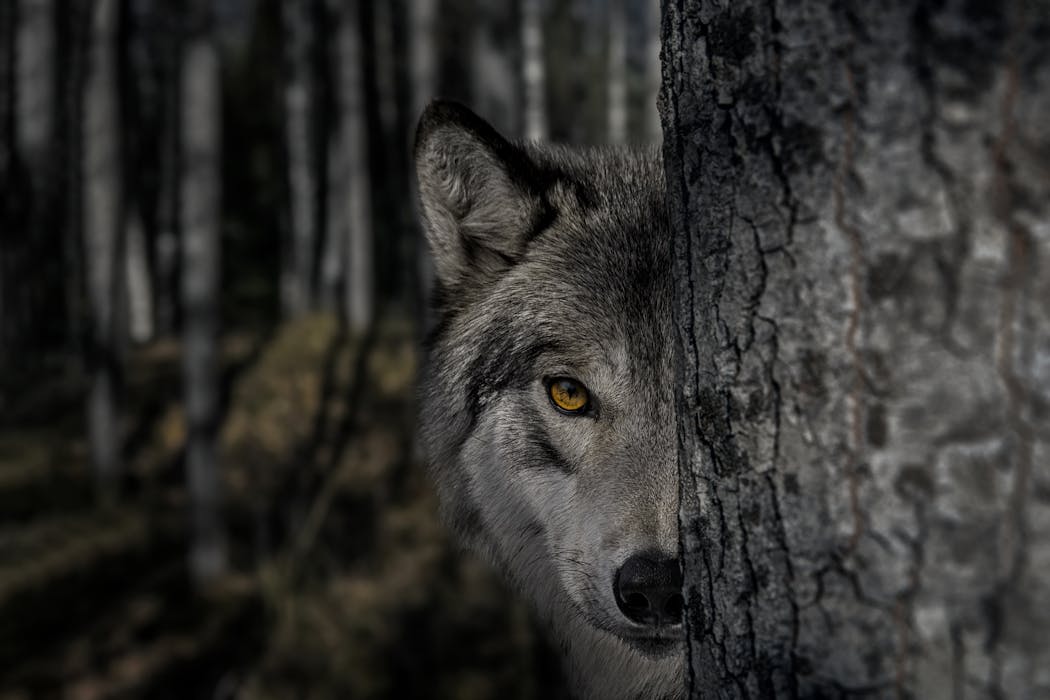
Wolves are returning across Europe – but not to the UK and Ireland, where public support is lukewarm at best. Ecologists point out their benefits, while farmers worry about their livestock. But another influence on public opinion is rarely discussed: Hollywood’s obsession with the wolf as a monster.
This is a particular issue in places where wolves are native yet have been extinct for centuries. Though wolves once roamed across Britain and Ireland, for most people there today they exist only in stories or on screen. The tropes we absorb through entertainment can carry far more weight than scientific facts, and have an outsized impact on how we think and feel about these animals.
Think of the big bad wolf or Little Red Riding Hood. Nearly every child in the English-speaking world is introduced to the villainous wolf from a young age. They’re cunning, cruel and ravenous.
However, we don’t leave that imagery behind us in childhood. Horror cinema keeps our nightmares full of wolves, drawing on familiar – and often entirely false – tropes. Recent films offer some particularly clear examples.
In Guillermo Del Toro’s recent adaptation of Frankenstein, wolves are depicted as villains. After escaping Dr Frankenstein, the monster takes refuge in an isolated farmstead and tries to help its residents. Twice, wolves descend on the farmstead – not only taking sheep but breaking into the house and attacking humans.
During the first attack, the monster muses that “the hunter did not hate the wolf. The wolf did not hate the sheep. But violence felt inevitable between them. This was the way of the world. It would hunt you and kill you, just for being who you are.” Del Toro uses wolves as a metaphor for the world’s brutality. To make that connection, he depicts conflict between wolf and human as “inevitable”, along with portraying wolves – very inaccurately – as determined home invaders.
This negative portrayal is not drawn from Mary Shelley’s novel, which contains no such scenes. Del Toro appears to have inserted it to heighten tension and scare viewers.
Metaphors and monsters
Robert Eggers’s Nosferatu offers another recent big budget example. When Nicholas Hoult’s character tried to escape the vampire Count Orlok’s castle, he is pursued by a pack of wolves. This is very close to older fairytale wolf characters, depicted as overtly evil or demonic.
This was reinforced by the film’s promotional campaign. In a widely reported interview, Hoult claimed he was “nearly attacked” by “real wolves”. In fact, the animals involved were Czech shepherd dogs who played their roles a little too convincingly – not wolves at all. Horror producers sometimes play up events like this to heighten the sense of threat and drum up ticket sales, in this case using an erroneous wolf attack to do so.
This isn’t limited to big budget cinema. A recent independent horror, Out Come The Wolves, shows two men and a woman who are attacked by wolves on a weekend getaway. Meanwhile, a menacing love triangle plot plays out in which a jealous would-be lover abandons his competition to a wolf attack.
The behaviour of wild predators is presented as an allegory for an opportunistic approach to romance. All’s fair in love and wolves. The film also contains an explicit reference to wolf reintroduction: when hearing about the wolf attack, one character is sceptical, saying “there haven’t been wolves in this area for years!” The message here is clear: as wolves come back to a landscape, so does the danger of attack.
Each of these films draws on existing tropes and fears in slightly different ways. This is what horror does as a genre: works with what scares us already and amplifies it for entertainment. But, in doing so, as high profile cinema events, they risk playing into inaccurate public perceptions. And because most people in Britain and Ireland will never encounter a wolf in the wild, these fictional wolves become their reference points.
On screen v reality
There are valid concerns around wolves preying on sheep, calves or other livestock, but attacks on humans are extremely rare. A pack of wolves surrounding and repeatedly terrorising a home simply doesn’t happen.
There is a strong ecological case for reintroducing wolves where they once lived. As apex predators they reduce populations of deer and other animals which can otherwise damage the environment, often by overgrazing. In Yellowstone national park in the US, grey wolf reintroductions triggered a cascade of unexpected biodiversity benefits, as overgrazing elk were forced on the move, trees recovered, rivers stabilised and beaver populations grew.
When wolves were reintroduced to Yellowstone, scientists had an ‘almost unique’ chance to study what happens when an ecosystem becomes whole again. Agnieszka Bacal / shutterstock
The same is happening in Europe as wolves spread back into their original range. But to reintroduce wolves to the UK or Ireland, conservationists would have to physically transport them there. Opinion polls show approval rates of 52% in Ireland and just 36% in the UK.
It’s hard to extract these numbers from the cumulative effect of centuries of storytelling, from ancient folklore through Victorian gothic novels to modern Hollywood horror. They all contribute to the idea that wolves are dangerous, unpredictable, and should be nowhere near humans.
It’s meant as entertainment. But horror’s ongoing reliance on the wolf as a symbol of evil or violence may be damaging efforts to promote coexistence with healthy wild populations. Our natural landscapes need wolves. And right now, wolves need all the good PR they can get.
Don’t have time to read about climate change as much as you’d like?
Cormac Cleary does not work for, consult, own shares in or receive funding from any company or organisation that would benefit from this article, and has disclosed no relevant affiliations beyond their academic appointment.