Falling space debris poses an escalating risk as spacecraft get stronger and more heat resistant

Source: The Conversation – USA – By Matthew Ray, Professor of Chemistry, University of Wisconsin-Stout

Not all space debris burns up in the atmosphere before it makes it back to Earth. PaulFleet/iStock via Getty Images

When it comes to space debris, what goes up is coming down more often – and not safely.

When spacecraft launch, some components, including nonreusable rocket boosters, are jettisoned to decrease weight, leaving them to intentionally burn up as they reenter the atmosphere. Satellites also enter the atmosphere at the end of their life, supposedly burning up. But in many cases, they are not doing so as predicted.

Debris from partially burned-up spacecraft components and satellites reentering Earth’s atmosphere can pose a risk to people and structures on the ground. The surge in launches, driven largely by private players such as SpaceX, is turning a once-remote risk into a growing threat.

Our materials research group at the University of Wisconsin-Stout is studying the materials that allow reentry debris to survive. We look for ways to safely modify their exceptional heat-resistant qualities to make them safer for atmospheric reentry.

Debris landing on Earth

Reentry debris has fallen on both private and public property around the world multiple times since 2021. Some of the most notable events involve pieces from SpaceX Dragon’s carbon fiber trunk, which stays attached to the crewed capsule until just hours before its reentry. These trunks are larger than a 15-passenger van and used for storage.

Trunk debris from the Crew 7 mission to the International Space Station has landed in North Carolina, and fragments from the Crew 1 mission landed in New South Wales, Australia. Similarly, debris from the Axiom 3 mission landed in Saskatchewan, Canada.

A large piece of space debris from a SpaceX Dragon capsule was found by a campsite groundskeeper in North Carolina in 2025.

In addition to trunk debris, carbon fiber components that hold pressurized gases to adjust a spacecraft’s orientation also make up a lot of recovered reentry debris. Some of these most recent recoveries have been in Australia, Argentina and Poland.

Most of the debris that reenters the atmosphere burns up, so why are these pieces making it down to Earth’s surface?

Atmospheric reentry

Satellites such as SpaceX’s Starlink reside in low Earth orbit, typically between 190 and 1,240 miles (300 and 2000 kilometers) above the Earth’s surface. To stay there, they need to move really fast, at about 17,000 miles (27,000 km) per hour. To reach this speed, a rocket with a million pounds of fuel had to accelerate it, and part of this energy is still contained within the satellite’s momentum.

As an object in orbit drifts down, closer to Earth’s upper atmosphere, it starts to collide with air molecules, slowing the object down. The amount of heat generated from this interaction rapidly consumes the satellite, melting metal at over 3,000 degrees Fahrenheit (1,600 degrees Celsius).

More launches

Countries around the world have been launching items into space since the 1950s, so why is reentry a concern now?

Starting in the 1960s, about 100 objects were launched into space every year – or at least that was the case until 2016. Since then, the number has been increasing exponentially. In 2016, 200 objects launched. But in 2025, that number was 4,500, meaning 20% of all objects launched into space since the 1950s were launched last year.

Most of these launches came from companies in the United States, such as SpaceX and Rocket Labs. Companies like these, along with those outside of the U.S., have plans for large satellite constellations composed of hundreds of thousands to a million satellites.

The more objects and payloads launched, the more reentry events occur. Satellite operators are required to remove their decommissioned satellites from orbit after 25 years to comply with regulations set in place by international committees. Groups across the world, including the Federal Communications Commission in the U.S., have pushed to shorten the deorbit window to five years. Because of these guidelines, the full influx of reentry debris events from these recent launches will not be felt for another 10 or more years.

The objects launched and policy decisions made today will have a lasting effect on future safety.

Carbon fiber

As the world has progressed technologically, efficiency for launching items into space has too.

Satellites and spacecraft are becoming lighter, stronger and more heat resistant because of materials such as carbon fiber-reinforced plastics and new metals. These strong materials are sought after because they’re lightweight, but they can also cause deorbiting debris to withstand reentry temperatures.

Carbon fiber, once used exclusively in space technology, is now found in common items such as bicycle frames and racing car bodies. It is still the gold standard for fabricating high-strength, low-weight materials for spacecraft components such as rocket fuselages, interstaging – the protective housing found between the rocket stages – and pressure vessels that experience extreme temperatures and high mechanical stress and strain.

Simple metals such as aluminum and steel melt and burn away, while complex materials such as carbon fiber, which is manufactured at up to 5,000 F (3,000 C), burn away unpredictably, changing the way jettisoned components break up upon reentry.

Since the early 2000s, a majority of recovered space debris contains either carbon fiber-reinforced plastic sections or metal components wrapped with carbon fiber. The carbon fiber can act as an unintentional heat shield for heavier, more harmful debris.

A map showing the world with dots spread across the U.S., South America, the coasts of southern Africa, Australia and Southeast Asia.
This map shows locations where confirmed space debris has been recovered. With the increase in launches, the European Space Agency predicts that future space debris could fall practically anywhere across the world.
European Space Agency

Design For demise

Design for demise is a major area of research focused on mitigating the risk of reentry debris. Instead of relying on controlled and meticulously timed deorbits that send components that survive reentry into the ocean at the end of their lives, spacecraft components are engineered to ensure they completely disintegrate while deorbiting through the atmosphere.

Design for demise can take many forms. These range from changing to more heat-susceptible materials to relocating harder-to-burn components to areas of the spacecraft that will be hotter during reentry, or using linkages that break apart at high temperatures to separate structures into smaller components to help them burn up.

With so much focus historically on spacecraft being made from the lightest, strongest and most heat-resistant materials available, it may seem counterintuitive to intentionally make some materials weaker. The key is making materials smarter, so they maintain their strength during their mission but weaken under the heat of reentry.

The Conversation

Matthew Ray’s lab is developing and working toward patenting a system to decrease risk from future carbon fiber based reentry debris.

Reese Hufnagel conducts research on space debris and is developing ways to make future carbon composites safer for use in orbit.

ref. Falling space debris poses an escalating risk as spacecraft get stronger and more heat resistant – https://theconversation.com/falling-space-debris-poses-an-escalating-risk-as-spacecraft-get-stronger-and-more-heat-resistant-279077

Most people don’t know what they don’t know, but think they do – correcting your metaknowledge can make you a better teacher and learner

Source: The Conversation – USA – By Thomas Blanchard, Research Associate in Cognitive Science, Tufts University

The ability to say ‘I know that I know nothing’ could be considered a sign of wisdom. Nicolas-André Monsiau/Pushkin Museum of Fine Arts via Wikimedia Commons

Do you know what the Apple logo looks like?

Chances are, you think you do. It’s ubiquitous and iconic. How could you not know it?

But when tested, it turns out very few people can remember all the features of the logo. One study of 85 people found that only about half could pick the correct logo out of a lineup of similar ones. And only one person could correctly draw it.

This isn’t an isolated example. A classic study from 1979 found that people similarly couldn’t draw a penny accurately or pick out a correctly drawn penny from incorrect ones.

People aren’t just bad at remembering things they see all the time, but also in actually knowing how they work. In a 2006 study, many people made significant errors when drawing a bicycle, like putting the chain around the front wheel as well as the back wheel. More than just a forgotten detail, putting the chain around both wheels shows a deeper misunderstanding of how a bicycle works. A bicycle with a chain around both wheels wouldn’t be able to turn.

Illustration of bike with different components labeled
Do you truly know how a bicycle works?
Al2/Grandiose via Wikimedia Commons, CC BY-SA

It turns out people’s knowledge of how the world works is often fragmented and sketchy at best. They systematically overestimate their understanding of everyday devices and natural phenomena. People will tend to give themselves high ratings on how well they understand something, such as how bicycles or zippers work. But when they’re asked to actually explain the mechanics of these objects, their ratings of their understanding typically drop.

Just like how your knowledge of the world around you is imperfect, your knowledge about your own knowledge – also called metaknowledge – is often flawed. My field of cognitive science has been uncovering various gaps in human metaknowledge for decades.

If people are systematically overconfident about how well they understand things, why don’t they notice when they don’t understand something? And what can people do to better recognize the limits of their own knowledge?

Why you think you know more than you do

Researchers have identified several factors behind people’s overconfidence in their knowledge.

One is that people confuse environmental support with understanding: The information is out in the world but not actually in your head. With a bicycle or a zipper, all of the parts are visible to you, and you may confuse this transparency for an internal understanding of how they work. But until you go to use that knowledge by attempting to explain how they work, you may not recognize that you don’t understand how those parts interact.

A second factor is confusing different levels of analysis. People can often describe how something works at a very high level. You know that the engine of a car makes the car go, and the brakes slow and stop the vehicle. But confidence in your high-level understanding of the car may bias you to think you also have a good grasp of the finer details, like how the engine pistons and brake pads work.

Additionally, people can be blind to the ways their knowledge shapes their own perception. In one study, researchers had participants tap out the tune to a popular song. On average, the tappers thought listeners would be able to identify the song about 50% of the time. But when listeners had to identify the tapped song, they actually could identify it only 2.5% of the time. The tappers didn’t realize how much their knowledge was making identifying the song seem easy to them.

A teacher talks to a student before a chalkboard wall filled with equations, chemical structures and graphs
Intellectual humility can help you see your expert blind spot.
Vitaly Gariev/Unsplash, CC BY-SA

This disconnect has consequences beyond whether someone else can understand your Morse code version of a song. When teaching people, whether in formal classroom settings or through casual mentorship, you can sometimes have an expert blind spot: the inability to recognize the difficulties beginners face when learning something you have expertise in.

Building expertise often involves internalizing knowledge to the point where it becomes invisible to you. You draw on knowledge you don’t realize you have, making it hard to relate to learners who lack this knowledge – and, of course, hard for learners to relate to your teaching. You might have experienced this when you’ve gotten partway through explaining something, only to realize you’ve been using jargon you forgot isn’t common knowledge and lost your listener.

How to address metaknowledge failures

Your metaknowledge can fail in two directions: You can think you know more than you do, and you can be blind to how much you’re relying on knowledge you do have. Each calls for a different response to correct it.

When you’re overconfident in your knowledge, the remedy is using that knowledge. You’ll quickly realize how much you actually understand and dial down your confidence. Challenging yourself to actually try to walk through how something works is a great exercise in intellectual humility – that is, recognizing that you may be wrong – and can keep you from getting out over your skis.

Building a greater appreciation for what you know is more difficult. You can’t simply unlearn what you’ve internalized. But what this challenge shows is that, to some extent, knowing a subject and knowing how to teach it are two separate skills. Some experts are great teachers, but not simply by virtue of being experts. Recognizing that you have to approach teaching with humility, and that your expertise doesn’t automatically make you a skilled teacher, can go a long way toward making you a better teacher and mentor.

These aren’t easy and quick fixes to failures of metaknowledge. Both require ongoing intellectual humility and a willingness to distrust your own confidence. But acknowledging the fallibility of your own metaknowledge is a good place to start.

The Conversation

Thomas Blanchard does not work for, consult, own shares in or receive funding from any company or organization that would benefit from this article, and has disclosed no relevant affiliations beyond their academic appointment.

ref. Most people don’t know what they don’t know, but think they do – correcting your metaknowledge can make you a better teacher and learner – https://theconversation.com/most-people-dont-know-what-they-dont-know-but-think-they-do-correcting-your-metaknowledge-can-make-you-a-better-teacher-and-learner-280905

Why Trump’s call to pull 5,000 US troops from Germany will hurt America

Source: The Conversation – USA – By Michael A. Allen, Professor of Political Science, Boise State University

The propeller of a ‘raisin bomber’ airplane from World War II is seen in Frankfurt, Germany, in June 2020. AP Photo/Michael Probst

President Donald Trump announced on May 1, 2026, that the United States will withdraw 5,000 U.S. troops from Germany – personnel who had been deployed there as a response to Russia’s invasion of Ukraine.

Germany-U.S. tensions started after the U.S. invasion of Iran. German Chancellor Friedrich Merz refused to support Trump’s war and stated that Iran had humiliated Washington’s leadership by closing the Strait of Hormuz. Trump followed the initial U.S. troop withdrawal announcement with threats to pull more armed forces.

U.S. troops will depart Germany over the next six to 12 months, leaving about 31,000 troops in the country.

The Trump administration’s decision to withdraw personnel comes after weeks of mounting tensions between the U.S. and NATO members. The United Kingdom and Portugal have restricted Washington’s ability to use its bases in those countries for certain activities related to the Iran war.

Trump also threatened to withdraw U.S. troops from Spain and Italy over their opposition to the war and refusal to help the U.S.

“Why shouldn’t I?” Trump said on April 30, 2026, referring to possible U.S. troop withdrawal from the two European countries. “Italy has not been of any help. Spain has been horrible. Absolutely.”

These remarks suggest the Trump administration views U.S. troop withdrawal as punishment for noncompliant European allies. But the reality is more complicated. Although this proposed 5,000-troop reduction is less than 15% of current U.S. forces in Germany, its logic and consequences speak to broader issues of power projection.

As experts in international relations, foreign policy and security cooperation, we have studied the relationship between U.S. military deployments and their host countries for years. While U.S. deployments contribute to the security of the host state, having troops based in Europe and other countries provides the U.S. with significant flexibility for pursuing its own foreign policy goals.

US deployment levels

Europe has historically been one of the regions with the highest concentrations of U.S. military personnel deployed overseas.

Since the end of the Cold War, for example, Italy has hosted between 20,000 and 40,000 personnel, and Spain between 2,000 and 7,000 personnel. Germany has regularly hosted the largest deployments. At the end of the Cold War, the U.S. maintained approximately 227,000 military personnel in Germany. Though Europe remains a significant location for basing U.S. troops, this number fell dramatically in the 1990s, hovering between 50,000 and 75,000 for most years since then.

US power projection

Historians and policymakers often explained U.S. deployments to Europe as a means of deterring the Soviet Union during the Cold War.

Nobel laureate Thomas Schelling described the logic in 1966: Even a small deployment in West Berlin served as a trip wire, ensuring that Soviet incursions would trigger a much larger military response from the U.S. and its European allies.

But a closer look at U.S. foreign policy challenges this view. While U.S. troops stationed in Europe were meant to defend Europe, their utility has extended far beyond that.

U.S. military bases and deployments provide the U.S. with greater flexibility and opportunities to pursue its foreign policy goals. By forward positioning military personnel and assets, the U.S. can reduce response times during crises, as well as the costs of moving its military resources into strategic positions.

A military plane lands on a runway.
A U.S. military aircraft lands at Incirlik Air Base in Adana, Turkey, as part of the operations against ISIS on Aug. 10, 2015.
Volkan Kasik/Anadolu Agency/Getty Images

Foreign deployments can convince countries not to attack countries that host them. During the Cold War, for example, the U.S. deployed nuclear weapons to Incirlik Air Base in Turkey, a NATO ally. Turkey’s close proximity to the Soviet Union increased the U.S.’s ability to challenge its superpower rival with these weapons.

These missiles were famously later withdrawn during the Cuban missile crisis in 1962, giving the U.S. something to bargain with in persuading the Soviets to remove their missiles from Cuba.

Larger military engagements, such as the Vietnam War or the wars in Iraq and Afghanistan, have typically relied on U.S. military facilities in allied states that are closer to the conflict. During the Vietnam War, U.S. bases in Germany, Japan and the Philippines were used as staging areas through which U.S. personnel and equipment moved on their way in or out of Southeast Asia.

U.S. facilities in Germany, such as Ramstein Air Base and Landstuhl Regional Medical Center, have been integral to combat operations, satellite control of drones and treating U.S. personnel wounded in combat. Landstuhl has admitted over 97,000 wounded soldiers since its founding in 1953 and has already treated service members injured during the ongoing Iran war.

Further, military equipment such as radar and interceptor missiles often have limited ranges. Deploying this equipment closer to rival countries can increase the chance of successfully intercepting and destroying incoming missiles.

Humanitarian benefits

Beyond warfare, U.S. humanitarian relief and disaster response operations often benefit from U.S. bases.

For instance, after a large earthquake struck Japan in 2011, U.S. personnel and facilities located in and around Japan enabled the rapid mobilization of relief operations.

A military transport plane takes off from a runway.
A U.S. Air Force C-17 Globemaster transport plane takes off from Ramstein Air Base in Germany on June 23, 2025.
Boris Roessler/Picture Alliance via Getty Images

In 2004, a powerful earthquake in the Indian Ocean triggered large tsunamis, affecting millions of people in nearby countries. U.S. personnel stationed at Yokota Air Base near Tokyo provided relief and supplies to people throughout Southeast Asia and as far as eastern Africa.

Similarly, after an earthquake in Turkey in 2023, U.S. medical personnel relocated from Germany to Incirlik Air Base to help provide relief.

Beyond their humanitarian benefits, these missions can increase favorable views of the U.S. More positive public views of America may also make foreign governments more likely to support U.S. foreign policy goals.

Lower costs for the US

Host states often make direct and indirect contributions to the costs of hosting and sustaining U.S. personnel. These can range from direct financial transfers to construction, tax reductions and subsidies. Japan and South Korea increased the amount they pay to host U.S. troops after Trump demanded they do so in 2019.

U.S. equipment – from tanks and trucks to planes and ships – also often relies on a host country’s infrastructure to operate and move within the host country. Germany, for example, paid over US$1 billion for construction costs and the stationing of U.S. troops in Germany during the 2010s.

Not all countries that host U.S. troops invest as much in their infrastructure as Germany does, and having those troops elsewhere could prove far more costly than having them in Germany.

The Conversation

Michael A. Allen received grant research funding from the Department of Defense’s Minerva Initiative, the US Army Research Laboratory, and the US Army Research Office from 2017 to 2021.

Carla Martinez Machain has received funding from the Department of Defense’s Minerva Initiative, the US Army Research Laboratory, and the US Army Research Office.

Michael E. Flynn has received funding from the Department of Defense’s Minerva Initiative, the US Army Research Laboratory, and the US Army Research Office.

ref. Why Trump’s call to pull 5,000 US troops from Germany will hurt America – https://theconversation.com/why-trumps-call-to-pull-5-000-us-troops-from-germany-will-hurt-america-282116

We tested the new World Cup ball – this is what you need to know about how it will fly, dip and swerve

Source: The Conversation – USA (2) – By John Eric Goff, Professor of Physics, University of Lynchburg

Small variations in the ball can influence how it behaves once it leaves the foot. Robbie Jay Barratt/AMA/Getty Images

Every four years, the men’s World Cup delivers some certainties. The pitch dimensions are tightly regulated, offside is signaled with a flag, and referees end the match with a blast of a whistle. But one key piece of equipment is changed on purpose: the ball.

Adidas, which has supplied World Cup soccer balls since 1970, introduces a new match ball for every tournament, and with that comes fresh aerodynamic calculations for players. How will it fly through the air, weave and dip?

For the past 20 years, my engineering colleagues in Japan and England and I have put the new balls through their paces, investigating soccer ball aerodynamics. Our work begins by putting balls in wind tunnels to measure drag, side and lift forces. We use the measurements from these tests in trajectory simulations that tell us how the ball will behave in a real-game setting.

Putting the 2026 World Cup ball through the wind tunnel test.

That may all sound a little academic, and we do produce an academic paper on our findings. But what our data indicates could mean the difference between a goal or a miss for strikers, a save or a blunder for goalkeepers, and jubilation or heartache for fans.

At the World Cup, the ball is the most important piece of equipment in the biggest tournament of the world’s most popular sport.

This year’s ball, the Trionda, is especially interesting. When FIFA and Adidas unveiled it in fall 2025, the first thing many people noticed was the color and the paneling.

An orange ball and a black and white ball are under a trophy.
Earlier World Cup balls used many panels; modern balls use far fewer.
Manfred Rehm/picture alliance via Getty Images

The ball’s red, blue and green graphics correspond to the three host countries, with maple leaf, star and eagle motifs representing Canada, the United States and Mexico. And for the first time in men’s World Cup history, matches will be played with a four-panel ball.

But with so few panels, has Adidas made the ball too smooth? That is the trap engineers fell into with the Jabulani ball used at the 2010 World Cup in South Africa that became notorious for sudden dips and swerves, which made goalkeepers’ lives far trickier.

You do not want the World Cup ball to feel like the start of a science experiment once it is in the air. And if it behaves strangely, players and goalkeepers notice immediately.

The evolution of soccer balls

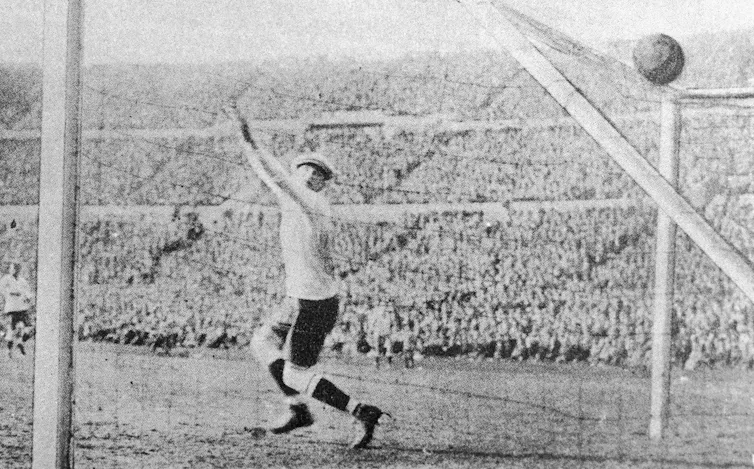
World Cup balls have come a long way over the decades. If you go back to 1930, the ball looked very different. The first World Cup final used two different leather balls: Argentina’s Tiento in the first half and Uruguay’s T-Model in the second. Both were hand-sewn, multipaneled balls, inflated through a bladder opening that had to be tied off and tucked back beneath the laces. In damp conditions, the leather absorbed water, making the ball heavier and less predictable in play.

A ball nestles in the top of a goal.
Uruguayan keeper Enrique Ballestrero fails to save a shot from Argentina’s Carlos Peucelle in the final of the first World Cup.
Keystone/Getty Images

By 1994 – when the United States last hosted the men’s tournament – the official ball, Adidas’ Questra, had evolved into a foam-based design. The modern World Cup ball is no longer just stitched leather. It is an engineered aerodynamic surface.

Trionda pushes that evolution further. It has only four panels, the fewest in men’s World Cup history, which have been thermally bonded – melded together using heat and adhesive.

Fewer panels might suggest less total seam length and therefore a smoother ball. And smoothness matters because the thin boundary layer of air clinging to the ball determines where the flow separates, how large a wake forms, and how much drag the ball experiences.

The Trionda has intentionally deep seams, three pronounced grooves on each panel and fine surface texturing.

But will these textures and grooves do the trick? To find that out, my colleagues and I measured the ball’s seam geometry and overall aerodynamic behavior. We compared it with Trionda’s four predecessors: 2022’s Al Rihla, 2018’s Telstar 18, the Brazuca used in 2014 and the Jabulani in 2010.

What the measurements show

In our wind tunnel tests at the
University of Tsukuba, we measured
something called the drag coefficient, which is a way of describing how much air resistance a ball experiences as it moves.

Using this data, we gained insights into how the airflow changes around the ball after it is kicked. The tests helped identify the drag crisis, the speed range in which changes in the boundary layer and flow separation produce a sharp change in drag, which can alter the ball’s acceleration, trajectory and range.

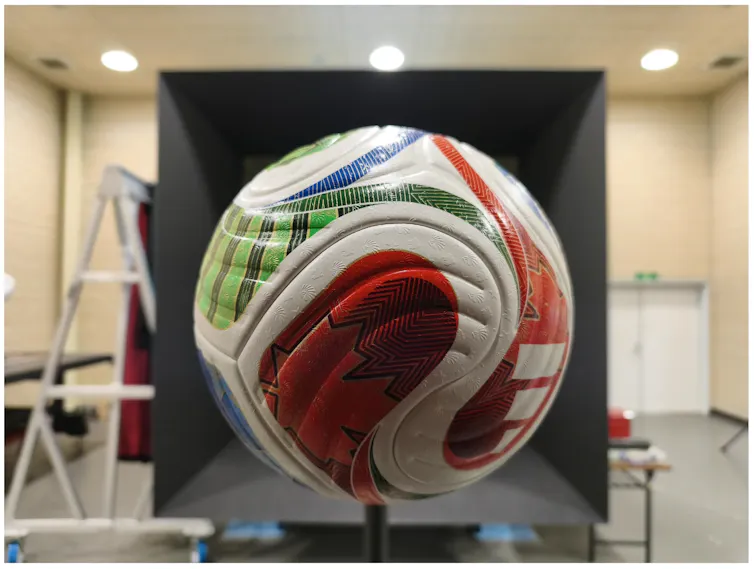
A ball is seen suspended.
The Trionda soccer ball prepares for the wind tunnel.
Goff/Hong/Liu/Asai

We found that the Trionda is effectively rougher than those predecessors.

Trionda reaches its drag crisis at a lower speed, at about 27 mph (43 kph). That is below the roughly 31-40 mph (50-65 kph) range for Al Rihla, Telstar 18 and Brazuca, and far below Jabulani’s roughly 49-60 mph (79-97 kph) range, depending on orientation.

Why does all that matter? Because a ball can feel ordinary off the boot and still behave differently in flight. When the drag crisis occurs in the middle of game-relevant speeds, small changes in launch speed, orientation or spin can shift the ball from one aerodynamic regime to another.

That was Jabulani’s problem. Once kicked with little spin, it had a tendency to slow down too much as it passed through its critical-speed range.

Trionda does not look like that kind of ball. It has a more steady and consistent drag coefficient in the range of speeds associated with corner kicks and free kicks.

But there is a trade-off. Our measurements also showed that once Trionda enters the higher-speed, turbulent-flow regime, its drag coefficients are somewhat larger than those of Brazuca, Telstar 18 and Al Rihla.

In plain language, that suggests a hard-hit long ball may lose a little range.

In our simulations, the difference is not huge. But it is large enough that players may notice long kicks coming up a few meters short.

It is also important to note that we tested a nonspinning ball. As such, our results do not provide a prediction of every pass, clearance or free kick fans will see this summer. Balls in flight often spin due to off-center kicks. That, along with altitude, humidity, temperature and air pressure all influence how a ball flies through the air once kicked.

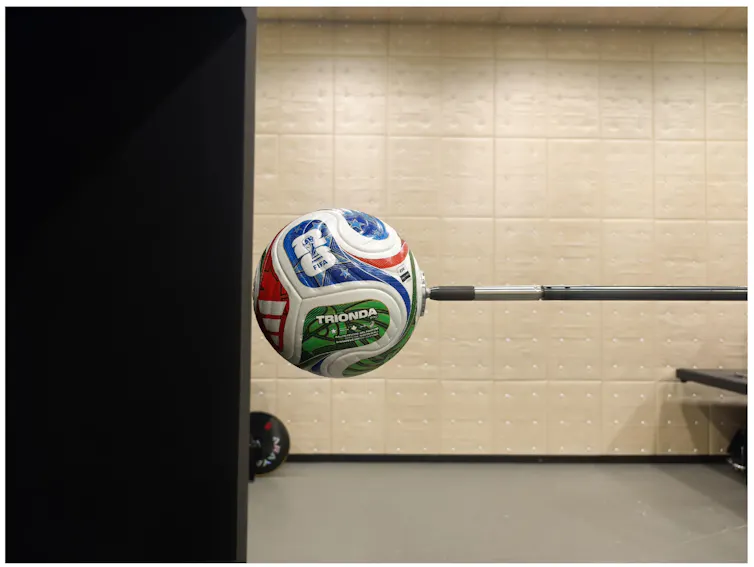
A ball mounted on a rod.
Close-up of the Trionda ball during wind tunnel testing.
Goff/Hong/Liu/Asai

The big test yet to come

Fewer panels and more texturing aren’t the only differences with the new ball.

Trionda also carries technology that has little to do with its flight and a great deal to do with officiating. Like Al Rihla, Trionda includes “connected-ball technology” that lets computers know when the ball is kicked, helping with offside decisions.

But the architecture has changed. In 2022, the measurement unit was suspended at the center of the ball. With Trionda, it sits in a specially created layer inside one panel, with counterbalancing weights in the other three panels. The chip sends data to the video assistant referee, or VAR, system and the tournament’s semi-automated offside system.

That tweak will help referees, but will the new ball in general help or hinder players?

The evidence from our tests suggests that the ball won’t be behaving in a way that leads to baffling and erratic flight.

But the more intriguing possibilities are subtler and outside the scope of our tests. Will the grooves on Trionda help players generate more backspin on the ball, generating more lift and possibly offsetting Trionda’s somewhat larger high-speed drag coefficient?

That is why I keep studying World Cup balls both in the lab and through their behavior in play. Every four years, a new design offers a fresh way to watch physics enter the game, not in theory, but in the movement of an object in which every player on the soccer field must place their trust.

The Conversation

John Eric Goff currently works as a visitor in the Department of Physics at the University of Puget Sound in Tacoma, Washington. Following the conclusion on 30 June of that one-year appointment, he will start on 1 July as Professor of Engineering Practice in the Weldon School of Biomedical Engineering and the School of Mechanical Engineering at Purdue University.

ref. We tested the new World Cup ball – this is what you need to know about how it will fly, dip and swerve – https://theconversation.com/we-tested-the-new-world-cup-ball-this-is-what-you-need-to-know-about-how-it-will-fly-dip-and-swerve-280781

Immigrant patients often choose doctors with a shared cultural background – what they are seeking isn’t sameness but connection

Source: The Conversation – USA (3) – By Yasamine Salkar, Clinical Assistant Professor of Health Administration, Georgia State University

Patients seek clinical interactions where they feel heard. Evgeniia Siiankovskaia/Moment via Getty Images

At a recent dental appointment, I was unexpectedly seen by a new provider in my longtime dentist’s practice. Early in the visit, he realized we were both Iranian American. Like me, he had been born and raised in the United States. We were both fluent English speakers and fully accustomed to navigating American medical settings.

After we briefly discussed how the war in Iran was affecting our families there, something shifted. The exchange was short, but deeply human. I left feeling an immediate sense of connection, trust and familiarity with a provider I had only just met.

That experience helped me better understand something I had long observed among immigrant families – that immigrant patients often seek out healthcare providers from similar backgrounds. What they are often seeking goes beyond a shared language or cultural familiarity.

I am a health administration professor and lawyer who studies how people navigate health systems. In my work, and through conversations with immigrant families, including my own, I have seen how subtle interactions in clinical settings can shape whether patients feel confident or dismissed and unsure about returning for care. For some, choosing a doctor with a similar background represents their best attempt to feel more understood.

The fact that many patients actively seek out providers who share aspects of their cultural background, even when doing so may require additional effort or limit their options, illustrates that it is not a minor preference, but a meaningful part of how people experience care.

Beyond a shared language

Immigrants make up a growing share of patients in the U.S., accounting for about 15% of the population.

Large national studies suggest that patients often seek providers with whom they share a cultural background. That choice is especially pronounced among racial and ethnic minority patients, those who speak a language other than English at home and those with public insurance.

Even as the U.S. physician workforce becomes more diverse, many patients still report difficulty finding providers who share their cultural or linguistic background. At the same time, some evidence suggests the number of foreign-born physicians may also be declining. In my view, that makes the effort to find such providers all the more noteworthy.

Busy health care waiting room with a doctor discussing treatment plans with mother and daughter and a desk in the background.
Healthcare providers can do a lot to support patients’ sense of trust in their care.
Dragos Condrea/iStock via Getty Images

A shared language may seem like the most obvious explanation for why immigrants seek out doctors from similar backgrounds. And in many cases, it does matter. When patients and clinicians speak the same language, communication improves and medical errors decline, especially for patients who are not fluent in English.

But language alone does not explain experiences like my own.

Narrative research on immigrant patients describes broader issues. For example, a patient might raise a concern about a persistent symptom, only to feel too quickly dismissed, or hear an explanation delivered in a simplified way that does not match their level of knowledge or experience.

These moments can be subtle, but as they accumulate over time, they may contribute to a sense that medical care feels transactional or dismissive rather than responsive to patients’ concerns. Even patients who are fully fluent in English and comfortable navigating the health system may come to expect not to be fully heard.

That expectation can shape where people feel comfortable seeking care.

Why shared background can matter

Sharing a background, whether through race, ethnicity, language or cultural experience, can sometimes help create a sense of connection – especially at the start of a relationship.

But research suggests the relationship is more nuanced than simply matching patients and doctors by identity. The way a doctor communicates, as well as whether they listen carefully, take concerns seriously and involve patients in decisions, also plays a central role.

In one study that examined physician-patient relationships across racial and ethnic groups, patients who felt personally similar to their physician – for example, in how the physician communicated, approached decisions or seemed to understand their concerns – were more likely to trust their doctor, feel satisfied with their care and follow medical advice.

Research on patient-centered care has similarly found that patients value interactions where they feel respected, understood and able to communicate openly.

Together, these studies suggest that while shared backgrounds can sometimes help create trust, communication and interpersonal connection may matter just as much.

More research is needed to understand how much these experiences reflect differences in communication itself versus connection spurred by a common background. But for immigrant patients, it may not be the shared identity itself that matters most, but the expectation that it will help them feel more easily understood. When patients consistently struggle to find that experience, shared background can become one of its few visible signals.

Understanding why immigrant patients make these choices ultimately reveals something more universal: Trust in medicine is shaped not only by clinical expertise, but by everyday human interaction. And patients value this quality so highly that they actively seek out providers who they believe will offer that sense of understanding and connection.

The Conversation

Yasamine Salkar does not work for, consult, own shares in or receive funding from any company or organization that would benefit from this article, and has disclosed no relevant affiliations beyond their academic appointment.

ref. Immigrant patients often choose doctors with a shared cultural background – what they are seeking isn’t sameness but connection – https://theconversation.com/immigrant-patients-often-choose-doctors-with-a-shared-cultural-background-what-they-are-seeking-isnt-sameness-but-connection-271676

How tarot readers are using AI – and what it says about our growing reliance on chatbots for emotional support and advice

Source: The Conversation – USA (3) – By Ziv Epstein, Postdoctoral Associate, Schwarzman College of Computing, Massachusetts Institute of Technology (MIT)

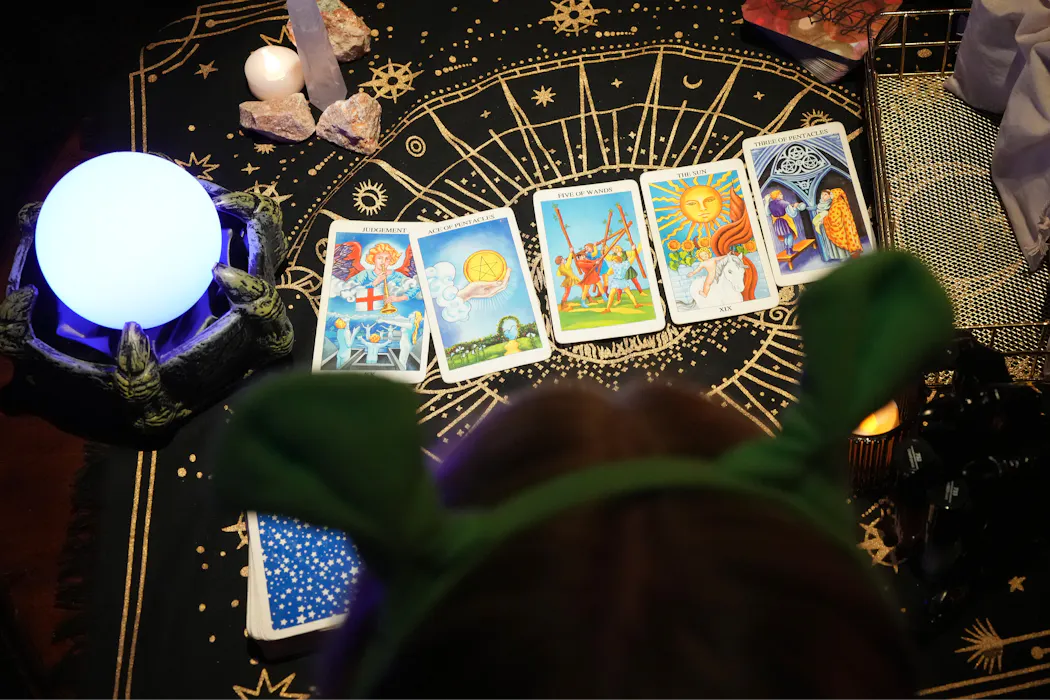
Tarot readings can encourage self-reflection. But what happens when you turn to AI to interpret the cards? Ilya S. Savenok/Getty Images for Sally Hansen

If you’ve ever turned to artificial intelligence to try to figure out how to handle a tricky situation with a friend or colleague, you’re far from alone. For many, AI has become a modern oracle – a source of guidance, emotional support or clarity in moments of uncertainty – though critics worry that they could lead to emotional dependence on the technology.

Of course, the urge to seek answers from forces beyond ourselves is hardly new. For generations, people have turned to psychics, astrology charts or tarot cards for reassurance.

Once fringe, these practices have increasingly become mainstream. According to a 2025 Pew Research survey, nearly 1 in 3 Americans consult tools such as tarot or astrology at least once a year, interest that’s thought to largely be fueled by Gen Z and social media.

Now, we’re seeing these two forces – AI and occult practices – meeting in strange and fascinating ways. An increasing number of tarot readers, from novices to seasoned practitioners, have been turning to AI to help make sense of their tarot readings.

What makes this pairing so striking is that interpretation is the whole point of tarot. And yet AI often brings little knowledge of your history or your unique situation when it dispenses advice.

In a study published in April 2026, we examined which aspects of the practice that tarot readers were delegating to AI, and how the technology was shaping their interpretations.

Watching what happens when readers hand that important interpretive step to AI may offer a glimpse of what helpful AI guidance could look like – and where it could go wrong.

The mainstreaming of occult practices

Tarot cards are experiencing a revival.

Tarot did not start out as a spiritual or fortune-telling tool. It began as a popular card game in the Italian Renaissance, before spreading across Europe.

Over time, readers and occultists layered the cards with mystical symbolism drawn from Kabbalah, Egyptology, numerology and other mystical and symbolic traditions. In the early 20th century, the British publisher William Rider & Son released the Rider-Waite-Smith deck, which became the most popular tarot deck in the English-speaking world.

Whereas only a handful of tarot decks were being published in the early 1970s, today thousands of tarot and oracle decks are in circulation. A standard tarot deck contains 78 cards, each carrying its own symbolic meaning. Practitioners use the cards to sit with hard questions, which can range from difficult relationships to world events: Should I leave my partner? Is this job worth it? What’s going to happen with Donald Trump and the Strait of Hormuz?

After cards are pulled, their meanings are interpreted through the lens of the reader’s question, circumstances and life history.

Someone asking about a relationship and drawing the Tower card, for instance, might read it as impending rupture, or as false assumptions finally giving way. Which reading fits depends on the other cards, the specific question and what the reader already knows about their own situation.

This stands in contrast to AI, which is primed to produce a seemingly definitive answer, even when it’s unaware of the nuances of your situation and context.

The adoption of AI in tarot reading

For our study, we interviewed 12 tarot practitioners about their use of AI in readings they did for themselves.

They generally found themselves pulled in two directions.

On the one hand, they often sought explicit guidance from AI in the process of self-reflection. By using AI to interpret the cards, they could sidestep the frustration of interpreting many cards in light of the question asked.

Say someone drew the Fool and the Ten of Wands for a question about a career change. The Fool points toward a leap into the unknown, while the Ten of Wands speaks to burnout and an unsustainable load.

But do the cards say, “Leave, you’re exhausted and something better awaits”? Or “Leave, and the new job will be just as demanding”?

Rather than sit with that ambiguity, some readers simply ask the AI for the meaning of the reading.

A middle-aged woman wearing glasses smiles and gazes at a large, blue tarot card in her right hand.
An attendee at Google’s 2025 I/O developers conference wears Android XR glasses with Gemini AI, which she’s using to interpret a tarot card.
Camille Cohen/AFP via Getty Images

For more challenging readings, AI’s “yes man energy” helped them feel more confident about their interpretations. This was true for cases where participants both drew physical tarot cards and then interpreted them with AI, or used AI to directly simulate tarot readings.

These uses of AI are seductive. They make the act of self-reflection less demanding. But within the broader tarot community, we found a lot of criticism of AI, and there were concerns about how the sycophantic nature of the technology could undermine people’s intuition and reasoning.

AI as a tool for critical engagement

On the other hand, the tarot readers we interviewed also used AI as a tool to challenge their own biases and assumptions – blind spots in their readings, or what they might be missing in their own interpretation of the cards.

Along these lines, they used AI to generate alternative perspectives so they could compare the different interpretations and see which resonated more. And some even asked for an “objective reading” of the cards, because AI appears to have no skin in the game and be unburdened by personal biases or motives.

Many readers did this when they didn’t want to “bug” or “pester” their friends for help with a reading. Instead, they relied on chatbots in a one-sided relationship that feels supportive – an example of what scholars call parasocial interaction.

Some interviewees even treated bizarre AI-generated outputs or hallucinations as meaningful precisely because they were random and unintended, the same way that a card drawn at random feels like it carries a secret message.

What does this mean for the future of AI?

AI is becoming a powerful new oracle in its own right.

In one recent survey, researchers found that up to 87% of generative AI users are consulting the technology for “personal applications,” which includes advice and emotional support for relationship conflicts and mental health struggles.

Sometimes these chatbots are genuinely helpful. But at the same time, advice seekers can also become emotionally dependent. Some rely on the technology for companionship and guidance instead of friends and family. Chatbots have also been found to nurture delusional beliefs and even lead to self-harm.

Meanwhile, professionals that regularly give guidance are using AI in their practice, from lawyers to therapists and even priests. Pope Leo XIV recently urged priests to resist the temptation to use AI to write sermons.

We think it’s important to make sure the technology isn’t seen as an all-knowing source of truth. It can certainly open up users to new ideas, but it should be a tool to enhance self-reflection, rather than one that serves as a substitute for it.

In some cases, that’s what the tarot readers in our study did. They tapped into their own capacity for reflection by using AI to explicitly challenge their own biases and assumptions. This points to an alternative blueprint for the future of AI – one in which the technology doesn’t simply hand you answers but keeps you actively engaged in the process of finding them.

The Conversation

The authors do not work for, consult, own shares in or receive funding from any company or organization that would benefit from this article, and have disclosed no relevant affiliations beyond their academic appointment.

ref. How tarot readers are using AI – and what it says about our growing reliance on chatbots for emotional support and advice – https://theconversation.com/how-tarot-readers-are-using-ai-and-what-it-says-about-our-growing-reliance-on-chatbots-for-emotional-support-and-advice-280106

What a list of Black Death survivors reveals about the way people recovered from plague

Source: The Conversation – UK – By Alex Brown, Associate Professor of Medieval History, Durham University

The Dance of Death by John of Kastav (1490). National Gallery of Slovenia

In our research in the British Library’s medieval collections, we have identified a previously unnoticed document that provides fresh insights into the survivors of the outbreak of plague known as the Black Death (1346–53).

The document – a scrap of parchment inserted into an account of the Ramsey Abbey manor of Warboys in Huntingdonshire – records how much time peasants were absent from work when struck down by the plague. It also reveals the names of those who survived and how long their employers believed recovery could take.

Our study sheds new light on a group of 22 tenants who probably contracted plague, languished on their sickbeds for several weeks, and then recovered.

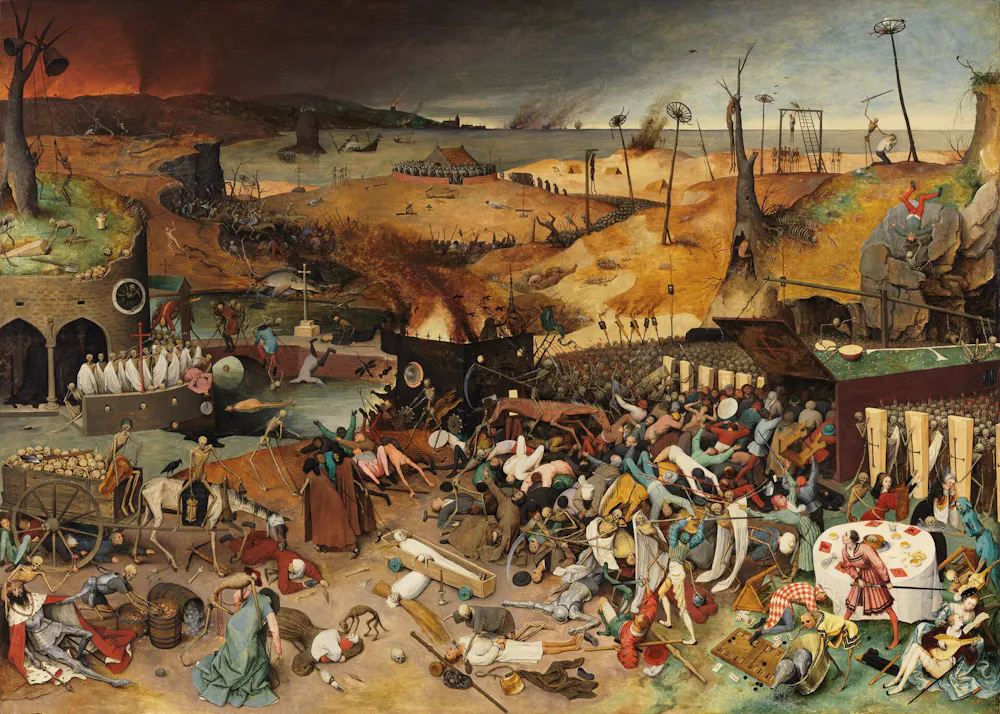
As one of the deadliest pandemics in recorded history, it has been estimated that between a third and two-thirds of the population of medieval Europe died during the Black Death.

Painting of a grim landscape destroyed by plague
The Triumph of Death by Pieter Bruegel the Elder (1562) shows the social upheaval that followed the plague.
Museo del Prado

Given the sheer scale, many historians have focused on discovering details about those who died. Yet this has left the histories of those who contracted plague and recovered largely untold.

Despite the deadliness of the disease, it was possible to recover from plague, and medieval chroniclers mention the possibility – however unlikely – of survival. For example, Geoffrey le Baker, a clerk of Swinbrook in Oxfordshire, wrote in the following decade that he thought recovery depended on people’s symptoms:

People who one day had been full of happiness, on the next were found dead. Some were tormented by boils which broke out suddenly in various parts of the body, and were so hard and dry that when they were lanced hardly any liquid flowed out. Many of these people escaped, by lancing the boils or by long suffering. Other victims had little black pustules scattered over the skin of the whole body. Of these people very few, indeed hardly any, recovered life and health.

But who recovered? Why did so many succumb to the disease when others survived? And just how long was this “long suffering”? Unfortunately, there is remarkably little documentary evidence because most medieval sources record information about mortality rather than ill health.

Unique list of plague survivors

A unique inclusion in the account of the manor of Warboys details a group of people who fell ill between the end of April and the start of August 1349. The monks of Ramsey Abbey wrote a list of their tenants who had fallen sufficiently sick that they could not work on the lord’s lands and detailed the length of time that they were absent.

People were clearly affected differently by their experience of plague.

The quickest recovery was that of Henry Broun who missed just a single week of work. By contrast, John Derworth and Agnes Mold had much more protracted illnesses and were both absent for nine weeks.

The average length of illness was between three and four weeks, with three-quarters of people returning to work in under a month. The speed of their recoveries is all the more surprising given that they were entitled to up to a year and a day of sick leave from work.

This list of survivors includes a preponderance of tenants who occupied larger holdings on the manor. It has long been debated by historians and archaeologists whether the plague killed indiscriminately, with no regard to status, sex or age, or whether the poor and elderly were more vulnerable.

The survival of so many wealthier tenants could indicate that their higher living standards enabled them to recover more readily than their poorer neighbours, perhaps because they were able to stave off secondary infections and complications. We should not read any significance into the fact that 19 out of the 22 people were men: this reflects the gender bias of manorial landholding rather than any sex-selectivity of plague.

Although 22 people may not seem like many, in a regular year during the 1340s, only two or three absences were recorded during the summer months. It, therefore, represents a tenfold increase in regular illnesses on the manor. Put another way, these sick tenants were absent for 91 weeks’ worth of labour services during just a 13-week period.

Medieval drawing of men harvesting wheat
Medieval peasants at work harvesting wheat (circa 1310).
Queen Mary’s Psalter (Ms. Royal 2. B. VII)

Our understanding of the impact of the Black Death has been influenced by the appalling scale of death. Yet it is only when we add those who fell ill and recovered back into the picture that we can truly understand the seismic shock the pandemic had on society. The dead, dying and sick must have considerably outnumbered the living in villages and cities across Europe.

The consequences of this can be seen in medieval accounts and chronicles, one of which records that “there was so great a shortage of servants and labourers that there was no one who knew what needed to be done”. As a result of this combination of high mortality, unprecedented illness and abysmal weather, the two harvests of 1349 and 1350 have been described as the worst experienced in medieval England, worse even than those that caused the great famine of 1315-17.

This archival discovery allows us to write the history of sickness and recovery back into the Black Death, demonstrating that recovery was possible even during one of the worst pandemics in recorded history.

This new evidence reveals the remarkable resilience of medieval peasants. Many of them lay languishing on their sickbeds, exhibiting buboes (the painful, swollen and inflamed lymph nodes on the groin and neck that were typical of the Black Death), vomiting blood and wracked by fevers and not only survived but returned to work in just a few short weeks.

The Conversation

Research for this article was conducted thanks to funding from a Leverhulme Trust research project grant, ‘Modelling the Black Death and Social Connectivity in Medieval England’.

Dr Grace Owen is a postdoctoral research associate on the Leverhulme-Trust funded project, ‘Modelling the Black Death and Social Connectivity in Medieval England’.

ref. What a list of Black Death survivors reveals about the way people recovered from plague – https://theconversation.com/what-a-list-of-black-death-survivors-reveals-about-the-way-people-recovered-from-plague-275622

The Christophers explores the world of art fakes, but leaves its hardest questions unresolved

Source: The Conversation – UK – By Edward White, PhD Candidate in Psychology, Kingston University

A former artist turned art forger, Lori Butler (Michaela Coel) poses a deceptively simple question at the heart of Steven Soderbergh’s new film, The Christophers: does it really matter who paints an artwork?

She is commissioned by the adult children of renowned painter Julian Sklar (Ian McKellen) – Barnaby (James Corden) and Sallie (Jessica Gunning) – to “complete” the last of his unfinished works, The Christophers.

Once complete, their real intention is to sell the series of paintings for a fortune once their father dies. Lori, who once endured a scathing critique from Julian that stalled her own career, reluctantly agrees to take on the job.

The film is, on the surface, a pleasingly crafted piece of art-world intrigue. But it raises questions about pleasure, authenticity, creative ownership and race that, ultimately, it seems unwilling to interrogate closely.


Read more:
The Mastermind: this art theft heist offers a compassionate character study


The premise centres on a real psychological phenomenon called essentialism – the deeply human habit of treating objects as though they possess a hidden inner nature that no copy can replicate. Psychologist Paul Bloom explores this in his book How Pleasure Works (2010). He argues that what we enjoy about art is inseparable from our beliefs about its origin.

In a series of experiments in 2012, psychologists demonstrated that people judge original artworks as more valuable and pleasurable than perceptually identical duplicates. This was not because they looked different, but because the original carried the trace of the artist’s creative act.

Even children show this intuition. Research from 2007 showed that when offered a spoon supposedly owned by Queen Elizabeth II versus a perfect copy, children preferred the original almost universally.

Further experimental work has since confirmed that simply labelling a work a copy, with no perceptual difference, depresses viewers’ ratings of its beauty and emotional resonance. This suggests that we are not responding to art – we are responding to the story we tell about it.

The film understands this. It suggests the revelation that Julian’s series portrays a long-lost male lover will transform his paintings into works that are not just appreciated but revered by the art market. Were Lori’s forgeries ever exposed, this would not only jeopardise their commercial value, but also dismantle the essence of the artist’s intent and feeling behind each brushstroke.

The artist’s gaze

This idea of originality is tightly tied up with assumptions about race, gender and who gets to be seen as a “real” artist.

Instead of treating originality as something universal and open to everyone, the film filters it through a very specific lens shaped by white, male authority. Rather than challenging this dynamic, it ultimately reinforces Julian as the figure who decides what counts as true artistic expression.

This dynamic echoes film theorist Laura Mulvey’s analysis of classic cinema, in which the male gaze structures all meaning and value. Men are deemed active creators and women mere objects whose value is defined by men.

In one scene, Julian dismisses Lori’s polyamorous relationships, describing them as mere infidelity. He, however, is never made to reflect on his own situation. As a bisexual man, his sexual freedom is framed as expressive and romantic – the very source of his artistic legacy. As a queer black woman, Lori is afforded no equivalent interpretation.

In her book Creating Their Own Image, art historian Lisa Farrington argues that creative contributions from black women artists are often overlooked or constrained by racial and patriarchal expectations. Their originality is rarely recognised on its own terms, filtered instead through the tastes and authority of others.

As a forger, Lori’s skill operates invisibly throughout the film. She is framed technically as indispensable, but narratively as subordinate to Julian and his children. Her authority as an artist is dependent on someone else’s approval.

Lori’s path has been directly influenced by Julian’s brutal critique of her artistic talent, which extinguished her own originality and confidence, driving her to become a forger. Instead of challenging his views or improving her craft, she simply accepts it, further removing her from any independent agency. The film does not attempt to present this as an indictment against the art world that Julian represents.

For example, in one scene Julian sells his art in a yard sale as a protest against the fact that agents take 40% of the profits of his work while making no creative contribution. In this instance, Julian voice is repeatedly allowed to be heard. Lori is granted no such opportunity.

So what is Soderbergh trying to say? He has faced criticism before for uneven editing and ambivalent portrayals of ethnic groups. Despite being “unusually candid about racism in Hollywood”, according to film theorist Sarah Sinwell, there is a recurring pattern in Soderbergh’s films in which black characters are used primarily to drive and validate white male agency.

The Christophers updates that dynamic without dismantling it. Lori is sympathetic and brilliantly skilled – but her function in the narrative remains pragmatic. Unfortunately, the film does not extend to her the rich interior life it generously grants Julian.

Given the restrained, emotionally muted role Coel is asked to play, Soderbergh seems more interested in exploring ideas of originality and pleasure than questioning: what is art? Why are some creators overlooked? And most importantly, who does the art belong to: the creator or the aesthete?


This article features references to books that have been included for editorial reasons, and may contain links to bookshop.org; if you click on one of the links and go on to buy something, The Conversation UK may earn a commission.


The Conversation

Edward White does not work for, consult, own shares in or receive funding from any company or organisation that would benefit from this article, and has disclosed no relevant affiliations beyond their academic appointment.

ref. The Christophers explores the world of art fakes, but leaves its hardest questions unresolved – https://theconversation.com/the-christophers-explores-the-world-of-art-fakes-but-leaves-its-hardest-questions-unresolved-282176

After a complete collapse, where does Welsh Labour go from here?

Source: The Conversation – UK – By Nye Davies, Lecturer in Politics, Cardiff University

May 7 will go down as the worst election in the history of Welsh Labour. More than a century of electoral dominance ended with the party sitting in opposition in the Senedd (Welsh parliament) for the first time.

Given Welsh Labour’s once-hegemonic position, the scale of the defeat is astonishing. This was not simply a loss, but a collapse. The party now holds just nine seats in the Senedd, with few new figures emerging to shape its future direction.

The unavoidable question is where Welsh Labour goes from here, and whether it can recover.

The answer depends not simply on new policies or a change of leader, but on whether the party is capable of a genuine reckoning with both its ideological direction and the consequences of nearly three decades in government. That process will be difficult while Welsh Labour remains divided between its Westminster wing in London and its devolved leadership in Cardiff Bay.

Adaptation and exhaustion

No party in the democratic world has enjoyed such sustained dominance as Labour in Wales. As the political scientist T.J. Pempel has argued, dominant parties survive by remaining flexible and evolving into broad “catch-all” movements capable of appealing to diverse groups of voters.

For years, Welsh Labour did just that. The party normalised a form of progressive Welsh identity politics that stopped short of supporting independence, while reshaping debates around devolution, national identity and governance. In doing so, it assembled a broad coalition of centre-left and Welsh-identifying voters.

Yet the political terrain Welsh Labour helped create has also exposed its vulnerabilities. Having pushed this soft nationalist positioning as far as it could, tensions with the UK Labour party has weakened Welsh Labour’s ability to sustain a convincing message about “standing up for Wales”.

And having made those ideas politically mainstream, the party now struggles to present itself as their most credible champion. Plaid Cymru has increasingly occupied the political space Welsh Labour once helped define.

At the same time, the wider UK Labour party under prime minister Keir Starmer has struggled to respond effectively to the rise of Reform UK. Its rightward shift on issues such as immigration, combined with a broader lack of ideological clarity, has alienated some progressive voters and encouraged others to look elsewhere on the left.

This has left Welsh Labour politically squeezed. Its rhetoric about “standing up for Wales” increasingly rings hollow, while Plaid Cymru advances a left-leaning platform explicitly framed around Welsh interests and greater autonomy from Westminster. For many voters, the question has become: what is the point of Welsh Labour?

Learning to lose

Defeat, however, need not be fatal.

Dominant parties elsewhere, such as the Liberal Democratic Party in Japan, have recovered by learning to lose and realigning with new political realities. But such renewal requires leadership, ideas and organisational coherence. Welsh Labour currently lacks all three.

Dominance has hollowed out and inhibited the party’s intellectual capacity. Former first minister Mark Drakeford arguably shaped Welsh Labour’s political identity throughout much of the devolution era. But his retirement has left a vacuum, with no obvious successor providing ideological direction.

The party can also no longer rely on claims of administrative competence and delivery after voters rejected that argument at the ballot box. Incumbency became a burden.


Read more:
The Welsh Conservatives survived the Senedd election – now they must decide what they stand for


These weaknesses are compounded by the lack of fresh voices in the Senedd group. With Ken Skates installed as interim leader, the party currently offers continuity at precisely the moment reinvention is needed. It illustrates how decades of dominance narrowed, rather than renewed, the pool of credible alternatives.

More damaging is the intensifying internal conflict within Welsh Labour. In the aftermath of defeat, long-running tensions between Labour politicians in Cardiff Bay and Westminster have become increasingly public.

Former Welsh government minister Mick Antoniw described the defeat as having been “manufactured in Downing Street”. Meanwhile the UK government’s secretary of state for Wales Jo Stevens has laid the blame at the door of the Welsh government.

While the Welsh government must accept responsibility for the failures of 27 years of government, Stevens’ post-mortem fails to mention Keir Starmer once. It is an incredible oversight considering the scale of his unpopularity.

The UK government’s at-times-hostile attitude to further devolution – alongside disputes over rail funding linked to the HS2 project – have further eroded the perception that Labour stands up for Wales.

Far from offering a self-reflective post-mortem, Stevens’ intervention risks deepening, rather than resolving, Welsh Labour’s internal tensions.

An existential moment

This is Welsh Labour’s core dilemma. If it is to recover, it must undergo a period of serious reckoning with its record, its ideological direction and the consequences of dominance. But without resolving the tension between its Westminster and Welsh wings, that process appears unlikely.

Welsh and UK politics have changed dramatically. Nationalist parties now dominate the three devolved legislatures, and the Labour party is in crisis. This reflects a wider shift in which Labour increasingly governs as an English party, with Welsh voices peripheral. For a party that has shaped Welsh politics for more than a century, this moment is existential.

Unless Welsh Labour confronts this reality and reconciles its divisions, learning to lose will be difficult. Defeat will not be a prelude to renewal, but the start of a more terminal decline.

The Conversation

Nye Davies does not work for, consult, own shares in or receive funding from any company or organisation that would benefit from this article, and has disclosed no relevant affiliations beyond their academic appointment.

ref. After a complete collapse, where does Welsh Labour go from here? – https://theconversation.com/after-a-complete-collapse-where-does-welsh-labour-go-from-here-282615

Other countries can learn from the UK’s successful shift to fortnightly bin collections

Source: The Conversation – UK – By Ian Williams, Professor of Applied Environmental Science, University of Southampton

Maulana Noriandita/Shutterstock

The government has recently introduced simpler rules on recycling in England, planning to end the confusion of different types of waste being collected in different postcodes. Scotland and Northern Ireland already operate (or are updating) their own devolved recycling laws that are equivalent to England’s simpler recycling system.

This should also mean the widespread introduction of weekly food waste collections across England and more separation of waste overall.

But at the same time, there’s still some public concern about the main “black bin” rubbish collection shifting away from weekly to more infrequent pickups.

For instance in Northampton, Thanet and South Gloucestershire, residents have recently been protesting over the frequency of their waste collections as well as over confusing changes, bins not being delivered and waste collections not happening on time.

Meanwhile, in Australia, a recent switch by a local council from weekly to fortnightly waste collection attracted criticism from some local residents.

Does the shift work?

Many people across the UK now get their dustbins emptied every two weeks. In some cases the recycling bin is also emptied every two weeks. This is not a cost-cutting gimmick, there’s plenty of evidence that our black bins do not need to be collected every week, and that cutting pickups can result in reduced waste.

This shift to fortnightly collections began through pilot schemes more than 20 years ago. Councils in the UK tested alternate weekly collections in the 2000s. Early research showed people recycle more when services are simple and reliable. Well-designed containers, easy kerbside access and predictable routines drive participation.

Social, cultural and structural factors also shape household recycling behaviour. For instance, if a neighbour recycles regularly this can influence a householder to do the same. Households recycle more and divert more waste from landfill when systems include food caddies.

Targeted service design, including tailoring bin types and sizes, collection schedules, instructions, as well as support where recycling is more difficult (such as in flats), drives higher recycling.

Fortnightly bin collections have reduced amounts of waste when paired with weekly food-waste collection and better recycling. It also lowered greenhouse-gas emissions. Fortnightly “black bin” pickups steer waste prevention and recycling, while weekly food-waste captures organics, cutting landfill methane.

Reducing waste

Over the years councils have tried out changes in rubbish pickups. They added weekly food-waste bins. They expanded recycling. They ran targeted campaigns for flats and vulnerable households. Independent evaluations of pilot schemes showed consistent results: recycling rose, residual waste fell, and costs dropped.

Wales is now second in the world for recycling (behind Austria), with levels around 68%, a global benchmark achieved through consistent collection policy and investment in household services. Scotland comes in at 15th, and England is in 11th position.

Local councils can now point to authoritative research to help make their arguments for change. They can also show savings and emissions reductions. Across the whole UK, I estimate that 289-294 councils (out of 360), including at least 27 (out of 32) councils in Scotland, now collect residual waste fortnightly and recycling on alternating weeks. This approach is now used by growing numbers of authorities.

Cutting costs

By the mid-2020s, more than 80% of English councils had moved to fortnightly or longer residual cycles, with only a minority retaining weekly refuse rounds. These success stories are widely cited in policy reviews. What worked in the UK can be summarised in four ways.

1. Keep food waste weekly. Food is the main source of odour and contamination. Weekly food waste collection removes the biggest barrier to less frequent residual pickup.

2. Expand recycling streams. Offer clear, separate containers for paper, card, glass, plastics and metals. Make recycling easier than throwing things away.

3. Support flats and vulnerable households. Doorstep services must be adapted. Communal bins need management. Extra help must be available for those who cannot manage new routines.

4. Test and communicate. Phase in trials, tell people how much is being recycled and keep in touch with the public. These will build trust. People accept change when they see evidence and feel heard. Cities worldwide face the same pressures: tight budgets, climate targets and the need to divert waste from landfill and incineration. The global stakes are high. Waste systems account for a meaningful share of municipal budgets and of urban greenhouse-gas emissions. Small changes in collection design scale quickly.

Rubbish collections are changing across England.

Lessons from good policy

The UK experience offers practical lessons for other nations. The shift was not inevitable, but it has delivered three outcomes every city, town or village wants: cost savings, higher recycling and lower emissions. It frees up money for reuse schemes, repair hubs and sorting out infrastructure. It nudges households toward wasting less.

The UK story matters beyond its borders. Cities from Miyazaki, Japan, to Montreal, Canada, and Melbourne, Australia, have been learning from the evidence.

This is more than a bin schedule. It is a policy that reduces waste, lowers emissions and saves public money when paired with strong recycling services. The UK’s evidence-led rollout has created a template that other nations now test. Done right, fortnightly collections reduce waste, save money, cut emissions and change throwaway habits. Done wrong, they inflame communities.

Drawing on two decades of experience this evidence shows how careful design and phased trials turned a technical service change into mainstream policy from Wales to Canada, and why other cities should treat collection design as a strategic lever rather than a political shortcut.

This comes at a time when many local councils face renewed budget pressures and legally binding net-zero targets.

The UK’s experience provides timely, evidence-based options for cities worldwide to help them cut costs. By following the evidence, decision-makers can avoid the pitfalls that inflame communities and instead replicate the safeguards that have delivered measurable benefits.

The Conversation

Ian Williams receives funding from UK Research Councils, including the Engineering and Physical Sciences Research Council’s Impact Acceleration Account.

ref. Other countries can learn from the UK’s successful shift to fortnightly bin collections – https://theconversation.com/other-countries-can-learn-from-the-uks-successful-shift-to-fortnightly-bin-collections-277576