Source: The Conversation – Canada – By Sarah Foster, Program Leader, Project Seahorse and Senior Researcher, Institute for the Oceans and Fisheries, University of British Columbia
Bottom trawlers extract one-quarter of the world’s fisheries catches by weight and raise significant ecological, economic and social concerns. Given that, you’d think there would be an answer to basic questions in fisheries: how many fish species are being caught, and what are they?
In reality, though, bottom trawling is often proceeding blindly.
Bottom trawling is widespread and problematic. Gears operate by dragging large weighted nets across the ocean floor (some as wide as a 45-storey building is tall), sweeping up most of the life they encounter along the way and destroying habitat.
By far the biggest threat to seahorses is their incidental capture in bottom trawls. (Unsplash/Giulia Salvaterra)
We lead a conservation team called Project Seahorse, dedicated to ensuring there are more fish in the ocean in healthier ecosystems. We focus our work on securing healthy populations of seahorses — and to save seahorses, we have to save the seas.
By far the biggest threat to seahorses is their incidental capture in bottom trawls. As such, seahorses provide an index of the tremendous intensity of bottom trawling.
It was while developing a briefing on bottom trawl impacts that we realized no one knew the actual tally or diversity of fish getting caught up in nets. So we set out to provide an answer and in so doing unveiled more about the pressure bottom trawling is placing on marine species, ecosystems and fisheries worldwide.
Endangered species
Our research was anchored in tedious work as our co-authors took a deep dive into studies and reports hosted on the Food and Agriculture Organization of the United Nations (FAO) document repository, supplemented by an ad hoc exploration of additional literature.
The FAO is an intergovernmental organization that, among other things, collates worldwide fisheries data. We extracted more than 9,000 reports of fish species in bottom trawl catches, spanning from 1895 to 2021.
The first of our worrying findings is that a huge number of species are affected. We documented around 3,000 different fish species in bottom trawl catches but our modelled estimates suggest the true number could be double that.
Our data also showed that bottom trawls extract all or most species in some fish families. These include both the ocean’s most nutritious and commercially critical fish, such as jacks and croakers, and rare, distinct fish such as giant guitarfish and plough-nosed chimera.
Our second discovery is that many of the species we documented are already known to be of conservation concern. Among those on the International Union for Conservation of Nature’s (IUCN) Red List, about one in seven are classified as threatened or near-threatened with extinction. Bottom trawling was also cited in threat assessments for two-thirds of those species.
A giant guitarfish is among the species being caught by bottom trawling. (Sarah Foster)
Insufficient data
Our third finding was that there is limited information on the conservation status for many of the fish caught in bottom trawls. About one-quarter of the species we recorded were listed as “data deficient” or “not evaluated” by IUCN, meaning their conservation status is essentially unknown.
People tend to focus on the threatened species, which certainly need our attention; seahorses among them. However, we also need to be concerned about the species in trawls that lack conservation assessments, which may also be faring badly.
Finally, we found that many species are not even being recorded. Our database includes relatively few records of smaller demersal species (animals that live near the bottom of the sea), with fisheries often just lumping them together as “various” or “trash fish.”
As many fish are so often overlooked or ignored in catch records, we often don’t actually know what bottom trawlers are catching. When species are not recorded, we lose critical information about biodiversity, population status and ecosystem impacts, not to mention the loss of resources that people depend on for food and livelihoods.
Bottom trawl fisheries should be required to demonstrate that they are ecologically, economically and socially sustainable before being considered acceptable. As it stands, the burden of proof falls on those trying to demonstrate harm — not on the industry causing it. This needs to be reversed, paying full attention to all the fish in the nets.
The authors do not work for, consult, own shares in or receive funding from any company or organisation that would benefit from this article, and have disclosed no relevant affiliations beyond their academic appointment.
Source: The Conversation – UK – By Domenico Vicinanza, Associate Professor of Intelligent Systems and Data Science, Anglia Ruskin University
Illustration of a Mars mission that utilises nuclear propulsion.Nasa
Nasa is developing ways to use nuclear power to send spacecraft to their destinations. Nuclear propulsion could greatly reduce the journey time to Mars, perhaps cutting a voyage of more than six months to three or four months.
The idea of nuclear propulsion in space goes back to the cold war. But Nasa has been pursuing it more aggressively since Jared Isaacman took over as the agency’s chief in December 2025. Isaacman is a well-known advocate of the technology and says it can “truly unlock humankind’s ability to explore among the stars”.
In March 2026, the agency even announced an uncrewed, nuclear-powered mission to the red planet, targeted for late 2028.
Every spacecraft begins its journey fighting Earth’s gravity by burning chemical fuel. Rockets mix fuel with an oxidiser, ignite them, and force the expanding gas through a nozzle. According to Isaac Newton’s third law, when gas pushes downward, the rocket gets an equal push upward.
Chemical propulsion is powerful, reliable, and quite simply the only practical way to leave Earth’s gravity. But it comes with a severe limitation. Rockets must carry both their fuel and, in most cases, the oxidiser needed to burn it.
That means much of a rocket’s mass at launch is propellant, not payload. The longer and more ambitious the journey, the more propellant is needed, and the heavier the rocket becomes.
Nasa chief Jared Isaacman has repeatedly made the case for nuclear-propelled spacecraft. NASA/Aubrey Gemignani
Mars is far enough away that a long journey time, the threat to astronauts from cosmic radiation, the mass required to carry life-support systems and constraints on the return journey all pose serious problems for planning a mission.
This is why engineers keep looking for more sustainable alternatives to chemical rockets.
Nuclear thermal propulsion follows a three-step process. First, the nuclear reactor inside the engine splits uranium atoms to generate massive amounts of heat. Second, liquid hydrogen is pumped through the reactor core, where it flash boils and expands into a high-pressure gas. Third, this super-heated gas is blasted out of a nozzle at high velocities to push the spacecraft forward.
How does a nuclear thermal propulsion rocket work? (US Department of Energy)
According to the US Department of Energy, nuclear thermal propulsion can reduce travel times to Mars by up to 25% and, more importantly, limit a crew’s exposure to cosmic radiation. It would also widen the launch windows in which spacecraft can feasibly fly to Mars.
These depend on alignments of Earth and Mars that come along every couple of years. Greater flexibility with launch windows would allow astronauts to abort missions and return to Earth if necessary.
Nuclear electric propulsion, on the other hand, uses a nuclear reactor to generate electricity. This powers a type of engine called an ion thruster that accelerates charged atoms (like xenon) out of a nozzle. If nuclear thermal propulsion is the sprint approach, nuclear electric propulsion is the marathon option. Nuclear electric propulsion produces very low thrust, but it can run continuously for years.
This fuel efficient technology is perfect for sending robot explorers or heavy cargo (like habitats and food supplies) to Mars months before the humans arrive. In deep space, a small thrust applied for a long time can matter enormously.
Ion thrusters, which accelerate charged atoms out of a nozzle, are a key component of nuclear electric propulsion. Nasa / Jef Janis
A chemical rocket is like a powerful kick. Nuclear electric propulsion is more like a persistent hand on the shoulder.
It could make it easier to move heavy cargo through deep space, provide abundant onboard power, and remain effective far from the Sun, where the energy available to solar arrays is weaker.
This is the main idea behind Nasa’s Space Reactor-1 Freedom mission. SR-1 Freedom is a nuclear electric propulsion mission, which Nasa is currently targeting for launch in December 2028.
It would be the first nuclear-powered interplanetary spacecraft. It will journey to Mars to prove that nuclear energy can provide the sustained, high-efficiency power needed for deep space travel.
The SR-1 Freedom mission has been given a very ambitious launch date of 2028. Nasa
On arrival at Mars, roughly one year after its launch, SR-1 Freedom is expected to deploy the Skyfall payload. This is a set of small helicopter drones that will scout the Martian surface.
Nasa says the mission will establish nuclear hardware that can be used on other flights. It could also create a regulatory precedent and activate an industrial base for future systems based on nuclear fission.
For human exploration, the combination of both nuclear electric propulsion and nuclear thermal propulsion is very attractive. Because nuclear electric propulsion is incredibly fuel-efficient, it can move massive amounts of weight (habitats, years of food, rovers, and life-support machinery) using very little propellant.
It might not matter so much if cargo takes more than nine months to arrive on Mars. But our fragile human bodies mean that longer stays in space increase the risk of cancer from cosmic radiation and cause bone and muscle loss.
The second of these issues is because bones and muscles are not being exercised in microgravity. Nuclear thermal propulsion provides the high thrust needed to reach Mars in three to four months, drastically reducing these health risks.
Steep path
Despite the clear benefits, the path to the launch pad is steep, and the 2028 launch of SR-1 Freedom appears incredibly ambitious. A nuclear electric spacecraft needs a reactor, shielding, heat management, power conversion, radiators, electric thrusters, control systems and fault tolerance. Each of these components of the mission requires testing and careful integration for them to work together.
Reactor heat must be controlled without damaging other components. Thrusters
must operate reliably for months. Other factors can interact in ways that only emerge when spacecraft subsystems are put together. If SR-1 Freedom is to make its December 2028 window, Nasa has very little time to assemble a mission that would normally require years of design, integration and review.
If humans are to settle on Mars, space agencies will need faster ways of getting there. Nasa
Nuclear propulsion has spent more than 60 years somewhere between engineering reality and technological myth – even though the physics has always been sound.
What has proved harder is making the technology safe, affordable, licensable (able to meet regulatory safety standards) and ready to fly on a real mission schedule. So far, the US has launched only one fission reactor into orbit, SNAP-10A, in 1965.
SR-1 Freedom could create the pathway for more capable systems to follow. Nuclear electric propulsion will not make Mars easy. But it might start to break down barriers to travelling to Mars, and that is a prospect we should be excited about.
Domenico Vicinanza does not work for, consult, own shares in or receive funding from any company or organisation that would benefit from this article, and has disclosed no relevant affiliations beyond their academic appointment.
Whether you call it an Irish goodbye, French leave or filer à l’anglaise (leave in the English style), as the French prefer, the act of quietly slipping out of a party without fanfare is a familiar social impulse. The Brazilians called it sair à francesa (French style), the Germans a Polnischer Abgang (Polish departure), and Australians call it ninja bombing. Whatever name it goes by, the concept is the same: one moment you’re there, the next you’ve vanished into the night without a drawn-out round of explanations, hugs and promises to catch up soon.
The pattern is telling: every culture has a term for it, and every culture blames someone else. That collective deflection suggests we already know, on some level, that slipping out unannounced is a social transgression.
But for those of us with anxiety, that silent exit isn’t rudeness. While etiquette traditionalists will probably insist that leaving without saying goodbye is a social no-no, some psychologists argue that it’s a coping strategy. Here’s why sneaking out without saying goodbye might be the healthiest decision you make all evening.
When you break it down – and let’s be honest, those of us who are anxious, introverted, neurodivergent or dealing with chronic illness have all broken this down into agonising detailed steps – saying goodbye is a loaded cultural ritual. It’s a performance that demands a high degree of social skill, accuracy and nuance.
Goodbyes are high-demand situations and, sadly, by the end of a social occasion, many of us are already depleted and don’t have the energy to handle all the steps involved.
When socialising means constantly adapting yourself to other people’s expectations, the healthy choice becomes using your last bit of energy to recharge and take care of yourself. Don’t leave the party completely drained with nothing left to recover with.
Sometimes we want to leave quietly because leaving loudly feels like shouting out: “I matter! Look at me, I’m leaving!” The fact is, many of us sit with the belief that we don’t really matter that much, so we don’t say goodbye because we don’t feel we are worth the performance.
Sometimes a silent exit is about self-respect, minding your energy reserves, even if you really enjoyed the evening. At other times, though, it’s an act of self-erasure. You leave without saying goodbye because you think no one will care, that you don’t matter enough to make a fuss when leaving.
Leaving quietly can become a way to protect yourself from the discomfort of saying goodbye. But the quiet exit cuts both ways. Ask yourself whether leaving without a word made your life bigger – you conserved enough energy to recover and you’re glad to go back next time – or whether it shrank it, adding another reason to avoid socialising altogether.
If you are going to pick apart your goodbye and negatively assess it, the next goodbye will feel even harder. Be careful to reality-test your post-event ruminations. It’s usually not as bad as you think, especially if you are assessing your performance through the distorting lens of anxiety.
There is always a tension between wanting to belong and wanting to be yourself. If saying goodbye starts to feel so pressured and so performed that you lose any sense of being authentic, then the connection is starting to cost more than it’s worth.
If you feel like you need to be a chameleon to survive the complexities of socialising, the healthiest choice is to find a way to be who you really are. Find a way to tell your friends and family that leaving quietly is something you need because of how your nervous system and psychology are made, and not a reflection of the relationship. Research shows that being your truest self and having the best social connections go hand in hand.
And if you are neurodivergent, being open about what you need can feel like a risk, but it can also be a way to find acceptance, support and understanding when you let people know what you need and like.
If you’re anxious, it’s worth letting your host know in advance that you might need to slip away quietly. Otherwise, there’s a risk that people will read it the wrong way, as coldness or indifference, say.
Get ahead of it by letting people know you’ll leave without saying goodbye, and that you’re grateful to have been invited. Anxious people aren’t bad at relationships. Relationships just work better when everyone understands the other person’s needs.
Less is more
There’s a growing idea that being choosy about your social life isn’t antisocial – some psychologists call it “selective sociality”. Picking your moments carefully means you have more to give when it counts. The goal isn’t to retreat, but to invest in deeper relationships and in real presence, rather than the hollow churn of online contact – unless it supports meaningful connection.
In a world where being seen to do the right thing has begun to outweigh doing the right thing, selective sociality offers a way forward. Knowing our limits and being open about them, when possible, doesn’t weaken connection – it helps create relationships that feel real and sustainable.
If sneaking out without a fuss makes it more likely you will go to the next party, then it’s a choice for more social connection and therefore your health.
Trudy Meehan does not work for, consult, own shares in or receive funding from any company or organisation that would benefit from this article, and has disclosed no relevant affiliations beyond their academic appointment.
Source: The Conversation – UK – By Basil Germond, Professor of International Security, School of Global Affairs, Lancaster University
The recent attack by Ukraine of a Russian missile-carrying corvette stationed in the Caspian Sea more than 1,500km away from Kyiv has put the spotlight on this large, often overlooked body of inland salt water.
The Caspian Sea hosts major offshore oil and gas fields and critical maritime infrastructure, including ports, pipelines and terminals that connect central Asia to global markets. It is a key node in the so-called middle corridor trading route from China to Europe via central Asia that avoid increasingly uncertain routes via Russia in the north and Iran in the south.
China views it as a key corridor for energy supplies and its belt and road initiative that is an economic statecraft strategy that uses infrastructure connectivity to expand Beijing’s influence. The middle corridor links mainland China to Europe via Kazakhstan and Azerbaijan. Turkey, meanwhile, uses Caspian links, especially fossil fuel transit projects, via Azerbaijan, to increase its influence across the Turkic world, becoming a regional energy hub.
The 2018 Convention on the Legal Status of the Caspian Sea sets out how the Caspian’s oil, gas, and fishing resources are divided among the bordering nations. Crucially, the agreement also prohibits the deployment of armed forces from third-party countries within the Caspian’s waters. This establishes a regional security order that excludes western military presence.
Russia’s back yard
For Russia, the Caspian Sea has a high value, both as a strategic back yard and a bridge to Iran. There, Moscow maintains the strongest navy and has used the Caspian as a platform for long‑range power projection. This has included missile strikes into other theatres, including against Islamic State targets in Syria in 2015.
Since Russia’s full-scale invasion of Ukraine in 2022, the Caspian Sea has also gained renewed importance as a rear maritime space for Moscow. Indeed, with the Black Sea Fleet increasingly under threat from Ukraine’s drones and missiles, elements of Russia’s naval forces have redeployed away from the contested Black Sea towards the Caspian Sea via inland waterways. That said, Ukraine’s recent attack demonstrates that the Caspian Sea’s role as a sanctuary for Russia’s naval forces is limited.
More importantly, the Caspian Sea plays a structurally important role in enabling strategic coordination between Russia and Iran. As a geographically enclosed maritime space with its own specially designed legal status, it provides a direct logistical and economic corridor between the two states that is largely shielded from western military presence and oversight.
The Russia-Iran connection
This corridor enables not only energy cooperation and trade flows but also the movement of technologies and materials relevant to sustaining both war economies under sanctions pressure. This includes sanctioned goods, drone components and dual-use technologies. The Iran war has accelerated this trading pattern.
In this sense, for the two allies, the Caspian Sea functions as a critical node in a broader resilience architecture. It reinforces bilateral alignment and reduces exposure to external coercion. Its role is therefore less tactical than systemic: it provides a stable logistical, economic and strategic framework that underpins long‑term convergence between Moscow and Tehran.
In late March 2026, Israeli airstrikes reportedly disabled dozens of Iranian Caspian naval assets, including missile boats, a corvette, a shipyard and a command centre.
The strikes are likely to have severely disrupted the Caspian logistics corridor that links Russian ports to Iran’s port at Bandar Anzali, the largest and oldest Iranian port on the Caspian Sea. It also degraded Tehran’s ability to receive supplies via this route. This could force both countries to rely more on riskier overland routes via Azerbaijan or Kazakhstan.
In other words, the Caspian’s attribute as a haven for the two allies is currently under threat. That might force Russia and Iran to spend more on multi-level air defence systems and drone monitoring. They might even need to redeploy troops and military equipment to the region. This would significantly raise the cost and complexity of using the Caspian as a safe space for mil,itary and naval assets and a bridge for trade.
The Caspian Sea has become an increasingly important strategic connector linking two conflicts that are usually thought of as separate. The war in Ukraine and the war in Iran are not isolated theatres but parts of an emerging Eurasian conflict system in which Russia and Iran are mutually dependent.
Iran’s provision of drones and other military support to Russia has directly affected the course of the war in Ukraine. Meanwhile, Russia’s diplomatic, military and economic backing is central to Iran’s capacity to withstand pressure and sustain its regional posture.
The Caspian Sea underpins this alignment by providing a relatively insulated corridor for coordination, logistics and economic exchange.
Recent events, such as Ukrainian and Israeli strikes, however, reveal the limits of this strategic function for both Moscow and Tehran. At the same time, other countries, notably China and Turkey, are investing in the middle corridor. This is raising the value of the Caspian Sea, both economically and in terms of its geographical connectivity.
The Caspian Sea faces an uncertain future. Its north–south Russia–Iran strategic and military axis is increasingly contested by their adversaries. Its east–west trade and energy role, meanwhile, holds the potential to rebalance regional power dynamics towards economic connectivity, rather than conflict. Or, to put it another way, this body of water could become either be a theatre of strategic confrontation or a corridor of trade and exchange. The latter, of course, would be better for all concerned.
Basil Germond does not work for, consult, own shares in or receive funding from any company or organisation that would benefit from this article, and has disclosed no relevant affiliations beyond their academic appointment.
Agriculture is the lifeblood of Africa. More than 60% of African households depend directly or indirectly on the land for their livelihoods. And the continent has nearly 60% of the world’s uncultivated arable land.
Farming is a fragile sector, however. It has to deal with climate change, market volatility, weak infrastructure and demographic pressure. Addressing these challenges requires political commitment and investment. It also requires science, innovation and high-quality research.
I have been involved in scientific research, particularly agricultural research, for more than four decades. My roles have included researcher, member of multiple science academies, director general of the Africa Rice Center/CGIAR, and Senegal’s minister in charge of agricultural research.
Throughout these years, one criticism has repeatedly surfaced: agricultural research is often perceived as expensive while delivering little for people. This perception is widely shared and frequently echoed in political and media debates.
Based on my experience, I believe the criticism rests on a questionable assumption: that the impact of science depends exclusively on those who produce it. When innovations fail to change the world, scientists themselves are often presented as the culprits.
The reality is far more complex. The history of agricultural transformation across the world shows that research alone never changes societies. Impact follows when an agricultural ecosystem effectively connects science to producers, markets, finance, institutions and public policy.
International institutions have highlighted the difficulties many developing countries face in turning scientific knowledge into development. The reasons include weak innovation ecosystems, too little infrastructure and limited institutional coordination.
An example of what success looks like is the Green Revolution in Asia. Scientific breakthroughs improved wheat and rice varieties which transformed agriculture. It was not simply because the science was strong. There were other factors too. They included governments investing in irrigation, extension services, rural infrastructure, credit systems and market organisation.
In India and Vietnam, for example, science operated within a coherent system linking researchers, farmers, institutions and markets.
Science generates knowledge, informs policies, stimulates innovation and opens new possibilities. But it does not change societies on its own.
The missing parts
Recent decades have brought advances on a number of fronts. In seeds, irrigation, soil fertility management, climate adaptation, biotechnology, digital agriculture, agroecology and sustainable food systems.
African researchers, universities and international agricultural research centres have contributed enormously to this progress.
Rwanda and Ethiopia provide useful examples of how coordinated ecosystems can speed up change. In both, stronger links between research, extension systems, public investment and farmer support mechanisms have made a difference. They have contributed to faster uptake of new technologies. And they have led to productivity gains in several strategic crops such as maize, rice, cassava, beans and soybeans.
Another example is rice. During my years at AfricaRice, I saw major scientific advances in rice research. This included the development of New Rice for Africa varieties.
These resulted from years of scientific work combining the high productivity potential of Asian rice with the resilience of African rice, particularly its tolerance to drought, poor soils and local climatic stresses. It wasn’t easy, because the two rice species are genetically distant.
Farmers quickly took up the new varieties. Farmer incomes and food production improved in countries where governments, seed systems, extension services and development partners worked together. In Uganda, Guinea and several west African countries, coordinated programmes helped accelerate adoption among smallholder farmers.
These examples show that effective agricultural innovation will only be adopted and scaled if several conditions are met together. These include:
access to inputs and technologies
accessible financing
efficient extension services
functioning infrastructure
organised markets
coherent, predictable public policies.
Without these conditions, innovations often remain confined to research stations, pilot projects or scientific publications. Where seed systems, rural financing or market organisation are weak, good science makes little difference.
In several African countries, farmers aren’t using improved seed varieties because they can’t get certified seeds at scale. Likewise, promising innovations in irrigation, post-harvest technologies or digital agriculture have struggled because of weaknesses in infrastructure, rural credit or institutional coordination.
What’s needed
Debates on agricultural research in Africa must go beyond simplistic criticism. Agricultural research should not be viewed as a cost. Rather it is a strategic investment in food security, economic sovereignty, environmental sustainability, public health, social stability and human dignity.
Blaming science for lacking impact masks the weaknesses of broader development systems.
As Africa faces the defining challenge of the 21st century – feeding its population without destroying the planet – it would be a mistake to weaken scientific research. The continent must instead strengthen alliances between science, policy, finance, private sector actors, farmers, universities and civil society.
Across Africa, emerging innovation platforms show that when these actors work together, scientific advances can create tangible economic and social change. The challenge now is to broaden this beyond isolated successes.
In the end, the impact of science is a collective responsibility.
And science can only change the world when societies decide to give it the means to do so.
Pape Abdoulaye Seck served as director general of the Africa Rice Center/CGIAR and was Senegal’s minister in charge of agricultural research.
Many countries across Africa have embraced universal basic education policies in recent decades. But recent data has revealed that more than 100 million children and adolescents remain out of school, out of a total potential population of 469 million. The latest statistics suggest that after some years of progress, the situation is deteriorating. Education and youth empowerment scholar Moses Ngware and his co-researchers recently carried out an analysis of trends going back 25 years. Their main findings are set out below.
What are the school attendance trends in Africa across all age groups?
In 2000, the number of out-of-school children in primary school, lower secondary and upper secondary was above 100 million. It was down to about 90 million in 2014, and then up again to 100 million by 2025.
Viewed against Africa’s high population growth of above 2.5%, these absolute numbers suggest that school participation is not keeping pace.
Nevertheless, between 2000 and 2024, the proportion of out-of-school children and adolescents declined at all education levels. It fell from 37% to 20% for primary schools; from 47% to 35% for lower secondary and from 56% to 47% for upper secondary school-age children. This is despite the absolute numbers of out-of-school children remaining high.
Countries that showed greatest improvement included Côte d’Ivoire, Ethiopia, Guinea, Madagascar and Mozambique. Improvements were driven by at least two main factors. First, targeted policy responses that enabled them to achieve good coverage in a short time. Second, a strong political will combined with a multi-sectoral approach. The approaches included combining conditional cash transfers for households, food supplies, expanding access to schools and implementing universal education policies that reduce cost of schooling for households.
On the other hand, there are countries that made little or no progress. They include Angola, Cape Verde, Lesotho, South Sudan and Zimbabwe. The main drivers of the low progress are:
political instability, as seen in South Sudan
poor economic performance, as witnessed in Zimbabwe
the high opportunity cost of schooling, as seen in Lesotho, where boys drop out due to poverty related coping mechanisms, including herding cattle, with only one in every five boys completing grade 12.
What are the notable changes in recent years?
In the past five years, we have seen a steady increase in absolute numbers of out-of-school children and adolescents from 95 million to 100 million, with an average of about 1 million children either not transitioning from primary to secondary school or leaving school or not joining school at all.
There are two main drivers of such a trend. First, finance – the fizzling effect of the universal basic education subsidies of the early 2000s. These subsidies made basic education affordable to many households. Of the 42 African countries with free education in their policies, only three were in a position to offer free schooling in 2025. Donor funding of education by multilateral organisations has also been reduced, with education aid in Africa declining by 7% in 2024. Second, the negative impact of COVID-19, with about 10 million who left school due to the lockdowns never to return, for various reasons, including forced marriages among girls and child labour for boys.
Across all the schooling levels, higher than before rates of out-of-school children and adolescents were observed in the Sahel region, in Central African Republic, Chad, Mauritania and northern Nigeria. These countries or regions are characterised by politically motivated violence, harsh climatic changes and a history of low school participation.
Why is school completion important for societies?
The main benefits to societies of school completion include transition to decent work, girls’ empowerment, and improved health outcomes. An additional year of schooling increases an individual’s lifetime earnings by about 10% on average, with a potential to increase an individual’s purchasing power. Such benefits can also trickle down to households through providing household financial stability and enhanced family support.
For girls, school completion is critical for participation in decision making at societal level. Research shows that a woman’s power to make decisions, such as education for her children or where to invest, increases with education attainment. This has a bearing on economic independence and gender equity within the society.
Furthermore, and related to these two benefits, children of mothers who have completed secondary education have a 45% lower under-3 mortality rate. This implies that such children have about half the risk of death before age 3 compared to those born to mothers with no education.
What are the gender dynamics?
By 2025, the proportion of males that were out of school, at 51%, was only slightly higher than that of females. However, the out-of-school female rate was on the rise – up by two percentage points in 10 years.
If this growth continues, then the proportion of out-of-school females will overtake that of males in the coming years. This will compound the vulnerabilities disadvantaged girls face in their schooling journey and transition to work.
In addition, the gains made in the last three decades in closing gender gaps in education will be eroded. Eroding the gains made in education has severe consequences, especially for girls. For instance, we are likely to see an increase in females getting married much earlier, and child bearing among adolescents may also increase.
What lessons can we learn from the better-placed countries?
There are a number of important lessons to be learnt from countries that have lowered the number of out-of-school children and adolescents.
First, Algeria, Ghana, Kenya and Rwanda have relied on a strong national policy framework backed by political good will, high-level central coordination and donor-partner support.
Second is the importance of targeted social support such as school feeding and conditional cash transfers. Close evaluations using hard data are needed.
Fourth is the lesson that affirmative action for vulnerable populations is an invaluable investment. These populations include disadvantaged girls, children from remote rural areas, children with disabilities, and children from poor households.
Finally, there are other interventions that can add value depending on the context. These include reducing travel distance through expanding infrastructure, and flexible school entry, such as late entry to improve participation. Another is catch-up programmes, which means accelerating progression to recover lost time and learning.
Moses Ngware receives funding from.
African Population and Health Research Center (APHRC)
Malaria, diarrhoea and pneumonia are preventable childhood diseases that are major causes of death in young children. They’re transmitted largely in and around the home, where children spend most of their time.
For example, around 80% of malaria transmission in Africa occurs when people are bitten by malarial mosquitoes indoors at night. Diarrhoea results usually from food and water that’s been contaminated by faeces. It can also be spread through poor hygiene. Pneumonia is spread through overcrowding and poor ventilation, and is exacerbated by indoor air pollution.
We are an international group of specialists from different fields including architecture, communications, global health, medical anthropology, public health entomology, engineering and statistics.
To see if it might be possible for a newly designed house to help prevent malaria, pneumonia and diarrhoea in children, one of us (Danish architect Jakob Knudsen) came up with a new design. We called it the Star home.
This house costs 24% less in materials than a conventional single-storey cement-block house. It also uses 73% less concrete, and generates 57% less embodied carbon (the amount of carbon emissions released from the time raw materials are turned into building materials for the house to the end of the home’s life). Our analysis revealed a fourfold return on investment over 50 years once health, water, cooling and energy savings are accounted for.
The features of the Star home are:
Double-storey buildings. Bedrooms are positioned on the upper floor, away from mosquitoes, which are most abundant at ground level.
Cross-ventilation, where air passes across the room. We increased ventilation inside the home by using walls made of shade net, instead of solid walls. These also cooled sleeping areas and deterred mosquitoes from entering the room.
Mosquito screens on doors and windows. These screens keep malaria mosquitoes and flies out.
Self-closing doors. These minimise the entry of mosquitoes and flies.
Clean water harvesting, improved pit latrines and improved cooking stoves.
We put the Star home through a three year, peer-reviewed trial to see if it could reduce malaria, diarrhoea and pneumonia among children.
Our findings were startling: After three years, children living in the Star homes had 44% less clinical malaria, 30% less diarrhoea and 18% less pneumonia than those living in traditional houses.
Because they were protected from three serious illnesses, their overall health improved and the children grew taller than children living in traditional houses.
Our study also demonstrated that the new, comfortable Star house has a lower carbon footprint than the cement-block houses that are currently built in sub-Saharan Africa. Put simply, we used less energy to build a Star home than is used in building a typical cement house constructed in a village.
We also found that passive cooling in the Star home made the home more comfortable in hot weather even though it did not have air conditioning, which consumes energy.
Our study demonstrates that small improvements in design are likely to make a major health impact on the lives of children in Africa.
The ground work
We first set about understanding how the pathogens causing the three diseases spread in and around the home.
Malaria: How mosquitoes enter houses has been the subject of research for decades. Research shows that they find people mainly by smell. From far away, they follow the carbon dioxide humans breathe out, and when they get closer, they are guided by smells produced by bacteria on human skin.
Diarrhoea: Houses with a regular supply of clean water, clean food preparation areas, fly-proof latrines and kitchens can help reduce the spread of this disease.
Pneumonia: This is spread through air-borne pathogens and is made worse by smoke-filled kitchens which damage the lungs.
We then developed the Star homes and tested whether they were healthier by carrying out a randomised controlled trial in southern Tanzania, an area with high levels of malaria.
In the trials, we recruited children under 13 years of age and randomly allocated them to 110 Star homes and 513 traditional mud and thatched-roof houses.
These children were followed weekly for signs of illness for three years and the data from the clinical trial were analysed.
Africa’s housing boom: a chance to build healthier homes
Africa’s population is the most rapidly expanding in the world, with the current population of 1.5 billion people expected to increase to 2.7-3.7 billion by 2070.
Hundreds of millions of new homes will need to be constructed soon.
There has never been a better time to build healthier homes on the continent. Improvements in rural housing are increasing at a fast pace.
Governments can take a number of steps to help. For example, they can facilitate the construction of better rural homes by assuring ownership rights (titles). These are essential for homeowners who want to apply for loans to carry out healthy home improvements. Governments could also reduce import taxes on fly screening, and provide advice and support for the construction of healthy homes.
We hope that this study will stimulate further innovation by people working in the built environment who could collaborate with local communities to construct healthier homes for rural people in low- and middle-income countries. Simple improvements in housing can have profound impacts on improving public health.
(About our team: Salum Mshamu, a Tanzanian scientist, carried out trials on the Star home as part of his PhD studies at Oxford University. Jakob Knudsen has been designing healthy and cooler homes in the tropics, particularly in Tanzania, for over 30 years. Lorenz von Seidlein is a paediatric clinician who has studied the epidemiology and control of childhood infections, principally malaria, in different parts of the tropics. Steve Lindsay has over 40 years of experience working on the control of mosquitoes and flies, including running clinical trials of housing interventions.)
Emeritus Professor Steve Lindsay receives funding from Hanako Foundation, Singapore, BBSRC GCRF Network Grant (BB/R00532X/1) and Sir Halley Stewart Trust.
The Royal Danish Academy / Jakob Brandtberg Knudsen receives funding from Hanako Foundation for the Star Homes Project
The Star Homes project has been funded by the Hanako Foundation, Singapore.
Salum Ahmed Mshamu does not work for, consult, own shares in or receive funding from any company or organisation that would benefit from this article, and has disclosed no relevant affiliations beyond their academic appointment.
Water bills are rising, public anger over sewage pollution has not abated, and the government has now set out a major overhaul of water regulation in the king’s speech.
The proposed water reform bill signals a shift in emphasis. Rather than focusing solely on water companies, the legislation aims to address pollution more broadly, including contributions from agriculture and industry. This wider lens has long been missing from water policy and is, in principle, a welcome change.
The bill also promises a more unified regulatory system. The financial regulator Ofwat, the Drinking Water Inspectorate and the water-related arms of the Environment Agency and Natural England would be brought together under a single regulatory umbrella. The intention is to end the fragmented oversight that has characterised the sector for decades.
These proposals follow the recommendations of the Independent Water Commission, as outlined in the 2025 Cunliffe review which critiqued England’s privatised water industry, and Labour’s white paper. Yet despite the language of reform, the vision looks less like a radical reset and more like a reboot of privatisation.
The Clean Water Now coalition – a group of over 40 environmental groups – has put forward proposals that include three main asks: to fix the system, stop the polluters and restore nature.
Public opinion polling consistently shows strong support for bringing water back into public ownership. Labour’s white paper, however, places clear emphasis on “making water a more attractive and reliable sector for investors seeking stable and fair returns”. It is this focus that will worry campaigners, as it suggests continuity with an economic model widely blamed for underinvestment, rising bills and environmental harm.
The government also promises more joined‑up and longer‑term regional planning for water. Solutions don’t just involve tightening regulations and enforcement within the water industry. Everything from agricultural fertilisers, road runoff and chemical factory waste can contribute to pollution. Preventing the release of contaminants is vital, before pollution reaches the water treatment system.
But some of the most pressing challenges appear to receive surprisingly little attention. Climate change, for example, is mentioned only once in the government’s 53‑page white paper, in a brief statement about “future‑proofing” the regulatory framework against emerging pressures.
That omission matters. Changing rainfall patterns are already increasing sewage discharges, placing additional strain on ageing infrastructure. Periods of low river flow and drought make pollution events more damaging, not less, because contaminants are more concentrated in a smaller volume of water. Water scarcity, meanwhile, will intensify demand for water and competition between households, agriculture and industry. Clean water is becoming even more valuable as a commodity.
Ignored warning signs
Ofwat reports from more than 20 years ago warned that climate change would require long‑term planning and major infrastructure investment. The Ofwat annual reports for 2007-08 states: “We have also started to develop guidance for companies to assess the robustness of their infrastructure to extreme events so that they can take best account of the challenges of climate change in planning and delivering services to consumers.” The industry failed to respond and the regulator failed to regulate.
After three decades without a single new reservoir being built, the government is now legislating for several over the coming years – a tacit admission that those warnings were ignored.
The government argues that a new, integrated regulator will provide greater stability, transparency and a clearer view of both economic and environmental performance. That ambition will only be realised if transparency is actively safeguarded.
Decisions about whether revenue is directed towards shareholder returns, infrastructure investment or environmental protection will increasingly sit within a single body. This makes scrutiny of that internal decision-making crucial.
The reforms promise coherence and long‑term thinking. Whether they deliver genuine environmental improvement – or simply a more streamlined version of the status quo – will depend on how robustly the new system is designed, and whose interests it ultimately serves.
Alex Ford has received funding from UKRI research councils, EU, charities and industrial partners including the water industry.
Source: The Conversation – USA (2) – By Nicole Van Lier, Assistant Professor of Urban and Environmental Studies, Loyola Marymount University
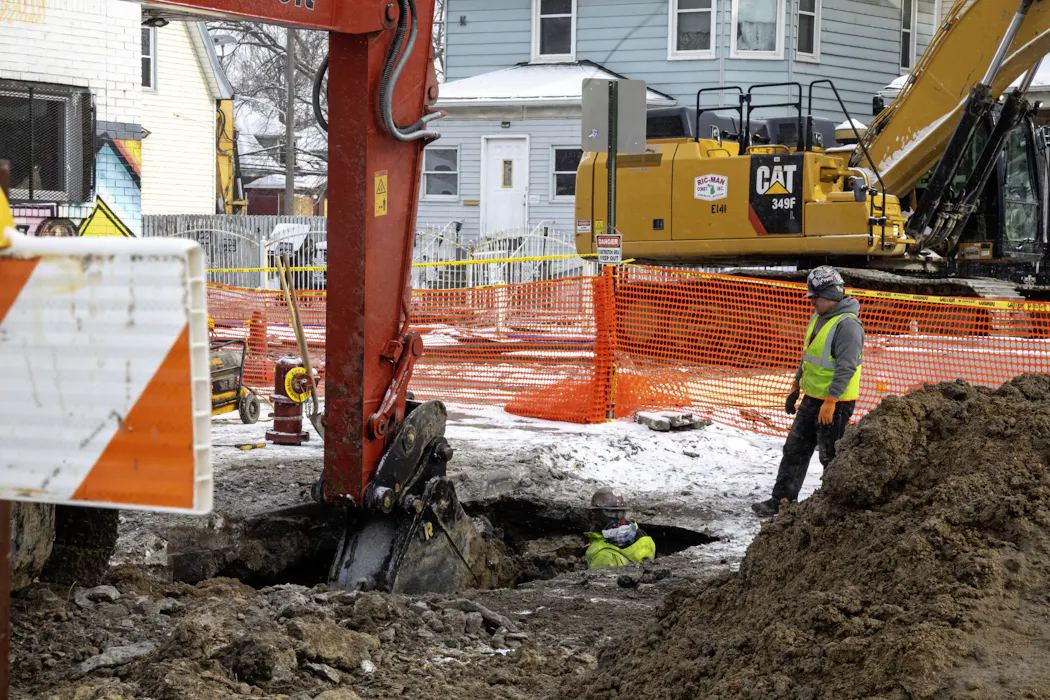
Workers repair a water pipeline that dates back to the 1930s. In the coming years, utility bills in Detroit are likely to rise to pay for upgrades to aging infrastructure. Jim West/UCG/Universal Images Group via Getty Images
Beginning in July 2026, Detroiters will be paying higher water and sewer bills.
Residents at GLWA’s last rate hearing spoke of their difficulty keeping up with utility bills. For low-income customers across the GLWA system, rate increases aggravate a deeply entrenched water affordability crisis.
Utility bills are the primary source of revenue for public water and wastewater systems. Yet both the Detroit Water and Sewerage Department, or DWSD, and GLWA are caught in what utility experts call an affordability gap. That is, the discrepancy between what it costs to maintain essential infrastructure and what ratepayers can reasonably afford.
Utilities across the country are facing down a similar contradiction. For DWSD customers, the gap is wider still because they carry a greater burden for water quality improvements that benefit the wider metropolitan region.
About three-quarters of a DWSD residential water bill pays for wastewater and stormwater treatment. These revenues also help to maintain Detroit’s wastewater treatment plant, which serves the city and 76 suburban communities.
My research, which combined archival research and interviews with state regulators, Detroit city staff, DWSD and GLWA representatives and grassroots water affordability advocates, documents how Detroit’s water affordability crisis involves a less visible form of environmental injustice. This term often describes uneven exposure to pollution or other environmental harms. Detroit’s case raises a different question: Who pays to keep local waterways clean?
Regionalizing Detroit’s wastewater system
Detroit’s wastewater treatment plant is the largest single-site treatment facility in the country. While suburban communities own and operate local sewer systems, they are connected by a regional sewer network that stretches across 944 square miles of Wayne, Oakland and Macomb counties. This network conveys raw sewage to the treatment plant in Detroit.
The wastewater system was not initially designed to serve the metropolitan region, however. It was expanded through the 1950s-70s to help suburban communities address new state wastewater mandates.
The postwar period is well known for its economic boom, but it also ushered in important social, political and environmental shifts.
Following World War II, for example, local waterways were slick with both industrial and municipal wastes. Polluted waters posed a threat to the safety of people’s drinking water and to Detroit’s water-intensive industrial manufacturers.
In response, Michigan revamped its water pollution law in 1949, requiring cities, towns and villages to install wastewater treatment. Some suburbanizing communities resisted these mandates. They argued their tax bases, then only a few thousand residents, were insufficient to finance such costly infrastructure.
Meanwhile, civil rights organizers in Detroit and across the nation struck down racist segregation laws through the 1960s. Black families began moving into historically white neighborhoods. Following Detroit’s turbulent summer of 1967, demand for suburban housing in all-white communities skyrocketed. More than 40,000 white residents left Detroit for the suburbs that year, a figure that doubled in 1968.
This phenomenon, known as white flight, not only spurred suburbanization but left the tri-county area largely segregated by race and class.
The convergence of stricter water quality laws, suburban growth and white flight also had implications for the wastewater system and its management.
By the late 1950s, Michigan’s Department of Public Health had begun denying sewer permits to developers building in places with insufficient wastewater treatment. Permit denials helped to enforce the state’s wastewater mandates. They became known as “construction bans” for the way they slowed suburban growth.
The quickest way to resolve these “bans” was to route suburban sewage to Detroit. By 1974, DWSD provided wastewater treatment to more than 70 suburban communities across a deeply segregated service area.
In 2014, demonstrators gathered to protest the city’s widespread water shutoffs, which left thousands of Detroit residents without water due to unpaid bills. Photo by Joshua Lott/Getty Images
An uneven burden for improving public infrastructure
In addition to ongoing rate disputes, suburban politicians introduced “takeover bills” in the state Legislature. The goal was to transfer control of DWSD’s infrastructure to a new regional authority. Both tactics persisted through the 1980s and ’90s, forcing DWSD to make compromises that shifted more costs onto Detroit ratepayers.
A prime example is the 1999 rate settlement agreement that resolved a decade of suburban rate disputes over DWSD’s stormwater charges. Known as “the 83/17 split,” the agreement assigned 83% of stormwater improvement costs to Detroit, while suburban customers shared the remaining 17%, divided 76 ways.
The rates under dispute were introduced to meet new state regulations targeting combined sewer overflows. These overflows occur when pipes release raw sewage and stormwater into waterways during heavy rain. Suburban officials argued for a reduced share of improvement costs. They pointed out many of their sewer systems already separated storm and sanitary pipes, reducing the occurrences of combined sewer overflows. Yet state-mandated improvements required expanding shared infrastructure, not simply combined sewer overflow outlets in Detroit.
GLWA’s own wastewater master plan documents suburban stormwater entering regional sewers long after the 83/17 split was established. Suburban sprawl also paved over vast stretches of land, funneling more runoff into the system.
Nevertheless, the settlement reduced the suburban share of combined sewer overflow improvement costs to 17%. DWSD was ordered to set aside US$10.6 million to reimburse suburban customers for previous stormwater charges above the 17% threshold.
For the past 25 years, Detroiters have borne the bulk of stormwater upgrades – a capital program that has exceeded $1.5 billion.
The approximately 680,000 residents of Detroit have borne these costs despite accounting for only 23% of GLWA’s 2.9 million wastewater customers.
A push toward water affordability
The 83/17 split remains in place today. It was grandfathered into GLWA’s 40-year lease agreement with DWSD that took effect in 2016.
While DWSD continues to provide local water and sewer service to city residents, the lease transferred fiscal and operational control of regional water and wastewater infrastructure to GLWA. This means cost-sharing for stormwater improvements will continue to be structured by the 83/17 split for decades to come – unless GLWA consents to renegotiating the deal.
In 2016, Detroit’s blue ribbon panel on water affordability recommended that DWSD revisit how cost is allocated across all users of the system.
DWSD initiated discussions with GLWA in 2020 and 2021 to revisit the terms of the 83/17 split. GLWA officials concluded, however, that existing legal agreements and contracts made the 83/17 split “logistically challenging” to renegotiate. As long as the 83/17 split remains in place, protecting local waterways from combined sewer overflows will continue to exacerbate the water affordability crisis in Detroit.
This is an especially pressing concern now, with state funding for DWSD’s low-income “lifeline rate” program recently exhausted and urban flooding worsening as storms grow more frequent and severe. While DWSD plans to reopen applications to the lifeline plan later this year, the program can support only about 5,000 residents. This is down from almost 30,000 residents it supported in previous years and far below the level of need with 31.5% of Detroiters living below the poverty line.
Organizations such as the People’s Water Board Coalition have spent two decades building coalitions across Michigan to push for a statewide water affordability plan. A statewide plan that pegs water bills to household income could create a more stable and more equitable revenue source for critical wastewater infrastructure in Detroit.
Nicole Van Lier’s research received funding from the Social Sciences and Humanities Research Council of Canada (SSHRC) and the Fulbright Canada Foundation. During her fieldwork, Nicole was a member of the People’s Water Board Coalition.
Currently, the average gas price in the U.S. is $4.50. In Pennsylvania, the average is $4.66, and in Pittsburgh it’s $4.91.
To understand why, and what – if anything – can be done about high gas prices, The Conversation U.S. spoke with Hannah Wiseman, an energy and environmental law scholar whose work focuses on how regulation is designed. She explains who gets hit hardest by high gas prices and why relief is so hard to come by.
How do rising gas prices hit low-income Pennsylvanians differently than middle- or upper-income residents?
Low-income people typically have a limited monthly budget, with fewer or no savings to draw from. Each essential expense is a portion of an individual’s or family’s fixed budget, and when an essential expense rises, it eats up more of this fixed budget. For the costs of fuel and electricity, this is called the “energy burden” – the percentage of someone’s income that goes to energy costs. The higher the cost of energy, the more this impacts people’s ability to pay for other essential goods, such as food, medicine and medical care.
Pennsylvania consistently ranks among states with the highest gas prices. What regional conditions make Pennsylvania expensive?
Like any other good, the cost of gas is influenced by the cost of the raw product from which gasoline is refined, crude oil, the costs of operating the facilities that transport and distribute gas, and the amount of retail competition.
As the U.S. Energy Information Administration explains, distance from supply – refineries, ports and pipelines – usually means higher prices. This type of infrastructure is scarcer in the mid-Atlantic region, including Pennsylvania. And some rural areas have fewer gas stations, which can result in less retail competition.
Gasoline prices tend to be lowest in Gulf Coast states, such as Texas, with a current average of $4.01, and Louisiana, with a current average of $3.99, where there are many crude oil refineries and oil pipelines.
Due to lack of public transit, rural Pennsylvania residents rely on their personal vehicles to get to work. aimintang/E+ collection via Getty
How does the lack of reliable public transit in rural areas deepen the inequality issue?
Rural areas tend to have less public transportation – making personal vehicles essential – and people have to drive to their jobs to make ends meet. So when gas prices go up, rural residents often have no option but to fill up their tank at a high cost and potentially forgo other essentials.
Rural populations also have a substantial percentage of individuals defined as the “working poor.” These are low-income individuals for whom getting to work is essential. They are already saddled with high energy burdens, which rise with higher gas prices, and they live in rural areas with few affordable options for getting to work.
Are there existing state or federal programs that help low-income residents offset fuel costs?
Low-income support tends to come from states. Most government programs support home heating costs and utility bill payments for low-income residents; programs are more limited for gasoline. In California during the 2022 spike in gasoline prices the state sent checks to low-income families. Currently, Pennsylvania has no formal legislation in place to assist low-income families with gasoline costs.
Additionally, the H.R. 1 Act erased the $7,500 tax credit for buying electric vehicles. This limited access to EVs widens the gap – wealthier families with electric vehicles can plug in their vehicles and avoid high gas prices, while lower-income individuals lack this option.
What can be done about high gas prices for low-income Pennsylvanians?
Hannah Wiseman is a member of the Center for Progressive Reform. Her research on renewable resources, carbon sequestration, hydrogen, and energy/land use connections has received funding from the Sloan Foundation, Arnold Ventures, the Center for Rural Pennsylvania, the U.S. Department of Energy, and the National Science Foundation.