What would Winston Churchill make of war with Iran?

Source: The Conversation – UK – By Richard Toye, Professor of Modern History, University of Exeter

When Donald Trump criticised Keir Starmer for failing to sufficiently support American and Israeli operations against Iran, he did so with a historical flourish. “This is not Winston Churchill that we’re dealing with,” he complained.

The implication was clear: Churchill would have stood shoulder to shoulder with Washington in a confrontation with Tehran. The remark invites an obvious question: what would Churchill have made of war with Iran?

The answer is not as straightforward as Trump’s comparison suggests. Churchill’s record shows a mixture of hawkish rhetoric, strategic caution and a constant concern with maintaining Anglo-American unity. Far from embodying a simple instinct for confrontation, he tended to see war and diplomacy as inextricably linked.

Churchill’s famous 1946 speech in Fulton, Missouri, is a case in point. During this address, he warned that an “iron curtain” had descended across Europe. But the speech – formally titled The Sinews of Peace – was not simply a call to arms against Soviet expansion. Churchill simultaneously emphasised the need for understanding between adversaries and the importance of strengthening the United Nations. His core message was that peace could best be preserved if the western powers demonstrated sufficient unity and strength to deter aggression.

Iran already featured in the geopolitical crisis surrounding that speech. At the time, Soviet troops had failed to withdraw from northern Iran despite wartime agreements. The episode formed part of the early tensions that would harden into the cold war. Churchill therefore already viewed Iran through the lens of great-power rivalry.

That perspective had deep roots. During the second world war, Churchill had travelled to Tehran in 1943 to meet Franklin D. Roosevelt and Joseph Stalin at the first conference of the allied “big three”. The gathering took place in the capital of Iran because the country had become a crucial logistical corridor through which allied supplies flowed to the Soviet Union.

For Churchill, the conference was a sobering experience. Roosevelt increasingly cultivated Stalin’s goodwill, sometimes at Britain’s expense. Afterwards Churchill reflected ruefully that he had sat “between the great Russian bear … and the great American buffalo,” while Britain resembled “the poor little British donkey”. The remark captured his growing awareness that Britain was no longer one of the world’s dominant powers.

Roosevelt, Stalin, and Churchill seated together.
Roosevelt, Stalin, and Churchill in Tehran.
Library of Congress

That realisation reinforced a central element of Churchill’s postwar strategy: the cultivation of an enduring Anglo-American partnership. His call at Fulton for a “special relationship” between the British Commonwealth and the United States was not a mere rhetorical gesture. It was an attempt to anchor Britain’s future security within the emerging American-led order.

The irony of a Churchill reference

But Churchill’s thinking about Iran did not stop with cold war diplomacy. In 1953, during his second premiership, Britain and the US supported a covert operation that overthrew Iranian prime minister Mohammad Mosaddegh and restored the authority of Shah Mohammad Reza Pahlavi. The coup was organised largely by the CIA, under the direction of Kermit Roosevelt Jr., but Churchill enthusiastically backed the plan. When Roosevelt later described the operation to him at Downing Street, the ageing prime minister reportedly declared that he would gladly have served under his command in such a venture.

That episode suggests that Churchill could certainly favour forceful action when he believed western interests were threatened. Yet it also highlights a historical irony. The overthrow of Mosaddegh became one of the central grievances invoked by Iran’s revolutionary leaders after the Iranian revolution. Since 1979, the Islamic Republic has repeatedly invoked foreign intervention – particularly the Anglo-American coup – to legitimise its rule and to portray itself as the defender of Iranian sovereignty against external domination.

In other words, the legacy of western interference in Iran has become one of the regime’s most powerful political weapons.

Churchill was well aware that wars and interventions could produce unintended consequences. Reflecting on his experiences as a young officer during the Boer war, he later wrote that once the signal for conflict was given, statesmen lost control of events. War became subject to “malignant Fortune, ugly surprises, awful miscalculations”. This was not the sentiment of a pacifist. But it was the observation of someone who had seen how quickly political decisions could unleash forces that no government could fully control.

What would Winston do?

How might these instincts translate to the present crisis? Churchill would almost certainly have regarded Iran’s regime with deep suspicion. His cold war mindset inclined him to see international politics in terms of ideological confrontation and strategic balance. He might well have argued that weakness in the face of aggressive regimes invited further challenges.

At the same time, Churchill rarely believed that military action alone could resolve geopolitical disputes. His preferred approach was to combine firmness with diplomacy – to negotiate from strength while maintaining channels of communication with adversaries. Even at the height of the cold war he hoped that a position of western strength might eventually persuade the Soviet leadership to strike a bargain.

‘No Winston Churchill’.

Above all, Churchill believed that Britain’s influence depended on maintaining close alignment with the US. But that alignment, in his mind, was meant to shape American power rather than simply echo it. The “special relationship” was supposed to be a partnership, not a blank cheque.

Trump’s invocation of Churchill therefore rests on a simplified image of the wartime leader as an instinctive advocate of military action. The historical record reveals a more complicated figure: a strategist who believed in strength, certainly, but also in diplomacy, alliances and the careful management of great-power rivalries.

If Churchill were alive today, he might indeed be urging western governments to demonstrate resolve. But he would probably also recognise that Iran’s political system has been forged in the memory of past foreign interventions – and that any new conflict would risk reinforcing the very forces it seeks to weaken.

Churchill once observed that war https://wist.info/churchill-winston/11013/, once unleashed, rarely follows the tidy paths imagined by those who start it. That warning may be as relevant as any of his more famous phrases.

The Conversation

Richard Toye receives funding from The Leverhulme Trust.

ref. What would Winston Churchill make of war with Iran? – https://theconversation.com/what-would-winston-churchill-make-of-war-with-iran-277525

Starmer’s Iran approach may anger Trump, but it fits with his foreign policy philosophy

Source: The Conversation – UK – By Jason Ralph, Professor of International Relations, University of Leeds

Foreign policy doctrines are often forgotten as soon as they are written. Take the November 2025 US National Security Strategy, which told us that “the days in which the Middle East dominated American foreign policy … are thankfully over”.

Keir Starmer, however, has stuck to his promise to “use realist means to pursue progressive ends”, even when placed in a difficult position by Donald Trump. The prime minister’s decision not to take part in offensive military action in the Middle East is, I would argue, consistent with his foreign policy doctrine of progressive realism.

There is, of course, room for debate. Some progressives will point to the Iranian government’s egregious human rights abuses as reason for supporting externally enforced regime change. UK government ministers acknowledge this – they are not mourning the Ayatollah.

But progressivism is also committed to peace between nations. This is because nationalism, as well as a yearning for individual freedom, is a powerful ideology. Foreign intervention can often provoke a nationalist backlash, even if its aims are to advance universal rights. While many Iranians celebrate the death of the Ayatollah, they may be wary of supporting external intervention.

This is the progressive value of an international law that rejects the great power’s right to overthrow other governments. It defends the right of national self-determination, and believes human rights are ultimately more secure when nations live together peacefully. If nations are less suspicious of each other, they are less inclined to crackdown on domestic opposition. That creates the political space – so the theory goes – for gradual, less violent reform.

Labour prime ministers have not always understood progressive foreign policy in these terms. Tony Blair took a more revolutionary approach. His decision to join the Bush administration’s 2003 war to overthrow the Iraqi regime was motivated in part by the progressive’s commitment to improve the lives of those repressed by dictatorships. His case for war centred on the threat of weapons of mass destruction, but his decision to join the US aligned with an American neoconservative view of promoting democracy through regime change. That ended badly, with tens of thousands of civilians killed in the violence that followed.

These “mistakes of the past” were uppermost in Starmer’s thinking when he addressed parliament on March 2. The possibility that the unintended consequence of military action could be deadly chaos, rather than democratic revolution, reflects the realist side of UK foreign policy.

Foreign policy realists have less faith in the progressive value of international law. Yet they are often aligned with progressives in opposition to military-enforced regime change. Realists appreciate that the mobilising force of nationalism makes the foreign intervener’s task much more difficult. A realist ethic focused on a prudent assessment of consequences makes them sceptical toward revolutionary goals and military gambles.

Again, there is room for debate. The current US National Defense Strategy has a different understanding of realism. It throws out utopian idealism and brings in hard-nosed realism. This perspective demands the pursuit of ever more military power to secure the state in a position of undisputed primacy. Consequences still matter when considering when to use force, but priority is given to demonstrating a status of military superiority and political dominance.

This kind of realism is, of course, unavailable to all but a few superpowers. The fact that it has been adopted by the UK’s one-time closest ally is troubling. US power used to be restrained by a combination of classical realist prudence on the one hand, and a liberal internationalism committed to multilateral decision-making on the other.

Trumpian realism, however, seemingly rejects this in favour of demonstrating the president’s power to decide at will which foreign regimes should survive. So long as the UK remains committed to progressive realism, the Trumpian realist pursuit of regime change in states like Venezuela and Iran will put even more pressure on the special relationship.


Read more:
Iran is putting pressure on the US-UK ‘special relationship’ – but it has survived worse


A more authentic realism

Not all foreign policy experts are happy with how the US is now invoking realism. Kevin Maloney of the Carnegie Council, a thinktank dedicated to ethics in international affairs, accuses the Trump administration of “gaslighting” when it describes its foreign policy as “realist”. He points to a more authentic form of realism in the ideas of intellectual giants like German-American political scientist Hans Morgenthau. Morgenthau warned against both ends of the progressive realist spectrum: power detached from progressive values can be just as dangerous as ideals detached from power.

The fusion of progressivism and realism in UK foreign policy led on this occasion to a “deliberate” decision not to support US military action against Iran. That annoyed Trump, but as Maloney’s assessment illustrates, it is not necessarily out of step with a wider tradition of American foreign policy thinking.

One thing that progressives and realists agree on is that the state has a responsibility to protect its own citizens, including those abroad. Starmer’s eventual decision to allow the US to use UK bases for this defensive purpose was, arguably, consistent with his initial policy, and not another U-turn.

Of course, doubts remain that the US will use UK assets for defensive purposes alone. But the decision is understandable in the context of Iran’s widespread retaliation and the risk it poses to the 300,000 UK citizens in the region. One possible scenario is that the UK may need to call on US capabilities to evacuate those citizens, as well as prevent Iranian missile strikes. Maintaining access to those capabilities is a prudent move in line with the national interest.

In the longer term, the UK and other “middle powers” need to develop their own capabilities so that they are less dependent on the US, and more able to maintain their progressive realist stance.

The Conversation

Jason Ralph has previously received funding from Research Councils UK and the European Union. He is a member of the UK Labour Party.

ref. Starmer’s Iran approach may anger Trump, but it fits with his foreign policy philosophy – https://theconversation.com/starmers-iran-approach-may-anger-trump-but-it-fits-with-his-foreign-policy-philosophy-277412

Iran is putting pressure on the US-UK ‘special relationship’ – but it has survived worse

Source: The Conversation – UK – By Matt Barr, Senior Lecture in International Relations, Nottingham Trent University

The so-called “special relationship” between the UK and the US appears to be at its lowest ebb for decades. As he sat alongside the German chancellor, Friedrich Merz, at a White House press call on March 3, Donald Trump bitterly criticised Keir Starmer for his refusal to let the US use British bases to launch initial strikes on Iran.

Declaring he was “not happy with the UK”, he added: “This is not Winston Churchill that we’re dealing with.” Churchill was, of course, the first person to talk of a special relationship between the UK and the US in a speech made at Westminster College in Missouri in March 1946.

Over eight decades since then, successive British and US governments have projected an image of exceptional closeness, particularly in matters of defence and foreign policy. But Trump’s return to the US presidency and his pursuit of a more aggressive foreign policy, including most recently his decision to launch, with Israel, a campaign of airstrikes against Iran in pursuit of regime change, has revived an old question for the Starmer administration: how far should the UK publicly diverge from Washington given the significance of this relationship?

Starmer ruled out joining America and Israel in their campaign in a speech in the House of Commons on March 2, saying “the British government does not believe in regime change from the skies”. Having initially refused to allow British airbases to be used by the US in its campaign, he later softened his stance, allowing some UK bases in the Middle East to be used for strictly “defensive purposes”.

The US president and his secretary of defence, Pete Hegseth, have strongly condemned his position. Trump said the prime minister “has not been helpful” and that the special relationship is “obviously not what it was”. Hegseth spoke of “traditional allies who wring their hands and clutch their pearls hemming and hawing about the use of force” in a clear reference to Starmer’s stance on Iran.

But, as Starmer told the Commons: “President Trump has expressed his disagreement with our decision not to join the initial strikes. But it is my duty to judge what is in Britain’s national interest, and that is the judgment I made. I stand by it.”

Starmer: ‘The British government does not believe in regime change from the skies’.

There were shades of his criticism of Trump over his declaration in January that the US must acquire Greenland by force if necessary. Then Starmer said that the world’s largest island “belongs to the people of Greenland and the Kingdom of Denmark alone” and that “applying tariffs on allies for pursuing the collective security of Nato allies is completely wrong”, adding that: “We will of course be pursuing this directly with the US administration.”

The special relationship is often characterised as Britain acting as Washington’s subordinate, sacrificing independent judgement to remain close to the US. This view of the alliance is usefully captured by the caricature of Tony Blair as George W. Bush’s “poodle” over the 2003 Iraq war, blindly following Bush into folly. Indeed, with Iraq, the special relationship was described as having a “vice-like grip”, constraining British foreign policy.

But in important ways, this interpretation is misleading. Understanding why can help give an indication of how Keir Starmer’s government can respond to differing views with the US over foreign policy.

2003: ‘Operation Iraqi Freedom’

Over Iraq, preserving the special relationship unquestionably mattered to British decision-makers – but it was not their primary focus. Instead, British and American leaders were in agreement. Both governments came to believe that regime change through military action was the only viable policy option to disarm and topple the regime of Saddam Hussein.

It was felt that containment and weapons inspections were unworkable to prevent the Iraqi dictator from fulfilling his intention to regain a weapons programme in the future (he had previously used chemical weapons to terrible effect against Iran and his own people, but had destroyed them before the Gulf war).

Blair’s thinking was determined by his exposure to UK intelligence briefings. Analysing declassified briefings shows how the key concern changed over time. Intelligence moved the focus away from existing “weapons of mass destruction” (WMDs) in the aftermath of the 1991 Gulf war to Iraq’s breakout potential. This is having the technological, intellectual and financial resources to acquire them in the future.

Blair was reportedly willing to resign over his support for the invasion. This was nothing to do with pressure from Washington – he was a true believer in regime change in Iraq and was in lockstep with Bush as a result. Interviewed for a Channel 4 documentary in February 2026 – more than two decades later – Blair repeated his passionate belief that a military invasion of Iraq was necessary to prevent Saddam from developing WMDs: “I did it because I thought it was right.”

No longer in lockstep?

But you don’t have to look far to find notable examples of where the UK has not aligned with the US: the Vietnam war was one – then prime minister Harold Wilson refused Lyndon Johnson’s request to send British troops to Vietnam. Previously in 1956, the Suez crisis, when the British prime minister Anthony Eden ignored US president Dwight D. Eisenhower’s warning not to intervene in the Egyptian nationalisation of the Suez canal, but was forced to back down.

So the idea that the UK has acted in lockstep with the US over major foreign policy decisions is far from the truth.

Starmer’s challenge, whether it’s over Greenland, Iran or a future foreign policy issue, is how to manage a relationship in which disagreement is open and rooted in competing views. Trump’s habit of seeking retribution against those he thinks have slighted him is worrying, his condemnation of Starmer for their differences over Iran shows this with some sharp words on both sides.

There’s no doubt that the divergence between the US and Britain over Iran is putting pressure on relations between the two countries. But for a relationship to be “special” implies respect that goes both ways. How that survives the current episode will tell us a lot about the relationship’s future.

The Conversation

Matt Barr does not work for, consult, own shares in or receive funding from any company or organisation that would benefit from this article, and has disclosed no relevant affiliations beyond their academic appointment.

ref. Iran is putting pressure on the US-UK ‘special relationship’ – but it has survived worse – https://theconversation.com/iran-is-putting-pressure-on-the-us-uk-special-relationship-but-it-has-survived-worse-274037

Colonialism in Africa: archaeology offers a deeper view

Source: The Conversation – Africa – By Timothy Clack, Chingiz Gutseriev Fellow, University of Oxford

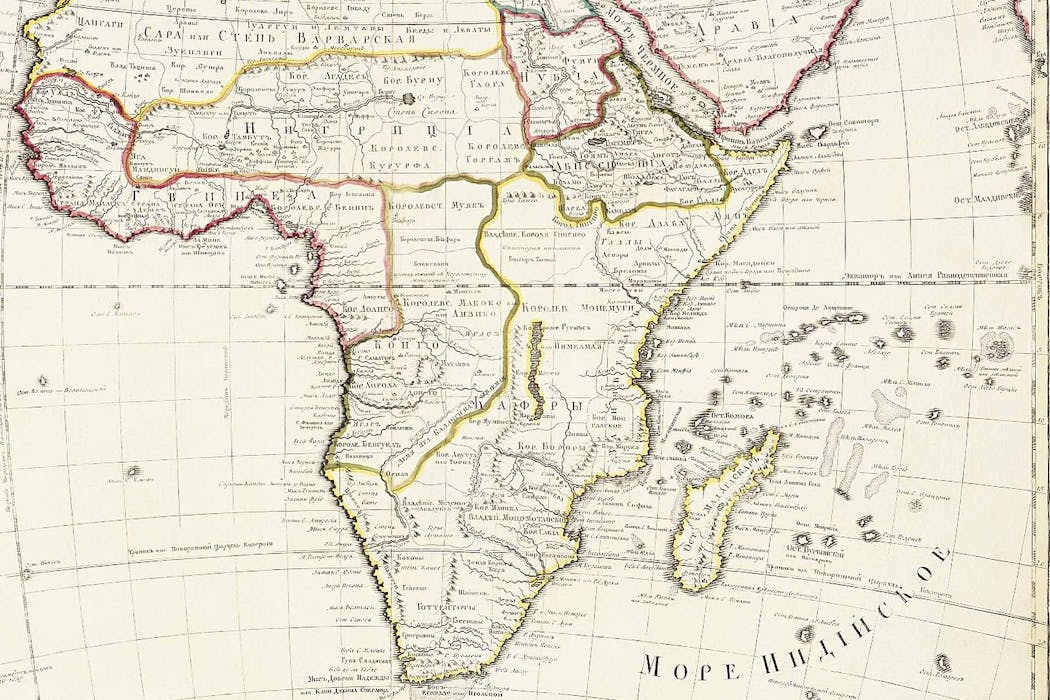
Map of Africa (1722). Original from The Beinecke Rare Book & Manuscript Library. Digitally enhanced by rawpixel Wikipedia Commons, CC BY

Colonialism has been a central part of history around the world, differing only in form over time and space. After all, whenever people have moved from one place to another, they have colonised spaces and other people or forms of life.

In Africa, colonialism has mostly been studied as something imposed from outside, for example from Europe in the 19th and 20th centuries. A recent special issue of the journal Azania sought to address this. Scholars looked at the topic from an angle that’s so far been neglected – the archaeology and history of colonialism from within Africa.

We introduced the journal issue with an essay revisiting basic ideas, reviewing literature and presenting new case studies.

We note, for example, that colonialism has a deep and complex history. There have been different kinds and degrees of colonialism. These range from expansion, trade, exchange and sharing cultural practices to settlement, domination, exploitation, control and imperialism.

These developments have taken place in a myriad of different settings. From Mesopotamia, Ancient Egypt, Phoenicia, Classical Greece and Rome, and China, to multiple locations in the Americas, including the Inka and the Aztecs, and Europeans, especially after 1492.

Global and local factors shape distinctive patterns of power, subjugation, consumption, extraction, exploitation and cultural exchange through time.

Important questions emerge when this is recognised. Examples include:

  • what historical justice looks like

  • which episodes get remembered and forgotten

  • which victims are ignored or compensated

  • which colonisers face consequence.

Colonialism from outside

In the 19th and 20th centuries, during the the so-called “Scramble for Africa”, seven European countries colonised almost the whole of the continent. The signatures left behind by Belgium, Britain, France, Germany, Italy, Portugal and Spain were wide and varied. They included:

  • drawing national boundaries

  • infrastructure geared towards extraction (like megaports, railways and roads)

  • administration (like bicameral governments, courts and churches)

  • defence (military structures and installations).

European colonialism even shaped the way most of us perceive the world via the instruments used to map time and space.

Earlier, large parts of Africa were colonised by Ottoman and Arab empires. Oman, for example, colonised the Swahili coast in the 18th and 19th centuries across a territory extending from areas of Somalia through to Madagascar.

Parts of Africa which had previously been under Islamic rule, in turn, experienced European colonialism differently. This had long-term implications for education, health and economic growth.

Taken together, these legacies, over time, developed into global organising principles for imagining Africa.

But this formulation ignores African agency and political processes. It is often forgotten, for example, that the Almoravids, a dynasty which rose to power in southern Morocco during the 11th century, exerted control over European soil. Africans have been colonisers too.

Colonialism from within

Africa has also experienced diverse colonial episodes from within. Examples include empires such as Egypt and Kush in north Africa, and Dahomey and Songhai in west Africa.

Rulers of these empires sought to annex territories, establish settlements, subjugate others, control resources and impose laws and customs. The archaeological indications of these can be seen in a number of ways. They include new settlement types, changes in material culture and the adoption of new languages and religions, particularly Islam and Christianity.

Resistance to colonialism is also visible in the historical record and expressed in many ways. This included insurgencies, protests and propaganda as well as myth, art, music, literature and non-cooperation.

In the 19th century, Shaka, for example, transformed a small Zulu chieftainship in southern Africa into an aggressive and successful state that absorbed neighbouring groups. The aftershock of the Zulu expansion was the Mfecane. This was a process that saw leaders establish their own polities. Soshangane, for instance, was a Ndwandwe general defeated by Shaka who established the Gaza state in contemporary Mozambique. It incorporated in it both Shona and Tsonga people.

Another example comes from the Mursi of south-western Ethiopia. They undertook several large-scale migrations over the past 200-300 years. This movement became part of their group identity. They displaced, assimilated and dominated other populations. The material traces they left have been explored by archaeological research. This has helped to interpret their activities, and also challenges their oral histories.

Cultural exchange and innovation

Colonialism is a generative process, with innovation emerging from cultural contact, relationships between colonisers and colonised, and material exchange.

Colonial processes have multi-directional influence. European colonialism, for example, shaped how Europeans dealt with the rest of the world. And, in turn, it contributed to how the western world was constructed. Ideas and materials flowed into the metropolitan centres of Europe as much as from them. In certain respects, Britain was colonised through contact with, for example, Africa, Australasia and North America, as much as those areas were colonial creations.

Colonialism often creates victims and oppressors. But it is also about consumption, innovation and exchange.

Archaeology offers a useful way to study colonialism because it leaves material and intangible indicators which the discipline has methods to interpret.

There is a need for more work on the processes and character of colonialism within Africa. This will enable comparisons and understanding, and correct a skewed picture of world history. A richer understanding of colonialism, including neocolonialism, may also inform debates about its legacy, and about decolonisation and restitution.

The Conversation

Timothy Clack receives research funding from the Arts and Humanities Research Council (AHRC), British Academy, British Institute in Eastern Africa (BIEA), Christensen Fund, McDonald Institute for Archaeological Research, Natural Environment Research Council (NERC), Royal Anthropological Institute, and University of Oxford.

Shadreck Chirikure receives funding from the British Academy, UKRI, the University of Oxford, the University of Cape Town, the National Research Foundation of South Africa, and the Royal Society.

ref. Colonialism in Africa: archaeology offers a deeper view – https://theconversation.com/colonialism-in-africa-archaeology-offers-a-deeper-view-275495

Teaching mathematical statistics: one lecturer’s way of testing what students understand

Source: The Conversation – Africa – By Michael Johan von Maltitz, Associate Professor, Mathematical Statistics and Actuarial Science, University of the Free State

Unsplash

It’s getting tougher to assess how much university students have learnt. In his work as a Mathematical Statistics lecturer, Michael von Maltitz has tried a new way of getting students to learn, and of assessing what they’ve absorbed and retained. Students have to show and discuss how they arrived at their understanding of the subject. They can’t just rely on cramming, because he interviews them as if they were applying for a job.

What prompted you to try something new?

“We understand, but how will it be asked in the test?” This is the question that was posed to me time and again in 2019 when I started lecturing a module in mathematical statistics at second-year university level.

I knew I had to make a change. I already understood that students were stressed, prone to memorising content and cramming before tests and examinations, and using short cuts to attain a good grade, rather than to learn anything.

What did you then do differently?

The module was unfamiliar to me so I decided to allow the students to approach the course content in the same way as I was: gathering information from different sources and combining and collating it digitally, reflecting on how it helped to meet certain objectives or learning outcomes.

These portfolios of learning evidence would contain course and outcome information, content knowledge (including theorems and proofs), examples with solutions, showpiece assignments, links to and discussions on online tutorials or videos, and paragraphs of self-reflection. Readers might see these portfolios as “study notes on steroids”.

Assessing the portfolio would be an exercise in evaluating the learning process, rather than a memorised product.


Read more:
The greatest risk of AI in higher education isn’t cheating – it’s the erosion of learning itself


The process was challenging but offered a reward for me and my students – that of discovery. Students seemed to be genuinely learning.

Besides checking their portfolios, I needed a way to assess progress that didn’t fall into the old habits of memorisation and “teaching to the test”. I needed to ensure that a student had created their own portfolio and could defend the content in it. And I needed an assessment method that would not take more time and effort than coming up with a unique written test or examination, formulating a typeset memorandum, and marking more than 100 answer scripts, giving feedback that the students might never look at.

I decided to test this form of deep learning using a workplace method – the interview. In a 30-minute online interview with each student, I asked questions about their understanding of the module content, as well as questions concerning their own portfolios. Each student had to defend the information collected and reflected upon.

The interview worked perfectly when paired with the portfolio. I assessed a set of portfolios in an evening, gave typed feedback, and then interviewed those portfolios’ creators the next day. Feedback was immediate, and the interview assessment became a learning experience, for me and the student.


Read more:
South African university students use AI to help them understand – not to avoid work


They were able to defend their portfolios if I made any errors on the portfolio assessment, and I could give the correct answer immediately to any interview question they were stumped by.

Afterwards, the recording of the interview could be given to the student, and if they felt I was being unfair at all, they could compare their interview with another student’s. In doing so, the students themselves could moderate my assessment practice.

What results did you observe?

After a year or two of teaching and assessing like this, I noticed my students seemed to understand more of the content. They retained more into their final year, they were fluent in “statistics” communication and they had better time management and self-reflection skills.

Students told me that they were asked the same questions in their first job interviews as I had asked in my modules, and that they felt much more at ease in those first few job interviews.

How did you confirm these results?

To formally test the developments I had noticed in my students, I conducted research on the class in 2022, which was published in conference proceedings and an article.

This study showed that students experienced significant learning in every facet of an educational framework known as Fink’s taxonomy:

  • foundational knowledge

  • application and communication

  • integration of content into other areas

  • self-reflection

  • interest

  • learning how to learn.

Thus, the method of learning and assessment could formally be called a success within Statistics.

Can this approach be used in other courses?

Yes. One might argue that if this method can be employed for a mathematical module, it can be utilised anywhere. Mathematical modules contain theorems, proofs, definitions, theoretical and practical problem solving – items that might seem difficult to assess through verbal communication. But it is the understanding of the ideas behind the theorems, the stories of and the tricks used within the proofs, the application of the theoretical problems, that are so important in an age where your favourite AI can provide content knowledge.


Read more:
Three South African universities have new approaches to assessing students: why this is a good thing


Mathematical proofs and worked calculations, both of which take time in practice, can be assessed by looking at a portfolio containing these items with the student’s annotations and reflections. The understandings of these concepts are assessed in the interview.

Likewise, in other subjects, a portfolio could be used for assessing knowledge-based content, while the interview could be used to gauge a student’s understanding of what was put into the portfolio, why they chose that content, why the content is important, and how that content is used in practice.

The Conversation

Michael Johan von Maltitz does not work for, consult, own shares in or receive funding from any company or organisation that would benefit from this article, and has disclosed no relevant affiliations beyond their academic appointment.

ref. Teaching mathematical statistics: one lecturer’s way of testing what students understand – https://theconversation.com/teaching-mathematical-statistics-one-lecturers-way-of-testing-what-students-understand-275501

Iran war fallout for the Red Sea and the Horn of Africa: political analyst weighs up the risks

Source: The Conversation – Africa (2) – By Federico Donelli, Associate Professor of International Relations, University of Trieste

The death of Ayatollah Ali Khamenei, Iran’s supreme leader, in March 2026 marks the end of a political era in the Middle Eastern country. Khamenei was killed in US and Israeli airstrikes on Iran’s capital, Tehran. This has triggered a war drawing in numerous countries across the Middle East.

The Horn of Africa and Red Sea regions, which link Africa and the Middle East, share a dense web of military, political and economic interactions that enable crises on one shore to quickly affect the other. Here, Somalia, Eritrea, Yemen, Sudan, Ethiopia and Djibouti sit along one of the world’s most important trade and geopolitical corridors.

But the consequences of Khamenei’s death may be less dramatic than many expect. This is because power in Iran is dispersed across entrenched institutions and security elites who are capable of preserving regime continuity.

The Horn of Africa and the Red Sea

Iran is no stranger to the Red Sea and the Horn of Africa. During the 1990s and 2000s, Tehran established security and economic ties with several countries, notably Sudan, to gain a foothold along the Red Sea.

Iran’s influence waned, however, during the 2010s as Gulf states, particularly Saudi Arabia and the United Arab Emirates, increased their diplomatic, financial and military presence.

As a political scientist studying Middle Eastern and African security, I have followed Iran’s regional engagement for years. From my perspective, events in Iran and the Gulf matter to African countries because conflicts, arms flows and rivalries can easily spill across shores in a single strategic region.

Three intertwined dynamics shape how Khamenei’s death affects the Red Sea and the Horn of Africa.

Firstly, Tehran’s influence here has declined over the past decade. This is with the exception of Yemen, where Iran supports the Houthi movement, which has previously attacked Israeli-linked vessels.


Read more:
Global power shifts are playing out in the Red Sea region: why this is where the rules are changing


Secondly, the way this latest conflict was triggered and has escalated may be more important than a change in Iranian leadership. It could contribute to a broader erosion of moderation.

Thirdly, the Islamic Revolutionary Guard Corps (IRGC) – Iran’s powerful military force – is set to play a pivotal role in the post-Khamenei transition.

This is significant for the Horn of Africa and the Red Sea. Iran’s engagement here has largely relied on unconventional methods. Naval manoeuvres are an example, such as the long-term deployment in the Red Sea of the Iranian vessel Saviz, which has served as a logistical and intelligence platform. The country has also deployed military advisers and established arms networks to transport Iranian weapons.

Any future leadership closely aligned with the IRGC is likely to keep using these low-cost tools.

In this sense, continuity will likely prevail over rupture. Iran’s ambitions are filtered through a sober assessment of constraints that the ongoing war may entrench.

Iran’s shifting priorities

Since the 1979 revolution, Iran has considered itself a middle power with legitimate claims to regional pre-eminence. The Red Sea and the Horn of Africa gradually became part of Iran’s expanded strategic geography.

Following the consolidation of the regime promoted by Ayatollah Ruhollah Khomeini, Khamenei – who took over in 1989 after his predecessor’s death – progressively translated Iran’s ambition into strategic depth.

This aimed to extend Iran’s security perimeter beyond its borders through alliances, proxies and low-cost commitments.

In the 2000s, Iran cultivated close ties with Sudan and Eritrea.

It established naval access points in the two countries and used soft power tools, such as development aid and religious networks. It considered the Bab al-Mandeb Strait, which is between Yemen and Djibouti, vital for countering Saudi and Israeli influence and maintaining alternative trade routes.

The limitations of this expansion became apparent, however.

Iran’s ambitions soon came up against reality. The country’s economy was weakened by sanctions linked to its nuclear programme and US withdrawal from a 2015 nuclear deal.


Read more:
Iran will respond to US-Israeli strikes as existential threats to the regime – because they are


Meanwhile, political power remained fragmented across competing institutions. Domestic pressures, including economic hardship and periodic protest movements, were mounting. Instability in neighbouring states such as Iraq, Syria and Yemen made long-term regional power projection costly and uncertain.

After 2015, Saudi Arabia increased its engagement in the Horn of Africa through financial aid, diplomatic pressure and military cooperation linked to the war in Yemen.

Seeking logistical support along the Red Sea and aiming to counter Iran’s influence near the Bab el-Mandeb strait, Saudi Arabia strengthened its ties with regional governments. This prompted Sudan, Djibouti and Eritrea to sever or scale back their relations with Tehran. They effectively aligned themselves with Saudi Arabia and its allies. Iran redirected resources to higher-priority theatres of war, such as Iraq, Syria and Yemen.

For a decade, therefore, Tehran’s presence in the Horn of Africa and the Red Sea has become more selective and opportunistic. Iran has relied on indirect leverage there, such as Houthi operations, rather than direct expansion.

Khamenei’s death is likely to reinforce rather than reverse the trend. In fact, the outcome of the current war and the start of a delicate succession process could prompt an even more cautious approach abroad.

Worsening fragility

Although a change in Iranian leadership may not alter the approach to the Red Sea and the Horn of Africa, the dynamics that led to the recent conflict may have an impact on the region.

The scale and visibility of the Israeli-US attack – and Iran’s direct retaliation – signal something deeper: the erosion of thresholds in the use of force.

Iran is not buying time and avoiding direct confrontation while limiting the manoeuvre room of its rivals.

This could usher in a period of “anything goes”.

Regional actors, from Gulf states to local governments, are likely to feel increasingly justified in bypassing established security norms. The Red Sea has already become a crowded arena. External powers are projecting their strength. Local states are exploiting competition among them. The reshuffling of forces triggered by the war in Iran will have repercussions throughout the region.

In such a context, characterised by multiple hierarchies, even a reduction of Iranian capabilities could have knock-on effects.

The region’s fragility – as seen in civil war in Sudan, tensions between Ethiopia and Eritrea, instability in Somalia and the heavy presence of military bases along maritime routes – amplifies these risks.

In other words, the question is not whether Iran will suddenly expand into east Africa. It is whether the regional climate will shift towards fewer restrictions and greater acceptance of coercive tools.

If escalation becomes normalised in the heart of the Middle East – the region’s most interconnected theatre – the fallout could be felt in places like the Horn of Africa.

Uncertainty in the short term

Khamenei’s death is likely to generate uncertainty in the short term at the regional level, but will lead to continuity in the long term.

Over time, Tehran has adopted what can be termed a “realist defence” doctrine – deterrence through a strong indirect presence, but at reduced cost and risk.

Iran’s view of international politics as a zero-sum game – where one actor’s gain is another’s loss – and its desire to reduce the influence of its rivals are not merely the result of personal legacies. Rather, they are deeply rooted in the country’s identity.

For the Horn of Africa, this means that Tehran is likely to remain a secondary but persistent player: active enough to hinder its rivals’ strategies, yet restrained enough to avoid major commitments.

The Conversation

Federico Donelli is affiliated with the Italian Institute for International Political Studies (ISPI), the Nordic Africa Institute (NAI), and the Orion Policy Institute (OPI).

ref. Iran war fallout for the Red Sea and the Horn of Africa: political analyst weighs up the risks – https://theconversation.com/iran-war-fallout-for-the-red-sea-and-the-horn-of-africa-political-analyst-weighs-up-the-risks-277512

‘AI will be the end of us’ – is Colm Tóibín right about the threat to creative writing?

Source: The Conversation – UK – By Tom Benn, Associate Professor in Crime Writing (Creative Writing), University of East Anglia

In 1950, William Faulkner delivered a famous acceptance speech for the Nobel prize in literature in which he rallied for the “inexhaustible [human] voice” and his belief in its supremacy – not merely to endure but to prevail. Faulkner reasoned this was because the human voice, transmuted into art, possesses soul – a soul capable of compassion and sacrifice.

Fast forward 75 years. Irish writer Colm Tóibín is asked about AI’s impact on writers in a newspaper interview. His wry response: “AI will be the end of us.”

Tóibín seems to believe that the triumphant human voice, one which writers and artists often cling to, will neither endure nor prevail. At least, not over the disruptive, transformative technology of Generative AI. He continued:

This idea [that] no machine could ever replace my sensibility, which is so rich, varied, complex, and arising from experience and from history – that’s all rubbish. You can actually manufacture that. And the more material they put into the machines, the more the machines will just learn about what sentences sound like, what rhythm is like. And the novelist can go and do something more useful.

Equally pertinent and pessimistic are the final pages of the late Cormac McCarthy’s penultimate novel, The Passenger. The great American writer had spent the last decades of his life studying complex adaptive systems at the Santa Fe Institute, writing: “In the end, there will be nothing that cannot be simulated. And this will be the final abridgement of privilege. This is the world to come. Not some other.”

Art versus algorithm

What to do with such doomsaying? What can novelists and creative writing students say in our paltry human voices that won’t simply be co-opted for training data?

Well, it’s worth noting some hard truths first. Generative AI and proprietary large language models (LLMs) are not neutral tools to be either ethically harnessed or maliciously abused. They are predictive matrices, data harvesters and plagiarism remixers, designed to collate and privatise human knowledge and activity to maximise corporate interests over social needs.

We should consider both the ideological and environmental implications for AI. As institutions default to these technologies, AI becomes a shiny symbol that accelerates the drive to value creative writing only as a measurable professional output. AI adoption may signal competitive productivity, efficiency and innovation, while actually deskilling and disempowering the majority of creative writers.


This article is part of our State of the Arts series. These articles tackle the challenges of the arts and heritage industry – and celebrate the wins, too.


AI’s vast computational infrastructure requires ever more data centres, processing units, cloud networks, water consumption, and rare earth element mining and export. This is so planet-wrecking in its resource intensity, it is already probably irreconcilable with present climate goals.

Nevertheless, “the world to come” is already here. AI is swiftly becoming our status quo. As a creative writer’s tool, it can serve as a shortcut, eliminating the need to take the traditional toilful journey of conflicting desire in which the writer writes to both better understand and be better understood.

There might now be little effort or intentionality for the writer beyond inputting a prompt. That misses the point of what authors do and why. Perhaps AI-free creative writing composition will become an artisan commodity. The publisher Faber has already placed “Human Written” stamps on the cover of author Sarah Hall’s latest novel.

But AI will continue to affect writers, existentially and economically, as it disrupts the creative industries and beyond. Last year, novelist and GenAI researcher Clementine Collett published her sobering author and publisher survey, in which respondents reported increasing anxiety, grievance and loss of income.

There is small comfort in the fact that, as long as there are people around, there will always be some human and market interest in beautiful and provocative things that have been created solely by other people.

We can care more deeply about a thing because of what we feel we know of its creator, and what they might have endured and sacrificed to create it. Often this is what imbues art with its real meaning and value. How can it be truly meaningful or valuable if its creation has not cost its creator something?

Our desire for and engagement with any creative work is often at an uncanny remove from the thing itself. It is partially rooted in the relational – all the surrounding elements that influence how we encounter and interpret the creative work. This framing constructs a story around it that can also manipulate our desires.

What a shame that capitalism knows this. For this is not just how it eternally sells us stuff, it is now how its technology gets us to concede its claim on our endeavours – stealing, recomposing and hallucinating them for our convenience. And while AI is unlikely to exhaust what Faulkner called the “inexhaustible [human] voice”, it may drown it out under its own artificial echo.

Let’s say Tóibín and McCarthy are right: all our past and future creative labour will be stolen, simulated and commodified without friction. Nonetheless, creative writing, outside of markets and databanks, remains a stubbornly human essential.

As a successful species of emotional primates hardwired for both aggression and collaboration, we still seek to relate, exchange and communicate honestly with ourselves through the creative struggle. Personal artistic creation and its reception by others can alter our moral trajectories, expand consciousness, challenge, comfort and disturb. This is partly because writing is an act, not just a product.

As Faulkner suggested in his Nobel speech, it is the creative act of writing which demonstrates “the human heart in conflict with itself”. This is why it is dangerous. This is why trillions of dollars will soon be invested in making readers and writers forget this. It’s critical that we don’t forget.

The Conversation

Tom Benn does not work for, consult, own shares in or receive funding from any company or organisation that would benefit from this article, and has disclosed no relevant affiliations beyond their academic appointment.

ref. ‘AI will be the end of us’ – is Colm Tóibín right about the threat to creative writing? – https://theconversation.com/ai-will-be-the-end-of-us-is-colm-toibin-right-about-the-threat-to-creative-writing-275898

How one massive gas field shapes the global stakes of conflict in the Middle East

Source: The Conversation – UK – By Mark Ireland, Senior Lecturer in Energy Geoscience, Newcastle University

The Zagros mountain range in southern Iran sits on the edge of the Arabian tectonic plate. L_B_Photography/Shutterstock

The Middle East plays a central role in global energy and therefore global markets. As tensions escalate and the strait of Hormuz, a key trade route, faces disruption, headlines assessing the wider impact of the Iranian conflict often centre on oil and gas supply.

There’s one underlying reason that so many oil tankers and liquefied natural gas (LNG) cargoes pass through the strait, and that Middle East conflict shakes global energy markets. That reason is a geological one: an extraordinary concentration of oil and gas accumulations.

As the deadly Ukraine conflict showed in 2022, a predominance of supply from one region can, justifiably, ignite concerns over supply disruption. So much of the world’s oil and gas supply is clustered in one region. This helps explain today’s volatility.

The Middle East is responsible for some 30% of global oil production and 17% of global natural gas production. The revenues from this vast scale of production underpin the economies of many Middle Eastern countries and provides important energy supplies around the world. Incredibly all this oil and gas is found within a single minor tectonic plate – the Arabian plate.


Read more:
The oil price surge is just one symptom of a supply chain network that is not fit for this age of global tensions


This plate covers more than 1 million square miles and hosts 55% of the world’s proven oil reserves and 40% of the natural gas. The region also hosts a disproportionate number of giant and supergiant fields. Giant oil and gas fields are those with more than 500 millions of barrels of oil equivalent; supergiant are those with more than 5 billion barrels of oil equivalent.

The Arabian plate is bounded by the Red Sea, the Zagros mountains, the Indian Ocean and the Mediterranean. The Arabian plate separated from the African plate about 25 million years ago. As the Arabian plate shifted northwards, it collided with the Eurasian plate. This resulted in the formation of the Zagros mountains.

The Arabian plate hosts a quarter of all the world’s giant and supergiant fields. Historically, more than 500 commercial fields have been found here. Current production today accounts for roughly a third of global output.

In Iran, commercial production began in 1908 when oil was discovered just over 50 miles north-east of the city of Ahvaz in western Iran. That oil field is known as Masjed Soleyman. This discovery triggered a century of foreign involvement and political attention.

Development of Iran’s oil and gas resources has changed at each of the previous turning points in its political history, notably the Iranian revolution of 1979 which sent oil prices upwards. Today, Iran hosts hundreds of fields, both onshore and offshore, notably including its share of the world’s largest gas field — South Pars/North Dome field, which is shared with Qatar.

A shared super-giant field

The South Pars/North Dome field highlights the geopolitical complexity of energy supply. Geologically, South Pars/North Dome is a single structure. Politically, it is divided by a maritime boundary. South Pars lies in Iranian waters; North Dome (also referred to as North Field) lies in Qatari waters.

The field was first discovered in Qatari waters in 1971, with its northern extent confirmed by Iran two decades later. The gas here is found in a series of reservoir rocks known as the Khuff formation. These rocks are porous and permeable and are between 200 and 300 million years old – formed during the Permian and Triassic periods. They are found extensively across the Arabian plate. These rocks lie almost two miles beneath the seafloor.

The development of this gas field transformed Qatar into the world’s largest exporter of LNG. Until the recent strikes, North Dome, operated by QatarEnergy, the world’s largest producer of LNG, was producing approximately 18.5 billion cubic feet per day. This enables Qatar to process and supply around one-fifth of the world’s LNG.

This extraordinary share has resulted in oil and gas accounting for around 80% of Qatar’s government revenues. On the Iranian side, daily production at South Pars, operated by Petropars, (a subsidiary of the National Iranian Oil Company) is estimated at around 2 billion cubic feet per day.

Over the past 25 years, Iran’s gas output has increased fivefold. Much of this growth has been driven by extensive drilling to increase production across South Pars. Key importers of Iranian gas, by pipeline, are Turkey and Iraq. The National Iranian Oil Company has started developing it’s own LNG facility to try to meet growing global demand, but this is yet to be complete.

While LNG accounts for only about 8% of global gas supplies, it is a crucial marginal source of energy in most countries, except those where electricity supply is dominated by hydropower or nuclear.

The gas price rise of the last week still pale into insignificance compared with those that were ultimately seen as a result of the Ukraine conflict in 2022, although it remains to be seen how this will play out in the longer term.

As tensions escalate and energy infrastructure comes under threat, the consequences are already reverberating globally. Disruptions to production in a region that supplies such a large share of the world’s energy inevitably affect short-term prices, longer-term investment and political decision-making far beyond the Middle East.

The distribution of oil and gas resources has shaped political relationships, global investment and regional conflicts. Even as the world moves to reduce it’s reliance on oil and gas, the geological concentration in the Middle East ensures that energy security will remain closely tied to the politics of the region for decades to come.

The Conversation

Mark Ireland does not work for, consult, own shares in or receive funding from any company or organisation that would benefit from this article, and has disclosed no relevant affiliations beyond their academic appointment.

ref. How one massive gas field shapes the global stakes of conflict in the Middle East – https://theconversation.com/how-one-massive-gas-field-shapes-the-global-stakes-of-conflict-in-the-middle-east-277439

Banning social media for under-16s won’t fix the real problem – the business model of these platforms is dangerous for all of us

Source: The Conversation – UK – By Tony D Sampson, Reader in Digital Communication, University of Essex

DavideAngelini/Shutterstock

Against rising adult concern about child sexual abuse content and children’s mental health, recent calls to follow Australia and ban under-16s from accessing social media in the UK are understandable. It reflects genuine parental anxiety about online harms.

These harms are not abstract. Research shows that young people are exposed to violent misogynistic cultures and toxic manospheres online.

But despite being consistently critical of the viral and experiential platform business models driving much of today’s social media harm, as an expert in digital communication, I do not support the ban. This is not because I defend the kind of libertarian politics adopted by Silicon Valley.

It isn’t because I consider social media harmless either. The situation is more nuanced. I oppose the ban because it is based on questionable assumptions about under-16s’ vulnerability to social media and overlooks the broader harms platform business models present to all users.

What’s needed is a hardline regime of regulation and education across all age ranges.

I challenge the pro-ban debate because it too often rests on a crude and narrow adult perception of young online experiences. This often overstates media effects on attention and other brain functions. It also crucially underestimates the significance of learning about wider digital cultures in the everyday social, political, creative and emotional experiences of young people.

More profound issues persist in the business models that structure digital experiences. There is little doubt that doomscrolling has negative psychological effects, as many users discovered during the COVID pandemic.

As an invention of the attention economy, endless feeds are not accidental: they are shaped by design choices that keep users scrolling long past the point of diminishing returns. These systems are purposefully optimised for engagement metrics, not wellbeing. Platforms do not sell content; they sell scarcity of attention, optimising and farming user experiences for advertisers and data companies.

Where I am more sceptical is in claims that social media rewires young people’s brains or directly destroys attention spans. Such arguments often imply a simple cause-and-effect relationship between screens and declining cognition. Historically, anxieties about distraction long predate social media. Technology scholars point out that forms of shorter, more fragmented attention most probably preceded the deep attention required to read books.

The problem is not that under-16s are uniquely vulnerable to encounters with screens. It is that all users are navigating systems engineered to optimise distraction at scale. Attention is not disappearing. It is being captured and redirected.

Regulation, not prohibition

There is no question that under-16s face particular risks online. But banning social media will not eliminate those risks. Young people are adept at working around restrictions, whether through VPNs, shared logins or burner accounts. When a cultural practice is pushed underground, it does not disappear. It becomes more secretive, less supervised and often more socially risky.

Prohibition also tends to increase desirability. Social media does not become less tempting because it is forbidden. It becomes rebellious, status-laden and harder for parents, educators and researchers to engage with openly. Historically, prohibitionist approaches to alcohol and gambling have driven cultures of harm underground rather than eliminating them.

Girl on phone in dark bedroom
A ban may make young people’s social media use more secretive.
Lysenko Andrii/Shutterstock

In the UK context, this matters. While policymakers debate bans, the same global platforms continue to operate with limited accountability, despite legislation such as the Online Safety Act. Silicon Valley companies have become too powerful to self-regulate and increasingly unwilling to act in the public interest. Decades of government-backed deregulation (or re-regulation) driven by digitisation have left platforms with unprecedented reach and minimal responsibility.

This situation is not sustainable.

Social media is a media industry, no different in principle from film, television, radio or newspapers. Yet it has grown with almost no editorial responsibility or enforceable public standards. Leaning on automated filters or AI moderation does not remove harmful content at source.

The answer is not prohibition, but stringent regulation: clearer rules, enforced transparency, content governance and meaningful oversight of how algorithms function. A ban avoids the hard questions. Regulation forces us to confront them, including how recommendation systems shape experience, and whose interests those systems ultimately serve.

Why media literacy matters

Media studies is often derided as a shallow subject lacking rigour, but digital media literacy is now essential. Understanding how algorithms work is crucial for grasping how attention is farmed, manipulated and sold.

Social media is not only informational but emotional. Platforms trade heavily in outrage, affirmation, anxiety and belonging. Media literacy must therefore go beyond recognising misinformation, fact-checking or managing screen time. It must involve an “education of the senses”. In this case, learning how to discern between commodified emotional experiences and what constitutes a genuinely flourishing online life.

This is not about teaching young people to simply resist platforms. It is about equipping them with conceptual tools to recognise how digital experiences are designed, how their feelings are being engaged, and how their attention is being steered.

If the UK government is serious about protecting young people online, it needs to regulate social media as the powerful media industry it is. It needs to educate users about how their emotional experiences are extracted and commodified. That approach is slower and more politically demanding. But it addresses the problem at its source.

The Conversation

Tony D Sampson does not work for, consult, own shares in or receive funding from any company or organisation that would benefit from this article, and has disclosed no relevant affiliations beyond their academic appointment.

ref. Banning social media for under-16s won’t fix the real problem – the business model of these platforms is dangerous for all of us – https://theconversation.com/banning-social-media-for-under-16s-wont-fix-the-real-problem-the-business-model-of-these-platforms-is-dangerous-for-all-of-us-275602

How building with people who face barriers benefits everyone, especially during crises

Source: The Conversation – Canada – By Jutta Treviranus, Director & Professor, Inclusive Design Research Centre, OCAD University

Imagine approaching a curb in a wheelchair. The step is only a few inches, but for some of us, it might as well be a wall. Now imagine that wall turned into a slope. With that single design change, movement becomes possible again.

But more than that, others start to benefit too — a parent pushing a stroller, a traveller rolling luggage, a worker with a handcart.

A simple but liberating modification, made to include those once excluded, ends up changing everyone’s experience for the better. In my field of inclusive design, this innovative magic became known as “the curb-cut effect.”

Curb-cut thinking has inspired countless inventive leaps, including the creation of the typewriter, emails, text-to-speech, voice recognition, captions and image recognition — to name just a few. All were initially motivated by the desire to address a barrier experienced by someone who was excluded by the existing design, resulting in advances that benefit many more.

Ultimately, building the world this way affords us more adaptive choices when unexpected situations arise. But inclusive design does not mean designing for disabled people, which is a paternalistic view that positions them as passive recipients of benevolent accommodation. It means designing with them.

Scaling the curb-cut principle

This phenomenon is more than a clever design trick to build new products and increase the customer base. As our society becomes less stable, I can’t help but think about the macro curb-cut effect and applying the same phenomena to complex societal systems. During the COVID-19 pandemic, it became clear that when our systems are designed with people who are struggling, they work better for everyone when we all find ourselves struggling.

I saw this as a reality at OCAD university where I teach. Ten years before the onset of the pandemic, the Inclusive Design program was co-designed with students who face barriers to university education. This included students who had jobs, care responsibilities, couldn’t afford to live in Toronto or experienced accessibility barriers due to disabilities.

The program gave students the choice to attend in person, online or asynchronously. All curriculum materials were provided in accessible formats. Most importantly, each new cohort began by building a cohesive learning community with collective responsibility for the success of their peers.

Self-determination was emphasized, balanced by mechanisms to exchange compassionate, constructive feedback with fellow students.

While the education sector struggled to adjust to the disruptive reality of the pandemic, our program required no such adjustment. The necessary tools, processes, mindsets and social support structures were already in place.

Diversity as an adaptive advantage

Global thought leaders stress that we are in a period of escalating global risks. Living on this planet is a precarious balancing act, and we have entered a period of disequilibrium. This entangled disequilibrium is affecting all domains of our existence.

And those who seek influence and control exploit the resulting existential fear and promote the eugenicist fallacy, or a “survival of the fittest” mentality.

Eugenicists and social Darwinists believe that society is strengthened by eliminating those who are deemed less fit. They believe that “survival of the fittest” is, in fact, the engine of evolutionary advances and the key to the continuation of the human race. They argue that a monoculture of perfect beings provides security and strength.

But evolutionary scholars such as Terrence W. Deacon have shown that human advances, like the development of language, are made possible during periods of relaxed selection, when diversity can thrive. It is systems designed to support diversity that offer adaptive choices in times of crisis, leading to greater societal resilience.

Monocultures, on the other hand, can be felled by a single blow.

Epidemiologists Richard Wilkinson and Prof. Kate Pickett showed that inequality is correlated with all other societal ills. Economist Thomas Piketty extended the argument to economic stability, arguing that unless economic inequality is addressed the whole democratic order will be threatened.

As an antidote, social scientist Scott E. Page showed how making room for diverse needs, and thereby diverse perspectives, within an organization helps to navigate complexity.

The cultural bias toward efficiency

But we are culturally primed to reject a curb-cut approach.

The industrial era, our capitalist ideology and our reliance on statistical reasoning to predict and determine truth have instilled a less dramatic form of eugenicist reasoning in our assumptions and conventions.

The industrial era demanded replaceable workers, this required standardized learners from our systems of education. The competitive market culture soon learned to value quick wins, efficiency and speed.

Business gurus such as Richard Koch interpret Pareto’s 80/20 principle to mean that we should focus on the homogeneous 80 per cent that take 20 per cent of the effort and ignore the difficult heterogeneous 20 per cent. But it is the marginalized 20 per cent that motivate imaginative leaps and are the first to recognize the signals of emerging risks, not the complacent average consumer.

These priorities are now amplified, accelerated and automated by artificial intelligence (AI). AI is powered by statistical reasoning, and unless deliberately corrected, it privileges what is common and puts aside what is less so.

A culture with statistical bias toward the average then discourages curb-cut thinking.

The limits of majority rule

Perversely, reactions to defend progressive values can also discourage the curb-cut approach. In defending science and evidence, it has been reduced to what is true for the statistical average.

This denies the truth for statistical outliers. Statistically-determined conclusions only hold for the average person and are wrong for or inaccurate about people far from the average.

Democracy is similarly defended by reducing it to “one person, one vote” and majority rule, neglecting human rights. This inadvertently favours the trivial needs of the majority over the critical needs of minorities.

Inclusive design is often misunderstood as remembering to consider people with disabilities. It is more radical than that. Engaging people who face the greatest barriers to design our systems with us will provide everyone with adaptive choices during the next inevitable crisis.

The Conversation

Jutta Treviranus is the director of the Inclusive Design Research Centre. She receives funding from Accessibility Standards Canada, the New Frontiers Research Fund, the Social Sciences and Humanities Research Council, and the William and Flora Hewlett Foundation.

ref. How building with people who face barriers benefits everyone, especially during crises – https://theconversation.com/how-building-with-people-who-face-barriers-benefits-everyone-especially-during-crises-274279