Who profits from war with Iran? Understanding that will be key to resolving the conflict

Source: The Conversation – UK – By Jagannadha Pawan Tamvada, Professor of Entrepreneurship, Kingston University

When US and Israeli forces launched airstrikes on Iran, the shock waves were felt far beyond the region. As the conflict escalates, understanding who benefits from this crisis might be as important as counting its costs.

The timing could hardly be worse for the UK economy. Official forecasts for GDP growth in 2026 had already been downgraded to 1.1% before a single missile was fired. Predictions that inflation might dip now look optimistic; and expectations of an interest rate cut on March 19 have fallen sharply.

The energy shock is immediate. Tanker traffic in the strait of Hormuz has fallen by around 90%. Qatar, the world’s second largest exporter of liquefied natural gas, halted production indefinitely. Although the UK sources little gas directly from the Gulf, energy markets are global so UK households could see more than £500 added to their annual bills.

Beyond energy, UK stocks have fallen, the pound has come under pressure and the UK government’s £23.6 billion fiscal headroom could erode rapidly.

For defence stocks, however, the picture is different. London-based BAE Systems surged around 6% on the first day of the conflict. And the American defence industry seems determined to quadruple production of some weapons.

Peace benefits ordinary citizens, small businesses, global supply chains and the planet’s climate trajectory. The beneficiaries of war are more concentrated.

One of the most uncomfortable truths about this conflict is that while it inflicts pain on some, it creates windfalls for others. In my co-authored research, we call this the “paradox of incentives”. Determining who benefits is essential to understanding why wars persist long after it may seem rational to stop.

Defence contractors and the arms economy

On Wall Street, defence firms including Lockheed Martin, Northrop Grumman and RTX rose between 4% and 6% on the first day of the strikes. The three firms’ combined shareholder gain on that one day was US$25–30 billion (£18.7-£22.5 billion).

In Israel, Elbit Systems briefly became the country’s most valuable listed company, with its shares up 45% since January. In Europe and the UK, defence stocks surged against a falling FTSE 100.

The rally ‘round the flag effect

Wars may also be good for incumbent politicians in the short term. Before the strikes began, the fallout from the release of the Epstein files was reverberating globally, and piling scrutiny on to many with connections to the White House. Within hours of the first strikes, web searches for the Epstein files collapsed.

But perhaps the most counterintuitive application of the paradox concerns Iran itself. The Islamic Revolutionary Guard Corps (IRGC) controls up to half of Iran’s oil exports. Its engineering arm, Khatam al-Anbiya, has become one of the largest contractors in the country, controlling construction, telecoms, agriculture and energy.

Economic sanctions designed to weaken Tehran have actually entrenched the power structures they were meant to erode. As foreign firms exited and domestic companies struggled, IRGC-linked entities used access to informal trade routes, currency controls and security networks to expand their dominance.

At the same time, according to the World Bank, close to 10 million ordinary Iranians fell into poverty between 2011 and 2020 as the sanctions tightened.

The energy windfall

The oil and gas price shock is already providing a windfall in unexpected places. The US could benefit as Europe’s reliance on American energy exports, accelerated by the Ukraine war, grows even more.

For the Gulf petrostates, the picture is nuanced. Saudi Arabia and the UAE together hold a huge share of the world’s spare production capacity. They face real costs from the conflict, but their exposure to the Hormuz closure is lower than neighbours Kuwait, Qatar and Iraq. Both countries built bypass pipelines specifically to export oil without transitting the Strait.

And for Russia, the war diverts price-sensitive buyers such as India and China away from competing suppliers in the Gulf.

The green transition

Higher oil and gas prices make new fossil fuel extraction more commercially attractive. The same crisis that bolsters the case for renewables also makes fossil fuels more profitable. This could slow the transition by redirecting attention back towards oil and gas.

generic diesel and petrol pumps in a filling station forecourt.
Higher profits from fossil fuels could stall the green transition.
Irene Miller/Shutterstock

In our research, we argue that breaking the paradox of incentives is possible. But it would require the financial interests of powerful actors like those mentioned above to become aligned with solutions. In the context of this conflict, that principle points towards four routes.

The first would be a windfall tax on companies benefiting exceptionally from wars. The UK already has a precedent: its energy profits levy hits oil and gas profits above a set threshold until 2030. Although this levy has come under fire recently, there is a strong case for extending its principles to defence contractors whose share prices and profits surge during conflicts.

For oil-producing nations, a release of emergency stocks coordinated by the International Energy Agency (IEA) could cap price spikes. This happened in 2022 when IEA member countries released 60 million barrels from strategic reserves. The G7 nations have now said they “stand ready” to do this.

On the political side, democratic accountability, independent economic institutions and a free press all narrow the window within which leaders can exploit wartime popularity. These things can’t always be changed from the outside however, and underline the need for robust domestic institutions.

The green transition paradox is perhaps the hardest to address in the short term, but it is also where the fix is clearest. It has been argued that the more dependent economies become on the profits of war through arms exports, fossil fuel revenues or defence procurement, the harder it becomes to divert funding and attention to climate issues.

The solution is not to stop countries defending themselves – but to ensure that the transition to a green and secure energy system proceeds, precisely because of crises like this one.

The costs of this war are already being counted in energy markets. Before long, they will show up in national and household budgets. What makes this crisis particularly hard to resolve is the paradox at its heart: the actors best placed to end it are among those with the most to gain from its continuation.

The Conversation

Jagannadha Pawan Tamvada does not work for, consult, own shares in or receive funding from any company or organisation that would benefit from this article, and has disclosed no relevant affiliations beyond their academic appointment.

ref. Who profits from war with Iran? Understanding that will be key to resolving the conflict – https://theconversation.com/who-profits-from-war-with-iran-understanding-that-will-be-key-to-resolving-the-conflict-277889

Could you tell if your favourite song was made with AI? The viral ‘Papaoutai’ cover controversy suggests not

Source: The Conversation – Canada – By Cate Cleo Alexander, Postdoctoral research fellow, University of Toronto

Would it be obvious if artificial intelligence (AI?) created your new favourite song?

Millions of listeners have recently encountered that question through a viral Afro-soul cover of Papaoutai, the 2013 hit by Belgian artist Stromae. The cover has skyrocketed in popularity across streaming platforms and social media.

But unknown to most audiences, it was created using AI, according to Deezer, a French music-streaming service.

The Afro-soul cover highlights a growing challenge — the difficulty identifying when generative AI has been used in production — and how audiences, platforms and artists are struggling to respond.

When Stromae first released the upbeat dance song Papaoutai as part of the album Racine carrée, it topped the charts in Belgium, France, Germany, Israel, the Netherlands and Switzerland. More than a decade after release, it’s still one of the most-viewed French-language songs on YouTube.

The video for Stromae’s Papaoutai.

Some 12 years later, in December 2025, an Afro-soul cover of Papaoutai was uploaded to Spotify. While it’s hard to track the exact reach of the song due to various removals and re-uploads on YouTube, Instagram and TikTok, the song currently has almost 80 million streams on Spotify.

The authorship of the Afro-soul version is commonly attributed to mikeeysmusic — a Swedish musician with a verifiable social media presence and discography — Chill77, whose identity is difficult to verify, and Unjaps, an independent record label. None of the artists have made a public statement about the controversy.

Why does all of this matter? Most music platforms lack clear labelling for AI music, and this places the difficult task of identification on listeners.

Identifying AI use in music production

AI-generated music has become a very broad category. As machine learning engineer and researcher Christopher Landschoot argues, the term AI-generated music “is casually tossed around whether AI is used to emulate an effect, automatically mix or master, separate stems, or augment timbre. As long as the final audio has been touched in some way by AI, the term gets slapped on the entire piece.”

It’s hard to tell how and to what extent AI was used in the making of the cover of Papaoutai. Did mikeeysmusic and Chill77 upload Stromae’s original song into an AI program, like OpenAI’s Sora, give it a command and upload the AI-generated result? Did they train an AI program on the vocals of another musician, Arsene Mukendi, to generate choir vocals? Or was the cover an iterative process where the artists fine-tuned and edited the output?

Does it matter when the lyrics and melody were written by someone else?

Identifying AI use in music is difficult, even for scholars like us who study generative AI. A study published by Deezer-Ipsos, which surveyed 9,000 people across eight countries, found that 97 per cent of people couldn’t tell the difference between fully AI-generated music and human-authored music.

A big contributor to the confusion is the lack of response from platforms. While Bandcamp has taken a clear anti-AI stance and works to keep AI-generated music off the platform entirely, other platforms like Spotify have gestured towards governance changes but largely allowed AI music to rack up streams without clearly disclosing the use of AI.

The popularity of short-form videos (like on TikTok), in which users encounter uncontextualized song snippets, further propels the prominence of AI-generated music.

As one journalist argued:

“If listeners cannot tell the difference — and if platforms decline to tell them — then consent becomes impossible.”

Emotional responses on social media

In comment sections, audiences are often surprised to learn that the song was created using AI. Many have praised the cover, describing it as “a lot more instrumental, emotional and grand.”

But these positive feelings abruptly shift upon learning about AI use in the song’s creation. As another Reddit user commented:

“I’m actually so sad it [is AI]-generated. It sounds wonderful, but I personally can not support [AI] taking over creative industries such as music and art. And I know there are plenty of African choirs who could have nailed the vision without the use of [AI].”

Whether audiences choose to listen to AI-generated music is often framed as a moral decision. This is complicated, however, when it becomes increasingly difficult to discern what music is AI-generated or how generative AI was used in its creation.

According to the same Deezer-Ipsos study, 73 per cent of people surveyed “think it’s unethical for AI companies to use copyrighted material to generate new music without clear approval from the original artist.”

Stromae has remained quiet on the issue so far, with audiences speculating about his response to what some see as an AI appropriation of a very personal song written about his father, who died in the Rwandan genocide.

Many English-speaking users, unaware of this context, have used the heavy drums of the Afro-soul version to soundtrack everything from fashion haul videos to comedy shorts. As one TikToker asked:

“Did you ever think that the song about losing your father in the Rwandan genocide would be used, in your lifetime, to post gym thirst traps?”

AI as a tool for remixing

Artists have been grappling with the possibilities and concerns of AI use in music production, but there has been a precedent for “playing” with original songs.

Remix — through cassettes, spin tables and synthesizers — has been a part of music fan culture for decades. There is a rich tradition of fans using technology to cut, copy, paste, play, reimagine and recontextualize music.

Can AI-generated covers — the newest way of using technology to “play” with music — be understood as part of this legacy of remix?


Read more:
How I used AI to transform myself from a female dance artist to an all-male post-punk band – and what that means for other musicians


On the legal side, all seems above board — at least in France. In the case of the Papaoutai cover, the French Society of Authors, Composers and Music Publishers has upheld its legality. They note that Stromae is “properly credited” and that royalties will be shared between Stromae and the record label that produced the cover.

So is it remix? Maybe. Is it legal? Apparently.

But as seen in this example, audiences still struggle with songs extracted from their original context and created with AI technologies, which are themselves inherently extractive.
Does this context shift the perception of this song as a form of extractive remix production?

The Afro-soul cover of Papaoutai illustrates how quickly AI-generated music can circulate. It also signals an increasing amount of debate as artists, audiences, and platforms navigate the future of AI-generated music.

The Conversation

Cate Cleo Alexander has received funding from SSHRC (Doctoral Canadian Graduate Scholarship) and is a member of the Creative Labour and Critical Futures (CLCF) project.

Lauren Knight receives funding from SSHRC (Doctoral Canadian Graduate Scholarship) and is a member of the Creative Labour and Critical Futures (CLCF) project.

ref. Could you tell if your favourite song was made with AI? The viral ‘Papaoutai’ cover controversy suggests not – https://theconversation.com/could-you-tell-if-your-favourite-song-was-made-with-ai-the-viral-papaoutai-cover-controversy-suggests-not-274607

Trump wants an ‘Independence Arch’ — How famous arches warn about dangers to republics

Source: The Conversation – Canada – By Kelly Summers, Assistant Professor of History, Department of Humanities, MacEwan University

Vietnam War veterans are suing to block construction of United States President Donald Trump’s proposed triumphal arch in Washington, D.C., arguing that it would detract from the solemnity of nearby Arlington Cemetery.

Having demolished the White House’s East Wing and shuttered the renamed Kennedy Center for “complete rebuilding,” Trump plans to install what he calls an Independence Arch to mark the country’s 250th anniversary this July.

Since Trump’s re-election, Catesby Leigh of the Claremont Institute — a California think tank at the forefront of the “MAGA new right” — has urged him to erect a classical arch to proclaim the “universal significance” of the Declaration of Independence.

Leigh insisted the “nation has had enough of sackcloth and ashes, whether in the form of wokedom’s historically illiterate memes or modernism’s esthetic anorexia.”

Trump embraced the idea. A patriotic landmark would complement his efforts to purge what he called “improper ideology” from Washington institutions like the Smithsonian museum and the National Zoo.

A grand monument would also serve one of the top priorities of the current government: gratifying the president’s ego. When asked who the arch is for, Trump was honest: “Me.”

But the project professes a nobler mission. Trump’s executive order to “make federal architecture beautiful again” praised the Founding Fathers’ use of neoclassicism to “visually connect” the American republic “with the antecedents of democracy” in ancient Athens and Rome.

As a historian who studies the French Republic’s slide into military dictatorship in the early 19th century, what troubles me about this rationale is that there is nothing inherently democratic about arches.

In fact, some of the most famous iterations in ancient Rome and Napoleonic France warn us of the tendency of republics to devolve into autocratic empires.

Recalling Rome

The U.S. founders wanted to avoid the pitfalls of imperial ostentation, militarism and personality cults as they planned their new capital.

An early test was how to commemorate the nation’s first president after his death in 1799.

A hero of the War of Independence, George Washington served two terms as president and set a key precedent by refusing to seek a third.

If he had a Roman forebear, it was the humble farmer Cincinnatus rather than Julius Caesar, whose insatiable ambition toppled the republic and laid the foundation for empire.


Read more:
Which Roman emperor was most like Donald Trump?


Early Americans were well-versed in the Roman republic’s rise, corruption and fall.

Under the Republic (509 BCE to 27 BCE), the Roman Senate rewarded victorious generals and their armies with triumphs, celebratory processions under temporary wooden arches. The enduring marble arches of Titus, Septimius Severus and Constantine, meanwhile, were erected during the Empire (27 BCE – 476 CE) to glorify their imperial namesakes.

According to classicist Mary Beard, the parading of captives and loot under triumphal arches underscored the “power of the Roman war machine and the humiliation of the conquered.”

Art historian Kirk Savage notes that early Americans preferred to honour exemplars of civic virtue with “words, not stones or statues.” The nation’s capital already bore Washington’s name — no need to sully it by aping Roman tyrants.

The American republic developed what R. Grant Gilmore, a specialist in historic preservation, calls a “clear, democratic architectural language” that spurned the strident jingoism of Roman monuments.

As later generations warmed to the idea of honouring the country’s great men on the National Mall, the capital’s designers continued to embrace neoclassicism while eschewing triumphal arches.

Instead, they favoured obelisks (the Washington Monument) and temples (the Lincoln and Jefferson memorials), which foreground public service and national unity.

An effort to build an arch honouring Ulysses S. Grant in 1901 was nixed in favour of a grand equestrian statue. While George Washington eventually got an arch, it was in Manhattan as part of the City Beautiful movement.

The absence of arches in Washington, D.C. was not an oversight but a conscious feature of a restrained brand of republicanism.

From Triomphe to Trump

Trump’s desire for an arch was sparked by a more recent precedent set by America’s first ally, France. However, Paris’s famous arch, the Arc de Triomphe, dates from one of the French Republic’s own detours into empire.

When Trump visited Paris in 2017, he was so impressed by the country’s Bastille Day demonstration of “military might” that he instructed his advisers to “top it.”

When Trump hosted his own parade in June 2025, it coincided with two birthdays: the U.S. Army’s 250th and his own 79th. He then set his sights on the Arc de Triomphe, which anchors the Bastille Day parade on the Champs-Elysées.

In 1804, Napoleon Bonaparte overthrew France’s First Republic by donning a Caesarean laurel wreath. The next year, Emperor Napoleon commissioned a Roman-style arch to mark his Grande Armée’s victory at Austerlitz. Its foundation stone, dedicated to “Napoleon the Great,” was laid on his birthday in 1806.

Never mind that Napoleon died in exile long before his arch’s completion, several regime changes later, in 1836. Trump vowed to “blow it away in every way” with a 250-foot behemoth soon nicknamed the “Arc de Trump.”

Global arches

From Mexico City to Baghdad, diverse political movements have used arches to commemorate foundational moments, pivotal leaders and military triumphs and sacrifices.

Empire-building is a recurrent theme. London’s Wellington Arch stands as imperial Britain’s post-Waterloo refutation of Napoleonic invincibility. Benito Mussolini’s Arch of the Philaeni in colonial Libya featured engravings of Il Duce (“the Leader”) resurrecting the Roman Empire.

Had the Second World War played out differently, architect Albert Speer’s German triumphal arch would have loomed over the Third Reich’s imperial capital.

The meaning of arches, however, can evolve. After the First World War, the U.K. installed New Delhi’s India Gate as a tribute to Commonwealth casualties. Since India’s independence, it has anchored the country’s Republic Day celebrations as its National War Memorial.

The focus of Napoleon’s triumphal arch has likewise shifted to include both fallen soldiers and the victims of French imperialism. Since 1920, the Arc de Triomphe has housed France’s Tomb of the Unknown Soldier. In 1999, a plaque acknowledged that the Algerian War (1954-1962) was an actual war, not a “pacification operation.”

Trump’s blasé attitude to the human costs of war (not to mention colonialism and slavery) is well-documented: will his arch acknowledge them?

A monument in search of meaning

Critics have expressed concerns about the proposed arch’s regulatory oversight, funding and impact on existing commemorative spaces. But another pressing question relates to its symbolism.

The U.S. is bitterly divided and mired in constitutional crisis. The president targets domestic opponents as well as the resources and territory of foreign allies and adversaries.

From imperial Rome to Napoleonic Paris, history’s arches glorified conquest, plunder and the strongmen who erected them.

Is this truly the message the Trump government wants to send as the American republic prepares to mark a major milestone?

The Conversation

Kelly Summers does not work for, consult, own shares in or receive funding from any company or organisation that would benefit from this article, and has disclosed no relevant affiliations beyond their academic appointment.

ref. Trump wants an ‘Independence Arch’ — How famous arches warn about dangers to republics – https://theconversation.com/trump-wants-an-independence-arch-how-famous-arches-warn-about-dangers-to-republics-268748

Tsunami risks in the Mediterranean: why Nice should prepare an evacuation plan

Source: The Conversation – France – By Frédéric Leone, Professeur des Universités, Géographe des risques et des catastrophes "naturelles", Volcanographe, Cartographe, Université Paul Valéry – Montpellier III

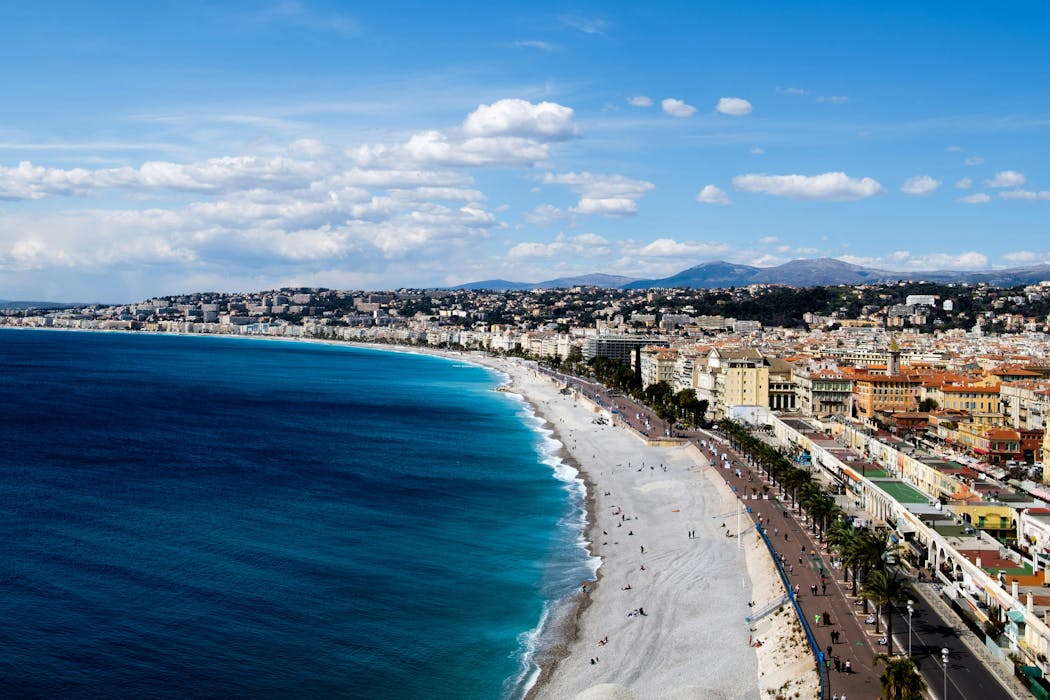
According to UNESCO, in 2022, there is a 100% chance of a tsunami of at least one metre high in the Mediterranean Sea in the next 30 years. France’s Côte d’Azur happens to be one of the most seismically active areas in Western Europe. Arno Smit/Unsplash, CC BY

The Mediterranean sea is widely perceived as having a low tsunami risk. History and recent modelling technology have demonstrated that destructive waves have already hit the French coast and could do so again. The results of a project carried out in Nice and along the French Riviera show why anticipation and preventive evacuation measures remain the only truly effective means of saving lives.

Tsunamis, formerly known as tidal waves, raz-de-marée in France or maremoti in Italy, are among the most destructive natural phenomena. Triggered by earthquakes, underwater landslides or volcanic eruptions, they spread rapidly over long distances before releasing their energy near the coast in the form of sudden submersion and extremely powerful currents.

From several centimetres to several metres, this flooding is generally characterised by several waves, and the first waves are not necessarily the largest. The speed of the current is such that the pressure exerted on coastal infrastructure can reach several tons per square metre

Since 1970, tsunamis have claimed more than 250,000 lives worldwide, notably the Boxing day tsunami in 2004 in the Indian ocean and the tsunami on March 11 2011 in Japan, for instance.

A risk that is not so farfetched after all

In the collective imagination, tsunamis have long been associated with the Pacific and the Indian ocean. The risk of an offshore tsunami in the Mediterranean has often been considered marginal, and this in itself could be misleading. In June 2022, UNESCO, which is committed to increasing global tsunami risk awareness among coastal communities, declared:

“Statistics show that there is a 100% chance of a tsunami of at least one metre high in the Mediterranean Sea in the next 30 years.”

After the Pacific, the Mediterranean basin holds the highest number of historical tsunamis recorded, of which several have impacted France’s Côte d’Azur coastline.

According to available data, around twenty incidences were reported in the maritime area along the French Riviera between the 16th century and the early 2000s with waves often exceeding two metres.

Evacuation times that are often very short

The sources of Mediterranean tsunamis can be local or distant. In some scenarios, run-up time for the first waves can be under ten minutes, particularly in the event of an underwater landslide or earthquake close to the coast, such as in the Ligurian sea between Corsica and the Italian coast. Conversely, tsunamis generated further away from France, for example off the northern coast of North Africa, can reach the French Riviera in less than 90 minutes.

The Boumerdès earthquake (Algeria) on May 21, 2003 caused havoc along the entire French Mediterranean coastline. A field enquiry showed that eight marinas on the French Riviera experienced significant sea level drops (from 50 cm to 1.5 m), basin purges, strong eddies and currents, and damaged boats, consistent with harbour resonance phenomena. The effects were observed on the French Riviera coastline an hour and a quarter after the earthquake.

Of more local origin, the tsunami in Nice on October 16 1979, triggered by the underwater collapse of part of the construction site for the new commercial port in Nice (Alpes-Maritimes), adjacent to the airport, caused the deaths of eight people and significant damage in Antibes, Cannes and Nice. The phenomenon was observed in Antibes for around thirty minutes.

Another scenario that could occur closer to the coast is that of the seismic tsunami that struck the Ligurian Sea on February 23, 1887], following an underwater earthquake measuring between 6.5 and 6.8 on the Richter scale. Contemporary accounts describe a sudden retreat of the sea by about one metre in Antibes and Cannes, leaving fishing boats high and dry, before the arrival of a wave reaching nearly two metres, which covered the beaches.

These events are a reminder of how we are completely taken by surprise, and how such short spaces of time show the limits of traditional warning systems. Coastal communities’ ability to evacuate quickly becomes crucial.

2 tsunami scenarios could impact Mediterranean coastline (red: seaquake close to Algeria’s coast, green: submarine landslide in the Ligurian sea)
Two tsunami scenarios could impact Mediterranean coastline (red: seaquake close to Algeria’s coast, green: submarine landslide in the Ligurian sea).
Sahal, Leone & Péroche, 2013, Fourni par l’auteur

An operational warning system for France

France has had a national tsunami alert system that has been part of the Centre d’alerte aux tsunamis (Cenalt) since July 2012, in conjunction with the international system coordinated by UNESCO in the Mediterranean. This system makes it possible to rapidly detect potentially tsunami-generating earthquakes and transmit an alert in less than fifteen minutes to the interdepartmental crisis management operational centre (Cogic) and foreign alert centres.

It is then up to the authorities to disseminate alert messages to the population, in particular via the FR-Alert platform, which allows notifications to be sent to the mobile phones of people located in the danger zone.

However, this global system only covers tsunamis caused by distant earthquakes and is not very effective in the case of local tsunamis or those caused by underwater landslides, where the time it takes for the tsunami to reach the coast may be less than the warning time. This is why it is important to raise awareness among coastal populations about detecting warning signs: felt earthquakes, abnormal sea movements, most often seawater retreats preceding the run-up of the tsunami, but not always.

Nice – Côte d’Azur coastline is highly at risk

Along the entire French Mediterranean coastline, an evacuation zone has been defined by government agencies and the University of Montpellier, based on altitude, distance from the sea and historical data. It corresponds to coastal areas with an altitude of less than 5 metres that are less than 200 metres from the sea. Along river mouths, this distance is extended to 500 metres with respect to the estuary.

Including Corsica, 1,700 km of coastline, 187 towns along the French Mediterranean coast, and at least 164,000 residents would be affected. At the height of the summer, an estimated 835,000 beach users would also need to be taken into consideration in the event of a tsunami.

The Nice – Côte d’Azur metropolitan area is vulnerable for a number of reasons: dense urbanisation, strong tourist appeal, and very busy beaches. Our photo analysis and modelling work have enabled us to estimate that tens of thousands of people are present in the area to be evacuated during periods of high visitor numbers (between 10,000 and 87,000 people on the beaches, depending on the season and time of day).

Evacuating ahead of a tsunami: the plan for Nice and surrounding coastal areas

When faced with a tsunami, evacuation is the only effective means of ensuring civilian safety. International experience shows that rapid and well-prepared evacuation procedures can save the vast majority of exposed populations. Reactive evacuation measures, for example, saved 96% of Japanese inhabitants when the major tsunami struck the Tōhoku coast on March 11 2011.

In Nice – Côte d’Azur, a comprehensive evacuation strategy has been developed and supported by scientific research led by the University of Montpellier’s Laboratory of Geography and Planning. It is based on optimised walking routes, taking into account slopes, obstacles, travel speeds and congestion points. Refuge sites located out of “waves’ reach” were identified and validated by local authorities, and evacuation routes were devised using algorithms to find the fastest routes.

In total, nearly a hundred refuge sites have been mapped out and incorporated into operational evacuation plans designed to quickly guide people to safe places.

The first Tsunami risk awareness signposts were installed in Nice on February 27 2026
The first tsunami risk awareness signposts were installed in Nice on February 27 2026.
C. Thomin, MNCA, 2026, Fourni par l’auteur

From science to action: preparing the population

Raising tsunami awareness should go beyond evacuation mapping: safety drills such as evacuation exercises, particularly in schools or gradually introducing public warning signage; contribute to encouraging responsible behaviour. Several initiatives like these have been implemented in Nice via a project with students in Montpellier.

In Nice, a publicly accessible information platform with interactive maps also allows users to find evacuation zones, routes and instructions to follow in the event of an alert. These tools contribute to the development of a genuine tsunami risk culture.

Online map indicating evacuation zones, safe places and routes to get to them in the event of a tsunami in Nice
Online map indicating evacuation zones, safe places and routes to get to them in the event of a tsunami in Nice.
LAGAM/UMPV, 2026, Fourni par l’auteur

Becoming ‘Tsunami Ready’ territory

Beyond France’s Côte d’Azur coastal area, the information portal can be applied to other coastlines elsewhere in France and Europe, both in the Mediterranean and overseas, where tsunami run-up times can be just as short.

The initiatives that are being implemented in Nice are in keeping with UNESCO’s Tsunami Ready international recognition programme (TRRP). This 12-point programme aims to certify territories that are capable of anticipating a tsunami risk, prepare their populations and coordinate an appropriate response.

The first towns to be awarded the label and that have benefited from our team’s scientific and technical support were Deshaies in Guadeloupe and Cannes, with Nice set to join the programme in the near future.

When facing a wave that can arrive in a matter of minutes, being prepared to evacuate undoubtedly makes all the difference.


This article was written with the help of Louis Monnier, Monique Gherardi, Matthieu Péroche and Noé Carles, Université de Montpellier Paul-Valéry.


A weekly e-mail in English featuring expertise from scholars and researchers. It provides an introduction to the diversity of research coming out of the continent and considers some of the key issues facing European countries. Get the newsletter!


The Conversation

Frédéric Leone ne travaille pas, ne conseille pas, ne possède pas de parts, ne reçoit pas de fonds d’une organisation qui pourrait tirer profit de cet article, et n’a déclaré aucune autre affiliation que son organisme de recherche.

ref. Tsunami risks in the Mediterranean: why Nice should prepare an evacuation plan – https://theconversation.com/tsunami-risks-in-the-mediterranean-why-nice-should-prepare-an-evacuation-plan-277683

How a grassroots UK campaign sparked a multi-billion-dollar exit from public fossil fuel finance

Source: The Conversation – UK – By Freddie Daley, Research Associate, Centre for Global Political Economy, University of Sussex

In 2021, dozens of governments quietly agreed to stop using public money to finance fossil fuel projects overseas.

Their pledge – now known as the Clean Energy Transition Partnership (CETP) – has helped drive a 78% reduction in public finance for fossil fuel projects among signatory countries.

What makes this especially striking is where the idea came from: a grassroots campaign in the UK initially targeting the government’s export credit agency.

With governments withdrawing from climate commitments, and some administrations – most notably Trump’s – tying them to security and trade deals, international climate cooperation is increasingly fragile. Yet the CETP stands out as a genuine success among a litany of failed international climate initiatives. My new research set out to understand what made it such a success.

Climate policy (and campaigning) is messy

Many assume that international climate commitments emerge from polite diplomatic negotiations, with small changes accumulating over time. The reality is far messier. Domestic and international climate policy is fiercely contested and victories are only ever provisional, with each settlement shaping the terrain for the next battle.

My research, based on interviews with campaigners and policymakers, shows that the partnership came about through a series of political confrontations – “battle-settlement events” in the academic lingo – moments when activists, governments and institutions clashed and new compromises emerged.

The CETP traces back to a UK grassroots campaign from 2017 onwards led by environmental and human rights campaign organisations including Global Witness and Oil Change International, partly inspired by a parallel European push targeting the European Investment Bank over its fossil fuel financing.

Campaigners initially pushed for a full fossil fuel phase out. However, they soon switched to a more strategic target: UK Export Finance (UKEF). They saw this as a more achievable battle that would provoke less resistance from industry and politicians.

UKEF is a government agency that helps UK companies sell goods and services abroad. It provides loans, guarantees or insurance to reduce the financial risk of exporting.

Campaigners built up evidence and pushed parliament to investigate. The resulting 2019 House of Commons committee report found that 96% of UK Export Finance’s energy sector support went to fossil fuel projects, predominantly in low- and middle-income countries, and called for a halt by 2021. Despite these damning findings, Theresa May’s government initially refused to budge.

So campaigners upped the ante. They drew attention to the contradiction between the UK’s climate leadership rhetoric and its public funding of fossil fuel projects linked to conflict and displacement overseas. Former UN secretary-general Ban Ki-moon weighed in to urge the UK to “recalibrate its export finance policy”, while activists from the climate campaign group Extinction Rebellion covered the Treasury in red paint to symbolise its claims the government was complicit in violence and suffering. People I interviewed who were involved at the time said this created “insurmountable pressure” on the government to act.

The Cop spotlight

The announcement in August 2019 that Glasgow would host a major UN climate summit transformed the campaign. The summit, known as Cop26, became an opportunity to both expose the gap between UK climate ambition and its export policy, and to use any domestic win as a launchpad for coordinated international action.

The government felt it too. The then prime minister, Boris Johnson, wanted to use the summit to cement his image as a climate-friendly conservative, and a restructured “Cop Unit” within the Cabinet Office had genuine agency to develop ambitious policy ideas and secure buy-in across government.

Though Cop26 was delayed until 2021 due to COVID, this gave campaigners more time to build internal support and sustain the narrative that the UK government was a “climate hypocrite” in reputable outlets like the Financial Times and The Times. Johnson’s government eventually conceded, announcing a unilateral ban on public finance for overseas fossil fuel projects in December 2020. Given that his government was simultaneously consumed by Brexit and internal power struggles, it was a massive achievement.

Glasgow and beyond

With the UK ban secured, attention turned to getting other countries on board. The Cop Unit used the UK’s diplomatic relationships to convince other governments to make similar commitments at Cop26, pointing to the UK ban as proof of concept.

person holds 'don't cop out' placard
Protesters outside the UN climate summit in Glasgow, November 2021.
Toby Parkes / shutterstock

On the conference floor, campaigners and UK officials played ambitious governments off each other in a spirit of friendly competition. Those I interviewed for my research noted that some countries signed up before fully understanding what was required, causing some delegations to get a shock when they realised.

As the summit closed, 34 countries and five public finance institutions signed the Glasgow Statement on aligning international public finance with climate change goals. Signatories to this statement, which would go on to become the CETP, included major fossil fuel funders like Canada and the US.

Walking the talk

Then came the hard part. Keeping up momentum meant regular meetings with signatories to troubleshoot implementation, while domestically the initiative had to survive an attempt by Liz Truss’s short-lived government to kill it altogether. That threat was repelled, and arguably strengthened the initiative by reinforcing signatories’ commitment.

Implementation remains uneven. Most signatories have ended or curtailed fossil fuel finance, and the CETP has cut between US$11.3 billion (8.4 billion) and US$16.3 billion in annual public finance to fossil fuel production.

But the critical counterpart – scaling up public finance for clean energy – has lagged badly. The CETP’s own data shows clean energy financing actually fell between 2022 and 2023. The US has since exited under Trump and some signatories, including Italy and Switzerland, are still way behind on both stopping fossil finance and scaling up finance for renewables.

Yet the CETP’s impact is real. It has redirected tens of billions away from projects that would have locked in fossil fuel infrastructure for decades, and demonstrated that coordinated civil society pressure can shift both domestic policy and international norms. In a political environment where climate ambition is being systematically dismantled, that matters.

The partnership’s future is uncertain. But its journey – from a small UK campaign targeting export finance to a global coalition of governments – shows that domestic activism can still lead to ambitious and durable policy change.

The Conversation

Freddie Daley does not work for, consult, own shares in or receive funding from any company or organisation that would benefit from this article, and has disclosed no relevant affiliations beyond their academic appointment.

ref. How a grassroots UK campaign sparked a multi-billion-dollar exit from public fossil fuel finance – https://theconversation.com/how-a-grassroots-uk-campaign-sparked-a-multi-billion-dollar-exit-from-public-fossil-fuel-finance-277850

Nine years to diagnosis: the challenge of spotting inflammatory arthritis and the role of first contact physiotherapists

Source: The Conversation – UK – By Sarah Golding, Postgraduate MSK Lecturer, School of Sport, Rehabilitation and Exercise Sciences, University of Essex

Dragana Gordic/Shutterstock

Joint pain is often dismissed as ageing, overuse or a minor injury. But for some people it is the first sign of inflammatory arthritis, a group of immune-driven conditions that can damage joints and other organs if not treated promptly.

Inflammatory arthritis can take years to diagnose and receive treatment, with some forms taking an average of nine years. During that time, persistent inflammation can lead to irreversible joint damage, fatigue and reduced mobility.

Although there is no cure, advances in medication over the past 15 years mean many people can live full and active lives. Outcomes are best when treatment begins quickly, ideally within the first three months, often described as a critical “window of opportunity”.

Inflammatory arthritis is less common than osteoarthritis and is managed in different ways. It occurs when the immune system mistakenly attacks the body’s own tissues, particularly the lining of joints. The exact cause is often unclear.

It can begin at any age, including in childhood, and often starts in the hands and feet. Some forms affect just the spine and pelvis. Other parts of the body such as the skin, eyes, heart and lungs may also be involved. Joints can become swollen, warm and tender, and many people experience morning stiffness that lasts for hours and improves with movement rather than rest.

Early symptoms can be subtle and easy to overlook. Stiffness may be blamed on sleep, swelling on overuse and fatigue on stress or ageing. This can contribute to delays in referral and specialist assessment.

How inflammatory arthritis differs from osteoarthritis

Osteoarthritis is different. It is strongly associated with age and most often affects people from midlife onwards, particularly in the knees, hands and hips. It usually develops gradually and becomes more common with advancing age.

Inflammatory arthritis, by contrast, is driven by the immune system and often causes prolonged morning stiffness, visible swelling and fatigue that do not improve with rest or simple activity. Although osteoarthritis is far more common globally, affecting more than 600 million people, over 18 million people live with rheumatoid arthritis, the most widely recognised form of inflammatory disease.

Despite these differences, early-stage arthritis can be difficult for healthcare professionals to distinguish. Symptoms often overlap, and no single test confirms the diagnosis. Blood tests and imaging can support assessment, but results are not always definitive. Because treatment varies depending on the type of arthritis, accurate and timely diagnosis is essential.

Medications for inflammatory arthritis aim to control the immune response and reduce inflammation. These include steroids, which are generally not suitable for long-term use, and disease-modifying anti-rheumatic drugs (DMARDs). When introduced promptly under specialist care, these treatments can reduce symptoms and slow disease progression. Some people reach remission: inflammation is well controlled and symptoms are minimal or absent. A small proportion are even able to stop medication under specialist supervision.

Treatment for osteoarthritis focuses on managing pain and improving function. There are currently no medications that reverse the condition or target its underlying cause. Paracetamol, anti-inflammatory drugs such as ibuprofen, and steroid injections may help relieve symptoms. Non-drug approaches are important for both inflammatory arthritis and osteoarthritis. These include exercise, walking aids where needed, heat and cold therapies and some complementary approaches. Lifestyle also plays a key role. Maintaining a healthy weight, stopping smoking and staying physically active can all improve outcomes.

Why early assessment matters – and who to see first

Reaching specialist care quickly can make a significant difference. In the UK, new roles in primary care are helping people be assessed sooner. First contact physiotherapists (FCPs) working in GP surgeries can recognise early symptoms of inflammatory arthritis and refer patients to rheumatology specialists to begin appropriate treatment. They assess people with joint and muscle problems, request tests where appropriate and provide advice on treatment and long-term outlook. If specialist care is needed, they arrange referral directly.

First contact physiotherapists have been part of UK primary care for more than a decade. Evidence suggests the role is safe, cost effective and beneficial to patients, with patients reporting high satisfaction and doctors expressing confidence in physiotherapists’ expertise.

Arthritis is a leading cause of pain, stiffness and disability worldwide. For people with inflammatory forms of the disease, delayed recognition remains one of the biggest barriers to effective treatment. Symptoms can resemble more common joint problems, slowing referral to specialist care at the point when treatment would be most effective.

If you notice persistent joint swelling, warmth or morning stiffness that lasts more than an hour or improves with movement, assessment is important. There are UK-based websites that include symptom checkers to help people understand when to seek advice. Many GP surgeries in the UK offer appointments with first contact physiotherapists, which can usually be requested directly.

Joint pain is common and often harmless. But when symptoms persist, involve visible swelling, or do not behave like typical “wear and tear”, they should not be ignored. Prompt assessment and appropriate referral give people the best chance of protecting their joints, preserving mobility and maintaining quality of life.

The Conversation

Sarah Golding does not work for, consult, own shares in or receive funding from any company or organisation that would benefit from this article, and has disclosed no relevant affiliations beyond their academic appointment.

ref. Nine years to diagnosis: the challenge of spotting inflammatory arthritis and the role of first contact physiotherapists – https://theconversation.com/nine-years-to-diagnosis-the-challenge-of-spotting-inflammatory-arthritis-and-the-role-of-first-contact-physiotherapists-276026

Glasgow fire: how treasured buildings influence our sense of belonging and connection

Source: The Conversation – UK – By Sarah Kerr, Lecturer in Archaeology and Radical Humanities, University College Cork

For many Glaswegians, the fire that has destroyed the Union Corner building next to Glasgow Central station is an unsettling reminder of fires that obliterated the city’s famous School of Art, first in 2014 and then again in 2018 while undergoing restoration.

Central Station is the busiest in Scotland with 25 million visitors a year. Even more pass by its grand gated entrance, bordered by a number of Victorian-era buildings like Union Corner. Built in the mid-19th century where Union Street and Gordon Street meet, the building’s famous dome (behind which brightly lit adverts acted as a beacon guiding people to the station beneath) and Victorian façade on Union Street have collapsed.

The fire will have obvious economic consequences for the city, particularly through the loss of businesses caught in and close to the fire. But the emotional effect of the fire will be felt by the city’s residents and visitors, particularly if the building lies in ruins indefinitely.

The value of built heritage and losing a building that is part of the fabric and history of a place extends beyond economic effects to something more emotional. This threat to different communities’ sense of place and cultural identity could be a catalyst for collective action.

A sense of belonging

Our built heritage has a considerable influence upon those who view and experience it. It can generate joy and even improve mental health. It also contributes to our sense of place; that is, our emotional attachment to a landscape such as an urban area. It derives from the character and distinctiveness of a place, which people perceive, in part, through buildings. As the fabric of the city, buildings and their environment act as a stage upon which social and cultural networks are made and reinforced.

Similarly, cultural identity is an implicit feeling emerging from the sense of belonging to a particular culture. It is multi-faceted and dynamic, drawing on the past while remaining permeable to the present. It can be considered a historical reservoir, created from representations of a shared past, amongst numerous other factors.

Continuity of cultural identity may rely on material continuity of the place. These important yet implicit aspects of daily life are affected when changes occur to the built fabric of a landscape, such as the loss of Glasgow’s historic buildings.

Glaswegians have faced this before in recent memory. Directly opposite Union Corner is the ornate C’a d’Oro building, built in 1872 to emulate the grandeur of the original building in Venice. It was destroyed by fire in 1987, rebuilt and reopened just three years later.

A strong desire persists among Glasgow’s citizens to see the Art School (known affectionately as “the Mack”) rebuilt again, but renovation is yet to start thanks to a series of ongoing wrangles. The time lag of restoration in Glasgow is further evident at the Egyptian Halls, a category A-listed building, also on Union Street. It faces an uncertain future after lying empty for 30 years.

Public outcry and support

The sense of place created through built heritage often extends beyond the local community. The National Museum of Brazil in Rio de Janeiro went on fire in 2018, destroying not only the early 19th-century building but nearly all of the artefacts and documents it housed. An immeasurable loss that led to global outcry, it was likened to the burning of the library of Alexandria in 48BC. There were immediate calls for the restoration of the building and it is due to reopen in the next year.

A few months later, in 2019, Notre Dame cathedral in Paris was severely damaged by fire. Just like the Mack in Glasgow, this occurred during restorative works. The emotional connection to the historic building resulted in international outpouring of support, as well as financial aid from donors in 150 countries, which saw €750m (£650m) raised in ten days.

The connection between built heritage and cultural identity was evident in the decision – which was not uncontroversial – to rebuild the cathedral in line with 19th-century ideas of the medieval period. This envisioning dictated the cathedral’s first major restoration in 1844 under architect Eugène Viollet-le-Duc.

Designated a UNESCO (United Nations Educational, Scientific and Cultural Organization) World Heritage Site, it was this version of the 800-year-old building with which most people were familiar and emotionally connected. It was therefore favoured over modern reimaginings or indeed interpretations focusing on other periods of the building’s long existence.


Read more:
Notre-Dame reopens in Paris 5 years after fire – its reconstruction preserves the past and illuminates France’s modern ambitions


The public demand to restore The National Museum of Brazil and Notre Dame was not driven by the economic potential of the heritage assets. Rather, a collective sense of place was profoundly affected, which transformed into action. This is seen on a smaller scale when the climate crisis causes incremental damage to built heritage.

Preservation and conservation are almost constantly called for despite growing acknowledgement that not all built heritage can be saved in the face of the climate crisis. There have been attempts to save structures before they are lost, such as the dismantling and removal of the Cruester Burnt Mound structure, a Bronze-age building on the Shetland island of Bressay, into the local heritage centre.

This collective action can extend from heritage preservation to focus on the cause of the initial problem. Greater awareness about the inevitable loss of late medieval castles in West Cork, Ireland, has instigated climate action among the local community.

This powerful yet unquantifiable sense of place and its connection to cultural identity can be a catalyst for positive action, particularly when supported by those with the power to enact and accelerate change. The full effect of the fire in Glasgow is yet to be realised, but the city’s experience of previous fires has demonstrated that collective action will likely emerge from the ashes.

The Conversation

Sarah Kerr does not work for, consult, own shares in or receive funding from any company or organisation that would benefit from this article, and has disclosed no relevant affiliations beyond their academic appointment.

ref. Glasgow fire: how treasured buildings influence our sense of belonging and connection – https://theconversation.com/glasgow-fire-how-treasured-buildings-influence-our-sense-of-belonging-and-connection-277982

How driverless vehicles can be made safer for deaf and hard of hearing people

Source: The Conversation – UK – By Wenge Xu, Senior Lecturer in Human-Computer Interaction, School of Computing, Birmingham City University

Self-driving cars are very much a reality and no longer a vision from science fiction. In the UK, automated vehicles (AVs) such as self-driving shuttles are already being tested on public roads.

Self-driving taxi services are expected to launch in 2026, and the Automated Vehicles Act is scheduled for implementation in 2027. This act establishes the legal groundwork for driverless cars to operate on Britain’s roads.

As these vehicles move from research labs to our streets, one question becomes critical: how will they communicate safely with the people around them? Researchers and designers have proposed installing equipment on the vehicles called external human–machine interfaces. These are designed to help driverless vehicles signal their behaviour to pedestrians and other road users (cyclists, wheelchair users and human drivers).

The driverless vehicles would employ pulsing lights around the vehicle, text displays showing the car’s intentions, and auditory cues that announce forthcoming actions, such as “I’m stopping” or a truck-like reversing sound.

However, much of this research still overlooks people with disabilities, including pedestrians with hearing loss. When accessibility isn’t built in from the start, the resulting designs often fail. So how can this be improved?

There are many examples of where current driverless vehicles fall short. Text-only displays may appear universal, but they can be less accessible for people whose primary language is sign language. They are also inacessible to blind people. Auditory cues, such as hums or droning sounds, could help the blind, but are difficult or impossible to detect for many people with hearing loss – even those with hearing aids.

Speech-based cues, meant to help people with low vision, can unintentionally introduce new risks. Hearing loss can distort speech, so a message like “I’m stopped” may be heard only as “stop” – completely altering its meaning.

One size fits all

Driverless vehicles are not inherently unsafe for deaf and hard of hearing people – the challenge lies in a design process that assumes a universal, one-size-fits-all approach. Historically, communication interfaces in regular vehicles have been built with an assumed “typical” hearing pedestrian in mind.

When accessibility becomes an afterthought, communication becomes unreliable, and the systems meant to increase safety may end up excluding the people who need them most. Technology alone cannot solve this problem.

Man with hearing aid
Cars could use lights and text to signal their ‘intentions’ to deaf people.
Peakstock / Shutterstock

Only thoughtful, inclusive design can. Our research shows that combining visual (pulsing lights and a text display) and audio (speech) cues can significantly increase trust and support safer decisions for pedestrians in general. But much more development is needed to ensure these communication interfaces are equitable for all people with special needs.

This gap between technological promise and lived experience reflects a broader pattern. Even though the Automated Vehicles Act aims to improve accessibility, most research in this area in this area still neglects people with special needs, including those with hearing loss.

If we want driverless vehicles to create more accessible streets – and not merely introduce new barriers – then people with special needs must be included in research, design and policy from the beginning.

Drawing on a series of user studies, we offer several practical recommendations to guide industry, researchers and policymakers toward a safer, more inclusive driverless car ecosystem.

Manufacturers should include diverse populations in the design and evaluation of their vehicles. We found that pedestrians with hearing loss may experience external human–machine interfaces differently from hearing people. Designers cannot fully anticipate the potential risks unless they inclusively involve user testing groups.

People need to understand not just that a vehicle exists, but what it intends to do. Displaying the vehicle’s “state”, such as “stopped”, and transitions, such as “slowing down”, helps pedestrians accurately judge the situation and feel more assured.

Combining audio and visual cues increases trust, acceptance and perceived safety. No single mode of communication is effective for everyone, but together, they offer back-ups and clarity.

Relying on just one type of visual cue is risky – lights, text or icons can fail in certain conditions. Providing combined visual information helps ensure that if one fails, another still supports pedestrian understanding.

Urban soundscapes can interfere with with audio cues, especially for pedestrians with hearing loss. Studying external human–machine interfaces in realistic environments is essential for ensuring they work when it matters.

Vehicle manufacturers must work with hearing aid and cochlear implant manufacturers to help ensure that audio cues are distinguishable, rather than confusing.

In many cases, barriers to inclusion arise not from technology itself, but from a lack of awareness or consultation. When people with special needs are excluded from design decisions, systems are built on assumptions rather than lived experience.

When they are actively involved, however, we are a step towards an inclusive and equitable future. Driverless vehicles have the potential to make our roads safer for everyone. But that future depends on purposeful, inclusive design choices today.

If developers, policymakers and researchers commit to engaging with deaf and hard of hearing people, along with others, we can help create streets that are safer, more accessible and more equitable for all.

The Conversation

Wenge Xu does not work for, consult, own shares in or receive funding from any company or organisation that would benefit from this article, and has disclosed no relevant affiliations beyond their academic appointment.

ref. How driverless vehicles can be made safer for deaf and hard of hearing people – https://theconversation.com/how-driverless-vehicles-can-be-made-safer-for-deaf-and-hard-of-hearing-people-277648

Women Without Men: a novella that tells the history of Iran through women’s bodies

Source: The Conversation – UK – By Sahar Maranlou, Lecturer in Law and Socio-legal Studies, Royal Holloway, University of London

Women Without Men by Shahrnush Parsipur is an innovative feminist story set in Iran. The story follows five women and the circumstances that make them leave their lives to start anew in a garden on the outskirts of Tehran.

Written in the late 1970s, it was immediately banned on publication. Shortly after, Parsipur was arrested and jailed for her frank and defiant portrayal of women’s sexuality. This groundbreaking book is now available for the first time in English, translated by Faridoun Farrokh.

Set against the backdrop of the 1953 CIA-backed coup in Iran, the story deliberately shifts the lens of history away from the big politics to focus on its impact on intimate, gendered spaces. In doing so, Parsipur frames national upheaval as something lived and inscribed upon women’s bodies and interior lives.

The novel insists that authoritarianism doesn’t begin in the halls of power; it begins in the household within layered patriarchal systems that confine women’s autonomy. Parsipur’s blending of realism and magical elements unsettles conventional narrative authority and mirrors the instability of a society in crisis. The personal and the political are inseparable: women’s silences, desires and acts of refusal become subtle yet radical forms of resistance.

What makes this novel enduring is its refusal to separate the personal from the political. The magical elements are not decorative; they expose emotion that realism alone cannot capture. The garden the women flee to is not an escape from reality, but a feminist space where reality is reimagined.

The novel has sadly taken on an urgency and relevance in the face of the the US and Israel’s war on Iran. It reminds readers that foreign intervention often intensifies internal authoritarianism. By revisiting the legacy of the 1953 coup, the book encourages readers to see today’s crisis not as an isolated eruption. Instead, it is part of a deeper historical continuum, shaped by external intervention and power structures within Iranian society.

Through intimate storytelling, Parsipur invites readers to confront the cultural assumptions that have shaped women’s lives for generations. To read Women Without Men is to enter a layered narrative that is at once poetic, historical and contemporary. It bears to witness how deeply gender norms are embedded in everyday life, and how quietly, yet powerfully, women resist them.

Sexuality

In Women Without Men, virginity is an ideological construct by which a woman’s worth is regulated. Through the characters of Faezeh and Munis, we see how chastity functions as a mechanism of control long before any formal punishment is imposed.

Faezeh embodies internalised patriarchy, believing a woman’s honour depends entirely on social perception and reputation to survive. When she and Munis are sexually assaulted, the violence is overshadowed by shame.

The metaphor “watering the earth”, used by a man to describe sexual penetration, is chilling because it recasts violation as something natural and productive. It depicts a woman as if she were soil to be cultivated, rather than a person with agency.

By framing assault in agricultural terms, patriarchal language erases harm and presents male entitlement as biological inevitability, while placing the burden of “dishonour” on the woman’s body. This symbolic logic mirrors the broader Iranian legal and social framework in which virginity carries material and moral weight, reinforcing the idea that women’s bodies are sites of regulation rather than autonomy.

The Iranian Civil Code of 1931 codified male guardianship and authority in marriage and family matters. In this context, virginity becomes not only a cultural expectation but part of a larger system in which women’s bodies are governed by both family and state.

Zarrinkolah’s narrative offers one of the most unsettling critiques of patriarchal objectification in Women Without Men. Zarrinkolah is a prostitute who begins to see all of her clients as headless men. It is an attempt to “cure” this condition through an act of purification that leads her to abandon prostitution.

Zarrinkolah’s journey isn’t a simple redemption, but a reconfiguration of subjectivity. By shifting from being seen as nothing more than a body to recognising herself as a person with her own thoughts, emotions and agency, she disrupts the cultural logic that renders women’s bodies interchangeable and morally policed. Her withdrawal from prostitution is not a return to purity, but a refusal of the system that defined her solely through male consumption.

The stillness of marriage

Farrokhlaqa’s story reveals the psychological and social confinement of marriage. Her marriage was a “32-year-old habit of not moving”. Patriarchal expectations have infected her, and she has become self-policing. She does not need to be actively restrained; she restrains herself. However, she no longer experiences her lack of freedom as oppression but as natural and inevitable.

Her response to widowhood is not retreat but a shift from passivity to agency. She purchases the garden, transforming inherited wealth into spatial autonomy, creating space for “women without men”. Her liberation is, therefore, negotiated by unlearning the stillness marriage imposed. Through her, Parsipur suggests that domestic patriarchy is sustained not only by law but by cultural perceptions that normalise women’s obedience to husbands.

The garden functions as a feminist counter-public sphere outside patriarchal governance. Within its walls, women work, speak and rest without male supervision. Iranian women’s groups have created similar spaces of solidarity, which were fragile yet transformative. They demonstrated that collective awareness could exist even within repressive conditions before and after the Islamic Revolution.

Parsipur does not allow the garden to become utopia, however. The women do not remain there, most return to Tehran and reenter life. Liberation cannot survive in isolation from society, Parsipur tells us. This narrative choice mirrors Iranian women’s rights history: reforms have emerged through resistance, reversal, and renewed struggle – not through escape.

Women Without Men is not simply a novel about five women seeking refuge in a garden. It is about freedom, embodiment and the struggle for equal dignity. Shahrnush Parsipur gives us women who question, transform, challenge and resist.

This article features references to books that have been included for editorial reasons, and may contain links to bookshop.org. If you click on one of the links and go on to buy something from bookshop.org The Conversation UK may earn a commission.

The Conversation

Sahar Maranlou does not work for, consult, own shares in or receive funding from any company or organisation that would benefit from this article, and has disclosed no relevant affiliations beyond their academic appointment.

ref. Women Without Men: a novella that tells the history of Iran through women’s bodies – https://theconversation.com/women-without-men-a-novella-that-tells-the-history-of-iran-through-womens-bodies-276250

Home secretary says asylum overhaul is rooted in ‘Labour values’ – what are those values?

Source: The Conversation – UK – By Erica Consterdine, Senior Lecturer in Public Policy, Lancaster University

House of Commons/Flickr, CC BY-NC-ND

The home secretary, Shabana Mahmood, says that her plans to overhaul the asylum system are rooted in “Labour values”. The proposals include removing government support for some asylum seekers and limiting initial refugee status from five years to 30 months.

In a Guardian op-ed, Mahmood wrote that these values, uniting working-class communities, social reformers and immigrants are:

First, a belief in fairness: recognising that the dice are loaded against working-class communities. Second, tolerance towards others, that very British desire to live and let live. Third, a quiet but determined patriotism, for a country that is forever changing while something ineffable always endures.

But immigration has long been a topic where Labour’s values clash with one another.

The protectionist roots of the trade union movement saw foreign labour as a threat to undercutting wages and job displacement. Historically, unions adopted a highly restrictive position on immigration. At the same time, the inclusive principles of equality and representation of the working class (of which many racial minorities were part) complicated this picture.

This tension was evident in the postwar period. Labour in office presented a mix of policies including anti-discrimination race relations reforms, along with restrictive immigration legislation such as the 1968 Commonwealth Immigrants Act, which sought to to block entry for Kenyan Asians despite their formal status as UK citizens.

Labour’s dilemma has long been how to defend the working class within a capitalist system. The solution to this intractable problem has always been to dampen class conflict by promoting national unity.

This has meant that patriotism and social reform have gone hand in hand, creating divisions between “deserving” and “non-deserving”. The question of who deserves welfare and support has long been part of border control. The very first immigration act, the 1905 Aliens Act, authorised the deportation of those in receipt of poor relief. Today, the condition of “no recourse to public funds” is placed on most visas.

The government’s newest proposals place a strong emphasis on deservingness through the language of “earning” a right to stay in the UK. They place new conditions on settlement, and require refugees to prove their need for sanctuary again and again.

New Labour

The equation changed dramatically under New Labour. Tony Blair’s government leant into Thatcherite neoliberalism, valuing labour market flexibility as a counter-inflationary measure. Coupled with belief in the benefits of globalisation, the Labour government enacted one of the most expansive economic immigration programmes, historically and comparatively across Europe.

The policy fit with the package of multicultural nationalism New Labour was selling. But this was an economic calculation, not a values-based one. The divisions of deserving and undeserving continued, with a discourse of “bogus” asylum seekers and a regressive policy to match: expanding immigration detention, replacing monetary support with vouchers and reducing appeal rights.

With Ukip beating the anti-migrant drum, the saliency of migration spiked. Many believed the government ultimately lost office partly on the basis of their immigration record.

Enter Blue Labour, a faction that claimed Labour was, at the heart, culturally conservative on many areas including immigration. Ed Miliband, then leader, pivoted towards a fairly logical policy for Labour within this paradigm. This policy framed exploitation as the driver of migrant labour demands, and proposed making it illegal for employers to undercut wages by exploiting workers. However, this approach didn’t cut through to voters, and was troubled by gaffes such as the “controls on immigration” mugs.

Fearing the electoral threat of Ukip, the Conservatives campaigned in 2010 on a pledge to reduce net migration. This pledge became the net migration policy, and a bipartisan consensus was formed to reduce immigration.

Jeremy Corbyn’s policy was, like Miliband’s, truer to Labour values. But it was not necessarily the inclusive picture in practice. Appealing to socialist state management and harking back to postwar consensus, Corbyn advanced the call to move Britain away from a liberal labour market, with less dependence on low-paid migrant labour.


Read more:
Why Jeremy Corbyn can’t seem to solve Labour’s immigration conundrum


Corbyn espoused a rhetoric of multicultural and inclusive politics. But his Euroscepticism was always fuelled by a rejection of neoliberal markets – of which EU mobility, he saw, was contributing. As he explained in 2017, Corbyn was against the “wholesale importation of underpaid workers from central Europe in order to destroy conditions in the construction industry”. Brexit politics dogged Labour and cut across this tension, and the party has struggled to form a coherent policy ever since.

In opposition, Labour’s policy looked potentially promising. Ahead of the 2024 election, Keir Starmer touted plans to look at immigration holistically with labour market policy. Yet since entering office, Labour’s policy and rhetoric has lurched further to the right.

A hand putting a stamp into a passport
Under the government’s proposals, refugees will need to repeatedly prove their need for protection.
AlpakaVideo/Shutterstock

The values of postwar Labour’s protectionism would see the door closed to many, but would enhance rights of those that can come legally and address the structural problems of the UK labour market. Blair’s neoliberal managed migration was designed to take advantage of global wage disparities, but channelled a more positive message on migration.

The new proposals do neither. Mahmood says they are rooted in fairness – but for whom? A policy that pulls the rug from beneath long-term residents and refugees trying to build a life in the UK legally and legitimately is not fair to them. When the home secretary talks of fairness, she appears to only be referring to what the party believes citizens regard as fair, claiming that without stricter migration control, they lose trust in government.

The fallacy of that position is that immigration controls can and do bleed into citizenship regimes. The recent border controls imposed on dual citizens demonstrate this starkly, as does the crackdown on illegal immigration in the US, which has seen citizens detained by Immigration and Customs Enforcement. Perhaps Britons think more regressive policies on migrants are fair, but opinions may change if citizens are affected.

The Conversation

Erica Consterdine does not work for, consult, own shares in or receive funding from any company or organisation that would benefit from this article, and has disclosed no relevant affiliations beyond their academic appointment.

ref. Home secretary says asylum overhaul is rooted in ‘Labour values’ – what are those values? – https://theconversation.com/home-secretary-says-asylum-overhaul-is-rooted-in-labour-values-what-are-those-values-277710