EU agrees €90 billion loan to Ukraine, but squabbles over frozen Russian assets expose the bloc’s deep divisions

Source: The Conversation – UK – By Richard Whitman, Member of the Conflict Analysis Research Centre, University of Kent; Royal United Services Institute

By agreeing to provide a loan of €90 billion (£79 billion) for the years 2026-2027, EU leaders have set the direction for the future of support for Ukraine.

At stake at the meeting of the European Council on December 18 was not just Kyiv’s ability to continue to defend itself against Russia’s ongoing aggression, but also the credibility of the EU as a player in the future of European security.

The key decision for the EU’s leaders was whether, and how, they would provide financial support for Ukraine over the next two years. Europeans have provided a vital drip-feed of ongoing financial assistance to Kyiv throughout almost four years of war.

But they have also struggled to fill, in its entirety, the hole created by the withdrawal of US support since the return of Donald Trump to the White House in January 2025.

The estimated €136 billion of budget support needed by Ukraine in 2026 and 2027 is a relatively fixed figure regardless of whether any peace initiative comes to fruition. A large part of it – €52 billion in 2026 and €33 billion in 2027 – is for military support.

The EU-agreed loan of €90 billion, “based on EU borrowing on the capital markets backed by the EU budget headroom”, thus covers at least the essential military needs of Ukraine. It The loan? will either contribute to the ongoing war effort or help create a sufficiently large and credible defence force to deter any future aggression by Russia.

Brussels is now the most important financial partner for Ukraine by any measure.

To fund the support the EU wants to provide to Ukraine, the commission developed two proposals. The most widely supported – and ultimately rejected – proposal was to use the Russian assets held by the Belgium-based Euroclear exchange as collateral to for a loan to fund Ukraine’s defence and reconstruction over the next few years.

In view of Belgian opposition because of insufficient protections against likely Russian retaliation, the European Commission had also proposed joint EU borrowing to fund support for Kyiv. Despite resistance from a group of EU member states, it was the only agreeable solution at the end.

The agreement on a loan to Ukraine funded from EU borrowing achieves the primary goal of securing at least a modicum of budgetary stability for Kyiv. But it came at the price of EU unity.

An “opt-out clause” had to be provided for Hungary, Slovakia and Czechia. All three countries are governed by deeply Euro-sceptical and Russia-leaning parties.

The deep irony is that by opposing EU support for Ukraine, they expose Ukrainians to a fate similar to that they suffered when the Soviet Union suppressed pro-democracy uprisings in Hungary in 1956 and then Czechoslovakia in 1968.

The EU until now managed to maintain a relatively united front on sanctions against Russia, on political, economic and military support for Ukraine, and on strengthening its own defence posture and defence-industrial base.

Over the past year, these efforts have accelerated in response to Trump’s return to the White House. This has shifted the US position to one which is in equal measure more America first and more pro-Russia than under any previous US administration.

And the pressure on Kyiv and Brussels has increased significantly over the past few weeks.

First there was the 28-point peace plan, which may have been a US-led proposal, but read as if it was Kremlin-approved. Then the new US national security strategy, which gave significantly more space to criticisms of Europe than to condemnation of Russia for the war in Ukraine.

No longer casting Russia as a threat to international security shows how detached the US has become from reality and the transatlantic alliance.

Russia’s president, Vladimir Putin, keeps insisting that he will achieve his war aims of fully annexing another four Ukrainian regions – in addition to Crimea – by force or diplomacy. Giving his usually optimistic outlook on Russia’s military and economic strength, Putin reiterated these points at his annual press conference on December 19.

EU divisions widen

In light of how squeezed Brussels and Kyiv now are between Washington and Moscow, the agreement on EU financing for Ukraine, despite its flaws and the acrimony it has caused within the EU, is a significant milestone in terms of the EU gaining more control over its future security. But it is not a magic wand resolving Europe’s broader problems of finding its place and defining its role in a new international order.

The agreement reached at the summit between the EU’s leaders on how to financially support Ukraine was overshadowed by their failure to overcome disagreement on signing a trade agreement with the South American trade group, Mercosur.

A decision on this trade deal with Argentina, Bolivia, Brazil, Paraguay, Uruguay and (currently suspended) Venezuela had been 25 years in the making. The deal was due to be signed on December 20, but this has now been postponed until January.

This is meant to provide time for additional negotiations to assuage opponents of the deal in its current form, especially France, Italy and Poland, who fear that cheaper imports from Mercosur countries will hurt European farmers. Those farmers staged a fiery protest at the European parliament ahead of the European Council meeting.

The delay does not derail the trade deal, which aims to create one of the world’s largest free trade areas. But it severely dents the EU’s claim to leadership of an international multilateral trading system based on rules that prioritise mutual benefit, as an alternative to the Trump administration’s unpredictable and punitive America-first trade practices.

Both disagreements continue to hamper the EU’s capacity for a decisive international role more generally. Where Trump’s US offers unpredictability, Brussels for now only offers extended procrastination on key decisions.

This places limits on the confidence that the EU’s would-be partners in a new international order can have in its ability to lead the shrinking number of liberal democracies. Without skilled and determined leadership, they will struggle to survive – let alone thrive – in a world carved up between Washington, Moscow and Beijing.

The Conversation

Richard Whitman has received funding from the Economic and Research Council of the UK as a Senior Fellow of the UK in a Changing Europe initiative. He is a past recipient of grant funding from the British Academy of the UK, EU Erasmus+ and Jean Monnet Programme. He is a Senior Associate Fellow at the Royal United Services Institute (RUSI), and an Academic Fellow of the European Policy Centre in Brussels. He is a past Associate Fellow and Head of the Europe Programme of the Royal Institute of International Affairs (Chatham House).

Stefan Wolff is a past recipient of grant funding from the Natural Environment Research Council of the UK, the United States Institute of Peace, the Economic and Social Research Council of the UK, the British Academy, the NATO Science for Peace Programme, the EU Framework Programmes 6 and 7 and Horizon 2020, as well as the EU’s Jean Monnet Programme. He is a Trustee and Honorary Treasurer of the Political Studies Association of the UK and a Senior Research Fellow at the Foreign Policy Centre in London.

ref. EU agrees €90 billion loan to Ukraine, but squabbles over frozen Russian assets expose the bloc’s deep divisions – https://theconversation.com/eu-agrees-90-billion-loan-to-ukraine-but-squabbles-over-frozen-russian-assets-expose-the-blocs-deep-divisions-272095
Local democracy is holding strong, but rural communities are falling behind, new survey of Michigan officials shows

Source: The Conversation – USA – By Stephanie Leiser, Director, Center for Local, State, and Urban Policy, University of Michigan

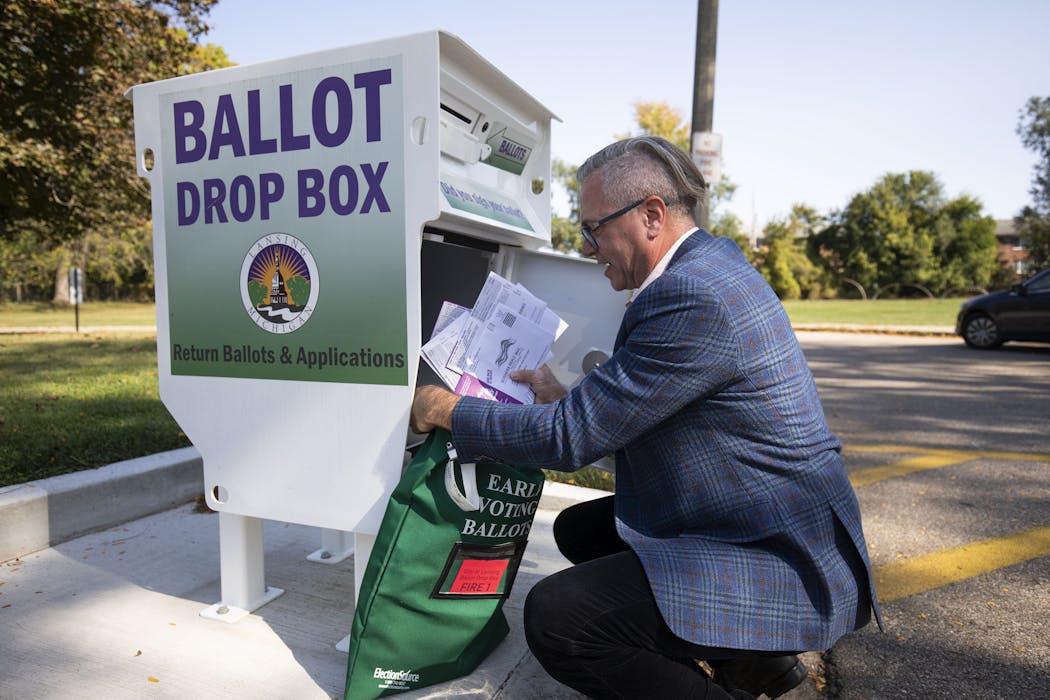
Lansing City Clerk Chris Swope collects absentee ballots from a drop box in 2024. Bill Pugliano/Getty Images

According to our recent survey of officials in Michigan communities, local democracy is humming along and city hall is taking care of business.

The federal government was shut down in October and November 2025, but cities and towns around the United States continued to fill potholes, purify drinking water, respond to emergency calls and issue construction permits, mostly with little fanfare.

But Michiganders should not take this local resilience for granted. Officials – especially in rural communities – are also raising some red flags about declining public engagement, deteriorating public discourse and harassment.

The view from city hall

At the University of Michigan’s Center for Local, State and Urban Policy, we have been surveying local officials in Michigan’s 1,856 cities, villages, counties and townships since 2009. About 70% of local governments in the state complete our survey each year, which means that our results reflect the opinions of everyone from township clerks in the Upper Peninsula to mayors of larger cities in the Metro Detroit area.

This Michigan Public Policy Survey has covered a wide variety of local issues over the years. One topic we track closely is how democracy is functioning in local communities.

While many public opinion surveys ask how Americans feel about democracy, very few examine the viewpoints of local officials whose job it is to carry out the daily work of democratic governance. For example, instead of asking whether people trust their government, we flip the question around and ask local officials whether they trust their residents to be responsible participants in policymaking.

Democracy at its grassroots is strong

To get a high-level understanding of local democratic health, we ask Michigan local officials to rate the overall functioning of democracy in their communities on a scale of 1 to 10, from total breakdown to perfectly functioning.

Statewide, 82% reported a score of 7 or higher when we surveyed them in the spring of 2025. This percentage has remained remarkably steady since we first began tracking it in 2020.

At the other end of the scale, only 2% of communities this year rated democracy poorly – 4 or below – falling from a high of 7% in 2024.

Small and rural communities are falling behind

While these high ratings are good news for local democracy in general, when we break down the results by whether communities consider themselves more urban or rural, we see some divergence. While 82% of communities overall reported relatively good democratic health this year, this reflects 92% of urban communities and 79% of rural communities.

We also see evidence of a growing urban/rural divide in resident engagement, an essential ingredient of democratic health. When we asked local officials how engaged their residents were with their local governments, 64% of urban communities said their residents were somewhat or very engaged, but only 41% of rural communities felt the same. In fact, 13% of rural communities said their residents are not engaged at all, compared with only 5% of urban communities.

Similarly, local officials in urban communities have higher levels of trust in their residents to be responsible participants in local policymaking – for example, by contributing ideas, volunteering or speaking with elected officials. In Michigan’s urban communities, 48% of local officials said they trust their residents nearly always or most of the time. However, only 38% of rural local officials had the same level of trust in their residents.

The big picture looks less rosy

While rural communities currently appear to be struggling more than urban communities to engage with their residents, looking over time, democratic participation is getting worse everywhere. For example, 18% of Michigan communities statewide reported this year that civic discourse among residents was somewhat or very divisive, up from 11% in 2012.

Between 2012 and today, despite their efforts to expand engagement opportunities, particularly online, local officials’ satisfaction with their residents’ level of engagement has plummeted from 58% in 2012 to 38% in 2025. Among the most common frustrations are that their efforts attract the same people over and over and that a small vocal minority of residents is negatively affecting overall engagement.

Even more troubling, about half of local officials who responded to the 2022 version of our survey have experienced some kind of personal harassment, with 39% reporting in-person harassment such as hostile or aggressive comments, 31% reporting online harassment and 3% reporting violent actions like assault or destruction of property.

Looking ahead

While only 17% of Americans currently trust the federal government to “do what is right” “just about always” or “most of the time,” according to a recent Pew survey, 65% of Americans still trust their local government. And as our survey results suggest, most local officials feel pretty confident that they’re being good stewards of local democracy, despite declining help and input from their residents.

To any Americans worried about the state of their democracy, may we suggest heading to the next meeting of the local planning commission? We hear there are sometimes even snacks.

Read more of our stories about Michigan.

The Conversation

Stephanie Leiser does not work for, consult, own shares in or receive funding from any company or organization that would benefit from this article, and has disclosed no relevant affiliations beyond their academic appointment.

ref. Local democracy is holding strong, but rural communities are falling behind, new survey of Michigan officials shows – https://theconversation.com/local-democracy-is-holding-strong-but-rural-communities-are-falling-behind-new-survey-of-michigan-officials-shows-271672

It’s more than OK for kids to be bored − it’s good for them

Source: The Conversation – USA (2) – By Margaret Murray, Associate Professor of Public Communication and Culture Studies, University of Michigan-Dearborn

When children experience boredom, it can result in a brain boost that can push them to explore new activities. Richard Lewisohn/Connect Images via Getty Images

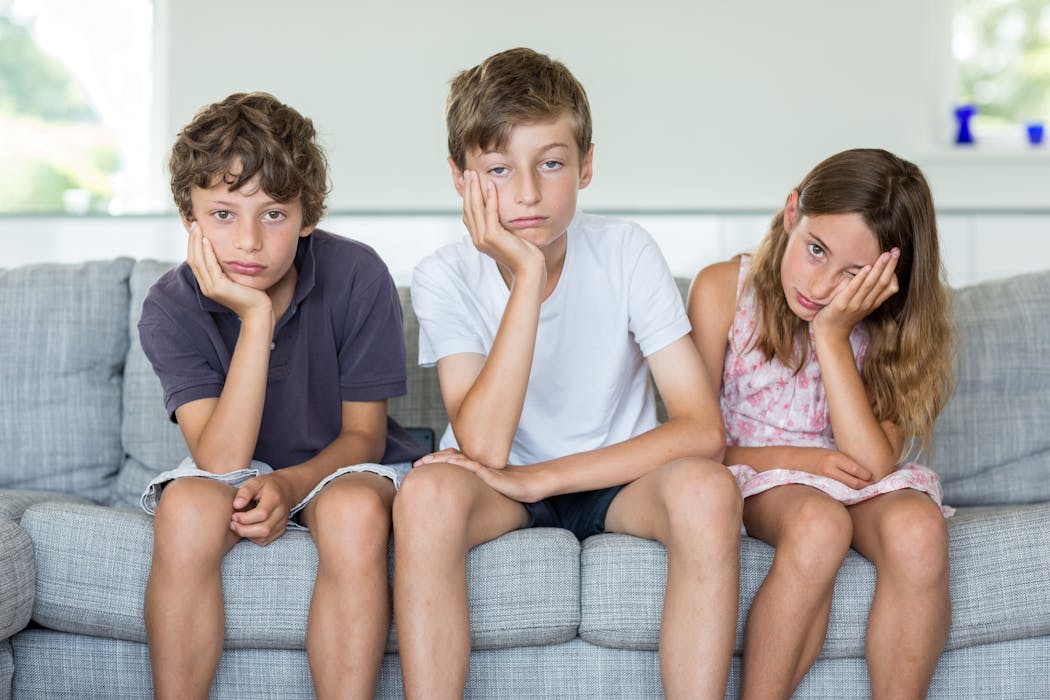
Boredom is a common part of life, across time and around the world. That’s because boredom serves a useful purpose: It motivates people to pursue new goals and challenges.

I’m a professor who studies communication and culture. I am currently writing a book about modern parenting, and I’ve noticed that many parents try to help their kids avoid boredom. They might see it as a negative emotion that they don’t want their children to experience. Or they might steer them into doing something that they see as more productive.

There are various reasons they want to prevent their children from being bored. Many parents are busy with work. They’re stressed about money, child care responsibilities and managing other parts of daily life. Making sure a child is occupied with a game, a TV show or an arts and crafts project at home can help parents work uninterrupted, or make dinner, without their children complaining that they are bored.

Parents may also feel pressure for their children to succeed, whether that means getting admitted to a selective school, or becoming a good athlete or an accomplished musician.

Children also spend less time playing freely outside and more time participating in structured activities than they did a few decades ago.

Easy access to screens has made it possible to avoid boredom more than ever before.

Many parents needed to put their children in front of screens throughout the pandemic to keep them occupied during work hours. More recently, some parents have reported feeling social pressure to use screens to keep children quiet in public spaces.

That is to say, there are various reasons why parents shy away from their kids being bored. But before striving to eliminate boredom completely, it’s important to know the benefits of boredom.

A young girl with dark hair lays on her stomach on a couch with her arms and legs splayed out.
Even very young children could benefit from experiencing boredom in short spurts.
Oscar Wong/Moment via Getty Images

Benefits of boredom

Although boredom feels bad to experience in the moment, it offers real benefits for personal growth.

Boredom is a signal that a change is needed, whether it be a change in scenery, activity or company. Psychologists have found that the experience of boredom can lead to discovering new goals and trying new activities.

Harvard public and nonprofit leadership professor Arthur Brooks has found that boredom is necessary for reflection. Downtime leaves room to ask the big questions in life and find meaning.

Children who are rarely bored could become adults who cannot cope with boredom. Boredom also offers a brain boost that can cultivate a child’s innate curiosity and creativity.

Learning to manage boredom and other negative emotions is an important life skill. When children manage their own time, it can help them develop executive function, which includes the ability to set goals and make plans.

The benefits of boredom make sense from an evolutionary perspective. Boredom is extremely common. It affects all ages, genders and cultures, and teens are especially prone to boredom. Natural selection favors traits that offer a leg up, so it is unlikely that boredom would be so prevalent if it did not deliver some advantages.

Parents should be wary of treating boredom as a problem they must solve for their children. Psychologists have found that college students with overly involved parents suffer from more depression.

Other research shows that young children who were given screens to help them calm down were less equipped to regulate their emotions as they got older.

Boredom is uncomfortable

Tolerating boredom is a skill that many children resist learning or do not have the opportunity to develop. Even many adults would rather shock themselves with electricity than experience boredom.

It takes practice to learn how to handle boredom. Start with small doses of boredom and work up to longer stretches of unstructured time. Tips for parents include getting kids outside, suggesting a new game or recipe, or simply resting. Creating space for boredom means that there will be some stretches of time when nothing in particular is happening.

Younger children might need ideas for what they could do when bored. Parents do not need to play with them every time they are bored, but offering suggestions is helpful. Even five minutes of boredom is a good start for the youngest children.

Encouraging older children to solve the problem of boredom themselves is especially empowering. Let them know that boredom is a normal part of life even though it might feel unpleasant.

It gets easier

Children are adaptable.

As children get used to occasional boredom, it will take them longer to become bored in the future. People find life less boring once they regularly experience boredom.

Letting go of the obligation to keep children entertained could also help parents feel less stressed. Approximately 41% of parents in the U.S. said they “are so stressed they cannot function,” and 48% reported that “most days their stress is completely overwhelming,” according to a report from the U.S. surgeon general in 2024.

So the next time a kid complains, “I’m bored!” don’t feel guilty or frustrated. Boredom is a healthy part of life. It prompts us to be self-directed, find new hobbies and take on new challenges.

Let children know that a little boredom isn’t just OK – in fact, it’s good for them.

The Conversation

Margaret Murray does not work for, consult, own shares in or receive funding from any company or organization that would benefit from this article, and has disclosed no relevant affiliations beyond their academic appointment.

ref. It’s more than OK for kids to be bored − it’s good for them – https://theconversation.com/its-more-than-ok-for-kids-to-be-bored-its-good-for-them-268826

Why are some Black conservatives drawn to Nick Fuentes?

Source: The Conversation – USA (2) – By George Michael, Professor of Criminal Justice, Westfield State University

Nick Fuentes believes that the country’s identity depends on preserving its white majority. AP Photo/Jacquelyn Martin

Far-right activist Nick Fuentes continues to gain momentum.

The openly racist and antisemitic podcaster has emerged as an influential figure on the American political right. Recent profiles in The Atlantic and The New York Times have elevated the 27-year-old into practically a household name.

But as a scholar of the American right, I’ve been fascinated by one aspect of Fuentes’ rise: the way some Black podcast hosts and political influencers have been receptive to some of his views.

“Isn’t that amazing?” Black pastor and radio host Jesse Lee Peterson gushed after hosting Fuentes on his show in 2023. “Finally, a white man standing up for what is right. And you heard him say it – he hate no one.”

At first blush, this might sound counterintuitive. Fuentes champions a racist vision of national populism. He has promoted the idea that the country’s identity depends on preserving its white majority. In the past, he’s defended Jim Crow, the segregationist legal regime that governed the South from the late-19th century to the 1960s, arguing that segregation was better for both Black and white Americans. He’s openly disavowed miscegenation, and castigated Vice President JD Vance for marrying an Indian woman and fathering mixed-race children.

Black people and white nationalists, however, have joined forces in the past. And a number of cultural and political shifts have broadened Fuentes’ appeal to Americans of all races.

Finding common ground

In the 20th century, Black and white nationalists were able to find common ground on the topic of racial separatism.

Marcus Garvey, a leading proponent of the back-to-Africa movement in the 1920s, and Elijah Muhammad, the former leader of the Nation of Islam, saw white nationalists as kindred spirits.

Garvey envisaged a new nation built by the descendants of African slaves. To him, the ostensible racism of the Ku Klux Klan helped drive home his message that the U.S. would never be a place that could incorporate Black people as equals. In 1922, he met with Edward Young Clarke, the Klan’s acting leader. Garvey later explained how the two shared the same vision: Clarke “believes America to be a white man’s country, and also states that the Negro should have a country of his own in Africa.”

Meanwhile, Muhammad embraced the idea of Black superiority.

In George Lincoln Rockwell, the leader of the American Nazi Party from 1959 to 1967, Muhammad saw a white man who may have disagreed about which race was superior but was nonetheless serious about carving out a territory somewhere in the U.S. to build a separate Black nation. Even though Rockwell spoke of Black people as a “primitive race” and had organized a “hate tour,” Muhammad invited him to speak at the Nation of Islam summit in 1962. To Muhammad, they both had the same goal: separation of the races.

Uniting in opposition to Israel

Importantly, among both Black nationalists and white nationalists, race mixing was often cast in an antisemitic framework, with Jews accused of spurring racial integration. Rockwell claimed Jewish communists were behind the Civil Rights Movement, while the Nation of Islam published a pseudo-historical book in 1991 claiming that Jews were responsible for the transatlantic slave trade.

Today, antizionism and antisemitism are where Fuentes and some Black conservatives appear to have found common ground.

Hamas’ attack on Oct. 7, 2023, and Israel’s ensuing annihilation of Gaza have destabilized politics not only in the Middle East but also in the U.S.

Historically, the mainstream media in the U.S. has championed Israel, while both of the country’s major political parties have backed Israel financially and militarily.

However, due to a number of factors – including Americans’ widespread exposure on social media to the destruction of Gaza, the growing diversity of the U.S. and its ballooning debtcracks in this uniform support have emerged.

Fuentes routinely implicates a “Jewish oligarchy” as the source of many problems that bedevil the world today, and his strident denunciation of Israel and the larger Jewish community has endeared him to antisemites and anti-Israel factions on the right, and this includes some Black Americans.

Take Myron Gaines, an internet personality who founded the “Fresh and Fit Podcast” in 2020. Born in Brooklyn, Gaines is of Sudanese descent and was raised as a Muslim. Originally, his podcast focused on issues related to the manosphere, a largely online movement that champions masculinity and opposes feminism.

But since the Oct. 7 attacks, Gaines became a vociferous critic of Israel, claiming “Zionist fingerprints” were “all over” the 9/11 attacks and JFK’s assassination. On this issue, he found common ground with Fuentes, who has frequently appeared as a guest on his program. On occasion, Andrew Tate, a popular British biracial social media personality, has joined them for discussions.

All three share an antisemitic worldview – promoting, at various points, the notion of Jewish control of finance, media and governments – with a pronounced misogynist streak.

Then there are the Hodgetwins, Keith and Kevin Hodge. The Black twin brothers launched their podcast in 2008 and now boast an estimated 2 million followers. They’ve recently interviewed a range of antisemitic guests on their program, including Fuentes, David Duke, Leonarda Jonie and Stew Peters.

In July 2025, Candace Owens hosted Nick Fuentes for a two-hour interview on her podcast. They had traded barbs in the past, but they had also, at times, praised each other. When Owens was fired from The Daily Wire for her criticism of Israel in 2024, Fuentes instructed his supporters to “stand with Candace.”

During the July 2025 interview, there were some tense moments: Owens needled Fuentes over why he hadn’t married and started a family. She also objected to his belief that race determined a person’s abilities and to his claim that Black civilization was inherently inferior. But the tone was generally cordial, and they agreed that the pro-Israel lobby had an outsized influence on American politics.

Race is becoming less black and white

There’s also a broader cultural shift at play: Racial identity is becoming increasingly fluid.

As political scientist Eric Kaufmann argued in his 2019 book, “Whiteshift: Populism, Immigration and the Future of White Majorities,” America may be becoming more racially diverse, but this doesn’t necessarily portend a politics of racial liberalism.

Instead, he argues that those with multiracial backgrounds will tend to identify – and be identified – with the largest and most socially dominant racial group. In other words, a significant number of multiracial Americans will “airbrush” their polyglot lineage and instead focus on their European provenance. As racial boundaries become more fluid, more people of multiracial heritage may come to culturally and politically identify as white.

Just as President Donald Trump was able to draw a higher share of Black and Latino voters than any GOP presidential candidate in recent memory, Fuentes has been able to connect with nonwhite audiences. And just as Stewart Rhodes, the founder of the right-wing, anti-immigrant Oath Keepers, is part Hispanic, the former leader of the “Western chauvinist” Proud Boys, Enrique Tarrio, is Afro-Cuban American.

Fuentes himself reflects this trend. He acknowledges his Mexican ancestry – from his paternal grandfather – and yet remains an unapologetic white nationalist, calling for “total Aryan victory.”

Black podcasters may be amenable to Fuentes due to the country’s racial reality. Any program of forced racial expulsion and separation simply doesn’t seem feasible in contemporary, multiracial America.

Fuentes seems to recognize this; in fact, he recently called for a united populist front to include the political left. He urged leftists to jettison their advocacy of open borders and wokeism. Meanwhile, he’s counseled the political right to abandon its reverence for the free market.

Perhaps Fuentes favors a form of national socialism not unlike the kind that emerged in fascist Germany and Italy. But for Gen Zers who are experiencing economic uncertainty and social isolation, such a program can sound attractive – no matter their race.

The Conversation

George Michael does not work for, consult, own shares in or receive funding from any company or organization that would benefit from this article, and has disclosed no relevant affiliations beyond their academic appointment.

ref. Why are some Black conservatives drawn to Nick Fuentes? – https://theconversation.com/why-are-some-black-conservatives-drawn-to-nick-fuentes-270437

Medieval peasants probably enjoyed their holiday festivities more than you do

Source: The Conversation – USA (3) – By Bobbi Sutherland, Associate Professor, Department of HIstory, University of Dayton

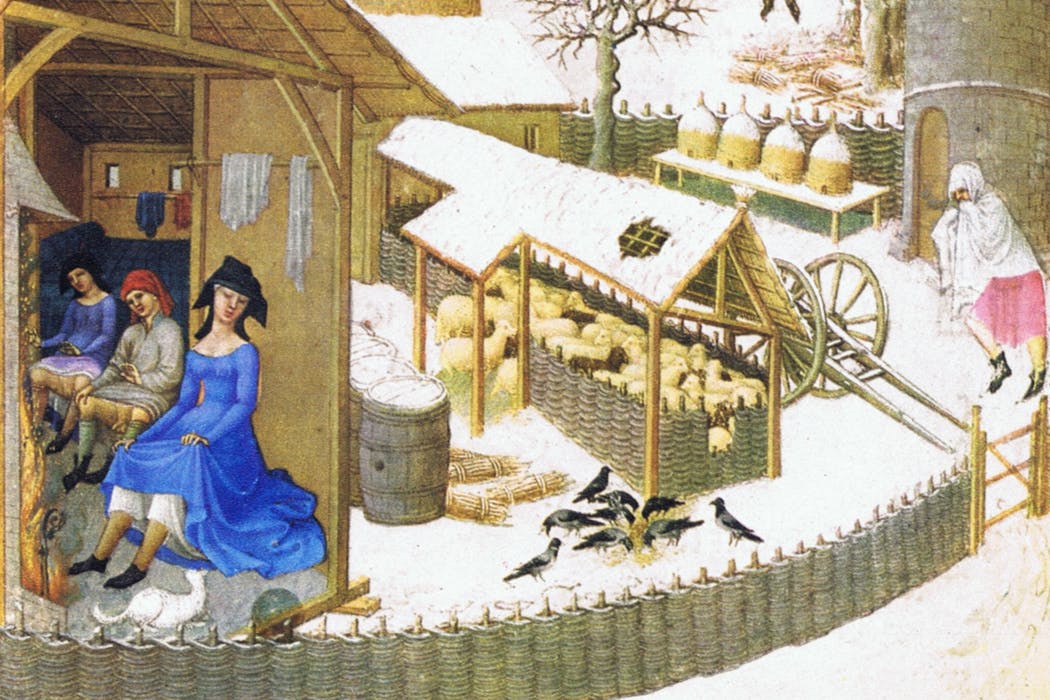
Winter in a peasant village, painted by the Limbourg brothers and published in the medieval illuminated manuscript ‘Très Riches Heures du Duc de Berry.’ Pierce Archive LLC/Buyenlarge via Getty Images

When people think of the European Middle Ages, it often brings to mind grinding poverty, superstition and darkness. But the reality of the 1,000-year period from 500 to 1500 was much more complex. This is especially true when considering the peasants, who made up about 90% of the population.

For all their hard work, peasants had a fair amount of downtime. Add up Sundays and the many holidays, and about one-third of the year was free of intensive work. Celebrations were frequent and centered around religious holidays like Easter, Pentecost and saints’ days.

But the longest and most festive of these holidays was Christmas.

As a professor of medieval history, I can assure you the popular belief that the lives of peasants were little more than misery is a misconception. They enjoyed rich social lives – maybe richer than ours – ate well, celebrated frequently and had families not unlike our own. For them, holiday festivities didn’t begin with Christmas Eve and end with New Year’s.

The party was just getting started.

Daily life in a peasant village

A peasant was not simply a low-class or poor person. Rather, a peasant was a subsistence farmer who owed their lords a portion of the food they grew. They also provided labor, which might include bridge-building or farming the lord’s land.

In return, a lord provided his peasants with protection from bandits or invaders. They also provided justice via a court system and punished people for theft, murder and other crimes. Typically, the lord lived in the village or nearby.

Peasants lived in the countryside, in villages that ranged from a few houses to several hundred. The villages had communal ovens, wells, flour mills, brewers or pubs, and blacksmiths. The houses were clustered in the center of the village along a dirt street and surrounded by farmland.

A photo of a primitive stone house with a thatched roof.
A 14th-century thatched cottage in what is now West Sussex, England.
David C. Tomlinson/The Image Bank via Getty Images

By today’s standards, a peasant’s house was small – in England, the average was around 700 square feet (65 square meters). Houses might be made of turf, wood, stone or “waddle-and-daub,” a construction very similar to lathe and plaster, with beamed roofs covered in straw. Houses had front doors, and some had back doors. Windows were covered with shutters and, rarely, glass. Aside from the fireplace, only the Sun, Moon or an oil lamp or candle provided light.

Strange sleep habits and sex without privacy

The day was dictated by seasons and sunlight. Most people rose at dawn or a bit before; men went out to their fields soon after to grow grains like wheat and barley. Women worked in the home and yard, taking care of children, animals and vegetable gardens, along with the spinning, sewing and cooking. Peasants didn’t have clocks, so a recipe might recommend cooking something for the time it took to say the Lord’s Prayer three times.

Around midday, people usually took a break and ate their largest meal – often a soup or stew. The foods they ate could include lamb and beef, along with cheese, cabbage, onions, leeks, turnips and fava beans. Fish, in particular freshwater fish, were also popular. Every meal included bread.

A historical photo shows peasants dancing around a tree.
15th-century peasants in France celebrate May Day.
Hulton Archives via Getty Images

Beer and wine were major components of the meal. By our standards, peasants drank a lot, although the alcohol content of the beer and wine was lower than today’s versions. They often napped before returning to work. In the evening, they ate a light meal, perhaps only bread, and socialized for a while.

They went to bed within a few hours of darkness, so how long they slept depended on the season. On average, they slept about eight hours, but not consecutively. They awoke after a “first sleep” and prayed, had sex or chatted with neighbors for somewhere between half an hour and two hours, then returned to sleep for another four hours or so.

Peasants did not have privacy as we think of it; everyone often slept in one big room. Parents made love with one another as their children slept nearby. Married couples shared a bed, and one of their younger children might sleep with them, though infants had cradles. Older children likely slept two to a bed.

A colorful illustration of a musician playing an instrument before a small audience.
A musician entertains a group of peasant farmers.
duncan1890/DigitalVision Vectors via Getty Images

Dreaming of a medieval Christmas

Life certainly wasn’t easy. But the stretches of time for rest and leisure were enviable.

Today, many people start thinking about Christmas after Thanksgiving, and any sort of holiday spirit fizzles by early January.

In the Middle Ages, this would have been unheard of.

Advent – the period of anticipation and fasting that precedes Christmas – began with the Feast of St. Martin.

Back then, it took place 40 days before Christmas; today, it’s the fourth Sunday before it. During this period, Western Christians observed a fast; while less strict than the one for Lent, it restricted meat and dairy products to certain days of the week. These protocols not only symbolized absence and longing, but they also helped stretch out the food supply after the end of the harvest and before meats were fully cured.

Christmas itself was known for feasting and drunkenness – and it lasted nearly six weeks.

Dec. 25 was followed by the 12 Days of Christmas, ending with the Epiphany on Jan. 6, which commemorates the visit of the Magi to Jesus, Mary and Joseph. Gifts, often in the form of food or money, were exchanged, though this was more commonly done on New Year’s Day. Game birds, ham, mince pies and spiced wines were popular fare, with spices thought to help warm the body.

Though Christmas officially celebrates the birth of Jesus, it was clearly associated with pre-Christian celebrations that emphasized the winter solstice and the return of light and life. This meant that bonfires, yule logs and evergreen decorations were part of the festivities. According to tradition, St. Francis of Assisi created the first nativity scene in 1223.

Christmas ended slowly, with the first Monday after Epiphany being called “Plough Monday” because it marked the return to agricultural work. The full end of the season came on Feb. 2 – called Candlemas – which coincides with the older pagan holiday of Imbolc. On this day, candles were blessed for use in the coming year, and any decorations left up were thought to be at risk of becoming infested with goblins.

Many people today gripe about the stresses of the holidays: buying presents, traveling, cooking, cleaning and bouncing from one obligation to the next. There’s a short window to get it all done: Christmas Day is the only day many workplaces are required to give off.

Meanwhile, I’ll be dreaming of a medieval Christmas.

The Conversation

Bobbi Sutherland does not work for, consult, own shares in or receive funding from any company or organization that would benefit from this article, and has disclosed no relevant affiliations beyond their academic appointment.

ref. Medieval peasants probably enjoyed their holiday festivities more than you do – https://theconversation.com/medieval-peasants-probably-enjoyed-their-holiday-festivities-more-than-you-do-241328

Young people’s social worlds are ‘thinning’ – here’s how that’s affecting wellbeing

Source: The Conversation – UK – By Eamon McCrory, Professor of Developmental Neuroscience and Psychopathology, UCL

AstroStar/Shutterstock

Between 2014 and 2024, the proportion of people aged 16–24 in England experiencing mental health issues rose from 19% to 26%.

This means over 1.6 million young people – enough to fill Wembley Stadium 18 times over – are affected by mental ill-health today.

Social media is often at the centre of conversations about what’s driving this trend. But while our increasingly digital lives are part of the story, the bigger picture is more complex. Young people are arguably spending more time online partly because the real world has less and less to offer them.

At the heart of their declining wellbeing is the hollowing out of the real-world infrastructure that supports healthy social development, with social lives becoming increasingly fragile and “thinned”.

This “social thinning”, a term we developed in research exploring trauma, includes fewer opportunities to play, take risks and build supportive relationships. This thinning, we believe, has worrying implications for development and mental health.

One of us (Eamon McCrory) is a neuroscientist who has spent years studying risk and resilience and brain systems that develop across adolescence. During this period, the brain refines the systems that help us understand others, form a clear sense of self and regulate our emotions.

Teenagers are wired to explore friendships, navigate complex social groups and practice handling conflict and rejection. These experiences help young people develop agency and independence.

But developing these abilities depends on spending time in a wide range of real social environments with different kinds of relationships, from casual interactions to close friendships.

When chances to practise these skills shrink, it can lead to loneliness and consequences for development. It can become harder to trust others, feel connected to peers or manage strong emotions.

For example, one study used the pandemic as an opportunity to test the effect of a significant reduction in social connections between teenagers. The researchers found that trust was low in adolescents during lockdown, and this in turn was associated with high levels of stress.

In other words, the evidence points to deprivation of social connection as having developmental consequences, and over time, an increased risk of mental health difficulties.

Thinning social worlds

The real-world experiences that support these crucial neurological processes have been steadily declining. Between 2011 and 2023, over 1,200 council-run youth centres in England and Wales closed, and £1.2 billion has been stripped from youth service budgets since 2010 in England. Meanwhile, parks and open spaces have suffered from underinvestment.

Dilapidated goal in park
Investment in youth services has shrunk.
Knights Lane/Shutterstock

Cultural shifts have also had an impact. It has been suggested that fears about safety and a desire to minimise risks for their children have produced a “risk-averse” parenting culture. In schools, rising academic pressures and an emphasis on achievement have come at the expense of play and exploration.

Research suggests that children today have significantly less freedom to roam, play outdoors, or gather with peers than previous generations.

The environments in which young people can explore, fail safely and develop social mastery have been radically narrowed. It is into an already thinning social ecosystem that digital platforms enter.

Digital help and harm

Despite many arguments to the contrary, digital spaces are not inherently harmful. They can offer connection, self-expression and community.

This can be particularly true for those marginalised offline, with research suggesting social media can actually support the mental health and wellbeing of young LGBTQ people. Our online and offline lives are deeply intertwined, with online connections often allowing us to deepen existing relationships.

The problem is less that young people are online, and more that online life has rushed in to fill the gaps left by a shrinking offline world.

Moreover, digital platforms are built for profit, not development. Young people are shaping their identities, sense of belonging and social status within systems designed to drive constant engagement – a phenomenon which is only accelerating with the advent of AI.

Social media platforms encourage comparison, performance and rapid responses. More broadly, the digital world can pull attention away from the real world and place young people under persistent pressure. It can also affect how – across a formative period of development – they make sense of themselves and the world around them.

Solid foundations in a digital world

There is growing recognition that preventing mental ill health means investing in the social foundations of childhood. McCrory is the chief executive of the mental health charity Anna Freud, which is making a significant shift towards prevention: prioritising building strengths,reducing risks and supporting wellbeing before problems become entrenched. And, of course, positive relationships are the cornerstone of healthy development.

To reverse rising rates of mental ill health, we need to reimagine and invest in the social scaffolding that supports healthy development, ensuring children and young people grow up in socially rich environments. This requires serious investment in youth services, outdoor spaces and community infrastructure.

Schools need more time for play, creativity and extracurricular activities, not just academic performance. Families need support to create shared experiences, from outdoor play to community participation.

Digital platforms are now part of everyday life, but they must complement rather than replace experiences in the physical world. By enriching, not thinning, young people’s social worlds and giving them places and relationships that build trust, foster agency and support connection, we can strengthen the foundations for lifelong wellbeing.

The Conversation

Eamon McCrory is affiliated with UCL (Professor of Developmental Neuroscience and Psychopathology) and Anna Freud (CEO)

Ritika Chokhani is currently the recipient of a PhD studentship funded by the Wellcome Trust, focusing on similar research areas.

ref. Young people’s social worlds are ‘thinning’ – here’s how that’s affecting wellbeing – https://theconversation.com/young-peoples-social-worlds-are-thinning-heres-how-thats-affecting-wellbeing-272111

Pimple patches have hidden our blemishes for hundreds of years – historian explains

Source: The Conversation – UK – By Sara Read, Lecturer in English, Loughborough University

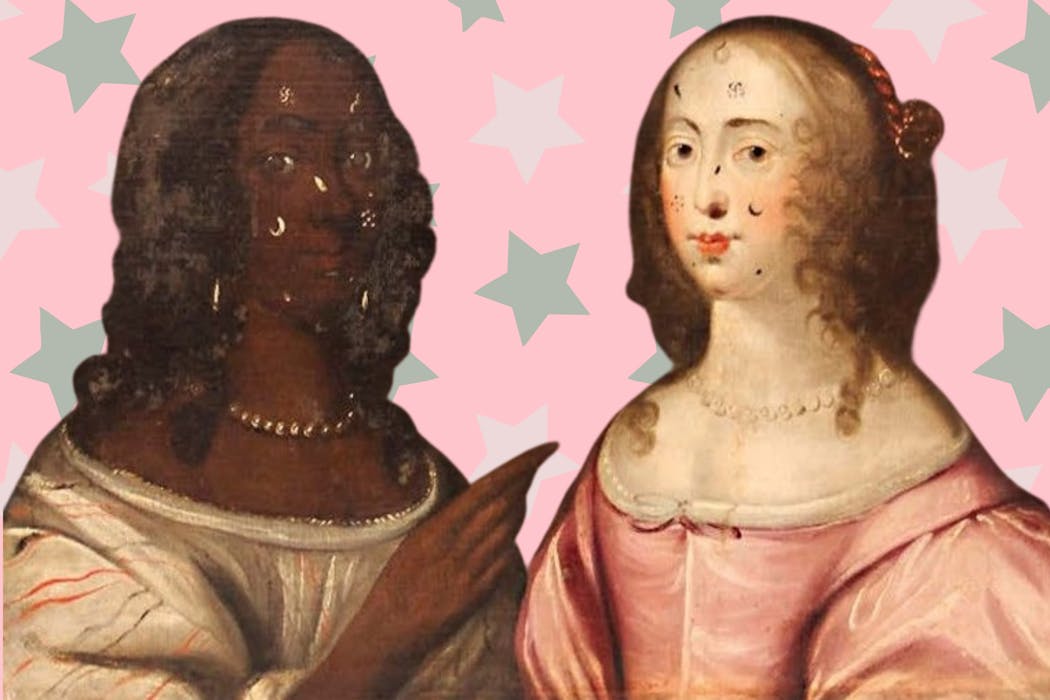
Two Women Wearing Cosmetic Patches, painter unknown (circa 1650). Compton Verney Art Gallery/Canva

You may have noticed people out and about with little stickers on their faces. Perhaps you’ve seen moons, stars, clouds or even smiley faces adorning people’s cheeks and chins. Maybe you wear them yourself. While some people do wear them as accessories, these colourful stickers are medicated “pimple patches”, designed to treat spots or acne.

Some of the patches simply contain a gel formula, which keeps the emerging blemish moist to aid healing. Some wearers opt for near-transparent film patches to get the benefit in a more inconspicuous way.

Far from a new fad, beauty patches have a long history. The trend first took off in 17th-century Europe, with patches made from paper, silk or velvet, or even fine leather, cut into lozenge shapes, stars or crescent moons.

They could be made in many colours, but black was generally preferred as it made a stark contrast to the idealised pale face of western upper-class men and women, who saw this complexion as a status symbol, showing they did not go outdoors to work. The play Blurt, Master-Constable from 1602 explains another appeal of the patches – when well applied, they could “draw men’s eyes to shoot glances at you”.

Mentions of patches occur regularly in print from the late 16th and early 17th century. Just like today, beauty patches had a dual function. In his 1601 play Jack Drum’s Entertainment, John Marston explains that: “Black patches are worn, some for pride, some to stay the rheum, and some to hide the scab.”

So, some were worn by people wanting to make themselves seem more attractive, and some – sometimes medicated – were used to dry up sores. Some patches were used to conceal blemishes like the scars left by diseases such as smallpox or even syphilis.


No one’s 20s and 30s look the same. You might be saving for a mortgage or just struggling to pay rent. You could be swiping dating apps, or trying to understand childcare. No matter your current challenges, our Quarter Life series has articles to share in the group chat, or just to remind you that you’re not alone.

Read more from Quarter Life:


This latter use was the reason moralists took issue with patches. One anonymous book from 1665 claimed a chaplain of King Charles I had given a sermon comparing beauty patches to the biblical mark of Cain. It is reported that he went so far as to suggest that wearing these accessories invited plague epidemics: “black-patches and beauty-spots … were Forerunners of other Spots, and Marks of the Plague”.

Other moralists focused on how, just like makeup, their job was to conceal and present a false front, which could trick admirers. This was a criticism that took on more weight into the 18th century, when people linked the use of patches to sexual promiscuity.

A Harlot’s Progress by William Hogarth (1731) is a series of images depicting the fall of a country girl, Moll Hackabout. Newly arrived in London, she is tricked by the real life brothelkeeper Elizabeth Needham. Needham’s face is covered with black patches.

Civil servant Samuel Pepys makes over a dozen mentions of these patches in his diary between 1660 and 1669. He first encountered “two very pretty ladies, very fashionable and with black patches, who very merrily sang all the way” on a business trip to the Hague in spring 1660.

The next day on a stroll through town, he noted how: “Everybody of fashion speaks French or Latin, or both. The women many of them very pretty and in good habits, fashionable and black spots.”

He noted that patches were often moistened with spit to hold them on. In May 1668, he recalled seeing Lady Castlemayne – mistress to Charles II – demanding a patch from the face of her maid, wetting it in her mouth and applying it to the side of her own face. We know from Pepys that James, Duke of York also favoured a patch or two.

By August that same year, Pepys noted in a diary entry that his wife Elisabeth was sporting black patches to a christening. Yet he seemed to have forgotten this when he noted in November that: “My wife seemed very pretty to-day, it being the first time I had given her leave to wear a black patch.” He sported a patch himself in September 1664 when he woke with a scabby mouth.

The fashion for wearing patches rose higher in the Restoration era (1660-1700), when returning royalist exiles from the Commonwealth brought home French fashions that they considered the height of sophistication.

English writer Mary Evelyn explained that mouches was the fashionable French name for “Flies, or, Black Patches”, since patches were called “flies” in French and sometimes in English too. Evelyn’s poem The Ladies Dressing-Room Unlock’d, published posthumously in 1690, was a biting satire on the Francophile fashions of Restoration London that Evelyn thought only the vulgar would indulge in.

While it is hard to see how people wearing spot patches nowadays might be subject to the same sorts of moralising backlash seen in the past, there are corners of the internet that mock people for going out in public with visible spot patches.

Whether they work or not, pimple patches are a harmless accessory. From the late 17th century, books begin to refer to patch boxes, ornate little containers specifically designed to hold patches.

Fashionable types came to like to be seen carrying a little silver box especially designed to hold their velvet or silk patches. Perhaps this will be the next development in the modern pimple patch craze.


Looking for something good? Cut through the noise with a carefully curated selection of the latest releases, live events and exhibitions, straight to your inbox every fortnight, on Fridays. Sign up here.


The Conversation

Sara Read does not work for, consult, own shares in or receive funding from any company or organisation that would benefit from this article, and has disclosed no relevant affiliations beyond their academic appointment.

ref. Pimple patches have hidden our blemishes for hundreds of years – historian explains – https://theconversation.com/pimple-patches-have-hidden-our-blemishes-for-hundreds-of-years-historian-explains-271013

How climate campaigns can cut through ad fatigue

Source: The Conversation – UK – By Sayed Elhoushy, Senior Lecturer in Marketing, Queen Mary University of London

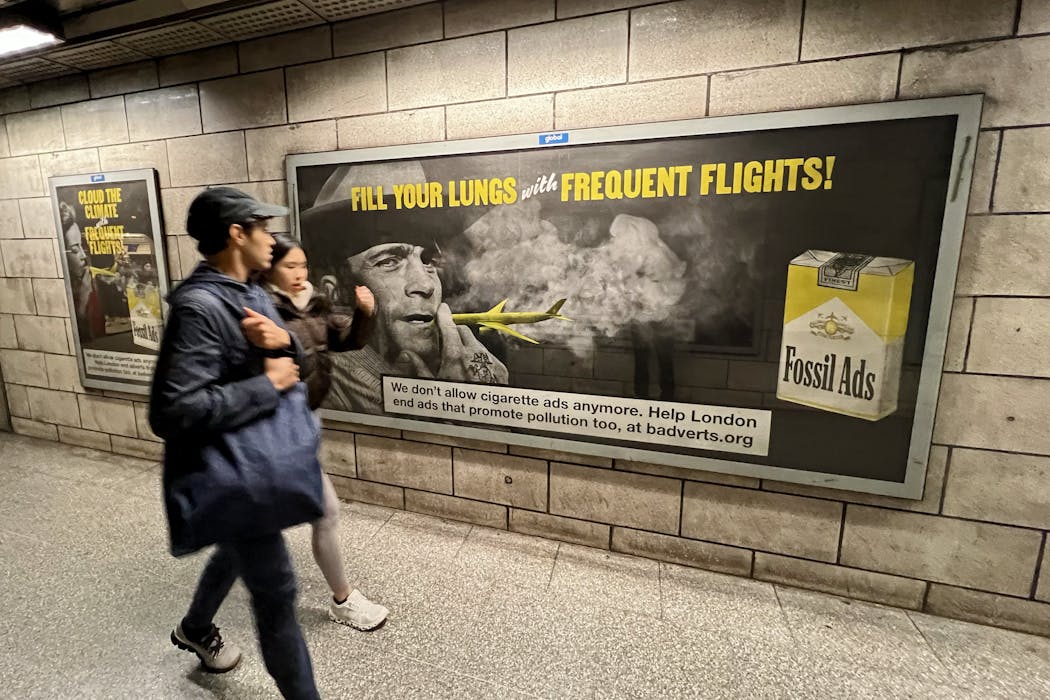
Posters at Southwark station in London ‘advertise’ fossil fuels – an example of clear and meaningful messaging. Badvertising, CC BY-NC-ND

Since November 2025, commuters at Southwark tube station in London have been passing walls lined with vintage-style posters parodying oil and gas advertising, instead of ads promoting flights or energy companies. One 1950s-style poster shows a woman holding a small yellow aeroplane as if it were a cigarette; another has the slogan: For a quicker climate crisis use … Fossil Ads.

This visibility and attention to the climate crisis is welcome. But with more campaigns competing for attention – often with conflicting messages – the effect can quickly become overwhelming. Messages designed to raise awareness or inspire action also trigger ad fatigue.

Ad fatigue is well recognised in marketing: when people encounter the same message too often, it loses impact. A growing body of research shows that repeated exposure to similar advertising messages has negative consequences within and beyond climate contexts. Climate ad fatigue refers to a decline in effectiveness when people become overexposed to climate-related messages.

Researchers like me are investigating how certain climate messages create fatigue. One study shows that people who already feel worn down by constant climate messaging can become even more fatigued after seeing one more headline. That added fatigue doesn’t only decrease their interest — it reduces compassion and reduces willingness to support climate action.

three fossil ads posters on tube station wall
Posters at Southwark station in London ‘advertise’ fossil fuels.
Badvertising, CC BY-NC-ND

Another study highlights the role of attention. Paying attention to climate change is a precondition for climate-friendly action. But attention is easily disrupted. When people are stressed, distracted or overloaded with information, climate communication becomes something to tune out rather than engage with.

Despite rising fatigue, the advertising industry is expanding rapidly. Global ad spending is expected to reach US$1.17 trillion (£0.88 trillion) in 2025 up from roughly US$792 billion in 2024. Sustainability advertising represents a growing share as brands compete to position themselves as environmentally responsible.

Oil and gas companies have increased their climate-related communication. Although many of these campaigns focus on green initiatives or future sustainability goals, critics argue that the messaging can obscure ongoing fossil-fuel operations.

Transport for London records show that hundreds of oil and gas ads have run across its network in recent years. These campaigns reach millions of commuters.

The rise of counter campaigns

Across the UK and Europe, campaign groups are pushing for limits on fossil-fuel ads in public spaces. Examples include ad-free city initiatives and petitions to prohibit such advertising altogether.

Comparisons with past tobacco advertising rules are becoming more common, with some arguing that fossil-fuel ads should face similar restrictions. The campaign at Southwark station by Badvertising, by a climate charity called Possible, reflects this wider movement.

Yet, as both sides escalate their advertising, the public risks becoming more fatigued. Research shows that people – especially children and young people – increasingly worry about the planet and often feel sad, anxious, powerless or guilty.

These emotional reactions mirror wider findings that fear-based or stress-inducing contexts often reduce responsible behaviour. Managing these emotions is important.

If climate ads are starting to grow and feel tiring, repeating the same crisis-driven messages can push people away. What keeps attention instead is relevance, creativity, and variety.

A report by thinktank ClimateXChange shows that climate messages work better when they are rooted in local realities, focused on solutions, and linked to clear, achievable actions. Storytelling plays a key role here, helping people see how climate change connects with their own lives, rather than something abstract and difficult to influence.

Creativity matters too. Research shows that creative ads, characterised by high divergence and relevance, is less likely to wear out over time. A report by a climate charity also suggests that using different frames, voices and formats – from personal stories to humour, visuals or creative perspectives – can help advertisers prevent fatigue in increasingly crowded media environments.

For the public, managing climate ad fatigue isn’t about disengaging. It is about being more selective where attention goes. People can choose to ignore climate messages that place responsibility mainly on individual behaviour, and instead engage with communications that point to systemic causes and collective solutions.

Campaigns such as the Southwark posters do this by shifting attention away from personal choice and toward the industries and regulatory systems. Public support for restrictions on fossil fuel ads, similar to those applied to tobacco, would reduce misleading messages at their source instead of placing the burden on people to filter them out.


Don’t have time to read about climate change as much as you’d like?

Get a weekly roundup in your inbox instead. Every Wednesday, The Conversation’s environment editor writes Imagine, a short email that goes a little deeper into just one climate issue. Join the 47,000+ readers who’ve subscribed so far.


The Conversation

Sayed Elhoushy does not work for, consult, own shares in or receive funding from any company or organisation that would benefit from this article, and has disclosed no relevant affiliations beyond their academic appointment.

ref. How climate campaigns can cut through ad fatigue – https://theconversation.com/how-climate-campaigns-can-cut-through-ad-fatigue-269839

Why shoppers buy fast fashion even if they disagree with it

Source: The Conversation – UK – By Yang Ding, Lecturer in Marketing, University of Reading

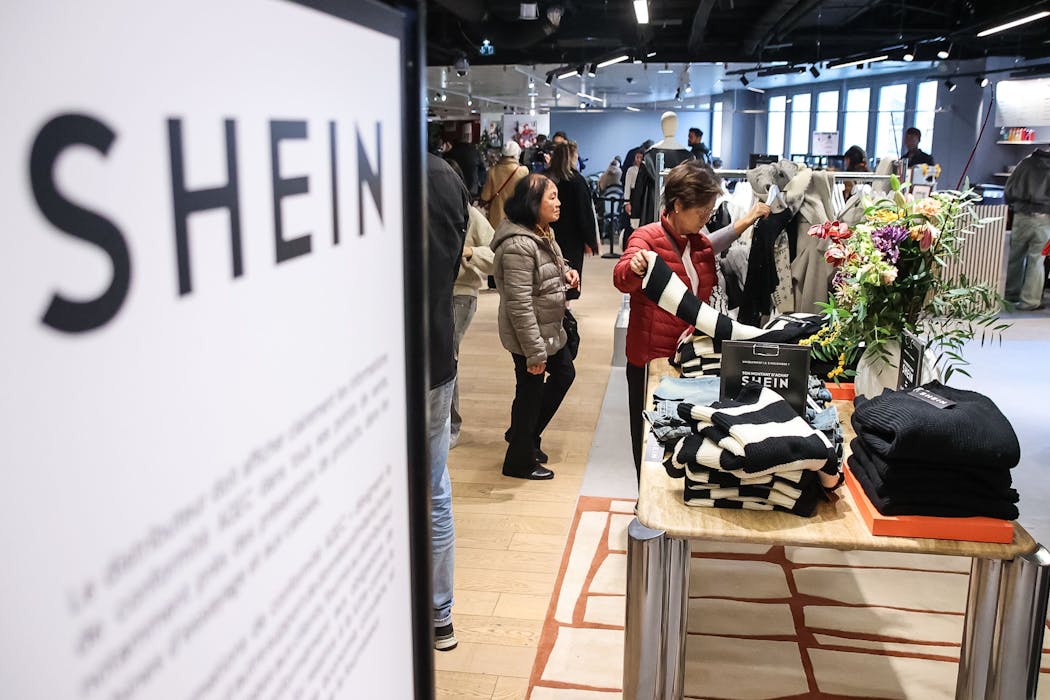
Shoppers were able to browse Shein’s range in person at its first bricks-and-mortar space in Paris. Antonin Albert/Shutterstock

Every December, many shoppers plan to buy fewer things and choose more sustainable options. Yet as the month goes on, spending rises and fast fashion becomes hard to resist. Christmas has become a moment when good intentions collide with discounts and the emotional pull of seasonal fashion.

That contradiction became unusually visible when fashion giant Shein opened its first permanent shop inside the BHV department store in Paris in November. Crowds formed as shoppers tried to get in, while protesters stood outside holding signs and shouting “shame” over concerns about its ESG (environmental, social and governance) track record.

Shein has taken rapid turnaround times and low prices to a new level, taking it beyond fast fashion to “ultra-fast fashion”.

Some other brands with retail space inside the department store announced they planned to withdraw in protest at Shein’s presence. And the opening of new Shein stores across France has been delayed.

There was more controversy. The French government demanded controls, including age verification, on parts of Shein’s online platform amid investigations into banned weapons and childlike sex dolls on its site, placing the company under more scrutiny.

When it was made aware of the products in November, a spokesman for Shein said the company was taking the issue “extremely seriously”. It disabled the part of its site where third-party sellers list their products.

At the same time, shoppers entering the Paris store found higher prices than online, which added another layer to the debate over Shein’s transparency and the wider environmental and labour concerns linked to fast fashion.

What makes Christmas such a powerful moment for fast fashion is not only seasonal marketing but also the psychological dynamics that help consumers assuage their environmental guilt. Fast fashion already accounts for a significant share of online clothing sales in France, and Shein has become one of the largest retailers by volume, despite rising public criticism.

In the UK, sales of fast fashion have reached billions of pounds, with strong annual growth, suggesting that affordability eventually outweighs ethical concerns.

Research into consumer behaviour shows that people often use moral excuses to justify questionable purchases, telling themselves that everyone else is doing the same or that the harm is distant and indirect. This softens the ethical tension long enough to make the purchase.

Beyond guilt reduction, fast fashion benefits from what marketing researchers describe as temporal discounting. This is when consumers focus on short-term enjoyment and price rather than longer-term environmental damage.

Shein’s rapid production model turns digital trends into products within days, producing instant gratification. Future harms such as waste or emissions are psychologically distant at the moment of buying. These mechanisms help explain why fast fashion continues to flourish even as climate concerns grow.

In many ways, the Christmas rush exposes a wider conflict between consumers’ ethical intentions and the realities of global retail. This paradox is not only personal. It also shapes how governments and the public respond to Shein’s growing presence.

The protests outside the Paris store echo the tension across regulatory and societal institutions, where concerns about labour conditions and environmental impact collide with the influence of a company that has become central to contemporary fashion.

Why the Paris protests matter beyond ESG

It may be tempting to see the demonstrations in Paris simply as another reaction to environmental issues. Yet concerns around Shein were already part of the public debate long before the store opened. Fast fashion has relied for decades on outsourcing to cheaper manufacturing centres with limited worker protections.

Even after the Rana Plaza disaster in 2013 when 1,134 people (mainly garment workers), were killed in Bangladesh when their factory building collapsed, many European fast fashion companies continued to face criticism about their environmental violations across global supply chains.

What distinguishes the current controversy are not the ethical problems but the challenge Shein poses to the traditional balance of power in global fashion. For much of the past century, European companies dominated the industry and shaped international tastes.

Now Shein’s algorithmically-driven and hyperresponsive model is disrupting that dominance. This speed fuels waste and environmental damage even as its low prices keep attracting millions of shoppers.

In this sense, for Shein, Paris becomes more than a retail location. Success in one of the world’s fashion capitals would mark an important moment in Shein’s global expansion and signal that it is no longer operating at the margins.

It would also test whether this new type of fashion giant can prove itself beyond its online audience, in the eyes of regulators, partner brands and in-store shoppers.

The pushback Shein faces in Paris points to a broader anxiety about who now holds influence in the fashion industry. A Chinese fast fashion giant has bypassed traditional European gatekeepers and challenged the established hierarchy of who shapes the industry’s future.

In response to a 2024 report criticising working conditions in some of the factories it uses, Shein said in a statement it was “actively working to improve our suppliers’ practices, including ensuring that hours worked are voluntary and that workers are compensated fairly for what they do”. And with regard to criticisms about its environmental impact, Shein has said its use of AI has now cut the amount of waste generated in its production processes.

The Conversation

The authors do not work for, consult, own shares in or receive funding from any company or organisation that would benefit from this article, and have disclosed no relevant affiliations beyond their academic appointment.

ref. Why shoppers buy fast fashion even if they disagree with it – https://theconversation.com/why-shoppers-buy-fast-fashion-even-if-they-disagree-with-it-271452

What the year in polls tells us about Reform’s growth – and Labour and Tory losses

Source: The Conversation – UK – By Paul Whiteley, Professor, Department of Government, University of Essex

In the year and a half since Labour won a landslide in the 2024 general election, over 400 polls have been published. Combined, these polls tell a story of a government and its traditional opposition party losing support and fringe parties gaining ground. The big question this poses is whether Reform can win the next general election.

When these polls are combined into weekly averages since the general election, they show that Labour and Reform have averaged 25% in vote intentions over this period. The Conservatives have averaged 21%, the Liberal Democrats 13% and the Greens 9%.

Vote intentions since the 2024 election:

A chart showing the fluctuations in voting intention polls since the 2024 election.
The post-2024 polling outlook.
P Whiteley, CC BY-ND

The trends show that support for Labour has declined continuously since the election. In the case of the Conservatives, they were ahead of Reform until shortly after Kemi Badenoch was elected as leader. From this point on, Nigel Farage’s Reform party moved well ahead of both Labour and the Conservatives.

It appears that Badenoch’s strategy of trying to outdo Reform in rightwing rhetoric has failed. The Liberal Democrats have remained close to their 13% support throughout. The Greens received a boost when Zack Polanski was elected leader in September 2025. The Greens are now a strong rival to Labour, hoovering up leftwing voters who supported Labour in the general election. This is particularly true if the new leftwing Your Party cannot settle its internal squabbling.

Where does the Reform vote come from?

It is interesting to know where the Reform vote comes from – and especially whether it is taking more votes from Labour or the Conservatives. One way of finding this out is to conduct a panel survey to ask the same people about their voting intentions over time, to see if it changes. Unfortunately, this cannot be done with polling data since it’s too difficult and expensive for pollsters to keep contacting the same people.

An alternative and much easier way of finding out where the vote comes from is to look at the strength of the relationship between trends in Reform voting and voting for the other parties. To do this, we need to look at the changes in support for all five parties. As an example, the correlation between changes in the Reform vote and changes in the Conservative vote over this period is -0.40.

If the correlation were -1.0 that would mean a decrease of Conservative support by 1% would produce an increase in Reform support of 1%. If the correlation was zero it would mean the Conservative vote did not influence the Reform vote at all. It appears that there is a moderately strong negative relationship between Conservative and Reform voting. Put another way, a fall of 10% in Conservative voting translates into an increase in the Reform vote of 4%. A fall of 10% in support for Labour delivers an increase of 3% for Reform.

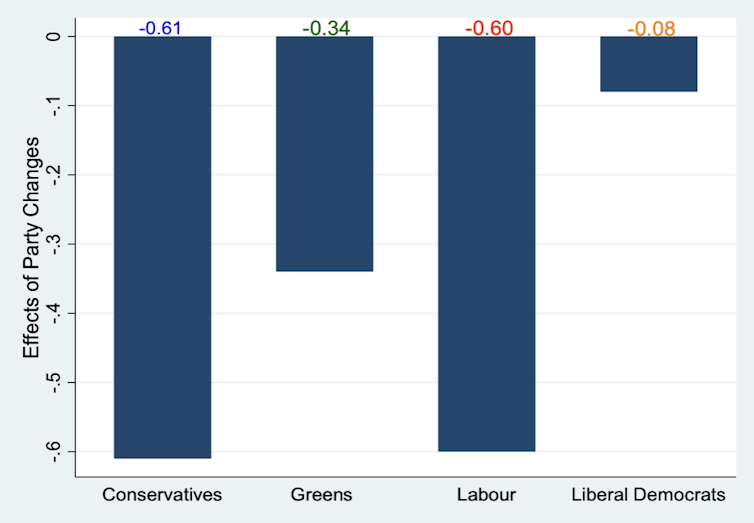
The effects of changes in vote intentions for the national parties on changes in Reform voting since the general election:

A chart showing on how voting intention has changed for four parties since the election.
It’s been downhill all the way since the election for some parties.
P Whiteley, CC BY-ND

However, there is a complication arising in the calculation when looking at each of the other parties and Reform voting separately. This approach fails to account for the relationships between these other parties.

If, for example, Reform does well against the Conservatives, this will help Labour because the Tories are a strong challenger to the Labour party. If Reform weakens support for the Tories, this could rebound to give Labour an advantage over Reform.

We need to look at the interactions between changes in support for all parties at the same time to get a clear picture.

This is done using multiple regression, which is a statistical technique that predicts changes in the Reform vote from changes in all the other party votes at the same time, thereby taking into account interactions between them.

The effects are quite strong, and they are roughly the same for Labour and the Conservatives. A fall of 10% for each of them boosts the Reform vote by 6%. The effect of Liberal Democrat voting on Reform, meanwhile, is negligible, with a coefficient of -0.08.

However, the Green vote does affect Reform, having a coefficient of -0.34. In other words, a fall of 10% in the Reform vote will boost the Green vote by about 3.4%.

The pattern observed in the polls is of Labour’s vote share continuously declining and of the Conservative vote increasing to begin with and then subsequently declining. This situation looks different when you consider their individual relationships to Reform but, in the event, when all the interactions are taken into account, they both end up losing votes to the newer party to the same extent.

This has implications for the May 2026 local elections. The leadership positions of both Keir Starmer and Badenoch are at risk if these contests turn out to be a disaster for their parties.

Unless Reform’s support starts to weaken, both parties could lose the same proportion of votes to Reform. And at the moment the party shows little sign of doing so. That said, there are four years to go at the outside to the next election – and with volatile polls like these, anything can happen.


Want more politics coverage from academic experts? Every week, we bring you informed analysis of developments in government and fact check the claims being made.

Sign up for our weekly politics newsletter, delivered every Friday.

The Conversation

Paul Whiteley has received funding from the British Academy and the ESRC.

ref. What the year in polls tells us about Reform’s growth – and Labour and Tory losses – https://theconversation.com/what-the-year-in-polls-tells-us-about-reforms-growth-and-labour-and-tory-losses-271827