How conversation works – and why people with hearing loss rely more on their powers of prediction

Source: The Conversation – UK – By Ruth Corps, Early Career Research Fellow in Psychology, School of Psychology, University of Sheffield

Benjavisa Ruangvaree Art/Shutterstock

“Ultimately, the bond of all companionship, whether in marriage or friendship, is conversation,” wrote Oscar Wilde.

We often think of conversation as effortless. But beneath its apparent ease lies an extraordinary feat of coordination – a finely tuned dance of listening and speaking.

Summoning a single word in your mind and then saying it takes at least 600 milliseconds. Yet the most common gap between one person finishing a speaking turn and the other beginning is around 200 milliseconds, regardless of the language they are speaking.

This means we usually start talking too quickly to have planned our response after the other person has finished. Somehow, our brains are always ahead of the conversation.

How do we manage this? As we listen, our brains operate like a sophisticated version of predictive text. Instead of waiting for a sentence to finish, we continuously predict how it is likely to end.

In a study with colleagues in the UK and Germany, we found that people with some hearing loss often rely more heavily on these predictive cues to keep conversations flowing. But over time, the effort this requires can have other negative effects.

While smartphones rely on simple word-to-word probabilities, human prediction is far richer. We combine these probabilistic cues with knowledge about the speaker (who they are, what they like, how they usually talk) as well as the surrounding environment and broader topic of conversation.

If someone says, “I’d like to wear the nice …”, your brain immediately narrows the possibilities to things that can be worn — perhaps a tie or a dress. And prediction doesn’t stop there. If the speaker sounds male, listeners may be more likely to predict “tie”; if the speaker sounds female, “dress”.

Prediction also helps us determine when we can speak. As a sentence unfolds, we predict its structure, rhythm, melody and likely final words. These subconscious timing predictions allow us to enter the conversation with remarkable precision, enhancing social connections by avoiding talking over someone or leaving awkward pauses.

A neuroscientist explains human communication. Video: TED.

How hearing loss affects this process

The delicate coordination of conversation relies on our brain having enough cognitive resources to support prediction, response planning and timing. But when hearing becomes more difficult, the brain has to work harder to identify sounds and words, stretching these resources.

For around half of people over 55, hearing loss makes everyday conversation harder work for the brain. Fewer resources are available for higher-level conversational processes, making the roughly 200-millisecond rhythm of turn-taking harder to maintain. This can lead to longer, more disruptive gaps in the conversation.

Until recently, it has been unclear exactly why these longer gaps arise. To what degree do people with hearing loss find it harder to predict when someone will finish speaking? And how much does the extra effort to hear words restrict their ability to plan what to say next?

Our study disentangled these possibilities by testing people aged 50 to 80 years old, some of whom had mild-to-moderate hearing loss. We tested them under listening conditions that ranged from comfortable, clear speech to situations where speech was only just intelligible.

This allowed us to separate the effects of hearing loss from those of more demanding listening conditions. This distinction matters because while both increase listening effort, they may disrupt different aspects of conversation.

Our results revealed a clear pattern. When listening conditions were comfortable, people with hearing loss relied more heavily on predictions of what the other person would say next than those who had clear hearing. Prediction acted as a compensatory strategy for people with hearing loss, helping maintain conversational coordination to a level very similar to those without hearing loss.

However, when listening became more effortful because speech was presented at the quietest level participants could understand, this predictive advantage disappeared. The additional effort needed for those with hearing loss appeared to leave them too little cognitive capacity to support their previously compensatory powers of prediction.

This helps to explain why people with hearing loss can appear perfectly fluent conversational partners in quiet, one-to-one settings, yet struggle in noisy environments where listening becomes much more effortful. Of course, people with full hearing also start to experience this effect in noisy bars or crowded restaurants.

Illustration of two people having an intense conversation.

Benjavisa Ruangvaree Art/Shutterstock

Losing the skill of conversation

Conversation is a high-speed cognitive skill and, like any other skill, it benefits from regular use. When conversation becomes exhausting owing to hearing loss, people may withdraw from social interaction to avoid the effort of staying in sync. Greater social isolation is associated with poorer mental, physical and cognitive health.

But a reduction in the frequency of conversations that someone is having may also weaken the cognitive mechanisms that support them – like a muscle weakens from lack of use. This could add to their reluctance to talk to people. We hope to explore this “use it or lose it” effect in our future research.

Already, we have been surprised by just how much subconscious coordination goes into everyday conversation. Recognising the particular needs – and skills – of people with hearing loss is an important part of maintaining “this bond of all companionship”.

The Conversation

Ruth Corps has received funding from the ESRC and the Leverhulme Trust.

ref. How conversation works – and why people with hearing loss rely more on their powers of prediction – https://theconversation.com/how-conversation-works-and-why-people-with-hearing-loss-rely-more-on-their-powers-of-prediction-277448

Why a short, sharp climate shock affects your pension more than a slow, looming threat

Source: The Conversation – UK – By Narmin Nahidi, Assistant Professor in Finance, University of Exeter

The floods that hit the Valencia area in autumn 2024 put climate risk front and centre of investors’ minds. Vicente Sargues/Shutterstock

When severe floods struck Valencia in late 2024, the damage quickly spread beyond the affected neighbourhoods. Infrastructure was disrupted, insurance claims surged and supply chains were hit across the region. Within days, the financial implications were clear. Events like these illustrate how sudden climate shocks can rapidly enter financial markets.

For many people, this matters more than they might think. Pension funds, insurance portfolios and long-term savings are heavily invested in companies, infrastructure and energy systems exposed to climate risk. As extreme weather events become more frequent and environmental pressures intensify, the way financial markets react to climate risks increasingly affects the economic security of savers.

Yet not all climate risks provoke the same reaction from investors. Sudden events such as floods, storms or even climate-related lawsuits (such as the landmark case brought by green groups against oil giant Shell in the Netherlands) can quickly influence market expectations.

Slower environmental changes – things like rising sea levels, prolonged drought or gradual ecosystem degradation – rarely produce the same immediate financial response. But their long-term economic consequences may ultimately be just as significant.

Understanding why financial markets react unevenly to different types of climate risk leads to an emerging area of research known as neurofinance. This field combines insights from neuroscience and finance to explain how investors evaluate uncertain future outcomes.

Although markets are often described as systems driven by data, models and algorithms, they ultimately reflect the judgements of people – investors, analysts and portfolio managers. Their decisions depend on how risks are perceived and evaluated. Neurofinance research suggests that these decisions are influenced by how the brain processes time, uncertainty, attention and risk.

More distant, but no less risky

One study showed that people often react more strongly to immediate and emotionally vivid threats than to slower or more abstract risks. This can be true even when the long-term consequences of those slower risks are just as serious.

This pattern is not limited to financial decisions. People may respond quickly to an acute danger such as a fire alarm or a storm, while slower but potentially serious risks can attract less urgent responses. In other words, risks that are visible, concrete and near-term tend to command more attention than those that unfold gradually over long periods.

This does not mean that long-term risks are ignored, but it may mean that their influence on decisions emerges more slowly.

This difference in attention is often described using the concept of “salience” – how strongly a particular signal stands out at the point where a decision is made. Risks that are vivid, identifiable and easy to explain are more likely to enter discussions about valuation and investment strategy. More distant or complex risks may receive less attention, even when their potential economic impact is large.

Climate change provides a clear illustration of this dynamic. After all, different types of risk vary significantly in how salient they appear. Some risks emerge suddenly. New laws or regulations, carbon-pricing policies or litigation can quickly alter the outlook for companies and industries.

Because these developments resemble familiar economic shocks, they often attract investors’ attention immediately. Other risks – rising temperatures, shifting rainfall patterns and long-term environmental degradation – typically unfold over decades. Their effects may be significant but are often harder to link to a single moment or event. As a result, they can appear more abstract in day-to-day investment discussions.

A detailed stock market data display showing various stock prices, graphs, and numbers on a digital screen
Sudden, shocking events present clear risks that investors react to rapidly.
amine chakour/Shutterstock

The key difference may lie less in the objective scale of these risks than in how easily they capture people’s attention. Sudden events generate clear signals that investors can process quickly.

This helps to explain why markets sometimes appear highly reactive to climate-related headlines while adjusting more slowly to deeper environmental trends.

For long-term investments such as pension funds, this uneven response presents an important challenge. Pension portfolios are designed to manage risks over decades. Yet financial markets often react most strongly to events that occur suddenly. As a result, portfolios may adjust quickly to regulatory changes or litigation and more gradually to environmental pressures that build over time.

Research also suggests that investors’ views about climate risk do not always translate directly into investment decisions. Surveys indicate that many investors recognise the financial importance of climate change, yet portfolio allocations vary widely. Economists often describe this as the difference between stated views and revealed behaviour in financial decision-making.

Institutional structures within financial markets may reinforce these patterns. Investment managers are frequently assessed on quarterly performance and benchmark comparisons. These incentives naturally draw attention to risks that influence markets in the near term. Slower-moving risks may receive less focus in day-to-day portfolio decisions.

None of this implies that markets are ignoring climate change or behaving irrationally. Financial markets reflect the decisions of millions of individuals and institutions operating under uncertainty and time pressures. But insights from neurofinance suggest that the way risks capture people’s attention influences how quickly they affect decision-making.

Understanding how attention and perception shape financial decisions may help to explain why markets sometimes react dramatically to climate headlines while adjusting more slowly to long-term environmental change. This is a pattern that matters for investors, policymakers and pension-holders alike.

The Conversation

Narmin Nahidi does not work for, consult, own shares in or receive funding from any company or organisation that would benefit from this article, and has disclosed no relevant affiliations beyond their academic appointment.

ref. Why a short, sharp climate shock affects your pension more than a slow, looming threat – https://theconversation.com/why-a-short-sharp-climate-shock-affects-your-pension-more-than-a-slow-looming-threat-276902

Hooked by Asako Yuzuki: a biting tale of female loneliness and obsession

Source: The Conversation – UK – By Nozomi Uematsu, Lecturer in Japanese Studies (Japanese and Comparative Literature), University of Sheffield

After the sensational reception of her novel Butter (2017, translated into English in 2024), Asako Yuzuki is back with Hooked (translated by Polly Barton) – a novel about loneliness and the sometimes twisted and complicated relationships between women.

The book revolves around two very different women in their 30s in Tokyo. Eriko is a career-driven woman with a stable income in a trading company, born and raised in Tokyo. Shōko is a housewife and blogger who writes about her daily life with her husband.

Despite having taken such different life courses, what they have in common is a sense of loneliness and a struggle to create meaningful connections with other women. When the pair form an unlikely and intense friendship, they experience a brief euphoric connection, feeling like they have become “an invincible duo” for a while.

Japanese fiction in translation, especially contemporary women’s writing, is on the rise. Bestselling translated fiction from Japan – from Sayaka Murata’s Convenience Store Woman (2018) to Emi Yagi’s Diary of a Void (2024) – often focus on single women in Tokyo. Not necessarily career-driven or looking for success in a corporate world, they also typically have no intimate partners or children.

To some extent, the main characters in these novels are not conventional heroines. They don’t need or want to be rescued by Prince Charming; instead, they navigate the expectations placed on them to offer care in other forms. Such pressure comes from their families, workplaces and, more broadly, from society. Amid all of this, they feel a profound sense of loneliness which mirrors growing concerns in Japan.

Japan has long grappled with the issue of severe social isolation. Often, the focus of this loneliness epidemic has been on young men; however, women are starting to feature more in such conversations.

The number of women referred to as hikikomori (extreme social recluses) is increasing. In a 2023 survey by the Japanese government, women represented 45% of hikikomori between the ages of 15 and 39, and 52% of those between 40 and 64. The survey found such social withdrawal was driven by a range of reasons, from domestic violence and abuse to financial hardship and job loss.

In Hooked, as the title suggests, female loneliness is explored through how it can give way to intense female friendships and the dangers of obsession.

Eriko appears to be the epitome of a modern city girl, raised by a happy family and holding a high-earning job. Yet her achilles heel is that she has never had close friendships with other women.

Infatuated with Shōko after their encounter, Eriko advances from being a fan of Shōko’s blog to first being her friend and then her stalker. Shōko, despite also feeling a sense of inferiority about not having female friends, is shocked by Eriko’s obsessive behaviour and rejects her suffocating approach. Their fallout leads to secrets, blackmail and coercion.

The Japanese title, Nairupāchi no Joshikai (Nile perch’s ladies night out), is indicative of the murkier elements in women’s relationships with each other. A Nile perch is a carnivorous fish that grows up to two metres long and weighs up to 200 kilos. Their literal involvement in the story comes from Eriko’s work: she has been preparing to reopen a trade route from Tanzania to distribute them to places like sushi restaurants.

Eriko’s fascination with the fish is not only for their business value, but also their ferocity. She admires how the Nile perch totally desecrates any surrounding ecosystem it enters:

Even in waters across Japan, ecosystems are being destroyed by the unregulated influx of invasive species. The creatures have to compete for food, ecosystems and mates. It doesn’t end until one of the species is wiped out. The result? The creation of a monster.

The Japanese title puts these monstrous fish into a joshikai, which translates as a meeting or gathering (会) of girls or women(女子). This is usually where women gather to eat, drink, chat, console each other and have fun. It is (hopefully) a place for them to support each other.

However, considering the ferocity and vitality of Nile perch, this novel recasts a joshikai as a site of intense competition for survival. As Eriko says to Shōko:

The reason that women’s competitiveness over minor issues like marriage, kids or looks stops them from getting along, even now, isn’t through any desire of their own. It’s because society foists all these standards on us. The world we live in is specifically designed to make us compete.

Yuzuki’s intense and obsessive novel explores the tensions of female solidarity through women seeking the hope and possibility of connection, in a quest to feel less lonely. It interrogates the difficulties that obstruct these connections and how they are rooted in gender inequalities, class differences and precarious employment.

What is fascinating about Hooked is how Yuzuki allows moments of madness to erupt into daily life. At times, the intensity of the characters can make it hard to keep engaging with the book, yet readers will find themselves drawn back to the lives of Eriko and Shōko. These characters are well-rounded figures, powerfully relatable for anyone navigating the complicated dynamics of gendered issues.

The Conversation

Nozomi Uematsu does not work for, consult, own shares in or receive funding from any company or organisation that would benefit from this article, and has disclosed no relevant affiliations beyond their academic appointment.

ref. Hooked by Asako Yuzuki: a biting tale of female loneliness and obsession – https://theconversation.com/hooked-by-asako-yuzuki-a-biting-tale-of-female-loneliness-and-obsession-278331

Oscar contenders and women of substance – what to watch, read and see this week

Source: The Conversation – UK – By Anna Walker, Senior Arts + Culture Editor, The Conversation

I just finished watching The Studio, Seth Rogen’s hilarious Apple TV satire of life inside an old school Hollywood production company. One of the standout episodes was set in the audience at the Golden Globes. It perfectly captures the peculiar theatre of awards shows: stars smiling and clapping furiously while hoping the person next to them loses.

It got me thinking about this weekend’s Oscars – who will be taking the big prizes, and who will be applauding graciously while quietly gnashing their teeth. In anticipation, I asked the arts team who or what they’d like to see winning on Sunday night.

I’d personally love to see Michael B. Jordan take home best actor. It’s a supremely competitive category this year, but his dual performance as identical twin brothers Smoke and Stack in Sinners blew me away. It’s testament to his talent that while watching I so easily forgot that such a recognisable actor wasn’t in fact two different people.

Naomi Joseph, arts and culture editor:

I would love to see The Secret Agent win. It’s a stylish and smart film that challenges its audiences while keeping them gripped. I baulked at the two-hour 40-minute length, but watching it, I was absorbed. The structure is inventive, the music is brilliant and the costume and set design are immaculate. It’s incredibly ambitious, and there are many things that shouldn’t work – like the meandering narrative and the abrupt tonal shifts – but everything comes together to make a complex yet coherent film. It is truly a masterpiece.

Jane Wright, commissioning arts editor:

An exquisite, wonderfully slow film, watching Hamnet is like walking through a painting. The pleasure is in the unfolding of its story, leading you in with visual delights, rich historical detail and moving performances. You could not help but weep at the final scene when the soaring strings of Max Richter’s On The Nature of Daylight rise as the camera fixes on Jessie Buckley’s face. She says nothing, but you are acutely aware of every thought going through her head. I think she’s extraordinary. Best film and best actress for me.

Life in the aftermath

No doubt some of the filmmakers and stars in attendance will use the opportunity to spotlight the ongoing conflict in Iran.

Now available for the first time in English, Women Without Men by Shahrnush Parsipur is an innovative feminist story set in Iran. The novel follows five women and the circumstances that lead them to leave their lives and begin again in a garden on the outskirts of Tehran.

Written in the immediate aftermath of the 1979 revolution, it was immediately banned on publication. Shortly afterwards, Parsipur was arrested and jailed for her frank and defiant portrayal of women’s sexuality.

The novel insists that authoritarianism doesn’t begin in the halls of power; it begins in the household, within layered patriarchal systems that confine women’s autonomy. Parsipur’s blending of realism and magical elements mirrors the instability of a society in crisis.


Read more:
Women Without Men: a novella that tells the history of Iran through women’s bodies


The legacy of another conflict is the subject of director Kei Ishikawa’s new adaptation of Kazuo Ishiguro’s first novel, A Pale View of the Hills.

The story unfolds across two timelines. England in the 1980s, where a mother and daughter struggle to come to terms with the suicide of the latter’s older half-sister; and Nagasaki in the 1950s, as the city grapples with the trauma of the atomic bomb.

Our reviewer, professor of Japanese studies Jennifer Coates, found the film to be a rich exploration of the atomic bombings of Japan and their continuing impact. She writes that the “subtle performances and beautiful cinematography of Ishikawa’s film create an inviting and nostalgic atmosphere that allows the disturbing themes of this important book to be gently drawn out”.


Read more:
A Pale View of Hills: the legacy of atomic bombings in Japan is explored in this adaptation of Kazuo Ishiguro’s first novel


Women of substance

A couple of weeks ago I went to the press preview of A Woman of Substance in Leeds. It was a treat to see the screening in my own city, especially as the series was largely set and filmed in Yorkshire.

Some subscribers may remember the first adaptation of Barbara Taylor Bradford’s novel, which aired on Channel 4 in 1985. The saga of Emma Harte – the Yorkshire maid who becomes one of the richest women in the world – was a ratings juggernaut.

The trailer for A Woman of Substance.

This new eight-part remake arrives with a curious mix of nostalgia and reinvention: an attempt to revive the glossy melodrama of the 1980s bonkbuster while reframing its heroine for a contemporary audience.

We asked television expert Beth Johnson, herself based in Leeds, what she made of the first episode. She thought the new adaptation looked well poised to replicate the addictive pacing that made Bradford’s novel such a phenomenon.

A Woman of Substance is streaming now on Channel 4


Read more:
A Woman of Substance: Channel 4’s lavish remake revives the pleasures – and contradictions – of the bonkbuster


The first photograph by Catherine Opie I ever saw was Self-Portrait/Cutting (1993). It’s a large print showing a child-like doodle: two stick women holding hands in front of a simple square house. What carved it into my memory was that this doodle was scratched into her skin. It remains one of the most evocative images of longing for a family that I have ever seen.

A new exhibition of Opie’s work – To Be Seen at the National Portrait Gallery – includes this print. The show places Opie’s portraits “in dialogue with the permanent collection” by hanging them side by side. For our reviewer, the curation “reminded me that the National Portrait Gallery was one of the first galleries I remember enjoying at 15 or 16. I loved it because there were faces everywhere. [And] the faces on the walls began to change how I saw the faces of the visitors in the gallery.”

Catherine Opie: To Be Seen is at the National Portrait Gallery until May 31


Read more:
Catherine Opie: To Be Seen at The National Portrait Gallery – a reminder of why we go to exhibitions in the first place


This article features references to books that have been included for editorial reasons, and may contain links to bookshop.org. If you click on one of the links and go on to buy something from bookshop.org The Conversation UK may earn a commission.

The Conversation

ref. Oscar contenders and women of substance – what to watch, read and see this week – https://theconversation.com/oscar-contenders-and-women-of-substance-what-to-watch-read-and-see-this-week-278229

Russia’s relentless interference since start of Ukraine war has failed to break Moldova

Source: The Conversation – UK – By Stefan Wolff, Professor of International Security, University of Birmingham

When Russia launched its full-scale invasion of Ukraine in February 2022, the prospects for Moldova did not look good. But four years have now passed and, despite a relentless Russian campaign to destabilise the country, Moldova has survived and made significant progress.

It has, for example, progressed on its path to EU membership. Moldova transitioned from applicant to candidate status several months after the outbreak of the war and formally opened accession negotiations two years later. The government is now carrying out reforms to align with EU standards.

Such progress was not a foregone conclusion given the many challenges Moldova has faced as a result of the war in Ukraine. The country was an early destination for Ukrainian refugees, which put significant pressure on already stretched public services and resources.

With a decades-old foothold in Transnistria, a breakaway region in eastern Moldova, Russia also seemed to have a springboard for conflict escalation in Ukraine’s rear. This foothold gave Moscow a possible destination to push westwards along the Black Sea coast, too.

Russian false-flag operations in April 2022 seemingly provided further evidence that Moscow planned to destabilise Moldova. And one year later, the so-called soccer plot underscored Moscow’s intention to continue its efforts against Moldova. This was a Russian-planned and sponsored attempt to infiltrate Moldova with saboteurs from Russia, Montenegro, Belarus and Serbia.

A map of Moldova, with the breakaway republic of Transnistria located in the east of the country.
Transnistria, which is home to around 450,000 people, declared its independence from Moldova in 1990.
Peter Hermes Furian / Shutterstock

Perhaps the most serious challenge for Moldova came in January 2025, when Ukraine stopped the transit of Russian gas through its territory. Transnistria, which had for decades been kept completely dependent by Moscow on Russian gas supplies, was plunged into an immediate crisis.

The authorities there cut off central heating and hot water to all residential buildings. They also ordered the closure of industrial enterprises not involved in making critical food products. The impending humanitarian disaster and ensuing information war between Russia, Moldova, Transnistria and the EU over who was to blame posed a serious threat to stability in Moldova yet again.

In addition, two Moldovan elections in recent years presented the Kremlin with an opportunity for interference. Yet, despite Russian meddling, Moldova’s incumbent pro-Europe president, Maia Sandu, secured a second term in 2024. Her party then won another absolute majority in parliamentary elections the following year.

So, how has a small country wedged between Ukraine and Romania with a decades-old conflict of its own managed to withstand Russian pressure?

Countering Russian destabilisation

Early in the war, the most serious danger for Moldova was an escalation of the conflict in Transnistria. While this may have served Moscow’s interests, politicians in Moldova and Transnistria were keen to preserve stability in their relations.

On the Transnistrian side, this was mainly driven by economic interests. The region has been part of the deep and comprehensive free trade area between Moldova and the EU since 2016, and 80% of all exports from Transnistria now go to EU countries.

Economic stability also helps ensure the continuation of the ruling Transnistrian regime. Business and political interests there are often one and the same, embodied in the all-dominant Sheriff conglomerate.

Sheriff dominates Transnistria’s economy, operating a network of supermarkets, gas stations, construction companies, hotels, radio and TV stations and a mobile phone network. It also controls the Obnovlenie political party that runs the government in the regional capital, Tiraspol.

At the same time, stability reduces the risk of a humanitarian crisis and a refugee wave that could destabilise Moldova. Maintaining the relatively substantial levels of confidence that has been built between the two sides was therefore high on the agenda of politicians in Chișinău and Tiraspol.

The ability of Moldovan and Transnistrian politicians (helped by EU assistance) to avoid a major escalation of the energy crisis in 2025, as well as keeping relations generally stable and predictable over the past four years despite Russian disruption efforts, bodes well for the future.

The Moldovan state budget continues to earmark resources for joint projects involving communities on both banks of the Nistru River, which separates Moldova and Transnistria. This included €1.5 million (£1.3 million) for 30 projects in 2025, bringing the total investment to over €11 million across more than 600 projects since 2011.

However, while Moldova has weathered storms over recent years effectively, there are still threats to its stability. For example, challenges to the reintegration of Transnistria into Moldova remain. After more than three decades of separation, there are significant social, political, economic and legal hurdles to overcome.

On the one hand, the fact that chief negotiators from both sides met again face-to-face in late February after a 15-month hiatus indicates their commitment to making progress and resolving their differences peacefully and through dialogue. But, on the other hand, there are some signs that trust between the two sides remains fragile.

On the eve of the meeting, Sandu signed a decree revoking the Moldovan citizenship of nine people who serve in the governmental structures of Transnistria. Two of them had also fought against Moldova during the brief civil war in 1992 that created Transnistria. The timing of the decree was condemned by the Transnistrian side as putting undue pressure on Tiraspol.

As Sandu acknowledged recently on the anniversary of Russia’s full-scale invasion of Ukraine, her country’s survival is due to the heroism of Ukrainians in defending their country and thereby keeping Russia away from Moldova. But beyond simple survival, Moldova seems to have emerged stronger from the challenges it has faced.

At a time when the narrative of inevitable Russian victory against Ukraine is beginning to crumble, it is important to remember the limits of the Kremlin’s power. Russia’s neighbours, through their own efforts and with support from their European partners, are not the helpless pawns that Moscow wishes them to be.

The Conversation

Stefan Wolff is a past recipient of grant funding from the Natural Environment Research Council of the UK, the United States Institute of Peace, the Economic and Social Research Council of the UK, the British Academy, the NATO Science for Peace Programme, the EU Framework Programmes 6 and 7 and Horizon 2020, as well as the EU’s Jean Monnet Programme. He is a Trustee and Honorary Treasurer of the Political Studies Association of the UK and a Senior Research Fellow at the Foreign Policy Centre in London.

Marina Gorbatiuc does not work for, consult, own shares in or receive funding from any company or organisation that would benefit from this article, and has disclosed no relevant affiliations beyond their academic appointment.

ref. Russia’s relentless interference since start of Ukraine war has failed to break Moldova – https://theconversation.com/russias-relentless-interference-since-start-of-ukraine-war-has-failed-to-break-moldova-276653

Hormone therapy and dementia risk: what a new study says about menopause treatment

Source: The Conversation – UK – By Eef Hogervorst, Professor of Biological Psychology, Loughborough University

Dmytro Zinkevych/Shutterstock

Hormone therapy is widely used to treat menopausal symptoms such as hot flushes and night sweats. But scientists have long debated whether it affects dementia risk.

A new study adds another piece to this puzzle. It suggests that an Alzheimer’s biomarker may help identify which women are more vulnerable to dementia with certain hormone therapies.

Researchers analysed blood samples from 2,766 women recruited into a clinical trial in 1996 to 1999. They then followed participants until 2021 to examine whether levels of plasma p-tau217 at the start of the study were linked to people developing dementia, and whether this relationship differed depending on whether participants had used hormone therapy.

Plasma p-tau217 is a biomarker for Alzheimer’s disease, a measurable biological signal of the condition. Higher levels in the blood are linked to brain changes associated with Alzheimer’s.

Alzheimer brain comparison in axial view showing differences between a healthy and affected brain, with cortical atrophy and neurodegeneration, displayed on a black background
Differences between a healthy and Alzheimer’s affected brain,
VisualMediaHub/Shutterstock

The study compared women who received a placebo or two types of hormone therapy. One was combined hormone therapy containing oestrogen and progesterone, usually prescribed for women who still have their womb. The other was oestrogen-only therapy, typically given after hysterectomy.

Women with higher levels of the Alzheimer’s biomarker had a substantially greater risk of developing dementia. In the study’s main analysis, higher baseline p-tau217 levels were associated with about three times the risk.

However, the relationship differed depending on the type of hormone therapy used. Among women assigned to combined hormone therapy, higher biomarker levels were linked to roughly four times the risk of dementia. This pattern was not seen among women using oestrogen-only therapy.

The association was strongest in certain groups, including women aged over 70, white women and those carrying the APOE4 genotype, a genetic variant that increases a person’s risk of developing Alzheimer’s disease.

Scientists think the difference between therapies may relate to how hormones interact with Alzheimer’s biology. Oestrogen may help protect brain cells and influence how the brain processes amyloid and tau proteins that accumulate in Alzheimer’s disease. Progesterone may modify these effects in ways that are not yet fully understood.

Colleagues and I earlier found that carriers of this genetic risk factor who used hormone therapy also had worse dementia-related biomarkers than those not using hormones or not carrying the genetic risk.

Earlier evidence

Data for the new analysis came from the Women’s Health Initiative studies, a large programme of clinical trials examining the long-term health effects of hormone therapy.

One component of this programme, the Women’s Health Initiative Memory Study, examined whether hormone therapy influenced dementia risk. The 2003 study found that combined hormone therapy roughly doubled the risk of dementia among women aged 65 and older. The wider hormone therapy trial was later stopped earlier than planned because overall risks, including breast cancer, stroke and blood clots, outweighed the benefits.

These findings applied to women who began hormone therapy after age 65. At the time, hormone therapy was often prescribed long-term to prevent conditions such as osteoporosis. Today it is usually started earlier, around menopause, which occurs at about age 50.

After these results were published, many women stopped taking hormone therapy, including those near menopause.

Later research suggested a more nuanced picture. Follow-up analyses of women who started hormone therapy between the ages of 50 and 54 found no evidence that treatment affected cognitive function when assessed six to seven years after the trial ended.

Woman standing by window with hand on heart, looking worried
The 2003 WHIMS study linked combined hormone therapy to dementia risk in women over 65. The findings led many women to stop HRT, even though most begin treatment around menopause.
SpeedKingz/Shutterstock

Similar findings have been reported in other clinical trials of relatively healthy women who began hormone therapy close to menopause. These studies suggest that up to ten years of combined hormone therapy appears generally safe but does not provide measurable cognitive benefits.

The picture looks different when hormone therapy is started later in life.

Different results in older women

Among women who began hormone therapy after age 65 in the Women’s Health Initiative studies, overall cognitive performance declined when tested around age 70. This decline was particularly noticeable in women who already had lower cognitive function at the start of the study.

Further evidence came from a 2010 analysis of the same group of women. Eight years after joining the study, MRI scans showed trends towards smaller volumes in the hippocampus and frontal lobes among older women using combined hormone therapy.

Shrinking in the hippocampus is commonly seen in Alzheimer’s disease and may indicate that combined hormone therapy could worsen existing brain vulnerability in some older women.

New findings

The new analysis adds further evidence and is consistent with meta-analyses by my colleagues and me of national registry data showing increased Alzheimer’s risk in older women using combination hormone therapy but not oestrogen alone. A smaller increase was also seen in women nearer menopause when treatment lasted more than five years.

Menopausal symptoms themselves may also play a role. Severe hot flushes and night sweats have been linked to a higher risk of dementia when they occur later in life. Women with these symptoms are also more likely to use hormone therapy, making the effects of symptoms harder to separate from treatment.

Symptom severity is also associated with other dementia risk factors, including smoking and obesity, poor sleep, and stress and alcohol use.

What does this mean for women?

Importantly, this study does not show that hormone therapy itself causes dementia. Instead, it suggests that biological risk markers may help identify women who could be more vulnerable when treatment begins later in life.

Overall, the relationship between hormone therapy and dementia risk appears to depend on when treatment starts, whether someone already has underlying risk factors, and how long therapy is used.

Starting combined hormone therapy later in life, particularly after age 65, may increase the risk of cognitive decline in some women. But studies have generally not found the same risks when treatment begins around menopause and is used for shorter periods.

Taking hormone therapy for five years or less when started around menopause has not been linked to increased cognitive decline or Alzheimer’s disease in clinical trials or in most national registry studies.

Because most women use hormone therapy for a limited time to manage menopausal symptoms, it is unlikely to increase dementia risk when started around menopause.

The Conversation

Eef Hogervorst receives funding from various funding bodies including RST, ISPF, ARUK, ESRC for her research but this is not directly related to this paper. She acted as expert for hormones and dementia risk for NICE 2024 Guidelines and ESHRE 2016 EU Guidelines

ref. Hormone therapy and dementia risk: what a new study says about menopause treatment – https://theconversation.com/hormone-therapy-and-dementia-risk-what-a-new-study-says-about-menopause-treatment-277987

Why the Chagos Islands deal is delayed – and Mauritius is threatening to sue the UK

Source: The Conversation – UK – By Sue Farran, Professor of Comparative and Plural law, Newcastle University

More than a year ago, the UK agreed to grant Mauritius sovereignty over the Chagos Archipelago, which Britain has governed as the British Indian Ocean Territory since 1965. But the treaty to transfer sovereignty has hit choppy waters. The deal has stalled in the UK parliament and Mauritius has now threatened legal action against the UK over the delay.

For years, successive UK governments played the interests of the Chagossians off against those of Mauritius, to deflect potential threats to its control of the Chagos Islands. But just as that strategy has run out of road, the international legal order is under extreme pressure.

Last month, the US president, Donald Trump, declared that the UK was “making a big mistake” in relinquishing the Chagos Islands, one of which, Diego Garcia, hosts a US-UK military base. This appears to have been prompted by Keir Starmer’s reluctance to let the US use Diego Garcia for preemptive strikes against Iran. Starmer later changed his position, with the caveat that any strikes should be defensive. How that distinction is to be monitored, however, is debatable.

Trump long accepted the proposed UK-Mauritius treaty, even if it sat uncomfortably with his own desire for US territorial expansion. But he first appeared to change his tune in January, calling the deal “an act of great stupidity”.

Under the pressure of international politics and domestic opposition, the legislation supporting the deal to return the Chagos Islands to Mauritius has stalled. In January, a debate on the bill was pulled in the final stages, after the Conservative opposition tabled an amendment calling for a pause “in light of the changing geopolitical circumstances”. Its return for further debate is not yet scheduled.

Trump and Starmer speaking closely to each other at the White House
Trump has said that Starmer would be ‘making a big mistake’ by ceding sovereignty of the Chagos Islands to Mauritius.
Joshua Sukoff/Shutterstock

The treaty between the UK and Mauritius, which was ratified in May 2025, allows the UK to exercise control over the Diego Garcia base for a period of 99 years, with an option for a further 40-year extension. In exchange, the UK will pay Mauritius “an annual average of £101 million for 99 years in 2025-26 prices, totalling around £3.4 billion”. Under the deal Mauritius can also allow for the settlement of the islands apart from Diego Garcia.

The UK’s 1966 agreement with the US over Diego Garcia requires the UK to have sovereignty over the islands. Politically, this means the UK government must get the US administration back on side before the deal with Mauritius can be completed. Legally it has been suggested that the treaty complies with international law.

Having anticipated the financial gains from leasing the base back to the UK as part of the treaty, the delay means that the Mauritian government is unable to address its budget deficits or deliver on promises made to the electorate. This is why Mauritius is now exploring legal options to sue the UK over the delay.

How we got here

During the cold war, the US and UK agreed that the UK government would detach the Chagos Archipelago from its then colony of Mauritius to provide a base “for future US and UK military use”. Alongside the detachment, the islands’ population, the Chagossians, were forcibly removed to ensure the security of the base on Diego Garcia. This base enables the US to project military power across Africa, Asia and the Middle East.

In 2019, after a campaign by Mauritius in the UN general assembly, the International Court of Justice found that The UK’s retention of the Chagos islands as a colony was unlawful, and it was obliged to end the colonisation “as rapidly as possible”.

UK ministers responded that they did not consider the decision binding, as it was only an advisory opinion. Nonetheless, because it provides an authoritative statement on the relevant law, the consequences started to bite. In 2021, a special chamber of the International Tribunal for the Law of Sea held that the opinion had legal effect.

In 2022, the Conservative government under Liz Truss began negotiations with Mauritius. Two years later, the two governments agreed to enter into a treaty supported by legislation.

Under the Diego Garcia Military Base and British Indian Ocean Territory bill, sovereignty of the archipelago will be transferred to Mauritius. This includes Diego Garcia. The current UK government regards the deal as the best means of securing the military base, given the weakness of its sovereignty claims.


Read more:
Chagos islands: what the UK-Mauritius agreement means for displaced Chagossians


Many Chagossians opposed the deal on the grounds that they had been insufficiently consulted. This opposition has been highlighted by some of the deal’s detractors in the UK parliament, particularly in the Conservative party. But no UK government has ever taken steps to facilitate resettlement for the Chagossians. This sudden vocal support for their cause is opportunistic.

The high court has also comprehensively rejected a legal challenge to the government’s plans mounted by some Chagossians. The judge assessed multiple claims to be unarguable, not least because the security and foreign relations issues at stake are policy areas where ministers enjoy broad discretion. Notwithstanding plans for an appeal, it would mark a startling change in the courts’ approach to formally recognise the Chagossians as having litigable interests in the islands.

The UK has repeatedly asserted its support for a rules-based international order in the face of wars of aggression and territorial expansion by states such as Russia. It would be acutely embarrassing for it to simultaneously maintain its own territorial claims. This dispute thus determines the extent to which the UK considers its rhetorical commitments to international law to be binding when its own interests are at stake.

The Conversation

Sue Farran has previously received funding from UKRI (UK Research and Innovation) and the British Academy. She is affiliated with RESI (Resilient and Sustainable Islands Initiative)

Colin Murray has previously received funding from UKRI (UK Research and Innovation).

ref. Why the Chagos Islands deal is delayed – and Mauritius is threatening to sue the UK – https://theconversation.com/why-the-chagos-islands-deal-is-delayed-and-mauritius-is-threatening-to-sue-the-uk-278130

What you study in school shapes your voting choices in adulthood

Source: The Conversation – UK – By Nicole Martin, Lecturer in Politics, University of Manchester

Shutterstock/Triff

Across Europe, education has become one of the biggest dividing lines in politics, and educational qualifications are now one of the best predictors of vote choice in Britain. This is particularly the case for new parties that compete more on cultural issues, including Reform and the Greens, who attract voters from different ends of the educational spectrum.

In the most recent UK general election in July 2024, 18% of voters with no formal qualifications voted for Reform – two and half times as many as among those with a degree. On the flip side, degree-holders were three times as likely to vote for the Green party than those without qualifications.

Our study shows that the link between education and politics starts far earlier than degree level, however. We’ve found that what you study at school affects your political choices both in adolescence and adulthood.

We looked at the political views of young people aged ten to 18, and then followed them into their 20s. Young people who were studying humanities subjects in school, namely history and art, became more likely to support more socially liberal parties.

Those studying a technical GCSE subject, such as design and technology, became more supportive of more radical right parties. Given that we see this pattern before students leave school, it can’t only be explained by socialisation in the workplace, which makes us think that at least part of the association emerges in school.

Taking a GCSE in business studies meanwhile meant that someone became more economically rightwing in their vote intention. When they were 16 and had finished their GCSE in business studies, these young people were two percentage points more likely to say they’d vote for the Conservatives than when they’d started at age 14. This might seem small, but small differences add up over the course of a person’s life.

People develop their political orientations during adolescence, so parental socialisation of course matters a great deal. But much of those formative years is also spent in the classroom. And a student of history encounters different ideas and develops different skills to one studying physics – even if they both eventually end up with the same number of GCSEs or A-levels, or a university degree.

For instance, a physics class might focus on the scientific marvel of splitting the atom and nuclear power, whilst a history student would consider the catastrophic effects of these weapons in the second world war. As a result, the history student and the physics student might emerge from their studies with different perspectives on the world, which might ultimately lead them to support different parties.

Two students studying, one looking into a microscope.

Shutterstock/Monkey Business Originals

It’s unlikely that these findings relate to teachers indoctrinating students into supporting particular parties or ideologies. It’s more likely that certain subjects that focus on different human experiences – such as history or art – might lead students to recognise the importance of a variety of perspectives, and so be more favourable towards socially liberal parties. Likewise, studying economics might incline a young person to support a party that champions free markets.

Alternatively, it could be explained by the differing peer groups across these subjects, whereby the attitudes held when students select into these subject are mutually reinforced.

We also found that the differences we identified persisted in early adulthood, long after school had finished. Adults who had taken drama, music, art or history were more likely to vote for socially liberal parties such as the Greens or Liberal Democrats.

Some of these differences were very large in adulthood, even when we adjusted for other factors that might explain them, like overall educational attainment and income. For example, an adult who had taken an A-level in economics or business studies was 14 percentage points more likely to support the Conservative Party and six points less likely to support Labour than someone who had not.

It’s also notable that students who took any of history, geography, foreign languages or religious studies were more engaged in politics. They were more likely to name a party they would vote for, rather than saying they wouldn’t vote.

Our findings may add a different angle to debates about curriculum reform. Recent governments have favoured increasing participation in STEM subjects, often to the detriment of subjects like the creative arts and languages. Our study suggests that this might in turn have consequences for young people’s politics.

Either way, our results show that what you learn in school is likely to shape your world view beyond the classroom.

The Conversation

Ralph Scott currently receives funding from the Leverhulme Trust and his research was previously funded by the ESRC.

Nicole Martin and Roland Kappe do not work for, consult, own shares in or receive funding from any company or organisation that would benefit from this article, and have disclosed no relevant affiliations beyond their academic appointment.

ref. What you study in school shapes your voting choices in adulthood – https://theconversation.com/what-you-study-in-school-shapes-your-voting-choices-in-adulthood-273942

The nine worst mothers in literature – according to our experts

Source: The Conversation – UK – By Alison Taft, Course Director of Creative Writing, Leeds Beckett University

For Mother’s Day, we asked nine of our academic experts to tell us who they think is the worst mother in literature. From serious villains to children’s book baddies, these mothers subvert every maternal instinct.

1. Mummy, Eleanor Oliphant is Completely Fine by Gail Honeyman (2017)

Isolated, broken and wedded to routine, 30-year-old Eleanor avoids mirrors, not due to the physical scars she bears, but because she sees “too much of Mummy’s face there”.

Readers meet “Mummy” only through her weekly conversations with Eleanor, but as a critical voice she is unsurpassed: “You’re not smart, Eleanor. You’re someone who lets people down. Someone who can’t be trusted. Someone who failed.” We soon learn there are no depths to which this mother hasn’t sunk.

The novel serves as a stark reminder that a mother’s reach goes far beyond childhood. “The two of us are linked forever, you see – same blood in my veins that’s running through yours. You grew inside me, your teeth and your tongue and your cervix are all made from my cells, my genes.”

The novel’s message – that recovering from an experience so embodied is possible – offers hope to all those with less than ideal mothers.

Alison Taft is a senior lecturer in creative writing

2. Edith Stoner, Stoner by John Williams (1965)

Stoner was the first novel that gave me a book hangover with its devastating family dynamics and tragic ending. Edith is a chilling example of maternal dysfunction. I only realised in later readings that her emotionally repressed upbringing and potential abuse result in her perpetuating familial dysfunction.

Edith is initially indifferent and cold towards her daughter Grace, but her interest awakens when a bond develops between Grace and her husband. Grace then becomes a weapon: Edith systematically isolates the girl from her father by controlling her time and manipulating her affections. Over time, she manages to place a wedge between them.

Grace eventually grows into a struggling young woman. She’s an alcoholic and escapes her troubled home when she accidentally falls pregnant and marries. She becomes a distant, unavailable mother herself. The novel’s engagement with trauma cycles left me feeling heartbroken for days.

Christina Hennemann is a PhD candidate in English

3. Arabella Don, Jude the Obscure by Thomas Hardy (1895)

The conniving Arabella Donn from Thomas Hardy’s Jude the Obscure illustrates the uncomfortable truth that being a bad mother can sometimes be essential for self preservation.

Hardy shows Arabella bathed in blood as she cheerfully slaughters a long-suffering pig, signalling her pragmatic refusal of feminine sentimentality. She approaches marriage, pregnancy and motherhood with similarly callous logic; as strategies for survival in a world offering women woefully little security. Arabella initially fakes pregnancy to trap Jude, and then blithely abandons her son when he proves inconvenient.

By conventional standards, Arabella’s maternity appears monstrous. Yet Hardy’s portrayal reflects a far more monstrous reality; selfless maternity is a dangerous liability in a society that neither protects women nor meaningfully supports motherhood. Arabella survives precisely because she is an appalling mother. Yet if we were to cast blame for her maternal failures, it lies less with Arabella than with the social conditions that make motherhood such a profoundly vulnerable predicament.

Angela Dunstan is a reader in English literature and visual culture

4. Samira, The Beginning and the End by Naguib Mahfouz (1949)

Egyptian Nobel laureate Naguib Mahfouz’s novel The Beginning and the End presents widowed mother Samira as a figure often praised for her strength and virtue. After losing her husband, she takes on the challenge of holding together a family reduced to poverty. She is strict and disciplined and expects her four children to sacrifice for one another.

For me, however, she is a deeply flawed mother. Like other neglectful maternal figures in Mahfouz’s work, she cloaks her selfishness and emotional blindness in the language of duty and sacrifice.

Nefisa, the plain member of the family, is pushed into making sacrifices for her brothers. Samira directs all her concern and ambition toward her sons, while remaining blind to her daughter’s needs.

Nefisa becomes a seamstress, starved of love and deprived of any prospect of marriage. Left unprotected, she encounters unsavoury characters on her way to and from work, and eventually becomes a sex worker.

Samira may seem a paragon of virtue, but her rigid morality and refusal to see her daughter’s suffering make her complicit in Nefisa’s tragic end.

Wen-chin Ouyang is a professor of Arabic and comparative literature

5. Mrs Wormwood, Matilda by Roald Dahl (1988)

Before “phubbing” – snubbing your child in favour of interacting with your phone – there was Mrs Wormwood, the mother of Roald Dahl’s Matilda.

Wormwood is in thrall to TV shows and TV dinners, looks not books. She is uninterested in her preschooler’s safety, let alone pastimes. While she plays bingo on weekday afternoons, four-year-old Matilda walks across town to the public library.

Mrs Phelps, a kindly librarian, is the first of two substitute mothers. She watches over Matilda while she reads, with concern but without interference, guiding her reading only when asked. Miss Honey – a mild, quiet and exceptionally empathetic teacher – stretches her clever little charge, while teaching the rest of the juniors to read.

When Matilda’s equally awful father gives her half-an-hour to pack for a permanent move to Spain, she arranges to be adopted by Miss Honey – with her mother’s blessing: “It’ll be one less to look after.”

Sarah Olive is a senior lecturer in English literature

6. Adora Crellin, Sharp Objects by Gillian Flynn (2006)

The struggle for maternal perfection turns monstrous in Gillian Flynn’s novel Sharp Objects.

Adora, matriarch of the Crellin family, has Munchausen by Proxy Syndrome, a psychological disorder where, as the book explains: “The caregiver, usually the mother, almost always the mother, makes her child ill to get attention for herself.”

Adora is monstrous because she takes the cultural ideal of the devoted mother too far. She harms her children so that they must blindly accept her medicines and perverse care, telling them it is only then that she will love them forever. For rejecting Adora’s toxic remedies, her daughter Camille is emotionally neglected.

Both girls act out against this suffocating mothering through risky sexual behaviour, self-harm and crime. Flynn’s portrayal of Adora as the “perfect mother” undercuts the ideal that motherhood is a natural role for all women.

Ailish Brassil is a PhD candidate in English literature

7. The ‘new’ Bobbie, The Stepford Wives by Ira Levin (1972)

In the suburb of Stepford, Connecticut, local women’s husbands conspire to murder their wives and replace them with compliant robot duplicates. Bobbie Markowe becomes one such replaced woman.

The “new” Bobbie’s children appear happy with their changed mother who “doesn’t shout any more” and “makes hot breakfasts”. But the Stepford wives are not built for the complex demands of motherhood. These wife replacement robots are designed by their husbands to please and appease them, and this treatment is extended by Bobbie to her sons.

Although not as obviously harmful as physical or verbal abuse, this dynamic of constant indulgence warps the children’s understanding of mothers and of women in general. And despite her supposed gentleness, in “new” Bobbie’s garden the family dogs have been chained up – an ominous warning to any dependants who become too messy or inconvenient.

Faye Lynch is a PhD candidate in English literature

8. Tamora, Titus Andronicus by William Shakespeare (circa 1558)

There are few mothers in Shakespeare’s dramas, but Tamora in Titus Andronicus is one of the most memorable – for all the wrong reasons.

Tamora seeks revenge for the death of her eldest son at the hands of Titus. She is cunning and ruthless, scheming to wreak bloody havoc on Titus and his family. But this is Shakespeare’s take on ancient Rome, where might and masculinity rule, so violence breeds violence and the war hero Titus gets the last word.

In retaliation for Tamora’s crimes, Titus kills her wicked sons and, in the tragedy’s spectacular finale, serves them up to her baked in a pie. After this, Rome’s new emperor symbolically marks the regime change by expelling Tamora’s corpse from the city. Though Tamora has some maternal virtues – she is fiercely loyal at least – her vindictiveness, power and lust mean that she is destined for an unforgettable Shakespearean death.

Edel Semple is a senior lecturer in Shakespeare studies

9. Undine Spragg, The Custom of the Country by Edith Wharton (1913)

Undine Spragg is a strong candidate for the worst mother in literature. Ruthless, ignorant and narcissistic, this anti-heroine marries four times in a self-absorbed project of social climbing and celebrity seeking.

When her son Paul is born, Undine’s reaction is so unimportant that it is missing from the novel. When he’s a toddler, she forgets about his birthday because she is at a party (although Paul’s father also fails to turn up on time).

The final chapter of the novel opens on a description of the timid and tender nine-year-old Paul wandering alone through her latest residence. Undine’s lack of maternal feeling stands as an example of ultra-rich folly that has long thrilled and horrified Wharton’s largely middle-class readership.

Stephanie Palmer is a senior lecturer in English literature

Who do you think is the worst mother in literature? Let us know in the comments below.

This article features references to books that have been included for editorial reasons, and may contain links to bookshop.org. If you click on one of the links and go on to buy something from bookshop.org The Conversation UK may earn a commission.

The Conversation

The authors do not work for, consult, own shares in or receive funding from any company or organisation that would benefit from this article, and have disclosed no relevant affiliations beyond their academic appointment.

ref. The nine worst mothers in literature – according to our experts – https://theconversation.com/the-nine-worst-mothers-in-literature-according-to-our-experts-275252

While the US government is investigating unidentified anomalous phenomena, academic researchers studying them face stigma

Source: The Conversation – USA – By Darrell Evans, Professor of Environmental Science and Sustainability, Purdue University

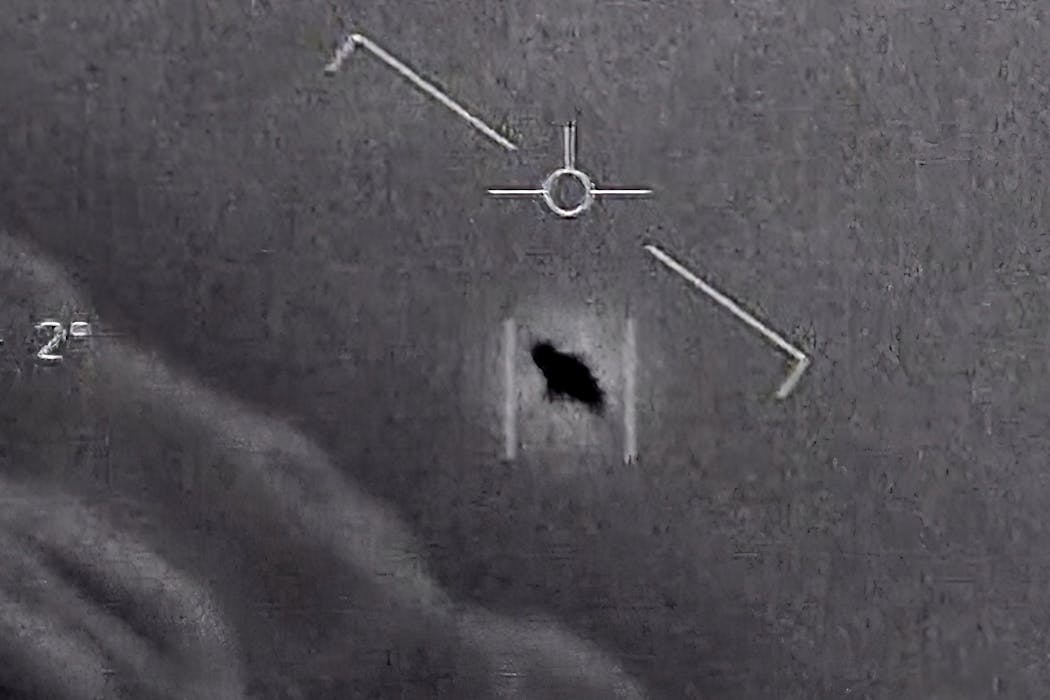
A famous UAP video shows an unexplained object as it soars high along the clouds, traveling against the wind. Department of Defense via AP

President Donald Trump directed the Pentagon and other federal agencies to begin releasing government files related to UFOs and unidentified anomalous phenomena – called UAP – in February 2026, following years of pressure from Congress, military whistleblowers and the public.

Congress formally mandated UAP investigations through the National Defense Authorization Act in December 2022. The Pentagon’s official UAP investigative body, the All-domain Anomaly Resolution Office, AARO, now carries a caseload exceeding 2,000 reports dating back to 1945. Defense Secretary Pete Hegseth confirmed this figure earlier this year.

The cases were submitted by military personnel, pilots and government employees describing aerial objects that could not be explained as known aircraft, drones or weather phenomena. Governments in Japan, France, Brazil and Canada also have their own formal UAP investigation programs.

An open door with a paper sign reading 'UAP (UFO) conference.' Inside is a group of people looking at a screen showing a woman talking.
Filmmaker James Fox organized a press conference on UAP and UFO encounters, held at the National Press Club on Jan. 20, 2026, in Washington, D.C. It focused on a 1996 suspected UFO crash in Brazil.
Kevin Dietsch/Getty Images

Yet modern research universities remain almost entirely absent from this conversation. No major university has established a dedicated UAP research center. No federal science agency offers competitive grants for UAP inquiry. No doctoral programs train researchers in UAP methodology. The gap between what governments openly acknowledge and what universities are willing to study is, at this point, difficult to explain on purely intellectual grounds.

I have navigated this gap while conducting my own UAP research. My work developing the temporal aerospace correlation tool, a standardized framework for correlating civilian UAP sighting reports with documented rocket launch activity from Cape Canaveral, is currently under peer review at Limina: The Journal of UAP Studies.

Designing that framework meant making methodological decisions without community standards, without institutional funding and without the professional infrastructure many researchers in established fields take for granted. What is missing is not interest or data – it is the shared scaffolding that turns isolated curiosity into cumulative science.

Stigma is measurable

The most rigorous evidence for the gap between faculty interest in UAP and faculty willingness to study it UAP comes from peer-reviewed studies by Marissa Yingling, Charlton Yingling and Bethany Bell, published in the scholarly journal Humanities and Social Sciences Communications.

Across 14 disciplines at 144 major U.S. research universities, 1,460 faculty responded to their 2023 national survey. Most surveyed believed UAP research was important. Curiosity outweighed skepticism in every discipline that was part of the study. Nearly one-fifth had personally observed something aerial they could not identify. Yet fewer than 1% had ever conducted UAP-related research.

The gap was not explained by intellectual dismissal, but it was in part explained by fear. Researchers were not primarily deterred by intellectual skepticism because they doubted the topic’s merits. Instead, they feared they might lose funding, face ridicule from colleagues or find their careers quietly derailed. Faculty reported being told to “be careful.”

A 2024 follow-up study found that roughly 28% said they might vote against a colleague’s tenure case for conducting UAP research, even when they personally believed the topic warranted study.

Historian and philosopher of science Thomas Kuhn argued that scientific communities suppress anomalous questions not because those questions are unanswerable, but because they fall outside the boundaries the community has collectively decided are worth investigating.

Sociologist Thomas Gieryn called this suppression “boundary work,” referring to the active process by which scientists police what counts as legitimate science.

For UAP researchers, the data and tools to study the phenomenon exist. What may not exist is social permission to use them without professional consequence.

Creating an academic discipline

Academic disciplines do not emerge spontaneously. They require dedicated journals, agreed-upon methods, graduate programs and professional societies.

The history of cognitive neuroscience demonstrates how disciplines emerge. Before the 1980s, researchers at the intersection of neuroscience and cognitive psychology faced resistance from both parent disciplines.

These fields achieved mainstream acceptance only after targeted funding from the Alfred P. Sloan Foundation, new brain-imaging tools and the gradual formation of academic programs that created career pathways for researchers. Researchers at the nexus of these fields did not wait for central questions to be resolved. They built infrastructure, and the infrastructure made progress possible.

UAP studies as a discipline is developing some of these elements, but largely outside universities. The Society for UAP Studies, a nonprofit of scholars and researchers, operates Limina as a double-blind, peer-reviewed journal and has convened international symposia drawing researchers from physics, philosophy of science and the social sciences. But a nonprofit scholarly society without tenured faculty does not constitute a discipline.

A group of four people working together -- two are standing at a whiteboard.
New academic disciplines are built on research collaborations. Stigma around a topic can stop researchers from sharing their ideas.
fizkes/iStock via Getty Images

To turn UAP studies into a recognized academic field would require three things.

First, funding. The Yingling studies found that competitive research grants would do more to unlock faculty participation than any other single factor. Without grants, researchers cannot hire students to assist them, maintain instruments or sustain the multiyear projects that produce meaningful results.

Second, shared methodological standards – these would entail agreed-upon procedures for collecting, recording and evaluating UAP reports – would mean findings from one research group can be compared and built upon by others.

Third, institutions could publicly affirm that they will evaluate appropriately rigorous UAP scholarship on its scientific merits during tenure reviews. Several universities have already done this for gun violence research and psychedelic-assisted therapy studies.

These are not isolated examples. Research into near-death experiences and adverse childhood experiences followed similar trajectories, moving from being a professional liability to mainstream legitimacy after the removal of institutional barriers.

The international comparison

This gap in UAP scholarship is unique to the United States. France’s GEIPAN, a dedicated investigation unit within its national space agency, has operated since 1977. It has publicly archived approximately 5,300 French UAP cases, of which about 2% to 3% remain unexplained after rigorous analysis.

In 2020, Japan formalized UAP reporting protocols for its Self-Defense Forces, the branch of the Japanese military responsible for national defense. By June 2024, more than 80 lawmakers had formed a parliamentary UAP investigation group that by May 2025 had formally proposed a dedicated UAP research office to the defense minister. Canada launched its own multiagency UAP investigation survey in 2023.

None of these actions has produced a corresponding response from American research universities. Universities provide independent, peer-reviewed analyses that government programs structurally cannot.

The University of Würzburg in Germany became the first Western university to officially recognize UAP as a legitimate object of academic research in 2022, when it formally added UAP investigation to its research canon. Researchers at Stockholm University and the Nordic Institute for Theoretical Physics in Sweden have been actively publishing peer-reviewed UAP research since 2017, most recently in Scientific Reports in October 2025.

Congress has passed legislation, the Pentagon is reporting on its investigations, and the president has directed federal agencies to begin releasing records. So the question no longer is whether governments take UAP seriously – it is whether universities will follow, and which ones will get there first.

The Conversation

Darrell Evans does not work for, consult, own shares in or receive funding from any company or organization that would benefit from this article, and has disclosed no relevant affiliations beyond their academic appointment.

ref. While the US government is investigating unidentified anomalous phenomena, academic researchers studying them face stigma – https://theconversation.com/while-the-us-government-is-investigating-unidentified-anomalous-phenomena-academic-researchers-studying-them-face-stigma-277722