Source: The Conversation – USA – By Lisa Kewley, Director of the Center for Astrophysics | Harvard & Smithsonian, Smithsonian Institution
This artist’s impression shows the spiral galaxy NGC 1365 colliding and merging with a smaller galaxy. Melissa Weiss/CfA
Billions of years ago, a young spiral galaxy began to grow in a crowded part of the universe. It pulled in gas and small companion galaxies, slowly building up the bright central region and sweeping spiral arms we see today.
In a new study published in March 2026, my colleagues and I used this galaxy’s chemical fingerprints to reconstruct its life story in detail.
Astronomers want to know how spiral galaxies like our own Milky Way came to be, as these galaxies can give us hints about how the elements we rely on, such as oxygen, were created and spread through space over time.
Space archaeology
Like archaeologists sometimes use slices of earth to to turn back the clock and study the Earth’s natural history, we used slices of data of the galaxy’s chemical makeup from different periods in time, alongside sophisticated galaxy evolution models. Together, the data helped us piece together how it formed and grew over 12 billion years.
We then searched through simulations of about 20,000 model galaxies and found one that very closely matched NGC 1365. We looked at a host of factors while matching up the simulations, including the abundance of heavy elements, including oxygen. We used the model to rewind the history of the galaxy and predict how it likely grew over time and merged with other galaxies.
Galaxies form when gravity and dark matter pull material together into their center.
Looking for heavy elements
Heavy elements are forged in stars and released in powerful supernova explosions within galaxies. Over time, this process builds up a traceable record that scientists can look for in the gas – like how archaeologists look for certain key elements in layers of soil.
Research has shown that the center of a galaxy usually ends up richer in heavy elements, while the outer regions have less. That pattern carries clues about when stars formed, how gas flowed in and out, and how often the galaxy collided and merged with others.
For the galaxy NGC 1365, we found that its central region likely formed early in its lifespan and quickly became rich in oxygen. Its outer disk, however, grew more slowly. Over billions of years, the galaxy probably collided with smaller dwarf galaxies, which brought in fresh gas and stars and helped build up the outer spiral arms. A lot of the gas now in the edges of the spiral arms likely arrived relatively late in the galaxy’s life.
Our work is some of the first to use such a detailed “chemical archaeology” technique outside our own Milky Way galaxy. By tying new, super-fine resolution observations directly to state-of-the-art simulations, we’ve opened up a new way to study how distant galaxies assembled over cosmic time.
Unanswered questions
We can reconstruct a history for NGC 1365 using both our simulations and observational data. But some details remain uncertain. Different combinations of gas flows and mergers can sometimes leave similar chemical patterns. We also don’t know yet whether NGC 1365’s life story is typical for large spiral galaxies, or whether it is unusual in ways that aren’t clear to us yet.
A few key things we have yet to uncover include: Do most spiral galaxies build their centers early and their outer disks slowly, as NGC 1365 appears to have done? How much do galaxy mergers versus gas inflow contribute to a galaxy’s growth? And, perhaps most interestingly, how does the history of NGC 1365 compare to that of our own Milky Way?
Lisa Kewley has previously received National Science Foundation and Australian Research Council grants but they did not support her role in this research project.
Like Americans today, the people living in the United States in 1826 were preparing to celebrate a milestone for their country. July Fourth of that year marked the 50th anniversary of the Declaration of Independence.
As what was known as the “Jubilee” of American independence approached, Americans realized that the founding generation was dying off. They wanted to take advantage of the founders’ insight while they still could.
This meant soliciting memories and advice from the signers of the Declaration, only three of whom were still alive. Thomas Jefferson and John Adams were the men most closely associated with the independence movement, yet they both lay dying and both declined invitations to attend the festivities planned for July Fourth.
But they were able to answer letters from younger men interested in their perspective on the revolution and subsequent history they had helped shape.
These two men – who had worked well together during the American Revolution – could not have been more different. Both had thought long and hard about what the American Revolution meant to them. They did not always agree.
If Americans today are looking for a unified vision of their country in their own 250th celebrations, they will not find it with Adams or Jefferson.
After the Revolutionary War, Adams and Jefferson became political rivals. They disagreed about how powerful the federal government should be and on foreign policy at a time when England and France, once again at war, were presenting challenges to the new country..
Jefferson founded the Democratic-Republican Party to counter the influence of Alexander Hamilton’s Federalist Party. While Adams never formally aligned with the Federalists, he agreed with many of their policies, especially on foreign policy.
On New Year’s Day, 1812, Adams was the first to reach out. He used the excuse of sending to Jefferson a pamphlet written by his son, John Quincy, saying that it was from “One who was honoured in his youth with Some of your Attention and much of your kindness.” Adams continued, in casual language, to tell Jefferson about the family and wished him a happy new year.
From that time on, the two wrote to each other on a regular basis, discussing every topic imaginable, from agriculture to religion. Yet it was clear that their past rift was on Adams’s mind when he wrote, “You and I, ought not to die, before We have explained ourselves to each other.”
In the process, they revisited the days when they worked together to form a new nation. As they reflected on the meaning of the United States’ birth, they agreed that writing a history of the American Revolution was next to impossible.
Adams wrote to Jefferson: “Who shall write the history of the American revolution? Who can write it? Who will ever be able to write it?”
The problem, as Adams saw it, was that so much was done in secret. Nobody recorded the debates and speeches of the Continental Congress, the governing body during the revolution. Therefore, how could a true history ever exist?
On this, they could agree. On some of the specifics, they did not.
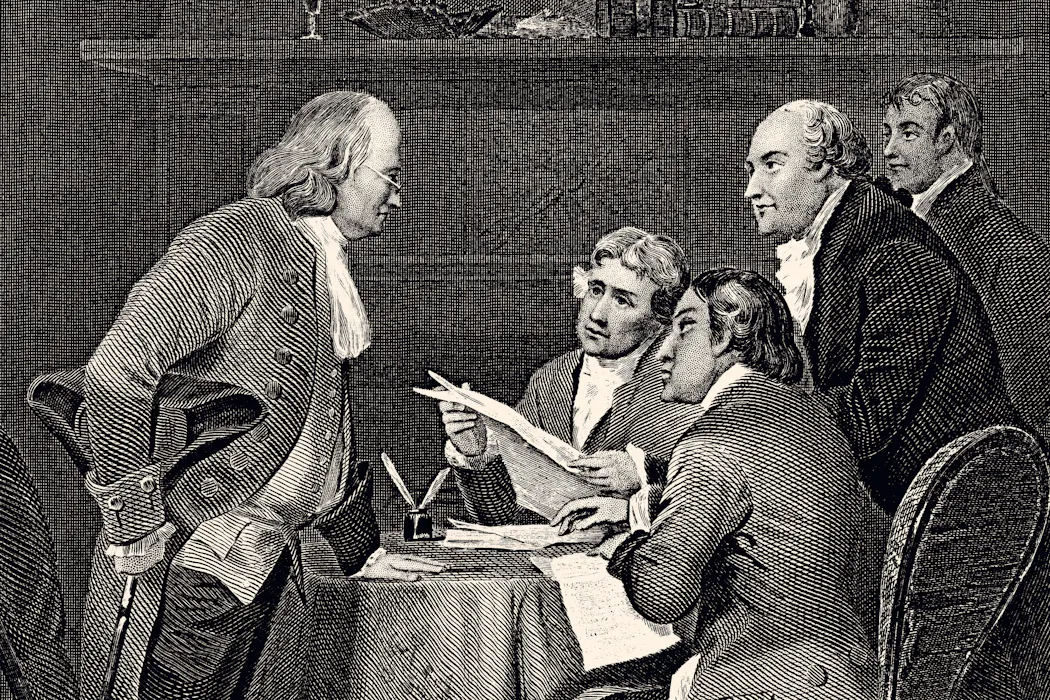
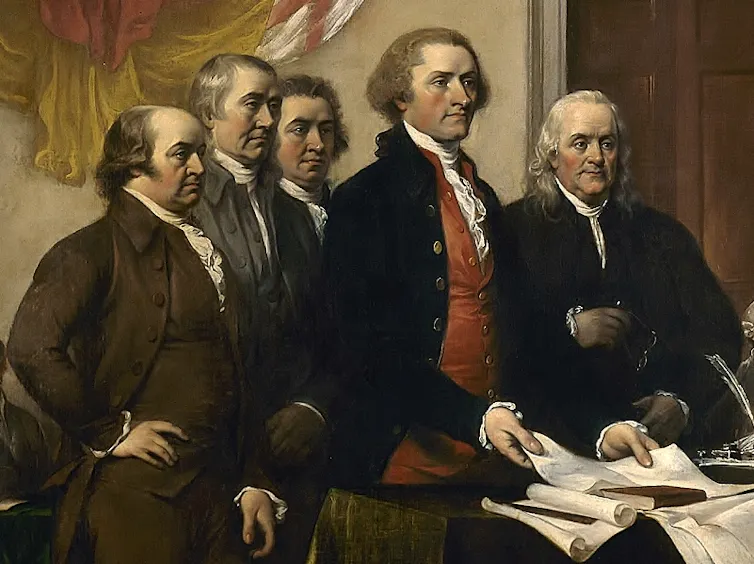
The Committee of Five – left to right: John Adams, Roger Sherman, Robert Livingston, Thomas Jefferson, Benjamin Franklin – presenting their draft of the Declaration of Independence to the Second Continental Congress in Philadelphia. Detail from John Trumbull’s 1818 painting in the U.S. Capitol, via Wikipedia
Fundamental difference
In old age, Adams remembered vividly how he convinced Jefferson to write the Declaration of Independence. One historian has argued that Adams’ memory seems a bit too clear, and suggested that he was working to elevate himself in the process of telling the story by claiming that he alone persuaded a reluctant Jefferson to take on the task.
More important than the details was the ultimate interpretation by these two men of what they had accomplished 50 years before.
What their letters written after the Jubilee committee’s invitation reveal is a fundamental difference in their attitudes about the human spirit. Adams wrote that he appreciated the invitation and was sorry to decline. He called the birth of the U.S. “a Memorable epoch in the annals of the human race.”
Yet he also demonstrated his realistic view of human beings when he wrote that the independence movement would “form the brightest or the blackest page, according to the use or abuse of those political institutions by which they shall be shaped by the human mind.”
Adams understood that people interpret history according to their own circumstances. He was a realist who could not bring himself to accept the fundamentally optimistic view that humanity was always moving toward liberty.
Jefferson, on the other hand, was hopeful about the revolution’s impact on the world. He believed that the declaration would be “the Signal of arousing men to burst their chains.” The entire letter to the Jubilee committee offered an optimistic view of the future in which the human race was always progressing toward freedom.
When Adams and Jefferson died on July 4, 1826, their lives took on new meaning. In eulogizing them, House member Daniel Webster told the American public: “They are no more. They are dead. But how little is there of the great and good which can die! To their country they yet live, and live forever.”
Now, 200 years later, Americans still look to these Founding Fathers for inspiration. However, what Adams and Jefferson demonstrate is not unity. Instead, they exemplify the capacity for people to disagree and yet work for a common cause.
Marianne Holdzkom is affiliated with the Adams Memorial Foundation. She is an Adams Memorial Foundation Scholar, but receives no compensation from them.
Most notably, political commentator Tucker Carlson, once one of Trump’s most stalwart loyalists, expressed remorse for his previous support for the president, declaring in April 2026, “It’s not enough to say, well, I changed my mind – or like, oh, this is bad, I’m out.” Carlson said he will be “tormented” by his support for Trump “for a long time” and that he is “sorry for misleading people.”
But beyond former prominent Trump allies, are there other Trump supporters having second thoughts about their votes in the 2024 presidential election? To answer this question, we conducted a nationally representative poll of 1,000 U.S. adults who were recruited from an online panel maintained by YouGov, a survey research firm.
We asked self-identified Trump voters about their votes in the 2024 election. Our results suggest that a growing number of them – especially moderates, African Americans and young people – are experiencing voter’s remorse.
In our poll, roughly one-third of political moderates and African Americans who voted for Trump in 2024 said they would vote otherwise if the election were held again. AP Photo/George Walker IV, File
Support for Trump remains strong
To be clear, our survey shows that most Trump voters remain in the president’s camp.
We found that 84% of 2024 Trump voters say they would vote for Trump if given the chance to vote again in the 2024 election. That’s down 2 percentage points since we previously asked this question in July 2025.
Over 90% of members of Trump’s core base of voters – including 93% of self-identified Republican Trump voters, 95% of self-identified conservative Trump voters and 92% of Trump voters over age 55 – said they would vote for Trump as they did in 2024 if given a second chance.
Regretful Trump voters
But some groups of Trump voters are having second thoughts. The most regretful are those with whom Trump made significant gains in 2024. They include political independents, African Americans, younger people and those with more education.
Roughly 3 in 10 2024 Trump voters who identify as political moderates and African Americans said they would vote differently if the election were held again. And roughly a quarter of young and middle-aged Trump voters also suggested they would not vote for Trump if they could redo their 2024 vote.
Twenty percent of Trump supporters with postgraduate degrees expressed a reluctance to vote for Trump if given a second opportunity. Voters with some college experience and those making less than $40,000 annually reported the same sentiment in similar percentages.
Perhaps most politically perilous, 31% of independents who voted for Trump in 2024 would not vote for him again in an election do-over.
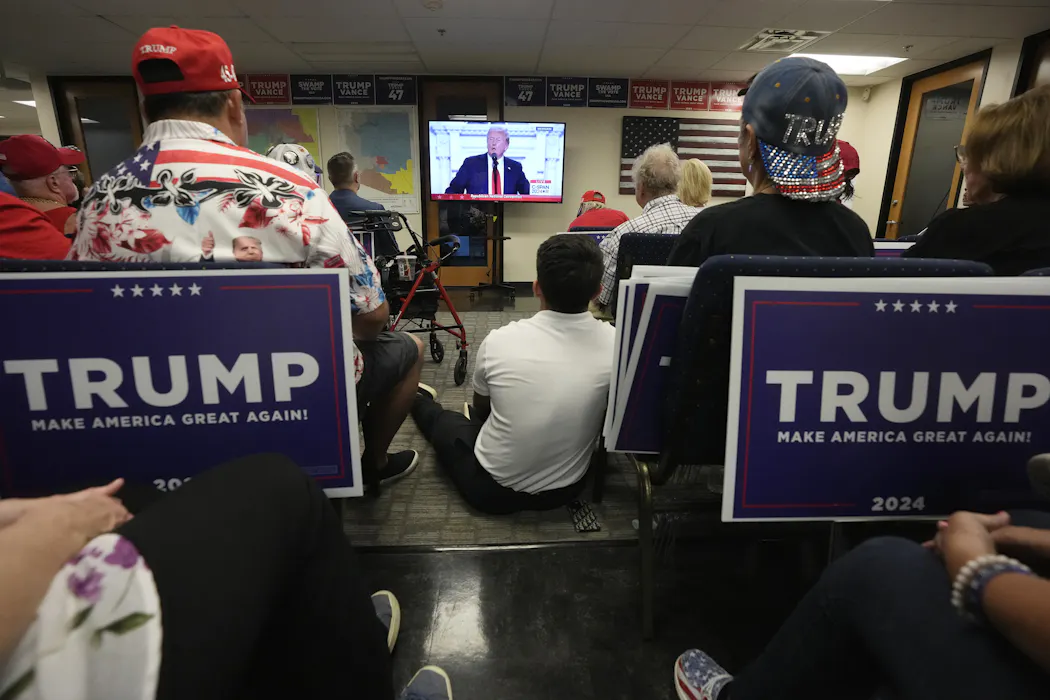
New York City residents watch Donald Trump speak as votes are tallied for the presidential election on Nov. 6, 2024. Fatih Aktas/Anadolu via Getty Images
Cracks in the coalition
What is pushing Trump voters away from the president?
There is no single cause, but our results suggest that negative perceptions of Trump’s performance on high-profile issues are playing a big role. A substantial portion of Trump voters who give the president a negative grade on the economy (22%), the Epstein files (37%) and the Iran war (49%) say they would not vote for him in an election redo.
Our results suggest that cracks are forming in the Trump coalition and that they are concentrated among the groups that before 2024 were less likely to vote for the president.
Trump may take solace in the continued loyalty of his strongest supporters. But in a close election every vote counts, and lingering dissatisfaction could undermine Republicans’ ability to mobilize key swing voters.
As Republicans face the electorate in upcoming midterms, Trump and the GOP will have to work to reclaim the support of regretful voters. Failure to do so could cost Republicans Congress in 2026 and, ultimately, the presidency in 2028.
Jesse Rhodes has received funding from the National Science Foundation, the Spencer Foundation, Demos, and the University of Massachusetts Amherst.
Adam Eichen and Tatishe Nteta do not work for, consult, own shares in or receive funding from any company or organization that would benefit from this article, and have disclosed no relevant affiliations beyond their academic appointment.
Source: The Conversation – USA (2) – By Dale Manning, Associate Professor in Public Policy and Agricultural and Resource Economics, University of Tennessee
A healthy bat hangs in a cave, resting up to eat its weight in bugs at dusk.Liz Hamrick/TVA
Most Americans tend to think about bats only around Halloween, but the U.S. economy benefits from these furry flying mammals every day.
Sadly, bat populations are declining rapidly in North America. A driving force is a fungal disease known as white-nose syndrome, which has spread among bats throughout the United States. When a bat population crashes, fewer bats are around to eat bothersome insects. All those additional insects can do serious damage.
A reproductive female big brown bat can eat its body weight in insects every night in the summer, precisely when farmers are growing food.
Mexican free-tailed bats head out of Bracken Bat Cave, near San Antonio, Texas, for an evening of feasting on insects. In summer, the cave is home to the largest bat colony in the world. Ann Froschauer/U.S. Fish and Wildlife Service
Farmers experience economic damage when rootworm concentrations exceed about 0.5 per corn plant. Typical planting densities exceed 30,000 corn plants per acre in the Midwest. Therefore, the rootworms that would have hatched could damage more than 2,000 acres of corn – if bats weren’t around to eat the cucumber beetles first.
That is a significant amount of pest control provided by bats!
The disaster known as white-nose syndrome
In the winter of 2006, the fungus that causes white-nose syndrome, the aptly named Pseudogymnoascus destructans, was first detected in the U.S. near Albany, New York.
From there, it spread across the country, infecting 12 species of bats, three of which are listed as endangered under the Endangered Species Act. A 2010 study found white-nose syndrome had killed between 30% and 99% of the bats in infected colonies.
As of March 2026, the fungus causing white-nose syndrome had been detected in 47 states, reaching as far west as California, Washington and Oregon. White-nose syndrome spreads primarily through bat-to-bat contact, though humans also contribute to the spread when cave explorers carry the fungus from one cave to another.
Despite coordinated efforts by state and federal wildlife agencies to limit access to caves where bats live and slow the transmission, white-nose syndrome continues to spread rapidly. When bats get infected, they wake up early from hibernation and use more energy over the winter. This depletes their fat reserves and causes them to die of starvation, leading to plummeting populations.
Bats’ role in food production
After white-nose syndrome arrives in an area, the loss of bats has significant consequences for farmers.
Yields fall as pests consume crops. To protect their crops, farmers purchase more chemical pesticides, so their costs rise as yields decline. The estimated agricultural losses from white-nose syndrome exceeded $420 million per year as of 2017.
A lesser long-nosed bat (Leptonycteris curasoae) feeding on an agave blossom in Arizona, spreading the flower’s pollen in the process. Rolf Nussbaumer/imageBROKER
Counties in all U.S. states tax agricultural land based on its “use value” – in other words, based on how profitable the land is in agriculture. Without healthy bat populations, lower profits shrink the tax base, leaving county governments with less revenue.
Those governments must respond by reducing services, raising taxes or increasing how much money they borrow – often at a greater cost of borrowing. The effect is especially pronounced in rural counties, where agriculture makes up a large share of property tax revenue.
Our recent research finds that rural county governments lost almost $150 per person in annual revenue after the arrival of white-nose syndrome. For an average-size rural county, that is nearly $2.7 million in lost revenue each year.
How losing bats can hit the bond markets
The loss of county revenue makes municipal bond investors nervous. Buying a municipal bond is a bit like lending money to the county, and the interest rate is what the county pays you for taking on that risk.
When bats disappear, the risk goes up, and the county has to pay about 11.47 hundredths of a percentage point more in interest. That may sound small, but it is 27% larger than the typical risk premium investors already demand from county governments.
The higher interest rate raises borrowing costs for county governments. For example, the borrowing costs on a typical 15-year, $1 million bond would increase by more than $33,000.
Bats snuggle up in a cave. Liz Hamrick/TVA
Higher yields also mean lower bond prices for investors, including retirement funds. For example, our research suggests that investors would discount a $1 million bond issued by a rural county by nearly $14,000 if that county’s bats have become infected by white-nose syndrome.
Economic benefits of saving bats
The good news is that the benefits from healthy bat populations create opportunities to make money from bat conservation.
Farmers can increase their incomes. Local governments can recover property tax revenue to fund public services, such as road maintenance, health infrastructure and public schools. Bond investors can earn financial returns from healthier bat populations.
No silver bullet exists for protecting or restoring bat populations affected by white-nose syndrome, but promising efforts are underway.
A fungal vaccine is being tested by the U.S. Geological Survey and partners. Designing artificial roosts and adding cave protections can also help preserve healthy bat populations. Researchers are also working to better understand bat resistance to the disease to explore whether improving resistance alone can stabilize bat populations.
As these solutions develop, opportunities will emerge for farmers, local governments and investors to earn financial returns through bat conservation. In other words, saving bats isn’t just good ecology – it’s good economics.
Eli Fenichel receives funding from the Knobloch Family Foundation. He is a professor at Yale University in the School of the Environment.
Anya Nakhmurina and Dale Manning do not work for, consult, own shares in or receive funding from any company or organization that would benefit from this article, and have disclosed no relevant affiliations beyond their academic appointment.
President Donald Trump remains committed to using tariffs as a key tool for leverage and is looking at another authority that might raise tariff rates substantially.AP Photo/Noah Berger
President Donald Trump just can’t quit tariffs.
He suffered a major defeat when the Supreme Court ruled in February 2026 against the sweeping emergency tariffs he announced the previous year. Then, on May 7, a federal court knocked down the interim tariffs he announced after the high court’s decision.
Yet Trump appears undeterred and keeps finding a plan B – and then C and D.
“So, we always do it a different way,” the president told reporters after the May 7 decision. “We get one ruling, and we do it a different way.”
That different way, currently, is using an authority called Section 301. This option is likely to invite more litigation, but it may wind up more powerful and durable than previous levies. To that end, the administration has opened two probes, paving the way for fresh tariffs later this year against China and other major trading partners.
Why does this matter? U.S. trade policy, to the average person, may seem like a complicated mess of acronyms and legalese. But as a trade economist who has been following the tariff wars, I believe Trump’s strategy of making aggressive global tariffs the centerpiece of his foreign economic policy is quite clear – even as his trade policy overall remains deeply unpopular.
And if he succeeds, the average levy may jump to the highs of the “Liberation Day” tariffs of April 2025, before some were scaled back in subsequent – if incomplete – deals with trading partners.
A tariff obsession
At first glance, Trump’s fixation with tariffs may seem surprising.
They have failed to stimulate U.S. manufacturing and employment, while
consumers and importers have absorbed the brunt of the price hikes. But to Trump, what seems to matter is that the Supreme Court took away his tariff-making power when it ended his emergency tariffs. He now wants that power back.
Indeed, that power was the appeal of the Liberation Day tariffs, which let Trump set tariff rates at any level and for any length of time, with the flexibility to assign different tariffs to different countries. With such tools, he could threaten more punishing levies to enforce bilateral trade deals.
In addition, he saw the revenue that those tariffs brought in as a source of power and has resented the Supreme Court order that they be refunded to the U.S. companies that paid them. Trump is even angry at any companies that have decided to collect the tariff refunds.
But Trump is especially furious at his Supreme Court appointees, Amy Coney Barrett and Neil Gorsuch, whose votes swung the February decision, and continues to excoriate them. He declared he was “ashamed” of all the justices who voted to strike the tariffs, characterizing them as “fools” and “lapdogs” who didn’t have “the courage to do what’s right for our country.” Trump also said the court’s decision would inadvertently push him to “impose tariffs more powerful … rather than less.”
In short, Trump is moving from his Liberation Day tariffs to what I call “revenge tariffs” – in an attempt to show the high court that it cannot stop him.
Planning the next battle
Section 301 of the 1971 U.S. Trade Act is designed to remedy foreign countries’ trade practices deemed discriminatory, unfair, unreasonable or burdensome to U.S. commerce. It sets no limit on the tariff amount; lets the president discriminate among targeted countries; and generates tariff revenue without violating the Constitution’s taxation clause, a major element in the Supreme Court’s February decision.
Another potential advantage: Federal courts have typically given the president discretion in determining the purpose, scope and remedies chosen to implement Section 301.
The main reason why Trump didn’t use Section 301 last year for his Liberation Day tariffs – opting instead for another law, the International Economic Emergency Powers Act – was because he thought the latter would grant that kind of unlimited tariff authority but without any extra procedural requirements. To a certain point, that proved correct – until his Supreme Court loss.
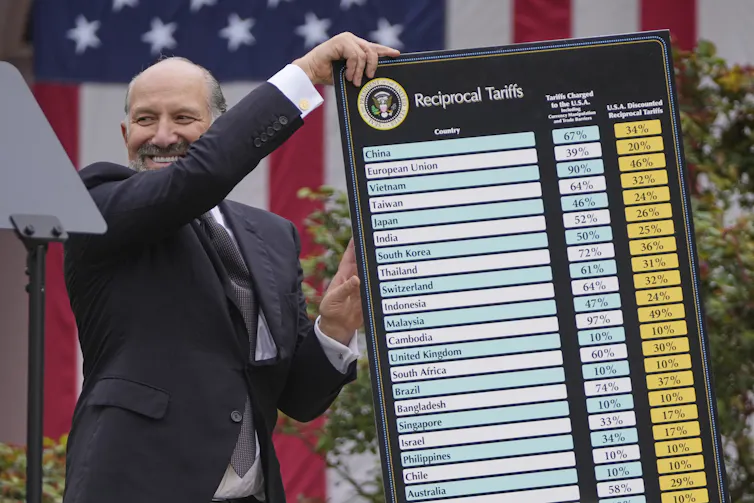
The ‘Liberation Day’ tariffs that Donald Trump announced in April 2025, seen here in a chart held by Commerce Secretary Howard Lutnick, gave the president sweeping powers. AP Photo/Mark Schiefelbein
As for next steps, the Trump administration has proposed two Section 301 investigations. One is against alleged “excess industrial capacity” among several countries – shorthand for overproduction through government intervention – and the other against alleged failures to enforce bans on trade using forced labor.
To Trump, the appeal is that these probes have a vast scope. And he has already indicated that he seeks to use any tariffs stemming from the probes as leverage: If a country that has inked a trade deal considers abandoning the agreement, for example, Trump has warned that he could threaten Section 301 tariffs later.
“Any Country that wants to ‘play games’ with the ridiculous supreme court decision, especially those that have ‘Ripped Off’ the U.S.A. for years, and even decades, will be met with a much higher Tariff, and worse, than that which they just recently agreed to. BUYER BEWARE!!!” Trump wrote on his social platform, Truth Social, in February.
Using Section 301, in short, would be akin to declaring that every U.S. trading partner in some way damages the U.S. and will be targeted with punitive tariffs. This action would be unprecedented – and likely face legal challenges. These would first go to the Court of International Trade, which also nixed the interim tariffs, and appeals would go to the U.S. Court of Appeals for the Federal Circuit. The final instance of appeal would be the Supreme Court.
Fair and balanced?
International trade law has established mechanisms for trading partners to crack down on forced labor or address industrial capacity through policy changes or negotiations. In such a scenario, tariffs would provide the means, not the ends, to address these more substantive policy disputes.
But so far, Trump seems to have another goal: correcting the “unfair trade imbalances” that he also cited for the Liberation Day tariffs. One government Section 301 petition claims that foreign excess capacity is letting countries rack up “persistent” trade surpluses. Another claims that trade in forced-labor goods harms the U.S. trade balance by increasing U.S. imports of underpriced products and decreasing U.S. exports by forcing them to compete with cheap competition.
If these petitions succeed, Trump could then impose the Section 301 tariffs individually, country by country, as part of his global trade balancing goal. Trump also wants to seize back the revenue that his tariffs generated.
The catch is that Section 301 requires cases to be based on actionable practices, not trade balance outcomes. Moreover, the 2025 tariffs didn’t even accomplish any balancing: The U.S. deficit in goods actually increased that year. So using Section 301 is just as unlikely to improve the U.S. trade balance, which is determined by macroeconomic factors, not foreign excess capacity or imports of goods made with forced labor.
A question of deference
Will there be any guardrails on Trump’s plan to introduce the new tariffs in July 2026, as he has indicated? This will depend in part on whether courts continue the traditional deference of the pre-Trump era to the president in these cases.
Trump is counting on this, but it’s not a slam dunk. Many experts question whether overcapacity is a trade violation. And on the forced labor issue, the U.S. National Trade Estimate Report added potential offenders besides China only in March 2026 – an announcement well timed in anticipation of the current Section 301 case. The forced labor case may in fact be intended to compel U.S. trading partners to abandon supply chains that include Chinese goods.
But as it happens, the European Union and other countries are more effective than the U.S. in prohibiting forced-labor imports and therefore shouldn’t be targeted. Trade experts also point out that the U.S. itself produces forced-labor goods in private prisons and has often failed to stop forced-labor imports. It’s just as guilty as many other countries of not enforcing its ban on such trade, these legal scholars argue.
Still, courts have traditionally given latitude to the president on Section 301. It lets the White House pursue trade liberalization while respecting the norms of global trade rules that the U.S. championed at the time.
Trump has, in contrast, made a practice of undermining those rules and can be expected to stretch Section 301 as far as possible. Indeed, his rhetoric seems to suggest that the Section 301 cases were chosen primarily to establish a permanent tariff regime by providing all-purpose bargaining leverage, not correcting damaging foreign trade practices.
Kent Jones does not work for, consult, own shares in or receive funding from any company or organization that would benefit from this article, and has disclosed no relevant affiliations beyond their academic appointment.
For years, victims of crime and those trying to challenge convictions have said that the UK’s system for accessing court records is prohibitively expensive and unnecessarily bureaucratic.
The government has taken steps to improve this transparency. In a recent investigation, I revealed that the government has abandoned its policy of destroying court records. But significant barriers remain for those trying to gain access to those records.
The Ministry of Justice will run a trial using its in-house AI, called Justice Transcribe, to produce court transcriptions. The pilot study, overseen by the courts and tribunals service, will assess how accurate the AI transcriptions are before the system is potentially rolled out nationwide.
A campaign led by survivors of rape and sexual assault has highlighted the difficulty of getting transcriptions of their trials. London’s Victims’ Commissioner Claire Waxman called it a “real block to recovery” for victims, and said one woman had been quoted £30,000 for a transcript of her full trial.
In 2012 the MoJ dispensed with stenographers and began recording court cases instead. But these audio recordings need to be transcribed by private companies. The fees charged by these companies have been described as “exploitative”. As Julie Price of Cardiff Law School put it:
The expense appears to be out of proportion to the work involved to produce these, and the private companies that hold these service contracts are businesses that exist to make a profit from what should surely be a public service.
The MoJ now recognises there is a problem, admitting that victims have had to pay thousands of pounds for transcriptions. Under the new Sentencing Act, victims in the Crown Court can receive judges’ sentencing remarks for free. But the AI pilot aims to make full court transcriptions more accessible.
Waxman, the victims’ commissioner, says that transcriptions are central to the healing process: “Access to transcripts is vital for victims and families, helping them understand what happened in court, process proceedings in their own time and support their recovery, while also strengthening transparency and accountability across the justice system.”
Lack of access to court records has made it difficult for some to gain clarity on their trial. corgarashu/Shutterstock
Sarah Sackman KC, Minister for Courts and Legal Services, said: “Victims show immense courage in coming to court, delivering their testimonies and looking their perpetrators in the eye … that’s why it is only right they process what happened in their case in their own time and on their own terms.” She added that AI use in the courtroom could improve transparency and access to justice.
The introduction of audio recordings in 2012 spelled the end for court stenographers. This time, it could be the transcription companies that face extinction.
Changing technology
While faster and cheaper transcriptions will be welcomed, there are reasons to be sceptical that AI will be able to deliver in the way the MoJ hopes.
Accuracy will be an issue, from getting names and places right, to properly representing technical language used by experts. But the greater issue may be AI hallucination. This is when AI tools “generate information that seems plausible but is actually inaccurate or misleading”.
These hallucinations are something that regular users of AI have become used to. But they can pose a significant risk, particularly if the information is being relied upon for medical treatments or legal decisions.
A study by the Thomson Reuters Institute, the research arm of information company Thomson Reuters, concluded that judicial scepticism about using AI for court documents “is not simple technophobia – it’s professional responsibility”.
“Relied-upon hallucinated information isn’t merely bad output, it can lead to a potential distortion of justice.”
Research by the Law Commission, an independent statutory body charged with reviewing the law of England and Wales, also highlighted the issue. They found “examples from many jurisdictions” of lawyers citing hallucinated legal cases.
The commission argues there needs to be human oversight of AI legal systems and that an overreliance on AI by lawyers would “almost certainly be a breach of their regulatory obligations”. In some cases, it “may even risk the lawyer being liable for contempt of court”.
The scepticism from those working in the criminal justice system is understandable given that any snags when new technologies are introduced can have significant impacts on real people. For example, DNA technology was presented as flawless when it was introduced, but we now know it is not. And just ask someone like Shaun Thompson, who is bringing a legal challenge after the Met police’s live facial recognition technology wrongly identified him as a suspect, about the accuracy of this technology.
Given these concerns, it is unsurprising that the MoJ hasn’t put a time frame on how long the pilot study will take – much less when the new approach will be used across the criminal justice system.
Brian Thornton does not work for, consult, own shares in or receive funding from any company or organisation that would benefit from this article, and has disclosed no relevant affiliations beyond their academic appointment.
Actress and writer Issa Rae speaks at the Fast Company Innovation Festival in New York in 2024. Her new microdrama, ‘Screen Time,’ has already garnered over 100 million views. Eugene Gologursky/Getty Images for Fast Company
Some of the hottest casting calls in Hollywood right now aren’t for Netflix, Disney or HBO.
They’re for TikTok.
In January 2026, TikTok rolled out PineDrama in the United States and Brazil, an app devoted to microdramas, also known as “verticals.”
Unlike TikTok’s traditional user-generated content, PineDrama primarily features scripted series produced by studios, production companies and media partners. These are short, serialized shows meant to be watched in one-minute increments, and they often feature melodramatic tales of romance, revenge or the supernatural.
At first glance, a social media app becoming a television studio might seem like a radical shift.
But in our recently published research paper, we argue that TikTok’s move into scripted storytelling is not a break from television; it is a continuation of it. In fact, TikTok’s success can be attributed, in part, to the ways it has pulled from both the business model and programming conventions of the television industry.
A business model that looks a lot like TV
Media scholars have used the term “flow” to describe how television is experienced not as an individual program, but as a continuous stream of content. Live broadcasts, scripted shows, commercials and promos blend together into a seamless viewing experience.
TikTok recreates this dynamic, but replaces network scheduling with algorithmic curation. Ads are embedded directly into the viewing experience, appearing between videos in a way that mirrors television commercial breaks.
Advertising dollars have long fueled traditional television, which sold audiences – particularly the coveted 18-to-49 demographic – to advertisers. TikTok relies on a similar advertising model, but uses user data and algorithmic recommendation systems to curate a continuous stream of personalized content and targeted ads.
TikTok’s content has also long been shaped by other norms of the television industry.
For example, even before the emergence of microdramas, creators often produced videos as part of ongoing series, a format that encourages viewers to return for updates or to see what happens after being left with a cliffhanger. This kind of serialized storytelling is central to television.
Meanwhile, genres that originated on television – talk shows, reality shows and confessional storytelling – are everywhere on TikTok. Even though these clips are only minutes long, they often rely on cliffhangers, “Part 2” reveals, emotional confessions and recurring characters to encourage repeat viewing in ways that mirror broadcast television.
The experience of using TikTok is analogous to watching TV. Users can scroll to a new video as soon as the one they’re watching no longer entertains, much like channel surfing. At the same time, users can fall into “TikTok holes,” endlessly scrolling through videos for hours in a form of binge-watching that mirrors today’s streaming culture.
Launched by former Disney executive Jeffrey Katzenberg, Quibi raised nearly US$2 billion to produce short-form, mobile-first video content featuring major Hollywood stars.
But despite its high-profile launch in April 2020, the platform shut down less than a year later after struggling to attract subscribers and compete in an increasingly crowded streaming market.
Like Quibi, PineDrama centers on professionally produced short-form video designed specifically for smartphone viewing. Both platforms have attempted to merge Hollywood-style storytelling with mobile-first viewing habits.
But the comparison only goes so far.
When Quibi debuted, the market was being saturated with new streaming services. Disney+, HBO Max and NBC’s Peacock had all entered the market in late 2019 or the first half of 2020. The platform also struggled because its content was locked behind a paid subscription model. Furthermore, it lacked the social sharing and algorithmic discovery mechanisms that have helped apps like TikTok thrive.
The rise and fall of the streaming app Quibi serves as a cautionary tale, but there’s still an appetite for microdramas. Alexi Rosenfeld/Getty Images
TikTok, on the other hand, has a much stronger track record of innovation, investment and resilience. It has survived repeated attempts to ban or restrict the app in the United States. Its parent company, ByteDance, was reportedly valued at roughly $550 billion in early 2026, giving TikTok enormous financial resources to invest in new ventures like PineDrama. And it doesn’t have to build an audience from scratch, since it can take advantage of its own massive, preexisting user base on the TikTok app. Through sponsored posts and algorithmic recommendations, the company can direct its TikTok users to PineDrama’s microdramas.
Microdrama apps such as ReelShort, DramaBox and ShortMax have already demonstrated that audiences are willing to spend time and money on this emerging form of entertainment. TikTok’s advantage lies in its ability to integrate microdramas into its preexisting social media ecosystem.
Jessica Maddox is affiliated with the American Influencer Council and the academic journal Creator & Influencer Studies.
Krysten Stein is affiliated with the American Influencer Council and the academic journal Creator & Influencer Studies.
An ancient disk shows the priestess Enheduanna, third figure from the right, during a ritual.Mefman00/Wikimedia Commons, CC BY
I teach writing and rhetoric, but my college students and I often overlook a surprisingly complicated question: What is writing?
And can artificial intelligence really do it?
Many people think of “writing” as putting words on a page. However, even from very early on, writers have seen their craft as something more. From Enheduanna, the first named author on record, to Plato and Aristotle, writing has been portrayed and defined in ways that suggest AI may not be “writing” at all.
If not, what should we call AI text? ChatGPT and I have an idea.
Praising and pleading
Enheduanna, who lived around 2,300 B.C.E., was a powerful princess, priestess and poet of the Akkadian Empire, in what is now Iraq. She has been celebrated as the earliest known writer, though the authorship of her poems and hymns is debated.
One of her poems, “The Exaltation of Inanna,” reveals a sense of what writing is and does – portraying it as a living medium that expresses experience and shapes the future.
That praise may be strategic. It is followed by Enheduanna’s plea to overthrow Lugal-Ane, a rebel king who she describes exiling her and taking her post at the temple of Ur. “Now I have been cast out / To the place of lepers,” she writes, describing her suffering. “Day comes, / And the brightness / Is hidden around me.”
Grieving, Enheduanna writes a new destiny. In a translation by Sophus Helle, the priestess envisions Inanna coming to her aid and “tear[ing] off this fate, Lugale-Ane.” And her pleading seems to be successful: The end of the poem depicts Enheduanna restored to her post.
In Enheduanna’s poetry, writing does not simply communicate information. It interacts with the present and changes the future. The priestess’s pleas please the goddess, move her heart, and she restore Enheduanna to her post – though historians have little evidence of whether an exile and return really happened.
AI writing can be used to try to create change, such as by swaying someone’s political opinion. But it lacks the human emotions that make experiences like praise, gratitude and suffering possible – the emotions and motivations that make writing a living medium with real-world effects.
Transforming over informing
Two thousand years after Enheduanna, Plato and his student Aristotle offered another influential view of writing – one that complements hers.
In the “Phaedrus,” which discusses the relationship between love and rhetoric, Plato famously defines writing as a poor copy of speech. Speech’s job is to represent thoughts; thoughts, in turn, represent knowledge and truth. Similarly, Aristotle writes, “Spoken words are the symbols of mental experience and written words are the symbols of spoken words.”
A relief of Plato and his student Aristotle by Italian Renaissance sculptor Luca della Robbia. sailko/Wikimedia Commons, CC BY-SA
Even that definition marks a sharp contrast with AI, which lacks thoughts and mental experiences. Its output proceeds from data aggregation and text generation.
To understand what writing is, we also need to look at what it does. Although Plato elevates speech over writing, he suggests in “Phaedrus” that good writing may lead a learner toward truth and knowledge. Similar to Enheduanna, he employs writing as a tool for change, both inside and outside the text.
In Plato’s dialogues, characters often radically change their opinions. And today, almost 2,500 years after his death, the philosopher’s real-world impact is clear. For instance, universities and colleges today are collectively called the “Academy” because that was the name of Plato’s group, the first institution of higher learning in the West. English scholar Alfred North Whitehead famously wrote that all Western philosophy is “a series of footnotes to Plato.”
Aristotle’s voluminous works, too, show writing’s purpose transcends communication. In “Rhetoric,” for instance, he details ways to make writing persuasive. Aristotle defines rhetoric as a way of “moving souls,” not just exchanging knowledge.
For both of the Greek philosophers, then, writing is more about transformation than information.
Overall, these three ancient authors agree that writing emerges from thoughts and experiences – a process that strives to create change. Enheduanna, Plato and Aristotle also agree that writing’s essence transcends the simple summaries and information transmission common to AI output today.
Although AI can generate creative texts, its writing may not “move souls” the way human writing does. Several studies show a “pro-human attribution bias” or an “AI penalty,” meaning that people prefer human writing even when AI writing is stylistically similar. People want to read what other people write, not what an algorithm pumps out.
Perhaps we need a different word for AI’s output. Common terms today include “generative content” and “synthetic text,” but I wondered if I could land on something simpler – and involve AI itself. After prompting and tweaking ChatGPT over and over, I settled on one word: “generwrite.”
Though AI is here to stay, new words may help distinguish types of text. And as Enheduanna, Plato and Aristotle remind us, there are elements of writing that may always be unique to embodied, thinking beings striving to move souls.
Ryan Leack does not work for, consult, own shares in or receive funding from any company or organization that would benefit from this article, and has disclosed no relevant affiliations beyond their academic appointment.
Source: The Conversation – UK – By Nicholas John Wheeler, Professor of International Relations Department of Political Science and International Studies, University of Birmingham; BASIC
The summit between Chinese president, Xi Jinping, and US president, Donald Trump, reportedly covered a lot of ground. The two leaders are said to have discussed trade, technology and the war in Iran, agreeing that Strait of Hormuz should be kept open. But the most potentially hazardous issue they covered was the future of Taiwan, which Xi said if handled poorly, could lead to conflict and “an extremely dangerous situation”.
The danger is not simply that Xi and Trump disagree over Taiwan’s future. It is that actions one leader may see as defensive could easily be interpreted by the other as evidence of hostile intent. It’s a security dilemma that is well known in international diplomacy.
For Washington, arms sales to Taiwan, including a recent multibillion-dollar package, are intended to strengthen deterrence and reduce the likelihood of conflict by making coercion more costly for Beijing. But even ostensibly defensive arms sold to Taiwan appear immensely threatening to the Chinese government, given Beijing’s determination to restore Taiwan to Chinese sovereignty.
Chinese fears that Washington’s arms sales will embolden the Taiwanese leadership to seek independence are mirrored in US fears that China will seek to use force to reunify Taiwan. In the weeks and months before the summit, in a clear signal to Trump and the leaders in Taipei that China means business, Beijing ramped up the scale and frequency of its military exercises and drills.
The danger is not that either side necessarily wants war. It is that both sides may believe they are acting defensively while interpreting the other side’s defensive moves as preparation for aggression.
History suggests that the danger of a superpower clash can sometimes be reduced through direct leader-to-leader diplomacy. One important example came during the final decade of the cold war.
Following the 1983 Able Archer crisis (when Soviet leaders reportedly feared that a Nato nuclear exercise might conceal preparations for a real nuclear strike) the then US president, Ronald Reagan, began to reconsider how Moscow interpreted US actions. Reading intelligence reports on Soviet fears, Reagan reflected that “maybe they are scared of us and think we are a threat”.
He concluded that he wanted to go “face to face” with Soviet leaders to explore whether the US-Soviet conflict was being driven by mutual fear and misperceptions.
That instinct helped pave the way for Reagan’s later diplomacy with Mikhail Gorbachev. Their meetings in Geneva (1985), Reykjavik (1986), and Washington (1988) did not erase geopolitical rivalry, but they did help create a degree of interpersonal trust between the two leaders. That trust mattered. It reduced the risk that every military move or diplomatic signal would automatically be interpreted in the most threatening way.
Mikhail Gorbachev and Ronald Reagan: two adversaries who learned to trust each other. RIA Novosti archive, CC BY-SA
The lesson is not that Trump is Reagan or Xi is Gorbachev. Nor is it that personal diplomacy can magically solve a conflict as deep as Taiwan. The lesson is more modest, but also more urgent. Potential adversaries need leaders who can recognise when fear and misperceptions of the other side’s hostile intent might be driving a conflict, rather than genuine malign intent.
Communication and trust
In our upcoming book on interpersonal diplomacy and trust in international relations, we describe this process through the concept of “security dilemma sensibility”. This is the willingness to recognise that an adversary’s actions may stem from insecurity and fear as well as aggressive intent. Such moments are rare, but they can become critically important in preventing rivalry from sliding into catastrophe.
Direct leader-to-leader communication matters. It allows rivals to bypass some of the bureaucratic, political, and military filters through which signals are often distorted. The Biden-Xi summit in San Francisco in 2023 produced an important agreement to restore high-level military-to-military communications after relations had deteriorated sharply following Nancy Pelosi’s visit to Taiwan. Biden later remarked that both leaders had agreed they should be able to “pick up the phone and call directly and we’d be heard immediately”.
That kind of trusted communication channel matters enormously during crises, where silence, delay, or misinterpretation can rapidly intensify fears on both sides. But communication alone is not enough. Without at least some degree of mutual trust and security dilemma sensibility, even direct exchanges risk being dismissed as manipulative or deceptive.
That is the challenge now facing Trump and Xi over Taiwan. Trump’s transactional approach to diplomacy makes the problem especially acute. Beijing may wonder whether Taiwan is something Trump might bargain over. Taipei and US allies may worry that American commitments are less firm than Washington claims. And Trump himself may believe that personal rapport with Xi can substitute for the hard work of clarifying red lines, managing deterrence and reducing the risk of both inadvertent and deliberate escalation.
Exercising security dilemma sensibility would require both leaders to recognise that actions intended as defensive by one side are often experienced as threatening by the other. For Washington, this means appreciating why Beijing views growing US military and political support for Taiwan as a challenge to a core national objective. For Beijing, it means recognising that coercive military pressure around Taiwan deepens fears in Washington and Taipei that China is preparing to impose a solution by force.
If the summit produces only theatrical displays of toughness or transactional bargaining, the deeper dangers in the relationship will remain. But if Trump and Xi can strengthen channels of direct communication while demonstrating a greater awareness of each other’s fears and insecurities, they may reduce the risk that a future Taiwan crisis spirals through miscalculation into catastrophe.
The real test of the Trump-Xi summit is not whether either leader comes out as a winner in the eyes of their domestic constituencies and wider global opinion. They need to leave understanding that deterrence doesn’t just fail when leaders appear weak. It can also fail when they are so convinced of their own defensive intent that they can’t see how threatening they look to the other side.
Nicholas John Wheeler has received funding from the Economic and Social Research Council.
Marcus Holmes does not work for, consult, own shares in or receive funding from any company or organisation that would benefit from this article, and has disclosed no relevant affiliations beyond their academic appointment.
The Humber estuary in northern England is ideally suited to access abundant clean energy and massive carbon dioxide (CO₂) storage sites.
This region is home to the world’s largest offshore wind farm, which will generate enough electricity for up to 6 million homes when completed by 2027. Further from the coast in the southern North Sea, lies a giant vault on the seabed that can safely store CO₂.
Yet the Humber emits more CO₂ than any other region in the UK. Estimates put the figure at 12 million tonnes per year – equivalent to the CO₂ released from driving a petrol car around the earth 2 million times. Cities like Hull and the surrounding urban environment could provide opportunities for carbon removal.
Technologies such as direct air capture (DAC) can remove CO₂ directly from the air with high levels of purity. That captured CO₂ can then be used as a raw material for local industries – such as meat processing, drink production, construction and chemical manufacturing – while reducing overall carbon emissions.
In 2023, the UK company Mission Zero Technologies installed a DAC unit at the University of Sheffield. The captured CO₂ is used for making sustainable aviation fuel at a university research centre. Another DAC system was installed in Norfolk in 2025 and the CO₂ produced is used to make limestone for manufacturing bricks and concrete blocks for building constructions.
While DAC is no quick fix, it is a climate solution when working alongside other approaches and technologies to reduce carbon emissions.
Climeworks has been scaling up direct air capture technology.
DAC can be built to be compact and modular. Multiple units can be connected together to form a larger unit. One of the first DAC plants was built by Climeworks, a pioneer in carbon removal technology in Switzerland. The CO₂ from Climeworks’ DAC units was directly sent into nearby greenhouses for growing vegetables. The revenue from the sale of that CO₂ made this technology financially viable. The modularity of DAC systems makes it easier to install them into existing structures.
DAC units need both electricity and heat, ideally from renewable sources. An in-built heat source, such as a heat pump, can minimise the reliance on fossil-fuel-based energy sources while reducing costs. This makes it’s possible for DAC units to run entirely on renewable electricity.
Carbon capture in communities
In the effort to reduce CO₂ emissions in the Humber, the focus has been mainly on large decarbonisation projects. This is understandable, as integrated deployments in the form of regional hubs help achieve climate targets with the Humber aiming to acheive its net-zero target by the year 2040.
However, installing smaller DAC units in urban areas can help build more support for those larger-scale projects and bring the technology closer to the communities.
Smaller DAC units can easily be turned on and off depending on the availability of electricity. This makes them well suited to using clean energy from renewable sources which varies depending on the weather conditions. As such the technology can be implemented in the Humber where offshore wind farms generate clean energy in abundance.
Our research across the Humber region explores how best to pair offshore wind with DAC. While CO₂ storage suits large scale DAC, using CO₂ captured by smaller DAC units is an alternative way to monetise this. This reduces reliance of local industries on external sources of CO₂.
The Humber’s high output of clean energy could power the DAC units. When that captured CO₂ is sold to local businesses, this can provide economic benefits within the area.
People are more inclined towards something that they can see, which benefits them as a community. Individual DAC units can be installed in parks, on rooftops of public spaces and existing urban buildings such as libraries or high-rise residential buildings. Information boards located around the parks can help local people understand how the technology works and support similar, larger projects that could provide more jobs in the future.
The authors do not work for, consult, own shares in or receive funding from any company or organisation that would benefit from this article, and have disclosed no relevant affiliations beyond their academic appointment.




























.jpg)


