How low can you go (and still build muscle)? Why strength training matters at any age

Source: The Conversation – Canada – By Tom Janssen, PhD candidate, McMaster University

Getting out of a chair shouldn’t be a struggle. Yet for many older adults, simple everyday movements like this become increasingly difficult as our muscles break down and weaken with age, a process called sarcopenia. The consequences build quietly: trouble climbing stairs, more hospital visits and, eventually, losing the ability to live independently.

The encouraging news is that you do not need long workouts or heavy training to push back. Even modest amounts of strength training can meaningfully preserve muscle and maintain your ability to move with confidence.

Building a buffer

Being hospitalized or immobilized for short periods of time can have profound consequences for our muscles. During these short (around five days) and sometimes longer periods of inactivity and immobilization, we lose muscle and get weaker.

The bad news is that it’s hard to get that muscle and strength back, particularly as we age. Therefore, prevention is always better than a cure. However, sometimes accidents or illnesses just can’t be avoided. This is why we need to create a bit of a buffer or “muscle savings account.”

Here’s an uncomfortable truth: you will lose muscle during periods of immobilization, whether from illness, surgery or injury. The loss is inevitable. What’s not inevitable is whether you can afford that loss. If you’re already low on muscle mass, losing even a small amount can push you over the edge from independence to dependence. The same loss that barely affects someone with a larger amount of muscle can leave someone with less muscle unable to function independently.

This matters especially as we age, because older adults don’t bounce back the way younger people do. A 20-year-old loses muscle in the hospital and regains it within weeks. A 70-year-old might never get it back. That’s why building a buffer shouldn’t be thought of as optional; it’s essential insurance for your future independence.

Here’s how age-related muscle loss typically unfolds: it’s not a gentle slope but a staircase going down step by step. You’re stable for months or years, then something happens — a fall, a surgery, pneumonia — and you drop to a new, lower level. Then another incident, another drop. Each time you lose muscle, and never fully regain it.

Maybe you’ve seen this in your own family. “Everything changed after that fall.” “Dad was never the same after his knee surgery.” These stories share a common thread: insufficient muscle reserves meeting an inevitable health challenge.

The good news? This trajectory isn’t set in stone. The muscle you build now determines whether future setbacks become temporary obstacles or permanent limitations.

Maintaining strength

Physical activity, specifically strength training, is key to maintaining and increasing muscle mass and strength. Strength training refers to lifting weights, either dumbbells, workout machines or resistance bands.

Remaining physically active (walking, gardening and the like) as we age is crucial for our heart and brain health, and helps prevent the development of Type 2 diabetes. However, there are some unique and specific benefits to strength training.

Moving weights and other types of resistance training emphasizes the development of power and strength, which are crucial in daily activities like climbing stairs or lifting a heavy bag of groceries, and in reducing fall risk. Resistance training is irreplaceable in this respect.

Despite this, only 42 per cent of Canadians over age 65 follow strength training guidelines, a gap that leaves many vulnerable to the muscle loss that can make daily activities a struggle.

Heavy vs. lighter weights: can a little be enough?

Some people may be thinking, “Lifting heavy weights in a gym full of muscular young folks is just not for me, thanks.” But what if you don’t need to lift heavy weights to maintain or even gain muscle?

Our research and that of others consistently demonstrates that you don’t have to lift heavy weights to gain muscle and strength. Heavier weights offer a slight advantage for strength gains, but lighter weights work remarkably well, enough to make a real difference in your daily life.

A good indicator to know if a weight is heavy enough, is to see if you are fatigued after 20-25 repetitions. If you can do more then 25 repetitions you should probably go slightly heavier in weights. This weight will be different from person to person and from time to time.

Here’s encouraging news: Stuart Phillips’ exercise metabolism research group at McMaster University found that one weekly session of lighter-weight strength training builds both muscle and strength.

Yes, more sessions produce faster results, but the most important threshold isn’t between adequate and excellent; it’s between zero and one. A single weekly workout shifts you from declining muscle mass to actually gaining ground, building the buffer that safeguards independence as you age.

Keep in mind that a range of 20-25 repetitions is most likely an ideal range for lighter weight strength training. Anything lower than that might not have the same beneficial effects.

To maximize gains with lighter weights, you’ll eventually want to train to voluntary failure, which means until you physically can no longer complete the exercise with appropriate form.

But here’s what beginners need to hear: don’t worry about that just yet. Your first workout doesn’t need to be perfect or exhausting. It just needs to happen. As you build confidence and consistency, you can push harder. And making that first workout happen can be easier than you think. A basic set of dumbbells or resistance bands means you can begin today, at home, without a gym membership or intimidating equipment.

The bottom line is simple. One strength session per week beats zero. Lighter weights beat no weights. Starting imperfectly beats never starting at all. The muscle buffer you build now, however gradually, is insurance against the loss that comes with age and illness. Your future self, still climbing stairs and carrying groceries independently, will thank you for beginning today.

The Conversation

Matthew Lees is supported by a Canadian Institutes of Health Research (CIHR) Postdoctoral Fellowship award (Funding Reference Number 187773).

Tom Janssen does not work for, consult, own shares in or receive funding from any company or organisation that would benefit from this article, and has disclosed no relevant affiliations beyond their academic appointment.

ref. How low can you go (and still build muscle)? Why strength training matters at any age – https://theconversation.com/how-low-can-you-go-and-still-build-muscle-why-strength-training-matters-at-any-age-270938
LA fires: Chemicals from the smoke lingered inside homes long after the wildfires were out – studies tracked the harm

Source: The Conversation – USA (2) – By Yifang Zhu, Professor of Environmental Health Sciences, University of California, Los Angeles

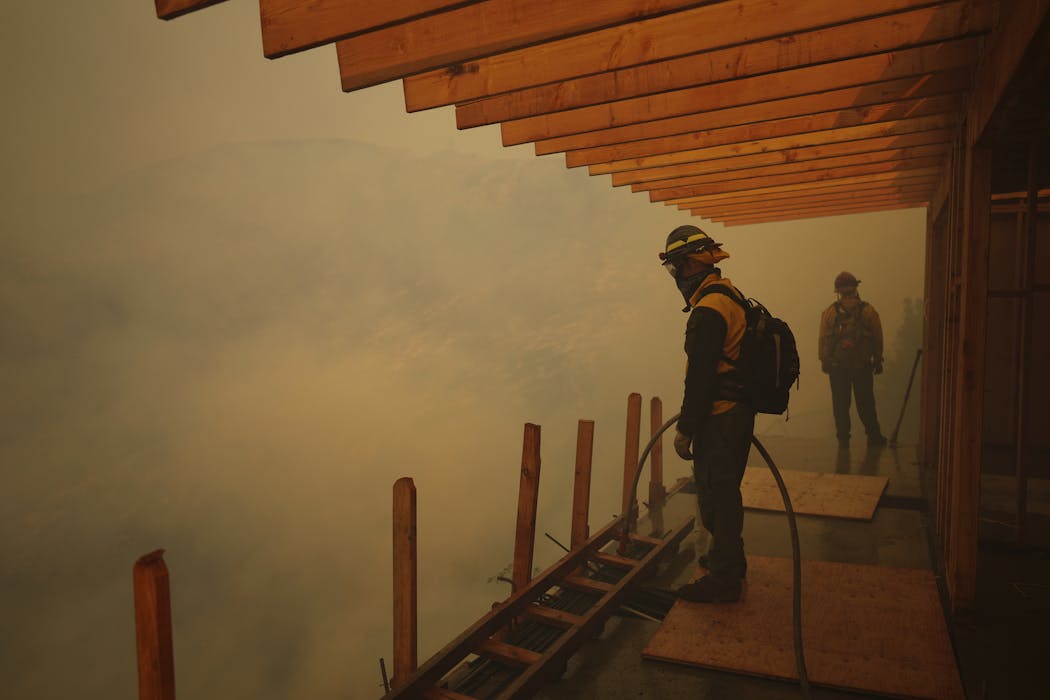
Smoke rolls up a hillside from the Palisades Fire on Jan. 11, 2025, in Los Angeles. AP Photo/Eric Thayer

When wildfires began racing through the Los Angeles area on Jan. 7, 2025, the scope of the disaster caught residents by surprise. Forecasters had warned about high winds and exceptionally dry conditions, but few people expected to see smoke and fires for weeks in one of America’s largest metro areas.

Environmental health scientist Yifang Zhu studies air quality at UCLA and began collecting samples from inside and outside homes the day after the fires began. In this Q&A, she describes findings by her team, a consortium of universities and local projects, that are painting a picture of the health risks millions of Los Angeles-area residents faced.

Their research offers both a warning and steps people everywhere can take to protect their homes and themselves from wildfire smoke in the future.

What made the LA fires unusual?

Urban fires are unique in a sense that it’s not just trees and other biomass burning. When homes and vehicles catch fire, plastics, electronics, cleaning chemicals, paints, textiles, construction material and much more burns, releasing chemicals and metals into the air.

More than 16,000 buildings burned in LA. Electric vehicles burned. A dental clinic burned. All of this gets mixed into the smoke in complicated ways, creating complex mixtures that can have definite health risks.

One thing we’ve found that is especially important for people to understand is that the concentration of these chemicals and metals can actually be higher inside homes compared with outside after a fire.

Satellite image of fire outlines.
A composite of satellite images from January 2025 shows outlines, in red, of the largest fires in the Los Angeles area. Altadena is on the right, and Pacific Palisades is on the lower left.
MMGIS, Caltech/JPL

What are your health studies trying to learn?

To understand the health risks from air pollution, you need to know what people are exposed to and how much of it.

The LA Fire HEALTH Study, which I’m part of, is a 10-year project combining the work of exposure scientists and health researchers from several universities who are studying the long-term effects of the fire. Many other community and health groups are also working hard to help communities recover. A local program called CAP.LA, or Community Action Program Los Angeles, is supporting some of my work, including establishing a real-time air quality monitoring network in the Palisades area called CAP AIR.

During an active wildfire, it’s extremely difficult to collect high-quality air samples. Access is restricted, conditions change quickly, and research resources are often limited and take time to assemble. When the fires broke out not far from my lab at UCLA, my colleagues and I had been preparing for a different study and were able to quickly shift focus and start collecting samples to directly measure people’s exposure to metals and chemicals near and around the fires.

A neighborhood with smoke in the air.
Wildfire smoke, like this during the Palisades Fire on Jan. 7, 2025, can get into a home under doors and around windows.
AP Photo/Ethan Swope

My group has been working with people whose homes were exposed to smoke but didn’t burn and collecting samples over time to understand the smoke’s effects. We’re primarily testing for volatile organic compounds off-gassing from soft goods – things like pillows, textiles and stuffed animals that are likely to absorb compounds from the smoke.

Our testing found volatile organic compounds that were at high levels outdoors during the active fire were still high indoors in February, after the fires were contained. When a Harvard University team led by environmental scientist Joe Allen took samples in March and April, they saw a similar pattern, with indoor levels still high.

What health risks did your team find in homes?

We have found high levels of different kinds of volatile organic compounds, which have different health risks. Some are carcinogens, like benzene. We have also found metals like arsenic, a known carcinogen, and lead, which is a neurotoxin.

Mike Kleeman, an air quality engineer at the University of California Davis, found elevated levels of hexavalent chromium in the nanometer-size range, which can be a really dangerous carcinogen. In March, he drove around collecting air samples from a burn zone. That was testing which government agencies would not have routinely done.

Fires have a long list of toxic compounds, and many of them aren’t being measured.

Chart shows spike in visits in early January 2025
Data from the Centers for Disease Control and Prevention shows emergency room visits spiking during the fires in early January 2025. The bold line shows the daily percentage of emergency department (ED) encounters that were associated with wildfires, and the dashed line shows the outdoor air quality index (AQI) values.
CDC

What do you want people to take away from these results?

People are exposed to many types of volatile organic compounds in their daily lives, but after wildfires, the indoor VOC levels can be much, much higher.

I think that’s a big public health message from the LA fires that people really need to know.

In general, people tend to think the outdoor air is worse for their health, particularly in a place like LA, but often, the indoor air is less healthy because there are several chemical emission sources right there and it’s an enclosed space.

Think about cooking with a gas stove, or burning candles or spraying air fresheners. All of these are putting pollutants into the air. Indoor pollution sources like cleaning fluids and PFAS from furniture and carpets are all around.

We often hear from people who are really worried about the air quality outside and its health risk during fires, but you need to think about the air indoors too.

A man walks on a beach with a dog as smoke rise from a fire in the background.
Thick smoke from a wildfire spreads over homes in Pacific Palisades, as seen from the Venice Beach section of Los Angeles on Jan. 7, 2025.
AP Photo/Jae C. Hong

What are some tips for people dealing with fires?

The LA fires have given us lots of insights into how to restore homes after smoke damage and what can be cleaned up, or remediated. One thing we want to do is develop an easy-to-follow decision tree or playbook that can help guide future fire recovery.

When the fires broke out, even I had to think about the actions I should take to reduce the smoke’s potential impact, and I study these risks.

First, close all your windows during the wildfire. If you have electricity, keep air purifiers running. That could help capture smoke that does get into the home before it soaks into soft materials.

Once the outside air is clean enough, then open those windows again to ventilate the house. Be sure to clean your HVAC system and replace filters, because the smoke leaves debris. If the home is severely impacted by smoke, some items will have to be removed, but not in every case.

And you definitely need to do testing. A home might seem fine when you look at it, but our testing showed how textiles and upholstery inside can continue off-gassing chemicals for weeks or longer.

But many people don’t have their homes tested after wildfires. They might not know how to read the results or trust the results. Remediation can also be expensive, and some insurance companies won’t cover it. There are probably people who don’t know whether their homes are safe at this point.

So there needs to be a clear path for recovery, with contamination levels to watch for and advice for finding help.

This is not going to be the last fire in the Los Angeles area, and LA will not be the last city to experience fire.

The Conversation

Yifang Zhu is working with CAP.LA (Community Action Project Los Angeles), which is funded by the R&S Kayne Foundation, and the LA Fire Health Study, which is funded by private philanthropists, including the Speigel Family Fund. Her work has also been partially funded by the Gordon and Betty Moore Foundation, the Danhakl Family Foundation, and the California Air Resources Board.

ref. LA fires: Chemicals from the smoke lingered inside homes long after the wildfires were out – studies tracked the harm – https://theconversation.com/la-fires-chemicals-from-the-smoke-lingered-inside-homes-long-after-the-wildfires-were-out-studies-tracked-the-harm-272473

Voters shrug off scandals, paying a price in lost trust

Source: The Conversation – USA – By Brandon Rottinghaus, Professor of Political Science, University of Houston

Donald Trump waits in court during proceedings over a business records violation. He was convicted, but Trump and his supporters dismissed the case as a partisan attack. Mary Altaffer/AP

Donald Trump joked in 2016 that he could “stand in the middle of Fifth Avenue and shoot somebody” and not lose support. In 2024, after two impeachments and 34 felony convictions, he has more or less proved the point. He not only returned to the White House, he turned his mug shot into décor, hanging it outside the Oval Office like a trophy.

He’s not alone. Many politicians are ensnared in scandal, but they seldom pay the same kind of cost their forebears might have 20 or 30 years ago. My research, which draws on 50 years of verified political scandals at the state and national levels, national surveys and an expert poll, reaches a clear and somewhat unsettling conclusion.

In today’s polarized America, scandals hurt less, fade faster and rarely end political careers.

New York’s Andrew Cuomo and New Jersey’s Jim McGreevey both resigned as governors due to sex scandals, only to run again this year for mayoral posts. Both lost. Cuomo sought to replace New York Mayor Eric Adams, who never stepped down despite being indicted – with charges later dropped – in a corruption case that engulfed much of his administration.

The adulterous state attorney general from Texas, Ken Paxton, survived an impeachment vote in 2023 over bribery and abuse of office and is now running for the U.S. Senate. The list goes on – proof that scandal rarely ends a political career.

When scandals still mattered

For most of the previous half-century, scandals had real bite.

Watergate, which involved an administration spying on its political enemies, knocked out President Richard M. Nixon. The Keating Five banking scandal of the 1980s reshaped the Senate, damaging the careers of most of the prominent senators who intervened with regulators to help a campaign contributor later convicted of fraud.

Members of Congress referred to the House ethics committee were far less likely to keep their seats. Governors, speakers and cabinet officials ensnared in scandal routinely resigned. The nation understood scandal as a serious breach of public trust, not a potential fundraising opportunity.

But beginning in the late 1990s and accelerating throughout the Trump era, something changed.

According to my dataset of more than 800 scandals involving presidents, governors and members of Congress, politicians in recent decades have survived scandals for longer periods of time and ultimately faced fewer consequences.

Even at the presidential level – where personal legacy should, in theory, be most sensitive – scandals barely leave a dent. Trump and his supporters have worn his legal attacks as a badge of honor, taking them as proof that an insidious swamp has conspired against him.

This isn’t just a quirk of modern politics. As a political scientist, I believe it’s a threat to democratic accountability. Accountability holds politicians, and the political system, to legal, moral and ethical standards. Without these checks, the people lose their power.

To salvage the basic idea that wrongdoing still matters, the nation will need to figure out how to Make Scandals Great Again – not in the partisan sense but in the civic one.

As a start, both parties could commit to basic red lines – bribery, abuse of office, exploitation – where resignation is expected, not optional. This would send a signal to voters about when to take charges seriously. That matters because, while voters can forgive mistakes, they shouldn’t excuse corruption.

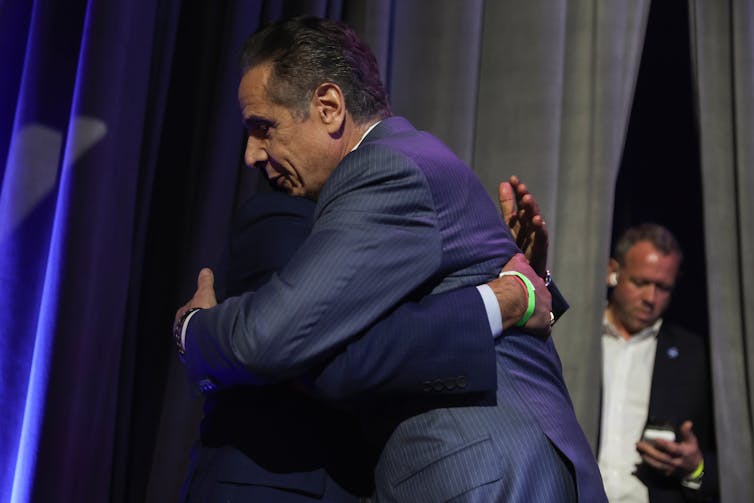
Former New York Governor Andrew Cuomo hugs a supporter on election night.
Andrew Cuomo, who resigned as New York governor amid scandal in 2021, fell short during his comeback bid for mayor this year.
Heather Kalifa/AP

A tribal cue, not an ethical event

Why the new imperviousness?

Partisanship is the main culprit. Today’s voters don’t evaluate scandal as citizens; they evaluate it as fans. Democrats and Republicans seek to punish misdeeds by the other side but rationalize them for their own.

This selective morality is the engine of “affective polarization,” a political science term describing the intense dislike of the opposing party that now defines American politics. A scandal becomes less an ethical event than a tribal cue. If it hurts my enemy, I’m outraged. If it hurts my ally, it’s probably exaggerated, unfair or just fake.

The nation’s siloed and shrinking media environment accelerates this trend. News consumers drift toward outlets that favor their politics, giving them a partial view of possible wrongdoing. Local journalism, formerly the institution most responsible for uncovering wrongdoing, has been gutted. A typical House scandal once generated 70 or more stories in a district’s largest newspaper. Today, it averages around 23.

Evaluating surveys of presidency scholars, I found that economic growth, time in office, war leadership and perceived intellectual ability all meaningfully shape presidential greatness. Scandals, by comparison, barely move the needle.

Warren G. Harding still gets dinged for Teapot Dome, a major corruption scandal a century ago, and Nixon remains defined by Watergate. But for most modern presidents, scandal is just one more piece of noise in an already overwhelming media environment.

At the same time, partisan media ecosystems reinforce voters’ instincts. For many voters, negative coverage of a fellow partisan is not a warning sign. As with Trump, it can be a badge of honor, proof that the so-called establishment fears their champion.

The incentive structure flips. Instead of shrinking from scandal and behavior that could once have ended careers, politicians learn to exploit it. As Texas governor a decade ago, Rick Perry printed his felony mug shot on a T-shirt for supporters. Trump’s best fundraising days corresponded directly to his criminal court appearances.

Making scandals resonate

Even when the evidence is clear-cut, the public’s memory isn’t.

Voters forget scandals that should matter but vividly remember ones that fit their partisan worldview, sometimes even when memory contradicts fact. Years after Trump left office, more Republicans believed his false claims – about the 2020 election, cures for COVID-19 and the Jan. 6 Capitol riot – than during his presidency. The longer the scandal drags on, the foggier the details become, making it easier for partisans to reshape the narrative.

The problem isn’t that America has too many scandals. It’s that the consequences no longer match the misdeeds.

But the story isn’t hopeless. Scandals still matter under certain conditions – particularly when they involve clear abuses of power or financial corruption and, crucially, when voters actually learn credible details. And political scientists have long known that scandals can produce real benefit. They expose wrongdoing, prompt reforms, sharpen voter attention and remind citizens that institutions need scrutiny.

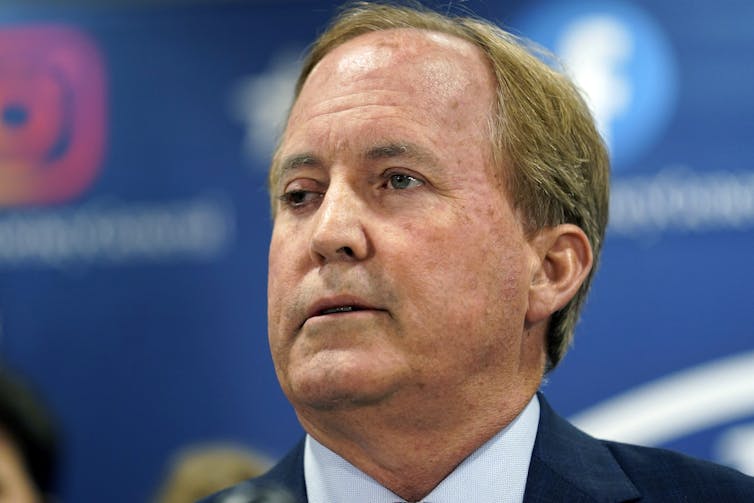
Texas Attorney General Ken Paxton makes a statement at his office.
Ken Paxton has spent most of his years as Texas attorney general under indictment but survived an impeachment vote and is now running for the Senate.
Eric Gay/AP

So, what would it take to Make Scandals Great Again, not as spectacle but as accountability?

One step would be to rebuild the watchdogs. Local journalism could use investment, including through nonprofit models and philanthropy.

Second, it’s important that ethics enforcement maintains independence from the political actors it polices. Letting lawmakers investigate themselves guarantees selective outrage. At the same time, however, political parties could play a role in restoring trust by calling out their own, increasing their own accountability by lamenting real offenses among their own members.

Political scandals will never disappear from American life. But for them to serve as silver linings – and, ultimately, to protect public trust – the conditions that give them meaning require restoration. That could foster a political culture where wrongdoing still carries a price and where truth can pierce through the noise long enough for the public to hear it.

The Conversation

Brandon Rottinghaus does not work for, consult, own shares in or receive funding from any company or organization that would benefit from this article, and has disclosed no relevant affiliations beyond their academic appointment.

ref. Voters shrug off scandals, paying a price in lost trust – https://theconversation.com/voters-shrug-off-scandals-paying-a-price-in-lost-trust-271077

How museums can help rebuild trust in a divided America

Source: The Conversation – USA (2) – By Devon Akmon, Director of the MSU Museum and CoLab Studio, Michigan State University

Across the United States, political polarization has deepened to historic levels. In a report published in May 2025, the Pew Research Center found that Americans are more divided and less trusting of one another than at any point in recent decades. Yet museums remain among the few places where curiosity still draws people across political and cultural lines.

Ninety-two percent of adults view museums as nonpartisan sources of education, according to a report from Wilkening Consulting. People also trust museums for presenting fact-based, authentic and research-driven information. Ninety-six percent of Americans say they would support lawmakers who fund museums, and 97% see museums as vital educational assets to their communities. These findings place museums among the most trusted institutions in American life, ranking just behind friends and family.

That rare level of confidence gives museums both an opportunity and a responsibility. As debates over science, history and art intensify, they are being called upon to do something more fundamental: to model how people might think and listen together.

As director of the Michigan State University Museum in East Lansing, and core faculty in the Arts, Cultural Management and Museum Studies program at MSU, I see every day how these spaces can foster understanding.

Questioning algorithms, fostering dialogue

At the MSU Museum, an upcoming exhibition titled “Blurred Realities” will ask a question that feels urgent far beyond its gallery walls: How do we decide what is true?

Opening in January 2026, “Blurred Realities” examines how information, bias and technology shape people’s understanding of the world. Rather than advancing a single authoritative narrative, the exhibition creates space for inquiry, encouraging visitors to reflect on how beliefs are formed, how digital systems influence perception, and how imagination reshapes memory and identity. In doing so, the exhibition invites thoughtful engagement with the stories, data and algorithms that shape contemporary life, and considers what it means to navigate truth in an increasingly complex information environment.

Central to this effort are the museum’s “CoLaborators,” a team of college students trained to facilitate small, idea-driven conversations that encourage curiosity and exchange between museum visitors. They engage guests in open conversations that respond to their interests in the moment. This approach differs from the traditional docent model, which often centers on the transmission of information. Instead, the students’ work transforms the gallery into a living forum where questions matter more than conclusions.

In my experience, this is just one of many ways that museums are engaging the communities they serve to explore timely and relevant topics that shape contemporary life.

Michigan State University students discuss their participation in the CoLaborator program.

Catalysts for civic connection

Museums have long been places to explore the natural world, cultural artifacts and scientific discovery.

History museums have hosted community storytelling projects. An excellent example is the “Your Story, Our Story” project led by the Tenement Museum in New York.

Science museums, including the Natural History Museum of Utah, have led public discussions on climate change.

Art and history museums have opened their galleries and programming spaces to conversations about identity and belonging. The Charles H. Wright Museum of African American History held an exhibition centered on Detroiters exonerated of crimes and themes of justice, identity and renewal.

The Institute of Museum and Library Services describes museums and libraries as community catalysts that support social well-being through cultural engagement, shared identity and social connection. In a time when public debate often happens online, in anger and lacking nuance, museums offer something different: a physical place where curiosity can thrive and where people can pause, reflect and listen.

The more than 35,000 museums across the United States represent a remarkably broad and diverse field, rooted in communities of every size and serving people where they live and learn. Their core work has traditionally focused on collecting, researching, preserving and interpreting objects of historical, cultural and scientific significance.

As social divisions grow, they are becoming important forms of social infrastructure where people can encounter different perspectives. In many cases, their roles are also expanding as museums help the public engage with the pressing questions of our time.

The Association of Science and Technology Centers notes that rising mistrust in institutions, the spread of misinformation and the weakening of shared public spaces are creating new challenges for organizations that engage the public. In recent years, these trends are prompting museums to think about their role in supporting connection and understanding. Across the country, institutions that once focused mainly on preservation and education are reframing their purpose to include convening civic dialogue and helping visitors navigate complex issues together.

Preserving trust in an age of discontent

As museums step more visibly into the civic sphere, they also face new pressures. Efforts to engage with difficult topics can draw criticism from across the political spectrum.

Some question why museums address issues like race, climate or misinformation at all, while others expect them to go further. The result can be a delicate balance between maintaining trust and remaining relevant. Staff and volunteers are expected to create inclusive environments while navigating limited resources, public scrutiny and, sometimes, personal attacks. Smaller institutions may lack the capacity to sustain long-term partnerships or withstand political pushback.

I believe avoiding these conversations carries its own risks. It can reinforce perceptions that museums are detached from the realities of the communities they serve. The key question we ask ourselves at the MSU Museum is not whether to engage with societal issues, but how to do so with care, humility and authenticity. That involves listening as much as leading and viewing dialogue itself as part of our educational mission.

At a moment when trust in public institutions is fragile, museums hold a rare and valuable position. They are places where people still expect to learn something new and to encounter ideas different from their own. When museums invite visitors to think together about complex issues, whether through exhibitions, conversations or community partnerships, they help nurture the habits of curiosity and empathy that democracy depend on. These interactions may not resolve polarization, but they can model a more constructive way of engaging with difference.

Within a museum’s walls, people can explore difficult ideas without the noise of argument or the demand to take sides. In doing so, museums continue their essential work, not only preserving the past but helping us imagine a shared future built on understanding, curiosity and trust.

Blurred Realities” is on view at the Michigan State University Museum in East Lasing, Michigan, from Jan. 15 to July 18, 2026.

Read more of our stories about Michigan.

The Conversation

Devon Akmon is the board chair for the American Alliance of Museums.

ref. How museums can help rebuild trust in a divided America – https://theconversation.com/how-museums-can-help-rebuild-trust-in-a-divided-america-268466

Why does orange juice taste bad after you brush your teeth?

Source: The Conversation – USA – By Linda Bartoshuk, Research Professor of Psychology, George Washington University

There’s a scientific reason your OJ tastes funny after you brush your teeth. JGI/Tom Grill/Tetra Images via Getty Images

Curious Kids is a series for children of all ages. If you have a question you’d like an expert to answer, send it to CuriousKidsUS@theconversation.com.


Why does orange juice taste bad after you brush your teeth? – Seth G., age 10, Bloomington, Indiana


It’s a mistake you hopefully only make once. In your morning rush to get ready, you brush your teeth before you head to the kitchen and down a big glass of orange juice. Yuck!

What makes your clean, minty mouth taste so gross when it meets OJ?

The short answer is that toothpaste contains a detergent that dissolves fat. And since your taste buds are partly made of fat, they are disrupted whenever you brush your teeth.

Before you decide you need to stop brushing your teeth to save your taste buds, know that this disruption is temporary, lasting only a few minutes. Brushing with toothpaste is still important for your health.

But how does this change in taste happen? And how are the taste receptors that are all over the surface of your tongue supposed to work?

I’m a psychologist, and I’ve spent more than 40 years researching the science of how people experience taste and flavor.

Let’s look at the science behind this phenomenon:

A bittersweet symphony

Thanks to evolution, your brain is wired to make you love the sweet sugars your body and brain need for fuel and hate the bitter poisons than could kill you. So your receptors for these two particular tastes are vital to your survival.

All of the cells in your body are held together by an outer layer, known as the membrane, that is made up of fats called lipids. And in sweet or bitter taste receptor cells, the cell membranes also contain a special molecule called a G protein-coupled receptor, or GPCR.

Some GPCRs are designed to detect sweet tastes. They tune out all compounds that aren’t sweet and respond only to the sugars your body can use. Others detect bitter tastes, tuning in to the large number of compounds in nature that are poisonous. They act as a built-in alarm system.

Salty chips and sour candies

Your perception of saltiness and sourness happens a little differently. These tastes are detected when positively charged ions called cations pass through tiny openings in the cell membrane of your salty and sour receptors.

In the case of saltiness, the cation is the positively charged sodium found in sodium chloride – common table salt.

For acidic, or sour, tastes, the cation is a positively charged hydrogen ion. While different types of acids may contain different chemical compounds, they all contain the hydrogen cation.

When you eat potato chips, the positively charged sodium cations from the salt pass through special openings in a receptor’s membrane, producing the salty taste. Similarly, the hydrogen cations in your favorite sour candy slip through other special openings in your sour receptor’s membrane and send a “sour” signal to your brain.

Toothpaste and OJ

The orange juice that many people like to drink with breakfast is naturally high in sugar. But it also contains citric acid, with its hydrogen cations. As a result, it’s a delicious combination of both sweet and a little sour.

But if you brush your teeth before breakfast, your OJ tastes terrible. What’s changed?

It’s not just that minty tastes clash with sweet ones. Toothpaste contains the detergent sodium lauryl sulfate, which helps remove dental plaque from your teeth. Plaque is the sticky film of germs that can cause cavities and make your breath smell bad.

Boy brushes teeth with green toothbrush
The detergent that helps toothpaste clean your teeth also affects your taste receptors.
Ekaterina Goncharova/Moment via Getty Images

If you ever do the dishes, you’ve probably seen what happens when you squirt detergent into a sink full of greasy water: The detergent breaks up the greasy fat, making it easy to wipe it off the dishes and rinse them clean.

But there’s another type of fat in your mouth that the detergent in toothpaste disrupts – the lipids in the cell membranes of your taste receptors. Brushing your teeth breaks up that layer of lipids, temporarily changing how you perceive taste.

Testing it out

Back in 1980, I conducted a study with a couple of my colleagues who were studying chemistry. We wanted to know how the tongue responds to sweet, bitter, salty and sour after being exposed to sodium lauryl sulfate, the detergent in toothpaste.

We conducted an experiment with seven student volunteers at Yale. They tasted very high concentrations of sweet sucrose, sour citric acid, salt and bitter quinine, both before and after holding a solution (0.05%) of sodium lauryl sulfate in their mouths for one minute.

You could conduct your own version of this experiment with something sweet like sugar, a little table salt, orange juice and tonic water. Taste them before you brush your teeth and then after, and see what happens!

We found that the intensity of the tastes of sucrose, salt and quinine were reduced by a small amount, but the most important change was that a bitter taste was added to the sour taste of citric acid.

This is why, instead of tasting sweet with a bit of nice tanginess, your OJ tastes bitter after you brush your teeth.


Hello, curious kids! Do you have a question you’d like an expert to answer? Ask an adult to send your question to CuriousKidsUS@theconversation.com. Please tell us your name, age and the city where you live.

And since curiosity has no age limit – adults, let us know what you’re wondering, too. We won’t be able to answer every question, but we will do our best.

The Conversation

Linda Bartoshuk has received funding from NIH.

ref. Why does orange juice taste bad after you brush your teeth? – https://theconversation.com/why-does-orange-juice-taste-bad-after-you-brush-your-teeth-271741

Johannesburg has failed its informal traders: policies are in place, but action is needed

Source: The Conversation – Africa – By Mamokete Modiba, Senior Researcher, Gauteng City-Region Observatory

Johannesburg’s inner city is a bustling hub of economic life – a dense, dynamic web of informal traders, adjacent businesses and other users. Informal trading remains an essential survival strategy for many households. It is also a key source of affordable goods and services.

Managing this activity, however, is not straightforward. The city authorities face legitimate pressures to maintain order, safety, hygiene and accessibility in highly contested urban spaces. At the same time, they have a mandate to support livelihoods and encourage inclusive economic participation.

Balancing these objectives is complex. But, as urban planners and researchers, we believe it’s possible and necessary. It needs to be done in a way that recognises the realities of both municipal constraints. These include budgets, conflicting political pressures and traders’ contributions. Traders generate local economic activity and provide convenient, affordable goods and services.

Johannesburg’s informal trading sector should not be viewed as a problem to eliminate. Rather, it should be managed effectively. The focus for the city should be on improving how this is done.

The city has a chequered history of managing informal traders. In October 2025, Johannesburg authorities removed informal traders from De Villiers Street in the heart of the city’s central business district. The city went on to expand the operation to other inner-city areas and townships to promote “order” and “cleanliness”.

This approach was reminiscent of the 2013 Operation Clean Sweep, which disrupted livelihoods and increased urban inequality and violence. After the events in 2025, the Gauteng High Court ruled in favour of traders who took the city to court. But the court’s ruling has not been implemented.


Read more:
Africa’s city planners must look to the global south for solutions: Johannesburg and São Paulo offer useful insights


The city’s 2022 informal trading policy provides a roadmap for a different approach. It provides a structured framework that includes:

  • recognising informal traders as essential contributors to the urban economy

  • setting out clear procedures for registration, spatial planning, permit processes and trader support.

Its strength lies in offering a coherent, rights-based approach that can bring transparency and fairness to how trading spaces are allocated and managed. But its success hinges on implementation that is transparent, inclusive and responsive.

A durable solution

In our view, Johannesburg can turn contested spaces into engines of shared prosperity by:

  • investing in adequate infrastructure

  • promoting collaboration among traders, property owners, municipal authorities and other affected stakeholders

  • enforcing regulations that protect livelihoods instead of punishing them.

A durable solution requires systematic reforms grounded in provisions of the city’s 2022 informal trading policy. This emphasises co-management by various stakeholders. Among them are officials from various relevant departments, municipal-owned entities and the informal traders.

But laws and regulations have to be updated.

By-laws passed in 2012 are still being used to regulate the sector. This is even though a new policy was adopted in 2022.

Updated by-laws would enable the city to reflect the policy’s developmental orientation. This includes its focus on supporting livelihoods and expanding access to jobs and entrepreneurial opportunities. It also includes creating a conducive regulatory and management environment for informal traders.


Read more:
Johannesburg’s produce market has supplied the informal sector for decades: a refresh is due


The policy adopted in 2022 contains several important provisions that support more effective management of informal trading. Key elements include:

1) Informal trading plans.

A comprehensive, independently conducted census of all traders – registered and unregistered – will form the evidence base for this plan. This will enable the city to understand the full scale and distribution of informal trading.

The city must make enough suitable trading sites available. This expanded access would help accommodate more traders legally and reduce pressure on overcrowded locations. Throughout the process, the city must balance the need to demarcate trading sites with:

  • the principle of minimal relocation to protect livelihoods

  • ensuring that pavements, transport routes and other public amenities remain accessible to all.

2) Appropriate infrastructure and services.

Ensuring that informal traders have adequate services supports their livelihoods and also contributes to cleaner, safer, and more attractive streets for all users. All informal trading environments in the inner city would benefit from access to better infrastructure. This includes water, electricity, street lighting, storage, improved sidewalks, trading shelters and ablution facilities.


Read more:
Smart cities start with people, not technology: lessons from Westbury, Johannesburg


3) Clear articulation of traders’ rights and responsibilities.

The greatest responsibility rests with the city to transform informal trading management. But the policy also makes clear that informal traders themselves have important responsibilities to ensure the system works effectively.

Once allocated trading sites, traders are expected to:

  • operate only within designated areas

  • avoid restricted or prohibited spaces

  • help to maintain order

  • conduct their business in line with applicable regulations, policies and by-laws

  • play an active role in maintaining the cleanliness and upkeep of their trading spaces

  • work collaboratively with the City, neighbouring businesses and other local stakeholders.

The plan also envisages the establishment of an independent informal trade forum, an informal trading task team and a dedicated informal trade unit. Urgent action is needed to constitute these structures.

Next steps

The City has an opportunity to shift from reactive, enforcement-driven approaches to a proactive, developmental model that values informal trading as a central part of Johannesburg’s economy and identity.

There are key next steps that need to be taken.

Firstly, fully operationalising the commitments of the 2022 policy by updating by-laws.

Secondly, by completing a transparent and comprehensive census of all traders. This needs to include involving them meaningfully in decisions about management processes.

Alongside this, the city should prioritise investment in adequate infrastructure and strengthen communication and collaboration platforms. It also needs to establish the dedicated structures envisioned in the policy.

Together, these actions can build an enabling system that protects livelihoods, reduces conflict, and supports a vibrant, inclusive and economically resilient inner city.

The Conversation

Mamokete Modiba previously received funding from the National Research Foundation and Tiso Foundation.

Sarah Charlton previously received funding from the National Research Foundation and various UK & European research grant funders. .

Claire Benit-Gbaffou and Tanya Zack do not work for, consult, own shares in or receive funding from any company or organisation that would benefit from this article, and have disclosed no relevant affiliations beyond their academic appointment.

ref. Johannesburg has failed its informal traders: policies are in place, but action is needed – https://theconversation.com/johannesburg-has-failed-its-informal-traders-policies-are-in-place-but-action-is-needed-270911

The US used to be really dirty – environmental cleanup laws have made a huge difference

Source: The Conversation – USA (2) – By James Salzman, Professor of Environmental Law, Bren School of Environmental Science & Management, University of California, Santa Barbara; University of California, Los Angeles

Growing up in the 1970s, I took for granted the trash piles along the highway, tires washed up on beaches, and smog fouling city air. The famed “Crying Indian” commercial of 1971 became a symbol of widespread environmental damage across the United States.

That’s why the first Earth Day on April 22, 1970, energized the nation. In the largest single-day public demonstration in U.S. history, roughly 10% of the population took to the streets to shout together: “Enough is enough!”

Republican and Democratic politicians alike listened. Over the decade that followed, all the nation’s foundational environmental laws were passed with strong bipartisan support – the Clean Air Act, Clean Water Act, Endangered Species Act and more.

The “Crying Indian” ad began running on TV in the U.S. in 1971 and shows scenes of pollution that were common across the country at the time. The harms were all too real, though it was later revealed the actor was of Italian ancestry, not Indigenous heritage.

These laws are taking a beating at the moment, including from the Environmental Protection Agency – the federal government agency created in 1970 to protect the environment. The agency’s own leader, Lee Zeldin, boasted of “driving a dagger straight into the heart” of environmental regulations. President Donald Trump regularly derides environmental laws as job killers and government overreach.

But the conditions that made these laws necessary have largely been forgotten. This environmental amnesia allows critics to focus entirely on costs while ignoring the laws’ very real benefits and achievements.

I’m an environmental law professor, so I was excited to learn recently about the Documerica project, courtesy of a wonderful article by writer Gideon Leek. It shows in clear photographic evidence how dirty the U.S. used to be and wakes people up to how much better the environment is today.

Crowds of people cover all of a wide city street and its sidewalks.
Across the U.S., including on Fifth Avenue in New York City, millions of people demanded environmental protection on the first Earth Day, April 22, 1970.
Bettmann Archive via Getty Images

An inspired origin

Environmental protection was a bipartisan effort in the 1970s: The EPA was created by President Richard Nixon, a Republican. The agency’s first leader was Bill Ruckelshaus, a Republican congressman from Indiana.

Inspired by the famous photographs of Depression-era farmworkers commissioned in the 1930s by the Farm Security Administration, Ruckelshaus’ newly created EPA commissioned a nationwide photo record. The goal, as Leek put it, was to “provide the EPA with a great deal of qualitative environmental data, create a ‘visual baseline’ against which to judge their efforts, and introduce the agency to the country through art.”

In its few short years of operation, from 1972 through 1978, the Documerica project produced over 20,000 photographs of rivers and farms, highways and city streets. The photos provide a vivid window into the state of the U.S. environment in the 1970s. Now, looking back, they highlight the progress made in the decades since, a demonstration of environmental laws’ successes far more powerful than graphs and statistics.

A broad swath of trash sits on the ground. In the distance are a green meadow and sharp mountain peaks.
The landfill in Boulder County, Colo., in 1972 was just an open pit people could walk right up to and throw their trash in.
Bill Gillette, Documerica Project, U.S. National Archives

Solid waste

As a kid, every Sunday my father and I would load the back of our station wagon with trash barrels and drive to the town dump – literally a hole in the ground. My dad would back up to the edge of the pit, and I would enthusiastically run out for what we called “The Olympic Trash Throw!” pouring the barrels’ contents down to where a bulldozer rumbled back and forth, compacting the trash while gulls circled overhead.

To say America’s landscape was littered in the 1970s is not merely poetic phrasing. Waste disposal was a matter of local law, and illegal dumping was commonplace. Drums of pesticides and chemicals could be sent to the local dump along with tires and just about anything else people and companies wanted to get rid of. When the dump was full, it was covered with topsoil and became open land, ready for recreation or building construction.

One place where this happened was Love Canal, a neighborhood near Niagara Falls, New York. A dump holding decades of chemical drums from the Hooker Chemical Co. was lightly covered and sold to the town for just $1. The town was grateful. A neighborhood was built on the land.

Only when people noticed high levels of miscarriages and cancer clusters among the residents – and saw oozing waste – did opinion change.

A bulldozer pushes dirt across open land, marked with a sign saying 'Danger, keep out.'
In 1980, a massive cleanup got underway in the Love Canal neighborhood of Niagara Falls, N.Y.
Bettmann Archive via Getty Images

In 1976, Congress passed the Resource Conservation Recovery Act, which was the first law that tracked waste materials from their creation to their disposal and set tough standards for how to dispose of them. But by then, decades of unregulated waste disposal had contaminated sites all over the country. The contaminants, toxicity and people responsible were often unknown.

Four years later, the 1980 law known as “Superfund” set standards and assigned financial responsibility for cleaning up hazardous waste sites. The law created a multibillion-dollar fund that could pay for the cleanups and required potentially responsible parties to reimburse the government or clean up the sites on their own.

Faced with requirements to track their waste and heavy fines if the disposal resulted in hazardous sites, companies paid much more careful attention to their waste disposal. No one wanted to pay for cleaning up a Superfund site.

A beach covered in tires stretches out to a waterway, with docks and boats in the distance.
Discarded tires litter the shorefront of Baltimore Harbor in 1973.
Jim Pickerell, Documerica Project, U.S. National Archives

Water pollution

I had the misfortune in 1978 to capsize while sailing a boat on the Charles River in Boston. My shame turned to a dermatologist’s visit when I broke out in rashes the next day. You fell in the Charles at your peril.

Environmental advocates weren’t kidding when, in the 1960s and 1970s, they declared “Lake Erie is a dead lake” because of all the industrial pollution pouring into its waters. An oil slick on Cleveland’s Cuyahoga River famously caught fire in 1969, but it was actually the 12th time the river had burned in a century.

Just as with dumps on land, all kinds of waste was being disposed of in rivers, lakes and harbors. There was a federal law in place, but it was ineffective and relied on states to set limits and enforce them.

The Clean Water Act of 1972 sought to create a national standard, requiring companies that wanted to discharge waste into waterways to get a federal permit and use the best available technology to reduce the amount and toxicity of what they did dump. The act also provided billions of taxpayer dollars to upgrade sewage treatment plants so they didn’t just dump untreated sewage into the water.

A large stretch of discolored water flows into a larger body of water.
The badly polluted Niagara River flows into Lake Erie in Buffalo, N.Y., in 1973.
George Burns, Documerica Project, U.S. National Archives

The ambitious goal was to end water pollution entirely and make all of the nation’s waters safe for swimming and fishing within a decade. Those aspirational goals for the country’s waters still have not been fully met, though Ruckelshaus used to quip that at least they are not flammable.

Even more telling, the Charles River and other urban rivers that people avoided in the 1970s now boast all manner of recreation, with little or no risk of rashes even while swimming.

A curtain of smog obstructs the view of a city and the mountains behind it.
Smog blankets Salt Lake City in 1972.
Bruce McAllister, Documerica Project, U.S. National Archives

Air pollution

Perhaps the most obvious improvement since the 1970s has been in air quality around the U.S.

The horrible smog around Los Angeles is well known. But many other cities were blanketed in polluted air that led to respiratory illnesses and millions of early deaths across the nation over the decades. In Pittsburgh it was only half-jokingly said that you had to floss your teeth after breathing.

The Clean Air Act of 1970 was the first law to require the EPA to set uniform nationwide standards for air quality to protect the air people breathe. In short order, lead was phased out of gasoline, catalytic converters were required on cars, acid rain was ended, and the sources of smog were stringently regulated. An EPA study found that the benefits under the law exceeded costs by a factor of more than 30 to 1 and in 2020 alone prevented over 230,000 early deaths.

A thick layer of smog covers a cityscape with tall buildings and several bridges over a river.
Smog was a problem in Louisville, Ky., and across the nation in the early 1970s.
William Strode, Documerica Project, U.S. National Archives

I could go on with photos and stories about laws from the 1970s that protected wetlands, conserved open space, reduced pesticide use, increased recycling and made many other changes to how Americans treat our lands and waters.

But it all boils down to two simple facts. First, with the exception of greenhouse gases, which have been effectively unregulated, every major measure of environmental health has improved significantly over the past five decades. And second, those improvements all occurred during times of strong economic growth, with inflation-adjusted gross domestic product increasing fivefold.

Calling these laws “job killers” misses the point entirely. They created jobs and stopped environmental killers. The laws now being demonized are the very reason the Documerica photos are images of the past, not the present. Environmental laws and regulations have their costs, to be sure, but these photographs still hold visceral power: They show just how far the nation has come and what is at risk if we forget.

The Conversation

James Salzman does not work for, consult, own shares in or receive funding from any company or organization that would benefit from this article, and has disclosed no relevant affiliations beyond their academic appointment.

ref. The US used to be really dirty – environmental cleanup laws have made a huge difference – https://theconversation.com/the-us-used-to-be-really-dirty-environmental-cleanup-laws-have-made-a-huge-difference-271277

LA fire studies show the risks as wildfire smoke lingered inside homes

Source: The Conversation – USA (2) – By Yifang Zhu, Professor of Environmental Health Sciences, University of California, Los Angeles

Smoke rolls up a hillside from the Palisades Fire on Jan. 11, 2025, in Los Angeles. AP Photo/Eric Thayer

When wildfires began racing through the Los Angeles area on Jan. 7, 2025, the scope of the disaster caught residents by surprise. Forecasters had warned about high winds and exceptionally dry conditions, but few people expected to see smoke and fires for weeks in one of America’s largest metro areas.

Environmental health scientist Yifang Zhu studies air quality at UCLA and began collecting samples from inside and outside homes the day after the fires began. In this Q&A, she describes findings by her team, a consortium of universities and local projects, that are painting a picture of the health risks millions of Los Angeles-area residents faced.

Their research offers both a warning and steps people everywhere can take to protect their homes and themselves from wildfire smoke in the future.

What made the LA fires unusual?

Urban fires are unique in a sense that it’s not just trees and other biomass burning. When homes and vehicles catch fire, plastics, electronics, cleaning chemicals, paints, textiles, construction material and much more burns, releasing chemicals and metals into the air.

More than 16,000 buildings burned in LA. Electric vehicles burned. A dental clinic burned. All of this gets mixed into the smoke in complicated ways, creating complex mixtures that can have definite health risks.

One thing we’ve found that is especially important for people to understand is that the concentration of these chemicals and metals can actually be higher inside homes compared with outside after a fire.

Satellite image of fire outlines.
A composite of satellite images from January 2025 shows outlines, in red, of the largest fires in the Los Angeles area. Altadena is on the right, and Pacific Palisades is on the lower left.
MMGIS, Caltech/JPL

What are your health studies trying to learn?

To understand the health risks from air pollution, you need to know what people are exposed to and how much of it.

The LA Fire HEALTH Study, which I’m part of, is a 10-year project combining the work of exposure scientists and health researchers from several universities who are studying the long-term effects of the fire. Many other community and health groups are also working hard to help communities recover. A local program called CAP.LA, or Community Action Program Los Angeles, is supporting some of my work, including establishing a real-time air quality monitoring network in the Palisades area called CAP AIR.

During an active wildfire, it’s extremely difficult to collect high-quality air samples. Access is restricted, conditions change quickly, and research resources are often limited and take time to assemble. When the fires broke out not far from my lab at UCLA, my colleagues and I had been preparing for a different study and were able to quickly shift focus and start collecting samples to directly measure people’s exposure to metals and chemicals near and around the fires.

A neighborhood with smoke in the air.
Wildfire smoke, like this during the Palisades Fire on Jan. 7, 2025, can get into a home under doors and around windows.
AP Photo/Ethan Swope

My group has been working with people whose homes were exposed to smoke but didn’t burn and collecting samples over time to understand the smoke’s effects. We’re primarily testing for volatile organic compounds off-gassing from soft goods – things like pillows, textiles and stuffed animals that are likely to absorb compounds from the smoke.

Our testing found volatile organic compounds that were at high levels outdoors during the active fire were still high indoors in February, after the fires were contained. When a Harvard University team led by environmental scientist Joe Allen took samples in March and April, they saw a similar pattern, with indoor levels still high.

What health risks did your team find in homes?

We have found high levels of different kinds of volatile organic compounds, which have different health risks. Some are carcinogens, like benzene. We have also found metals like arsenic, a known carcinogen, and lead, which is a neurotoxin.

Mike Kleeman, an air quality engineer at the University of California Davis, found elevated levels of hexavalent chromium in the nanometer-size range, which can be a really dangerous carcinogen. In March, he drove around collecting air samples from a burn zone. That was testing which government agencies would not have routinely done.

Fires have a long list of toxic compounds, and many of them aren’t being measured.

Chart shows spike in visits in early January 2025
Data from the Centers for Disease Control and Prevention shows emergency room visits spiking during the fires in early January 2025. The bold line shows the daily percentage of emergency department (ED) encounters that were associated with wildfires, and the dashed line shows the outdoor air quality index (AQI) values.
CDC

What do you want people to take away from these results?

People are exposed to many types of volatile organic compounds in their daily lives, but after wildfires, the indoor VOC levels can be much, much higher.

I think that’s a big public health message from the LA fires that people really need to know.

In general, people tend to think the outdoor air is worse for their health, particularly in a place like LA, but often, the indoor air is less healthy because there are several chemical emission sources right there and it’s an enclosed space.

Think about cooking with a gas stove, or burning candles or spraying air fresheners. All of these are putting pollutants into the air. Indoor pollution sources like cleaning fluids and PFAS from furniture and carpets are all around.

We often hear from people who are really worried about the air quality outside and its health risk during fires, but you need to think about the air indoors too.

A man walks on a beach with a dog as smoke rise from a fire in the background.
Thick smoke from a wildfire spreads over homes in Pacific Palisades, as seen from the Venice Beach section of Los Angeles on Jan. 7, 2025.
AP Photo/Jae C. Hong

What are some tips for people dealing with fires?

The LA fires have given us lots of insights into how to restore homes after smoke damage and what can be cleaned up, or remediated. One thing we want to do is develop an easy-to-follow decision tree or playbook that can help guide future fire recovery.

When the fires broke out, even I had to think about the actions I should take to reduce the smoke’s potential impact, and I study these risks.

First, close all your windows during the wildfire. If you have electricity, keep air purifiers running. That could help capture smoke that does get into the home before it soaks into soft materials.

Once the outside air is clean enough, then open those windows again to ventilate the house. Be sure to clean your HVAC system and replace filters, because the smoke leaves debris. If the home is severely impacted by smoke, some items will have to be removed, but not in every case.

And you definitely need to do testing. A home might seem fine when you look at it, but our testing showed how textiles and upholstery inside can continue off-gassing chemicals for weeks or longer.

But many people don’t have their homes tested after wildfires. They might not know how to read the results or trust the results. Remediation can also be expensive, and some insurance companies won’t cover it. There are probably people who don’t know whether their homes are safe at this point.

So there needs to be a clear path for recovery, with contamination levels to watch for and advice for finding help.

This is not going to be the last fire in the Los Angeles area, and LA will not be the last city to experience fire.

The Conversation

Yifang Zhu is working with CAP.LA (Community Action Project Los Angeles), which is funded by the R&S Kayne Foundation, and the LA Fire Health Study, which is funded by private philanthropists, including the Speigel Family Fund. Her work has also been partially funded by the Gordon and Betty Moore Foundation, the Danhakl Family Foundation, and the California Air Resources Board.

ref. LA fire studies show the risks as wildfire smoke lingered inside homes – https://theconversation.com/la-fire-studies-show-the-risks-as-wildfire-smoke-lingered-inside-homes-272473

Will 2026 be the year when coral reefs pass their tipping point?

Source: The Conversation – UK – By Samantha Garrard, Senior Marine Ecosystem Services Researcher, Plymouth Marine Laboratory

Tropical coral reefs cover less than 1% of the seafloor, yet support 25% of all marine species. They are also incredibly vulnerable. Over the past few decades, an estimated 30%-50% have already been lost.

Yet we are approaching a terrifying threshold. After record-breaking ocean heatwaves of 2023-24, which saw coral “bleaching” in at least 83 countries, scientists are looking towards 2026 with growing dread.

The question is whether this will be the year a global tipping point is reached for warm-water coral – a point beyond which their fate is sealed, and even the most resilient species can no longer recover.

The fate of these ecosystems may hinge on events in the Pacific Ocean, in particular a natural climate cycle called the El Niño–Southern Oscillation (ENSO). We have only just emerged from a devastating El Niño (the warm phase) that helped push 84% of the world’s coral reefs into “bleaching-level” heat stress.

Usually, reefs have a few years to “breathe” during the cooler La Niña phrase. However, as the planet warms El Niños are becoming stronger and more frequent, and the transition periods are becoming shorter and less cool.

colourful fish and coral
Healthy reefs are among the most biodiverse places on the planet.
Sergei74 / shutterstockl

With another El Niño expected in 2026, only a short time after the last one, many reefs will not have had sufficient time to recover. This next phase could trigger widespread coral reef collapse.

A point of no return?

The fear is that 2026 could mark a “tipping point”. These are moments when an ecosystem changes really suddenly, often in a way that can’t easily be undone.

However, these thresholds can be notoriously hard to spot as they happen. Every reef is different, and it can be hard to spot these permanent shifts amid short‑term shocks like heatwaves and extreme weather all while global temperatures are still climbing. This makes it harder to see the bigger picture of how the reef is actually doing over the long term.

Reaching a simultaneous global tipping point for all corals in 2026 is an unlikely worst-case scenario. But at a local level, many warm-water coral reefs are clearly set to fare badly. Some reefs have already passed the point of no return, and if extreme heatwaves occur across the tropics again so soon, the extent of loss over the next 12 months could be catastrophic.

What coral collapse looks like

When a reef passes that tipping point, the transformation can be stark.

It begins with bleaching, which happens when the surrounding sea becomes too hot. The stress causes the coral to expel the tiny colourful algae living inside its tissues, turning it white. The coral isn’t dead yet, but if high temperatures last too long, it can die.

Bleached coral
When stressed by warm waters, coral expel the algae that give them their colour.
Sarah_lewis / shutterstock

Heat sensitive species are the most likely to disappear. And when corals die, they are quickly replaced by algae. Once that happens, it’s really hard for new coral larvae to settle and grow. The damage can last for a very long time, and the reef might never return to how it was before.

Another El Niño-induced mass bleaching isn’t a death sentence for all corals, of course, as how well they cope with heat stress varies across different ecoregions. Some species struggle when temperatures rise, while others have shown they can tolerate or adapt to warmer conditions. Coral in the Gulf of Aqaba (between Egypt’s Sinai Peninsula and Saudi Arabia) and Madagascar handled the record-breaking temperatures of 2023–24 surprisingly well, suggesting that some coral communities have some natural resistance to heat stress.

Reefs in deeper waters offshore might also be able to act as a “seed bank” for the future. These reefs, called mesophotic reefs and found about 30 to 50 metres underwater, get extra protection during heatwaves as they’re shielded by layers of cooler, heavier water. Because of this, deeper reefs might act as important “safe zones” where warm-water coral species have a better chance of surviving, at least into the near future.

Beyond the heat

Even though temperatures are expected to rise in 2026, corals are already more likely to bleach because of things like pollution, overfishing, and coastal development. The good news is that reducing these pressures can help reefs recover. Take the Mesoamerican Reef, for example, which extends nearly 700 miles along the coast of Mexico and Central America. Even though bleaching affected 40% of the reef in 2024, some parts improved because fish populations bounced back after better fisheries management.

Ocean acidification, caused by the sea absorbing more CO₂ from the atmosphere, makes it harder for corals to build their hard skeletons, which weakens them and slows their growth. This threatens even the deep, cold-water corals that don’t suffer from bleaching.

To help these biodiversity powerhouses survive the 21st century, we must do three things: aggressively cut carbon emissions to cool the water, reduce local stressors like pollution or overfishing, and incorporate selective breeding of heat-tolerant corals into restoration plans to improve resilience to heatwaves.


Don’t have time to read about climate change as much as you’d like?

Get a weekly roundup in your inbox instead. Every Wednesday, The Conversation’s environment editor writes Imagine, a short email that goes a little deeper into just one climate issue. Join the 47,000+ readers who’ve subscribed so far.


The Conversation

Samantha Garrard receives funding from the United Kingdom Research and Innovation and from Horizon Europe, funding European research through the European Commission.

ref. Will 2026 be the year when coral reefs pass their tipping point? – https://theconversation.com/will-2026-be-the-year-when-coral-reefs-pass-their-tipping-point-272462

Focusing on surface-level diversity is stopping Britain from becoming truly multicultural

Source: The Conversation – UK – By Daniel McNeil, Department of Social Policy, Sociology and Criminology Stuart Hall Interdisciplinary Chair, University of Birmingham

Watcharisma/Shutterstock

Arguments about diversity in Britain often get stuck on the surface. Instead of talking about who holds power or how resources are distributed, many politicians and culture warriors obsess over the colour of faces in adverts, media and public spaces.

Reform UK MP Sarah Pochin claimed that adverts “full of black people, full of Asian people” drove her “mad”, before apologising for the wording. Conservative MP Robert Jenrick depicted Handsworth in Birmingham as a slum where he “didn’t see another white face”. One reading of this comment is that it implies that the absence of white people signals disorder or decline.

In 2020, a Sainsbury’s Christmas advert featuring a black family sparked outrage online. Critics on social media declared that the country they recognised had vanished, that “too many” adverts now featured people who didn’t look like them.

Such controversies point to the heart of a dilemma currently facing Britain: a society wrestling with deep inequalities keeps picking fights about surface-level diversity.

A central problem is that multiculturalism is often confused with what might be called “multicolourism”. Multicolourism is cosmetic. It fixates on diverse racial representation in marketing materials, political campaigns or media imagery, and it masks racial disparities in wealth, housing and senior leadership positions.

Multiculturalism, by contrast, is hard work. It isn’t just about how Britain looks, but how it functions. It aims to build institutions, norms and everyday practices that enable different communities to disagree, collaborate and coexist while enjoying equal rights and opportunities. It is about the distribution of resources and civic respect, not counting the number of black or brown faces in an advert or campaign.

There is a long history of anxieties about black and Asian people holding space in British culture and politics. Such concerns about the racial diversity of British society are often conflated with debates about immigration and multiculturalism.

This can lead to problematic assumptions that all black and Asian people are migrants and that someone’s skin tone reveals their culture or values. For example, a Reform UK mayoral candidate has claimed that David Lammy and other ethnic minority politicians do not have a “primary loyalty” to Britain.

Surface-level diversity

While critics of multiculturalism have questioned the elevation of black and Asian people to prominent roles in British society, proponents of multicolourism have diverted attention away from the inequalities in British society.

The advertising sector is a helpful guide to the limitations of multicolourism. In a sign of progress, the Advertising Standards Authority now urges agencies to prioritise the quality of portrayals rather than numerical ratios – an acknowledgement that representation must go beyond tokenism. But research shows that, while agencies showcase diverse imagery in their campaigns, leadership and creative control remain overwhelmingly white.

In 2021, the Green Park Business Leaders Index found no black chairs, CEOs or CFOs in the FTSE 100. The 2024 Parker Review found little change, with no more than two black chairs, CEOs or CFOs in the FTSE 100. It also reported that approximately 13% of senior management positions at the top 100 firms in 2023 were held by people labelled “ethnic minorities” – notably lower than the 18% of people identified as non-white in the 2021 census.

Wealth inequality is even more stark. Research from the LSE’s Centre for Analysis of Social Exclusion shows that the median Bangladeshi, black African and black Caribbean households have negligible net wealth. This means their total liabilities are roughly equal to or exceed than the total value of their assets.

By comparison, the median white British household has a net worth of £140,000. These disparities shape everything about life prospects: where people can live, the stability they can build and the risks they can take.

How Britain lost its nerve on multiculturalism

Not long ago, Britain seemed to be moving toward a confident multicultural future. Postwar migration remade the country, and landmark equality laws in the 1960s and 70s helped dismantle the legal structures of discrimination. By 2000, the Commission on the Future of Multi Ethnic Britain laid out a serious vision for equal citizenship and plural identities.

But over the past decade and a half, that political confidence has crumbled. The Sewell Commission’s 2021 claim that Britain is not “institutionally racist” further shifted public debate away from reforms that would tackle structural inequality.

Some argue that the elevation of minority ethnic individuals to high-level positions is evidence that British institutions are not racist. This, too, is multicolourism. There is often reluctance to ask: have they achieved prominence despite, or because of, institutional racism?

Britain has ended up in an odd situation: public and private institutions proudly celebrate how diverse their organisations and campaigns look, while leadership structures have not shifted quickly enough.

We cheer the spectacle of footballers taking the knee, but are at risk of losing a generation of coaches and managers from a black, Asian or mixed heritage background. We elect politicians who celebrate their immigrant heritage, but who also support policies that make life harsher for ethnic minorities and migrants. The country wants the appearance of inclusion more than the responsibilities that come with it.

Rows about who appears on a poster or in a Christmas advert are keeping Britain stuck on a path of multicolourism. These debates are noisy, emotionally charged and ultimately hollow.

The other path demands more of us. It asks us to examine why wealth gaps persist, why senior leadership remains so homogeneous and why some communities face structural barriers while others enjoy structural advantages. It is the path of real and principled multiculturalism – an honest attempt to build a society where the rules are fair, the opportunities real and the institutions trustworthy.

It is slower. It is harder. It cannot be captured in a photo. But it is the only route that leads to a Britain confident enough not to fear its own reflection.

The Conversation

Daniel McNeil does not work for, consult, own shares in or receive funding from any company or organisation that would benefit from this article, and has disclosed no relevant affiliations beyond their academic appointment.

ref. Focusing on surface-level diversity is stopping Britain from becoming truly multicultural – https://theconversation.com/focusing-on-surface-level-diversity-is-stopping-britain-from-becoming-truly-multicultural-268013