Trump’s war language is aggressive and extreme. It also offers some insight into his thinking

Source: The Conversation – Global Perspectives – By Rodrigo Praino, Professor & Director, Jeff Bleich Centre for Democracy and Disruptive Technologies, Flinders University

US President Donald Trump speaks in a way unlike any of his predecessors. His distinctive and highly recognisable style may even play a role in his appeal to his political base. Since the infamous Access Hollywood tapes, he has got away with saying things none of his predecessors would have ever dreamed of saying in public. This is particularly striking in a country that was shocked to learn in the 1970s that Richard Nixon used dirty words in the Oval Office.

Scholars have described Trump’s rhetorical style as “unbalanced vituperation”, stressing his constant use of demeaning language, false equivalences and exclusion.

Even more strikingly, a recent study found Trump’s use of violent vocabulary, especially language linked to war and crime, represents a radical departure from US political tradition.

Since the beginning of the war with Iran, Trump’s rhetoric has become even more combative and outrageous, marking an even sharper shift from the language used by his predecessors in similar occasions.

What effect does this have and what does it tell us about the commander-in-chief’s state of mind?

Demeaning opponents

Trump announced the death of Iran’s Supreme Leader Ayatollah Ali Khamenei by calling him a “wretched and vile man”. Later, in a Truth Social post, he called him “one of the most evil people in history” and referred to “his gang of bloodthirsty thugs”.

A few days later, he continued denigrating leaders of the Iranian regime, describing them as “deranged scumbags” whose killing was for him a “great honor”. He has also insulted Mojtaba Khamenei, who succeeded his father as Iran’s Supreme Leader, describing him as “unacceptable” and a “lightweight”. He also stated during an interview that he believes Mojtaba is alive but “damaged”.

Americans are no strangers to their presidents using strong language to describe adversaries. Ronald Reagan famously referred to the Soviet Union as an “evil empire”, and George W. Bush warned of an “Axis of Evil”.

Yet such rhetoric rarely extended to personal insults against individual foreign leaders. Leaders generally bring a mood to these speeches that recognises their words will be frightening for many people. It also acknowledges that in a war situation, lives will inevitably be lost.

George W. Bush, for example, simply stated that US forces “captured Saddam Hussein alive”. Barack Obama announced to the nation Osama bin Laden’s killing by addressing the mastermind of the worst terrorist attack on US soil simply as “Osama bin Laden, leader of al Qaeda, and a terrorist”.

Constant threats

Trump has also shown little restraint in issuing threats. At the beginning of the conflict he stated in an interview that they had not even started hitting Iran hard and that the “big wave” was coming soon. He later posted on Truth Social that he was ready to hit Iran “twenty times harder” and threatened to “make it virtually impossible for Iran to ever be built back, as a Nation, again”, adding that “death, fire and fury will reign [sic] upon them”. At one point, he even suggested that he might strike Iran’s Kharg Island oil export hub again “just for fun”.

This language is not only vitriolic. It also is in sharp contrast with the rhetoric of past US presidents who often emphasised restraint in the use of force and showed willingness to de-escalate military conflicts.

Previous presidents have been very clear about the strength of the US military, but they have also tried to focus on diplomacy and negotiation.

Obama, talking about Syria, famously remarked that “the United States military doesn’t do pinpricks”. Yet, moments later, he asked Congress to postpone a vote authorising the use of force while his administration pursued diplomatic options.

Nixon stated during the Vietnam war that “The peace we seek to win is not victory over any other people, but the peace that comes ‘with healing in its wings’; with compassion for those who have suffered; with understanding for those who have opposed us; with the opportunity for all the peoples of this Earth to choose their own destiny”.

Trump’s threats of escalation also raise concerns about the safety of civilians and the protection of critical infrastructure. He recently stated he “didn’t do anything to do with the energy lines, because having to rebuild that would take years”. This remark suggests some awareness of the consequences of such actions.

Even so, earlier presidents often distinguished explicitly between military targets and civilian populations. George H. W. Bush, during the Gulf War, declared “our quarrel is not with the people of Iraq. We do not wish for them to suffer”.

In 2023, George W. Bush warned Iraqi military and civilian personnel: “do not destroy oils wells, a source of wealth that belongs to the Iraqi people. Do not obey any command to use weapons of mass destruction against anyone, including the Iraqi people”.

Words matter

It is still unclear why Trump’s rhetoric is so violent and so far removed from the language of virtually every US president before him. A 2020 study found Trump’s foreign policy rhetoric often aims to create a sense of crisis to mobilise his domestic base – or distract from political troubles at home.

Some observers argue Trump has used, or even manufactured, national crises as a mechanism to expand executive power through emergency declarations. Whether this is the case in the current war with Iran remains to be seen.

But words certainly matter.

On December 19 1945, US President Harry S. Truman issued a special message to Congress recommending the Department of War and the Department of the Navy be merged into a single “Department of National Defense”. Between 1947 and 1949, Congress and the executive branch implemented this proposal. Many other countries went through a similar process in the postwar period, replacing the language of “war” from the name of their departments and ministries with the more restrained term “defence”.

Seventy-six years later, in 2025, Trump reversed that tradition with an executive order renaming the Department of Defense as the US Department of War.

This same executive order clearly states that the new name demonstrates a willingness to fight wars at a moment’s notice. And the reason is not only to defend, but to “secure what is ours”.

Viewed in light of the current war with Iran, those words provide some insight into the administration’s thinking. They also invite reflection on other words coming out of the administration and its supporters, including the “Gulf of America”, the idea of Canada as the “51st state”, and even the far-fetched “Trump 2028” chant.

The Conversation

Rodrigo Praino receives funding from the Australian Research Council and the Department of Defence.

ref. Trump’s war language is aggressive and extreme. It also offers some insight into his thinking – https://theconversation.com/trumps-war-language-is-aggressive-and-extreme-it-also-offers-some-insight-into-his-thinking-278427

As the war drags on, what does victory look like for the US, Israel and Iran?

Source: The Conversation – Global Perspectives – By Amin Saikal, Emeritus Professor of Middle Eastern Studies, Australian National University; The University of Western Australia; Victoria University

As the Middle East war enters its third week, there is no sign from either Iran or the United States and Israel that they will stop the fighting any time soon. It is getting more violent and nasty by the day.

The Iranian Islamic regime is fighting for its survival, while the US and Israel want to substantially degrade or destroy it.

The Iranian side lacks the US and Israeli firepower, yet it has proved to be more resilient than its adversaries may have expected. It has resolved to fight for as long as possible and inflict as much economic pain regionally and globally as is necessary.

So where do things go from here? What do the US and Israel want to achieve in the war, and how might it end?

Trump’s incoherent objectives

The US and Israel launched this “war of choice” against Iran on February 28. Trump evidently expected the formidable US air and naval power, as well as Israeli air power, would rapidly prevail.

At a minimum, Trump was anticipating the Iranian regime would then accept his demand for a favourable nuclear deal. But he was also suggesting broader aims aligned with Israeli Prime Minister Benjamin Netanyahu’s objectives – to force Iran to forfeit its long-range ballistic missiles and sever its ties with regional proxies.

This would then open the way for Iran’s restless population to resume their protests, aiming to topple the regime and replace it with one acceptable to Washington and Jerusalem.

But this has not happened.

It is now abundantly clear the US and Israel started a war without a clear goal, strategy, timeline, end game or justification. There was also no adherence to international law.

The Trump administrations’s objectives have been confusing and contradictory, with different narratives being spun by the president and his main advisers.

They have included everything from freeing the oppressed Iranian people to removing a direct threat to America and destroying Iran’s nuclear program and missile capability. (Never mind Trump previously claimed he had “obliterated” Iran’s nuclear program in last year’s bombing campaign.)

Trump has also called for regime change, or as he put it, “a little excursion” to get rid of “some evil” leaders.

Trump attempts to clarify reasons for Iran war.

Trump has further claimed the human and economic cost of the war – including oil and gas shortages worldwide – will be temporary. But when the fighting will stop is anyone’s guess. Trump has insisted the war is already won, then said it will only end when he feels it in his “bones”.

In the meantime, the US has intensified its air bombardment of Iran, claiming to have hit 15,000 targets and destroyed every military site on Kharg Island in the Persian Gulf, the main terminal for exporting 90% of the country’s oil.

Trump is now reportedly considering sending US forces to occupy the island, while inviting US allies, as well as China, to help reopen the Strait of Hormuz to oil shipments.

Inviting China to such a coalition is a fanciful idea – it has good relations with Iran. Most other countries have thus far refused to commit.

Israel’s one clear goal

While Trump’s goals seem to change by the minute, Netanyahu has a more clear war objective. He wants to destroy not only the Islamic regime but also diminish the Iranian state, no matter the consequences for the Iranian people and territorial integrity.

He has also lately been vocal about his ambition for a Biblical notion of “greater Israel”, based on the Book of Genesis, spanning from the Euphrates River to the Nile River. The US ambassador to Israel, Mike Huckabee, backed him on this in a recent interview with Tucker Carlson.

Although Netanyahu has been widely condemned for voicing these ambitions, he has not backed away from them.

Meanwhile, Israel has also just sent troops into southern Lebanon for what it calls “limited and targeted ground operations” against Hezbollah, though many fear this could lead to a prolonged occupation. Israel’s defence minister says residents will not be permitted to return until the safety of northern Israel is secured.

Iran’s strategy: hold on

Whatever one’s view of the Iranian regime, it has been more goal-oriented and strategic than its adversaries. It has also displayed a remarkable degree of entrenchment and durability.

The regime rapidly replaced the slain supreme leader with his son, Mojtaba Khamenei, though he has not yet been seen in public.

Despite all the internal and external pressure the regime is facing, the members of its heavily armed and well-structured security and bureaucratic apparatus have remained solidly loyal.

And though thousands joined street protests against the regime before they were quashed in January, other Iranians have united behind the regime. Many Iranians have historically been motivated to support the regime against external aggression, due to civilisational pride, a Shia tradition of martyrdom and a strong sense of nationalism.

On the battlefield, the regime is pursuing a strategy of asymmetrical warfare, with the aim of outlasting the US and Israel and inflicting as much damage as possible. This entails turning the war into a regional conflict to pressure the Arab states in the Persian Gulf to push the Trump administration for an end to the war – and perhaps reconsider their reliance on the US as a security provider.

The regime has managed to hold out so far, and rejected any negotiations.

Two possible outcomes

As the situation stands now, the scene is set for a long, bloody and destructive war. Each of the protagonists has painted itself into a corner and doesn’t know how to get out.

There are two possible ways the war could end.

The first is centred on hardware. Whichever side depletes its stocks of missiles and interceptors first could signal a desire to end the fighting.

The second possibility is that Trump claims he has degraded the regime sufficiently and declares a kind of victory. He has hinted at this already given the domestic opposition to the war (including some of his influential MAGA supporters), the growing economic costs of the war, and the impending midterm elections.

If this happens, the Islamic regime will also claim victory, given it has held on and remains intact.

Whatever the outcome, the Iranian and Lebanese civilians would have borne the brunt of this war, and the region will transition to another historical phase of uncertainty and instability in a highly polarised world.

The Conversation

Amin Saikal does not work for, consult, own shares in or receive funding from any company or organisation that would benefit from this article, and has disclosed no relevant affiliations beyond their academic appointment.

ref. As the war drags on, what does victory look like for the US, Israel and Iran? – https://theconversation.com/as-the-war-drags-on-what-does-victory-look-like-for-the-us-israel-and-iran-278520
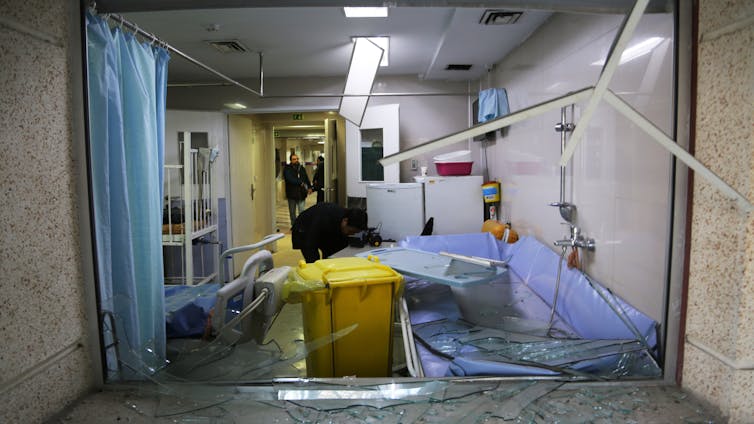
Is Israel running low on missile interceptors? How long can it withstand Iran’s retaliatory attacks?

Source: The Conversation – Global Perspectives – By James Dwyer, Lecturer, School of Social Sciences, University of Tasmania

As the US–Israeli war with Iran enters its third week, reports are emerging that Israel is potentially running out of air defence interceptors due to Iran’s retaliatory attacks.

The Israel Defence Forces (IDF) and Israeli foreign minister have denied the reports. The government did reportedly approve around US$826 million (A$1.17 billion) for “urgent and essential defence procurement” over the weekend, however.

It’s difficult to gauge just how many interceptors are remaining, as the IDF does not disclose this type of information. But the possibility of this occurring was not entirely unexpected before Israel and the US began bombing Iran more than two weeks ago.

What are these interceptors?

Israel has a sophisticated and layered air defence system, capable of repelling attacks from ballistic missiles, cruise missiles, aircraft, drones and artillery shells at multiple altitudes, both inside and outside the atmosphere.

The famous “Iron Dome” makes up just one of these layers – it intercepts short-range artillery shells and rockets.

While there are technological differences between all of these systems, they are comprised of three basic elements:

  • the IDF personnel to operate them
  • the radar systems to detect incoming attacks
  • the interceptors themselves.

Israel has a new “Iron Beam” laser system that can be used to destroy missiles and drones, but the most common interceptors are surface-to-air missiles.

Ballistic missile defence interceptors, in particular, are incredibly complex and expensive weapons. The more capable they are, the more expensive they are to build. They are also limited in number. A sustained attack can quickly deplete even Israel’s stockpile.

Why might Israel be running low?

The 12-day war that Israel fought with Iran last year significantly depleted both its stockpile of anti-ballistic missiles, as well as that of its ally, the United States.

One Washington-based research centre calculated that Israel and the US intercepted 273 of 322 Iranian missiles they attempted to stop in the war, an 85% success rate.

Given a large number of these interceptors were used so recently, Israel and the US are unlikely to have fully replenished their stockpiles before launching the current war.

Another sign this is the case: the US is reportedly moving parts of its THAAD missile defence system from South Korea to the Middle East. This means the US will need to carry more of the defensive burden in the region, which could quickly deplete its own assets.

Ballistic missiles are also very difficult to intercept due to the speed and altitude they attain. Several interceptors are usually required to ensure each incoming missile is stopped. Iran is also using cluster munitions on some of its ballistic missiles, which further compounds the problem.

Iran has cheap, easy-to-replace drones, which it is using to try to overwhelm Israeli and American air defence systems, as well. These can also be launched from dispersed locations that are difficult to detect, making them harder to destroy on the ground than ballistic missiles.

Iran has so far launched more than 500 missiles and 2,000 drones since the war began.

Jet fighters can help defend against these drone attacks and have done so with great success, but the missiles they fire are also more expensive than the drones themselves. And other weapons platforms (such as the Iron Beam) are currently in limited supply.

The US and Israel are not the only ones reportedly running low on interceptors. The Persian Gulf states have also come under Iranian attack, and are burning through what defensive assets they have.

The Iranians have specifically targeted missile defence radars across the region, with reports they have successfully destroyed or damaged several systems.

All of this, of course, raises the question of why Israel and the US would start another conflict in the first place if their stockpiles were not fully replenished. There could be several potential reasons:

  • they had managed to rebuild their stockpiles faster than anyone anticipated, though this is unlikely

  • they were confident they could destroy a sufficient amount of Iran’s offensive weapons before they ran out of defensive munitions

  • they believed Iran would want to end the war sooner than it has.

How long can Iran keep this up?

There’s no way of knowing what Iran’s strategy is, besides extending the war as long as possible and creating chaos in the region and with global energy markets.

Some have speculated Iran may be deliberately holding back its more advanced missile technologies to use after the US and Israeli interceptors are depleted. But other analysts say there is no evidence this is the case. This would also be a risky strategy on Iran’s part.

One thing is certain, though: the US and Israel do have finite numbers of interceptors at their disposal. Iran, too, will not be able to keep up the same level of attacks indefinitely.

While the economic impacts of the war are placing significant pressure on all parties – and the world more widely – Iran seems to be in a better position for a longer conflict, given the costs involved for the US and Israel and their reluctance to commit to a potentially even more disastrous ground invasion.

The Conversation

James Dwyer does not work for, consult, own shares in or receive funding from any company or organisation that would benefit from this article, and has disclosed no relevant affiliations beyond their academic appointment.

ref. Is Israel running low on missile interceptors? How long can it withstand Iran’s retaliatory attacks? – https://theconversation.com/is-israel-running-low-on-missile-interceptors-how-long-can-it-withstand-irans-retaliatory-attacks-278404

All 5 fundamental units of life’s genetic code were just discovered in an asteroid sample

Source: The Conversation – Global Perspectives – By Kliti Grice, John Curtin Distinguished Professor of Organic and Isotope Geochemistry, Curtin University

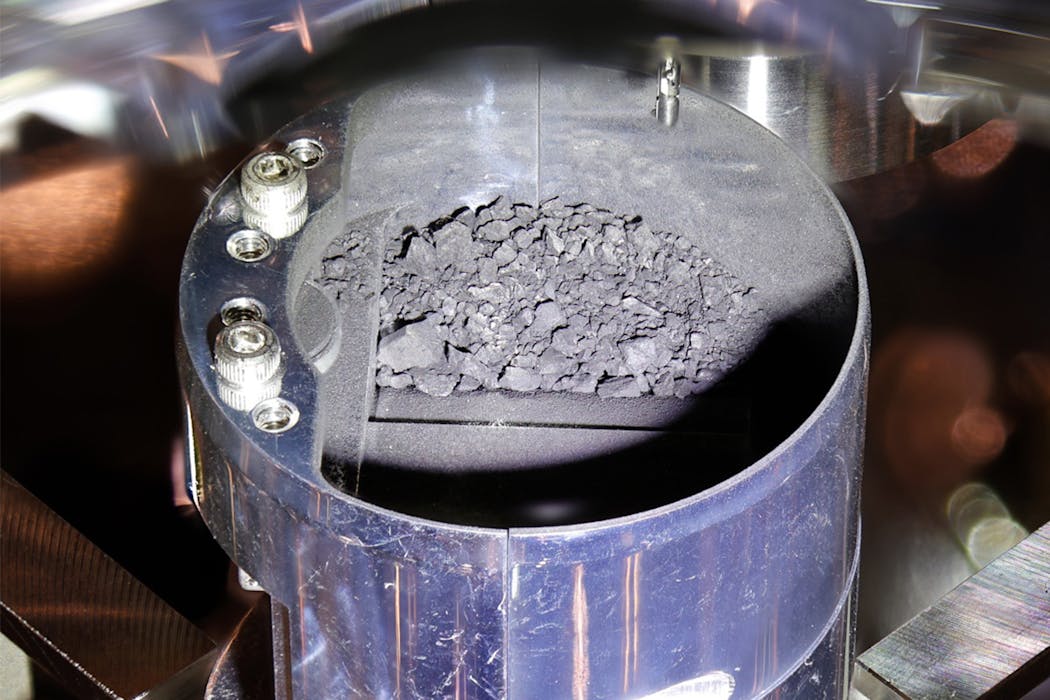
Ryugu sample in its return capsule. JAXA

A new study reveals all five fundamental nucleobases – the molecular “letters” of life – have been detected in samples from the asteroid Ryugu.

Asteroid particles offer a glimpse into the chemical ingredients that may have helped kindle life on Earth. The Ryugu samples were returned from space in 2020 by Japan Aerospace Exploration Agency’s (JAXA) Hayabusa2 mission.

In 2023, an international team reported they had found one of the nucleobases in these samples – uracil. Now, in a study published in Nature Astronomy today, a team of Japanese scientists has confirmed all five nucleobases are present in this pristine asteroid material.

This means these ingredients for life may have been widespread throughout the Solar System in its early years.

Why look for nucleobases?

Nucleobases are nitrogen-containing organic molecules that form the “letters” of genetic information in DNA and RNA. The five main nucleobases are adenine and guanine (known as purines), as well as cytosine, thymine and uracil (known as pyrimidines).

These molecules combine with sugars and phosphates to yield nucleotides – the building blocks of genetic material. Without nucleobases, the genetic code that allows organisms to grow, reproduce and evolve would not exist.

How the five nucleobases make up RNA and DNA.
Wikimedia Commons, CC BY-SA

By studying purines and pyrimidines in Ryugu samples, scientists can reconstruct the chemical history of primitive asteroids. In turn, this gives us a better understanding of how the building blocks of life may have been formed and existed across the Solar System.

Hayabusa2 delivered a total of 5.4 grams of pristine asteroid material. Researchers have to use ultra-clean lab conditions to avoid contaminating it. They extracted organic molecules using water and hydrocholoric acid, and then purified them for further detection.

They found all five nucleobases in the two Ryugu samples they analysed, in roughly similar amounts.

Microscope images of Ryugu samples collected from the first and second touchdown sites of the Hayabusa2 mission.
JAXA/JAMSTEC

Key components of genetic material – in space

The new results align with previous findings on space rocks. The Murchison meteorite that fell in Australia in 1969, and the Orgueil meteorite in France, 1864, have previously yielded a rich variety of organic molecules, including nucleobases.

Of course, meteorites that land on Earth can be contaminated by their journey and landing. But pristine samples from NASA’s mission to asteroid Bennu also yielded all five nucleobases in 2025.

Asteroids such as Ryugu, Bennu, and the parent body of the Orgueil meteorite are remnants of the early Solar System. They can preserve materials largely unchanged for about 4.5 billion years.

Interestingly, these asteroids show chemical differences. Murchison is enriched in purines, while Bennu and Orgueil contain more pyrimidines. It is thought this balance may be influenced by ammonia, a key molecule that can shape which nucleobases can form.

By peering into Ryugu’s relatively pristine samples and comparing them with meteorites like Murchison and Orgueil, researchers are tracing the cosmic journey of life’s probable molecular ingredients.

Their results suggest key components of genetic material may have formed in space and later delivered to the early Earth. In other words, the story of life on our planet may be deeply connected to the chemistry of such ancient asteroids.

A coloured view of 162173 Ryugu taken by JAXA’s space probe Hayabusa2 in 2018.
JAXA/Hayabusa2

A path for the ingredients of life

Together, these discoveries show that carbon-rich asteroids throughout the Solar System contain diverse prebiotic chemistry. However, the precise mixture of molecules – such as the balance between purines and pyrimidines – varies depending on the asteroid’s chemical environment and history.

Because the Ryugu samples were collected directly in space and protected from Earth’s contamination, they provide one of the clearest views of ancient Solar System chemistry.

The discovery of all five nucleobases on Ryugu suggests the molecular ingredients of life may have been already forming in space billions of years ago. Asteroids may have helped deliver those ingredients to the early Earth – making the origin of life part of a much larger cosmic chemical story.

The Conversation

Kliti Grice receives funding from the ARC.

ref. All 5 fundamental units of life’s genetic code were just discovered in an asteroid sample – https://theconversation.com/all-5-fundamental-units-of-lifes-genetic-code-were-just-discovered-in-an-asteroid-sample-278099

What a gaping hole on a bridge reveals about aging infrastructure in Canada

Source: The Conversation – Canada – By Amirreza Torabizadeh, PhD candidate, Civil Engineering, Concordia University

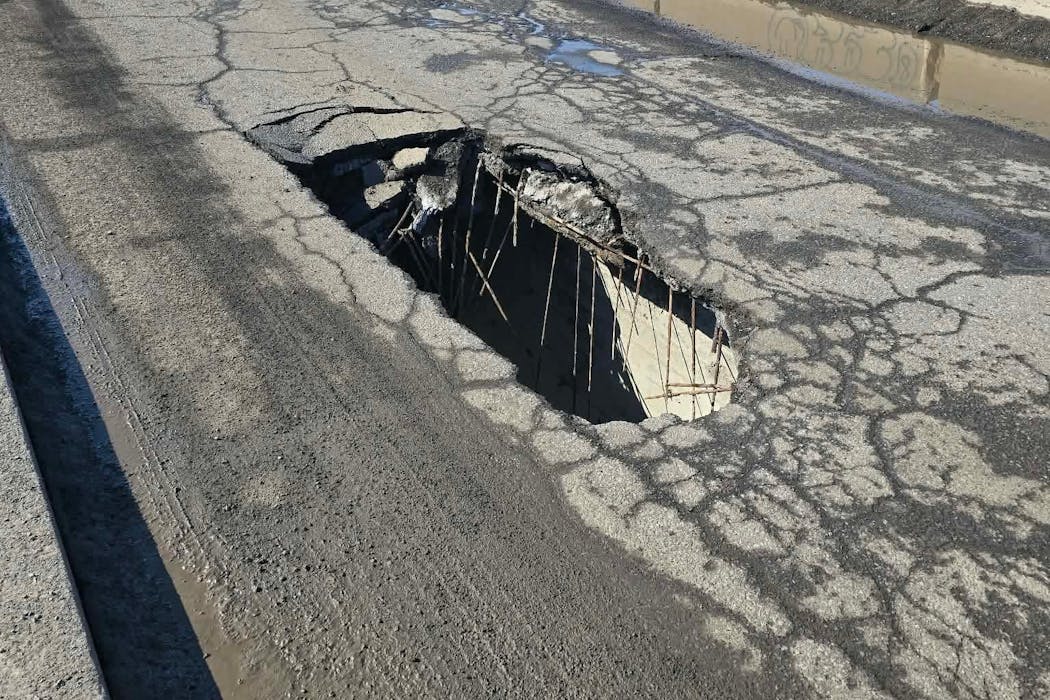
A hole on the Sauvagine Bridge in Chateauguay, Québec, on March 4, 2026. (Eric Allard, Mayor of Chateauguay/Facebook)

When a large hole recently opened up in the deck of a bridge in Châteauguay, Québec, many people were understandably alarmed. Some residents even expressed hesitation about using the bridge after seeing images of exposed reinforcing steel and damaged concrete, and some told local media they were reluctant to cross it.

For drivers who cross the structure every day, the scene raises a question: how can such a dangerous incident suddenly happen on a bridge that is still open to traffic?

In reality, incidents like these rarely occur overnight. What the public sees as a sudden failure is often the visible result of deterioration that has been developing inside the structure for many years.

(CTV News)

Canadian bridges built decades ago

In most cases, what fails in situations like these is not the entire bridge but the deck — the concrete slab that vehicles drive on. While serious, a localized deck failure is different from the collapse of the bridge’s primary load-bearing structure.

Bridges are typically designed with multiple structural components that share loads, and engineers carefully assess these elements before deciding whether traffic can continue safely on part of the structure.

Still, the appearance of such damage highlights a broader challenge facing cities across Canada: aging infrastructure.

Many bridges currently in service were built decades ago, often in the 1950s, ’60s and ’70s. Over time, Canada’s unforgiving environmental conditions gradually deteriorate reinforced concrete structures.

In Québec, the combination of freeze–thaw cycles, water infiltration and the use of de-icing salts during winter creates particularly harsh conditions for bridge decks. Chlorides from road salts can penetrate the concrete and corrode the steel reinforcement inside. As corrosion progresses, the expanding rust causes cracking and separation within the concrete, sometimes leading to pieces of the deck breaking away.

Because this process develops internally, deterioration may not always be immediately visible from the surface. By the time cracks or holes appear, the damage could have progressed for years.

Identifying problems in advance

For engineers, one of the main challenges is to understand what damage means for the structural performance of the entire bridge. Visual inspections remain an essential tool to detect damage, but they don’t always reveal how deterioration affects the structural behaviour of the structure.

Our research has found that computational modelling may provide important insights about how to interpret the damage. Numerical simulations can mimic mechanisms like cracking, material degradation and changes in the interaction between steel reinforcement and concrete. By incorporating these effects into structural analyses, engineers can better estimate how much capacity an aging structure may still retain and identify potential vulnerabilities before they lead to more serious problems.


Read more:
Aging bridges are crumbling. Here’s how new technologies can help detect danger earlier


In addition to the visual inspections and monitoring data, computational modelling can also offer a cost-effective way to assess aging infrastructure. By using simulations, virtually created scenarios allow engineers to investigate how deterioration mechanisms — such as cracking, corrosion or degradation of the bond between reinforcement and concrete —influence the structural behaviour of a bridge.

These simulations can help evaluate how local damage, like deterioration in a bridge deck, may influence how the structure of the bridge could respond. Because these analyses rely primarily on computational tools rather than large-scale physical interventions, they can provide valuable insights at relatively low cost and help guide more informed decisions on maintenance and retrofitting.

Long-term safety

The incident in Châteauguay is yet another reminder that Canada’s infrastructure is rapidly aging. To ensure public safety, policymakers must be proactive instead of reactive.

To ensure safety, better tools must be developed to understand the hidden processes that gradually weaken structures over time. These tools will result in faster and more informed interventions for modern repair and for retrofitting.

As bridges across the country continue to age, ensuring their long-term safety will require a combination of regular inspection, timely maintenance, advanced engineering analysis and the application of effective strengthening techniques when needed.

Troubles may begin with big holes in bridge decks, but they ultimately point to the need for much larger conversations about how governments maintain and renew the infrastructure that millions of people rely on every day.

The Conversation

The authors do not work for, consult, own shares in or receive funding from any company or organisation that would benefit from this article, and have disclosed no relevant affiliations beyond their academic appointment.

ref. What a gaping hole on a bridge reveals about aging infrastructure in Canada – https://theconversation.com/what-a-gaping-hole-on-a-bridge-reveals-about-aging-infrastructure-in-canada-278465

Pete Hegseth is working hard to make sure the public hears only good news about Iran war

Source: The Conversation – USA – By Kathy Kiely, Professor and Lee Hills Chair of Free Press Studies, University of Missouri-Columbia

The Trump administration doesn’t like the free press’s coverage of the Iran war. MirageC/Getty

Martha Gellhorn stowed away on a hospital ship to become the only woman journalist to land on Normandy Beach on D-Day. She carried stretchers before writing her harrowing account of the invasion.

The New Yorker’s famously epicurean writer A.J. Liebling subsisted on military rations and came under fire during World War II to describe what it was like for the soldiers and sailors at war.

Syndicated columnist Ernie Pyle died, in a helmet and Army fatigues, among some of the troops whose names and hometowns he carefully included in his dispatches. “At this spot, the 77th Infantry lost a buddy,” read the makeshift sign posted at the place where a Japanese machine gun bullet felled him.

Those reporters told stories of war in all its gore and its glory, its exhilaration and its ennui. Others have laid bare the anxiety and doubts.

Veteran Vietnam correspondent Neil Sheehan broke the story of the Pentagon Papers, which showed how government officials deceived the public about the Vietnam war. Sheehan won a Pulitzer Prize for his book, “A Bright Shining Lie,” which chronicled the war’s impact on idealists who once believed in it, through the story of his relationship with an inside source.

Well before bombs started dropping on Iran and President Donald Trump began to tease the notion of a ground invasion, his defense secretary, Pete Hegseth, began putting obstacles in the way of the reporters with the most experience covering the nation’s military. While Hegseth’s moves haven’t stopped the reporters from doing their jobs, it has made it harder for them to keep the public informed.

As someone who worked as a Washington correspondent for decades, I worry that these obstacles could limit the number of reporters who have the experience with – and trust of – key sources to do the kind of in-depth, nuanced journalism that a war, with its price in lives and resources, deserves.

A group of men dressed for cold weather standing on a boat.
A group of press correspondents on board a U.S. landing craft en route to amphibious maneuvers off the coast of England on May 8, 1944, including, with his back to the camera on right, A.J. Liebling of The New Yorker magazine.
AP photo

Corralling the watchdogs

Generally, war correspondents need the cooperation of the military they are covering to get to the front. For the U.S. press, that requires relationships and credibility at the Pentagon.

Early in 2025, Hegseth ordered major news organizations to give up their desks in the Pentagon press room to MAGA favorites. NPR’s desk went to Breitbart News. Roaming the hallways, where reporters sometimes found sources who would deviate from the company line, became verboten.

Eventually, the area in the Pentagon where reporters were allowed was circumscribed to a single corridor outside the press room – even though the public affairs officers who worked most closely with reporters were in an office on the other side of the 6½-million-square-foot building.

Then Hegseth conditioned the issuance of press credentials on reporters, effectively giving military brass the right to censor or sanitize their reports.

As a result, almost the entire Pentagon press corps, which included outlets ranging from The Associated Press to The New York Times to Fox News and USNI News, which covers the Navy, moved out of the building in October 2025. Some have been invited back for the press briefings Hegseth and Gen. Dan Caine, chairman of the Joint Chiefs of Staff, have begun to give on progress of the battle in Iran.

But after the first of these briefings, the Pentagon abruptly banned photographers from attending, reportedly because Hegseth’s staff found some of their images of him to be unflattering.

Secretary on defense

Gone are the off-camera “background” briefings where Department of Defense brass could give trusted reporters greater context and nuance for battlefield decisions. Gone are the impromptu hallway meetings where reporters have, with luck or persistence, picked up information that deviates from an administration’s agreed-upon script.

Also not in evidence, at least not so far: the deployment of the kind of journalistic embed program that the Pentagon used during the Iraq war to give the American people an up-close look at troops in the conflict zone.

How might that affect what you, the public, gets to know? It was a combination of an anonymous tip and insider access that led the legendary investigative reporter Seymour Hersh to break the devastating story of My Lai, the American soldiers’ massacre of civilians during the Vietnam War.

At the made-for-TV briefings he does hold, Hegseth devotes most of the session to questions from outlets such as the Epoch Times, The Daily Caller and LindellTV – owned by Mike Lindell, the head of the well-known pillow company.

At one recent briefing, one of the favored new cadre tossed Hegseth a shameless softball. Referring to American troops in the Middle East, the questioner asked: “What is your prayer for them?”

Yet as hostilities drag on, even some among Hegseth’s chosen press corps have begun to ask irksome questions about the war. The normally Trump-friendly Daily Caller ran a less-than-flattering piece about the president berating a reporter for asking about troop deployments.

On March 4, 2026, Hegseth accused journalists of focusing on war casualties to make “the president look bad.” On March 13, Hegseth castigated as “more fake news” CNN’s report that the Trump administration had underestimated the impact of the war on shipping traffic in the Strait of Hormuz.

“The sooner David Ellison takes over that network, the better,” Hegseth concluded, adding fuel to the speculation that a Trump supporter who won a bidding war for CNN’s corporate parent is going to turn the network into a more administration-friendly outlet.

Soon after, Federal Communications Commission chairman Brendan Carr threatened network broadcast licenses over coverage critical of the administration’s conduct of the war. Echoing Carr’s threats the next day: the president himself.

‘Be a Marine’

The Trump administration is not alone in its disdain for a free press: Israel has long been notorious for restricting press access from areas where it is conducting military operations.

Leaders of the theocratic Iranian regime are even worse; the country is cited by press freedom advocate Reporters Without Borders as “one of the world’s most repressive countries in terms of press freedom.”

But the United States has historically distinguished itself by making freedom its calling card, even – or perhaps especially – in wartime.

“The news may be good, or bad. We shall tell you the truth,” Voice of America, a U.S. government-launched radio network, promised – in German – in its very first broadcast to Nazi Germany in 1942.

Two men, including one in a military uniform, at lecterns, speaking.
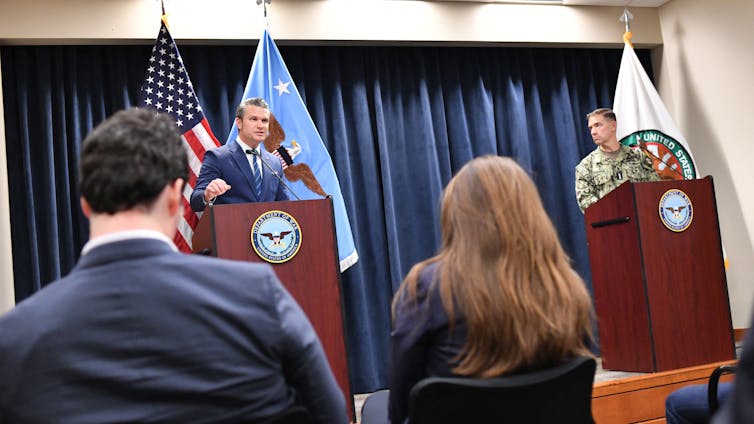
Secretary of Defense Pete Hegseth, left, and Adm. Charles Bradford Cooper II, commander of U.S. Central Command, during a press conference at U.S. Central Command headquarters in Tampa, Fla., on March 5, 2026.
Octavio Jones/AFP via Getty Images

Now, however, the Trump administration, is busy trying to undermine the editorial independence of Voice of America, which broadcasts news to countries that don’t have a free press.

Pentagon reporters are continuing to find ways to get around the propaganda. NPR’s Tom Bowman told me that he takes inspiration from a pep talk he overheard a military source deliver to another reporter crestfallen over the lack of access.

“Quit whining and be a Marine,” the official said. “Go over, under or around the obstacle. Find a way to do it.”

Most reporters and their organizations are doing just that, finding sources outside the administration, like the ones in Congress who told The Hill how much money the war is costing taxpayers per day. And they’re continuing to get information from sources on the inside, like the ones who told The Wall Street Journal that Trump’s military advisers warned him that Iran might block the Gulf of Hormuz, but that he opted for war anyway.

So far, neither Hegseth’s obstacle course nor threats from the White House and the FCC have stopped the press from reporting stories or asking questions that the administration would rather not see or hear.

But restrictions on press freedom have a corrosive effect. We already have seen how Trump, using lawsuits and licensing threats, has used his power to make corporate media owners think twice about pursuing news he doesn’t like.

Seasoned Pentagon reporters will still find ways to get to sources they already have. But Hegseth’s tactic of blocking press access to the military keeps reporters from developing new sources and keeps new reporters from building the relationships they need to become seasoned Pentagon reporters.

Americans have long been able to understand the triumphs and tribulations of American troops at war, and to make intelligent decisions about whether they approve of a war’s cost, because a free press has been able to tell the story – good or bad. That tradition is now at risk.

The Conversation

Kathy Kiely does not work for, consult, own shares in or receive funding from any company or organization that would benefit from this article, and has disclosed no relevant affiliations beyond their academic appointment.

ref. Pete Hegseth is working hard to make sure the public hears only good news about Iran war – https://theconversation.com/pete-hegseth-is-working-hard-to-make-sure-the-public-hears-only-good-news-about-iran-war-278295

Billing students automatically for textbooks? Look elsewhere to solve affordability issues

Source: The Conversation – Canada – By Madelaine Vanderwerff, Associate Professor, University Library, Mount Royal University

Some Canadian universities are exploring automatic textbook billing programs — sometimes called academic materials programs or “inclusive access” programs.

These are institutional agreements with vendors to provide digital access to course materials, and automatically charge students for them as part of their fees.

Concerns with rising textbook costs are a reality for many students. These are often described as a pressing challenge in policy discussions.

The Canadian Association of Research Libraries has raised concerns about automatic textbook billing, including potential threats to faculty freedom, student privacy and access to diverse learning materials.

As professional academic librarians and faculty members, we share these concerns and agree with some student groups that argue automatic textbook billing programs are the wrong answer to textbook affordability challenges. Here’s why.

Role of libraries

Along with course instructors, librarians play critical roles in supporting student success by providing equitable access to learning materials.

Libraries are positioned to play a role in bolstering equitable access to learning materials for students and supporting faculty to use library collections as well as openly licensed and low- or no-cost materials for teaching and learning where possible.

Libraries have missions of building and providing access to collections that support teaching and learning, especially at small and mid-sized institutions where collections focus on undergraduate courses. They do this through things like textbook buying programs, eBook licensing and journal subscriptions, as well as working with instructors to make specific resources available.

Studies show that libraries’ lending or licensing of course materials can reduce student costs. It can also improve access and engagement with materials.

Claims, evidence and faculty perspectives

To better understand how Canadian universities are addressing course material affordability, we reviewed publicly available policies, campus initiatives and library programs at 22 mid-sized universities (with 7,000–20,000 full-time students).

We also conducted an online survey in English and French, targeting tenured, tenure-track and sessional faculty members at these universities. We received 322 responses from nine provinces, representing faculty from a range of academic disciplines and various levels of teaching experience.

Participants responded to multiple choice, item-ranking and open-ended questions about selecting course materials for a recently taught course and choosing materials more generally.

Faculty reported a wide range of approaches to course materials. Some faculty are embracing the digital learning tools offered by commercial textbook publishers to engage and motivate students, and value these tools as solutions to the workload challenges of teaching large classes.

But, while some rely on commercial textbooks, many use Open Educational Resources, library-licensed materials or freely available content. About 34 per cent of faculty reported not using a textbook at all, instead curating materials that are relevant to their course outcomes and that reduce or eliminate costs for students.

This range of practices reflects deliberate, faculty-led strategies, also documented elsewhere in other research, to balance affordability, accessibility, quality and relevance — approaches that institution-wide billing programs are not designed to support.

Measuring student success

Proponents of automatic textbook billing programs have highlighted benefits, including increased course completion rates, grades and cost savings.

However, faculty in our survey emphasized broader measures of student success. They cited outcomes that are well-established aims of university study, such as academic research competency, information literacy and critical thinking skills.

They also described their course materials in terms of helping students develop these skills, not just providing access to content.

Faculty noted challenges with digital-only textbooks, including poor readability, limited usability and restricted rental periods. Many highlighted the importance of diverse, relevant content from a range of creators reflecting diverse perspectives. These include print-based and independently published materials unavailable from major vendors.

While a majority of faculty in our study were concerned about cost, quality and relevance are their primary concern, and many are responding in context-sensitive ways to the related challenges of affordability pressures and shifting student learning needs.

Local solutions

In a publishing landscape marked by consolidation, elimination of print and restricted digital lending, automatic textbook billing programs may limit faculty choice, reduce diversity of materials and constrain equitable access.

Decisions about course materials reflect instructors’ professional judgment, subject-matter expertise and knowledge of student needs, and are central to academic freedom in teaching.

Faculty we surveyed were clear that course material selection should remain the purview of academic staff, not administrative or non-academic units. This includes the freedom to choose materials, determine how they are used and accessed and decide whether students must pay for materials to learn in their courses.


Read more:
Textbooks could be free if universities rewarded professors for writing them


The answer to textbook affordability isn’t to hand course material decisions to publishers. It’s in partnerships with libraries and investments in open education programs and services that help faculty make better, more equitable choices.

The Conversation

The authors do not work for, consult, own shares in or receive funding from any company or organisation that would benefit from this article, and have disclosed no relevant affiliations beyond their academic appointment.

ref. Billing students automatically for textbooks? Look elsewhere to solve affordability issues – https://theconversation.com/billing-students-automatically-for-textbooks-look-elsewhere-to-solve-affordability-issues-274076

As war raises oil prices, households pay while energy companies profit

Source: The Conversation – Canada – By Philippe Le Billon, Professor, Geography Department and School of Public Policy & Global Affairs, University of British Columbia

War is costly. The ongoing American-Israeli war on Iran is already reverberating through the global economy. For most people, including American citizens, it means higher fuel prices and greater economic uncertainty.

But for a narrower group of entities, war can also be extraordinarily profitable. Chief among them are segments of the United States oil and gas industry, which have already profited from Russian President Vladimir Putin’s decision to invade Ukraine and the ensuing sanctions on Russian oil and gas exports.

Now, the escalation of hostilities between the U.S., Israel and Iran has once again rattled global energy markets. Fighting and the closure of the Strait of Hormuz — one of the world’s most important oil shipping routes — have triggered what some have described as “the biggest oil disruption in history.”


Read more:
What is the Strait of Hormuz, and why does its closure matter so much to the global economy?


By early March, oil prices had briefly surged to US$119 per barrel — roughly double their level at the end of 2025. Prices have since settled at near US$100 a barrel, though volatility remains.

The escalation illustrates a familiar pattern in the political economy of fossil fuels: public costs paired with private windfalls.

The shock to global energy markets

Three months ago, few analysts expected 2026 to be a particularly profitable year for fossil fuel producers. Global supply was expanding rapidly and U.S. gas prices were expected to fall below US$3 a gallon.

Production growth in the U.S., Canada, Brazil and Argentina was colliding with weaker demand growth and the ineffectiveness of sanctions on exports from Russia, Iran and Venezuela. Many analysts warned of an emerging glut that could push prices downward. The International Energy Agency, for instance, projected a potential global oil surplus of nearly four million barrels per day in 2026.

That outlook changed abruptly following the U.S.-Israeli attack on Iran and the country’s retaliatory attacks on energy infrastructure and tanker traffic through the Strait of Hormuz, a strategic chokepoint that normally carries roughly one-fifth of the world’s traded oil and natural gas.

Even a partial disruption carries immediate consequences.

Though the strait has been a cornerstone of U.S. and world energy security for more than 60 years, the Donald Trump administration apparently underestimated the possibility that the Iranian regime would blockade it and pummel U.S.-allied countries in the region.

For consumers and most businesses, such price spikes function as a tax. Higher energy costs ripple through transport, food production, manufacturing and household budgets. American drivers feel the impact at the pump, while industries dependent on fuel or petrochemicals see their operating costs climb.

The hidden household costs of war

Estimates suggest that for every increase of US$10 per barrel, additional fuel costs amount to roughly US$560 per year per American household, including costs embedded in goods and services.

If prices remain at around US$86 instead of the expected US$51 forecast for 2026, the added burden could reach about US$2,000 per household annually.

These figures do not include the direct military expenditures, which were conservatively estimated at US$11 billion for the first week of strikes against Iran.

Even military spending of US$200 million per day (10 times less than the highest estimates at the current intensity) would amount to an additional cost of US$541 per household annually.

In short, a prolonged war combining high energy prices and sustained military expenditures would likely amount to between three to four per cent of the median U.S. household expenditure — roughly half of what many families spend annually on food or health care.

Lessons from recent wars

Recent history offers revealing precedents.

The costs of the Iraq War (2003 to 2011) for Americans has been estimated at about US$1.2-3 trillion in total long-term costs, equivalent to about US$16,700 to US$41,750 per household in current U.S. dollars. Yet the war did achieve the goal of reopening access to Iraqi oil fields for American oil companies.

More recently, the invasion of Ukraine by Russia cost an estimated one per cent of global GDP in 2022 and added 1.5 per cent to global inflation in 2022-23. Ukraine, of course, paid the largest price for the war, but direct impacts in Europe amounted to about 1 trillion euros.

Much of these costs ultimately translated into profits for oil and gas companies, especially liquefied natural gas (LNG) companies from the U.S. and producers in Australia and the Gulf states.

Profits on a single LNG shipment from the U.S. to Europe increased fivefold from about US$17 million to US$102 million.

A similar dynamic is now unfolding again.

Who really benefits from rising oil prices?

This time, with major Gulf states themselves exposed to the conflict, U.S. and other exporters less directly affected by the war may have even greater room to increase profits. American LNG companies could see windfalls approaching US$20 billion per month.

The main lesson is that petro-states, including Iran, Russia and the U.S., don’t hesitate to go to war partly because they believe oil revenues will bail them out, if not further enrich them.

In fact, in seeking to justify the attack on Iran and the continuation of the conflict, Trump argued that “the United States is the largest oil producer in the world, by far, so when oil prices go up, we make a lot of money.”

This, of course, depends on who “we” refers to. The populations of most petro-states have paid dearly for the wars involving their countries, whether it’s been Angola, Chad, Iraq, Libya, Nigeria, Russia, Syria and now Iran.

The U.S. has fared much better economically, but the gains have been mostly for its companies, not its population. Higher oil and natural gas prices generate enormous revenues for U.S. oil producers and LNG exporters along the Gulf Coast as global gas markets tighten. Investors and shareholders in these sectors stand to gain from rising margins and market valuations.

American households, however, face the opposite effect. Fuel prices rise. Inflationary pressures intensify. Transport and heating costs increase.

The gains accruing to producers are therefore not only partially financed by the most import-dependent countries with the least strategic reserves but also by low-income households who are stuck in a carbon-intensive economy they can least afford to escape.

The Conversation

Philippe Le Billon receives funding from SSHRC.

ref. As war raises oil prices, households pay while energy companies profit – https://theconversation.com/as-war-raises-oil-prices-households-pay-while-energy-companies-profit-278052

Will your electric car burst into flames? A solid-state battery would reduce the risk

Source: The Conversation – Canada – By Taiana Lucia Emmanuel Pereira, Postdoc Fellow, Chemistry, McMaster University

Canada recently signed a new trade agreement with China, reducing tariffs on up to 49,000 Chinese electric vehicles (EVs) each year. By 2030, half of these imported vehicles are anticipated to be “affordable EVs” costing less than $35,000.

This could make electric cars a more budget-friendly option for Canadians. However, public trust remains fragile, shaped largely by fears of EV battery fires.

In 2024, when a high-speed crash on Toronto’s Lake Shore Boulevard resulted in a Tesla bursting into flames, killing four passengers, the images circulated widely online. Months later, another Tesla caught fire on Highway 403 in Ontario, again shutting down traffic.

Evidence shows that the risks of EVs bursting into flames while you drive are low. However, these events have caused some public anxiety.

Solid-state batteries offer a promising new solution. They replace the flammable liquid in existing EV batteries with a solid electrolyte. This reduces the risks of spontaneous combustion when batteries are damaged or when they overheat.

Mercedes-Benz recently trialled an EQS sedan with a solid-state battery. The car drove 1,205 kilometres from Stuttgart in Germany to Malmö in Sweden without a charging stop.

Chinese automaker Chery says it plans to release its first electric vehicle with a solid-state battery later this year. The company says the design could boost energy density and cold-weather performance, with targeted ranges of up to 1,500 kilometres even in sub-zero temperatures.

Canadian researchers are also playing an important role in advancing solid-state technology. I am part of a research team at McMaster University studying battery chemistry at the atomic level to help turn solid-state batteries into a practical technology.

How do lithium-ion batteries work?

EVs rely on lithium-ion batteries rather than gasoline but the basic idea is similar. They store energy and release it when you need it. These batteries are made up of two electrodes: one positive (cathode) and one negative (anode), separated by an electrolyte that allows lithium ions to move between them.

When the battery powers a device or a vehicle, electrons flow through the external circuit to produce electricity, while lithium ions travel inside the battery from the anode to the cathode. Charging the battery simply reverses this process, pushing the lithium ions back to where they started.

How lithium-ion batteries work. (PhysicsLearning)

How much power a battery can deliver depends largely on how quickly and how many lithium ions can move between the two electrodes.

Today’s batteries rely on liquid electrolytes. This allows lithium ions to move easily and efficiently, giving the car quick acceleration, steady highway performance and consistent response when you press the pedal. How far a car can go on a single charge, however, depends mainly on how much lithium the electrodes can store.

Why do batteries catch fire?

When lithium-ion batteries are damaged or experience internal failures, they can overheat and enter a process known as thermal runaway. This can trigger intense fires that are hard to extinguish and may even reignite hours later.

A major reason is the liquid electrolyte, which is typically made from flammable organic solvents. If the battery overheats, the liquid can act as fuel, worsening the fire. Solid-state battery technology replaces the flammable liquid with a solid electrolyte.

This video shows five cylindrical lithium ion battery cells, forced into thermal runaway in test conditions.

Safer batteries with higher performance?

Solid electrolytes are generally non-volatile and mechanically robust. They reduce the risk of leakage and limit the formation of oxygen-rich volatile decomposition products. They can act as a physical barrier that slows the growth of the lithium filaments that can short-circuit a battery.

Together, these features reduce two major triggers of thermal runaway: internal short circuits and rapid heat-releasing chemical reactions in the electrolyte.

In our research group, we use solid-state nuclear magnetic resonance to understand how lithium ions move inside solid electrolytes. These experiments let us track both the local chemistry and the longer-range ion transport that determine how well a material will work in a battery. By linking these atomic-scale insights to battery performance, we can help design better solid electrolytes for safer electric vehicles.

Beyond safety, solid electrolytes also enable higher-performance batteries. They make it possible to use lithium metal anodes and high-voltage cathodes, which can increase energy density compared to today’s graphite-based batteries.

For EVs, this could mean longer driving range or smaller, lighter battery packs without sacrificing performance.

Why liquid electrolytes still dominate

Despite their safety, liquid electrolytes remain the industry standard.

They provide high ionic conductivity at room temperature, ensuring fast charging, strong acceleration and reliable performance across a wide range of conditions. They also connect well with the electrodes, allowing electricity to flow easily and keeping the battery’s design simpler. Decades of industrial experience have made them relatively inexpensive and easy to manufacture at scale.

In contrast, many solid electrolytes suffer from mechanical brittleness, which means they can crack during battery cycling and lose contact with the electrodes. In addition, solid electrolytes often struggle to make good connections with electrode materials, and chemical reactions at these interfaces can form resistive layers that reduce battery performance.

As a result, while solid-state batteries show great promise, liquid electrolytes have offered the best balance of performance, cost and ease of manufacturing in EVs to date.

Canada’s role in the transition

The recent trade agreement with China could give Canada faster access to the advanced battery technologies already developed at scale in China.

However, many Canadian researchers are already playing an important role in advancing EV battery technology by investigating new electrolyte materials and battery interfaces. Canadian federal programs are supporting battery research, clean-energy initiatives and domestic battery manufacturing, positioning Canada within the global EV transition.


Read more:
Lower tariffs on Chinese electric vehicles could boost adoption and diversify Canada’s trade


Advances in materials science, interface engineering and battery chemistry are improving the performance and durability of solid electrolytes. What once existed only in laboratories is moving into pilot production and early vehicle testing.

In the long run, solid electrolytes could reduce fire risk while enabling longer ranges and lighter battery packs, helping EVs become safer.

The Conversation

Taiana Lucia Emmanuel Pereira receives funding from NSERC and MITACS.

ref. Will your electric car burst into flames? A solid-state battery would reduce the risk – https://theconversation.com/will-your-electric-car-burst-into-flames-a-solid-state-battery-would-reduce-the-risk-277042

Israeli strikes on Tehran oil depot highlight gaps in international law

Source: The Conversation – Canada – By Alexandra R. Harrington, Visiting Scholar, McGill University Faculty of Law, Centre for Human Rights and Legal Pluralism, McGill University

One of the most alarming incidents to occur in the United States-Israel war against Iran was the recent bombing of a fuel depot in Tehran. Harrowing images showed toxic black smoke blanketing the skies above the city. Residents reported difficulty breathing and burning eyes and turned to wearing face masks.

Soot and toxic chemicals released from the bombing then came down on civilian populations as polluted “black rain,” further exacerbating the health and environmental impacts. In response to the attack, Iran’s foreign minister Abbas Araghchi said: “Israel’s bombings of fuel depots in Tehran violate international law and constitute ecocide.”

The attack on the fuel depot is more than a stark reminder of the costs of war. It also tells the story of a large gap in international legal protections for civilians and the environment from the targeting of facilities containing harmful chemicals that are not classified as chemical weapons.

The impacts of pollution and war are often indiscriminate and lasting. Beyond these images is the legacy of long-term damage to human health and the environment stemming from the targeting of such facilities, such as the refining plants targeted during the first Gulf War.

International law contains provisions against the use of chemical weapons in war. However, there is a gap in protections when dangerous toxins are released due to attacks on sites like fuel depots.

These gaps need to be addressed to protect civilians in war, and to uphold environment and human rights standards during wartime and once a conflict ends.

Gaps in the Geneva Conventions

Dark smoke fills Tehran’s sky after Israeli attacks on oil depots (The Independent).

My areas of research focus on international law, specifically environmental and human rights law and intersections with international organizations.

The Geneva Conventions and their protocols serve as the basis for international humanitarian law — the laws applicable to civilians, armed forces and combatants in times of conflict.

The Geneva Conventions are mostly geared toward human protection during combat, especially for civilians living in combat zones or occupied territories as well as for health-care providers and for injured combatants and prisoners of war. In particular, the Fourth Geneva Convention on Civilians provides basic living, health and access to justice protections for populations during wartime.

However, there is nothing in the conventions specifically about sites known to contain chemicals that would cause health or environmental impacts in the short and long-term.

While the Geneva Conventions forbid attacking hospitals, schools and infrastructure necessary for civilian life, they do not address fuel depots, waste management facilities or other sites where chemicals are routinely stored. And there are no requirements for warring entities to provide assistance to enemy territories damaged by attacks on such sites once hostilities cease.

Gaps in the Chemical Weapons Convention

Since 1997, the Chemical Weapons Convention (CWC) has governed the destruction and non-proliferation of chemical weapons.

This convention includes prohibitions on developing and manufacturing chemical weapons and outlines acceptable methods of reducing and eliminating chemical weapons stockpiles in signatory countries.

The CWC addresses facilities containing chemical weapons only in the context of safety until the chemicals can be destroyed.

It is an essential tool in protecting humanity from the development, stockpiling and use of chemical weapons. But the convention doesn’t cover all chemicals, nor does it address attacks on facilities containing chemicals that turn them into dangerous weapons against civilian populations.

Other agreements and treaties

There are also several multilateral environmental agreements that address chemicals in some form: the Basel Convention on the Control of Transboundary Movements of Hazardous Wastes and their Disposal, the Rotterdam Convention on the Prior Informed Consent Procedure for Certain Hazardous Chemicals and Pesticides in International Trade, the Stockholm Convention on Persistent Organic Pollutants and the Minamata Convention on Mercury, as well as the Global Framework on Chemicals, a recently adopted soft law instrument.

These are critical agreements and instruments in many ways, but they focus on the production, use and transportation of chemicals. They do not address intentional acts of destruction during peacetime or conflict.

Additionally, there are many core human rights treaties that provide protections to all, especially women, children, those with disabilities and persons in situations of vulnerability. But these are not fully applicable in times of conflict.

Even at the end of a conflict, there are no provisions in these agreements that would impose liability or otherwise seek to address environmental damage from acts taken in wartime with lasting and generational impacts on the environment and human health.

Moving forward

Conflict is inherently intertwined with environmental damage and human suffering. This is particularly true today, when larger and more destructive weapons can cause lasting and even irreversible damage.

The international community has responded in the past to these harsh realities by enacting prohibitions aimed at protecting people. These provisions must be updated and expanded to ensure they remain applicable to current methods and ideologies used in warfare.

The targeting of the Tehran fuel depot demonstrates the need for changes to the Geneva Conventions at the very least, and also an appraisal of how to connect international environmental law and human rights law with the legacy of environmental damage in wartime.

Adding the crime of ecocide to the International Criminal Court’s jurisdiction could help.

But a larger conversation is needed to ensure that targeting facilities containing chemicals is not an accepted practice in future conflicts. The conversation is about the need for warfare to reflect what we have learned about the toxic legacies of indiscriminate use and targeting of chemicals as weapons of war, which scar the environment and humanity for generations.

The Conversation

Alexandra R. Harrington does not work for, consult, own shares in or receive funding from any company or organisation that would benefit from this article, and has disclosed no relevant affiliations beyond their academic appointment.

ref. Israeli strikes on Tehran oil depot highlight gaps in international law – https://theconversation.com/israeli-strikes-on-tehran-oil-depot-highlight-gaps-in-international-law-278380