When I am stressed, overwhelmed or trying to switch my brain off after a long day, I do not meditate. I do not do breathwork. I am rarely mindful. Instead, I watch YouTube videos of draining boils and earwax extraction.
Deeply satisfying. Genuinely calming. Extremely unsettling to anyone who happens to walk into the room.
I am not alone, although my husband tells me I soon will be if I continue watching acne “removal” videos in bed, particularly at full volume. Gross-out health content is everywhere, and it is wildly popular. Videos of extractions, parasites, clogged pores and bodily “build-ups” rack up millions of views. Articles about strange symptoms, mystery lumps and alarming bodily discoveries consistently top health reading lists.
This is not because people like me are weird. Or at least, not only because we are weird.
It is because bodies are strange, unpredictable and often poorly explained. When something feels embarrassing, frightening or just plain confusing, curiosity kicks in hard.
As a health editor, I commission articles from experts about the parts of the body we are usually taught not to talk about. Time and again, the most-read stories are the ones that make people recoil slightly before clicking anyway. Worms. Smells. Leaks. Stones. Toxins. The things you Google at midnight and hope nobody ever finds in your search history.
Behind the gag reflex, there is usually a serious question. Is this normal? Is this dangerous? Has the internet just convinced me I am dying?
That is why we have launched Strange Health, a new podcast series from The Conversation. In it, I’m teaming up with Dan Baumgardt, a practising GP and lecturer in health and life sciences at the University of Bristol, to decode wellness trends and explore what’s weird and wonderful about the body.
On Strange Health, Dan I will take the health questions people are already obsessing over online, especially the bizarre, gross or misunderstood ones, and examine them properly. In each episode we’ll also be talking to academic experts who are actively researching these issue. We ask where these ideas come from, what the science really says, and why misinformation spreads so easily when bodies get involved.
That popularity tells us something important. People are not just looking for reassurance. They are looking for explanations that make sense of what their bodies are doing, and what might genuinely help, without judgement or jargon.
It also explains why misinformation thrives here. The more uncomfortable the topic, the less likely people are to ask a professional, and the more tempting it is to trust a confident stranger online.
Each episode of Strange Health focuses on a single strange or controversial health topic. Some are familiar. Some are genuinely disgusting. All of them have been circulating widely online. There will be gross details. There will be moments of disbelief. There will also be solid science and practical explanations.
If you have ever found yourself spiralling after watching a TikTok, reading a wellness blog, or eyeing up a suspicious supplement advert, Strange Health is designed for you. And we want you to become part of the conversation by submitting your own burning questions about the human body – no matter how strange they may be – to strangehealth@theconversation.com.
Strange Health launches on 20th January and the first episode is about detoxing. New episodes will be available every Tuesday throughout February and March. You can listen wherever you get your podcasts, or watch on YouTube and Spotify.
Strange Health is hosted by Katie Edwards and Dan Baumgardt. The executive producer is Gemma Ware, with video and sound editing by Sikander Khan. Artwork by Alice Mason.
Listen to The Conversation Weekly via any of the apps listed above, download it directly via our RSS feed or find out how else to listen here. A transcript is available via the Apple Podcasts or Spotify apps.
Dan Baumgardt does not work for, consult, own shares in or receive funding from any company or organisation that would benefit from this article, and has disclosed no relevant affiliations beyond their academic appointment. Katie Edwards works for The Conversation.
In the UK, as in many other countries, the shift towards electric vehicles (EVs) has been rapid. Incentives, increased choice and some positive PR took the electric car sales to nearly 500,000 vehicles in 2025 – around 24% of the market. But the government’s budget in late November, which outlined new charges for EV owners, may have slammed the brakes on this momentum.
Chancellor Rachel Reeves revealed that EV owners will face a new 3p-per-mile road charge from April 2028, marking a significant shift in how the government taxes cleaner forms of transport. The owners of plug-in hybrids will pay 1.5p per mile. These new levies will apply alongside other motoring taxes that EVs are also now required to pay.
This is the UK’s first major step towards replacing declining fuel-duty revenues, which have fallen as more drivers move from petrol and diesel vehicles to electric alternatives. The pay-per-mile tax is expected to raise more than £1 billion in its first full year.
These charges don’t mean that the government is cooling on EVs, however. Some sweeteners still remain. An electric car grant (ECG), launched in July 2025, offers up to £3,750 off eligible new electric vehicles and is aimed at keeping the transition to cleaner transport affordable for consumers.
But critics argue that introducing running-cost charges risk slowing EV uptake at a time when the government is still trying to accelerate the shift away from fossil-fuel vehicles.
And industry experts are warning that discounts of up to £11,000 per vehicle offered by carmakers to boost demand are not sustainable. At the same time, industry groups warn that higher operating costs could also reduce demand, particularly for price-sensitive customers.
The shift signals a maturing phase for the UK’s EV market: incentives remain, but the era of untaxed electric motoring is drawing to a close. So what could it mean for sales – and is it a good time for drivers to make the change? Here’s what 2026 might have in store for the EV market.
1. Prospective buyers are likely to hold back
The demand for EVs is likely to be affected in the short run. Forecasts from the independent Office for Budget Responsibility (OBR) suggest that nearly 440,000 fewer EVs will be sold by 2031 because of the new charge. However, 320,000 of these are expected to be offset by increased sales due to other measures in the budget (an increase to the threshold for the “luxury car tax” for EVs, for instance, and widening the electric car grant).
To put that into perspective, nearly 1.95 million new cars were sold in 2024 in the UK. Battery-powered EVs accounted for one in five of these new sales and, together with plug-in hybrid electric vehicles (PHEVs), they exceeded 40% of the market share. The secondhand market is likely to feel the impact as well: with overall ownership costs rising, demand for used EVs may weaken alongside new-car sales.
2. Less confidence in EV ownership costs
Prospective buyers are likely to scrutinise the long-term costs of EV ownership, as the new system introduces more uncertainty. There will inevitably be questions: what happens if the per-mile charge increases from 3p to 4p, or if inflation pushes these rates higher? This unpredictability around future running costs could dampen consumer confidence, particularly among buyers who are already cautious about making the switch to a still-evolving technology.
3. Car producers will find it challenging
Carmakers are also likely to face challenges. The automotive industry is already investing heavily in factories, tooling and technology to support the shift to electric production.
Several manufacturers, including Jaguar, are planning to phase out internal combustion engines entirely. A sudden change in the policy environment could complicate these long-term commitments.
Some companies may scale back or delay investment in EV technologies if they anticipate weaker consumer demand, while others might double down – accelerating production, lowering costs through building more cars, and innovating more aggressively to keep electric models attractive despite the new charges their customers will face.
BMW, for example, is expected to introduce several new EV models over the next two years, with its new iX3 travelling more than 1,000 kilometres (621 miles) on a single charge recently. The leaders of Polestar and Volvo have no intentions of slowing down either as they strive to hold on to market share in the face of Chinese competition.
4. Commuters will feel most penalised
Commuters are likely to feel the greatest impact. For many people, lower living costs are a key reason for living outside major cities, and long daily journeys make fuel efficiency a central consideration. Drivers who planned to switch to EVs to reduce commuting costs may now feel penalised for living further from their workplaces. Every extra mile will add to their running costs under the new system.
The new charge also highlights a broader reality: sustainability subsidies are rarely permanent. The closure of the feed-in tariff scheme for solar power in 2019 is a recent example. But although there were warnings against its removal, solar adoption actually continued to rise. A similar dynamic could play out in other areas of clean technology.
6. EV prices are likely to go down
There is a potential silver lining for buyers – the pay-per-mile policy could indirectly bring down EV prices. With projected demand dropping, manufacturers may feel pressure to reduce margins to attract customers. Some Chinese carmakers operating in the UK have already introduced additional incentives to offset the impact of the new charges. This could signal that competitive pricing strategies will intensify in response to the policy.
The risk of the new charge is that it creates the impression that sustainability incentives are not only being withdrawn but replaced with new costs for drivers switching to cleaner vehicles. This may make petrol cars seem like a lower-risk option for would-be EV buyers. But over time, falling EV prices, improved battery efficiency and lower operating costs compared with traditional vehicles are still expected to make the transition economically compelling.
The authors do not work for, consult, own shares in or receive funding from any company or organisation that would benefit from this article, and have disclosed no relevant affiliations beyond their academic appointment.
Until relatively recently, children and young people with life-shortening conditions were not expected to survive into adulthood.
Conditions such as cancer, cystic fibrosis and Duchenne muscular dystrophy were widely understood, particularly in the late 20th century and early 2000s, as diagnoses that would likely result in death during childhood or adolescence. Today, there are more than 400 recognised life-shortening conditions, and many infants and children with these diagnoses still do not reach adulthood.
However, advances in medical treatment, specialist care and assistive technologies have begun to change this picture. Increasing numbers of children and young people with life-shortening conditions are now living into adulthood, sometimes well beyond what clinicians and families were originally told to expect.
Although most young adults with these conditions still face shorter lives, increased life expectancy has made new aspects of social and family life possible. This includes the opportunity to think about sexual relationships, intimacy and reproduction.
For the past 15 years, I have worked with colleagues in the Sexuality Alliance, which advocates for the sexual and reproductive rights of disabled young people living with life-shortening conditions.
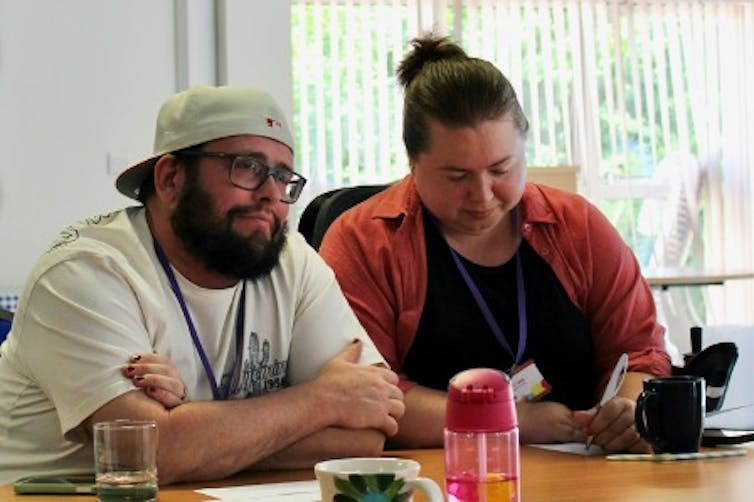
Leah and Lewis Leyland, co-researchers and members of the Sexuality Alliance. Alison Cooke, CC BY
Our research, which was co-produced with disabled young people, shows that many feel unsupported and overlooked when it comes to their sexual and reproductive lives. Families and carers often report feeling unprepared.
In many cases, they had been told that their child would die, only to find that they were continuing to live, becoming teenagers and then adults. Professional staff, including nurses, doctors and therapists, were often unaware of these issues or felt anxious about addressing them.
The risk of death remains a constant presence in the lives of young adults with life-shortening conditions. Uncertainty shapes everyday experience, but it is not always at the forefront of how young people understand themselves.
The young people we interviewed told us that they want to live life to the full, and that this includes exploring sexual intimacy and forming romantic relationships. They described this as a normal part of growing up, and many saw it as a rite of passage. They also explained how important intimacy can be for both physical and emotional wellbeing.
One participant said that being in a relationship gave him a reason to live. Another said it helped him stay healthy by reducing loneliness and depression. For many participants, taking part in our research was the first time they had ever been able to talk openly about this part of their lives.
Addressing the sexual and reproductive citizenship of disabled young people who were not expected to live into adulthood is sensitive work because it confronts longstanding taboos around sexuality, youth and death. Disabled people frequently reported feeling marginalised, infantilised and treated as asexual. Many participants felt they were seen primarily as vulnerable rather than as people with desires, agency and rights.
They also told us that safeguarding practices, which are intended to protect vulnerable people and the organisations that support them, could sometimes unintentionally reinforce silence. Many had little or no access to sex education.
One young person explained that she had been removed from sex education at school. This was not only because she was expected to die, but also because staff believed the topic might distress her or be inappropriate. The result was the same: exclusion from information that her peers received.
Families, carers and professionals are well placed to support young people in realising their sexual and reproductive citizenship, but many report lacking the training or confidence to do so. A starting point is to challenge everyday disablist assumptions that presume disabled people cannot, should not, or do not want to have sex or children.
As part of our work, we co-produced resources to help young people and carers talk openly about sex and intimacy.
These resources encourage carers to reflect on their own attitudes and beliefs. They also provide a clear legal overview of issues such as consent and mental capacity, helping professionals feel more confident. Young people are supported to understand their rights and responsibilities, and to develop the skills needed for honest conversations about their sexual and reproductive wishes.
Despite the risks and uncertainties they face, many young people see intimacy and relationships as central to their wellbeing and identity. This work highlights the need to challenge disablist assumptions, improve access to inclusive sex education, and equip carers and professionals with the tools to support young people in realising their sexual and reproductive rights.
Sarah Earle does not work for, consult, own shares in or receive funding from any company or organisation that would benefit from this article, and has disclosed no relevant affiliations beyond their academic appointment.
Infant chimpanzees are out of mom’s reach the majority of the time they descend from the trees.Kevin Lee/Ngogo Chimpanzee Project and Arizona State University
Adolescents are known for risky behavior, with teenagers in the U.S. more likely than younger children to die from injury. But what’s responsible for this uptick in risk-taking around puberty?
Our new observations of physical risk-taking in chimpanzees suggests that the rise in risk-taking in human adolescence isn’t due to a new yen for danger. Rather, a decrease in supervision gives teens more opportunities to take risks.
We studylocomotion in chimpanzees, one of humans’ closest relatives. It’s difficult to study physical risk-taking in people because it is not ethical to put anyone in danger. Chimpanzees are good alternative study subjects, since wild chimps of all ages need to move through the trees, often at great heights.
Infant chimpanzees can look determined to try risky moves. Kevin Lee/Ngogo Chimpanzee Project and Arizona State University
While working with us, Bryce Murray, an undergraduate student at the University of Michigan, noticed that some of the movements that chimpanzees perform in the trees are more dangerous than others.
Typically, chimpanzees climb or swing while keeping a secure grip on branches. However, they also leap across gaps and sometimes let go of a branch entirely, dropping down to another branch or the ground. Unfortunately, they don’t always nail the landing. Years of observations in the wild have shown that falls are a major source of injury and even death among chimpanzees.
After watching these behaviors in chimpanzees, Bryce began to wonder whether their physical risk-taking follows the same patterns we see in humans. Do chimpanzees start taking more risks – like leaping and dropping from branches – once they enter puberty? Since there is evidence that human males take more risks than females, although this varies across cultures, we also wondered whether male chimpanzees are bigger risk-takers than females.
Young chimpanzee daredevils
Our study group consisted of over 100 wild chimpanzees ranging from 2 to 65 years old from Ngogo, Kibale National Park, Uganda.
We found that chimpanzees engaged in their most daring locomotion during later infancy (ages 2-5), with rates of leaping and dropping steadily declining as they aged. Compared with adults (over 15 years), older infants were three times more likely to perform risky behaviors. Juveniles (ages 5-10) were 2.5 times more likely, and adolescents (ages 10-15) were twice as likely. Infants younger than age 2 spend most of their time clinging to their moms, so we didn’t include them in our study.
A young daredevil chimpanzee drops from a branch at Fongoli, Senegal.
Thus, adolescence does not represent a peak in risk-taking for chimps, but rather a point within a gradual age-related decline. Additionally, there were no significant sex differences in risk-taking at any age, consistent with our prior work showing that male and female chimpanzees do not differ much in how they move through the trees.
Our findings fit with past lab studies that focus on gambling risks rather than physical ones. Experimenters ask chimpanzees to choose between safe and risky options – say, a box that is guaranteed to contain an OK snack, like peanuts, versus a mystery box that may have either a highly desirable treat, such as a banana, or a boring option, like cucumber. Chimpanzees are more likely to choose the sure bet – the peanuts – as they age. A similar pattern occurs in people, becoming more risk averse with age.
In both contexts, in the trees and in the lab, chimpanzees did not show a peak in risk-taking when they reach puberty.
Implications for human risk-taking
Chimpanzee mothers cannot effectively restrict their offsprings’ behavior beyond the age of 2. By that age, infants cling less frequently to their mothers and are no longer in consistent contact. In our observations of leaping and dropping, 82% of the infants were out of arm’s reach of their mother.
An infant is chased by his mother at the Ngogo Chimpanzee Project in Kibale National Park, Uganda.
In contrast, human children are tracked with care by their parents and what social scientists call “alloparents”: other adult caregivers such as grandparents and older children, especially siblings. Although approaches to parenting vary a lot worldwide, across cultures children are consistently supervised and restrictions loosen as they become adolescents.
We hypothesize that if parents and other caregivers watched children less closely, younger kids would take more physical risks even before they become teenagers. Our study of chimpanzees thus helps us understand how supervision may shape physical risk-taking in people.
What still isn’t known
It’s important to consider other factors that may influence chimpanzees’ taking fewer physical risks as they mature. For example, this pattern may reflect a need for adults to be more careful. Even though younger primates break bones from falls more often, adults are heavier and have less flexible bones, so injuries from falls are usually more deadly.
Studying chimpanzees offers insight into the roles that both evolution and culture play in human development.
Balancing parental supervision with children’s need for play is tricky. Although concerns about injuries in children are valid, minor injuries may be a normal part of development. Play during childhood, when bones are more resilient, may let kids practice risky behaviors more safely. Some anthropologists argue for increasing children’s access to thrill-seeking play – including the old-fashioned monkey bars – as a way to help them develop motor skills and skeletal strength.
Laura M. MacLatchy receives funding from the Leakey Foundation, the National Science Foundation, the University of Michigan.
Lauren Sarringhaus receives funding from the National Science Foundation, the Leakey Foundation, and James Madison University.
Source: The Conversation – Africa – By Hayley Clements, Senior Researcher, African Wildlife Economy Institute and Centre for Sustainability Transitions, Stellenbosch University
South Africa has a thriving wildlife economy – enterprises like trophy and meat hunting, ecotourism, live wildlife sales and game meat production.
Government policy considers the sector key to integrating conservation with rural development. The national 2024 strategy is to grow “sustainable and inclusive eco-tourism-based businesses by 10%” every year.
It is also projected that the GDP contribution of game meat will increase from US$4.6 billion (2020) to US$27.6 billion by 2036. The overarching aim is to:
grow the wildlife economy to include more black landholders and communities
expand the amount of land that is conserved “from 20 million ha (hectares) to 34 million ha by 2040”.
In South Africa, land uses based on wildlife could address the twin land reform objectives of economic development and empowerment, while also conserving biodiversity.
Land reform is central to the country’s strategy to rectify historical inequities in land access. Beneficiaries of reform include black individuals, families and communities.
Yet little is known about how land reform beneficiaries – who often begin with fewer resources – might realistically participate in the wildlife economy.
We are conservation and wildlife economy researchers with a focus on South Africa’s inclusive conservation agenda. In a recent paper, we explored whether land reform beneficiaries were engaging in the wildlife economy, and what might hold them back or help them.
Knowing more about this would be useful for policymakers.
We found that new landholders were not yet participating meaningfully in the wildlife economy. With focused government help and investment they could benefit from the land through mixed livestock–wildlife enterprises that align with their experience and resources. In this way, South Africa could promote inclusive economic development while safeguarding its wildlife.
The study
Since 1994, the Department of Land Reform and Rural Development has pursued a constitutional mandate of land restitution, land tenure reform and land redistribution. The intention is to redress the historical injustices of apartheid and promote equitable access to land and livelihoods. Many redistributed farms fall within areas of high biodiversity value that are well-suited to wildlife-based enterprises.
In South Africa’s Eastern Cape province, for instance, herds of kudu and springbok are a common sight on hillsides. The land that they roam is no longer managed by white farmers only, but also by black farmers, enabled in part by the country’s land reform programme.
During our study in Addo-Amathole Biodiversity Economy Node we interviewed 19 land reform beneficiaries. It is one of the government’s focal areas in the Eastern Cape for promoting the wildlife economy. It also overlaps with one of the “mega living landscapes” in South African National Parks’ new Vision 2040. The farms in our study cover nearly 50,000ha. They represent two-thirds of the land reform beneficiaries in the province who aspire to be part of the wildlife economy.
To date, land reform programmes in rural South Africa have focused strongly on agriculture. In the Addo-Amathole region, this means livestock farming.
Interviews were conducted in English and isiXhosa and covered wildlife and livestock numbers, revenue streams, infrastructure, business planning, employment, skills and barriers to market access.
We set out to understand how the characteristics of land reform farms align with existing wildlife ranches, what types of infrastructure and investment they would need to grow, and where their strengths already lie. These 19 properties were compared with 74 established wildlife ranches in the region.
The findings
One of the most striking findings is that land reform farms in this region hold a lot of ecological value. Most of the land overlaps with critical biodiversity areas.
Yet only 42% of the farms earned any income from wildlife. On average it contributed less than 5% of total income. Almost all income still came from livestock, despite all of the beneficiaries’ business plans being focused on wildlife enterprises.
The greatest barrier was the lack of basic infrastructure needed to participate legally and commercially in wildlife markets.
Only six farms out of 19 had any perimeter game fencing. Water systems, vehicles and access to game meat processing facilities were very limited. Accommodation for visitors was scarce, with about two-thirds of farms lacking suitable facilities.
Another important finding was that almost all of the land reform beneficiaries’ business plans (submitted to government in their application for land) emphasised specialised trophy hunting or high-end ecotourism enterprises.
These enterprises require hundreds of millions of rands in infrastructure, charismatic wildlife such as rhinos and lions, skilled staff and access to specialised markets.
However, the size and current wildlife densities on land reform farms closely resemble mixed livestock–wildlife ranches. These focus on a mix of trophy and meat hunting, game meat sales and domestic tourism, alongside more traditional livestock farming.
Mixed ranches require far less initial investment and align more closely with the skills many emerging farmers already have. As seen in the COVID-19 pandemic, diversified wildlife ranches can also be more resilient.
What should happen
South Africa’s wildlife economy could become more inclusive if land reform farms were supported to adopt realistic business models in stages. It’s not realistic to copy the high-capital enterprises of some established ranches.
This starts with growing mixed livestock-wildlife enterprises that match existing knowledge and allow farmers to build experience and capital.
Landscape partnerships like conservancies – where landowners cooperate to manage their land for environmental and economic sustainability – are an option.
National and regional government entities responsible for agriculture, land reform or the environment need to work together.
Joint initiatives could also allow for private investment via the government’s Biodiversity Sector Investment Platform. The platform aims to connect investors with investment opportunities in the sector.
Meanwhile, established ranchers and private operators can mentor emerging wildlife ranchers and help them access markets. Beneficiaries could build on their existing livestock experience while gradually expanding into wildlife activities that match their capacities and resources.
Inclusive wildlife economies could connect economic opportunity, land justice and biodiversity conservation in ways that advance South Africa’s transformation and development goals.
Naledi Mneno co-authored the research on which this article is based.
Hayley Clements receives funding from Agence Française de Développement, Oppenheimer Generations Research and Conservation, the Benjamin Raymond Oppenheimer Trust, Jamma Communities and Conservation, and Kone Foundation
Alta De Vos has received funding from gence Française de Développement, the National Research Foundation, Google, the National Institute for the Humanities and Social Sciences, the Global Resilience Partnership, and the Australian Research Council.
Matthew Child and Siviwe Shwababa do not work for, consult, own shares in or receive funding from any company or organisation that would benefit from this article, and have disclosed no relevant affiliations beyond their academic appointment.
The Namib desert of south-western Africa can be extremely hot – the surface temperature can be over 50°C. But a surprising number of around 200 beetle species live on its bare, inhospitable-looking sand dunes.
Scientists studying them were perplexed by the astonishing behaviour of one of the beetle species – a darkling beetle, Onymacris plana.
Like most desert darkling beetles, it is black – a colour that absorbs heat. And it has a flattened body, a big surface area exposed to heat. Scientists didn’t expect to find it active on the sand surface in the dangerous heat of the day. But it sprints in the sun, sometimes pausing in the shade of a desert shrub.
In fact, it’s the fastest of all the invertebrates of the Namib desert sands. This tiny beetle can run as fast as a human can walk.
When humans and other animals run, the fuel burning in our muscles produces heat. The faster we run, the more oxygen we use and the hotter we get.
But not so these beetles.
In an astonishing discovery, we established that the beetle in fact gets cooler when it exercises. This is the first land animal to have been found with this capability (and the first research of its type on a pedestrian animal).
Their cooling system enables them to move around to find their wind-blown food before it’s covered by sand. And they can be active when other animals (predators and competitors) are not. Finally, males can spend more time looking for mates. So we believe they are adapted to move in the sun because it’s good for survival.
The hunt
In the early 1980s, entomologist Sue Nicolson and her co-workers from various universities and research institutes went out on the dunes in the hot sun to measure the temperature of the beetles. They used a thermometer in a fine hypodermic needle to measure each beetle’s temperature without harming it. The needle went into the beetle’s thorax, from underneath. They looked for beetles that had just finished a sprint and others that had rested for the same time in the shade of a shrub. The beetles that had finished a sprint were no hotter than those that stayed in the shade.
In the 1980s, comparative physiologist George Bartholomew and his co-workers from various universities measured how much oxygen the beetles used while running on a treadmill. Running fast took hardly any more oxygen than running slowly. So, running faster would not make the beetles much hotter.
So, we knew how hot the beetles were after a sprint (not very hot), and how much oxygen they used while running (not much). But what no-one had done was to measure the temperature of the beetles while they were running.
We’re a team of scientists who work on how animals’ bodies cope with heat. Much of our desert research is done in the Namib Desert. We wanted to know how the beetles achieved something that looked impossible physiologically: run in the Namib sun.
We attached a fine thermocouple thermometer fed through the end of a fishing pole.
One of our team followed the beetle while it was running in the sun, keeping the weight and drag of the thermometer off it. But the beetles did not get hotter when they ran – they got cooler.
Run like the wind
We calculated what should have happened to the temperature of the beetle. Because it was black, we could estimate how much of the sun’s radiation it would have absorbed. The Namib’s sun is so intense that the radiation falling on a tabletop would boil a kettle.
We measured how far the beetles had run and in what time, so we knew their speed. We could calculate how much heat they were generating in their muscles. Adding the sun’s heating to the heat coming from the muscles, we calculated that, in the hottest Namib sun, the beetles’ temperature should have risen by 5°C per minute. That should have killed them.
The Namib desert’s sand can be burningly hot but its air, blowing in off the Atlantic Ocean, is cool. Running generates a wind over the body. We concluded that the heat from the sun and from the muscles must be carried away by that cool wind.
The males have an especially flattened body shaped like the wing of an aircraft so that they almost float, clear of the hot sand.
We needed to confirm that what we had observed on the sand dune did not conflict with what engineers know about heat transfer (moving thermal heat from one object to another). So, we took beetles into the laboratory. We put them under a lamp which heated them as much as the sun would have done.
Then we blew cool air over them from the front at the speed at which they would have run. So, we mimicked the cool wind they would have felt when they were running on the dune. Switching on the fan dropped the temperature of the beetles by as much as 13°C.
Our laboratory experiments confirmed that the wind generated by running could carry away all the heat that the beetles absorbed from the desert sun. But to survive on the dunes, they had to run. Standing still in the sun in windless conditions would have meant death by overheating.
So evolution has delivered an animal that is cooled by running. This is unique for a pedestrian animal so far, though we think that some desert ants may also be able to do it. Many aquatic animals do cool by swimming and some insects cool by flying.
Carole S. Roberts, Mary Seely, Liz McClain and Victoria Goodall of the Gobabeb Namib Research Institute, Walvis Bay, Namibia, contributed to this research and article.
Duncan Mitchell has received funding from South African National Research Foundation, South African Medical Research Council, Oppenheimer Memorial Trust, Australian Research Council.
Academics today, around the world, are confined by the way their research output is measured. Indicators that count the number of times their work is cited by other academics, and the relative prestige of journals that publish their papers, determine everything: from career development to research funding.
What does this international system mean for African scholars like ourselves? Our work has found that metrics for measuring excellence are instead acting as a disadvantage for academics who seek to generate knowledge relevant for their communities.
The higher the traditional indicators like citation counts and impact factors are for African scholars, the lower their score for local relevance and community impact. The globally accepted metrics punish what matters most, while blocking African scholars’ career progress.
Our findings show that there’s a need for a philosophical and practical alternative to the existing system. Ngotho’s work towards a PhD in educational management offers one: an assessment framework built on the African ethical principle of ubuntu – “a person is a person through others”. The PhD work suggests a practical, quantifiable assessment tool to create an ubuntu score for academic output.
Taking an academic’s measure
The doctoral study first looked at the evaluation mechanisms being used across all African Research Universities Alliance member universities.
It found that the indicators used as the basis for academic assessment across the globe appear objective in design, but they are not. They foster a deep bias against African scholarship.
The h-index measures both publication productivity and citation impact. This inherently disadvantages collaborative scholarship, particularly community-based work, which is essential for social transformation. Our research indicates that 73% of faculty who are engaged in participatory research have h-indices that fail to reflect their true impact. The index has other flaws: it can be artificially inflated through self-citations, and its value changes depending on which database calculates it.
Journal impact factors favour journals from the global north. Western Europe and North America dominate academic publishing, contributing 74% of indexed public health journals. Africa represents just 2%. This forces scholars to bypass excellent regional journals that their peers and policymakers actually read. In effect, it silences locally important conversations.
Citation counts reinforce negative tendencies against African scholarship in fields like public health and agricultural development. The constant pressure for high publication counts values quantity over quality. According to the PhD research, 61% of African faculty report excessive pressure to publish, leaving insufficient time for the deep contextual analysis that our communities need.
Even altmetrics, designed to track broader societal impact, are calibrated for global north social media ecosystems. They typically ignore how knowledge is transmitted in African contexts, for example through community radio programmes, speaking and local workshops. This means promotion committees, focused on social media mentions and blog citations, overlook how African academics actually engage with their communities.
Many African scholars suffer from geographical bias before their work is even read. As the study contends, abstracts have even been rejected if reviewers have low regard for the authors’ institution or country of origin.
Ubuntu: an African alternative
The PhD thesis research provides a philosophical and practical alternative to this dysfunctional system. It’s an assessment framework founded on the African ethical principle of ubuntu, “I am because we are”, which means that any individual’s identity is fundamentally connected to collective wellbeing.
An “ubuntu score” allows for traditional measurement, complemented or surpassed by a collaborative impact quotient. It measures co-creation of knowledge with communities, interdisciplinary teamwork, custodian partnerships, and similar cooperative efforts in forming indigenous knowledge. Ubuntu metrics invert assessment from individual prestige to collective wellbeing, placing value on:
research disseminated in regionally relevant venues like the African press.
From theory to practice: early successes
Preliminary trials carried out in Addis Ababa University in Ethiopia and the University of Nairobi in Kenya revealed that 68% of faculty disadvantaged by the traditional journal impact factor rated highly on the ubuntu-based evaluation, which measured their contribution to society.
Pilot stakeholder panels were conducted at the University of Pretoria (South Africa) and echoed this finding. High-impact scholars who were overlooked by promotion committees wedded to citation counts were identified by community residents. Their excellence, embedded and serving their communities, was erased by conventional metrics.
This is in line with the growing realisation that African universities must shift from being research institutions to innovation engines.
The issue is far bigger than just creating new measures; it involves an entire transformation of academia’s culture.
Ranking systems should come from the African universities themselves. Encouraging citations of relevant articles from one’s region could build up the presence and influence of African publications.
Beyond alternative metrics, a total recomposition of academic values is what ubuntu-style assessment buys into. It does not ask “How visible is this scholar to the world?” but “How has this scholar’s work strengthened their community?” It measures not citations in far-away journals but solutions in local contexts.
The authors do not work for, consult, own shares in or receive funding from any company or organisation that would benefit from this article, and have disclosed no relevant affiliations beyond their academic appointment.
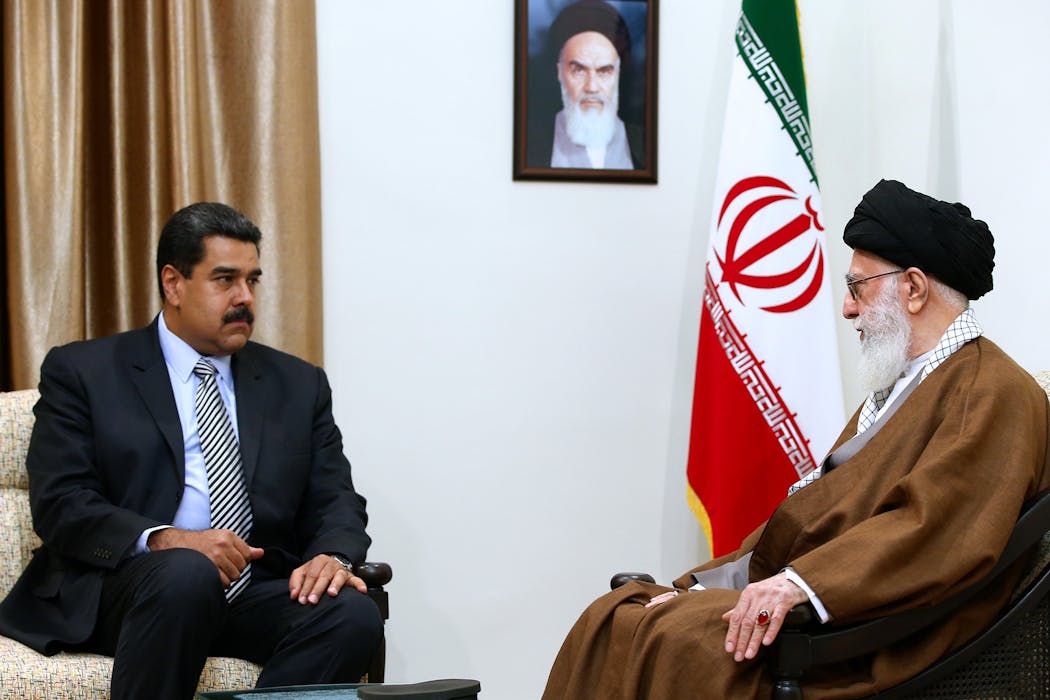
Perhaps no one outside of Venezuela or Cuba should care more about the U.S. capture of nominal President Nicolás Maduro than the Islamic Republic of Iran’s supreme leader, Ali Khamenei.
Khamenei and his regime are in trouble, and it’s not clear how they would survive should the Trump administration decide to support the millions who want a new government system without Khamenei and his ilk.
Iran has no state allies that would be willing to intervene militarily on its behalf. Further, its once-powerful network of partner and proxy militias – Lebanese Hezbollah, the Houthi rebels in Yemen, and other members of the Axis of Resistance – has been rendered incapable or reluctant to get involved. And Iran’s economy is in shambles in the midst of an ongoing water crisis with no relief in sight.
Further, the Iranian people have again taken to the streets to air their grievances against harsh economic conditions as well as government corruption, mismanagement and hypocrisy, echoing similar conditions to Venezuela in recent years.
Trump’s warning and show of solidarity will likely embolden protesters, which will almost certainly cause Iran’s internal security to crack down harder, as has happened in the past. Such U.S. intervention could lead to the overthrowing of the ayatollah, intended or not. Furthermore, Maduro’s fate demonstrates that the Trump administration is willing to use military force for that purpose if deemed necessary.
As an analyst of Middle East affairs focusing on Iran, I believe that these conditions place Khamenei’s regime under greater threat today than perhaps any other time in its 46-year history.
Protesters and security forces clash in Tehran’s Grand Bazaar in a video released on Jan. 6, 2026.
Growing threats, internal and external
If Khamenei hopes to survive politically or mortally, I believe he has three options.
In hopes of restoring deterrence, Khamenei could also continue rebuilding his country’s military capabilities, which were significantly degraded during the June 2025 12-day war in which Israel and the U.S. aimed to destroy Iran’s nuclear capability.
Khameini’s problems aren’t his alone. The revolutionary theocratic system of government that he leads is in danger of falling. And his military and internal security apparatus may not have the time or ability to address its growing and interrelated internal and external threats simultaneously.
There are two fundamental factors analysts like me consider when assessing enemy threats: offensive capability to inflict damage and hostile intentions to use these capabilities to harm enemies.
Determining offensive capability involves evaluating the quality of a country or organization’s complete arsenal – air, ground, maritime, cyber and space capabilities – and how trained, disciplined, integrated and lethal their forces might be. Determining intentions involves evaluating if, when and under what conditions offensive capabilities will be used to achieve their goals.
If states hope to survive when they come under such pressure, their defense strategy should account for differences between their own military capability and the enemy’s, especially if enemies intend to attack. Or states need to convince enemies to be less hostile, if possible.
Maduro’s mistake was his inability to defend against a far superior U.S. military capability while believing that U.S. leaders would not remove him from office. Maduro gambled and lost.
Bad choices
Iran’s supreme leader faces a similar conundrum: First, there is no foreseeable path that allows Tehran to produce or acquire the military capabilities necessary to deter Israel or defeat the United States, unless Iran develops a nuclear weapon.
But as the clear weaker party, it is in Tehran’s interest to change Trump’s mind about Tehran’s hostile intent. The way to do that would be by abandoning nuclear enrichment.
In terms of threat analysis, the regime’s oft-repeated chants of “Death to America” and “Death to Israel” perhaps have sent an easily misinterpreted message: that Iran’s hostile leaders intend to destroy the U.S. and Israel. But they simply lack the capability, for now.
President Theodore Roosevelt famously said “speak softly and carry a big stick; you will go far.” Today, he might say that Khamenei is unwise for speaking with such vitriol considering the size of Iran’s stick. The United States and Israel possess military capabilities far superior to Iran’s – as demonstrated by the 12-day war – but they did not then share the same intent. Though both Israel and the U.S. operations shared the objective of neutralizing Iran’s nuclear capability, Israel’s objectives were more broad and included targeting senior Iranian leaders and destabilizing the regime.
To Khamenei’s momentary personal and institutional fortune, Trump immediately called for a ceasefire following U.S. B-2 strikes on Iranian nuclear facilities, delineating the United States’ narrower objectives that at the time did not include regime change in Iran.
But that was before U.S. forces removed Maduro from Caracas and before the outbreak of protests in Iran, both of which coincide with Israel’s signaling preparations for Round 2 against Iran.
During Trump’s Dec. 29 press conference at Mar-a-Lago with Israeli Prime Minister Benjamin Netanyahu, he warned that the U.S. could “knock the hell” out of Iran if the country reconstitutes its nuclear facilities.
This is separate from the ominuous warning that the U.S. could intervene on behalf of Iranian protesters; it would almost certainly differ in scale.
Nevertheless, a potential U.S. intervention could embolden protesters and further undermine and destabilize the Islamic Republic regime. Khamenei has predictably scoffed at and dismissed Trump’s warning.
I believe this is a serious mistake.
Secretary of State Marco Rubio warned on Jan. 3, 2025, that Khameini should not “play games” as Maduro did. Khamenei, Rubio said, should take Trump’s warnings seriously. I agree.
If Iran refrains from violent crackdowns on protesters, there is a chance that anti-government protestors overthrow the government. But the supreme leader’s chances of surviving a popular uprising are probably greater than surviving an unbridled U.S. or Israeli military intent on ushering in a new – post-Islamic Republic – Iran.
Otherwise, Khamenei has to address superior U.S. and Israeli military capability, quickly. But Iran is broke, and even if sanctions were not continuously strangling Iran economically, the country could probably never purchase its way to military parity with the U.S. or Israel.
Alternatively, Iran could determine that it must move quickly to develop a nuclear weapon to mitigate U.S. and Israeli military capabilities and deter future aggression. However, it is extremely unlikely Iran could do this without U.S. and Israeli intelligence discovering the project, which would immediately trigger an overwhelming military campaign that would likely expedite regime change in Iran.
And like Maduro, the supreme leader is utterly alone. None of Maduro’s closest partners – China, Russia, Cuba and even Iran – were willing to fight in his defense, despite weeks of forewarning and U.S. military buildup near Venezuela.
Under these circumstances, it may be impossible for Khamenei to address overwhelming U.S. and Israeli military capabilities. He could, however, reduce the threat by doing what is necessary to ensure the United States’ objectives for Iran remain narrow and focused on the nuclear program, which may also keep Israel at bay.
However, Khamenei would have to demonstrate unprecedented restraint from cracking down violently on protesters and a willingness to give up nuclear enrichment. Due to historical animosity and distrust toward the U.S., both are unlikely, increasing, I believe, the probability of a forthcoming Iran without Khamenei.
Dr. Aaron Pilkington is a U.S. Air Force Senior Analyst of Middle East affairs and a Fellow at the University of Denver’s Center for Middle East Studies. The views expressed are those of the author and do not reflect the official position of the Department of War, the Department of the Air Force, or any other organizational affiliation.
With Congress back in session, legislators will take up a set of issues they haven’t comprehensively addressed since 2018 – the year the last farm bill passed.
Farm bills are massive pieces of legislation that address a diverse constellation of topics, including agricultural commodities, conservation, trade, nutrition, rural development, energy, forestry and more. Because of their complexity, farm bills are difficult to negotiate in any political environment. And as the topics have expanded since the first iteration in 1933, Congress has generally agreed to take the whole thing up once every five years or so.
However, the most recent farm bill’s provisions expired in 2023. They have been renewed one year at a time ever since, but without the comprehensive overhaul that used to accompany farm bills.
As former federal employees handling agriculture policy who now study that topic, it’s unclear to us whether a comprehensive, five-year farm bill can be passed in 2026, or ever again.
The July 2025 enactment of the so-called “One Big Beautiful Bill Act,” the Trump administration’s budget priorities in the tax and spending bill, revised funding levels for many programs that were historically handled in the farm bill. For instance, that law included a 20% cut in funding to the Supplemental Nutrition Assistance Program, known as SNAP, which helps low-income families buy food. And it doubled support for the largest farm subsidy programs.
Those changes and current divisions in Congress mean the nation’s food and agriculture policy may remain stuck in limbo for yet another year.
For decades, political conventional wisdom has held that sweeping federal farm bills are able to pass only because farmers seeking subsidies and anti-hunger advocates wanting increased SNAP dollars recognize the mutual advantage in working together. That’s how to build a broad, bipartisan consensus strong enough to garner the 60 votes in the U.S. Senate to avoid a filibuster and actually pass a bill.
But the One Big Beautiful Bill Act tax and spending law did not create a compromise between those competing interests. It slashed SNAP spending by US$186 billion over the next decade. At the same time, it boosted price support for farmers who grow key crops like corn, soybeans and wheat by $60 billion, in addition to a $10 billion economic relief package passed at the end of 2024 to address high costs of seeds, fertilizer and other farming supplies.
Supporters of anti-hunger programs are furious that these funds for farmers are being paid for by cutting SNAP benefits to families.
In addition, about one-third of the SNAP cuts came by shifting the program’s cost to state budgets. States have always carried some of the costs to administer SNAP, but they have never before been required to fund billions of dollars in benefits. Many states will be unable to cover these increased costs and will be forced to either reduce benefits or opt out of SNAP altogether, dramatically cutting the help available to hungry Americans.
Groups that support SNAP are unlikely to help pass any bill relating to food or farm policy that does not substantially reverse the cuts to SNAP.
Farmers have repeatedly said they would prefer federal farm policies that support markets and create conditions for stable, fair commodity prices. And evidence shows that spending more money on farm subsidies does little to actually improve underlying economic conditions affecting the costs of farming or the prices of what is grown.
And yet, in early December 2025, the Department of Agriculture released an additional $12 billion to help offset losses farmers experienced when Trump’s tariffs reduced agricultural exports. In mid-December, the National Farmers Union said that money still wasn’t enough to cover losses from consistently low commodity prices and high seed and fertilizer costs.
A regular five-year farm bill may be out of reach
The success of any bill depends on political will in Congress and outside pressure coming together to deliver the required number of votes.
In September 2025, Politico reported that instead of a complete five-year farm bill, the House and Senate committees on agriculture might take up a series of smaller bills to extend existing programs whose authorizations are expiring. Doing so would be an effective declaration that a permanent five-year farm bill is on indefinite hold.
Prospects for sustainable farm policy
By using financial incentives cleverly, Congress has shifted farming practices over time in ways that lawmakers determined were in the public’s interest.
The One Big Beautiful Bill Act tax and spending law cut those funds and repurposed them for traditional Agriculture Department programs for farmers who want to implement conservation practices on their land.
But unexpectedly, the Trump administration’s “Make America Healthy Again,” or MAHA, agenda contains some ideas that climate-smart advocates have previously advanced. These include scathing indictments of the effects of conventional agriculture on Americans’ health, including concerns over pesticide use and the so-far-undefined category of “ultra-processed foods.”
The MAHA agenda could be an opportunity for organic farmers to secure a boost in federal funding. In December, the Agriculture Department committed $700 million toward “regenerative” practices, but that’s a trifling amount compared with the billions commodity farmers received in 2025.
Overall, in this new political environment, we believe advocates for changes in agriculture and food aid will likely need to rethink how to advance their agendas without the promise of a farm bill coming anytime soon.
Neubert was previously staff on the Senate Committee on Agriculture, Nutrition and Forestry (2023-2025) and on the Senate Committee on the Budget (2021-2023).
Merrigan was USDA deputy secretary and COO (2009-2013) and staff on the Senate Committee on Agriculture, Nutrition and Forestry (1987-1992).
Smoke rolls up a hillside from the Palisades Fire on Jan. 11, 2025, in Los Angeles.AP Photo/Eric Thayer
When wildfires began racing through the Los Angeles area on Jan. 7, 2025, the scope of the disaster caught residents by surprise. Forecasters had warned about high winds and exceptionally dry conditions, but few people expected to see smoke and fires for weeks in one of America’s largest metro areas.
Environmental health scientist Yifang Zhu studies air quality at UCLA and began collecting samples from inside and outside homes the day after the fires began. In this Q&A, she describes findings by her team, a consortium of universities and local projects, that are painting a picture of the health risks millions of Los Angeles-area residents faced.
Their research offers both a warning and steps people everywhere can take to protect their homes and themselves from wildfire smoke in the future.
What made the LA fires unusual?
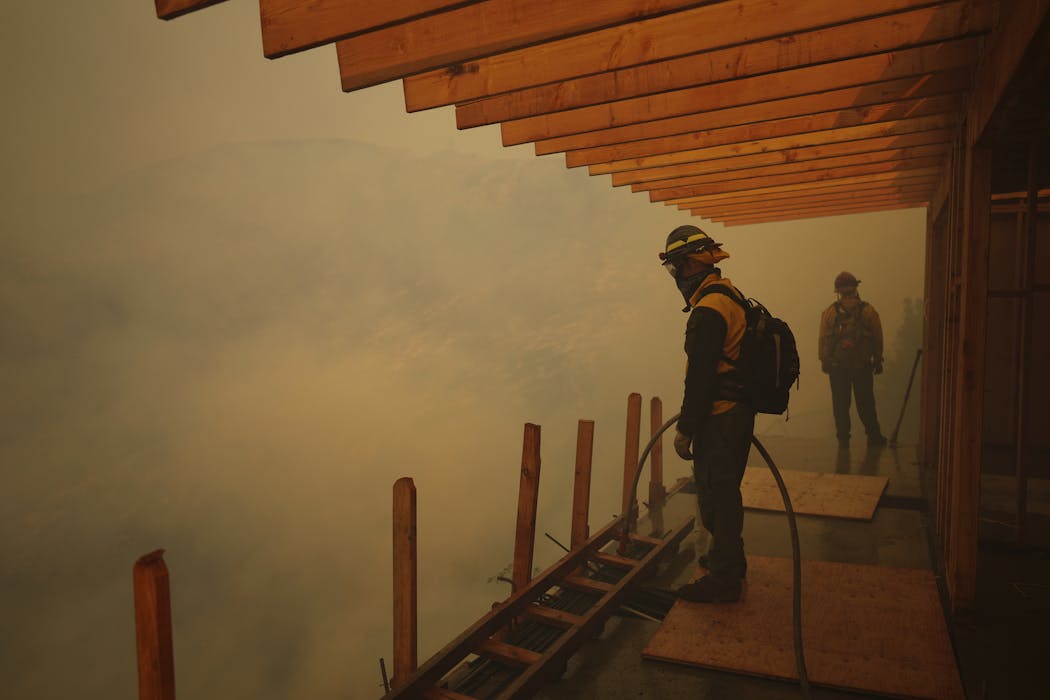
Urban fires are unique in a sense that it’s not just trees and other biomass burning. When homes and vehicles catch fire, plastics, electronics, cleaning chemicals, paints, textiles, construction material and much more burns, releasing chemicals and metals into the air.
One thing we’ve found that is especially important for people to understand is that the concentration of these chemicals and metals can actually be higher inside homes compared with outside after a fire.
A composite of satellite images from January 2025 shows outlines, in red, of the largest fires in the Los Angeles area. Altadena is on the right, and Pacific Palisades is on the lower left. MMGIS, Caltech/JPL
What are your health studies trying to learn?
To understand the health risks from air pollution, you need to know what people are exposed to and how much of it.
The LA Fire HEALTH Study, which I’m part of, is a 10-year project combining the work of exposure scientists and health researchers from several universities who are studying the long-term effects of the fire. Many other community and health groups are also working hard to help communities recover. A local program called CAP.LA, or Community Action Program Los Angeles, is supporting some of my work, including establishing a real-time air quality monitoring network in the Palisades area called CAP AIR.
During an active wildfire, it’s extremely difficult to collect high-quality air samples. Access is restricted, conditions change quickly, and research resources are often limited and take time to assemble. When the fires broke out not far from my lab at UCLA, my colleagues and I had been preparing for a different study and were able to quickly shift focus and start collecting samples to directly measure people’s exposure to metals and chemicals near and around the fires.
Wildfire smoke, like this during the Palisades Fire on Jan. 7, 2025, can get into a home under doors and around windows. AP Photo/Ethan Swope
My group has been working with people whose homes were exposed to smoke but didn’t burn and collecting samples over time to understand the smoke’s effects. We’re primarily testing for volatile organic compounds off-gassing from soft goods – things like pillows, textiles and stuffed animals that are likely to absorb compounds from the smoke.
Our testing found volatile organic compounds that were at high levels outdoors during the active fire were still high indoors in February, after the fires were contained. When a Harvard University team led by environmental scientist Joe Allen took samples in March and April, they saw a similar pattern, with indoor levels still high.
Mike Kleeman, an air quality engineer at the University of California Davis, found elevated levels of hexavalent chromium in the nanometer-size range, which can be a really dangerous carcinogen. In March, he drove around collecting air samples from a burn zone. That was testing which government agencies would not have routinely done.
Fires have a long list of toxic compounds, and many of them aren’t being measured.
Data from the Centers for Disease Control and Prevention shows emergency room visits spiking during the fires in early January 2025. The bold line shows the daily percentage of emergency department (ED) encounters that were associated with wildfires, and the dashed line shows the outdoor air quality index (AQI) values. CDC
What do you want people to take away from these results?
I think that’s a big public health message from the LA fires that people really need to know.
In general, people tend to think the outdoor air is worse for their health, particularly in a place like LA, but often, the indoor air is less healthy because there are several chemical emission sources right there and it’s an enclosed space.
We often hear from people who are really worried about the air quality outside and its health risk during fires, but you need to think about the air indoors too.
Thick smoke from a wildfire spreads over homes in Pacific Palisades, as seen from the Venice Beach section of Los Angeles on Jan. 7, 2025. AP Photo/Jae C. Hong
What are some tips for people dealing with fires?
The LA fires have given us lots of insights into how to restore homes after smoke damage and what can be cleaned up, or remediated. One thing we want to do is develop an easy-to-follow decision tree or playbook that can help guide future fire recovery.
When the fires broke out, even I had to think about the actions I should take to reduce the smoke’s potential impact, and I study these risks.
First, close all your windows during the wildfire. If you have electricity, keep air purifiers running. That could help capture smoke that does get into the home before it soaks into soft materials.
Once the outside air is clean enough, then open those windows again to ventilate the house. Be sure to clean your HVAC system and replace filters, because the smoke leaves debris. If the home is severely impacted by smoke, some items will have to be removed, but not in every case.
And you definitely need to do testing. A home might seem fine when you look at it, but our testing showed how textiles and upholstery inside can continue off-gassing chemicals for weeks or longer.
But many people don’t have their homes tested after wildfires. They might not know how to read the results or trust the results. Remediation can also be expensive, and some insurance companies won’t cover it. There are probably people who don’t know whether their homes are safe at this point.
So there needs to be a clear path for recovery, with contamination levels to watch for and advice for finding help.
This is not going to be the last fire in the Los Angeles area, and LA will not be the last city to experience fire.
Yifang Zhu is working with CAP.LA (Community Action Project Los Angeles), which is funded by the R&S Kayne Foundation, and the LA Fire Health Study, which is funded by private philanthropists, including the Speigel Family Fund. Her work has also been partially funded by the Gordon and Betty Moore Foundation, the Danhakl Family Foundation, and the California Air Resources Board.