Stephen Miller: portrait of Donald Trump’s ideologue-in-chief

Source: The Conversation – UK – By Natasha Lindstaedt, Professor in the Department of Government, University of Essex

During a recent interview with CNN host Jake Tapper, the White House deputy chief of staff, Stephen Miller, laid out what appears to be the core of the new ideology driving US foreign policy: the notion that might is right. Or, as he put it: “We’re a superpower. And under President Trump, we are going to conduct ourselves as a superpower.”

Miller was referring to the Trump administration’s ambitions to take control of Greenland, if necessary by force. “We live in a world in which you can talk all you want about international niceties and everything else,” he told Tapper. “But we live in a world, in the real world … that is governed by strength, that is governed by force, that is governed by power.”

The 40-year-old Californian is one of Trump’s most trustworthy advisers and also one of the longest serving, having joined Trump’s first campaign in January 2016. While the president’s first administration had a revolving door of different appointees, many of whom who barely lasted a year, Miller is one of a handful of advisers to serve in both Trump’s first and second terms.

The two reportedly have a close working relationship, meeting daily along with Trump’s chief of staff, Susie Wiles, to go through Trump’s diary and review the executive orders to be signed. Having started out as a speechwriter, Miller’s position has evolved to focus more on interpreting the president’s ideas and executing them as policy initiatives. He is also understood to be a key liaison point between the White House and Capitol Hill, where he briefs lawmakers on Trump’s plans.

Origins of an extremist

Miller’s extreme ideas did not come out of nowhere. In contrast to the vice-president, J.D. Vance and secretary of state, Marco Rubio, whose ideologies have evolved significantly to be in line with Trump’s agenda, Miller has had a long history of supporting radical America First style policies.

While in high school in Santa Monica, Miller is said to have complained about students having to pick up rubbish, saying janitorial staff should do it instead. As a 16-year-old he contributed an article to a local website, criticising his fellow Hispanic students for a lack of language skills.

While at Duke University, where he studied political science, he contributed a number of articles to the college website, attacking multiculturalism and championing right-wing issues. He was also part of a group at Duke, Students For Academic Freedom, that criticised what they saw as political bias among faculty staff. These ideas would resurface in his attack on universities as a Trump administration official.

Moving to Washington, Miller first worked as an aide to then Republican representative Michele Bachmann before taking a job with Republican senator Jeff Sessions as press secretary. One of his main focuses was in developing critiques of immigration, collaborating with groups such as the Federation for American Immigration Reform and the Centre for Immigration Studies.

This is where he developed the ideas that have formed the backbone of the Trump administration’s anti-immigration policies, including the now notorious family separation policy, by which children were often taken from their parents – who were subject to prosecution for attempting to cross the US southern border illegally. The policy was judged to be so harsh that the UN openly condemned it as cruel and unnecessary.

Immigration has been one of the main focuses of Miller’s work in Trump’s second term. He is understood to behind the decision to deploy immigration and customs enforcement agents en masse on the streets of US cities with power to detain and deport suspected illegal immigrants. Other radical policies bearing Miller’s hallmark are the plan to end the American policy of birthright citizenship, in contravention of the 14th amendment to the US constitution.

But then many of the policy ideas he espouses have brought Miller into conflict with American constitutional law. He has publicly declared that in some circumstances it should be permissible to suspend a person’s habeas corpus right to a trial before they can be imprisoned and he has questioned the power of the judiciary to hold the administration to account over executive decisions on matters such as deportations and due process.

Personality politics

If relatively unknown during Trump’s first term, Miller’s profile has grown considerably in the first 12 months of the second Trump administration. A YouGov poll conducted in September 2025 found that 50% of respondents had heard of him and he had a popularity rating of 18%.

But if he is disliked and feared by many on Capitol Hill, as well as among the wider public, Miller has an ideological ally and staunch supporter in his wife Katie, who achieved instant fame on January 3 after tweeting a map of Greenland with the US flag superimposed on it, accompanied by the word “SOON”.

Within hours the US president had voiced his intention to intervene in Greenland for reasons of national security and to secure access to its huge reserves of mineral resources.

Like her husband, Katie worked in the first Trump administration, at the department of homeland security. She once told a reporter that even the administration’s separation policy was not a problem for her, claiming: “DHS sent me to the border to see the separations for myself, to try to make me more compassionate, but it didn’t work.”

She now runs The Katie Miller podcast, which she established as a “place for conservative women to gather online”. Among other things, it provides a regular and uncritical platform for administration officials.

But the Millers’ growing public profile could prove to be a double-edged sword for the Trump administration. Despite saying out loud what many on the far-right of the Republican party want to hear, their apparent extremism is increasingly a focus for Trump’s critics. California’s democrat governor Gavin Newsom – generally thought to be preparing for a presidential run in 2024, has taken to referring to Miller as Voldemort, the personification of evil in the Harry Potter novels.

All of which is unlikely to resonate well with the independent voters that the Republicans desperately need to win over if they are not to lose vital ground in November’s midterm elections.

The Conversation

Natasha Lindstaedt does not work for, consult, own shares in or receive funding from any company or organisation that would benefit from this article, and has disclosed no relevant affiliations beyond their academic appointment.

ref. Stephen Miller: portrait of Donald Trump’s ideologue-in-chief – https://theconversation.com/stephen-miller-portrait-of-donald-trumps-ideologue-in-chief-272869

US boards a ship sailing under a Russian flag: what we know and don’t know about the legal position

Source: The Conversation – UK – By Andrew Serdy, Professor of the Public International Law of the Sea, University of Southampton

Relations between the US and Russia have hit a fresh bump after the US coastguard boarded a vessel sailing in the Icelandic waters, claiming it was in breach of sanctions on Venezuela. The incident immediately sparked claim and counter-claim from the US and Russia.

The US claimed it was acting correctly to execute a warrant issued by a US federal court. Russian officials, meanwhile, were reported by the country’s Tass news agency as saying this was in clear breach of the law of the sea, saying “no state has the right to use force against ships properly registered in the jurisdictions of other states”. The statement asserted that the Bella 1 – which was recently renamed as the Marinera – had received a temporary permit to sail under the Russian flag on December 24.

Unlike the dramatic abduction of Venezuela’s president, Nicolás Maduro, from his Caracas palace on January 3, which the United States (US) does not even appear to be trying to defend in international law terms, the interdiction of the Marinera/Bella 1 appears to raise a new point of the law of the sea which may offer at least some prospect for Washington to show itself to be on the right side of the law.

Before the change of flag, the US seemed to be selecting with some care the ships carrying Venezuelan oil that it was targeting. These were either stateless or suspected of flying a false flag, which provides no protection under Article 92 of the United Nations Convention on the Law of the Sea (Unclos), which is also the customary international law rule for non-parties such as the US.

Stateless ships are vulnerable

Being stateless, or acting in a way that gives warships on the high seas a valid basis for treating it as though it were stateless, is a position that any ship would be recommended to avoid if at all possible. A ship that is stateless has by definition no flag state to assert the protective exclusive jurisdiction over it on the high seas.

Unclos also provides that a ship which sails under the flags of two or more States, and swaps them depending on the circumstances, “may not claim any of the nationalities in question with respect to any other State”. This means it can be regarded legally as stateless.

Thus, until the change of flag reported on December 31, not just the US but any State was entitled to treat the Marinera/Bella 1 as stateless. This made it vulnerable to interception on the high seas and the exercise of domestic law enforcement jurisdiction over it by the State of the interdicting warship or coastguard vessel.

So the legal position remains unclear. It may be a question of whether the US was already pursuing the Marinera/Bella 1 when it changed its flag. If so the US may be entitled to disregard the reregistration.

Unclos allows for what it refers to as “hot pursuit”. It says that: “The right of hot pursuit ceases as soon as the ship pursued enters the territorial sea of its own State or of a third [another] State.” Since no other circumstance in which the right ceases is mentioned, including the ship ceasing to be stateless, this leaves it open to the US to argue that it was already pursuing the Marinera/Bella 1 and was thus not required to call off its pursuit.

But this argument has limited usefulness as there’s doubt as to whether this was actually a hot pursuit at all. The term is used for pursuits that begin in one of the maritime zones of the State conducting it – not on the high seas.

Claim and counter-claim

So far the Russian Ministry of Transport has claimed that the US action is contrary to the Article 92 rule. Russia insists that the change of registry occurred as long ago as December 24. To counter this, the US could say that it wasn’t until the Russian flag was painted on the ship’s hull, which was reported on December 31, that the Article 92 rule could be invoked against the US.

Article 92 also lays down that: “A ship may not change its flag during a voyage or while in a port of call, save in the case of a real transfer of ownership or change of registry.” This is often misunderstood and assumed to mean that a change of flag in mid-voyage – such as appears to have occurred in this case – is not permitted at all. But a closer reading reveals that this is not the case. What it prevents is a change of flag without a corresponding change of registration.

But that is not the position here. Assuming there was a real registration to Russia, that is what counts. Painting on a flag because you don’t have a physical one is simply evidence of that.

Reflagging while under pursuit is a new point in the international law of the sea to the extent that no previous incident of it is known. In the absence of a clear answer on this, the way this incident plays out is itself going to set the precedent for the future on this issue. We’ll need to hear the competing legal narratives of the US and Russia to see which of them is the more convincing.

The Conversation

Andrew Serdy does not work for, consult, own shares in or receive funding from any company or organisation that would benefit from this article, and has disclosed no relevant affiliations beyond their academic appointment.

ref. US boards a ship sailing under a Russian flag: what we know and don’t know about the legal position – https://theconversation.com/us-boards-a-ship-sailing-under-a-russian-flag-what-we-know-and-dont-know-about-the-legal-position-272957

Canada risks missing out on Africa’s trade boom under Mark Carney

Source: The Conversation – Canada – By Isaac Odoom, Assistant Professor, Political Science, Carleton University

At the G20 summit in South Africa in November, Prime Minister Mark Carney announced several new initiatives, including talks toward a Foreign Investment Promotion and Protection Agreement (FIPA) with South Africa.

But when asked about prioritizing Africa’s economic opportunities for Canada, Carney said Africa is not among his government’s early priorities because other regions offered “the most immediate return.” That remark was at odds with what many Canadians and African partners have been urging Canadian officials to do: treat Africa as a core partner in Canada’s economic diversification plan, diplomatic and geopolitical future.


Read more:
Why Canada must seize the moment and launch its long-awaited Africa strategy


Shortly after Carney’s remarks, in December, the Senate’s Standing Committee on Foreign Affairs and International Trade released a landmark report entitled Canada–Africa: Seizing a Strategic Opportunity. It urged the federal government to engage Africa now with resources, ambition and a concrete action plan or risk being left behind.

Together, these two developments reveal a central tension shaping Canada’s Africa policy at the moment — and precisely when Africa’s global standing is rising.

Why this matters now

Africa’s demographic and economic trajectory is unmistakable. The continent’s working-age population is expanding faster than any other region, 12 of the world’s 20 fastest-growing economies are in Africa and the African Continental Free Trade Area (AfCFTA), which aims to create one of the world’s largest integrated markets, is already in motion.

This demographic dividend and market potential matter not only to African states, but to countries like Canada seeking new trade diversification partners and growth opportunities.

Against this backdrop, the Senate’s report provides 21 recommendations — including the need for a detailed Africa Strategy action plan with timelines and resources, regular high-level dialogue with the African Union, support for AfCFTA implementation, strengthened trade commissioner services and enhanced diaspora engagement. It urges the government to match its promises with real resources and commitment.

Canada’s Africa Strategy

The government’s March 2025 Canada’s Africa Strategy was widely welcomed as a positive step toward a more coherent foreign policy on Africa. It articulates goals for shared prosperity, security and mutual co-operation, acknowledging Africa’s growing place in the world.

My own earlier analysis on Canadian engagement in Africa highlighted that Canada’s new strategy offered a foundation to rethink how it builds partnerships across the continent — not simply viewing Africa as a development recipient, but as a region of strategic partnership and economic opportunity.

I also noted how Canada could learn from China’s long-term engagement model, particularly its emphasis on sustained relationships, infrastructure and market access, while offering a distinct, values-based alternative.

Delivery is the real test

Canada’s Africa Strategy articulates a necessary vision, but follow-through remains limited. That gap is visible in Canada’s broader policy signals.

Even after the launch of the strategy, Africa remains marginal in Canada’s trade and economic planning. The 2025 federal budget identified priority trade markets in Europe and Asia, but not Africa, despite stated support for the AfCFTA. Such inconsistencies suggest lingering hesitation in committing political capital to Africa.

Diplomatic choices reinforce this impression. Limiting Carney’s G20 trip to South Africa alone missed an opportunity to signal a continentwide vision.

A short stop in another regional hub would have underscored Canada’s recognition of Africa’s diversity and strategic importance. Instead, the narrow itinerary conveyed a constrained reading of Africa’s geopolitical and economic landscape. African governments notice these signals, especially at a time when they are actively diversifying external partnerships.

None of this means Canada lacks opportunities. The nuclear co-operation agreement with South Africa signed at the G20 has real potential. A future FIPA could offer greater certainty for Canadian investors in South Africa. And although tentative, the reference to AfCFTA engagement at the G20 is significant.

But for these opportunities to lead to real outcomes, Canada needs a more deliberate and sustained approach backed by resources and political commitment.

Africa’s expanding consumer market

Why does this matter for Canadians? Africa has a young and fast-growing population, a burgeoning middle class and an expanding consumer market. Canadian firms, from clean technology and education to agribusiness and services, can benefit if supported at the right time with the right tools.

Diplomatic influence from a continent of 54 countries also flows from consistency and commitment; not intermittent engagement.

For the first time, the G20 in South Africa was a reminder that Africa is no longer peripheral to global politics. African markets are diverse, fast-changing and increasingly central to the global economy. This requires Canada to look past short-term returns, acknowledging Africa’s critical role in its economic future and investing resources to that end.

Other countries like China, Turkey, Brazil and Gulf states have already recognized this reality. Every year Canada delays, it risks losing ground that will be hard to reclaim.


Read more:
African nations can do more to benefit from ties with China, the world’s second-strongest economy


Time to act

Despite the strategy’s imperfections, Canada now has a plan for engaging with Africa. But a plan is only as good as its implementation.

The Senate report is timely and calls for committing real resources, expanding diplomatic and trade support structures and elevating Africa in Canada’s foreign policy narrative well beyond occasional summits. It means sustained leadership attention from the prime minister and senior ministers.

If Canada seizes this moment with purpose, resources and political will, it can build genuine partnerships that benefit both Canadians and African partners. The Senate’s report aligns with the view that Africa is not a charity case; it is a strategic frontier for trade, innovation and geopolitical influence. Delivery must be the priority going forward, or Canada will be left behind.

The Conversation

Isaac Odoom does not work for, consult, own shares in or receive funding from any company or organisation that would benefit from this article, and has disclosed no relevant affiliations beyond their academic appointment.

ref. Canada risks missing out on Africa’s trade boom under Mark Carney – https://theconversation.com/canada-risks-missing-out-on-africas-trade-boom-under-mark-carney-272166

Why Canada needs better data on strikes, unions and other labour issues

Source: The Conversation – Canada – By Larry Savage, Professor, Labour Studies, Brock University

In the summer of 2025, the federal government quietly pulled national strike and lockout data from public view. The move followed a complaint from the Confédération des syndicats nationaux (CSN), the second-largest trade union federation in Québec.

The CSN learned that an employer organization was waging an anti-union campaign using flawed data published by Statistics Canada. The data artificially inflated the number of strikes in the province, leading the Montreal Economic Institute to falsely assert that since 2023, 91 per cent of Canadian work stoppages had affected Québec.

On Dec. 16, the corrected data was restored without comment.

Months of missing data made it difficult for employers, unions and researchers to make sense of trends and emerging patterns in Canadian labour relations. Worse yet, the flawed data helped influence a debate and shape public opinion about labour law reform in Québec.

This episode highlights a persistent problem: Canada does a poor job of gathering vital labour relations information. In a period of rising inequality and renewed union-management conflict, stakeholders need better and more accurate data.

What disappeared and why it matters

For decades, Employment and Social Development Canada (ESDC) and Statistics Canada have published national data on strikes and lockouts. These figures allow journalists, members of the public and other stakeholders to track where conflicts are occurring, how large they are, how long they last and the number of workers involved over time.

Labour relations data is a basic need for the purpose of work-related policy analysis. Without timely and reliable figures, it becomes increasingly difficult to analyze current workplace conflicts, compare them across sectors or provinces or place them in historical context.

Long-term, consistent data sets are especially important because they allow researchers to identify trends: whether work stoppages are becoming more frequent, which industries are most affected and how policy changes may be influencing workplace conflict. When that continuity is broken, so is the ability to understand how the labour relations landscape is changing over time.

While ESDC’s public tables were unavailable, Statistics Canada’s historical tables, on which researchers often rely, were also negatively affected. The government offered no public explanation on its website for why the data were taken down, though ESDC now indicates that revisions were made to recent data covering Québec.

Canada lags behind other countries

Other countries show that better labour relations data collection is possible. In the United States, for example, the National Labor Relations Board consistently releases statistics on union certification applications and unfair labour practice cases, giving the public regular insights into trends in unionization and workplace conflict.

Some Canadian provincial labour boards publish annual reports, but nothing at the federal level matches the depth and timeliness of U.S. labour relations reporting. This leaves Canada with a patchwork of partial figures instead of a coherent national picture of how unions, employers and workers are interacting.

Despite the return of ESDC’s work stoppages data, Canada still lacks crucial information on the broader system of labour relations. There is currently no timely national source for data on new union certifications, membership levels in individual unions, unfair labour practices, strike votes, health and safety work refusals, or duty of fair representation complaints.

Researchers looking for this information must often wait for uneven provincial annual reports or file individual requests with provincial labour boards and Statistics Canada, which can be slow and costly.

In some cases, the data is not collected at all. The result is a system in which some of the most important features of labour relations are effectively hidden from public view by administrative fragmentation.

Models Canada could follow

Canada already has models that show how a national labour relations data system could work. The Ontario Ministry of Labour’s collective bargaining database, for instance, tracks public and private sector negotiations, wage settlements, mediation and arbitration outcomes, and even the contents of recent collective agreements.

The Association of Workers’ Compensation Boards of Canada shows that provincial data can be combined to create a clear national picture. Working with provincial workers’ compensation boards, it produces national statistics on injuries, fatalities and other workplace safety issues.

The ESDC could use this model to build a national labour relations database that would include information on union certification applications and outcomes, membership trends by sector and region, unfair labour practice complaints and work refusals.

Such a resource would help policymakers see what’s happening in Canada’s workplaces, allow unions and employers to compare bargaining results, and help journalists and the public evaluate how well labour laws work. It would also strengthen academic research and support better labour relations policy.

Expanding public access to labour relations data would also send a clear signal that the federal government understands the value of evidence-based policy decisions. In a period when official statistics on wages, jobs and prices are under political pressure in other countries, Canada has an opportunity and a responsibility to strengthen its own commitment to open, reliable labour relations data.

The Conversation

The authors do not work for, consult, own shares in or receive funding from any company or organisation that would benefit from this article, and have disclosed no relevant affiliations beyond their academic appointment.

ref. Why Canada needs better data on strikes, unions and other labour issues – https://theconversation.com/why-canada-needs-better-data-on-strikes-unions-and-other-labour-issues-272776

US action against Greenland would undermine Nato, but now is not the time to panic

Source: The Conversation – UK – By Stefan Wolff, Professor of International Security, University of Birmingham

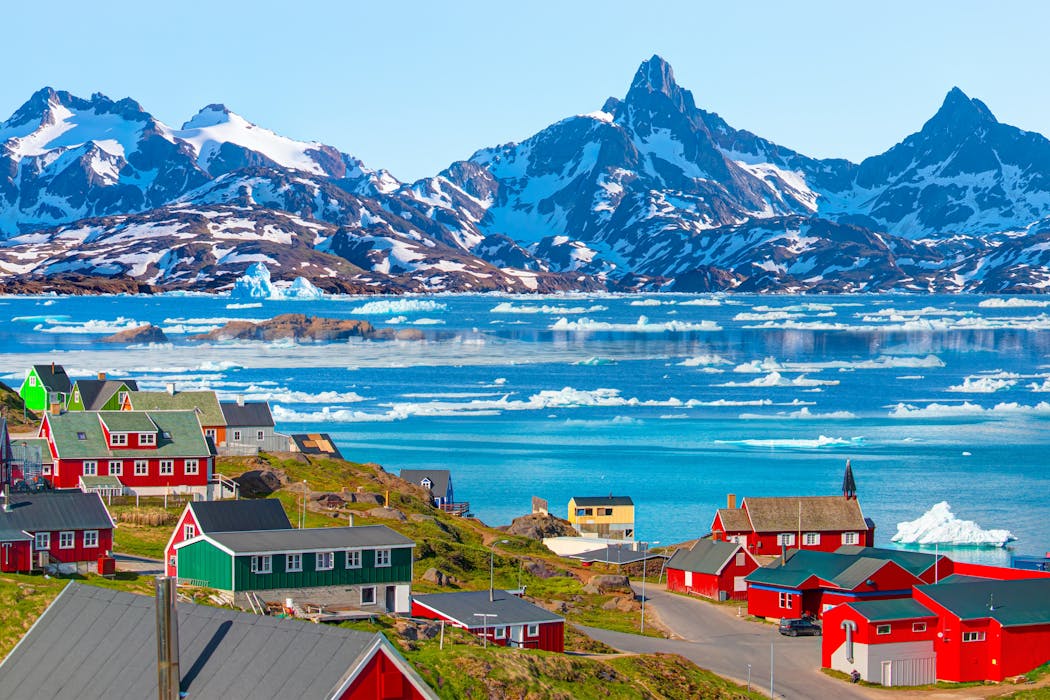
Donald Trump sees Greenland as national security priority for the US. muratart / Shutterstock

Shortly after the US military operation to capture Venezuelan leader Nicolás Maduro on January 3, US president Donald Trump restated his claim to Greenland. The White House sees Greenland, which is part of the kingdom of Denmark, as crucial for national security and is reportedly considering a range of options to acquire the island. This includes “utilising the US military”.

Trump’s proclamations have led to a sense among Europeans that US aspirations for dominance over the western hemisphere extend beyond Latin America. And the fact that Trump’s secretary of state, Marco Rubio, told congressional leaders in Washington that the administration wants to buy Greenland, not invade it, is unlikely to make them feel much better.

Their worries that Trump is serious about annexing Greenland are not unfounded: the US president has repeatedly expressed his desire to make Greenland part of the US, starting back in his first term. But some of the presumed implications, like the dissolution of Nato as foreseen by Danish prime minister Mette Frederiksen, are at least for now overblown.

Assuming there is an American move against Greenland, this would not be the first time two Nato allies have been at loggerheads. France pulled out of Nato’s military structures in the late-1960s over concerns about losing its foreign policy autonomy and possibly being drawn into the Vietnam war.

Greece withdrew from military participation in the alliance in 1974 after neighbour and fellow Nato member Turkey invaded Cyprus and occupied the northern, predominantly Turkish-Cypriot, part of the island. Tensions between the two Nato members continue to this day but have not brought the alliance down.

Nato also rode out the Suez crisis in 1956. This crisis saw Britain and France, together with Israel, invade Egypt to regain control of the Suez canal before withdrawing after intense US pressure.

The alliance also survived the “cod wars” between the UK and Iceland in the 1970s. And Nato did not disintegrate during the rift that emerged between its members in the run-up to – and in the aftermath of – the US-led invasion of Iraq in 2003.

What sets all of these previous examples apart from an American move against Greenland is that this would be the first time the US engages in an aggressive act against a Nato ally. This would hardly be something that Denmark and its European allies could accept, especially if it involves the use of force.

But not accepting US aggression can come in many different forms. On the spectrum of possible responses, the least likely is an activation of the EU’s mutual defence clause, which would be followed by military hostilities between European states and the US. The EU does not have the military capabilities, nor is it likely to have the political will, to go to war with the US.

A mass European exodus from Nato is also far from a foregone conclusion. Nato’s founding treaty does provide an option for members to leave in its article 13, which foresees a “notice of denunciation” and a 12-month period until an exit takes full effect. But given the security threats that Europe currently faces from Russia, even a temporarily dysfunctional Nato would be better than no Nato at all.

In the event that the US moves to take control of Greenland, political paralysis within Nato would almost be certain. This would probably involve escalating rhetoric on both sides of the Atlantic and a Danish withdrawal from military participation in Nato.

European diplomatic protests against American action over Greenland might lead Trump to declare that the US is withdrawing from Nato. But that, too, is not straightforward. Such a move would require approval in the US Senate and consultation with members of both houses of Congress.

There would probably be significant pushback both from US lawmakers and from the Pentagon. This is because a US withdrawal from Nato would entail a possibly rushed and almost certainly chaotic transfer of responsibilities in the Nato command structure and would raise major questions about US military bases in Europe.

None of this would be in the interests of American security and would certainly undermine US abilities to project force outside the western hemisphere.

Europe’s next steps

So, for Europe, the first order of the day is not to panic and rush into any ill-advised actions. While it is important to match Trump’s aggressive rhetoric, it is also key not to be drawn into needless escalation. In the long-term, an even deeper transatlantic fracture is ill-suited to the European interest in a revitalised Nato.

Security in the Arctic is a joint priority for the alliance, not just for the US. Greenland is a critical node in north Atlantic security, but so are Iceland and Norway as well as US bases in Europe. Emphasising these shared interests may not cut much ice with Trump but it is likely to strengthen congressional resolve to push back against the president’s threats to the transatlantic alliance.

At the same time, Europe should not rush into any hasty deals with Trump over Greenland. While US security concerns, and possibly even economic interests, could be accommodated in existing arrangements, anything beyond that – such as selling Greenland to the US in exchange for renewed US commitments to Nato and Europe – would be foolish.

Not only can Trump not be trusted to keep any promises he might make in order to get a deal done but he could also not credibly commit his successors. Hence, any arrangement that the Europeans may now undertake to manage American hostility may be counterproductive if it cannot be undone should the mood in Washington change to become less anti-European.

And there is still a faint hope in Europe that things might get better either after the US mid-term elections in 2026 or the presidential elections in 2028. As always, there is also the possibility that Trump’s strategic focus might zoom in on some other issue – such as a protracted failure of US policy in Venezuela – and so take his eyes off Greenland.

The Conversation

Stefan Wolff is a past recipient of grant funding from the Natural Environment Research Council of the UK, the United States Institute of Peace, the Economic and Social Research Council of the UK, the British Academy, the NATO Science for Peace Programme, the EU Framework Programmes 6 and 7 and Horizon 2020, as well as the EU’s Jean Monnet Programme. He is a Trustee and Honorary Treasurer of the Political Studies Association of the UK and a Senior Research Fellow at the Foreign Policy Centre in London.

David Hastings Dunn has previously received funding from the ESRC, the Gerda Henkel Foundation, the Open Democracy Foundation and has previously been both a NATO and a Fulbright Fellow.

Mark Webber is Senior Non-resident fellow at the NATO Defence College in Rome and a trustee of NATO Watch. He has previously received funding from the Economic and Social Research Council (ESRC) and the British Academy to carry out research on NATO.

ref. US action against Greenland would undermine Nato, but now is not the time to panic – https://theconversation.com/us-action-against-greenland-would-undermine-nato-but-now-is-not-the-time-to-panic-272911

What I’ve learned from studying the wild pigeon

Source: The Conversation – UK – By Will Smith, Leverhulme Early Career Fellow, University of Nottingham

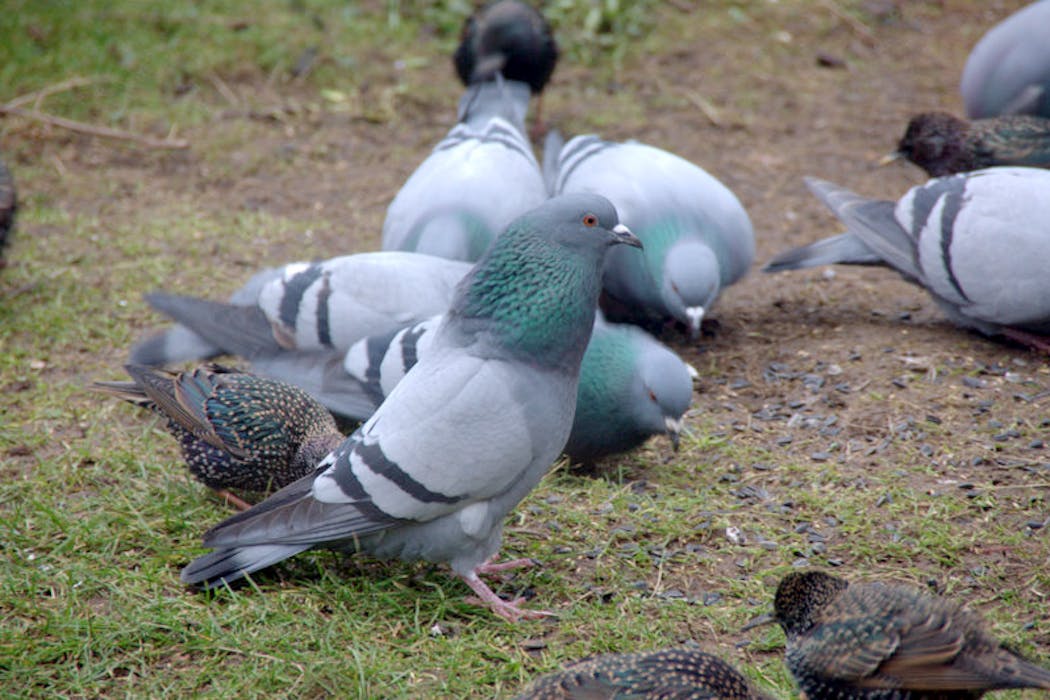
Wild rock doves such as these are endangered, following interbreeding with feral ‘city pigeons’. Mike Pennington/Wikimedia , CC BY-NC-SA

Domestic pigeons have surprising cultural significance. They inspired Charles Darwin in his thinking about evolution, delivered wartime messages to save lives, and have symbolic meaning around the world.

The domestic pigeon is among the best understood animals on the planet, with research published weekly on various aspects of their biology. Yet we know very little about their wild ancestors. Because of this, I have been visiting Scotland’s Outer Hebrides since 2019 to study the truly wild pigeon.

Millennia of human-pigeon interactions arose from the domestication of a small, blue-grey bird – the rock dove – 5,000-10,000 years ago, probably in the Middle East. Most of us are familiar with feral pigeons. Found cooing and strutting throughout the world’s cities, these animals descend from escaped domestic birds.

Unlike feral pigeons, which thrive in attics (or outside McDonald’s), the rock dove is shy, and mostly found on cliffs or mountains. Domestic pigeons, feral pigeons and rock doves all belong to the same species – Columba livia.

Although rock doves are native to vast swathes of Europe, Africa and Asia, their modern geographic distribution is unclear, thanks to interbreeding with feral pigeons. Across much of their original range, rock doves have gone extinct, replaced by pigeons with a mixture of wild and feral ancestry. For example, they have been completely subsumed into the feral pigeon gene pool across England and Wales.

Nevertheless, wild-looking pigeons were known to live in parts of Scotland and Ireland. Among ornithologists and casual birdwatchers, these birds were sometimes said to be “proper” rock doves, and sometimes wild-feral hybrids. It was this mystery that inspired me to study these birds which, living in remote habitats (and being difficult to distinguish from feral pigeons), had been neglected by scientists for decades.

In 2022, my colleagues and I published the first genetic study of these Scottish and Irish populations. We confirmed that they are wild rock doves, but that wild-feral interbreeding is common. We found that rock doves have thinner beaks and rounded heads, whereas feral pigeons have an engorged cere (the white fleshy lump above the beak).

Most interestingly, the rock doves of the Outer Hebrides, off the west coast of Scotland, remain genetically distinct, with limited evidence of interbreeding with feral pigeons. Future genetic research will hopefully identify similar colonies surviving elsewhere (wild-looking populations are also seen in parts of Asia, north Africa, and the Mediterranean).

For now though, Outer Hebridean rock doves represent the “wildest” (having the least feral pigeon ancestry) known contemporary population in the world. Foraging in meadows, and roosting in sea caves, they have, against scientists’ expectations, escaped the impacts of domestication. This is probably because pigeon keeping has always been rare in the Outer Hebrides, and few feral pigeons make it across the sea from mainland Britain.

Each year, I spend several weeks in the Outer Hebrides studying the rock doves. To allow individual birds to be followed throughout their lives, they need to be fitted with coded leg rings. Urban feral pigeons can be captured with a hand net and some birdseed, but their warier cousins require a more thoughtful approach.

We find that the best way is to target them overnight, when they are roosting. We take measurements, photographs and blood samples, before returning them to sleep. We have so far incorporated over 1,200 birds into our study.

Outer Hebridean rock doves are sparsely distributed, in colonies of up to a hundred birds. They rest and breed in caves, rocky crags and ruined buildings. Living among golden eagles and red deer, it’s a completely different lifestyle to that associated with feral pigeons.

In 2025, we published the results of a GPS tracking trial. We tracked rock doves from a colony in a disused barn, to see whether life in a human-built environment affects their behaviour.

Although naturalists have long discussed a classic rock dove “commuting” behaviour (travelling many miles each day, between roosting and foraging sites), this is not what we observed with our barn-dwelling birds. While many Outer Hebridean rock doves still commute (they are seen traversing the islands each morning and evening), the doves we tracked had abandoned this behaviour, associating almost exclusively with farmland.

This may give us a rare window into the earliest stages of domestication in this species. Our observations suggest that, instead of being deliberately retrieved from nature and actively farmed, rock doves were probably first attracted by agriculture, abandoning their natural commuting behaviour to live alongside us. Providing roosting structures likely enhanced this process – and we started building dovecotes at least 4,000 years ago.

The exciting thing about working with rock doves is that much of their biology
remains a mystery. We now know that genetically distinct populations persist, but there’s little information about their reproduction, predators or diseases.

Studying wild rock doves gives us a rare chance to establish how one of science’s model species lives in nature. This may yield insights into domestication, wild-feral hybridisation, and human-wildlife relationships – contributing to the wider understanding of our place in the natural world.

The Conversation

Will Smith’s research on rock doves has previously been funded by the Edward Grey Institute and the John Fell Fund (both of the University of Oxford), the British Trust for Ornithology, the Scottish Ornithologists’ Club, the British Birds Charitable Trust, the Houghton Trust, and the John Muir Trust. His research is currently funded by the Leverhulme Trust (as an Early Career Fellow), the Genetics Society, and the British Ecological Society.

ref. What I’ve learned from studying the wild pigeon – https://theconversation.com/what-ive-learned-from-studying-the-wild-pigeon-269116

Iran protests have put the country’s political system on trial

Source: The Conversation – UK – By Arash Beidollahkhani, Research Fellow at the Global Development Institute, University of Manchester

Protests that began in late December over rising prices and a collapsing currency have now spread to most of Iran’s 31 provinces, with demonstrators taking aim at the country’s rulers. The demonstrations signal a deep challenge to a political order that many Iranians see as incapable of delivering stability, dignity or a viable future.

The unrest poses the most serious challenge to Iran’s political establishment since 2022. That year, nationwide protests erupted over the death of 22-year-old Mahsa Amini in police custody after she was arrested for violating hijab rules. Those demonstrations were ultimately suppressed through force.

Iran’s political establishment has for decades defined itself through permanent confrontation on multiple fronts: with Israel, the US and what it sees as global imperialism. This posture has reshaped domestic life by subordinating the economy, governance and social stability to ideological resistance.

What the latest protests reveal is not simply frustration with the hardship that has accompanied this political stance. They seem to reflect a growing consensus among Iranians that this order cannot be reformed into something functional and must therefore be replaced.

Iranian security forces confront a lone protester during demonstrations.
Iranian security forces confront a lone protester during demonstrations in late December. This widely shared image has become a symbol of the protests.
Instagram

This has been apparent in the language used by the protesters. Many demonstrators have linked their daily hardships to the regime’s foreign policy priorities, expressed perhaps most clearly through one chant that has echoed through the streets of various Iranian cities in recent days: “Not Gaza, not Lebanon, I sacrifice my life for Iran.”

The slogan is a rejection of the regime’s official stance that sacrifice at home is necessary to fulfil ideological goals of “resistance” abroad. Iran has long pursued a policy of supporting militant groups like Hamas and Hezbollah to counter the influence of the US and Israel in the Middle East.

Chants of “death to the dictator” – a reference to Iran’s ageing supreme leader, Ayatollah Ali Khamenei – are yet more evidence of the broad rejection of the political order among the Iranian population. They signal that many Iranians now view their economic survival as inseparable from fundamental political change.

The protests have spread across wide sections of Iranian society. What began as strikes by bazaar merchants and shopkeepers in Iran’s capital, Tehran, quickly drew in students, professionals and business owners elsewhere in the country. Protests have even been reported in Qom and Mashhad, cities whose populations have traditionally been loyal to the state.

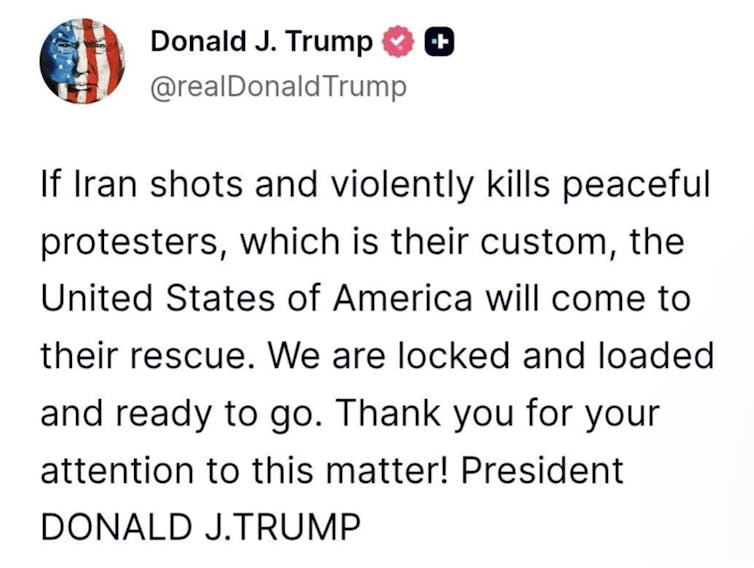
The state’s initial response to the protests was muted. The government recognised the protests and promised to listen to the “legitimate demands” of the demonstrators. However, despite a warning from US president Donald Trump of US intervention should security forces “kill peaceful protesters”, at least 36 people have died so far. Over 2,000 more people have been detained.

A social media post by Donald Trump warning of American intervention should Iran's authorities kill protesters.
Donald Trump posts on his Truth Social media platform in response to the protests in Iran.
@realDonaldTrump / Truth Social

Post-war paralysis

The protests come six months after Iran’s brief but destabilising war with Israel. This conflict severely strained the state’s capacity to govern, with Khamenei largely withdrawing from public view since then due to heightened fears over his safety. Major decisions in Iran require Khamenei’s approval, so his absence has slowed decision-making across the system.

The effects of this have been felt nationwide. Universities and schools have been hampered by repeated closures, shortened schedules and the sudden suspension of in-person classes. Transport networks have faced repeated disruption and economic planning has become nearly impossible.

Prices are now rising fast. The official annual inflation rate stands at around 42%, with food inflation exceeding 70%. The prices of some basic goods have reportedly risen by more than 110% compared with a year ago, and are expected to rise further in the coming weeks.

Iran’s authorities have also intermittently suspended routine daily and weekly activities since the end of the war, such as school days, public office hours, transport services and commercial operations. They cite energy shortages, pollution or security concerns as the reasons for doing so.

Underlying these disruptions is a governing system braced for the possibility of renewed war, either with Israel or possibly the US. The regime is operating in a prolonged state of emergency, which has pushed Iranian society itself deeper into crisis.

Iran’s governing paralysis has been strained further by intensifying competition within the ruling elite. The war with Israel led to the deaths of several senior Iranian military and security figures, which has created gaps in networks of power.

With authority fragmented, rival political, military and security factions have sought to position themselves for influence in a post-Khamenei order. Networks associated with figures such as former president Hassan Rouhani, former foreign minister Javad Zarif and current president Masoud Pezeshkian are pursuing negotiations with western powers to address Iran’s foreign policy challenges.

But others appear to be engaging in talks aimed at securing backing from ideological allies such as Russia and China. These include people in security and intelligence circles, along with figures ideologically aligned with Khamenei like his second-eldest son Mojtaba, current speaker of parliament Mohammad-Bagher Ghalibaf and conservative clerics such as Mohammad-Mahdi Mirbagheri.

These rival strategies have not produced coherent governance. Instead, they have reinforced perceptions among the Iranian public that the system is preoccupied with survival rather than addressing everyday breakdowns in basic administration, public services and economic coordination.

Iran stands at a crossroads. One path leads toward deeper militarisation, elite infighting and prolonged paralysis. The other points towards a reckoning with a political order that large segments of Iranian society no longer believe can deliver stability or welfare.

The protests suggest that the central question for many Iranians is no longer whether the system can be repaired, but whether continuing to live under it is viable at all. What is clear is that Iran is at a critical political moment, with significant changes likely to unfold in the weeks and months ahead.

The Conversation

Arash Beidollahkhani does not work for, consult, own shares in or receive funding from any company or organisation that would benefit from this article, and has disclosed no relevant affiliations beyond their academic appointment.

ref. Iran protests have put the country’s political system on trial – https://theconversation.com/iran-protests-have-put-the-countrys-political-system-on-trial-272781

Think society is in decline? Research gives us some reasons to be cheerful

Source: The Conversation – UK – By Paul Hanel, Senior Lecturer, Department of Psychology, University of Essex

Tinnakorn jorruang/Shutterstock

Talk to a random member of the public and they’re likely to say that people’s behaviour is getting worse. From brazen shoplifting, to listening to music out loud on public transport, to violence against retail workers, there are plenty of reasons we might feel bleak about other people.

This perception is backed up by research: a study published in June 2023 found that people in over 60 countries believe that basic decency is declining. A 2025 poll of 9,600 Americans found that 46% believed that rudeness is overall increasing, whereas only 9% found it was decreasing compared to pre-pandemic levels.

But people’s perception can be inaccurate. In my research, I investigate how accurate people’s perceptions about other people are, the implications of inaccurate perceptions, and what happens when those misperceptions are corrected.

And it’s clear that there are some misperceptions at play here. If we look at people’s values, those abstract ideals that guide our behaviour, there are reasons to be positive about society.

In a 2022 study of 32,000 people across 49 cultural groups, the values of loyalty, honesty and helpfulness ranked highest, while power and wealth ranked lowest. The results offer little support for claims of moral decline. An interactive tool, developed by social scientist Maksim Rudnev using data from the European Social Survey, shows that the pattern remained consistent between 2002-23 across over 30 European countries.

Further studies show people’s values are broadly similar across over 60 countries, education levels, religious denominations and gender (there are exceptions of course). That is, there is substantial overlap between the responses between both groups.

Even the values of 2,500 Democrats or Republicans in the USA in 2021-23, or of 1,500 Leave and Remain voters of the Brexit referendum in 2016-17, are remarkably similar. This suggests an alternate narrative to perceptions of countries being divided and polarised.

One limitation of these findings is that they are based on people’s self-reports. This means these results can be inaccurate, for example because people wanted to portray themselves positively. But what about people’s actual behaviour?

Good citizens

Quite a few studies suggest that most people are actually behaving morally. For example, when researchers analysed actual public conflicts recorded by CCTV, they found that in nine out of ten conflicts a bystander intervened (in cases where bystanders were present). These findings, from 2020, were similar across the Netherlands, South Africa and the UK.

People intervene in knife or terrorist attacks, even when they put themselves in danger. While these cases are rare, they demonstrate that many people are willing to help even under extreme circumstances.

In less dramatic situations we can also observe that people are considerate of others. For example, a 2019 study found that in 38 out of 40 countries investigated lost wallets were, on average, more likely to be returned if they contained a bit of cash rather than no cash, and even more likely to be returned when they contained a fair bit of cash. This is likely because finders recognised that the loss would be more harmful to the owner of the wallet.

In another experiment (2023), 200 people from seven countries were given US$10,000 (£7,500) with almost no strings attached. Participants spent over $4,700 on other people and donated $1,700 to charity.

But what about changes over time? It might be that people 50 or 100 years ago behaved more morally. There are not many studies that systematically track behaviour change over time, but one study found that Americans became slightly more cooperative between the 1950s and the 2010s when interacting with strangers.

Why misperceptions persist

Why do quite a few people still believe that society is in moral decline? For one thing, news outlets tend to focus on negative events. Negative news is also more likely to be shared on social media. For example, numerous studies noticed that when disasters strike (hurricanes, earthquakes), many media stations report panic and cruelty, even though people usually cooperate with and support each other.

In addition, people who hold more extreme political views – on either the left or the right – are more likely to post online, as are bots from Russia and elsewhere. In other words, what we see on social media is by no means representative of the population.

Of course, none of this denies that a minority of people can cause serious harm, or that some aspects of public life, such as online abuse of children, may be worsening. Further, these trends do not necessarily reflect how the average person behaves or what they value.

A young woman and older woman smiling at a table outdoors
People still value helpfulness and honesty.
Dmytro Zinkevych/Shutterstock

It matters if people are overly pessimistic about others. People who wrongly believe that others care more about selfish values and less about compassionate ones are, on average, less likely to volunteer or vote. This is not surprising: why invest your time in people you think would never return the favour?

Numerous experiments have found that showing people that others share, on average, similar values and beliefs to their own, can make them more trusting and hopeful for the future. Talking to others, be it friends, people you only know loosely or strangers, can make us realise that other people are mostly friendly, and it can also make us feel better.

Volunteering, joining local groups or attending neighbourhood events can be a good idea: helping others makes us feel better. Finally, reading positive news stories or focusing on other people’s kindness can also help our outlook.

In a nutshell, the evidence suggests that moral decline is not happening, even if there are examples of some bad behaviour on the rise. If we all were to stop talking to other people assuming they would mean us harm, cease to go the extra mile for other people and so on, there is a risk we all become more self-centred and decline would eventually happen. Luckily, we, as a society, can influence our own fate.

The Conversation

Paul Hanel received in the past funding from the Economic and Social Research Council as well as Research England.

ref. Think society is in decline? Research gives us some reasons to be cheerful – https://theconversation.com/think-society-is-in-decline-research-gives-us-some-reasons-to-be-cheerful-268834

Mary, Queen of Scots’ last letter is going on display in 2026 – five interesting facts about her other writing

Source: The Conversation – UK – By Emily Hay, PhD Candidate in Scottish Literature, University of Glasgow

The last letter of Mary, Queen of Scots goes on display in 2026 for the first time in almost a decade. Deposed from her Scottish throne in 1567, Mary spent 20 years in captivity across Scotland and England before she was executed for plotting against her cousin and captor, Elizabeth I of England. Writing that final letter was one of the last things Mary did before mounting the scaffold on February 8, 1587.

As I explore in my PhD thesis, writing was a key concern for Mary throughout her captivity. She wrote hundreds of letters as well as poems and prose essays, using her words as a means of influence with her supporters, jailers and a reading public at large. Here are five things you should know about her from her writing.

1. French was her language of choice – but it wasn’t all she could write

Sent to France at the age of five, Mary developed a lifelong attachment to the country and its language. Studying under the French poet Pierre de Ronsard, she had a particular fondness for French poetry. It was here that Mary first began composing poems of her own, with short verses penned in prayer books belonging to her female family members. French also remained her language of choice for writing throughout her life, even after she returned to rule Scotland in 1561.

However, contrary to popular myth, Mary was also fluent in her native Scots, speaking and writing letters in it throughout her reign.

2. She was deposed and imprisoned for poems she (allegedly) wrote

In February 1567, Mary’s husband, Lord Darnley, was killed, and by May of the same year she had married the Earl of Bothwell – the man widely believed to have killed him.

According to her rebellious lords, her own poetry attested to her guilt of adultery and murder. In the “casket sonnets” – so-called for the silver gilt casket they were discovered within – Mary had apparently declared her love for Bothwell while Darnley was still alive. The poems were even produced as evidence against her at the hearings held to decide her fate after she escaped to England in 1568.

Mary, Queen of Scots
Mary, Queen of Scots.
National Portrait Gallery, CC BY-NC

To this day literary historians remain divided on whether the sonnets were actually written by Mary or forged by her enemies. Whatever the truth may be, they highlight the political stakes Mary’s writing entailed.

3. Propaganda painted her as a monster and a witch – but she had very different views of herself

Following Darnley’s murder, Mary became the subject of a slew of derogatory propaganda. One Edinburgh placard painted her as a naked mermaid (a symbol of prostitution). Elsewhere across Britain, written propaganda also imagined her as monstrous classical women like the snake-haired Medusa and the witches Medea and Circe.

Even in prison, Mary didn’t take such slander lying down. In one letter to Elizabeth I in 1568 she wrote: “I am not an enchanter” and “I am not of the nature of the basilisk.” The basilisk was a mythical creature interchangeable with Medusa because both were known for their serpentine nature and ability to kill with a mere look. In these written rejections of her negative public image, Mary hoped to prove her propagandists wrong and persuade the English queen to help restore her to her throne.

4. She saw herself as more a king than a woman

Popular culture has always contrasted the masculine, intellectual Elizabeth against the feminine, emotional Mary – most notably, the 2018 film had Saoirse Ronan’s Mary wishing she had emulated Elizabeth’s decision to remain unmarried. Yet, while Elizabeth I famously declared that she had “the heart and stomach of a king”, Mary’s writing reveals she also saw herself as more a king than a woman.

In two poems written and published during her imprisonment, she notably compares herself to the biblical kings Solomon and David. Both were common figures of comparison for monarchs who wanted to display their power and virtue – Henry VIII, Elizabeth and James VI and I (Mary’s son) had all done so during their reigns.

Mary’s message was clear: though ousted from her throne, she would never stop projecting herself as a monarch. She too was a king first, and a woman second.

A painting of a skull and Mary, Queen of Scots.
Anamorphosis, called Mary, Queen of Scots by an unknown artist. The painting should be looked at from left to right to reveal the human head changing into a skull.
National Galleries Scotland, CC BY-NC

5. She wanted to control her public persona – even in death

Though she had been charged with treason by the English government, in her final letter Mary told her brother-in-law, Henry III of France, that she was dying for her Catholic faith. Throughout her imprisonment Mary tried to control the public view disseminated of her through writing – on several occasions even trying to stop the circulation of derogatory books published about her in England and France.

Her conscious attempts to control the narrative only strengthened in the lead up to her execution. In a letter to the Spanish ambassador, written after she had received news of her death sentence, Mary claimed she could hear construction in the great hall of her prison at Fotheringhay, stating: “I think it is to make a scaffold to have me play out the final act of the tragedy.”

For Mary, her end was a performance that she sought to influence and control, and her presentation on the scaffold – carrying a crucifix and wearing a petticoat in the red of martyrdom – only played into this. Given how enduring the view of Mary as a martyr became in the years following her death, it would seem, on that count at least, that she won.


Looking for something good? Cut through the noise with a carefully curated selection of the latest releases, live events and exhibitions, straight to your inbox every fortnight, on Fridays. Sign up here.


The Conversation

Emily Hay has previously received funding from the Arts and Humanities Research Council (AHRC).

ref. Mary, Queen of Scots’ last letter is going on display in 2026 – five interesting facts about her other writing – https://theconversation.com/mary-queen-of-scots-last-letter-is-going-on-display-in-2026-five-interesting-facts-about-her-other-writing-272754

Surprising number of foods contain microplastics. Here’s how to reduce the amount you consume

Source: The Conversation – UK – By Catherine Rolph, Lecturer in Environmental Engineering, The Open University

Microwaving food in glass containers could help reduce the microplastics you consume. Reiko Gitzbrecht/Shutterstock

The public is starting to understand that they can find microplastics in their food, particularly seafood, but exposure from other foods is far more common than most people realise.

Studies have shown that your daily intake of microplastics from food and drink is estimated to be anywhere from zero to 1.5 million microplastic particles per day. The biggest source is likely to be coming from bottled water.

Here are five of the more surprising sources of microplastics in your food and drink.

1. Chewing gum

When you chew gum, you are essentially chewing a lump of plastic. Most chewing gum is made from a gum base (plastics and rubber), to which sweeteners and flavourings are added. As you chew, the gum base releases microplastics. A single gram of chewing gum can release up to 637 microplastic particles.

Natural gums made with plant polymers are not much better. They release a similar number of microplastics as the synthetic gum. This suggests that microplastics aren’t just coming from the gum base but could be due to the introduction of microplastics during the production or packaging process.

Most microplastics were released within the first eight minutes of chewing, so to reduce your exposure, chew one piece of gum for longer, rather than constantly popping in fresh pieces.

2. Salt

Salt may seem like a pure, simple ingredient but studies have shown that 94% of salt products tested worldwide are contaminated with microplastics. The contamination is so widespread that sea salt has even been proposed as an indicator of microplastic pollution in the marine environment.

Contamination has been found to be higher in terrestrial salts, such as Himalayan salt, rather than marine salts. New technologies are being investigated to help clean up sea salt, however, it is likely that much of the contamination comes from production and packaging.


Read more:
Plastic ‘bio-beads’ from sewage plants are polluting the oceans and spreading superbugs – but there are alternatives


Your salt grinder might also be making things worse. Disposable plastic spice grinders can release up to 7,628 particles when grinding just 0.1g of salt using a plastic grinder. To minimise your exposure, switch to a grinder with a ceramic or metal grinding mechanism and store salt in non-plastic containers.

How microplastics affect our health.

3. Apples and carrots

Microplastic contamination of fruit and vegetables has been identified in several studies. Nanoplastics, which are plastic particles smaller than 1,000 nanometres, can enter plants through the roots. Microplastics have also been found on the surface of a variety of fruit and vegetables.

One study found apples and carrots to be the most contaminated and lettuce the least. However, microplastic contamination remains relatively small when compared with more highly processed foods.

While we don’t yet know what the effects of the microplastics are, we do know that antioxidants in fruit and vegetables, such as anthocyanins, which give fruits and vegetables their red, blue and purple colours, keep people healthy, so do keep eating them.

4. Tea and coffee

Teabags are not the only source of microplastics in your hot beverage. Tea leaves, coffee and milk can all be contaminated with microplastics. The use of disposable plastic-lined takeaway cups is one of the biggest sources of microplastic contamination in hot drinks. High temperatures can cause the release of microplastics from the container into the beverage.

Hot drinks contain more microplastics than the iced equivalents so switching to a cold beverage can reduce your exposure. Buying milk in glass bottles has also been shown to result in a lower microplastic load. This doesn’t extend to all drinks, though. A study of bottled drinks demonstrated that soft drinks and beer stored in glass bottles had higher microplastic contamination than plastic bottles, possibly due to contamination from the painted metal bottle caps.

There are a few truly plastic-free teabags available – they use cotton rather than biodegradable plastics to seal their bags. Identifying these brands, however, can be tricky as there is no standard approach to labelling and not all companies are transparent about the composition of their product.

Overall, switching to loose leaf tea and using metal or glass reusable cups are good strategies for reducing microplastic contamination.

5. Seafood

While studies have shown that most seafood is contaminated with microplastics, what is perhaps most surprising about seafood is the amount of attention it receives compared to other food sources. One study showed the levels of microplastics in so-called “filter feeders”, such as mussels, was just 0.2-0.70 microplastic particles per gram. This is significantly less than the 11.6 billion microplastics released when brewing a single cup of tea with a plastic tea bag.

Other steps you can take

Storing food in plastic containers and eating highly processed food are both associated with high concentrations of microplastics in stool samples, so you could try and avoid these. Microwaving food in glass containers rather than plastic is also a good idea to prevent microplastics leaching into your food.

Finally, the single biggest source of microplastics in food and drink is likely to be bottled water with up to 240,000 particles per litre. Switching to tap water can help to significantly reduce your exposure.

While eliminating plastics entirely from our diets may be impossible, making these swaps should help to reduce your exposure.


Don’t have time to read about climate change as much as you’d like?

Get a weekly roundup in your inbox instead. Every Wednesday, The Conversation’s environment editor writes Imagine, a short email that goes a little deeper into just one climate issue. Join the 47,000+ readers who’ve subscribed so far.


The Conversation

Catherine Rolph does not work for, consult, own shares in or receive funding from any company or organisation that would benefit from this article, and has disclosed no relevant affiliations beyond their academic appointment.

ref. Surprising number of foods contain microplastics. Here’s how to reduce the amount you consume – https://theconversation.com/surprising-number-of-foods-contain-microplastics-heres-how-to-reduce-the-amount-you-consume-270832