South Africa’s addressing system is still not in place: a clear vision is needed

Source: The Conversation – Africa (2) – By Sharthi Laldaparsad, PhD Student, University of Pretoria
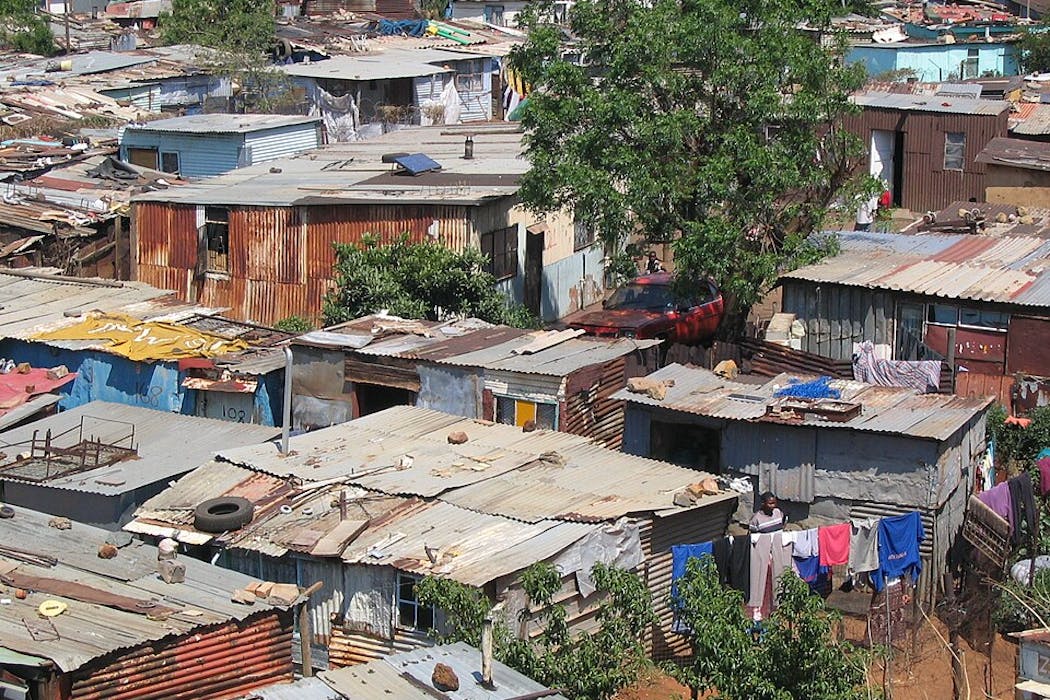
Informal settlement in South Africa. By Matt-80 – Own work, CC BY 2.0, Wikimedia Commons, CC BY

“Turn right after the first big tree; my house is the one with the yellow door.” In parts of South Africa, where settlements have grown without formal urban planning due to rapid urbanisation, that could well be a person’s “address”.

Having an address has many purposes. Not only does it allow you to find a place or person you want to visit, it’s compulsory in South Africa to provide an address when opening a bank account and registering as a voter in elections. Address locations are used to plan the delivery of services such as electricity or refuse removal and health services at clinics or education at schools. Police and health workers need addresses in emergencies.

Nowadays, address data is integrated and maintained in databases at municipalities, banks and utility providers, and used to analyse targeted interventions and developmental outcomes. Examples would be tracking the spread of communicable diseases, voter registration or service delivery trends.

South Africa has had national address standards since 2009 to make it easier to assign addresses that work in multiple systems, and to share the data. But the standards are not enforced, so the struggle with addressing persists. There is still no authoritative register of addresses in South Africa, and it’s not clear who is responsible for the governance of address data.

We work in geography and geoinformatics, an interdisciplinary field to do with collecting, managing and analysing geographical information. We recently turned to a neglected source to explore the issue of addresses: the people in government and business who actually use the information. We wanted to explore what they said about whose job it is to give everyone an address, how the data is maintained and what’s standing in the way of doing this.

Our research took a qualitative approach. We interviewed stakeholders to get their unique insights and daily experiences about what addresses are used for, how they are used, challenges that are experienced and how these are overcome. We spoke to 21 respondents across different levels of government with in-depth experience of projects, in both urban and rural settlements, as well as private companies that collect,
integrate and provide address data and related services.

Our main finding was that there’s no clear vision of future address systems, or leadership on the issue. Without agreement on whether there is a problem, or whose problem it is, a resolution isn’t possible.

Categories of addresses

First we collected all the different purposes of addresses and systematically categorised them. The main categories were:

  • finding an object (for example, for postal deliveries)

  • service delivery (such as electricity)

  • identity (for example, for citizenship)

  • common reference (for example, use in a voter register or in a pandemic).

The broad spectrum of address purposes suggests that addresses are essential to society, governance and the economy in a modern world.

So what’s standing in the way of better address coverage?

Need for governance: The interviews confirmed that stakeholders need clear rules, regulations, processes and structures to guide decisions, allocate resources and ensure accountability about addresses and address data. Most of the respondents considered addresses to be necessary for socio-economic development.


Read more:
‘Walk straight’: how small-town residents navigate without street signs and names


Leadership: These responses suggest that the societal problem of addressing is not (yet) clearly identified and defined. That makes it difficult to determine who should legitimately resolve the problem, for whom and how.

Interviewees raised concerns about leadership and vision at different levels of government affecting the country’s ability to solve the address issue. They agreed that the task had not been assigned to municipalities, which have many other pressing priorities and limited resources. The South African Post Office could play a role. But it has been placed in business rescue.

Adapting to gaps: In this constrained environment, stakeholders resort to short-term “fixes” that don’t have systemic impact. For example, some municipalities assign numbers to dwellings based on aerial photography, or barcodes on dwellings, or only locate the main assembly points in their jurisdiction, to fulfil their own responsibilities. So nothing changes: addresses and address data are incomplete and of poor quality.

Respondents also made suggestions.

Some questioned whether addresses were needed at all. They said there were other ways of finding a house or a business, such as navigating to a coordinate shared via Google Maps, or using verbal directions.

Some suggested that the uncertainty about responsibilities could be an opportunity for the private sector. It is already collecting address information from various sources like municipalities, then standardising, integrating and making available address data and related services, at a cost.

However, as is the case with many other services in the country, rural areas may be left behind where there is no economic incentive. Access to private data becomes unaffordable for government and society at large.

Ending the aimlessness

The deficiencies and adaptations in South Africa suggest that addressing is in a state of aimlessness.

How to fix the problem will require a number of interventions.

Firstly, there need to be decisions, actions and institutional commitments towards long-term strategies that will stop the drift. For example, cities and municipalities should strive for full coverage of addresses. They should also improve the quality and standardisation of the data, so that they are more useful.

Secondly, there’s a need for innovation and investment to transform and strengthen the governance of the country’s addressing infrastructure. For example, the European Commission recommends e-government based on a set of interlinked registers for property, addresses, people, business and vehicles.

Thirdly, data collection platforms and databases should be designed with the understanding that different types of addresses are in use – it could be a street name and number, or an informal description. Different types of addresses should have equal validity or credibility.


Read more:
South Africa needs a national database of addresses: how it could be done


At a more technical level, address metadata (information about the data) should make it possible for different systems to use it.

Addresses connect us to society – locally to our community and globally to the rest of the world. Addresses are essential for socio-economic growth and good governance in cities and municipalities.

The Conversation

The authors do not work for, consult, own shares in or receive funding from any company or organisation that would benefit from this article, and have disclosed no relevant affiliations beyond their academic appointment.

ref. South Africa’s addressing system is still not in place: a clear vision is needed – https://theconversation.com/south-africas-addressing-system-is-still-not-in-place-a-clear-vision-is-needed-268135

Racial profiling by ICE agents mirrors the targeting of Japanese Americans during World War II

Source: The Conversation – USA – By Anna Storti, Assistant Professor of Gender, Sexuality, and Feminist Studies and Asian American Studies, Duke University

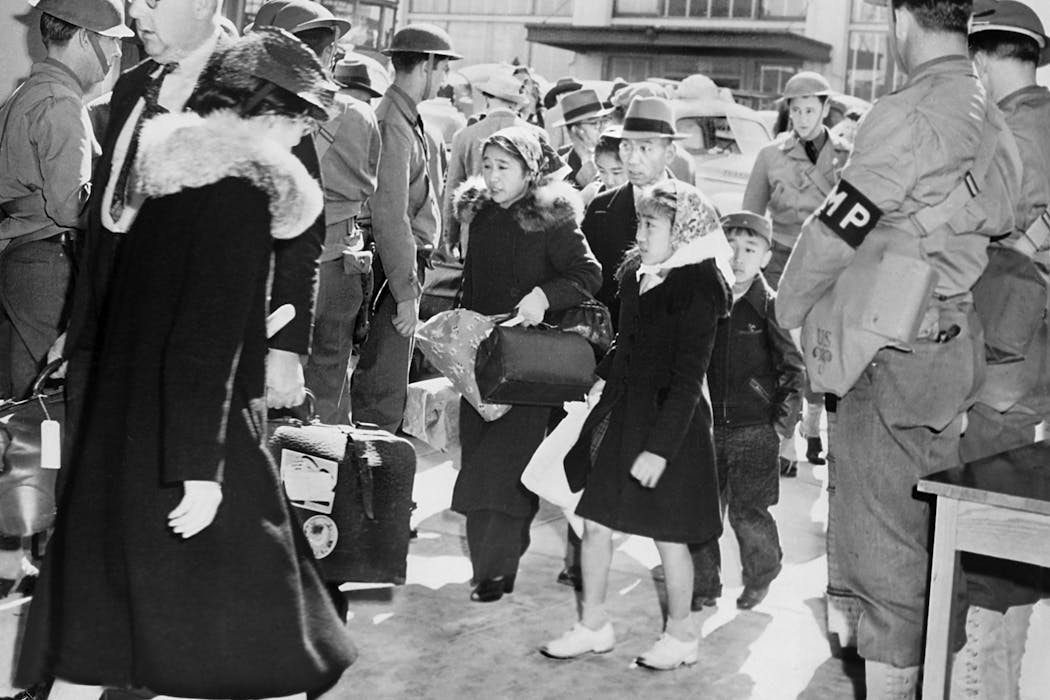
A Japanese American family is taken to a relocation center in San Francisco in May 1942. Circa Images/GHI/Universal History Archive/Universal Images Group via Getty Images

The Department of Homeland Security in September 2025 said that 2 million undocumented immigrants had been forced out of the United States since the start of Donald Trump’s second presidency.

Through its use of the Alien Enemies Act, a wartime law from 1798, the Trump administration has bypassed immigration courts and the right to due process to more easily detain and deport immigrants.

The Trump administration has, in part, reached these numbers by arresting immigrants in courthouses and at their workplaces. It has also conducted raids in schools, hospitals and places of worship.

And the Supreme Court in September, in its Noem v. Vasquez Perdomo decision, lifted a federal court order that barred agents with Immigration and Customs Enforcement from racially profiling suspected undocumented immigrants. For now, ICE agents can use race, ethnicity, language and occupation as grounds for stopping and questioning people.

This form of targeting has disproportionately affected Latino communities, which represent 9 in 10 ICE arrests, according to a UCLA study published in October.

Targeting immigrants is a centuries-old American practice. In particular, Asian Americans have drawn parallels between the attacks on Latinos today and the forced relocation and incarceration of Japanese Americans during World War II.

Notably, the passage of the War Brides Act, passed just three months after the end of WWII, in December 1945, broke with the nation’s centuries-long practice of exclusionary immigration policy. The act allowed American servicemen to bring their non-American spouses and children to the United States. The measure seemed to inaugurate a new era of inclusive immigration policy.

As a feminist studies scholar and author, I know the War Brides Act forever altered the nation’s racial demographics, increasing both Asian migration to the U.S. and the birth of biracial children.

On the 80th anniversary of the War Brides Act, I’ve also noticed an alarming contradiction: Although America may be more multiracial than ever before, the U.S. immigration system remains as exclusive as it has ever been.

Exclusionary immigration policy

The racial profiling of Latino people by ICE agents today is not unlike what took place during World War II in the U.S.

Following Japan’s attack on Pearl Harbor in 1941, President Franklin D. Roosevelt issued an executive order authorizing the forced removal of anyone deemed to be a national security threat. Anyone, that is, who was Japanese. From 1942 to 1945, the U.S. government incarcerated approximately 120,000 Japanese Americans in internment camps.

To determine who was a national security threat, the government used overt racial profiling. Similar to today, when the U.S. government often misidentifies Latino Americans as noncitizens, a majority of the Japanese people incarcerated in WWII were U.S. citizens.

Amid the Trump administration’s treatment of immigrants, it’s worth recalling the exclusionary origins of U.S. immigration policy.

The first restrictive immigration law in the U.S., the Page Act of 1875, barred Chinese women from entering the country. The assumption the law was based on was that all Chinese women were immoral and worked in the sex trade.

A soldier holds a rifle on a city street.
Immigration and Customs Enforcement agents conduct operations in a predominantly Mexican American community in Chicago on Nov. 8, 2025.
Jacek Boczarski/Anadolu via Getty Images

The Page Act laid the groundwork for the Chinese Exclusion Act of 1882, which banned all Chinese immigration into the U.S. for 10 years. This was the first federal law to ban an entire ethnic group, launching an era of legalized and targeted exclusion.

With the passage of the Immigration Act of 1924, the U.S. created its first border control service, which enforced new immigration restrictions. It also implemented a quota system, which banned or limited the number of immigrants from specific regions, including Asia and Southern and Eastern Europe.

The act stemmed from nativism – the policy that protects the interests of native-born residents against those of immigrants – and a desire to preserve American homogeneity.

The 1945 War Brides Act largely diverged from these previous measures, helping to dismantle the Asian exclusion made commonplace in the 19th and early 20th centuries. From 1945 until 1948, when the War Brides Act expired, more than 300,000 people entered the country as nonquota immigrants, people from countries not subject to federal immigration restrictions.

Exclusionary tendencies

Decades later, in 1965, the U.S. formally abolished the quota system. America opened its doors to those who President Lyndon B. Johnson deemed most able to contribute to the nation’s growth, particularly skilled professionals.

The Immigration and Nationality Act of 1965 eliminated racial exclusion. As a result, the U.S. population diversified. Immigrants deepened the multiracialism initiated by the War Brides Act.

This trend increased later in the 1960s when the Supreme Court, in Loving v. Virginia, overturned anti-miscegenation laws, which criminalized marriage between people of different races. The justices ruled that laws banning interracial marriage violated the 14th Amendment.

Multiracialism further increased after the Vietnam War. Subsequent legislation such as the 1987 Amerasian Homecoming Act facilitated the entry of biracial children born in Vietnam and fathered by a U.S. citizen.

Japanese-Americans arrive at a train station.
People of Japanese ancestry arrive at the Santa Anita Assembly Center in California before being moved inland to relocation centers, April 5, 1942.
© CORBIS/Corbis via Getty Images

By the 1960s, however, exclusion was taking on a different shape.

After 1965, immigration policy initiated a preference system that prioritized skilled workers and relatives of U.S. citizens. Quotas related to race and national origin were abolished. Nonetheless, preferences for families and professionals excluded people from Latin America.

For the first time, immigration from the Western Hemisphere was limited. This directly affected migrant workers in the farming and agricultural industries, many of whom were Latino.

Recalling the War Brides Act allows Americans to better comprehend the fiction that undergirds the U.S. immigration system: that immigration policy’s preference for certain immigrants is enough to justify the discriminatory policies which deem some families more valuable than others.

The Conversation

Anna Storti has received funding from the Institute for Citizens and Scholars, the Andrew W. Mellon Foundation, and the McNair Scholars Program.

ref. Racial profiling by ICE agents mirrors the targeting of Japanese Americans during World War II – https://theconversation.com/racial-profiling-by-ice-agents-mirrors-the-targeting-of-japanese-americans-during-world-war-ii-271612

The western US is in a snow drought – here’s how a storm made it worse

Source: The Conversation – USA (2) – By Alejandro N. Flores, Associate Professor of Geoscience, Boise State University

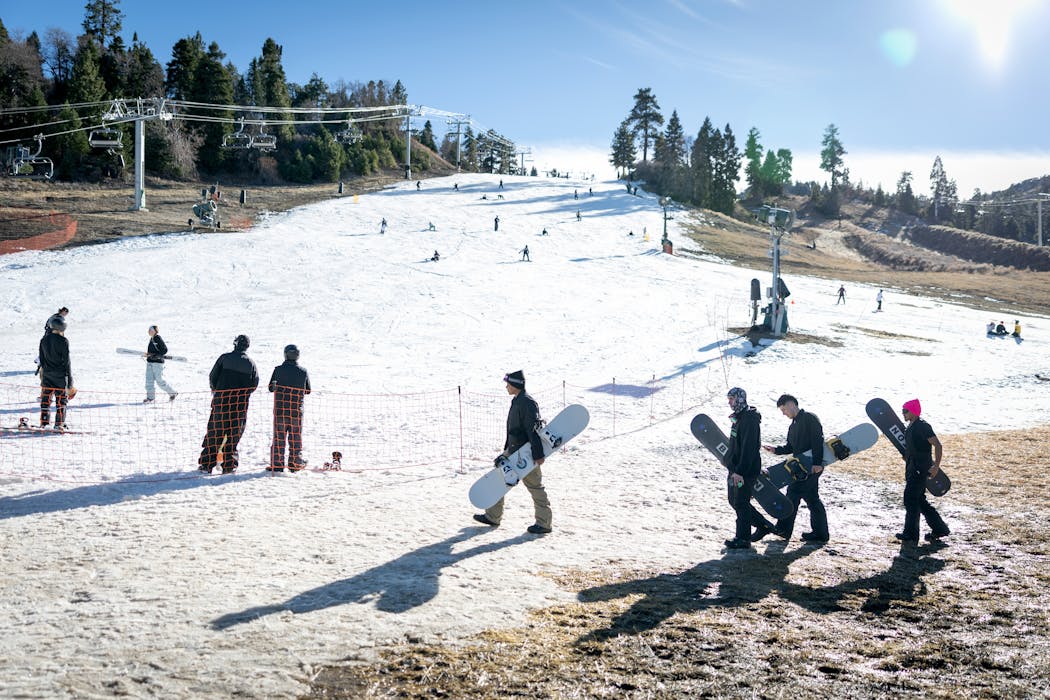
Skiers and snowboarders walk across dry ground to reach a slope at Bear Mountain ski resort on Dec. 21, 2025, in California. Eric Thayer/Los Angeles Times via Getty Images

Much of the western U.S. has started 2026 in the midst of a snow drought. That might sound surprising, given the record precipitation from atmospheric rivers hitting the region in recent weeks, but those storms were actually part of the problem.

To understand this year’s snow drought – and why conditions like this are a growing concern for western water supplies – let’s look at what a snow drought is and what happened when atmospheric river storms arrived in December.

A chart shows very low snowpack in 2025 compared to average.

Chart source: Rittiger, K., et al., 2026, National Snow and Ice Data Center, CC BY

What is a snow drought?

Typically, hydrologists like me measure the snowpack by the amount of water it contains. When the snowpack’s water content is low compared with historical conditions, you’re looking at a snow drought.

A snow drought can delayed ski slope opening dates and cause poor early winter recreation conditions.

It can also create water supply problems the following summer. The West’s mountain snowpack has historically been a dependable natural reservoir of water, providing fresh water to downstream farms, orchards and cities as it slowly melts. The U.S. Geological Survey estimates that up to 75% of the region’s annual water supply depends on snowmelt.

A map shows much of the West, with the exceptions of the Sierra Nevada and northern Rockies, with snowpack less than 50% of normal.
Snowpack is typically measured by the amount of water it contains, or snow water equivalent. The numbers show each location’s snowpack compared to its average for the date. While still early, much of the West was in snow drought as 2026 began.
Natural Resources Conservation Service

Snow drought is different from other types of drought because its defining characteristic is lack of water in a specific form – snow – but not necessarily the lack of water, per se. A region can be in a snow drought during times of normal or even above-normal precipitation if temperatures are warm enough that precipitation falls as rain when snow would normally be expected.

This form of snow drought – known as a warm snow drought – is becoming more prevalent as the climate warms, and it’s what parts of the West have been seeing so far this winter.

How an atmospheric river worsened the snow drought

Washington state saw the risks in early December 2025 when a major atmospheric river storm dumped record precipitation in parts of the Pacific Northwest. Up to 24 inches fell in the Cascade Mountains between Dec. 1 and Dec. 15. The Center for Western Weather and Water Extremes at Scripps Oceanographic Institute documented reports of flooding, landslides and damage to several highways that could take months to repair. Five stream gauges in the region reached record flood levels, and 16 others exceeded “major flood” status.

Yet, the storm paradoxically left the region’s water supplies worse off in its wake.

The reason was the double-whammy nature of the event: a large, mostly rainstorm occurring against the backdrop of an uncharacteristically warm autumn across the western U.S.

Water fills a street over the wheels of cars next to a river.
Vehicles were stranded as floodwater in a swollen river broke a levee in Pacific, Wash., in December 2025.
Brandon Bell/Getty Images

Atmospheric rivers act like a conveyor belt, carrying water from warm, tropical regions. The December storm and the region’s warm temperatures conspired to produce a large rainfall event, with snow mostly limited to areas above 9,000 feet in elevation, according to data from the Center for Western Weather and Water Extremes.

The rainfall melted a significant amount of snow in mountain watersheds, which contributed to the flooding in Washington state. The melting also decreased the amount of water stored in the snowpack by about 50% in the Yakima River Basin over the course of that event.

As global temperatures rise, forecasters expect to see more precipitation falling as rain in the late fall and early spring rather than snow compared with the past. This rain can melt existing snow, contributing to snow drought as well as flooding and landslides.

What’s ahead

Fortunately, it’s still early in the 2026 winter season. The West’s major snow accumulation months are generally from now until March, and the western snowpack could recover.

More snow has since fallen in the Yakima River Basin, which has made up the snow water storage it lost during the December storm, although it was still well below historical norms in early January 2026.

Scientists and water resource managers are working on ways to better predict snow drought and its effects several weeks to months ahead. Researchers are also seeking to better understand how individual storms produce rain and snow so that we can improve snowpack forecasting – a theme of recent work by my research group.

As temperatures warm and snow droughts become more common, this research will be essential to help water resources managers, winter sports industries and everyone else who relies on snow to prepare for the future.

The Conversation

Alejandro N. Flores receives funding from the National Science Foundation, US Department of Energy, NASA, USDA Agricultural Research Service, and Henry’s Fork Foundation.

ref. The western US is in a snow drought – here’s how a storm made it worse – https://theconversation.com/the-western-us-is-in-a-snow-drought-heres-how-a-storm-made-it-worse-272549

Taming the moral menace at capitalism’s core

Source: The Conversation – USA (2) – By Valerie L. Myers, Organizational Psychologist and Lecturer in Management and Organizations, University of Michigan

Digital disruption and the climate crisis are often framed as economic or social challenges. But they force crucial moral questions. Who will be held accountable for the human cost? What will it take to transform business culture so that those costs are not treated as inevitable and acceptable?

In my view, the answers will shape not only technology’s impact on humanity and the planet but the moral foundations of democracy itself.

As a management professor who studies the calling ethic – the idea that work can be guided by principles and moral duty – I think this moment is best understood as a contest between two recurring leadership patterns.

One pattern rationalizes exploitation and disguises harm as the price of progress. Drawing on Yale law professor James Whitman’s use of the phrase “moral menace,” I use it here to name this recurring force.

In contrast, some leaders show how it’s possible to pursue principles and profits together. I call such people “moral muses”: leaders whose care and fairness promote flourishing.

The contrast is stark: Menaces dominate. Muses cultivate.

I contend the menace often wins not because it’s right, but because its practices have hardened into management orthodoxy about how to treat people. Yet its dominance can be disrupted by tracing the menace’s ancient roots and, like muses throughout history, learning how to tame it.

The menace: Normalized callousness

The menace isn’t just about greed. It’s a system of cruelty rooted in ancient Roman property law, in which wives, children, enslaved people and animals were treated as possessions and subject to abuses, including violence at the owner’s will. Whitman traces how this legal foundation evolved into a broader moral menace that became a durable template in Western capitalism that was repeatedly reproduced.

Building on that concept, I would argue that the menace adapted and became normalized in business management – from institutional alliances to empire, to everyday practices.

A pivotal development in institutionalized commercial cruelty began in the 15th century, when papal decrees gave religious sanction to menacing conquests – campaigns of land seizure, enslavement and labor theft. Contemporary accounts speak to the cruelty and exploitation that were pillars of economies of the time.

By the 17th century, Dutch traders outpaced their Spanish rivals in turning menace into efficiency. The richest 1% sent sailors on deadly voyages to amass fortunes, while leaving their fellow citizens among the poorest in Europe. Researchers studying this period, sometimes known as the Dutch Golden Age, wrote, “We did not expect to find the ‘pioneers of capitalism’ in the cradle of civil society to have been so stingy.”

Abroad, traders pioneered accounting, logistics and labor-control methods that maximized profit by brutalizing enslaved workers. Historian Caitlin Rosenthal shows how plantation owners refined these methods, the British perfected them, and Americans institutionalized them.

Once normalized, inhumanity – recast as efficiency – arguably became the defining logic of modern management: extracting ever more output to enrich owners, regardless of the human toll. Financial journalists have called this the “dark side of efficiency.” Yet the menace has a cultural halo: Popular TV series like “Billions” and “Yellowstone” valorize exploitation, dominance and dark tetrad tendencies like Machiavellianism.

Studies show that this celebrated style produces lackluster results. Is it any wonder that only 31% of employees report feeling engaged at work?

Even so, the menace has never gone unchallenged. At every stage of its advance, muses have resisted – insisting that fairness and care prevail.

The muse: Transforming institutions of menace

Throughout history, muses have done more than resist the menace; they’ve sought to transform the very institutions that sustained it. Driven by principle, their disruptive actions bent institutions toward more humane and ethical practices – even as the menace adapted to survive.

One early muse-like figure is Martin Luther, who in 1524 sparked a revolution by challenging the church’s influence on commerce. In “Trade and Usury” he condemned “unneighborly” and deceptive business practices, insisting that trade must be guided by law and conscience rather than greed. (In time, of course, Protestants themselves used religion to justify slavery and domination – a reminder that the menace reinvents itself when challenged.)

In the 18th century, American founder and businessman Gouverneur Morris advanced the muse struggle by reimagining power in the new nation. At the Constitutional Convention, he warned that “the rich will strive to establish their dominion and enslave the rest” unless restrained by law. He enshrined limits on elite domination and elevated civic principles in the preamble to the Constitution: justice, union, tranquility and general welfare. Over the centuries, other business and policy leaders advanced the ethic.

More recently, Marriott International illustrates how profitable firms operate by muse principles without sacrificing profits. Since its 1927 founding, Marriott valued “putting people first.” In 2010, Chief Global Human Resources Officer David Rodriguez institutionalized this value with the Take Care initiative. In response to the 2020 global pandemic response, under the stewardship of the late Arne Sorenson, it expanded to “Project We Care.” Due in part to its commitments, Marriott had less than half the losses of U.S. peers Hilton and Hyatt.

Empirical studies confirm what Marriott’s leaders modeled: Servant leaders generate stronger employee commitment and performance than charismatic or transformational leaders.

Notably, muse leaders typically aim at intermediate targets – reforming institutions and governance to constrain the menace. But since management itself is built on menace foundations, transformation at scale will require a critical mass of moral muses in business.

Mobilizing moral muses

One-off reforms like family-friendly policies, ESG targets and civility pledges are useful, but they cannot uproot centuries of menace. What’s required is a critical mass of moral muses who refuse to rationalize harm as progress and who lead a culture reset in guiding business logic.

That means uprooting institutionalized callousness and redefining what counts as efficiency, innovation and value. It also means enacting civic principles of care and common good, as Morris envisioned, and amplifying leaders who prove that compassion and profitability can reinforce each other.

History shows that muses are not anomalies, and their stories are instructive for us now. Across eras, they have demonstrated that prioritizing human dignity fosters trust, prosperity and social vitality. But their stories are too often buried or ignored – not by accident, but because they threaten those who profit from menace. Without sustained institutional redesign, the menace reliably reasserts itself under new moral guises.

Reclaiming and amplifying muse stories is essential for transformation. They aren’t just anecdotes of resistance; they are blueprints for a more humane and sustainable capitalism.

The Conversation

Valerie L. Myers does not work for, consult, own shares in or receive funding from any company or organization that would benefit from this article, and has disclosed no relevant affiliations beyond their academic appointment.

ref. Taming the moral menace at capitalism’s core – https://theconversation.com/taming-the-moral-menace-at-capitalisms-core-266744

Illness is more than just biological – medical sociology shows how social factors get under the skin and cause disease

Source: The Conversation – USA (3) – By Jennifer Singh, Associate Professor of Sociology, Georgia Institute of Technology

Lack of access to safe and affordable housing is harmful to health. Robert Gauthier/Los Angeles Times via Getty Images

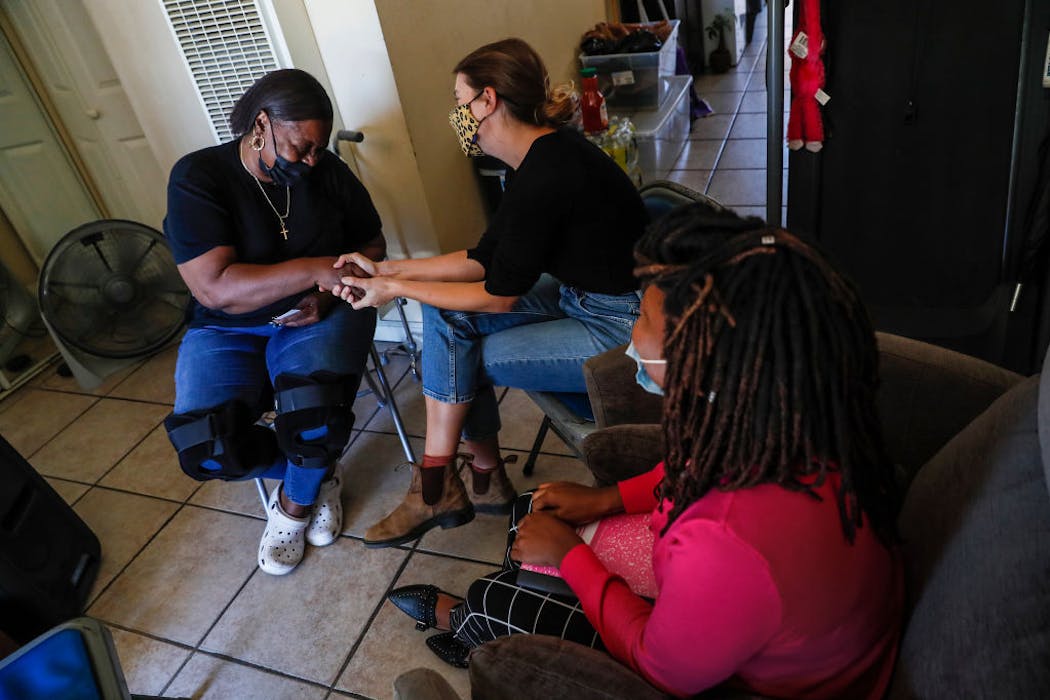
Health and medicine is more than just biological – societal forces can get under your skin and cause illness. Medical sociologists like me study these forces by treating society itself as our laboratory. Health and illness are our experiments in uncovering meaning, power and inequality, and how it affects all parts of a person’s life.

For example, why do low-income communities continue to have higher death rates, despite improved social and environmental conditions across society? Foundational research in medical sociology reveals that access to resources like money, knowledge, power and social networks strongly affects a person’s health. Medical sociologists have shown that social class is linked to numerous diseases and mortality, including risk factors that influence health and longevity. These include smoking, overweight and obesity, stress, social isolation, access to health care and living in disadvantaged neighborhoods.

Moreover, social class alone cannot explain such health inequalities. My own research examines how inequalities related to social class, race and gender affect access to autism services, particularly among single Black mothers who rely on public insurance. This work helps explain delays in autism diagnosis among Black children, who often wait three years after initial parent concerns before they are formally diagnosed. White children with private insurance typically wait from 9 to 22 months depending on age of diagnosis. This is just one of numerous examples of inequalities that are entrenched in and deepened by medical and educational systems.

Medical sociologists like me investigate how all of these factors interact to affect a person’s health. This social model of illness sees sickness as shaped by social, cultural, political and economic factors. We examine both individual experiences and societal influences to help address the health issues affecting vulnerable populations through large-scale reforms.

By studying the way social forces shape health inequalities, medical sociology helps address how health and illness extend beyond the body and into every aspect of people’s lives.

Protesters standing in front of a federal building, holding signs in the shape of graves reading '16 MILLION LIVES' and 'R.I.P. DEATH BY A THOUSAND CUTS,' wearing shirts that read 'MEDICAID SAVES LIVES'
Access to health insurance is a political issue that directly affects patients. Here, care workers gathered in June 2025 to protest Medicaid cuts.
Tasos Katopodis/Getty Images for SEIU

Origins of medical sociology in the US

Medical sociology formally began in the U.S after World War II, when the National Institutes of Health started investing in joint medical and sociological research projects. Hospitals began hiring sociologists to address questions like how to improve patient compliance, doctor-patient interactions and medical treatments.

However, the focus of this early work was on issues specific to medicine, such as quality improvement or barriers to medication adherence. The goal was to study problems that could be directly applied in medical settings rather than challenging medical authority or existing inequalities. During that period, sociologists viewed illness mostly as a deviation from normal functioning leading to impairments that require treatment.

For example, the concept of the sick role – developed by medical sociologist Talcott Parsons in the 1950s – saw illness as a form of deviance from social roles and expectations. Under this idea, patients were solely responsible for seeking out medical care in order to return to normal functioning in society.

In the 1960s, sociologists began critiquing medical diagnoses and institutions. Researchers criticized the idea of the sick role because it assumed illnesses were temporary and did not account for chronic conditions or disability, which can last for long periods of time and do not necessarily allow people to deviate from their life obligations. The sick role assumed that all people have access to medical care, and it did not take into account how social characteristics like race, class, gender and age can influence a person’s experience of illness.

Patient wearing surgical mask sitting in chair of exam room, talking to a doctor
Early models of illness in medical sociology discounted the experience of the patient.
Paul Bersebach/MediaNews Group/Orange County Register via Getty Images

Parsons’ sick role concept also emphasized the expertise of the physician rather than the patient’s experience of illness. For example, sociologist Erving Goffman showed that the way care is structured in asylums shaped how patients are treated. He also examined how the experience of stigma is an interactive process that develops in response to social norms. This work influenced how researchers understood chronic illness and disability and laid the groundwork for later debates on what counts as pathological or normal.

In the 1970s, some researchers began to question the model of medicine as an institution of social control. They critiqued how medicine’s jurisdiction expanded over many societal problems – such as old age and death – which were defined and treated as medical problems. Researchers were critical of the tendency to medicalize and apply labels like “healthy” and “ill” to increasing parts of human existence. This shift emphasized how a medical diagnosis can carry political weight and how medical authority can affect social inclusion or exclusion.

The critical perspective aligns with critiques from disability studies. Unlike medical sociology, which emerged through the medical model of disease, disability studies emerged from disability rights activism and scholarship. Rather than viewing disability as pathological, this field sees disability as a variation of the human condition rooted in social barriers and exclusionary environments. Instead of seeking cures, researchers focus on increasing accessibility, human rights and autonomy for disabled people.

A contemporary figure in this field was Alice Wong, a disability rights activist and medical sociologist who died in November 2025. Her work amplified disabled voices and helped shaped how the public understood disability justice and access to technology.

Structural forces shape health and illness

By focusing on social and structural influences on health, medical sociology has contributed significantly to programs addressing issues like segregation, discrimination, poverty, unemployment and underfunded schools.

For example, sociological research on racial health disparities invite neighborhood interventions that can help improve overall quality of life by increasing the availability of affordable nutritious foods in underserved neighborhoods or initiatives that prioritize equal access to education. At the societal level, large-scale social policies such as guaranteed minimum incomes or universal health care can dramatically reduce health inequalities.

People carrying boxes of food under a tent
Access to nutritious food is critical to health.
K.C. Alfred / The San Diego Union-Tribune via Getty Images

Medical sociology has also expanded the understanding of how health care policies affect health, helping ensure that policy changes take into account the broader social context. For example, a key area of medical sociological research is the rising cost of and limited access to health care. This body of work focuses on the complex social and organizational factors of delivering health services. It highlights the need for more state and federal regulatory control as well as investment in groups and communities that need care the most.

Modern medical sociology ultimately considers all societal issues to be health issues. Improving people’s health and well-being requires improving education, employment, housing, transportation and other social, economic and political policies.

The Conversation

Jennifer Singh does not work for, consult, own shares in or receive funding from any company or organization that would benefit from this article, and has disclosed no relevant affiliations beyond their academic appointment.

ref. Illness is more than just biological – medical sociology shows how social factors get under the skin and cause disease – https://theconversation.com/illness-is-more-than-just-biological-medical-sociology-shows-how-social-factors-get-under-the-skin-and-cause-disease-270258

Seeking honor is a double-edged sword – from ancient Greece to samurai Japan, thinkers have wrestled with whether it’s the way to virtue

Source: The Conversation – USA (3) – By Kenneth Andrew Andres Leonardo, Postdoctoral Fellow and Visiting Assistant Professor of Government, Hamilton College

Desire for validation from other people can lead people toward virtue – or in the other direction. Jacob Wackerhausen/iStock via Getty Images Plus

Pete Hegseth, the current defense secretary, has stressed what he calls the “warrior ethos,” while other Americans seem to have embraced a renewed interest in “warrior culture.”

Debate about these concepts actually traces back for thousands of years. Thinkers have long wrestled with what it means to be a true “warrior,” and the proper place of honor and virtue on the road to becoming one. I study the history of political thought, where these debates sometimes play out, but have engaged them in my own martial arts training, too. Beyond aimless brutality or victory, serious practitioners eventually look toward higher principles – even when the desire for glory is powerful.

Many times, “honor” and “virtue” are almost synonyms. If you acted righteously, you behaved “honorably.” If you’re moral, you’re “honorable.” In practice, chasing after honor can prompt not only the best behavior, but the worst. We all long for validation. At its best, that longing can motivate us toward virtue – but it can also lead in the opposite direction.

I am fascinated by the way two famous thinkers grapple with this paradox. They are teachers who lived centuries apart, on opposite sides of the world: Aristotle, the Greek philosopher; and Yamamoto Tsunetomo, a Japanese samurai and Buddhist priest.

The ‘prize of virtue’

In the age of Homer, the Greek poet who is thought to have composed “The Iliad” and “The Odyssey” around the 8th century B.C.E., being “good” meant attaining excellence in combat and military affairs, along with wealth and social standing.

According to classics scholar Arthur W.H. Adkins, the “quiet virtues” like justice, prudence and wisdom were seen as honorable, but were not needed for a person to be considered good during this time.

Several centuries later, though, those virtues became central to Socrates, Plato and Aristotle – Greek thinkers whose ideas about character continue to influence how many people, both inside and outside academia, view ethics today.

Aristotle’s understanding of virtue is reflected not only in his works, but in the deeds of his reputed student, Alexander the Great. The Macedonian king is commonly held as the best military commander in antiquity, with an empire that extended from Greece to India. The Greek author Plutarch believed that philosophy provided Alexander with the “equipment” for his campaign: virtues including courage, moderation, greatness of soul and comprehension.

In Aristotle’s view, honor and virtue seem to be “goods” that people pursue in the search for happiness. He refers to external goods, like honor and wealth; goods related to the body, like health; and goods of the soul, like virtue.

A white stone statue of a bearded man's head, with his shoulders wrapped in fabric folds.
A Roman copy of a bust of Aristotle, modeled after a bronze by the Greek sculptor Lysippos, who lived in the 4th century BCE.
National Roman Museum of the Altemps Palace/Jastrow via Wikimedia Commons

Each moral virtue, such as courage and moderation, forms one’s character by maintaining good habits, Aristotle proposed.

Overall, the virtuous human being is one who consistently makes the correct choices in life – generally, avoiding too much or too little of something.

A courageous warrior, for example, acts with just the right amount of fear. True courage, Aristotle wrote, results from doing what is noble, like defending one’s city, even if it leads to a painful death. Cowards habitually flee what is painful, while someone who acts bravely because of excessive confidence is simply reckless. Someone who is angry or vengeful fights due to passion, not courage, according to Aristotle.

The problem is that people tend to neglect virtue in favor of other “goods,” Aristotle observed: things like riches, property, reputation and power. Yet virtue itself provides the way to acquire them. Honor, properly bestowed, is the “prize of virtue.”

Still, the impulse for honor can be overwhelming. Indeed, Aristotle called it the “greatest of the external goods.” But we should only care, he cautioned, when honor comes from people who are virtuous themselves. He even recognized two virtues – greatness of soul and ambition – that involve seeking the correct amount of honor from the right place.

Loyalty, even in the face of death

A painting with a large yellow backdrop, showing a man in black robes seated on a green carpet.
Nabeshima Mitsushige, the 17th-century lord whom Yamamoto Tsunetomo served.
Kodenji Temple Collections via Wikimedia Commons

Two thousand years later, and half a world away, the samurai warriors of Japan also famously focused on honor.

One of them was Yamamoto Tsunetomo – a servant of Nabeshima Mitsushige, a feudal lord in southern Japan. After his lord’s death in 1700, Tsunetomo became a Buddhist priest.

Tsunetomo’s counsel can be found in the “Hagakure-kikigaki,” a collection of his teachings about how a samurai ought to live. Today, this text is considered one of the most notable discourses on “bushidō,” or the way of the warrior.

Tsunetomo’s samurai oath involved the following:

I will never fall behind others in pursuing the way of the warrior.

I will always be ready to serve my lord.

I will honor my parents.
I will serve compassionately for the benefit of others.

The road to becoming a samurai required developing habits that would enable the warrior to fulfill these oaths. Over time, those consistent habits would develop into virtues, like compassion and courage.

To merit honor, the samurai were expected to demonstrate those virtues until their end. Tsunetomo infamously stated that “the way of the warrior is to be found in dying.” Freedom and being able to fulfill one’s duties require living as a “corpse,” he taught. A warrior who cannot detach from life and death is useless, whereas “with this mind-set, any meritorious feat is achievable.”

A courageous death was integral to meriting honor. If one’s lord died, ritual suicide was considered an honorable expression of loyalty – an extension of the general rule that samurai should follow their lord. Indeed, it was considered shameful to become a “rōnin,” a samurai dismissed without a master. Nonetheless, it was possible to make amends and return. Lord Katsushige, the previous head of the Nabeshima domain, even encouraged the experience to truly understand how to be of service.

Large Black characters in Asian script on a gray-yellow piece of paper.
The Japanese characters for ‘bushidō,’ the ‘way of the warrior.’
Norbert Weber-Karatelehrer via Wikimedia Commons, CC BY-SA

The path to virtue, then, might involve a period of dishonor. The “Hagakure” suggests that fear of dishonor should not lead a samurai to mindlessly follow his lord’s instructions. In some cases, a servant could correct their master as a sign of “magnificent loyalty.” Tsunetomo referred to the example of Nakano Shōgen, who brought peace after persuading his lord, Mitsushige, to apologize for not paying proper respect to certain families within the clan.

The “Hagakure” presents honor as something essential to the way of the warrior. But fame and power should only be pursued along a path aligned with virtue – a life in accord with the samurai’s core oath.

“A [samurai] who seeks only fame and power is not a true retainer,” according to the “Hagakure.” “Then again, he who doesn’t [seek them] is not a true retainer either.”

Honor matters in the pursuit of virtue, both Aristotle and Tsunetomo conclude, especially as a first source of motivation.

But both thinkers agree that honor is not the final end. Nor is moral virtue. Ultimately, they acknowledge something even higher: divine truth.

For Aristotle and Tsunetomo, it seems, the way of the warrior turns toward philosophy rather than unrestrained power and endless war.

The Conversation

Kenneth Andrew Andres Leonardo worked on some of the research presented here under the direction of Dr. Alexander Bennett at Kansai University (Osaka, Japan) through their “Scholars from Overseas” program. Professor Leonardo is an Instructor in Kali Method under Guro Jason Cruz. He also currently trains in Gracie Jiu Jitsu under Sensei Erik Soderbergh and in Judo at Brown’s School of Judo, Jujutsu, and Grappling. Previously, he studied Pangamot under Grandmaster Felix Pascua.

ref. Seeking honor is a double-edged sword – from ancient Greece to samurai Japan, thinkers have wrestled with whether it’s the way to virtue – https://theconversation.com/seeking-honor-is-a-double-edged-sword-from-ancient-greece-to-samurai-japan-thinkers-have-wrestled-with-whether-its-the-way-to-virtue-262005

Grok produces sexualized photos of women and minors for users on X – a legal scholar explains why it’s happening and what can be done

Source: The Conversation – USA – By Wayne Unger, Associate Professor of Law, Quinnipiac University

Grok is making it easy for users to flood X with nonconsensual sexualized images. Anna Barclay/Getty Images

Since the end of December, 2025, X’s artificial intelligence chatbot, Grok, has responded to many users’ requests to undress real people by turning photos of the people into sexually explicit material. After people began using the feature, the social platform company faced global scrutiny for enabling users to generate nonconsensual sexually explicit depictions of real people.

The Grok account has posted thousands of “nudified” and sexually suggestive images per hour. Even more disturbing, Grok has generated sexualized images and sexually explicit material of minors.

X’s response: Blame the platform’s users, not us. The company issued a statement on Jan. 3, 2026, saying that “Anyone using or prompting Grok to make illegal content will suffer the same consequences as if they upload illegal content.” It’s not clear what action, if any, X has taken against any users.

As a legal scholar who studies the intersection of law and emerging technologies, I see this flurry of nonconsensual imagery as a predictable outcome of the combination of X’s lax content moderation policies and the accessibility of powerful generative AI tools.

Targeting users

The rapid rise in generative AI has led to countless websites, apps and chatbots that allow users to produce sexually explicit material, including “nudification” of real children’s images. But these apps and websites are not as widely known or used as any of the major social media platforms, like X.

State legislatures and Congress were somewhat quick to respond. In May 2025, Congress enacted the Take It Down Act, which makes it a criminal offense to publish nonconsensual sexually explicit material of real people. The Take It Down Act criminalizes both the nonconsensual publication of “intimate visual depictions” of identifiable people and AI- or otherwise computer-generated depictions of identifiable people.

Those criminal provisions apply only to any individuals who post the sexually explicit content, not to the platforms that distribute the content, such as social media websites.

Other provisions of the Take It Down Act, however, require platforms to establish a process for the people depicted to request the removal of the imagery. Once a “Take It Down Request” is submitted, a platform must remove the sexually explicit depiction within 48 hours. But these requirements do not take effect until May 19, 2026.

Problems with platforms

Meanwhile, user requests to take down the sexually explicit imagery produced by Grok have apparently gone unanswered. Even the mother of one of Elon Musk’s children, Ashley St. Clair, has not been able to get X to remove the fake sexualized images of her that Musk’s fans produced using Grok. The Guardian reports that St. Clair said her “complaints to X staff went nowhere.”

This does not surprise me because Musk gutted then-Twitter’s Trust and Safety advisory group shortly after he acquired the platform and fired 80% of the company’s engineers dedicated to trust and safety. Trust and safety teams are typically responsible for content moderation and initiatives to prevent abuse at tech companies.

Grok is letting users flood X with nonconsensual images.

Publicly, it appears that Musk has dismissed the seriousness of the situation. Musk has reportedly posted laugh-cry emojis in response to some of the images, and X responded to a Reuters reporter’s inquiry with the auto-reply “Legacy Media Lies.”

Limits of lawsuits

Civil lawsuits like the one filed by the parents of Adam Raine, a teenager who committed suicide in April 2025 after interacting with OpenAI’s ChatGPT, are one way to hold platforms accountable. But lawsuits face an uphill battle in the United States given Section 230 of the Communications Decency Act, which generally immunizes social media platforms from legal liability for the content that users post on their platforms.

Supreme Court Justice Clarence Thomas and many legal scholars, however, have argued that Section 230 has been applied too broadly by courts. I generally agree that Section 230 immunity needs to be narrowed because immunizing tech companies and their platforms for their deliberate design choices – how their software is built, how the software operates and what the software produces – falls outside the scope of Section 230’s protections.

In this case, X has either knowingly or negligently failed to deploy safeguards and controls in Grok to prevent users from generating sexually explicit imagery of identifiable people. Even if Musk and X believe that users should have the ability to generate sexually explicit images of adults using Grok, I believe that in no world should X escape accountability for building a product that generates sexually explicit material of real-life children.

Regulatory guardrails

If people cannot hold platforms like X accountable via civil lawsuits, then it falls to the federal government to investigate and regulate them. The Federal Trade Commission, the Department of Justice or Congress, for example, could investigate X for Grok’s generation of nonconsensual sexually explicit material. But with Musk’s renewed political ties to President Donald Trump, I do not expect any serious investigations and accountability anytime soon.

For now, international regulators have launched investigations against X and Grok. French authorities have commenced investigations into “the proliferation of sexually explicit deepfakes” from Grok, and the Irish Council for Civil Liberties and Digital Rights Ireland have strongly urged Ireland’s national police to investigate the “mass undressing spree.” The U.K. regulatory agency Office of Communications said it is investigating the matter, and regulators in the European Commission, India and Malaysia are reportedly investigating X as well.

In the United States, perhaps the best course of action until the Take It Down Act goes into effect in May is for people to demand action from elected officials.

The Conversation

Wayne Unger does not work for, consult, own shares in or receive funding from any company or organization that would benefit from this article, and has disclosed no relevant affiliations beyond their academic appointment.

ref. Grok produces sexualized photos of women and minors for users on X – a legal scholar explains why it’s happening and what can be done – https://theconversation.com/grok-produces-sexualized-photos-of-women-and-minors-for-users-on-x-a-legal-scholar-explains-why-its-happening-and-what-can-be-done-272861

Chemistry is stuck in the dark ages – ‘chemputation’ can bring it into the digital world

Source: The Conversation – UK – By Lee Cronin, Regius Chair of Chemistry, University of Glasgow

In Chemify’s laboratories, AI-proposed molecules are compiled into chemical code which robots execute and test in real time. Chris James/Chemify, CC BY-NC-SA

Chemistry deals with that most fundamental subject: matter. New drugs, materials and batteries all depend on our ability to make new molecules. But discovery of new substances is slow, expensive and fragile. Each molecule is treated as a bespoke craft project. If a synthesis works in one lab, it often fails in another.

The problem is that any single molecule could have an almost infinite number of routes to creation. These routes are published as static text, stripped of the context, timing and error correction that made them work in the first place. So while chemistry is often presented as one of the most advanced sciences, its day-to-day practice remains surprisingly manual.

For centuries prior to the emergence of modern chemistry, alchemists worked by hand, mixing substances, adjusting conditions by feel, passing knowledge from teacher to student while keeping many secrets. Today’s chemists use far more analytical tools, yet the core workflow has barely changed.

We still design molecules manually using the rules of chemistry, then ask highly trained humans to translate these ideas into reality in the laboratory, step by step, reaction by reaction.

At the same time, we are living through an explosion in artificial intelligence and robotics – and chemists have rushed to apply these tools to molecular discovery. AI systems can propose millions of candidate molecules, rate and optimise them, and even suggest reaction pathways.

But frustratingly, these tools frequently hallucinate chemicals that cannot be made, because (unlike in the case of proteins) no one has yet captured all the practical rules for making molecules digitally.

Chemistry cannot become truly digital unless it is programmable. In other words, we need to be able to write down, in a machine-readable way, how to assemble molecules – including instructions, conditionals, loops and error handling – and then execute these instructions on different hardware in different places with the same outcome.

Without a language that allows chemistry to be executed, not just described, today’s cutting-edge AI tools risk generating little more than plausible-looking illusions of new chemical substances. This is where using the computer as an architecture to build a digital chemistry system, or “chemputer”, becomes imperative in my view.

Digital chemistry at the University of Glasgow.

Before computers, calculation was manual and mechanical. People used slide rules, tables and specialist devices built for specific tasks. But when Alan Turing showed that any computable problem could be expressed as instructions for a simple abstract machine, computation was liberated from having to be done on specific hardware – and progress became exponential.

Chemistry has never made that jump. Akin to chefs using individual methods to achieve the perfect souffle, researchers around the world have different ways of preparing chemicals. So while automation in chemistry exists, research remains largely artisanal in nature.

An AI can design a thousand hypothetical drugs overnight. But if each one requires a human chemist to manually work out how to make it because the molecules generated are not constrained by the real-world rules of chemistry, we have simply moved the bottleneck. Design has gone digital, making has not.

Chemistry by computers

To properly digitise chemistry, we need a programmable language for matter to encode these real-world rules. This idea led me, with colleagues in my research laboratory at the University of Glasgow, to develop the process of chemputation back in 2012.

We built a concrete abstraction of what a chemical code would look like – with steps such as “add/subtract matter then add/subtract energy”. By translating these steps into binary code, it was possible to build the components of a chemputer.

The premise is simple. Chemistry can be treated as a form of computation carried out in the physical world. Instead of publishing chemistry as prose, it is published in executable code, as described in our new preprinted article. Reagents are data. Operations like mixing, heating, separating and purifying are instructions. A range of machines, such as those shown in the image below, play the role of processors.

Elements of the chemputation process.
Lee Cronin, CC BY-NC-SA

Once chemistry becomes programmable, we expect many things to change. Reproducibility improves because processes are no longer interpreted by humans. Sharing becomes meaningful because a synthesis can be run, not re-imagined. Importantly, programmable chemistry allows feedback loops for error correction, with sensors monitoring reactions in real time.

Self-driving laboratories

Our ambitions for chemputation took a major step forward in June 2025 when Chemify, our University of Glasgow corporate spin-out, launched the world’s first chemifarm. At this facility in Glasgow’s Maryhill district, the process of chemputation is applied to making new molecules for drug and materials discovery.

It uses AI and robotics to enable the entire system to “self-learn”, and thus get better at making more advanced molecules over time. Discovery becomes an iterative, programmable process rather than a linear gamble.

This fits with the wider emergence of “self-driving” laboratories – robotic labs we pioneered that use AI and automation to enhance the speed and breadth of research.

Chemistry began as alchemy – a human art shaped by intuition and mystery, making potions, manipulating precious metals and building the first laboratory equipment. It has since grown into a rigorous science, yet never fully escaped its manual roots. If we want chemistry to keep pace with the digital age, especially in an era dominated by AI, we must now finish that transition.

The Conversation

Lee Cronin is the CEO and shareholder in Chemify and is the regius Professor at the University of Glasgow and recieves funding from many organisations including the UKRI Engineering and Physical Sciences Research Council.

ref. Chemistry is stuck in the dark ages – ‘chemputation’ can bring it into the digital world – https://theconversation.com/chemistry-is-stuck-in-the-dark-ages-chemputation-can-bring-it-into-the-digital-world-272610

Hamnet: by centring Anne Hathaway, this sensuous film gives Shakespeare’s world new life

Source: The Conversation – UK – By Roberta Garrett, Senior Lecturer in Literature and Cultural Studies, University of East London

For films and books about Shakespeare’s life, there is little source material to draw on beyond the few known facts of the great writer’s parentage, hometown, marriage, children, property and death. Shakespeare biopics therefore require considerable speculation and invention on the part of writers and directors.

Director Chloe Zhao’s earthy and sensuous film Hamnet is based on the book by Maggie O’ Farrell, who also co-wrote the screenplay. It not only foregrounds Shakespeare’s personal rather than professional life but does this by focusing chiefly on the experience of his previously maligned wife, Anne Hathaway (referred to as Agnes in the film).

From the 18th century to well into the 20th, Shakespeare biographers and researchers tended to represent Hathaway in highly negative terms. She was viewed as the “shrewish” wife that Shakespeare impregnated, was forced to marry and later escaped by fleeing Stratford for the exciting world of the London theatre.

This perception of Hathaway is grounded in sexist assumptions drawn from the few known facts of their marriage. Namely, that she was eight years his senior, he was only 18 when they wed, she was already pregnant and he spent many years of their marriage working in London.

The trailer for Hamnet.

The popular 1998 romantic comedy, Shakespeare in Love, reproduced the “shrewish” Hathaway narrative. She is absent from the film, but Shakespeare (Joseph Fiennes) dolefully comments on his sexless, loveless marriage and finds genuine passion instead with London-based heroine, Viola (Gwyneth Paltrow).

The more recent film, All Is True (2018) offers a different view. It depicts Hathaway and Shakespeare’s marriage in their twilight years, when the playwright has resettled in Stratford and is finally mourning the death of his son, Hamnet. Although Hathaway is central to the drama, she is depicted as an ageing and conformist provincial wife. Casting Judy Dench in the role alongside the much younger Kenneth Branagh as Shakespeare, also accentuated their age difference.

Hamnet’s Agnes

In sharp contrast, Hamnet’s Agnes (Jessie Buckley) is a young, robust and free-spirited woman who is associated with nature rather than dull domesticity.

Zhao and O’Farrell establish the themes of the film early on by opening with a scene of Agnes wandering in the richly toned mossy forest with her hawk. This view of Agnes draws on Shakespeare’s vision of the magical “green world”. But it also captures the atmosphere and skilled world-building of O’Farrell’s novel in which Agnes, like her long dead mother, is skilled and knowledgeable in turning herbs and flowers into remedies that are valued by the local community.

While many representations of Elizabethan life are centred on the largely male-dominated culture of politics and courtly life, Hamnet offers an account of the busy and productive life of an ordinary (if eccentric) Elizabethan wife and mother. Agnes is in charge of the labour-intensive life of the household. Her family home is situated in the centre of Stratford, boarded by a muddy, dirty, bustling thoroughfare. Women are shown as managing the core human processes of birth and death, birthing in an all-female environment and desperately struggling to keep their children alive in an age of precarious health and mortality.

As other critics have argued, the film’s climax – in which Hamlet is interpreted as the artistic expression of Shakespeare’s personal grief over the loss of his son – is one of the less convincing aspects of the film. Hamlet is essentially a revenge tragedy and Shakespeare’s plots were largely derived from classical and historical sources rather than personal experience.

Yet its heart-wrenching portrayal of Agnes’ anguish over her child’s untimely death is moving and persuasive, offsetting the modern misconception that as child mortality was higher, these experiences were less painful. The death of Hamnet is therefore recast as a tragedy for his mother, who birthed and raised him, rather than just the writer-genius, Shakespeare.

Hamnet’s representation of Agnes/Anne is, of course, almost entirely speculative. Only the wealthiest of women were literate at this time, so unlike her husband, Hathaway left no written traces. However, as Zhao and O’Farrell’s feminist film clearly illustrates, women’s lack of formal education and career opportunities did not mean that they contributed less to their communities – or that we should regard their lives as less meaningful.


Looking for something good? Cut through the noise with a carefully curated selection of the latest releases, live events and exhibitions, straight to your inbox every fortnight, on Fridays. Sign up here.


The Conversation

Roberta Garrett does not work for, consult, own shares in or receive funding from any company or organisation that would benefit from this article, and has disclosed no relevant affiliations beyond their academic appointment.

ref. Hamnet: by centring Anne Hathaway, this sensuous film gives Shakespeare’s world new life – https://theconversation.com/hamnet-by-centring-anne-hathaway-this-sensuous-film-gives-shakespeares-world-new-life-272969

How medieval monks tried to stay warm in the winter

Source: The Conversation – UK – By Giles Gasper, Professor in High Medieval History, Durham University

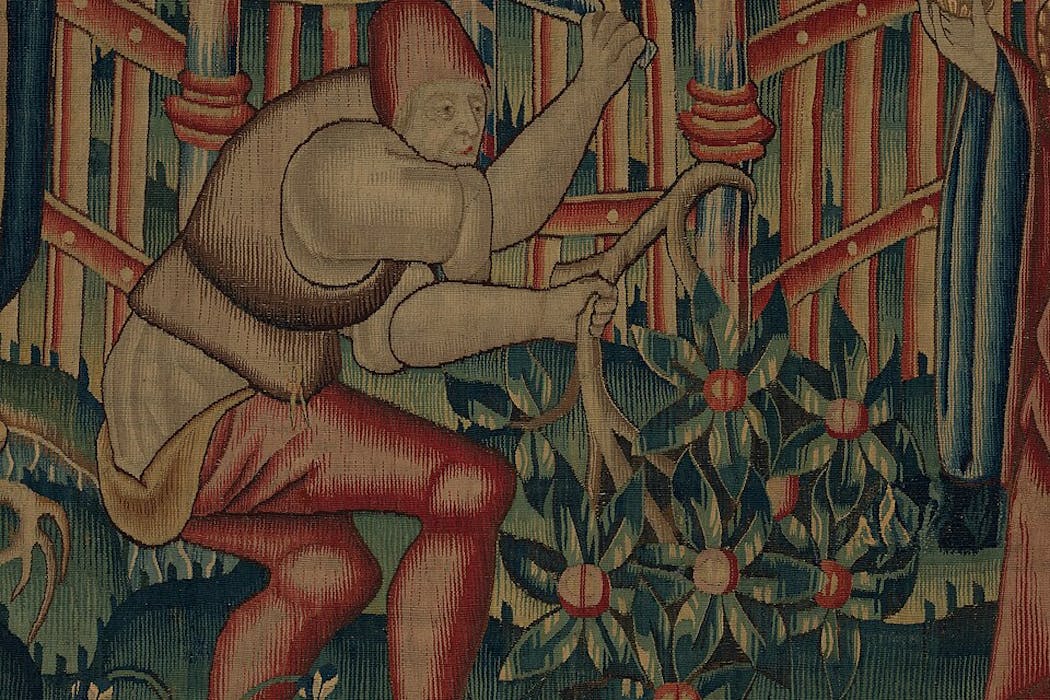
A medieval woodcutter chops down branches for firewood. Bequest of George Blumenthal, 1941

The best location for a monastery was one that was close to water and wood. Many monastic chroniclers mention this.

Orderic Vitalis, born in England near Shrewsbury in 1075 and sent to the Norman monastery of St Évroult at the age of five, was explicit about this twin need. Water for washing, sanitation, drinking, for making ink, for making lime mortar, and wood for building, and perhaps for keeping warm.

The Benedictine version of monastic life was the most popular across the medieval period, although many others existed. The rule attributed to St Benedict was set down, in 73 chapters, to provide guidance for how monks should live their lives. They should be focused on the world that is to come, on life after death, as well as on obedience and humility.

Monks could not own anything or have personal wealth, even though monasteries as institutions could be very rich indeed. Material comfort was not high on the agenda, at least in theory. Indeed, a contrasting relationship between material discomfort and spiritual worth is often identifiable in the religious expression of the period. In many ways it was seen as the greater the physical discomfort, the greater the spiritual value. The Cistercians, who emerged as a distinctive monastic grouping at the very end of the 11th century, and who followed the Rule of St Benedict too, laid great emphasis on austerity in all areas of their lives.

The regulation of monastic communities provides the context for their attitudes towards being cold. Concession to cold in the Rule of Benedict was limited – that monks in colder regions would need more clothes is recognised. In general the only difference between winter and summer wear was a thick and woolly cowl (a hood which extended across the shoulders) for the colder months and otherwise a thinner one.

Benedict was writing in 6th-century Italy. Conditions in northern regions in later medieval centuries were quite different, in many respects, to the early medieval Mediterranean. Not least in how cold monasteries could get. Orderic had a description of the effects of the winter at the end of his fourth book (of 13) of his Historia ecclesiastica. After writing a little about disputes and clashes on the frontier between Normandy and Maine, in what is now France, he notes that:

Mortal men are oppressed by many misfortunes, which would fill great volumes if the whole take of them were written down. But now, numbed by the winter cold, I turn to other pursuits; and weary with toil, resolve to end my present book here. When the warmth of spring returns I will relate in the following books everything that I have only briefly touched upon or omitted altogether.

But one room in a monastery was kept warm in cold weather. The calefactorium, or calefactory, that is to say, the warming room, was equipped with a fire, and in some cases other treats.

Very few buildings within monastic compounds had fireplaces. The church buildings would have been unheated, and so would the dormitories. The warming house was an unusual and important location in this respect. While some warming rooms were larger they would still not have been able to fit all that many people in at a time. It is easy to imagine a group of ten or so monks huddled round the fireplace, with wood crackling, talking quietly (talking was also discouraged in monastic houses), and seeking some measure of warmth in a cold environment. And that image is probably not far from the truth.

Despite their evident value to the community warming houses do not feature prominently in written records. Nevertheless, surviving examples of buildings and textual references do allow insights into monastic lives, and the difference that the calefactory must have made. Examples from medieval England included the Cistercian house of Meaux in Yorkshire. Founded in 1141 nothing survives of the building but an extensive chronicle does.

The record of new buildings made under Abbot Thomas from 1182 onwards includes mention not only of a fine refectory (dining room) for the monks, built in stone, but also the warming house and a small kitchen. That these should be be entered into the chronicle amongst the achievements of the abbot, as a record to future generations of the community, says a lot about the value placed upon it. It is of interest too that while the refectory went up quickly, paid for by a donor to the monastery, the kitchen and warming room were put together gradually and as resource allowed.

The value of fire

While the warming house of Meaux exists only in its historical record, good surviving examples of other warming houses are common enough. Rievaulx Abbey in north Yorkshire is a good example.

The warming house at Rievaulx is next to the refectory, and was altered quite substantially over the period from the 12th to the 16th century. Eventually two storeys, the warming complex also included clothes-washing facilities for the monks in winter.

And then to Durham. Here we turn to The Rites of Durham, a wonderful treatise from the 16th century (and later), the last memory of the practices of the pre-Reformation monastic house.

It reveals that the warming room, here referred to as a common house, was on the right-hand side as you exited the cloister. And inside there was:

a fyer keept all winter for the mouncks to come and warme at, being allowed no fire but that onely; except the masters and officers which had their seuerall fires.

While medieval buildings were difficult to heat, the presence of warm rooms was an indication of the value put on warmth. And in the case of the Durham Cathedral priory’s common house the monks were provided with additional treats around Christmas time, if the account is to be believed. Figs, raisins, cakes and ale were offered and taken in moderation.

Don’t have time to read about climate change as much as you’d like?

Get a weekly roundup in your inbox instead. Every Wednesday, The Conversation’s environment editor writes Imagine, a short email that goes a little deeper into just one climate issue. Join the 47,000+ readers who’ve subscribed so far.


The Conversation

Giles Gasper receives funding from Arts and Humanities Research Council, Research England, the John Templeton Foundation and the Leverhulme Trust

ref. How medieval monks tried to stay warm in the winter – https://theconversation.com/how-medieval-monks-tried-to-stay-warm-in-the-winter-270829