Nigel Farage attacks YouGov over low polling figures – but Reform’s support is dropping across the board

Source: The Conversation – UK – By Paul Whiteley, Professor, Department of Government, University of Essex

Martin Suker/shutterstock

Nigel Farage has accused YouGov of being “deceptive” after the polling company consistently showed Reform with less support than other surveys. He has claimed the company broke transparency rules set out by the British Polling Council over how it presents headline figures. As a result, YouGov has agreed to publish more data in future.

The chart below compares Britain’s monthly voting intentions for Reform in a poll of polls derived from 14 different agencies, with voting intentions for the party from YouGov. The comparison runs from the start of 2025 to March 2026. At first glance, it appears that Farage is right – the YouGov data is below the poll of polls data for most of the time.

However, if we calculate the difference between the two series, the poll of polls average for Reform over the last 15 months is about 28% in voting intentions – for YouGov it is about 26%. This 2% difference is well within the margin of error associated with polling; what statisticians describe as “not statistically significant”.

Vote intentions for Reform, poll of polls and YouGov
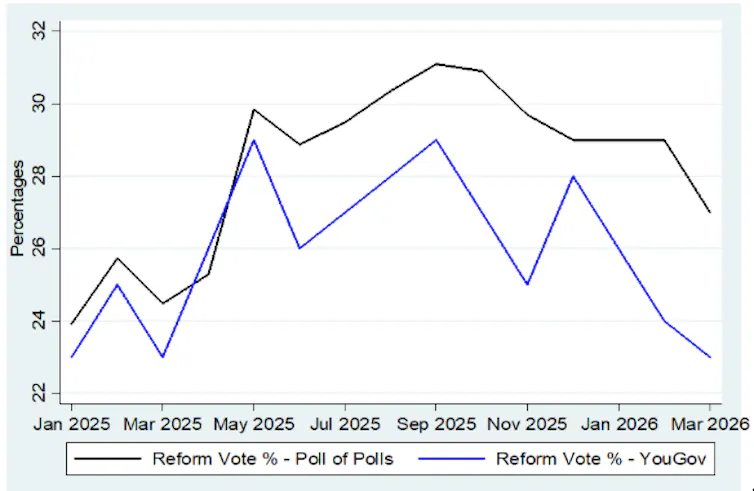
Chart comparing Reform's performance in poll of polls and YouGov

P Whiteley, Pollbase, CC BY-ND

The margin of error arises because polls try to measure support for the party across Britain from a survey of only 1,500 to 2,000 respondents. A good survey tries to replicate the diversity of the country in voting intentions, but it may differ from the country-wide support for the party because of random chance.

There is no real difference between the two series in the chart once this chance element is taken into account. If the survey has a truly representative sample, this random element can be ignored. But if there are problems with the sample, it will be inaccurate.

One such problem is accurately representing ethnic minorities in the sample, because they are less likely to respond to requests to do a survey. If a particular group is underrepresented, this can bias the results. To compensate for this problem, pollsters like YouGov use weighting, which involves giving more weight to some respondents than to others.

For example, the 2021 census shows that 4% of the population in Britain identifies as ethnically black. If only 2% of survey respondents fit this description, pollsters deal with this by counting these respondents twice in the analysis, which produces 4% black respondents.

Different agencies use different weighting schemes, which gives rise to variations in the answers they get to surveys. This is acceptable, providing these differences are not too large (not statistically significant).

Another factor may be the questions asked. This is where YouGov’s discrepancy arises.

YouGov has said it asks respondents first about general voting intention, and then specific constituency-level voting. This, the company says, takes account of tactical voting and is a more accurate representation of how a general election would play out.

There are clear differences between responses to the national and constituency questions – notably, more “don’t knows” in the latter, which means more uncertainty in the constituency responses.

My explanation of this is that when people are thinking about their own neighbourhood, they realise that voting involves a serious decision which can change their lives. When they respond to the national question, they are more likely to use it as a protest against the government and other parties.

Is Reform losing ground?

One reason Farage may be upset is because there is clear evidence that Reform is losing ground in the polls since the start of the year. This can be seen in the chart below, which shows a poll of polls of weekly voting intentions for the five major national parties in Britain since the July 2024 general election.

In the early weeks of 2025, Reform moved ahead of both Labour and the Conservatives – reaching 30% in vote intentions by May that year. The party’s support hovered around this figure until the start of 2026, when it began to decline. In October 2025, Reform was at 31% in voting intentions, but by March this year it was at 27%.

Vote intentions for the five major parties in Britain since the general election
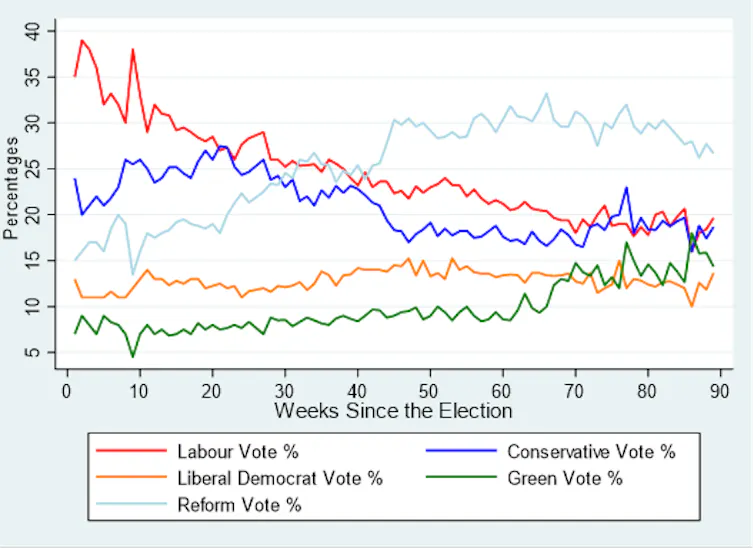
Chart comparing voting intentions for the five major parties since the general election
Voting intentions since the July 2024 general election.
P Whiteley, Pollbase, CC BY-ND

Polling is important to all politicians, despite the fact that many criticise it if they appear to be losing ground. Farage is probably more attentive than most because Reform’s support has been so volatile over time – and what goes up can come down.

With its success in local government elections, Reform is now exposed to much closer scrutiny than it was in the past. Some news stories that may explain its now-declining popularity include Reform-controlled councils raising council tax after pledging to “reduce waste and cut your taxes”, and the party receiving the largest-ever political donation from a living individual in British history. Neither of these bode well for a party claiming to represent working-class voters.

Farage (along with Kemi Badenoch) may also be regretting his rush to support the US and Israel in their war against Iran. A recent poll showed that only 28% of UK respondents supported the war, while 49% opposed it.

In the past, Farage has claimed to be a close friend of Donald Trump, but he talks about this much less these days – the US president’s approval ratings are now very poor in the UK.

Both Reform and the Conservatives are on the wrong side of public opinion on this issue, something which is likely to haunt them in the May elections this year if the war continues to damage the economy.

The Conversation

Paul Whiteley has received funding from the British Academy and the ESRC.

ref. Nigel Farage attacks YouGov over low polling figures – but Reform’s support is dropping across the board – https://theconversation.com/nigel-farage-attacks-yougov-over-low-polling-figures-but-reforms-support-is-dropping-across-the-board-278693
Targeting of energy facilities turned Iran war into worst-case scenario for Gulf states

Source: The Conversation – Global Perspectives – By Kristian Coates Ulrichsen, Fellow for the Middle East at the Baker Institute, Rice University

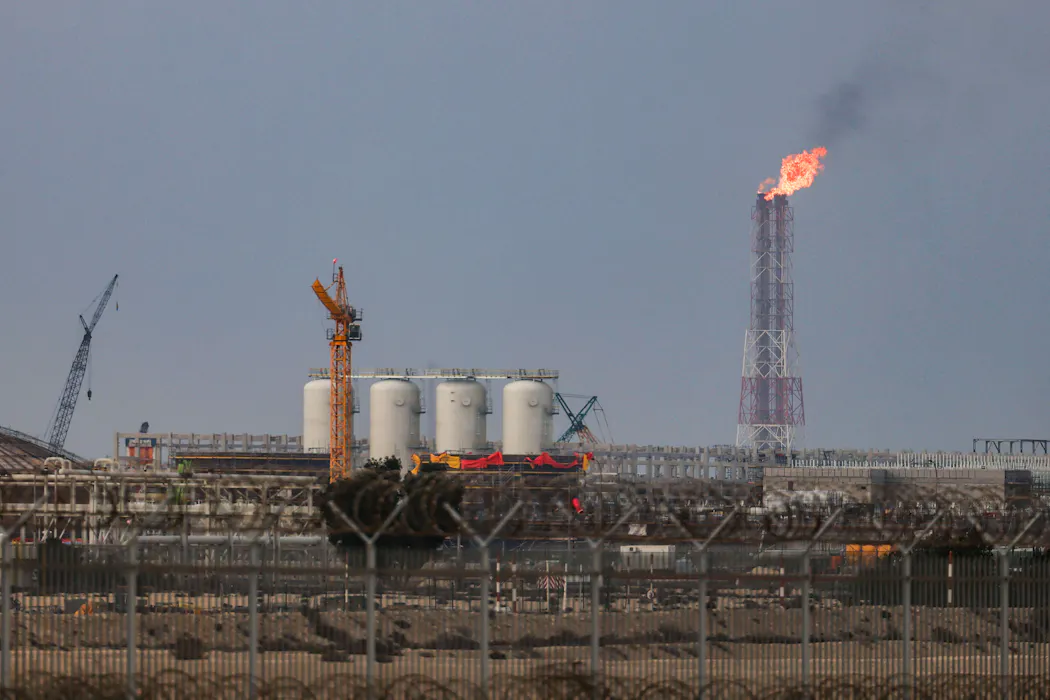
A view of the liquefied natural gas production at the Ras Laffan facility in Qatar. Stringer/picture alliance via Getty Images

The U.S.-Israeli military campaign against Iran took a dangerous turn on March 18, 2026, with tit-for-tat strikes on critical energy infrastructure that amount to the most serious regional escalation since the conflict began.

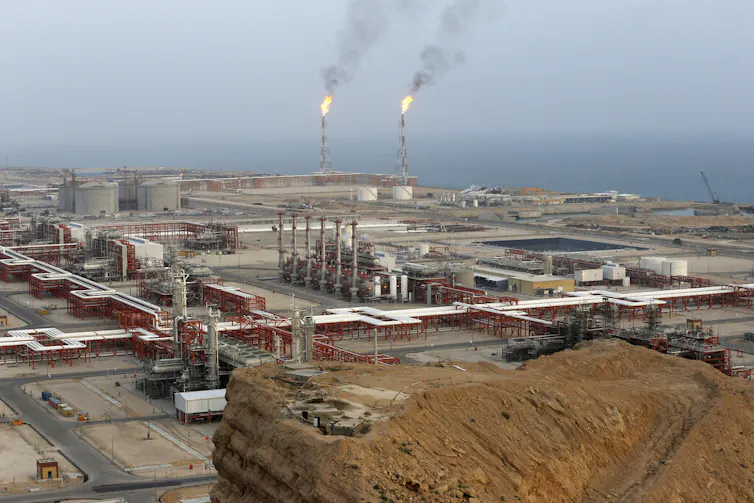
First, an Israeli drone strike targeted facilities at Iran’s Asaluyeh complex, damaging four plants that treat gas from the offshore South Pars field, which straddles the maritime boundary between Iran and Qatar.

Tehran vowed to retaliate by hitting five key energy targets in Saudi Arabia, Qatar and the United Arab Emirates. Hours later, Iranian missiles caused “extensive damage” to Ras Laffan, the heart of Qatar’s energy sector. Qatar’s state-owned petroleum company said additional attacks on March 19 had targeted liquefied natural gas facilities.

Separate suspected Iranian aerial attacks also caused damage to oil refineries in Kuwait and Saudi Arabia and led to the closure of gas facilities in the United Arab Emirates.

Much attention has been focused on the seemingly unanticipated consequences of the U.S.-Israeli strikes on Iran and the de facto closure of the Strait of Hormuz to international shipping. But as a scholar of the Gulf, I believe that the targeting of energy facilities is close to a worst-case outcome for regional states. Export revenues from oil and, in Qatar’s case, natural gas have transformed the Gulf states into regional powers with global reach over the past three decades, and that is now at risk.

An energy facility on the coast is shown from the distance.
Natural gas refineries at the South Pars gas field on the northern coast of the Persian Gulf, in Asaluyeh, Iran.
AP Photo / Vahid Salemi, File

Energy becomes a battlefield

The offshore gas field that lies on both sides of the maritime boundary between Qatar and Iran is the world’s largest reserve of so-called nonassociated gas. This means that the gas is not connected to the production of crude oil and is unaffected by decisions to raise or lower output according to, for example, OPEC quotas.

The field, known as the North Field on the Qatari side and South Pars on the Iranian side, was discovered in 1971. Development of its massive resources began in earnest in the 1980s. Largely because of the field, Iran and Qatar have the second- and third-largest proven gas reserves in the world, respectively.

While Israel attacked gas facilities in southern Iran on the second day of the 12-day war in June 2025, oil and gas infrastructure was largely spared during that earlier conflict. The opening two weeks of the current fighting, however, have seen a significant loosening of the restraints on targeting critical infrastructure.

On March 8, Israel struck oil storage facilities in Tehran, starting large fires and blanketing the capital in plumes of smoke and toxic, so-called black rain. For their part, Iranian officials signaled that energy facilities were on the table as swarms of its drones targeted the Shaybah oil field in Saudi Arabia, the Shah gas field southwest of Abu Dhabi and oil facilities in Fujairah.

One of the seven emirates of the United Arab Emirates along with Abu Dhabi, Fujairah is strategically located on the Gulf of Oman, outside the Strait of Hormuz, with direct access to the Indian Ocean. For this reason, it has grown into an important oil-loading and ship fuel-supplying hub and is the terminus for the Abu Dhabi crude oil pipeline.

Opened in 2012, that pipeline has a capacity of 1.5 million barrels per day, covering more than half of the UAE’s oil exports. Its repeated targeting during the war signifies Iranian intent to disrupt one of the two pipelines that bypass Hormuz. Thus far, the other pipeline, the East-West pipeline from the eastern Saudi oil fields to the Red Sea port of Yanbu, has not been targeted.

But that could quickly change, as early on March 19 Saudi authorities reported that a drone had struck a refinery at Yanbu, while a ballistic missile that targeted the port had been intercepted.

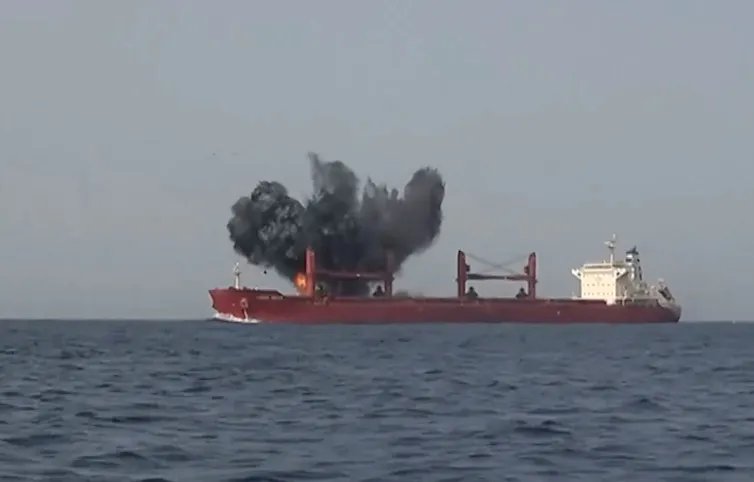
An explosion hits a commercial ship.
A July 1, 2025, photo provided by the Houthis in Yemen shows the targeting of a commercial vessel in the Red Sea.
Houthi Media Center/Getty Images

Cascading risks of further energy attacks

On at least four occasions over the past decade, most recently in 2022, Houthi forces in Yemen – who are allied with Iran– struck targets around the East-West pipeline.

And in 2024 and 2025, in defiance of U.S. and Israeli policy in the region, the Houthis led a campaign against shipping in the Red Sea.

So far, the Houthis have refrained from joining the latest war, but they have threatened to do so. Any such actions would cause enormous additional disruption to oil markets.

However, the attack on Ras Laffan in Qatar and the wider threats to other energy infrastructure in the Gulf have the potential on their own to be catastrophic for a number of reasons.

Developed in the 1990s, the industrial city of Ras Laffan is the most critical cog in Qatar’s economic and energy landscape and the epicenter of the largest facility for the production and export of LNG in the world. Fourteen giant LNG “trains” process the gas from the North Field, which is then transported by vessels from the accompanying port to destinations worldwide.

Ras Laffan also houses gas-to-liquids facilities – these convert natural gas into liquid petroleum products – along with a refinery and water and power plants that produce desalinated water and generate electricity. Ras Laffan is quite simply the engine that has powered Qatar’s meteoric growth and rise as a global power broker.

Early reports suggest that the world’s largest gas-to-liquids plant, Pearl GTL, which is operated by Shell, was damaged during the first attack on Ras Laffan, and that the second attack damaged 17% of Qatar’s LNG capacity, with repairs projected to take three to five years. A three-phased expansion to the LNG facilities, which would add a further six LNG trains by 2027, is also likely to be delayed.

The burning Gulf state dilemma

What is clear is that Iranian officials view the Israeli — or American — targeting of facilities in their territorial waters in the South Pars field as sufficient to justify hitting facilities on the Qatari side. That’s even though Qatar forcefully condemned the Israeli strike on Asaluyeh as a dangerous escalation, for reasons that have become all too real.

There lies the nub of the dilemma for Qatar and the five other Gulf states facing the brunt of the backlash from a war they tried to avert through diplomacy.

On my visits to the region in fall 2025, it became clear that many officials in the Gulf viewed the ceasefire that ended the 12-day war as, at best, a temporary cessation of hostilities and feared that the next round of fighting would be far more damaging, for Iran and for the region.

This has now come to pass. An embattled government in Tehran that sees itself in an existential fight for survival has spread the cost of war as far and as wide as it can.

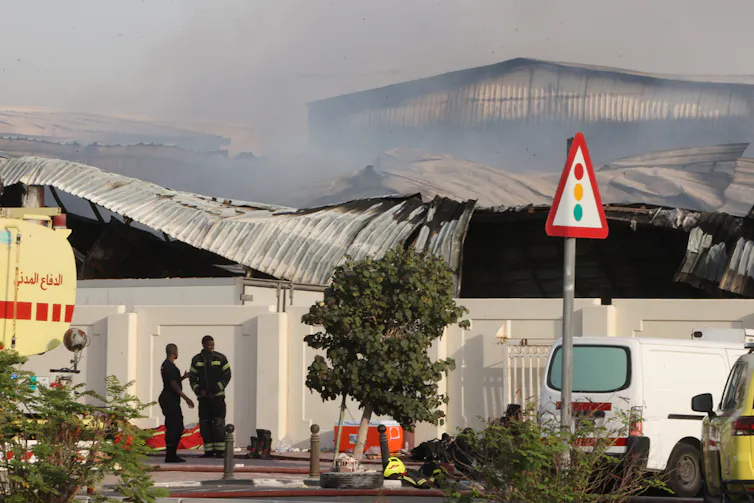
Smoke rises from a damaged warehouse.
Firefighters work as smoke rises outside a damaged warehouse in an industrial area in Al Rayyan, Qatar, following an Iranian strike on March 1, 2026.
AP Photo

Officials statements from Gulf capitals that have consistently – and correctly – emphasized their direct noninvolvement in the U.S.-Israeli military campaign have fallen on deaf ears in Tehran.

An incident on March 2 that saw Qatar down two Iranian Soviet-era fighters was a defensive measure. The jets had entered Qatari airspace with the apparent intent to strike Al Udeid, the air base that houses the forward headquarters of U.S. Central Command.

However, the scope of Iran’s attacks has gone far beyond military facilities used by U.S. forces and have hit the sectors – travel, tourism and sporting events – that put the region so firmly on the global map.

Nowhere is this more the case than the energy sector that has underwritten and made possible the transformation of the Gulf states over the past half-century, and whose health remains vital to the global economy and supply chains in oil, gas and many derivative products.

If that sector remains firmly in the crosshairs, there’s no telling how intense the regional and global consequences of the ongoing war in Iran may prove to be.

The Conversation

Kristian Coates Ulrichsen does not work for, consult, own shares in or receive funding from any company or organization that would benefit from this article, and has disclosed no relevant affiliations beyond their academic appointment.

ref. Targeting of energy facilities turned Iran war into worst-case scenario for Gulf states – https://theconversation.com/targeting-of-energy-facilities-turned-iran-war-into-worst-case-scenario-for-gulf-states-278730

Pakistan-Afghanistan conflict is rooted in local border dispute – but the risks extend across the region

Source: The Conversation – Global Perspectives – By Rabia Akhtar, Associate of Managing the Atom, Belfer Center, Harvard Kennedy School; University of Lahore

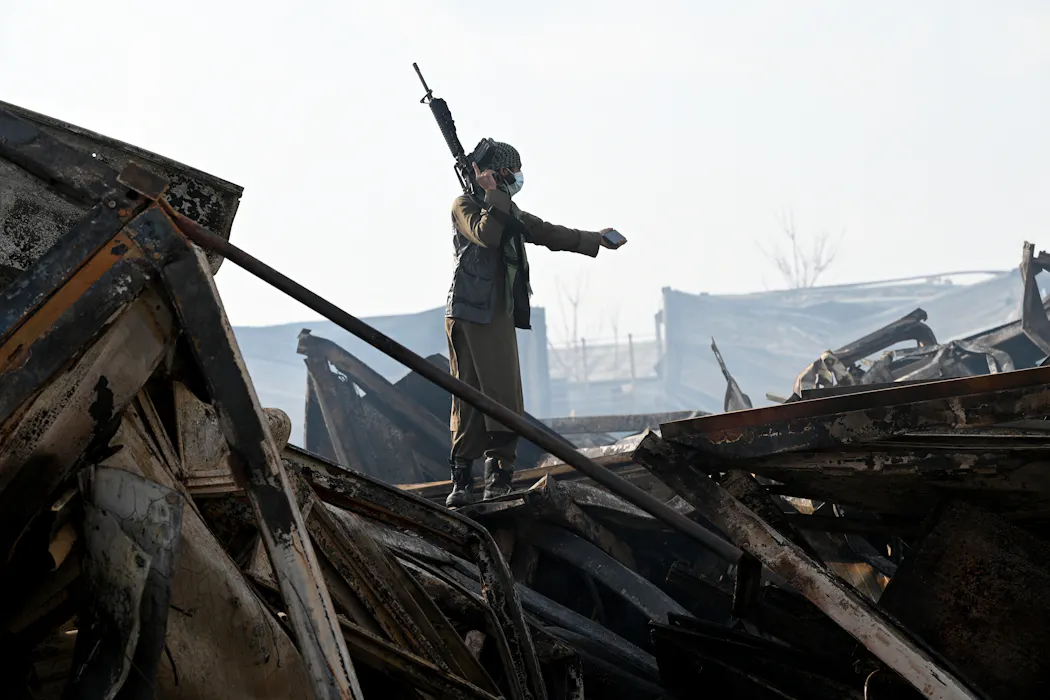
A Taliban fighter inspects the site of a Pakistani strike in Kabul on March 17, 2026. Wakil Kohsar/AFP via Getty Images

A weekslong war between Pakistan and Afghanistan was paused on March 18, 2026, to mark the Muslim holiday of Eid al-Fitr. But that does not mean the conflict is over.

Neither side showed any indication that the planned five-day cessation of operations would be anything other than temporary, and they warned that any violation would be met with reciprocal strikes.

Already the conflict has seen hundreds killed, with a blast at a drug rehabilitation center in Kabul on March 16, 2026, killing more than 400 people, according to Afghanistan’s Taliban government.

The conflict has been largely kept off the front pages by the war in Iran. But as an expert on Pakistan’s foreign policy and security, I believe the fighting has the potential to further destabilize the region.

Why are Pakistan and Afghanistan fighting now?

The current conflict between Pakistan and Afghanistan is not a sudden rupture of relations between the two countries, which share a 1,640-mile (2,640 km) border called the Durand Line.

Rather, the flare-up is a result of an intensification of long-simmering, historical security concerns along the Durand Line. The immediate trigger lies in Pakistan’s growing concern over cross-border militant activity, particularly from groups such as the Tehreek-e-Taliban Pakistan, which Islamabad believes operate from sanctuaries inside Afghanistan.

After the Taliban’s return to power in Kabul in 2021, Pakistan had anticipated a more cooperative security environment, based on earlier experiences in the 1990s.

However, that did not materialize. Instead, there was a perceptible rise in militant attacks within Pakistan, accompanied by Kabul’s reluctance or inability to decisively act against Tehreek-e-Taliban Pakistan.

Complicating this landscape further is the evolving character of the threat environment for Pakistan. In 2025, Pakistan was involved in a short war with historical rival India – the most intense fighting between the two countries for nearly 30 years.

The use of suspected Indian-made drones by the Afghan Taliban in recent attacks inside Pakistani territory adds an additional regional element to the fighting – Islamabad will be wary of any Indian interference in Afghanistan.

In response, Pakistan has reportedly undertaken countermeasures, including airstrikes targeting drone infrastructure linked to militant networks inside Afghanistan.

All this points to a widening battlespace, where new technologies make it easier to escalate in indirect and deniable ways.

This is not merely a bilateral border crisis but a layered security contest shaped by cross-border militancy, emerging technologies and competing threat narratives.

The convergence of Pakistan’s growing willingness to respond with physical force, the Afghan Taliban’s assertion of sovereignty and the absence of a mutually agreed framework for border management continues to drive episodic escalation rooted in structural mistrust.

What is the broader history of Pakistan-Afghanistan relations?

Historically, Pakistan-Afghanistan relations have often oscillated between uneasy cooperation and strategic suspicion toward each other – all shaped by unresolved territorial, ideological and geopolitical dynamics.

At the heart of it lies a dispute over the Durand Line, which Afghanistan has never formally recognized as an international border. This has resulted in a sustained and persistent tension in their bilateral relations since Pakistan’s independence in 1947.

During the Cold War, these tensions were overlaid by competing alignments. Pakistan was embedded in the U.S.-led security framework, while Afghanistan maintained closer ties with the Soviet Union at various points.

However, the Soviet invasion of Afghanistan in 1979 marked a critical turning point. Pakistan became a front-line state supporting the Afghan jihad against invading Soviet forces.

This entrenched cross-border militant networks and blurred the boundary between state policy and nonstate actors, resulting in dynamics that continue to shape the region.

The post-2001 period was marked by fraught relationships between Pakistan and successive U.S.-backed Afghan governments, particularly over allegations of Pakistan’s alleged proxy support for Islamist groups in Afghanistan.

Many thought the Afghan Taliban’s return to power in 2021 would resolve this tension. But instead, it reconfigured it.

While ideological affinities continue to exist between the two nations, they have not translated into any sort of strategic alignment – especially on questions of militancy and border control.

People stand on a vehicle.
Taliban fighters at a checkpoint near Torkham border crossing between Pakistan and Afghanistan.
Sami Jan/picture alliance via Getty Images

What are the implications of the conflict for the region?

The implications of Pakistan-Afghanistan tensions are significant and extend well beyond bilateral frictions. They intersect with broader questions of regional stability, militancy and great power competition.

I believe there are four direct implications:

  • First, the persistence of ungoverned or contested spaces along the Pakistan-Afghan border risks creating an enabling environment for transnational militant groups. This has real implications not only for Pakistan’s internal security but also for regional actors concerned about spillover effects.

  • Second, instability along the Pakistan-Afghanistan border complicates regional connectivity and economic integration initiatives, including projects linked to broader Central and South Asia. A volatile western frontier constrains Pakistan’s ability to act as a regional stabilizer and a safe conduit for regional trade and energy corridors.

  • Third, for outside interested parties like the U.S., the situation underscores the limits of disengagement from Afghanistan. While Washington’s military withdrawal marked the end of direct involvement, the persistence of militancy and the risk of regional destabilization ensure that Afghanistan remains strategically relevant not only for the U.S. but for other major powers as well.

  • Finally, I see these tensions as highlighting a broader pattern: The post-2021 Afghanistan remains internally consolidated but externally contested. Its relationships with neighbors, particularly Pakistan, will be central in determining whether the region moves toward managed stability or recurring cycles of escalation.

The Conversation

Rabia Akhtar does not work for, consult, own shares in or receive funding from any company or organization that would benefit from this article, and has disclosed no relevant affiliations beyond their academic appointment.

ref. Pakistan-Afghanistan conflict is rooted in local border dispute – but the risks extend across the region – https://theconversation.com/pakistan-afghanistan-conflict-is-rooted-in-local-border-dispute-but-the-risks-extend-across-the-region-278740

Project Hail Mary is packed with hard science. An astrophysicist breaks it down

Source: The Conversation – Global Perspectives – By Sara Webb, Course Director, Centre for Astrophysics and Supercomputing, Swinburne University of Technology

Jonathan Olley/Amazon Content Services

As an astrophysicist, my world revolves around the wonders of space and the mysteries of the universe. This means I can be a tough critic of science fiction books and films that explore these topics.

But when I walked out of a recent preview screening of the film adaptation of Andy Weir’s 2021 science fiction novel Project Hail Mary, I had tears of joy in my eyes. The filmmakers had done justice not just to the original story, but also to the science at the heart of it.

The story revolves around Ryland Grace, played by Ryan Gosling, who awakes from a coma with no memory and no idea why he’s on a space ship 11.9 light years away from Earth. As his memories slowly start to return, the truth becomes clear. The Sun is dying, and he is our only saving grace.

So here are the science facts – as well as the science fiction – of the film, which is in cinemas in Australia and New Zealand from today.

A dying sun

In Project Hail Mary the Sun is dying due to an alien organism that has spread around our part of the Milky Way.

Firstly, could an organism spread from one solar system to another? According to some scientists, yes. It’s a theory called panspermia.

We have no hard evidence to prove it right now. But the theory isn’t completely wild. We know material from solar systems can be transported great distances – we ourselves have witnessed as least three interstellar visitors enter and fly through our Solar System.

If life forms could survive the harshness of space and live on such rocky bodies, it’s possible this is how life could spread. But that life would likely be basic organisms.

As for the organism at the centre of this movie, astrophage, its mechanics and behaviour sit rightly in the wonderful world of science fiction.

The size of space

The idea of humans travelling between stars feels like an almost impossible challenge.

In our galaxy alone there are more than 400 billion stars, but only roughly 100 of them are within 20 light years of Earth.

Project Hail Mary focuses it’s attention on one of those systems, known as Tau Ceti, sitting 11.9 light years away.

If we were to travel to this star with the fastest spacecraft humans have ever flown in, the Apollo 10 module, travelling at more than 39,900 kilometres per hour, it would take us 320,000 years. In a story where the Sun is dying now, there is no time for that. So how does Project Hail Mary overcome this problem?

Enter special relativity.

Special relativity is one of the most paradigm-shifting theories of modern history. Developed by Albert Einstein in 1905, it equated mass and energy as one and the same. It best known by the famous E = mc2 formula.

What Einstein was able to work our mathematically, and we’ve later proved observationally, is that the closer to the speed of light something travels, the slower the time it experiences in its reference frame.

It’s called a Lorentz transformation – and it allows us to determine the time experienced in a reference frame different to our own, say travelling close to the speed of light.

The movie doesn’t give a full physics lesson on this, but rather uses visual cues, including correct mathematics worked out by Grace on a whiteboard to demonstrate this time change.

What Grace determines is that he’s only been in a coma for four years due to the effects of time dilation on a ship travelling that fast. Which is scientifically spot on.

We have to talk about the aliens

While on the mission to save our world, Grace meets another being trying to do the same – Rocky.

We (us astronomers at least) do believe aliens exist somewhere in the universe. This belief isn’t based on crop circles or UFOs; it’s based on statistical chances.

In the Milky Way alone we estimate there are at least 100 billion planets. If life was able to form, evolve and thrive on Earth, there are many reasons why astronomers believe that could be true in other systems.

A lot of our confidence relates to the essential building blocks of life as we know it. All life on Earth is carbon based. But if we break down our existence even more, we find one thing: amino acids. These organic compounds are the foundation of our DNA.

What’s most exciting is that we’ve identified these in space. Samples from asteroids and fallen meteorites have confirmed many of the amino acids needed for life on Earth also exist on other objects in our Solar System.

Alien earths beyond our own

The film allows audiences to see what other planets might look like.

When Andy Weir originally wrote this novel, it was scientific consensus that alien worlds likely existed around Tau Ceti and the home planet of our new friend Rocky, 40 Eridani A.

But in recent years science has progressed and new data suggests both of these systems appear to have had false detections of planets.

So at least for now, Rocky’s home doesn’t exist – but thousands of others do. As of March 2026 astronomers have confirmed 6,100 exoplanets. These are worlds that exist beyond our own solar system, around distant stars, and can be either rocky or gaseous.

One place Grace and Rocky need to explore on their adventure to save the stars is a theoretical planet orbiting Tau Ceti. Here we see stunning hues of green and red, and distinctive swirls of gases mixing in the atmosphere.

It’s reminiscent of the gas giant of our own Solar System, Jupiter.

Project Hail Mary is more than just an epic adventure film with beautiful visuals. It’s a story that reminds us how important our world is – and how vital science is to our continued existence on it.

The Conversation

Sara Webb does not work for, consult, own shares in or receive funding from any company or organisation that would benefit from this article, and has disclosed no relevant affiliations beyond their academic appointment.

ref. Project Hail Mary is packed with hard science. An astrophysicist breaks it down – https://theconversation.com/project-hail-mary-is-packed-with-hard-science-an-astrophysicist-breaks-it-down-278428

The silver lining in Europe’s deforestation law delay: A chance to build fairer supply chains

Source: The Conversation – Indonesia – By Douglas Sheil, Professor, Faculty of Environmental Sciences and Natural Resource Management, Wageningen University

When you reach for a “palm-oil-free” label at the supermarket, you likely feel you’re doing your part to save orangutans and protect biodiversity. However, the reality behind that label is more complex than it appears.

Our work with the IUCN Oil Crop Task Force reveals that replacing palm oil with alternatives actually increases the demand for land. Recent studies from both the IUCN and industry leaders like Musim Mas confirm that palm oil is exceptionally efficient, producing four to ten times more oil per hectare than soy or sunflower.

Consequently, a blind boycott of palm oil risks a “displaced” environmental catastrophe, potentially triggering the clearing of millions of hectares elsewhere.

As a conservation biologist with years spent on the forest frontier alongside local communities, I’ve learnt first-hand that the line between “good” and “bad” agriculture rarely lies in the crop itself.

The EU Deforestation Regulation (EUDR) attempts to address this complexity, yet it currently lacks the precision needed to avoid significant unintentional harm.

The fog of transparency

Our 2025 analysis of three major Western supermarket chains — selected for the transparency of their online ingredient lists — suggests that the often repeated “palm oil lurks in 50% of consumer items” claim may be an overstatement, at least according to our data.

While palm oil appeared in just 8% of the products we analysed, significant uncertainty remains; as much as 40% of items may contain hidden palm oil disguised as derivatives (processed ingredients) or listed under vague labels like “emulsifiers”.

This labelling fog prevents consumers from tracing product origins, allowing myths to eclipse the realities of supply chain management.

The EUDR offers a critical solution. By requiring that key commodities — including beef, cocoa, coffee, palm oil, rubber, soy and wood — entering the EU are both deforestation-free and legally produced, the regulation sets a high bar for global trade. However, the path to successful implementation faces significant hurdles.

With the European Parliament voting to delay enforcement for a second time, the law’s good intentions appear stuck in a political deadlock. While the core text remains intact, proposed simplifications for early 2026 include streamlining reporting obligations and refining the product list to include items like palm oil-based soaps and instant coffee.


Baca juga:
Which cooking oil is best? Asking how they’re made could tell you more


Why should Indonesia, the UK and others care about this regulatory pause?

The EUDR’s impact deeply affects tropical exporters and their trading partners, including the UK. British companies exporting goods containing these commodities must align with EUDR standards to maintain access to the EU market.

However, the UK’s own deforestation rules are notably less strict. This regulatory divergence threatens UK firms with higher compliance costs and risks turning the country into a “dumping ground” for deforestation-linked goods rejected by the EU. This delay offers a vital window of opportunity for the UK to align with the EUDR, mitigate trade risks and reclaim its leadership in ethical supply chains.

For exporting countries like Indonesia, the core issue remains fairness. The EUDR relies on satellite-derived “base maps” to verify forest loss, yet these maps are deeply flawed. Research shows that Indonesian agroforestry systems face a 63% risk of being misclassified as “deforested”. As a result, a single erroneous pixel in Brussels could effectively bar an honest smallholder in Sumatra from European markets.

Recent analysis from Mongabay warns that the extremely high costs of tracing and mapping farm locations threaten to marginalise these smallholders. This financial burden risks driving them toward less regulated markets — a phenomenon known as “leakage” that could dilute the EUDR’s environmental impact.

To date, nations like Indonesia, Malaysia and Brazil have condemned the regulation as “green protectionism”. The resentment is clear: many view it as hypocrisy from a Europe that cleared its own forests to build wealth, only to now lecture others without offering adequate support. By positioning Brussels as the only judge of what is legal, the law is seen as undermining national sovereignty.

Moving forward: Towards a fair system

For the EUDR to succeed, this delay must serve as a catalyst for practical reform.

First, the EU must engage producer nations as partners. This requires investing in collaborative, high-resolution mapping that accurately distinguishes sustainable agroforestry from industrial clear-cutting. Transparency should be treated as a funded public good rather than a financial burden pushed onto vulnerable producers.

Second, transparency must be enforced universally. The EUDR must apply rules equitably across all agricultural products that affect land use, and this accountability must extend to retailers and supermarkets. EUDR data could finally mandate clear labelling that reflects both origin and practice.

Crucially, to truly preserve global biodiversity, the EU must ensure its regulatory system rewards conforming smallholders and traditional guardians rather than favouring large corporations.

Finally, we must confront the trade-offs head-on. The EU accounts for only 10% to 15% of global trade in deforestation-linked commodities. If Brussels restricts imports without addressing the underlying drivers of deforestation, production will simply shift to less regulated markets. Forests will fall elsewhere, and prices will rise at home. We must ask ourselves: are we simply paying a premium to ease our consciences without actually solving the problem?

We have to start somewhere, and transparency is the right focus. The upcoming 2026 simplification package and review must prioritise these fundamental changes. The EUDR holds immense potential to benefit global sustainability — but only if it evolves beyond rigid rules and overly simple measurements.

The Conversation

Douglas Sheil tidak bekerja, menjadi konsultan, memiliki saham, atau menerima dana dari perusahaan atau organisasi mana pun yang akan mengambil untung dari artikel ini, dan telah mengungkapkan bahwa ia tidak memiliki afiliasi selain yang telah disebut di atas.

ref. The silver lining in Europe’s deforestation law delay: A chance to build fairer supply chains – https://theconversation.com/the-silver-lining-in-europes-deforestation-law-delay-a-chance-to-build-fairer-supply-chains-276968

What is Nowruz, the Iranian new year?

Source: The Conversation – Global Perspectives – By Darius Sepehri, Doctoral Candidate, Comparative Literature, Religion and History of Philosophy, University of Sydney

Nowruz (meaning “new day” in the Persian language) is the Iranian, or Persian, festival celebrating the coming of spring – and the regeneration it brings. It is the first day of the year in the Iranian solar calendar (which began in 1079), marking the exact moment of the spring equinox. The date varies, between March 19 and 21 – this year, it’s March 21.

Within Iran, this year’s Nowruz will be especially emotionally charged, as its cities are under bombardment by Israel and the United States, leaving nearly 1,500 dead since February 28. By celebrating, Iranians will be reaffirming their unique identity and deep-rootedness in their homeland.

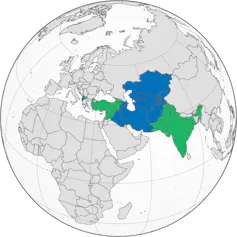
The geographical scope of Nowruz. Countries in blue recognise it as a public holiday – Wikimedia Commons.
CC BY

Rooted in the Middle East and Central Asia, Nowruz is celebrated in countries that were once part of Iranian empires: including Turkey, Iran, Iraq, Afghanistan, India, Pakistan and the Caucasus region, particularly Azerbaijan.

Iranian culture was absorbed and integrated into local cultures during the pre-modern period – and it often remained as these territories were gradually lost. This wider sphere of Iranian influence is called Iranzamin or “Greater Iran”.

When Nowruz was first established, during the early period of the pre-Islamic Sassanian dynasty (224–651 CE), it was celebrated throughout the Persian Empire.

In Iran, the span of Nowruz is two weeks, with a four-day national holiday. Happily for students, schools are closed. In some other countries that celebrate the festival, government and retail sectors are closed, and public ceremonies and gatherings are common.

Today, it is part of UNESCO’s list of intangible cultural heritage.

Origins, rituals and symbols

The origins of Nowruz are tied to the practices of Zoroastrianism, the religion of the ancient Persian world – and one of the world’s oldest living ones. It is based on the teachings of the prophet Zoroaster, believed to have lived around the 6th century BCE.

In the lead-up to the festival, people embark on vigorous spring cleaning (khaneh tekaani – literally, “shaking of the house”), participating symbolically in clearing, or sweeping away, the old – and any lingering negativity.

Kazakh woman in a traditional outfit during the Nowruz holiday.
Wikimedia Commons, CC BY

New clothes are often bought, and decorative dresses are prepared for the Nowruz festivities to come.

The last Wednesday of the year before Nowruz is Chaharshanbeh Soori, literally “Scarlet Wednesday”. Fire is a sacred element within Zoroastrianism. Chaharshanbeh Soori is an improvised ritual centred on purification by proximity to it. Small fires are lit in public places, fireworks are let off and decorative lights adorn the streets.

Special foods are prepared: rich soups, pastries and servings of dried nuts and fruits. Sometimes, young children go through the streets banging on pots and pans to drive out the “unlucky” Wednesday.

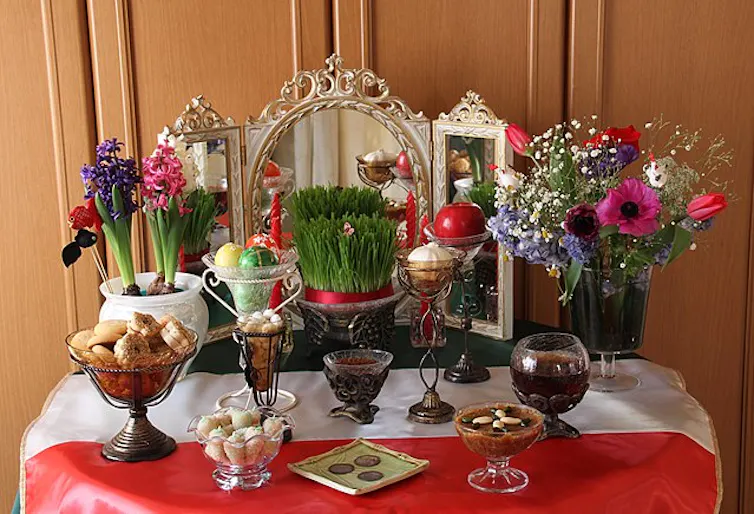
At the centre of Nowruz rituals is a decorative setting (sofreh), artfully arrayed on household tables – which are placed with the haft seen: seven items beginning with the letter s, or “seen” in Persian.

A typical ‘Haft Seen’ decorative setting in Iran – Wikimedia Commons.
CC BY

The seven items most often placed are: seeb (apple), sabzeh (shoots from wheat or lentils), serkeh (vinegar), samanou (a pudding made with wheat), senjed (a berry), sekkeh (a coin), and seer (garlic). Each item symbolises some aspect of living systems: birth, growth, health, beauty and wisdom.

The sabzeh grass, representing new growth, is grown in a flat dish, then placed outdoors on the 13th day of the New Year.

‘Sabzeh’ or lentil growths symbolising life – Wikimedia Commons.
CC BY

The central books of Irano–Islamic culture also feature. Readings are made from the Qur’an, and the collected poems (or The Divan) of beloved 14th-century Persian poet Hafez.

The first few days of the Nowruz festival are spent visiting family and friends. Presents are exchanged, with older family members giving small gifts of cash to younger ones. In Central Asia, athletic competitions may take place, such as traditional equestrian games in Kyrgyzstan. Public gatherings in town squares featuring treats and festive foods are common in Tajikistan and Uzbekistan.

Sizdah Bedar, also known as Nature Day, brings the Nowruz period to an end, 13 days after the equinox. People gather outdoors in a park or green space for a picnic lunch, to bring good luck for the year.

Politics, revolution and nationalism

Iranian monarchies used Nowruz to reinforce prestige for centuries: from the Safavid dynasty (1501–1736), which birthed the modern Iranian state, through the Qajar dynasty (1789–1925) and the Pahlavi dynasty – which ruled from 1925 and was ousted in the 1979 Islamic Revolution.

The Shia Muslim clergy have long been a powerful faction within Iran. The Iranian monarchy embraced Nowruz and its non-Islamic roots to counterbalance the clergy’s power.

After the revolution, some Iranian authorities attempted to downplay Nowruz due to its non-Islamic character. But unsurprisingly, given the deep-rootedness of the festival, they failed. Today, Nowruz co-exists with Islamic festivals, highlighting the synthetic and dual nature of Iran’s culture.

The Soviet Union went much further than Iran: it outright banned the festival in Central Asian nations with Nowruz traditions. These traditions weren’t officially revived until post-Soviet independence in 1991.

Nowruz was a minor part of the Ottoman world, but it began to be revived at the end of World War I by the Turkish state, as part of Turkish political nationalism. At the same time, Kurds within Turkey embraced Nowruz more publicly, to promote the cause of Kurdish identity.

Nowruz in Iran in 2026

For many years, the US president has traditionally given a Nowruz message. But Donald Trump’s war against Iran and constant use of ultra-violent rhetoric against Iranians would sour any message he might give during this year’s Nowruz.

Similarly, this week Israeli Prime Minister Benjamin Netanyahu mentioned Nowruz while praising the destruction Israeli forces were carrying out in Iran. “Our aircraft are hitting the terror operatives on the grounds, in the crossroads, in the city squares,” he stated. “This is meant to enable the brave people of Iran to celebrate the Festival of Fire.” He ended with the threat: “We’re watching from above.”

This is all happening in the wake of attacks on Iran’s schools and hospitals, bombings of oil depots in Tehran releasing toxic elements into the atmosphere, and damage to dozens of Iran’s cultural heritage sites.

A ‘Haft Seen’ Table in Iran – Wikimedia Commons.
CC BY

This year, Iranians’ Nowruz celebrations will signal their intent to stay together in the face of threats demanding, in Trump’s words, “unconditional surrender”.

The Nowruz focus on regrowth and regeneration will allow celebrants to look to something beyond destruction. To wish for new birth, health and flourishing of life.

Nowruz Khosh Amad”: Welcome Nowruz, Nowruz has come joyously.

The Conversation

Darius Sepehri does not work for, consult, own shares in or receive funding from any company or organisation that would benefit from this article, and has disclosed no relevant affiliations beyond their academic appointment.

ref. What is Nowruz, the Iranian new year? – https://theconversation.com/what-is-nowruz-the-iranian-new-year-278779

Fines alone won’t stop big tech behaving badly. Here’s what might work

Source: The Conversation – Global Perspectives – By Lauren C. Hall, PhD Candidate in Psychology, University of Tasmania

The Conversation, CC BY-SA

As countries around the world look to follow Australia’s lead and implement a social media ban for kids, many are also considering fines as an enforcement mechanism.

This is part of the playbook when it comes to regulating big tech. For example, last month the United Kingdom’s data watchdog fined Reddit £14 million (A$26 million) for unlawfully using children’s data.

In April 2025, the European Commission fined Apple and Meta €500 million (A$820 million) and €200 million (A$329 million) respectively for breaching the Digital Markets Act. And in September, the commission fined Google nearly €3 billion (A$4.9 billion) for abusive practices in online advertising technology.

But fines don’t always work to encourage companies to follow the law. For some companies, “illegal with a fine” is interpreted as “legal for a price”. So what are some other, more effective methods to encourage good corporate behaviour?

Fines can backfire

If fines are not consistent, immediate, and severe, they can backfire. If they do, bad behaviour may increase.

For example, a 2000 study examined the effect of childcare centres in Israel introducing fines for parents who regularly picked their children up late. But instead, these fines actually increased late pick-ups by parents.

Even after fines were stopped, the number of late pick-ups stayed higher than before.

Why? Because when there were fines, they were small (not severe), and parents could wait a month to pay (not immediate). However, parents got the immediate benefit of longer childcare.

Similarly, technology companies may decide a fine is cheaper than the costs to make changes, or any loss in money from fewer users and ad sales. And this could lead to them continuing with business-as-usual.

Corporate fines often fail because it may be unclear who in the company is directly responsible. Fines can also sometimes be too small to stop bad behaviour by large companies.

For these reasons, corporate re-offending is frequent, even if companies have been fined in the past.

A fine equals forgiveness

After introducing fines, behaviours previously considered socially or morally unacceptable may also be seen as “forgiven” by payment. This can increase bad behaviour.

The importance of unwanted behaviours may also be judged by the size of the fine.

If fines are seen as “small”, violations may also be seen as small, and bad behaviours may rise. Corporations may also see “small” fines as just a cost-of-doing-business.

Importantly, fine size is closely linked to a company’s financial size. For a small company, a fine could seem huge. The same sized fine may seem tiny to a large company. If similarly sized fines are given to companies making different revenue amounts, the companies may respond differently.

Changing company practices can also cost more for some companies than others. This too may affect how they respond to fines.

Furthermore, companies outside a legislative jurisdiction, or that have refused regulators’ demands in the past, may ignore fines altogether.

For example, 4Chan refused to pay fines issued under the UK’s Online Safety Act, and X decided to legally challenge instead of pay a €120 million (A$197 million) fine issued by the European Commission.

Given the borderless nature of some digital harms such as child sexual exploitation and abuse, coordinated changes to corporate laws, and international cooperation are needed.

Pulling multiple levers at once

So if fines alone don’t stop big tech and other businesses behaving badly, what will?

Research shows monitoring companies, and better resourcing regulators, are more effective than fines alone. Consistent regulator inspections combined with education also work well.

A 2025 paper suggests making “stand-alone consumer tech safety research centres” focused on reducing digital harms. This may require technology companies making data and algorithms available to these centres for inspection.

Then, regulators can look at if companies are using important and best practice safety features. For example, checking the images on sites to make sure users do not see harmful content online.

Regulators can also share knowledge with companies about laws and digital safety measures to improve consumer protections.

This cooperative model has been shown to be more effective than fines alone.

A 2016 study about what works when it comes to corporate deterrence found using multiple levers at the same time, such as monitoring, accountability, auditing, and punitive action were the most effective at stopping bad corporate behaviour.

Unfortunately, understanding the scope of digital harms, and best responses, have been limited by not enough resources, or access to data.

A 2025 paper highlights that increased data transparency from corporations will also improve evidence-informed decisions, ensuring regulation is fit-for-purpose.

As companies continue to prioritise rapid rollouts, with problems found after launch, fines may continue to be ineffective.

To tackle this problem, online regulators must ensure fines are complemented with other policy levers – and that the punishment for bad corporate behaviour is consistent, immediate and severe.

The Conversation

Lauren C. Hall is a recipient of an Australian Government Research Training Program Scholarship to support Higher Degree Research training.

James Sauer has received funding from the Australian Institute of Criminology and the Internet Watch Foundation for projects looking to mitigate online harms,

María Yanotti receives grant funding from Australian Housing and Urban Research Institute (AHURI). She is a member of the tax gap advisory group for the Australian Taxation Office (ATO). She is the Tasmanian Chair for the Women in Economics Network (WEN) and a committee member for the Economic Society of Australia (ESA) Tasmanian Branch. Maria is an associate editor for the Australian Economic Papers.

Christine Padgett does not work for, consult, own shares in or receive funding from any company or organisation that would benefit from this article, and has disclosed no relevant affiliations beyond their academic appointment.

ref. Fines alone won’t stop big tech behaving badly. Here’s what might work – https://theconversation.com/fines-alone-wont-stop-big-tech-behaving-badly-heres-what-might-work-276969

Who are Iran’s new leaders? A look at 6 the US placed a bounty on – 2 of whom are already dead

Source: The Conversation – USA – By Mehrzad Boroujerdi, Vice Provost and Dean of College of Arts, Sciences, and Education, Missouri University of Science and Technology

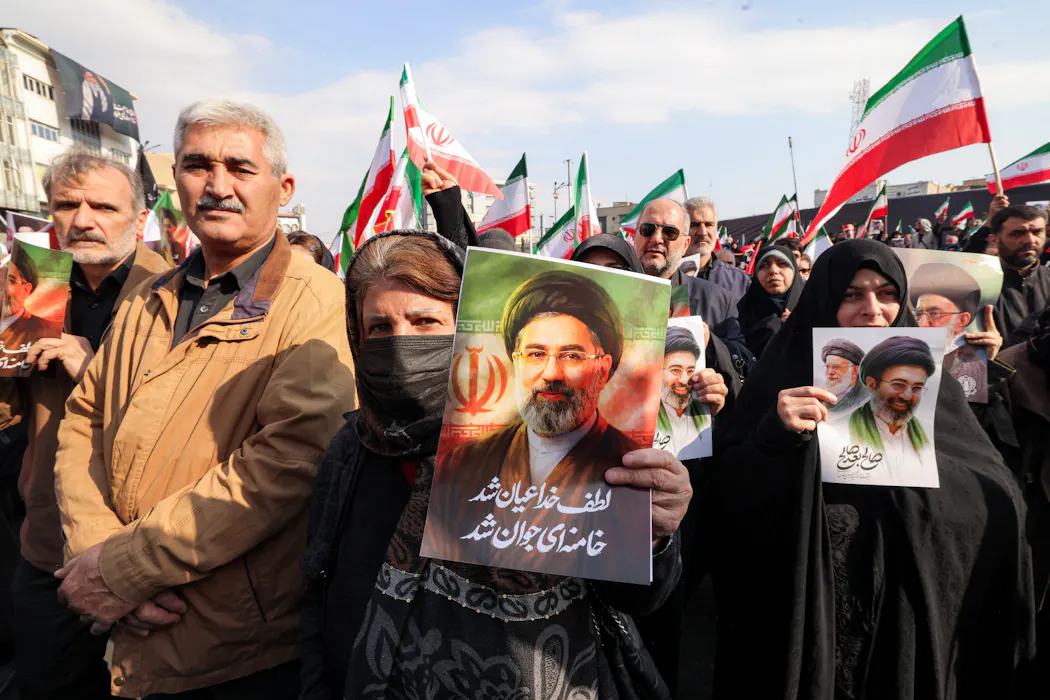
A woman poses with a picture of Iran’s new supreme leader, Ayatollah Mojtaba Khamenei, in central Tehran on March 9, 2026. Atta Kenare/AFP via Getty Images

The Trump administration announced a US$10 million reward on March 15, 2026, for information leading to the capture of several senior Iranian figures.

While two of these leaders have since been killed by Israeli strikes, they are included here to provide a more complete picture of Iran’s powerful elite – people deeply embedded in the Islamic Republic’s political, intelligence and security architecture.

As an international affairs scholar, I know their careers reflect the institutional pillars of the regime – clerical authority, intelligence coordination, military power – and help explain why they are considered high-value targets.

Seyyed Mojtaba Khamenei

The son of former Supreme Leader Ali Khamenei, who was killed in a U.S.-Israeli strike in February 2026, Seyyed Mojtaba Khamenei, 56, was chosen as Iran’s new supreme leader in early March.

Long viewed as a powerful behind-the-scenes figure, he operated within his father’s inner circle. He has cultivated strong relationships with Iran’s security and intelligence institutions and earned a reputation as a political fixer and enforcer.

Despite never holding formal elected or senior appointed office, Khamenei had been widely perceived as a potential successor to his father. Such a transition would have been controversial under normal circumstances, given his lack of experience and the ideological sensitivity around hereditary succession in a system born from anti-monarchical revolution.

Khamenei has also been linked to political controversies. During the 2005 presidential election, reformist candidate Mehdi Karroubi accused him of involvement in electoral manipulation. Former President Mahmoud Ahmadinejad later alleged that Khamenei engaged in financial misconduct.

Public opposition to his perceived rise was visible during the 2022–23 protests, when demonstrators explicitly rejected the prospect of his leadership by shouting “Mojtaba, may you die and never see leadership.”

Seyyed Ali-Asghar (Mir) Hejazi

A cleric with long-standing ties to Iran’s intelligence apparatus, Seyyed Ali-Asghar Hejazi had been among the closest aides to Ali Khamenei. He began his political career in 1980 as part of a “purification committee” tasked with firing perceived opponents from state institutions in the aftermath of the Iranian Revolution in 1979.

Hejazi later served as deputy for foreign affairs in the Ministry of Intelligence in the early 1980s and, more recently, as deputy chief of staff in the Office of the Supreme Leader. In this role, he has functioned as a key intermediary between various branches of government as well as religious and political personalities – transmitting Khamenei’s directives, shaping high-level policy and coordinating Iran’s complex intelligence and security networks.

He was sanctioned by the U.S. Treasury in 2013 for alleged human rights violations, including involvement in the suppression of the 2009 Green Movement, and by the European Union in 2019. He apparently survived an Israeli attack on March 6, 2026.

Seyyed Esmail Khatib

Seyyed Esmail Khatib, 64, who was killed on March 18, 2026, had built his career within Iran’s intelligence and security establishment. He joined intelligence operations linked to the Islamic Revolutionary Guard Corps in 1980 and was wounded during the Iran–Iraq War.

Following the war, this cleric held a series of senior intelligence roles, including director general of intelligence for Qom province, starting in 1991. He also held positions within the supreme leader’s security office from 2009–11 and was head of the judiciary’s Protection and Intelligence Center, a counterintelligence body within Iran’s judiciary, from 2012–19. He later served as a senior official within Astan Quds Razavi, a major religious and economic conglomerate controlled directly by Iran’s supreme leader.

Sanctioned by the U.S. Treasury in 2020 for alleged human rights abuses, Khatib became Iran’s minister of intelligence in 2021.

Ali Larijani

Ali Larijani, who was assassinated on March 17, 2026, was one of the Islamic Republic’s most experienced political insiders. Born into a prominent clerical family, he rose through both military and civilian institutions, beginning with roles linked to the Revolutionary Guard in the early 1980s.

A man speaks in front of several microphones.
Ali Larijani speaks to media in Tehran on May 31, 2024.
Fatemeh Bahrami/Anadolu via Getty Images

Over the decades, Larijani, 68, held numerous senior positions. Those include minister of culture from 1992–94 and head of state broadcasting from 1994–2004. He was also secretary of the Supreme National Security Council from 2004–08 and again from 2025–26. Larijani also served as Iran’s chief nuclear negotiator from 2005-07.

From early January 2026, and more clearly following the Feb. 28 killing of Ayatollah Khamenei, Larijani emerged as a central decision-maker within the system before his death.

Brig. Gen. Eskandar Momeni

A Revolutionary Guard-affiliated security official, Eskandar Momeni, 64, is a veteran of the Iran–Iraq War and participated in counterinsurgency operations against leftist groups in northern Iran.

He later held a range of senior law enforcement roles, including head of the Police Emergency Center, a dispatch center that directs emergency response units, from 2004–05, deputy for operations of the national police from 2005–08, and chief of traffic police from 2009–14. He also holds a doctorate in national security.

As deputy commander of Iran’s Law Enforcement Force, responsible for public security, from 2015–18, Momeni oversaw security responses during the 2017-18 protests, which were met with force. Since becoming minister of interior in August 2024, he has remained a central figure in domestic security policy, including the lethal response to unrest in early 2026 in which an estimated 7,000 to 30,000 Iranians were killed.

A man in a blazer speaks at a podium.
A commander of the Islamic Revolutionary Guard Corps, Eskandar Momeni speaks to lawmakers in the Iranian Parliament in Tehran on Aug. 20, 2024.
Morteza Nikoubazl/NurPhoto via Getty Image

Maj. Gen. Yahya Rahim Safavi

A senior Revolutionary Guard commander and longtime military strategist, Yahya Rahim Safavi, 73, received military training in Syria prior to the 1979 revolution and later became a key figure during the Iran–Iraq War.

He served as commander of the Revolutionary Guard ground forces, from 1985–89, deputy commander in chief from 1989–97 and commander in chief of the Revolutionary Guard from 1997–2007. During his tenure, he reportedly also earned a Ph.D. in geography.

In December 2006, the U.N. Security Council put Safavi on its sanctions list for his involvement in Iran’s nuclear and ballistic missile programs. After stepping down as Revolutionary Guard commander, Safavi was appointed senior military adviser to the supreme leader and is still serving in that role. He remains under U.S. sanctions.

The Conversation

Mehrzad Boroujerdi does not work for, consult, own shares in or receive funding from any company or organization that would benefit from this article, and has disclosed no relevant affiliations beyond their academic appointment.

ref. Who are Iran’s new leaders? A look at 6 the US placed a bounty on – 2 of whom are already dead – https://theconversation.com/who-are-irans-new-leaders-a-look-at-6-the-us-placed-a-bounty-on-2-of-whom-are-already-dead-278509

Sweden’s ‘old-growth’ natural forests store 83% more carbon than managed woodlands – new study

Source: The Conversation – UK – By Anders Ahlström, Associate Professor, Department of Physical Geography and Ecosystem Science, Lund University

Old-growth forest in Sweden. Ulrika Ervander, CC BY-NC-ND

Most of Europe’s original natural forests have been transformed for agriculture and managed forests producing energy, paper and timber. The few remaining “old-growth” natural forests are relics of the past that illustrate how forests would have looked in the absence of human management. They can, therefore, tell us how people have transformed forests.

Most Swedish forests are so-called boreal forests. This type of coniferous woodland ecosystem encompasses most of the northern regions of the planet. These relatively cold regions have historically had low populations. Here, large-scale use of forests began relatively late.

In Sweden, modern forest management emerged in the 20th century. It involves cutting most trees in an area – clear-cutting – followed by planting and sowing of new trees, cleaning and thinning until the trees are clear-cut again up to 120 years later. The soil is also disturbed. It is very common to plough the soil and excavate trenches and ditches to remove water from forests.

After mapping and measuring the most natural old-growth forests in Sweden, we found that they differ much more from managed forests than previously thought, even if some of those managed forests looked old.

We found that old-growth forests store 78-89% more carbon than managed forests do, a difference in carbon storage larger than Sweden’s cumulative emissions from the combustion of fossil fuels since 1834. Our new study underscores the much larger carbon storage benefits that flow from protecting forests than using them to produce bioenergy and wood products.


Read more:
Sweden has vast ‘old growth’ forests – but they are being chopped down faster than the Amazon


light shining through tree trunks in old forest, moss on ground
Old-growth forests store much more carbon than managed forests.
makalex69/Shutterstock

Eight years ago, we started mapping the most natural lowland old-growth forests across the country. We focused on old-growth forest remnants in the least attractive areas for agriculture and forest management. We excluded these because they are usually slow-growing mountain forests and store less carbon than they would in the broader landscapes used for wood production. We then spent three years collecting samples and measuring the carbon content of the old-growth forests and compared with that of managed forests.

Soils are difficult to study. They store vast amounts of carbon but measuring that is difficult. The main methods to measure soil carbon have not changed in the last century. We dug 220 pits up to one-metre deep and took samples at different depths from across the country.

We analysed those soil samples in a lab and calculated carbon content in trees and dead wood from our measurements. We used the vast Swedish national forest inventory (a database collating annual sample-based survey results) to estimate carbon storage in managed forests and could then compare their carbon storage.

Managed forests are losing carbon

We found a huge difference in carbon storage between old-growth and managed forests. Old-growth forests store 87% more carbon in the trees, 334% more in dead wood, and 68% more in the soils than managed forests do. Overall, this amounts to 83% more carbon in old-growth forests than managed forests in Sweden’s boreal forests.

Most of that carbon is stored in the soils. Old-growth forests store as much carbon in their soils as the managed forests do in trees, dead wood and soils combined.

Our methods of comparing old-growth to managed forests show the sum of the total carbon accumulated in forests over time. This means the differences can be due to the loss of carbon in managed forests or a larger carbon uptake in old-growth forests.

We also took into account how the wood extracted from managed forests was used as wood products (for example, to build a house), which might not reach the atmosphere and produce climate change for decades to come.

In Sweden, around half of the harvested wood (or biomass) is burnt for heating and electricity production, around 25% is used for paper, and only around 25% ends up in products with relatively long lifetimes, such as houses, where they can form a sizeable storage over time.

When including carbon in all these products, primary forests still stored about 70% more carbon than managed forests. Actually, there’s more carbon in dead wood in the old-growth forests than in these wood products and dead wood in managed forests combined.

Why losing old-growth forest matters

The losses of carbon from forest management in Sweden are much larger than previously estimated. The difference in carbon storage between old-growth and managed forests (including harvested wood products) is equivalent to 1.5 times all Swedish fossil fuel emissions since 1834, or 220 years of Sweden’s fossil fuel emissions at current levels.

Of course, if wood products had not been used, other materials would have been used instead, some of which may have high carbon intensity (such as steel). This makes it difficult to estimate the overall effect on atmospheric greenhouse gases. However, there are now plenty of non-wood alternatives for heat and electricity (heat pumps, solar and wind energy, for example).

There are also vast areas of natural forests where the largest trees were logged many decades to a century ago, and they are likely in a state much closer to an untouched old-growth forest than an average managed forest is. Protecting these forests will, therefore, lead to a carbon sink as the large trees grow back, and avoid soil carbon losses from management.

We have previously reported on the ongoing loss of these old-growth forests in Sweden – a loss that is five to seven times faster than the loss of the Brazilian Amazon forest.

EU regulation currently protects all remaining old-growth forests in Europe, but definitions of old-growth forests are left to the member countries. In Sweden, the proposed definition of old-growth forest is based only on tree ages. This definition is not well anchored in science and sets a very high bar: 180 years in the north of the country and 160 years in the south.

These proposed Swedish definitions have been heavily criticised by conservation organisations for undermining the ambition of the EU nature restoration regulation to protect all remaining old-growth forests. If the proposed definition stands, little of the remaining unprotected old-growth forest will be protected and their logging will likely continue.

Protecting and restoring old-growth forests for carbon storage and biodiversity benefits can significantly contribute to limiting climate change in countries like Sweden.

The Conversation

Anders Ahlström receives funding from the Crafoord Foundation (20200755 & 20241108), Swedish Research Council (2021-05344, 2024-01983), BECC, Carl-Tryggers Stiftelse, Stiftelsen Extensus, Stiftelsen Längmanska kulturfonden, the Royal Physiographic Society of Lund, P.O. Lundells stiftelse, Jan Hain stiftelse för vetenskaplig teknisk forskning inom miljö och klimat, EU H2020 Climb-Forest (101059888), Blaustein visiting professorship at Stanford University and The Sustainability Accelerator at Stanford University.

Pep Canadell receives funding from the Australian National Environmental Science Program (NESP2)-Climate Systems Hub.

Didac Pascual does not work for, consult, own shares in or receive funding from any company or organisation that would benefit from this article, and has disclosed no relevant affiliations beyond their academic appointment.

ref. Sweden’s ‘old-growth’ natural forests store 83% more carbon than managed woodlands – new study – https://theconversation.com/swedens-old-growth-natural-forests-store-83-more-carbon-than-managed-woodlands-new-study-277150

You probably agree with the animals on which bird calls, frog noises and cricket chirps are most attractive – new research

Source: The Conversation – USA – By Logan S. James, Research Associate in Animal Behavior, The University of Texas at Austin; McGill University

Male zebra finch calls attract mates – and maybe, coincidentally, you? Raina Fan

Animals do all sorts of things to attract each other as potential mates. Many birds, for example, produce feathers with elaborate color patterns – from the iridescent plumage of many hummingbirds to the famously brilliant tail of a peacock. Charles Darwin, an early pioneer in the theory of evolution, saw these colors and concluded that they exist because other birds find them attractive.

But this raised a peculiar question: Why did Darwin himself find these colors beautiful too?

Indeed, he noted that some animals have “nearly the same taste for the beautiful as we have,” a simple observation with radical implications. Our sense of beauty might be something we humans share with other animals, rooted in biology.

Over a century after Darwin made his observations, my colleagues and I decided to actually test this idea.

I am an expert in animal communication, with a focus on sound production and perception. I have worked with species such as zebra finches, fringe-lipped bats and túngara frogs. For example, late at night in Panama, I have watched remote video feeds of female túngara frogs as they listened to calls that I played from different speakers. Eventually a female will hop toward one speaker, revealing which of the calls she preferred.

frog with its vocal sac inflated like a balloon
Túngara frog calls are a distinct part of the nocturnal jungle soundscape in Panama.
Kim Hunter

Could it really be possible that this tiny frog and I are attracted to some of the same sounds? What might shared preferences say about what animals and people have in common? We needed data to find out.

A global experiment

To test Darwin’s idea properly, we needed two things: a large collection of animal sounds that had already been tested on animals, and a large number of human listeners willing to give their opinions.

For the sounds, we drew on decades of published research, including some of our own as well as studies from generous colleagues who let us use their recordings. We ended up with 110 pairs of sounds from 16 different species, including frogs, insects, birds and mammals. In each pair, the sounds are used to attract potential mates; scientists had already found which of the two versions that animals tended to prefer.

screenshot of a mobile phone with text 'which call do you like more?' and a 'left' and 'right' button to click
Human volunteers played a game that asked them which animal sound they preferred.
Logan S. James

For the human listeners, we built a gamified online experiment played by over 4,000 participants from around the world. The task was quite simple: We played each pair of sounds in random order, and then asked which one the human participant liked more.

What we found

The results were striking. Across our dataset, including animals separated from human beings by hundreds of millions of years of evolution, people tended to agree with the animals about which sound was more pleasant.

Amazingly, the stronger the animal’s preference, the more likely humans were to agree. We also found that people were measurably faster to click or tap on the sound that animals found more attractive, suggesting a subconscious aspect of these preferences.

Song sparrows and humans tend to prefer this song.
Stephen Nowicki and Susan Peters27 KB (download)

Song sparrows and humans tend not to prefer this song.
Stephen Nowicki and Susan Peters41.8 KB (download)

People particularly agreed with animals when it came to what researchers call “adornments”: the extra trills, chucks, clicks and flourishes that animals can add to their calls. These sounds were more appealing to both animal and human listeners alike.

Why do we share these preferences?

This is a key question, and it will take many more studies to piece together. Our current work suggests that the architecture of the nervous system may help drive shared preferences. Despite the enormous diversity of life on Earth, many basic structures of sensory systems are similar across species. Shared mechanisms of sound perception may lead to shared biases in sound preference.

We also found a lot of factors that didn’t predict agreement. Participants with expertise in animal sounds or highly trained musicians were no different than other human judges. Intriguingly, those who reported spending more time listening to music on a daily basis agreed with animals more, a surprising finding worth investigating.

Hourglass treefrogs and humans tend to prefer this call.
Martin J Fouquette Jr10.3 KB (download)

Hourglass treefrogs and humans tend not to prefer this call.
Martin J Fouquette Jr5.22 KB (download)

More to investigate

We focused on sound, while Darwin’s original observation was about color and visual beauty. Do humans share visual preferences with animals too? What about smell? And what’s happening in our brains when we make these snap aesthetic judgments? Are the same neural circuits at work when a human and a frog both choose the same call?

Preferences in animals are often subtle and variable across individuals and populations. I would love to ask birds what they think of different frog calls and vice versa, but it’s only humans that we can directly ask such questions.

We also found cases where humans disagreed with animals. Our results show a tendency, not a rule, and understanding where this variation comes from will be fascinating to discover.

blue, black and white butterfly alights on pink and yellow flower
What you may find beautiful about a butterfly or flower evolved to attract a nonhuman species.
Through the beauty of Kerala/Moment via Getty Images

My favorite takeaway from this research is a simple reminder.

People find so much beauty in nature, from the dazzling colors of butterflies to the melodious songs of birds and the aromas of flowers. Yet all of these evolved to attract other species, not us. Perhaps it’s because we humans share something fundamental with other animals that we too find these to be beautiful.

The Conversation

Logan S. James is affiliated with Earth Species Project.

ref. You probably agree with the animals on which bird calls, frog noises and cricket chirps are most attractive – new research – https://theconversation.com/you-probably-agree-with-the-animals-on-which-bird-calls-frog-noises-and-cricket-chirps-are-most-attractive-new-research-276958