Why the mad artistic genius trope doesn’t stand up to scientific scrutiny

Source: The Conversation – UK – By Daisy Fancourt, Associate Professor Psychobiology and Epidemiology, UCL

Vincent van Gogh sliced off his ear with a knife during a psychotic episode. Ballet dancer Vaslav Nijinsky developed schizophrenia and spent the last 30 years of his life in hospital. Virginia Woolf lived with bipolar disorder, eventually taking her own life as she felt another deep depression beginning.

Many famous creative artists have lived with severe mental illness. Catherine Zeta-Jones, Mariah Carey, Demi Lovato, Jean-Claude Van Damme and Mel Gibson have all reported diagnoses of bipolar disorder. Yayoi Kusama, Sylvia Plath, Kurt Cobain and Syd Barrett spoke about experiences of psychosis. Speculation abounds about whether Amy Winehouse, Marilyn Monroe and Ernest Hemingway lived with borderline personality disorder.

The concept of the “mad creative genius” harks back to antiquity. Artists in the Renaissance and Romantic periods would sometimes assume eccentric personalities to distinguish themselves as extraordinary individuals who had made Faustian bargains for their talents.

Edvard Munch, the Norwegian painter, described his “sufferings” as “part of myself and my art … their destruction would destroy my art.” Poet Edith Sitwell, who experienced depression, reportedly used to lie in an open coffin to inspire her poetry.

In 1995, a study of 1,005 biographies written between 1960 and 1990 even proposed that people in the creative professions had a higher rate of severe psychopathology than the general population.

So how does this square with the fact that artistic expression is beneficial for our mental health? As I explain in my new book Art Cure: The Science of How the Arts Transform Our Health, there is a wealth of scientific evidence on these benefits.

However, the reality for professional artists can be a bit different. While they tend to report enhanced overall wellbeing, the life of an artist can be psychologically challenging. They have to endure everything from precarious careers to professional competition.

Additionally, fame brings stress, challenging lifestyles, an increased risk of substance abuse, and an inevitable but unhealthy focus on oneself. In a 1997 study, scientists analysed the number of first-personal pronouns – I, me, my, mine and myself – in songs by Cobain and Cole Porter (who himself had bouts of severe depression). As their fame increased, both saw a statistically significant increase in their use of these pronouns.

Linking artistry and severe mental illness

But what about artists who developed mental illness before becoming famous, or even before becoming artists? Genetics research has uncovered some shared genes that may underlie severe mental illness and creativity.

A variation in the gene NRG1 is associated with both increased risk of psychosis and higher scores on questionnaires that measure people’s creative thinking. Variations in dopamine-receptor genes have been linked with both psychosis and various creative processes like novelty seeking and decreased inhibitions. It’s a mixed bag of findings, however – not all studies show such links.

Beyond genetics, there are also some personality traits that can be common both to mental illness and creativity, including openness to experience, novelty-seeking and sensitivity. It’s possible to see how such research could provide a lens for viewing artists like Van Gogh, Nijinsky and Woolf.

Yet creativity and mental health difficulties can act against one another. For instance, Woolf described her depressive episodes of bipolar disorder as a well: “Down there, I can’t write or read.” So while some people with severe mental illnesses may make art, not everyone can all the time.

What’s more, when we look for signs of a link between severe mental illness and creative pursuits at a population level, the evidence isn’t clear-cut. In 2013, a Swedish study tracked over 40 years of data from 1.2 million people in national patient registers, including medical records of diagnoses, mental health treatments and cause of death.

The researchers found that people with schizophrenia, schizoaffective disorder, anxiety disorders and unipolar depression were actually less likely than the average person to be in creative professions. The only slight exception was bipolar disorder, where people had around 8% higher odds of being in a creative profession.

But this study also found something arguably more intriguing: the parents and siblings of people with schizophrenia, schizoaffective disorder and bipolar disorder were more likely to be in creative professions. It’s not hard to think of examples amongst famous artists: James Joyce’s daughter and David Bowie’s half-brother both had schizophrenia. Why might this pattern exist?

People who are genetically susceptible to severe mental illness but don’t develop the full conditions may instead have milder versions. Minor hypomania, for instance, involves elevated moods but not with the intensity of bipolar disorder. Schizotypy involves divergent thinking and heightened emotion without the severity of schizophrenia.

These conditions have been associated with creative processes like reduced inhibitions, defocused attention and neural hyperconnectivity (the ability to make cross-sensory associations like hearing colours or tasting musical notes).

Perhaps the siblings and parents of people with mental illness tend to be more likely to have such conditions, and this explains why they choose creative professions. Having said that, not all creative people work in a creative profession – for many, creative hobbies are their outlet away from work.

Essentially, the science suggests there may be some shared processes between severe mental illness and creative processes like the arts. But it’s not the clear linkage that anecdotes might lead us to believe. The myth of the “mad creative genius” is overly simplistic. It also risks perpetuating stigma rather than understanding, so it’s perhaps better put to bed.

It seems more productive to focus on the value that creative engagement can bring to support our mental health. Whether people have a mental illness or are just dealing with day-to-day moods and emotions, there are more studies emerging every week that are building our understanding of the tangible, meaningful benefits the arts can have. This research is revealing how artists, clinicians and communities can work together to build safe, accessible, inclusive opportunities to enjoy the arts.


This article features references to books that have been included for editorial reasons, and contains links to bookshop.org. If you click on one of the links and go on to buy something from bookshop.org, The Conversation UK may earn a commission.

The Conversation

Daisy Fancourt receives funding from Wellcome, UK Research and Innovation, the Prudence Trust, and Bloomberg Philanthropies.

ref. Why the mad artistic genius trope doesn’t stand up to scientific scrutiny – https://theconversation.com/why-the-mad-artistic-genius-trope-doesnt-stand-up-to-scientific-scrutiny-272841

What Cubans want – and what they are bracing for, following Trump’s threats

Source: The Conversation – UK – By Anna Grimaldi, Lecturer in Politics and International Relations, University of Leeds

The Cuban capital of Havana, where we are currently on a research trip, woke to an unfamiliar silence on January 5. As we drove through the city, no music drifted from open windows and shops and restaurants were shuttered. The streets were almost deserted.

It was the first day of national mourning for the 32 Cuban soldiers killed during the US operation to capture Venezuelan leader Nicolás Maduro in Caracas two days earlier. For 48 hours, Cubans observed a duelo (period of grief), honouring what some describe as the “heroes who resisted the aggressors”.

Apart from the eerie quiet, little else in Havana has changed. Street vendors still try to lure tourists with half‑price cigars and last‑minute excursions. The general hospital’s neon lights flicker under the strain of power cuts. And the once‑grand, now crumbling, facades of buildings in central Havana remain coated in a thick film of dust, while passers-by dodge the occasional falling piece of concrete.

A crumbling building in Havana, Cuba.
Cuba’s streets and infrastructure are crumbling due to decades of economic hardship.
Anna Grimaldi

The US government says Cuban officials should be scared of becoming their next target. At a news conference on January 3, secretary of state Marco Rubio said: “If I lived in Havana and I was in the government, I’d be concerned.” President Donald Trump has since urged Cuba to “make a deal” with his government or face consequences.

But no one seems particularly troubled by the possibility that the US attack on Caracas might be repeated here. “They have always underestimated us,” says Antonio, our taxi driver, as he steers through the empty streets. He speaks with the matter‑of‑fact pride common among Cubans, quick to recall the fiasco of the failed Bay of Pigs US invasion in 1961. “It won’t happen here, Cubans are different.”

He points to Venezuela’s history of political betrayals, from the conspiracies against independence leader Simon Bolívar in the early 19th century to the attempted coup against former president Hugo Chávez in 2002 and now the removal of Maduro, apparently betrayed by someone close to him. Antonio insists Cubans remain loyal to their ideals of revolution and sovereignty: “The US can try to strangle us with sanctions, but they won’t break us.”

While much of the world reacts with alarm to Trump’s escalating threats against Mexico, Colombia, Iran and even Greenland, Cubans have barely flinched. Hostility from the US is nothing new, and there is general confidence in the country’s longstanding preparation for any potential escalation with what they see as an old adversary. “We’ve been getting ready for this war for more than 65 years,” one resident remarked.

A mural depicting Che Guevara next to a Cuba flag in Havana.
A mural depicting Che Guevara, a major figure of Cuba’s 1959 revolution, in Havana.
Anna Grimaldi

Trump insists that, when Cuba finally collapses, a better future awaits it – an argument that has been amplified by mainstream international media. But this strikes many Cubans as detached from their lived reality. We spoke to Alejandro, a 20‑year‑old law student, who dismissed this idea as wishful thinking: “They’re wrong if they think they know what’s best for us.”

Cuba is living through one of its most difficult periods since the 1990s. Power cuts, water shortages, scarce foreign currency, falling tourism and rising prices shape daily life for most people.

Sanctions imposed after the socialist revolution in 1959 – and later tightened under Trump following a brief thaw under the presidency of Barack Obama – have intensified these hardships. However, there is little sign that Cubans are waiting for Trump’s help.

Cuba’s stoic resilience

Many western analysts say the halt in Venezuelan oil imports will be devastating for Cuba, arguing that the island has no real alternatives. Cubans seem to think otherwise. “We’ll get oil from the Middle East, from Mexico – we don’t rely on Venezuela as much as they say,” says Yadira, a housekeeper.

Still, the reality is more nuanced. While Mexico has now overtaken Venezuela as Cuba’s main oil supplier, providing nearly half of the island’s crude oil in 2025, it also has to deal with increasing pressures from Washington to align with US foreign policy goals in the region. These pressures forced the Mexican president, Claudia Sheinbaum, to clarify on January 7 that, while oil exports to Cuba are continuing, they will not increase.

Losing Venezuelan imports alone may not cause Cuba to collapse, but the impact will be serious and uneven. Cities, which depend heavily on fuel-intensive transport and electricity, will suffer most. And as past crises show, distribution can break down even when food is available.

“During COVID, all I could get hold of in Havana was mangoes and spring onions,” says Sophie, a British expat. Cuba’s vulnerability lies less in total isolation and more in the fragility of its internal systems – especially those that keep urban life functioning.

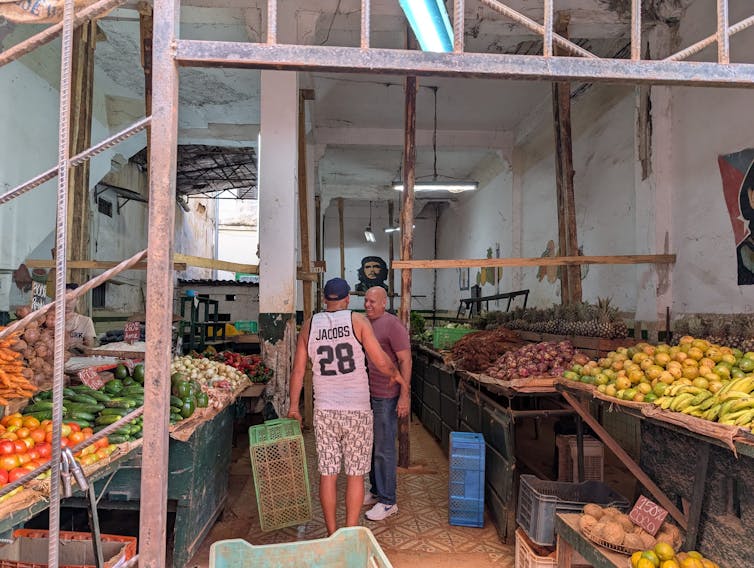
Two men greeting each other in a grocery store in Havana, Cuba.
Two men greet each other in a grocery store in Havana, Cuba.
Anna Grimaldi

Beneath the surface of stoic resilience, subtle cracks are beginning to show. Albeit timidly, some Cubans point to internal governance failures.

“If I told you what I really think, I’d be arrested,” says a tour guide who told us he would prefer to remain anonymous. A trained engineer, he never managed to achieve the prosperity promised by the government’s provision of free education for all Cubans.

Like many young people, his children emigrated to Spain and, for him, Cuba’s current situation feels increasingly unsustainable. “Nothing works,” he says. “There are no medicines, no supplies, and the repression is getting worse.”

So, while Trump may not be the answer many seek, his threats underscore a broader truth for Cubans: change must come one way or another. Foreign rule is far from a solution to Cuba’s problems, yet some see it as one of the few paths left when no other way forward seems possible.

Cubans do not expect an invasion, but they do expect their lives to grow harder. They are not calling for regime change imposed from outside, but what they seem to want is the chance to build a future at home.

As the situation in Venezuela unfolds, Cubans will watch closely – not because they expect the same to happen on their island, but because they know that events elsewhere in the region have a way of washing up on their shores.

The Conversation

The authors do not work for, consult, own shares in or receive funding from any company or organisation that would benefit from this article, and have disclosed no relevant affiliations beyond their academic appointment.

ref. What Cubans want – and what they are bracing for, following Trump’s threats – https://theconversation.com/what-cubans-want-and-what-they-are-bracing-for-following-trumps-threats-272857

The economics of climate risk ignores the value of natural habitats

Source: The Conversation – UK – By Narmin Nahidi, Assistant Professor in Finance, University of Exeter

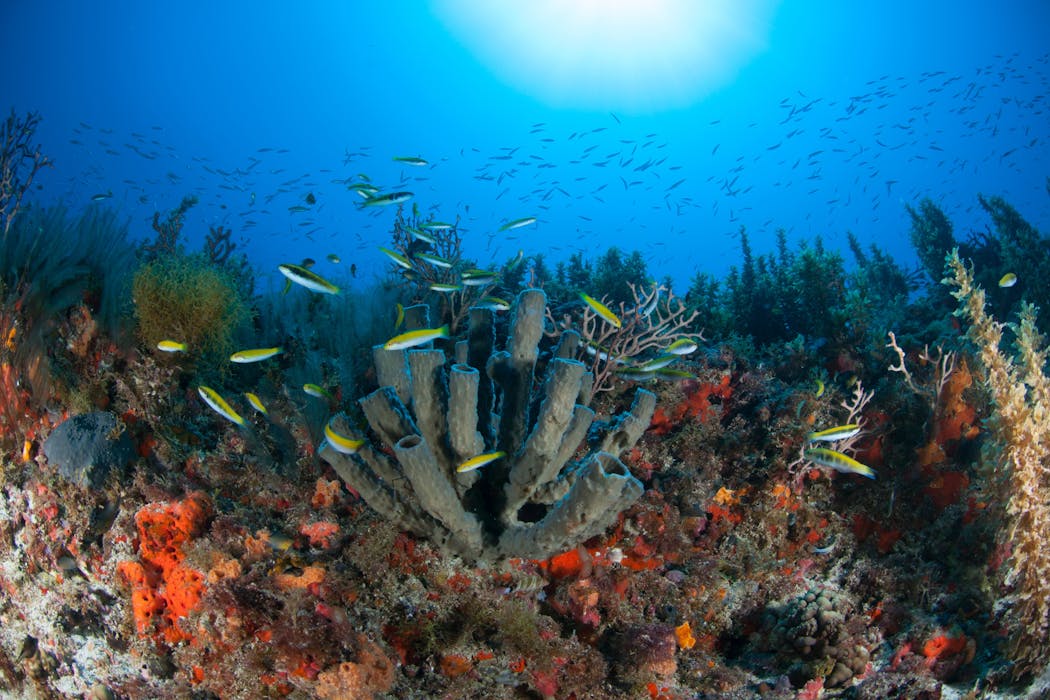
Coral reefs in Quintana Roo, Mexico. Connect Images – Curated/Shutterstock

When Hurricane Delta hit Mexico’s Caribbean coast in 2020, insurance payouts were released within days – not to rebuild hotels or roads, but to repair coral reefs.

In the Mexican state of Quintana Roo, reefs are insured and restoration is taken care of by a local trust. After storms, payouts fund rapid restoration so reefs can keep doing their job: breaking up waves so they don’t erode the shore, reducing flooding, protecting tourism jobs and lowering insurance losses.

Nature is treated as part of the economic infrastructure. This idea is spreading, as it directly affects costs, risks and financial stability.

Until recently, sustainable or “green” finance has focused almost entirely on carbon emissions, net zero targets and climate-related investments. But these climate-only measures miss something basic. The economy doesn’t just depend on temperature; it depends on living systems.

In my field of sustainable finance and financial stability, research shows that when ecosystems fail, the costs show up in rising food prices, insurance bills and public finances. The health of the planet affects everyday costs.


Read more:
The UK’s food system is built on keeping prices low – but this year’s droughts show up its failings


Take food. Around three-quarters of our leading food crops benefit at least partly from animal pollination, including by bees. When pollinator numbers fall, harvests shrink. That pushes up food prices, drives inflation and squeezes household budgets.

Or consider flooding. Wetlands, forests and mangroves absorb water and slow storms. When they’re destroyed, floods cause more damage. Insurers pay out more, premiums rise or cover disappears. Governments often step in, using public money to deal with the fallout.

These aren’t niche environmental problems, they are economic shocks. In many parts of finance, climate risk is now being modelled. But nature loss is only starting to be treated in the same way.

From carbon to nature

In finance, the term “greenium” refers to the lower borrowing costs enjoyed by companies or governments seen as safer environmental bets. When the idea first emerged in the late 2010s, it was almost entirely about carbon emissions. But that’s starting to change.

Investors are beginning to recognise that destroying forests, reefs or soils increases future losses. Where risk rises, returns have to rise too. Where ecosystems are protected, financing becomes cheaper.


Read more:
Your essential guide to climate finance


Change is already happening in three key areas: government debt, insurance schemes and regulation.

In 2021, for example, Belize refinanced part of its national debt in a deal linked to ocean protection. In return for protecting marine habitats, the country received debt relief. For investors, this wasn’t charity: healthy oceans support tourism, fisheries and long-term growth – all of which matter for a country’s ability to repay its debts.

The reef insurance scheme in Mexico isn’t alone any more. Similar ideas are being explored for mangroves and wetlands, especially in storm-prone regions such as the Caribbean and parts of southeast Asia. These ecosystems reduce damage before disasters happen. For insurers, that means fewer claims. For households and businesses, it can mean lower premiums and better access to cover.

shot from underwater of mangroves trees
Mangroves help absorb wave power and protect coastlines from extreme weather.
Nattapon Ponbumrungwong/Shutterstock

Regulators are paying attention too. Central banks and financial supervisors are increasingly asking how nature loss makes other risks worse. A degraded ecosystem can turn a heatwave into a food crisis, or a storm into a fiscal emergency. From this perspective, biodiversity loss isn’t an ethical issue – it’s a risk amplifier.

Research highlights that focusing only on climate misses important economic channels. Carbon metrics tell us about long-term warming, but say much less about near-term shocks.

Ecosystem damage often hits faster than long-term climate consequences, through crop failures, floods and disaster costs – and these shocks don’t stay local. They affect inflation, strain government budgets and ripple through financial markets. When nature is degraded, the economy becomes more fragile.

If ecosystems fail, food costs more. Insurance becomes harder to afford, and governments spend more on responding to disasters. These costs are shared across society.

Seeing nature as part of the economic system isn’t radical, it’s realistic. The sooner finance reflects that reality in everyday financial decisions, the more resilient our ecosystems and economies will be.


Don’t have time to read about climate change as much as you’d like?

Get a weekly roundup in your inbox instead. Every Wednesday, The Conversation’s environment editor writes Imagine, a short email that goes a little deeper into just one climate issue. Join the 47,000+ readers who’ve subscribed so far.


The Conversation

Narmin Nahidi does not work for, consult, own shares in or receive funding from any company or organisation that would benefit from this article, and has disclosed no relevant affiliations beyond their academic appointment.

ref. The economics of climate risk ignores the value of natural habitats – https://theconversation.com/the-economics-of-climate-risk-ignores-the-value-of-natural-habitats-272769

The Norwegian 4×4 Hiit workout is a favourite among athletes and actress Jessica Biel – here’s why it’s so beneficial

Source: The Conversation – UK – By Paul Hough, Lecturer Sport & Exercise Physiology , University of Westminster

The intensity of the 4×4 workout can improve your cardiovascular health. TORWAISTUDIO/ Shutterstock

Lack of time is often the main reason people don’t exercise regularly. But a type of interval workout recently popularised by actress Jessica Biel could be the solution – with research showing it can improve fitness faster than traditional, steady-pace workouts, such as jogging or cycling.

The Norwegian 4×4 workout has traditionally been used by athletes. It’s a form of high-intensity interval training (Hiit) that involves four-minute sets of very intense cardio exercise, followed by three minutes of very light exercise. A typical training session includes a five-minute warm-up, four high-intensity intervals and a five-minute cool-down.

The 4×4 workout format follows the same format as other Hiit workouts, which alternate periods of high-intensity exercise with periods low-intensity exercise (or rest). Most Hiit workouts involve work intervals that last anything from ten seconds up to a couple of minutes. In contrast, the 4×4 workout employs four minute work periods, which raises your heart rate for longer than most Hiit protocols.

Decades of research has shown that regular Hiit workouts are often more effective than moderate-intensity workouts (such as running or cycling at a steady pace continuously) in improving cardiovascular fitness and other health outcomes (such as improving blood sugar and cholesterol levels). Hiit is even effective for improving health in adults with type 2 diabetes and cardiovascular disease.

Hiit also offers these benefits with less training time than traditional endurance training. A 2008 study showed that as few as six Hiit sessions over two weeks improved the muscles’ endurance capacity.

Several studies have also explored the benefits of the 4×4 protocol. For example, an eight-week study showed that the 4×4 workout produced greater aerobic fitness improvements than 45-minute moderate-intensity running sessions.

The reason the 4×4 workout specifically is so effective for improving cardiovascular fitness is because the four-minute intervals are intense enough to maximally challenge your heart and lungs while minimising muscle fatigue. This helps improve your maximum oxygen uptake (or VO₂ max), which is the highest rate at which your body can take in, transport and use oxygen during intense exercise.


Read more:
VO₂max: the gold standard for measuring fitness explained


VO2 max is considered the gold standard measure of cardiovascular fitness. Higher VO₂ max values are associated with reduced risk of cardiovascular disease and premature death, and better overall health.

During a 4×4 workout you’ll spend roughly 16 minutes close to you maximum heart rate. This means that it can improve VO2 max more effectively than longer duration, moderate-intensity workouts.

Choosing the right workout

For people with busy schedules, Hiit is a time-efficient option because it offers the same health and fitness benefits as longer workouts with less training time. However, a 4×4 Hiit session still lasts between 35–40 minutes, which might be too long for some people.

A man sprints up some stairs at a sports stadium.
A sprint interval HIIT workout can also be beneficial for those shorter on time.
Panumas Yanuthai/ Shutterstock

For those seeking a shorter workout option, the 10×1 Hiit protocol is a suitable alternative as it can be completed in just 30 minutes – including warm-up and cool-down periods.

This involves doing ten one-minute intervals of intense exercise. Each minute of hard work is followed by a minute of light exercise or complete rest.

But while this protocol also improves VO₂ max, the shorter work periods must be performed at a much higher intensity than the four-minute intervals to challenge the cardiovascular system. This could make it difficult to pace yourself consistently during each interval.

Another Hiit workout option is sprint interval training. This involves exercising as hard as possible for ten to 20 seconds – followed by three minutes of recovery. These sprints can be done running, cycling or even rowing.

One 12-week study found that participants who performed three, 20-second sprints (followed by three-minute recovery periods) just three times a week significantly improved their cardiovascular fitness compared to those doing longer, steady-state workouts. However, the 4×4 workout has been shown to produce better gains in aerobic fitness than sprint interval training.

Although most research shows that Hiit produces rapid health and fitness benefits, it’s difficult to know exactly how effective it is in the real world because most studies use specialised equipment and are supervised by researchers. As such, study results may not reflect what happens when people train on their own.

The very demanding nature of Hiit may also make it less enjoyable for some people – particularly those who aren’t used to intense exercise. This is important, because lower enjoyment is linked to poorer motivation and lower likelihood of sticking to a workout programme.

Also, while Hiit is often promoted as exciting and time efficient, its novelty may wear off. What feels new and motivating at the start may become tiring or repetitive, especially without variety or support. As a result, some people may struggle to stick with a workout programme after a few weeks.

Long-term fitness improvements come from training consistently. For that reason, it’s essential to choose a form of exercise that you enjoy.

If Hiit is less appealing to you than alternatives, such as steady jogging, cycling or weightlifting, it may be more effective to focus on workouts you’re more likely to stick with.

You don’t always have to push yourself to the limit to improve your health and fitness. Even consistent activity, such as accumulating around 7,000 steps a day, can still lead to meaningful physical and mental health benefits.

The Norwegian 4×4 protocol is just the latest popular Hiit workout. While it can offer many health and fitness benefits for you in a short period of time, it might not suit your needs – so be sure to pick a workout that best suits your goals and schedule.

The Conversation

Paul Hough does not work for, consult, own shares in or receive funding from any company or organisation that would benefit from this article, and has disclosed no relevant affiliations beyond their academic appointment.

ref. The Norwegian 4×4 Hiit workout is a favourite among athletes and actress Jessica Biel – here’s why it’s so beneficial – https://theconversation.com/the-norwegian-4×4-hiit-workout-is-a-favourite-among-athletes-and-actress-jessica-biel-heres-why-its-so-beneficial-271560

What January taught George Orwell about control and resistance

Source: The Conversation – UK – By Nathan Waddell, Professor of Twentieth-Century Literature, University of Birmingham

Like many of us, George Orwell saw January as a month to be endured rather than enjoyed. You can picture him steeling himself against its cold, gloom, rain, frost and wind.

And not only because of his ailing, vulnerable body, which was ravaged for so many years by respiratory malfunction. But also because grimacing defiance is the posture January tends to bring out in people. Orwell wasn’t an exception. His attitude to January is soothingly familiar yet peculiarly his own.

At one point in Orwell’s novel Keep the Aspidistra Flying (1936), the protagonist Gordon Comstock meets his girlfriend Rosemary under some railway arches on “a horrible January night”. There’s “a vile wind” that screeches round corners and flings dust and torn paper into their faces.

In Animal Farm (1945), January’s “bitterly hard weather” makes the earth “like iron” and stops the creatures from working in the fields.

Nineteen Eighty-Four (1949) transposes these imagined Januaries to other points on the calendar. It begins on a “bright cold day in April”.

As in Keep the Aspidistra Flying, a “vile wind” whirls dust and scraps of paper into the air. The sameness between the books isn’t mere repetition. On the contrary, I think that it subtly evidences January’s tenacious impact on Orwell’s mind.

One of Nineteen Eighty-Four’s concluding episodes takes place on “a vile, biting day in March” when the grass seems dead and the earth is “like iron”, just as it is in Animal Farm. These are moments following long, hard winters, and it’s no accident that the protagonist of Nineteen Eighty-Four, Winston Smith, suffers through a long period of torture in the Ministry of Love in the year’s coldest, bleakest months.

Writing about the weather for the Evening Standard newspaper in 1946, Orwell noted that January and February are particularly difficult to bear – at least for those in colder regions. This is when rooms get chilly and pipes tend to freeze and burst. Remove January and February from the calendar, he claimed, and where the weather is concerned the English “should have nothing to complain about”.

Nevertheless, Orwell knew that winter was an indispensable adversity, the rest of the year depending on its burdens. Tasty fruit and scrumptious vegetables need “rain-sodden soil” and the slow arrival of spring to develop their flavours, just as England’s ordinary flowers – primroses, wallflowers and daffodils – thrive after frost and cold.

Take away the contrast between the months and they become less special. There’s a time for chilblains and noses that run endlessly in chilly weather, Orwell insisted, and heat and sweat have their place, too. We need January to enjoy July (and, for some, vice versa).

The arrival of spring

In his brilliantly titled essay Some Thoughts on the Common Toad (1946), Orwell reflected on the ostensibly “miraculous” arrival of spring after the bitter winters of the preceding five years – a time during which the climatic afflictions of January, February and March were made harder still by the burdens of the second world war.

It had been difficult to believe that spring would come, and it had been near-impossible to think that the conflict would end. And yet: hostilities ceased, spring arrived.

Orwell thought that January could be “beastly”, as he put it in his novel Coming Up for Air (1939), but he also argued that winter is a necessary trial: a time of temporary retreat ahead of release and recuperation. The war could have gone either way.

Spring, however, is not so fickle. The broader miracle is not that spring delivers warm weather and hope, Orwell claimed, but that nature’s rhythms guarantee their advent. The predictability of January’s beastliness matters because it points to the cyclical logic of the seasons themselves.

A short film celebrating Some Thoughts on the Common Toad by George Orwell.

The shift from January into February and then into March and April is a progression that in Orwell’s view reveals an absolute limit to authoritarian power. “The atom bombs are piling up in the factories,” he wrote in Some Thoughts on the Common Toad, “the police are prowling through the cities, the lies are streaming from the loudspeakers, but the Earth is still going round the sun, and neither the dictators nor the bureaucrats, deeply as they disapprove of the process, are able to prevent it”.

It matters to feel the chill, in other words, because in feeling it we glimpse a structure in nature that remains away and apart from human influence. In an unexpected manner, the revolving seasons prove that those who’d like to bring the world to heel are themselves subject to natural laws they cannot change, and which make them forever inferior to a cosmos indifferent to their arrogant cravings.

Orwell never wanted to be sentimental about nature, or about the seasons. But he did think that seasonal cycles tell us important things about our dreams, complicating our myths of power and control.

Can January be wished away? No. And for Orwell it’s precisely because it can’t be wished away that it means something good. He never quite put it in these words, but he meant to say that January is our friend.


Looking for something good? Cut through the noise with a carefully curated selection of the latest releases, live events and exhibitions, straight to your inbox every fortnight, on Fridays. Sign up here.


This article features references to books that have been included for editorial reasons, and may contain links to bookshop.org. If you click on one of the links and go on to buy something from bookshop.org The Conversation UK may earn a commission.

The Conversation

Nathan Waddell does not work for, consult, own shares in or receive funding from any company or organisation that would benefit from this article, and has disclosed no relevant affiliations beyond their academic appointment.

ref. What January taught George Orwell about control and resistance – https://theconversation.com/what-january-taught-george-orwell-about-control-and-resistance-272860

CPR on TV is often inaccurate – but watching characters jump to the rescue can still save real lives

Source: The Conversation – USA (3) – By Beth Hoffman, Assistant Professor of Behavioral and Community Health Sciences, University of Pittsburgh

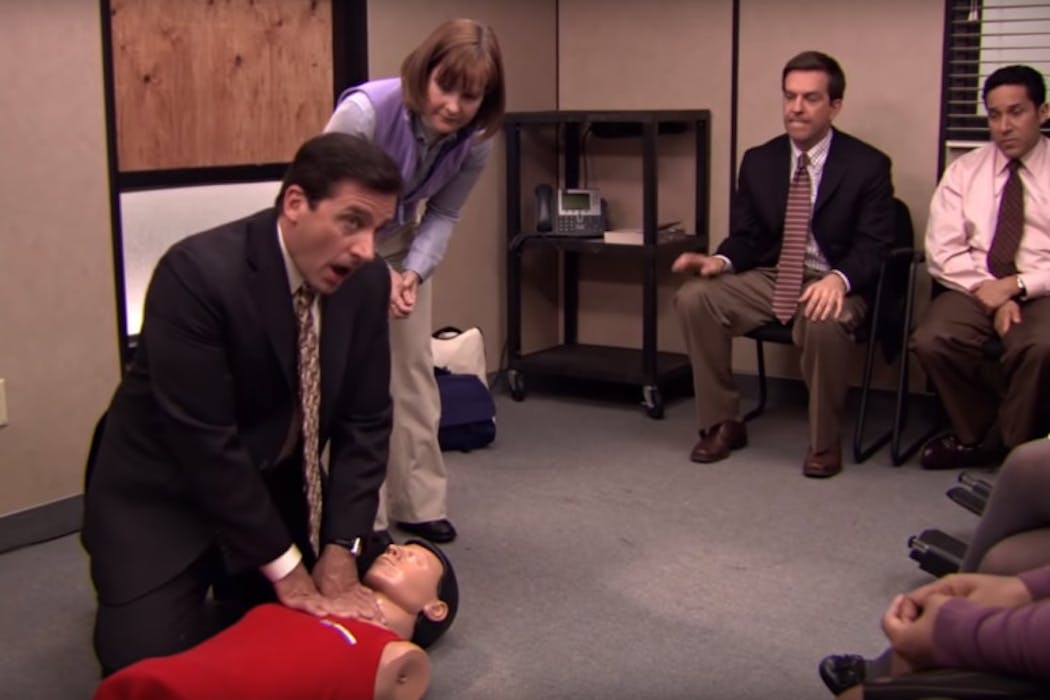
You probably don’t want to base your CPR technique on ‘The Office.’ The Office/NBC via YouTube

Television characters who experience cardiac arrest outside a hospital are more likely to receive CPR than people in real life. But the CPR on these shows often depicts outdated practices and inaccuracies about who is most likely to experience cardiac arrest and where, according to newly published research from my team at the University of Pittsburgh.

How CPR is portrayed in the media is important to understand because research has shown that health content on screen can influence viewers. When Buffalo Bills player Damar Hamlin suffered cardiac arrest during a game in January 2023, the world watched as medical professionals swiftly performed cardiopulmonary resuscitation. Hamlin went on to make a full recovery, and in the aftermath, a team of emergency medicine professionals and I at the University of Pittsburgh – where Hamlin is an alumnus – worked to teach all Division I athletes hands-only CPR.

During the CPR training we held at Pittsburgh area middle schools and college athletic programs, participants frequently asked whether they should check for a pulse or give rescue breaths. Many mentioned seeing CPR on television shows like “Grey’s Anatomy.” While these are steps that medical professionals do when giving traditional CPR, hands-only CPR is an effective version recommended for untrained bystanders. After determining the person needs help and the scene is safe, hands-only CPR has just two steps: Calling 911 and giving hard and fast chest compressions.

Hands-on CPR takes just two steps.

As someone who researches how medical topics on screen influence viewers, this piqued my curiosity. I wondered whether participants asked about checking a pulse or giving breaths in part because they saw these practices on screen.

The power of media

In 2022, my team and I analyzed 165 studies on the effects that health and medical content on scripted television has on viewers. We found that TV stories can influence viewers’ health-related attitudes, knowledge and behaviors. Sometimes this influence can be harmful, such as exposing viewers to inaccurate information about organ donation from television. But sometimes it can be positive – one study found that viewers of an “ER” storyline about breast cancer were more likely to recommend screening and a patient navigator who supports patients through treatment.

However, we hadn’t found any studies examining how seeing CPR on screen influences viewers. While previous studies on in-hospital cardiac arrest and CPR found inaccuracies with chest compression technique and survival rates in media, none had looked at portrayals of cardiac arrest that occur outside of hospitals and CPR conducted by a lay rescuer.

Performing CPR on TV

My team searched the Internet Movie Database to identify episodes in American TV shows that depict out-of-hospital cardiac arrest or hands-only CPR. We limited our results to episodes released after 2008 – the year the American Heart Association first endorsed hands-only CPR. Of the 169 episodes that fit our criteria, we documented the sociodemographic characteristics of the character experiencing cardiac arrest and the primary witnesses, as well as whether, how and where hands-only CPR was administered.

On a positive note, we found that over 58% of on-screen characters who experienced cardiac arrest outside a hospital had a layperson perform CPR. But in real life, less than 40% of people who suffer cardiac arrest outside a hospital receive CPR. Seeing such high rates of CPR being performed on screen could motivate viewers to act, as in the case of a 12-year-old boy who saved a life in 2023 using the CPR techniques he saw on “Stranger Things.”

However, less than 30% of episodes showed hands-only CPR being performed correctly. Almost 50% of episodes showed characters giving rescue breaths, and 43% of episodes had characters checking for a pulse. While we didn’t directly assess whether these episodes influence how viewers behave, based on our observations while conducting CPR training, it’s clear that these depictions may mislead viewers about how to administer hands-only CPR.

Who gets CPR and where on screen

Our findings also raise concern that how cardiac arrest is depicted on TV may mislead viewers about where cardiac emergencies happen and who may need CPR the most.

Of the on-screen cardiac arrests that didn’t occur at a hospital, we found that only 20% happened at home. In real life, over 80% of nonhospital-based cardiac arrests occur at home.

Additionally, those experiencing cardiac arrest on screen were younger than those in real life, with over 50% of characters under age 40. In real life, the average age is about 62.

Lastly, we found that almost 65% of the people receiving hands-only CPR and 73% of rescuers performing CPR were white and male. This is consistent with real-world statistics, where people of color and women who experience cardiac arrest outside the hospital are less likely to receive CPR from a layperson.

Accurate TV to save lives

The American Heart Association’s 2025 guidelines for CPR and emergency cardiovascular care emphasized the need to help the general public envision themselves performing hands-only CPR and improve CPR education to ensure all people who need CPR receive it.

Our team is working to understand what viewers take away from TV depictions of CPR, with the goal of collaborating with public health and medical professionals to improve how CPR is portrayed in Hollywood.

Previous research has shown that entertainment narratives have the power to inspire altruistic behavior, and news reports have documented instances of people who perform CPR after seeing it on screen. Similarly, I believe scripted, compelling television may be a powerful, cost-effective way to improve CPR education and ultimately save lives.

The Conversation

Beth Hoffman receives funding from the University of Pittsburgh and the National Institutes of Health. She also consults with Hollywood, Health & Society.

ref. CPR on TV is often inaccurate – but watching characters jump to the rescue can still save real lives – https://theconversation.com/cpr-on-tv-is-often-inaccurate-but-watching-characters-jump-to-the-rescue-can-still-save-real-lives-273005

Beauty in ordinary things: why this Japanese folk craft movement still matters 100 years on

Source: The Conversation – Global Perspectives – By Penny Bailey, Lecturer in Japanese Studies, The University of Queensland

A thrown tea bowl made by Hamada Shōji. Wikimedia, CC BY-SA

On January 10 1926, Yanagi Sōetsu and the potters Hamada Shōji and Kawai Kanjirō sat talking excitedly late into the night at a temple on Mt Kōya, in Japan’s Wakayama Prefecture.

They were debating how best to honour the beauty of simple, everyday Japanese crafts. Out of that conversation came a new word, mingei, and a plan to found The Japan Folk Crafts Museum in Tokyo. Later, Yanagi would describe what emerged that night as “a new standard of beauty”.

A view of the front of a traditional Japanese building with a dark roof and large wooden doors. There is a short stone fence in the foreground.
The Japan Folk Crafts Museum in Meguro Ward, Tokyo, is dedicated to collecting, preserving, researching, and exhibiting the hand-crafted works of the Mingei movement.
Wikimedia, CC BY-SA

A century on, Yanagi’s ideas feel strikingly relevant. His message was simple: beautiful things need not be rare or expensive – they can be well-designed objects that we use every day.

In an age of fast fashion, disposable products and growing concerns about waste, his approach offers an important reminder to think about the objects we choose to have around us.

How mingei was born

Yanagi (1889–1961) was an art critic and collector who believed beauty was not solely the preserve of famous artists or rare treasures. He and his friends were drawn, instead, to well-made and functional objects: bowls, baskets, fabrics and tools created for daily use, rather than to display.

A black and white image of a Japanese man in a traditional robe, holding a bowl.
Yanagi was an art critic, philosopher and founder of the Mingei movement.
Wikimedia

To Yanagi, these simple things shaped the rhythm of daily life – yet had gone unnoticed in a world rushing toward modern mass production.

The attraction came from looking closely. Yanagi described it as “seeing with one’s own eyes before dissecting with the intellect”. He admired the work of anonymous craftspeople who repeated familiar forms, refining them through long periods of practice.

These makers did not seek fame; their goal was to create objects that balanced beauty and function so completely that they were inseparable.

Japan in the 1920s was changing fast. Mass-produced goods were replacing handmade ones, and many local craft traditions were in decline. Yanagi worried this shift would erase skills and weaken the bond between beauty and everyday life. Mingei aimed to bring this connection back into view.

Yanagi, Hamada and Kawai agreed they needed a new word for the kind of objects they wanted to celebrate. From minshuteki kōgei, meaning “craft of the people”, they coined the shorter term mingei. It describes objects made for use rather than prestige, and by hand rather than by machine. Yanagi believed these objects formed the true heart of Japanese craft.

A year after their Mount Kōya conversation, the group held their first folk craft exhibition in Ginza. None of the works carried signatures. The exhibition aimed to encourage a new way of looking at humble objects, suggesting that everyday things held artistic value when viewed with care.

Close-up shot of a grey-ish hand-made bowl.
A thrown bowl by Bernard Leach.
Wikimedia, CC BY

How mingei shaped Japanese design

Yanagi’s ideas went on to shape Japanese craft and design throughout the 20th century, influencing not only craftspeople but also designers.

His son, Yanagi Sōri, adopted mingei principles in his famous 1954 Butterfly Stool, made from two curved pieces of plywood that meet like wings. Simple, balanced and light, the stool is now an icon of modern design, showing how mingei could take form in new materials and contexts.

A stool made with two curved pieces of wood, against a white background.
The maple veneer Butterfly stool designed by Yanagi Sōri.
David Wong/South China Morning Post via Getty Images

The movement also shaped the work of Hamada and Kawai, and many other makers including Tomimoto Kenkichi, Serizawa Keisuke, Munakata Shikō and the Englishman Bernard Leach. They showed how traditional craft practised with care and humility could remain vital in a rapidly changing world.

Another branch of Yanagi’s legacy emerged with the rise of seikatsu kōgei, or “lifestyle crafts”, in the 1990s. These makers turned to simple, functional objects to reconsider how we live. After Japan’s economic bubble burst in the 1980s, many began to question the habit of buying and discarding.

Why Yanagi’s ideas matter today

The influence of mingei continues in contemporary design. Fukasawa Naoto – one of Japan’s most influential designers and the current director of The Japan Folk Crafts Museum – aims to create objects which work so naturally that they seem to disappear into daily life.

He describes this as “without thought” design: things that feel right in the hand, fit their purpose and do not demand attention. His long collaboration with MUJI, known for its pared-back products, shows how closely his work follows the mingei spirit.

This way of thinking sits in sharp contrast to how many goods are made today. A culture of fast buying and quick disposal has left people feeling disconnected from the act of making, from materials and from the things they own.

An older Japanese man and woman look at some folk art on panels inside a gallery.
Former Japanese Emperor Akihito and Empress Michiko visiting The Japan Folk Crafts Museum, during a 2017 exhibition commemorating the 80th anniversary of the museum.
Yomiuri Shimbun/AP

Mingei offers an alternative way of thinking. It invites us to look closely at the objects we use each day – to notice their shape, feel and purpose. It suggests beauty should be part of everyday life, not an escape from it.

Yanagi believed if we change how we see and choose ordinary things, we might also change how we live. A century later, his call to value simple and well-made objects offers a steady guide through our profit-driven, disposable world.

The Conversation

Penny Bailey does not work for, consult, own shares in or receive funding from any company or organisation that would benefit from this article, and has disclosed no relevant affiliations beyond their academic appointment.

ref. Beauty in ordinary things: why this Japanese folk craft movement still matters 100 years on – https://theconversation.com/beauty-in-ordinary-things-why-this-japanese-folk-craft-movement-still-matters-100-years-on-269802

Why eating disorders are more common among LGBTQIA+ people and what can help

Source: The Conversation – Global Perspectives – By Kai Schweizer, PhD Candidate in Youth Mental Health, The University of Western Australia; The Kids Research Institute

MDV Edwards/Getty

When people picture someone with an eating disorder, many think of a thin, teenage girl with anorexia nervosa. This stereotype is so pervasive it can feel like a fact.

The reality is that eating disorders affect people of all ages, body sizes, cultures, races, sexes, genders and sexualities. In 2023, around 1.1 million Australians (around 4.5% of the population) were living with an eating disorder.

A growing body of evidence suggests LGBTQIA+ people are particularly vulnerable to developing eating disorders. But we still need more research to understand how and why they affect this group more.

Here’s what we know so far about LGBTQIA+ people’s higher risk – and what treatment actually works for them.

What is an eating disorder?

Eating disorders are serious mental health conditions that affect a person’s eating behaviours. They can harm both physical and mental health.

Anorexia nervosa and bulimia nervosa are the most well-known eating disorders, but the most common are actually binge eating disorder (eating a lot in a short amount of time and feeling out of control) and avoidant/restrictive food intake disorder (restricting eating because of sensory sensitivity, lack of appetite, or fear of illness or choking).

Eating disorders can cause damage to a person’s organs, bones, fertility and brain function. People with an eating disorder are up to five times more likely to die early than those without one.


Read more:
What’s the difference between an eating disorder and disordered eating?


How much higher is the risk for LGBTQIA+ people?

Research shows that LGBTQIA+ people have much higher rates of eating disorders than non-LGBTQIA+ people.

For example, in the United States an estimated 9% of the population will experience an eating disorder in their lifetime. But a 2018 survey of LGBTQ young people in the US found rates were significantly higher:

  • 54% reported an eating disorder diagnosis
  • another 21% thought they had an eating disorder, but hadn’t been diagnosed.

Within the LGBTQIA+ community, the risk also varies across different groups:

We don’t have data for asexual people, but we do know that asexual people have poorer body image than their non-asexual peers. So it is likely they also experience higher rates of eating disorders.

Why LGBTQIA+ people face higher risk

Being an LGBTQIA+ person is not a mental illness. There is no evidence of a biological reason why LGBTQIA+ people experience higher rates of eating disorders.

While many factors contribute, two of the most studied risk factors are minority stress and gender dysphoria.

1. Minority stress

Minority stress refers to how discrimination and stigma negatively impact the health of LGBTQIA+ people. This means it is not who they are, but how LGBTQIA+ people are treated that drives their higher risk.

Discrimination can lead LGBTQIA+ people to feel shame about their identities and bodies. Some people try to cope through disordered eating behaviours, which can develop into an eating disorder.

For intersex people, medically unnecessary surgeries in childhood to “normalise” their bodies can cause trauma and shame that can also increase eating disorder risk.

2. Gender dysphoria

Many trans people experience something called gender dysphoria. This is the distress, discomfort or disconnect that can happen when a person’s gender identity doesn’t match their physical body or how others see them. For many trans people, eating disorders can be an attempt to reduce gender dysphoria.

In trans teens, eating disorders often develop as a way to stop puberty when they can’t access puberty blocking medications. For example, restricting food may be a way to try to reduce the appearance of breast tissue or to stop having periods.

What kind of treatment would work?

After a diagnosis, typical eating disorder treatment involves a multidisciplinary team including a doctor, mental health professional and dietitian. Treatment can be provided in the community or in a hospital if someone’s physical health needs close monitoring.

But eating disorder treatment was not designed with LGBTQIA+ people in mind and can sometimes cause harm. LGBTQIA+ people report more negative experiences of treatment compared to the general population.

For example, mirror exposure exercises are a common therapy, where someone with an eating disorder is asked to look in a mirror for prolonged periods to lessen their body image distress. But for some trans people this can worsen their gender dysphoria.

This doesn’t mean treatment can’t help LGBTQIA+ people. It means treatment has to be adapted to ensure it meets their needs.

In practice, this might look like:


If this article raised any concerns for you or someone you know, contact the Butterfly Foundation on 1800 33 4673. You can also contact QLife at 1800 184 527.

The Conversation

Kai Schweizer receives funding from the Australian Government Research Training Program and the Australian Eating Disorder Research and Translation Centre SEED Grants Scheme.

ref. Why eating disorders are more common among LGBTQIA+ people and what can help – https://theconversation.com/why-eating-disorders-are-more-common-among-lgbtqia-people-and-what-can-help-270268

NASA’s Pandora telescope will study stars in detail to learn about the exoplanets orbiting them

Source: The Conversation – USA – By Daniel Apai, Associate Dean for Research and Professor of Astronomy and Planetary Sciences, University of Arizona

A new NASA mission will study exoplanets around distant stars. European Space Agency, CC BY-SA

On Jan. 11, 2026, I watched anxiously at the tightly controlled Vandenberg Space Force Base in California as an awe-inspiring SpaceX Falcon 9 rocket carried NASA’s new exoplanet telescope, Pandora, into orbit.

Exoplanets are worlds that orbit other stars. They are very difficult to observe because – seen from Earth – they appear as extremely faint dots right next to their host stars, which are millions to billions of times brighter and drown out the light reflected by the planets. The Pandora telescope will join and complement NASA’s James Webb Space Telescope in studying these faraway planets and the stars they orbit.

I am an astronomy professor at the University of Arizona who specializes in studies of planets around other stars and astrobiology. I am a co-investigator of Pandora and leading its exoplanet science working group. We built Pandora to shatter a barrier – to understand and remove a source of noise in the data – that limits our ability to study small exoplanets in detail and search for life on them.

Observing exoplanets

Astronomers have a trick to study exoplanet atmospheres. By observing the planets as they orbit in front of their host stars, we can study starlight that filters through their atmospheres.

These planetary transit observations are similar to holding a glass of red wine up to a candle: The light filtering through will show fine details that reveal the quality of the wine. By analyzing starlight filtered through the planets’ atmospheres, astronomers can find evidence for water vapor, hydrogen, clouds and even search for evidence of life. Researchers improved transit observations in 2002, opening an exciting window to new worlds.

When a planet passes in front of its star, astronomers can measure the dip in brightness, and see how the light filtering through the planet’s atmosphere changes.

For a while, it seemed to work perfectly. But, starting from 2007, astronomers noted that starspots – cooler, active regions on the stars – may disturb the transit measurements.

In 2018 and 2019, then-Ph.D. student Benjamin V. Rackham, astrophysicist Mark Giampapa and I published a series of studies showing how darker starspots and brighter, magnetically active stellar regions can seriously mislead exoplanets measurements. We dubbed this problem “the transit light source effect.”

Most stars are spotted, active and change continuously. Ben, Mark and I showed that these changes alter the signals from exoplanets. To make things worse, some stars also have water vapor in their upper layers – often more prominent in starspots than outside of them. That and other gases can confuse astronomers, who may think that they found water vapor in the planet.

In our papers – published three years before the 2021 launch of the James Webb Space Telescope – we predicted that the Webb cannot reach its full potential. We sounded the alarm bell. Astronomers realized that we were trying to judge our wine in light of flickering, unstable candles.

The birth of Pandora

For me, Pandora began with an intriguing email from NASA in 2018. Two prominent scientists from NASA’s Goddard Space Flight Center, Elisa Quintana and Tom Barclay, asked to chat. They had an unusual plan: They wanted to build a space telescope very quickly to help tackle stellar contamination – in time to assist Webb. This was an exciting idea, but also very challenging. Space telescopes are very complex, and not something that you would normally want to put together in a rush.

The Pandora spacecraft with an exoplanet and two stars in the background
Artist’s concept of NASA’s Pandora Space Telescope.
NASA’s Goddard Space Flight Center/Conceptual Image Lab, CC BY

Pandora breaks with NASA’s conventional model. We proposed and built Pandora faster and at a significantly lower cost than is typical for NASA missions. Our approach meant keeping the mission simple and accepting somewhat higher risks.

What makes Pandora special?

Pandora is smaller and cannot collect as much light as its bigger brother Webb. But Pandora will do what Webb cannot: It will be able to patiently observe stars to understand how their complex atmospheres change.

By staring at a star for 24 hours with visible and infrared cameras, it will measure subtle changes in the star’s brightness and colors. When active regions in the star rotate in and out of view, and starspots form, evolve and dissipate, Pandora will record them. While Webb very rarely returns to the same planet in the same instrument configuration and almost never monitors their host stars, Pandora will revisit its target stars 10 times over a year, spending over 200 hours on each of them.

NASA’s Pandora mission will revolutionize the study of exoplanet atmospheres.

With that information, our Pandora team will be able to figure out how the changes in the stars affect the observed planetary transits. Like Webb, Pandora will observe the planetary transit events, too. By combining data from Pandora and Webb, our team will be able to understand what exoplanet atmospheres are made of in more detail than ever before.

After the successful launch, Pandora is now circling Earth about every 90 minutes. Pandora’s systems and functions are now being tested thoroughly by Blue Canyon Technologies, Pandora’s primary builder.

About a week after launch, control of the spacecraft will transition to the University of Arizona’s Multi-Mission Operation Center in Tucson, Arizona. Then the work of our science teams begins in earnest and we will begin capturing starlight filtered through the atmospheres of other worlds – and see them with a new, steady eye.

The Conversation

Daniel Apai is a professor of astronomy, planetary sciences and optical science at the University of Arizona. He receives funding from NASA.

ref. NASA’s Pandora telescope will study stars in detail to learn about the exoplanets orbiting them – https://theconversation.com/nasas-pandora-telescope-will-study-stars-in-detail-to-learn-about-the-exoplanets-orbiting-them-272155

Cyclone Senyar: Why hazards continue to turn into disasters in Indonesia

Source: The Conversation – Canada – By Lisa Hiwasaki, Assistant Professor, Management of International Cooperation and Humanitarian Action, Université Laval

Weeks after Cyclone Senyar made landfall in northern Sumatra, Indonesia, the province of Aceh continues to struggle. The cyclone passed through the Strait of Malacca in late November, bringing heavy rains and causing widespread flooding in parts of Indonesia, Malaysia and Thailand. More than 500 people were killed and 250,000 people displaced in Aceh alone.

The cyclone’s unusually high death toll and catastrophic impacts have been attributed to a range of factors, including warming ocean temperatures due to climate change, deforestation and other environmental changes, Aceh’s unique geographical and topographical setting and how rarely cyclones occur near the equator.

What’s missing from the discussion is the root cause of why Aceh was ill-prepared for the hazard. Like many other regions in the Global South, Aceh’s vulnerability can be traced back to colonialism, which created an inequitable distribution of power, wealth and resources. Post-colonial development continues to reinforce it.

The impact of Cyclone Senyar has drawn parallels to the 2004 Aceh tsunami that devastated the province and surrounding areas. Since then, disaster preparedness in Aceh has come a long way. Yet the aftermath of Senyar suggests that disaster preparedness efforts have not tackled Aceh’s underlying vulnerabilities.

Indonesia’s national meteorological agency gave multiple warnings of the hazard well in advance. But neither the national agency responsible for disaster management, the National Agency for Disaster Countermeasure, nor the Aceh Provincial Disaster Management Agency were able to translate warnings into effective action or effectively lead emergency response efforts. Such institutional failures are among the challenges that contribute to vulnerability in Aceh.

In our ongoing research among coastal communities in Aceh, we explore how their livelihoods have been impacted by external shocks, as well as the diverse ways they have adapted to navigate these stresses.


Read more:
Death and devastation: why a rare equatorial cyclone and other storms have hit southern Asia so hard


The colonial roots of Aceh’s vulnerability

Starting in the late 16th century, the Dutch colonial government established infrastructure and policies to facilitate resource extraction in Indonesia. The focus of European colonizers was on the eastern part of the archipelago to control the spice trade in the Maluku region. However, it was in Aceh that the Dutch spent the most resources to conquer.

The Dutch East India company opened the port of Kuala Langsa in 1907, in the same area where Cyclone Senyar made landfall. That was followed by large-scale investment in rubber and palm oil plantations. Colonialists supported top-down governance and implemented policies that gave lasting economic and political advantages to those who aligned themselves with the Dutch.

An example is the Ethische politiek (Ethical Policy); among other things, it provided educational opportunities to local elites with the aim of helping the Dutch lead the colony. Local elites were also given land that had previously been communal, to expand agriculture and exploit natural resources, creating divisions within the Acehnese.

Colonial rule also had a lasting impact on the natural environment: highly biodiverse forests were converted to monocrop plantations, ports were expanded to accommodate larger ships and both land and seas were exploited for resources.

Post-independence pressures

Post-independence governments have maintained the top-down institutions put in place by the Dutch. They have also emphasized a continued economic focus on extractive industries, such as pepper, copra and petroleum to fuel Indonesia’s rapid economic growth. These coupled together continue to have devastating impacts on the environment and on the livelihoods of the communities.

In the 1970s, communities in Kuala Langsa, a village in the city of Langsa along Aceh’s east coast, shifted their livelihoods to intensive tiger prawn aquaculture as part of the push to develop marine fisheries under then-president Suharto’s “New Order” political economy regime.

However, a viral disease outbreak led to the collapse of the tiger prawn industry in the early 1990s. Intensive prawn aquaculture significantly degraded the coastal mangrove forests and reduced water quality. That, in turn, undermined the viability of small-scale fisheries that local communities had traditionally relied on.

The conflict between the government and separatists in Aceh from 1976 to 2005 led to an influx of migrants to Kuala Langsa from other parts of the province, putting additional pressures on the environment.

The 2004 tsunami destroyed many mangrove forests along Langsa’s coastline, further negatively affecting the livelihoods of communities that depended on shrimp, crab and fish living in the mangroves.

Policy decisions increase vulnerability

The hazard that struck Langsa and other parts of Aceh did not turn into such a devastating disaster due to climatic and geophysical factors alone. Hazards turn into disasters due to decisions made by those in power that make people vulnerable.

Between 1990 and 2024, almost 160,000 hectares of land was deforested to make way for palm oil monoculture plantations under permits issued by the Ministry of Forestry. Land converted into monoculture plantations loses its capacity to absorb rainwater, turning torrential rain into runoff that can create landslides. The forest on which communities depended for fruits such as durian, mangoes, rambutan and medicinal plants were impacted, affecting local incomes and sources of food, as well as their local knowledge associated with them.

Aceh’s vulnerability stems from environmental degradation from rampant resource extraction, instability and displacement due to armed conflict, top-down, centralized decision-making by the government and weak institutions stemming from poor governance and corruption.

Measures to strengthen disaster preparedness in Aceh have not tackled the region’s underlying vulnerabilities. Oftentimes, projects meant to promote resilience and development do not address the factors and processes that decrease the vulnerability of the most marginalized.

Disaster contingency plans continue to focus on geological hazards instead of taking a multi-hazard approach. These plans have not been successful in strengthening preparedness of institutions responsible for reducing disaster risk.

As the fourth-most flood-prone region in Indonesia, local and provincial authorities in Aceh need to prepare for extreme weather events so future events like Cyclone Senyar do not wreak such havoc.

As climate change increases the frequency and intensity of storms, it is imperative that disaster risk reduction efforts centre on reducing vulnerability and social justice. Equitable distribution of wealth, power and resources can only be realized when local and Indigenous knowledge is acknowledged to help build sustainable communities.

The Conversation

Lisa Hiwasaki has received funding from the Social Sciences and Humanities Research Council of Canada.

Haekal A. Haridhi does not work for, consult, own shares in or receive funding from any company or organisation that would benefit from this article, and has disclosed no relevant affiliations beyond their academic appointment.

ref. Cyclone Senyar: Why hazards continue to turn into disasters in Indonesia – https://theconversation.com/cyclone-senyar-why-hazards-continue-to-turn-into-disasters-in-indonesia-272242