Why do people support or oppose bike lanes? Our research sheds light on public opinion

Source: The Conversation – UK – By Wouter Poortinga, Professor of Environmental Psychology, Cardiff University
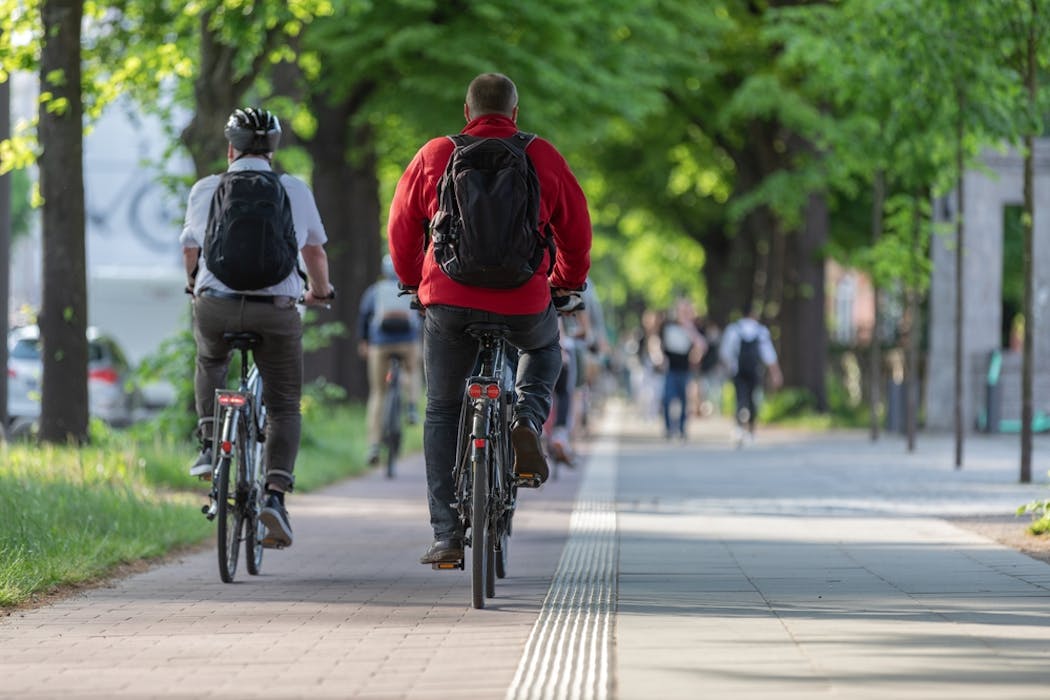
Canetti/Shutterstock

Cities across the UK are investing in new cycle lanes and traffic restrictions to cut congestion, improve air quality and promote active travel for better health. Yet, if recent debates are anything to go by, you might think such measures were deeply unpopular.

The introduction of protected cycle lanes and low traffic neighbourhoods (LTNs) often sparks vocal opposition from local groups, who call for schemes to be delayed or scrapped.

For instance, in London, Kensington and Chelsea council removed cycle lanes from Kensington High Street after a short-term trial in 2020. Meanwhile, in Oxford, there have been calls to reopen residential streets to again allow through traffic during emergencies. Concerns often focus on cycle lanes taking up valuable road space and on LTNs displacing motor traffic onto surrounding boundary roads.

These discussions may give the impression that the public is firmly against cycling initiatives and traffic restrictions. However, our research suggests that strong support for them can be found, but how schemes are designed and introduced is crucial.

Our recent study, which analysed more than 36,000 UK-based tweets about cycle lanes and LTNs between 2018 and 2022, found that most social media posts were positive. There were 10,465 negative, 14,370 positive, and 12,142 neutral tweets.

Sentiment about the measures did shift over time, with a spike in negative reactions in the summer of 2020 when the government announced the emergency active travel fund, a scheme that provided rapid funding to local authorities to deliver walking and cycling infrastructure to support social distancing during the COVID pandemic. However, overall, positive tweets outnumbered negative ones.

The analysis also showed that criticism focused less on the principle of cycling itself and more on the design and implementation of measures. Complaints about poor quality cycle lanes or lack of consultation were far more common than outright rejection of active travel, and were made by both cyclists and drivers.

Our other recent research tells a similar story. We showed more than 500 people images of different street layouts and asked them to choose their most and least preferred elements. The designs varied in how they combined cycle lanes, traffic restrictions, and parking, with different amounts of space reallocated from roads or pavements.

The results were clear. Segregated cycle lanes – those physically separated from cars – were popular with both regular cyclists and regular drivers. Painted lanes on the road were far less liked, while the option of having no cycle lanes at all was the least popular with both groups.

Four of the 27 images shown to 500 people in the study.
Four of the 27 images shown to people in the study.
Author’s image

Where the space came from also mattered. People strongly preferred schemes that took cycling space from the road rather than from pathways. But there was one consistent red line: parking. Even participants who identified as regular cyclists were reluctant to support layouts that involved removing car-parking spaces.

This suggests that resistance is less about cycling infrastructure itself and more about specific design trade-offs. Taking a modest amount of road space is widely accepted but removing parking risks triggering backlash.

Why do some people oppose cycle lanes and traffic restrictions so strongly? Part of the answer lies in identity. Our study found that those who strongly identified as “drivers” were more hesitant about giving up road space to cyclists, while self-identified “cyclists” were more supportive.

But the biggest divide was not between cyclists and drivers. Both groups often preferred the same measures. The strongest opposition came instead from a small group who see new cycling infrastructure as an infringement on their “freedom” to travel the way they want. This group consistently preferred the status quo over all options that would reallocate space to cyclists or restrict vehicle access.

This way of thinking may be rooted in what researchers call motonormativity, a deep-seated assumption that roads exist primarily for cars and that drivers’ needs should come first. Within this context, giving space to cyclists is seen as taking something away from motorists, not expanding people’s freedom to travel as they choose.

Our social media study sheds further light on the themes that shape public debate. Positive posts often focused on community benefits and safer streets. Negative conversations, by contrast, were dominated by concerns about how schemes were put in place. Tweets frequently criticised councils for poor consultation, accused politicians of ignoring local voices, or pointed to schemes being rolled out in confusing or inconsistent ways.

This matters because it shows that frustration is often directed less at cycle lanes or traffic restrictions themselves than at how they are introduced. In other words, there may be opposition not because people reject the idea of safer streets, but because they feel decisions are imposed on them or poorly managed. This underlines the importance of early and meaningful engagement if new infrastructure is to win lasting support.

So what are the key lessons of this research? First, visible opposition is not the whole story. Protests and headlines may give the impression that cycle lanes are deeply unpopular, but most people – including both drivers and cyclists – support new infrastructure and even traffic restrictions, as long as they are well designed and involve only modest changes. Parking is a sensitive point, but overall support for change is broader than the noise suggests.

Second, the strongest opposition comes from those who see new cycle lanes and restrictions as an attack on their freedom to drive. This group is relatively small but may be among the most vocal. Their concerns need to be acknowledged, but also reframed in light of the reality that limited road space must serve everyone: drivers, cyclists, and pedestrians alike.

Finally, it is not just about what gets built, but also how it is introduced. Much of the online debate considered in our social media study focused not on the principle of cycle lanes or low-traffic neighbourhoods, but on whether local people felt they had been consulted properly. Listening to communities can make the difference between a scheme being welcomed as a local improvement or rejected as a top-down imposition. This should involve everyone and not just the loudest.

The Conversation

Wouter Poortinga receives funding from ESRC, NERC, EPSRC, Welsh Government, and European Commission.

Dr. Dimitrios Xenias receives funding from ESRC, UKERC, and the European Commission.

Dimitris Potoglou receives funding from EPSRC and the European Commission.

ref. Why do people support or oppose bike lanes? Our research sheds light on public opinion – https://theconversation.com/why-do-people-support-or-oppose-bike-lanes-our-research-sheds-light-on-public-opinion-271455
Indian townships are rebuilding after landslides – but not everyone will benefit

Source: The Conversation – UK – By Ipshita Basu, Associate professor (Reader) in Global Development and Politics, University of Westminster

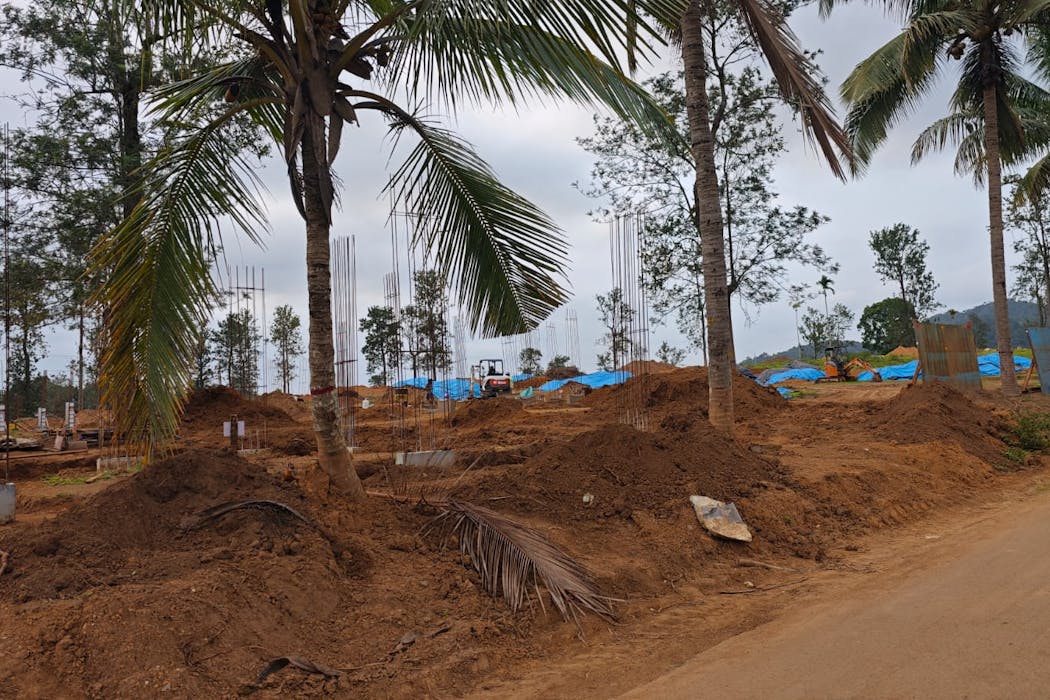
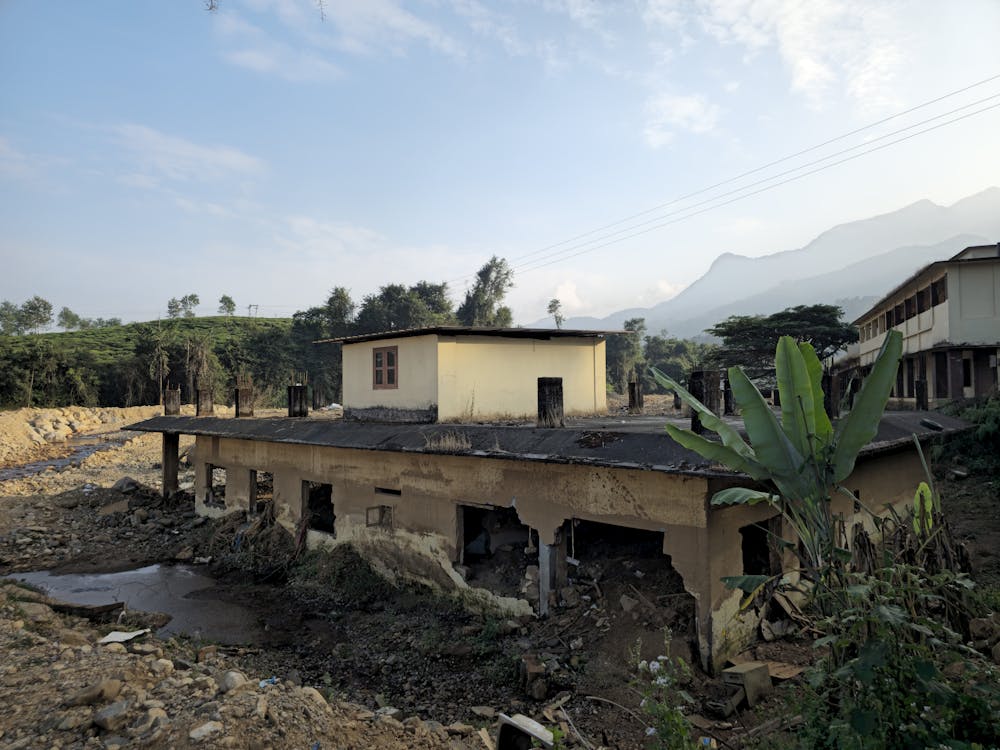
Creating new value on old plantation land in Kerala, India. Sudheesh R.C., CC BY-NC-ND

In the early hours of July 30 2024, a landslide in the Wayanad district of Kerala state, India, killed 400 people. The Punjirimattom, Mundakkai, Vellarimala and Chooralmala villages in the Western Ghats mountain range turned into a dystopian rubble of uprooted trees and debris.

A coalition of scientists that quantifies the links between climate change and extreme weather, known as World Weather Attribution, highlighted that human-induced climate change caused 10% more rainfall than usual in this area, contributing to the landslide.

Known for its welfare achievements such as universal literacy, public health and education, Kerala’s disaster management involved a swift relief response and the announcement of rehabilitation measures. But our research into the consequences of long-term environmental change reveals the crevices in this state-citizen relationship.

The Kerala government’s response to the landslide has focused on two townships – one in Kalpetta and the other in Nedumbala – that are promised to be of high-quality construction, with facilities characteristic of upmarket, private housing projects. Of the total 430 beneficiary families, each will be given a 93m² concrete house in a seven-cent plot (a cent is a hundredth of an acre). There will be marketplaces, playgrounds and community centres at both sites.

An AI-generated video of the Kalpetta township promised a glittering new life for its residents. Construction of the two sites was entrusted to the Uralungal Labour Contract Cooperative Society, a labour union known for building quality infrastructure, to raise credibility.

A building damaged by the 2024 landslide in Wayanad.
Wikimedia Commons/Vis M, CC BY-NC-ND

A man we spoke to as part of our ongoing research in Vellarimala was happy about the money he will make from rising property prices once his household receives a new home. “It is a great deal,” he told us. “We get seven cents of land and a new house. We estimate the property [will] hit a value of 10 million rupees (£85,600) in a few years. Also, since the government provided the house, we just have to protest if there is a complaint.”

We also spoke to two citizen groups that mobilised victims after the landslide, enabling settlers – who came to the area as plantation labourers during colonial rule in the 20th century – to voice their grief, loss and trauma. This highlighted their history of migration from the plains of Kerala. Although they sought optional cash compensation initially, they have largely accepted being given a new home in the township, drawn by its future value.

But while township development seems to be an apt response, Kerala will struggle to cope with recurring cycles of disasters and disaster management without addressing the factors that trigger or amplify these calamities.

The townships are being built on 115 hectares of two tea plantations that have been bought by the Kerala government. With roots in British colonial rule, plantations represent a significant alteration of Wayanad’s ecology. The landslide’s route was full of tea plantations and most affected families were non-Indigenous plantation workers.

Tourism is also booming here, with hundreds of resorts, homestays and hotels, and a glass bridge that welcomes tourists to visit the forests and plantations of Vellarimala.

Less than three miles away, a landslide in 2019 in Puthumala killed 17 people. Although it was a warning, construction of buildings has continued unchecked. A tunnel that connects Wayanad with the plains of Kerala has been proposed, despite a state government committee report highlighting it would pass through areas that are at a moderate-to-high risk of landslides.

Differing values

Resettlement plans that focus on glitzy townships can fail to consider the most marginalised people, especially in societies like India that are marked by social hierarchies. A couple of Indigenous families, referred to as Adivasis in India, were initially offered space in the township. They refused it, citing their separation from the means of livelihood and cultural resources that the nearby forests provide.

For a long time, they have resisted efforts to relocate them from the forests – first in the name of animal conservation, and now because of the threat of climate disasters. This is despite the efforts of the government’s forest department to portray the shifting of these families as a heroic rescue effort.

new house being built out of grey breeze blocks on land recovering from landslide
A ‘model’ house on display at the township under construction.
Sudheesh R.C., CC BY-NC-ND

Two versions of the value attached to land are clashing here. Settlers see land as a commodity, so prize the two townships announced in Wayanad for their increasing land value. But Indigenous families hold deep cultural ties with the lands they are being asked to leave behind.

This is not just a romanticised connection with nature. Indigenous families will have to forgo hard-won forest rights. Leaving means losing access to honey, resins and medicinal plants that they trade for cash when food from the forests is insufficient.

Disasters like the Wayanad landslide expose the faultlines in both crisis management and state-citizen relationships. How a disaster is handled shows the state believes people can be easily moved from one site to another, while extraction and capitalist accumulation must continue.

Disasters also reveal whose loss is valued by the state and whose is not. While settlers’ losses were compensated through townships that hold the possibility of rising property value, Indigenous citizens’ loss of deeper ties with the land and forests remains unaddressed.

We believe this calls for an urgent rethink. Disaster responses demand more than relocation of people from one vulnerable site to another, perpetuating an endless series of calamities and reconstruction. It demands a fundamental change in the model of development.


Don’t have time to read about climate change as much as you’d like?

Get a weekly roundup in your inbox instead. Every Wednesday, The Conversation’s environment editor writes Imagine, a short email that goes a little deeper into just one climate issue. Join the 47,000+ readers who’ve subscribed so far.


The Conversation

Ipshita Basu receives funding from the British Academy Knowledge Frontiers: International Interdisciplinary grant for the project Planetary Health and Relational Wellbeing: Investigating Ecological and Health Dimensions of Adivasi Lifeworlds.

Mary K. Lydia, Reshma K.R., Anusha Joshy and Manikandan C. have provided inputs for the research.

Sudheesh R.C. receives funding from the British Academy Knowledge Frontiers: International Interdisciplinary grant for the project Planetary Health and Relational Wellbeing: Investigating Ecological and Health Dimensions of Adivasi Lifeworlds.

ref. Indian townships are rebuilding after landslides – but not everyone will benefit – https://theconversation.com/indian-townships-are-rebuilding-after-landslides-but-not-everyone-will-benefit-267381

Trump’s Greenland ambitions could wreck 20th-century alliances that helped build the modern world order

Source: The Conversation – USA – By Donald Heflin, Executive Director of the Edward R. Murrow Center and Senior Fellow of Diplomatic Practice, The Fletcher School, Tufts University

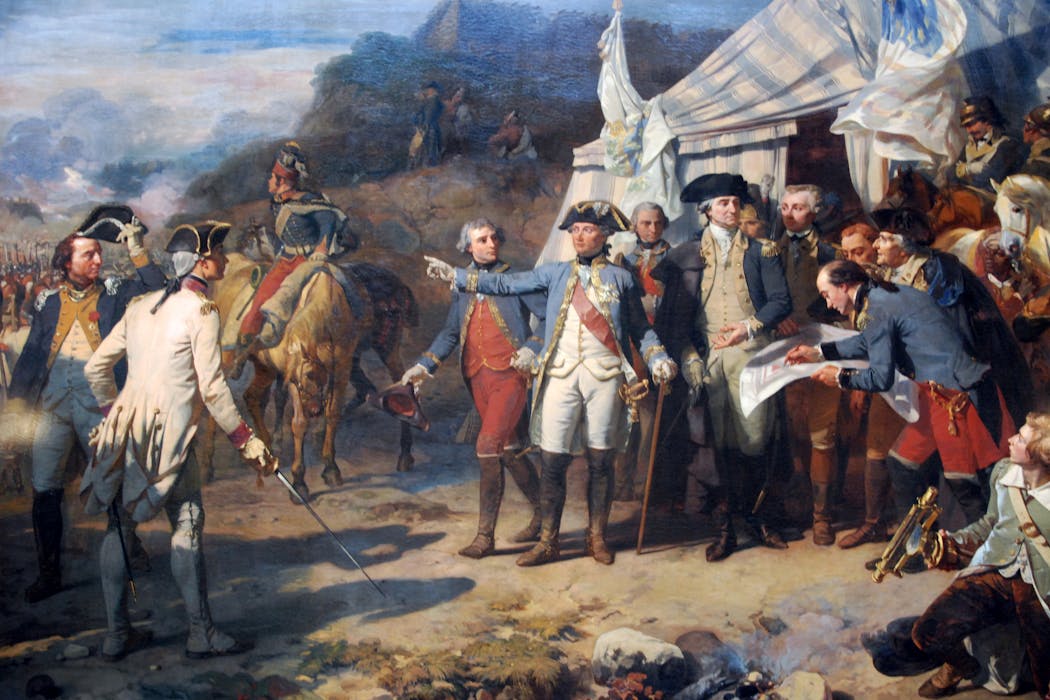
French Gen. Jean de Rochambeau and American Gen. George Washington giving final orders in late 1781 for the battle at Yorktown, where British defeat ended the War of Independence. Pierce Archive LLC/Buyenlarge via Getty Images

Make Denmark angry. Make Norway angry. Make NATO’s leaders angry.

President Donald Trump’s relentless and escalating drive to acquire Greenland from Denmark, whose government – along with that of Greenland – emphatically rejects the idea, has unnerved, offended and outraged leaders of countries considered allies for decades.

It’s the latest, and perhaps most significant, eruption of an attitude of disdain towards allies that has become a hallmark of the second Trump administration, which has espoused an America First approach to the world.

Trump, Vice President JD Vance and Defense Secretary Pete Hegseth have all said a lot of things about longtime allies that have caused frustration and outright friction among the leaders of those countries. The latest discord over Greenland could affect the functioning and even existence of NATO, the post-World War II alliance of Western nations that “won the Cold War and led the globe,” as a recent Wall Street Journal story put it.

As a former diplomat, I’m aware that how the U.S. treats its allies has been a crucial question in every presidency, since George Washington became the country’s first chief executive. On his way out of that job, Washington said something that Trump, Vance and their fellow America First advocates would probably embrace.

In what’s known as his “Farewell Address,” Washington warned Americans against “entangling alliances.” Washington wanted America to treat all nations fairly, and warned against both permanent friendships and permanent enemies.

The irony is that Washington would never have become president without the assistance of the not-yet-United-States’ first ally, France.

In 1778, after two years of brilliant diplomacy by Benjamin Franklin, the not-yet-United States and the Kingdom of France signed a treaty of alliance as the American Colonies struggled to win their war for independence from Britain.

France sent soldiers, money and ships to the American revolutionaries. Within three years, after a major intervention by the French fleet, the battle of Yorktown in 1781 effectively ended the war and America was independent.

Isolationism, then war

American political leaders largely heeded Washington’s warning against alliances throughout the 1800s. The Atlantic Ocean shielded the young nation from Europe’s problems and many conflicts; America’s closest neighbors had smaller populations and less military might.

Aside from the War of 1812, in which the U.S. fought the British, America largely found itself protected from the outside world’s problems.

That began to change when Europe descended into the brutality of World War I.

Initially, American politicians avoided involvement. What would today be called an isolationist movement was strong; its supporters felt that the European war was being waged for the benefit of big business.

But it was hard for the U.S.to maintain neutrality. German submarines sank ships crossing the Atlantic carrying American passengers. The economies of some of America’s biggest trading partners were in shreds; the democracies of Britain, France and other European countries were at risk.

A century-old newspaper front page with headlines about the sinking of a British ocean liner by Germans.
A Boston newspaper headline in 1915 blares the news of a British ocean liner sunk by a German torpedo.
Serial and Government Publications Division, Library of Congress

President Woodrow Wilson led the U.S. into the war in 1917 as an ally of the Western European nations. When he asked Congress for a declaration of war, Wilson asserted the value of like-minded allies: “A steadfast concert for peace can never be maintained except by a partnership of democratic nations.”

Immediately after the war, the Allies – led by the U.S., France and Britain – stayed together to craft the peace agreements, feed the war-ravaged parts of Europe and intervene in Russia after the Communist Revolution there.

Prosperity came along with the peace, helping the U.S. quickly develop into a global economic power.

However, within a few years, American politicians returned to traditional isolationism in political and military matters and continued this attitude well into the 1930s. The worldwide Great Depression that began in 1929 was blamed on vulnerabilities in the global economy, and there was a strong sentiment among Americans that the U.S. should fix its internal problems rather than assist Europe with its problems.

Alliance counters fascism

As both Hitler and Japan began to attack their neighbors in the late 1930s, it became clear to President Franklin Roosevelt and other American military and political leaders that the U.S. would get caught up in World War II. If nothing else, airplanes had erased America’s ability to hide behind the Atlantic Ocean.

Though public opinion was divided, the U.S. began sending arms and other assistance to Britain and quietly began military planning with London. This was despite the fact that the U.S. was formally neutral, as the Roosevelt administration was pushing the limits of what a neutral nation can do for friendly nations without becoming a warring party.

In January of 1941, Roosevelt gave his annual State of the Union speech to Congress. He appeared to prepare the country for possible intervention – both on behalf of allies abroad and for the preservation of American democracy:

“The future and the safety of our country and of our democracy are overwhelmingly involved in events far beyond our borders. Armed defense of democratic existence is now being gallantly waged in four continents. If that defense fails, all the population and all the resources of Europe, and Asia, and Africa and Australasia will be dominated by conquerors. In times like these it is immature – and incidentally, untrue – for anybody to brag that an unprepared America, single-handed, and with one hand tied behind its back, can hold off the whole world.”

When the Japanese attacked Hawaii in 1941 and Hitler declared war on the U.S., America quickly entered World War II in an alliance with Britain, the Free French and others.
Throughout the war, the Allies worked together on matters large and small. They defeated Germany in three and half years and Japan in less than four.

As World War II ended, the wartime alliance produced two longer-term partnerships built on the understanding that working together had produced a powerful and effective counter to fascism.

'Teamwork that defeated Japan' blares a headline on a 1945 publication.
A ‘news bulletin’ from August 1945 issued by a predecessor of the United Nations.
Foreign Policy In Focus

Postwar alliances

The first of these alliances is the North Atlantic Treaty Organization, or NATO. The original members were the U.S., Canada, Britain, France and others of the wartime Allies. There are now 32 members, including Poland, Hungary and Turkey.

The aims of NATO were to keep peace in Europe and contain the growing Communist threat from the Soviet Union. NATO’s supporters feel that, given that wars in the former Yugoslavia in the 1990s and in the Ukraine today are the only major conflicts in Europe in 80 years, the alliance has met its goals well. And NATO troops went to Afghanistan along with the U.S. military after 9/11.

The other institution created by the wartime Allies is the United Nations.

The U.N. is many things – a humanitarian aid organization, a forum for countries to raise their issues and a source of international law.

However, it is also an alliance. The U.N. Security Council on several occasions authorized the use of force by members, such as in the first Gulf War against Iraq. And it has the power to send peacekeeping troops to conflict areas under the U.N. flag.

Other U.S. allies with treaties or designations by Congress include Australia, New Zealand, Japan, Israel, three South American countries and six in the Middle East.

Many of the same countries also created institutions such as the World Bank, the International Monetary Fund, the Organization of American States and the European Union. The U.S. belongs to all of these except the European Union. During my 35-year diplomatic career, I worked with all of these institutions, particularly in efforts to stabilize Africa. They keep the peace and support development efforts with loans and grants.

Admirers of this postwar liberal international order point to the limited number of major armed conflicts during the past 80 years, the globalized economy and international cooperation on important matters such as disease control and fighting terrorism.
Detractors point to this system’s inability to stop some very deadly conflicts, such as Vietnam or Ukraine, and the large populations that haven’t done well under globalization as evidence of its flaws.

The world would look dramatically different without the Allies’ victories in the two World Wars, the stable worldwide economic system and NATO’s and the U.N.’s keeping the world relatively peaceful.

But the value of allies to Americans, even when they benefit from alliances, appears to have shifted between George Washington’s attitude – avoid them – and that of Franklin D. Roosevelt – go all in … eventually.

_This is an updated version of an article originally published on Feb. 20, 2025. _

The Conversation

Donald Heflin does not work for, consult, own shares in or receive funding from any company or organization that would benefit from this article, and has disclosed no relevant affiliations beyond their academic appointment.

ref. Trump’s Greenland ambitions could wreck 20th-century alliances that helped build the modern world order – https://theconversation.com/trumps-greenland-ambitions-could-wreck-20th-century-alliances-that-helped-build-the-modern-world-order-273863

Organized labour continues to make gains in Canada’s most anti-union province

Source: The Conversation – Canada – By Andrew Stevens, Associate Professor, Faculty of Business Administration, University of Regina

In October 2025, Alberta Premier Danielle Smith invoked back-to-work legislation to end a strike by tens of thousands of the province’s teachers who had walked off the job over disputes around wages, class sizes and working conditions.

The legislation, known as the Back to School Act, forced the 51,000 striking teachers back to work and legislated a collective agreement that had been previously rejected by teachers during bargaining.

Smith also invoked the notwithstanding clause of the Charter of Rights and Freedoms. The clause is a constitutional provision that allows legislatures to override certain Charter protections, including the right to the freedom of association, which underlies the ability to strike.

This move was the latest in a long history of anti-union legislation in Alberta. The election of the United Conservative Party (UCP), led by former Premier Jason Kenney in 2019, heralded a return to anti-labour policies under the guise of “restoring balance” to what Conservatives perceived to be the NDP’s excessively pro-labour and pro-union reforms.

Both Kenney and, later, Smith reversed several changes introduced by Rachel Notley’s NDP government. Under the NDP, basic workplace rights were extended to non-family farm workers, first contract arbitration was introduced, remedial certification measures enacted and the right to strike and bargaining collectively was formally extended to the post-secondary sector.

The UCP reversed these gains.

Despite these obstacles, organized labour continues to make important gains in Alberta, Canada’s most anti-union province. Our new report draws on Statistics Canada data to examine the economic impact of unionization in Alberta.

Why unions matter

The benefits of unionization are well established. Unions can decrease income inequality and push for policy changes that benefit all workers and people with a stake in their work and service environments, as in the case of teachers advocating for smaller class sizes.

Organized labour also contributes to the fabric of democratic societies in many ways, including by advancing sustainable development.

This role is particularly critical now, in a period defined by affordability crises and accusations of authoritarianism south of the border. Unions provide one of the few mechanisms through which workers can push back and secure fair treatment in the workplace.

Unionization also provides stronger outcomes for women, immigrant workers and young workers. While unionized men in Alberta earned four per cent more than their non-unionized counterparts, unionized women earn 19 per cent more than their non-unionized counterparts.

Collective bargaining stalls or even reverses gendered and immigration status-based pay inequities. Unionization helps shrink the gender wage gap from 19 to eight per cent, and the usual pay gap between Canadian-born workers and immigrants is either eliminated or reversed in some industries.

The material impact of unionization

Even in provinces like Alberta, where union density rates are relatively low, unions can deliver economic justice.

Our analysis of an unpublished dataset shows that unionized workers in Alberta earn $3.40 an hour more than non-unionized workers ($37.88 per hour compared to $34.48 an hour). This difference is slightly higher than the national average across Canada.

The average unionized worker earns $1,404 a week, compared with $1,296 for non-unionized colleagues working a similar number of hours. Unionized workers are also more likely to have supplementary benefits, which is especially important in lower-wage sectors like food services.

Outcomes, however, are mixed. Part-time unionized workers gain the most, earning 29 per cent more than non-unionized ($32.57 an hour compared to $22.91). Unionized full-time workers, on the other hand, only earn five per cent more — $38.83 an hour versus $36.86 an hour.

Considering that some 20 per cent of workers in Alberta are employed part-time, these differences represent a substantial economic boost for a significant portion of workers.

Variation by sector

Unionized workers in Alberta earn, on average, more than their non-unionized counterparts, but results are mixed across industries and sub-sectors. Take retail, for example. In that industry, unionized workers may appear to earn less on average, largely because a higher proportion of them work part time, which pulls down overall wages.

In Alberta’s oil and gas sector, there is near parity between unionized and non-unionized workers when it comes to wages.

Even in health care and education, where many workers are unionized, collective bargaining can yield different outcomes within sectors.

In construction, some sub-sectors with fewer unionized workers actually show stronger wage gains than areas where unions are more established. These differences are shaped by a combination of industry-specific economic conditions, how wages are set by unions and how employers respond to union activity. Other variables, such as age, sex, education and tenure, also matter.

Political implications

For young workers, unions deliver the strongest wage advantages, even when accounting for other human capital variables like education levels and work experience. This is especially notable given that young workers are less likely to be unionized overall.

In both Canada and the United States, young workers demonstrate stronger positive opinions of unionization than their older co-workers, offering potential for unions seeking to grow their ranks provided they organize.

Alberta’s unions face significant political obstacles, but the evidence shows their resilience pays off for working people. That resilience should serve as an inspiration and call to action for union leaders everywhere.

The Conversation

Andrew Stevens receives funding from the Parkland Institute and the Government of Canada (Social Science and Humanities Research Council).

Angèle Poirier received funding from the Parkland Institute for work related to this article.

ref. Organized labour continues to make gains in Canada’s most anti-union province – https://theconversation.com/organized-labour-continues-to-make-gains-in-canadas-most-anti-union-province-273568

Why we need to talk about the root causes of food insecurity

Source: The Conversation – Canada – By Jennifer Black, Associate Professor of Food, Nutrition and Health, University of British Columbia

While it’s true that many Canadians would benefit from more exercise and from improving the quality of their diet, research shows that society often blames nutrition problems and food insecurity on personal choices like lack of willpower and imperfect parenting.

However, this thinking largely ignores the well-established social and political factors that shape food choices, nutrition-related chronic disease and Canada’s declining ranking in life expectancy.

Food insecurity in Canada worsened for the third year in a row in 2024, setting another national record, with more than 25 per cent of the population living in households with inadequate access to food due to financial constraints.

We are contributors to the Hungry Stories Project, a growing team of scholars, dietitians and artists who are fighting for the elimination of food insecurity by sharing what it takes to collectively care for each other’s food needs. We are advocating for more comprehensive, accurate and engaging information about the root causes of nutrition inequalities.

Why food banks can’t solve hunger

Food insecurity is a structural issue that is primarily a problem of insufficient income.

Decades of research evidence confirm that food insecurity cannot be solved by providing food through charities such as food banks and soup kitchens. At best, these non-governmental mechanisms may temporarily alleviate hunger for some people. For many reasons, most people living with food insecurity do not access food banks at all.

Research shows that when more people have adequate incomes, food insecurity declines, and that policy changes are essential to ensure that wages, social assistance and pension rates provide a livable income and greater income equality.

In The Case for Basic Income, Jamie Swift and Elaine Power share personal stories of Canadians who participated in the 2017–19 Ontario Basic Income Pilot and unpack the history behind the movement for basic income. They explain why wealth should be built by society, not individuals, and why everyone should have an unconditional right to a fair share.

This thoughtful book helps us consider whether a basic income guarantee could be the way forward to intervene where the market economy and social programs fail.


Read more:
Dear politicians: To solve our food bank crisis, curb corporate greed and implement a basic income


Teaching kids about the causes of food insecurity

This reality doesn’t affect only adults. How children come to understand the issue is shaped by how we talk about it as a society.

Based on a detailed analysis of children’s books for middle-grade readers, we noticed that most children’s fiction suggests individual choices or life circumstances are to blame for food insecurity and that charity, kind strangers and luck are the solutions. Children seldom see realistic portrayals of the structural causes, consequences or experiences of food insecurity.

This gives them, at best, an incomplete understanding of the social and political issues that produce the problem. Young readers need opportunities to learn about the experiences and belief systems of others.

In an effort to rectify the gaps in available materials for children, Dian Day and Amanda White, two of the artist-scholars in the Hungry Stories Project, teamed up to create the graphic novel Shy Cat and the Stuff-the-Bus Challenge slated to be published by Second Story Press on March 3, 2026.

This is the first book catalyzed by the collective, offering a fresh and relatable story about friendship, neighbourhood cats and growing up, while also creating space for hard conversations with kids about why people go hungry in the first place. It offers ideas for reflection and collective action, without providing easy or simplistic answers.

Through quirky Shy Cat comics, the main character Mila imagines many creative solutions to food insecurity, but reality is more complicated: The food bank is only open one day a week, the community garden plots are all spoken for, people are protesting in front of City Hall — and Mila’s friend Kit is still hungry.

It’s important to show children that they have agency in sparking collective change, that they can grapple with complex questions and consider structural solutions.

The transformational potential of school food programs

In 2025, the federal government announced its plan to make Canada’s emerging National School Food Program permanent. The choices being made now will shape whether these programs reduce inequality or reproduce it.

Most Canadian children now rely on lunches packed from home (or go without) on school days, and Canada has been ranked among the worst performing affluent countries in terms of investments in children’s well-being and nutrition.

For school food programs to reach their full potential to serve as a form of community care and a tool for advancing health, education, justice, food sovereignty and sustainability, schools, parents and communities will need ideas and resources to help envision and build the future of school food.

The 2024 book Transforming School Food Politics around the World provides examples of how people from a diverse range of global contexts have successfully challenged and changed programs that fall short of these ideals.

It spotlights the potential of school food systems, and how change depends on valuing the gendered labour that goes into caring for, feeding and educating children. In the Canadian chapter, Jennifer Black teamed up with scholars and school food practitioners to describe valuable ways to think more broadly about health and nutrition in school food programs to actively address issues of justice and equity.

But if we are to galvanize a positive change, we must also pay attention to diverse voices and lived experiences.

Learning to listen to diverse voices about food experiences

Left of Dial Media, the creators of the newly released Tubby podcast, recently published the Essential Listening Poll, a helpful guide gathered by 300 scholars, audio creators, podcast hosts and writers from around the world. However, it’s a challenge finding Canadian podcasts that look beyond individual behaviour changes and address the wider food systems that shape these choices.

To fill this gap, in 2025, the editors of the journal Canadian Food Studies launched Digesting Food Studies, a podcast that helps break down research on food systems into manageable portions. Episodes tackle topics ranging from food justice and sustainability to infant food insecurity, Indigenous food sovereignty and school food.
Meaningful improvements in health will require shifts in public policy. To get there, now more than ever, we need more evidence-based stories that mobilize the public to envision and advocate for better solutions to food insecurity.

The Conversation

Jennifer Black receives funding from the Social Sciences and Humanities Research Council of Canada, the Canadian Institutes of Health Research, and Michael Smith Health Research BC among other financial supports from the University of British Columbia.

Jennifer is also the little sister of Alan Black, the founder of Left of Dial media mentioned in this article.

Amanda White receives funding from The Social Sciences and Humanities Research Council of Canada, The Canada Research Chairs program, and The Canada Foundation for Innovation.

Elaine Power receives funding from the Social Sciences and Humanities Research Council.

ref. Why we need to talk about the root causes of food insecurity – https://theconversation.com/why-we-need-to-talk-about-the-root-causes-of-food-insecurity-272796

Are there thunderstorms on Mars? A planetary scientist explains the red planet’s dry, dusty storms

Source: The Conversation – USA – By Nilton O. Rennó, Professor of Climate and Space Sciences Engineering, University of Michigan

Mars doesn’t get rain like Earth does, but dust storms are common on the red planet. NASA/JPL-Caltech/Univ. of Arizona

Curious Kids is a series for children of all ages. If you have a question you’d like an expert to answer, send it to CuriousKidsUS@theconversation.com.


Are there thunderstorms on Mars? – Cade, age 7, Houston, Texas

Mars is a very dry planet with very little water in its atmosphere and hardly any clouds, so you might not expect it to have storms. Yet, there is lightning and thunder on Mars – although not with rain, nor with the same gusto as weather on Earth.

More than 10 years ago, my planetary science colleagues and I found the first evidence for lightning strikes on Mars. In the following decade, other researchers have continued to study what lightning might be like on the red planet. In November 2025, a Mars rover first captured the spectacular sounds of lightning sparking on the Martian surface.

A large cone of dust rising out of a desert.
Mars dust storms are many times larger and taller than this large terrestrial dust devil photographed in a valley near Las Vegas.
Fernando Saca, University of Michigan

Lightning on Mars

On Earth, lightning is an electric discharge that begins inside big clouds.

But because Mars is so dry, it doesn’t have clouds of water – instead, it has clouds of dust. With little water to weigh down dirt on Mars, dust clouds can quickly grow into huge, windy dust storms a few times taller than Earth’s tallest thunderstorms.

When smaller dust particles and larger sand particles collide with each other while being whipped around by these storms, they pick up a static charge. Smaller dust particles take on a positive charge, while larger sand particles become negative. The smaller dust particles are lighter and will float higher, while the heavier sand tends to fall closer to the ground.

Because oppositely charged particles don’t like to be apart, eventually the energy building between the negative charges higher up in the dust storm and the positive charges closer to the ground becomes too great and is released as electricity – similar to lightning.

The air around the electricity rapidly warms up and expands – on Earth, this creates the shock waves that you hear as thunder.

Nobody has seen a flash of lightning on Mars, but we suspect it’s more like the glow from a neon light rather than a powerful lightning bolt. The atmosphere near the surface of Mars is about 100 times less dense than on Earth: It’s much more similar to the air inside neon lights.

An overhead photo of a storm moving across the Martian surface, trailing a dark line.
The dust devil shown creates a dark track as it lifts the small and brighter dust particles.
Mars Global Surveyor/NASA/JPL/Malin Space Science Systems

Releasing radio waves

Besides shock waves and visible light, lightning also produces other types of waves that the human eye can’t see: X-ray and radio waves. The ground and the top of the atmosphere both conduct electricity well, so they guide these radio waves and cause them to produce signals with specific radio frequencies. It’s kind of like how you might tune into specific radio channels for news or music, but instead of different channels, scientists can identify the radio waves coming from lightning.

While nobody has ever seen visible light from Martian lightning, we have heard something similar to the radio waves created by lightning on Earth. That’s the noise that the Perseverance rover reported at the end of 2025. They sound like electric sparks do on Earth. The rover recorded these signals on a microphone as small, sandy tornadoes passed by.

a gif of a tall, thin column of dust moving across a rocky landscape.
A dust devil travels across the Martian landscape.
NASA/JPL-Caltech, CC BY

Searching for Martian lightning

When my colleagues and I went hunting for lightning on Mars a decade ago, we knew the red planet emitted more radio waves during dust storm seasons. So, we searched for modest increases in radio signals from Mars using the large radio dishes that NASA uses to talk to its spacecraft. The dishes function like big ears that listen for faint radio signals from spacecraft far from Earth.

We spent from five to eight hours every day listening to Mars for three weeks. Eventually, we found the signals we were looking for: radio bursts with frequencies that matched up with the radio waves that lightning on Earth can create.

An illustration of a dark cloud crossing a desert.
Artistic impression of a glowing dust devil on Mars. Instead of lightning, electric discharges on Mars dust storms are expected to produce a glow-like discharge like that illustrated in the bottom of this dust devil.
Nilton Renno, University of Michigan

To find the particular source of these lightning-like signals, we searched for dust storms in pictures taken by spacecraft orbiting Mars. We matched a dust storm nearly 25 miles (40 kilometers) tall to the time when we’d heard the radio signals.

Learning about lightning on Mars helps scientists understand whether the planet could have once hosted extraterrestrial life. Lightning may have helped create life on Earth by converting molecules of nitrogen and carbon dioxide in the atmosphere into amino acids. Amino acids make up proteins, tens of thousands of which are found in a human body.

So, Mars does have storms, but they’re far drier and dustier than the thunderstorms on Earth. Scientists are continually studying lightning on Mars to better understand the geology of the red planet and its potential to host living organisms.


Hello, curious kids! Do you have a question you’d like an expert to answer? Ask an adult to send your question to CuriousKidsUS@theconversation.com. Please tell us your name, age and the city where you live.

And since curiosity has no age limit – adults, let us know what you’re wondering, too. We won’t be able to answer every question, but we will do our best.

The Conversation

Nilton O. Rennó receives funding from NASA, JPL, DARPA, and IARPA.

ref. Are there thunderstorms on Mars? A planetary scientist explains the red planet’s dry, dusty storms – https://theconversation.com/are-there-thunderstorms-on-mars-a-planetary-scientist-explains-the-red-planets-dry-dusty-storms-271364

An ultrathin coating for electronics looked like a miracle insulator − but a hidden leak fooled researchers for over a decade

Source: The Conversation – USA – By Mahesh Nepal, Ph.D. Student in Electrical Engineering, Binghamton University, State University of New York

Tiny insulating layers inside electronics help store charge so computers can run smoothly. bee32/iStock via Getty Images

When your winter jacket slows heat escaping your body or the cardboard sleeve on your coffee keeps heat from reaching your hand, you’re seeing insulation in action. In both cases, the idea is the same: keep heat from flowing where you don’t want it. But this physics principle isn’t limited to heat.

Electronics use it too, but with electricity. An electrical insulator stops current from flowing where it shouldn’t. That’s why power cords are wrapped in plastic. The plastic keeps electricity in the wire, not in your hand.

A hand holding a takeaway coffee cup with a cardboard sleeve and a bundle of copper wires covered in plastic coating.
From coffee sleeves to wire coatings, insulators slow unwanted flow. In daily life, that’s heat flow. In electronics, it’s the flow of electricity.
Joe Christensen/iStock via Getty Images; Jose A. Bernat Bacete/Moment via Getty Images

Inside electronics, insulators do more than keep the user safe. They also help devices store charge in a controlled way. In that role, engineers often call them dielectrics. These insulating layers sit at the heart of capacitors and transistors. A capacitor is a charge-storing component – think of it as a tiny battery, albeit one that fills up and empties much faster than a battery. A transistor is a tiny electrical switch. It can turn current on or off, or control how much current flows.

Together, capacitors and transistors make modern electronics work. They help phones store information, and they help computers process it. They help today’s AI hardware move huge amounts of data at high speed.

What surprises most people is how thin these insulating, current-quelling dielectrics are. In modern microchips, key dielectric layers can be only a few nanometers thick. That’s tens of thousands of times thinner than a human hair. A modern phone can contain billions of transistors, so at that scale, slimming them down by even 1 nanometer can make a difference.

As an electrical and material scientist, I work with my adviser, Tara P. Dhakal, at Binghamton University to understand how to make these insulating layers as thin as possible while preserving their reliability.

Thinner dielectrics don’t just shrink devices. They can also help store more charge. But at such scale, electronics get finicky. Sometimes what looks like a breakthrough isn’t quite what it seems. That’s why our focus is not just making dielectrics thin. It’s making them both thin and trustworthy.

What makes one dielectric better than another?

In both capacitors and transistors, the basic structure is simple: They contain two conductors separated by a thin insulator. If you bring the conductors closer, more charge can build up. It’s like two strong magnets with a sheet between them – the thinner the sheet, the stronger the pull.

But thinning has a limit. In transistors, the classic insulator silicon dioxide loses its ability to insulate at about 1.2 nanometers. At that scale, electrons can sneak through a shortcut called quantum tunneling. Enough charge leaks through that the device is no longer practical.

When materials are so thin that they start to leak, engineers have another lever. They can switch to an insulator that stores more charge without being made extremely thin. That ability is described by a metric called the dielectric constant, written as k. Higher-k materials can achieve that storage with a thicker layer, which makes it much harder for electrons to slip through.

For example, silicon dioxide has k of about 3.9, and aluminum oxide has k of about 8, twice as high. If a 1.2-nanometer silicon dioxide layer leaks too much, you can switch to a 2.4-nanometer aluminum oxide layer and get roughly the same charge storage. Because the film is physically thicker, it won’t leak as much.

The breakthrough that wasn’t

In 2010, a team of researchers at Argonne National Laboratory reported something that sounded almost impossible: They’d made an ultrathin coating that apparently had a giant dielectric constant, near 1,000. The material wasn’t a single new compound. It was a nanolaminate – a microscopic layer cake. In nanolaminates, you stack two materials in repeating A-B-A-B layers, hoping their interfaces create properties neither material has on its own.

A diagram showing a microscope shot of alternating thin layers and a photo of a layer cake with alternating layers of cake and frosting.
An electron microscope view shows the repeating layers in a nanolaminate coating. It’s a bit like a cake – thin layers stacked on top of each other.
Mahesh Nepal and Dmytro Hrushchenko/iStock via Getty Images

In that work, the stack alternated aluminum oxide, with a k of about 8, and titanium oxide, with a k of about 40. The researchers built the stack by growing one molecular layer at a time, which is ideal for building and controlling the nanometer-scale layers in a nanolaminate.

When the team made each sublayer less than a nanometer, it found that the entire material was able to hold an incredible amount of charge – thus, the giant k.

The result triggered years of follow-up work and similar reports in other stacks of oxides.

But there’s a twist. In our recent study of the aluminum oxide/titanium oxide nanolaminate system, we found that the apparent giant k value was a measurement error.

In our study, the nanolaminate wasn’t acting like a clean insulator, and it was leaking enough to inflate the k value. Think of a bucket with a hairline crack: You keep pouring, and it seems like the bucket holds a lot, even though the water won’t stay inside.

Once we figured that a leak was behind the giant k result, we set out to solve the larger puzzle. We wanted to know what makes the nanolaminate leak, and what process change could make it truly insulating.

The culprit

We first looked for an obvious culprit: a visible defect. If a film stack leaks, you expect pinholes or cracks. But the nanolaminate looked smooth and continuous under the microscope. So why would a stack that looks solid fail?

The answer wasn’t in the shape, it was in the chemistry. The earliest aluminum oxide sublayers didn’t contain enough aluminum. That meant the film looked continuous, yet was still incomplete at the atomic scale. Electrons could find connected paths and escape through it. It was physically continuous but electrically leaky.

Our process to create these films, called atomic layer deposition, uses tiny, repeatable cycles. You add in two chemicals, one after the other. Each pair is one cycle. For aluminum oxide, the pair is often trimethylaluminium (TMA), which is the aluminum source, and water, which is the oxygen source. Together, they create the aluminum oxide, and one cycle adds roughly a single layer of material – about one-tenth of a nanometer. By repeating the cycles, you can grow the film to the thickness you need: about 10 cycles for 1 nanometer, 25 cycles for 2.5 nanometers, and so on.

But there’s a catch. When you deposit aluminum oxide on top of titanium oxide, the first chemical for aluminum oxide – TMA – can steal oxygen from the titanium oxide layer below. This issue removes some of the sites the aluminum source normally reacts with on the layer’s surface. So, the first aluminum oxide layer doesn’t grow evenly and ends up with less aluminum than it should have.

That problem leaves tiny weak spots where electrons can slip through and cause leakage. Once the aluminum oxide becomes thick enough – around 2 nanometers – it forms a more complete barrier, and those leakage paths are effectively sealed off.

One small change flipped the outcome. We kept the same aluminum source, TMA, but swapped the oxygen source. Instead of water, we used ozone. Ozone is a stronger oxygen source, so it can replace oxygen that gets pulled out during the TMA step. That shut down leakage paths. The aluminum oxide then behaved like a real barrier, even when it was thinner than a nanometer. With the ozone fix, the nanolaminate acted like a true insulator.

The takeaway is simple: When you’re down to a few atomic layers, chemistry can matter as much as thickness. The types of chemical compounds you use can decide whether those early layers become a real barrier or leave behind leakage paths.

The Conversation

Mahesh Nepal does not work for, consult, own shares in or receive funding from any company or organization that would benefit from this article, and has disclosed no relevant affiliations beyond their academic appointment.

ref. An ultrathin coating for electronics looked like a miracle insulator − but a hidden leak fooled researchers for over a decade – https://theconversation.com/an-ultrathin-coating-for-electronics-looked-like-a-miracle-insulator-but-a-hidden-leak-fooled-researchers-for-over-a-decade-272009

For 80 years, the president’s party has almost always lost House seats in midterm elections, a pattern that makes the 2026 congressional outlook clear

Source: The Conversation – USA – By Robert A. Strong, Senior Fellow, Miller Center, University of Virginia

Who will be in the majority in Congress after the midterm elections? Douglas Rissing/iStock/Getty Images Plus

Now that the 2026 midterm elections are less than a year away, public interest in where things stand is on the rise. Of course, in a democracy no one knows the outcome of an election before it takes place, despite what the pollsters may predict.

Nevertheless, it is common for commentators and citizens to revisit old elections to learn what might be coming in the ones that lie ahead.

The historical lessons from modern midterm congressional elections are not favorable for Republicans today.

Most of the students I taught in American government classes for over 40 years knew that the party in control of the White House was likely to encounter setbacks in midterms. They usually did not know just how settled and solid that pattern was.

Since 1946, there have been 20 midterm elections. In 18 of them, the president’s party lost seats in the House of Representatives. That’s 90% of the midterm elections in the past 80 years.

Measured against that pattern, the odds that the Republicans will hold their slim House majority in 2026 are small. Another factor makes them smaller. When the sitting president is “underwater” – below 50% – in job approval polls, the likelihood of a bad midterm election result becomes a certainty. All the presidents since Harry S. Truman whose job approval was below 50% in the month before a midterm election lost seats in the House. All of them.

Even popular presidents – Dwight D. Eisenhower, in both of his terms; John F. Kennedy; Richard Nixon; Gerald Ford; Ronald Reagan in 1986; and George H. W. Bush – lost seats in midterm elections.

The list of unpopular presidents who lost House seats is even longer – Truman in 1946 and 1950, Lyndon B. Johnson in 1966, Jimmy Carter in 1978, Reagan in 1982, Bill Clinton in 1994, George W. Bush in 2006, Barack Obama in both 2010 and 2014, Donald Trump in 2018 and Joe Biden in 2022.

Exceptions are rare

There are only two cases in the past 80 years where the party of a sitting president won midterm seats in the House. Both involved special circumstances.

In 1998, Clinton was in the sixth year of his presidency and had good numbers for economic growth, declining interest rates and low unemployment. His average approval rating, according to Gallup, in his second term was 60.6%, the highest average achieved by any second-term president from Truman to Biden.

Moreover, the 1998 midterm elections took place in the midst of Clinton’s impeachment, when most Americans were simultaneously critical of the president’s personal behavior and convinced that that behavior did not merit removal from office. Good economic metrics and widespread concern that Republican impeachers were going too far led to modest gains for the Democrats in the 1998 midterm elections. The Democrats picked up five House seats.

The other exception to the rule of thumb that presidents suffer midterm losses was George W. Bush in 2002. Bush, narrowly elected in 2000, had a dramatic rise in popularity after the Sept. 11 attacks on the World Trade Center and the Pentagon. The nation rallied around the flag and the president, and Republicans won eight House seats in the 2002 midterm elections.

Those were the rare cases when a popular sitting president got positive House results in a midterm election. And the positive results were small.

An electronic vote tally with a close vote of 217 to 214 to pass a bill.
The final – and close – tally of the House of Representatives’ vote on President Donald Trump’s tax bill on July 3, 2025.
Alex Wroblewski / AFP via Getty Images

Midterms matter

In the 20 midterm elections between 1946 and 2022, small changes in the House – a shift of less than 10 seats – occurred six times. Modest changes – between 11 and 39 seats – took place seven times. Big changes, so-called “wave elections” involving more than 40 seats, have happened seven times.

In every midterm election since 1946, at least five seats flipped from one party to the other. If the net result of the midterm elections in 2026 moved five seats from Republicans to Democrats, that would be enough to make Democrats the majority in the House.

In an era of close elections and narrow margins on Capitol Hill, midterms make a difference. The past five presidents – Clinton, Bush, Obama, Trump and Biden – entered office with their party in control of both houses of Congress. All five lost their party majority in the House or the Senate in their first two years in office.

Will that happen again in 2026?

The obvious prediction would be yes. But nothing in politics is set in stone. Between now and November 2026, redistricting will move the boundaries of a yet-to-be-determined number of congressional districts. That could make it harder to predict the likely results in 2026.

Unexpected events, or good performance in office, could move Trump’s job approval numbers above 50%. Republicans would still be likely to lose House seats in the 2026 midterms, but a popular president would raise the chances that they could hold their narrow majority.

And there are other possibilities. Perhaps 2026 will involve issues like those in recent presidential elections.

Close results could be followed by raucous recounts and court controversies of the kind that made Florida the focal point in the 2000 presidential election. Prominent public challenges to voting tallies and procedures, like those that followed Trump’s unsubstantiated claims of victory in 2020, would make matters worse.

The forthcoming midterms may not be like anything seen in recent congressional election cycles.

Democracy is never easy, and elections matter more than ever. Examining long-established patterns in midterm party performance makes citizens clear-eyed about what is likely to happen in the 2026 congressional elections. Thinking ahead about unusual challenges that might arise in close and consequential contests makes everyone better prepared for the hard work of maintaining a healthy democratic republic.

The Conversation

Robert A. Strong does not work for, consult, own shares in or receive funding from any company or organization that would benefit from this article, and has disclosed no relevant affiliations beyond their academic appointment.

ref. For 80 years, the president’s party has almost always lost House seats in midterm elections, a pattern that makes the 2026 congressional outlook clear – https://theconversation.com/for-80-years-the-presidents-party-has-almost-always-lost-house-seats-in-midterm-elections-a-pattern-that-makes-the-2026-congressional-outlook-clear-271605

Nigeria’s former election umpire has been appointed an ambassador: why this is a red flag

Source: The Conversation – Africa (2) – By Onyedikachi Madueke, Teaching Assistant, University of Aberdeen

The Nigerian Senate confirmed the appointment of the immediate past chairman of the Independent National Electoral Commission (INEC) as an ambassador in December 2025. This has resurfaced concerns about electoral integrity in the country.

Mahmood Yakubu stepped down as head of the electoral commission just three months prior to the ambassadorial appointment.

As a political scientist with published research on the electoral commission and electoral integrity in Nigeria, I argue that even though the president has a right to make the appointment under Section 171 of the constitution, it is still troubling. There are a number of reasons.

Firstly, it raises questions about institutional neutrality and public trust. It looks like a reward for the way elections were administered.

Yakubu’s tenure as chairman included the controversial 2023 general elections. Questions were raised about the commission’s credibility following logistical failures, technological breakdowns and delayed transmission of results. Though the courts ultimately upheld the declared outcomes, the election’s legitimacy remains hotly debated among citizens, civil society and scholars.

The same electoral umpire has been appointed to a prestigious diplomatic role less than three years after conducting an election that returned the appointing authority to power.

Secondly, it undermines public confidence at a time of rising political disengagement. Nigeria’s democracy is facing a legitimacy challenge driven by civic disillusionment, youth disengagement, and declining trust in institutions. Voter turnout in the 2023 presidential election, roughly 26% of registered voters, was one of the lowest in the country’s democratic history.

Thirdly, it reflects a weakening of institutional checks and legislative oversight. Despite widespread objections, the Senate approved the nomination with minimal dissent. A weak or compliant legislature reduces the institutional safeguards that protect elections from political capture.

Nigeria must strengthen electoral governance. This should include cooling off periods for electoral commission officials, stronger Senate oversight, protected institutional autonomy, and sustained civic re-engagement.

Impartiality and the perception of political reward

Electoral commissions thrive on perceived impartiality as much as on legal independence.

In a region where democratic norms are weakening as seen in Mali, Niger, Burkina Faso, Guinea and others, the perception that electoral officials may receive political rewards, especially if they manipulate the electoral institution to favour a candidate, can further erode trust. It sends a signal, intended or not, that electoral umpires can swiftly take on political roles.

This may influence future behaviour within the electoral commission. It becomes harder to preserve the principle of neutrality.

Ebbing trust in elections

Many Nigerians already believe that the electoral umpire is compromised. A 2023 report revealed that some senior electoral officials were politically affiliated with the ruling party.

A 2023 Afrobarometer report showed that 76% of Nigerians expressed a lack of trust in the commission.

In a recent paper, my colleague and I identified constraints on the commission. These included corruption, lack of adherence to its rules, and lack of independence.

Yakubu’s appointment risks deepening cynicism and feeding narratives of elite collusion.

For a democracy already struggling with fractured trust, where young people question whether voting makes a difference, this symbolic gesture may accelerate disengagement. When citizens lose faith in elections, they may turn to protest or apathy. Worse, they might support anti-democratic alternatives such as military intervention. It’s a trend already visible in Mali, Burkina Faso, Guinea and Niger.

Weakening checks and balances

The Senate’s role in the affair raises equally troubling concerns.

Rather than exercising its constitutional role as a check on executive appointments, the Senate appeared to align seamlessly with the president’s preferences. Most of the nominees were only asked by the Senate to bow and go.

This pattern of legislative passivity, common in Nigeria across all tiers of government, mirrors broader regional trends. Parliaments, whether in Togo, Benin or Senegal, have gradually ceded oversight functions to executives.

When political institutions become less independent, electoral oversight becomes more fragile.

A weak or compliant legislature reduces the institutional safeguards that protect elections from political capture.

The confirmation thus symbolises a gradual erosion of institutional balance. It’s a worrying sign in a region where democratic backsliding is accelerating.

What should be done

Reforms are essential.

In the US and Australia, revolving door laws exist to prevent former senior officials who occupied critical positions of trust from using their positions for political gains. They typically observe a cooling-off period before moving into a role that may risk a conflict of interest.

This norm exists to insulate institutional decisions from the prospect of political favour.

Nigeria currently lacks such a safeguard. Introducing a four- to six-year interval before former electoral commission chairs and commissioners could accept political or diplomatic appointments would bring Nigeria in line with international best practice.

Secondly, politically affiliated individuals must not be appointed to any position in the commission. This reform would protect both the individuals and the institution from allegations of political alignment.

Third, the Senate must reassert its constitutional role. It must subject sensitive appointments to genuine debate, ethical screening, and public interest review.

A credible, independent review, focusing on election logistics, technological failures, communication lapses and institutional pressures, would demonstrate a commitment to learning from past shortcomings. Transparency is the antidote to suspicion.

Preserving electoral integrity requires not only laws but also norms, perceptions and trust.

Across west African states, contested electoral processes and the fear that election administrators may align with political incumbents are increasingly widespread.

Nigeria, often viewed as a democratic anchor, cannot afford to reinforce this troubling pattern.

The Conversation

Onyedikachi Madueke does not work for, consult, own shares in or receive funding from any company or organisation that would benefit from this article, and has disclosed no relevant affiliations beyond their academic appointment.

ref. Nigeria’s former election umpire has been appointed an ambassador: why this is a red flag – https://theconversation.com/nigerias-former-election-umpire-has-been-appointed-an-ambassador-why-this-is-a-red-flag-273529

Ethiopian women and safety: why some switch their ethnic identity when they start working

Source: The Conversation – Africa (2) – By Monica Beeder, Lecturer, University of Southampton

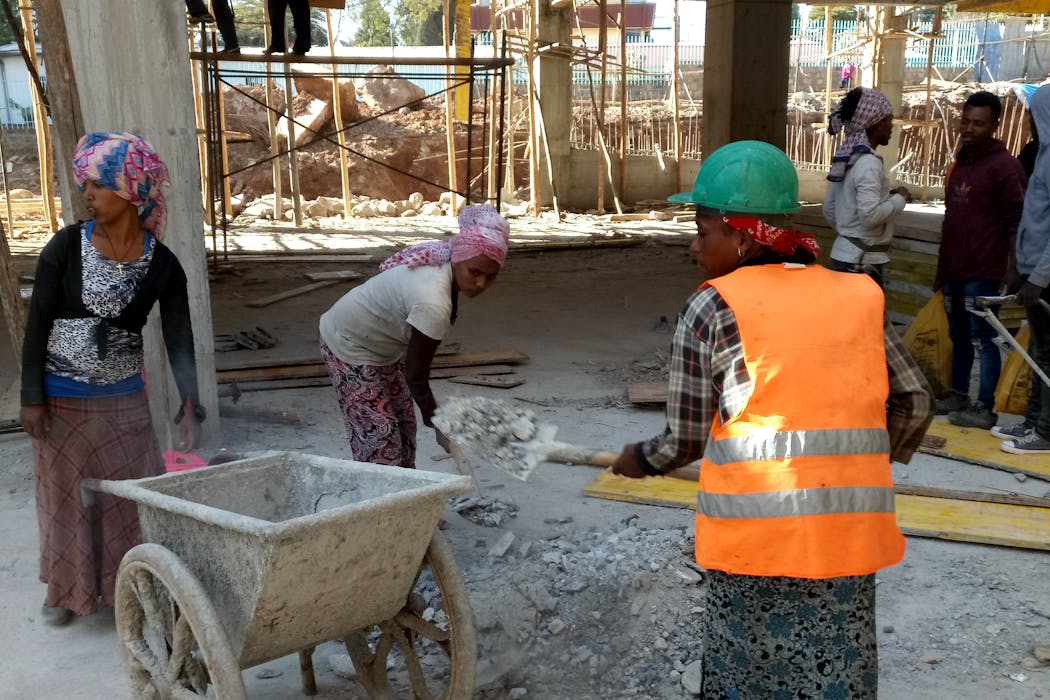
For women entering the formal labour market in Ethiopia, taking a job can expose them to new public spaces and risks. Wikimedia Commons, CC BY

For many women in Ethiopia, getting their first formal job doesn’t just change their income; it can change how they describe who they are in everyday public interactions.

In a country where ethnicity shapes access to opportunities, safety and political rights, this shift is far from small.

That is the provocative finding of our recent study: formal employment can cause women to switch their self-reported ethnicity. We are a team of political scientists and development economists who study labour markets, gender and ethnic identity in Ethiopia. We studied this issue in a recent research project.

We used data from a unique field experiment with 27 firms across five Ethiopian regions, where job offers were randomised among qualified female applicants. This means the firms had more qualified applicants than positions, so eligible women were selected through a lottery system for job offers. We then tracked both women who received a job offer and those who didn’t over multiple survey rounds spanning roughly three years, collecting information on their employment status, earnings, working conditions, daily mobility and commuting patterns, household characteristics, and how they reported their ethnic identity.

What we found was striking. In our full sample of 891 women, around 8% changed their stated ethnicity at some point over the time we followed them. While this may sound like a small share, switching ethnic identity is rare and socially consequential, making this level of change substantial in context.

Women who received a job offer were 4.3 percentage points more likely to switch their stated ethnicity than those who did not. In the comparison group – women who were not offered a job – about 6% changed their stated ethnicity over time. Among women offered a job, this figure rose to around 10%. When we account for who actually took up the job, the effect is even larger.

To some readers, this may sound like a technical result. But in a country where ethnicity shapes politics, social opportunity and daily survival, it is explosive.

Changing one’s ethnic label is not a trivial act. It carries implications for family, community and belonging.

So, why would a job make someone change something so fundamental?

For women entering the formal labour market in Ethiopia, even at low wages, taking a job can reshape their daily routines and expose them to new public spaces and risks. These shifts in mobility and visibility create pressures that women who stay at home may never face.

As they navigate these new environments, some find themselves adjusting not just their schedules, but also how they present and even report their ethnic identity.

By showing that formal employment can lead to ethnic reidentification, our study reveals identity as a living, shifting facet of social life rather than a fixed badge.

As Ethiopia and other African countries pursue industrialisation, labour-market expansion and social mobility, we must pay attention: economic transformation may come with unexpected, and deeply personal, consequences.

Being vulnerable

Our in-depth interviews with women in the two cities with the highest switching in our sample – Dire Dawa in east-central Ethiopia and Hawassa in the southern region – reveal a striking mechanism.

Employment meant commuting through areas where ethnic and, in some cases, ethno-religious tensions were high.

Women told us they felt far more vulnerable on the road than at home, especially if their own ethnicity placed them on the “wrong” side of a local conflict.

As one respondent explained, the decision to switch was driven by practical concerns about personal safety rather than a deeper change in how they saw themselves.

Some women did not adopt the local majority’s identity but switched to a third, more neutral group, one not involved in conflict.

Whether this was possible depended on their appearance, religion and language skills. As several women explained, speaking the correct language allowed them to “pass”, meaning they were perceived as belonging to a safer group while out in public. We cannot say how common this strategy was across all women in our study, but the interviews confirm patterns we also observe in our quantitative data of women switching to a third, neutral ethnicity to navigate local conflicts.

This makes sense in a country experiencing repeated waves of violence. In 2022, more than 40% of all conflict-related deaths worldwide occurred in Ethiopia.

In this kind of context, identity is not static; it becomes a resource.

Our findings challenge common assumptions across economics, the social sciences, and policy. While scholars have long recognised that ethnic identity can be fluid, it is often still treated as something relatively stable in practice, rooted in ancestry or birth.

What our evidence shows is the strategic side of this fluidity. Ethnicity can be consciously adjusted in response to economic conditions, mobility and the risks women face in public spaces.

In other words, identity is not only socially constructed. It can also shift in response to the pressures and incentives created by the work environment.

The protections needed

This raises uncomfortable questions about the global garment industry, which has progressively shifted production from Europe to Asia and is now beginning to extend manufacturing activities to parts of Africa as global value chains are reconfigured in search of lower production costs. Ethiopia has encouraged this growth by developing large industrial parks.

But unlike in long-established manufacturing hubs, there are few safety nets, transport protections or policies designed around local ethnic dynamics.

When women must alter their identity to feel safe on the commute to a low-wage job, something is clearly missing.

Our findings show that when these global industries arrive without adapting to local realities, the burden falls disproportionately on women.

It is not a sign of progress when a woman has to change her identity, even temporarily, to commute safely to a low-paid job. If anything, it calls for a more honest debate about what industrialisation should look like, and what protections are needed for the workers it relies on.

This also raises more profound questions about belonging and dignity. Is changing your ethnic identity an act of personal agency – or a sign of social pressure and insecurity? What does it say about everyday life when your safety depends on how you present yourself while travelling to work?

Imagine having to change the language you speak on the bus – or even the surname you give when introducing yourself – just to avoid trouble on your way to work.

While not all women faced situations this extreme, the very possibility of needing such strategies illustrates the pressures created by moving through tense public spaces.

The Conversation

The research team received funding from the Norwegian Research Council to collect data for this study.

ref. Ethiopian women and safety: why some switch their ethnic identity when they start working – https://theconversation.com/ethiopian-women-and-safety-why-some-switch-their-ethnic-identity-when-they-start-working-271325