Source: The Conversation – UK – By Jonathan Este, Senior International Affairs Editor, Associate Editor, The Conversation
This article was first published in The Conversation UK’s World Affairs Briefing email newsletter. Sign up to receive weekly analysis of the latest developments in international relations, direct to your inbox.
Robotic wolves rode on armoured vehicles. Alongside them stealth drones, unmanned submarines, and giant lasers for blinding pilots, accompanied by the lethal triad of air, sea and land-launched nuclear missiles made for a daunting array of Chinese military hardware on show this week in Beijing as it commemorated the 80th anniversary of end of the war with Japan. The parade was hosted by China’s president Xi Jinping and watched by guests including Russia’s Vladimir Putin, Kim Jong-un of North Korea and heads of state and dignitaries of 26 other countries.
It also drew a droll response from Taiwanese president Lai Ching-te, who didn’t attend the parade, who observed that his country doesn’t “commemorate peace with the barrel of a gun”.
This display of military might was part two of a week of mega-diplomacy on Xi’s part designed to demonstrate to the world that, under his leadership, China would not be “intimidated by bullies” and would “stand by the right side of history”. The Chinese president had come hot foot from hosting the 25th summit of the Shanghai Cooperation Organisation (SCO) on Sunday and Monday in the city of Tianjin, about 75 miles southeast of Beijing (or 16 minutes on one of China’s bullet trains).
The SCO summit brought together more than 20 leaders from Eurasia, including Xi, Putin and India’s prime minister, Narendra Modi. The gathering’s mission statement, as Xi put it, was to “take a clear stand against hegemonism and power politics, and practise true multilateralism”. Which it’s not unreasonable to read as the ushering in of a new order built around the leadership of China.
What was of most consequence at the SCO summit, writes Stefan Wolff, was the show of unity by Xi, Putin and Modi. An alliance between their three countries would be a formidable partnership. But what unites most of the delegates at the SCO writes Wolff, an expert in international security at the University of Birmingham, is not so much their desire to participate in a new vision of a China-led world order, but an antipathy to the current US hegemony under the stewardship of Donald Trump.
This is particularly the case for Modi, who is chafing under America’s recent imposition of 50% tariffs on its exports to the US as punishment for buying Russian oil in defiance of US-imposed sanctions.
So it’s interesting that Modi did not take the 16-minute bullet train ride to watch the parade alongside the North Korean leader. Wolff believes this is also emblematic of the challenges faced by Xi in assembling his new world order. Some of China’s friends present an unpalatable choice for the others and might not sit harmoniously in alliance together.
It’s likely that the US tariffs were high on Modi’s mind as he posed for photographs with the Chinese and Russian leaders. Wolff believes that this has destroyed, almost in a stroke, decades of careful US diplomacy designed at bringing the world’s most populous democracy into partnership against China.
It feels almost incredible that, as has been much mooted, Trump’s decision to punish India so harshly hinged largely on a fit of pique. But the US president was reportedly incensed at Modi’s refusal to back his claim to have prevented a major conflict with Pakistan or to join that country in nominating him for a Nobel peace prize.
But India is now doubling down on its decision to defy the US and purchase cheap Russian oil. And the chances are the tariffs will hurt the US as much as they hurts India. And it certainly won’t harm Russia, writes Sambit Bhattacharyya. Bhattacharyya, an economist at the University of Sussex Business School, believes that India and Russia have a lot to offer each other in trade terms. Cheap oil for India, cheap textiles and other trade goods for Russian consumers.
More importantly, writes Bhattacharyya, the more Trump’s trade policy drives America’s partners away, the greater the risk to the dollar as the world’s reserve currency. There are already signs that many developing economies are trying out ways of doing business that don’t involve the dollar. The more the US pushes its trade partners away, the more this will happen and the greater the impact on US prosperity and security.
Meanwhile diplomatic efforts to bring Russia to peace talks with Ukraine continue. Kyiv’s European allies are currently discussing what a security guarantee might look like if a ceasefire can be agreed. There are three schools of thought. Some, like Britain, are willing to commit to putting “boots on the ground”. Others, like Italy, will absolutely not countenance the idea. But most, notably Germany, are undecided.
One of the main hurdles facing the west when it comes to committing to an agreement with Russia is an inherent and deep mistrust of the Russian leader. And it’s easy to see why that might be. Russia has already broken agreements made to end the fighting in eastern Ukraine in 2014 and 2015. By invading Ukraine, Russia also violated the Budapest memorandum signed in 1994 by which Ukraine agreed to get rid of its nuclear stockpile in return for an absolute guarantee by Russia, the US and the UK to respect its territorial sovereignty.
But this lack of trust is getting in the way of a ceasefire deal, writes Francesco Rigoli. Rigoli, a psychologist at City St Georges, University of London, believes that the more Putin is reviled by western leaders and media commentators, the most it feels morally wrong to treat with Russia. He points out that Russian politicians and media are putting out very much the same message about the west. This is not helping the chance for a peace deal any time soon.
Since Russia invaded Ukraine in 2022, many Ukrainians who would have spoken Russian in public are unwilling to do so. Instead a lot of people are opting to use Surshyk, a hybrid tongue which uses bits of both languages and is quite common in central and southeastern Ukraine. Initially used widely in Soviet times by Ukrainians who wanted to move from the country to the cities to work in factories it was very much dominated by Russian, but in recent decades it has moved far closer to Ukrainian.
It’s a matter of debate as to whether Surzhyk – which was stigmatised in the past as a marker of rural backwardness (the name refers to a mix of poor quality grains) – is a language, or a dialect or even a form of slang. Linguistics expert Oleksandra Osypenko of Lancaster University tells the fascinating story of how Surzhyk has become a more socially acceptable way for native Russian speakers to communicate in a country at war with Russia.
This week we launched a new series of articles which sets out to explore the connection between international conflicts and climate change. Competition for resources has sparked conflicts since prehistoric times. But we’re now seeing more regular and more drastic effects of global warming playing out in famine, drought and mass migration. It’s a terrible cycle as climate change causes conflict, which can render whole regions uninhabitable.
Curated by my colleague Sam Phelps, War on climate will explore the relationship between climate issues and global conflicts. To kick off the series, Duncan Depledge, a senior lecturer in geopolitics and security at Loughborough University writes about the three reasons the climate crisis must reshape how we think about war.
Meanwhile Sarah Njeri, an expert in humanitarian and development studies at SOAS, University of London, and Christina Greene, a research scientist in the Arizona Institute for Resilience, University of Arizona, look at the ever larger swaths of land around the world contaminated by landmines and other explosive ordnance as well as lethal chemicals which can render land useless for agriculture for decades.
You might also be interested in this week’s episode of our podcast, The Conversation Weekly, which look at how China uses second world war history in its bid to reshape the global order.
Sign up to receive our weekly World Affairs Briefing newsletter from The Conversation UK. Every Thursday we’ll bring you expert analysis of the big stories in international relations.
Why would a suicidal teenager choose to live? It’s not the kind of question most of us ever want to ask. Suicide is the third leading cause of death among 15-29 year olds worldwide. Much of the research and media coverage still focuses on why teens might want to die. Far less often do we ask the opposite, equally urgent question: what makes life worth holding on to?
In our new study, we asked adolescents who had been hospitalised for suicidal thoughts or behaviour to name their three strongest reasons for staying alive. Their answers, gathered during safety planning (a standard part of care where patients and clinicians work together to identify coping strategies and reasons to keep living) offer a rare and unfiltered glimpse into the motivations that keep young people going, even at their lowest point.
The single most common word in the dataset was “my”. That may sound insignificant, but it tells us something powerful. Adolescents weren’t speaking abstractly about life or philosophy – they were talking about their people, their goals, their pets and their plans. This reflects a sense of belonging, which research shows is one of the strongest protective factors against suicide.
To capture these patterns, we used corpus-driven language analysis, a method that examines the frequency and use of words across large sets of text. In this case, we analysed the exact words of 211 adolescents aged 13–17 who had recently been admitted to a US psychiatric hospital for suicidal thoughts or behaviour.
Our goal was to identify common themes and better understand what keeps suicidal young people tethered to life – in their own words.
When we looked more closely at the nouns, three themes stood out.
First, their relationships. Family (especially mums and younger siblings), friends and pets featured most often.
Second, future hopes. Teens mentioned careers, dreams of travel, or simply a curiosity “to see what the future holds.”
Thirds, possessions and independence. They talked about getting a car, moving out, owning a house or even just “doing my own makeup.”
Among the most common verbs were action words like “want”, “be” and “see” – forward-looking and full of intention. Adolescents spoke of wanting to grow up, travel, become someone (“a welder” or “professional wrestler”, for example) and finding happiness. Even in distress, their language carried movement, desire and a drive toward the future.
Adjectives added emotional colour. Words such as “happy”, “good”, “okay” and “better” reflected modest, grounded hopes for relief, while “own” suggested control and self-expression: “my own space,” “my own style,” “my own life.”
And within the dataset, the responses were highly individual. Some were deeply emotional: “I saw how my dad cried and I don’t want him to cry like that again,” or “To not make my mom sad.” Others were more specific: “I want to read 100 books this year,” or “I want to get some bad-ass tattoos.” One patient put it simply: “YOLO” (you only live once).
From despair to desire
At first glance, asking suicidal teens what keeps them alive may seem paradoxical, since media reports and suicide research tend to concentrate on why young people want to die. But research shows that the majority of young people who experience suicidal thoughts do not go on to attempt suicide.
Among those who do, some later report a stronger sense of connection and purpose after surviving.
In our study, 97% of adolescents were able to identify three reasons to live, despite the emotional turmoil that had brought them to hospital. This suggests that even in crisis, many young people retain a desire to live if they can anchor themselves to something – or someone – that matters.
Some feared the consequences of suicide, not for themselves but for others. A few cited religious concerns. Others worried about the physical pain involved. But overwhelmingly, the reasons for living were hopeful, relational and future-oriented.
A tool for therapy, not just research
These findings carry clear clinical implications. Someone’s reasons for living shouldn’t be treated as just another box on a checklist. They can be a springboard for conversation and healing. When a teen says, “I want to be a vet,” or “I want to take care of my little sister,” it opens the door to meaningful, personalised treatment.
Helping adolescents articulate their reasons for living can build rapport, clarify therapy goals and enhance motivation. It can also be used to challenge unhelpful thoughts – like “I’m a burden” or “No one cares” – with concrete, self-generated evidence to the contrary.
Most importantly, reasons for living remind teens, and those who care for them, that even in amid despair they still have something to live for.
By listening to the things that matter to them we can see how small sparks of hope can give a suicidal young person a reason to keep living. sutadimages/Shutterstock
While risk factors such as trauma, mental illness, bullying and identity struggles remain well known, we too often overlook the anchors that help teens hold on. A 2024 US survey found that nearly one in ten high school students – around 9.5% – attempted suicide in 2023. That number reminds us adolescent suicide isn’t abstract, it’s real and it’s happening now.
By tuning into their own words, whether it’s their sister, their dog, a concert, or just the dream of getting some “bad-ass tattoos”, we can start to understand what makes life feel worth living for a young person considering or attempting suicide. Sometimes the smallest hope is enough to keep someone going.
If you would like more information or to talk to someone about any issues raised in this article, here are some recommended contacts:
Harmless: a user-led organisation for people who self-injure, as well as their friends and families;
The authors do not work for, consult, own shares in or receive funding from any company or organisation that would benefit from this article, and have disclosed no relevant affiliations beyond their academic appointment.
A year ago, Google faced the prospect of being dismantled. Today, artificial intelligence (AI) and a new court judgment has helped it avoid this fate. Part of the reason is that AI poses a grave threat to Google’s advertising revenues.
“Google will not be required to divest Chrome; nor will the court include a contingent divestiture of the Android operating system in the final judgment,” according to the decision.
Google must share certain data with “qualified competitors” as deemed by the court.
This will include parts of its search index, Google’s inventory of web content. Judge Mehta will allow Google to continue paying companies like Apple and Samsung to distribute of its search engine on devices and browsers. But he will bar Google from maintaining exclusive contracts.
The history of this decision goes back to a 2024 ruling by federal judge Amit Mehta. It found that Google maintained a monopoly in the search engine market, notably by paying billions to companies including Apple and Samsung to set Google as the default search engine on their devices.
Almost a year later, the same US judge issued his final ruling, and the tone could not be more different. Google will not be broken up. There will be no choice screen on new phones.
The nature of the search engine market, where more users generate more data, and
more data improves search quality, made it impossible for competitors to challenge
Google, the court found in 2024.
The 2024 ruling itself was controversial. While high quality data enables a dominant firm to extract more profit from consumers, it also allows it to provide a better service. Decades of research in economics has shown that determining which effect is more important is not straightforward.
At the time, the US Department of Justice deemed the issue so serious that it
considered breaking up Google as the only viable solution. For instance, it
suggested forcing the company to sell its web browser, Google Chrome.
The government also proposed forcing device manufacturers to offer users a choice of
search engines during set up, and compelling Google to share most of its data on
user behaviour and ad bidding, where advertisers compete in auctions to get their ads shown to users for a specific search query or audience. These so-called “remedies”, measures Google would be required to implement to end its monopoly, aimed to restore competition.
AI has proven to be a game changer for search engines. Tada Images
Limited sharing
So, what has changed in a year to so radically change the perception of Google’s
market dominance? The main answer is AI – and specifically, large language models (LLMs) like ChatGPT, Claude, and Google’s own Gemini. As users increasingly turn to LLMs for web searches, Google responded by placing AI-generated summaries at the top of its search results.
The way people navigate the internet is quickly evolving, with one trend reshaping
the business models of online companies: the zero click search. According to a Bain & Company survey, consumers now default to accepting AI-generated answers without further interaction. The data is striking: 80% of users report being satisfied with AI responses for at least 40% of their searches, often stopping at the summary page.
Threat to ad revenue
This AI-driven shift in consumer behaviour threatens not only Google’s business
model but also that of most internet based companies. Advertising accounts for
roughly 80% of Google’s revenue, earned by charging companies for prominent placement in search results and by leveraging its vast amount of user data to sell ad space across the web. If users stop clicking links, this revenue stream evaporates.
More importantly for this ruling, the market Google once monopolised may no longer
be the relevant one. Today, Google’s primary potential competitors in search are not Microsoft Bing, but AI models like ChatGPT, Claude, and Perplexity. In the global race for AI dominance, the outcome is far from certain.
From an antitrust standpoint, there is little justification for penalising Google now or forcing it to cede advantages to competitors. What would be the benefit for consumers of forcing Google to accept the £24.6 billion offer from Jeff Bezos’ Perplexity AI to buy the Chrome browser?
In essence, the judge acknowledges that Google monopolised the search engine market for a decade but concludes that the issue may resolve itself in the years ahead.
This situation echoes the first major monopolisation case: Internet Explorer. For
years, European and US regulators battled Microsoft to dismantle the dominance of
its web browser, which was bundled with the then-dominant Windows 95 operating
system.
By the time all appeals were exhausted, however, the monopoly had vanished. Internet Explorer was partly a victim of the rise of smartphones, which did not rely on Windows. The new king in town was a newcomer: a certain Google Chrome.
How you view the economic and political power of tech giants will shape which lesson you draw from this story. An optimistic view I suggested (with the economist Jana Friedrichsen) is that winner-takes-all markets can intensify competition through innovation. In such markets, incremental investment is not enough; to challenge Google, a competitor must offer a vastly superior product to capture the entire market.
Precisely because they ruthlessly defend their monopoly positions, tech
giants show competitors that the potential gains from radical innovations are
massive. The pessimistic view, however, is that years of dominance have left these firms largely unaccountable, which could embolden them in future.
Renaud Foucart does not work for, consult, own shares in or receive funding from any company or organisation that would benefit from this article, and has disclosed no relevant affiliations beyond their academic appointment.
Miriam was 13 when we met her. One day, she asked Eve: “How can we help my mum? She really struggles. I worry that we don’t have enough money for food and stuff.”
Miriam went on to explain that her mother would often skip meals to make sure the children could eat. “Normally we don’t have enough food. So, if there’s a little bit, she’ll give it to me and my brothers, and then she just has tea or something.” Later, Miriam’s younger brother Luke, 11, told us that the children also missed meals.
The family of four lived in a small, two-bedroom flat owned by a private landlord in London. As they took us on a video tour, we heard that the heat was intermittent and large holes were visible in the plaster behind a heater next to the toilet. Miriam explained that the heater had broken but the landlord had not replaced it, despite the cold and damp London winters.
Other signs of disrepair were evident around the flat. The lights in the older children’s room had burnt out over a year ago. The children used the torch on the family’s mobile phone to see when it was dark.
The kitchen sink was blocked and had to be drained manually. Any time the family washed dishes or prepared food, Miriam and her mother Serwah would have to run between the sink and toilet with a bucket, emptying it before the flat flooded. Even the smallest of everyday tasks became large and arduous responsibilities.
The family had lived there for three years, and in London for over ten, but they had limited options to improve their circumstances.
The Insights section is committed to high-quality longform journalism. Our editors work with academics from many different backgrounds who are tackling a wide range of societal and scientific challenges.
Serwah had come to the UK from Ghana with the hope of making a better life. After arriving, she realised that she had been made false promises and life was “not good like that”. She found herself struggling in a difficult relationship with a man who was a “liar” and had “destroyed everything”. Serwah ended up being undocumented, but had recently been granted “limited leave to remain” with “no recourse to public funds” (NRPF).
No Recourse to Public Funds
NRPF is an immigration condition contained in the UK’s Immigration and Asylum Act 1999. It states that migrants “subject to immigration control” are not allowed to access most welfare benefits, social housing, or other support, such as extended childcare services.
According to figures analysed by the Migration Observatory at the University of Oxford in 2019, around 1.376 million people with time-limited “leave to remain” (including students, people with work visas, and those on family visas) are subject to NRPF in the UK. A further approximately 674,000 undocumented people have NRPF imposed by default. Research shows that NRPF particularly affects families who are already economically and socially marginalised, such as single mother households and racially minoritised families from Britain’s former colonies.
Charities suggest that at least 382,000 children in Britain are forced into deep immiseration by NRPF, just like Miriam and Luke. For families like Serwah’s, it means that no matter how impoverished the family is, next to no social support is available, and other options for getting by are also heavily restricted.
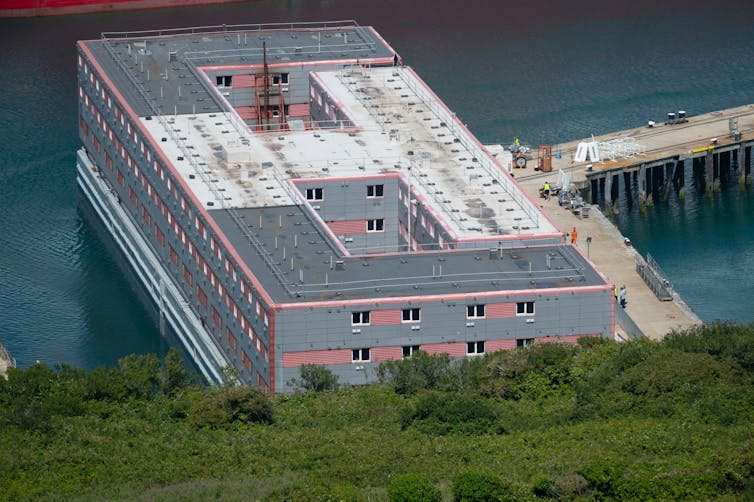
NRPF is a less visible and spectacular display of the way various UK governments have approached “controlling immigration”. It has not caused the same controversy as the “Rwanda scheme” or plans to house asylum seekers on a decommissioned barge (what migrants justice groups called a floating prison for people seeking sanctuary).
The Bibby Stockholm barge which housed asylum seekers in Portland Port, Dorset, England, in 2023. Shutterstock/Zeynep Demir Aslim
Over the past six years, we have worked closely with 25 single-mother families living in the shadow of this policy. We have participated in families’ daily lives, conducted interviews, and invited children and adults to take photos, journal, and lead us on video tours. Our research has been in-person and online (especially during the pandemic). We asked participants to choose pseudonyms. Confidentiality is important in all research but crucial for their families given their precarious status.
Hopes for a better life
There was never a single reason within a family, or even for individuals, as to why they had come to the UK. Many of the children were born in the UK while others were brought by their parents at a young age. Some mothers had come attempting to flee abuse while others hoped to make better lives, describing conditions of extreme poverty in their own childhoods. Some had come on visitor visas for short trips to see friends and family but had ended up staying as their situations changed (for example, unexpectedly starting a family or having a child who suddenly needed specialist medical treatment).
What was similar for our participants was that leaving the UK was not really an option. In most cases, this was because their children were British and mothers did not want to uproot their lives. The mothers we met had also been in the UK for over a decade, and despite the hardships they faced, felt that it was home. In some cases, the abuse, extreme poverty, or violence which had compelled their immigration in the first place had not diminished. In others, debts incurred to enable immigration or to survive in the UK would be insurmountable in their countries of origin.
Regardless of how and why families were in the UK, their experiences raise questions about how the UK treats them – and that is the focus of our research.
We found that NRPF is forcing some single mothers into a state of hyper-exploitation where they are forced to carry out cleaning or childcare for little or no pay, and subjected to verbal and physical abuse. Many families wind up homeless or dependent on the kindness of friends or strangers who are often in similarly precarious situations.
NRPF is even imposed on British citizens: children who get dragged into it because of their parent’s immigration status.
Serwah, Miriam and Luke: ‘constantly feeling hungry’
Serwah had “limited leave to remain” and was legally able to work. But without access to affordable childcare, Serwah had to depend on friends or acquaintances to care for her children. She is not alone – according to a report by the Institute for Public Policy Research, tens of thousands of children in migrant and refugee families are being denied access to government-funded childcare because of NRPF linked to their parents’ immigration status. Serwah’s friends were often in equally precarious positions.
As a result, they were reliant solely on Serwah’s wages from twice weekly night shifts in a small residential facility assisting people with dementia while her friend cared for the children. The family found themselves deep in debt. Months of rent arrears due to their destitution had left the family with limited legal options to ensure that the private landlord provided adequate heating, water and other necessary utilities.
For children like Miriam and Luke, who have never lived anywhere except the UK, NRPF means a life of destitution – constantly feeling hungry, trapped in uninhabitable accommodation and without necessities. Yet, they are typically expected to participate and perform in school the same as other children and even punished when they don’t. For example, children have been threatened with missing important school activities if their parents owe money for school meals, while others have been sent to detention for failing to wear the proper uniform because the family cannot afford it.
During another visit, Miriam explained that she usually did homework on the family’s shared mobile phone in the crowded flat. “I don’t really talk to people about my problems. I just keep it to myself”, she said. She explained how hard it was to talk about the family’s situation and that she felt unable to seek assistance from teachers.
Boris Johnson’s surprise
There was a rare furore around NRPF in 2020. At the height of the COVID-19 pandemic, then prime minister, Boris Johnson, revealed his own surprise at the policy’s existence. Responding to questions about how a family with the legal right to remain in the country would survive without furlough pay and with no right to benefits, Johnson commented:
I’m going to have to come back to you on that because clearly people who have worked hard for this country, who live and work here, should have support of one kind or another. You’ve raised a very important point … If the condition of their leave to remain is they should have no recourse to public funds, I will find out how many there are in that position and we will see what we can do to help them.
Johnson’s political gaffe (not being aware of his government’s own policy) was largely interpreted as an example of his own incompetence. But his initial reaction indicates how little is known about this policy – a visa condition which puts Britain’s “universal” welfare system out of reach of so many.
In public debates, NRPF is often presented as a rational and reasonable way of “controlling migration”. In 2011, when Home Secretary Teresa May expanded NRPF to include migrant families who had had been granted “limited leave to remain” on the basis of Article 8 (rights to private and family life), she stated:
What we don’t want is a situation where people think that they can come here and overstay because they’re able to access everything they need.
Article 8 rights had previously accorded migrant families the right to both stay and access social support alongside other UK residents. As a result of May’s changes, migrant families were placed on the ten-year-route to settlement with NRPF for the duration. The ten-year-route requires four separate applications for temporary status to be made, before applicants can apply for permanent residence. Every two and a half years, applicants must pay £1,321 (per family member) plus a £2,587.50 surcharge – again, per person.
The language of “securing borders” against “spurious” family claims echoes in the government’s current White Paper on immigration. Yet, this is a “problem that does not really exist”, according to barrister Jamie Burton who says the burden of proof is already very high in Article 8 cases.
The policy also doesn’t seem to make financial sense. A social cost benefit analysis conducted at the London School of Economics suggested that removing NRPF for households with limited leave to remain on their work-related visa would result in net gains for Britain of £428 million over a ten-year period, due to reduced costs for the NHS, local authorities and increases in tax revenue. This increases to £872 million if applied to families with children.
While this study shows the financial feasibility of jettisoning NRPF, the logic of a cost-benefit analysis roots Britain’s cost-of-living crisis with destitute migrants, rather than asking why wealth is so concentrated or discussing the ethical principles of a policy which leaves children in fear of starvation.
Destiny and Isaac: fear of starvation and homelessness
Isaac is just one example. He was 13 when we met him and was born in London. He lived with his mother Destiny in a shared room. The room was under sloping eaves and packed with their two single beds and a protruding wardrobe containing all their possessions. Filled with their drying laundry, it felt particularly small and claustrophobic.
Destiny, originally from Nigeria, had limited leave to remain in the UK with NRPF. Isaac was a British citizen, yet the NRPF restriction on his mother’s visa also affected him – a clear example that the policy doesn’t achieve its own logic of protecting “British resources” for British citizens.
Isaac felt keenly that a “universal” welfare system that is not “for all” is discriminatory. He explained:
England is a multicultural country [but NRPF is] basically screwing over those people who came from different backgrounds … as it only favours a certain type of people … It doesn’t favour the whole of Britain.
The fact that NRPF was “basically screwing over” racially minoritised people was not just an abstract idea for Isaac. It was both a hard physical reality and a cause of deep anxiety. “I was worried that we didn’t really have food, if I was going to eat the right amount of food or if I was going to starve,” he told us.
Many of the children we spoke with, like Miriam, worried that if they spoke to anyone about the family’s situation they would be stigmatised or their mothers might be blamed for their destitution. Unusually, Isaac decided to reach out to his teacher for help. His fear of the family starving trumped any concerns he might have had about speaking out.
He described his relief when his head of year helped the family access food banks that were not limited by immigration status, so they didn’t “have to stress about food”. Yet even that relief was only partial, he explained.
Worrying, that puts like dark scenarios in my mind … And I thought like the worst-case scenario would be living on the streets, and I wouldn’t really go to school …
Isaac’s insights about the persistent and grinding effects of NRPF, even when a little bit of relief was available, were echoed by many of our participants.
Samantha and Sam: ‘It destroys you mentally’
Samantha was sitting on the sofa during one of our first meetings, wearing a grey wool hat. She called her eight-year-old son Sam over. He looked excited when his mum said he could “choose a secret name” if he took part in the research. After some whispering and laughter, the two settled on Samantha and Sam.
Eighteen years before we met her, Samantha had come to the UK from Nigeria, joining her parents as a young teenager (around 13). She only discovered as an adult that she had no legal status in the UK and therefore was subject to NRPF. Describing the long-term affects, she said:
It destroys you mentally. And if you’re looking after children, who are depending on you to be a pillar of strength and depending on you to guide them, look after them, and everything, you can’t afford to lose yourself. And that’s what no recourse to public funds does to people. You lose yourself. You lose your sense of identity.
For Samantha, Serwah, and other mothers we spoke with, virtually the only sources of support lie with people in equally precarious positions. Like their children, many mothers find it difficult to ask for help and any help is fragile at best. Asking for help has “always come back to bite me in the backside,” Samantha explained, “So I’ve just soldiered on.” She added: “I had no one to fall back on, I had no one to rely on.”
indefinite leave to remain visa cards issued in the UK – but application costs can be high for people with income. Shutterstock/Ascannio
On one occasion, Samantha mentioned trying to keep costs down when she was working cash-in-hand by asking an acquaintance to help her with childcare and paying the woman what she could afford. The arrangement ended traumatically when she found scratches all over Sam’s body when he returned home one day.
Unable to access government support forced her, and many of the other women we spent time with, to endure relationships and situations that were harmful and painful for them and their children.
By the time we met Samantha, she described having a small feeling of relief. Things had been very difficult for many years, but had recently eased up a bit. They were still undocumented but had recently been able to secure local authority support which included the provision of a small, two-bedroom house.
Though not originally intended for the purpose, local authorities can provide accommodation and financial support to some families with NRPF under Section 17 of the Children Act 1989. Data from the NRPF Network shows that at least 1,650 families (comprising 2,903 dependants) were supported by 72 local authorities across the UK, as of March 31, 2022..
In practice, Section 17 support is minimal, challenging to access, and is often conditional on accepting difficult requirements, such as moving far away from carefully nurtured social networks or to inappropriate, or even hazardous, accommodation.
Although Samantha and Sam showed us the house with evident pleasure, they had initially been reluctant to accept it because it was outside London where they had been living and where Sam had been going to school.
Samantha was so worried about maintaining continuity for Sam that even after moving, they continued to make long journeys back to his school. “That was costing a lot of money. It was physically and mentally draining,” Samantha said. She eventually moved Sam to a new school closer to the new home.
For other families with NRPF, trying to access Section 17 assistance can be a punishing experience.
Martha and Mobo: racism and disrespect
Martha, who had come to the UK from Nigeria as an adult, was staying with her uncle and cousin when we first met her. She shared one room in their two-bedroom house with her three sons, Kevin, 18, Mobo, 16, and Tayo, 14. The small room was filled with a double bed, a folded cot, and a wardrobe. There was little room to move. The “whole family is just cramped up in there”, Kevin said, describing how the family of four shared the space, meaning someone always had to sleep on the floor.
The family got by on a patchwork of support. An auntie paid for a telephone and lunch fees for the children. Members of their church provided them with food and friends from back home sent Martha clothes.
Martha had considerable caring responsibilities for her youngest son, Tayo, who was visually impaired. On this basis, she had recently approached the council for Section 17 support. As she was explaining Tayo’s highly specific needs (the subject of the child-in-need assessment), the social worker just hung up on her, she explained.
Reflecting on his mother’s experiences with social services, Mobo used the word “disrespect” repeatedly. He explained that his mother was treated as though she was “stupid”, but at the same time as if she was “suspicious” because of “stereotypes of what a needy person should look like”.
The entire experience of seeking child-in-need support from the local authority was “hurtful”, “mean”, and deeply racialised, Mobo said. His mother was subjected to “negative stereotypes”, he told us, linking this to the way that “African countries and black nations as a whole” were depicted. “… It’s usually just the bad stuff that makes the news,” he said. Such sentiments were echoed by other children.
Tanya: abused and exploited
Meanwhile, being subject to NRPF for a long time can also make people vulnerable to threats and exploitation, as Tanya told us. Tanya answered the phone with a friendly and open tone when Eve first reached out to her. She was in her early twenties and had come to the UK from Jamaica as an 11-year-old to join her parents. Just like Samantha, she only discovered that she did not have legal immigration status in the UK when she was an adult.
Tanya was making what is often called a “half-life application” because she was between 18 and 24 and had lived in the UK continuously for more than half her life. Yet even if her half-life application was successful, she and her two small children (aged six months and two-years-old) would face another decade subjected to NRPF on the ten-year route to settlement. She told us: “It’s not an easy thing when you don’t have papers in this country for so many years; it’s a struggle.”
“It’s so frustrating that I’ve been here for so long. I went to school here.” Tanya did not know why her mother had not sorted out her immigration status when her own was settled and this subsequently made their relationship fraught.
She described how she was staying with a “friend” rent-free, but that came with strings attached.
Tanya was expected to do all the housework and childcare for both families, even when she was exhausted and heavily pregnant. “I take her kids to school. I clean the house every single day, seven days a week, never get a break to myself when I was pregnant with my daughter.”
It wasn’t simply that NRPF meant she couldn’t afford accommodation of her own. But being undocumented affected every single aspect of her life. “There are limited things that you can do,” she said. “Like, you want to go and get a bank card? You can’t. The first thing: have you got any form of ID? … No, you don’t have it. Oh, you can’t get this.”
Used and abused: some people are left with no option but to stay in abusive situations. Shutterstock/y.s.graphicart
The woman she was staying with would often abuse Tanya verbally, telling her that she should not have come to Britain and that she should be “locked down” because she didn’t have her papers. Tanya felt hurt and taken advantage of, but she had nowhere else to go and feared being told to leave. “I would take the abuse, like take it, take it, take it”.
This was a common experience for mothers in our research. They told us repeatedly that asking for help was not something to be undertaken lightly because it always ran the risk of opening them up to hyper-exploitation. Some told us there were expectations of repayment through sexual favours, or punitive and paternalistic demands for gratitude.
Like Tanya, mothers and children often had to stay in situations that were clearly painful, deeply exhausting, and dangerous because they had been effectively abandoned by the state. Many faced these situations over extended periods of time, regardless of how long they had been in the country and whether they had legal immigration status or even citizenship like Isaac.
It wasn’t simply the material reality of NRPF that stung Tanya. It was having “people look down on you a lot”.
She told us about the constant struggle of growing up in Britain yet constantly being made to feel as though she did not belong. “People look at you: ‘so what are you doing in my country then?’ As if you’re just taking up space …”
This sense of “just taking up space” echoes the tabloid rhetoric that was used to rationalise NRPF and call for its extension. Yet in listening to our participant’s stories of their lives, we are struck by how far this is from their reality.
The enforced destitution caused by NRPF required extensive labour simply to survive day-to-day – from Miriam and Serwah’s continual emptying of the sink that would not drain, to Tanya’s backbreaking housework in exchange for a bed, to Samantha and Sam’s long journeys to get to school.
But this idea of “just taking up space” is almost absurd when we think about the tiny spaces families with NRPF are forced to occupy due to their impoverishment. It was not uncommon to hear about families of four sharing a single room or living room floor, entirely dependent on the hospitality of friends or strangers.
For example, Shanice, 16, had never slept apart from her mother and rarely in a bed of her own. She told us longingly about her dream of having a space of her own:
If you’re constantly sharing a room with someone, you can’t get time to always be yourself and just do what you want to do. We’re both different people and we both move at different paces … Being by myself just means a lot. Like, it means a lot to me just to have my own time to reflect…
Yet the feeling that Tanya described as being seen as “just taking up space”, combined with a complete absence of social support, served as a constant reminder to these families that they were not wanted in the UK.
Our participants repeatedly conveyed the sense of a persistent wearing of body and soul – what Samantha referred to as “losing yourself”.
Abiola and Akin: hope in a shoebox
But despite the hardships and the rejection, many refused to give up hope. People like Abiola. It was a cloudy January afternoon when Eve first met Abiola in person. Abiola was from Nigeria and had been in the UK for 12 years. She was undocumented and subject to NRPF. As a result, her ten-year-old son Akin, who was born in the UK and was a British citizen, was affected as well.
Abiola was waiting for her immigration application for limited leave to remain as a parent of a British child to be decided by the Home Office. But she had been aware of the high cost of regularising their status in the UK since Akin was young.
Despite their destitution, Abiola realised that she had to begin to save for Akin’s citizenship application. “Bit by bit, I opened a box. A shoebox. I made into something like a safe. And I started dropping money inside that place for four, five years,” she said.
She described how any support from her ex-boyfriend would go into the box as well as little bits of money she earned from her jobs: “The least I’m dropping is £5. Because I didn’t want to drop pennies in it. But there will be times in a whole month where I might not even put anything in that box.”
The shoebox with her savings was not just a safe; it symbolised her hope and dreams. Abiola continued:
Everywhere I go, I take that box with me. I didn’t touch it. I kept it. Even if I’m starving, I didn’t touch that money. Even if I was desperate, I didn’t touch that money.
She believed the money would “save her”, adding: “… I was hoping. This is where the future is lying. You have to save for it and get out of this condition, and live a better life.” She said:
I’m just living here. It’s hard … If you look at the way I’m living. There is no bathroom door there. If we are showering, the water is always on the floor. We have to be mopping it … Even if my son is eating, he sits down on the floor and he bends his head to the ground. I cannot even afford anything to make him comfortable. He reads or writes … lying down on the floor. It’s not an easy life.
Her resolve to save in the face of such extreme impoverishment was more than just an act of survival; it was a refusal to “lose herself”.
We heard similar stories from other families. Miriam spoke about the children doing all they could to make her mother “proud”. Speaking about Serwah, she said: “Because she’s struggled a lot for us, so when she gets old, we, all three of us, wanna make her proud”.
Meanwhile, Isaac nurtured hope by imagining a future where he could help others who were in the same situation that he was in.
No recourse is no solution
Our research shows that the no recourse to public funds policy makes life impossible for those who are subjected to it.
It is not a spectacular display of immigration control and rarely makes sensationalised headlines. Instead, the hardship produced by this policy is often experienced in the shadows.
The results of this bureaucratic immigration category are endured in the routine of everyday life, year after year. It often remains invisible – even to teachers, healthcare providers and co-workers.
Yet the stories of these families show that the imposition of this draconian immigration rule has done nothing to meet the government’s stated aim of protecting “the economic wellbeing” of the UK – at least for the most marginalised.
In 2022, 1 million children and 2.8 million adults in the UK were living in destitution. These figures include families with no recourse to public funds who typically experience the most extreme levels of deprivation of all.
If NRPF is not a “solution” and simply penalises and punishes those who are subjected to it, then the question must be asked, why do we have it at all?
To hear about new Insights articles, join the hundreds of thousands of people who value The Conversation’s evidence-based news. Subscribe to our newsletter.
Rachel Rosen receives funding from British Academy, ESRC, ISRF, and Nordforsk.
Eve Dickson receives funding from British Academy, ESRC, and Nordforsk.
Source: The Conversation – UK – By Catherine Norton, Associate Professor Sport & Exercise Nutrition, University of Limerick
Celebrity chef Jamie Oliver has stirred debate by calling the familiar five-a-day message “a lie”. Speaking to the Times, he argued that the real health benefits of fruit and vegetables only start to add up at seven, eight or even 11 portions a day.
He’s not wrong that more is better. Research shows us that the more servings of fruit and veg we eat per day, the more benefits we see to our health. But the story of how five servings became the standard recommendation is one of science meeting pragmatism.
When the five-a-day campaign was launched in the UK and Ireland more than 20 years ago, it was never meant to be the “perfect” target. Instead, it was a compromise – a number that struck a balance between the nutritional evidence and what public health experts thought people might realistically manage. Five portions was judged by researchers and marketeers to be a simple, memorable and achievable slogan – one that wouldn’t scare people off.
But it may be time for this messaging to change, as a growing body of research shows that higher fruit and vegetable intakes are associated with lower risk of chronic diseases.
A meta-analysis of over 2 million people found that while five portions lowered risk of chronic diseases such as cardiovascular disease and cancer, the greatest benefits were seen at around ten portions of fruit and veg daily. Another UK study found that people eating seven or more portions of fruit and veg each day had a 42% lower risk of death compared to those eating less than one portion.
Excellence rarely comes from doing the bare minimum – and the evidence suggests we should be aiming higher.
It’s clear that eating more fruit and veg daily has health benefits. leonori/ Shutterstock
Japan has long recommended ten (and more) portions of fruit and vegetables a day. Mediterranean countries, too, traditionally eat diets rich in fresh produce, beans, and legumes. Research suggests that populations that follow these dietary patterns tend to have lower rates of heart disease and longer life expectancy. Similar associations between higher intakes of fruit and vegetables and lower risk of death from any cause are reported in Japan, too.
The research is clear: higher intake of fruits and vegetables everyday brings tangible health benefits. So while five portions is a good starting point, aiming to include more fruits and vegetables into your daily diet will bring even greater health benefits.
What counts as a portion?
But some confusion lies in what a “portion” really means. The World Health Organization defines one portion as about 80g – roughly a handful. That could be an apple, two broccoli spears, three heaped tablespoons of peas or half a tin of beans. When you break it down like this, eight to 11 portions across three meals and snacks becomes less intimidating.
There are also many easy ways to add more fruit and veg every day. For breakfast, try adding berries to your cereal, a banana to your porridge or spinach in your omelette. For lunch, add salad to sandwiches, beans to your soup or extra veg into wraps.
Double up portions at dinner by eating two or three sides of veg, or bulk up sauces and curries with lentils, peppers or mushrooms. Snack smart by reaching for fruit, veggie sticks with hummus or roasted chickpeas instead of crisps.
You should also aim to eat a rainbow of different fruits and vegetables across the week, as variety is associated with even greater health benefits.
There’s a common myth that only fresh fruit and vegetables count. In reality, frozen, tinned (in water or natural juice) and dried all have a place. They can be cheaper, last longer and often retain just as many nutrients as fresh produce.
Juices and smoothies count too – but only as one portion a day because of their sugar content.
The five-a-day message is a starting point, but not the finish line. Anything is better than nothing – and if you’re eating just one or two portions now, getting to three or four is progress.
But the science is clear: more really is better. Jamie Oliver may be ambitious in suggesting 11 portions, but he’s right that aiming higher could bring big health gains.
Catherine Norton does not work for, consult, own shares in or receive funding from any company or organisation that would benefit from this article, and has disclosed no relevant affiliations beyond their academic appointment.
Irfaan Ali, the leader of the People’s Progressive party (PPP), says he has secured a second term as Guyana’s president. The official results from the election on September 1 are yet to be published, but Ali claims his party has won by a “remarkable margin”.
Vote tallies published by Guyana’s elections commission suggest the PPP has secured more than 240,000 votes, which equates to roughly 55% of the popular vote. The party has also won seven of the country’s ten electoral districts. It appears to have trounced its longtime opponent, A Partnership for National Unity.
Guyanese voters seem to have endorsed Ali’s approach. His campaign was dominated by promises to use oil-related revenue to alleviate chronic poverty and support further social and economic development.
The run-up to the election was tense. Guyana’s elections commission warned voters and parties to behave responsibly when it came to producing and circulating disinformation and fake news.
Guyanese officials pointed to neighbouring Venezuela as the main mischief-maker. This was to be expected. Over the past decade, relations between Caracas and Georgetown have been strained.
The Venezuelan president, Nicolás Maduro, who has long been criticised by his US counterpart Donald Trump, is an outspoken proponent of trying to regain lost territory. Under his dictatorial rule, Venezuela has been pursuing its claim to Guyana’s Essequibo region.
Venezuela’s unhappiness stems from an 1899 international arbitration ruling in Paris that settled the border between Venezuela and what was then British Guiana. Successive Venezuelan governments and dictatorial regimes have disputed the positioning of that international boundary.
If Venezuela is successful, Guyana would be reduced by two-thirds such is the scale of this territorial claim. The International Court of Justice (ICJ) is involved in this matter. It warned Venezuela in 2023 to refrain from taking any actions that “modify that situation that currently prevails” in Essequibo.
Venezuela, which does not recognise the jurisdiction of the ICJ, held a national referendum on the dispute. Voters overwhelmingly supported the establishment of a new Venezuelan province called Guyana Esequiba.
The following year, Venezuela passed a law prohibiting maps of the country without Essequibo. And the ICJ has since reaffirmed its ban on Venezuela holding any “elections” in Guyanese territory.
The discovery of oil on the Guyanese side of the border a decade ago made all the above worse. Maduro has issued decrees and statements disputing Guyana’s right to do exploration deals with oil corporations such as Exxon-Mobil, Chevron and the China National Offshore Company.
Yet Guyana has continued to develop its oil industry. In August 2025, it declared that 900,000 barrels of oil were now being harvested from its oil fields each day. One million barrels will surely be hit sometime soon.
Maduro is determined to be as disruptive as possible, hoping that by generating border-related tension with Guyana international companies will be deterred from continuing their operations onshore and offshore.
He has deliberately sought to mobilise domestic opinion around this issue and has mobilised the Venezuelan military to carry out training exercises, incursions and confront Guyanese border forces.
In March 2025, a Venezuelan coastguard vessel entered Guyana’s waters and sailed close to a floating production storage and offloading platform owned and operated by Exxon-Mobil. The Venezuelan vessel transmitted a radio message claiming it was operating in “disputed international waters”.
Ali’s electoral victory does not alter the fact that his country remains under threat from Venezuela.
US interests
While Venezuela is harassing a smaller neighbour to the east of the country, there are significant developments taking place to the north of Caracas. The Trump administration has deployed a naval task force in the southern Caribbean composed of eight vessels and around 4,000 sailors and marines.
The focus is very much on Maduro’s actions and interests, with the US convinced that the Venezuelan leader is aiding and abetting drug cartels and enabling the operation of narco-terrorism. Trump issued an executive order in January designating cartels such as Tren de Aragua, an organisation from Venezuela, as foreign terrorist groups.
While Maduro complains that the US is preparing to invade Venezuela, the naval task force has been intercepting suspect vessels and maintaining a high-profile presence in southern Caribbean waters.
It recently carried out a strike on a boat that allegedly departed from Venezuela carrying drugs bound for the US. The White House says the strike killed 11 drug traffickers. Venezuela alleged the images of the assault were AI-generated.
There are plenty of reasons why a US task force might be operating in the southern Caribbean. Among these are the fact that the US has commercial interests in Guyana, so is keen to deter hostile action from Venezuela. The US is the top destination for Guyanese oil, and there are also plans to encourage US firms to get involved in digital and fintech projects in Guyana.
Washington is the most important element in Guyana’s future security. Secretary of state, Marco Rubio, visited the country in March 2025 as part of a short regional tour. The worry for Ali is that Guyana acts merely as a strategic platform from which the US can exert further geopolitical pressure on Venezuela.
However, Trump’s focus on energy security and the enhancement of commercial advantages for US companies means that the appeal of Guyana is not hard to discern. President Ali’s second term is not going to be straightforward.
Klaus Dodds does not work for, consult, own shares in or receive funding from any company or organisation that would benefit from this article, and has disclosed no relevant affiliations beyond their academic appointment.
The Courageous opens with dense greenery, as sunlit and idyllic as it is discouragingly impenetrable. Then, with barely the rising sound of an engine to warn us, we cut back to urban humanity: a hand slams a glove compartment shut, with the tense “merde” of a woman on edge. And so we meet the protagonists of the film: Julia, or Jule, at the wheel of the car, and her three children giggling on the back seat because mum just said a naughty word.
Another cut, this time behind Jule’s head, reveals the breathtaking mountain scenery of the Swiss Valais. In just over a minute we meet the people and places, the tensions and contrasts, that drive the film, even if full understanding will only come to us gradually. Jule, a rebellious young woman bringing up her children alone, is fundamentally at odds with the ordered society of rural Switzerland, and in consequence her life is a constant struggle.
The Courageous is director Jasmin Gordon’s first feature film. It lies within the strong tradition of engaged social realism that, in Britain, we associate with Ken Loach, but the genre has its own life across the channel too, with eminent exponents like Laurent Cantet in France or the brothers Jean Pierre and Luc Dardenne in Belgium.
These are films that depend on their close attention to the particular circumstances of particular individuals in a particular place, and so they are always unique – as well as being extremely varied in their directors’ chosen styles and narrative choices. Still they follow a recognisable pattern, drawing us into the struggles of marginalised protagonists trapped by a hostile world.
Gordon involves us in Jule’s world largely through her canny management of the children’s viewpoint. From the start they are always observing their mother, and so are we: Gordon quickly encourages us to feel that we are reading her along with the children. But this is an illusion. We know less than they do, we judge according to our own stereotypes and we misunderstand.
The film knows that we will misunderstand, and takes pleasure in baiting our anxieties, gradually revealing our mistakes, and so involving us ever more closely in the family’s difficult life. Jule is not perfect, but she has an iron determination, and we feel her love for her children and her humiliation as every attempt to better her life through the “proper” channels is systematically beaten down.
Outside the close family group, people exist entirely as cogs in the system that doesn’t care for a woman like Jule. This is to some extent a characteristic of the genre, but Gordon takes it to an extreme: these cogs are always individuals, and sometimes you can see that Jule is putting them in an impossible situation too, but they act according to their place in the social machine, excluding and humiliating Jule because they must, some reluctantly, some with bitter pleasure.
While Loach’s characters usually maintain some alliances and tentative solidarity with groups outside the family, Gordon denies Jule any complicities at all, which in turn denies her any space to articulate her situation. She will not even confide in her daughter, despite the latter’s assurances that she’s old enough to understand. So it’s up to us to make sense of Jule’s experiences, and, in our programmed role of audience, we can only watch helplessly.
Gordon’s only tentative route to hope, and one of the film’s great structuring contrasts, is in fact the setting – and so we return to that puzzling opening shot. The place is of paramount importance.
On the one hand there’s the urban network, and the cheap modern buildings, all cubes and corridors, in which the family’s life is mostly spent. It is, paradoxically, easy to move around, and the obstacles it presents are quite negotiable: even the motorway can be crossed with no more than a brief intake of breath. Jule is good at circulating in it, finding its cracks and corners, knowing where it hides its treasures – but it forms a continuous closed system in which the guardians will catch up with you eventually.
But, opening out from within this urban space, there is nature: not so much the picture-postcard mountains, which are more enclosing than liberating (no question here of that immortal trope of British social realism, the “view of our town from that hill”), but a more intimate nature that offers the family its happiest moments – a swim in a lake, a fortuitous fruit tree. The green woods do offer an exit, but they are worryingly fragile and utopian.
This is a powerful film but it offers little hope of an outlet for Jule’s undoubted courage. I was gripped by the family’s story, even if, thinking it over at more leisure later on, some doubts crept in as to how far this social despair may get us. At least, perhaps, it will take us to understanding, which is precious.
Looking for something good? Cut through the noise with a carefully curated selection of the latest releases, live events and exhibitions, straight to your inbox every fortnight, on Fridays. Sign up here.
Alison Smith does not work for, consult, own shares in or receive funding from any company or organisation that would benefit from this article, and has disclosed no relevant affiliations beyond their academic appointment.
The federal government’s recent use of Section 107 of the Canadian Labour Code to end the Air Canada flight attendant strike is a troubling development for Canadian workers and unions.
Patty Hajdu invoked Section 107 to order the attendants back to work, and directed their union and Air Canada to binding arbitration — a process in which a neutral third party decides on the terms of a collective agreement after considering each party’s position.
Section 107 provides the jobs minister with the general power to “maintain or secure industrial peace” and to direct the Canada Industrial Relations Board (CIRB), which adjudicates workplace disputes, to also take similar actions.
The ability to strike is the most powerful tool workers have when collectively bargaining with their employers. When the government intervenes and pre-emptively ends a strike, it undermines the legal purpose and use of strikes in Canadian labour law. It also likely violates workers’ constitutional right to strike under the Canadian Charter of Rights and Freedoms.
The purpose of strikes in Canadian labour law
In defending its use of Section 107, the federal government has repeatedly argued its intervention is necessary because the parties were at an impasse. This undermines the very purpose of a strike.
Under Canadian labour law, workers can only strike during collective bargaining with their employer and when certain conditions have been met. Strikes are intended to move collective bargaining forward when the parties reach an impasse in negotiations. They work by exerting economic pressure on an employer and incentivizing them to return to the bargaining table and reach an agreement.
Often, as during last year’s Air Canada pilots labour dispute illustrates, the threat of a strike alone is enough to spur the parties to reach an agreement.
The swiftness with which the government has intervened — for example, less than 17 hours into the CN/CPKC strike and less than 12 hours into the most recent Air Canada strike — undercuts the ability of those strikes to achieve their purpose of moving past deadlocks.
Government intervention also creates an expectation for employers. Air Canada, for instance, asked for federal intervention due to an impasse several days before the flight attendants’ strike began. Such requests undermine the purpose of strikes and, in turn, the collective bargaining process itself.
The federal government has repeatedly pointed to economic hardship as justification for using Section 107. Harm to the economy was cited as a basis to order the CN/CPKC railway workers back-to-work last summer, and again when the federal government intervened in labour disputes at the Montréal, Québec and Vancouver ports in November 2024.
Yet economic hardship is not a justifiable basis for removing workers’ right to strike. Canadian labour law recognizes that only workers who provide essential services may be prohibited from striking — where withdrawal or interruption of services would cause a serious and immediate threat to public safety or security, such as police officers or fire fighters.
Notably, both the Montréal port workers and the CN/CPKC railway workers have been subject to attempts by their employers to have their work designated as essential. However, the CIRB declined to make such a designation in either case.
The constitutional right to strike
The government’s use of Section 107 is likely unconstitutional. Since the right to strike was recognized as protected under the Canadian Charter of Rights and Freedoms in a 2015 Supreme Court of Canada decision, laws that remove workers’ ability to strike risk violating the guarantee of freedom of association.
Restrictions on the right to strike may sometimes be justified under Section 1 of the Charter, which allows for reasonable limits on Charter rights and freedoms where the government can show the limit is justifiable, such as in the case of essential service workers.
However, the government’s use of Section 107 so far — swiftly, and with reference to economic hardship as the primary reason for doing so — seems unlikely to be justified.
The importance of the constitutional right to strike has already stymied the federal government’s use of Section 107. In the West Jet mechanics labour dispute, it was determined by the CIRB that the government’s order for binding arbitration had not suspended the mechanics’ constitutional right to strike, which allowed them to proceed with their planned strike.
In all subsequent orders, the federal government has avoided this outcome by specifically ordering the end of the strike.
The significance of a constitutionally protected right to strike was underscored during the recent Air Canada dispute when flight attendants and their union defied the government’s back-to-work order, risking jail time and hefty fines by continuing to strike.
Troubling development for labour rights
The Canadian government’s willingness to intervene in labour disputes, and the manner in which it has done so, undermines the collective bargaining process central to Canadian labour law and industrial relations.
The constitutionality of the government’s actions will soon be ruled on by the courts. Unions representing the port workers, the railroad workers and the Air Canada flight attendants have all filed constitutional challenges against the government’s use of Section 107.
However, a final decision by the courts could still be years away. In the meantime, workers and unions in major federal sectors will remain vulnerable to government intervention, and — as in the recent Air Canada dispute — may have to risk fines and jail time to assert their constitutional right to strike.
Bethany Hastie receives funding from the Social Sciences and Humanities Research Council of Canada. She is a member of the BC Employment Standards Coalition.
Keegan Nicol does not work for, consult, own shares in or receive funding from any company or organisation that would benefit from this article, and has disclosed no relevant affiliations beyond their academic appointment.
With Russia’s Vladimir Putin and North Korea’s Kim Jong-Un among 26 world leaders watching, China’s president Xi Jinping made a muscular address to 50,000 people in Tiananmen Square marking 80 years since the end of the second world war. China is “never intimidated by bullies” and would “stand by the right side of history”, Xi said, adding that “the great rejuvenation of the Chinese nation was unstoppable”.
Absent from the ceremony was Taiwan’s leader, Lai Ching-te, who instead took to Facebook, writing that Taiwan does not “commemorate peace with the barrel of a gun”. Taiwan had barred public officials from attending the event.
China and Taiwan both claim their forces bore the true burden of Chinese resistance against Japan during the second world war, and use this contested history to lay claim to power and territory. Now China is weaponising this history, pushing for a “correct” perspective of the war as it seeks to reshape the world order and assert its ambitions over Taiwan.
In this episode of The Conversation Weekly podcast, Meredith Oyen, a historian and expert in China-Taiwan relations, explains how disagreements between China and Taiwan over who fought the Japanese more than 80 years ago are still raging and why China’s military parade raised tensions with Taiwan up another notch.
“The second world war has this very long shadow in all of east Asia because there’s a lot of unfinished business,” says Oyen, an associate professor of history and Asian studies at the University of Maryland, Baltimore County.
When Japan officially surrendered on September 9 at a ceremony in Nanjing, it was to the Republic of China, then ruled by Chiang Kai-shek. With the war against Japan over, Chiang’s nationalist Kuomintang resumed their civil war against the Chinese Communist Party. In 1949, Chiang and the Kuomintang were pushed to Taiwan as Mao Zedong declared the People’s Republic of China.
As a result, persistent questions about whether China and Taiwan are two separate entities or a divided nation with Taiwan a part of China are a “really significant geopolitical flashpoint” says Oyen, “something that stems directly out of the second world war”.
This episode of The Conversation Weekly was written and produced by Mend Mariwany and Gemma Ware with assistance from Katie Flood. Mixing and sound design by Eloise Stevens and theme music by Neeta Sarl.
Listen to The Conversation Weekly via any of the apps listed above, download it directly via our RSS feed or find out how else to listen here. A transcript of this episode is available on Apple Podcasts or Spotify.
Meredith Oyen does not work for, consult, own shares in or receive funding from any company or organization that would benefit from this article, and has disclosed no relevant affiliations beyond their academic appointment.
Source: The Conversation – UK – By Sambit Bhattacharyya, Professor of Economics, University of Sussex Business School, University of Sussex
Donald Trump’s tariff policy seems to have morphed into as much of a tool of foreign policy as an economic strategy. But the administration’s decision to impose a 50% tariff on India, a key US ally as part of the Quad (Quadrilateral Security Dialogue) along with the US, Australia and Japan, could have significant repercussions – not just for international trade, but for global geopolitics.
The US rationale for the tariff hike is primarily political. The White House argues that India has been profiteering from buying and reselling Russian oil, in defiance of sanctions imposed after the invasion of Ukraine in 2022. This has helped Russia weather the effects of the sanctions and continue to fund its war in Ukraine.
Needless to say, the tariff policy and subsequent statements from both Washington and New Delhi have ruined a burgeoning bilateral relationship to the extent that the Indian prime minister, Narendra Modi, has been refusing to take Trump’s phone calls. For his part, Trump is no longer planning to visit India for the Quad summit later in the year.
India’s prime minister, Narendra Modi, attended the Shanghai Cooperation Organisation (SCO) summit in Tianjin, China, from August 31 to September 1, along with the Russian president Vladimir Putin. The three leaders were photographed together in cordial discussion and Modi met separately with both Xi and Putin on the sidelines of the summit, which was billed as presenting an alternative to the US-led hegemonic order.
It now seems clear that raised US tariffs won’t deter India from buying Russian oil. On the contrary, Modi has reaffirmed India’s commitment to not only continue buying Russian oil but to increase volumes.
This is unsurprising. India’s stance on Russia as a net crude oil importer is not driven by any grandiose geopolitical objective but the mundane economic reality of controlling inflation.
When it comes to energy, India is heavily dependent on imports and its consumers, the overwhelming majority of whom are poor and vulnerable, depend on stable and affordable energy prices. No amount of pressure from the US or its G7 allies would change that simple economic reality.
America’s loss is Russia’s gain
One consequence of the US tariffs is that Indian exports of clothing and footwear to the US could decline as big western brands seek to substitute their Indian suppliers with cheaper suppliers from other countries. This will push up prices for consumers in the US.
But it’s unlikely to be that damaging for Indian suppliers as there’s considerable global demand for clothing and footwear. It wouldn’t be difficult for Indian suppliers to find alternative markets.
Another of India’s big exports is gemstones, in which it has a dominant position in the global market. US tariff pressure is unlikely to change that as India exports gemstones to a range of different countries (although the US is a big buyer).
Closer trade ties between India and Russia will open up new opportunities for mutual investment. Russia’s economic position, meanwhile, is likely to improve overall as a result of the tariffs. Not only has India signalled it is likely to increase its oil imports, but Russia is also likely to get the benefit of importing clothing and footwear from Indian suppliers at a favourable price, as Indian suppliers look to redirect their US exports elsewhere.
Closer economic ties with India with the aim to increase bilateral trade to US$100 billion (£74.5 billion) by 2030 will give Russia another large market outside of China to sell its products. Russia will also get access to another major supplier of the sort of consumer goods that it typically imports to keep local prices low for Russian consumers.
An end to US dollar primacy?
There’s a danger for the west that if the tariff situation escalates into harsher financial sanctions, it could divert Indian investment away from the US and G7 countries towards Russia and China. Indian investors have significant presence in the automotive, pharmaceutical, and IT and telecom sectors in the west, which could be directed elsewhere.
But there are growing signs of increasing cohesion, not only from the SCO, but from an expanding Brics group of trading nations. This is now made up of original members, Brazil, Russia, India, China and South Africa, plus recent joiners Egypt, Ethiopia, Iran, Indonesia and the United Arab Emirates.
These growing economies are already working towards setting up technical mechanisms for mutual investments and trade settlements in their local currencies rather than the US dollar.
The global trade shocks prompted by US imposition of tariffs have led to a short-term decline in the value of the US dollar. While not drastic from a historical trend perspective, these short-term trends mask a broader long-term risk.
Not from trade transactions – trade accounts for only a fraction of dollar transactions. The long-term risks are from a potentially reduced role of the dollar in transactions associated with asset management, investment, finance and international reserves.
In particular, the dollar’s near exclusive status as a reserve currency for Brics and global south nations is at risk.
Any policy that puts that status at risk would compromise US prosperity and security. The concern is that any financial and trade policies that drive the US’s big trading partners closer to Russia and China will do just that.
Sambit Bhattacharyya receives funding from UK Research and Innovation, Economic and Social Research Council, Australian Research Council, and European Research Council.