The price of gold has risen to over US$5,000 (£3,662) an ounce for the first time ever, after doubling in value over the course of a very strong 2025 for the precious metal.
The usual explanation for such strong rises is that gold is considered a safe bet for investors when other options look a little shaky. High inflation for example, when cash quickly loses value, is often linked to gold price rises. Trade wars and actual wars usually have a similar effect.
A common view then, is that gold performs well in moments of instability. But research I was involved with suggests that gold prices are not simply a reaction to short-term economic events.
Instead, they are a response to something deeper, reflecting an overall level of confidence in how economic systems are managed over time.
For during recent periods of sustained economic stability in the west, gold prices have remained largely flat. The steady growth, moderate inflation and predictable policy of the early 1990s and 2000s for example, were not good times for gold.
And rather than responding to every economic peak or dip, the thing that really pushes gold prices up is instability in what’s known as “monetary credibility”. In other words, when there are doubts about whether central banks and governments will be able to maintain discipline over inflation, public debt and currency value over the coming decades. At times like this gold becomes more desirable.
This helps explain why gold can continue to rise even as inflation falls, as has happened recently in several big economies, including the US and parts of Europe.
And although recent weakness in the dollar and political uncertainty in the US have probably added momentum to gold’s rise, these factors amplify a deeper shift in confidence rather than explain it on their own.
Our findings suggest that no single set of macroeconomic variables (like inflation, interest rates and stock prices) consistently explains gold prices across developed and emerging economies. They matter sometimes, but not always.
So simple narratives (whether they’re about inflation, or trade wars or the weakening of the US dollar) are not enough to account for today’s gold market. Inflation alone cannot explain why gold prices remain elevated even as headline price pressures have eased.
What gold tells us about the world
There is more evidence for this in the fact that, according to the World Gold Council, central banks have been buying gold at the fastest pace in decades, particularly since 2022. This has continued even as inflation has fallen in many countries, again suggesting that these decisions are driven by longer term considerations rather than short term price movements.
The decisions of central banks reflect concerns about resilience, diversification and trust. And to those banks, gold’s appeal lies squarely in the fact that it carries relatively little risk.
It is not issued by a government like fiat currencies. It cannot be created at will like paper money. And it does not depend on the credibility of any single institution.
So in a world of high public debt, geopolitical fragmentation and increasing pressure on central bank independence, gold offers stability and insurance. And its price rises when confidence in the rules governing money becomes uncertain.
That uncertainty can persist even when growth resumes or inflation falls. Seen in this light, gold’s recent surge does not signal a kneejerk panic or imminent collapse.
Instead, it reflects a reassessment of long-term monetary confidence at a time when governments face difficult trade-offs between debt sustainability, political pressures and price stability.
With its current high value, gold is not predicting a specific crisis. Nor does it provide a clear forecast for inflation. But it is revealing something important about the current moment.
Markets appear less certain that the frameworks governing money, debt and policy will remain unchanged. That does not mean those systems have failed, but it does suggest their credibility is no longer taken for granted in the way it has been in the past.
Gold does not predict the future. But it does offer a window into how confident markets are about the foundations of the world’s economics system.
Hafiz Muhammad Usman Rana does not work for, consult, own shares in or receive funding from any company or organisation that would benefit from this article, and has disclosed no relevant affiliations beyond their academic appointment.
Just as jokes wear thin by repetition, the return of Mock the Week to TV screens via Freeview channel TLC is unlikely to excite many beyond a small circle of fans. The format is the tried and tested panel quiz, where two teams of comedians compete by improvising witty takes on global events. But this light entertainment model of news satire is a throwback, conceived in a world where politics was only a background buzz for people’s day to day lives.
With 24/7 news and social media, the digital relay of politics is continuous, interactive, and, thanks the circulation of memes, already suffused with irony and satire. For good or ill, we experience global politics intimately and instantaneously via our smart phones.
We will have already forgotten the best memes about Donald Trump long before one of Mock the Week’s panellists gets up to wryly ask if he will change the name of Greenland to Orange-Land?
Indeed, as the host Dara O’Briain quipped about the previous cancellation of the show in 2022: “The storylines were getting crazier and crazier – global pandemics, divorce from Europe, novelty short-term prime ministers … We just couldn’t be more silly than the news was already.”
The digital form of humour in global politics has migrated to memes, their production, circulation and, importantly, their interactive potential. For instance, the ecology of memes about J.D. Vance, the vice president of the United States, includes both the ridiculous images (fat-Vance, goth-Vance, for example) but also, AI extensions where he dances while drinking hot dog juice.
With widely available and easy to use apps, anyone can play along, contributing to and amplifying satirical currents. In the process, online meme-makers are changing our understanding of how the public engage with global politics.
An ability to use memes effectively is fundamentally reshaping several areas of global politics including digital diplomacy, foreign policy and nationalist politics.
While we’re used to thinking about satire as a check on political excess or corruption, like a form of “comic resistance”, the trend in recent years has seen politicians like Boris Johnson and Trump “take the lead” in deploying jokes and memes.
It has become commonplace, if slightly unfair, to blame the rise of Johnson on his regular appearances on Have I Got News for You, the comedy panel news show taught him, according to writer Jonathon Coe: “The best way to make sure that satire aimed at you is gentle and unchallenging is to create it yourself.”
This is part of a broader shift in digital diplomacy whereby politicians and political institutions have used humour to communicate their messages through social media. On one hand, this is because jokes and memes can circulate beyond the traditional demographics of politics to engage the young, the old, and the increasingly important “conspiratorial” vote.
On the other hand, humour can both communicate across as well as deepen the cognitive divides that permeate contemporary events. Think of the emergence of racist humour throughout the COVID pandemic, which targeted Chinese people, or, relatedly, the central role of ridicule in disciplining “anti-vax”.
In that sense, it’s no surprise that humour has also been a key language in the growing use of hybrid warfare by states like Russia, China, and Nato in relation to the Ukraine war. Russian media has often delighted in the ability of its leading satirical pranksters to get access to and record conversations with senior British politicians about their (nuclear) strategy in Ukraine.
Of course, nowhere is this satirical agency more pronounced than in the current return of nationalist politics in general and the rise of Maga, in particular. Trump’s genius in this may be an ability to play both sides of the joke to his advantage.
Take the recent memes about US imperialism that saw “the stars and stripes” placed on a map over Venezuela, Canada and Greenland, which did two things.
First, they gratify and mobilise a base that enjoys a strong image of America, one that acts, because, to use the online catchphrase, “you can just do things”. Second, as supporters of Trump never tire of reminding us, much of his foreign policy follows the negotiating technique famously mapped out in his book The Art of Deal: aim high, don’t worry if things get messy, wait until people meet you half way.
With the addition of memes, this technique is able to reach previously unimaginable levels of effectiveness. It’s a signal form of politics, where satire is the agent of sovereign power.
Ironically, of course, these growing synergies between humour and global politics may lead some to seek sanctuary in the comfort of light entertainment. After all Mock the Week is just some comedians having fun and telling jokes. Some regard news satire within the larger educational function of critical journalism, an affective space where audiences can reflect on the high stakes of global politics.
Looking for something good? Cut through the noise with a carefully curated selection of the latest releases, live events and exhibitions, straight to your inbox every fortnight, on Fridays. Sign up here.
James Brassett does not work for, consult, own shares in or receive funding from any company or organisation that would benefit from this article, and has disclosed no relevant affiliations beyond their academic appointment.
Many women recognise the pattern. A routine procedure takes longer than expected. It’s more uncomfortable than promised. The doctor reassures them that this sometimes happens, or suggests anxiety or muscle tension might be playing a role. But often the explanation is simpler – and anatomical.
This mismatch between bodies and procedures isn’t related to rare conditions or specialist care. It reflects a recurring problem in everyday medicine. Many routine procedures were designed around male anatomy, and they don’t always work the same way on female bodies.
Take colonoscopy. It’s one of the most common investigations used to diagnose bowel disease and screen for cancer. Yet women are more likely than men to experience discomfort, require repositioning, or have an incomplete examination on the first attempt.
The reason lies in normal anatomy. On average, women have a longer and more mobile colon, particularly in the sigmoid segment that loops through the pelvis.
The female pelvis itself is broader and shallower, creating sharper angles as the bowel curves downward. These features make the scope more likely to bend and loop inside the bowel, slowing its progress and pulling on surrounding tissue – a major source of pain.
This isn’t abnormal anatomy. It’s normal anatomy that standard techniques don’t always take into account.
Urinary catheterisation is another routine procedure where anatomy matters. Although the urethra performs the same function in men and women, its length, course and anatomical context differ in ways that matter clinically.
In males, the urethra is long – around 18-22cm – and is usually described in three parts: the prostatic urethra, which is wide and fixed as it passes through the prostate; the membranous urethra, the narrowest segment as it crosses the pelvic floor; and the spongy (penile) urethra, which runs in a predictable course to a clearly identifiable external opening at the tip of the penis. Despite its length, the male urethra follows a stable path and ends at a prominent external landmark.
The female urethra is much shorter, usually about 3-4cm long, but lies within a more variable anatomical environment. From the bladder neck, it passes through the bladder wall and pelvic floor, before opening into the vulval vestibule at a meatus (the external opening of the urethra) closely related to the anterior vaginal wall.
Its position varies between individuals and across the life course, influenced by pelvic floor tone and hormonal status. In practice, this can make catheter insertion technically more difficult, increasing the likelihood of repeated attempts and discomfort – particularly in older women or those with atrophic tissue (thin, delicate tissue).
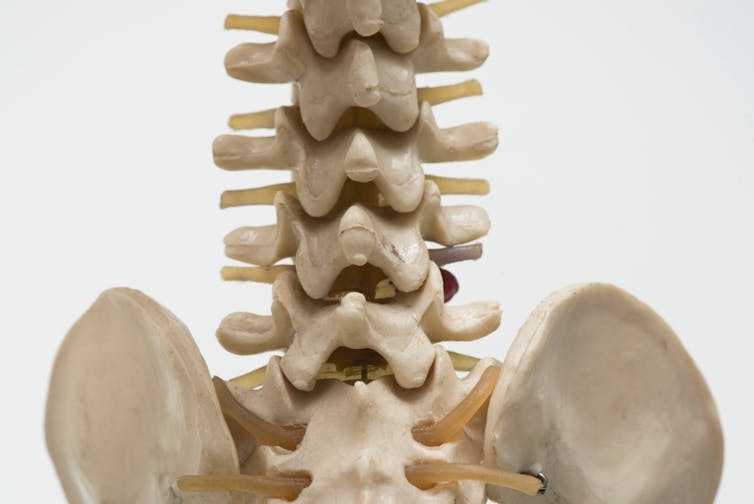
Lumbar puncture and spinal procedures show similar issues. Women tend to have a greater lumbar curve and different pelvic tilt, altering the angle at which a needle must pass between vertebrae. Mild spinal curvature is also more common in women. The procedure itself doesn’t change, but the geometry does, increasing the likelihood of multiple attempts and prolonged discomfort.
Even airway management, a cornerstone of anaesthesia and emergency medicine, reflects the same mismatch. Female airways are, on average, shorter and narrower. When equipment sizing and technique is based on a “standard” airway, women are more likely to experience sore throat and hoarseness afterward – effects often dismissed as minor, but rooted in anatomy rather than sensitivity.
Even something as commonplace as peripheral venous cannulation, the insertion of a small tube into a vein to deliver fluids, medications, or to take blood, reflects this mismatch. Women’s superficial veins are often smaller, less prominent and more mobile in soft tissue, making standard cannulation techniques more likely to result in repeated attempts, bruising and pain.
Design for variation, not exception
Doctors know bodies vary. In practice, many already adapt – choosing different patient positions, smaller instruments or altered techniques. But these adjustments are informal, inconsistently taught and rarely explained to patients.
Instead, difficulty is often bundled into vague categories: anxiety, tension, low pain tolerance or “one of those things”. The result is that women experience real, anatomy-driven discomfort without being told why, and may internalise it as a personal failing.
This matters. When discomfort is normalised or minimised, patients are less likely to return for screening, more likely to delay care, and more likely to mistrust reassurance that future procedures will be different.
None of this requires radical innovation. It requires naming the issue accurately. When procedures are taught and designed around a single reference body, predictable anatomical variation becomes an obstacle rather than a design feature.
Acknowledging that bodies differ – in length, curvature, mobility and spatial relationships – allows doctors to plan, explain and adapt more effectively.
Crucially, it also shifts the narrative. Instead of “this shouldn’t hurt”, the message becomes: “your anatomy means this procedure can be more challenging, and we’ll adjust it accordingly”.
Michelle Spear does not work for, consult, own shares in or receive funding from any company or organisation that would benefit from this article, and has disclosed no relevant affiliations beyond their academic appointment.
Source: The Conversation – UK – By Kerry Brown, Professor of Chinese Politics; Director, Lau China Institute, King’s College London
Zhang Youxia, a top military general and vice-chairman of the body in overall command of China’s military forces, was removed from office on January 23. His departure means all but one of the seven members of the central military commission (CMC), which is chaired by Chinese president Xi Jinping, have lost their positions in the last three years.
Xi has an established record of purging senior officials. Back at the dawn of his tenure as head of the Chinese Communist party in the early 2010s, there were a series of high-level fellings. Bo Xilai, a fellow politburo member who was convicted on bribery and embezzlement charges, was perhaps the most commented on.
But even Zhou Yongkang, a former senior party leader, was taken in under corruption charges in 2013 and expelled from the party. The slogan used by party leadership at the time was that even tigers needed to be afraid, not just flies. There were no exceptions when it came to party loyalty – no one was exempt and no one was safe.
Xi then turned his attention to the party’s armed wing, the People’s Liberation Army (PLA), which has been undergoing a series of abrupt personnel changes in recent years. In mid-2023, the then-minister of defence, Li Shangfu, disappeared from public view before being removed from office. This was followed by the removal of a number of senior military figures, largely on corruption claims.
The formal announcement of Zhang being under investigation was issued in the official party newspaper, the People’s Daily. He was accused with fellow CMC member Liu Zhenli of having severely fuelled political and corruption problems that threaten the party’s absolute leadership over the armed forces. It has thus led to external speculation of power struggles and internal fights.
No one really knows what is happening in the inner circle of Chinese leadership at the moment. It is a largely watertight place. Stories of Zhang leaking nuclear secrets to the US and plotting a coup against Xi that led to a gunfight in Beijing thus need to be treated with a great deal of scepticism. What is less contentious is the claim that the PLA is afflicted with ongoing structural issues.
China’s military issues
Zhang is in his seventies and is one of the very few senior military figures in China with actual combat experience, having served in the war against Vietnam in the late 1970s. He is also reportedly a native of an area near to where Xi’s family hailed from in the Shaanxi province of north-west China. This has been given as reason for the claim that the two are long-term friends.
But in the uppermost reaches of Chinese politics, sentiments and emotional links are unlikely to have much currency. For Xi, the priority is to deal with a world undergoing dramatic change. The US has become unpredictable and is now fighting not just with its enemies but also its friends.
That unpredictability is not welcome to a China that is dealing with significant economic, environmental and demographic issues. It does not want to become burdened with international obligations before it feels it can manage these.
And while many China-watchers have talked of 2027 marking the date when China may launch an invasion of Taiwan, over which it continues to claim sovereignty, the reality is that China’s military is untested in combat in recent decades. No one, including the Chinese themselves, know how it might perform.
The unease of China’s leaders at the poor showing of the much more experienced Russian forces in Ukraine underlines this. Several months after the invasion, an article in the People’s Daily criticised Russia’s performance, concluding that its military was too weak and its capabilities too limited to achieve its objectives. An amphibious operation in Taiwan will be far more difficult than Russia’s ground invasion of Ukraine.
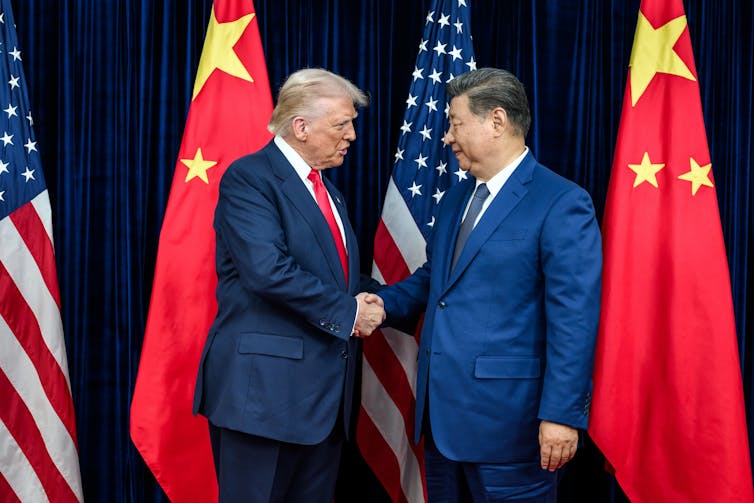
Xi Jinping greets Donald Trump ahead of their meeting in South Korea in October 2025. carlos110 / Shutterstock
Xi has demanded absolute loyalty and discipline from his political colleagues. The same extends to the PLA. The main objective is that it is battle-ready and able to deploy should opportunities arise, even if these were not expected to happen. The military must be ideologically and practically ready to move. It cannot be distracted by divisions and fractures within.
Zhang is clearly a man with rich and extensive experience, but there have been rumours for some time that he and Xi had disagreed on specific issues. As the Chinese saying goes, there can never be two tigers on the same mountain – Xi can only tolerate so much dissent, even from a figure with huge stature and seemingly incontestable credentials.
In the short term, all of this shows that the PLA is likely to be viewed as not yet fully ready to undertake major tasks such as mounting operations against Taiwan that are expected of it. In the longer term, the key thing is to watch is who replaces the figures already felled.
The coming year is likely to be one of generational change in China, at the provincial and then national level. China’s current key leaders are all in their late sixties and early seventies. While Xi himself is unlikely to move aside any time soon, those around him are going to experience a reshuffle.
The military will be seeing new core leaders. Who is appointed, what their backgrounds are and what that may mean for the overall posture of the country will be crucial things to track in the weeks and months ahead.
Kerry Brown does not work for, consult, own shares in or receive funding from any company or organisation that would benefit from this article, and has disclosed no relevant affiliations beyond their academic appointment.
For most people, cold weather is an inconvenience, requiring an extra layer of clothing or the thermostat to be turned up. For others, exposure to cold can trigger an allergic reaction severe enough to cause them to collapse.
Cold urticaria is a rare but potentially dangerous condition in which contact with cold temperatures causes the immune system to misfire. The results can be hives, swelling, pain and in some cases, life-threatening anaphylaxis.
The condition was first described in 1792 by a German physician called Johann Peter Frank. Today, we know it is almost twice as common in women than in men, with the average age of onset in the early twenties, though it can affect people at any age.
There is some good news: between 24% and 50% of people with the condition see improvement – or even full recovery – over the years.
There are two forms of the condition. Primary cold urticaria is the most common, accounting for about 95% of cases and often has no known cause. The remaining 5% are classified as secondary urticaria, which is linked to underlying conditions or infections, such as the Epstein-Barr virus, certain types of lymphoma (blood cancer), HIV and hepatitis C.
Primary cold urticaria typically causes a rash, swelling, bumps or hives, though some people also report fatigue, fever and aching joints. Symptoms usually appear when the skin is exposed to cold, but can also occur as the skin warms up again. Triggers aren’t limited to cold weather – they can include swimming, eating frozen food, drinking cold liquids and handling cold objects.
Aside from a few very rare genetic causes, why some people develop primary cold urticaria remains unknown. What is clear is that mast cells are involved. These sentinel cells act as first responders in the body’s tissues – including the skin – alerting the immune system to danger signals or germs.
What triggers their activation in cold urticaria remains a mystery, though one theory suggests that cold exposure causes the body to produce so-called autoallergens – substances that trigger an immune response against the body’s own tissues. Much more research is needed to understand how this happens.
When mast cells are activated, they release a chemical called histamine. Think of histamine as an alarm that alerts other immune cells to rush to the area. It also makes the blood vessels in that part of your body widen and become “leakier”, which causes the telltale swelling, redness and itchiness.
Normally, this response is helpful – the extra blood flow and leaky blood vessels allow immune cells to squeeze out of the bloodstream and into the surrounding tissue to fight off a genuine threat. But in cold urticaria, it’s a false alarm. Your body is mounting a full-scale immune response when there’s nothing to fight, causing discomfort without any benefit.
Doctors test for cold urticaria by placing an ice cube on a patient’s forearm and watching what happens after they remove it. This test typically follows patients noticing they develop welts, hives or rashes on exposure to cold things. This must be done by a medical professional because in about 20% of cases, it can trigger anaphylaxis.
The condition is quite rare, affecting six in every 10,000 people. But it may be underdiagnosed as not all sufferers have severe symptoms and, in some countries, particularly tropical ones, temperatures tend not to drop below 0°C in winter.
Once diagnosed, it’s important to help people with cold urticaria avoid or recognise their trigger temperatures. There are two measures that may be assessed, depending on the availability of measuring devices. One is the cold stimulation time test, which indicates how quickly your skin reacts to cold with a lump or rash (a shorter time suggests a more active response). The other measure is the critical temperature threshold, which is the warmest temperature that can still trigger symptoms.
Antihistamines and beyond
There are treatments that can help manage the symptoms. One approach is taking antihistamines before exposure to cold environments or stimuli.
For many people, though, a standard oral antihistamine dose isn’t enough. Sometimes, up to four times the standard dose may be needed. The trade-off is that some antihistamines can have a sedating effect, so caution is needed.
About 60% of people with cold urticaria respond well to treatment with antihistamines.
During short flare-ups, other drugs, such as corticosteroids, may be beneficial, although longer-term use brings side-effects, such as weight gain, indigestion and mood changes.
Severe cases can be treated with a monoclonal antibody called Omalizumab, which targets immunoglobulin E, a molecule involved in mast cell activation.
Another option is desensitisation: gradually exposing the skin to cooler temperatures over several days (although, sometimes over a few hours) to try to overcome the response and histamine release. There have been some successes with this approach, but most of the studies have been small.
For people with the most severe cases, adrenaline is a lifesaving option in response to anaphylaxis, though it appears to be under-prescribed in patients with cold urticaria.
People with this condition also face increased risk during surgical procedures, where anaesthetic drugs reduce core body temperature and operating theatres are kept deliberately cool. While warming measures are used during surgery, for people with heightened sensitivity to cold, this can present an additional risk.
As winter continues, it’s worth remembering that for some people, the cold isn’t just uncomfortable – it can be genuinely dangerous. Understanding and recognising cold urticaria could make all the difference.
Adam Taylor does not work for, consult, own shares in or receive funding from any company or organisation that would benefit from this article, and has disclosed no relevant affiliations beyond their academic appointment.
Four early Anglo-Saxon swords uncovered during a recent archaeological excavation I took part in each tell a story about how weapons were viewed at the time. There was also a striking discovery of a child buried with spear and shield. Was the child an underage fighter? Or were weapons more than mere tools of war to these people?
Weapons are embedded with values. Would, for example, the Jedi knights in the Star Wars franchise have as much nobility if they were armed with knives instead of light sabres? Today, modern armies fight remotely with missiles and drones, or mechanically with guns and armour. Yet in many countries, an officer still has a ceremonial sword, which worn incorrectly might even reveal an imposter.
The excavation, which I carried out with archaeologist Andrew Richardson, focused on an early medieval cemetery and our swords were found in graves. Our team from the University of Lancashire and Isle Heritage has excavated around 40 graves in total. The discovery can be seen in BBC2’s Digging for Britain.
One of the swords we uncovered has a decorated silver pommel (the rear part of the handle) and ring which is fixed to the handle. It is a beautiful, high status 6th century object sheathed in a beaver fur lined scabbard. The other sword has a small silver hilt and wide, ribbed, gilt scabbard mouth – two elements with different artistic styles, from different dates, brought together on one weapon.
This mixture was also seen in the Staffordshire Hoard (discovered in 2009) which featured 78 pommels and 100 hilt collars with a range of dates from the 5th to the 7th centuries AD.
In medieval times, swords – or their parts – were curated by their owners, and old swords were valued more highly than new ones.
The Old English poem Beowulf (probably composed between the 8th and early 11th century) describes old swords (“ealdsweord”), ancient swords (“gomelswyrd”) and heirlooms (“yrfelafe”). As well as describing “waepen wundum heard” – “weapons hardened by wounds”.
There are two sword riddles in the Exeter Book, a large codex of poetry written down in the 10th century (although the texts within it may describe earlier attitudes). In riddle 80, the sword describes itself: “I am a warrior’s shoulder-companion”. It’s an interesting turn of phrase given our 6th century discoveries. In each case the hilt was placed at the shoulder and the arm of the deceased appeared to hug the weapon.
A comparable embrace has been seen in burials at Dover Buckland, also in Kent. There were two in Blacknall Field, Wiltshire, and one in West Garth Gardens, Suffolk. It is, however, unusual to see four people buried like this in one cemetery, and interestingly they were found in close proximity.
The part of the cemetery we have excavated includes several weapon burials placed around a deep grave with a ring ditch enclosing it. A small mound of earth would have been built over the top of the grave marking it out.
This earliest grave – the one that the others weapon graves used to guide their location – contained a man without metal artefacts or weapons. Weapon graves were more popular in the generations either side of the middle 6th century, so it is likely this person was buried before the fashion to dress the dead with weapons was established. Perhaps because during the tumultuous later 5th century and earliest years of the 6th century weapons were valued too highly for the defence of the living.
Our further discovery of a 10-12 year old child’s grave with a spear and shield adds to this picture. The child’s curved spine made it unlikely he could use these weapons comfortably.
A second grave of a younger child contained a large silver belt buckle. This looks to have been far too large to be worn by the boy who was just two to three years old. Graves with objects like these usually belong to adult men, large buckles were a symbol of office in later Roman and early Medieval contexts, for example the spectacular gold examples from Sutton Hoo.
So why were these objects found in the graves? Recent DNA results point to the importance of relatedness, particularly within the Y chromosome that denotes male ancestry.
At West Helsterton in east Yorkshire, DNA results point to a biological relationships between men buried in close proximity. Many of these men had weapons, including one with a sword and two spears. Many of the other male graves were placed around their heavily armed ancestor.
We are not saying that ancient weapons were purely ceremonial. Dents on shields, and wear on bladed weapons speak of practice and conflict. Injury and early death seen in skeletons testifies to the use of weapons in early medieval society and early English poetry speaks of grief and loss as much as heroism.
As Beowulf shows, feelings of loss were bound up in the display of the male dead and their weapons as well as fears for the future:
The Geat people built a pyre for Beowulf, Beowulf’s funeral
stacked and decked it until it stood four-square,
hung with helmets, heavy war-shields
and shining armour, just as he had ordered.
Then his warriors laid him in the middle of it,
mourning a lord far-famed and beloved.
The weapons in our graves were as much as an expression of loss and grief, as they were a physical statement about strength or masculinity and the male family. Even battle hardened and ancient warriors cried, and they buried their dead with weapons like swords that told stories.
The spear, shield and buckles found in little graves spoke of the men these children might have become.
Duncan Sayer would like to thank Dr Andrew Richardson who is a co-director of the east Kent excavation project.
Source: The Conversation – UK – By Jay Silverstein, Senior Lecturer in the Department of Chemistry and Forensics, Nottingham Trent University
When Aztec emissaries arrived in 1520 to Tzintzuntzan, the capital of the Tarascan Kingdom in what is now the Mexican state of Michoacán, they carried a warning from the Aztec emperor, Cuauhtémoc.
They cautioned that strange foreigners – the Spaniards – had invaded the land and posed a grave threat. The emissaries requested an audience with the Tarascan ruler, known as the Cazonci, King Zuanga. But Zuanga had recently died, most likely from smallpox brought by the Spaniards.
Relations between the two empires had long been tense. They had clashed on the western frontier since 1476, fighting major battles and fortifying their borders. The Tarascans viewed the Aztecs as deceitful and dangerous – a threat to their very existence.
So, when the emissaries arrived to speak with a king who was already dead, they were sacrificed and granted audience with him in the afterlife. In that moment, the fate of the Aztecs was sealed in blood.
The Aztec empire did not fall because it lacked capability. It collapsed because it accumulated too many adversaries who resented its dominance. This is a historical episode the US president, Donald Trump, should take notice of as his rift with traditional US allies deepens.
Carl von Clausewitz and other philosophers of war have distinguished the concepts of force and power in relation to statecraft. In the broadest sense, power is ideological capital, predicated on military strength and influence in the global political sphere. In contrast, force is the exertion of military might to coerce other nations to your political will.
While power can be sustained through a strong economy, alliances and moral influence, force is expended. It drains resources and can erode internal political capital as well as global influence if it is used in a way that is perceived as arrogant or imperialistic.
The Aztec empire formed in 1428 as a triple alliance between the city-states of Tenochtitlan, Texcoco and Tlacopan, with Tenochtitlan eventually dominating the political structure. The empire exerted force through seasonal military campaigns and balanced this with a power dynamic of sacrificial display, threat, tribute and a culture of racial superiority.
In both its use of force and power, the Aztec empire was coercive and depended on fear to rule. Those subjugated by the empire, and those engaged in what seemed perpetual war, held great animosity and distrust of the Aztecs. The empire was thus built on conquered people and enemies waiting for the right opportunity to overthrow their overlords.
Hernán Cortés, the Spanish conquistador who ultimately brought large parts of what is now Mexico under the rule of Spain, exploited this hostility. He forged alliances with Tlaxcala and other former Aztec subjects, augmenting his small Spanish force with thousands of indigenous warriors.
Cortés led this Spanish-indigenous force against the Aztecs and besieged them in Tenochtitlan. The Aztecs had only one hope: to persuade the other great power in Mexico, the Tarascan empire to the west, to join forces with them. Their first emissaries met an ill fate. So, they tried again.
In 1521, Aztec envoys arrived once more in Tzintzuntzan and this time met with the new lord, Tangáxuan II. They brought captured steel weapons, a crossbow and armour to demonstrate the military threat they faced.
Aztec emissaries presenting Spanish weapons to the Tarascan king as proof of the threat. Codex Michoacan, CC BY-NC
The Tarascan king paid attention. He sent an exploratory mission to the frontier to determine whether this was Aztec trickery or truth. As they arrived at the frontier, they met a group of Chichimecs – semi-nomadic warrior people who often worked for empires to patrol borders.
When told the mission was heading to Tenochtitlan to scout the situation, the Chichimecs replied that they were too late. It was only a city of death now, and they were on their way to the Tarascan king to offer their services. Tangáxuan submitted to the Spanish as a tributary kingdom the following year before being burned to death in 1530 by Spaniards trying to find where he had hidden gold.
Had the Tarascans maintained normal political relations with the Aztecs, they might have investigated the report of the first emissaries. One can imagine how history would be different if, during the siege of Tenochtitlan, 40,000 Tarascan warriors – renowned archers – had descended from the mountains to the west. It is unlikely that Cortés and his army could have prevailed.
American foreign policy
The failings of the Aztec empire were not due to a lack of courage or military prowess. During their battles with the Spanish, the Aztecs repeatedly demonstrated adaptability, learning how to fight against horses and cannon-laden ships.
The failing was a fundamental flaw in the political strategy of the empire – it was built on coercion and fear, leaving a ready force to challenge its authority when it was most vulnerable.
The foreign policy of the US since 2025, when Trump entered office for his second term, has emulated this model. Recently, the Trump administration has been projecting coercive power to support its ambitions for wealth, notoriety and to project American exceptionalism and manifest superiority.
This has manifested in threats or the exercise of limited force, such as tariffs or military attacks in Iran, Syria, Nigeria and Venezuela. Increasingly, other nations are challenging the effectiveness of this power. Colombia, Panama, Mexico and Canada, for example, have largely ignored the threat of coercive power.
As Trump uses American power to demand Greenland, his threats are becoming more feeble. Nato nations are abiding by their longstanding pact with economic and military resolve, with their leaders saying they will not give in to Trump’s pressure. The US is being pushed towards a position where it will have to switch from coercive power to coercive force.
If this course persists, military engagements, animosity from neighbours and vulnerabilities arising from the strength of other militaries, economic disruptions and environmental catastrophes may well leave the world’s most powerful nation exposed with no allies.
Jay Silverstein received funding from the US National Science Foundation (NSF), the Foundation for the Advancment of Mesoamerican Studies (FAMSI), and The Penn State Hill Foundation that supported his doctoral studies.
Source: The Conversation – USA – By Luke William Hunt, Associate Professor of Philosophy, University of Alabama; Institute for Humane Studies
U.S. Border Patrol agents stand guard at the Bishop Henry Whipple Federal Building in Minneapolis, Minn., on Jan. 8, 2026. Charly Triballeau/AFP via Getty Images
The Trump administration says federal agents have “absolute immunity” from prosecution in Minneapolis. Department of Justice and Homeland Security officials have indicated that criminal investigations into the killings by immigration agents of Minneapolis protesters Renee Good and Alex Pretti are inappropriate, declaring that both were domestic terrorists.
The killing of Good and Pretti raises legal, tactical and policy questions regarding law enforcement practices by federal agents.
Metro Surge has also affected the lives of U.S. citizens, including citizens protesting immigration enforcement efforts. On Jan. 7, 2026, Good – a 37-year-old U.S. citizen and mother of three – was shot and killed in her vehicle by an ICE agent on a residential street in Minneapolis. On Jan. 24, 2026, CBP agents shot and killed 37-year-old Pretti, a U.S. citizen, on a public street in Minneapolis.
As a policing scholar and former FBI special agent, I believe these cases illustrate how some federal agents are engaging with the public in a way that undermines established principles of policing and constitutional law.
Law of deadly force
The Fourth Amendment to the U.S. Constitution protects the “right of the people to be secure in their persons … against unreasonable … seizures.” A law enforcement officer’s use of force – including deadly force – is considered in law to be a seizure and must be reasonable.
In the 1989 decision Graham v. Connor, the U.S. Supreme Court construed the objective “reasonableness” of force based upon “the perspective of a reasonable officer on the scene, rather than with the 20/20 vision of hindsight.” The court explained “reasonableness” in light of the idea that police officers must sometimes make “split-second” judgments.
In Tennessee v. Garner, the Supreme Court in 1985 established that the use of deadly force to prevent the escape of a fleeing suspect is unreasonable unless the suspect poses a significant threat of death or serious physical injury to the officer or others.
These legal principles form the basis of DHS deadly force policy, which is similar to the policy I followed as an FBI agent: Law enforcement officers, or LEOs, “may use deadly force only when the LEO has a reasonable belief that the subject of such force poses an imminent threat of death or serious bodily injury to the LEO or to another person.”
The legal question raised by the Good and Pretti killings is whether the officers had a reasonable belief that Good and Pretti posed an imminent threat of death or serious bodily injury to the officers.
Moments before the ICE agent killed Good, the agent walked around Good’s parked vehicle filming Good with his phone in one hand. Good, sitting behind the wheel in her car, says “That’s fine dude, I’m not mad at you.”
As the shooting agent positions himself in front of Good’s vehicle, a second agent walks quickly toward Good’s vehicle and tries to open the door and reach inside. Good turns her steering wheel and tries to drive away – what a law enforcement agent could interpret as potentially an act of fleeing. The agent in front of Good’s vehicle shoots Good three times as she drives by him. He then mutters, “f-cking b-tch,” and walks away from Good’s crashed vehicle. There is dispute about whether Good’s vehicle grazed the agent.
Moments before Pretti was killed by federal agents, he was standing in a public street when agents approached him and sprayed him with a chemical agent. Pretti’s hands are visible and show that he is holding a cellphone.
The agents wrestle Pretti to the ground and repeatedly beat him with an object. Pretti is not seen brandishing a firearm. However, an agent approaches Pretti during the scuffle and appears to remove a firearm from Pretti’s waistband. Shortly thereafter, agents shoot Pretti 10 times. Pretti had kicked the taillight of a law enforcement vehicle – and was then tackled and tear-gassed by agents – 11 days before he was killed.
Some former federal prosecutors argue that these facts in the Good and Pretti cases warrant a thorough criminal investigation regarding whether federal agents illegally used lethal force in the killings. The central legal question is whether the evidence shows that the agents reasonably feared for their lives, or whether they acted unlawfully out of anger, frustration, retaliation or some other unjustified mental state.
Tactics, policy and split-second decisions
Beyond legal questions, Operation Metro Surge raises tactical and policy questions about DHS law enforcement practices.
State, local and federal law enforcement officers are required to follow firearms safety rules. While training at the FBI Academy at Quantico, I was required to learn and follow the cardinal safety rules, which include (1) treating all firearms as loaded, (2) keeping firearms pointed in a safe direction and (3) keeping one’s finger off the trigger until one is ready to press it.
These rules help keep officers and the public safe, including by preventing unintentional discharges of firearms.
There were multiple bystanders and officers in the immediate vicinity of both the Good and the Pretti shootings. That raised risks associated with unintentional discharges and jeopardizing officers’ ability to meet the requirement to respect human life.
DHS officers specifically are also required to “employ tactics and techniques that effectively bring an incident under control while promoting the safety of LEOs and the public,” which includes avoiding “intentionally and unreasonably placing themselves in positions in which they have no alternative to using deadly force.”
In both the Good and the Pretti cases, federal agents placed themselves in poor tactical positions that increased the likelihood of using deadly force.
When feasible, DHS agents are required to issue a verbal warning to comply with the agent’s instructions. Agents rushed to physically remove Good from her vehicle and similarly rushed to push Pretti off the street and then spray him with a chemical agent. There is reason to think the agents could have taken a more measured, composed and communicative approach to de-escalate the situation.
These tactical and policy principles reveal that the legal analysis of an agent’s “split-second” decision to use deadly force is not the only issue raised by these cases. Analysis of the seconds and minutes leading to the use of force is also crucial.
ICE and CBP federal agents are not police officers. However, they are law enforcement officers engaged in policing. Operation Metro Surge has made these agents highly visible.
Instead of the more traditional, methodical and long-term investigations they normally conduct, federal agents are now routinely taking on more of a traditional police role in the public eye. This role ranges from managing traffic violations to maintaining order during chaotic public protests.
Although the surge has brought these agents closer to a traditional police role, they are pursuing a militarized warrior model of policing.
Masked federal agents in tactical gear roaming the streets of Minneapolis blur the line between civilian and military policing. Coupled with events such as the killings of Good and Pretti, it is unsurprising that public trust is eroding not only in federal law enforcement agencies such as ICE but also in police departments generally.
Policing is difficult work under any circumstance. If federal agents continue to increase their interactions with the public, I believe they will need to embrace tactics from community policing and what is called procedurally just models of policing. These models emphasize building popular legitimacy by reinforcing relationships – through honest cooperation and partnership between law enforcement officers and the public.
The rule of law
Publicly available facts and evidence raise significant questions about whether federal agents acted contrary to established principles of policing and constitutional law in the deaths of Good and Pretti.
The rule of law is a cornerstone of liberal democracies that limits the exercise of discretionary or arbitrary power by government officials. This idea includes holding officials accountable when there is evidence of unauthorized uses of power. A thorough investigation into DHS tactics, I believe, is necessary to preserve the rule of law.
Luke William Hunt does not work for, consult, own shares in or receive funding from any company or organization that would benefit from this article, and has disclosed no relevant affiliations beyond their academic appointment.
The UN issued warnings of potential mass violence between the South Sudanese government and the White Army in January 2026. A peace agreement ended a five-year civil war in the country in 2018. This was followed by a period of relative calm that ended in 2025 in the wake of clashes between the government and White Army. Attempts to bring peace since have faltered. The government has charged and suspended first vice-president Riek Machar over claims he commanded the White Army during the violence in Nasir, Upper Nile State. Jan Pospisil, who has studied South Sudan’s conflict dynamics, explains the origins of the White Army and its political impact.
The term “White Army” refers to the ash traditionally used in Nuer cattle camps to repel mosquitoes. The ash is smeared on the bodies and faces of young men and gives them a whitish appearance. The Nuer are one of South Sudan’s largest ethnic groups. They primarily keep cattle and inhabit the greater Upper Nile region.
Authority in the White Army flows upward from communities, not downward from political leaders.
The White Army’s orientation is primarily defensive: protecting cattle, land and local autonomy in an environment where the state is experienced less as a provider of security than as a source of threat.
But this defensive logic coexists with raiding and inter-communal violence.
In 1991, the White Army started to pro-actively use this name and was drawn into national conflict around the so-called Nasir split. This is when suspended vice-president Riek Machar and other predominantly Nuer commanders broke with John Garang’s Sudan People’s Liberation Movement. Garang, who died in 2005, was from another of South Sudan’s major ethnic groups, the Dinka.
White Army forces fought alongside the Nasir faction (led by, among others, Machar) and were central to a massive attack on Bor later in 1991. The Bor massacre led to the death of several thousand Bor Dinka, a sub-group of the Dinka people who primarily inhabit Jonglei State.
Attacks were carried out largely by White Army fighters pursuing revenge over cattle raids and local objectives that aligned only partially with Machar’s political aims. This is an episode Machar apologised for in 2011, saying he
was responsible for both the good things and the bad things that came as a result of the Nasir Declaration.
The apology was revealing. It acknowledged political responsibility without implying operational command.
The Bor massacre remains a dominant lens through which many Bor Dinka understand the White Army: as an organised anti-Dinka force opposing the ruling party. This is understandable, but is also a source of lasting misperception about how the group operates.
What’s the relationship between Riek Machar and the White Army?
Machar has benefited politically from White Army mobilisation. But he does not direct it.
His current prosecution is therefore deeply ironic. Machar is accused of commanding a force that has, time and again, demonstrated its structural resistance to sustained external control, including his own.
He is now being tried for exercising a form of command that he has long sought but never fully possessed.
From the 1991 Nasir split to the civil war between the government and the Machar-led opposition that erupted in December 2013 and the renewed violence of 2025, White Army forces have repeatedly fought alongside Machar’s forces.
However, the White Army exists as an amalgamation of community militias that are tied to particular areas rather than as one organised force. Their size depends on the capacity of regional leaders to mobilise the youth at a given time.
During the civil war, White Army mobilisations delivered some of the opposition’s most significant battlefield successes.
Yet these forces often withdraw once immediate objectives – such as the defeat of militias aligned with the government in a certain territory – are achieved. This leaves opposition units unable to hold territory.
The assumption that’s made is that these temporary alliances equate to control of the White Army. They don’t. Confusing the two has repeatedly distorted how South Sudan’s conflicts are understood – and mismanaged.
Conflating the White Army with the Sudan People’s Liberation Movement/Army-in-Opposition (SPLM/A-IO) serves a political purpose. It legitimises state counterinsurgency, including airstrikes over the course of 2025 that hit civilian areas. It recasts local resistance as elite manipulation.
But it also obscures deeper drivers of South Sudan’s violence: the collapse of civilian protection, the outsourcing of force to allied ethnic militias such as the Agwelek or the Abushok, and the ethnicisation of political belonging since 2013.
If the White Army continues to be misunderstood, the danger is further ethnicisation of South Sudan’s politics. This is where complex communal violence is reduced to criminal conspiracy and used to legitimise militarised state responses.
Treating political crises as matters for prosecution rather than compromise risks deepening the very dynamics that have fuelled South Sudan’s wars since 2013.
The state portrays the White Army as a terrorist group: why is this a problem?
In the case it has brought against Machar, the government is advancing a familiar claim: that the White Army is an armed wing of the SPLM/A-IO acting on Machar’s orders.
The charge matters. It underpins not only Machar’s prosecution, but also a wider narrative that treats community mobilisations as opposition conspiracy in South Sudan.
The claim rests on a fundamental misunderstanding of what the White Army is, and has been for more than three decades.
Firstly, the group draws on long-standing Nuer community self-defence traditions, even if it became politically visible in national conflict in the early 1990s. It is neither purely protective nor purely predatory. This makes the White Army difficult to incorporate into elite peace agreements, and easy to mischaracterise as irrational or terrorist.
Secondly, the White Army is not a standing militia, nor an insurgent organisation with a central command. Authority flows from the community.
To understand why the White Army mobilises as it does, it is important to consider December 2013. The mass killing of Nuer civilians in Juba at the outbreak of civil war marked a decisive rupture in South Sudan’s political order. Violence that had previously been mediated through elite rivalry and fragmented local conflicts became overtly tribalised.
This interpretation – whether accepted or rejected by external observers – has shaped mobilisation ever since. White Army fighters interviewed by journalists and researchers over the past decade have been consistent: they did not fight because Machar was removed from office, but because Nuer civilians were killed.
And since 2013, Nuer diaspora networks across North America, Europe and east Africa have played a role in supporting White Army mobilisations. This support has taken multiple forms: fundraising, advocacy and social media campaigning, logistical assistance, and political pressure on opposition leaders.
Diaspora involvement reinforces White Army mobilisation by amplifying narratives of collective victimhood and unfinished justice, often from a distance that strips away the everyday constraints faced by communities on the ground.
As a result, South Sudan’s 2013 war did not merely fragment the state; it reshaped political identities far beyond its territory.
Jan Pospisil receives funding from the Peace and Conflict Resolution Evidence Platform (PeaceRep), funded by UK International Development from the UK government. However, the views expressed are those of the authors and do not necessarily reflect the UK government’s official policies. Any use of this work should acknowledge the authors and the Peace and Conflict Resolution Evidence Platform.
The government has announced a massive shake-up of policing in England and Wales, with the aim to balance providing a local police service across the country while also facing national threats. It involves the creation of a new National Police Service (touted as a “British FBI”) and reducing the number of forces across England and Wales from 43 to a possible 12 bigger, regional forces.
Elected police and crime commissioners will be replaced by regional mayors, or police and crime boards from 2028. And Whitehall will be given refreshed powers to intervene in failing forces.
The last strategic reform of policing in England and Wales was informed by a royal commission, in May 1962. This examined policing function, accountability, public relationships and staffing. It led to the current structure, cutting the number of forces down from 117.
The government claims its plans will deliver better governance and improve both national capabilities for challenging crimes and local visibility of policing. Yet, unlike in 1962, 2026 reform avoids addressing a key problem: the relationship the public wants with the police.
The idea of “policing by consent” underpins policing in the UK. Key to this is the police working with the public. But fewer than half of the public have confidence in their local policing. Data consistently shows the public do not like or want what they are getting.
The government is proposing to introduce new local policing guarantees, setting out “the minimum levels of service the public should expect to receive from their police force wherever in England and Wales they live”.
But this doesn’t need to involve a massive structural overhaul. Research tells us what the public wants is basic: they want the police to turn up, and care. Good policing relies on building relationships of trust – but you can’t achieve that by not being there.
The police inspectorate has noted in recent years that understaffing and inexperienced policing teams have left forces unable to respond effectively: “This can lead to non-emergency calls for help from the public waiting days for a response, or investigations failing because key lines of enquiry have been missed.”
As part of the overhaul, the government is proposing national response and performance targets for 999 calls and for officers attending a scene. Slow response times are one thing, but not turning up at all is the bigger issue. Reports of forces screening out calls sends a message to the public that the police don’t care, and to criminals that they can get away with it.
The government argues that its proposed approach will mean less pressure on local forces to address national issues, freeing up resources to deal with local crime. But the current largest force, the Met, struggles to solve large numbers of reported crimes. I would argue that moving local policing further away from communities will further erode any working relationship with policing’s greatest stakeholder: the public.
The Neighbourhood Policing Guarantee introduced in April 2025 promised to deliver better response times, but the public are still frustrated with the lack of police response to visible, low-level crimes.
Shoplifting alone is seen to be “spiralling out of control” with a brazen 20% increase in the year to March 2025. And yet the head of the Met police has called on shopkeepers to do more to protect themselves.
The proposals aim to “ensure that shop theft and assaults on shopworkers will no longer go unpunished by bringing in new powers and providing additional funding to policing, working with retailers, to take further action”.
When the police do turn up, they do not need new powers, they just need to use the powers they’ve already got. But to do that warranted police officers (with actual powers of arrest) need to be the boots on the ground – not an app, a bot or a drone.
Just like ambulances, the public should be able to rely on the police in an emergency. There needs to be far more proactive, preventative work done with partners on long-term solutions. We simply can’t afford a perpetual reactive problem solving model.
Rebuilding trust
The government is proposing a number of reforms to increase policing standards and trust, including (a yet-to-be costed) “Licence to Practise” that police officers will need to renew over their career. But officers already swear an oath of operational independence for their warrant card – this risks adding more administrative burden on overly stretched officers, despite a claim that administrative red tape will be cut.
Police officer numbers are already falling, with forces losing nearly 1,500 this year alone, largely driven by losses at the Met. The government has committed to 13,000 more neighbourhood officers, but has also placed an emphasis on automative technology. This could, I argue, be used to justify fewer actual police officers in the future.
Rising crime, coupled with falling public confidence, represents a crisis in policing. The argument is that there is an “urgent” need to better tackle crime and improve trust and confidence, yet reforms of this scale will take time.
The police must work with the public on solutions that pay for themselves. This would not rely on restructuring necessarily, just listening to people about what good policing looks like, then working together on making that happen.
John Coxhead receives funding from the Police for Research.