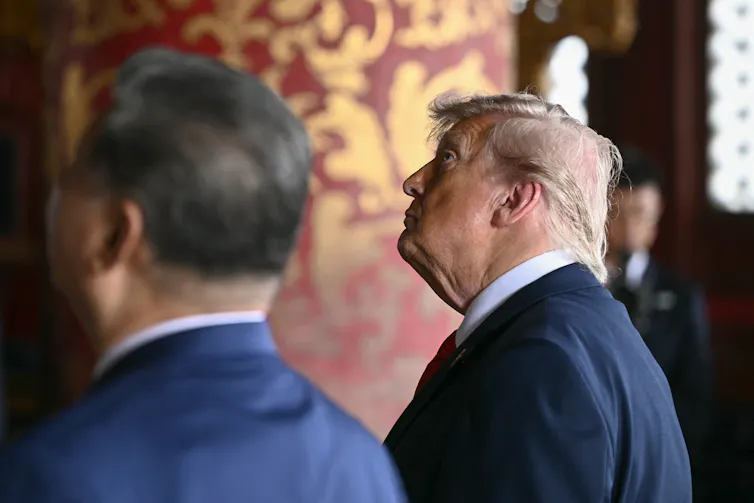
China’s President Xi Jinping and U.S. President Donald Trump visit the Temple of Heaven in Beijing on May 14, 2026.Brendan Smialowski/Getty Images
Diplomacy often masquerades as theater. And nearly nine years after his first state visit to China, Donald Trump returned to Beijing with an extended cast of characters.
Alongside the U.S. president on his May 2026 visit was a senior delegation of politicians including his secretary of defense, and a phalanx of business leaders and technology executives. It was a traveling display of American political and corporate power.
Not that the hosting Chinese were short of symbolic gestures themselves. Trump’s first China visit in 2017 had already shown how far Beijing was willing to go to turn diplomacy into theater. On that occasion, Chinese President Xi Jinping and his wife Peng Liyuan personally accompanied Donald and Melania Trump through the Forbidden City, Beijing’s former imperial palace, drinking tea inside the palace walls and taking in a Peking opera at the Belvedere of Pleasant Sounds, a Qing imperial theater built for court entertainment.
So what was being conveyed this time around? As a cultural historian of modern China, I took a peek beyond the official statements and trade headlines of the Xi-Trump summit and into the images, gestures and cultural symbolism on display.
The formal choreography began at Beijing’s Great Hall of the People, where the two leaders exchanged views on the Iran conflict, the war in Ukraine and the Korean Peninsula, among other items.
But the more interesting story of the visit, to me, was told outside the meeting room.
After their two-hour bilateral meeting, Trump and Xi paid a cultural visit to the Temple of Heaven in Southern Beijing. Built in the early 15th century, the temple is China’s most complete surviving imperial religious complex. For nearly five centuries, emperors of the Ming and Qing dynasties came here to worship Heaven and pray for good harvests.
Its most recognizable structure, the Hall of Prayer for Good Harvests, rises in three tiers of blue-glazed tiles above a marble platform, its circular form and crimson columns translating cosmology into architecture. UNESCO inscribed the site as a World Heritage Site in 1998, recognizing it as “a masterpiece of architecture and landscape design.”
When Trump and Xi posed for photographs, they were standing in a place long associated with cosmic order and the welfare of the people. To bring a foreign leader there is to invite a particular reading of the relationship: not simply as a bargain between states, but as a relationship that Beijing hopes to associate with order, abundance and peace.
There was also a more practical layer to this symbolism. The Temple of Heaven links political authority to agricultural abundance. Emperors came here to pray not for abstract harmony but for grain. That made it a pointed setting for a visit in which American agricultural exports — soybeans, grains and beef among them — were expected to matter.
For Trump, any Chinese commitment to buy more U.S. farm goods would have clear domestic political value. For Xi, the setting allowed a hard bargaining issue — farm purchases — to be translated into an older symbolic language of harvest that spoke to both domestic and international audiences.
Before Trump, Kissinger
Trump was not the first American statesman to be brought to the Temple of Heaven.
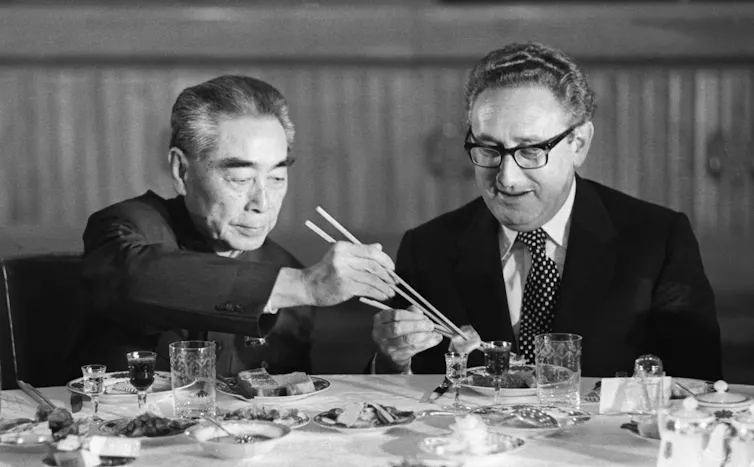
In July 1971, Henry Kissinger, then national security adviser to President Richard Nixon, arrived in Beijing on his famous secret mission — the back-channel visit that helped re-open the door between two countries that had little direct contact for more than two decades. Between tense negotiations with Chinese premier Zhou Enlai, Kissinger made time to visit the temple.
There, standing amid the old cypress groves, he was said to have been deeply moved by the timeless atmosphere of the hall and its surroundings.
Henry Kissinger accepts food from Chinese Premier Zhou Enlai during a state banquet in the Great Hall of the People in Beijing in 1973. Bettman/Getty Images
The motif of old trees and deep time returned on May 15, when Xi gave Trump a rare walk through Zhongnanhai, the walled compound that now houses the core of China’s party-state leadership. Reuters reported that a hot mic captured Xi drawing Trump’s attention to the age of the trees around them — some centuries old, some said to be more than a thousand years old. When Trump asked whether Xi had taken other presidents on similar walks, Xi replied that he had only rarely.
Together, the Kissinger anecdote and the Zhongnanhai walk reveal a recurring logic in Chinese-American diplomacy: America’s fast-moving economy is invited to look at China’s sense of tradition. Xi has used this tactic with other leaders, too. When French President Emmanuel Macron visited China in 2023, he attended a guqin performance invoking the classical idea of the zhiyin — the rare listener who truly understands one’s music.
Basketball and roast duck
Trump’s visit was not staged only through imperial grandeur, however. It also moved into a more familiar register: food, sports and popular culture.
The state dinner on May 14 was another study in careful hospitality. Chefs designed the menu to honor both Chinese culinary prestige and Americans’ — and Trump’s — known preferences: Peking roast duck, crispy beef ribs, pan-fried pork bun, tiramisu and fruit and ice cream.
The table setting for U.S. President Donald Trump at a state banquet with China’s President Xi Jinping at the Great Hall of the People in Beijing on May 14, 2026. Brendan Smialowski/AFP via Getty Images
Trump thanked Xi for a “magnificent welcome like none other,” then replied in a language more recognizably his own. He spoke not only of power politics but of people-to-people ties: Chinese workers who helped build America’s railroads, Chinese enthusiasm for basketball and blue jeans and the sheer presence of Chinese restaurants across the U.S.
The examples were characteristically Trumpian — simple, vivid and easy to grasp. But they pointed to something important. U.S.–China relations have never been made only by presidents, diplomats and official communiques. They have also been shaped by athletes, musicians, restaurant owners, students and tourists.
The basketball reference was especially resonant. Sports have long offered a softer language for U.S.–China relations. In April 2026, just weeks before Trump’s visit, China and the U.S. marked the 55th anniversary of ping-pong diplomacy — the famous 1971 exchange in which a “little ball” helped move the “big ball” of world politics.
Basketball now plays a similar role. For many Chinese fans, the NBA is a deeply familiar world of players, teams and memories that represents the spirit of America: Michael Jordan, Kobe Bryant, LeBron James and Yao Ming. That reservoir of affection has survived even periods of political tension. Trump, in invoking it, was drawing on something real.
A second act in the US?
The main lesson of all this symbolism is that, in U.S.–China relations, atmosphere has never been secondary.
Diplomatic theater cannot settle disputes over technology or Taiwan, or determine the future of the global order. But it can shape the mood in which rivalries are managed, and the stories that leaders tell their public about what the relationship means.
And on that front, the summit worked on several levels. To the Chinese audience, it presented their leaders as confident and capable of managing a tense relationship with the U.S. on China’s own cultural terms.
U.S. President Donald Trump and Chinese President Xi Jinping attend a welcome ceremony at the Great Hall of the People on May 14, 2026, in Beijing, China. Alex Wong/Getty Images
For Trump and the American delegation, it offered a lesson in Chinese traditions and culture that promotes deeper understanding across political divides. And for both societies, the references for food, sports and popular culture created a more neutral ground on which connection could still be imagined.
From the 1970s opening to Trump’s 2017 visit to the Forbidden City, and from the Temple of Heaven photo-op to the walk among old trees at Zhongnanhai in 2026, cultural staging remains central to how China presents itself to America — and how America is invited to imagine China. It was announced on May 15 that Xi will pay a state visit to the U.S. in September at the invitation of Trump. If that happens, the theater of diplomacy will move to American soil, and the question will be how Washington chooses to stage China in return.
Xianda Huang does not work for, consult, own shares in or receive funding from any company or organization that would benefit from this article, and has disclosed no relevant affiliations beyond their academic appointment.
Source: The Conversation – Africa – By Nyashadzashe Chiwawa, AIA Research Co-ordinator in the College of Law and Management Studies, University of KwaZulu-Natal
Across many cities and towns in South Africa, turning on a tap no longer guarantees water. Instead, trucks – known as water tankers – arrive to deliver water to communities facing shortages.
Water tankers have shifted from being an emergency stopgap to a routine feature of water provision by municipalities. In many communities, especially informal settlements and areas affected by repeated outages, residents now depend on trucks to deliver water for months at a time.
This reliance has grown over more than 10 years as ageing pipes, leaking networks, failed pumps, power cuts and poor maintenance have made supply increasingly unreliable.
Water tankering has also become a lucrative municipal business. Johannesburg Water, an entity owned by the City of Johannesburg, reportedly spent R130.5 million (US$8 million) on tankers in the 2024/25 financial year. Although this is only about 0.16% of Johannesburg’s combined R83.1 billion operating and capital budget for 2024/25, it is a large recurring outlay for what is meant to be an emergency service. It is also about 1.8% of the city’s R7.4 billion capital budget, money that could otherwise support longer-term infrastructure investment.
In Johannesburg, the tankers are largely supplied through private contractors appointed by Johannesburg Water. They deliver water from Johannesburg Water’s own supply.
The water tanker contracts have also attracted controversy: a R263 million (about US$16 million) Johannesburg Water contract for 70 water tankers was declared invalid and set aside by the Gauteng High Court in December 2025 because of irregularities in the tender process.
South Africa’s growing reliance on water tankers reflects a deepening collapse in municipal water systems. A 2023 government report found that 46% of water supply systems in the country had poor or bad microbiological water quality, compared with only 5% in 2014.
Water lost through leaks, faulty meters, illegal connections, poor billing or uncollected revenue rose from 37% in 2014 to 47% in 2023. This is far above the international average of about 30%.
By 2025, 47% of audited wastewater treatment systems were in a critical state, up from 39% in the previous assessment. Water systems rated excellent or good fell from 14% to 8%.
Together, these reports point to a long-running deterioration in municipal capacity: infrastructure is ageing, maintenance budgets are inadequate, skilled staff are in short supply, and many municipalities are losing treated water faster than they can reliably deliver it.
As a researcher working in public governance and service delivery, I conducted a study aimed at understanding what happens when a temporary water solution becomes permanent. I wanted to find out how this shapes the lives of people forced to collect their only water supply in buckets from tankers over long periods.
My research explored how tanker-based water provision affects fairness, environmental sustainability, and trust in government in the eThekwini Municipality (formerly known as Durban), a coastal city in South Africa.
The findings reveal a troubling pattern. Marginalised communities, particularly those in informal settlements or peri-urban areas, receive irregular and unreliable water deliveries. Some wait hours or even days for water, while others have more consistent access.
The key findings of my research are that water tankering:
delays real solutions to water shortages
is the result of top-down decisions that communities haven’t been part of
has a negative impact on the environment
makes inequality much worse.
The challenges seen in eThekwini are not unique. Cities around the world are facing similar pressures from climate change, urbanisation and ageing infrastructure. Relying on short-term fixes like tankering is becoming more common. But understanding its consequences is critical for avoiding larger crises in the future.
On the ground
I spoke directly to people affected by water shortages and those responsible for managing supply: municipal officials, engineers, community leaders, activists and residents living in water-scarce areas. My aim was to record real life stories about how people receive water, how they perceive the system and what challenges they face.
The problems identified included:
delays in real solutions to water shortages. Instead of investing in infrastructure like pipes, reservoirs and treatment plants, municipalities are relying on tankers as a stopgap. Over time, this delays tackling the root causes. As one participant described, tankering becomes a “Band-Aid” rather than a cure.
a lack of community involvement. Decisions about water distribution are often made without input from those most affected, leading to mistrust, frustration and a sense of exclusion. When people feel they have no voice in how water is managed, it undermines both governance and social cohesion, as one person I interviewed told me:
I advocate for community-driven solutions such as rainwater harvesting systems or decentralised water treatment facilities. These approaches empower communities to manage their water resources sustainably and reduce dependence on external interventions like water tankering.
environmental impact. The tankers use diesel, which causes carbon emissions and pollution. Extracting and transporting water at scale can strain natural resources, especially in already water-stressed regions. As another person I interviewed said:
It’s not a sustainable solution for ensuring water security. It’s costly, energy-intensive, and can have negative environmental impacts.
inequality. Water is essential to life, health and dignity. When access to water is unequal, it affects everything from education and employment to public health. Children in water-scarce households may miss school. Families may spend hours collecting water instead of working. Poor water quality can lead to disease. These are not isolated issues. A community member told me that getting water from tankers instead of from the tap is frustrating and demoralising:
We feel like second-class citizens, constantly at the mercy of erratic delivery schedules and uncertain water quality. Ethically, we deserve access to reliable, clean water just like any other community. The current situation undermines our dignity and perpetuates a cycle of poverty and dependence.
What needs to happen next?
First, governments must shift from reactive to proactive solutions. This means investing in long-term water infrastructure rather than relying on emergency measures. Pipes, treatment plants and storage systems may require large upfront costs, but they provide sustainable and equitable access to water over time.
Second, governance must improve. Transparency, accountability and anti-corruption measures are essential to ensure that resources are used effectively. Public funds spent on repeated tanker contracts could often be better invested in permanent systems.
Third, communities must be included in decision-making. Local knowledge and participation can lead to more effective and context-specific solutions, such as rainwater harvesting or decentralised water systems. When people are involved, they are more likely to trust and support water management strategies.
Finally, policymakers need to treat water access as a matter of justice, not just logistics. This means recognising water as a basic human right and ensuring that policies prioritise the most vulnerable populations.
Nyashadzashe Chiwawa does not work for, consult, own shares in or receive funding from any company or organisation that would benefit from this article, and has disclosed no relevant affiliations beyond their academic appointment.
Source: The Conversation – Africa – By Danny Bradlow, Professor/Senior Research Fellow, Centre for Advancement of Scholarship, University of Pretoria
The World Bank made history in 1994 by creating the Inspection Panel, the first independent accountability mechanism at any international organisation. Its function is to investigate complaints from communities who allege they were harmed because the bank failed to comply with its own policies and procedures.
By establishing the three-member Inspection Panel, the World Bank showed support for a democratic vision of international governance based on the rule of law and the rights of individuals to take part in development decisions that affect their lives.
To date, the panel has received 186 complaints. Fifty-two have been from Africa. They involved projects in 56 countries, including 26 African countries. The complaints have raised issues such as the World Bank’s failure to comply with its own policies regarding public consultations, environmental and social impact assessments and involuntary resettlement in the projects that it funds.
The board has expanded the bank’s accountability process to include both compliance reviews and dispute resolution processes. Today, the World Bank Group has three independent accountability mechanisms:
the Inspection Panel, which focuses on compliance reviews in public sector projects
the Compliance Advisor Ombudsman, which offers both compliance reviews and dispute resolution services for private sector projects, primarily funded by the International Finance Corporation.
These accountability mechanisms have operated with mixed success. There have been some wins, for example in a case in Uganda involving risks for women and children associated with the building of a road. And some failures. An example is the Compliance Advisor Ombudsman finding against the International Finance Corporation for noncompliance in a coal fired power plant in India that was ignored.
We were involved, as legal academics and working with civil society organisations, in the establishment of the Inspection Panel. We have been following the activities of these independent accountability mechanisms for over 30 years. We are concerned about their future.
The World Bank Group is seeking to become a “bigger and better” bank. This involves promoting more collaboration between the five entities that make up the group. It is doing so under the banner of “One WBG”. This is an important development because the World Bank is the only global multilateral development bank. It offers developing countries both financial and advisory services. For example, it is the biggest funder of development projects in Africa.
The increasing collaboration between the different institutions in the bank raises concerns about which of their policies are applicable to a particular project. It also raises the issue of whether the bank should integrate the group’s independent accountability mechanisms so that there is no question about which mechanism is applicable to the project.
We believe that resolving this issue offers the bank’s board an opportunity to improve the structure of its independent accountability mechanisms and their contribution to the bank’s operations.
The dangers
The board appointed a two-person task force in September 2025 to advise it on the feasibility of integrating the three organisations in a way that does not reduce their independence, accessibility and effectiveness. The task force prepared a thorough and well-reasoned draft report.
The report was finalised after public consultations and is being considered by the board. It shows that integration of the mechanisms is a feasible, but complex exercise. The existing mechanisms have different operating cultures, policies and practices and human resource needs. The report describes various models for integrating the existing mechanisms.
The report also demonstrates that if mishandled, the exercise could result in a less independent and less effective accountability mechanism. To avoid this risk, we propose that the board adopt a model consisting of two separate independent accountability mechanisms. One to cover compliance reviews across the entire group. The other to cover dispute resolution across the group. This will enable both functions to operate independently and efficiently.
Our proposal raises four issues.
First, it is important that each mechanism is independent of the bank’s management. Each mechanism must have sufficient resources to undertake effective compliance reviews or dispute resolutions. Their processes must also be robust enough to result in meaningful outcomes for the complainants.
Second, the new compliance mechanism must retain a three-member panel appointed by and reporting to the bank’s board. The panel should have a permanent chair serving a six-year term. The chair must have the authority to decide which cases need the panel’s attention. The other two panel members should also serve staggered six-year terms.
A three-person panel allows for some geographic, technical and experiential diversity. Gaining a consensus among the panel members improves the quality and increases the credibility of the panel reports. A three-member panel is better able to withstand pressure from the bank’s management and other stakeholders than is a mechanism headed by one person.
Third, the dispute resolution mechanism should be headed by an experienced dispute resolution professional at the vice-president level. This official should report to the president of the bank. Our view is that this arrangement could encourage the institution to play a more proactive role in resolving disputes.
To ensure that the unit has some independence it should also have regularly scheduled meetings with the board. The head of the unit should also be able to request a meeting with the board whenever they deem it necessary and without requiring the prior approval of the bank’s president.
Fourth, the process of consolidating accountability mechanisms will be complex. Consequently, the board should first decide on the basic structure: a compliance review unit headed by a three-member panel and a separate dispute resolution unit headed by a senior professional.
It should delay any decisions on the policies, principles and practices of the mechanisms until it receives advice from a multi-stakeholder working group that includes external stakeholders and management and is co-chaired by one person from each of the units being merged.
An opportunity to fix things
The bank has the opportunity to strengthen its development mission. The changes it makes should be designed to:
help make the bank a better institution that supports higher quality projects
make the bank a learning institution that openly accepts criticism and looks to implement solutions
ensure it becomes an institution that recognises that people affected by bank-funded projects are stakeholders in its operations who may be forced to risk their well-being for the greater good.
Danny Bradlow, in addition to his position at the University of Pretoria, is a Non-Resident Fellow at the Global Development Policy Center, Boston University.
David Hunter has previously received grants of up to $100,000 per year from the Charles Stewart Mott Foundation, an independent US foundation that supports groups that work on sustainable finance). He serves on the Board of Directors of Accountability Counsel, a non-profit advocacy group in the United States that supports affected communities in bringing claims to accountability mechanisms, like the World Bank Groups’ Inspection Panel and CAO.
Designing a series of sweetener trials seemed straightforward enough to us as behavioural scientists who specialise in human appetite and obesity. The plan was simple: replace the added sugar in a range of foods with different classes of alternative sweeteners, holding everything else constant.
We would start with a simple biscuit with a fruit filling and work from there. In each case we would measure the effects on participants’ eating choices, metabolism and health outcomes.
We put this to our collaborator, Alain Le Bail, a professor and senior food scientist in France with more than 30 years’ experience. He looked as if we’d asked him to build a bridge using marshmallows.
Sugar, he said, isn’t just sweet. It provides structure, texture, browning, moisture and mouthfeel. Removing it doesn’t just alter the biscuit; it breaks the rules that make it a biscuit in the first place.
If even we researchers on appetite and nutrition need to be educated on these complexities, what hope does the average consumer have?
Welcome to our new series exploring the cutting edge of food science. From the latest advances in meat alternatives to weird and wonderful new additives, science is transforming what we eat like never before. This series will bring you up to speed on all the latest and give you plenty of, er, food for thought.
Sweeteners, as we’ll call the broad category of sugar alternatives and sweetness enhancers, were once fairly niche. They were used to lighten a soft drink or sweeten a low-calorie yoghurt, but not much more besides. Now, they are on almost every shelf of the supermarket.
They go to the heart of global debates on obesity, diabetes, child nutrition and ultra-processed foods. Whether it’s politicians deciding on sugar taxes, doctors helping diabetic patients manage their diets, or parents wrestling with product labels, sweeteners are unavoidable.
They attract endlessly conflicting headlines. While we try to reconcile our very human desire for a healthy win-win with our deep cultural unease over “artificial” additives, sweeteners are alternately framed as helpful diet liberators or harmful hormone disruptors. Far more rarely are they seen as ingredients with a specific, measurable function. It doesn’t help that the science in this area is still surprisingly thin on the ground.
Understanding what sweeteners can (and can’t) do for us requires looking beyond the binary of “good” or “bad” to more grounded questions. What are they replacing? In what context? For whom? According to what desired outcomes?
And beyond all this is the question of where sweeteners are heading. Will new technologies like artificial intelligence be transformational? Will we ever make the perfect sugar alternative? Look down the decades and you realise we’ve been trying for a very long time.
A brief history of sweeteners
For over a century, sweeteners have promised the same taste as sugar without the calories or health risks – guilt-free pleasure, in other words. But every breakthrough has been followed by a backlash, leaving a trail of safety scares and shifting public attitudes.
The modern story of sweeteners begins in the late 19th century with the accidental discovery of saccharin at Johns Hopkins University in Baltimore, USA. Derived from coal tar, saccharin is 300-500 times sweeter than sugar.
It quickly found favour among diabetic patients and later, calorie-conscious consumers. Critics questioned its taste, safety and “unnatural” origins, yet its presence grew – particularly amid sugar shortages during the world wars.
In the decades that followed, saccharin became widely used in diet drinks and tabletop products, before safety scares and the arrival of newer sweeteners reduced its popularity.
The Insights section is committed to high-quality longform journalism. Our editors work with academics from many different backgrounds who are tackling a wide range of societal and scientific challenges.
In the early 20th century, other synthetic compounds such as dulcin and P-4000 also emerged, but safety concerns led to their withdrawal a few years later. More prominent was cyclamate, discovered in 1937, which gained popularity in the post-war years, especially in the US.
Marketed as a diet aid and used widely in soft drinks, cyclamate was abruptly banned in 1969 by the US Food and Drug Administration (FDA) following concerns about bladder cancer. Though the evidence was contested – rats in one pivotal study were consuming the equivalent of 550 cans of diet soft drink each day – the US ban was never lifted, leaving a lasting scar on public trust in sweeteners.
The next turning point came with FDA approval of aspartame in soft drinks in 1983, ushering in what might be called the Diet Coke era. It was also approved as a general purpose sweetener in 1996.
Compared to saccharin, aspartame tasted more sugar-like: in an early comparative study of soft drinks, those sweetened with aspartame were found to be statistically equivalent to sugar (sucrose) on every descriptive scale. Drinks sweetened by saccharin, with its bitter/metallic aftertaste, were among the most different from sucrose.
Aspartame does still taste somewhat different to sugar, but duly became the sweetener of choice for weight-conscious consumers and the food industry, especially in the US and UK. It has drawn negative comparisons to the alternatives, however. In one Canadian study from 2021, 52% of respondents rated aspartame as less healthy than table sugar, while more favourably judging other sweeteners they saw as more “natural”.
Aspartame’s chemical origins admittedly lead to relatively minor drawbacks. It contains the amino acid phenylalanine, which harms individuals with the rare metabolic disorder phenylketonuria. Products containing aspartame must therefore warn about this risk in many jurisdictions, including the US and UK.
Journalists have also amplified speculative risks around aspartame, such as brain cancer, albeit without robust evidence. Regulators including the FDA and the European Food Safety Authority (EFSA) continue to regard aspartame as safe at current permitted intake levels.
Yet consumer scepticism has persisted – and with commercial consequences. In 2015 PepsiCo reformulated Diet Pepsi in the US as “aspartame-free”. Yet the ingredient was not displaced more broadly, and Pepsi later reintroduced aspartame after the reformulated product performed poorly.
The next wave of sweeteners focused on improved sensory profile and functionality. Acesulfame-K (ace-K) and sucralose were adopted in the 1990s and 2000s because they generally tolerate heat and storage better. For example you can’t use aspartame for baking or making sauces because it breaks down at high temperatures. It’s also not useful for items with long shelf lives including certain condiments, dried mixes and confectionery because it can lose sweetness over time.
However, ace-K and sucralose tend only to work in combinations. Ace-K, for example, boosts upfront sweetness, but has a bitter aftertaste that other sweeteners can help “round out”.
In general, uptake of “artificial” sweeteners has varied. They appear more accepted in the UK and Germany, and less, for example, in Portugal and Romania. Influencing factors include regulatory approvals, cultural preferences and health attitudes.
In the 2010s, consumers came to favour natural sweeteners with more botanical origins. The first to become a big deal was stevia, a sweetener extracted from the leaves of Latin America’s Stevia rebaundiana plant (below). It was followed by monk fruit, from the Siraitia grosvenorii vine of southern China.
These too come with trade-offs, however. For instance, stevia has unpalatable bitter or liquorice notes. And with various natural sweeteners, there are again challenges when sugar’s structural properties matter, including mouthfeel, browning and moisture retention.
This is one reason bulk sweeteners called polyols have become an important, parallel additive. Also known as sugar alcohols, polyols include erythritol, isomalt, maltitol and sorbitol. They are usually synthesised industrially using corn and wheat syrups.
Polyols can be added to products in much larger amounts, since they are not as sweet as the likes of aspartame and stevia. Used to replace sugar’s volume and texture, they can lower the calorie content of foods and also reduce the risk of tooth decay.
However, excessive consumption can give people gastrointestinal discomfort and make them go to the toilet. So when polyols make up more than 10% of the weight of most food products in the UK and EU, for instance, they require a laxative warning on the label.
Overall, the UK permits around 20 different sweeteners. But such are the pros and cons of each that there is still no simple sugar replacement.
Instead, manufacturers mix, match and blend ingredients to approximate the sweetness and structure that sugar provides. The resulting products generate huge annual sales around the world, but each advance is up against a public whose view of sweeteners is continually shifting. And sure enough, the same cycle has been repeating yet again in the 2020s.
How sweeteners became controversial (again)
To understand why sweeteners keep cycling back into controversy, it helps to look at the machinery that translates scientific evidence into public health messages and government policy. The World Health Organization (WHO) sets international norms, standards and evidence-based policy options in this area. It has traditionally focused on free sugars, meaning any sugars added to products as well as those in everything from honeys to fruit-juice concentrates.
The WHO has consistently recommended that adults and children keep free sugars below 10% of their total calorie intake to lower the risk of tooth decay and excess body weight, and below 5% to ensure life-long protection against tooth decay.
Most guidance on sweeteners has instead come from food safety authorities, and focused on safety and exposure rather than potential health benefits. In the UK, whose guidance has been broadly positive, the government launched a sugar reduction programme in 2016. This was ahead of a wider obesity strategy, under guidance from both the WHO and the UK Scientific Advisory Committee on Nutrition.
The sugar programme actively pushed industry and consumers towards replacing sugar with sweeteners. This included introducing a soft drinks industry levy (“sugar tax”) in 2018, on manufacturers for drinks with excessive sugar content.
This led to higher quantities of sweeteners in consumer products, but then in 2023, to the surprise of many in this space, the WHO got directly involved in the sweetener debate. It recommended against using sweeteners as a strategy for weight control or reducing the risk of diseases.
The advice was based on a 2022 systematic review – meaning a summary of various studies – by the WTO. The review found that while rigorous short-term trials (up to one year) suggested minor weight-loss benefits from substituting sugar with sweeteners, long-term observational studies pointed to increased risks of obesity, type 2 diabetes and cardiovascular disease.
In observational studies, researchers observe how people consume sweeteners of their own volition and track their health outcomes. As we’ll see, there are various drawbacks with these studies that make the results less reliable.
The strongest designs for reaching conclusions about the causes of particular health conditions are randomised controlled trials. In this context, that means studies where participants are randomly given foods made with different types of sweeteners to compare outcomes.
We’ll get into the details shortly, but when sweeteners are used in place of sugars in these studies, they typically see modest reductions in body weight and energy intake. In randomised trials comparing sweeteners with water, nothing or a placebo, there are generally no adverse effects on participants’ body weight or energy intake, and no other reported adverse events either.
The drawbacks with observational studies help explain why the WHO framed its recommendation as conditional – in other words, countries can still promote sweeteners if there’s evidence demonstrating their safety and benefits. This conditionality is standard when the WHO is less certain about the balance between benefits and harms, and may think a case-by-case approach is appropriate.
In the UK, that uncertainty didn’t calm the waters. Instead, it arguably legitimised the sense that sweeteners are “controversial”.
In 2025, the Scientific Advisory Committee on Nutrition published a detailed response noting that the WHO placed more weight on observational studies than randomised controlled trials, and that the underlying evidence for the recommendation was mixed. Nevertheless, the committee said people should minimise their overall intake of sweeteners, and that younger children should avoid drinks sweetened with either sugar or sweeteners.
At the international level, there are also more recent cases of policy outpacing evidence. Products containing sweeteners qualify as “ultra-processed foods” under the Nova classification criteria, a controversial system developed by Brazilian researchers around 15 years ago. Nova’s definitions are argued to be value-laden, ambiguous, and to blur the distinction between processing, formulation and nutritional quality.
This Nova classification has probably contributed to a major shift in US sweetener policy. New US dietary guidelines state that no amount of added sugars or sweeteners should be “considered part of a healthy or nutritious diet”.
Generally, the international conversation has shifted from “swap sugar for sweeteners” to “reduce overall sweetness in the diet”. Possible in principle, but poorly evidenced, and politically difficult to engineer.
Why sweetener research can be confusing
Broadly, the science of sweeteners and health consists of:
Mechanistic experiments designed to show how sweeteners affect the body at a biological level;
Observational studies designed to show what outcomes are associated with consuming them;
Randomised controlled trials designed to show what, if any, health conditions they cause under controlled conditions.
Mechanistically, sweeteners have measurable biological effects on the body. They activate taste receptors in the mouth, for instance. They can affect blood sugar responses after eating and drinking, alter hormone release, change how parts of the brain respond to sweetness, switch certain genes on or off, and shift the abundance of some microbes in the gut.
These findings show that sweeteners do have effects on the body. But that is not proof of real-world harm or benefit. A change in hormones, brain activity or gut microbes does not automatically mean that people will eat more, gain weight or face higher disease risk. Mechanistic findings are therefore best treated as clues about what might matter in everyday life.
The gut microbiome is a good example of this gap. Sweeteners potentially alter gut microbial profiles in ways that affect human metabolism. But microbiome findings may differ depending on which sweetener is studied, how much is consumed, who is consuming it, and what else is in the diet. A microbiome finding can therefore be scientifically interesting while still saying little about whether sweeteners, consumed in everyday diets, do net harm or net good.
Observational studies follow large groups of people over time and relate reported sweetener use to outcomes such as weight gain, diabetes, heart disease and death. These studies are indispensable for studying questions that randomised trials usually cannot answer well, especially rare outcomes and diseases that may take many years to develop. They are also useful for tracking patterns of consumption and for generating hypotheses. Yet they are also especially easy to misread.
One issue is the precision of measurements. Researchers typically infer people’s sweetener intake from self-reported diet questionnaires that use broad food categories, such as “diet soft drinks”.
These rarely capture the type or dose of sweeteners, not to mention that manufacturers regularly change the ingredients in their products. Researchers can easily link certain sweeteners to health outcomes through misclassifying data.
A bigger issue is known as reverse causality. Sweeteners are disproportionately used by people already trying to manage weight, control their blood sugar, or improve their diet. This is often because their risk of diet-related health problems is already high or rising.
In such situations, sweetener intake is likely a sign of underlying health vulnerabilities and attempts to change behaviour, not a cause of later disease. Researchers can adjust their statistics to account for such people, but this cannot fully untangle people’s motivations and lifestyles.
Finally, sweeteners sit inside what we call an additive vs substitutive problem. The comparison in research is rarely sweeteners versus nothing (additive), but sweeteners instead of sugar (substitutive). Rarer still are studies comparing unique sweetener types or blends.
When you change the comparisons you often reach different conclusions, yet debates around the safety of sweeteners often conflate research findings that compare different things. It’s only once you account for all these complexities that the best human evidence becomes easier to interpret.
To be clear, we’re not saying all the blame lies with policymakers misinterpreting science. The way studies are designed, analysed and communicated can also make the evidence seem more contradictory. The risks of misunderstanding are especially high when a tentative mechanistic signal is discussed as if it were proof of harm in everyday life, or if an observational link is presented as if it carries the same weight as a randomised trial.
What the best human evidence shows
The most important point about sweeteners is what happens when they replace sugar, not when they are consumed on top of an otherwise unchanged diet. That distinction matters because if someone consumes less sugar, you would expect lower calorie intake and smaller peaks in their blood sugar and insulin after meals.
This leads to two key scientific questions. One, do sweeteners change people’s eating behaviour by increasing how much food they eat or altering their food preferences? Two, do any short-term changes translate into meaningful long-term differences in body weight and health?
Some of the clearest evidence comes from a string of recent randomised controlled trials testing sweeteners in realistic dietary settings. Each has involved teams of researchers at different institutions and sometimes different countries, and are known by their short names: Sweet Tooth, Switch and Sweet.
In one trial within the Sweet project, adults with overweight or obesity consumed different drinks. These were sweetened with one of three different blends of sweeteners, alongside a fourth alternative that was sweetened purely with sugar.
Two of the three sweetener blends were new plant-based combinations containing stevia – one with monk fruit and one with katemfe fruit (thaumatin). The third was a common artificial combination of sucralose and ace-K. All participants were given either one of these or the sugar-sweetener drink, then ate a carbohydrate-rich breakfast.
The experiments were carried out by multiple teams of researchers at different universities. These were crossover trials, meaning they were repeated multiple times with the same participants consuming a different drink on each occasion.
All three blends of sweeteners led to people producing less insulin after their meal than those who had the sugar drink. The blends containing sucralose/ace-K and stevia/katemfe fruit also saw lower increases in blood sugar.
There were some small differences between blends in how they affected participants’ appetites, but these did not translate into higher calorie intake over the following 24 hours. In other words, the benefits to blood sugar and insulin didn’t induce participants to eat more to make up for it. Gastrointestinal symptoms were also mostly mild.
It’s harder to swap out sugar for sweeteners in solid foods because of the previously mentioned additional structural benefits that sugar brings. We had to overcome these issues to test the effects of sweeteners in biscuits in our study – mentioned at the beginning of the article – which was also part of the Sweet project.
We tested biscuits with fruit fillings made in three ways: with sugar, stevia or an artificial sweetener similar to aspartame called neotame. We examined how participants were affected in the hours after eating them, then after two weeks of daily consumption. Again, this was a crossover trial.
Participants who ate the biscuits containing the sweeteners again saw lower blood-sugar and insulin spikes after a meal – both after one serving and after the two-week test. Participants’ hunger levels and appetite-related hormones did not differ meaningfully either. This is one of the more direct tests of the claim that sweeteners in solid foods increase people’s hunger or disrupt their appetite hormones in a way that makes them eat more.
These results are reassuring, but the real policy question is what happens over months. Sweet has covered this too, in a 12-month randomised controlled trial of adults with overweight or obesity. Involving multiple research teams, the trial was designed to more closely reflect how people use sweeteners in daily life.
Participants first had to complete a two-month low-calorie diet to lose at least 5% of their weight (on average they each lost about 10kg or 22lb). They then had to eat a healthy diet for ten months in which no more than 10% of their calories could come from sugars.
One group had to meet the 10% requirement by replacing sugar-rich foods and drinks with products containing sweeteners, while the other group had to achieve it by avoiding both sugars and sweeteners.
At the end of the year, both groups had kept off most of the weight they had lost. But the group eating sweeteners had regained less weight – about 1.6kg on average – whereas the other group regained about 3.5kg. In other words, within a healthier low-sugar diet, sweeteners may help people to keep weight off.
The trial did detect differences in the two groups’ gut microbiomes, with the sweetener group showing relatively more microbes linked to short-chain fatty acid production and methane production. These could potentially lead to bloating or constipation. But there were no signs that sweetener use worsened measures linked to diabetes or heart disease risk (also known as cardiometabolic markers).
What could explain the difference in weight maintenance with sweeteners? One possible explanation is that the group avoiding both sugar and sweeteners found the diet harder to sustain. Reducing sugar and sweetened foods may have increased the appeal of sweet-tasting foods, making it more difficult to maintain a low-sugar, lower-calorie eating pattern over time.
This interpretation was supported by the psychological data collected in the study, which showed lower diet satisfaction and more cravings for sweet food in the no-sweetener group, but no comparable change in the sweetener group.
Evidence from weight-management programmes points in the same general direction. A year-long randomised trial from the Switch study at the University of Liverpool compared beverages with added sweeteners to just drinking water. This was during a structured programme that helps people change habits related to eating, exercise and lifestyle to lose weight and keep it off. Both groups lost weight and maintained clinically meaningful reductions.
The group having drinks with sweeteners lost slightly more weight than the water group, though the difference was small. The key take-home was that diet soft drinks are not associated with poorer weight control than plain water in a structured programme. This all runs counter to common claims that these drinks drive sweet cravings, reinvigorate people’s appetites and induce them to put weight back on.
Finally, the Sweet Tooth project recently carried out a randomised trial that helps address another popular narrative, namely that exposure to a sweet taste increases a person’s preference for sweetness and drives overeating.
For six months, participants were either given low, moderate or high exposure to sweet-tasting foods and drinks. In all cases, the sweetness came from sugars, sweeteners, fruit and dairy.
By the end of the study, groups did not differ in their liking for sweet tastes or to what extent they chose sweet foods. It also made no difference to their calorie intake, body weight or cardiometabolic markers. In subsequent months, participants drifted back towards the preferences for sweetness they had had before the study.
This weakens the idea that simply “training the palate” by stripping sweet tastes from the diet is a reliable route to lowering calorie intake or improving weight control in the long term.
These trials provide some of the strongest human evidence available and show the science is more coherent than the public debate suggests. In controlled settings, replacing sugar with approved sweeteners tends to lower post-meal spikes in blood sugar and insulin, does not increase appetite or energy intake, and can support weight management when used as part of a healthier, sugar-reduced diet.
The effects are not dramatic, and sweeteners are not a standalone solution to obesity. Overall dietary patterns, food choices and calorie density still dominate. But high-quality human trials do not support the claim that sweeteners, when used as substitutes for sugar, drive weight gain or cause metabolic harm.
One caveat readers may have in mind is aspartame, which was classified by the International Agency for Research on Cancer as “possibly carcinogenic to humans”. However, it was based on limited evidence, mainly concerning liver cancer, and was a hazard classification, referring to the potential of a substance to cause harm in principle. It wasn’t a finding that normal consumption has been shown to cause cancer in everyday life.
The Joint FAO/WHO Expert Committee on Food Additives has concluded that the evidence in humans is not convincing and kept the acceptable daily intake unchanged. The FDA said the classification did not mean aspartame was actually linked to cancer at current permitted levels of use.
The future
The next phase is to deepen what we know already. When people use sweeteners over years, does it help sustain lower sugar intake, or do people simply shift preferences and purchasing patterns? And when studies detect changes in the gut microbiome, does this matter for metabolic health in any meaningful way?
We need better evidence in some of the groups that those who shape policy care most about: children, people with diabetes, and those at highest risk of heart problems and diabetes. Not because current trials suggest clear harm, but because public health guidance should rest on data that reflects real life.
Children are one of several groups where the research evidence remains more limited. Gorodenkoff
The science also needs to answer some practical consumer-facing questions. For instance, we still don’t know enough about which sweeteners, or blends of sweeteners, work best in which products; how much sugar can be removed without making foods and drinks less acceptable; and whether the answers differ for children, adults, people with diabetes or people who already consume sweeteners regularly.
Another frontier is the attempt to get closer to sugar itself. Sweet proteins such as brazzein and monellin, first identified in tropical fruits, are attracting attention because they deliver intense sweetness in tiny amounts. The FDA has recently issued “no questions” letters for both as food ingredients, meaning they can legally be used in commercial foods.
Rare sugars such as tagatose and allulose are also interesting. They are not as intensely sweet, but come closer to sugar in taste and functionality.
But none of this means the perfect substitute has arrived. Sweet proteins can provide sweetness, but not sugar’s bulk, browning or moisture retention. Rare sugars may behave more like sugar, but their performance is still product-specific and manufacturing remains a challenge – they are not naturally abundant so must be produced through complex processes. All these are better seen as promising advances than a single, definitive replacement.
Artificial intelligence may help, though not as a magic wand either. Researchers are now using machine-learning tools to predict sweetness, bitterness, safety and other properties before candidate molecules are ever tested in foods.
That could speed up the search for better sweeteners and, perhaps more importantly, better blends for specific products. The future may lie less in one miraculous ingredient than in smarter combinations: sweet proteins for intensity, rare sugars for bulk and mouthfeel, and improved formulation to bring them closer to the real thing.
Will we ever be able to have our cake and eat it? Probably not in the literal sense of recreating sugar’s chemistry with a single substitute. Sugar is sweetness plus structure, and no one ingredient does both. But the evidence increasingly suggests that we can keep sweetness (and the pleasure it brings) in our diets while reducing sugar intake. In other words, we may not get the same cake, but we can still enjoy a version that costs the body less.
To hear about new Insights articles, join the hundreds of thousands of people who value The Conversation’s evidence-based news. Subscribe to our newsletter.
Graham Finlayson received funding from the European Union’s Horizon 2020 research and innovation programme for project: “Sweet” under grant agreement No 774293. Cargill R&D Centre Europe was a partner in the Sweet project. Cargill is both a major sugar producer/distributor and a researcher in sugar alternatives and sweetener technology. I have also received funding for a PhD studentship from the American Beverage Association.
Catherine Gibbons received funding from the European Union’s Horizon 2020 research and innovation programme for the project: “Sweet” under grant agreement No 774293. Cargill R&D Centre Europe was a partner in the Sweet project. Cargill is both a major sugar producer/distributor and a researcher in sugar alternatives and sweetener technology. Catherine has also received funding for a PhD studentship from the American Beverage Association.
Jason Halford received funding from the American Beverage Association for the Switch trial and was a scentific advisor on the Sweet Tooth project. Jason also received funding for a PhD studentship from the American Beverage Association.
The importance of bees for pollinating wild plants and crops is well known. If we lose the bees, we lose our food. But this is only part of the picture. Bees also support a hidden network of other species, sometimes as mutual partners, sometimes as prey, sometimes as other unwilling victims.
Many organisms depend on bees for survival, and many of these interactions are not mutually supportive. Some predators focus on bees, for example bee wolves (Philanthus triangulum), capture bees to feed their young in their underground nests.
It’s not just insects, vertebrates depend on bees too. Birds such as bee‑eaters and great tits, as well as some species of bat consume bees as part of their diet, while badgers and foxes often raid nests for larvae and honey. And, of course, humans have been eating honey from before there were written records.
Playing host to unwelcome guests
Around 40% of animals are actually parasites and bees support a wide range of these species. The wingless fly Braula coeca, sometimes referred to as the bee louse, lives on honey bees, feeding on their secretions. Though small, these parasites are a constant presence in some colonies.
Another parasite, Sphaerularia bombi, the nematode (a type of worm-like creature), enters bumblebee queens during hibernation. Once inside they inflate, filling much of the queen’s body. When she emerges in the spring, this queen has been neutered by the parasite and is no longer able to find a new family. She instead just acts as a vehicle to spread the parasite to new sites.
Some bees need other bees to help them survive. Cuckoo bees infiltrate the nests of bumblebees. After they gain access they suppress the bumble bee queen and force her workers to raise their young.
Invading the lives of bees
Sometimes parasitic interactions go one step further and ultimately kill the bee by spending part of their lifecycle within their host. Strepsiptera are an unusual insect, which most people may not have heard of. Stylops are one genus of Strepsiptera which live in the abdomens of bees, visible only by a small protrusion in the abdomen. But when it is time for Stylops to mate they explode from the abdomen of their bee host, killing it.
Bee flies definitely deserves a mention, as they bear a striking resemblance to bees. In the UK, species such as Bombylius major dance around flowers with their fuzzy, bee‑like bodies. While the adults are harmless and actually serve a role as pollinators themselves, their larvae are parasitoids of solitary mining bees. Parasitoids are defined as those that live on (or in) their host eventually killing it, a subset of parasites. The females flick their eggs into the entrances of bee nests and when they hatch, the larva consumes bee eggs or young larvae before feeding on the pollen stores.
Using bees to hitch a ride
Some species just use bees for transport. Mites such as Chaetodactylus attach themselves to solitary bees in order to travel between nests. Their larvae however, are less benign. They greedily consume the pollen stores of nests, occasionally eating eggs.
Perhaps even weirder however are the trigulins (or larvae) of blister beetles. These often cluster around flowerheads. They wait for bees, only to then climb on board for a free ride – using them as a free taxi to a nest where they feed on its contents with a particular fondness for bee eggs.
Pseudoscorpions are a distant relative of scorpions. They bear a striking resemblance to true scorpions, but these instead of carrying a sting in their tail, use the bee for a free ride. Hanging on to the bees with their pincers they use the bees as a taxi, but in their case just as a way to save energy on long-distance travel.
In the end, bees – whether they are solitary bees, mining bees, honey bees or bumble bees – are far more than pollinators. They support a much wider ecosystem. Countless other organisms rely on bees as hosts, prey, transport, or providers of food and shelter every day. Without bees we would not only lose those plants they pollinate but also those animals that need the bees to feed them and help them reproduce.
Alex Dittrich does not work for, consult, own shares in or receive funding from any company or organisation that would benefit from this article, and has disclosed no relevant affiliations beyond their academic appointment.
New Orleans could be surrounded by sea water in a matter of decades according to new research. The study says the US city has reached a “point of no return”, and that rising temperatures and sea levels mean the process of relocating residents should start immediately.
For the city’s 360,000 residents, the financial effects of climate change will probably arrive before the water itself. Long before streets become permanently flooded, household finances can begin to deteriorate.
Properties at extreme risk of flooding can lose value, becoming harder to insure and then harder to sell.
And while New Orleans is an extreme example, situated as it is below sea level on the low-lying Louisiana coast, the financial risks of climate change apply elsewhere.
In many countries, the home is often the largest family asset, offering security in retirement or for younger generations. But, long before any place becomes physically uninhabitable, insurance premiums, mortgage costs, property valuations and market confidence can all take a hit if an asset is considered to be at risk.
Recent evidence suggests this is already happening in the UK. It has been estimated that the owners of around 430,000 homes in England could become “climate mortgage prisoners” by 2050.
These are households that may struggle to insure, sell, or remortgage their homes because flood exposure makes the property financially unattractive or unacceptable to lenders. Flood risk can turn a family home from a saleable asset into a trapped asset. A homeowner may still live in the property, still make mortgage payments, and still maintain the house, yet find that the market has changed around them.
If insurers raise premiums or withdraw cover, mortgage lenders may become more cautious. And if lenders become more cautious, buyers may disappear.
When buyers disappear, the home no longer performs its basic financial role as a saleable asset.
There are also official estimates that around 6.3 million properties in England are currently in areas at risk of flooding, with this figure expected to rise to 8 million by 2050.
Flooded market
All of this is likely to become more of an issue for the less well off. Wealthier households might be able to move earlier, absorb transaction costs, pay higher premiums, or buy in lower-risk areas.
Poorer households will have fewer options. They may remain in exposed properties because they cannot afford to move, even as the value of those properties deteriorates. In that sense, climate risk can widen wealth inequality – not only through physical destruction, but through unequal access to an escape route.
New Orleans offers an extreme version of this logic, and the danger is that forced relocation becomes necessary only after households have already lost out financially.
The UK should be able to avoid reaching that stage. But it cannot wait until communities are visibly failing. It should identify where flood and coastal risks are likely to impair household financial resilience, and intervene before families become trapped.
Governments need to combine climate adaptation measures with ideas to protect household finances. Flood defences remain essential, but they are not enough.
The UK also needs stronger rules against building new homes in high-risk areas without credible protection. And it will require long-term planning after an initiative set up in 2016 between the government and the insurance industry to make flood insurance more affordable comes to an end in 2039.
Banks, insurers, regulators and local authorities should treat flood exposure as a shared financial risk issue, as well as an environmental concern.
British coastal towns or flood-exposed communities are not destined to suffer the same fate as New Orleans. But both risk physical climate change gradually turning into severely damaged household finances. By the time a family cannot insure, remortgage, or sell its home, the crisis has already begun.
The UK still has time to act. But the starting point must be honesty about the fact that dealing with climate risk is not only about protecting land. It is also about protecting family assets, mortgage access, insurance markets and the financial security of ordinary households.
Narmin Nahidi does not work for, consult, own shares in or receive funding from any company or organisation that would benefit from this article, and has disclosed no relevant affiliations beyond their academic appointment.
Source: The Conversation – UK – By Beth Timmins, Lecturer in Anthropology, School of Archaeology, University of Oxford
As war threatens to erase everyday life in Ukraine, artists have turned to puppetry, one of the oldest forms of storytelling. Light enough to travel, intimate enough to gather a crowd and able to capture the attention of children, puppet shows have become resilient tools of resistance, support and relief for the people of a country at war.
Contemporary Ukrainian puppetry is part of a long tradition, from the 16th-century travelling folk theatre known as vertep, to the establishment of theatres in Kyiv and Odesa in the 1930s. Although later repressed and censored for satirising Soviet leaders, puppetry survived these periods of repression and is now enjoying a comeback in a time of conflict.
Meaning “secret place” or “cave”, vertep historically staged nativity scenes, secular tales and satirical folk performances. It emerged around the time that Ukraine’s early national liberation movement was gaining traction in the late 16th and early 17th centuries, as it sought to gain independence from Poland and Lithuania.
Much of the puppet theatre from this period reflected society at the time, with Zaporozhian Cossacks dominating the stage, portrayed as protectors of the people against foreign powers and enduring symbols of resistance. Later, during the early Soviet rule – which sought to crush expressions of national Ukrainian identity – puppetry faced severe restrictions for popularising folk traditions and political satire.
Today, this legacy continues underground in basements, metro stations and bomb shelters in cities and towns across Ukraine. Puppet theatres like the Karpenko-Karyi Kyiv National University (below) are staging contemporary interpretations of vertep, reflecting on the events and effects of Russia’s war against Ukraine.
As a frontline city, Kharkiv has seen the deaths of hundreds of civilians and the wide-scale destruction of infrastructure. This has forced many people to seek shelter from bombing in underground shelters.
Ukraine’s vertep-style puppetry.
My work as an anthropologist considers how cultural heritage and art are used as forms of resistance and resilience by communities both during and after conflict. In a new ongoing study, this work examines how Ukrainian artists and cultural institutions continue to use puppetry and its rich traditions to sustain cultural life under extreme conditions, and for those among the Ukrainian diaspora.
I have examined images, videos and archival collections and conducted interviews with puppeteers, theatre directors, museum curators, artists and audience members. This work shows how Ukrainian artists have turned to a traditional form of storytelling using humour, folktales and performance to recall their history and heritage. For them it is a constructive way of fostering hope and keeping spirits up in difficult times.
How art and culture brings hope
During Russia’s initial full-scale invasion in February and March of 2022, intense shelling followed displacing thousands. Conscious that large numbers of children were having to shelter for extended periods, Oksana Dmitrieva, director of the Kharkiv Academic Puppet Theatre, decided to stage puppet shows in the city’s underground metro stations.
She developed stories that addressed the experiences of communities living through the fear and uncertainty of war. This included Giraffe Mons, the story of a giraffe living in Kharkiv Zoo during the second world war, a tale that examines the dislocation caused by conflict that young children can relate to.
The parable nature of the story makes it possible to create a performance that deals with painful topics, but does not traumatise the viewer, framing war from a child’s perspective, foregrounding fear, compassion and mutual support.
Dmitrieva emphasised the importance of sustaining cultural work during conflict, saying: “Where there is a puppet there is always mystery and beauty.” For her the performances are mechanisms of resilience, an “important experience that allows us to see how important art is – an opportunity to distract, to feel, to be together”.
Mykhailo Urytskyi, puppet director and lecturer at the Karpenko-Karyi Kyiv University also stages performances with his students in shelters and metro stations. During power outages, performances are lit with battery-powered lamps and supported by power banks, attesting to the persistence of art even in precarious circumstances.
Urytskyi told me that in times like these, this kind of performance is “not only relevant but necessary”. His work
engages with the topic of war, exploring what it means to be human and questioning whether forgiveness is possible.
In a show called Vertep Hope, he reinterprets the nativity as a story about the birth of Ukraine, which a modern-day Herod seeks to destroy. This he said, “is our way of shouting about the tragedy in Ukraine through the language of art”.
When Kherson was occupied in March 2022, the Kherson Puppet Theatre set off on tour on a bus flying the national blue and yellow flag. The company drew on Ukrainian history for a show inspired by the life of Taras Shevchenko, the revered poet and painter whose writing and political activism helped shape modern Ukrainian identity. Born into serfdom in 1814, Shevchenko took part in the struggle against Russian imperial oppression, becoming a fierce critic of Tsarist Russia and a national hero.
Beyond Ukraine’s borders where the diaspora has spread out across Europe and further afield, puppetry offers cultural preservation and a sense of connection for displaced people. The Ukrainian-Slovak Hub, for example, established in Kežmarok, eastern Slovakia, provides a space where refugees can find support. The hub’s puppet workshops have helped traumatised children articulate emotions that can be difficult to express.
But these shows do not only help people process the horrors of war. Stemming from a rich national heritage that bolsters feelings of unity and belonging, this deceptively simple storytelling medium helps to sustain cultural life as Ukraine’s 21st-century war rumbles on.
Beth Timmins receives funding from the Marcus Harmelin research grant provided by St Cross College, Oxford University. This research has also been supported by the Centre for Urban History in Lviv.
Source: The Conversation – UK – By Kerry Brown, Professor of Chinese Politics; Director, Lau China Institute, King’s College London
When Britain sent its first formal diplomatic mission to China in 1793, one of the participants from London, Peter Auber, remarked that the group had been “received with the utmost politeness, treated with the utmost hospitality, watched with the utmost vigilance and dismissed with the utmost civility”.
The mission, which aimed to open trade and establish a permanent British embassy in Beijing, involved great pomp – but it led to no tangible return. Auber’s quote came back to me as I watched Donald Trump’s two-day state visit to China unfold.
The Chinese president, Xi Jinping, opened the summit by greeting his American counterpart with warm words. The relationship between their two countries, he stated, was the “most consequential in the world”. Xi added that making America great again, a reference to Trump’s political slogan, was compatible with Chinese progress.
Trump was equally effusive in his praise of Xi. Writing on social media during his flight to Beijing, he stated that the Chinese president was “respected by all”. And when the two delegations sat down for direct talks, Trump told Xi: “You’re a great leader.”
But what did this visit actually achieve, beyond the diplomatic words and mutual flattery?
One of Trump’s perennial aims in his first and second spells in the White House has been to correct the trade imbalance between the two powers. Figures from 2025 show that while the US sold US$106 billion (£79 billion) of goods to China, it bought products worth US$308 billion from Chinese exporters – a trade deficit of around US$200 billion.
On Trump’s previous visit to China in 2017, soya beans were the thing Beijing agreed to buy more of from the US. This time around, the sole big ticket item was aircraft.
On May 14, Trump announced that China had agreed to order 200 Boeing jets. Yet Boeing’s stock fell 4% immediately after the announcement, because the order was lower than many analysts had expected.
Trump also said that China had, in principle, agreed to buy crude oil from the US.
However, in terms of something significant for the CEOs of major tech companies accompanying Trump to Beijing, including Tesla’s Elon Musk, Nvidia’s Jensen Huang and Apple’s Tim Cook, it seems there was no major breakthrough.
China’s strategy of developing its own technology and capacity in this area is well-known, with the government’s recent 15th five-year plan setting out its commitment to innovation, and to its own indigenous companies.
Great-power cooperation
A more significant outcome from the visit came in the less tangible space of geopolitical management and great-power cooperation. At the summit, Xi said clearly that the world relies on China and the US being able to engage with each other pragmatically, even if they don’t see eye to eye.
Comments made on Taiwan, in particular, were seen as underlining the red lines for each side. Xi repeated his demand for American non-interference, a coded warning about US arms sales to the island, which Beijing regards as a breakaway province. Trump later told reporters he had not yet decided whether a major US sale of weapons to Taiwan could move forward.
But in their talks with Chinese officials, the US delegation appear to have stuck largely to policy lines in place since the 1970s – that this issue has to be sorted out peacefully, with agreement from both Taiwan and China.
In view of the other turbulence in the world at the moment, sticking as far as possible to the status quo on this issue, while unexciting, can be described as a positive.
Regarding that turbulence, Trump said Xi had offered to help the US in the Iran conflict – but how this might work out in practice is another matter. China is unlikely to want to play a heavy mediation role, because of the potential to be sucked into the perpetual problems the region seems to present to anyone getting more involved there.
What China wants is a long-term truce that means both Tehran and Washington can claim to have emerged from the Iran war as the winner – despite there being no final decisive outcome. China definitely does not want the conflict to continue indefinitely, given its disruptive economic impact – hence the offer of some kind of help.
History will probably judge Trump’s visit as one more landmark along the road to a world in which China has greater prominence, but still accords the US respect and acceptance of its current economic and military primacy. Trump may have left empty-handed – but in diplomacy, nothing happening is sometimes a good thing.
That the two leaders got on, did not clash and agreed to continue the conversation might not seem a great outcome. But in this turbulent world, it still counts as a plus.
Kerry Brown does not work for, consult, own shares in or receive funding from any company or organisation that would benefit from this article, and has disclosed no relevant affiliations beyond their academic appointment.
Source: The Conversation – UK – By Elisabet Stener-Victorin, Principle Investigator, Reproductive Endocrinology and Metabolism Research Group, Karolinska Institutet
For more than two decades, I have studied a condition that shapes the lives of about 10-13% of women. This condition causes complex, wide-ranging symptoms such as irregular periods, excessive hair growth, weight gain, acne and difficulty getting pregnant.
Until a few days ago, I called it polycystic ovary syndrome, or PCOS. But from now on, I – along with my colleagues, doctors and patients – will call it something different: polyendocrine metabolic ovarian syndrome, or PMOS.
The renaming was announced in a consensus paper just published in The Lancet. It is the result of a process that has taken over ten years, involved more than 22,000 people across six continents, and brought together 56 patients and professional organisations.
Some readers will see “PMOS” and wonder why scientists have spent so much energy on changing just three letters. As one of the researchers involved, I want to explain why this small change is, in fact, a very big one – and why we hope it will lead to better care for patients.
A name that didn’t fit
The old name was a historical accident.
When the doctors who first studied the condition examined affected ovaries under the microscope – and later by ultrasound – they saw clusters of small, fluid-filled sacs they thought were cysts. So the label “polycystic” stuck.
But those structures are not actually cysts. They’re immature egg follicles that have stalled at an early stage of development. Crucially, many people who are diagnosed with PCOS (now PMOS) do not even exhibit these abnormalities in their ovaries.
The name “PCOS” focused attention on a part of the body that, for many patients, is the least of their problems. And it implied the condition was solely a gynaecological issue. In reality, it’s a complex hormonal and metabolic disorder that begins early in life and lasts a lifetime.
Decades of research, including work done in my laboratory at Karolinska Institutet, has shown that the condition involves a range of interacting disturbances.
Levels of male hormones (androgens) are often elevated in those with the condition. The brain’s signalling to the ovaries is altered. The body’s response to insulin is blunted as well, which is why people with the condition have higher rates of type 2 diabetes, obesity, fatty liver and cardiovascular disease. There is also an increased risk of depression, anxiety, sleep apnoea and endometrial cancer.
That is why the new name has three parts.
“Polyendocrine” reflects the multiple hormonal systems involved. “Metabolic” recognises the lifelong risk of diabetes and heart disease. “Ovarian” maintains the link to ovulation problems and infertility, which remain core features.
The consensus process behind the change was unusually rigorous. Patients and doctors from every world region were surveyed in successive rounds, with their answers shaping the options offered in the next round’s survey. More than 14,000 people, over half of them living with the condition themselves, voted on candidate names. The final agreement was reached in February this year.
Why a name matters for care
A name is not just a name. It tells doctors where to look, tells researchers what to study, and tells people with PMOS what to expect.
Under the old label, many women were told their symptoms were a fertility issue or a weight issue. Diagnosis took, on average, more than two years – and up to 70% of patients reported initially being dismissed or misdiagnosed before finally getting a diagnosis.
Few were warned about their lifelong increased risk of metabolic disease. In many parts of the world, care was fragmented among gynaecologists, endocrinologists, dermatologists and mental-health professionals, with no one taking responsibility for the whole patient.
With PMOS, the multi-system nature of the condition is now recognised in the name. I hope this means general practitioners will check insulin, blood sugar, blood pressure and mental wellbeing when examining and diagnosing patients – not only looking at their menstrual periods.
I hope as well that the condition’s name change means teenage girls, who often show the earliest signs, will be identified and supported sooner. And that researchers find it easier to secure funding to study the metabolic, cardiovascular and neurological aspects of the disorder.
The name change may also empower women living with PMOS in seeking a diagnosis or treatment.
The diagnostic criteria for PMOS remain the same. If you already have a PCOS diagnosis, it will now be referred to as PMOS. You won’t need to undergo any new tests or attend new appointments.
The transition will be phased in over the next three years through updated clinical guidelines, medical education and international disease-coding systems.
We have not solved this condition. There is still no cure, and the first-line treatment is still lifestyle change – supported when needed by medications such as hormonal contraceptives, metformin (which can help control blood sugar) and, more recently, GLP-1 receptor agonists (which can help with managing blood sugar and may also lead to weight loss).
But getting the name right is the foundation that everything else rests on. After almost a century of mislabelling, we finally have a name that matches the science. I hope this name that will help the 170 million women living with this condition get the care they have always deserved.
Elisabet Stener-Victorin receives funding from Novo Nordisk Foundation, Swedish Research Council, and Diabetes Foundation.
Designing a series of sweetener trials seemed straightforward enough to us as behavioural scientists who specialise in human appetite and obesity. The plan was simple: replace the added sugar in a range of foods with different classes of alternative sweeteners, holding everything else constant.
We would start with a simple biscuit with a fruit filling and work from there. In each case we would measure the effects on participants’ eating choices, metabolism and health outcomes.
We put this to our collaborator, Alain Le Bail, a professor and senior food scientist in France with more than 30 years’ experience. He looked as if we’d asked him to build a bridge using marshmallows.
Sugar, he said, isn’t just sweet. It provides structure, texture, browning, moisture and mouthfeel. Removing it doesn’t just alter the biscuit; it breaks the rules that make it a biscuit in the first place.
If even we researchers on appetite and nutrition need to be educated on these complexities, what hope does the average consumer have?
Welcome to our new series exploring the cutting edge of food science. From the latest advances in meat alternatives to weird and wonderful new additives, science is transforming what we eat like never before. This series will bring you up to speed on all the latest and give you plenty of, er, food for thought.
Sweeteners, as we’ll call the broad category of sugar alternatives and sweetness enhancers, were once fairly niche. They were used to lighten a soft drink or sweeten a low-calorie yoghurt, but not much more besides. Now, they are on almost every shelf of the supermarket.
They go to the heart of global debates on obesity, diabetes, child nutrition and ultra-processed foods. Whether it’s politicians deciding on sugar taxes, doctors helping diabetic patients manage their diets, or parents wrestling with product labels, sweeteners are unavoidable.
They attract endlessly conflicting headlines. While we try to reconcile our very human desire for a healthy win-win with our deep cultural unease over “artificial” additives, sweeteners are alternately framed as helpful diet liberators or harmful hormone disruptors. Far more rarely are they seen as ingredients with a specific, measurable function. It doesn’t help that the science in this area is still surprisingly thin on the ground.
Understanding what sweeteners can (and can’t) do for us requires looking beyond the binary of “good” or “bad” to more grounded questions. What are they replacing? In what context? For whom? According to what desired outcomes?
And beyond all this is the question of where sweeteners are heading. Will new technologies like artificial intelligence be transformational? Will we ever make the perfect sugar alternative? Look down the decades and you realise we’ve been trying for a very long time.
A brief history of sweeteners
For over a century, sweeteners have promised the same taste as sugar without the calories or health risks – guilt-free pleasure, in other words. But every breakthrough has been followed by a backlash, leaving a trail of safety scares and shifting public attitudes.
The modern story of sweeteners begins in the late 19th century with the accidental discovery of saccharin at Johns Hopkins University in Baltimore, USA. Derived from coal tar, saccharin is 300-500 times sweeter than sugar.
It quickly found favour among diabetic patients and later, calorie-conscious consumers. Critics questioned its taste, safety and “unnatural” origins, yet its presence grew – particularly amid sugar shortages during the world wars.
In the decades that followed, saccharin became widely used in diet drinks and tabletop products, before safety scares and the arrival of newer sweeteners reduced its popularity.
The Insights section is committed to high-quality longform journalism. Our editors work with academics from many different backgrounds who are tackling a wide range of societal and scientific challenges.
In the early 20th century, other synthetic compounds such as dulcin and P-4000 also emerged, but safety concerns led to their withdrawal a few years later. More prominent was cyclamate, discovered in 1937, which gained popularity in the post-war years, especially in the US.
Marketed as a diet aid and used widely in soft drinks, cyclamate was abruptly banned in 1969 by the US Food and Drug Administration (FDA) following concerns about bladder cancer. Though the evidence was contested – rats in one pivotal study were consuming the equivalent of 550 cans of diet soft drink each day – the US ban was never lifted, leaving a lasting scar on public trust in sweeteners.
The next turning point came with FDA approval of aspartame in soft drinks in 1983, ushering in what might be called the Diet Coke era. It was also approved as a general purpose sweetener in 1996.
Compared to saccharin, aspartame tasted more sugar-like: in an early comparative study of soft drinks, those sweetened with aspartame were found to be statistically equivalent to sugar (sucrose) on every descriptive scale. Drinks sweetened by saccharin, with its bitter/metallic aftertaste, were among the most different from sucrose.
Aspartame does still taste somewhat different to sugar, but duly became the sweetener of choice for weight-conscious consumers and the food industry, especially in the US and UK. It has drawn negative comparisons to the alternatives, however. In one Canadian study from 2021, 52% of respondents rated aspartame as less healthy than table sugar, while more favourably judging other sweeteners they saw as more “natural”.
Aspartame’s chemical origins admittedly lead to relatively minor drawbacks. It contains the amino acid phenylalanine, which harms individuals with the rare metabolic disorder phenylketonuria. Products containing aspartame must therefore warn about this risk in many jurisdictions, including the US and UK.
Journalists have also amplified speculative risks around aspartame, such as brain cancer, albeit without robust evidence. Regulators including the FDA and the European Food Safety Authority (EFSA) continue to regard aspartame as safe at current permitted intake levels.
Yet consumer scepticism has persisted – and with commercial consequences. In 2015 PepsiCo reformulated Diet Pepsi in the US as “aspartame-free”. Yet the ingredient was not displaced more broadly, and Pepsi later reintroduced aspartame after the reformulated product performed poorly.
The next wave of sweeteners focused on improved sensory profile and functionality. Acesulfame-K (ace-K) and sucralose were adopted in the 1990s and 2000s because they generally tolerate heat and storage better. For example you can’t use aspartame for baking or making sauces because it breaks down at high temperatures. It’s also not useful for items with long shelf lives including certain condiments, dried mixes and confectionery because it can lose sweetness over time.
However, ace-K and sucralose tend only to work in combinations. Ace-K, for example, boosts upfront sweetness, but has a bitter aftertaste that other sweeteners can help “round out”.
In general, uptake of “artificial” sweeteners has varied. They appear more accepted in the UK and Germany, and less, for example, in Portugal and Romania. Influencing factors include regulatory approvals, cultural preferences and health attitudes.
In the 2010s, consumers came to favour natural sweeteners with more botanical origins. The first to become a big deal was stevia, a sweetener extracted from the leaves of Latin America’s Stevia rebaundiana plant (below). It was followed by monk fruit, from the Siraitia grosvenorii vine of southern China.
These too come with trade-offs, however. For instance, stevia has unpalatable bitter or liquorice notes. And with various natural sweeteners, there are again challenges when sugar’s structural properties matter, including mouthfeel, browning and moisture retention.
This is one reason bulk sweeteners called polyols have become an important, parallel additive. Also known as sugar alcohols, polyols include erythritol, isomalt, maltitol and sorbitol. They are usually synthesised industrially using corn and wheat syrups.
Polyols can be added to products in much larger amounts, since they are not as sweet as the likes of aspartame and stevia. Used to replace sugar’s volume and texture, they can lower the calorie content of foods and also reduce the risk of tooth decay.
However, excessive consumption can give people gastrointestinal discomfort and make them go to the toilet. So when polyols make up more than 10% of the weight of most food products in the UK and EU, for instance, they require a laxative warning on the label.
Overall, the UK permits around 20 different sweeteners. But such are the pros and cons of each that there is still no simple sugar replacement.
Instead, manufacturers mix, match and blend ingredients to approximate the sweetness and structure that sugar provides. The resulting products generate huge annual sales around the world, but each advance is up against a public whose view of sweeteners is continually shifting. And sure enough, the same cycle has been repeating yet again in the 2020s.
How sweeteners became controversial (again)
To understand why sweeteners keep cycling back into controversy, it helps to look at the machinery that translates scientific evidence into public health messages and government policy. The World Health Organization (WHO) sets international norms, standards and evidence-based policy options in this area. It has traditionally focused on free sugars, meaning any sugars added to products as well as those in everything from honeys to fruit-juice concentrates.
The WHO has consistently recommended that adults and children keep free sugars below 10% of their total calorie intake to lower the risk of tooth decay and excess body weight, and below 5% to ensure life-long protection against tooth decay.
Most guidance on sweeteners has instead come from food safety authorities, and focused on safety and exposure rather than potential health benefits. In the UK, whose guidance has been broadly positive, the government launched a sugar reduction programme in 2016. This was ahead of a wider obesity strategy, under guidance from both the WHO and the UK Scientific Advisory Committee on Nutrition.
The sugar programme actively pushed industry and consumers towards replacing sugar with sweeteners. This included introducing a soft drinks industry levy (“sugar tax”) in 2018, on manufacturers for drinks with excessive sugar content.
This led to higher quantities of sweeteners in consumer products, but then in 2023, to the surprise of many in this space, the WHO got directly involved in the sweetener debate. It recommended against using sweeteners as a strategy for weight control or reducing the risk of diseases.
The advice was based on a 2022 systematic review – meaning a summary of various studies – by the WTO. The review found that while rigorous short-term trials (up to one year) suggested minor weight-loss benefits from substituting sugar with sweeteners, long-term observational studies pointed to increased risks of obesity, type 2 diabetes and cardiovascular disease.
In observational studies, researchers observe how people consume sweeteners of their own volition and track their health outcomes. As we’ll see, there are various drawbacks with these studies that make the results less reliable.
The strongest designs for reaching conclusions about the causes of particular health conditions are randomised controlled trials. In this context, that means studies where participants are randomly given foods made with different types of sweeteners to compare outcomes.
We’ll get into the details shortly, but when sweeteners are used in place of sugars in these studies, they typically see modest reductions in body weight and energy intake. In randomised trials comparing sweeteners with water, nothing or a placebo, there are generally no adverse effects on participants’ body weight or energy intake, and no other reported adverse events either.
The drawbacks with observational studies help explain why the WHO framed its recommendation as conditional – in other words, countries can still promote sweeteners if there’s evidence demonstrating their safety and benefits. This conditionality is standard when the WHO is less certain about the balance between benefits and harms, and may think a case-by-case approach is appropriate.
In the UK, that uncertainty didn’t calm the waters. Instead, it arguably legitimised the sense that sweeteners are “controversial”.
In 2025, the Scientific Advisory Committee on Nutrition published a detailed response noting that the WHO placed more weight on observational studies than randomised controlled trials, and that the underlying evidence for the recommendation was mixed. Nevertheless, the committee said people should minimise their overall intake of sweeteners, and that younger children should avoid drinks sweetened with either sugar or sweeteners.
At the international level, there are also more recent cases of policy outpacing evidence. Products containing sweeteners qualify as “ultra-processed foods” under the Nova classification criteria, a controversial system developed by Brazilian researchers around 15 years ago. Nova’s definitions are argued to be value-laden, ambiguous, and to blur the distinction between processing, formulation and nutritional quality.
This Nova classification has probably contributed to a major shift in US sweetener policy. New US dietary guidelines state that no amount of added sugars or sweeteners should be “considered part of a healthy or nutritious diet”.
Generally, the international conversation has shifted from “swap sugar for sweeteners” to “reduce overall sweetness in the diet”. Possible in principle, but poorly evidenced, and politically difficult to engineer.
Why sweetener research can be confusing
Broadly, the science of sweeteners and health consists of:
Mechanistic experiments designed to show how sweeteners affect the body at a biological level;
Observational studies designed to show what outcomes are associated with consuming them;
Randomised controlled trials designed to show what, if any, health conditions they cause under controlled conditions.
Mechanistically, sweeteners have measurable biological effects on the body. They activate taste receptors in the mouth, for instance. They can affect blood sugar responses after eating and drinking, alter hormone release, change how parts of the brain respond to sweetness, switch certain genes on or off, and shift the abundance of some microbes in the gut.
These findings show that sweeteners do have effects on the body. But that is not proof of real-world harm or benefit. A change in hormones, brain activity or gut microbes does not automatically mean that people will eat more, gain weight or face higher disease risk. Mechanistic findings are therefore best treated as clues about what might matter in everyday life.
The gut microbiome is a good example of this gap. Sweeteners potentially alter gut microbial profiles in ways that affect human metabolism. But microbiome findings may differ depending on which sweetener is studied, how much is consumed, who is consuming it, and what else is in the diet. A microbiome finding can therefore be scientifically interesting while still saying little about whether sweeteners, consumed in everyday diets, do net harm or net good.
Observational studies follow large groups of people over time and relate reported sweetener use to outcomes such as weight gain, diabetes, heart disease and death. These studies are indispensable for studying questions that randomised trials usually cannot answer well, especially rare outcomes and diseases that may take many years to develop. They are also useful for tracking patterns of consumption and for generating hypotheses. Yet they are also especially easy to misread.
One issue is the precision of measurements. Researchers typically infer people’s sweetener intake from self-reported diet questionnaires that use broad food categories, such as “diet soft drinks”.
These rarely capture the type or dose of sweeteners, not to mention that manufacturers regularly change the ingredients in their products. Researchers can easily link certain sweeteners to health outcomes through misclassifying data.
A bigger issue is known as reverse causality. Sweeteners are disproportionately used by people already trying to manage weight, control their blood sugar, or improve their diet. This is often because their risk of diet-related health problems is already high or rising.
In such situations, sweetener intake is likely a sign of underlying health vulnerabilities and attempts to change behaviour, not a cause of later disease. Researchers can adjust their statistics to account for such people, but this cannot fully untangle people’s motivations and lifestyles.
Finally, sweeteners sit inside what we call an additive vs substitutive problem. The comparison in research is rarely sweeteners versus nothing (additive), but sweeteners instead of sugar (substitutive). Rarer still are studies comparing unique sweetener types or blends.
When you change the comparisons you often reach different conclusions, yet debates around the safety of sweeteners often conflate research findings that compare different things. It’s only once you account for all these complexities that the best human evidence becomes easier to interpret.
To be clear, we’re not saying all the blame lies with policymakers misinterpreting science. The way studies are designed, analysed and communicated can also make the evidence seem more contradictory. The risks of misunderstanding are especially high when a tentative mechanistic signal is discussed as if it were proof of harm in everyday life, or if an observational link is presented as if it carries the same weight as a randomised trial.
What the best human evidence shows
The most important point about sweeteners is what happens when they replace sugar, not when they are consumed on top of an otherwise unchanged diet. That distinction matters because if someone consumes less sugar, you would expect lower calorie intake and smaller peaks in their blood sugar and insulin after meals.
This leads to two key scientific questions. One, do sweeteners change people’s eating behaviour by increasing how much food they eat or altering their food preferences? Two, do any short-term changes translate into meaningful long-term differences in body weight and health?
Some of the clearest evidence comes from a string of recent randomised controlled trials testing sweeteners in realistic dietary settings. Each has involved teams of researchers at different institutions and sometimes different countries, and are known by their short names: Sweet Tooth, Switch and Sweet.
In one trial within the Sweet project, adults with overweight or obesity consumed different drinks. These were sweetened with one of three different blends of sweeteners, alongside a fourth alternative that was sweetened purely with sugar.
Two of the three sweetener blends were new plant-based combinations containing stevia – one with monk fruit and one with katemfe fruit (thaumatin). The third was a common artificial combination of sucralose and ace-K. All participants were given either one of these or the sugar-sweetener drink, then ate a carbohydrate-rich breakfast.
The experiments were carried out by multiple teams of researchers at different universities. These were crossover trials, meaning they were repeated multiple times with the same participants consuming a different drink on each occasion.
All three blends of sweeteners led to people producing less insulin after their meal than those who had the sugar drink. The blends containing sucralose/ace-K and stevia/katemfe fruit also saw lower increases in blood sugar.
There were some small differences between blends in how they affected participants’ appetites, but these did not translate into higher calorie intake over the following 24 hours. In other words, the benefits to blood sugar and insulin didn’t induce participants to eat more to make up for it. Gastrointestinal symptoms were also mostly mild.
It’s harder to swap out sugar for sweeteners in solid foods because of the previously mentioned additional structural benefits that sugar brings. We had to overcome these issues to test the effects of sweeteners in biscuits in our study – mentioned at the beginning of the article – which was also part of the Sweet project.
We tested biscuits with fruit fillings made in three ways: with sugar, stevia or an artificial sweetener similar to aspartame called neotame. We examined how participants were affected in the hours after eating them, then after two weeks of daily consumption. Again, this was a crossover trial.
Participants who ate the biscuits containing the sweeteners again saw lower blood-sugar and insulin spikes after a meal – both after one serving and after the two-week test. Participants’ hunger levels and appetite-related hormones did not differ meaningfully either. This is one of the more direct tests of the claim that sweeteners in solid foods increase people’s hunger or disrupt their appetite hormones in a way that makes them eat more.
These results are reassuring, but the real policy question is what happens over months. Sweet has covered this too, in a 12-month randomised controlled trial of adults with overweight or obesity. Involving multiple research teams, the trial was designed to more closely reflect how people use sweeteners in daily life.
Participants first had to complete a two-month low-calorie diet to lose at least 5% of their weight (on average they each lost about 10kg or 22lb). They then had to eat a healthy diet for ten months in which no more than 10% of their calories could come from sugars.
One group had to meet the 10% requirement by replacing sugar-rich foods and drinks with products containing sweeteners, while the other group had to achieve it by avoiding both sugars and sweeteners.
At the end of the year, both groups had kept off most of the weight they had lost. But the group eating sweeteners had regained less weight – about 1.6kg on average – whereas the other group regained about 3.5kg. In other words, within a healthier low-sugar diet, sweeteners may help people to keep weight off.
The trial did detect differences in the two groups’ gut microbiomes, with the sweetener group showing relatively more microbes linked to short-chain fatty acid production and methane production. These could potentially lead to bloating or constipation. But there were no signs that sweetener use worsened measures linked to diabetes or heart disease risk (also known as cardiometabolic markers).
What could explain the difference in weight maintenance with sweeteners? One possible explanation is that the group avoiding both sugar and sweeteners found the diet harder to sustain. Reducing sugar and sweetened foods may have increased the appeal of sweet-tasting foods, making it more difficult to maintain a low-sugar, lower-calorie eating pattern over time.
This interpretation was supported by the psychological data collected in the study, which showed lower diet satisfaction and more cravings for sweet food in the no-sweetener group, but no comparable change in the sweetener group.
Evidence from weight-management programmes points in the same general direction. A year-long randomised trial from the Switch study at the University of Liverpool compared beverages with added sweeteners to just drinking water. This was during a structured programme that helps people change habits related to eating, exercise and lifestyle to lose weight and keep it off. Both groups lost weight and maintained clinically meaningful reductions.
The group having drinks with sweeteners lost slightly more weight than the water group, though the difference was small. The key take-home was that diet soft drinks are not associated with poorer weight control than plain water in a structured programme. This all runs counter to common claims that these drinks drive sweet cravings, reinvigorate people’s appetites and induce them to put weight back on.
Finally, the Sweet Tooth project recently carried out a randomised trial that helps address another popular narrative, namely that exposure to a sweet taste increases a person’s preference for sweetness and drives overeating.
For six months, participants were either given low, moderate or high exposure to sweet-tasting foods and drinks. In all cases, the sweetness came from sugars, sweeteners, fruit and dairy.
By the end of the study, groups did not differ in their liking for sweet tastes or to what extent they chose sweet foods. It also made no difference to their calorie intake, body weight or cardiometabolic markers. In subsequent months, participants drifted back towards the preferences for sweetness they had had before the study.
This weakens the idea that simply “training the palate” by stripping sweet tastes from the diet is a reliable route to lowering calorie intake or improving weight control in the long term.
These trials provide some of the strongest human evidence available and show the science is more coherent than the public debate suggests. In controlled settings, replacing sugar with approved sweeteners tends to lower post-meal spikes in blood sugar and insulin, does not increase appetite or energy intake, and can support weight management when used as part of a healthier, sugar-reduced diet.
The effects are not dramatic, and sweeteners are not a standalone solution to obesity. Overall dietary patterns, food choices and calorie density still dominate. But high-quality human trials do not support the claim that sweeteners, when used as substitutes for sugar, drive weight gain or cause metabolic harm.
One caveat readers may have in mind is aspartame, which was classified by the International Agency for Research on Cancer as “possibly carcinogenic to humans”. However, it was based on limited evidence, mainly concerning liver cancer, and was a hazard classification, referring to the potential of a substance to cause harm in principle. It wasn’t a finding that normal consumption has been shown to cause cancer in everyday life.
The Joint FAO/WHO Expert Committee on Food Additives has concluded that the evidence in humans is not convincing and kept the acceptable daily intake unchanged. The FDA said the classification did not mean aspartame was actually linked to cancer at current permitted levels of use.
The future
The next phase is to deepen what we know already. When people use sweeteners over years, does it help sustain lower sugar intake, or do people simply shift preferences and purchasing patterns? And when studies detect changes in the gut microbiome, does this matter for metabolic health in any meaningful way?
We need better evidence in some of the groups that those who shape policy care most about: children, people with diabetes, and those at highest risk of heart problems and diabetes. Not because current trials suggest clear harm, but because public health guidance should rest on data that reflects real life.
Children are one of several groups where the research evidence remains more limited. Gorodenkoff
The science also needs to answer some practical consumer-facing questions. For instance, we still don’t know enough about which sweeteners, or blends of sweeteners, work best in which products; how much sugar can be removed without making foods and drinks less acceptable; and whether the answers differ for children, adults, people with diabetes or people who already consume sweeteners regularly.
Another frontier is the attempt to get closer to sugar itself. Sweet proteins such as brazzein and monellin, first identified in tropical fruits, are attracting attention because they deliver intense sweetness in tiny amounts. The FDA has recently issued “no questions” letters for both as food ingredients, meaning they can legally be used in commercial foods.
Rare sugars such as tagatose and allulose are also interesting. They are not as intensely sweet, but come closer to sugar in taste and functionality.
But none of this means the perfect substitute has arrived. Sweet proteins can provide sweetness, but not sugar’s bulk, browning or moisture retention. Rare sugars may behave more like sugar, but their performance is still product-specific and manufacturing remains a challenge – they are not naturally abundant so must be produced through complex processes. All these are better seen as promising advances than a single, definitive replacement.
Artificial intelligence may help, though not as a magic wand either. Researchers are now using machine-learning tools to predict sweetness, bitterness, safety and other properties before candidate molecules are ever tested in foods.
That could speed up the search for better sweeteners and, perhaps more importantly, better blends for specific products. The future may lie less in one miraculous ingredient than in smarter combinations: sweet proteins for intensity, rare sugars for bulk and mouthfeel, and improved formulation to bring them closer to the real thing.
Will we ever be able to have our cake and eat it? Probably not in the literal sense of recreating sugar’s chemistry with a single substitute. Sugar is sweetness plus structure, and no one ingredient does both. But the evidence increasingly suggests that we can keep sweetness (and the pleasure it brings) in our diets while reducing sugar intake. In other words, we may not get the same cake, but we can still enjoy a version that costs the body less.
To hear about new Insights articles, join the hundreds of thousands of people who value The Conversation’s evidence-based news. Subscribe to our newsletter.
Graham Finlayson received funding from the European Union’s Horizon 2020 research and innovation programme for project: “Sweet” under grant agreement No 774293. Cargill R&D Centre Europe was a partner in the Sweet project. Cargill is both a major sugar producer/distributor and a researcher in sugar alternatives and sweetener technology. I have also received funding for a PhD studentship from the American Beverage Association.
Catherine Gibbons received funding from the European Union’s Horizon 2020 research and innovation programme for the project: “Sweet” under grant agreement No 774293. Cargill R&D Centre Europe was a partner in the Sweet project. Cargill is both a major sugar producer/distributor and a researcher in sugar alternatives and sweetener technology. Catherine has also received funding for a PhD studentship from the American Beverage Association.
Jason Halford received funding from the American Beverage Association for the Switch trial and was a scentific advisor on the Sweet Tooth project. Jason also received funding for a PhD studentship from the American Beverage Association.