The NFL draft brings economic gains – and hidden public safety costs

Source: The Conversation – USA (2) – By Adam Annaccone, Clinical Associate Professor, Department of Kinesiology, University of Texas at Arlington

The NFL draft is a mass gathering that must be planned as a public safety and emergency response operation. Icon Sportswire via Getty Images

When the NFL draft comes to town, the host city’s hotels, bars and restaurants fill, while its downtown gets three days of national exposure.

Detroit’s 2024 draft drew more than 775,000 fans and generated a reported US$214 million in economic impact, including $161 million in visitor spending, according to The Associated Press. Visitor spending is the money directly spent by visitors coming into the city for the event, whereas the economic impact includes the ripple effect of money circulating before, during and after the event – like restaurants buying more food from suppliers, hotels hiring extra staff, and vendors purchasing additional inventory.

Pittsburgh is set to host the 2026 NFL draft April 23-25. According to Steelers executive Dan Rooney III, the event could bring to the city 500,000 visitors and an economic impact of $200 million.

A football stadium filled with hundreds of thousands of people during the day.
The arrival of the NFL draft requires coordinated planning across public safety, transportation and health systems to manage massive crowds safely.
Icon Sportswire via Getty Images

Economic impact almost always leads the news when a city lands the NFL draft. The first numbers that people tend to hear come from team officials, city leaders and local boosters who project visitors, spending and exposure.

My academic work examines emergency planning and safety in different sporting environments. The question I often ask is not how much money an event like the NFL draft brings in, but what it takes to deliver it safely?

Preparing for an event of this scale requires careful planning and real public costs.

A mass gathering with intense preparation

The NFL draft is not just a fan event. Like a marathon, a championship parade or a major outdoor concert, it is a mass gathering that must be planned as a public safety and emergency response operation.

Research shows that such large-scale events can increase demand for emergency services, strain local systems and require careful coordination across agencies far in advance.

Ahead of the 2026 draft, Pennsylvania officials have described months of preparation involving emergency management, law enforcement and transportation agencies. That means walk-throughs of event spaces, traffic planning, risk assessments, scenario-based drills and testing how agencies would communicate during a disruption or emergency. One public example came in January when Pennsylvania State Police landed a helicopter at Point State Park for training.

In my experience, large crowds in dense public spaces require more than a security presence. They require systems that can handle routine medical issues such as dehydration, falls or minor injuries, while preserving enough ambulance, emergency department and first-responder capacity to respond if a serious emergency occurs. They also require agencies to coordinate quickly when conditions change. Most of that work unfolds before the cameras arrive.

What sports medicine reveals about event preparedness

Protocols used in sports medicine can offer a clear example of what reliable preparedness looks like.

Emergency action planning in athletic training revolves around everyone knowing their jobs, knowing how to communicate and how to find equipment and transport patients. The aim is a response that is coordinated, rehearsed and dependable under pressure.

It is this system that allows the roughly 30 medical personnel on an NFL sideline to function as one unit rather than as individual responders. Scale that logic up to a city like Pittsburgh, filled with hundreds of thousands of people, and the same questions emerge: Where will care for fans be delivered? What can be treated on-site, and what requires ambulance transport? How will patients reach a local hospital when roads are closed or crowds disrupt access? And if weather, security concerns or a serious medical incident interrupts normal city flow, who communicates what, and to whom?

Detroit’s draft showed how large and complicated that operating system can become. The event covered roughly 2 million square feet (186,000 square meters), or about 46 acres – roughly the size of 35 football fields.

At that size, the draft is better understood as a temporary urban system layered onto an existing city than as a traditional fan festival. Crowds have to be directed, access points controlled, medical teams positioned and emergency routes protected. The challenge, then, is not merely attracting visitors. It becomes designing a citywide plan capable of absorbing them without overloading the systems responsible for keeping them safe.

A group of people wearing black-and-gold football jerseys and apparel.
Hosting the NFL draft will require Pittsburgh to implement coordinated crowd control strategies.
Icon Sportswire via Getty Images

For example, road closures and congestion are often treated as inconveniences or side effects of a major event, but they are also part of the emergency response environment. Gatherings of hundreds of thousands of people disrupt normal traffic, which can complicate emergency medical services operations. Transportation planning is therefore less about convenience than about clinical risk management because time to care depends in part on whether access routes remain usable when they are needed most.

A staffing plan can be excellent on paper, but if emergency vehicles cannot move efficiently, response times slow down. Traffic design can affect care delivery just as much as placement of medical teams and first responders does.

Hidden costs behind the headlines

Once the draft is understood as a public safety operation, the question of how much it costs looks different, too.

Pittsburgh City Council approved $1 million in funding for the 2026 NFL draft. State and local agencies have also been planning security, transportation and emergency response operations well in advance.

Ahead of the 2025 draft in Green Bay, Wisconsin state lawmakers sought $1.25 million to reimburse local law enforcement and fire departments in the Green Bay area for part of their event-related costs. After the draft had ended, Gov. Tony Evers announced that the state would give an additional $1.8 million to the city of Green Bay, the village of Ashwaubenon and Brown County to cover security and other public safety costs associated with hosting the event.

Those figures do not cancel out the economic upside of hosting the NFL draft, but they do show that significant public resources are used to make that upside possible. Staffing, overtime, EMS staging, traffic control and interagency coordination are integral to the event, not background details.

What makes the full public cost harder to pin down is that not every expense is disclosed or presented in one place. In Pittsburgh, for example, state, county and city officials have collectively earmarked at least $14 million for the official nonprofit tourism agency responsible for planning the draft, VisitPittsburgh. The nonprofit is required to provide a $5 million match.

Large crowd in the middle of a city during the day.
Detroit’s draft drew more than 775,000 fans to the city in 2024.
Aaron J. Thornton via Getty Images Entertainment

Pennsylvania State Police said they, too, are coordinating security planning, traffic tactics, risk assessments and interagency exercises, while declining to provide an estimated cost for that work, citing security reasons. That means the public cost of hosting the draft may be visible only in part.

The headline economic impact figure is designed to measure the event’s upside. It is not a net figure that subtracts the full cost of security, emergency response and other public operations required to make the event possible.

In my view, the deeper story is not simply that the NFL draft brings money into a city; it is that an event of this scale depends on systems that are built, staffed and tested well before the first draft pick is announced. When those systems work, the headlines stay focused on visitors, spending and exposure. If they are strained by a medical emergency, security incident or breakdown in crowd flow, attention shifts immediately to the infrastructure underneath it.

The economic story matters. But without the hidden work that supports it, it cannot exist on its own.

The Conversation

Adam Annaccone does not work for, consult, own shares in or receive funding from any company or organization that would benefit from this article, and has disclosed no relevant affiliations beyond their academic appointment.

ref. The NFL draft brings economic gains – and hidden public safety costs – https://theconversation.com/the-nfl-draft-brings-economic-gains-and-hidden-public-safety-costs-277824

How long young cancer patients survive often depends on the insurance they have

Source: The Conversation – USA (3) – By Rhonda Winegar, Assistant Professor of Nursing, University of Texas at Arlington

The financial costs of cancer screening and treatment can make accessing care feel impossible. Thai Noipho/iStock via Getty Images Plus

Cancer is becoming increasingly common among young people, with cases slowly and steadily rising every year for the past decade. And what type of insurance adolescents and young adults have affects at what stage of cancer they’re diagnosed and how long they survive.

As researchers who study cancer disparities in young adults, we examine the social and systemic factors that shape who survives a cancer diagnosis. In our recent review of the scientific literature – an analysis that included nearly 470,000 Americans between the ages of 15 and 39 who had been diagnosed with cancer – we found that insurance status is one of the clearest and most consequential factors.

Young people with private health insurance lived longer than those on Medicaid or without insurance. Depending on the cancer, this survival advantage ranged from a modest 8% lower risk of death for lymphoma to a drastic 2 to 2.5 times lower risk of death for melanoma and multiple other cancer types.

Young people are especially at risk

People between the ages of 15 and 39 have especially unstable access to health coverage in the U.S.

Young people in this age group are often finishing school or starting new jobs, including positions that don’t offer benefits. They’re also aging off a parent’s insurance plan, which happens when you turn 26 under current U.S. law. This instability leaves many young people uninsured or underinsured.

The consequences of no or insufficient health coverage go beyond inconvenience. Adolescents and young adults already tend to see smaller improvements in cancer survival over time compared to children and older adults. This gap has puzzled researchers for years.

Insurance instability appears to make this gap even wider.

Insurance shapes the entire cancer experience

Health insurance does far more than cover hospital bills. It determines whether a patient can access a specialist, how quickly treatment begins and whether they are eligible to enroll in a clinical trial.

Strikingly, patients on Medicaid and uninsured patients often had similar cancer outcomes – and both did worse than those with private insurance. This suggests that simply having some form of coverage isn’t enough if that coverage doesn’t actually open doors to quality care.

Two patients in chairs with IVs attached to their arms, wearing street clothes, headphones over their ears
What kinds of cancer treatment a patient can access, including clinical trials, is ultimately determined by their insurance.
SeventyFour/iStock via Getty Images Plus

One underdiscussed consequence of insurance status is access to clinical trials. These studies are often the pathway to the most advanced treatments available. Yet research has found that the type of insurance a young cancer patient has is a significant predictor of whether they enroll in a clinical trial, with higher enrollment rates for those with private insurance.

For cancers such as early stage Hodgkin lymphoma – a cancer more common in young adults – treatment decisions and access to newer approaches can vary significantly based on where and how a patient receives care, which is often tied to their insurance status.

Clarifying cause and effect

The body of research we analyzed primarily tracked patterns in existing data rather than through controlled experiments. That makes it difficult to say with certainty that insurance status directly causes differences in survival.

However, the pattern we observed was consistent across many studies. Moreover, most studies recorded insurance status only at the time of diagnosis, which misses changes that happen during treatment. Patients may lose or gain coverage in the middle of their care.

Future research that tracks insurance continuously throughout treatment, standardizes how coverage is categorized and examines specific cancer types and age subgroups in greater depth could clarify the picture further.

Patient in gown sitting on the edge of a hospital bed at night, elbows on knees and chin on clasped hands
Financial stress can force patients to choose between essential medical care or basic necessities.
Jacob Wackerhausen/iStock via Getty Images Plus

What can be done to help young cancer patients

The good news is that insurance is something society can change. Based on our research, a few key areas stand out.

Expanding coverage could help keep more young cancer patients insured. This might look like policies allowing young adults to stay on a parent’s plan longer, expanding Medicaid and reducing gaps in coverage after diagnosis.

Improving what Medicaid actually covers could make it easier for patients to access top cancer centers. Many doctors and cancer centers limit how many Medicaid patients they see because reimbursement rates are low.

Connecting with financial counselors, patient navigators and care coordinators could help young patients on public insurance or those who lack insurance navigate the system. This support could enable them to get timely access to the right treatments and clinical trials.

Early screening for financial barriers can prompt timely referrals to financial counseling, assistance programs or social work before patients experience treatment delays. Financial support can help patients complete treatment, make their appointments and improve their outcomes.

The Conversation

The authors do not work for, consult, own shares in or receive funding from any company or organization that would benefit from this article, and have disclosed no relevant affiliations beyond their academic appointment.

ref. How long young cancer patients survive often depends on the insurance they have – https://theconversation.com/how-long-young-cancer-patients-survive-often-depends-on-the-insurance-they-have-278515

Learning from autistic teachers could change schools for the better

Source: The Conversation – UK – By Rebecca Wood, Senior Lecturer in Inclusive Education, University of Glasgow

PeopleImages/Shutterstock

As a researcher in autism and education and a former secondary school teacher, it took me a while to realise that autistic school staff were rarely included in conversations about inclusion and diversity in schools.

With colleagues, I started the Autistic School Staff Project in 2019, focusing on the experiences, needs and aptitudes of autistic teachers and other education staff.

Our findings show that autistic school staff can experience significant sensory issues in school. These can be from bright, flickering lights, odours from the canteen, and crowding in corridors or during meetings. The greatest impact of all comes from noise: shouting from children and staff during break times, the clang of the school bell and the roar of traffic when windows are open in the summer.

Interestingly, it’s not only a question of volume levels. Whispering from children and humming from technology can also be highly distracting and contribute to feelings of fatigue and overload.

Autistic teachers also told us that the ways neurotypical colleagues communicated and interacted with them could be disorientating and exclusionary. Staff meetings that seemed to lack focus, chit-chats in the school corridor, gossip and school politics could be experienced as confusing and irrelevant.

At the same time, autistic teachers felt their own communication style of being direct and to the point could be misunderstood as rudeness. Similarly, staff social events were often not enjoyed by autistic teachers, even though neurotypical colleagues seemed to really rate them. Changes announced at the last minute by the school leadership team, with instructions that did not seem to make sense, could be highly stressful for autistic teachers. Covering for absent teachers was also found to be very unsettling.

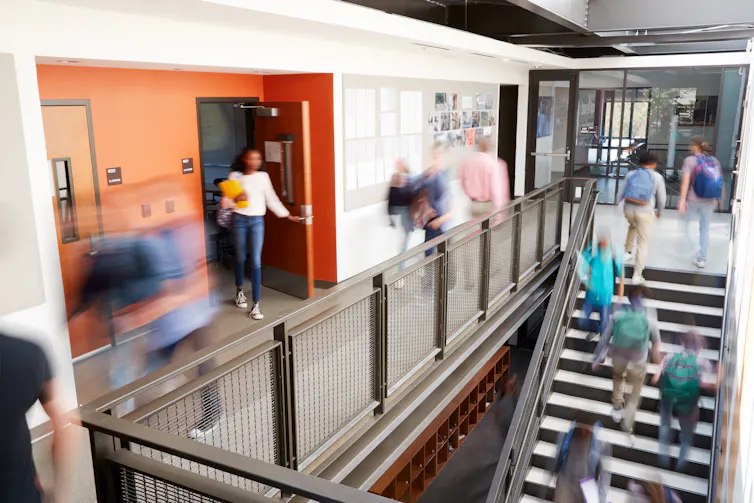
Blurred figures in school corridor
Noisy school environments can cause sensory issues for autistic teachers.
Shutterstock

Most tellingly, a number of participants felt they could not be open about being autistic. A key reason for this concerned negative and stigmatising attitudes towards autism that they had to face in school. The teachers also said that autistic children could be poorly treated. Autistic teachers sometimes had to sit through autism training, conducted on the assumption that no-one present was autistic, where the same negative attitudes were evident.

As a result, autistic school staff could be extremely wary about sharing with anyone that they were autistic. They worried that this information would have a negative impact on their careers. Suppressing an autistic identity, known as masking, has been linked with mental health issues.

While some of our participants had been able to disclose being autistic in school, and had even had a good experience of this, others said that it had made life even harder. This was because attitudes would change towards them in a negative way, or they might not even be believed.

Passion and support

Fortunately, a number of positives also came out of our study. Monotropism – a key autistic trait that denotes a tendency to have very intense interests – can mean that autistic teachers develop strong subject expertise and teach with passion. Even the job itself links with monotropic tendencies, as autistic teachers told us that they loved their work and were highly motivated by it. In addition, autistic teachers felt that they were very thorough and organised.

Above all, autistic teachers felt they were making a significant contribution to supporting inclusion in school. They were sensitive to the needs of neurodivergent children and others at risk of marginalisation, and were willing to try alternative approaches with children who were struggling. One teacher said:

I never gave up on a child because I think probably too many people gave up on me. I could see myself in a lot of the children.

In addition, some of those who had been open about being autistic were valued by colleagues because of their insights in relation to neurodiversity. Autistic teachers also felt that they could be a role model for autistic children and their parents.

Autistic teachers are a valuable part of the school workforce and are already making an important contribution to inclusion. However, it’s important to remove the barriers they can face across their careers.

This includes providing more flexibility and support for autistic student teachers. Making recruitment practices inclusive and accessible – such as by providing questions in advance, and offering in-person and remote options for interviews – would also benefit autistic teachers, as would developing neurodiversity-inclusive school communities.

Participants were clear that autism training should be run by autistic people, and that withdrawing to a quiet space should not be misinterpreted by colleagues as being anti-social. Addressing the sensory impacts of schools would benefit both children and staff. Providing staff with agency in decision-making can be empowering. We also need to reconsider the conventional role of the teacher, and question if the current format of standard duties, such as parents’ evenings and covering for absent colleagues, should be re-evaluated through a neurodiversity-inclusive lens.

The Conversation

Rebecca Wood has received funding from the ESRC and the John and Lorna Wing Foundation.

ref. Learning from autistic teachers could change schools for the better – https://theconversation.com/learning-from-autistic-teachers-could-change-schools-for-the-better-279257

Iran’s attacks drone on, with the U.S. at risk of losing the war

Source: The Conversation – Canada – By Michael J. Armstrong, Associate Professor, Operations Research, Brock University

The United States and Israel have repeatedly boasted about airstrikes in their current war with Iran. In Week 1, they claimed the destruction of 75 per cent of Iran’s missile launchers. By Week 2, they had reduced Iranian missile fire by 90 per cent and said the war was “already won in many ways.”

And yet, Iran keeps damaging refineries and blocking tankers from crossing the Strait of Hormuz.

The country has certainly suffered many tactical losses. But its missiles and drones have been strategically successful.

Iran so far has launched at least 5,400 such projectiles. Surprisingly, less than a tenth of them have targeted Israel, its traditional rival.

Missiles over Israel

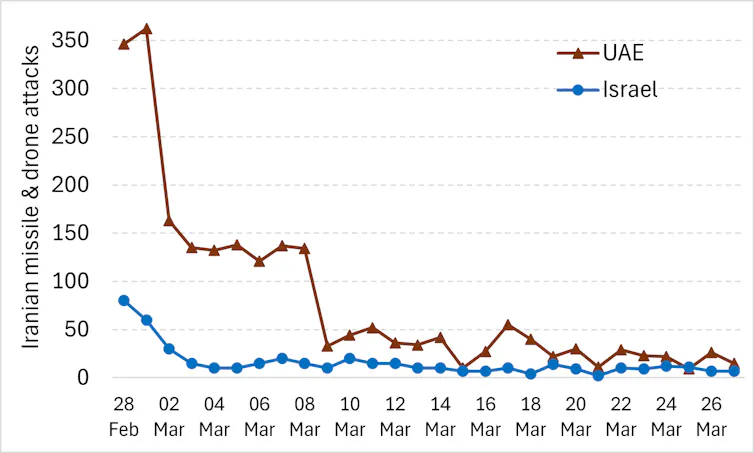
Israel faced about 450 Iranian missile attacks during the war’s first four weeks. The rate of fire fell rapidly after the first weekend but has never halted.

Some missiles carry several hundred kilograms of explosives, enough to destroy an entire building. The rest instead dispense dozens of cluster bombs over wide areas. Those are less powerful but still lethal.

Israel’s long-range Arrow interceptors engage the missiles first. Its mid-range David’s Sling and short-range Iron Dome interceptors provide backup. (The country’s Iron Beam lasers are not being used.) Together, they’ve reportedly intercepted 92 per cent of incoming missiles.

But interceptors sometimes miss. And their supply is limited. Consequently, at least nine large warheads and 150 cluster bombs have hit populated areas.

These numbers imply that almost all Iranian missiles are accurate enough to need interception. By contrast, during Israel’s earlier conflicts with Gaza in 2008, 2011 and 2014, less than a third of incoming rockets were so accurate.

Meanwhile, more than 90 per cent of Iran’s missiles and drones have targeted Arab countries in the Persian Gulf.

This line chart shows the combined number of Iranian missiles and drones arriving each day over the United Arab Emirates and over Israel during the past four weeks.
Number of Iranian missiles and drones arriving daily over Israel and the UAE, February 28 to March 27.
Published news reports, CC BY

Drones across the Persian Gulf

Saudi Arabia, Jordan, Iraq, Kuwait, Bahrain, Qatar, Oman and the United Arab Emirates (UAE) collectively reported around 4,900 Iranian attacks during the first four weeks. Only one fifth were missiles: the rest were drones.

These countries have stated they are neutral in the war. However, they do have defence agreements with the U.S., and some host American military facilities.

These countries defend themselves using weapons like the U.S.-made Patriot and Israeli-made SPYDER interceptors. Drone experts from Ukraine now advise the defenders too.

For example, the UAE reported attacks by 1,835 drones, 378 ballistic missiles and 15 cruise missiles. As of March 10, it claimed to have intercepted 94 per cent of the drones and 99 per cent of the missiles.

The deadliness of these attacks has varied.

Continuing lethality

In Israel, Iranian missiles have killed 20 people, implying roughly 4.1 deaths per hundred missiles arriving.

That’s less than the 5.1 the country saw during its 2025 war with Iran. But it’s four to 40 times higher than the rates it suffered from rockets in earlier Gaza and Lebanon conflicts.

In the Persian Gulf, Iranian projectiles have killed at least 15 civilians, 13 U.S. soldiers and seven merchant sailors.

There were about 0.6 deaths per hundred Iranian attacks in Kuwait, Bahrain and the UAE combined. That’s much lower than Israel’s rate, presumably because those countries were attacked by drones and short-range missiles carrying smaller warheads.

Interestingly, although the quantity of Iranian attacks fell after the first week, their lethality did not. Death rates per projectile in Arab countries showed little change week-to-week. In Israel, the rates were highest in Week 3.

In fact, Iranian missiles keep hitting precise targets, like U.S. military aircraft parked beside runways.

This implies Iran’s government has recovered from its initial surprise. It’s likely benefiting from Russian intelligence and Chinese technology too.

Tactical U.S. vs strategic Iran

So, U.S. and Israeli warplanes have bombed thousands of targets, killed thousands of civilians, and slowed Iran’s missile fire. But they haven’t stopped it.

That’s not surprising. Airstrikes alone didn’t stop rocket fire during Israel’s previous conflicts in Gaza and Lebanon. Ground invasions were needed for that.

U.S. President Donald Trump can post jingoistic mashup videos and “bullshit” about having “militarily won” the war in Iran. But he hasn’t achieved strategic outcomes like “unconditional surrender” from Iran or regime change there.

By contrast, Iran’s missiles have been strategically effective. They’ve damaged Persian Gulf refineries and halted tanker traffic. They’ve forced Trump to relax sanctions on Russian and Iranian oil, and on Belarusian fertilizer. And they’ve shown Arab monarchies that U.S. defence agreements have limited value.

Trump recently, and inadvertently, admitted this weakness. While discussing Iran’s closure of the Strait of Hormuz, he said “it would be great if we could do something, but they have to open it.”

This strategic failure despite tactical success is reminiscent of the Vietnam War. U.S. units had overwhelming firepower as they killed enemy soldiers. But body counts by themselves indicated little about strategic progress.

Some historians rank that war as the second worst U.S. foreign policy decision ever. The 2003 invasion of Iraq was ranked the worst.

Trump talks about being the greatest U.S. president in history. So, perhaps his Iran war will make him the new leader on that policy failure list.

The Conversation

Michael J. Armstrong does not work for, consult, own shares in or receive funding from any company or organisation that would benefit from this article, and has disclosed no relevant affiliations beyond their academic appointment.

ref. Iran’s attacks drone on, with the U.S. at risk of losing the war – https://theconversation.com/irans-attacks-drone-on-with-the-u-s-at-risk-of-losing-the-war-279295

Could a solar storm derail the Artemis II mission?

Source: The Conversation – UK – By Clive Dyer, Visiting Professor, Surrey Space Centre, University of Surrey

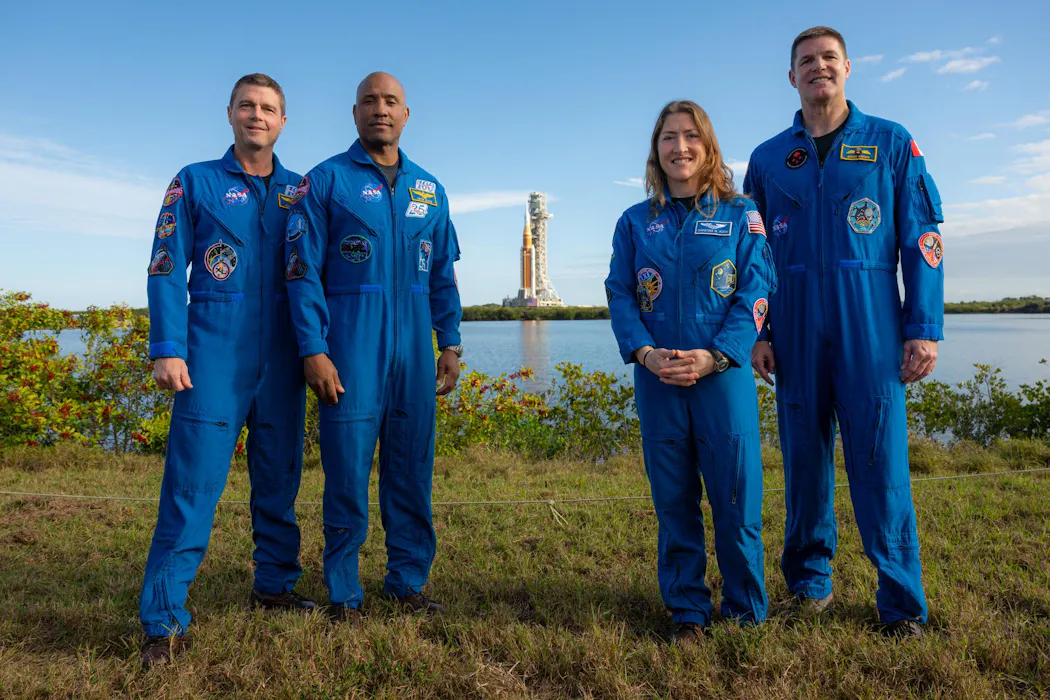
The Artemis II astronauts, (L-R) Reid Wiseman, Victor Glover, Christina Koch and Jeremy Hansen, pose with the Space Launch System rocket. Nasa / John Kraus

Every mission to deep space is fraught with danger. A hardware failure during launch, an equipment malfunction far from Earth, or a small space rock hitting the vehicle are all scenarios astronauts will train for.

As humans set off for the Moon for the first time in more than 50 years, one persistent threat they face is from solar radiation.

Intense bursts of radiation from the Sun, known as solar particle events, can endanger the lives of space travellers, particularly those venturing beyond low Earth orbit (LEO). During these events, high speed, charged particles stream out from the Sun and into space.

Exposure to these particles could lead to radiation sickness or, in the worst cases, prove fatal. On space stations and other crewed vehicles travelling in LEO, astronauts are afforded a high degree of protection by the magnetic bubble surrounding Earth (the magnetosphere).

But in interplanetary space, where Artemis II is headed, humans are much more exposed to outpourings of solar radiation.

The Sun’s magnetic activity fluctuates on a cycle lasting roughly 11 years. During this cycle, sunspots (areas of reduced temperature caused by intense magnetic fields) can cause eruptions known as flares, as well as solar particle events. These rise and fall in frequency with the solar cycle.

Solar activity (represented here by sunspot numbers) fluctuates on an 11-year cycle.
Noaa

The current solar cycle reached its maximum, when the Sun is generally at its most active, in 2024 and is now in a slowly declining phase leading to the minimum, when the Sun is quietest. The current cycle should reach the minimum in 2031.

Not all solar cycles are the same and the current one has been rather undistinguished in terms of activity, as was the previous cycle that reached maximum in 2014. Recently, however, the Sun woke from its slumber.

On November 11 2025, a large solar particle event increased ground level radiation by about 145% for two hours, as measured by the University of Surrey’s neutron monitor at the Met Office station at Lerwick, Shetland.

The Earth’s magnetosphere acts as a shield, protecting the planet from solar particles.
Esa

This was also detected by University of Surrey SAIRA (Smart Atmospheric Ionising Radiation) monitors installed on two transatlantic flights and on rapid response meteorological balloon flights at Lerwick, Cambourne and near Utrecht in the Netherlands.

Work is in hand to unscramble this complex event to determine the radiation increases worldwide using the University of Surrey computer model MAIRE (Model for Atmospheric Ionising Radiation Effects). This calculates radiation levels at aviation altitudes for normal atmospheric conditions, as well as for enhanced radiation events caused by increased solar activity.

Three immediate research papers are in production to describe the radiation monitors and their calibration, to summarise the flight data and to compare the data with available models.

A close call

The solar particle event on November 11 2025 serves to tell us that, whatever the probabilities might be, the Sun can always take us by surprise.

To underline the importance of such events for deep space missions, let’s rewind the clock to 1972. At the time, the Sun was in a similar declining phase in its 11-year cycle as we are today. Then, between August 2 and August 11 1972, the Sun unleashed one of the largest solar particle events of the space age.

Apollo 16
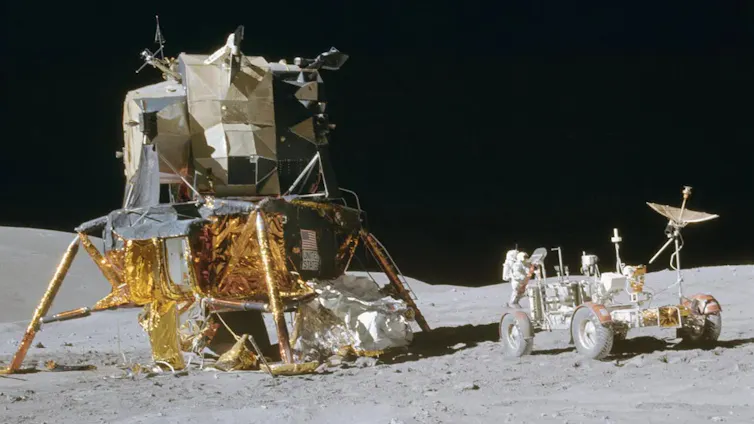
A massive solar particle event occurred between the Apollo 16 (pictured) and Apollo 17 missions in 1972.
Nasa / Charles M. Duke Jr

This gigantic release of charged particles from the Sun occurred in between the Apollo 16 (April 1972) and Apollo 17 (December 1972) missions to the Moon.

This event was much bigger than the one in November 2025 – by a factor of 40. If it had taken place while astronauts were in space, the radiation dose could have caused severe illness or even have been fatal.

The Apollo crews had a lucky escape. But the solar particle event made an impact on on Earth. The ensuing geomagnetic storm is thought to have caused 4,000 US-laid mines to spontaneously detonate in Hanoi harbour during the Vietnam war, causing confusion and alarm on both sides.

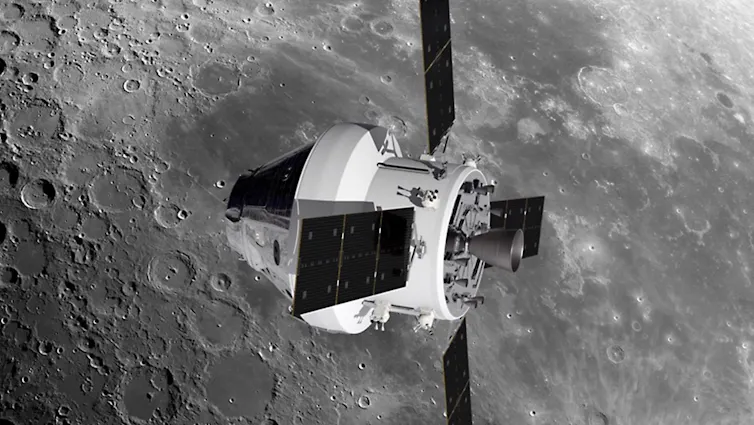
Orion
Travelling to the Moon means astronauts are no longer protected by the Earth’s magnetic bubble, or magnetosphere.
Nasa

There are ways to prepare for similar events in future. The most dangerous aspect of this radiation is its high energy component, which can penetrate shielding on spacecraft. The Surrey Space Centre Space Environment & Protection team are currently working on a detector, called the High Energy Proton instrument, that definitively measures this high energy component of solar particle radiation.

It does this through the light flashes emitted when the particles transit a transparent medium at velocities exceeding the speed of light. Astronauts often report seeing such flashes of light, even with their eyes closed, that can be caused by solar particles or high-energy cosmic rays passing through the retina or optic nerve.


Read more:
Why has it taken so long to return to the Moon?


Advance warning

The University of Surrey radiation detectors could now fly on a lunar orbiting mission towards the end of the decade. On this mission, they will characterise the danger to lunar bases as well as to the Earth. Nasa is planning to spend US$20 billion (£15 billion) on a base at the south pole of the Moon. A separate outpost is planned by China and Russia.

Radiation warning systems can give astronauts the time they need to retreat to storm shelters within a base or spacecraft where increased and specially designed shielding is used.

Engineers use storage lockers as a radiation shelter inside a mockup of Orion.
Nasa

If astronauts travelling in Orion – the spacecraft used on Artemis II – receive advance word of a solar storm, they are instructed to get into storage lockers in the floor of the spacecraft. This places the crew next to Orion’s heat shield, making this area one of the most protected parts of the vehicle.

Warning systems can also help on Earth. During periods of high solar radiation, controllers could instruct aircraft to fly at lower altitudes and latitudes – and in extreme cases remain grounded.

Computing revolution

One big difference between the Apollo and Artemis missions is in the rapid development of microelectronics since the 1960s and 70s. This has led to trillion-fold increases in computer memory density and thousand-fold improvements in speed.

The Apollo computers were pioneering, but struggled to cope with the workload as Neil Armstrong and Edwin “Buzz” Aldrin descended to the lunar surface during the Apollo 11 mission in 1969. However, there is a downside to this as the technology packed into modern spacecraft is vulnerable to radiation.


Read more:
Heat shield safety concerns raise stakes for Nasa’s Artemis II Moon mission


The charge depositions from individual particles often exceed the amount required to change the state of the computer memory bits. In some cases it could destroy the device. It is now arguable whether the greater hazard from solar particle events is to astronaut health or to the flight electronics aboard spacecraft.

In 1972, the Apollo astronauts were very lucky. In this new age of exploration, when so many nations have designs on travel to deep space, we can’t afford to leave astronaut safety to the whims of fortune.

The Conversation

Clive Dyer does not work for, consult, own shares in or receive funding from any company or organisation that would benefit from this article, and has disclosed no relevant affiliations beyond their academic appointment.

ref. Could a solar storm derail the Artemis II mission? – https://theconversation.com/could-a-solar-storm-derail-the-artemis-ii-mission-279613

Silence: a brief literary history

Source: The Conversation – UK – By Kate McLoughlin, Professor of English Literature, University of Oxford

When Children Are Asleep by Thomas Faed (1885). Walker Art Gallery

Literature expresses complex and nuanced ideas – the powerful feelings that define us as human beings and the detailed observations that illuminate all aspects of our lives. It does so with words put together with consummate skill.

So, surely silence is a nothingness, an affront to the communication of both rational argument and strong emotion – literature’s opposite, even its anathema?

Well, no. In my new book Silence: A Literary History, I’ve set out to show that, over 1,200 years, English literature has spoken to us – and spoken to us eloquently – through silences as well as through words. Without silences, both formal and thematic, we wouldn’t have the exquisite hush of medieval lullabies, the suspenseful secrets of the realist novel, or the jagged fragmentation of modernist poetry.

We would lose implicitness, a good deal of ambiguity, much precision, a powerful mode of protest and a variety of moods. Iago would explain exactly why he wanted to destroy Othello in Shakespeare’s play. The dog would bark in the night time in The Hound of the Baskervilles, by Arthur Conan Doyle. And D.H. Lawrence’s sex scenes would come with a running commentary.

The start of silence

If silence has a starting point in English literary history, it’s a man at sea. The 9th-century poem The Wanderer, composed in the Old English language of the Anglo-Saxons, communicates the sheer strangeness of silence via an alien grey seascape in which the protagonist is utterly alone.

This silence is composed not of complete noiselessness – the hail beats on the waves and a seabird occasionally mews – but of an intense and total absence of human voices.

A reading of The Wanderer.

The poem conveys the difficulty of this silence – its wretched, aching loneliness and its perpetual reminder of lost happiness. But it also portrays silence as a duty, the mark of a seasoned warrior forged by Graeco-Roman stoicism, the Germanic hero ethos and Christian asceticism.

And it confronts readers, here at the very beginnings of English literature, with a silent inner voice: the necessary basis of an interior life.

Scroll on 1,200 years. En route, we will take in the tongue-tied silences of Renaissance love poetry, the green silences of 18th-century pastoral scenes and the dumbfounded wonder of the romantic sublime.

We will pause, awestruck, at Tennyson’s great epic of speechless grief, In Memoriam. We will relish the social silences of the Victorian novel, from the hilariously awkward to the emotionally profound.

The fascism-bordering silences of Modernism will make us shiver, before we ponder 20th-century experiments with visual, acoustic and dramatic silences. And we will arrive at the genre-defying, multimedia poetry collection that is Jay Bernard’s Surge (2019).

Voices that we cannot hear

In 2016, Bernard took up a residency at the George Padmore Institute in London, an archive dedicated to radical Black history in Britain. The New Cross fire, which in 1981 had killed 13 young Black people, was playing on their mind. And then on June 14 2017, as Bernard puts it: “Grenfell happened”.

Bernard was sickened by the similarities: “The lack of closure, the lack of responsibility and the lack of accountability” at the centre of both conflagrations.

Surge’s response takes its title from a remark by the Black activist Darcus Howe, one of the organisers of the Black People’s Day of Action in 1981: “When you surge and you don’t deal with the question, barbarism expresses itself.”

Jay Bernard talks about their work.

Speaking over the barbarism, Surge registers a gamut of other silences as it winds between the New Cross and Grenfell fires, and historic and ongoing injustices to Black people.

There is the “muffling” of the New Cross fire by the police, and the details that were literally “tippex’d out” of the file. The silence of the media cannot dispel the weighty silences of the ghostly dead. Then there are the silences that surround transness: hiddenness, rejection and defiance of conventional categories.

With this last issue, we can scroll back up the centuries again. The 13th-century romance Silence, written in Old French by a Cornishman, Heldris de Cornualle, relates the legend of a girl-child being brought up as a boy called Silence because women are forbidden to inherit their parents’ estates. This causes a furious argument between the characters of Nature and Nurture, which anticipates our own age’s differences over transness by eight centuries.

“They have insulted me,” complains Nature, “by acting as if the work of Nurture / were superior to mine!”

But Reason, on behalf of Nurture, urges Silence to resist Nature’s blandishments, or “you will never train for knighthood afterwards. / You will lose your horse and chariot.”

Nature is the winner in the story, but the poem is able to accommodate Silence as both male and female – effortlessly embracing apparent contradictions in such lines as “he was a girl”.

painting of a woman reading in reeds
Woman Reading in the Reeds, Saint-Jacut-de-la-mer by Édouard Vuillard (1909).
The Fitzwilliam Museum

I believe noticing silences in literature makes us better readers. We come to recognise that some things are better left unsaid – indeed, that some things can’t be said. As a result, our antennae become attuned to literature’s stock-in-trade: the indirect and the inexplicit.

Importantly, we become aware of who hasn’t spoken. All this means we gain a better understanding of what communication is, and how we interact with other people. As our reading acquires a new, slower tempo and a new rhythm, our interpretations change.

What can silences speak to us about? Some of the profoundest aspects of our existence: our understanding of what makes a self; our sense of sacredness; our most powerful and intimate feelings; our place in the natural world; our capacity for wonder. All we have to do is notice.

The excerpt from Silence: A Thirteenth-Century French Romance was translated by Sarah Roche-Mahdi. This article features references to books that have been included for editorial reasons, and may contain links to bookshop.org. If you click on one of the links and go on to buy something from bookshop.org The Conversation UK may earn a commission.

The Conversation

Kate McLoughlin was awarded a Major Research Fellowship by the Leverhulme Trust to write Silence: A Literary History.

ref. Silence: a brief literary history – https://theconversation.com/silence-a-brief-literary-history-277903

Is yo-yo dieting bad for you? Here’s what the latest research shows

Source: The Conversation – UK – By Adam Collins, Associate Professor of Nutrition, University of Surrey

Weight recidivism is common after weight loss. New Africa/ Shutterstock

The only thing harder than losing weight is keeping it off. Many people who lose weight find themselves stuck in the cycle of “yo-yo dieting” – losing weight and gaining it all (and sometimes more) back again.

Research on yo-yo dieting has long indicated it can be harmful for your health. But a recent paper has now suggested yo-yo dieting might not be as unhealthy as we’ve been led to believe.

This recent paper, published in BMC Medicine, presents the findings of two separate weight loss trials that were conducted five years apart.

The first trial (trial 1) looked at 278 participants who were overweight or obese. Participants were randomised to follow either a low-fat or low-carb Mediterranean diet – either with or without exercise. All participants lost a comparable amount of weight at the end of the 18-month trial. But those who incorporated exercise achieved the biggest decrease in visceral fat (a dangerous type of fat that is stored around the organs).

The second trial (trial 2) was conducted five years later. Similar to trial 1, the 294 participants followed a Mediterrean-style diet for 18 months. But this time, one group ate a diet very high in polyphenol-rich foods (naturally-occurring plant compounds which have been linked to health benefits such as lower risk of chronic disease). The second group ate a normal Mediterranean diet, while the third group followed normal healthy diet guidelines.

While both Mediterrnanean diet groups lost weight and saw improvements in their overall health, the polyphenol group lost more visceral fat.

A unique aspect of trial 2 was that it included around 80 participants from trial 1. Some of these participants weighed more than they did at the start of the first trial. Such weight recidivism is common following weight loss. This is due to various biological and physiological functions that reduce metabolism and increase hunger, causing people to regain weight and store fat.

The authors compared the people who rejoined the research project against their health and weight status at the start of trial 1. They assessed body weight and other aspects of health – including body fat and blood sugar levels. Despite the re-joiners weighing around the same (if not more) than they did at the start of trial 1, they had lower levels of abdominal fat and visceral fat five years later.

Their metabolic health was also better than it was at the start of the first trial, based their blood lipid (fat) levels, cardiovascular health and blood sugar control.

On the surface, this appears to be good news – suggesting participants retained some of the health benefits of the weight they lost the first time around, despite regaining the weight.

Yet, the results suggest that the very adaptations which helped the re-joiners stay healthy despite regaining weight could potentially have repercussions later. To understand why this is the case requires a grasp of how the body responds to a calorie deficit.

Weight loss and body fat

Our fat stores (known as adipose tissue) serve as our main energy (calorie) buffer when there’s no food to provide that fuel. These stores are sacrificed to cover the energy shortfall, causing fat cells to shrink. Visceral fat is the first to go, followed by the more beneficial fat cell stores.

But when people stop dieting, the body puts priority on regaining lost fat. Indeed, our body replenishes fat stores far more quickly than it does muscle or protein stores. More importantly, in response to this shrinkage, the body compensates by making more fat cells. It does this to help the body better cope the next time there’s a fuel crisis.

A digital depiction of fat cells circulating in the body.
The body responds to weight loss by creating more fat cells.
Spectral-Design/ Shutterstock

So dieting literally makes you fatter in the long run. But thankfully, this will most likely be healthier subcutaneous fat (in the hips, thighs, buttocks and torso) instead of around the organs as harmful visceral fat.

So even though you’ll be carrying excess weight, you’ll experience fewer of the metabolic issues caused by unwanted visceral fat – such as insulin resistance and high cholesterol, which elevate your risk of cardiovascular disease and diabetes.

But with the higher capacity to store fat comes the risk of overshooting your original weight. This may also have implications for yo-yo dieting.

The weight loss cycle

In the paper, the re-joiners who took part in trial 2 did manage to lose weight again. But, on average, they lost slightly less than the trial’s first-timers. That said, when all of the participants from trial 2 were followed up five years later, the re-joiners from trial 1 had regained less, too. They had also retained more of the health benefits of losing weight.

Taking stock of the whole weight-loss journey, it appears that those who regained weight and then joined trial 2 are at a comparable place at the end of ten years to those who just did trial 1.

But there are a few caveats to the trial’s findings.

First, the paper only examined body fat. It didn’t provide any information on lean tissue (such as muscle). This is important, as when we lose weight we lose both fat and muscle. Given muscle’s importance for a healthy metabolism, a lack of muscle could result in even greater weight gain.


Read more:
Weight loss: why you don’t just lose fat when you’re on a diet


It’s also not clear whether regaining weight changes the nature of muscle tissue. There are two key types of muscle fibre. Type 1 is smaller and more efficient at burning fat. Type 2 is larger, faster and more powerful – important for explosive exercise.

If an overall loss of muscle results in muscle fibres changing from type 1 to type 2, this could increase risk of health problems – including sarcopenic obesity and earlier onset of age-related health issues associated with muscle loss.

Overall, the paper shows us that weight loss is still beneficial for your health – even if it requires a few attempts to get to your goal weight. But to avoid potentially gaining more weight the second time around, it’s key to establish good diet and lifestyle changes that are sustainable long-term.

The Conversation

Adam Collins is affiliated with Form Nutrition Ltd as consultant Head of Nutrition

ref. Is yo-yo dieting bad for you? Here’s what the latest research shows – https://theconversation.com/is-yo-yo-dieting-bad-for-you-heres-what-the-latest-research-shows-278932

How Taiwan came to dominate the global chip industry

Source: The Conversation – UK – By Robyn Klingler-Vidra, Vice Dean, Global Engagement | Associate Professor in Political Economy and Entrepreneurship, King’s College London

One firm, Taiwan Semiconductor Manufacturing Company (TSMC), produces more than 90% of the world’s most advanced semiconductor chips. These chips are essential for smartphones, artificial intelligence, high-performance computing and cutting-edge military systems.

Taiwan’s dominance of advanced chips acts as a chokepoint for the global economy. Days or weeks without their manufacturing would affect the supply and price of numerous products around the world. This is comparable to how the current disruption to shipping in the Persian Gulf due to the Iran war is affecting oil-dependent markets globally.

Taiwanese semiconductor manufacturing supremacy has transformed the island nation into what I have described in my research as a “niche superpower”. It wields outsized global influence by commanding a strategically indispensable industry.

Taiwan did not stumble into this position. In the 1970s, Taiwanese technocrats recognised that the nation could not immediately compete at the world’s electronics frontier. One of them was Kwoh-Ting Li, then minister of economic affairs, who is often referred to as the “father of Taiwan’s economic miracle”.

At that time, Taiwan lacked the financial capital and technological skills to compete with industry leaders such as Japan and the US. So rather than trying to dominate the entire semiconductor industry from design through to production, Taiwanese policymakers focused on building capabilities in precision manufacturing. This is the most operationally demanding part of the semiconductor value chain.

Established in 1973 by the Taiwanese government, the Industrial Technology Research Institute carefully acquired semiconductor process technology through licensing agreements with the now defunct US firm Radio Corporation of America (RCA). It then trained a generation of Taiwanese engineers.

The TSMC logo displayed next to a smartphone chip.
TSMC produces over 90% of the world’s most advanced semiconductors.
jackpress / Shutterstock

The pivotal moment came in 1987, when Morris Chang established TSMC. Chang, a US-trained engineer who had spent decades at American semiconductor multinational Texas Instruments, devised what is now known as the “pure-play foundry” model.

Rather than designing and manufacturing its own branded chips, this meant that TSMC would manufacture chips for other firms. This strategic choice was transformative because it reassured American and European semiconductor companies that TSMC would not compete with them. It allowed major tech firms such as Qualcomm and later Nvidia to outsource chip production to Taiwan without fear of intellectual property leakage or strategic rivalry.

The Taiwanese semiconductor industry grew within the Hsinchu Science Park, a major industrial cluster south of the Taiwanese capital of Taipei. By the early 1990s, Hsinchu Park hosted more than 140 chip manufacturing firms and employed around 30,000 workers. The strength of the cluster attracted legions of Taiwanese engineers back from the US, helping Taiwan become the global leader in the production of advanced semiconductors.

The ‘silicon shield’

Taiwan’s semiconductor dominance has played an overt role in protecting the island from its existential threat – a Chinese invasion. This phenomenon was explicitly named in 2021 in an article published in Foreign Affairs magazine, where the former Taiwanese president, Tsai Ing-wen, argued that Taiwan’s semiconductor industry acts as a “silicon shield”.

The dependence of the global economy on Taiwanese-made advanced chips, she argued, means the disruption caused by a Chinese invasion would trigger catastrophic global economic consequences. Taiwan’s allies would thus be compelled to come to its defence.

In recent years, Taiwan’s silicon shield has come under threat. Following the start of US export restrictions on advanced chipmaking equipment to China in 2020, Beijing has accelerated its efforts to build indigenous capacity in chip manufacturing. It has significantly increased investment in its semiconductor industry.

Semiconductors were the underperformer in the Made in China 2025 strategy, through which Chinese leadership aimed to transform their nation into a high-tech manufacturing superpower. China fell short of its goals for the localisation of semiconductor production and global market share, missing targets by the 2025 deadline.

However, Chinese chip manufacturers like HiSilicon and Semiconductor Manufacturing International Corporation have been gaining momentum. A proposal by 13 Chinese chip industry executives in March outlined aims to increase self-sufficiency to 80% by 2030. China’s semiconductor self-sufficiency is currently around 33%.

At the same time, Washington is pushing to bring semiconductor manufacturing back onshore. Biden-era initiatives such as the Chips and Science Act offered incentives for TSMC’s sprawling manufacturing facility in Arizona, which opened in 2022 as part of US efforts to boost domestic chip production.

These incentives for TSMC included up to US$6.6 billion (£5 billion) in direct investment and significant tax credits. TSMC committed an initial US$65 billion to the plan, with the Trump administration announcing in March 2025 that the company would boost its US investment by a further US$100 billion.

Elon Musk also recently announced plans for advanced chip facilities in Texas for his two companies, Tesla and SpaceX. In light of Musk’s concerns that companies like TSMC are not producing the volume of chips his companies need, the so-called “Terafab” venture aims to consolidate every stage of the semiconductor production process under one roof and is expected to cost in the range of US$25 billion. Other companies investing in chip fabrication in the US include Micron, Texas Instruments and Intel.

Despite US and Chinese efforts, replicating Taiwan’s manufacturing ecosystem is difficult. It requires not only capital and equipment, but also knowledge that has been accumulated over decades as well as dense supplier networks and an unparalleled engineering workforce.

TSMC has struggled to hire talent in Arizona, and has resorted to flying thousands of workers in from Taiwan in a bid to improve the skills of locals. And while TSMC is now producing semiconductors at the cutting edge of 2-nanometre scale, the Chinese self-sufficiency goals aim to have “entirely domestically produced equipment” for the less sophisticated 7-nanometre and 14-nanometre generations of chips.

The difference between 2nm and 7nm chips is significant – a 45% increase in performance while using 75% less power. The narrower chips are used for advanced processes such as cutting-edge AI, while the wider ones are used in a broader range of electronics, like smartphones, desktop processors and automobiles.

Taiwan’s semiconductor story is ultimately one of strategic foresight. By choosing manufacturing over design, embedding itself within US-led technological networks and cultivating world-class process expertise, Taiwan transformed structural vulnerability into structural power.

Through its semiconductor dominance, Taiwan stands out as the quintessential niche superpower. But history shows that superpower status, including in niches, is never permanent. The technological frontier moves, rivals learn and allies hedge.

For Taiwan, remaining indispensable to the global economy will require not only staying ahead technologically. It will also require carefully orchestrating the political, financial and human capital foundations that made its silicon shield possible in the first place.

The Conversation

Robyn Klingler-Vidra received a research grant from the Chiang Ching-kuo Foundation between 2019 and 2023. The grant funded research on the educational and professional background of north-east Asia’s innovation policy leaders across the post-war period. The study was published in World Development in April 2025 and is available here: https://www.sciencedirect.com/science/article/pii/S0305750X25000646.

ref. How Taiwan came to dominate the global chip industry – https://theconversation.com/how-taiwan-came-to-dominate-the-global-chip-industry-276939

Why a second global shipping chokepoint could soon live up to its name as the ‘Gate of Tears’

Source: The Conversation – Global Perspectives – By Flavio Macau, Associate Dean – School of Business and Law, Edith Cowan University

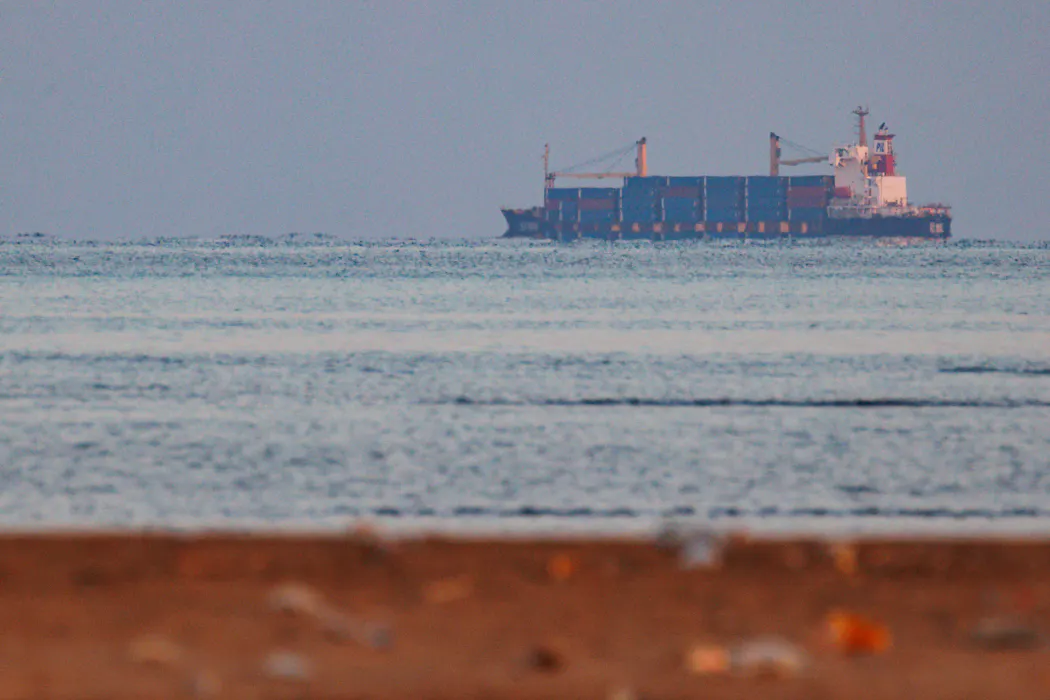
Luke Dray/Stringer/Getty

If you’d never heard of the Strait of Hormuz before, you probably have by now. Iran’s effective closure of the waterway, which usually carries about 20% of the world’s oil and gas, has put severe pressure on the global economy.

Now, some analysts are warning a new flashpoint could emerge: the Bab el-Mandeb Strait.

That’s because on March 28, the Houthis, a military group that controls large parts of northern Yemen and is aligned with Iran, entered the war, launching missiles towards Israel for the first time since the war with Iran began.

Yemen is situated on one side of the strait, and the Houthis have previously attacked shipping in the Red Sea, causing major disruption in late 2023 and 2024.

Bloomberg now reports Iran has approached the Houthis to prepare for a similar campaign.

Here’s why all eyes will be back on the Houthis, Bab el-Mandeb and the Red Sea, and what disruption of a second major chokepoint could mean for the world economy.

What is the Bab el-Mandeb Strait?

The Bab el-Mandeb Strait is about 30 kilometres wide at its narrowest point. It is situated between Yemen on the Arabian Peninsula to the northeast and Eritrea and Djibouti in Africa on the west.

Its name literally means “Gate of Tears” in Arabic, after its famously treacherous sailing conditions.

It has become so important because, along with the Suez Canal in Egypt, it allows ships to transit directly between the Mediterranean Sea and the Indian Ocean by passing through the Red Sea and the Gulf of Aden.

Before the Suez Canal’s opening in the 19th century, ships had to travel all the way around the southern tip of Africa to join these two points.

An oil tanker leaving Saudi Arabia to go to the Netherlands, for example, only has to travel 12,000 kilometres if it goes via the Red Sea, compared with more than 20,000 kilometres going south around Africa.

As you’d expect, that’s much faster too. According to the US Energy Information Administration (EIA), a trip between the Arabian Sea and the Netherlands that takes 34 days the long way around is shortened to just 19 days.

What passes through it?

In normal times, as much as 14% of global maritime trade goes through the Bab el-Mandeb Strait.

Detailed data on what passes through the Bab el-Mandeb Strait is somewhat limited. But fossil fuels are a major component.

The International Energy Agency (IEA) estimates that in 2025 about 4.2 million barrels of crude oil and petroleum liquids crossed the Bab al-Mandeb Strait per day. That’s about 5% of global production.

Given most ships use the Suez Canal as well, official data from the Suez Canal Authority allow us to paint a detailed picture of Red Sea shipping.

In the final quarter of 2025, about 40% of the 3,426 ships passing through the Suez Canal transported fossil fuels: (1,330 oil tankers, 88 liquefied natural gas (LNG) ships).

Bulk and general cargo made up another 40% (1,339 ships), typically transporting agricultural commodities such as corn, wheat and soybeans, and also coal and iron ore. Container ships made about 13% of the traffic (459 ships).

Notably, total traffic through the Red Sea has declined considerably since Houthi attacks on shipping in late 2023 and 2024, even though these attacks have largely stopped.

Can the strait be closed?

The Bab el-Mandeb Strait can’t be “closed” entirely. Its narrowest point is still a considerably wide waterway. And unlike the Strait of Hormuz, the Bab el-Mandeb Strait is not a “cul-de-sac”, where the passage is closed at one end with only one way out. Ships can still exit to the Mediterranean via the Suez Canal.

That’s little comfort for those bound for Asia, which would then have to round Africa to do so, adding weeks to the journey.

Notably, Saudi Arabia had already built a “Plan B” to avoid the Strait of Hormuz, called the East-West pipeline. This pipeline connects Abqaiq in the north with Yanbu on the Red Sea, and had already begun pumping oil at almost full capacity in response to the conflict.

But oil bound for Asia from this new exit point still has to pass through Bab el-Mandeb to avoid the long way around, meaning it could be disrupted.

We’ve been here before

To get a sense of how the Houthis could disrupt shipping again, we can look to the most recent Red Sea crisis.

According to the International Maritime Organization (IMO), 67 incidents were recorded between November 2023 and September 2024. Some ships only suffered minor equipment damage. But others faced severe fires, flooding and structural damage after being hit by missiles or drones.

However, there have been relatively few attacks since 2024. And the strait was never totally “closed” per se: some ships continued to pass through throughout the crisis.


Read more:
Today’s global economy runs on standardized shipping containers, as the Ever Given fiasco illustrates


The mere threat of attacks

These same tactics would probably apply today. But for shipping companies, the mere threat of attacks may be enough to slow or restrict shipping. There are significant risks to civilian crew, who face a threat to life.

Adding to this, insurance costs could become prohibitive enough to close the route in practical terms. Back in 2024, insurance costs were about 0.6% of the value of the cargo on a ship. After the Red Sea crisis, this rose as high as 2%.

The effective closure of both the Strait of Hormuz and Bab el-Mandeb at the same time would be severely disruptive to global supply chains and the global economy.

The Conversation

Flavio Macau does not work for, consult, own shares in or receive funding from any company or organisation that would benefit from this article, and has disclosed no relevant affiliations beyond their academic appointment.

ref. Why a second global shipping chokepoint could soon live up to its name as the ‘Gate of Tears’ – https://theconversation.com/why-a-second-global-shipping-chokepoint-could-soon-live-up-to-its-name-as-the-gate-of-tears-279548

What caused the blood red skies in Western Australia? A weather expert explains

Source: The Conversation – Global Perspectives – By Steve Turton, Adjunct Professor of Environmental Geography, CQUniversity Australia

The apocalyptic red skies in Western Australia have generated considerable international media attention. Crimson dust whipped up by the strong outer winds of Severe Tropical Cyclone Narelle created this unusual phenomenon.

Spectacular weather events like this are not common in northwest Australia. They occur under very specific environmental conditions. Most of the tropical cyclones hitting this arid region don’t cause red skies. Mega dust storms which do change the colour of the sky often take place during prolonged droughts. Perhaps the most memorable storm traversed over Melbourne on 8 February 1983, turning the sky red-brown and later pitch black.

A screen shot of a New York Times piece about the red dust storm.
The New York Times and other international media published stories about Australia’s blood red dust storm.
New York Times

So what caused Cyclone Narelle’s dust storm and why was the sky so vividly red? Four factors came together to create these conditions: a very dry and exposed landscape with red soils, a lack of preceding rain, very strong winds ahead of the rain bands from the cyclone, and a particular wind direction.

Why was the dust storm so spectacular?

Australia’s northwest is one of just a few places in the world where tropical cyclones affect an otherwise arid desert climate. Other locations include the Arabian Peninsula and semi-arid parts of India and Pakistan. These dry regions have very little natural vegetation to protect fragile soils from cyclonic winds. In the northwest of WA, the iron-rich soils which attract many big mining companies also give the region its exceptional red appearance.

According to the Bureau of Meteorology, in the six weeks prior to Cyclone Narelle, the greater northwest region had experienced 10-50 mm of rainfall and the barren landscape was very dry. This was a crucial factor behind the size and magnitude of the red-tinged dust storm.

In the Southern Hemisphere, tropical cyclones rotate in a clockwise direction due to the “Coriolis Force”, which applies movement on rotating objects. This explains how the dust storm developed. Strong winds to the south of the cyclone’s eye were coming from the northeast to southeast direction, and hence off the dry landscape.

After tracking in a southerly direction, close to the North West Cape of WA, Narelle eventually crossed the coast near Coral Bay and headed inland, where it weakened.

Narelle’s large area of gale-force winds extended 200-260 kilometres from the centre. These very strong winds in the southwest area of the cyclone blew across the dry Pilbara landscape, picking up fine red sediments ahead of the bands of rain and transporting them westwards. These blood-red dust storms hit coastal towns in the Gasgoyne and Pilbara regions.

The large, flat terrain of the Pilbara would also have created a long wind “fetch” (the distance the wind blows over open terrain). This would have picked up greater numbers of dust particles.

As the cyclone moved through, humidity increased rapidly, followed by dense cloud and finally heavy rain. This is why the apocalyptic dust was short lived – it was washed out of the atmosphere and back to earth.

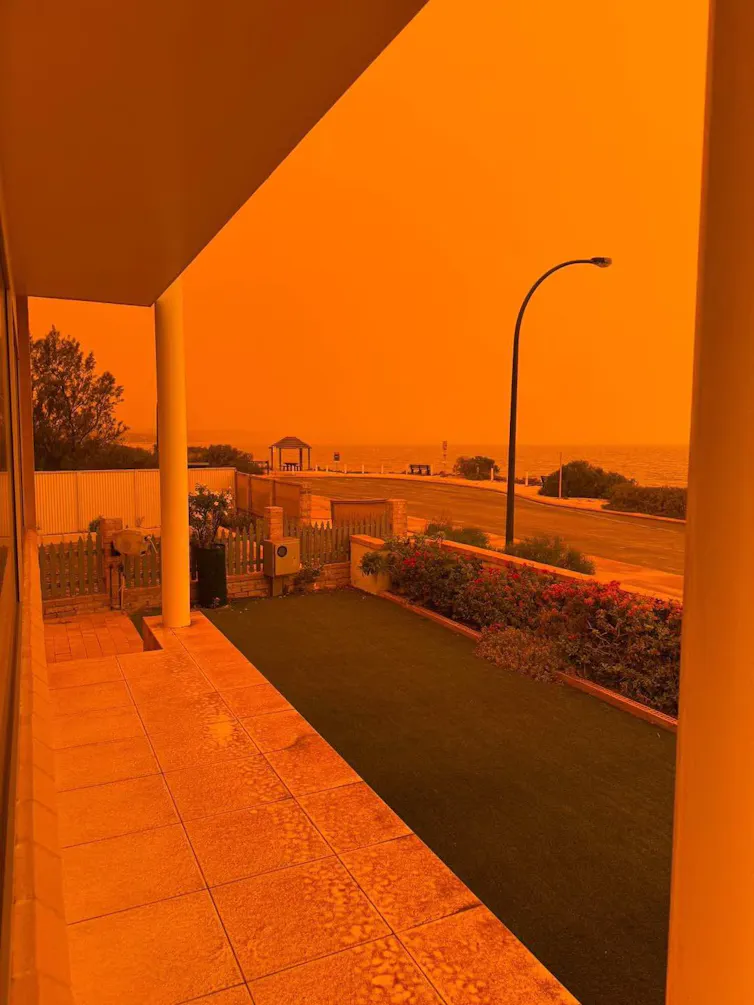
An orange-coloured picture of a verandah and the sky.
The dust cloud as it approaches.
Good Morning Australia/Facebook

Why was the sky so red?

The Pilbara’s deep red soils are rich in iron oxides. These soils form the basis of the multi-billion dollar iron ore mining industry.

Understanding the physics of the atmosphere is important. Airborne dust particles scatter shorter wavelengths (blue and green light) more effectively. Longer wavelengths (red and orange light) pass through or dominate what reaches your eyes. The red soil particles made the light an even deeper shade of red. Hence, the sky appeared deep orange red, or even blood coloured.

Due to the right mix of environmental conditions, the Narelle dust storm involved a very high dust concentration, thick enough to significantly filter and tint all incoming sunlight. This created the Mars-like or “apocalyptic” appearance. Cyclone Narelle also approached the North West Cape in the early morning, when sunlight has to travel through more atmosphere. This meant more scattering occurred and made the red tones even stronger.

Mega dust storms are a regular feature during prolonged droughts in central, southern and eastern Australia. A striking example was the “Red Dawn” dust storm in Sydney on 23 September 2009. Residents woke to an eerie red dawn due to a huge dust cloud.

Huge dust storms like this are usually produced by strong cold fronts and severe thunderstorms that force fine sediment particles up into the atmosphere. These particles are typically moved towards the east, even making their way into the upper levels of the troposphere. Occasionally the dust is deposited as far away as the Southern Alps of Aotearoa/New Zealand.

Spectacular weather events such as this stand out on the global stage. A rare combination of the Pilbara’s exceptionally red soils, cyclonic winds from the right direction and perfect pre-rain timing allowed atmospheric dust to build to very high concentrations. Certainly a feast for the eyes and record books.

The Conversation

Steve Turton has previously received funding from the Australian and Queensland Governments.

ref. What caused the blood red skies in Western Australia? A weather expert explains – https://theconversation.com/what-caused-the-blood-red-skies-in-western-australia-a-weather-expert-explains-279557