Velazquez may be entitled to millions in compensation if he can prove his factual innocence, typically through DNA evidence at the crime scene. Alas, such evidence is often not available.
Proven factual innocence is a powerful, populist idea. It’s easier to understand and more widely accepted than concepts such as miscarriages of justice, conviction safety or judicial error, which are used to address wrongful convictions in many other countries, including England, Canada and countries in continental Europe.
By 2016, two eyewitness who identifed Velazquez as the person who killed a retired New York police officer had recanted. Some witnesses had initially identified the perpetrator as a Black man with long braided hair; Velazquez is Hispanic and had very short hair. Some said the perpetrator used his right hand to shoot the victim; Velazquez is left-handed.
Consistent with the popular appeal of proven factual innocence, Velazquez was freed in 2021 not by the courts but by New York Gov. Andrew Cuomo, with President Joe Biden apologizing to him the following year. They were responding to investigative reporting and new DNA testing that excluded Velazquez from a betting slip that the killer touched.
The fact that politicians who may have been hoping for re-election were ahead of the American courts in exonerating Velazquez reveals a lot about the decline of the rule of law in the United States.
DNA exonerations
Prominent American lawyers Peter Neufeld and Barry Scheck, the founders of the Innocence Project, argued 26 years ago that DNA exonerations were largely a matter of luck. They predicted in a 2000 book that DNA exonerations would eventually dry up as police only use DNA testing in the small minority of crimes where the perpetrator leaves biological evidence at the crime scene.
Scheck and Neufeld may have been overly optimistic about the competence of American police and prosecutors in their book. Post-conviction, DNA-based exonerations, like Velazquez’s, continue to this day.
DNA is a double-edged sword: it offers compelling evidence of innocence while simultaneously raising the threshold for overturning wrongful convictions. In the U.S., the wrongfully convicted are often expected to prove their innocence through DNA, even though many crimes leave no biological evidence and existing samples are frequently mishandled or unavailable. DNA, in short, serves only a fraction of those wrongfully convicted.
Mass imprisonment in China and the U.S.
The country most closely resembling the U.S. in its insistence on proof of factual innocence is the People’s Republic of China.
Like the U.S., China typically remedies miscarriages of justice only after multiple court proceedings. Intervention by politicians also plays a critical role in obtaining justice for the wrongfully convicted, as it did in the Velazquez case. China has also begun providing more generous compensation to those who can prove their factual innocence.
Countries other than the U.S. and China are not immune from the populist appeal of factual innocence.
Since 2014, England has required proven innocence for compensation. This has drastically reduced compensation payments. It’s even resulted in the denial of compensation to people like Velazquez who have been exonerated by DNA.
Victor Nealon spent 17 years in a British prison after being convicted of attempted rape. His lawyers eventually discovered an unknown person’s DNA on clothing that had not been disclosed by investigators, and his conviction was quashed.
Nealon took his compensation claim to the European Court of Human Rights. It ruled in a divided decision that states can require proven innocence without breaching the presumption of innocence. In essence, this allows the wrongfully accused to be denied compensation without regard to the fundamental legal principle that people are presumed innocent until proven guilty. Factual innocence requirements can spread from compensation to appeals from convictions.
Those who can prove their innocence deserve justice — but justice should not be limited to them alone. Proven innocence rations justice too narrowly.
It may be the best that mass-incarceration societies like the U.S. and China have to offer. But even though factual innocence is popular and easy to grasp, applying this standard broadly across liberal democracies would likely have regressive effects.
Kent Roach is affiliated with the Canadian Registry of Wrongful Conviction. His book received funding to assist in it being published in open access from the Jackman School of Law at the University of Toronto.
Source: The Conversation – Canada – By Ekaterina Rhodes, Associate Professor, School of Public Administration, University of Victoria
Fossil fuel-dependent communities in Western Canada sit at the centre of Canada’s energy decisions. A just and inclusive clean energy transition will depend on how well governments listen to these communities and how fast they deal with the forces working to slow down energy decarbonization.
When it comes to the energy transition, public discussion tends to focus on emissions targets and policies to achieve them. These are important, but they’re just one aspect of the issue. In the oil- and gas-producing regions of Western Canada, conversations and concerns centre on livelihoods, identity and a nagging doubt: does anyone in power grasp rural realities?
Our ongoing research across the region — based on large citizen surveys to focus groups with municipal leaders and analysis of disinformation — highlights that emotions, narratives and perspectives of communities at the heart of Canada’s energy transition politics. As we mark the United Nation’s International Day of Clean Energy today, these voices demand attention before divides deepen further.
Focus groups with municipal staff from 10 oil- and gas-producing communities in British Columbia and Alberta revealed a delicate balancing act. They’re actively pursuing diversification — geothermal projects, hydrogen pilots, tourism expansion, data centres, manufacturing hubs, even rare-earth mineral processing — but most of these efforts build around, rather than beyond, oil and gas.
For many communities, the industry isn’t just jobs. It’s the economic engine funding hospitals, schools, arenas, roads and the very existence of their towns. Abstract talk of an energy transition can feel threatening when it overlooks this.
An Alberta official captured the fear bluntly:
“If you took oil and gas out of our community, I would suggest that there would be no hospital. There would be no schools. There would be no town. The only reason our community exists is to service the oil and gas industry.”
Deep emotional divides
Our 2025 survey of 3,400 residents in non-metropolitan communities across British Columbia, Alberta, Saskatchewan and Manitoba helps explains why climate policy ignites public backlash.
Affective climate polarization, which describes the emotional distance between those who support and oppose climate policy, rivals partisan left-right divides in intensity. These emotional climate identities help explain differences in support for climate policy that ideology alone can’t capture — particularly on the political right, where views on climate action are more diverse.
Policy design nuances are critical but complicated by affective polarization. Clean technology mandates and renewable electricity requirements tend to draw broader backing than carbon taxes, which are generally less popular and spark fierce resistance from right-leaning citizens.
Bundling climate policies with just transition measures, such as government-funded training for new jobs, community-owned energy, low-carbon incentives and public transit, can boost support for carbon pricing among the less polarized. However, for those with stronger emotional commitments, these just transition supports are often ineffective and can even trigger backlash.
Climate policy details matter less to people who score high on affective climate polarization. This helps explain why climate policy debates remain so deeply politicized: when emotional attachments to climate identities are strong, people respond more to elite cues and identity-based judgments than to policy design itself.
Municipalities grapple with limitations
Municipal officials battle structural voids. Officials in northeastern B.C. and Alberta juggle economic ambitions and governance limitations. They craft economic strategies and chase low-carbon investments, while being hamstrung by thin staffing and permitting delays stalling projects for years.
The sharpest barrier to the clean energy transition is the absence of coherent, regionally tailored visions from other levels of government. Federal clean growth plans promote critical minerals and hydrogen. Provincial strategies mix liquefied natural gas with renewables.
Locally, these strategies ring hollow — they seem contradictory and urban-centric. A municipal official in B.C. we spoke to decried a “one-size-fits- all” approach, citing propane-powered electric vehicle chargers in -40 C winters: “How do you gain the support … when even the province isn’t actually addressing” regional realities?
We’ve found that public attitudes differ by age, with youth embracing climate sustainability but veterans of oil-tied lives viewing transition as a “hard sell.” Without a common vision recognizing municipal governance limitations, community leaders hesitate on bold plans, wary of backlash in towns deeply connected to the promise and precarity of oil’s boom–bust cycles.
These are not the only narratives the fossil-fuel industry is using to slow climate action. Our research on Canada’s climate delays shows that fossil-fuel propaganda is being used to falsely portray Canadian oil as low-emissions, to urge Canada to wait for others to act first and to claim that climate policies are more detrimental to workers more than climate change.
Fostering a just energy transition
Governments must engage in genuine listening. Fossil-fuel communities aren’t barriers, but key participants in all energy transition risks and benefits. Co-creating policies with them rather than imposing top-down visions can help grow jobs, revenues and services in Western Canada.
Engagement with communities must also be emotionally attuned. Overcoming climate polarization means restoring trust via local messengers, consistent follow-through and deliberative forums like public assemblies.
At the same time, governments must confront misinformation and propaganda. They can can step in with policies that challenge disinformation legally, regulate ads and fund community energy transformations beyond fossil fuel extraction.
The International Day of Clean Energy spotlights promise. In Western Canada, it also spotlights peril. The energy transition’s success hinges on centring fossil fuel communities as protagonists, not peripherals — turning the transition into a shared opportunity.
Ekaterina Rhodes receives funding from Canada First Research Excellence Fund as part of the University of Victoria-led Accelerating Community Energy Transformation Initiative.
Megan Egler received funding from the Canada First Research Excellence Fund as part of the University of Victoria-led Accelerating Community Energy Transformation Initiative.
Rowan Hargreaves received funding from the Canada First Research Excellence Fund as part of the University of Victoria-led Accelerating Community Energy Transformation Initiative.
Samuel Lloyd receives funding from the Canada First Research Excellence Fund as part of the University of Victoria-led Accelerating Community Energy Transformation Initiative. He also received funding from the Pacific Institute for Climate Solutions for a research project that inspired one of the papers included in this article.
When I was a child in South Korea, the New Year often began with a familiar song: “Kkachi Kkachi Seollal.” Seollal refers to the Lunar New Year, one of Korea’s most important family holidays, and kkachi means “magpie,” a bird associated with good fortune and joyful beginnings.
Singing the song, we believed, would invite pleasant guests into the home. For my siblings and me, those guests were usually our grandparents — and their arrival marked warmth, continuity and belonging.
Decades later, I now live in Canada, where distance has made such visits from my home country rare. Yet it feels as though the magpie has arrived again — this time on a global screen.
I’m interested in how KPop Demon Hunters marks a new phase of the Korean Wave. In this phase, folklore and women’s musical labour come together to challenge how Asian stories have long been sidelined in western media.
KPop Demon Hunters, like the success of some other recent popular Korean cultural production in the West, reflects diasporic creativity, notes scholar Michelle Cho, whose research focuses on on Korean film, media and popular culture.
Folklore as cultural authority
One of KPop Demon Hunters’s most striking features is its unapologetic use of Korean symbols. The demon hunters wear gat — traditional horsehair hats associated with scholars during Korea’s Joseon dynasty — while battling demons alongside the tiger, long regarded as a guardian spirit of Korea. These elements function as assertions of cultural authority.
By contrast, KPop Demon Hunters places Korean folklore at its narrative centre. The gat evokes dignity and discipline; the tiger represents protection and resilience. Together, they counter the lingering assumption that mainstream entertainment led by Asian characters is somehow niche or inferior.
By using distinctly Korean imagery — such as the satirical minhwa art style of the film’s Derpy Tiger — the movie firmly anchors itself in a specific Korean context that cannot be generalized or mistaken for a broad, pan-Asian esthetic.
For many in the Korean diaspora — including myself, who grew up rarely seeing people like me centred in mainstream media — this visibility carries emotional weight.
Research in media and cultural studies shows that representation matters not only for how groups are seen by others, but also for how people understand their own place in society. Seeing Korean symbols treated with respect offers a quiet but powerful form of cultural validation.
A matrilineal line of survival
One of the film’s powerful moments is the opening montage. Through a rapid succession of shamanic figures, flappers and disco-era performers, the sequence offers what can be read as matrilineal homage to female Korean musicians across generations.
As writer Iris (Yi Youn) Kim notes, citing a lecture by Asian American studies scholar Elaine Andres, this lineage echoes the real-life story of the Kim Sisters, often described as Korea’s first internationally successful female pop group. After losing their father during the Korean War, the sisters were trained by their mother, the renowned singer Lee Nan-young — best known for the anti-colonial song “Tears of Mokpo” — to perform at U.S. military bases as a means of survival.
The Kim Sisters perform ‘Fever’ on the Ed Sullivan show.
The Kim Sisters later became regular performers on The Ed Sullivan Show, captivating American audiences while navigating racist expectations that framed Asian women as approachable, non-threatening and exotic.
Symbolic labour of representing a nation
The fictional group Huntrix inherits this legacy. Like the Kim Sisters, they are expected to embody discipline, professionalism and national representation.
For example, the film shows the group grappling with perfectionism and the intense discipline demanded of them, often maintaining polished public performances while suppressing personal vulnerability to fulfil their dual roles as idols and protectors. On a meta-narrative level, Huntrix is framed as a cultural representative through the use of Korean folklore imagery, like the gat and the tiger.
As “cultural diplomats” both on and off the screen, Huntrix carry not only entertainment value but also the symbolic labour of representing a nation to a global audience.
By embedding this lineage into a mainstream animated film, KPop Demon Hunters acknowledges that KPop’s global success rests on decades of women’s labour, sacrifice and negotiation with western power structures.
Beyond soft power
The film’s success arrives amid the continued expansion of the Korean Wave across global media.
While the film grows out of cultural histories shaped by U.S. military presence and Cold War politics, it reshapes those influences through diasporic storytelling that centres Korean voices and perspectives.
The magpie’s promise has finally been kept. Korean characters are no longer merely “pleasant guests” or supporting figures in someone else’s narrative. They are protagonists — holding the sword, the microphone and perhaps, one day, an Oscar.
Recently, I found myself rewatching KPop Demon Hunters while eating kimbap and instant noodles, the same comfort foods the characters share on screen. The moment felt small, but meaningful.
It reminded me of something one of my students once said: seeing this level of representation allows those who have long felt wounded by exclusion to finally feel seen.
Hyounjeong Yoo does not work for, consult, own shares in or receive funding from any company or organisation that would benefit from this article, and has disclosed no relevant affiliations beyond their academic appointment.
Our contemporary lives are saturated with vibes. You buy an ambient lamp to set a vibe, scroll through shopping sites selling “Tuscan vibes” or walk into a room and instantly sense this party has a buzzing vibe.
Yet when someone asks where the vibe comes from, the answer gets slippery. Is it in the light? Not quite. The light blends into the room, mixing with voices, colours and furniture. It’s not just one thing. Vibe is elusive. It spreads, permeates and connects. It’s in the relationship between things — how people, sounds and materials work together to create a shared feeling.
This is where literary and philosophical thinkers come in. For decades, they’ve explored such elusive sensations — the collective moods that organize everyday life even when we can’t quite name them.
Thinking seriously about vibe reveals something crucial: feeling is a shared form of knowledge shaped by environments — a human experience that may matter more as technology advances.
Long before vibes had a name
The word itself is quite recent. According to the Oxford English Dictionary, vibe appeared in the 1960s as U.S. slang shortened from vibration as a way of describing the emotional charge a person or place gives off.
To say something “has a vibe” is to say your body has vibrated to it in a particular way. It’s not just a thought but a physical adjustment: the space, sound or presence around you has moved you, subtly shifting how you feel.
Philosophers, of course, have long been interested in this same experience, though they called it by a different name. Long before vibe entered everyday speech, thinkers used words like atmosphere or ambience to describe the shared feeling that fills a space and shapes our response to it.
Vibe, in this sense, updates an old philosophical question: how does the world around us make itself felt, not just known?
One of the first modern critics to take this question seriously was Welsh cultural theorist Raymond Williams, who coined the phrase “structure of feeling” in 1954. Williams argued that every historical moment has its own emotional texture; the felt sense of what it’s like to live in that time.
It isn’t a single mood but the background hum of experience that connects people before they can describe it. Think of the buoyant optimism of the 1950s or the political turmoil of the 1960s, similar to what we’re experiencing now. We can sense the mood immediately.
For Williams, this “structure of feeling” made art and culture matter. They recorded not just what people thought but what life felt like.
The business of engineered feeling
A few decades later, German philosopher Gernot Böhme gave this idea a physical body. In The Aesthetics of Atmospheres, he argued that atmosphere is something we encounter, not imagine.
Walk into a cathedral, a café or a store, and the air itself feels different. Your senses are triggered and combine to shape how you experience the ambience. Atmosphere, as Böhme sees it, exists in the space between object and subject, sound and listener, light and body.
Step into a boutique and you’re greeted not by bright displays but by a carefully tuned vibe. The air swirls with fragrance as a salesperson asks if you’d like to sample one. By answering, you fall into the illusion that the perfume alone produces your feeling, when in fact it’s the entire composition — soft jazz, the scent of citrus wood — that moves you.
We are enveloped in these designed environments, and we know that the same scent wouldn’t move us the same way elsewhere.
Brands no longer sell perfume or soap so much as an atmosphere of belonging. They offer a shared world we learn to recognize and desire through our senses. This commercial atmosphere reminds us that our emotional lives are increasingly shaped by design.
Why sensing atmosphere remains human
As artificial intelligence grows ever more capable of performing the tasks we once called creative — writing, composing, painting — it also changes how we think about perception itself.
If machines can analyze patterns and generate words or images, what remains distinctly human may not be our ability to produce things but to feel them. Catching the tone of a voice, noticing how light shifts across a face or sensing the vibe of a room are forms of knowledge no algorithm yet replicates.
That doesn’t mean AI and feeling must be opposites. As we outsource more of our labour to artificial systems, the art of cultivating and interpreting atmosphere may become even more essential.
Learning to name a mood, to notice how spaces and technologies shape emotion, could be one way we stay alert to what connects us as human beings. If AI teaches us efficiency, vibe-thinking teaches us sensitivity. It reminds us that meaning doesn’t live only in data or design but in the air between us — the moods we co-create, the atmospheres we learn to share, the vibe.
Lei Yu does not work for, consult, own shares in or receive funding from any company or organisation that would benefit from this article, and has disclosed no relevant affiliations beyond their academic appointment.
Source: The Conversation – Africa – By Francois Questiaux, Researcher, Department of Food and Resource Economics, University of Copenhagen
Shea butter has become a highly sought-after ingredient in cosmetics and food manufacturing worldwide. Since the early 2000s its use as a substitute for cocoa butter has driven a dramatic rise in international demand. The shea butter industry has grown by more than 600% over the last 20 years.
The shea tree is semi-domesticated across the dry savannah region in a “shea belt” west to east from Senegal to South Sudan, and about 500km north to south. It is not planted but protected within farmland and also found in communal bushland.
An estimated 16 million women collect and process shea fruits in rural west Africa, turning them into dry kernels for sale or processing the kernels into shea butter.
To explore this idea, we conducted research into how the rise in demand for shea butter has affected women collectors in Burkina Faso and Ghana. These two countries are among the lead exporters of dry shea kernels.
The study formed part of our work on agrarian change, political ecology and livelihoods. We study relationships between producers and other actors of global value chains, as well as the impacts of externally induced changes on smallholders.
We combined data from a survey of 1,046 collectors in 24 communities with data from interviews with 18 collectors.
Our results show that the shea boom has intensified competition for access to trees. Over 85% of collectors surveyed reported an increase in the number of shea nut collectors in their community over the past 10 years. We also documented how access to shea trees was becoming more restricted, especially for women who rely most heavily on shea for their livelihoods.
Our results point to widening inequality within the collector population, even as the overall value of the shea sector grows.
Global demand meets local tenure systems
Historically, access to nuts was governed by a combination of customary rules and social norms. Women could usually collect freely on communal land, and also on farmland belonging to their households or relatives. Shea was often treated as a semi–open-access resource, available to women of the community according to need.
This system has come under pressure.
Firstly, as prices have increased over the last three decades, so have the number of people collecting.
Secondly, the common land is shrinking. Expansion and mechanisation of agriculture, population growth and peri-urban development have reduced the areas that once served as shared collection spaces.
Several collectors we interviewed noted that land previously considered “bush” had been converted into fields, removing an important safety net for those without farmland.
As a result, access to shea trees is increasingly tied to access to private land. Over 55% of our survey respondents reported that collection on private fields had become more restricted, with landowners enforcing boundaries more tightly. This shift reflects a broader tendency in both countries for land rights to become more individualised as resources acquire market value.
Third, resource pressure has introduced new forms of conflict, like trespassing on land. Conflicts reinforce exclusion, as landowners become more reluctant to allow non-family members onto their fields.
Unequal effects across collector groups
Our research distinguishes three types of collectors:
dedicated collectors, who derive all of their annual income from collecting and selling shea nuts
diversified collectors, who combine shea collection with farming or other activities
collector–traders, who not only collect nuts but also purchase them from others to sell at higher prices later in the year.
These groups experience the shea boom in different ways.
Dedicated collectors have the most limited access to private land. Only 16% of them collect from their own fields, compared to 38%-43% among the other groups. They depend on the communal bush.
Diversified collectors have better access to private fields than dedicated collectors, but still face similar challenges as bush areas shrink. And they have less time to spend collecting, limiting their ability to compensate for increasing competition.
Collector-traders maintain more secure access to private fields and receive more assistance from household members. Over half report receiving help from men, such as transporting nuts or protecting fields from trespassers. This is significantly more than dedicated or diversified collectors. The additional labour gives them a strategic advantage.
More work, but not more income
Rising prices might suggest that women would earn more from shea today than a decade ago. Yet this is not what most collectors experience. Only 48.7% reported an increase in shea income over the past 10 years, despite the international boom.
Total annual income from shea remains very low – on average only US$174 (purchasing power parity) per year, with differences between collectors.
For poorer collectors, several factors suppress income gains:
limited access to shea trees constrains the volume of nuts they can gather
many have to sell nuts early in the season, often at low prices, to meet immediate cash needs. Better-off collector-traders can purchase nuts cheaply, store them, and profit from higher prices later in the year.
Rethinking the ‘win-win’ narrative
The findings challenge the claim that integrating women into the global shea value chain will empower them and reduce poverty. The boom has indeed created new economic opportunities, but these are unevenly distributed. Market expansion has strengthened the position of those with greater land access and financial capital. At the same time it’s undermined the livelihoods of those who rely exclusively on the resource.
Our study does not prescribe specific policy measures, but its findings point to several possible avenues for intervention.
First, measures that strengthen women’s land and tree rights are likely to be critical. Recent work on peri-urban Ghana, for example, calls for wider rights to land and shea trees for women in policy and tenure reforms.
Finally, evidence from northern Ghana indicates that women themselves recommend changes in farming practices to sustain the resource base.
Francois Questiaux is a Postdoc at the University of Copenhagen.
This project was funded by a grant from the Danish Independent Research Fund (Obstacles, Grant 2102-00030B) and a grant from the Innovation Fund Denmark (Sheaine, Grant 9067-00030B)
Marieve Pouliot is an Associate Professor at the University of Copenhagen. This project was funded by a grant from the Danish Independent Research Fund (Obstacles, Grant 2102-00030B) and a grant from the Innovation Fund Denmark (Sheaine, Grant 9067-00030B).
Somaliland is not internationally recognised as a sovereign state, though it declared independence from Somalia in 1991. A territory becomes a sovereign state when its independence is recognised by the United Nations. For this reason, it has no seat at the UN and is considered, under international law, part of Somalia.
Nevertheless, Somaliland holds elections and maintains relative internal stability. It is also attracting increasing informal diplomatic engagement – though not formal recognition – from Ethiopia, the United States and, most recently, Israel.
This growing interest highlights a geopolitical paradox. An unrecognised polity has become strategically relevant in the Red Sea region, along the Gulf of Aden at the Horn of Africa. This is a key corridor linking the Mediterranean, the Middle East and the Indian Ocean.
On 26 December 2025, Israeli prime minister Benjamin Netanyahu announced Israel’s recognition of Somaliland as a sovereign state. This made Israel the first UN member to do so. While the concrete effects of the decision remain uncertain, Israel’s move fits into a broader strategy to strengthen its presence in the Horn of Africa and the Red Sea region.
Of all the African states, landlocked Ethiopia has come closest to formally recognising Somaliland, driven by its wish to get direct access to the Red Sea via the port of Berbera. This has become more urgent amid regional competition and instability.
US officials have defended Israel’s right to recognise Somaliland, but the US itself hasn’t done so despite speculation that it might.
I have studied the political dynamics in the Horn of Africa and recently published a book on the competing interests in the Red Sea. For me, this latest development raises two key questions: what is Somaliland’s strategic importance and why the growing interest now?
In short, Somaliland is important because it is located on one of the world’s most critical maritime routes. Current regional instability has increased the importance of partners that can provide security, access and political stability, even without formal recognition.
Israel’s strategic calculation
Israel has framed its recognition of Somaliland primarily in terms of regional security and strategic stability. It has cited the need to safeguard maritime routes in the Red Sea and counter growing threats in the Horn of Africa.
Beyond these stated reasons, however, Israel is motivated by national security considerations. Following the 7 October 2023 attacks and Israel’s military campaign in Gaza, the importance of existing strategic priorities in the Red Sea region has increased.
Somaliland’s location on the Gulf of Aden puts the territory – and any external actors with a presence there – in a position to monitor some of the world’s most important maritime and undersea communication routes.
Of particular concern to Israel is the threat posed by Iran-aligned actors, such as Houthi fighters in nearby Yemen. Engaging with Somaliland provides strategic depth and the potential for an early warning system.
Iran has capacity to exert indirect influence through proxy forces that target maritime routes and regional security.
Attacks on shipping by Houthi missiles and drones launched from Yemen take place just a short distance from Somaliland.
Establishing a presence in Somaliland, or simply relying on it as a partner, would enhance Israel’s ability to monitor Houthi activities and counter threats to maritime traffic.
An increased presence also provides a counterweight to the growing influence of Saudi Arabia and Turkey through diplomatic, economic and – in Turkey’s case – military engagement across the region.
Israel and the UAE both view Somaliland as a relatively non-aligned actor capable of reducing Turkish and Saudi influence in the Horn of Africa.
For Israel, engaging with Somaliland is a calculated risk, based on the belief that the strategic benefits outweigh the diplomatic and political risks.
Ethiopia: the vital need for sea access
Ethiopia is another catalyst of Somaliland’s growing importance. Eritrea’s secession in 1993 made Ethiopia a landlocked country. At present it relies heavily on Djibouti for sea access.
The Red Sea region
The port of Berbera in Somaliland offers Ethiopia politically stable and geographically convenient access. This explains Ethiopia’s interest in signing a memorandum of understanding with the breakaway state in January 2024. Although the agreement has not been widely implemented, it has drawn international attention back to Hargeisa’s claims.
Ethiopia’s cautious approach has aimed at avoiding further regional tensions.
Domestic political factors also influence its tepid response. The country is dealing with several potentially secessionist insurgencies within its borders. There could be consequences for supporting a secessionist movement.
An additional factor is Ethiopia’s close political and economic relations with China and Turkey, which both strongly support Somali territorial integrity.
It is this combination of regional ambition and domestic constraint that explains Addis Ababa’s cautious response to Israel’s announcement.
The United States: balancing realism and norms
Washington officially continues to support Somalia’s territorial integrity, largely due to its counter-terrorism cooperation with the federal government in Mogadishu.
However, Israel’s recognition of Somaliland has reignited debate within US strategic and policy circles. Some favour Somaliland’s recognition. They point to US security interests and global trade.
There is growing openness to engaging with Somaliland incrementally, stopping short of fully breaking diplomatic ties with Mogadishu.
Much of the US debate focuses on recognition itself, but this risks missing the more consequential issue: the precedent Somaliland could set.
Unlike many secessionist movements, Somaliland is not a newly formed political entity. Consequently, beneath its apparent internal cohesion lie deep and persistent fault lines. Hargeisa does not control all the territory it claims. The eastern regions have never entirely accepted Somaliland’s authority.
This cleavage came to a head in violent clashes in Las Anod between 2022 and 2023. Local militias took control of the area, which now functions as a self-administered entity recognised as a federal state within Somalia.
Somaliland’s growing strategic relevance masks its unresolved internal divisions. It illustrates a broader trend in geopolitics now: stability and utility increasingly matter more than legal status alone.
For external actors, engagement with Somaliland may offer short-term gains in a volatile region. But without addressing its internal fractures and contested sovereignty, recognition risks creating new sources of instability rather than resolving old ones.
Federico Donelli is affiliated with the Italian Institute for International Political Studies (ISPI), the Nordic Africa Institute (NAI), and the Orion Policy Institute (OPI)
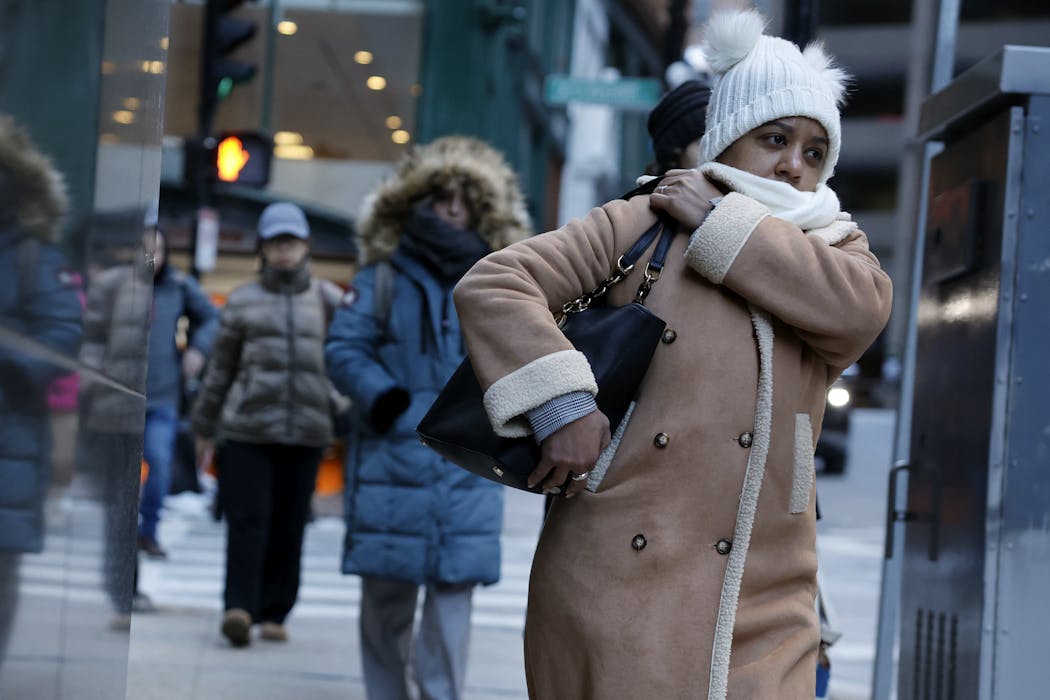
A severe winter storm sweeping across the central and eastern U.S. in late January 2026 threatened states from Texas to New England with crippling freezing rain, sleet and snow. Several governors issued states of emergency as forecasters warned of hazardous travel conditions, dangerous wind chills and power outages amid bitter cold expected to linger for days.
The sudden blast may come as a shock to many Americans after a mostly mild start to winter, but that warmth may be partly contributing to the ferocity of this storm.
As atmospheric and climate scientists, we conduct research that aims to improve understanding of extreme weather, including what makes it more or less likely to occur and how climate change might or might not play a role.
To understand what Americans are experiencing with this winter blast, we need to look more than 20 miles above the surface of Earth, to the stratospheric polar vortex.
A forecast for Jan. 26, 2026, shows the freezing line in white reaching far into Texas. The light band with arrows indicates the jet stream, and the dark band indicates the stratospheric polar vortex. The jet stream is shown at about 3.5 miles above the surface, a typical height for tracking storm systems. The polar vortex is approximately 20 miles above the surface. Mathew Barlow, CC BY
What creates a severe winter storm like this?
Multiple weather factors have to come together to produce such a large and severe storm.
Winter storms typically develop where there are sharp temperature contrasts near the surface and a southward dip in the jet stream, the narrow band of fast-moving air that steers weather systems. If there is a substantial source of moisture, the storms can produce heavy rain or snow.
In late January, a strong Arctic air mass from the north was creating the temperature contrast with warmer air from the south. Multiple disturbances within the jet stream were acting together to create favorable conditions for precipitation, and the storm system was able to pull moisture from the very warm Gulf of Mexico.
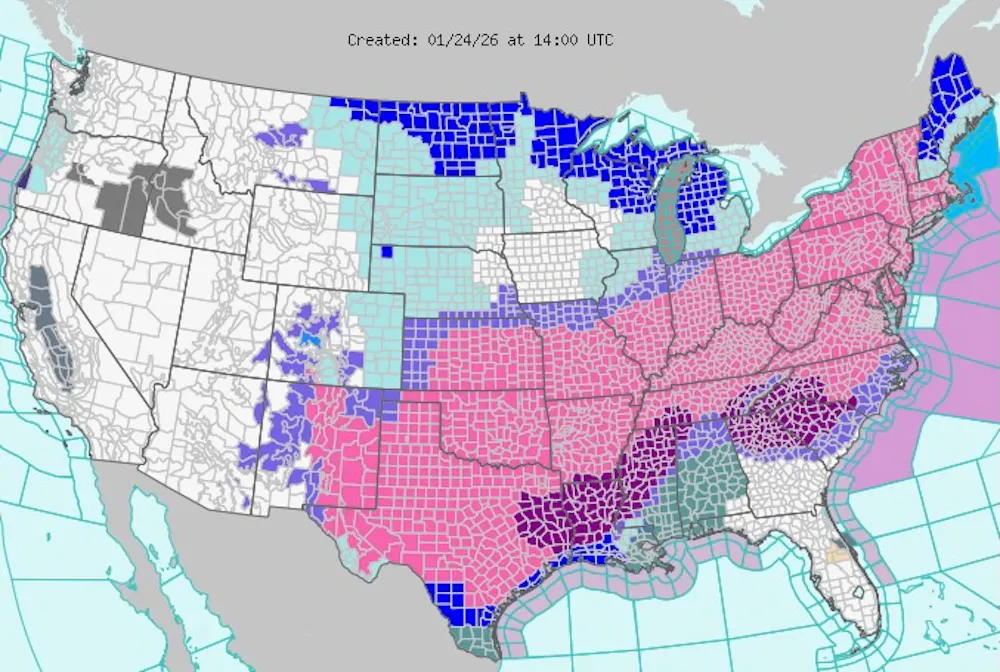
The National Weather Service issued severe storm warnings (pink) on Jan. 24, 2026, for a large swath of the U.S. that could see sleet and heavy snow over the following days, along with ice storm warnings (dark purple) in several states and extreme cold warnings (dark blue). National Weather Service
Where does the polar vortex come in?
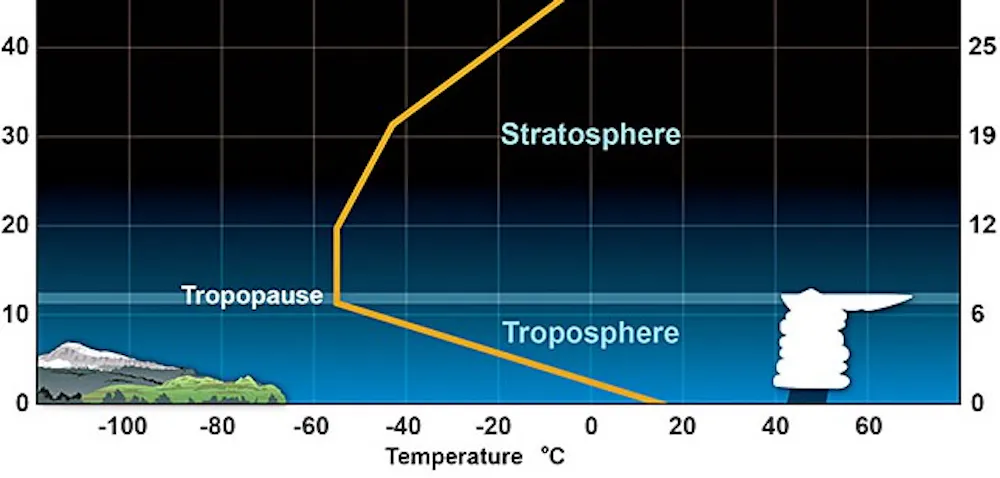
The fastest winds of the jet stream occur just below the top of the troposphere, which is the lowest level of the atmosphere and ends about seven miles above Earth’s surface. Weather systems are capped at the top of the troposphere, because the atmosphere above it becomes very stable.
The stratosphere is the next layer up, from about seven miles to about 30 miles. While the stratosphere extends high above weather systems, it can still interact with them through atmospheric waves that move up and down in the atmosphere. These waves are similar to the waves in the jet stream that cause it to dip southward, but they move vertically instead of horizontally.
A chart shows how temperatures in the lower layers of the atmosphere change between the troposphere and stratosphere. Miles are on the right, kilometers on the left. NOAA
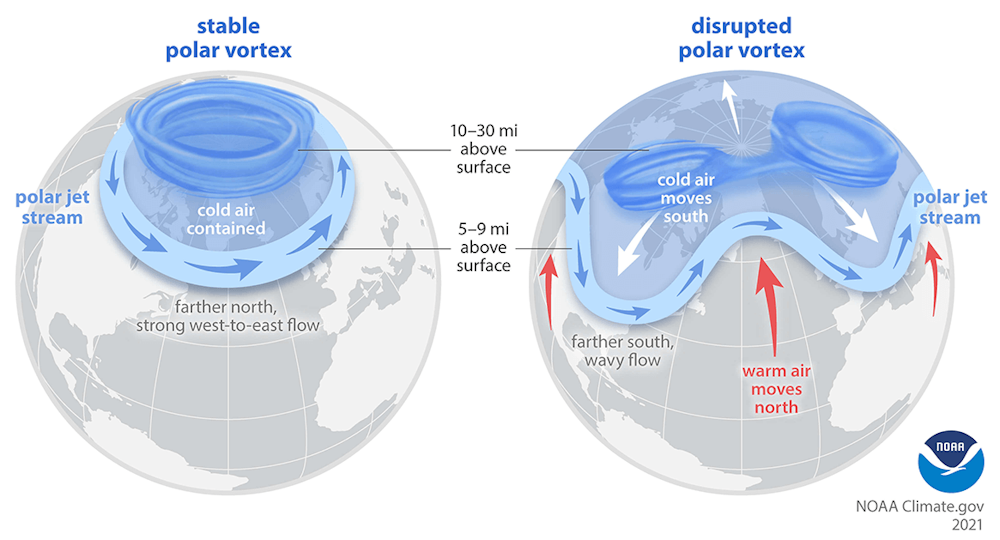
You’ve probably heard the term “polar vortex” used when an area of cold Arctic air moves far enough southward to influence the United States. That term describes air circulating around the pole, but it can refer to two different circulations, one in the troposphere and one in the stratosphere.
The Northern Hemisphere stratospheric polar vortex is a belt of fast-moving air circulating around the North Pole. It is like a second jet stream, high above the one you may be familiar with from weather graphics, and usually less wavy and closer to the pole.
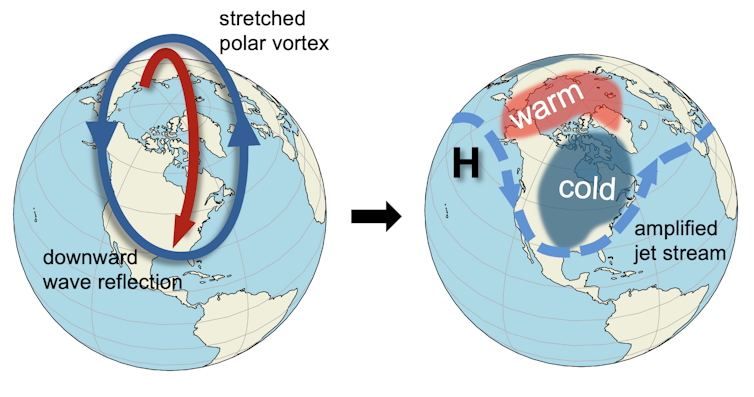
Sometimes the stratospheric polar vortex can stretch southward over the United States. When that happens, it creates ideal conditions for the up-and-down movement of waves that connect the stratosphere with severe winter weather at the surface.
A stretched stratospheric polar vortex reflects upward waves back down, left, which affects the jet stream and surface weather, right. Mathew Barlow and Judah Cohen, CC BY
The forecast for the January storm showed a close overlap between the southward stretch of the stratospheric polar vortex and the jet stream over the U.S., indicating perfect conditions for cold and snow.
This is what was happening in late January 2026 in the central and eastern U.S.
If the climate is warming, why are we still getting severe winter storms?
Earth is unequivocally warming as human activities release greenhouse gas emissions that trap heat in the atmosphere, and snow amounts are decreasing overall. But that does not mean severe winter weather will never happen again.
The polar vortex is a strong band of winds in the stratosphere, normally ringing the North Pole. When it weakens, it can split. The polar jet stream can mirror this upheaval, becoming weaker or wavy. At the surface, cold air is pushed southward in some locations. NOAA
Additionally, a warmer ocean leads to more evaporation, and because a warmer atmosphere can hold more moisture, that means more moisture is becoming available for storms. The process of moisture condensing into rain or snow produces energy for storms as well. However, warming can also reduce the strength of storms by reducing temperature contrasts. The opposing effects make it complicated to assess the potential change to average storm strength.
Scientists are constantly improving our ability to predict and respond to these severe weather events, but there are many questions still to answer.
Much of the data and research in the field relies on a foundation of work by federal employees, including government labs like the National Center for Atmospheric Research, known as NCAR, which has been targeted by the Trump administration for funding cuts. These scientists help develop the crucial models, measuring instruments and data that scientists and forecasters everywhere depend on.
Mathew Barlow has received federal funding for research on extreme events and also conducts legal consulting related to climate change..
Judah Cohen does not work for, consult, own shares in or receive funding from any company or organization that would benefit from this article, and has disclosed no relevant affiliations beyond their academic appointment.
Mtei was appointed by Julius Nyerere, who served as president from 1964 until his resignation in 1985. Nyerere once said of Mtei: “Once a governor, always a governor”, as quoted in Mtei’s autobiography, From Goatherd to Governor. He meant Mtei would always carry the title of governor, given his contribution to starting the Central Bank. Nyerere continued to call Mtei “Governor” even after he transferred him to other posts.
The life and work of Mtei is of central interest to my research as a political scientist who has studied Tanzania’s political history and development politics.
Mtei didn’t take over an established office. The country had obtained its independence only four years before the establishment of the bank in 1965. The newly independent country was using a common currency under the East African Currency Board. Once Tanzania, Kenya and Uganda each decided to be autonomous in 1965, it fell upon Mtei to set up the bank in Dar es Salaam from scratch. He presided over both on technical and logistical matters, including monetary policies, architectural design of the bank’s building, and a design for the national currency.
His work was remarkable as it contributed to the institutionalisation of the country’s economic and financial structures.
Following his tenure as governor, Mtei assumed a bigger government role. He became the secretary general of the East Africa Community from 1974 to 1977 and minister of finance from 1977 to 1979.
As finance minister he took a stand against many of the policies championed by Nyerere, in particular his customised socialist policies – known as ujamaa. Mtei had a different view on how to address the economic problems facing Tanzania. He expressed these to the president – a bold step, given that most government leaders of the time didn’t dare express different views from those of the president.
Mtei resigned in 1979. After Tanzania amended its constitution in 1992 to allow a multiparty system, Mtei founded an opposition party, Chadema, with a liberal ideology that reflected the economic views he had proposed as finance minister.
Chadema has survived to be the leading opposition party in the country to date, despite the limited civic space for opposition politics in Tanzania.
In each of his various roles, Mtei made a mark on Tanzania’s political history.
He leaves several lessons for leaders. Leadership is about conviction. Losing a position for taking a moral stand will eventually lead to a better position with bigger impact. It is professional to give credit even to your opponents. Different views do not mean enmity.
Differences with Nyerere
Nyerere’s economic policies, as set out under the Arusha Declaration, began to show signs of strain.
Following a number of crises such as the oil crisis in 1979 and the Uganda-Tanzania war in 1978-1979, the policies could not facilitate economic recovery in the country. The late 1970s and 1980s were bad years for Tanzania’s socio-economic welfare. All economic variables were negative: for example, inflation rose to 29% per year from 1978 to 1981; between 1979 and 1984, rural income declined by 13.5% in real terms and non-agricultural wage income fell by 65%.
Frustrations about how he was expected to lead the ministry and rescue the country’s economy led him to take a bold step. He resigned in 1979.
Nevertheless, Mtei continued to respect Nyerere. He expressed admiration for Nyerere’s conviction and his determination to build the nation, albeit with an “ineffective” approach.
The farmer
Following his resignation, Mtei became a coffee farmer. He was also active in policy advocacy in the coffee sector as chair of the Tanganyika Coffee Growers Association and a member of Tanzania Coffee Board and Tanzania Coffee Curing Company.
His coffee farm was an estate that he bought after selling his house in a prestigious neighbourhood in Dar-es-Salaam. He actively maintained his coffee estate up to his old age and died in his farm house.
His mastery of finance and economics as well as international knowledge and contacts must have played a big part in his success in the coffee business.
Early life
Mtei came from the Chaggaland on the slopes of Mount Kilimanjaro. He was brought up by a single (widowed) mother with limited resources. In his autobiography he narrated how, at a very young age, he would count banana and coffee trees and identify different species.
Mtei had an entrepreneurial spirit, like two other figures from the same era and region: Erasto N. Kweka and Reginald Mengi.
Kweka was bishop of the Evangelical Lutheran Church of Tanzania’s Northern Diocese. He served from 1976 to 2004. During his tenure, the diocese was involved with development projects including a bank, hotels, hospitals, schools and universities. He came to be known as “Bishop of Projects”.
Mengi owned media and manufacturing industries in Tanzania. Kweka, Mengi and Mtei were all born in the 1930s and grew up in Chagga land. Reading from their biographies, they shared similar childhood experiences and upbringing.
The three peers became prominent national figures in different capacities. All three were raised in the context where coffee had been introduced and they saw and experienced the economic impact of coffee through the establishment and development of a cooperative society, in particular the Kilimanjaro National Coffee Union (KNCU). The union provided education scholarships and other financial services to the farmers and their families. It contributed directly and indirectly to the education and interactions of Kweka, Mengi and Mtei.
Mtei was appointed executive director for African affairs at the International Monetary Fund in 1983. To his credit, Nyerere didn’t hold grudges and recommended him for the post.
Mtei saw his main job as proposing reforms in fiscal policies to solve Tanzania’s economic problems. In his autobiography he said Nyerere started to understand the imperative of the reforms and allowed negotiations to begin with the Bretton Woods institutions.
But events intervened. Nyerere was stepping down, though Mtei tried to convince him to stay.
Mtei noted in the autobiography that he thought Nyerere would be the most effective person to lead the reform. In contrast, President Ali Hassan Mwinyi’s autobiography
gives all credit for reforms to Mwinyi, who ran Tanzania between 1985 and 1995.
Given the level of political polarisation seen in Tanzania and the personalisation of politics, the life of Mtei offers many lessons.
Aikande Clement Kwayu does not work for, consult, own shares in or receive funding from any company or organisation that would benefit from this article, and has disclosed no relevant affiliations beyond their academic appointment.
Source: The Conversation – USA – By Kelsey Norman, Fellow for the Middle East, Baker Institute for Public Policy, Rice University
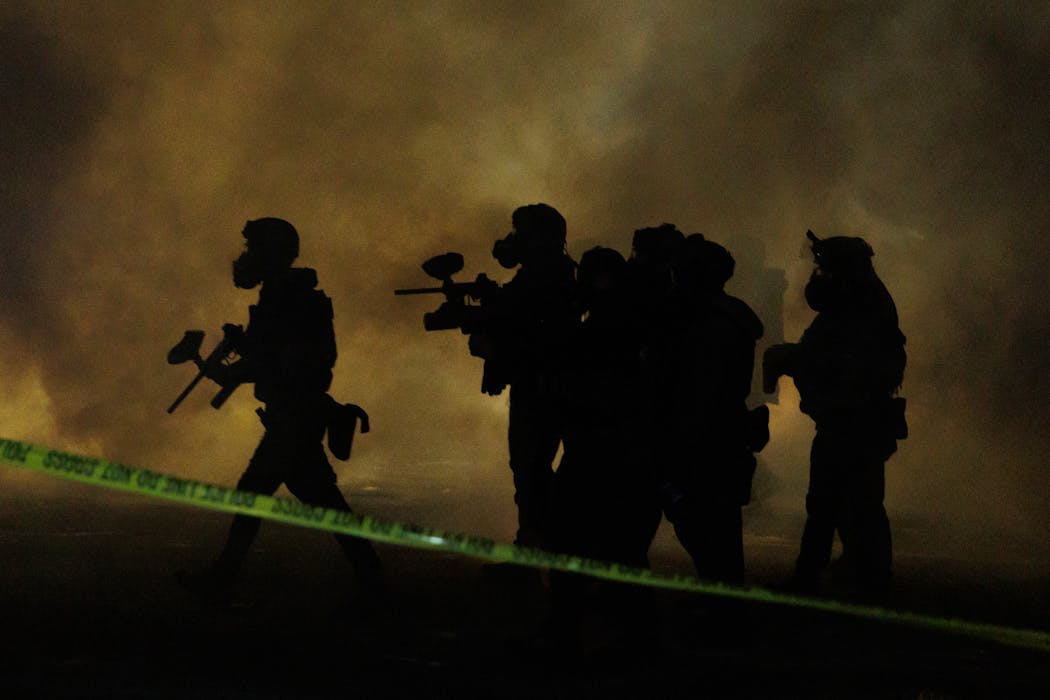
Federal agents deploy tear gas as residents protest a federal agent-involved shooting during an immigration enforcement operation in Minneapolis, Minn., on Jan. 14, 2026.Madison Thorn/Anadolu via Getty Images
The video of an ICE agent shooting and killing Renee Nicole Good – a U.S. citizen – in Minnesota on Jan. 7, 2026, is one example of the brazen, sometimes deadly tactics that the agency employs.
From 2010-2020, nearly 80% of all deportations were initiated at or near the U.S.-Mexico border. During the COVID-19 pandemic, that number jumped to 98%, as both the Trump and Biden administrations utilized Title 42, a public health statute that allowed the government to rapidly deport recently arrived migrants.
But Trump during his second presidency has greatly shifted immigration enforcement north into the interior of the U.S. And ICE has played a central role.
As international migration and human rights scholars, we have examined recent federal immigration policy to determine why ICE has become the main agency detaining and deporting migrants as far away from the southern border as snowy Minnesota.
And we have also explored how the transition in immigration control from the southern border to more Americans’ front lawns could be shifting the public’s views on deportation tactics.
Migration as a threat
ICE is a relatively new agency. The 2002 Homeland Security Act, passed in the wake of the Sept. 11, 2001, terrorist attacks, created the Department of Homeland Security, known as DHS, by merging the U.S. Customs Service – previously under Treasury Department control – and the Immigration and Naturalization Service, formerly under the Justice Department.
Federal law enforcement agents confront anti-ICE protesters outside the Bishop Whipple Federal Building in Minneapolis on Jan. 15, 2026. Octavio Jones/AFP via Getty Images
There is no inherent reason that immigration enforcement should fall under homeland security. But immigration was deemed a national security matter by the George W. Bush administration after 9/11.
In a 2002 presidential briefing justifying DHS’s creation, Bush said, “The changing nature of the threats facing America requires a new government structure to protect against invisible enemies that can strike with a wide variety of weapons.”
Roughly $67 billion goes toward immigration enforcement at the border, including border wall construction. But the largest percentage of the bill’s immigration funding – at least $75 billion – goes toward arresting, detaining and deporting immigrants already living in the U.S.
The Trump administration did not initiate deportations from the U.S. interior. They have formed part of other administration’s policies, both Democratic and Republican.
But the astronomical growth of government funding toward migration control – at the border and in the U.S. – got the country to where it is today.
Between fiscal year 2003 and 2024, for example, Congress allocated approximately $24 toward immigration enforcement carried out by ICE and CBP for every $1 spent on the immigration court system that handles asylum claims.
The new money allocated under the 2025 budget bill, and the reprioritization of immigration enforcement from the border to the interior, partly explains why Americans are now seeing the long-term consequences of border militarization play out directly in their communities.
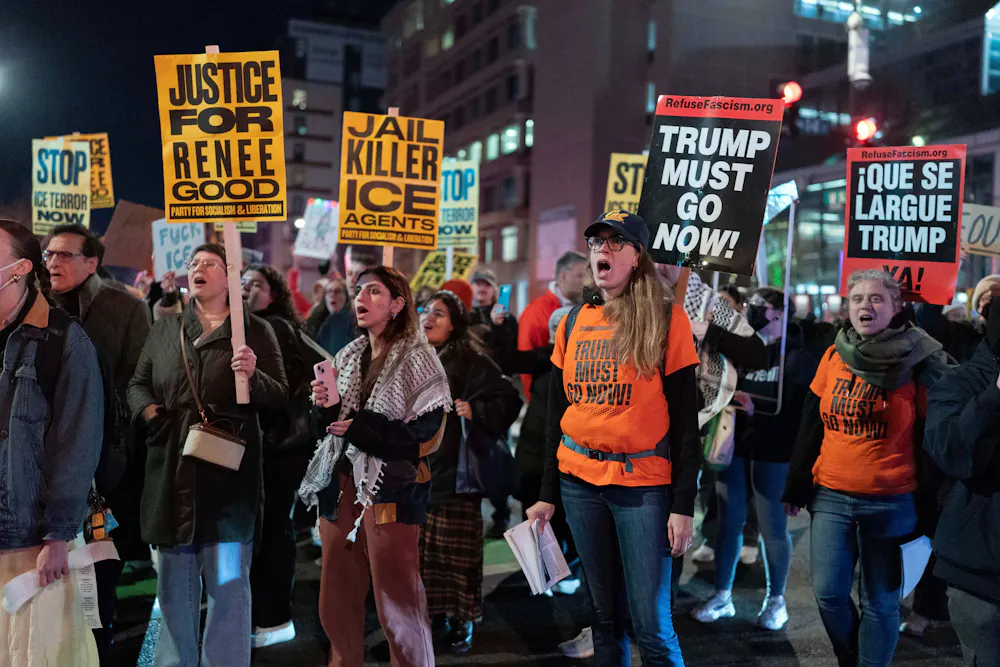
Demonstrators rally before marching to the White House in Washington on Jan. 8, 2026. AP Photo/Jose Luis Magana
Americans may not know about the experiences of migrants who are quickly deported near the border, but it is harder to ignore recent images of people snatched up within their own neighborhoods.
Now the visible targets of border enforcement are increasingly immigrants who have built their lives in the U.S. – neighbors, friends, co-workers – as well as anyone who opposes ICE’s tactics, like Renee Good.
Changing political attitudes
In fact, the violence of Trump’s mass deportation campaign may be changing how Americans view immigration.
Just before the 2024 presidential election, a Gallup Poll found that 28% of Americans believed that immigration was the most important problem facing the nation – the highest percentage since Gallup began tracking the topic in 1981. This number dropped to 19% in December 2025, reflecting how more Americans see immigration as a routine issue that the government can manage rather than a crisis that needs to be dealt with.
This is supported in the academic literature. Migration scholars have shown that voters often support strict immigration policies in the voting booth but resist and protest when governments attempt to implement those policies in organized immigrant communities.
In 2002, for example, migration scholar Antje Ellermann documented that immigration officers reported it was more difficult to detain and deport people in Miami – because of resistance by a politicized immigrant community – compared to relatively conservative and less organized communities in San Diego.
But in both places, Republican and Democratic lawmakers were influential in intervening in individual cases to prevent deportations. This is because senior immigration officials, Ellermann noted, were influenced by media attention and pressure by members of Congress to grant relief.
Support for Trump’s handling of immigration is trending downward. Only 41% of Americans approved of Trump’s approach to immigration as of early January 2026, compared to 51% in March of last year, according to CNN polling.
The authors do not work for, consult, own shares in or receive funding from any company or organization that would benefit from this article, and have disclosed no relevant affiliations beyond their academic appointment.
Source: The Conversation – UK – By Aleksandra Ancite-Jepifánova, Research Affiliate, CEU Democracy Institute, Central European University
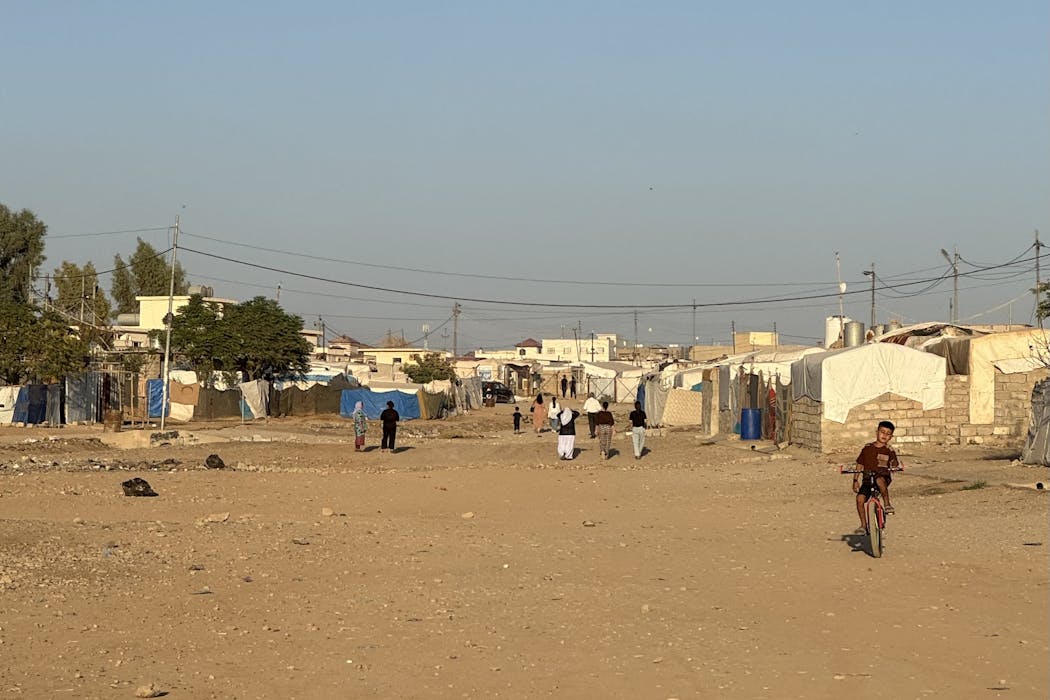
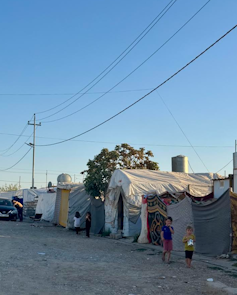
Khanke IDP (Internally Displaced Person) camp in the Kurdistan Region of Iraq in August 2025.Aleksandra Ancite-Jepifanova
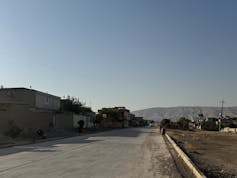
The sun burns down on a small village less than 20 miles north-east of Mosul, Iraq. Milisia, 14, and her sister Madlin, 13, greet me at the gate in flawless, almost accent-free German. They lead me into the yard of a grey, rectangular, one-story building where their family rents a single room.
We sit in the heat, joined by their mother and two younger brothers, aged nine and ten. Their eyes hold a mixture of hope and despair – as if I am both a bridge to the world they lost and a reminder of it. The girls hand me a carefully preserved plastic folder: their end-of-year school assessments from Germany.
I flip through the papers, and a teacher’s note catches my eye: “Despite not having German as her mother tongue, Madlin was always able to express herself clearly. She participated eagerly in lessons, was open and receptive to new content, and always strived for her own creative ideas. In written work, she was focused and willing to make an effort.” (translation from German.)
This folder is one of the few tangible remnants of a life that was abruptly torn apart a year ago. Until October 2024, the family lived in Adlkofen, a small municipality in Bavaria, southern Germany. But when I met them, in late August 2025, they were over 2,000 miles away in Babirah (Kurdish: Babîrê), a village in Iraqi Kurdistan, a semi-autonomous region of Iraq.
Madlin and Milisia’s family are not ordinary returnees. They are Yazidis (also spelled Yezidis or Ezidis), a non-Muslim religious minority native to northern Iraq. In 2014, Islamic State (IS) unleashed a campaign of mass killings, abductions, enslavement, sexual violence, and forced indoctrination against Yazidis – a horror that made international headlines and forced thousands to flee.
Multiple international bodies and western states, including Germany and the UK, have officially recognised IS atrocities against the Yazidis as genocide.
The Insights section is committed to high-quality longform journalism. Our editors work with academics from many different backgrounds who are tackling a wide range of societal and scientific challenges.
Germany, home to the largest Yazidi diaspora outside Iraq, initially granted protection to those fleeing IS. But in recent years, asylum approval rates have plummeted. Following an informal readmission agreement with Iraq in 2023, Germany began deporting Yazidis back to the country they had fled.
This situation has drawn my attention as a refugee and human rights scholar, leading me to explore how genocide, displacement, and European refugee law intersect. In Iraqi Kurdistan, I met Yazidis deported from Germany to document their experiences and witness the human consequences of Germany’s approach as part of my ongoing research.
Milisia’s family is among the people recently deported. They had lived in Germany for nearly six years. The children went to school, learned the language, and for Milisia, life meant responsibilities far beyond her age – translating, interpreting, and advocating for her family. Now, she feels a deep sense of betrayal by the country she once called home, whose language she speaks and whose values she embraced.
Milisia remembers the deportation date; it is etched in her memory: October 5, 2024. Her voice trembles with anger as she recounts, in German, what happened:
It was 5 am. We were sleeping when men in police uniforms surrounded the house. The social worker opened the door – she had a key. We will never forget it, we were so scared … It was really terrible … We have rights too.
The police separated them. The mother and the girls in one car, the father with the boys in another, and drove straight to the airport. Milisia described the helplessness and disbelief: “We couldn’t even pack our things. If they had sent us a letter beforehand, we could have gotten a lawyer, we could have asked our teachers at school. But they didn’t even send us a letter.”
The assault in August 2014 forced over 350,000 Yazidis to flee their homes in Sinjar (Kurdish: Shingal), a mountainous district in north-western Iraq near the Syrian border and the historic centre of the community.
Tens of thousands have made their way to Europe and other western countries, often through dangerous routes in the absence of legal alternatives.
A broken promise
The Yazidi case has become a clear illustration of the limits of European refugee protection frameworks when applied to a community targeted for genocide. Asylum law is geared toward proving individual persecution, not addressing the collective and structural harms that follow mass atrocities.
This gap is particularly visible in Germany, home to the world’s largest Yazidi diaspora – over 230,000 people, including earlier migrant generations. About 100,000 Iraqi Yazidis have sought asylum in Germany since 2014.
In the immediate aftermath of the IS attacks, Germany responded generously: between 2014 and 2017, more than 90% of Iraqi Yazidi asylum claims were approved. In addition, a number of federal states introduced targeted reception programmes to support Yazidi women and children who were especially at risk. Among these efforts, the Baden-Württemberg special contingent stood out, providing a pathway for roughly 1,100 survivors of IS captivity to relocate to Germany.
But after IS lost territorial control in 2017, the German approach shifted. Authorities concluded that group-specific persecution had ended, in practice setting a legal cut-off for the genocide.
Approval rates declined sharply. In 2023, fewer than 40% of the roughly 3,400 applications from Iraqi Yazidis were accepted, while about 40% were outright rejected. Another 7.5% resulted in temporary suspensions of deportation, offering no long-term security. The remaining cases were dismissed as inadmissible under the Dublin Regulation, which assigns responsibility for an asylum claim to another EU member state.
This shift has created a hierarchy of protection within the same minority: those who arrived before 2018 typically retain refugee status, while later arrivals – often from the same camps and with identical experiences of displacement – are rejected.
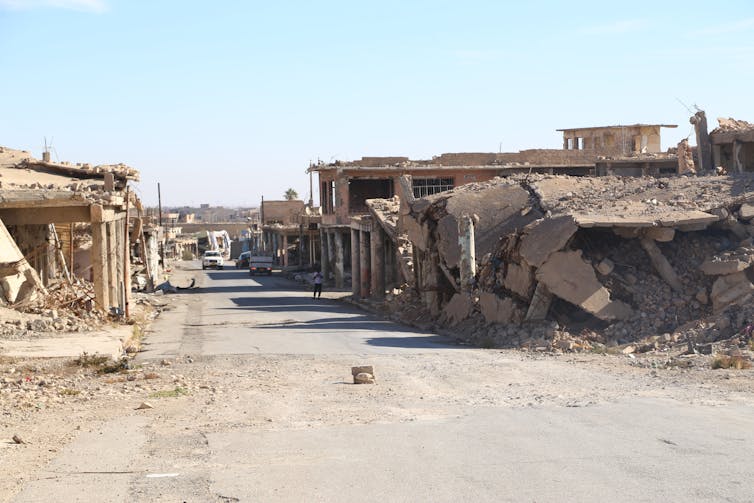
At the same time, conditions in Iraq remain shaped by the consequences of genocide. Sinjar is still devastated and reconstruction is slow. Infrastructure is largely destroyed, armed groups continue to operate, the security situation remains volatile. The district’s status is disputed and large areas are contaminated with landmines. Whole neighbourhoods lie abandoned and basic services are minimal. Mass graves continue to mark the terrain.
In the Kurdistan Region, displaced Yazidis face discrimination in accessing employment and social marginalisation. Tens of thousands have lived in IDP camps for more than a decade, with no viable path to return or integration – conditions that, for many, are an ongoing legacy of genocidal violence.
In January 2023, the German parliament formally recognised Yazidi genocide. Lawmakers acknowledged that its effects remained “omnipresent,” that tens of thousands of Yazidis still lived in camps, and that return to Sinjar was “hardly possible”.
Yet, the recognition remains largely symbolic. It has no influence on asylum decisions, a disconnect that is seen by members of the Yazidi community as a “broken promise”. Between January 2024 and June 2025, more than 1,000 Iraqis were deported. Although the government does not publish disaggregated data, Yazidis are frequently reported to be among them.
Those deported include families with school-age children whose lives were abruptly interrupted. Milisia’s family is not an isolated case. In summer 2025, German media reported on the Qasim family of six, who were returned to Sinjar on the very day their legal appeal succeeded – though the decision arrived only after their plane had taken off.
‘We cannot even go to school in Iraq. Everything is gone.’
Most Yazidis in Iraq come from Sinjar, but others – like Milisia’s family – have lived in villages in the Nineveh Plains closer to Duhok, the third largest city in the Kurdistan Region. Babirah, where they now live, sits amid a patchwork of communities and is surrounded by Arab-majority villages. To reach it, I drove past settlements marked by Arabic signs and men in traditional dishdashas.
Babirah lies about 80 miles north-east of Sinjar. In August 2014, as IS pushed into Sinjar and advanced toward their villages, Milisia’s family fled. Their own village was not occupied, but IS destroyed Yazidi temples as it moved through the area. The family escaped to a site near Erbil, the capital of the Kurdistan Region, and spent four months in an IDP camp. When they eventually returned, their home had been looted.
A Yazidi village in the Kurdistan Region of Iraq, August 2025. Aleksandra Ancite-Jepifánova
The sense of insecurity never fully lifted. “We were always scared … always thinking we would be forced to leave again. That feeling never went away,” Najwa, 35, the children’s mother, recalls. By then, several of her siblings already lived in Germany, and her parents had been sponsored there in 2016. Two years later, she and her husband decided to join them. “We sold our car, household belongings, and some sheep, and spent our savings to pay smugglers and take our children somewhere safe.”
In late 2018, they began the journey to Germany via Turkey. Their youngest child was two. They crossed waterways in plastic boats and continued on foot. “The smugglers put us in a black car,” Najwa says, “and hid us the whole way until we reached Germany.”
After arriving, they applied for asylum. They first stayed in a reception centre near Nuremberg, then in shared housing, before moving into a small two-room apartment covered by state assistance. The father worked part-time in a restaurant; Najwa cared for the children and took them to school. The children integrated quickly – speaking German, making friends, and settling into school and kindergarten.
But because they arrived in Germany in 2018, their asylum claim was rejected. Authorities argued there was no longer group-based persecution of Yazidis in Iraq. Their appeal was dismissed in May 2022, and in October 2023 their request to suspend deportation was denied. While officials noted that the children were enrolled in school, the decision made no reference to their formative years in Germany, their fluency in German, or educational prospects in Iraq.
“When we came to Germany, I was seven and my sister was six,” Milisia says. “My brothers were very small. Now we’re 14 and 13.”
The deportation uprooted them entirely. Since October 2024, the children have not attended school, as schools in the area require prior instruction in the local curriculum – a system they have never been part of. They cannot read or write Kurdish or Arabic. “We only speak German with each other,” Milisia explains. “In Germany I was in seventh grade. Only two more years and I could start vocational training. But they sent us back. Now everything is gone.” Her sister adds quietly, “Sometimes children in the village make fun of us because we don’t go to school.”
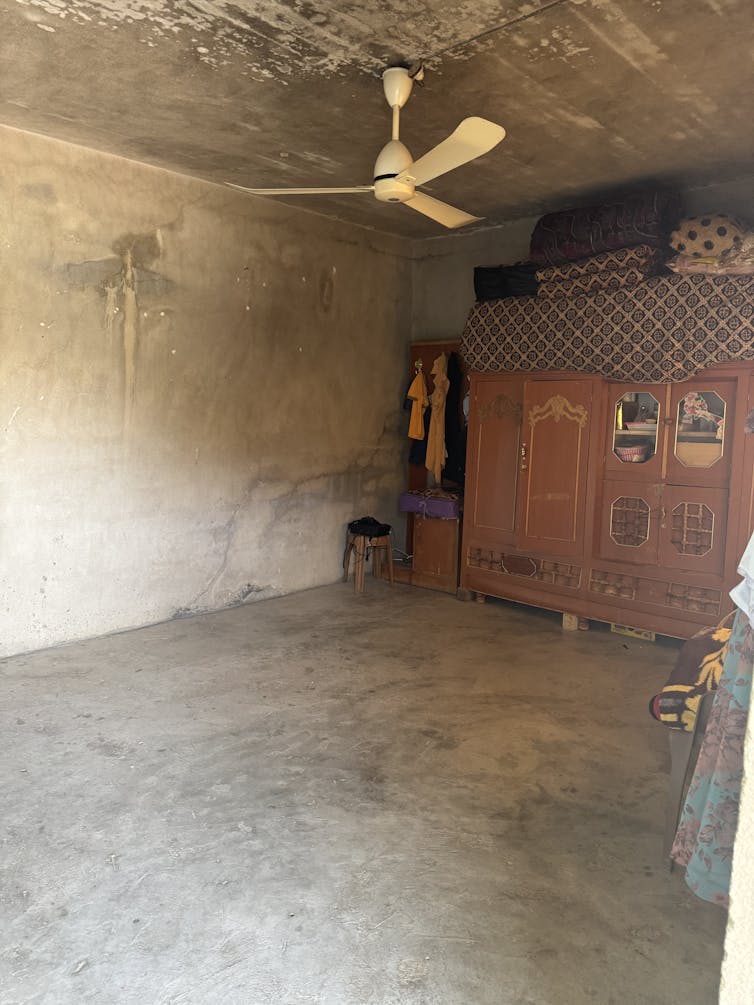
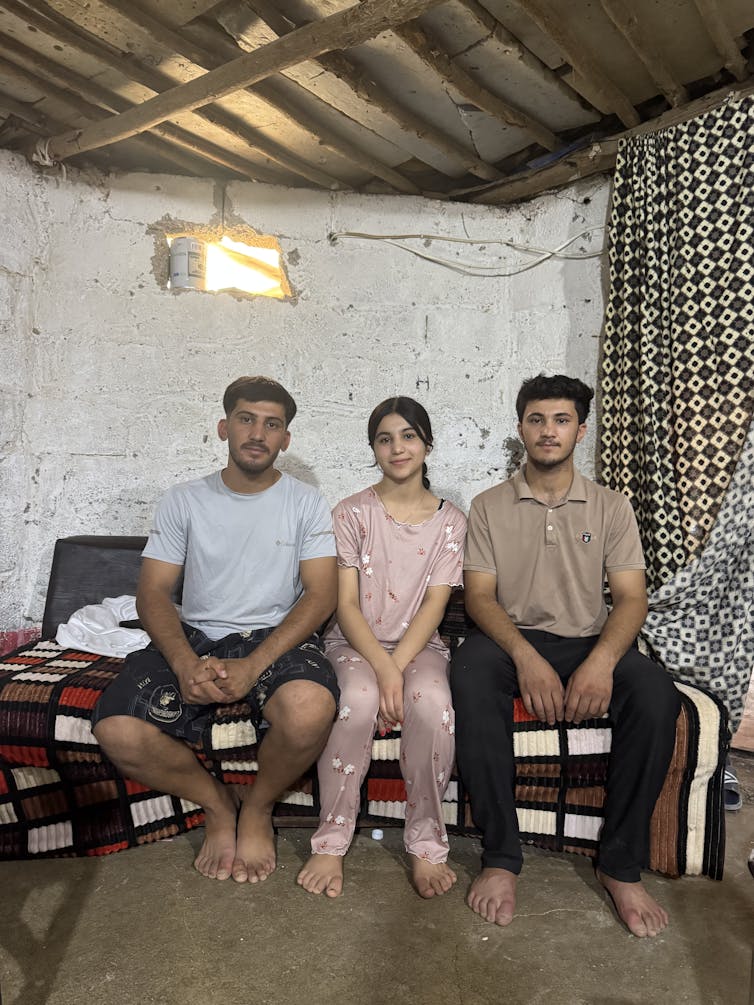
The family now rents a single room with grey, faded walls, furnished only with a cupboard and an old ceiling fan. The father does casual day labour, earning roughly 10,000 Iraqi dinars (around £6) per day. He suffers ongoing health problems following surgery in Germany and was in hospital during the interview.
A single room in which Milisia’s family lives after their deportation from Germany, August 2025. Aleksandra Ancite-Jepifánova
“I don’t know how we are going to build a life here,” Najwa said. “The money my husband earns is barely enough to survive. We don’t feel we belong in Iraq. We have nothing here … I just want a decent life for my children. I don’t want to live in Iraq.”
She adds that living in a village surrounded by Arab communities with a complex history of conflict only heightens the family’s sense of vulnerability.
Trapped in limbo, the family still holds on to the hope of returning to Germany, even if it means taking irregular and dangerous routes. “Even if we don’t find any legal way to go back, we will try other ways,” Najwa said. “But we don’t have money anymore to pay smugglers, and there are no options left now.”
A permanent state of limbo
Other Yazidis living in the Kurdistan Region are displaced from Sinjar. Saad, 24, recently deported from Germany, embodies the limbo many face – unable to return to their original homeland, yet unable to rebuild a stable life in Kurdistan.
I met Saad and his mother in Shekhka, another Yazidi village. We sat on floor cushions in the house they rent – the fifth since they fled Sinjar 11 years ago. Saad’s father was killed in 2007, when his mother was 25 and Saad was five. In August 2014, when IS advanced on Sinjar, Saad – then 12 – escaped with his mother and two younger brothers. They spent several days stranded on Mount Sinjar before reaching Syria and eventually the Kurdistan Region. His grandparents, unable to walk, were captured along with a young female relative. The family never learned what happened to them.
In the Kurdistan Region, they initially took shelter in a school building. Later, relatives of Saad’s mother who lived in the Shekhka village invited them to stay. Over the years, they moved between five different houses as owners reclaimed the properties. “We had nothing permanent,” Saad’s mother says. The family survived on menial labour—harvesting vegetables, cleaning gardens.
Saad never received proper schooling. He attended school for only half a year after displacement. “After what we saw – running from IS, hearing gunshots, people crying – the children couldn’t focus,” his mother said. “They were too traumatised.”
In 2021, Saad heard about the Belarus–Poland route to Europe. The family sold land belonging to his grandfather in Sinjar to pay a smuggler. In October that year, he flew from Baghdad to Damascus and then to Minsk, before moving through forests to the Polish border.
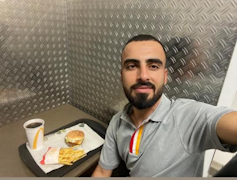
Saad during his time working at McDonalds in Germany. Saad Nawaf Abdo
He endured cold, rain and repeated pushbacks. “One time Polish guards threw away our belongings, even our passports, and humiliated us,” Saad recalls. Eventually, he made his way to Germany, driven from Poland by a Ukrainian smuggler.
In Germany, he applied for asylum, but his claim and appeals were rejected. He completed an integration course, worked at McDonald’s, lived in a shared apartment and sent money home for his mother’s surgery and basic needs.
“At least I could provide for myself and help my family,” he says. Then, one night, police came to his door.
They were banging so hard I thought it would break. They gave me 40 minutes to pack and took me straight to the airport.
Saad said he received no prior notice of the deportation. Today, he and his family rent a house owned by a Yazidi woman who lives in Australia. “Once she told us to leave because she was coming for two months,” his mother recalls. “We begged her – we had nowhere else to go. She finally let us stay.”
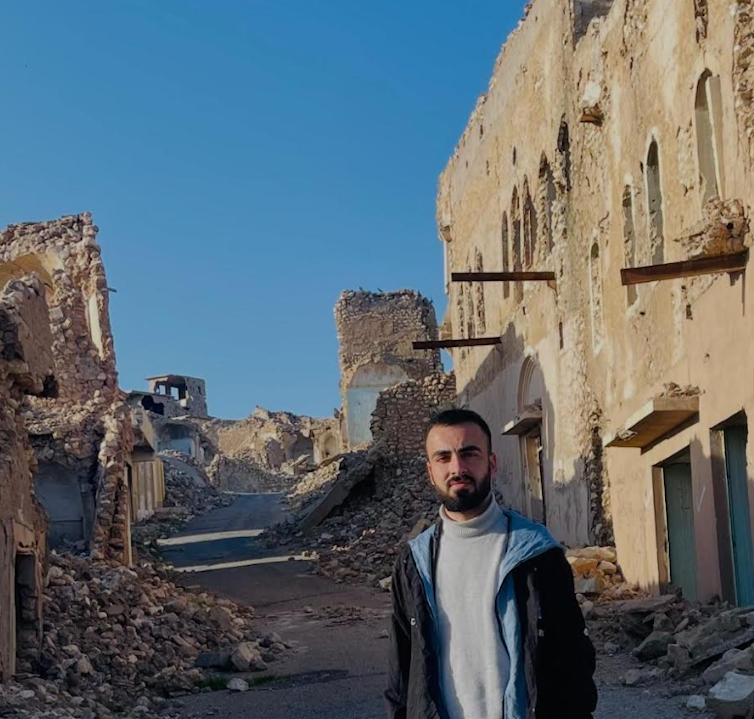
Returning to Sinjar is not an option. Their home in their native village is destroyed, there is no reliable electricity or water, and Saad’s mother suffers from chronic health problems requiring regular treatment. Above all, the trauma of 2014 remains close. “When we go to Sinjar, we remember everything – how IS attacked us, burned our houses,” she says. They visit only occasionally to see relatives or Saad’s father’s grave.
Saad during a visit to Sinjar in October 2025 after his deportation from Germany. Saad Nawaf Abdo
German authorities often argue that Yazidis can find work in the Kurdistan Region. Saad, who speaks the Kurmanji dialect of Kurdish like most Yazidis, shakes his head. “They don’t understand. I didn’t finish school. I don’t speak Arabic or Sorani (the main dialect in Iraqi Kurdistan). How can I work?”
He and his mother are also affected by instances of misrepresentation and online hate speech from segments of the local Muslim Kurdish population. “People post insults about Yazidis. No one stops them. We are treated as the lowest,” Saad’s mother says.
Since his return, Saad and his brothers, now 19 and 20, work seasonal agricultural jobs – harvesting vegetables from 3am until late morning for about 14,000 Iraqi dinars each (around £8) a day. This work is available only for several months each year, leaving the family’s total income around or below the poverty line in the Kurdistan Region. “When Saad went to Germany, we hoped he could take us there legally,” his mother says. “But nothing happened.”
Saad’s passport now carries a deportation stamp, barring legal re-entry. “I want to go to Germany again, but I cannot legally enter,” he says. He remembers Germany with longing: “There, I could work. I didn’t have to wake up before dawn to dig potatoes under the sun…Now even that work here has stopped – the season is over.”
His mother added, quietly: “When Saad came back, he was in a very bad state. I had to be both mother and father. I tried to calm him – otherwise he might have taken his own life.”
‘I’ve always lived in the camp’
While Milisia’s and Saad’s families live in Yazidi villages, over 100,000 Yazidis remain displaced in IDP camps near Duhok. Eleven years after IS’s initial attack, these camps – originally intended as temporary shelters – have become a lasting part of Kurdistan’s landscape, permanent settlements of waiting and uncertainty. For many, moving abroad is the only thing that offers hope.
Even being returned to an IDP camp does not protect Yazidis from deportation from Germany. Authorities and courts have adopted a narrow interpretation, arguing that basic needs will be met in the camp. This approach has led to cases where people are sent back to the very camps they once fled, undoing years of integration in Germany and reinforcing the cycle of displacement and despair.
Khanke IDP camp in the Kurdistan Region of Iraq in August 2025. Aleksandra Ancite-Jepifánova
Saber, 27, is one such example. German media reported on his case after he was deported to Sharya IDP camp in the Kurdistan Region, where he now lives in a tent after four years in Germany. He had worked full time, spoke fluent German and had been well integrated into daily life.
Others with precarious residence status in Germany face similar risks, often separated from family members who remain in the camps. German restrictions on family reunification have kept many families apart for years: wives run households alone, children grow up without fathers, and men in Germany wait in legal limbo, while families survive in tents. For these families, Germany represents the only hope for a durable solution.
Layla, 40, and her children have lived in Khanke IDP camp since fleeing Sinjar in 2014. As I walked through the camp, tents stretched in neat rows, children played on dusty paths – a generation that has never seen life outside the camp. After repeated fires in standard tents, residents were permitted to rebuild their shelters using concrete blocks, while the roofs remain temporary. Layla’s family now occupies a single small room, furnished with a few plastic chairs, a sofa, a TV and a refrigerator.
Layla’s children at Khanke IDP camp, where they have lived for most of their lives, August 2025. Aleksandra Ancite-Jepifánova
Layla’s husband left for Germany in 2017, travelling irregularly. His asylum application was initially rejected, but he later received a Duldung – a temporary suspension of deportation. This status did not allow family reunification, leaving the family stranded in the camp. He now works at McDonald’s in Hanover and has obtained a residence permit, which would allow family reunification – but too late for Layla’s two sons, who also live in the camp and are now young adults. Only Layla and her daughter remain eligible, provided the father earns a sufficient income. Their eldest son, in his early twenties, who migrated irregularly in 2021, now faces deportation back to the same camp. Layla’s daughter, 13, explained:
I don’t remember my father. I only speak with him on the phone.
Layla added: “It’s very difficult to live without a husband. The children should have their father. I handle everything alone – the hospital, shopping. All the burden is on me.”
Returning to Sinjar is not an option. Their home is destroyed, the area abandoned. “No one from our village lives there anymore,” Layla said. For her daughter, the camp has become permanent: “I don’t remember Sinjar. I’ve always lived in this camp.” Her mother echoes this: “Even when people ask where we are from, we say, ‘We are from the camps.’”
Germany represents hope. “In Germany, there is safety, human rights and work,” Layla said. “I left school young. If I were in Germany, I would go back and finish. Women can work and have a life. Here, there is nothing.” Both mother and daughter are learning German. The daughter studies online and can now introduce herself in German: “If I go to Germany, I want to study. I want to become a doctor and help sick people.”
Layla expressed frustration at Germany’s shift in policy. “We were hoping Germany would continue helping us. At first, we felt supported, that people were standing behind us, but then they stopped. We have survived so many genocides. Every time it happens, we survive, and then it happens again.” Her message to Germany is simple:
We don’t want much. Just stop deporting Yazidis. Give them permanent residence and reunite the families.
‘We ran from monsters’
Nearby in the same camp, Majida, 38, lives with her six children in a small room; the camp has been their home since 2014. Her husband, Kamal, left for Germany in 2017, hoping to secure protection and eventually reunite the family, following the path of a friend who had managed to do so.
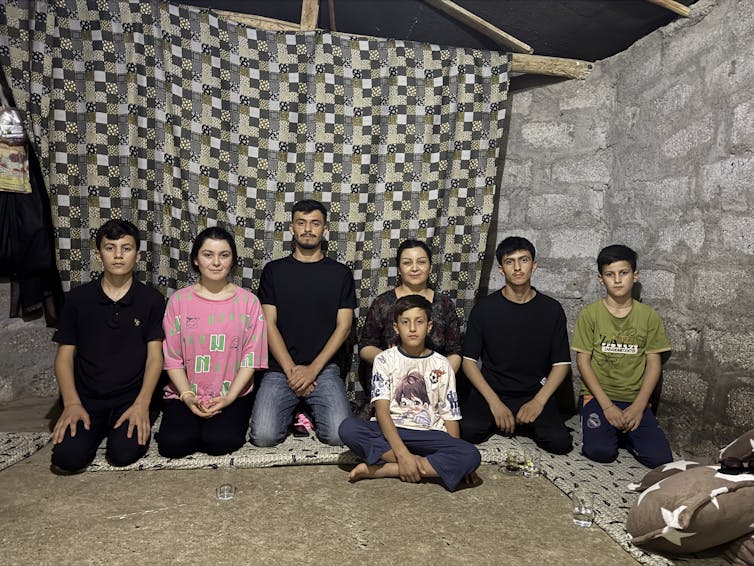
Majida and her six children, aged between 11 and 18, in Khanke camp, in August 2025. Aleksandra Ancite-Jepifánova
Instead, his asylum claims were repeatedly rejected, leaving him in a precarious legal status and unable to bring them. “We haven’t seen him for eight years,” Majida says.
Before 2014, Kamal had worked for years to build their house in their Sinjar village. “It was our dream,” Majida recalls. “We moved in and lived there only one year before IS came. Then we fled, and the house was destroyed.”
When they first arrived at the camp, they believed it would be temporary. “At first, we thought this would last only a few days. But year after year, we realised no one is going to do anything for us.”
“We don’t see any future here – not in the camp, not in Sinjar,” she said. The family recently returned to Sinjar to process ID cards, their first visit since fleeing over a decade ago. “I didn’t want to go,” Majida says.
When I went there, I remembered everything – my childhood, our neighbours, those who were killed, how we escaped. I cried. But I was grateful I could save my children. We ran from monsters.
The Iraqi government offers four million Iraqi dinars (around £2,300) to each displaced Yazidi household willing to return and rebuild. Yazidis and rights groups say the amount is far too small. Majida’s family spent around 30 million dinars (around £17,000) to build their house.
Majida said she does not feel accepted in the Kurdistan Region either. Life in the camp is largely isolated, and the family has little interaction with Muslim Kurds, the dominant group in the area, which contributes to feelings of insecurity. Majida believes Yazidis are not seen as part of the wider community.
Fear and mistrust run deep. Even if new houses were built in the Kurdistan Region, Majida said she would still prefer the camp among other Yazidis over a two-storey home in a Muslim-majority area.
I don’t trust the government. I’m afraid everything that happened to me will happen to my children too. Even when I take them to the playground in the neighbouring town, I don’t feel safe.
Discrimination in employment adds to these sentiments. Yazidis are often excluded from jobs in the food industry because their non-Muslim faith is seen as incompatible with handling “halal” food.
Majida’s six children are now aged between 11 and 18. Raising them alone has been exhausting. Majida cries as she recalls the early years without her husband.
We have been through so many difficulties. At the beginning, the children were selling beans on the street. My husband was hiding in Germany, unable to work, unable to send money. NGOs later trained me in sewing, so I opened a small tailoring business. But the money is never enough. I spent so much on hospitals and doctors, and to send the children to school. It was still not enough.
In desperation, and tired of waiting for a legal path to family reunification, Majida and her children attempted to reach Europe irregularly through Turkey in 2023. They were caught and returned to Iraq.
One of her sons, now 18, added: “In Germany, you can build your future – go to school, work. Here, we don’t know what will happen.” Another son said: “Once we finish school, we’ll try to find a way to go to Germany. That’s our only hope.”
Majida’s husband, Kamal, 45, lives in the German city of Braunschweig, near Hanover. I interviewed him separately via video call. Kamal lives in refugee accommodation, sharing a small room with another man, and works shifts at warehouses.
After eight years marked by asylum rejections, periods of irregular status and hundreds of euros spent on legal fees, Kamal has recently been granted a temporary two-year residence permit. While the permit may lead to permanent residency, it allows family reunification only in exceptional humanitarian cases – a threshold so high that reunification with his family remains out of reach.
During the interview, Kamal broke down in tears. “We don’t have a future in Iraq. Yazidis have always been targeted, and I believe it will happen again,” he says.
I came to Germany hoping they would protect my family. Everyone talked about human rights here. But my life is on hold. Every night I cry because I miss my children. I haven’t seen them in years, and they no longer know me.
He added: “There is no humanity left for me, and I have lost hope in Germany. I don’t know what to do. Will I stay alone like this for the rest of my life? Sometimes I even think about ending my life. It’s too much.”
Sinjar will never be the same again
Instead of family reunification in Germany, many Yazidi men now face the risk of being deported back to the camps. This is what happened to Ali, 42. In autumn 2023, he joined protests in Berlin against the deportation of Yazidis, speaking to German media outside the parliament. Only weeks later, in December 2023, Ali himself was deported, after five years in Germany. He initially returned to the IDP camp in the Kurdistan Region where his wife and seven children had lived since 2014, after fleeing Sinjar.
Ali had arrived in Germany in late 2018, hoping eventually to bring his family. He paid around US $10,000 to smugglers – money borrowed from relatives and taken from his savings. His asylum claim and subsequent appeals were rejected. During his years in Germany, he worked in construction. In autumn 2023, he received a deportation notice.
We spoke on the phone while I was in Duhok and he was in Sinjar, where he moved a few months ago after leaving the camp. His children, now aged between five and 18, barely knew him. “When I came back to the camp, they asked, ‘Who is this man?’” he says. “I tried to give them something; they wouldn’t take it because they didn’t know me. It took them about a year to get a little bit used to me. Even now, they don’t act normally around me. None of them sleep next to me – they always sleep with their mum. I always feel like a stranger to them. Even when I try to be close, to kiss them, they don’t return it. It’s a strange feeling.”
Ali and his family spent 11 months in the camp after his deportation. He struggled with his mental health and eventually decided to return to Sinjar.
Their house had been completely destroyed. Ali applied for the government compensation of four million Iraqi dinars, but the family has not yet received it. “We are living in someone else’s house,” he explains. “When the owners return, they’ll ask us to leave.” Much of their street remains destroyed or abandoned.
To survive, the family works in orchards planting vegetables, but the income is unstable and seasonal. As Ali puts it, “Here and the camp – both places are bad.”
What needs to change
Although the Islamic State was militarily defeated, the harm inflicted on the Yazidis did not end in 2017. For a small, historically persecuted minority rooted in a single region, prolonged displacement in undignified conditions perpetuates the long-term consequences of genocide. With no viable local solutions, relocation abroad has become the only realistic way for many Yazidis to rebuild their lives.
Crucially, the numbers involved are low. After a peak of around 37,000 applications in 2016, annual asylum claims by Iraqi Yazidis in Germany have recently fallen to around or below 4,000. Germany’s largest refugee support NGO, Pro Asyl, estimates that up to 10,000 Yazidis currently face the risk of deportation back to Iraq.
At a minimum, Germany should grant secure temporary residence to Yazidis who arrived after 2017, with the right to work and family reunification, alongside a clear path to permanent status. Children’s rights must be prioritised to prevent the loss of education and belonging seen in cases like Milisia’s.
A draft law proposed by the German Green Party would offer a three-year residence permit to Yazidis from Iraq who arrived by July 2025, recognising both ongoing instability in Iraq and Germany’s special responsibility after acknowledging the genocide. Whether it will pass remains uncertain.
Ultimately, addressing the Yazidi case requires a tailored approach that recognises genocide survivors as a distinct vulnerable group and provides durable solutions that prevent the continuation of displacement and harm.
Ali still believes the only viable long-term solution for Yazidis is to move abroad. He sees Germany as offering safety, freedom of religion and future opportunities.
There, nobody asks about our religion, nobody cares about that, and we would have a future. Here [Sinjar], it will never be like before 2014. We always have fear inside.
To hear about new Insights articles, join the hundreds of thousands of people who value The Conversation’s evidence-based news. Subscribe to our newsletter.
Aleksandra Ancite-Jepifánova does not work for, consult, own shares in or receive funding from any company or organisation that would benefit from this article, and has disclosed no relevant affiliations beyond their academic appointment.
The author would like to thank Ghazi Murad Ismael for assistance with fieldwork in Iraq.