Traveller’s tummy: why going on holiday can affect your bowel habits – and what you can do to prevent it

Source: The Conversation – UK – By Kate Grimshaw, Associate Clinical Fellow, Dietetics, Manchester Metropolitan University

Changes to our normal routine can throw our bowels out of whack. S Prodution/ Shutterstock

Travelling abroad is something many of us look forward to. It’s a chance to break free from the norm, discover new sights, try new foods and do things we might not normally have a chance to do.

But sometimes, our body has other plans – and our long-awaited holiday is spoiled by changes in our bowel habits. From bloating and discomfort to constipation and diarrhoea, travellers’ tummy is a well-recognised issue. Here’s why it happens – and what you can do to prevent it from ruining your plans.

Our bowels get used to how we normally eat and drink. They don’t really like great changes in that routine. Anything out of the ordinary will have some sort of effect on how they work.

This is why constipation (defined as having fewer than three bowel movements in a week, with straining and hard or dry, lumpy poo) can be a common problem in travellers.

Constipation lasting a few days into the holiday is probably due to dehydration. This is especially the case if you’re on holiday in a hot country, as you’ll be sweating a lot. Drinking more alcohol than you might normally have at home can also make dehydration worse.

Add to this a change in diet – such as irregular eating times and having fewer fruits and vegetables – and our bowels become sluggish and the constipation can get worse.

Finally, we tend to get a lot less exercise while on holiday. As exercise – particularly walking and cycling – helps stimulate bowel movements, that’s another reason why we may suffer from constipation.

Stress and potentially jet lag may also play a role in holiday constipation. Plus, recent research has shown that some people are just more prone to experiencing constipation while travelling.

On the other hand, some people experience episodes of diarrhoea on holiday.

One of the most common culprits behind traveller’s diarrhoea is gastroenteritis (an “upset tummy”), which is caused by eating contaminated or spoiled food.

But changes in diet can also be a common cause. Eating high-fat meals or drinking more alcohol than normal can both lead to episodes of diarrhoea.

Drinking a lot of fruit drinks can cause it too, due to their high fruit sugar (fructose) content. Similarly, strong tea and coffee can also have a similar effect due to the caffeine in them.

Finally, prolonged sun exposure can lead to diarrhoea as the body struggles to regulate internal temperature.

It’s possible to have episodes of both diarrhoea and constipation while on holiday. Most people find they experience diarrhoea first, which can cause dehydration if the lost fluids aren’t replaced by drinking enough, which can go on to cause constipation.

Preventing traveller’s tummy

So what can you do to reduce the likelihood of upset bowels on your holiday?

A young man wearing a backpack drinks water from a plastic bottle.
Staying hydrated is one key piece of advice.
Jemi Alpian/ Shutterstock

First, think about the area you’re travelling to. In some regions, there’s a higher risk of food and water contamination. Check advice on vaccinations and any specific advice for the places you will be visiting regarding food and water safety.

Other things you can do to look after your bowels on holiday include:

  • Keep your fluid intake up – ideally with water or naturally sweetened drinks;
  • Eat plenty of fruit and veg – especially ones that are similar to what you normally eat;
  • Limit your fruit juice intake to just one drink per day;
  • Walk after every meal if you can, to keep your digestive system working;
  • Eat regularly and avoid missing meals to keep a routine for your bowels to work with;
  • Avoid overly large meals – particularly those containing a lot of fat;
  • Try not to consume alcohol in excess.

What to do if you are affected

If you find you still come down with symptoms of constipation or diarrhoea on holiday, there are a number of things you can do.

For constipation, first and foremost, increase your fluid intake and take some fruit juice drink over the day. The water will soften your stool and the juice will encourage more water into your stool.

You should also try to increase the amount of fibre that’s in your diet. This can include snacking on dried fruit or adding flax or chia seeds to food. But make sure you’re drinking enough fluids, as too much fibre without water can have the opposite effect. You could also take an over-the-counter remedy, such as a fibre supplement or a laxative.


Read more:
‘Fibremaxxing’ is trending – here’s why that could be a problem


For diarrhoea, over-the-counter medication (such as loperamide) can be useful to stop the symptoms. Take this as soon as you get symptoms. Diarrhoea can cause dehydration, so to prevent that from happening, make sure you take an oral rehydration solution (such as Dioralyte) and drink plenty of water.

If your diarrhoea is accompanied by a high temperature or bloody or mucusy poos, do not take any over-the-counter medication and seek medical help immediately. This may be a sign of a more serious infection that requires specific medication.

Once you return home, it may take another few days for your bowel habits to return to your normal pattern. If any symptoms persist for more than a few days, it may be worth speaking with your GP.

The Conversation

Kate Grimshaw does not work for, consult, own shares in or receive funding from any company or organisation that would benefit from this article, and has disclosed no relevant affiliations beyond their academic appointment.

ref. Traveller’s tummy: why going on holiday can affect your bowel habits – and what you can do to prevent it – https://theconversation.com/travellers-tummy-why-going-on-holiday-can-affect-your-bowel-habits-and-what-you-can-do-to-prevent-it-279126

Four reasons why the new DC cinematic universe may fail (again)

Source: The Conversation – UK – By Roman Pavlyuchenko, Lecturer in Marketing, University of Bath

Marvel and DC have been captivating the world with their superheroes and supervillains for almost a century. Characters like Spider-Man (Marvel) and Superman (DC) are global household names whose recognition rivals that of world leaders.

For most of their history, Marvel and DC have gone toe-to-toe in comics, cartoons, TV and films. In 2008, Marvel made a breakthrough with its Marvel Cinematic Universe, an ongoing series of interconnected films and TV shows. Overall, it is the highest-grossing film franchise in history, with 2019’s Avengers: Endgame also being the highest-grossing franchise film ever made.

Forced to compete, DC responded with its own cinematic universe (2013-2023) that featured Man of Steel (2013), Batman vs Superman: Dawn of Justice (2015), Justice League (2017) and The Suicide Squad (2021). But it flopped both commercially and critically, forcing an abrupt ending in 2023 with Aquaman: The Lost Kingdom.

Now, in 2026, DC is attempting a revival. The home of Batman and Superman is launching a brand new cinematic universe, with director James Gunn leading the charge. The flagship Superman film was released in 2025, the second film with David Corenswet in the lead role, and Supergirl is dropping this July.

In total, 23 new films and shows have been announced, and DC is on a media blitz promoting its comeback. The timing could not have been better; Marvel is reeling from its own string of disappointments, such as 2021’s Eternals, 2023’s The Marvels, and 2025’s Thunderbolts*, all of which performed rather poorly at the box office given their big budgets.

Can DC pull it off this time around? My ongoing research into mega-franchises such as Marvel, DC and Warhammer, suggests not.

One of the reasons is DC’s failure to understand the psychology of mega-franchise consumers, even after Marvel’s multi-year success from 2008 onwards, and DC’s own failures. Below are four research-backed issues that could start posing serious problems for DC soon.

1. Lack of stylistic diversity

James Gunn is the genius director who gave Marvel the Guardians of the Galaxy franchise, its much praised (and highly successful) comic relief. His 2025 Superman for DC shared the same light-hearted humour and quirky dialogue. And going by the trailer, this year’s Supergirl looks to be similar in tone.

However, a universe cannot be built on quirkiness alone. Dozens of fans I interviewed uniformly praised the impeccable variety of styles that Marvel has managed to deliver since 2008. Some films are darkly funny (Deadpool), and some are dead serious (Eternals). And Marvel is very good at shuffling styles to keep viewers perpetually entertained.

This roller-coaster unpredictability is what drives the success of mega-franchises. If every film was just another spin on Guardians of the Galaxy, consumers could quickly lose interest.

2. Getting the pacing wrong

Last year’s Superman barraged consumers with a cavalcade of characters from DC’s roster, including Superman himself, but also Mister Terrific, Green Lantern, Metamorpho and Hawkgirl, to name a few. Which means DC is doing what it did in 2017, when its Justice League film introduced several major characters all at once.

In contrast, my research shows that fans prefer slower pacing, where characters are introduced first on their own and then aggregated into major spectacles such as Marvel’s Avengers. If the pacing is more measured, consumers cultivate an emotional stake in the characters’ stories. But if dozens of characters are introduced at the same time without proper grounding, who can blame audiences for not caring enough?

3. Over-reliance on obscure characters

Mega-franchises thrive on huge rosters of characters. However, it is important to first focus on just a few popular characters to get that “I know them!” effect. Here, Marvel did an excellent job promoting its biggest heroes first. Its first film featured the iconic Iron Man, quickly followed by mainstays like Captain America, Hulk and Thor. They already existed in the popular consciousness – which is exactly what Marvel counted on.

In this regard, DC’s release schedule leaves much to be desired. A few major characters (Aquaman) are meshed with minor episodic villains (Clay Face) and obscure heroes that have not seen major action in decades (Sergeant Rock).

Meanwhile, one of DC’s biggest characters, Batman, is not even getting his own film (the 2022 film starring Robert Pattinson was not part of this DC universe, but something called DC Elseworlds). If consumers refuse to become comic book nerds to enjoy a two-hour flick, whose problem is it?

4. The missing ‘big picture’

Mega-franchises such as Marvel and DC are famous for their massive life-or-death dramas. This is what drives audience engagement and gives a mega-franchise its purpose.

As my interviewees attest, the fact that such purpose emerged early on in Marvel’s oeuvre is what made it successful. From the start, audiences knew that everything was leading to the Avengers team-up. And, when The Avengers was released, it established Thanos as the archenemy and ensured that all threads led to him. The resulting film, 2019’s Avengers: Endgame, tied everything together in a massive spectacle that also happens to be the highest-grossing franchise film in history.

For now, the new DC universe can’t see the wood for the trees. As such, last year’s flagship film Superman did not seem to establish any major threats, cosmic events, supervillain archenemies, or any meaningful connection to any upcoming characters except Supergirl.

Instead, it opted for a local conflict between Superman and his arch-rival Lex Luthor. And, looking at the upcoming releases, it appears that the Justice League (DC’s version of Marvel’s Avengers) film is not even on the list.

Releasing a bunch of seemingly unrelated superhero offerings harks back to the early 2000s, when both Marvel and DC tried to reinterpret various characters in a series of disconnected standalone films. With audiences accustomed to major interconnected film sagas, this approach will not suddenly work in 2026. If audiences don’t know where the road is going (and, with mega-franchises, it is a long road), who can blame them for not taking it?

While DC’s comeback is sorely needed, the odds are that the current version is just not it. However, DC has always found ways to rebound, and it is still an iconic brand adored by millions (myself included). Like many fans, I await with baited breath to see how this new universe expands – or not.

This article features references to books that have been included for editorial reasons, and may contain links to bookshop.org; if you click on one of the links and go on to buy something, The Conversation UK may earn a commission.

The Conversation

Roman Pavlyuchenko does not work for, consult, own shares in or receive funding from any company or organisation that would benefit from this article, and has disclosed no relevant affiliations beyond their academic appointment.

ref. Four reasons why the new DC cinematic universe may fail (again) – https://theconversation.com/four-reasons-why-the-new-dc-cinematic-universe-may-fail-again-277550

Teens and young adults are driving the demand for online abortion pills via telehealth – new research

Source: The Conversation – USA (3) – By Dana Johnson, Postdoctoral Fellow in Health Disparities Research, University of Wisconsin-Madison

Abortion pills have been shown to be safe and effective. MementoJpeg/Moment via Getty Images

Teens in the U.S. are obtaining medication abortion pills through telehealth, and young people age 18 to 24 are ordering medication abortion at much higher rates than older adults.

Those are the key findings of a new study that my colleagues and I published in the journal JAMA Health Forum.

We examined requests for medication made to an online telemedicine service – one of the few to support people in all 50 states, without age restrictions. We compared average weekly request rates both before and after the Supreme Court overturned Roe vs. Wade in June 2022. Over time, we examined request rates across three age groups (15-17, 18-24 and 25-49) and by the severity of state-level abortion restrictions.

After Roe was overturned, researchers expected the number of abortions across the U.S. to fall. Intuitively, this makes sense, as most states have at least one law substantially restricting abortion services, which limits access at a clinic.

However, research from the Society of Family Planning #WeCount project shows the opposite: that the number of abortions has increased nationwide. The trend was even seen in states that ban abortion.

The main reason for this is the steep rise in medication abortion services through telehealth, which has expanded access for tens of thousands of people. As of early 2025, an estimated 1 in 4 abortions are done via telehealth. Until now, research and media attention have largely focused on this phenomenon among adults rather than among teenagers.

Why it matters

Understanding this trend among adolescents is important because minors – or teenagers under 18 – face a unique legal situation when it comes to abortion.

More than 7 million teenage girls age 13 to 17 live in a state with an abortion ban, and the legal landscape is quickly changing for teens.

In most states, adolescents seeking abortion services must navigate parental involvement laws, which require a minor to obtain consent for, or notify a parent of, their abortion. Such laws make it difficult or even impossible for many teens under 18 to obtain care, even in states like Massachusetts or Pennsylvania that have moved to protect abortion access.

In some cases, teens seek judicial bypass services, which help them avoid the parental involvement process. In addition to legal barriers, teens who seek abortion may already face stigma around teen pregnancy and sex, likely lack reliable access to a car – or may not even have a driver’s license – and probably don’t have US$600 or more on hand to pay for an abortion at a clinic.

To circumvent these barriers, minors are bypassing parental involvement requirements and requesting telehealth at higher rates in states with parental involvement laws, compared with their counterparts in more liberal abortion access states.

This is important because this trend may be evidence of the huge barrier of parental involvement laws. It may also signal that states with parental involvement laws also have additional policies restricting abortion – such as mandatory waiting periods or gestational bans – and that minors are living in an even more restrictive policy context than adults.

What still isn’t known

More research is needed to understand how and why teens are turning to online providers. Findings will help clinicians and advocates support adolescents who are ordering telehealth medication abortion online.

There are some very real legal risks involved for any teenager ordering pills online, and young people have been criminalized for taking abortion pills ordered from online sources.

Furthermore, anti-abortion prosecutors and lawmakers frequently target teens. For example, Idaho has become notorious for passing an “abortion trafficking” law, which makes it illegal to help minors access abortion.

At the federal level, attempted revisions to the Food and Drug Administration’s approval of the abortion drug mifepristone have explicitly tried to ban access for minors, and federal officials continue to spread misinformation about the safety of medication abortion for teens.

The Research Brief is a short take on interesting academic work.

The headline of this article has been updated to more accurately reflect the 18-24 age group that is driving this trend.

The Conversation

Dana Johnson receives funding from the National Institute of Health, the Society of Family Planning Research Fund, and the UW-Madison Collaborative for Reproductive Equity. She also serves on the Board of Directors for Jane’s Due Process.

Laura D. Lindberg is affiliated with Youth Reproductive Equity and Power to Decide

ref. Teens and young adults are driving the demand for online abortion pills via telehealth – new research – https://theconversation.com/teens-and-young-adults-are-driving-the-demand-for-online-abortion-pills-via-telehealth-new-research-277943

The unseen challenges of life on the Moon

Source: The Conversation – UK – By Damian Bailey, Professor of Physiology and Biochemistry, University of South Wales

For the first time since the Apollo era, humans are preparing not just to visit the Moon, but to live and work there for weeks, months – and eventually years.

But what would it really be like to spend an extended period on the lunar surface? The answer is exhilarating – and brutally unforgiving. An exciting new era of deep-space exploration is opening up. The US Artemis programme aims to set up an outpost on the Moon’s surface. It marks a fundamental shift in how we explore space.

Rather than just leaving “flags and footprints” as the Apollo missions did, Nasa wants to establish a sustained human presence on the Moon, beginning at the lunar South Pole.

The programme unfolds in stages. In 2022, the Artemis I mission successfully tested the Space Launch System (SLS) rocket and Orion spacecraft as an integrated system on an uncrewed mission around the Moon.

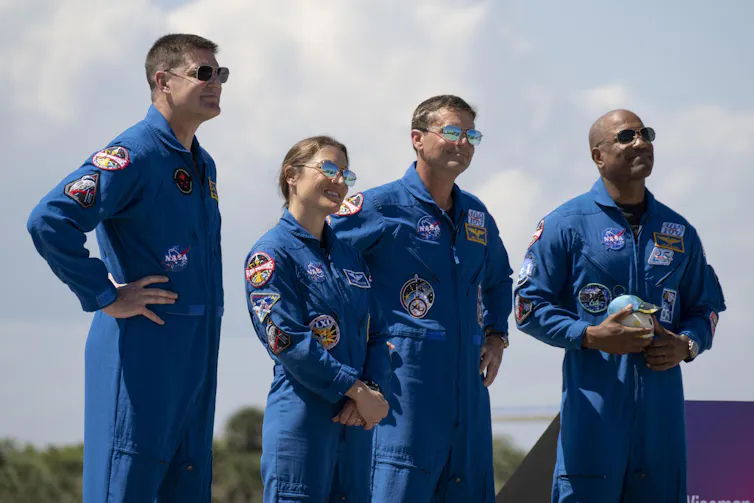
On April 1, 2026, Nasa launched Artemis II a ten-day mission, carrying four astronauts around the Moon.

The four Artemis II astronauts arrived at Kennedy Space Center in Florida on March 27, 2026 to begin final preparations for launch.
NASA/Jim Ross

As Nasa’s first crewed flight of Orion and SLS, Artemis II is a pivotal mission designed to verify that life-support systems, navigation, thermal protection and deep-space operations all function safely with humans onboard.

Before astronauts can live on the Moon, the journey there must be proven reliable.

Beyond these early missions, Nasa’s long-term vision extends far beyond a single landing. Nasa plans to spend US$20 billion (£15 billion) on a lunar surface base, intended to support repeated and progressively longer surface stays. This is designed to teach us how to operate sustainably beyond Earth – knowledge that will ultimately feed forward to future human missions to Mars, the horizon goal.

Health challenges

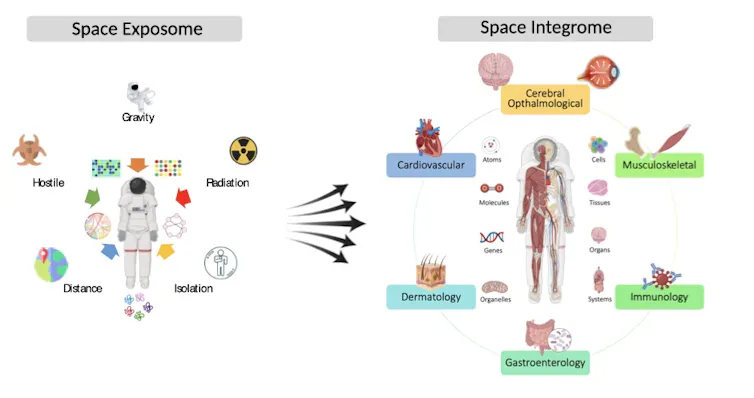
Living on the Moon will challenge every organ system in the human body. The lunar environment exposes astronauts to a unique space exposome – the combined set of
physical, chemical, biological and psychological stressors encountered beyond Earth.

Japanese astronaut Satoshi Furukawa works out on the International Space Station.
Regular exercise will be critical for staying healthy on the Moon. Here, Japanese astronaut Satoshi Furukawa works out on the International Space Station.
Nasa

These include reduced gravity (about one-sixth of Earth’s), chronic exposure to cosmic radiation, extreme temperature swings, toxic lunar dust, isolation, disrupted sleep-wake cycles, and prolonged confinement.

Unlike astronauts in low-Earth orbit, lunar crews operate largely outside Earth’s protective magnetic field. This increases exposure to space radiation, which can damage DNA, disrupt immune function and affect the brain and cardiovascular system in subtle but potentially serious ways.

Reduced gravity also fundamentally alters how blood, oxygen and fluids move around the body. Microgravity can disrupt how blood, oxygen and glucose are delivered to the brain, potentially increasing vulnerability to neurological and vascular dysfunction over time.

This figure was modified with permission.
The physiology of survival: Space.

To properly understand these risks, we need to look beyond individual organs and instead consider the space integrome – the way that the brain, heart, blood vessels, muscles, bones, immune system and metabolism interact as an integrated whole under space conditions. A small disturbance in one system sends ripples through others.

One of the most challenging aspects is that many space-related physiological changes develop insiduously. Astronauts may feel well while complications simmer beneath the surface, only becoming apparent months or even years later.

That is why Nasa places such emphasis on long-term physiological monitoring and human risk mitigation in its Artemis science strategy.


Read more:
Nasa plans to have a permanent base on the Moon by 2030 – how it can be done


Reducing the risk

The encouraging news is that humans are remarkably adaptable. The challenge is guiding that adaptation in safe and sustainable ways. Space countermeasures are the tools used to reduce risk and preserve astronaut health.

Exercise remains the cornerstone. On the International Space Station, astronauts spend around two hours per day exercising to protect muscle mass, bone density and cardiovascular function. On the Moon, however, exercise systems must be redesigned for partial gravity, where familiar Earth-based loading no longer applies.

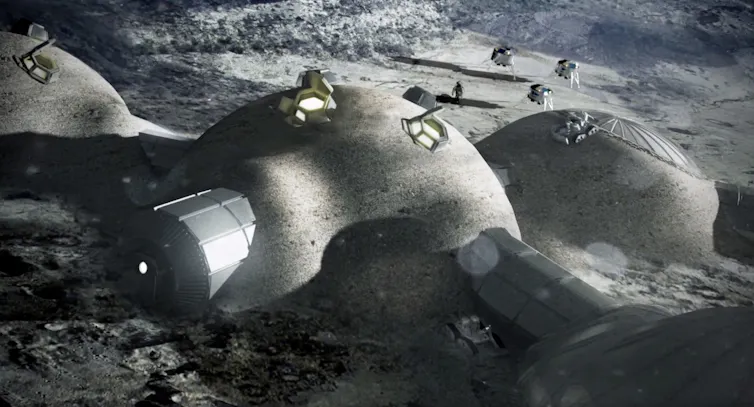
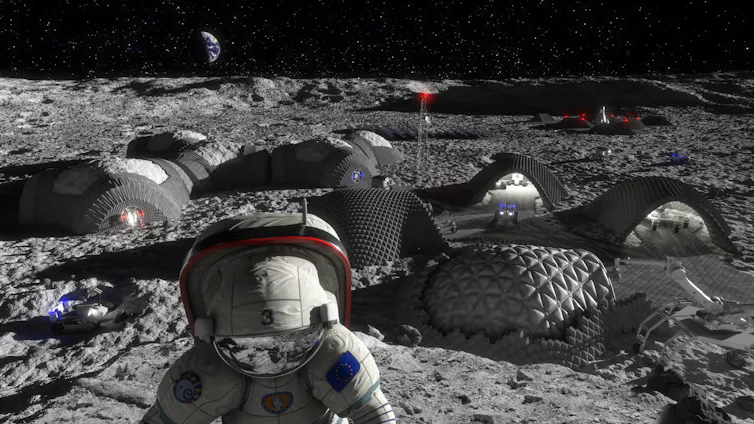
Lunar regolith (soil) could be used to create structures that protect habitats from radiation and micrometeoroids.
Foster + Partners

Nutrition is another powerful countermeasure. Diet influences bone health, muscle maintenance, immune resilience and even how the body responds to radiation.

Personalised nutrition strategies, tailored to individual physiology rather than a “one-size-fits-all” menu, are likely to become increasingly important during long lunar missions.

Artificial gravity is also being explored. Short-radius centrifuges could expose astronauts to brief periods of increased gravitational loading, potentially helping stabilise cardiovascular and neurovascular systems. While still experimental, this approach may prove valuable for future surface missions.

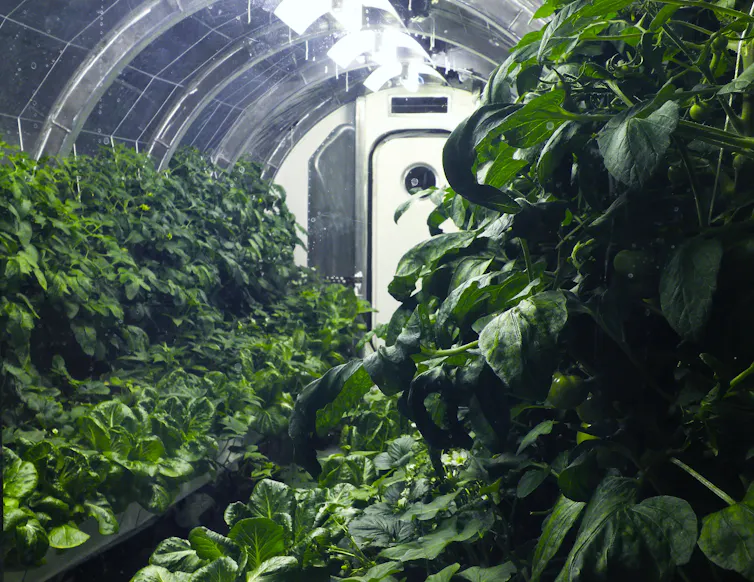
Vegetables grown in a lunar base greenhouse could enhance astronaut nutrition.
Nasa

Radiation protection will rely on multiple layers of defence: habitat shielding – potentially using structures made of lunar soil – early warning systems for solar storms, and operational strategies that limit exposure during high-risk periods.

Crucially, countermeasures should be proactive rather than reactive. Continuous physiological monitoring, wearable sensors and advanced data analytics may allow mission teams to detect early warning signs and intervene before small problems become mission-limiting ones.

Spending extended time on the Moon will be awe-inspiring. Imagine watching Earth hang motionless above a stark, silent horizon, or working under a sky that never turns blue.

Lunar base
A lunar base would teach humans how to operate sustainably beyond Earth.
RegoLight, visualisation: Liquifer Systems Group, 2018

But it will also be demanding, uncomfortable and unforgiving. The Moon is not just a destination – it is a test of our biology.

If we can learn how to keep humans healthy, resilient and productive on the lunar surface, we take a decisive step toward becoming a truly spacefaring species. Artemis shows that exploration is no longer about brief heroics.

It is about sustainability, adaptability and understanding ourselves as deeply as the worlds we seek to explore.

In learning how to live on the Moon, we may ultimately learn as much about life on Earth as we do about our future beyond it.

The Conversation

D.M.B. is the outgoing Chair of the Life Sciences Working Group and member of the Human Spaceflight and Exploration Science Advisory Committee to ESA. He is a current member of the ESA-HRE-Biology Panel and Space Exploration Advisory Committees to the UK and Swedish National Space Agencies. He is also affiliated to Bexorg, Inc. (USA) focused on the technological development of novel biomarkers of cerebral bioenergetic function in humans. He is supported by a Royal Society Wolfson Research Fellowship (Grant No. WM170007).

ref. The unseen challenges of life on the Moon – https://theconversation.com/the-unseen-challenges-of-life-on-the-moon-273370

A New York Times critic used AI to write his review – but criticism is deeply human

Source: The Conversation – Global Perspectives – By Bec Kavanagh, Senior Tutor in Publishing & Creative Writing, The University of Melbourne

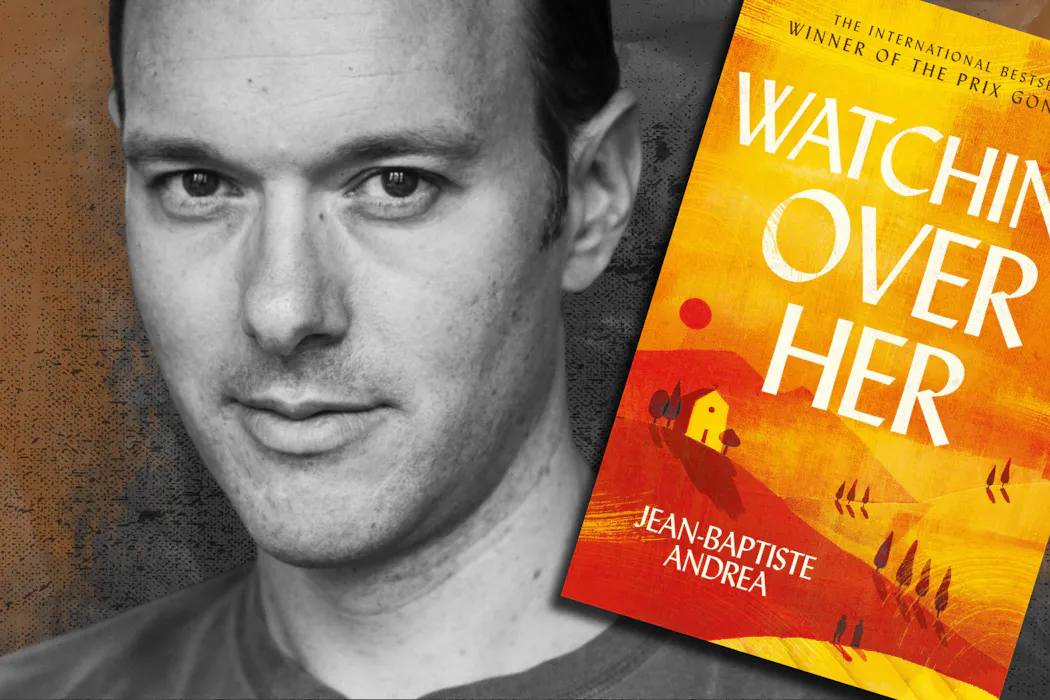
Alex Preston, and the book he reviewed, with the help of AI. Hachette/Allen & Unwin

An author and freelance journalist has admitted to using AI to help him write a book review for the New York Times.

Alex Preston’s review of Jean-Baptiste Andrea’s novel Watching Over Her, published by the New York Times in January 2026, draws phrases and full paragraphs from Christobel Kent’s Guardian review. The “error” was brought to light by a reader, who alerted the New York Times to the similarities.

Preston told the Guardian he is “hugely embarassed” and “made a huge mistake”.

a man in a buttoned long sleeved t-shirt
Alex Preston has admitted to using AI to help write a book review.
Hachette

The Times promptly dropped Preston, calling his “reliance on A.I. and his use of unattributed work by another writer” a “clear violation of the Times’s standards”. An editor’s note now precedes the review online, advising readers of the issue and providing a link to the Guardian review.

Preston’s apology to the Guardian raises more questions than it resolves. The portion quoted online seems to speak more to the issue of unattributed work than his use of AI. It reads: “I made a serious mistake in using an AI tool on a draft review I had written, and I failed to identify and remove overlapping language from another review that the AI dropped in.” This implies that if he had removed the “overlapping” language, the issue would have been avoided.

As a literary critic and scholar, I believe the deeper question isn’t whether or not critics should do more to hide their use of AI – but the ethics of using it at all.

Why AI can’t do criticism

The role of the critic isn’t to summarise or repackage art, but to actively participate in a conversation about it. “Good criticism thrives in the complexity of its environment,” writes critic Jane Howard, who is also The Conversation’s Arts + Culture editor. “Each review sits in conversation with every other review of a piece of art, with every other review the critic has written.”

In other words, the critic is in conversation with both the artist and the audience. The critic’s emotional and intellectual engagement with art – and their translation and communication of meaning – is intrinsic to their role as mediator. That role is deeply human.

Perhaps information can be outsourced, but emotional engagement can’t. Nor can an individual perspective, filtered through one human’s reading, viewing, listening and experiences.

Art and AI controversies

There are valid arguments outlining the functional uses of AI, and warning against significant climate repercussions. But there is also an escalating concern around the intrusion of AI into creative expression.

book cover - Shy Girl - with sad dog
Shy Girl was cancelled due to AI accusations against its author.

Last month, author Mia Ballard was accused of using AI to write her horror novel, Shy Girl. It was withdrawn from publication in the UK and cancelled from scheduled publication in the US, after “readers on platforms such as Goodreads and Reddit had questioned whether sections of the text bore hallmarks of AI-generated prose”, according to the Guardian.

In 2023, German artist Boris Eldagsen sparked controversy when he revealed that his prize-winning photograph The Electrician was AI generated. In 2025, Tilly Norwood, the first fully AI-generated “actress” ignited debate around whether so-called synthetic actors were a tool for creative expression, or a threat to human creators.

In 2025, writers were “horrified” to discover that their work had been pirated by Meta to train AI systems.

If the question that underlies these examples is “what is the role of art”, this latest debacle adds “and what is the responsibility of the critic”?

Breaking a pact

Art criticism in Australia is what Howard describes as a “niche within a niche”. The sector is unbearably small, so most critics have an additional day job and are in close professional and personal proximity to the artists whose work they review.

Some critics of the critics, such as writer Gideon Haigh, have suggested this has led to a culture of what literary academic Emmett Stinson called “too-nice” criticism.

But I would argue generosity is fundamental to public-facing criticism – and that the critic reviewing in the public sphere has a responsibility to writers and readers.

The writer might safely assume that when we’re publishing a review that surmises their book’s successes and failings against its ambition, we have, at the very least, taken the time to read and carefully consider their work, and our own response to it.

This unspoken pact is broken when the writer begins to use AI – particularly when a professional reviewer like Preston seems to outsource his assessment to it.

Such fiascos point to a disturbing future where readers’ opportunities to build community and develop empathy through engagement with literature is outsourced entirely to AI.

Australian literature academic Julieanne Lamond has said “when we write reviews we have to do it ‘naked’ – as individual readers, with a public to judge our judgements”. In other words, we sit at the middle of a pact between the writer of a book and their potential readers.

Criticism can be literature

Done well, criticism is literature. As Australian author, playwright and critic Leslie Rees argued in 1946, good literary criticism is a “real and creative service to literature”.

book cover: Watching Over Her
Watching Over Her is at the centre of a controversy over the use of AI in writing a New York Times book review.

Popular criticism, written for the general public and published as journalism, might sit on a different playing field from scholarly criticism. But its obligation to readers – to convey real and honest opinions about books and bring readers into a conversation about literature – is no less significant. There is a shared obligation to be honest, and surely this honesty extends to a transparency about AI use.

French professor and essayist Phillipe Lejeune, best known for his work on autobiography, used the term the “autobiographical pact” to describe the relationship between the writer of a memoir and the reader. That is, the reader accepts what the memoirist says as truth, based on the writer’s acknowledgements of their own biases and subjectivity.

We might transfer a similar pact to the reviewer and their reader. Should the reader not be able to trust that the review they’re reading is the critic’s own?

Hannah Bowman, a literary agent from Liza Dawson Associates, recently described mistrust as the book industry’s greatest peril: “it’s essential for all parties in the publishing process to have transparency and clarity in conversations about how AI tools are being used by any party, especially in the creative process”.

In failing to disclose his use of AI, Preston has not only embarrassed himself, but broken the trust of his readers.

The Conversation

Bec Kavanagh is a freelance critic for The Guardian.

ref. A New York Times critic used AI to write his review – but criticism is deeply human – https://theconversation.com/a-new-york-times-critic-used-ai-to-write-his-review-but-criticism-is-deeply-human-279742

Trump risks falling in to the ‘asymmetric resolve’ trap in Iran − just as presidents before him did elsewhere

Source: The Conversation – Global Perspectives – By Charles Walldorf, Professor of Politics and International Affairs, Wake Forest University

Little has seemingly gone as Washington planned in the war against Iran.

The Iranian people have not risen up, one hard-line leader has been replaced by another, Iranian missiles and drones keep hitting targets across the Middle East, Iran closed the Strait of Hormuz, driving oil and gas prices up worldwide, and in sharp contrast to Trump’s demand for “unconditional surrender,” Tehran has rejected a 15-point U.S. plan for a ceasefire.

So how did things go so wrong?

As a scholar who researches U.S. forever wars, I believe the answer is simple: Trump, like other U.S. presidents before him, has fallen into what I call the trap of asymmetric resolve. In short, this occurs when a stronger power with less determination to fight starts a military conflict with a far weaker state that has near boundless determination to prevail. Victory for the strong becomes tough, even close to impossible.

When it comes to Iran, the Islamic Republic wants – and needs – victory more than the United States. Unlike the U.S., the Iranian government’s very existence is on the line. And that gives Tehran many more incentives – and in many cases very effective countermeasures – through which to fight on.

The trap of asymmetric resolve

Typically, in asymmetric wars the stronger side does not face the same potential for regime death as the weaker side. In short, it has less on the line. And this can lead to lesser resolve, making it hard to sustain the costs of war required to defeat the weaker, more determined rival.

Such dynamics have played out in conflicts dating back to at least the sixth century B.C., when a massive Persian army under Darius I was checked by a much smaller, determined Scythian military, leading in the end to a humiliating Persian retreat.

For the U.S. in the modern era, wars of asymmetric resolve have likewise not been kind.

In the Vietnam War, an estimated 1.1 million North Vietnamese civilians and Viet Cong fighters died compared to 58,000 U.S. troops. Yet, the U.S. proved no match for the North’s resolve. After eight years of brutal war, the U.S. gave up, cut a deal, withdrew and watched North Vietnam roll to victory over the South.

In 2001, the U.S. unseated the Taliban in Afghanistan, set up a new government and built a large Afghan army supported by U.S. firepower. Over the next 20 years, the remnants of the Taliban lost about 84,000 fighters compared to around 2,400 U.S. troops, yet the U.S. ultimately sued for peace, cut a deal and left. The Taliban immediately returned to power.

Many other great powers have fallen into this same trap – and at times in the same countries. Despite far fewer casualties than the Afghan resistance, the mighty Soviet Union suffered a humiliating defeat in its nine-year war in Afghanistan during the 1980s. The same happened to the French in Vietnam and Algeria after World War II.

Asymmetric resolve in the Iran war

A similar asymmetry is now playing out in Iran.

Unlike 2025’s 12-day war that largely targeted Iranian military installations, including its nuclear sites, Trump and the Israelis are now directly threatening the survival of the Iranian government. Killing the supreme leader, a slew of other powerful figures, and encouraging a popular uprising made this crystal clear.

Tehran is responding as it said it would were its survival to be at stake. Prior to the current war, Iran warned it would retaliate against Israel, Arab Gulf nations and U.S. bases across the region, as well as largely close the Straight of Hormuz to commercial traffic.

In short, it is going all-in to cause as much pain as it can to the U.S. and its interests.

Iran has suffered the disproportionate number of loses in the current war, both in terms of human casualties and depleted weaponry. As of mid-March, there have been upward of 5,000 Iranian military casualties and more than 1,500 Iranian civilian deaths, compared to 13 dead U.S. service members.

Yet, Tehran isn’t backing down, saying on March 10, “We will determine when the war ends.”

Such Iranian resolve seemingly confounds Trump. Before the war, he wondered why Iran wouldn’t cave to his demands, and he has since conceded that regime change – seemingly a major U.S. goal at the war’s onset – is now a “very big hurdle.”

This conflicts with how Iran was being presented to the American public prior to the war. Secretary of State Marco Rubio said in January that “Iran is probably weaker than it’s ever been.” It has no ballistic missiles capable of hitting the U.S. homeland, a decimated nuclear program and fewer allies than ever across the Middle East.

No wonder a Marist poll from March 6 found that 55% of Americans viewed Iran as a minor threat or no threat at all.

With Iran proving resilient, American public opinion on the war has been definitively negative. This aspect of war resolve can be especially challenging for democracies, where a disgruntled public can vote leaders out of power.

Fading or low U.S. public support for war was likewise a primary driver in past U.S. asymmetric quagmires.

Indeed, the Iran war is more unpopular than just about any other U.S. war since World War II, with polling consistently finding around 60% of Americans in opposition.

For Iran, as a nondemocracy there are far less reliable figures to compare this to on its side. Before the war, the government faced a major public crisis with widespread protests, but for many reasons – including its brutal crackdown and a potential “rally around the flag” effect – Iranian public opinion has proved far less salient.

What’s next?

The Trump administration is attempting to mitigate the impact that asymmetrical resolve has by saying the length and scope of the operation will remain limited.

To reassure the public and calm financial markets, Trump keeps promising a short war and delaying bigger strikes to give space for negotiations that he, not the Iranians, says are ongoing.

History suggests that once faced with a smaller military power showing greater resolve, the larger power has two trajectories. It can succumb to the hubris of power and escalate, such as was the case in Vietnam, Iraq and Afghanistan. Or it can wind down the conflict in an attempt to save face.

Often in the past, leaders of a stronger side opt for the first option of escalation. They just can’t escape thinking that a little more force here or there wins the conflict. President Barack Obama wrongly thought a surge of 30,000 additional U.S. troops into Afghanistan would bring the Taliban to their knees.

Despite signs that he wants out of the Iran war, Trump could still fall to the hubris of power. More U.S. troops are on the way to the Gulf, and B-52 bombers have been flying over Iran for the first time.

As Korea, Vietnam, Iraq and Afghanistan show, following hubris into escalation against a determined foe like Iran will probably come at great cost to the U.S.

The other option – that of winding down the war – is still available to Trump.

And Trump has gone down this route before. He signed a deal in 2020 with the Taliban to end the war in Afghanistan rather than surge more troops in. And just last year, Trump declared victory and walked away from an air war in Yemen when he realized ground forces would be required to overcome the resolve of the Houthis.

The U.S. president could try the same with Iran – saying the job is done then walking away, or entering real, sustained negotiations to end the war. Either way, he’ll need to give something up, such as unfettered access through Hormuz or sanctions relief.

Trump likely won’t like that. But polling suggests Americans will take it. After all, who wants another Vietnam?

The Conversation

Charles Walldorf is a Senior Fellow at Defense Priorities.

ref. Trump risks falling in to the ‘asymmetric resolve’ trap in Iran − just as presidents before him did elsewhere – https://theconversation.com/trump-risks-falling-in-to-the-asymmetric-resolve-trap-in-iran-just-as-presidents-before-him-did-elsewhere-279374

How Taiwan is viewing the Iran war – and what it reveals about US credibility

Source: The Conversation – Global Perspectives – By Bonnie Yushih Liao, Assistant Professor of Diplomacy & International Relations, Tamkang University

The United States and Israeli strikes on Iran have become increasingly concerning for the world due to the risks of further escalation and the impact on energy markets.

In Taiwan, however, the focus has shifted in a different direction.

Rather than treating the war as geographically distant, Taiwanese political leaders and analysts are viewing it as a real-time indicator of how the United States operates under strategic pressure.

The key question is less about whether the United States would act if a conflict with China were to break out in the Indo-Pacific region, and more about how it would manage competing pressures if multiple crises unfolded at once.

A test of limits, not intentions

There is growing recognition in Taiwan that US resources are not unlimited.

The Middle East war has caused energy prices to fluctuate and stoked fears of rising inflation in the United States, demonstrating the domestic costs of military operations.

US President Donald Trump’s approval ratings have also taken a hit, with some in his own party now questioning his rationale for going to war.

Some reports have indicated US supplies of interceptor missiles are running low. The US military has, for example, had to move some THAAD missile interceptors from South Korea to the Middle East. The US has also struggled to defend against Iran’s use of asymmetrical fighting tactics.

This has direct implications for the deterrence Washington has long maintained in the Indo-Pacific. This deterrence depends not only on US war-fighting capability, but on the expectation this capability will remain intact under strain.

Conflicts elsewhere may not weaken the US resolve to intervene if China were to invade or pressure Taiwan in some fashion. But they can drain American resources and influence where these items are prioritised.

Shifting thresholds for the use of force

The US has also framed its strikes on Iran as a “preventive” action aimed at mitigating a future threat rather than responding to an imminent attack. This raises broader questions about the changing threshold for the use of force in the Indo-Pacific.

For Taiwan, this is not an abstract notion. If the threshold for military action is lowered from imminent threat to potential risk, the strategic environment becomes less predictable in the Indo-Pacific.

This broadens the range of circumstances under which force by the United States may be justified.

The speed with which the Trump administration has acted in Iran has also increased uncertainty for regional partners like Japan and South Korea in assessing when and how the United States would act against China.

The US’ NATO partners weren’t told about the Iran strikes before they happened. This could make Japan and South Korea similarly worried about a lack of communication on potential US actions over Taiwan.

Wars rarely follow anticipated pathways

The Iran war has also raised broader questions about how the United States adapts as crises evolve.

Much of the discussion around Taiwan has traditionally centred on the possibility of a large-scale Chinese invasion. However, recent developments suggest escalation may be less linear than this.

Rather than following a single, predictable pathway, conflicts can develop through a sequence of smaller decisions, the ambiguity over signals sent by an adversary, or rapidly changing political conditions.

This has contributed to a shift in strategic discussion in Taiwan. Recent defence policy debates and security forums have increasingly examined scenarios in which China pressured Taiwan with grey-zone tactics, blockades and incremental escalatory moves, rather than focusing solely on full-scale invasion.

As a result, attention is shifting to how such pressure might build over time – through cyber operations, maritime restrictions or limited military actions – and possibly spiral out of control.

The current crisis in the Strait of Hormuz has been watched closely in Taiwan as an example of how disruption of a strategic chokepoint can quickly impact the world. This raises questions about whether similar dynamics could emerge in the Taiwan Strait, and how prepared external actors – including the US – would be to respond.

The US has also been unable to prevent the Iran war from spilling over into the Persian Gulf states. This raises questions about whether a war over Taiwan could be contained or produce wider regional effects.

The risk of misinterpretation

For Taiwan, the most immediate challenge comes from how China interprets US actions in Iran. If Beijing concludes that diminishing military resources or domestic pressures would limit the US’ ability to wage a sustained conflict in the Indo-Pacific, it may reassess the risks of applying coercive pressure on Taiwan.

This does not imply immediate conflict is likely over Taiwan. However, it increases the likelihood that China would try to pressure or coerce Taiwan just below the threshold of full-scale war.

History suggests that escalation is often shaped by how situations are interpreted by adversaries, rather than by clear shifts in power. When states believe conditions are more favourable than they actually are, the risk of misjudgement increases.

For Taiwan, the challenge is therefore not only to assess developments in the Middle East, but to ensure that its own position is not misunderstood. This involves:

  • maintaining credible defensive capabilities
  • reinforcing internal cohesion against possible threats
  • signalling clearly that any attempt at coercion would face robust resistance.

Deterrence depends not only on what a country can do, but what others believe it will do — and whether those beliefs discourage risk-taking.

The Conversation

Bonnie Yushih Liao does not work for, consult, own shares in or receive funding from any company or organisation that would benefit from this article, and has disclosed no relevant affiliations beyond their academic appointment.

ref. How Taiwan is viewing the Iran war – and what it reveals about US credibility – https://theconversation.com/how-taiwan-is-viewing-the-iran-war-and-what-it-reveals-about-us-credibility-279102

A popular horror novel was pulled over AI concerns – here’s what it means for publishing

Source: The Conversation – UK – By Natalie Wall, PhD in English Literature, University of Liverpool

One of the largest book publishers in the US has pulled an upcoming horror novel from its scheduled release later this year following accusations that the author used artificial intelligence to write it.

Hachette Book Group was approached with what The New York Times claimed was evidence that Shy Girl by Mia Ballard was allegedly AI-generated. Following this, the publisher said its imprint Orbit was removing the book from publication in the US and UK.

The novel follows Gia, a young woman who is “lonely, broke and depressed with a serious case of OCD”. She encounters a mysterious and rich man who, in exchange for her living as his devoted pet, promises to erase all her debts. The novel follows her time in captivity as she becomes increasingly animalistic in nature.

In an email to The New York Times, Ballard said the controversy “has changed my life in many ways and my mental health is at an all time low”. Ballard has denied personally using AI to write the novel. But she has said that an acquaintance she hired to work on an earlier self-published version incorporated AI tools.

Many people disagree with the use of AI for a host of reasons, from environmental to ethical concerns. But cultivating a climate of distrust around writing and authors is also not necessarily productive, and further pushes AI use into secrecy.

The author now faces a challenging situation, as Hachette withdrawing the book will appear to some to validate the accusations, even if it simply reflects uncertainty.

What happened?

The book was initially self-published in February 2025 before it was bought by Orbit Books, following a growing industry trend to traditionally publish successful self-published or fan-fiction works.

Issues started to arise regarding the novel’s provenance in mid-2025 on Reddit when one user, who claimed they were a book editor, made a post which pointed out several issues with the novel that suggested it was AI generated.

Their main claim was based on the novel’s repetitive style, something also pointed out by other critical readers. Specifically, they highlighted that almost every noun is preceded by an adjective, actions are frequently described with similes, descriptions came in lists of three and certain words are overused.

The discussion spread to other platforms such as the BookTok community (TikTok users dedicated to discussing books and publishing), Instagram and YouTube.

There is still no final consensus about how Shy Girl was written and Ballard has removed herself from the public eye and taken her social media accounts offline following the scandal. Hachette told The Independent that they “remain committed to protecting original creative expression and storytelling”. They have made no definitive statement on the claims but did tell the NYT that they conducted a thorough and lengthy review of the text.

How should readers and publishers respond?

Readers and publishers have spent years debating the impact of AI in the abstract but 2026 is the year these debates have become reality.

Stories like Shy Girl and The New York Times’ profile of AI romance author Coral Hart, who boasted of using AI to write and self-publish 200 hundred books across 21 pen names in a recent profile by The New York Times, demonstrate that theoretical disputes did not prepare us to be confronted with the reality of AI.

It’s clear that even the suggestion of AI writing inspires immense disgust in many readers. This means that regardless of the truth (if we ever find it out) Shy Girl and Ballard will likely be tainted by this scandal. Therefore, we must ask whether it is possible for publishing and reading to survive not just AI’s increasing normalisation but also the hostile and suspicious environment its use is creating for writers.

As a researcher of contemporary and digital reading culture, I believe we should cultivate an openness around the use of AI in writing by lobbying publishers to provide this information openly and clearly. This is already starting to happen. The Society of Authors, which is the UK’s largest writers’ trade union, has launched a logo to be used to identify “human authored” books – a step toward empowering consumers to know what they are choosing to support with their money.

Copyright law also needs to reflect AI’s reshaping of the creative field. A work requires a human author to be covered under copyright law in the US and any doubts about this are potentially a big part of Hachette pulling Shy Girl from publication due to the publisher’s inability to copyright.

This creates a difficult position for the novel and author. The book’s cancellation looks like confirmation of guilt whereas it may just be doubt. However, UK copyright law does offer protection for computer-generated works. This creates a murky area where AI-generated or assisted works can receive certain legal protections, but not necessarily the same rights as human-authored works.

Under UK law, computer-generated works can qualify for copyright, with authorship attributed to the person who made the necessary arrangements for the work’s creation. However, these works do not benefit from the full range of protections afforded to human authors, particularly moral rights, such as the right to be identified as the author or to object to derogatory treatment of the work.

This framework may change following a recent consultation led by the UK government on copyright and artificial intelligence. The consultation has now closed and the government has not yet implemented definitive legislative changes. However, its stated priorities suggest any reforms will aim to balance protecting creators’ rights with supporting innovation, investment and growth in the AI sector.

It’s an undeniably fraught situation, which is continually developing. In the near future we may unfortunately see more authors like Ballard made examples of while, behind the scenes, many more may be using AI undetected.

The Conversation

Natalie Wall does not work for, consult, own shares in or receive funding from any company or organisation that would benefit from this article, and has disclosed no relevant affiliations beyond their academic appointment.

ref. A popular horror novel was pulled over AI concerns – here’s what it means for publishing – https://theconversation.com/a-popular-horror-novel-was-pulled-over-ai-concerns-heres-what-it-means-for-publishing-279714

How to build a digital ‘twin’ of the human brain – what existing models overlook

Source: The Conversation – UK – By Andrea Luppi, Senior Research Associate, Department of Psychiatry, University of Oxford

The potential to create personalised digital “twins” of your brain and body is a hot topic in neuroscience and medicine today. These computer models are designed to simulate how parts of your brain interact, and how the brain may respond to stimulation, disease or medication.

The extraordinary complexity of the brain’s billions of neurons makes this a very difficult task, of course, even in the era of AI and big data. Until now, whole-brain models have struggled to capture what makes each brain unique.

People’s brains are all wired slightly differently, so everyone has a unique network of neural connections that represents a kind of “brain fingerprint”.

However, most so-called brain twins are currently more like distant cousins. Their performance is barely any closer to the real thing than if the model were using the wiring diagram of a random stranger.

This matters because digital twins are increasingly proposed as tools for testing treatments by computer simulation, before applying them to real people. If these models fail to capture fundamental principles of each patient’s unique brain organisation, their predictions won’t be personalised – and in worst cases could be misleading.

In our latest study, published in Nature Neuroscience, we show that realistic digital brain twins require something that many existing models overlook: competition between the brain’s different systems.

Our findings suggest that without competition, digital twins risk being overly generic, missing out on what makes you “you”.

Excess of cooperation

The human brain is never static. The ebb and flow of its activity can be mapped non-invasively using neuroimaging methods such as functional MRI. A computer model can be built from this, specific to that person and simulating how the regions of their brain interact. This is the idea of the digital twin.

The brain is often described as a highly cooperative system. Yet everyday experiences such as focusing attention or switching between tasks tells us intuitively that brain systems compete for limited resources. Our brains cannot do everything at once, and not all regions can be active together all the time.

Despite this, the vast majority of brain simulations over the past 20 years have not taken these competitive interactions between regions into account. Rather, they have “forced” neighbouring regions to cooperate. This can push the simulated brain into overly synchronised states that are rarely seen in real brains.

In a large comparative study of humans, macaque monkeys and mice, our international team of researchers used non-invasive brain activity recordings to show that the most realistic whole-brain models not only require cooperative interactions within specialised brain circuits, but long-range competitive interactions between different circuits.

To achieve this, we compared two types of brain model: one in which all interactions between brain regions were cooperative, and another in which regions could either excite or suppress each other’s activity. In humans, monkeys and mice, the models that included competitive interactions consistently outperformed cooperative-only models.

Using a large-scale analysis of over 14,000 neuroimaging studies, we found that spontaneous activity in the competitive models more faithfully reflected known cognitive circuits, such as those involved in attention or memory. This suggests competition is crucial for enabling the brain to flexibly activate appropriate combinations of regions – a hallmark of intelligent behaviour.

Visual summary of our study:

When whole-brain models of humans, macaques and mice are allowed to treat interactions between some brain regions as competitive, they consistently do so.
When whole-brain models of humans, macaques and mice are allowed to treat interactions between some brain regions as competitive, they consistently do so – generating activity patterns that closely resemble those associated with real cognitive processes.
Luppi et al/Nature Neuroscience, CC BY

We concluded that competitive interactions act as a stabilising force, allowing different brain systems to take turns in shaping the direction of the brain’s ebbs and flows without interference or distraction. This ability to avoid runaway activity may also contribute to the remarkable energy-efficiency of the mammalian brain, which is many orders of magnitude more efficient than modern AI systems.

Crucially, models with competitive interactions were not only more accurate but also more individual-specific. This means they were better at capturing the unique brain fingerprint that distinguishes one person’s brain from another’s.

No longer lost in translation?

The fact that our findings hold across humans and other mammals suggests they reflect fundamental principles of how intelligent systems work. In each case, we found models with competitive interactions generated brain activity patterns that closely resembled those associated with real cognitive processes.

This could have major implications for translational neuroscience. Animal models are routinely used to test treatments before human trials, yet differences between species often limit how well these results translate. Around 90% of treatments for neuropsychiatric disorders are “lost in translation”, failing in human clinical trials after showing promise in animal trials.

Combining brain imaging data from human patients with whole-brain modelling could radically change this. A framework that works across species would provide a powerful bridge between basic research and clinical application.

If someone needs intervention in the brain, for example due to epilepsy or a tumour, their digital twin could be used to explore how the patient’s brain activity would change when stimulated with different levels of drugs or electrical impulses. This might significantly improve on existing trial-and-error approaches with real patients, and thus provide better treatments.

The general principles of brain organisation across species also offer a path for understanding how to shape the next generation of artificial intelligence. In the not-too-distant future, we may be able to construct digital twins that are more faithful in reproducing the salient features of the human brain – and potentially, AI models that are more faithful to the human mind.

The Conversation

Andrea Luppi receives funding from the Wellcome Trust, St John’s College, Cambridge, and the Canadian Institutes of Health Research.

Gustavo Deco receives funding from the European Regional Development Fund, EU ERC Synergy Horizon Europe, and the Department of Research and Universities of the Generalitat of Catalunya.

Morten L. Kringelbach has received research funding from Pettit, Carlsberg and Cillo Foundations as well the ERC. Deco and Kringelbach are the authors of Whole-brain Modelling: Cartography of the Dynamics of Mind. This open-access title is available at https://hedonia.kringelbach.org/whole-brain-modelling/

ref. How to build a digital ‘twin’ of the human brain – what existing models overlook – https://theconversation.com/how-to-build-a-digital-twin-of-the-human-brain-what-existing-models-overlook-279681

The ‘chicken ick’: why we suddenly become disgusted by foods we used to like

Source: The Conversation – UK – By Lorenzo Stafford, Associate Professor in Psychobiological Psychology, University of Portsmouth

There are many reason why you might have suddenly got the ‘ick.’ Amorn Suriyan/ Shutterstock

Have you ever suddenly gone off a food you used to love? This is something people on social media have been talking about – specifically when it comes to chicken.

Users report suddenly becoming disgusted by chicken, sometimes even mid-bite – despite having been able to eat the food just fine previously. The phenomenon is commonly referred to online as the “chicken ick”.

My research is centred on how our sensory system (mainly smell and taste) affects our behaviour. When it comes to the “ick”, it’s all about how we deal with our disgust response.

There are a number of reasons why you might suddenly become “weird” about a food that you used to be fine with. If this has ever happened to you, the good news is there are ways to get over it.

The first reason relates to a change in the way the food is presented.

Maybe one time you noticed your chicken tasted, smelled or looked different than it did other times. This can lead to a mismatch in what’s expected, which can cause your feelings towards that food to suddenly change.

It might also be related to whether you prepared the chicken in a different way to normal. Adding a new ingredient which changes the smell or flavour profile of the dish can also trigger feelings of disgust.

Another possible reason has to do with what you were doing before you got the “ick.”

If you were scrolling on social media looking at unappetising meals before starting to cook your own meal, this can influence the way you subsequently feel about your own food.

Or, if you were preparing the dish near someone who expressed disgust (even if they only made a face), this can influence your own disgust response. The reason this occurs is explained by the human tendency to mimic others via mirror neurons (brain cells that are involved in empathy and imitation) and the related process of emotional contagion – the unconscious process of “catching” the emotion of others.

Some of us are also more sensitive to experiencing disgust than others.

Disgust is an emotion that protects us from things that could potentially harm us – such as foods that are spoiled or unsafe to eat.

Work has shown that people who rate themselves as being more sensitive to feelings of disgust also exhibit higher “ick” tendencies in a dating context (a sudden aversion to a romantic partner). This suggests that people with higher habitual levels of disgust might be more likely to experience the chicken “ick” phenomenon.

Another important factor is how hungry you are at the time.

If you aren’t very hungry, you might be more particular about unexpected food features – such as a different smell, texture or flavour.

On the other hand, when you’re really hungry, you understandably tend to be less sensitive to disgust and may be less likely to notice things that might otherwise have turned you away.

Interestingly, our research found a similar effect also happens when participants were given alcohol. The higher a participant’s blood alcohol level, the lower their sensitivity to disgust.

So, it could be that certain states of being make us more or less likely to experience the “chicken ick.”

A pregnant woman standing next to a stove holds up a raw, seasoned chicken breast. She looks at it in disgust.
Disgust is heightened during pregnancy.
Nicoleta Ionescu/ Shutterstock

Gender might also have an effect.

Research on disgust shows women have a higher sensitivity to disgust than men. It’s theorised that such gendered differences in disgust sensitivity developed as an evolutionary response to be choosier when selecting potential mates and protect offspring from disease.

Disgust is also heightened during pregnancy and appears to be related to immune function.

How to get over it

If you’re someone who has developed the chicken “ick” before, there are two key things you can try to get over this feeling:

Try preparing your chicken differently next time. Your disgust might be linked to the specific way the food was prepared. The next time chicken is on your menu, try cooking it differently (such as using a different recipe or seasoning) or use a different cut of meat (such as chicken breast instead of thighs or wings). This might help you to unlearn your disgust.

Have someone else cook for you. If the texture or smell of the chicken (particularly raw chicken) has put you off of it, try having a loved one prepare the meal for you or go out to eat. This might make it easier for you to eat the cooked dish. Or, buy pre-cooked options from the supermarket that only need to be reheated so you don’t have to handle the raw chicken.

Removing the cues that cause the “ick” in the first place should act as a reset so you can enjoy the food again.

If that still does not work, it could be that you’ve formed a negative association with the food which needs to be “unlearned.”

In this case, it could take a little more time to retrain yourself. Some suggestions for doing this involve pairing food with something positive (such as a favourite food or listening to your favourite music while eating your meal) or even by changing the colour of plateware. By repeating this a number of times, you’ll condition yourself to the pleasant response – and will hopefully be over your chicken “ick.”

The Conversation

Lorenzo Stafford does not work for, consult, own shares in or receive funding from any company or organisation that would benefit from this article, and has disclosed no relevant affiliations beyond their academic appointment.

ref. The ‘chicken ick’: why we suddenly become disgusted by foods we used to like – https://theconversation.com/the-chicken-ick-why-we-suddenly-become-disgusted-by-foods-we-used-to-like-278345