What an ancient jellyfish can teach us about the evoution of sleep

Source: The Conversation – UK – By Timothy Hearn, Lecturer, University of Cambridge; Anglia Ruskin University

Cassiopea jellyfish seem to have a sleep state despite the fact they don’t have a brain. THAIFINN/Shutterstock

An upside-down jellyfish drifts in a shallow lagoon, rhythmically contracting its
translucent bell. By night that beat drops from roughly 36 pulses a minute to nearer 30, and the animal slips into a state that, despite its lack of a brain, resembles sleep.

Field cameras show it even takes a brief siesta around noon, to “catch up” after a disturbed night.

A new Nature Communications study has tracked these lulls in cassiopea jellyfish, which belong to a 500 million year-old lineage, as well as in the starlet sea anemone nematostella. The study findings may help settle a long-running debate among biologists about what sleep is for.

Does sleep conserve energy, consolidate memories – or do something more biologically fundamental? Until recently, most evidence for a “house-keeping” role for sleep came only from vertebrates.

When mice sleep, brain and spinal cord fluid surges through the brain and washes away metabolic waste. And a 2016 mouse study found that some types of DNA breaks are mended more quickly during sleep. Time-lapse imaging in a 2019 study of zebrafish showed that sleep lets neurons (nerve cells) repair DNA breaks that build up during waking hours.

The new study showed for the first time that the same process occurs in some invertebrates. That while the jellyfish and sea anemone are awake, DNA damage accumulates in their nerve cells and when they doze, that damage is repaired.

The work pushes the origins of sleep back more than 600 million years, to before the cnidarian branch (jellyfish, anemones, corals) split from the line that led to worms, insects and vertebrates roughly 600–700 million years ago. It also gives weight to the idea that sleep began as a form of self-defence for cells.

The new work moves the discussion to creatures whose nervous systems are much simpler than ours and are little more than thin nets. If sleep repairs their neurons too, that function is probably fundamental because simpler nervous systems evolved first.

The researchers first had to figure out when a jellyfish or anemone is asleep. This is surprisingly tricky: even when they rest, bell muscles keep twitching or the polyp drifts in slow motion. To do this they filmed the animals under infrared light and flashed white light at them or a pulse of food (a tiny squirt of liquid brine-shrimp extract).

Jellyfish that had been pulsing below 37 beats per minute for at least three minutes, and anemones that had stayed still for eight minutes, reacted more slowly. This meets the “reduced responsiveness” criterion for sleep, which is the same across the animal kingdom.

Next, the scientists stained nerve cells in tissue taken from jellyfish in a lab tank to mark where DNA breakages happened. The number of breakages peaked at the end of each species’ active spell (mid-morning for the jellyfish and late afternoon for the anemone) and dropped after a long rest.

When the scientists kept the animals awake by changing the tank’s water currents, both the DNA breaks and the next day’s sleeping time increased, similar to classic “sleep rebound” in humans where your body catches up on sleep.

To test cause and effect, the team shone ultraviolet-B light, which damages DNA, on the animals. This treatment doubled the number of DNA breaks within an hour and prompted extra sleep later the same day. When the animals had dozed, the breaks reduced back toward baseline and the jellyfish resumed their usual daytime rhythm.

Melatonin, the overnight hormone familiar to jet-lag sufferers, was added to the tank water and caused both species to doze during what should have been their busiest stretch (daytime for the jellyfish, night-time for the anemone), leaving their usual rest period unchanged.

The new finding is surprising because melatonin’s soporific role was thought to have evolved alongside vertebrates with centralised brains and circadian rhythms that respond to light cues. Seeing it work in a brainless animal suggests that this evolution took place much longer ago.

Putting these pieces together, it seems wakefulness gradually stresses the DNA in nerve cells. Sleep offers a period of sensory deprivation during which repair enzymes that stitch or swap the components of DNA can work unimpeded.

This logic fits with experiments in fruit-flies and mice which have linked chronic sleeplessness to neurodegeneration. Insomnia has also been linked to build-ups of reactive oxygen molecules (highly reactive by-products of normal metabolism that can punch holes in DNA, proteins and cell membranes).

If jellyfish need sleep to keep their nerve nets intact, the need to sleep probably predates the evolution of brains, eyes and even bodies that are the same on both left and right sides. In evolutionary terms, a nightly repair window could have been vital. Ancient organisms that skipped it may have accumulated mutations in irreplaceable neurons and slowly lost control of movement, feeding and reproduction.

The new study tracked two species in the lab and one in a Florida lagoon, but cnidarians live in many different light levels and temperatures. To be able to generalise this finding, future work will need to confirm that DNA-repair during sleep happens in similar animals that live in different conditions such as cold, deep or turbid waters.

Does this study settle the debate? Not entirely. Sleep almost certainly carries more than one benefit. Tasks such as memory consolidation could have been layered onto an ancient physiological maintenance programme as nervous systems grew more complex.

Yet the new findings strengthen the view that guarding DNA is a core purpose of sleep.

The Conversation

Timothy Hearn does not work for, consult, own shares in or receive funding from any company or organisation that would benefit from this article, and has disclosed no relevant affiliations beyond their academic appointment.

ref. What an ancient jellyfish can teach us about the evoution of sleep – https://theconversation.com/what-an-ancient-jellyfish-can-teach-us-about-the-evoution-of-sleep-273307


How political leanings affect views on academic freedom – new research

Source: The Conversation – UK – By Steven David Pickering, Honorary Professor, International Relations, Brunel University of London

Gorodenkoff/Shutterstock

Academic freedom is often described as a cornerstone of democratic society. Politicians regularly claim to defend it, universities invoke it in mission statements and most members of the public say they support it in principle.

So why does it provoke such intense disagreement once it becomes concrete? At first glance, these disputes look like arguments about universities. But our research suggests something else is going on. Public disagreements over academic freedom are not simply about campus policy. They reflect deeper divides over political ideology and trust in expertise.

Debates about academic freedom have become increasingly prominent in the UK. New free speech legislation to protect academic freedom in universities was introduced in 2025. Disputes over offensive research, controversial speakers or international partnerships routinely make headlines.

Similar tensions exist elsewhere, even if they are less visible. In Japan, for example, academic freedom is formally protected in article 23 of the constitution, but scholars often report subtle pressures to avoid politically sensitive topics.

In a new study, we surveyed over 3,300 people in the UK and Japan to examine how citizens understand academic freedom when it is presented in concrete terms rather than abstract slogans.

Instead of asking whether people support “academic freedom” in general, we asked how much they agreed or disagreed with specific scenarios. These included whether universities should protect research that causes offence, and whether academics should be free to publish controversial findings. We also asked whether universities should collaborate with multinational corporations or political regimes accused of human rights abuses.

This approach matters. In surveys, people often express strong support for free inquiry in the abstract. But once academic freedom is tied to real-world trade-offs, such as offence, harm, reputation or political controversy, agreement tends to fracture.

Across both countries, political ideology emerged as one of the strongest predictors of attitudes toward academic freedom.

Right-leaning respondents were consistently more supportive of academic freedom. They were more likely to oppose restrictions on offensive research and more likely to agree that academics should be protected even when their work provokes controversy. This pattern appeared not only in the UK, where universities are deeply entangled in culture-war debates, but also in Japan, where such disputes are less visible in public life.

Left-leaning respondents, by contrast, were more likely to emphasise accountability. They tended to support limits on research perceived as offensive or harmful, reflecting greater concern for social sensitivity and the potential impact of academic work on marginalised groups.

These differences suggest that academic freedom is not a single, universally understood value. Instead, people interpret it through broader political worldviews. For some, it primarily means freedom from interference. For others, it is inseparable from social responsibility.

Trust in scientists matters

Trust also plays a crucial role. In both countries, people who trusted scientists more strongly were more likely to support academic freedom, particularly when asked whether researchers should be protected regardless of whether their findings cause offence.

Trust appears to act as a kind of permission structure. When people believe scientists are acting in good faith, they are more willing to tolerate controversial outcomes.

Two scientists in lab
Levels of trust in scientists affects views on academic freedom.
YAKOBCHUK VIACHESLAV/Shutterstock

This effect was especially pronounced in Japan. There, trust in scientists was one of the strongest predictors of support for academic freedom across multiple scenarios. This likely reflects Japan’s institutional culture. Deference to expertise remains relatively high and political conflict over universities is more muted than in the UK.

In Britain, by contrast, trust in scientists mattered most when academic freedom was framed as protection for individual researchers, but less so when questions involved partnerships with controversial regimes. In those cases, trust was more conditional. This suggests that even trusted experts are expected to exercise judgement about ethical boundaries.

Taken together, these findings point to a deeper pattern. Public attitudes toward academic freedom are structured by two competing logics.

One emphasises autonomy. This is the idea that scholars must be insulated from political and social pressure in order to pursue knowledge freely. The other emphasises accountability: the belief that universities, as publicly funded institutions, should be responsive to social norms and moral concerns.

Most people do not fully embrace one logic or the other. Instead, they shift between them depending on the issue at hand. Many support free research in principle but draw lines when offence, ethics or international politics enter the picture.

This helps explain why debates over academic freedom so often feel polarised and unresolved. They are not simply disputes about policy details. They are disagreements about which values should take priority when liberal principles collide.

These findings have important implications.

First, they suggest that appeals to “academic freedom” alone are unlikely to persuade sceptics. Because people understand the concept differently, arguments that assume a shared meaning often talk past their audience.

Second, they highlight the importance of trust. Where confidence in scientists and universities is high, support for academic autonomy is more resilient. Where trust erodes, demands for oversight and restriction grow stronger.

Finally, disputes over academic freedom reflect broader tensions within democratic societies between liberty and accountability. These tensions are not new, but they are becoming more visible as universities sit at the centre of political and cultural change.

Rather than asking whether academic freedom is under threat, a better question may be this: how can institutions sustain public trust while defending the autonomy that makes academic inquiry possible in the first place?

The Conversation

Steven David Pickering received funding from the Japan Society for the Promotion of Science (JSPS, grant reference JPJSJRP 20211704) and the UK Research and Innovation’s Economic and Social Research Council (UKRI-ESRC, grant reference ES/W011913/1).

Yosuke Sunahara receives funding from Japan Society for the Promotion of Science (grant reference JPJSJRP 20211704.

Martin Ejnar Hansen does not work for, consult, own shares in or receive funding from any company or organisation that would benefit from this article, and has disclosed no relevant affiliations beyond their academic appointment.

ref. How political leanings affect views on academic freedom – new research – https://theconversation.com/how-political-leanings-affect-views-on-academic-freedom-new-research-273408

Suella Braverman defects: is Reform becoming a magnet for Tory baggage?

Source: The Conversation – UK – By Thomas Lockwood, PhD Researcher in Politics, York St John University

Suella Braverman’s decision to defect to Reform UK is not just another blow to Kemi Badenoch’s attempt to stabilise the Conservatives after their 2024 defeat. It also changes what Reform is being judged on.

Earlier this month, Badenoch sacked Robert Jenrick from the shadow cabinet for plotting to defect to Reform. Hours later, he did just that. Braverman’s move takes Reform’s number of MPs to eight. Party leader Nigel Farage has said Reform had been in talks with her for a year.

At this point, though, Reform is at risk of absorbing so many former Tories that it starts to look like the establishment it denounces. This recruitment spree rewrites the insurgent brand.

Reform’s leadership will understandably celebrate Braverman’s arrival as a serious coup. She is a former home secretary and a national media figure. Her departure is an unmistakable signal that the Conservative right is fragmenting. The Times reports she told supporters it felt like she had “come home”, but there is a basic strategic tension here. Reform has thrived by arguing that British politics is run by a closed circle of insiders who fail repeatedly and then reshuffle into new jobs. A rapid intake of ex-ministers risks making Reform look less like a clean break and more like a migration route for political careers.

That attack line is already being deployed. After former chancellor Nadhim Zahawi’s switch earlier this month, the Liberal Democrats described Reform as “a retirement home for disgraced former Conservative ministers”. The same basic charge has followed Braverman’s move: critics argue that people who helped shape the recent Conservative record are now trying to rebrand themselves inside Reform rather than account for that record.

For Reform, then, the immediate gain in publicity comes with a reputational cost: the party becomes easier to frame as a collection of defectors rather than a coherent alternative.

The May deadline: Reform knows the danger

If Reform were confident that any defection is good news, it would have no need for a cut-off date. But Farage has set the local elections date of May 7 as the latest date he will take Conservative switchers. After that, he believes his party would start to look like “a rescue charity for every panicky Tory MP”.

That is revealing. It implies Reform is trying to capture the benefits of defections (experience, profile, the aura of inevitability) while limiting the downside (brand dilution, factional chaos, accusations of being “Tories in new colours”). A deadline is, in effect, an admission that there is such a thing as too many ex-Tories… or at least too many arriving too quickly.

The deeper issue is organisational. Recruiting MPs is not the same as building a party machine. Defectors bring personal followings, constituency operations, donor networks and ideological baggage. They can add reach but they can also add volatility, especially if Reform’s appeal relies on projecting discipline and clarity.

And internal tensions are not theoretical. Braverman and Jenrick are not merely Conservatives who happen to have drifted rightwards. They were also senior figures in a government that Reform has attacked as incompetent and deceitful.

That is why a July 2025 post on X by Zia Yusuf (widely circulated as Braverman joined) lands so sharply. In the post, the head of policy at Reform UK referred to the Conservative government’s handling of an Afghan data leak and secret resettlement, asking “who was in government?”, and then named Braverman as home secretary and Jenrick as immigration minister.

The point isn’t whether Yusuf’s earlier argument was fair or unfair. It’s that it feeds an “own goal” narrative. Reform’s senior figures have recently depicted these people as emblematic of the failures of the Conservative state, and now the party is inviting them into the tent.

That forces Reform into a delicate position. If it embraces defectors uncritically, it weakens its anti-establishment brand. If it keeps attacking them, it destabilises its own recruitment strategy.

Braverman’s seat: opportunity and risk

Braverman’s own constituency, Fareham and Waterlooville, illustrates why Reform wants converts of her stature and why the strategy can backfire.

On official local results for the 2024 general election, Braverman won with 35% of the vote; Reform placed fourth on 18%, behind Labour (23%) and the Liberal Democrats (19%).

That is the kind of compressed result Reform dreams about: a sizeable right-populist base already present, plus a Conservative vote that if transferred could turn a marginal into a secure Reform seat. From this perspective, defections are not just PR. They are an attempt to solve Reform’s hardest electoral problem: converting diffuse national support into winnable constituency coalitions.

But the same numbers show the danger. If Braverman fails to bring a large share of Conservative voters with her, the most likely short-term effect is to make the seat more competitive for her opponents through vote fragmentation and tactical voting. Defections can therefore produce a paradox: they make Reform look bigger nationally while making individual contests messier locally.

And at the national level, the risk is huge. Reform’s central claim – that it is the “alternative” to a failed political class – is now colliding with the reality of who it is recruiting from that class.

If Reform wants to remain a pure insurgency, it must keep its distance from establishment figures and prioritise new candidates. If it wants to look like a credible government-in-waiting, it will keep collecting experienced politicians, but it must then accept the costs – intensified scrutiny, more ammunition for opponents, and the constant suspicion that it is simply rebranding Conservatism rather than replacing it.

The Conversation

Thomas Lockwood does not work for, consult, own shares in or receive funding from any company or organisation that would benefit from this article, and has disclosed no relevant affiliations beyond their academic appointment.

ref. Suella Braverman defects: is Reform becoming a magnet for Tory baggage? – https://theconversation.com/suella-braverman-defects-is-reform-becoming-a-magnet-for-tory-baggage-274344

Terry Pratchett’s novels may have held clues to his dementia a decade before diagnosis, our new study suggests

Source: The Conversation – UK – By Thom Wilcockson, Senior Lecturer in Psychology, Loughborough University

The earliest signs of dementia are rarely dramatic. They do not arrive as forgotten names or misplaced keys, but as changes so subtle they are almost impossible to notice: a slightly narrower vocabulary, less variation in description, a gentle flattening of language.

New research my colleagues and I conducted suggests that these changes may be detectable years before a formal diagnosis — and one of the clearest examples may lie hidden in the novels of Sir Terry Pratchett.

Pratchett is remembered as one of Britain’s most imaginative writers, the creator of the Discworld series and a master of satire whose work combined humour with sharp moral insight. Following his diagnosis of posterior cortical atrophy, a rare form of Alzheimer’s disease, he became a powerful advocate for dementia research and awareness. Less well known is that the early effects of the disease may already have been present in his writing long before he knew he was ill.

Dementia is often described as a condition of memory loss, but this is only part of the story. In its earliest stages, dementia can affect attention, perception and language before memory problems become obvious. These early changes are difficult to detect because they are gradual and easily mistaken for stress, ageing or normal variation in behaviour.

Language, however, offers a unique window into cognitive change. The words we choose, the variety of our vocabulary and the way we structure description are tightly linked to brain function. Even small shifts in language use may reflect underlying neurological change.

In our recent study, we analysed the language used across Terry Pratchett’s Discworld novels, examining how his writing evolved over time. We focused on “lexical diversity” — a measure of how varied an author’s word choices are — and paid particular attention to adjectives, the descriptive words that give prose its texture, colour and emotional depth.

Across Pratchett’s later novels, there was a clear and statistically significant decline in the diversity of adjectives he used. The richness of descriptive language gradually narrowed. This was not something a reader would necessarily notice, nor did it reflect a sudden deterioration in quality. Instead, it was a subtle, progressive change detectable only through detailed linguistic analysis.

Crucially, the first significant drop appeared in The Last Continent, published almost ten years before Pratchett received his formal diagnosis. This suggests that the “preclinical phase” of dementia — the period during which disease-related changes are already occurring in the brain — may have begun many years earlier, without obvious outward symptoms.

This finding has implications that extend far beyond literary analysis. Dementia is known to have a long preclinical phase, during which opportunities for early intervention are greatest. Yet identifying people during this window remains one of the biggest challenges in dementia care.

Linguistic analysis is not a diagnostic tool in itself, and it would not work equally well for everyone. Factors such as education, profession, writing habits and linguistic background all influence how people use language. But as part of a broader approach — alongside cognitive tests, brain imaging and biological markers — language analysis could help detect early risk in a non-invasive and cost-effective way.

Importantly, language data already exists. People generate vast amounts of written material through emails, reports, messages and online communication. With appropriate safeguards for privacy and consent, subtle changes in writing style could one day help flag early cognitive decline long before daily functioning is affected.

Why early detection matters

Early detection matters more than ever. In recent years, new drugs for Alzheimer’s disease have emerged that aim to slow disease progression rather than simply manage symptoms. Drugs such as lecanemab and donanemab target amyloid proteins that accumulate in the brain and are thought to play an important role in the disease. Clinical trials suggest these treatments would be most effective when given early, before significant neuronal damage has occurred.

Identifying people during the preclinical phase would allow people and their families more time to plan, access support and consider interventions that may help slow progression. These may include lifestyle changes, cognitive stimulation and, increasingly, new drugs to slow the disease progression.

More than a decade after his death, Terry Pratchett continues to contribute to our understanding of dementia. His novels remain deeply loved, but hidden within them is another legacy: evidence that dementia may leave its mark long before it announces itself. Paying closer attention to language — even language we think we know well — could help transform how we detect, understand and ultimately treat this devastating condition.

The Conversation

The authors do not work for, consult, own shares in or receive funding from any company or organisation that would benefit from this article, and have disclosed no relevant affiliations beyond their academic appointment.

ref. Terry Pratchett’s novels may have held clues to his dementia a decade before diagnosis, our new study suggests – https://theconversation.com/terry-pratchetts-novels-may-have-held-clues-to-his-dementia-a-decade-before-diagnosis-our-new-study-suggests-273777

US hospitality and tourism professors don’t mirror the demographics of the industry they serve

Source: The Conversation – USA (2) – By Michael D. Caligiuri, Assistant Professor of Organizational Behavior, California State Polytechnic University, Pomona

Tourists are diverse. Are tourism professors? Grant Baldwin/Getty Images

White and male professors continue to dominate U.S. hospitality and tourism education programs, our new research has found, even as the industry is growing increasingly diverse. This imbalance raises questions about who shapes the future of hospitality and whose voices are left out of the conversation.

Our analysis of 862 faculty members across 57 of the top U.S. college hospitality programs found that nearly three-quarters of these professors were white, and more than half were male. White men alone represented 43.5% of all faculty, showing persistent overrepresentation.

By comparison, only 3.7% of faculty identified as Black, far below the 14.4% share of the U.S. population that identifies as Black. Asian faculty accounted for 22.5% – significantly more than the Asian share of the U.S. population, with slightly more Asian women than men represented.

Because publicly available data did not allow us to reliably identify faculty from Hispanic or Indigenous backgrounds, our analysis focuses on representation among Black and Asian professors.

Our findings are based on a review of online faculty directories for every U.S. hospitality and tourism program included in the Academic Ranking of World Universities for 2020. We coded each faculty member by gender, race and academic rank using publicly available information gathered through university websites, LinkedIn and other professional profiles.

While this approach cannot capture the full complexity of individual identity, it reflects how representation is typically perceived by students and prospective faculty. For example, when a student browses a university’s website or sits in a classroom, they notice who looks like them and who does not.

Our results point to a stark imbalance. The people teaching, researching and preparing the next generation of hospitality leaders do not mirror the demographics of either the workforce or the student population.

Despite growing institutional attention to fairness and belonging across higher education, the tourism and hospitality field has been slow to evolve.

Why it matters

Representation in higher education isn’t just a matter of fairness. It affects student outcomes and the long-term sustainability of the field. Researchers have found that when students see role models who share their racial or ethnic identity, they report stronger connections to their academic community, higher retention rates and greater academic confidence.

For hospitality programs, which emphasize service, empathy and cultural understanding, these effects are especially meaningful. The hospitality workforce is one of the most diverse in the United States, spanning global hotels, restaurants, events and tourism operations. Yet the lack of variety among those teaching hospitality sends a conflicting message. Diversity is valued in the workforce, but it remains underrepresented in the classrooms training future leaders.

Major employers such as Marriott, Hyatt and IHG have invested heavily in programs that promote access and belonging, creating leadership pipelines for underrepresented groups. Meanwhile, academic programs that prepare these future leaders have not made comparable progress.

The absence of representation among hospitality and tourism academia also shapes the kinds of research questions that get asked. When faculty from underrepresented backgrounds are missing, issues such as racialized guest experiences, workplace bias and equitable career advancement may be overlooked.

What still isn’t known

Our study provides a snapshot, rather than a complete picture of faculty representation in U.S. hospitality and tourism programs. Because the sample focused on research-intensive universities, it excluded many historically Black universities and teaching-focused institutions, which may have more professors of color.

The research also relied on publicly available photographs and institutional profiles to identify race and gender. While this method mirrors how students visually perceive representation, it cannot fully capture multiethnic or intersectional identities.

We believe that future studies should track how faculty composition evolves over time and explore the lived experiences of educators from underrepresented backgrounds. Understanding the barriers that prevent these scholars from entering or staying in academia is essential for creating environments where all faculty can thrive.

The Research Brief is a short take on interesting academic work. Abigail Foster, admissions specialist at the University of the District of Columbia’s David A. Clarke School of Law, contributed to this article.

The Conversation

The authors do not work for, consult, own shares in or receive funding from any company or organization that would benefit from this article, and have disclosed no relevant affiliations beyond their academic appointment.

ref. US hospitality and tourism professors don’t mirror the demographics of the industry they serve – https://theconversation.com/us-hospitality-and-tourism-professors-dont-mirror-the-demographics-of-the-industry-they-serve-273345

Rebirth of the madman theory? Unpredictability isn’t what it was when it comes to foreign policy

Source: The Conversation – Global Perspectives – By Andrew Latham, Professor of Political Science, Macalester College

🎶 When the madman flips the switch, the nuclear will go for me 🎶 Columbia Pictures, CC BY-SA

Tariffs are on, until they are not. Military force is an option … and then it’s off the table.

Erratic behavior and unpredictability is having a moment in foreign policy circles. In the White House and elsewhere, it is seemingly being viewed as a strategic asset rather than a weakness.

But it is far from a new strategy. Wild threats, sudden policy reversals and intentionally confusing language have long been used to keep adversaries off balance and gain leverage.

In fact, the concept has its own name in international relations: “madman theory.” As outlined by Cold War strategists Daniel Ellsberg and Thomas Schelling, it holds that projecting a readiness to take extreme action can shape an opponent’s calculations by heightening fears of escalation.

While the theory was meant to be explanatory, in the sense that observers used it to explain apparently irrational behavior, it has sometimes been used in a prescriptive way, as an approach consciously adopted by leaders.

The 3 conditions for madman success

The madman theory has historical roots going back to Machiavelli, but it is most closely associated with Richard Nixon, who, as incoming president, reportedly used the term to explain his approach to trying to force North Vietnam’s surrender in the Vietnam War.

Historians see evidence of the theory’s limited applicability in episodes such as Nixon’s 1969 placing of the U.S. military on nuclear alert, which appeared to have reinforced Soviet caution even if it did not bring about an end of the Vietnam War.

A man holds a long scroll of paper.
President Richard Nixon is closely associated with the ‘madman theory.’
Bettmann/Getty Images

The theory was more applicable in Nixon’s era because of three background conditions that were in place.

The first was information scarcity. During the Cold War, signals traveled more slowly than they do today and through narrow channels. Messages were filtered by professional diplomats, intelligence analysts and military officers.

Ambiguity could be sustained. A country’s leader could appear possibly unhinged without being instantly decoded, contextualized or publicly dissected. “Madman” signaling depended on this controlled opacity.

The second condition was a stable adversary with a shared notion of risk. Nixon’s gambit worked, when it worked at all, because Soviet leaders were deeply conservative risk managers operating inside a rigid hierarchy. They feared miscalculation because they believed it could lead to the Soviet Union’s fall — or at least their fall within it.

The third condition was credibility built through restraint elsewhere. The madman pose only works if it is exceptional. Nixon appeared dangerous to adversaries precisely because the American system normally appeared controlled. His apparent erratic behavior was exceptional in a context of bureaucratic orderliness.

But the world of those three conditions is gone.

Threats today are tweeted, clipped, reframed, leaked, mocked and talked about in real time. Unpredictability doesn’t have time to breathe public fear into existence. Rather, it can devolve into noise.

And nations such as Iran, Russia and China operate in a world they already regard as unstable and unjust. Volatility does not frighten them; it is the environment they expect. In such conditions, apparent irrationality can invite probing, hedging or reciprocal escalation.

Meanwhile, erratic behavior is no longer exceptional or unexpected.

Many a madman would struggle today

Unpredictability only works if it’s strategic rather than designed on the fly. Trump has blustered, contradicted himself publicly, ramped-up rhetorically and then backed down, mostly without receiving obvious concessions.

The more this happens, the more predictability he creates about unpredictability.

And once unpredictability becomes expected, it loses its coercive force.

This dynamic is evident in Trump’s handling of both Iran and Greenland. In the Iranian case, pressure — including military strikes — has been applied without clearly defining where escalation would end.

With Greenland, coercive threats aimed at an ally only strained NATO without producing compliance.

In neither instance did unpredictability translate into durable leverage. Instead, it generated uncertainty about objectives and limits.

A man in a suit and red tie stands.
Is Donald Trump’s unpredictability becoming predictable?
Samuel Corum/Getty Images

A bigger problem for any leader wishing to adopt a madman strategy is that today’s international order and media ecosystem are more inured to volatility. Threats no longer freeze opponents into caution.

Friendly nations hedge their bets. For example, faced with U.S. threats over tariffs, India strengthened ties with China.

Meanwhile, enemies test boundaries. Russia, for example, has treated Trump’s ambiguous signaling on Ukraine as little more than a green-light for it to continue its campaign to conquer the Donbas region.

Does the madman have a future?

There are still limited circumstances in which ambiguity can serve a strategic purpose.

Limited uncertainty about specific responses can reinforce deterrence by keeping adversaries cautious. U.S. strategic ambiguity toward Taiwan, for example, leaves it unclear whether Washington would intervene militarily in the case of an attack by Beijing, discouraging the locking of any side into automatic escalation.

That part of the madman approach remains effective. But what no longer works is volatility untethered from clear objectives and visible limits.

The madman theory was built for a rigid, rule-bound world. It is least effective precisely where today’s politics feels most chaotic.

This article is part of a series explaining foreign policy terms commonly used but rarely explained.

The Conversation

Andrew Latham does not work for, consult, own shares in or receive funding from any company or organization that would benefit from this article, and has disclosed no relevant affiliations beyond their academic appointment.

ref. Rebirth of the madman theory? Unpredictability isn’t what it was when it comes to foreign policy – https://theconversation.com/rebirth-of-the-madman-theory-unpredictability-isnt-what-it-was-when-it-comes-to-foreign-policy-274098

Grains of sand prove people – not glaciers – transported Stonehenge rocks

Source: The Conversation – Global Perspectives – By Anthony Clarke, Research Associate, School of Earth and Planetary Sciences, Curtin University

Ask people how Stonehenge was built and you’ll hear stories of sledges, ropes, boats and sheer human determination to haul stones from across Britain to Salisbury Plain, in south-west England. Others might mention giants, wizards, or alien assistance to explain the transport of Stonehenge’s stones, which come from as far as Wales and Scotland.

But what if nature itself did the heavy lifting in transporting Stonehenge’s megaliths? In this scenario, vast glaciers that once covered Britain carried the bluestones and the Altar Stone to southern England as “glacial erratics”, or rocks moved by ice, leaving them conveniently behind on Salisbury Plain for the builders of Stonehenge.

This idea, known as the glacial transport theory, often appears in documentaries and online discussions. But it has never been tested with modern geological techniques.

Our new study, published today in Communications Earth and Environment, provides the first clear evidence glacial material never reached the area. This demonstrates the stones did not arrive through natural ice movement.

While previous research had cast doubt on the glacial transport theory, our study goes further and applies cutting-edge mineral fingerprinting to trace the stones’ true origins.

A clear mineral fingerprint

Giant ice sheets are messy, leaving behind piles of rock, scratched bedrock and carved landforms.

However, near Stonehenge, these tell-tale clues are either missing or ambiguous. And because the southern reach of ice sheets remains unclear, the glacial transport idea is open to debate.

So, if no big and obvious clues are present, could we look for tiny ones instead?

If glaciers had carried the stones all the way from Wales or Scotland, they would also have left behind millions of microscopic mineral grains, such as zircon and apatite, from those regions.

When both minerals form, they trap small amounts of radioactive uranium – which, at a known rate, will decay into lead. By measuring the ratios of both elements using a technique called U–Pb dating, we can measure the age of each zircon and apatite grain.

Because Britain’s rocks have very different ages from place to place, a mineral’s age can indicate its source. This means that if glaciers had carried stones to Stonehenge, the rivers of Salisbury Plain, which gather zircon and apatite from across a wide area, should still contain a clear mineral fingerprint of that journey.

Searching for tiny clues

To find out, we got our feet wet and collected sand from the rivers surrounding Stonehenge. What we discovered was striking.

Despite analysing more than seven hundred zircon and apatite grains, we found virtually no mineral ages that matched the bluestone sources in Wales or the Altar Stone’s Scottish source.

Zircon is exceptionally tough: grains can survive being weathered, washed into a river, buried in rocks, and recycled again millions of years later. As such, zircon crystals from Salisbury Plain rivers span an enormous stretch of geological time, covering half the age of the Earth, from around 2.8 billion years ago to 300 million years ago.

However, the vast majority fell within a tight band, spanning between 1.7 and 1.1 billion years old. Intriguingly, Salisbury River zircon ages match those from the Thanet Formation, a blanket of loosely compacted sand that covered much of southern England millions of years ago before being eroded.

This means zircon in river sand today is the leftovers from ancient blankets of sedimentary rocks, not freshly delivered sand from glaciers during the last Ice Age 26,000 to 20,000 years ago.

Apatite tells a different story. All grains are about 60 million years old, at a time when southern England was a shallow, subtropical sea. This age doesn’t match any potential source rocks in Britain.

Instead, apatite ages reflect the squeezing and uplifting caused by distant mountain-building in the European Alps, causing fluids to move through the chalk and “reset” apatite’s uranium-lead clock. In other words, the heating and chemical changes erased the mineral’s previous radioactive signature and started the clock ticking again.

Much like zircon, apatite isn’t a visitor brought in by glaciers but is local and has been sitting on Salisbury Plain for tens of millions of years.

A new piece of the Stonehenge story

Stonehenge sits at the crossroads of myth, ancient engineering and deep-time geology.

The ages of microscopic grains in river sand have now added a new piece to its story. This gives us further evidence the monument’s most exotic stones did not arrive by chance but were instead deliberately selected and transported.

The Conversation

Anthony Clarke receives funding from the Australian Research Council.

Chris Kirkland does not work for, consult, own shares in or receive funding from any company or organisation that would benefit from this article, and has disclosed no relevant affiliations beyond their academic appointment.

ref. Grains of sand prove people – not glaciers – transported Stonehenge rocks – https://theconversation.com/grains-of-sand-prove-people-not-glaciers-transported-stonehenge-rocks-271310

Shooting of Alex Pretti in Minneapolis has put America’s gun lobby at odds with the White House

Source: The Conversation – UK – By Andrew Gawthorpe, Lecturer in History and International Studies, Leiden University

Another US citizen has allegedly been killed by immigration agents in Minnesota, raising tensions between state and federal governments. The actions of the federal agencies involved has drawn fierce criticism not only from former Democratic presidents Barack Obama and Bill Clinton, but also America’s powerful pro-gun lobby, the National Rifle Association (NRA).

If you were to think it unusual that the people named in the previous sentence appear to be on the same side over this issue, you’d be right. But these aren’t usual times in America.

Video footage taken at the scene reportedly shows agents of the US Customs and Border Protection (CBP) – working with the Immigration and Customs Enforcement Agency (ICE) in Minnesota to detain people they suspect of being illegal migrants – tackling 37-year-old nurse, Alex Pretti.

The footage reportedly shows they wrestled him to the ground, beat him and apparently removed a handgun from a holster he was wearing, before firing ten shots at him.

Since his killing a lot of attention has focused on his gun. Carrying a handgun, whether openly or holstered, is legal in Minnesota, and Pretti had a license for his gun. So he was perfectly within his rights to be carrying it. And there is nothing to suggest from the footage that he attempted to draw it or use it while being tackled by the ICE agents.

Of course, in the United States, the right to keep and bear arms – the second amendment – is a pretty big deal to a lot of people, especially conservatives. So when various figures in the Trump regime suggested that CBP agents had been justified in shooting Pretti because he was carrying a holstered weapon, they provoked outrage from gun rights activists. And, significantly, many of these people are usually on the same page as the White House about pretty much anything.

First there was FBI director Kash Patel, who told Fox News: “You cannot bring a firearm loaded with multiple magazines to any sort of protest that you want.” Dead wrong, replied the Minnesota Gun Owners Caucus and the group Gun Owners of America – you’re legally entitled to bring a gun to a protest.

Then a Trump-appointed district attorney waded in, arguing: “If you approach law enforcement with a gun, there is a high likelihood they will be legally justified in shooting you.”

This drew a rebuke from the NRA, one of the most prolific and important right-wing groups in America and a big donor to Trump’s campaigns, which replied that: “This sentiment … is dangerous and wrong. Responsible public voices should be awaiting a full investigation, not making generalizations and demonizing law-abiding citizens.”

The problem that the Trump regime has is that it appears from abundant video evidence that Pretti was not handling his gun irresponsibly. He wasn’t waving it around, he wasn’t threatening anyone, in fact he wasn’t even touching it. He didn’t approach the federal agents – they appeared to pile on him. And he was disarmed of his holstered weapon by one of them before he was killed.

Second amendment vs tyrannical government

The reason that this touches such a raw nerve, even with many people who usually support Trump’s agenda, is that this cuts to the core of what the second amendment is about. In the eyes of the right, the amendment’s whole legitimacy rests on the idea that it allows the populace to arm in order to protect itself against a tyrannical government.

This means that Pretti was doing exactly what second amendment advocates say they need guns for. And while some gun rights advocates may have been willing to keep quiet while federal agents were trampling on the rights of migrants and brown-skinned citizens, the murder of Pretti is a bridge too far.

That’s not to say that the gun lobby is turning on the Trump administration – at least, not yet. But it is notable that ICE’s outrages (and those of the related Customs and Border Protection Agency) are becoming so hard to ignore that they’re increasingly drawing opposition not just from the left but also from traditionally right-wing groups.

The NRA is not about to flip and start fundraising for the next Democratic party presidential candidate. But its willingness to call out the regime is unusual to say the least. And it increases pressure on Trump to change course and damages the credibility of key people in the regime among conservatives.

The whole sequence of events also reveals something more concerning – the fact that more and more people in America on both left and right are carrying weapons. The idea of arming for self-defense has been quietly gaining ground in left-wing circles for around a decade.

Gun clubs have sprung up to serve LGBTQ+ people, black people, white liberals – anyone who fears they might one day be a target of violence from the Trump-ified federal authorities or right-wing militia. Nearly one-third of self-identified liberals now live in a gun-owning household.

And while it’s hard to find fault with their fears, this is another reason why America’s knife-edge politics is so terrifying. What happens when things fall apart in a country in which hatred and fear have driven so many people to arm themselves?

Let’s hope that Alex Pretti’s death serves as a reminder of the importance of stepping back from the brink rather than pushing the country closer to it.


A version of this article also appears on the author’s Substack series, America Explained.

The Conversation

Andrew Gawthorpe is affiliated with the Foreign Policy Centre, a London-based think tank.

ref. Shooting of Alex Pretti in Minneapolis has put America’s gun lobby at odds with the White House – https://theconversation.com/shooting-of-alex-pretti-in-minneapolis-has-put-americas-gun-lobby-at-odds-with-the-white-house-274343

Ontario’s Bill 33 raises serious concern about campus equity and student rights

Source: The Conversation – Canada – By Aasiya Satia, Doctoral candidate, Higher Education Leadership, Western University

Ontario’s Bill 33, passed in November 2025, could change how post-secondary admissions decisions are made, as well as how student fees are managed and what campus services they fund.

Each year, tens of thousands of university and college applicants come from communities that are historically underrepresented in higher education.

These policy changes could shape who gains access to programs, supports and opportunities for success.

The Council of Ontario Universities (COU) and many other educational groups and advocates and students have raised serious concerns about how the bill reaches into educational affairs. Some note that the bill comes at a time when there are ongoing public debates about institutional independence and decision-making.


Read more:
Ontario’s Bill 33 expands policing in schools and will erode democratic oversight


The provincial government says Bill 33, which it termed the Supporting Children and Students Act, will make education more transparent and consistent. The law affects school boards, colleges and universities.

For us as scholars whose combined expertise spans strategic planning, equity, anti-oppressive forms of education and learning accessibility, the bill’s reach into admissions raises serious concerns about equity and student rights.

Discussion of ‘merit’

A section of the bill “requires colleges of applied arts and technology and publicly assisted universities to assess applicants based on merit and to publish the criteria and process to be used for assessment into programs of study.”

Greater transparency in admissions is positive. But if merit is defined too narrowly, it could block diverse pathways to post-secondary admissions that recognize different kinds of achievement, leaving out students from marginalized communities.

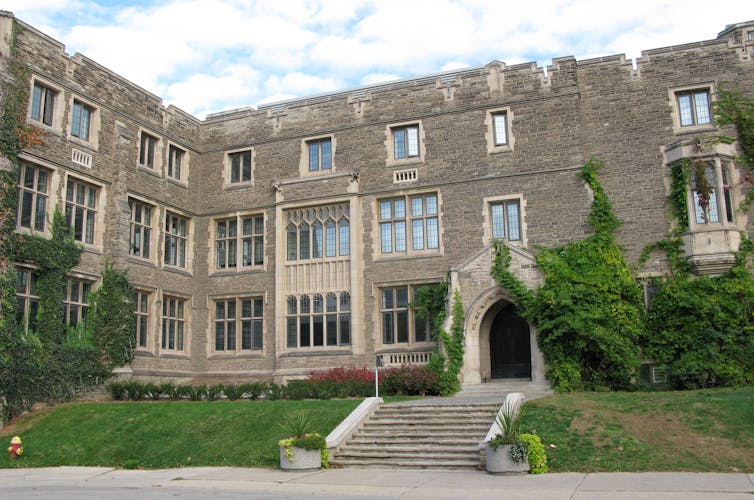
Steps leading up to an archway.
If merit is defined too narrowly, it could block diverse pathways to post-secondary admissions.
(Saforrest/Wikimedia Commons), CC BY-SA

Studies in professional and medical education show that relying only on grades can miss other signs of potential, like life experience, community work and meeting the needs of society.


Read more:
Resisting the backlash against equity in medicine will improve health outcomes for all


Grades seem objective, but they depend on many factors like family income and access to school and community resources — along with teacher and parent expectations and how much time students have to study while balancing work, family, community and other responsibilities.

Students from low-income, Black, Indigenous, rural or otherwise marginalized communities often face big challenges even before applying to college or university. These challenges reflect longstanding gaps in income and education.

Bill 33 doesn’t explain what “merit” means. Without a clear definition, admissions could end up favouring students who already have advantages. New rules will soon define how merit is measured, and these rules will be very important. If they don’t protect equity-focused pathways, the law could make existing gaps even worse.

Student fees and risk to campus services

Fair admissions are only part of the story. Bill 33 also changes how student fees are handled. These changes could harm students from marginalized communities.

Student groups have raised strong concerns about how Bill 33 could affect ancillary fees and the services they fund.

According to the Ontario Undergraduate Student Alliance, “ancillary fees are democratically approved by students, for students.” These are extra student fees that fund essential services such as food banks, wellness centres, accessibility programs, cultural programs, transportation and safety programs. These services could be at risk if the province gains more control over how fees are defined and charged.

In 2019, student groups successfully challenged Ontario’s Student Choice Initiativ. Through this measure, the province tried to limit ancillary fees but the court ruled it didn’t have the legal authority to do so at the time. Bill 33 responds to that ruling by changing the law itself, giving the province clear authority to regulate student fees.

The Canadian Federation of Students in Ontario has warned that focusing on fee oversight may distract from deeper problems in higher education, including chronic underfunding and high tuition costs.

Could weaken student-led supports, harm equity

Under Bill 33, the government can decide which fees can be charged and under what rules. Most universities clearly list how ancillary fees are used. For example, at McMaster University, these fees help fund transit passes, wellness services, career supports and refugee student programs.

How fees are managed is closely linked to the government’s broader oversight of universities, linking financial decisions to questions of accountability, governance and whose voices are heard in decision-making.

Student groups have long played a key role in raising equity concerns and ensuring local needs are addressed. If more decisions are made at the provincial level, student voices could carry less weight unless students are clearly included in new rules and decision-making processes.

Looking ahead: Equity is not automatic

As universities begin to apply Bill 33, students and faculty may notice changes in how admissions decisions are explained, how student fees are handled and how transparency rules are used.

These changes will not look the same at every campus. Their impact will depend on how the rules are interpreted and whether universities make equity a clear priority in their policies.

While the law may seem neutral, its real impact will depend on how it is put into practice and whose experiences are considered.

Ensuring equitable access to higher education requires careful planning, enough funding and meaningful input from students, faculty and communities most affected by these changes.

Equity will not happen by chance. It will depend on the choices universities and policymakers make now, and on whose voices are heard in those decisions.

The Conversation

The authors do not work for, consult, own shares in or receive funding from any company or organisation that would benefit from this article, and have disclosed no relevant affiliations beyond their academic appointment.

ref. Ontario’s Bill 33 raises serious concern about campus equity and student rights – https://theconversation.com/ontarios-bill-33-raises-serious-concern-about-campus-equity-and-student-rights-272548

Uganda’s boda-boda drivers: the digital economy hasn’t been the route to formal work and better protection – research

Source: The Conversation – Africa – By Rich Mallett, Research Associate and Independent Researcher, ODI Global

Digital labour platforms – like fast food delivery and cab hailing services – are having a dramatic impact on people’s labour rights and working conditions around the world.

In western countries like the UK and the US, their rise has intensified a process of labour casualisation already several decades in the making. Under the guise of “flexibility”, platforms have heralded a return to insecure, temporary forms of employment that offer few rights or benefits to workers.

But in “less developed” countries like Uganda, the growth of the digital gig economy is often considered a boon. Across the global south, it has been claimed that platforms are not only creating millions of new jobs, but they are actually helping to formalise an informal economy so vast it accounts for an estimated 70% of total employment in low- and middle-income countries.

Existing research suggests that by guiding informal workers towards compliance with registration and licensing requirements or making them more visible to state authorities, digital labour platforms are capable of “counteracting informal economic activity”.

But is it all as straightforward as it seems?

In a new research paper I put this claim to the test through a case study of moto-taxi work in the Ugandan capital city, Kampala.

Moto-taxi (or boda boda) work is a hugely important source of income in Uganda, providing livelihoods for an estimated 350,000 people in the capital alone. Over the past decade, ride-hail platforms have descended upon this vast industry, claiming to offer safer, better paid work and a step towards formality.

Drawing on 112 interviews, 370 driver surveys and scans of relevant media, my research reaches a different conclusion. Despite shifting online, digital moto-taxi drivers remain as they always were – informal workers in an unprotected labour market.

This raises fundamental questions about the capacity of digital labour platforms to bring about positive transformations in the global informal economy.

Fallacies of ‘plat-formalisation’

As the new paper shows, moto-taxi workers’ inclusion within the new platform economy brings them no closer to formal labour status in any meaningful way.

This is illustrated by three key insights from my findings.

First, despite early collaborative engagement with state actors, Uganda’s ride-hail companies have tended to operate in unilateral, platform-specific ways that undermine prospects for sectoral standardisation. Each platform enforces its own rules over drivers, and these do not always line up with government legislation.

Take driver licensing, for example. While some companies insist that drivers must have a valid driving permit before working through their apps, others bypass this requirement completely. Market leader SafeBoda, for instance, instead chooses to enrol new drivers in road safety training at a purpose-built “academy”. Though a positive step towards safer driving standards, this is not the same as formalisation.

Second, Uganda’s ride-hail platforms accept zero legal responsibility for the welfare and safety of those using their apps, including cases of “bodily injuries, death, and emotional distress and discomfort”. Despite claiming to help regulate the industry, these companies’ designation of informal moto-taxi workers as independent “gig workers” keeps drivers distanced from state labour regulation.

And third, my findings indicate corporate reluctance to share data with government. According to one city planner I talked with, while the platforms tended to talk positively about public-private collaboration, when push came to shove they would often “withhold their data”. Recent evidence suggests this is continuing to happen, further highlighting the limits of private data ownership and non-binding agreements around data sharing. Without access to this information, it is difficult for governments to register workers, tax them effectively and extend labour protections.

Profiting from informality

Ride-hailing may not have led to better, more formalised work for Uganda’s moto-taxis. But what is has done is open up new revenue streams for the various local and international companies involved. The result: a formalisation not of drivers’ labour but of their wealth.

As detailed in the paper, some of the techniques here include:

  • Commissions. Drivers regularly lose 15%-20% of their trip fares in the form of company commission fees. With digital technology, these are increasingly being captured via cashless payment systems that deduct fees and other equipment-related debts automatically.

  • Equipment. Many companies operate by selling drivers the gear they need to function in the ride-hail economy. SafeBoda, for instance, regularly charges new riders somewhere in the region of US$140 for a smartphone, crash helmets and branded uniforms. Drivers often take this on as debt and pay it back incrementally over time, only to later discover that this does not, in all cases, entitle them to actual ownership. As one former employee at the company told me:

The helmet itself is a business. It’s on the side, you can’t see it. The phone is a business. It’s about business besides riders. It’s all about getting commission on things.

  • Corporate tie-ins. Through a series of funding relationships and “private-private partnerships”, Uganda’s ride-hail platforms make drivers visible and accessible to a whole host of banks, insurance agencies and alternative credit lenders. These financial actors are all keen to find lucrative new markets at the “bottom of the pyramid”. Ride-hailing is simply the vehicle for this.

The formalisation agenda remains important. It is central to achieving better working conditions and stronger labour protections for hundreds of millions of workers around the world.

But for private digital platforms operating across Africa’s informal economies, the bottom line is often not about “counteracting informal economic activity” at all. It is about profiting from it.

The Conversation

This article draws on doctoral research, for which the author received funding from the UK’s Economic and Social Research Council (ESRC).

ref. Uganda’s boda-boda drivers: the digital economy hasn’t been the route to formal work and better protection – research – https://theconversation.com/ugandas-boda-boda-drivers-the-digital-economy-hasnt-been-the-route-to-formal-work-and-better-protection-research-270993