Ultrasound is standard for breast cancer screening, but it has its limitations.Anchiy/E+ via Getty Images
Ultrasound is widely used in breast cancer diagnosis. While it can effectively show that a lump is filled with fluid – indicating it is unlikely to be cancer – it cannot reliably determine whether a solid mass is benign or cancerous. This often leads doctors to order breast biopsies to confirm the presence of cancer.
However, most breast biopsies do not detect cancer. In the U.S., more than 1 million breast biopsies are performed each year, and about 80% of them are benign. Unnecessary biopsies are linked to potential harms, including increased anxiety, complications from the procedure and medical costs. Despite advances in breast imaging, breast biopsy remains the only definitive method to determine whether a suspicious lump is cancerous.
My work as an engineer focuses on improving imaging technology to detect and diagnose cancer. Breast cancer grows when the tumors form new blood vessels and consume more oxygen. This makes examining blood vessels and oxygen levels potential biomarkers that could improve breast cancer diagnosis.
Diffuse optical tomography, or DOT, is an imaging technology that uses near-infrared light to measure total blood hemoglobin concentration and oxygen levels – key indicators of tumor activity – in the breast lump. It does not require patients to be injected with contrast dyes to make the image clearer.
My team and I found that combining ultrasound with DOT can improve the accuracy of breast cancer diagnoses and reduce unnecessary breast biopsies. The ultrasound provides information about the structure of a breast lump, while DOT provides information about its function, and this data together can improve breast cancer diagnosis.
Anyone with breast tissue is at risk of developing breast cancer.
Improving breast ultrasounds with DOT
In our study, we imaged 226 patients recommended for routine breast biopsy using our new hand-held imaging technology, which combines ultrasound with diffuse optical tomography. These patients had either breast cancer or benign lumps, and their final diagnosis was confirmed with a biopsy.
Radiologists initially evaluated each patient using standard imaging methods, such as ultrasound and mammography. They then reviewed additional information from DOT images. Importantly, the radiologists and engineers were blinded to the biopsy results when determining diagnoses.
We observed significant biological differences between cancerous and benign lumps. Cancerous lesions had significantly higher levels of hemoglobin and lower levels of oxygen than noncancerous tissue. More aggressive cancers showed even higher hemoglobin concentrations and lower oxygen levels than less aggressive tumors.
When radiologists were able to review DOT measurements, biopsies of benign lumps decreased by approximately 25%. The false-negative rate was 1.8%, which aligns with medical guidelines that recommend monitoring rather than an immediate biopsy.
More accurate, noninvasive diagnostic tools can not only reduce unnecessary biopsies but also lead to more precise and efficient diagnoses. Beyond ultrasound, researchers have also explored combining other imaging techniques with DOT, including X-ray mammography, 3D mammographyand MRI. However, DOT systems combined with mammography and MRI are more difficult for routine use in the clinic compared to ultrasound. My team is working to further refine our technology, including incorporating AI tools to help process imaging data.
Minimizing avoidable procedures can help preserve a patient’s quality of life and reduce health care costs. I believe these improvements can collectively have a meaningful and far-reaching effect on patient care and the broader health care system.
Quing Zhu receives funding from the National Cancer Institute for this work
On February 28, the US and Israel launched a war against Iran following weeks of US military build-up in the region and threats from US President Donald Trump.
In the ensuing weeks, Iran has retaliated by striking US assets in the Persian Gulf states and targets across Israel. Israel has launched a ground invasion into southern Lebanon in response to attacks from Hezbollah.
Oil and gas shipments through the Strait of Hormuz have come to a virtual standstill, threatening a global energy crisis. And thousands have been killed, most in Iran and Lebanon.
The entire Middle East has been affected by this war – and the region will no doubt be very different once it’s resolved.
We asked five experts in international politics and Middle East studies to explain the most important changes they see happening following the war.
The academic experts who shared their analysis of this topic are:
Scott Lucas
Professor of International Politics, Clinton Institute, University College Dublin. He joined University College Dublin in 2022 as Professor of International Politics, having been on the staff of the University of Birmingham since 1989. He began his career as a specialist in US and British foreign policy, but his research interests now also cover current international affairs – especially North Africa, the Middle East, and Iran – New Media, and Intelligence Services.
Andrew Thomas
Lecturer in Middle East Studies, Deakin University. He teaches units on International Relations, Middle East conflict and global governance. His book “Iran and the West: a non-Western approach to foreign policy” (2024) explores how non-Western perspectives on the Middle East and beyond can improve our understanding of intractible conflict.
Chris Ogden
Associate Professor in Global Studies, University of Auckland, Waipapa Taumata Rau. He specialises in the interplay between identity, culture, security and domestic politics in India, China, South Asia, East Asia and the Indo-Pacific. His latest book is “The Authoritarian Century: China’s Rise and the Demise of the Liberal International Order” (Bristol University Press, 2022).
Jessica Genauer
Academic Director, Public Policy Institute, UNSW Sydney. She is an expert in international conflict and provide regular analysis for national and international outlets on war and conflict. Her research interests include conflict, threat perceptions, and post-conflict institution-building with a focus on the Middle East as well as Russia / Ukraine and the US.
Kristian Coates Ulrichsen
Fellow for the Middle East at the Baker Institute, Rice University. His research examines the changing position of Persian Gulf states in the global order, as well as the emergence of longer-term, nonmilitary challenges to regional security. Previously, he worked as senior Gulf analyst at the Gulf Center for Strategic Studies and as co-director of the Kuwait Program on Development, Governance and Globalization in the Gulf States at the London School of Economics.
Chris Ogden is a senior research fellow with the Foreign Policy Centre, London.
Andrew Thomas, Jessica Genauer, Kristian Coates Ulrichsen, and Scott Lucas do not work for, consult, own shares in or receive funding from any company or organisation that would benefit from this article, and have disclosed no relevant affiliations beyond their academic appointment.
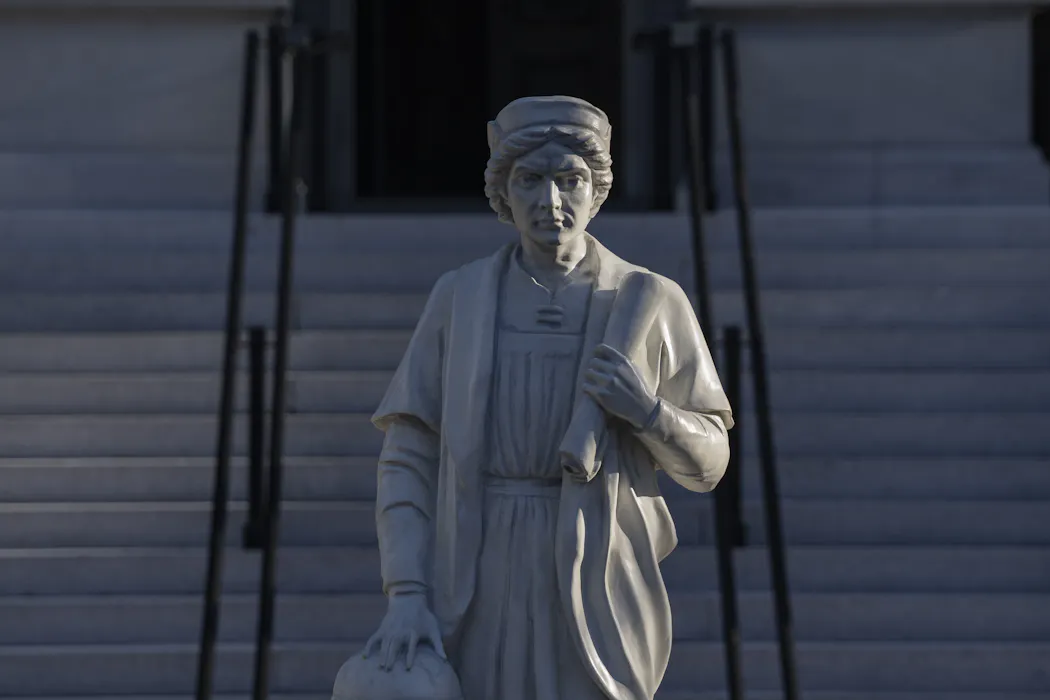
Christopher Columbus is back. At least, a statue of him is back, reinstalled by US President Donald Trump on the White House grounds in late March – part of the president’s stated mission to cancel “cancel culture”.
The resurrection of Columbus made good on Trump’s 2025 executive order, “Restoring Truth and Sanity to American History”.
The statue is in fact a replica of the original thrown into Baltimore Harbor by protesters on Independence Day 2020 during the Black Lives Matter upheavals of the first Trump presidency.
The protests targeted monuments “honoring white supremacists, owners of enslaved people, perpetrators of genocide, and colonizers”. But damaged pieces of the Columbus statue were later salvaged and became a model for the copy.
Trump has since championed Columbus as “the original American hero, a giant of Western civilization, and one of the most gallant and visionary men to ever walk the face of the earth”.
He might have chosen any statue of the explorer and navigator from Genoa who pioneered European colonisation of the Americas. But clearly reinstating one removed by his opponents sends a more powerful message.
‘Improper partisan ideology’
Restoring statues to their original location isn’t simply about undoing their previous removal. It’s designed to reverse what some see as attempts to “erase history”.
And it has a long history of its own. Roman emperors once feared being condemned to obscurity through “damnatio memoriae” – having their statues destroyed, coins melted down and names chiselled from the facades of buildings.
Trump’s executive order was very much about retaliating against those who want to “perpetuate a false reconstruction of American history, inappropriately minimize the value of certain historical events or figures, or include any other improper partisan ideology”.
Relocating a memorial to a more prominent location – from Baltimore to the White House, for instance – goes one step further. It amplifies the significance of the historical figure and the symbolic restoration of their reputation.
But sometimes just restoring a statue to its original site is symbolism enough.
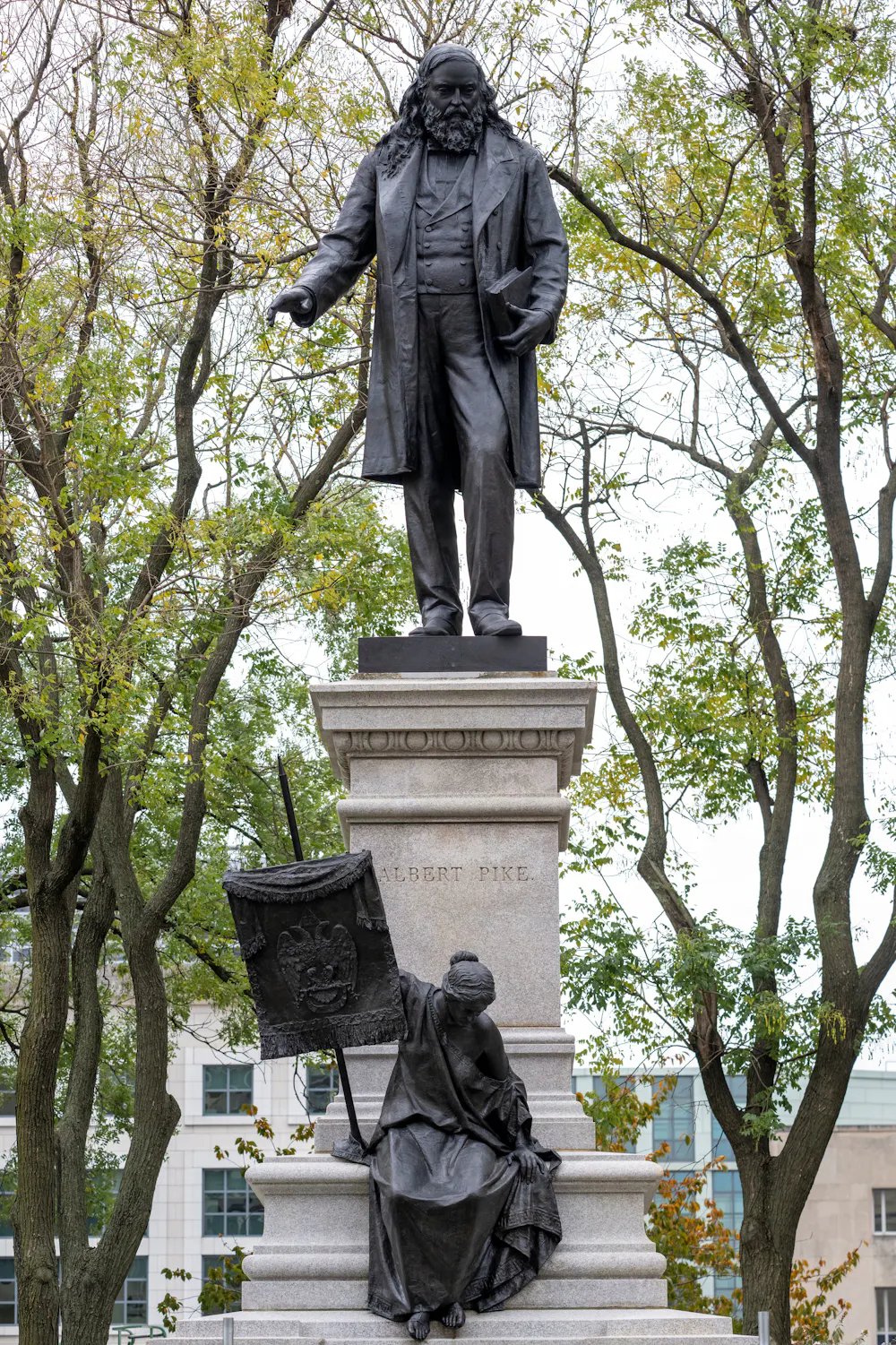
Pike was a disgraced figure, accused of misappropriating funds and allowing his troops to desecrate the bodies of Union soldiers. There are also alleged ties to an early version of the Ku Klux Klan.
Advocates for the statue’s retention note there is no mention of the Confederacy or depiction of a military uniform, only Pike’s contribution to the American Freemasons.
But when the statue was pulled down in 2020, Trump certainly took sides: “The DC police are not doing their job as they watched a statue be ripped down and burn. These people should be immediately arrested. A disgrace to our country.”
‘Woke lemmings’
Of course, history isn’t always simple, as memorialising the American Civil War shows.
Arlington National Cemetery in Virginia was established in 1864 as a national military cemetery, with a Confederate section dedicated in 1900 as part of the effort to promote reconciliation between the North and South.
Its Confederate Memorial (designed by a Confederate veteran) features a female figure representing the South holding symbols of peace. A bronze relief below depicts sanitised images of slavery: a woman caring for white children, and a man following his owner into battle as his servant.
A biblical quotation below preaches peace: “They have beat their swords into ploughshares and their spears into pruning hooks.”
But another quote in Latin – “Victrix causa diis placuit sed victa Caton” – references Julius Caesar’s victory in the Roman civil war and casts the South’s defeat as a noble lost cause.
The monument was erected in 1914, removed by Congress in 2023, and is scheduled to return in 2027. Secretary of War Pete Hegseth claimed on social media it “never should have been taken down by woke lemmings. Unlike the Left, we don’t believe in erasing American history – we honor it.”
Presidential hopeful Barack Obama addresses a rally before a statue of Caesar Rodney in Wilmington, Delaware, 2008. Emmanuel Dunand/AFP via Getty Images
Defiant choices
Similarly, an equestrian statue of Founding Father Caesar Rodney – installed in Wilmington, Delaware, in 1923 and removed in 2020 to prevent damage by protesters – highlights these contested readings of history.
Rodney is famous for riding all night from Delaware to Philadelphia, through a thunderstorm, to break a deadlock and cast the deciding vote in favour of American independence in 1776.
But as well as being a brigadier general and signatory to the Declaration of Independence, he owned 200 slaves on his family’s plantation.
The statue is now scheduled to reappear for six months, this time in Washington DC, to celebrate America’s 250th anniversary on July 4. It will be installed in Freedom Plaza, named in honour of Martin Luther King Junior.
Placing the contested statue of a famous slave owner in a space dedicated to a Black civil rights leader is a provocative, if not defiant, choice. And it shows again how powerful symbols and symbolic actions can be.
The argument that removing statues also erases history doesn’t hold up to scrutiny. It conflates public visibility and symbolic placement with actual knowledge of the past.
In that sense, reinstalling controversial memorials is, in itself, an attempt to rewrite history by erasing a more recent past and returning to an old, disputed status quo.
Garritt C. Van Dyk has received funding from the Getty Research Institute.
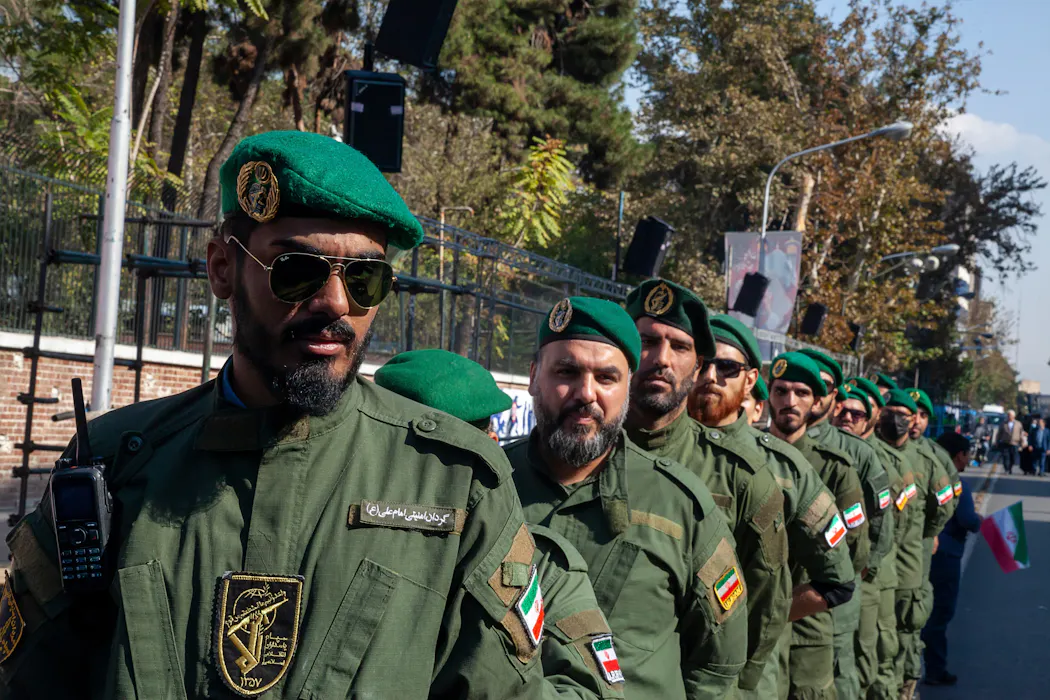
The Iranian Revolutionary Guard Corps (IRGC) has long exerted a strong, often underestimated power in the Middle East. With around 190,000 members, plus an estimated 450,000 reserves in the Basij paramilitary, the largest component of Iran’s Armed Forces also controls much of the country’s politics, intelligence and economy.
After an Israeli airstrike assassinated the Islamic Republic’s Supreme Leader Ayatollah Ali Khamenei on February 28, US President Donald Trump called on the IRGC to lay down its arms in exchange for immunity. IRGC forces refused the offer, and with many more of its leaders killed over the last month, it shows no sign of giving up.
As US ground forces deploy to the Middle East, it is imperative to understand that – despite a month of widespread US-Israeli bombing, damaged infrastructure, internal fractures and decimated leadership – the IRGC will likely resist any invasion of Iranian territory with tenacity. Its history demonstrates why.
The IRGC originally emerged in the 1979 revolution from the ad hoc street militias made up of students loyal to Ayatollah Ruhollah Khomeini’s vision of an Islamic Republic. It was opposed to the factions that sought to create a secular republic after the overthrow of the monarchy, and sought to be a national guard to protect the nascent Islamic revolutionary government.
Also known as the Pasdaran-e Enghelab, “Guardians of the Revolution”, it soon evolved into a praetorian guard for the country’s supreme leader.
In the force’s earliest days it prevented a counter-revolution by the Artesh, the standing military under the Shah. The IRGC also fought street battles with rival revolutionary forces, including secular leftists and rival Islamist militias.
With Iraq’s invasion of Iran in 1980, the IRGC emerged as a frontline conventional combat force in tandem with the national military. They repelled Saddam Hussein’s attack by 1982, though the war continued for another 6 years. Many current IRGC commanders were young soldiers or officers at the time, and experienced firsthand how Iraq deployed chemical weapons against them while the West remained silent.
Iranian soldiers wearing gas masks during the Iran-Iraq War, 1985. Mahmoud Badrfar
The IRGC also became a counter-insurgency force when Saddam Hussein supported Iran Kurdish rebels in 1980. It has suppressed various internal ethnic rebellions, ranging from a Kurdish revolt in the northwest that began in the 1980s to a Baloch insurgency in the southeast in the 2000s.
Trump’s recent attempts to foment Kurdish revolts will therefore likely meet with profound wrath from IRGC commanders, who have been fighting these ethnic rebel groups for decades.
Lessons from proxies
Through its regional proxies, the IRGC already has extensive experience of protracted wars of attrition against the US and Israel.
In 1982, the IRGC created a foreign expeditionary force, known as the Quds Force. Named after the Arabic for Jerusalem, the Quds supported the creation of Hezbollah in Lebanon in response to Israel’s invasion in that year to expel the Palestine Liberation Organization.
From that point onward, the IRGC was able to confront Israel via its proxy forces. Over 18 years, Hezbollah used tactics such as suicide car bombs to wear down occupying Israeli forces, who withdrew from southern Lebanon in 2000. The operation was widely seen as a military failure for Israel.
Qasem Soleimani (left) was the commander of the Quds until his assassination by US forces in 2020. He is pictured here with Ali Khamenei (right) in 2019. Khamenei.ir, CC BY-NC
These tactics were repeated after the 2003 US invasion of Iraq, when Quds-backed proxy Shi’a militias, such as Kataib Hezbollah, targeted the US military deployed there with improvised explosive devices. The US withdrew from Iraq in 2011, desperate to extricate itself from a “forever war”.
The Quds’ proxies in Lebanon and Iraq provided lessons that the IRGC will surely seek to replicate in the event of a US invasion.
Many of these tactics were designed to wear down an occupying force, and will not be enough to thwart an immediate, high-intensity ground invasion. But if the US fails to achieve its (currently unclear) goals, it could find itself in yet another prolonged occupation and low-intensity war. If it does, the IRGC’s well-honed attrition tactics will be deployed extensively.
After decades of bilateral tensions, the 9/11 attacks in 2001 forced the US and Iran into a brief alliance against the Taliban in Afghanistan. Iran’s regime even reached out to the US in late 2001, offering help to fallen pilots who landed on Iranian soil while combating their mutual enemy.
But in January 2002, George W Bush placed Iran alongside Iraq and North Korea in the now-infamous “Axis of Evil”, making them a target in the US’ War on Terror. For Iran, this marked a abrupt shift in public perceptions of the US.
The reformist president Mohammad Khatami’s efforts at rapprochement ended. Three years later, the regime supported the rise of Mahmoud Ahmadinejad, a hardliner who, along with the Supreme Leader, invested in both the expansion of the nuclear program and the IRGC. The IRGC has since evolved to assume multiple security functions in the Islamic Republic.
The only subsequent period of detente between the IRGC and the US was when the Quds Force fought against the Islamic State in 2014 in Iraq, in tandem with US air support. This cooperation occurred during the Obama administration, and a year later, the US entered a nuclear deal with Iran, from which Trump withdrew just two years later in 2017.
When IRGC bases were hit by ISIS terrorist strikes in early February 2019, it therefore viewed the attacks as the result of covert US actions. It blamed the US and Israel, in addition to a rise in Balochi and Kurdish subversion.
In the IRGC’s narrative, the Trump administration’s current war is part of a systemic American effort since the 1980s to attack the IRGC through proxies or economic warfare in order to weaken the Islamic Republic. For them, this is a conflict that has endured since the Iranian Revolution in 1979.
The IRGC has been, without a doubt, weakened by the past month of US-Israeli aerial attacks. But its history demonstrates its pattern of officers who have a sense of a distinct corporate identity, and who will defend their institutional power even if their leadership is killed.
The IRGC also commands the vast Basij paramilitary. Here, Ayatollah Ali Khamenei at the Great Conference of Basij members, Azadi stadium October 2018. By Khamenei.ir, CC BY-NC
This explains why, after Khamenei’s death, the IRGC rallied behind his son Mojtaba to keep its power intact. While some Iranians celebrated and others mourned Khamenei’s death, the IRGC presented a united front in backing his regime. If Iran’s political system fell apart, the IRGC’s in-group status would be lost.
The IRGC has also evolved to operate as a business network. With holdings in the service sector, ranging from media to construction, it controls at least 20% percent of the economy. Given how some IRGC leaders have benefited from corrupt practices in managing these networks, they would fear being held accountable and tried by a new political order, and will not countenance the idea of surrender.
What this network of privilege represents is, ultimately, a deep state. The IRGC is not just an army, but a separate, autonomous and vast military institution, one that has managed to retain its power after Khamenei’s assassination. If the events of history – and of the conflict thus far – are anything to go by, it will fight to the bitter end rather than capitulate.
A weekly e-mail in English featuring expertise from scholars and researchers. It provides an introduction to the diversity of research coming out of the continent and considers some of the key issues facing European countries. Get the newsletter!
Ibrahim Al-Marashi no recibe salario, ni ejerce labores de consultoría, ni posee acciones, ni recibe financiación de ninguna compañía u organización que pueda obtener beneficio de este artículo, y ha declarado carecer de vínculos relevantes más allá del cargo académico citado.
Source: The Conversation – Global Perspectives – By Jasmin Lilian Diab, Assistant Professor of Migration Studies; Director of the Institute for Migration Studies, Lebanese American University
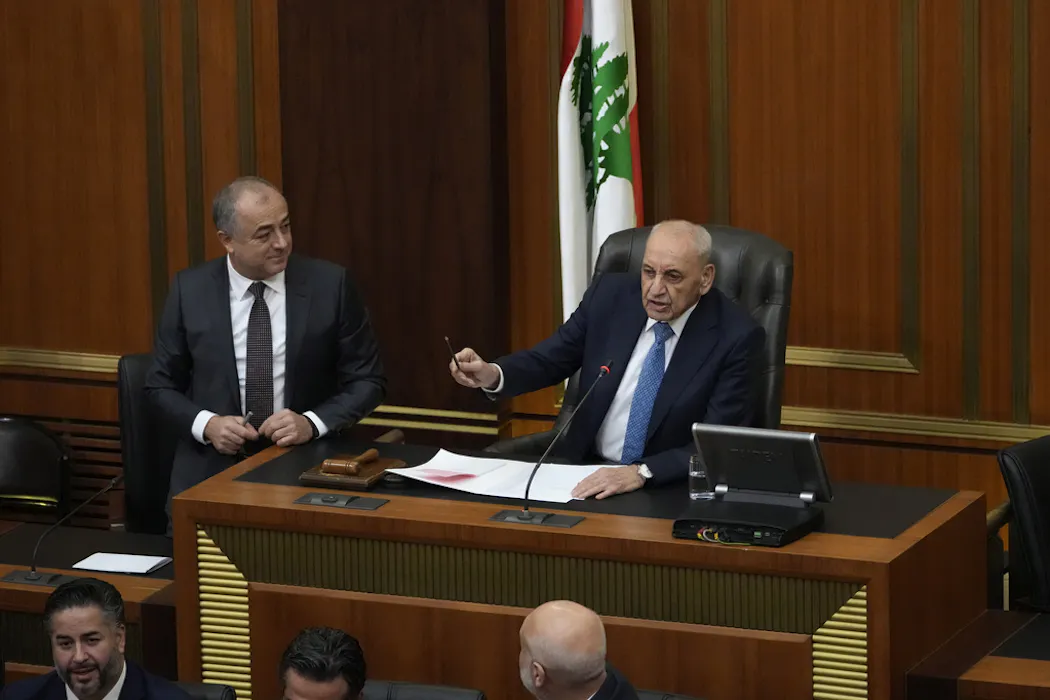
Long-time Lebanese power broker and speaker of the parliament Nabih Berri speaks during a legislative session. AP Photo/Hussein Malla
Lebanon was meant to be preparing for key parliamentary elections in May 2026. Then came the return of war.
Two days after the U.S. and Israel launched their military operation in Iran on Feb. 28, Hezbollah and Israel resumed their own full-scale hostilities. That marked the final collapse of a much-violated ceasefire that for a little over a year had barely kept a lid on fighting. With Israel’s full-scale bombardment of the country and invasion of southern Lebanon again underway, the Lebanese parliament on March 9 postponed scheduled elections by extending its own mandate by two years.
Its justification was a now familiar one: war, instability and a security situation deemed incompatible with democratic process. As conflict escalates across the region and further destabilizes Lebanon with the possibility of long-term Israeli occupation, officials insist that elections are simply not feasible.
But this is not the first time Lebanese elections have been postponed.
Since 2013, the Lebanese government has delayed parliamentary elections multiple times, citing among other factors the war in neighboring Syria, political deadlock and disputes over electoral law. Each delay has been framed as temporary, necessary and exceptional. Yet taken together, they reveal a pattern: Elections in Lebanon seem to be always approaching – and continually postponed.
This is not simply a story of crisis interrupting democracy. It is a story of how crisis is used to govern it.
Crisis as justification and opportunity
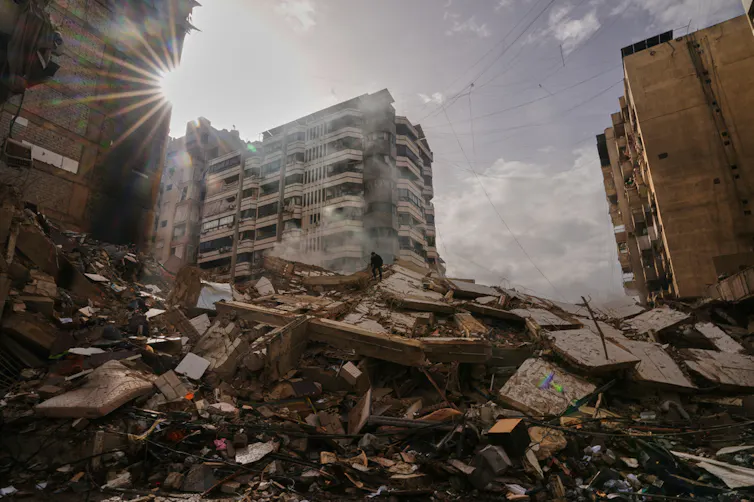
There is little question that the latest postponement of elections comes amid trying conditions – airstrikes, displacement and mounting insecurity – that make the logistics of an election extremely difficult.
A man stands atop the rubble as smoke rises from a building destroyed in an Israeli airstrike in Beirut’s southern suburbs on March 14, 2026. AP Photo/Hassan Amma
Indeed, on its face the parliament’s decision appears pragmatic. Elections require mobility, stability and functioning institutions, all of which are currently under strain.
But arguments for postponement obscure an important reality: Political crises in Lebanon have contributed to a self-fulfilling logic that protects the political status quo.
The extension of parliament’s term was announced by Speaker Nabih Berri, a central figure in the country’s political order since Lebanon’s civil war ended in 1990. That order has long been defined by power-sharing among entrenched elites, as well as a system widely criticized for enabling corruption, patronage and institutional paralysis.
The current system was formalized in the Taif Agreement, which formally ended Lebanon’s devastating 15-year civil war. The accord distributed power along sectarian lines, with key state positions allocated to religious communities. While intended to ensure representation, it instead entrenched elite bargaining and veto power, making consensus both necessary and perpetually elusive.
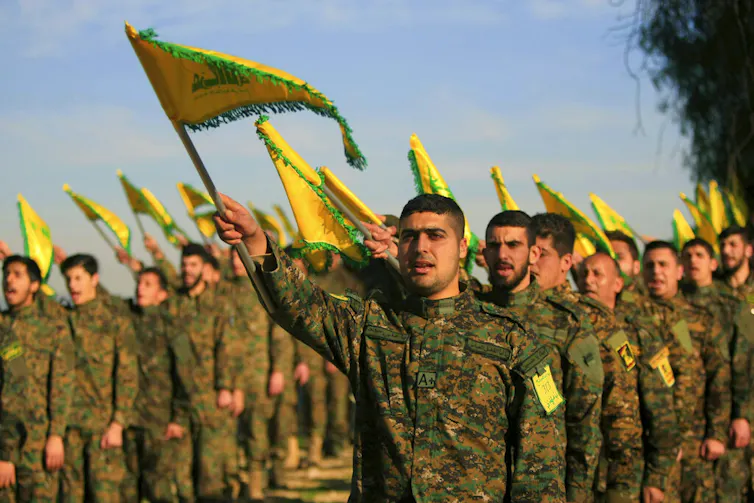
Over time, this has produced a political system defined less by governance than by managed deadlock – where institutional paralysis is not incidental but built into the system itself. This fragility is compounded by the interplay of domestic and external forces, including the significant political and military role of Hezbollah. Emerging out of the Lebanese civil war and the broader context of Israeli occupation in the 1980s, Hezbollah developed as an armed resistance movement and later consolidated its position as both a political actor and a military force operating alongside the state, complicating the already tenuous balance of power.
This fragility is further reflected in repeated institutional deadlock, including prolonged presidential vacuums like between 2014 and 2016. Then, Hezbollah and its allies blocked consensus over a candidate, leaving the country without a head of state for over two years.
The politics of delay
Within Lebanon’s fractured political context, postponing elections has serious consequences. Fundamentally, it changes when and how political accountability happens in ways that benefit those already in power. In Lebanon, elections increasingly function as deferred events: always anticipated but continually postponed.
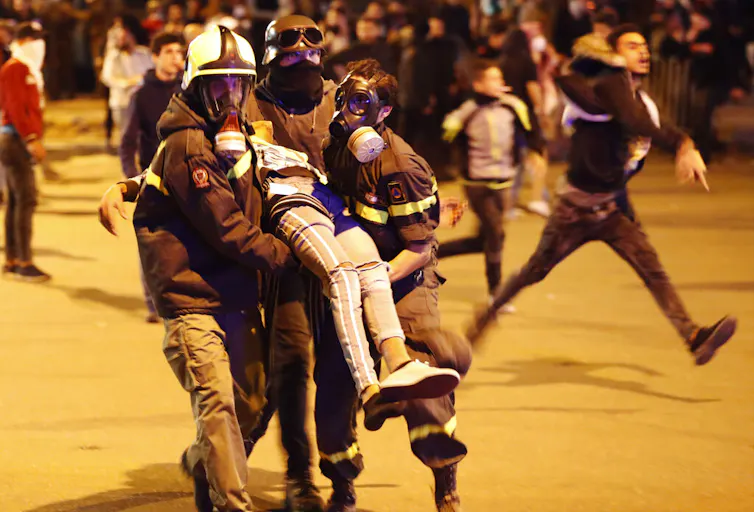
This prolongs the tenure of a political class that has faced sustained public anger since the 2019 uprising, when mass protests erupted across the country over economic mismanagement, corruption and deepening inequality. The movement forced the resignation of the government and exposed the fragility of the state’s political and economic order.
While this challenges individual leaders and the broader system of governance, it did not translate into sustained structural reform or a meaningful reconfiguration of power. Instead, the post-2019 period has been marked by deepening economic collapse, institutional paralysis and repeated political deadlock that has included prolonged delays in government formation.
Civil defense workers carry an injured protester after a clash with riot police during 2019 demonstrations in Beirut. AP Photo/Hussein Malla, File
Election delays also narrow the space for political alternatives. New parties, independent candidates and reformist movements rely on electoral cycles to gain visibility and legitimacy. Postponing elections thus also defers possibilities for political transformation.
Finally, postponement reinforces a system in which accountability is continually suspended. Without elections, there is no formal mechanism through which citizens can register discontent or enact change.
In this sense, delay is not simply a byproduct of instability. It is a political outcome with clear beneficiaries in power, both within the Lebanese state and among actors such as Hezbollah, whose influence is often reinforced in periods of internal and external crisis.
Crucially, elections are never canceled outright. They are deferred, extended, rescheduled. While the promise of democratic participation remains, its realization is continually pushed into the future.
Displacement and exclusion
The current crisis also raises deeper questions about who is able to participate in Lebanon’s political life. Escalating violence in the south has displaced thousands, disrupting livelihoods, mobility and access to basic services. Participation in elections becomes not only difficult but, for many, secondary to survival.
This dynamic is not new. Periods of conflict in south Lebanon, from the prolonged Israeli occupation prior to 2000 to the 2006 Israel-Hezbollah war, have repeatedly disrupted electoral participation, displacing communities and reshaping who is able to vote, where, and under what conditions. Electoral processes have, at times, proceeded despite such disruptions, but often in ways that marginalize those most affected by violence.
This follows a broader pattern in which those most affected by crises in Lebanon are also those least able to shape the country’s political outcomes.
Lebanon’s electoral system has long been marked by exclusion: from diaspora voters who face logistical and administrative barriers to those displaced – entirely excluded from the political process.
Today, renewed conflict, including Israeli military operations in the south, intensifies these constraints.
The postponement of elections, then, is marked by both genuine logistical constraints and facilitating the interests of entrenched political elites.
It also risks deepening existing inequalities. Large segments of the population, particularly those in the majority-Shiite south, will face disproportionate barriers to participation as displacement, insecurity and the destruction of infrastructure make voter registration, campaigning and access to polling stations significantly more difficult.
These are the same communities whose political representation is most directly shaped by cycles of violence, displacement and uncertainty.
All this does not mean that elections no longer matter in Lebanon. On the contrary, their repeated deferral points to their continued importance. But it also highlights the fragile nature of democratic processes within a system shaped by entrenched power and persistent instability.
At the same time, there are ongoing, if uneven, efforts to reckon with this paralysis. Reform-oriented political actors and segments of civil society have continued to push for electoral transparency, diaspora participation in elections and institutional reform.
International actors, including the International Monetary Fund and the European Union, have also tied financial assistance and recovery frameworks to governance reforms, including calls for credible and timely elections. Yet these pressures have so far yielded limited structural change, often absorbed into the same status quo they seek to transform.
Meanwhile, the escalation of violence in the south and the persistent possibility of expanded military confrontation continues to reshape the conditions under which any future election might take place.
In Lebanon, democracy is not suspended in times of crisis but stretched. And in that stretching, the distance between citizens and political change continues to grow. That will only continue unless emerging pressures, both domestic and international, are able to create forms of genuine accountability.
Jasmin Lilian Diab does not work for, consult, own shares in or receive funding from any company or organization that would benefit from this article, and has disclosed no relevant affiliations beyond their academic appointment.
The United States’ Operation Epic Fury against Iran does more than mark a military escalation. It shows how Trump revives old national myths: the American frontier, the cowboy, regenerative violence, and Providence – while stripping them of their civic dimension and turning them into narratives of domination.
That is what distinguishes him from earlier presidents: he does not draw on these myths to celebrate collective effort or democratic purpose, but to stage domination, purification, and personal omnipotence.
This language is more than the language of military necessity: it reactivates an old grammar of American power in a brutally hardened form.
In Republics of Myth (2022), Hussein Banai, Malcolm Byrne and John Tirman argue that conflict with Iran is driven not only by strategic interests but also by two incompatible national narratives, each of which turns every new crisis into confirmation of older humiliations, fears, myths, and hostilities.
On the American side, that narrative remains deeply shaped by, the myth of the frontier: a space to tame, “savages” to defeat, and a mission to fulfil. Applied to the Middle East, that framework casts Iran as an external frontier to be subdued. Trump did not invent this narrative. He radicalised it.
The Frontier: from expansion to predation
In his inaugural address on January 20, 2025, Trump presented the frontier as one of the nation’s central founding myths. The United States, he said, must once again become “A growing nation – one that increases our wealth, expands our territory,” and pursues its “manifest destiny.” He added that “the spirit of the frontier is written into our hearts.” Here, the frontier is no longer a metaphor for collective progress. It becomes, once again, a language of power and appropriation.
Nor did this rhetoric remain abstract. In the first weeks of his second term, Trump repeatedly said that Canada should become the 51st state and declared of Greenland:
This narrative is rooted in a Puritan imaginary of mission in the wilderness, of a “New Jerusalem,” and of the violent conquest of a territory populated by figures deemed as “barbaric savages.”Republics of Myth also shows how this grammar was projected from Latin America to the Middle East.
Trump is therefore not simply reusing an old American image; he is reactivating its most expansionist version. The same mechanism operates home. At the southern border, Trump speaks of “invasion,” “migrant occupation” and, again, “savages.” Abroad, he applies the same logic to Iran, describing it in apocalyptic terms as a force of “evil” that must be crushed and as an imminent existential danger. In both cases, the point is less to protect a border than to stage a reconquest through a moral narrative of good versus evil.
The cowboy becomes a cult of the leader
The second myth is that of the individualistic cowboy, as analysed by Historian Heather Cox Richardson: the ideal of the “real” American, typically white who acts alone, expects nothing from
government, protects his own, and imposes his will by dominating others.
Richardson shows that this myth, reworked in the modern era by Barry Goldwater and later mainstreamed by Ronald Reagan, has become central to Republican political culture. Under Trump, it is taken to an extreme. One sentence, spoken when he announced the opening of strikes against Iran on February 28, captures the logic:
“No president was willing to do what I am willing to do tonight.”
The cowboy is no longer a figure of popular autonomy. He becomes the exceptional man, the one who dares alone, above institutional caution.
Where earlier presidents could use frontier imagery to narrate a national effort, Trump turns the cowboy into a template for the charismatic, transgressive leader. The hero no longer stands for a collective order. He externalises conflict, polarises the world into good and evil, and justifies himself only through his ability to win. This pattern is not without precedent. From Reagan’s “evil empire” to George W. Bush’s “axis of evil,” American presidents have often opposed a virtuous “us” to a threatening “them.” But under Trump, the moral narrative no longer primarily serves to defend values or the “free world.” It serves to magnify a leader whose legitimacy rests on his capacity to prevail. Yet, Trump also undermines the very binary he deploys: even after branding an adversary as evil, he may pivot the next day and embrace the idea of a deal with the enemy. The rhetoric is therefore not only harsher than before; it is also more unstable, more transactional, and more theatrical.
Violence as regeneration
The third myth is that of regenerative violence, long identified by historian Richard Slotkin. He has shown the idea that violence can purge disorder and restore a lost order runs through modern American political mythology.
Violence is not an accident of the frontier; it is its symbolic engine. It destroys the obstacle, repairs humiliation, for example, the humiliation left by the 1979 hostage crisis, which Trump invoked in his February 28, 2026 address – purifies space, and regenerates the community.
As early as 2017, Trump’s inaugural address invoked “American carnage” painting a portrait of a ravaged country that had to be restored through rupture, a narrative drawn from the rhetorical tradition of the Jeremiad.
In 2025–2026, that logic extends to foreign policy. At West Point, addressing graduates of the US military academy, Trump said he wanted to refocus the military on “crushing America’s adversaries, killing America’s enemies,” and on the ability to “dominate any foe and annihilate any threat.”
Since the start of his second term, that myth has been dramatised even more explicitly through the fusion of entertainment and reality, as in a White House video that mixed images of the strikes on Iran with scenes from Hollywood films and video games under the slogan “American Justice.”
Trump promises his enemies “certain death” and links destruction to a supposed political liberation. Violence, then, is no longer simply a means. It becomes the condition of renewal. This is where Trump departs most clearly from a more conventional presidential use of power.
Where his predecessors tied violence to an explicit project of political transformation – democratisation, state-building, regional redesign, Trump expresses a more radical belief: power itself becomes a virtue, and crushing the enemy its most dazzling proof. Violence no longer prepares a new order. It becomes an end in itself, as though the demonstration of power alone could produce a political solution.
Under Trump, the old American myth of violence is stripped of its universalist trappings. What remains is destruction as proof of power.
Providence and the leader’s mission
The fourth myth is religious. From the outset, the American frontier was bound up with a providentialist imagination: a mission in the wilderness, a chosen people, a direct Protestant relationship to God. Trump takes up that tradition, but shifts it onto himself. In his 2025 inaugural address, he said that his “life was saved for a reason” and that he was “saved by God to make America great again. At the National Prayer Breakfast he again declares that God has “a special plan and a glorious mission for America.”
Here too, the original myth is distorted. Providence is no longer invoked to recall the nation’s collective vocation. It is used to sacralise the president himself in a quasi-messianic role. Trump’s supporters intensify this drift: part of evangelical Trumpism cast him in the language of anointing, prophecy, or a war between good and evil. Religion does not replace strategy here; it sacralises force.
The war against Iran throws all of this into sharp relief. It shows how old American myths are not just reused, but hardened and distorted. The frontier becomes predation, the cowboy – a cult of the leader, violence – redemptive crushing, religion – the sacralisation of the leader.
Trump does not simply inherit the US presidential tradition. He radicalises its darkest impulses, draining these narratives of their civic, moral, or universalist content and leaving only their most brutal core: conquest, force, divine right, and the annihilation of the enemy. That is also part of what makes them appealing to many Republican sympathisers.
A weekly e-mail in English featuring expertise from scholars and researchers. It provides an introduction to the diversity of research coming out of the continent and considers some of the key issues facing European countries. Get the newsletter!
Jérôme Viala-Gaudefroy ne travaille pas, ne conseille pas, ne possède pas de parts, ne reçoit pas de fonds d’une organisation qui pourrait tirer profit de cet article, et n’a déclaré aucune autre affiliation que son organisme de recherche.
Cultural heritage is constantly under threat. In recent years, we’ve witnessed the destruction of museums, archives and libraries around the world — from wildfires in California to bombing in Gaza and wars in Ukraine and Iran.
Meanwhile, book scientists are working tirelessly with an array of technologies — including microscopes, multispectral imaging and artificial intelligence — to recover, understand and preserve many valuable ancient texts.
This approach transforms what we can know about the past, as we learn how old books were made and how they change over time. It also helps us to care for fragile collections at a moment when climate change and mass digitization are reshaping cultural heritage work.
I work in this space as a PhD student at the University of Toronto as part of the Old Books New Science Lab and the Matrix Functionalization and Phenotyping Lab. I collaborate with conservators and heritage scientists to study parchment manuscripts and imaging-based approaches to preservation.
From papyrus roll to palm leaf
Across cultures and millennia, “books” have taken many forms, each shaped by local materials and technologies.
A book can be a papyrus roll, a palm leaf manuscript or a clay tablet.
Books can be made from animal skins, stretched thin to provide a writing surface. They can include pigments ground from minerals and plants, or metallic inks that corrode the surface beneath them.
A 13th century Jewish manuscript held at the University of Toronto was recently transformed through the process of multispectral imaging — one of the most visible and compelling tools in book science.
This is a process whereby researchers take many images of a page at different wavelengths, including ultraviolet and infrared. When they combine these images, the faded inks, erased writing and water-damaged text can become legible again.
Excitingly, researchers at the Andrews Book Science Hub succeeded in using 16 wavelengths of light to reveal those lost words for scholars to ponder and research once more.
In moments like this, science gives damaged books a second chance to speak while also keeping them safe. We have the opportunity to glimpse into the past once again.
Collagen is durable, but sensitive. Heat, humidity and light can cause parchment to stiffen, shrink or slowly turn gelatinous. Under poor storage conditions, pages may warp, become brittle or translucent, sometimes beyond repair.
With microscopes, researchers can now study collagen fibres at microscopic scales and detect early signs of deterioration long before damage is visible to the eye. That information helps conservators determine which manuscripts are most at risk and how environments can be adjusted to slow decay.
Scientific tools don’t just serve specialists. They also expand access.
Artificial intelligence systems are increasingly being trained to help transcribe difficult scripts (handwriting fonts) and endangered languages found in manuscript collections.
For example, tools developed for reading Geʽez, the classical language of Ethiopian Coptic manuscripts, are helping scholars and religious communities engage more easily with texts that were previously difficult to decipher.
Combined with high quality imaging, these systems can dramatically reduce barriers to reading, teaching and sharing cultural heritage.
Old books, new discoveries
Many people will never hold an ancient manuscript or scroll. We encounter these objects in museums, libraries and online collections. Book science helps ensure that what we see — and what future generations will see — remains available.
It also reminds us that books record more than words. They preserve evidence of craft, trade, environment, human use and care. They are archives of biological and material history as much as intellectual history.
For anyone who loves books, museums or the past, this shift is profound. It means the next major historical discovery may not come from finding a new document, but from looking at an old one in a new way. This is book science.
Christina Dinh Nguyen does not work for, consult, own shares in or receive funding from any company or organisation that would benefit from this article, and has disclosed no relevant affiliations beyond their academic appointment.
Source: The Conversation – Canada – By John P. Hayes, Postdoctoral Research Associate, Department of Political Science, University of Calgary
The Canada-United States-Mexico Agreement (CUSMA) comes up for review on July 1, 2026. Originally negotiated in 1992 as the North American Free Trade Agreement (NAFTA) and later re-negotiated in 2020, CUSMA has experienced a series of logistical and existential obstacles to its continuation, particularly during both presidencies of Donald Trump.
Since taking office for his second term, Canada and Mexico have suffered the ire of Trump, ranging from blanket tariffs to threats of annexation and invasion.
As a result, economic policy uncertainty is at historical highs in Canada, while in Mexico, the devaluation of the peso and a 10-25 per cent U.S. tariff on many Mexican goods has hit the economy hard.
Beneath the headlines are more muted negotiations over policy choices on matters of tariff exemption and content requirements for a range of sectors. While automobile manufacturing and steel steal the headlines, the critical minerals and energy sector is now at centre stage in the CUSMA review.
The efficient exchange of raw commodities and energy (both clean and fossil burning) is a priority of all three countries. North America’s capacity for mutually beneficial natural resource production is high, but there are confounding messages being disseminated by all three countries on their respective positions in the trilateral relationship.
In the months leading up to the start of the CUSMA review, logistical and existential challenges remain that will be difficult to overcome in trade negotiations. Frequent changes to tariff exemptions for CUSMA-compliant primary resource products is a major headache for companies, and a hindrance to good-faith negotiations.
The ongoing uncertainty caused by U.S. tariffs suggest that renewing CUSMA on existing terms is unlikely, and that will not help lower costs.
Ongoing uncertainty
The U.S. government recently announced their critical mineral strategy, which seeks to increase U.S. government ownership stakes in domestic mines and assert direct control over critical mineral pricing with foreign partners to counter China’s control over mineral refining. The U.S. and Mexico also launched an action plan on critical minerals to co-ordinate supply chain resilience in the minerals sector.
Commodities originating in Canada that were once covered under CUSMA and that are important for U.S. manufacturing, such as copper and potash, have been subject to fluctuating tariffs between 10 per cent and 25 per cent.
Similarly, Mexico is experiencing disruptions to their export-oriented trade of crude oil to the U.S. and dependence on imports of U.S. petroleum products.
These strategically important primary resources for energy generation and value-added goods will feel the impact of slow negotiations and prices will reflect this reality.
Even in the event of a favourable outcome for cross-border trade relations, the impacts of the trade war are wreaking havoc on energy markets and related downstream sectors.
Trilateral relations at a crossroad
While each country is approaching the CUSMA review differently, the existential implications are clear. As the war initiated by the U.S. and Israel drags on in Iran and pushes up global energy prices, the trilateral relationship has to contend with higher prices and global scarcities.
Carney’s speech at Davos in January 2026 laid clear Canada’s dual-pronged approach of seeking to salvage the agreement while also finding new markets for their primary resources.
Through the Building Canada Act, the Canadian government is working with provinces to streamline resource extraction and logistics to ship resources to Asian and European markets.
Mexico’s efforts to court new markets has been less aggressive, seeking instead to work on the relationship with the U.S. and increase infrastructure investments in the cross-border exchange of oil and gas products.
The original re-negotiation of the former NAFTA took more than nine months and eight rounds of trilateral talks.
There’s a large amount of risk to economic performance of North America, based on the agreement and the ongoing war between the U.S., Israel and Iran if the talks drag on. With the range of outcomes available to the trade partners, the trilateral relationship is at a crossroads.
John P. Hayes does not work for, consult, own shares in or receive funding from any company or organisation that would benefit from this article, and has disclosed no relevant affiliations beyond their academic appointment.
Source: The Conversation – Canada – By Sandy Hershcovis, Associate Dean and Future Fund Professor in Equity, Diversity and Inclusion, University of Calgary
Most organizations have formal systems in place to stop sexual harassment, including policies, reporting procedures and codes of conduct.
Silence plays a central role in perpetuating these abuses. When concerns go unreported, complaints unaddressed or experiences minimized, harmful behaviour continues without consequence.
In many workplaces, employees are aware of what’s happening, but see speaking up as risky, often due to fear of suffering professional or social consequences.
Our recent research study, led by organizational behaviour professor Angela Workman-Stark, unpacks these processes. We focus on signals of silence — everyday cues that “hush” the problem of sexual harassment.
How silence is reinforced at work
Signals of silence are messages about what is expected, permissible or futile in the organization. They can be communicated by anyone: perpetrators, coworkers, complaint recipients, supervisors and others in positions of power. These silence signals work together to protect harassment in plain sight.
Our research looked at how this happens through three behaviours:
Staying silent: Employees choose not to intervene, report or acknowledge harassment when they know it’s happening. This goes beyond individual victims withholding complaints. It’s also about managers not confronting harassers and witnesses not speaking up.
Silencing others: Colleagues discourage complaints about harassment. This often shows up in well-meaning caution to victims: “You’ll hurt your career,” “it’s better to let it go,” or “just forget about it.” In some cases, pressure comes directly from the perpetrator.
Not listening: When concerns are raised, they are minimized or dismissed. Harassing conduct may be reframed as misunderstandings or overreactions, and conversations are redirected. Complaints may be buried.
The problem with these signals of silence: they fuel further sexual harassment.
Why existing approaches fall short
Policies and reporting systems matter, but they aren’t enough. Organizations have relied on these methods for years to solve the problem of sexual harassment, with little effect.
Encouraging individuals to speak up has limits in environments where doing so carries risk. When silence is reinforced by peers, supervisors and informal norms, single voices cannot compete.
What we studied
Through surveys of more than 3,700 people across five nations, we examined how silence operates in organizations and what interrupts it.
In the first set of studies, we found that harassment signals of silence comprise three interrelated elements: being silent, silencing others and not listening. These silences predict increases in sexual harassment over time.
In the second set, we collected data from two North American police departments to test whether frontline leaders can disrupt the dynamics of silence.
We found that when supervisors demonstrate ethical leadership in visible, everyday ways, signals of silence are less destructive.
Leaders that break the cycle
Our findings demonstrate that supervisors can lessen the adverse effects of silence on sexual harassment. They do this by transmitting four kinds of countersignals:
1. Practise fairness without favouritism.
Consistent, transparent decision-making helps create conditions where people are more willing to speak up. Selective accountability does the opposite, undermining speak-up culture. Effective leaders apply consequences regardless of rank or results. They recognize ethical behaviour as visibly as performance.
2. Demonstrate integrity and trustworthiness.
Leaders who keep promises, address difficult issues directly and act in line with stated values show that ethical standards are real rather than symbolic. Credibility is built through consistent actions over time, not statements alone.
3. Be explicit about expectations.
When expectations are unclear, employees rely on informal cues, which often favour silence. Leaders need to clearly define what behaviour is and isn’t acceptable. How results are achieved matters as much as the results themselves.
4. Take concerns seriously.
Leaders should give their full attention when someone raises a concern and avoid minimizing or reframing it. They should also follow up so the person knows they were heard and taken seriously. These actions send powerful messages that reach beyond the individual conversation.
Changing workplace norms
Middle managers and team leaders hold more power here than they realize. Front-line ethical supervisors can stop silence from feeding into sexual harassment — even in organizations rife with bad behaviour.
Every time a leader listens, acts and holds someone accountable, they send a message that travels farther than they realize.
Workplace culture changes through small, consistent, visible actions rather than paper policies. Over time, those actions shape expectations, and expectations become norms.
A norm of speaking up, once established, is hard to silence.
Sandy Hershcovis receives funding from the Social Sciences and Humanities Research Council of Canada.
Ivana Vranjes receives funding from Social Sciences and Humanities Research Council of Canada.
Lilia M. Cortina receives funding from the Andrew W. Mellon Foundation. She is a member of several committees convened by the National Academies of Sciences, Engineering, and Medicine.
Zhanna Lyubykh receives funding from the Social Sciences and Humanities Research Council of Canada.
Discussions about Israel’s role in the Middle East still revolve around threats and responses. Yet recent developments suggest that Israel isn’t only reacting to events, but is increasingly shaping the conditions in which they occur.
This involves both direct interventions that affect the security and cohesion of neighbouring states — as seen in its policies on Syriaand Iran — and the cultivation of regional relationships that sustain ongoing tension.
Understanding how these two dynamics interact is key to making sense of the region’s current trajectory. They’re distinct but interconnected. Together, they expand Israel’s room to manoeuvre and redefine its regional position.
What’s emerging is a more assertive approach to regional order in the Middle East, combining the use of force, selective military interventions, security partnerships and the management of surrounding political conditions.
Weak, fragmented states
This approach is most visible in Gaza, Lebanon, Syria and now Iran. Military operations increasingly extend beyond immediate tactical goals, contributing to the erosion of governance capacity, infrastructure and territorial cohesion.
The objective is not only deterrence, but the creation of political environments where state authority remains weak, fragmented and unable to consolidate.
This logic is not always tied to imminent threats. It reflects a broader preference for environments in which adversaries — actual or potential — remain divided and constrained.
These developments are happening in a changing international environment, particularly Israel’s current relationship with the United States, which grants greater operational autonomy and lowers the political costs of unilateral action.
Regional fragmentation
A second part of this strategy works at the regional level by maintaining divisions and tensions. This is especially visible in the Eastern Mediterranean.
Israel’s deepening partnerships with Greece and the Republic of Cyprus are evolving into an alliance: an integrated security framework based on shared technologies, intelligence co-operation, joint exercises and converging strategic interests.
Greece’s acquisition of Israeli defence systems — in areas such as air defence, surveillance and drone warfare — makes it easier for their forces to work together, and connects Israel more closely to the region’s security system.
This relationship doesn’t just reflect shared interests; it actively shapes the strategic environment.
That means Israeli co-operation with Greece and Cyprus encourages them to adopt a more assertive stance in disputes with Turkey over maritime boundaries, energy exploration and airspace.
But these partnerships don’t need open conflict to work. Israel’s goal isn’t necessarily to fight Turkey, but to position itself in a region where tensions remain constant.
Examples from further afield
This regional approach supports the internal dynamics described earlier. Weakening states limits adversaries from within, while regional divisions limit them from the outside by preventing stable alliances.
A comparable pattern can be observed in the Horn of Africa. Israel’s recognition of Somaliland as an independent state introduces a new political entity in a strategically sensitive area near the Bab el-Mandeb Strait. The waterway separates the Arabian Peninsula from Africa and leads to the Red Sea and the Suez Canal.
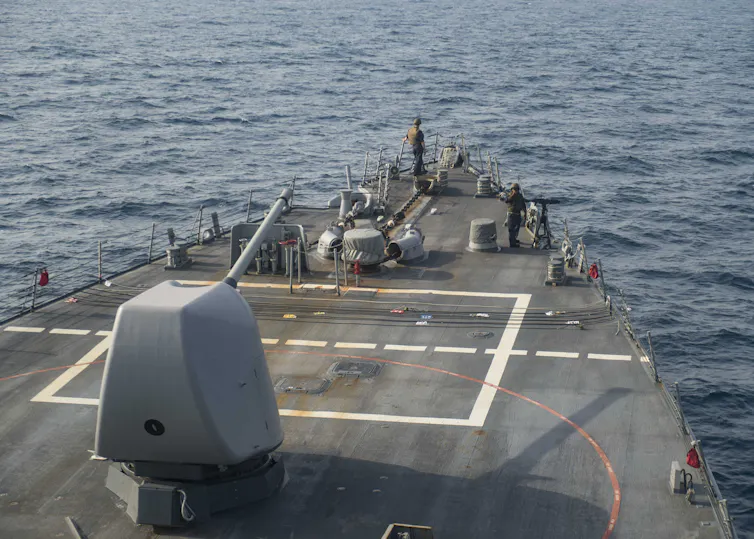
U.S. Navy personnel on the USS Stout, a guided missile destroyer, man their gunnery stations as the ship passes through the Strait of Bab-el-Mandeb in 2016. (United States Navy), CC BY-SA
This move overlaps with Turkish influence in Somalia, where the Turks have built close ties and taken on a major role in providing military and naval security. But Somaliland is a breakaway region, not an internationally recognized state. Israel’s recognition risks creating new tensions along the Somali coast, complicating the maritime space Turkey is helping to secure.
As in the eastern Mediterranean, the aim isn’t direct confrontation, but insertion into a complex regional landscape that adds new forces to the mix, diversifies alignments and complicates the consolidation of rival influence.
This is making the international environment inherently unstable and persistently hostile. Peace is not a durable end state, but a temporary and reversible condition. As a result, power — including the use of force — is treated not as a means to an end, but as the primary and only guarantee of survival.
By weakening states and keeping the Middle East and the eastern Mediterranean region divided, Israel is creating a situation where neither countries nor alliances can fully stabilize. With this approach, the Israeli advantage comes from managing or manipulating ongoing tensions — not resolving them.
Spyros A. Sofos does not work for, consult, own shares in or receive funding from any company or organisation that would benefit from this article, and has disclosed no relevant affiliations beyond their academic appointment.