Hormuz closure threatens the global food supply – why grocery price hikes are coming

Source: The Conversation – USA (2) – By Aya S. Chacar, Professor of International Business, Florida International University

Fertilizer scarcity and costs are just the beginning of the problems. Jim Watson/AFP via Getty Images

The global energy crisis caused by the closure of the Strait of Hormuz is only the beginning of the economic cost of the war with Iran.

I study how institutions affect businesses and supply chains, and I expect food prices to rise next, with high prices lasting even after whatever point hostilities end.

Along with about 20% of the world’s crude oil trade and a similar share of the world’s liquefied natural gas shipments, shipping traffic through the strait also carries roughly a third of internationally traded fertilizer, which is key to bountiful crops around the world.

Modern agriculture depends on precise timing of delivering nutrients to plants. When fertilizer arrives late or becomes too expensive to buy in sufficient quantities, farmers are left to either reduce the amount they use, plant fewer crops or switch to crops that need less fertilizer. Each option reduces overall productivity, cutting supplies of basic foods, feed for livestock and key ingredients used in a wide range of food products.

Ultimately, with corn prices rising, summer barbecues may taste a bit different or cost more. Corn on the cob may not be cheap, nor will corn-fed beef. In addition, many store-bought condiments, soft drinks and other food products are made with high-fructose corn syrup and will also cost more.
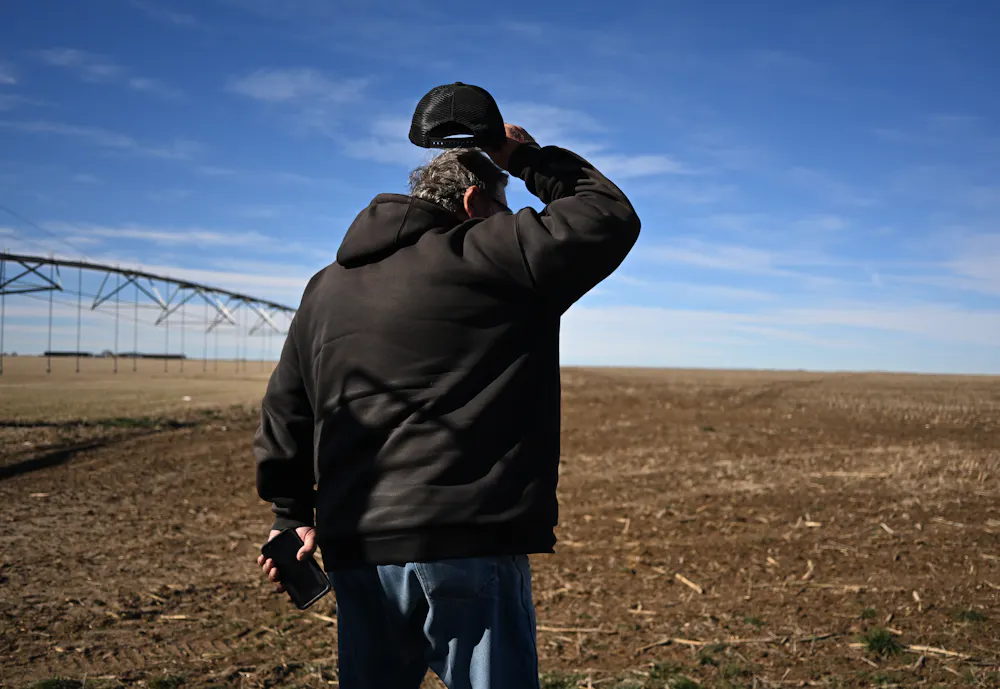
A man in a hoodie stands in a field, lifting his ballcap and scratching his head.
Farmers have hard decisions to make about what crops to plant and how much of each.
RJ Sangosti/MediaNews Group/The Denver Post via Getty Images

3 main crops, 3 nutrients needed

Three staple crops – corn, wheat and rice – supply more than half of the world’s dietary calories.

To maximize production, those crops need three main nutrients: nitrogen, phosphate and potassium. Nitrogen helps plants grow. Phosphorus helps transport energy within plant cells and is critical for early root growth and the formation of seeds and fruit. Potassium helps plants conserve water and boosts protein content.

The closure of the Strait of Hormuz has reduced the supply and increased the cost of all three.

Natural gas, which determines 70% to 90% of the cost of producing nitrogen fertilizer, has seen a 20% drop in production due to the war and price increases up to 70%. To preserve its own supplies, Russia has suspended exports of ammonium nitrate, another nitrogen source for fertilizer.

In a similar effort, China, the world’s largest phosphate producer, has blocked phosphate exports, removing 25% of the global supply.

Potash, the potassium-rich component of fertilizers, has also been in short supply in recent years, in part because of economic sanctions on Belarus and Russia, which are major potash producers.

As a consequence, fertilizer prices have risen globally. In the U.S., some fertilizers rose more than 40% in just one month after the war’s start in late February 2026.

An American farmer talks about the cost of fertilizer amid the war in Iran.

Affecting farmers first

Cereal plants absorb the vast majority of their nitrogen needs during their early growth. Applying fertilizer later in the growth cycle is less effective.

Reducing nitrogen application by 10% to 15%, or delaying application by two to four weeks, can reduce corn yields by 10% to 25%.

Producing less corn and wheat reduces not only food available for humans but also food for livestock. Increased fertilizer costs and reduced grain supplies increase the price of raising livestock, making meat and animal products more expensive.

When feed costs become unsustainable, farmers may be forced to kill or sell off the breeding cows and sows that represent the future of the food supply. In the U.S., a combination of persistent drought and high costs in 2022 forced producers to kill 13.3% of the national beef cow herd, the highest proportion ever. As a result, the U.S. beef cattle inventory shrank to its lowest level since 1962, a problem that restricts beef supplies for years.

Ultimately, the costs are passed to consumers. In 2012, when a historic Midwest drought slashed corn yields by 13%, it triggered a surge in feed prices, and U.S. poultry prices rose 20%.
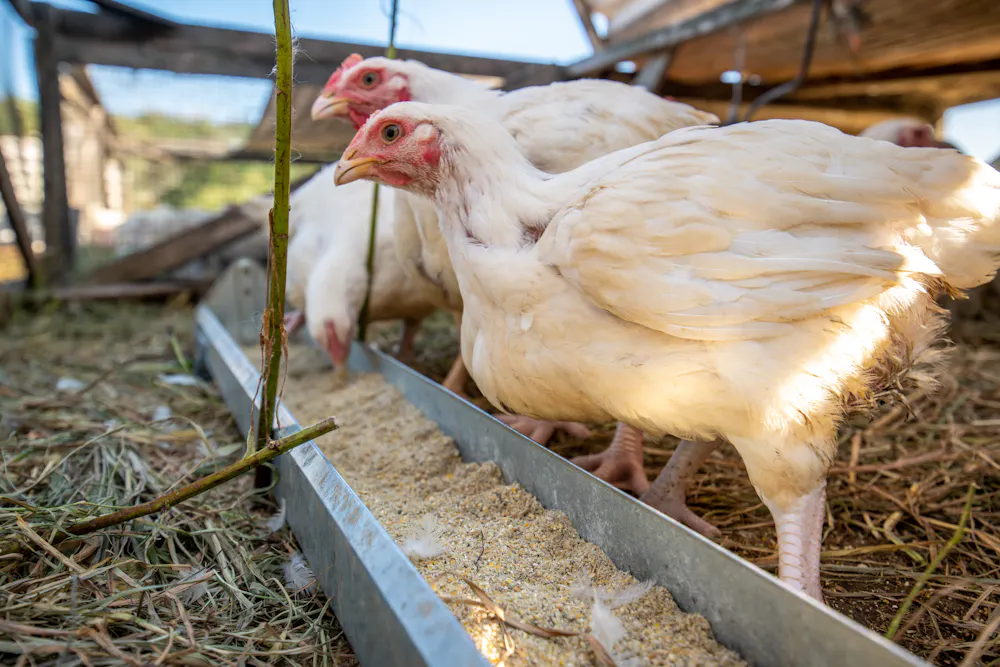
Chickens eat feed from a trough.
The cost of feeding chickens contributes to the cost of their meat.
Edwin Remsberg/VWPics/Universal Images Group via Getty Images

More money can’t fix this problem

In mid-March 2026, the U.S. fertilizer supply was around 75% of normal levels. That’s right at the beginning of the time when Corn Belt farmers typically prepare their soil for planting, including the first applications of fertilizer. Subsequent fertilizer applications typically come from mid-April to early May and between late May and mid-June.

Farmers who fear not being able to optimize their corn yields may decide to plant less corn or switch crops and plant soybeans, which need less fertilizer. Either would reduce the corn supply.

Government loan guarantees and aid packages may help farmers cover higher costs, but they cannot address timing if enough fertilizer simply isn’t available when it is needed.

Hitting home

American consumers aren’t facing the gas and food shortages or power outages other countries are seeing from the war, but they will be hit in the pocketbook. U.S. prices for gas and jet fuel are already climbing. The effects on the food supply take longer to appear, but they are coming.

Even when crops are bountiful in the U.S., consumers are not immune to global economic forces. A smaller 2026 crop, with rising demand for livestock feed in some of the most populous countries, including China and India, will put pressure on global corn prices, affecting everyone regardless of their nationality.

In March 2026, the U.S. Department of Agriculture used data from before the Iran war to project a 3.1% average increase for all food prices.

The question for consumers is how much of the rise in corn prices will be passed to the consumer, and how fast.

USDA research shows that the speed and extent of changes in food prices vary widely by food category and the level of processing involved in making the food. Other factors also play a role, such as inventory levels, perishability and market competition. When farm prices change, wholesale prices usually adjust within the first month, but retail prices often take longer – sometimes two to four months.
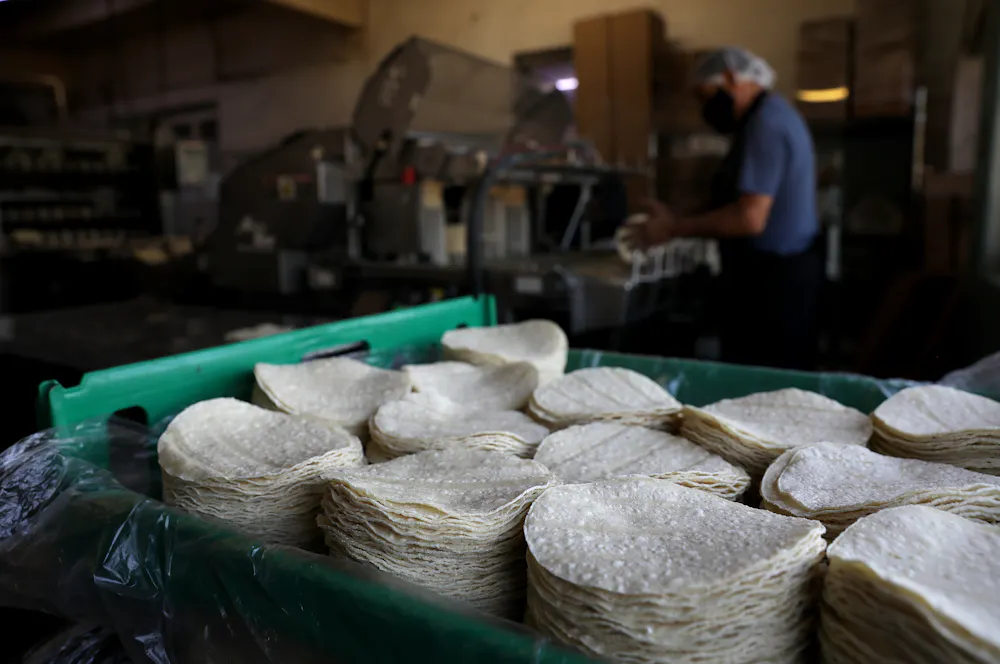
Stacks of round tortillas sit in a plastic carrying crate.
Corn tortilla prices rise relatively quickly when corn prices increase.
Christina House/Los Angeles Times via Getty Images

Corn tortillas and other relatively lightly processed corn foods are more likely to show price responses within a few months after corn prices increase. Adjustments to cereals or poultry prices will take a little longer. Changes in the cost of livestock products such as beef will take longer, because there are more steps between the purchase of feed corn and the sale of the meat to consumers.

Other indirect costs, related to the cost of fuel and packaging, tend to hit later. Producers often absorb the price increases in the short term, but some increases are already in the works. For instance, transport companies are adding fuel surcharges on freight shipments.

Food price hikes hit low-income households harder than high-income households, because people with lower incomes spend larger shares of their money on food and housing. For these households, even relatively affordable proteins, such as chicken, may become harder to purchase regularly.
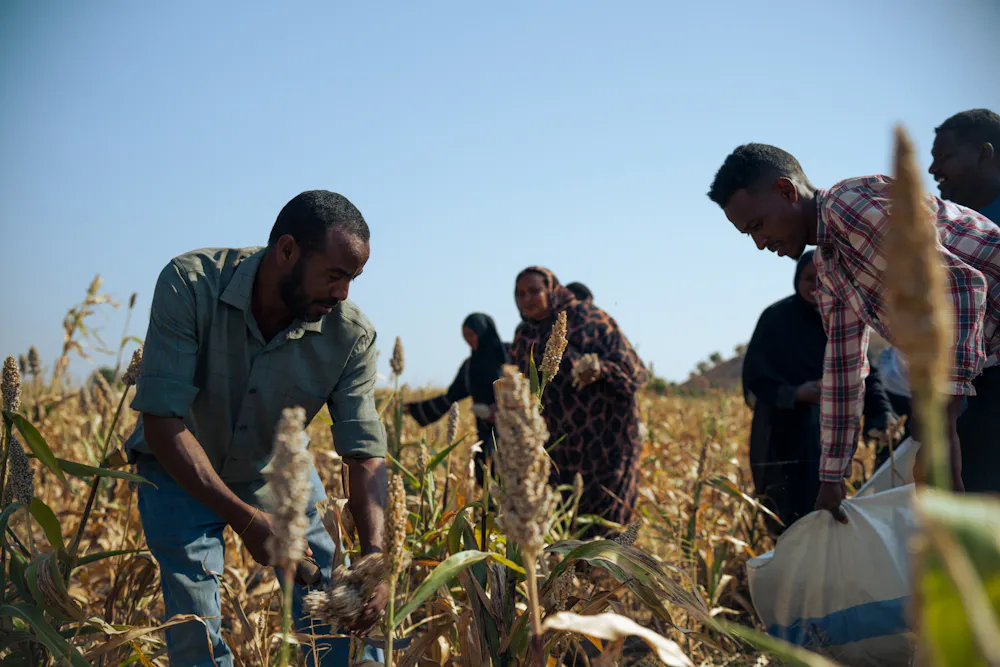
People in a field collect grain.
Farm workers in Sudan begin to harvest sorghum.
Tariq Ishaq Musa/Xinhua via Getty Images

A global food emergency

The cost and availability of fertilizer will affect the whole world. More than 300 million people worldwide already do not have enough food. The U.N. World Food Program predicts an additional 45 million could join them by the end of 2026 if the conflict in the Middle East continues into the middle of the year.

Crop yields in India and Brazil in 2026 are expected to be lower than normal. East African farmers
struggled to afford fertilizer even before the crisis and will likely have to make do with even less.

These problems may seem removed for most Americans, but food prices are global in nature, and people in the U.S. will soon face these additional costs of the war.

The Conversation

Aya S. Chacar does not work for, consult, own shares in or receive funding from any company or organization that would benefit from this article, and has disclosed no relevant affiliations beyond their academic appointment.

ref. Hormuz closure threatens the global food supply – why grocery price hikes are coming – https://theconversation.com/hormuz-closure-threatens-the-global-food-supply-why-grocery-price-hikes-are-coming-279899

Policing the grocery store checkout won’t fix Canada’s food retail crisis

Source: The Conversation – Canada – By Alissa Overend, Associate Professor, Department of Sociology, MacEwan University

Militarized surveillance systems are becoming the new normal in many Canadian grocery stores, marking a disturbing symptom of an already fraught food retail system.

At a FreshCo in Toronto and a Superstore in Calgary, staff have begun wearing body cameras in response to rising theft at self-checkouts, organized retail crime where high-value items such as meat are stolen and resold and increased food insecurity.

Surveillance systems in commercial retail are nothing new; cameras, mirrors and store design have long been used to deter shoplifting. But these newer, more militarized approaches seem both heavy-handed and misguided.

The new measures raise important questions about the camera’s effectiveness in theft detection, impacts on consumers and employees and freedom of information and privacy concerns.

Surveillance expands as theft rises

Despite the growing costs for employees and consumers, retailers say they are facing significant losses from retail crime, which the Retail Council of Canada has called a “national crisis.”

Retailers reported an average profit shrink of 1.5 per cent in 2024, which is almost double what it was in 2019. Grocers and retailers have both cited self-checkouts as a top contributor to this shrink.

Meanwhile, police-reported incidents of shoplifting are rising. Toronto police reported that 105 incidents of shoplifting goods over $5,000 occurred in 2024, up from just 32 in 2020. Winnipeg police reported a 46 per cent increase in retail theft in 2024 compared to the year prior.

In response, retailers are spending millions on police, security and other forms of surveillance. Superstore, for example, has spent more than $12 million in the last five years on special duty police officers to patrol checkouts. Walmart started using special duty officers in their Winnipeg stores in 2022, costing the U.S. conglomerate $1.4 million.

Persistent food insecurity

These developments cannot be separated from the fact that food insecurity in Canada is widespread and growing. About one-quarter of all Canadians find themselves food insecure, with disproportionately higher rates among Indigenous, Black, disabled, newcomer and senior populations.

This persists despite Canada having the ninth-largest global economy and despite the global food system producing more food now than at any time in history.

The problem is not a lack of food but a lack of affordable, equitable access to food. Food insecurity has been growing for decades, even as corporate food retailers report high profits.

At the same time, workers’ wages in the retail food sector remain stagnant. The industry relies heavily on migrant and immigrant labourers and routinely pays minimum wage. While the federal minimum wage was just raised to $18.15 per hour, it remains lower in some provinces, including $15 in Alberta.

For many workers, an hour’s wages barely covers the cost of a 10-ounce steak or its vegan equivalent. According to the Canada Food Price Report, Canadians are spending between three and five per cent more on groceries, with the highest increases seen in meat.

As fuel costs increase due to the U.S.-led invasion of Iran, grocery prices are likely to increase even more.

Rising profits for companies

Commercial food retail in Canada, and elsewhere around the world, is big business.

A handful of companies dominate the market. Loblaw Companies Ltd., whose parent company is led by CEO Galen Weston Jr., operates chains including Loblaws, Real Canadian Superstore, No Frills, Zehrs, T&T Supermarket and Shoppers Drug Mart. He was the third-wealthiest Canadian in 2025, with a net worth of $20.6 billion.

The company’s stock has more than tripled since the COVID-19 pandemic, with earnings up 11.6 per cent in 2025. This is despite paying out $500 million in a class-action settlement from a bread price-fixing scheme.


Read more:
Show me the money: Canada Bread penalty raises questions about criminal fines


The other “Big Five” food companies in Canada include Sobeys (that owns Safeway, IGA, FreshCo and Farm Boy), Metro (that owns Super C, Food Basics and Jean Coutu), Costco and Walmart. Together, the Big Five control roughly 80 per cent of the grocery market.

CTV news segment about the increase in retail workers wearing body cameras.

Rethinking food systems

The bottom line is that people are hungry and food is expensive. We’ve replaced human labour with automated self-checkouts. Misshapen vegetables are wasted at the farm due to strict grocery store specifications of shape and size.

Food is spoiled in transit or held up at borders. Grocery stores purposefully over-buy to give the sense of abundance in store aisles all while throwing a lot of it out.

The problem lies not in people ringing in organic bananas for the non-organic ones, but in the way we buy and sell food more broadly. Canadians are already fed up with the business-as-usual of large commercial retail grocery stores — perhaps the recent militarized surveillance might serve as a collective breaking point.

There are better alternatives: farmers’ markets, community supported agriculture and the mounting support for public grocery stores are all more sustainable on several social, ecological and economic markers.

Food should be a human right, not one protected by pricey surveillance systems to protect corporate profits. Our collective purchasing power can exercise the kinds of food systems we want, and the ones we can no longer tolerate.

The Conversation

Alissa Overend received funding from the Social Sciences and Humanities Research Council of Canada through a SSHRC Institutional Grant at MacEwan University.

ref. Policing the grocery store checkout won’t fix Canada’s food retail crisis – https://theconversation.com/policing-the-grocery-store-checkout-wont-fix-canadas-food-retail-crisis-279419

Understanding how plants pause and restart growth can help develop climate-resilient crops

Source: The Conversation – Canada – By Arif Ashraf, Assistant Professor, Department of Botany, University of British Columbia

When plants face biting cold, floods or parched soil, they can’t run away or seek shelter like animals. Instead, they have to develop ways to overcome and survive them until the weather improves.

Some plants do this by putting a pause on productivity until the weather improves. In our recently published research, we discovered which genes control the “pause-and-play” mechanism of plant growth and are key for the survival of Canada’s crops.

Our goal is to understand the genetic factors that control growth so they can eventually be used to improve the resilience of crops grown in Canada and around the world.

A changing climate means extreme weather events are becoming more frequent. These findings could help create climate-resilient, genetically engineered crops that can recover faster and more efficiently after climate shocks.

These plants might be more likely to complete their life cycle and produce food during the harvest season, even after experiencing snowstorms, heat waves or flooding.

How plants respond to stress

To get an idea of how plants tolerate stress, we measured root growth under a series of environmental stresses that Canadian and globally relevant crops commonly face throughout their life cycles. These included cold temperatures, salt stress and drought-like conditions. For our first experiments, we used thale cress (Arabidopsis thaliana).

a small green plant in a pot
A Brachypodium distachyon plant.
(Neil Harris/University of Alberta), CC BY-SA

Roots are particularly useful for this type of research because they grow continuously and respond quickly to environmental change.

By measuring root length over time, we could see when growth slowed down and when it resumed. We tested the root length in model organism.

We found that tested plants paused their root growth when exposed to cold or salt stress. When the stress was removed and the plants returned to normal growing conditions, root growth resumed as normal within about 24 hours.

However, plants did not respond the same way to every type of stress. We found that plants can recover from osmotic or drought stress, but it takes a little longer for them to do so. We referred to that dynamic as “pause and push” because plants need time to push through and recover.

To test whether the same stress response occurs in other plant species, we partnered with researchers from the United States Department of Agriculture. Together, we repeated the experiments using two wild grasses that are closely related to major cereal crops: brachypodium (Brachypodium distachyon) and annual ryegrass (Lolium multiflorum).

The grasses showed similar patterns of stress response and recovery. That suggests the mechanism that pauses and restarts growth may be shared across many plant species.

Pinpointing stress-recovery genes

Observing these dynamics is one thing, but how can scientists figure out what’s going on at the genetic and molecular level?

One common approach is to attach a fluorescent marker to genes of interest. Scientists often use a green fluorescent protein, originally discovered in jellyfish, that glows under specific light.

When this protein is inserted into a plant genome, researchers can fuse it to a gene of interest to see when and where that gene becomes active as it lights up inside cells.

We knew that the lack of growth during stress was due to a decrease in cell division, so we targeted genes related to cell division. Using fluorescent markers, we observed how the plant cells lit up differently in response to stress and stress recovery.

After counting thousands of cells for months, we could see certain genes were present in fewer cells when plants were under cold, drought and salt stress. However, within about 24 hours of being put back into optimal growth conditions, their numbers returned to normal.

One gene stood out in particular: Cyclin-dependent Kinase A;1 (CDKA;1). This gene helps regulate the cell cycle, the process that controls when cells divide and grow. A related gene named CDK1 exists in animals and humans, where it performs similar functions.

After performing more experiments targeting CDKA;1 in plants, we found that inhibiting the gene prevented plants from recovering from cold and salt stress. This suggests CDKA;1 plays a vital role in helping plants resume growth once environmental conditions stabilize.

Supporting food security

Our focus is on helping crops recover faster. We can’t stop heat waves or snowstorms. Pinpointing genes, however, can help plants recover from these events and still produce in time for harvest.

Understanding these genes opens the door to new approaches in crop breeding. Researchers could look for natural variants of these genes that already exist in crop populations. Traditional breeding programs could then select for varieties that recover faster after stress.

Another option is modern gene-editing tools such as CRISPR. This tool allows scientists to make precise changes to a plant’s DNA, including strengthening or adjusting genes involved in stress recovery.

As our research progresses, we hope to adjust the genetics of these Canadian crop varieties and create our own CRISPR-edited lines that are better able to cope with a changing climate.

Improving stress recovery could also expand where crops can be grown. Regions that currently experience unpredictable weather or short growing seasons may become more suitable for agriculture if crops can recover quickly after stress.

For Canada, this could help stabilize production in areas where climate variability is increasing. For the global food system, it could make crops better equipped to handle the environmental uncertainty expected in the coming decades.

By identifying the genes that allow plants to pause growth during stress and restart, we’re beginning to understand a critical survival strategy in plants. This knowledge can eventually help ensure crops continue to produce reliable harvests in a changing climate.

The Conversation

The authors do not work for, consult, own shares in or receive funding from any company or organisation that would benefit from this article, and have disclosed no relevant affiliations beyond their academic appointment.

ref. Understanding how plants pause and restart growth can help develop climate-resilient crops – https://theconversation.com/understanding-how-plants-pause-and-restart-growth-can-help-develop-climate-resilient-crops-278392

Kenya’s counties get budgets to undo inequality – how it’s helped households

Source: The Conversation – Africa – By Frederick Kibon Changwony, Lecturer in Accounting & Finance, University of Stirling

Kenya devolved power and public spending to 47 counties in 2013. This was in line with a global trend in which governments were pushing power and resources down to local levels in the hope that decisions made closer to people would lead to better outcomes.

The logic was straightforward: local governments should be better placed to understand and respond to local needs.

Kenya’s version of this – set out in its 2010 constitution and implemented three years later – was particularly ambitious. It guaranteed counties a share of national revenue and directed extra funds to 14 historically marginalised counties through an equity-based formula and an “equalisation fund”.

Before devolution, the differences between marginalised counties and the 33 others were large. For example, households in marginalised counties spent about half as much as those in the rest of the country – Sh3,250 (US$25) vs Sh6,149 (US$47) before the reform – on total consumption. This made addressing regional inequality a priority.

The constitution’s aim was to bring basic services, such as water, roads, electricity and healthcare, closer to national standards in areas that had long lagged behind.

Kenya counties classified by marginalisation

So did the extra county shillings change everyday life? Did households actually become better off?

I study public finance, regional inequality and behavioural finance, with a focus on how fiscal reforms and behaviour shape household financial decisions and everyday welfare. To answer these questions, I analysed four waves of Kenya’s nationally representative FinAccess Household Survey. This covered the period before the constitutional changes (2009, 2013) and after devolution (2015, 2018).

I compared trends in the 14 marginalised counties with those in the other 33 counties. I used a “before‑after, here‑there” method that evaluates how outcomes change over time between two groups. This approach helped isolate the effects of devolution from other changes happening in the economy.

The overall picture suggests that households in marginalised regions are now better off. Total household consumption more than doubled after devolution, rising from Sh3,250 (US$25) before 2013 to Sh7,549 (US$58) afterwards. By contrast, other counties saw a much smaller increase – from Sh6,149 (US$47) to Sh8,526 (US$66).

Spending on education increased by roughly 37%, and medical spending by about 43%. Rent went up by around 39%, while spending on utilities – such as electricity, water and cooking fuel – rose by about 29%. Even everyday expenses like mobile airtime increased by around 16%.

In effect, households in marginalised regions went from spending just over half of what better-off counties spent before 2013 to almost catching up afterwards. This before-and-after shift shows how much ground marginalised counties gained once devolution took effect.

However, the gains were not evenly distributed. Poorer households saw the biggest proportional increases in overall consumption. Better-off households, meanwhile, increased spending largely on education and healthcare.

Nevertheless, the changes shown in my research point to a meaningful improvement in households’ living standards over a relatively short period.

This shows Kenya’s devolution did not just move money between levels of government. It changed what households can afford, ranging from school fees to healthcare, housing, utilities and everyday connectivity.

The devolution debate and spending power

Public debate about devolution in Kenya often focuses on who gets what: whether funds are shared fairly, whether counties misuse money, or whether bigger budgets lead to better services.

These are important questions. But they tend to focus on inputs (how much money is allocated) or visible outputs (such as new roads or clinics).

For households, progress shows up in something more immediate: spending power. Can families put food on the table? Pay school fees? Afford medicine? Stay connected?

By looking at what households actually spent, my research showed that Kenya’s equity-focused devolution did more than shift budget lines. It translated into tangible improvements in everyday life in places that had long been left behind.

The results were clear. Households in marginalised counties saw large and broad-based increases in spending compared with households in the 33 other counties.

Total household consumption rose by about 43% in marginalised counties. Education spending in marginalised counties rose sharply, too, from Sh1,140 (US$9) before the reform to Sh4,017 (US$31) afterwards. Medical spending increased from Sh459 (US$4)to Sh1,094 (US$8).

Two main factors explain most of the increases in spending.

First, marginalised counties spent much more on services after 2013. On average, they spent roughly twice as much per person on county operations and development projects. This reflects both the higher transfers they received and the speed with which they converted funds into actual services.

Second, household incomes rose partly because devolution created local jobs and business opportunities through public contracts.

There were, however, important nuances.

Rising spending on utilities, for example, can reflect both progress and pressure. New connections to electricity and water improve quality of life, but they also bring monthly bills.

Kenya’s institutional design likely helped too.

Rules-based transfers (meaning money allocated according to a fixed, transparent formula rather than political negotiations) and the Equalisation Fund (a dedicated pot of money for areas with the greatest service gaps) reduced political discretion in how money was allocated. This resulted in more predictable funding for counties, less room for interference, and a clearer link between need and resources.

In addition, Kenya’s strong mobile money system made it easier for households to respond to new opportunities. People could move money quickly and safely, even in remote areas – allowing them to handle shocks, invest and take advantage of local economic activity generated by county spending. Evidence shows that mobile money transfer service M-Pesa, launched in 2007, has helped lift people out of poverty over time.

What should happen next?

The challenge now is to make those gains last.

First, the equity-based approach to sharing revenue should be protected and regularly updated. Allocation rules need to reflect current data so that funds continue to target real gaps.

The Equalisation Fund is due to expire in 2033. Unless it’s renewed, policymakers face a critical decision about whether, and how, to sustain support for historically marginalised areas.

Second, a small share of transfers could be linked to performance. Counties should be rewarded if they improve revenue collection without overburdening residents, publish timely financial reports, and strengthen transparency in procurement.

This would encourage better financial management while keeping equity at the centre.

Third, policymakers should pay attention to the cost of new services. As more households connect to electricity and water, temporary support, such as lifeline tariffs or targeted subsidies, can help ensure that poorer families are not priced out.

Finally, investment in county capacity and better data is essential. Strong local institutions are needed to plan, deliver and maintain services. Add to this a survey that follows the same households over time, like South Africa’s National Income Dynamics Study or the Indonesia Family Life Survey, so Kenya can track mobility and long‑run reform effects directly.

For other African countries considering decentralisation, Kenya’s experience suggests that design matters.

Predictable transfers, equity-focused allocation and local capacity can turn fiscal reforms into real gains in household welfare.

The Conversation

Frederick Kibon Changwony does not work for, consult, own shares in or receive funding from any company or organisation that would benefit from this article, and has disclosed no relevant affiliations beyond their academic appointment.

ref. Kenya’s counties get budgets to undo inequality – how it’s helped households – https://theconversation.com/kenyas-counties-get-budgets-to-undo-inequality-how-its-helped-households-279369

How to eat an elephant: fossil find in Tanzania shows oldest signs of butchering these giant mammals

Source: The Conversation – Africa (2) – By Manuel Domínguez-Rodrigo, Professor of Anthropology, Rice University

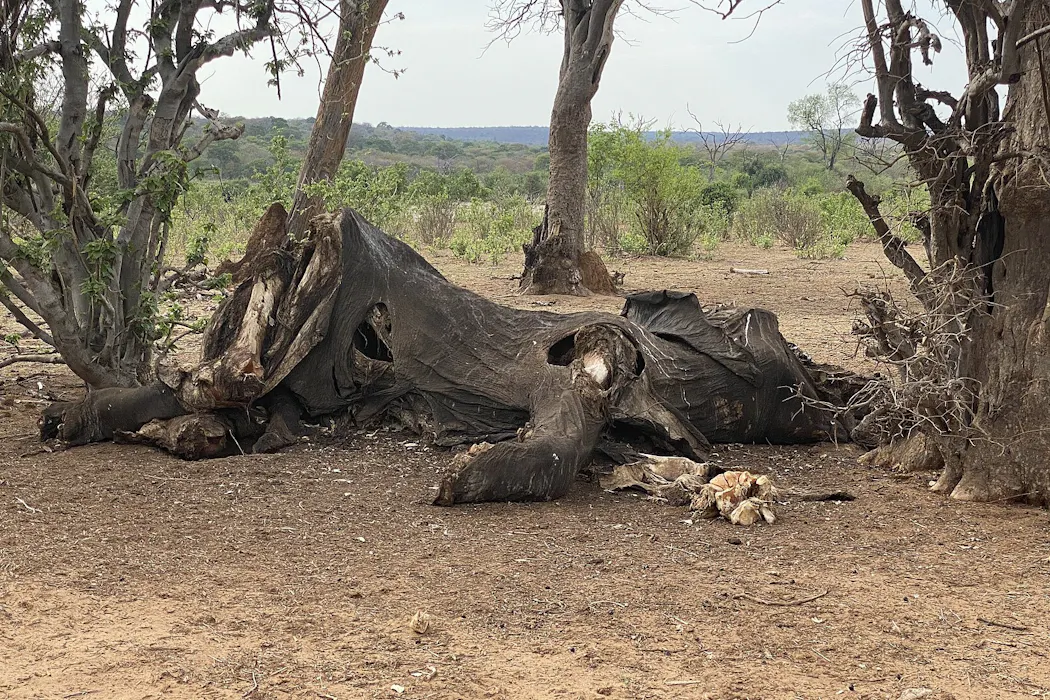
Carcass of adult African elephant. By Geraldshields11 – Own work, CC BY-SA 4.0, , CC BY-SA

Imagine a creature nearly twice the size of a modern African elephant (which can weigh up to 6,000kg. This was Elephas (Paleoxodon) recki, a prehistoric titan that roamed the landscape of what is now Tanzania nearly two million years ago. Now, imagine a group of our ancestors standing over its carcass, then butchering it and eating it.

For decades, archaeologists have debated when the hominin ancestors of humans first started eating megafauna – animals weighing more than 1,000kg.

In a new study, our team of archaeologists studying the evolution of the earliest humans in Africa has identified one of the earliest cases of elephant butchery.

This was at Olduvai Gorge in Tanzania, a site famous for containing some of the oldest and best preserved remains of our human ancestors. Dating back to 1.80 million years ago, this discovery at the site known as EAK reveals that our ancestors were engaging with megafauna substantially earlier than previously thought (about 1.5 million years ago was the previous estimate at Olduvai), and in a more sophisticated way.

This finding suggests that hominins (most likely, Homo erectus) may have been living in large social groups at this period, probably because their brains were developing and demanding higher-calorie diets rich in fatty acids.

‘Smoking guns’

Part of the reason our ancient diet has been debated is that it is not easy to find evidence of how much animal food early humans were eating and how they were acquiring it.

In traditional archaeology, the “smoking gun” for butchery (cutting up carcasses) is a cut mark left on a bone by a stone tool. However, when dealing with big animals like elephants, these marks are difficult to find. An elephant’s skin is several centimetres thick, and its muscle mass is so vast that a butcher’s tool might never touch the bone. Furthermore, millions of years of burial can weather the bone surface, erasing any subtle traces. And if a bone is deposited in an abrasive sediment, trampling by other animals may generate marks on bones that look like cut marks.

At the EAK site, we found the partial skeleton of a single Elephas recki individual in the same place as Oldowan stone tools. But to prove that this wasn’t just a natural death or the work of scavengers, we couldn’t rely on bone marks. Instead, we turned to a new kind of detective work: spatial taphonomy. This is the study of how stone artefacts and bones occur spatially on the same site. We also turned to more direct evidence: bones from those fossilised elephants that had been splintered while they were fresh (“green breaks”).

The geometry of a carcass

To solve this 1.8-million-year-old mystery, we analysed the way the bones were scattered across the site. Every agent that interacts with a carcass – whether it’s a pride of lions, a group of hyenas, or a band of humans – leaves a unique “spatial fingerprint”. Lions and hyenas tend to drag bones away, scattering them in predictable patterns based on their weight and the amount of attached meat. Natural deaths, like an elephant dying in a swamp, result in a different, more localised skeletal “collapse”.

By using advanced spatial statistics, and later comparing the EAK site to several modern elephant carcasses that we studied in Botswana (not yet published), we found that the spatial configuration at EAK was unique. The clustering of the bones and the density of the stone tools among them did not match the “random” or “scavenger-driven” models. Instead, it reflected a focused, high-intensity processing event. The spatial signature was a match for hominin butchery, which has also been documented at Olduvai sites that are half a million years younger.

This was confirmed by the presence of green-broken long bones not just at EAK, but in several locations in the landscape where other elephant and hippopotamus carcasses were butchered. Today, only humans can break elephant long bone shafts; not even spotted hyenas, which have very powerful jaws, can do it.

Glimpses of this behaviour can be detected at other sites too. For example, a cut-marked bone fragment of a large animal (probably a hippopotamus) was documented at El-Kherba (Algeria) dated to 1.78 million years ago.

This intensive and repeated discovery of multiple elephant and hippopotamus carcasses butchered at different landscape locations indicates that humans were butchering the remains of large animals, whether hunted or scavenged.

Why does an elephant meal matter?

This discovery isn’t just about a prehistoric menu; it’s about the evolution of the human brain and social structure. There is a long-standing theory in paleoanthropology called the “expensive tissue hypothesis”. It suggests that as our ancestors’ brains grew larger, they required a massive increase in high-quality calories, specifically fat and protein. Large mammals like elephants are essentially giant “packages” of these calories. Processing even a single elephant provides a caloric windfall that could sustain a group for weeks.

Butchering an elephant is a monumental task, however. It requires sharp stone tools and, most importantly, social cooperation. Our ancestors had to work together to defend the carcass from predators like sabre-toothed cats and giant hyenas, while others worked to extract the meat and marrow.

This suggests that even 1.8 million years ago, our ancestors already possessed a level of social organisation and environmental awareness that was truly “human”.

The discovery also has another dimension. Humans at that time, like modern carnivores, consumed animals whose size was related to their own group size. Small prides of lions eat wildebeests; larger prides eat buffalo and in some places even juvenile elephants. The evidence that those early humans were exploiting large animals comes in parallel with evidence that they were living in much larger sites than before, probably reflecting bigger group sizes.

Why early humans started living in large groups at that time remains to be explained, but this indicates that they certainly needed more food.

A shift in the ecosystem

The EAK site also tells us about the environment. By analysing the tiny fossils of plants and microscopic animals found in the same soil layers, we reconstructed a landscape that was transitioning from a lush, wooded lake margin to a more open, grassy savanna. Our ancestors were already eating smaller game. There is evidence that two million years ago, they were hunting small and medium-sized animals (like gazelles and waterbucks). A little earlier, they began using technology (stone tools) to bypass their biological limitations.


Read more:
Large mammals shaped the evolution of humans: here’s why it happened in Africa


The evidence from Olduvai Gorge shows that our ancestors were remarkably adaptable, capable of thriving in changing climates by developing new behaviours.

As we look at the spatial layout of these ancient remains, we aren’t just looking at the bones of an extinct elephant. We are looking at the traces of a pivotal moment in our own history – when a small group of hominins looked at a giant and saw not just a threat, but a key to their survival.

The Conversation

Manuel Domínguez-Rodrigo does not work for, consult, own shares in or receive funding from any company or organisation that would benefit from this article, and has disclosed no relevant affiliations beyond their academic appointment.

ref. How to eat an elephant: fossil find in Tanzania shows oldest signs of butchering these giant mammals – https://theconversation.com/how-to-eat-an-elephant-fossil-find-in-tanzania-shows-oldest-signs-of-butchering-these-giant-mammals-276907

Teenagers and younger kids are learning coded predator phrases like ‘MAP’ online, long before their parents have even heard of it

Source: The Conversation – USA (2) – By Sharlette A. Kellum, Associate Professor of Criminal Justice, Texas Southern University

Teenagers and children may encounter terms like MAP in memes, comments or other ways online. Catherine Falls Commercial

When I checked my 10-year-old daughter’s TikTok messages in early February 2026, I expected to find the usual mix of dance challenges, school jokes and anime clips. Instead, I saw a stranger ask her, “Do you like children?” She responded to the stranger: “I’m not a MAP.”

I had never heard the term before. When I asked her what “MAP” meant, she simply answered that it stands for minor-attracted person. In that moment, I realized something unsettling but important: Children are encountering coded language online long before many parents even know it exists.

Why I’m writing about this

In my broader research on online harms to children and teens, I examine how the design and governance of websites and apps influence real‑world safety outcomes.

My forthcoming research explores how social media platforms, messaging apps and gaming communities succeed and fail at protecting young people from grooming attempts, unwanted contact and other forms of online exploitation.

That’s why my daughter’s response stopped me cold.

Despite months of research on how major digital platforms like TikTok, Instagram and YouTube shape online safety, I had never encountered the term MAP. However, after only two months of chatting on TikTok, she had.

The terms parents should know

MAP is a term that appears in some academic literature related to child protection policy and sexual exploitation prevention, and in online spaces such as forums, Reddit communities and niche social media groups. But it remains unfamiliar to many parents and caregivers.

Fact-checking organizations like Snopes have addressed the term MAP repeatedly because of how often it surfaces without explanation.

MAP exists within a wider ecosystem of euphemisms and coded references. Being able to recognize these terms early can help parents identify potentially dangerous interactions and understand when someone online may be attempting to mask harmful intent. Awareness of this language gives adults a clearer sense of when to step in and support their children’s safety on social media.

Parents and their children may see or hear these terms on popular apps and sites like TikTok, YouTube, Instagram, Discord and Reddit. These terms include:

NOMAP/Non-offending MAP and Anti contact MAP: Labels used by people who identify as minor attracted and claim they do not act on their attraction to children but still seek legitimacy or community.

764, or 7 6 4: A numerical code used in certain forums, including niche Reddit threads and specialized message boards, to signal attraction to minors without using explicit language.

Age of Attraction, or AOA: A term used by MAPs to relay their age preference – typically starting at 11 years old.

Adult-Minor Sexual Contact, or AMSC: A term used by people who believe children should have sexual autonomy and can decide whether they want to engage in sexual activity with an adult – a position widely rejected by child protection experts.

Adult Friend and Young Friend, or AF/YF: Identifies people that are in MAP relationships.

The outline of a teenage girl is seen in a dark room, as she looks at a phone in her hands.
One in five teenagers say they are on social media platforms like TikTok almost constantly.
Spencer Platt/Getty Images

Why kids encounter this language first

Children and teens spend substantial amounts of time online. A 2025 Pew Research Center survey found that roughly 1 in 5 U.S. teens say they are on platforms such as TikTok and YouTube almost constantly, with YouTube, TikTok, Instagram and Snapchat among the most widely used platforms.

Young people are remarkably good at picking up meaning from context. They notice tone, repetition and how others react. They may not fully understand where a term came from, but they understand how it functions socially, meaning what it signals, when it’s a joke and when it’s a warning.

Journalists and linguists describe this phenomenon as algospeak: language shaped by algorithmic moderation rather than clarity or transparency.

Adults, by contrast, often encounter these terms only after something alarming happens. By then, the language may already feel normalized to kids.

How harmful interactions slip past moderation

Most major social media platforms rely heavily on automated moderation systems. These systems are effective at catching explicit words or previously flagged phrases.

Research and reporting show that when moderation falls behind evolving terminology, harmful interactions – especially those involving adults initiating contact with children or teens – often follow a predictable progression:

The first step includes people using euphemisms instead of explicit terms. “MAP” is less likely to trigger moderation or be flagged for removal than the word “pedophile” it often replaces.

People also often use numbers or emojis to communicate their meaning indirectly. Codes like “764” or certain emoji combinations can signal meaning without using recognizable words.

Some people embed terms in memes, jokes or ironic commentary. This makes harmful language appear harmless or funny.

Other people use aesthetic camouflage, meaning anime avatars, pastel color schemes or cute usernames to appear harmless or youth-friendly.

Adults may also move conversations to private messages. Initial contact often happens in public comments, but the real conversation shifts to private direct messages, or DMs.

Finally, another warning sign is when people online create backup accounts. When one account is flagged, another appears quickly.

Proactive parental education

Most online safety advice is reactive: Adults are encouraged to respond after a term appears or after a child feels uncomfortable.

Research increasingly shows that effective protection often begins earlier, with parents helping children understand how digital environments work. Studies on youth digital literacy suggest that children benefit from understanding that algorithms reward attention, repetition and engagement rather than safety.

Knowing that the app thinks you like something if you stop and watch it helps young users see content as something pushed toward them, not something they sought out.

Some families introduce general conversations about coded language early during late elementary or early middle school. Discussing why people use euphemisms online prepares children to pause and ask questions when unfamiliar terms appear. Research on parental mediation also finds that rehearsed responses help children disengage from uncomfortable interactions. Simple scripts such as “I don’t want to talk about that,” “I’m blocking you” or “I’m logging off now” can help reduce hesitation.

Parents spending time with their kids as they interact with others on apps and websites – not to police them but to interpret what they are seeing – can also help children and teens learn how to analyze digital behavior the same way they analyze peer pressure offline.

Studies also show that children and teens who understand they don’t owe strangers politeness, personal details or continued conversation are less vulnerable to manipulation.

Awareness, not alarm, is a powerful tool for families navigating online spaces where harmful language and intent are often hidden in plain sight. When adults stay engaged and proactive, children are better equipped to recognize when something feels wrong and to talk about it with the people they trust.

The Conversation

Sharlette A. Kellum does not work for, consult, own shares in or receive funding from any company or organization that would benefit from this article, and has disclosed no relevant affiliations beyond their academic appointment.

ref. Teenagers and younger kids are learning coded predator phrases like ‘MAP’ online, long before their parents have even heard of it – https://theconversation.com/teenagers-and-younger-kids-are-learning-coded-predator-phrases-like-map-online-long-before-their-parents-have-even-heard-of-it-277460

What gig workers and employees who get tips need to know about the new no-tax-on-tips tax break

Source: The Conversation – USA (2) – By Annette Nellen, Professor of Tax and Accounting, San José State University

Gig workers, including DoorDash delivery people, are eligible for a new tax break on their tips. Tom Williams/CQ-Roll Call, Inc via Getty Images

About 1 in 10 American workers are earning a living as a gig worker. That means they find their customers through Lyft, DoorDash, TaskRabbit and other digital platforms, or do another form of what the IRS and others call “on-demand work.”

As a certified public accountant, attorney and tax professor, I study how new tax rules affect businesses and individuals, as well as the complexities that narrowly tailored tax breaks that apply to only certain groups of taxpayers bring about.

The big tax reform package that President Donald Trump signed into law in July 2025 included two changes that affect many gig workers. One is a new tax break on money that workers earn through tips, whether they are self-employed or work as an employee. The other is a change to the rules guiding the information that gig workers and the IRS must receive about how much workers earn from platforms like Uber.

Maximum deduction is $25,000

Trump promised a new tax deduction for tips during his 2024 presidential campaign. Former Vice President Kamala Harris, his opponent, echoed that pledge, but she paired it with a pledge to double the federal minimum wage to US$15 an hour.

This new deduction allows up to $25,000 in tip income to be subtracted from a worker’s taxable income during the 2025, 2026, 2027 and 2028 tax years. The new tax break can provide significant savings for some employees and self-employed people.

The savings will vary widely depending on income.

For example, a tipped worker in the 24% tax bracket eligible for the maximum $25,000 tip deduction would save $6,000 on their yearly tax bill. People who earn less and are in a lower tax bracket, and who earn less in tips than the maximum deduction allowed, would not save as much.

An example of that would be a tipped worker in a 12% tax bracket who earns $7,000 through tips. They would save only $840 on their taxes after deducting their tip income. But this is a savings other workers who earn the same amount of income – but without any of it in tips – will not receive.

The new tax break is computed and reported on a new federal form, Schedule 1-A, Additional Deductions.

House Republicans estimate that this tax break will, on average, save tipped workers $1,300 a year.

Rules and regulations

As with all tax breaks, there are lots of rules in place that can determine if someone is eligible for a deduction, and if so, how big.

Only restaurant servers, barbers, house cleaners, babysitters and other workers in occupations where tips are customary are eligible for the tip-related tax break. As required by Congress, the IRS created a list of traditionally tipped occupations. It includes rideshare drivers, pet sitters and several others.

Customers must have voluntarily paid all tax-deductible tips.

That means if a gig worker or their employer computes a tip amount and requires customers to pay it, that tip isn’t tax-deductible. Also, the tip must be paid in cash or by credit, debit or gift card.

Tips paid with cryptocurrency, lottery tickets or any other form of property don’t generate a tip deduction.

A barber gives a man a haircut.
Workers in industries where tips are customary may be able to obtain this new tax break, whether they are self-employed or hold a steady job.
Brandon Bell/Getty Images

Tips must be reported to the workers and IRS

Self-employed people will need to confirm they received a 1099 form and that their tip income is included in the total income shown on that form. For 2025, they will need to use their own records to determine how much tip income they earned, only counting tips that customers voluntarily paid. Gig workers should be able to find this detail in the records the platform company keeps in the worker’s online account.

Gig workers who find customers through online platforms usually receive a Form 1099-K from those companies, which shows the total amount charged to all customers – including tips – before the platform company’s fee is subtracted.

For 2025, employers and platforms that issue 1099 forms to gig workers do not have to separately show the tip income on the 1099 forms. But they will need to do so in 2026, 2027 and 2028.

An exception to the new rule

Self-employed workers need to be aware of a restriction on the new no-tax-on-tips rule: You can’t deduct so much in tips from your taxable income that it results in a loss for your business.

Many self-employed people do earn enough income to get the $25,000 maximum tip deduction, assuming they have at least $25,000 of qualified tip income. But others with high expenses relative to what they earn may not be able to deduct all of their tip income.

Another restriction that some tip earners may soon face is that they can’t earn tips in what Congress calls a “specified service trade or business,” such as performing arts or a business where the reputation or skill of the owner is a significant aspect of the business.

For example, a self-employed pianist who gets tips when they play at a bar still has to pay tax on their tips as was required for everyone prior to 2025 – no tip deduction.

The IRS plans to issue more details on this restriction in 2026, but in the meantime, it can be ignored for 2025, and that hypothetical pianist can deduct the tips they earned in 2025 up to $25,000.

Here are three more caveats:

Only workers who have Social Security numbers can deduct tips from their taxable income.

Married workers must file as married filing jointly, rather than separately.

Finally, single people with incomes over $150,000 and married couples earning more than $300,000 will see their tip income deduction phase down.

New reporting thresholds

Gig workers are also affected by another change in the tax and spending package of 2025.

As noted earlier, Form 1099-K is the typical reporting form gig workers receive from platforms that handle the collection of payments from customers and transfer the worker’s share to them. As of 2025, the gig work company only needs to issue the form to the worker and to the IRS if they processed payments for the worker that exceeded $20,000 and involved more than 200 transactions.

Before 2025, these companies, as well as payment systems like Venmo and PayPal, were required to issue the 1099-K form if over $600 of payments were processed for the sale of goods and services, regardless of how many transactions occurred.

A few states set the thresholds for issuing a 1099-K form below what the federal government mandates. For example, workers making at least $600 through a platform in Maryland and Virginia must be issued a 1099-K.

Uber, Lyft and other platforms can voluntarily issue a Form 1099-K that has a total of the income the worker earned that’s below the filing threshold. Because a tip income deduction is only allowed if the tips are reported on a 1099 form, it is likely that platform companies will issue the forms to all gig workers who found work through them so the workers can claim the tip deduction.

What’s staying the same

To be sure, some things have not changed for gig workers. Because they are self-employed, they can deduct what they spend on their businesses, such as software subscriptions and travel, to lower their taxable income – reducing what they spend on taxes.

But unlike employees who pay income taxes throughout the year through payments their employers withhold from every paycheck to cover their federal income, Social Security and Medicare taxes, self-employed Americans must compute and make quarterly estimated tax payments.

Also, self-employed workers can still claim a deduction for the miles they drive for work, which rose from 70 cents per mile in 2025 to 72.5 cents in 2026. Additional tax deductions for the self-employed include any insurance needed to cover their business, and some retirement plan options.

Many gig workers will find that their state income tax bills mostly stay the same. That’s because some states, such as California and Massachusetts, don’t allow the deduction of income from tips on state income tax returns.

Like most tax breaks, the new deduction for tips can be more complicated than you might expect, particularly for self-employed people. But the IRS does offer some resources that can help gig workers, and others eligible to claim it, compute what they can or can’t deduct from their taxable income – at least until tax rules change again.

The Conversation

Annette Nellen does not work for, consult, own shares in or receive funding from any company or organization that would benefit from this article, and has disclosed no relevant affiliations beyond their academic appointment.

ref. What gig workers and employees who get tips need to know about the new no-tax-on-tips tax break – https://theconversation.com/what-gig-workers-and-employees-who-get-tips-need-to-know-about-the-new-no-tax-on-tips-tax-break-276824

What I learned from analyzing 789 ‘Shark Tank’ pitches: Narcissists get funding if they’re not arrogant or defensive

Source: The Conversation – USA (2) – By Paul Sanchez Ruiz, Professor of Management and Entrepreneurship, Iowa State University

On ‘Shark Tank,’ the ‘sharks,’ or investors, hear pitches from entrepreneurs to invest in their business. Courtesy of ABC

Entrepreneurs displaying narcissistic behavior are better able to convince investors to give them money when their grandiosity comes across as confidence as opposed to defensiveness or arrogance.

That’s what we learned from watching 12 seasons of the popular reality TV show “Shark Tank” to better understand how an entrepreneur’s psychological profile affects their ability to secure funding.

My research focuses on how entrepreneurs respond to challenges, including how personality affects their work. My colleagues and I based our study off the concept that there are two distinct “flavors” of narcissism: narcissistic admiration and narcissistic rivalry.

Narcissistic admiration means wanting others to like you and think highly of you, while its more contentious counterpart, narcissistic rivalry, refers to putting others down to feel better about yourself.

Our research, published in Organization Science last year, analyzed 789 pitches featured on “Shark Tank.” For each pitch in our sample, professional psychologists used a validated psychometric scale to score the founder-CEO’s admiration and rivalry behaviors. We then measured investors’ immediate reactions by analyzing the emotional tone of their response – how positive or negative their language was – and linked that sentiment to funding outcomes.

Narcissism was then measured for each CEO using our coding approach, producing continuous scores that range from lower to higher levels of narcissistic admiration and rivalry. Our analyses leverage this variation, particularly higher levels, but the sample itself was not constructed based on narcissism.

We concluded that founders who displayed narcissistic admiration were more likely to secure funding.

For example, in a pitch, it’s the charming founder weaving a compelling story about the company (“Let me impress you”) and the future (“I can lead us there”).

Meanwhile, founders displaying narcissistic rivalry were less likely to nail down a deal, even if their business plan was solid. Their defensive style can look like arrogance or hostility. In pitches we reviewed, this was the founder who bristled at questions (“Don’t challenge me”) or talked down to the investor.

In other words: Not all “confidence” plays the same in the pitch room.

Why it matters

Narcissism is common among leaders in executive roles, and it’s often treated as either a secret advantage or a dangerous flaw. Our findings suggest the more useful question is: Which version shows up when the pressure is on?

“Shark Tank” offers a rare window into the inner workings of early-stage investing. Entrepreneurs make short pitches to experienced investors, who weigh market trends and financial projections that may be only educated guesses. The products are sometimes still in the prototype stage.

The investors, or “sharks,” must rely on quick interpersonal cues about the founder, and the pitch itself captures the interaction they are reacting to in the moment. Then there is an observable outcome: deal or no deal, and the amount invested.

For entrepreneurs, confidence and bold vision can be assets, but only when paired with openness and composure. Investors seem to respond well to founders who can sell a big idea without turning challenging questions into showdowns.

And this isn’t just about reality television. Venture capital meetings, accelerator demo days and even corporate board presentations often hinge on short, high-stakes interactions where impressions of the leader quickly become impressions of the venture.

What’s next

Going forward, we want to test whether the same dynamics hold in less public settings, such as private venture capital meetings where the camera isn’t running.

We also want to understand whether rivalry-based behavior is ever rewarded (for example, in highly adversarial negotiations), and whether different investors interpret the same behavior differently.

The Research Brief is a short take on interesting academic work.

The Conversation

Paul Sanchez Ruiz does not work for, consult, own shares in or receive funding from any company or organization that would benefit from this article, and has disclosed no relevant affiliations beyond their academic appointment.

ref. What I learned from analyzing 789 ‘Shark Tank’ pitches: Narcissists get funding if they’re not arrogant or defensive – https://theconversation.com/what-i-learned-from-analyzing-789-shark-tank-pitches-narcissists-get-funding-if-theyre-not-arrogant-or-defensive-276803

What is CREC and how does it shape Pete Hegseth’s religious rhetoric?

Source: The Conversation – USA (3) – By Samuel Perry, Associate Professor of Rhetoric, Baylor University

Defense Secretary Pete Hegseth speaks to members of the media at the Pentagon in Washington D.C. on March 31, 2026. AP Photo/Manuel Balce Ceneta

Defense Secretary Pete Hegseth’s conservative evangelical religious beliefs drew attention even before his confirmation hearings in January 2025. He is a member of the Communion of Reformed Evangelical Churches – CREC – whose beliefs have been influenced by a 20th-century movement called Christian Reconstructionism.

Many CREC leaders call for the implementation of biblical law and a theocratic state structured on Christian patriarchy. Theocratic states are ruled according to religious laws, which in the case of the CREC means a conservative evangelical understanding of Christianity.

The CREC website claims to have over 160 churches and parishes spread across North America, Europe, Asia and South America.

Hegseth’s use of religious language and prayers has raised questions about his religious beliefs in relation to his role as secretary of defense. At a prayer service on March 25, 2026, during the current war in Iran, Hegseth said, “Let every round find its mark against the enemies of righteousness and our great nation.” He went on to add: “Give them wisdom in every decision, endurance for the trial ahead, unbreakable unity, and overwhelming violence of action against those who deserve no mercy.”

As a scholar of the Christian right, I have studied the CREC. To understand Hegseth’s rhetoric, it is helpful to understand what the CREC is and its controversial leadership.

What is the CREC?

The CREC church is a network of churches across the globe. It is associated with the congregation of Doug Wilson, the pastor who founded Christ Church in Moscow, Idaho. Christ Church is the flagship church of the CREC and operates as a denominational headquarters. Wilson grew up in the town, where his father was an evangelical minister.

Wilson co-founded the CREC in 1993 and is the public figure most associated with the network of churches. Christ Church operates as the hub for Logos Schools, Canon Press and New Saint Andrews College, all located in Moscow.

Logos is a set of private schools and homeschooling curriculum; Canon Press is a publishing house and media company; and New Saint Andrews College is a university. All of these were founded by Wilson and associated with Christ Church. All espouse the view that Christians are at odds with – or at war with – secular society.

While he is not Hegseth’s pastor, Wilson is the most influential voice in the CREC, and the two men have spoken approvingly of one another.

Hegseth invited Wilson to give a prayer service at the Pentagon in February 2026. Wilson told the assembled military members, “If you bear the name of Jesus Christ, there is no armor greater than that. Not only so, but all the devil’s R&D teams have not come up with armor-piercing anything.” In other words, Wilson tied the success and safety of military members and their missions to a belief in Jesus Christ and the military’s enemies as agents of the devil.

Several men and women, accompanied by children, appear to be singing, while raising their hands.
Pastor Doug Wilson leads others at a protest in Moscow, Idaho.
Geoff Crimmins/The Moscow-Pullman Daily News, CC BY-SA

As Wilson steadily grew Christ Church in Moscow, Idaho, he and its members sought to spread their message by making Moscow a conservative town and establishing churches beyond it. Of his hometown, Wilson plainly states, “Our desire is to make Moscow a Christian town.”

The CREC doctrine is opposed to religious pluralism or political points of view that diverge from its theology. On its website, the CREC says it is “committed to maintaining its Reformed faith, avoiding the pitfalls of cultural relevance and political compromise that destroys our doctrinal integrity.”

CREC churches adhere to a highly patriarchal and conservative interpretation of Scripture. Wilson has said that in a sexual relationship, “A woman receives, surrenders, accepts.”

Church-state separation

In a broader political sense, CREC theology includes the belief that the establishment clause of the Constitution does not require a separation of church and state. The most common reading of the establishment clause is that freedom of religion prohibits the installation of a state religion or religious tests to hold state office.

According to scholar of religion Julie Ingersoll, in this religious community there is “no distinction between religious issues and political ones.”

The CREC broadly asserts that the government and anyone serving in it should be Christian. For Wilson, this means Christians and only Christians are qualified to hold political office in the United States.

‘Church planting’

Scholar of religion Matthew Taylor explained in an interview with the Nashville Tennessean, “They believe the church is supposed to be militant in the world, is supposed to be reforming the world, and in some ways conquering the world.”

While the CREC may not have the name recognition of some large evangelical denominations or the visibility of some megachurches, it boasts churches across the United States and internationally.

Like some other evangelical denominations, the CREC uses “church planting” to grow its network. Planted churches do not require a centralized governing body to ordain their founding. Instead, those interested in starting a CREC congregation contact the CREC. The CREC then provides materials and literature for people to use in their church.

CREC controversies

A man in a navy blue suit and red tie looks ahead while gesturing with his finger.
Pete Hegseth at his confirmation hearing in Washington, D.C., on Jan. 14, 2025.
AP Photo/Alex Brandon

As the church network has grown, it has drawn attention and scrutiny. In 1996, Wilson published a book positively depicting slavery and claiming slavery cultivated “affection among the races.”

Accusations of sexual abuse and the church’s handling of it have also brought national news coverage. Vice media’s Sarah Stankorb interviewed many women who talked about a culture, especially in marriage, where sexual abuse and assault was common. That reporting led to a podcast that details the accounts of survivors. In interviews, Wilson has denied any wrongdoing and said that claims of sexual abuse would be directed to the proper authorities.

Hegseth’s actions in May and June of 2025 as secretary of defense concerning gender identity and banning trans people from serving in the military, in addition to stripping gay activist and politician Harvey Milk’s name from a Navy ship, brought more attention to the CREC.

Hegseth’s religious rhetoric

As the Trump administration engages in military conflicts around the globe, Hegseth often uses religious language to justify them.

In a March 5, 2026, speech to South American and Central American leaders, Hegseth justified intervention in Venezuela, the blockade of Cuba and the attacks on boats across the region by invoking a shared Christian identity.

Hegseth said, “We share the same interests, and, because of this, we face an essential test – whether our nations will be and remain Western nations with distinct characteristics, Christian nations under God, proud of our shared heritage with strong borders and prosperous people, ruled not by violence and chaos but by law, order, and common sense.”

Hegseth’s comments about Iran since bombing began on Feb. 28 have also invoked religion. Some of these invocations align with Hegseth’s recurring references to the Crusades in the Middle Ages – a centuries-long holy war between Christians and Muslims. Hegseth has a tattoo that says “Deus Vult” – “God wills it” – the rallying cry of Crusaders, another with the Arabic word for infidel, and the Jerusalem cross, a prominent Christian nationalist symbol. He also published a book titled “American Crusade.”

In framing the use of overwhelming force in Iran, Hegseth said, “We’re fighting religious fanatics who seek a nuclear capability in order for some religious Armageddon.”

As long as Hegseth remains the secretary of defense, his affiliation with the CREC and religious language will likely provide insight into how these conflicts are managed at home and abroad.

This is an updated version of a piece first published on June 20, 2025.

The Conversation

Samuel Perry does not work for, consult, own shares in or receive funding from any company or organization that would benefit from this article, and has disclosed no relevant affiliations beyond their academic appointment.

ref. What is CREC and how does it shape Pete Hegseth’s religious rhetoric? – https://theconversation.com/what-is-crec-and-how-does-it-shape-pete-hegseths-religious-rhetoric-279637

Philadelphia’s founding years were rife with conspiracy fears about ‘godless’ Freemasons and the Illuminati

Source: The Conversation – USA (3) – By Derek Arnold, Instructor in Communication, Villanova University

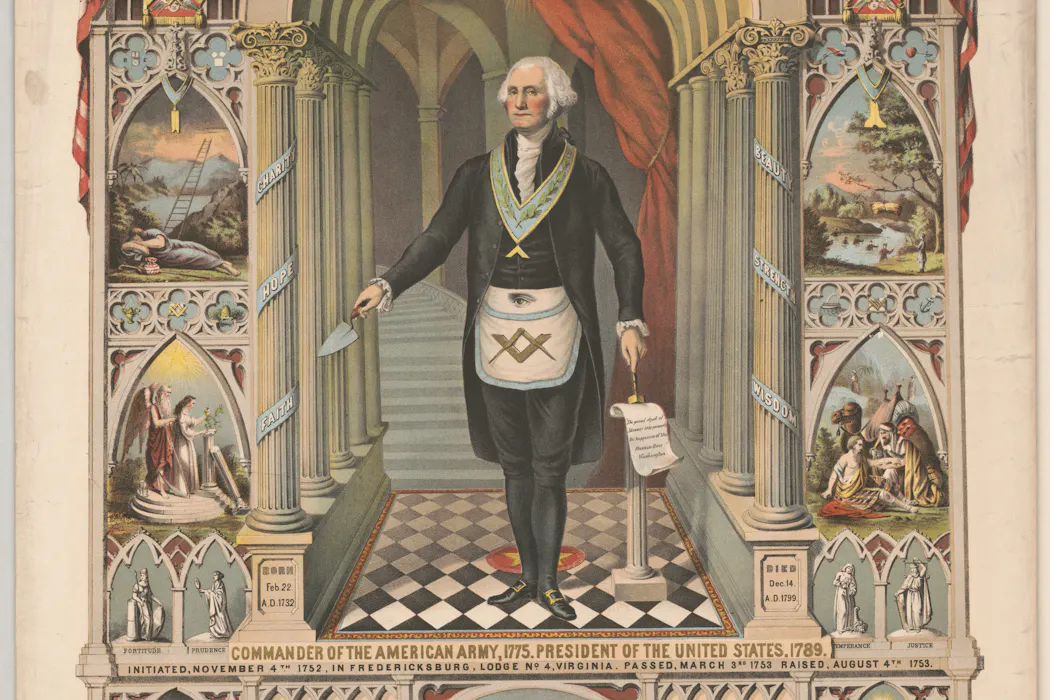
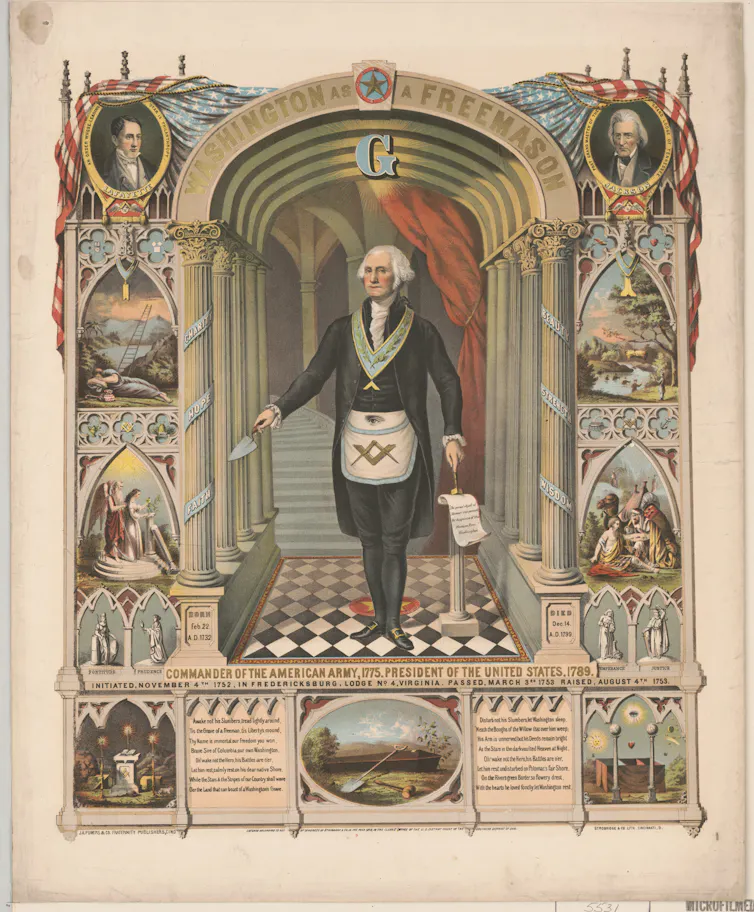
George Washington was initiated into Freemasonry at the age of 20. Strobridge & Co. Lith./Library of Congress via AP

How conspiracies spread has changed immensely over the history of the United States, as technology and media have evolved. But the nature of conspiracies has not.

I teach communications courses at Villanova University, 12 miles from Philadelphia, on how conspiracy theories are created and disseminated.

As the nation approaches its 250th anniversary on July 4, 2026, I have been thinking about the early history of Philadelphia and the controversial people, stories and ideas, including conspiracies, that permeated the city during the second half of the 1700s.

Conspiracy theories describe alternative versions of events – such as the collapse of the twin towers of the World Trade Center on Sept. 11, 2001 – that contrast with the official, accepted versions of events. Conspiracies, however, involve small groups of people who act in secret for their own gain and against the common good. Examples of conspiracies include the Watergate scandal by President Richard Nixon and members of his administration, or the Tuskegee experiments in which U.S. public health professionals treated unsuspecting African Americans with syphilis with a placebo.

Colonial America was rife with perceived conspiratorial agendas. Many of these stemmed from the uneasy coexistence of political parties with religion – which was newly protected by the First Amendment – and with the Catholic Church in particular.

Stained glass window with squares, circles and other shapes
A gavel represents the refining of character and removal of vices among Freemasons.
API/Gamma-Rapho via Getty Images

Freemasons in the cradle of liberty

Philadelphia was the country’s political center during the American Revolution, which began in 1775.

After the war ended in American victory in 1781, Philadelphia served as the capital of the U.S. beginning in 1790, until Washington, D.C., was chosen as America’s permanent capital in 1800.

During this period, the U.S. depended on contributions from its political and civic figures to develop future leaders with skills and intelligence. Among this group and some of the country’s leaders were Freemasons, the independent “brethren” of skilled stonemasons.

In England, landowners or even royalty owned many masons, but some masons were self-sufficient and enjoyed their freedom to work as they wished. When they made their way to America by the 1720s, their high standards of workmanship, fair trade and reason as they taught their craft made them influential in society.

Being a Freemason was a mark of sophistication. Freemasons were high-status, wealthy men. The fraternity provided a forum for networking – not just for stone shapers but other men who were successful in business, trade or even Colonial administration.

By the late 1740s, almost all of Philadelphia’s Freemasons were also merchants, shipowners or successful artisans. They were considered political, intellectual and creative leaders in Colonial Philadelphia.

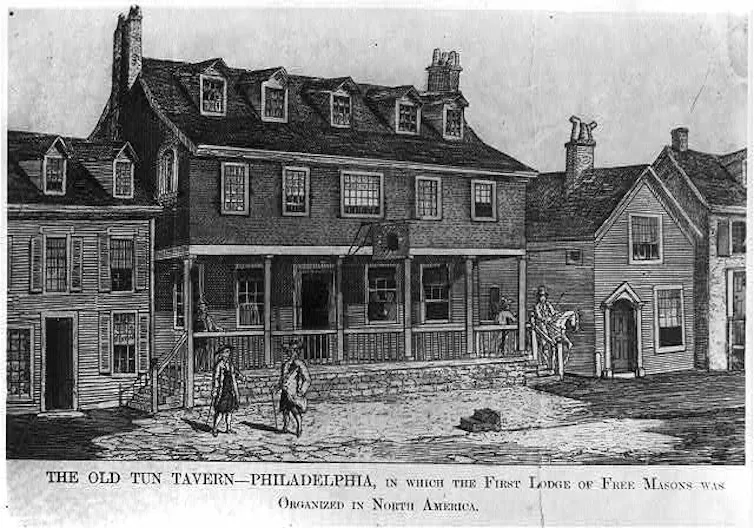
Black and white depiction of a large house with smaller houses adjacent to it
The Tun Tavern was a popular hangout for Philadelphia Freemasons and other political brass in the late 1700s.
Albert Moerk/Library of Congress

Freemasons built notable structures throughout the Philadelphia and southern New Jersey areas as well as in New York, Boston and other parts of New England.

But because the group’s rituals and oaths were shielded from public view and performed in clandestine sessions in Masonic temples, rumors spread about their activities. Some people believed Freemasons secretly conspired against American values – especially religion.

Freemasons believed in principles such as rationalism, which views science and logic – rather than sensory experiences – as the foundations of knowledge. Freemasons also held that everything in the universe is the result of natural causes rather than the supernatural or divine.

They treated all religions equally. They allowed participation in them but believed no faith was to be favored as possessing the one true God. This was in contrast with religions that argued their doctrine exclusively expressed the truth. In 1738, Pope Clement XII banned Freemasons from joining the Catholic Church, a prohibition that still exists today.

Illustration of man with white hair and rosy cheeks in suit with sash standing on checkerboard floor in hall lined with columns
Freemasons counted many leading figures of early America, including George Washington, as members.
Strobridge & Co. Lith./Library of Congress via AP

The ‘godless’ Illuminati

“Another “secret society” also peaked at this time in various parts of Europe, and it drew suspicion among Americans that members exerted influence over the new nation.

Members of the Illuminati, a movement that started in Germany in 1776, promoted Enlightenment values and ideas, including logic, secularism and education. Like Freemasons, they rejected superstition. Unlike Freemasons, however, they also rejected religion and its influence on society.

Europe mostly outlawed the movement before 1790 due to the group’s attempts to greatly lessen religious influence. The Illuminati occupied key roles in the educational system and government of Bavaria, where they weakened clerical authority.

The normally secretive Illuminati attracted attention through their attempts to attend and participate within Masonic temples. They used Freemason ideas along with their own ideas to recruit followers through these networks, hoping to promote an even stronger “one-world” government led by reason instead of religion and spiritualism.

As a result, religious – and specifically Catholic – leaders suspected an association between the philosophically consistent Illuminati and Freemasons.

In a letter to George Washington in 1798, Rev. G. W. Snyder from Maryland attempted to awaken Washington to the danger of the Illuminati and their influence on Freemasons. He wrote about a recently published book by the Scottish physicist John Robison called “Proofs of a Conspiracy” that, according to Snyder, “gives a full Account of a Society of Freemasons, that distinguishes itself by the name ‘of Illuminati,’ whose Plan is to overturn all Government and all Religion, even natural; and who endeavour to eradicate every Idea of a Supreme Being.”

Even today, conspiracy theories still promote the Illuminati’s existence, even after they were formally outlawed in Europe. Such theories suggest the Illuminati still work to degrade religious influence through civil upheaval. A myth survives that the Illuminati still operate secretly, support a world government and guide various governments on how to economically control the world.

But the Illuminati in the late 1700s seemed to dovetail with what people assumed were the basic ideas and agenda of Freemasons in America. Some in America suspected without obvious evidence that Freemasons used their status to boost fellow Freemasons to various governmental positions. They worried this would drive America to become godless, or even Satanic.

Concerns about the influence of Freemasons persisted in part because American presidents Washington and James Monroe were Freemasons. The American public was suspicious that these members reached high levels of government due to the influence of Freemasons. In fact, as many as 25 of the 55 men who attended the 1787 Constitutional Convention in Philadelphia were Freemasons. Founding father Benjamin Franklin was a devout Freemason for over 50 years. Thomas Jefferson was widely thought to be a Freemason, though there is little evidence to support this.

Many of these American leaders, including Franklin, John Adams and Jefferson, had spent time in Europe, especially France, during the late 1700s. Americans feared that European Illuminati members could directly access these political leaders and gain power and influence over the U.S. None of the leaders admitted to having any connection with the Illuminati.

Facade of ornate medieval building
The Masonic temple in Center City serves as the headquarters of the grand lodge of Pennsylvania.
SEN LI/Moment Collection via Getty Images

Conspiracy fears climax

Fears around the Freemasons and Illuminati came to a head in the dramatic and vitriolic U.S. presidential elections of 1796 and 1800.

In the 1796 election, Jefferson’s Republican Party accused Adams of wanting to be a king and also grooming his son, John Quincy Adams, to become president immediately after his father.

Adams’ Federalist Party and an anonymous writer in newspaperssuspected to be Alexander Hamilton writing under the pseudonym “Phocion” – spread rumors attacking Jefferson. Phocion suggested that while Jefferson was U.S. secretary of state in France during Washington’s presidency, the Illuminati influenced him in ways that would cause him to turn his back on religion.

Phocion also accused Jefferson of fathering children with an enslaved woman, Sally Hemings, whom he “kept as a concubine” when he returned with her from France in 1789. Historians believe Jefferson did, in fact, have up to six children with Hemings. The accusations also said Jefferson would free all enslaved people in America if elected.

Adams won in 1796 by just three electoral votes, but Jefferson defeated him in 1800.

Freemasons today

Freemasons today have largely shrunk from their once quite prestigious influence in American society. Today they are a mostly philanthropic organization that supports many causes, such as children’s hospitals, homes for the aged and community services.

There are about 1 million members in America, according to an estimate from 2020. That’s down from a high of over 4 million in 1959.

Relics of the era

An ornate room decorated in blue and gold with pharoah heads atop columns
Inside the Egyptian Hall at the Masonic temple in Philadelphia.
K. Ciappa for Visit Philadelphia®, CC BY-NC-ND

Visitors to Philadelphia might consider two stops where they can be reminded of the conspiracy theories that circulated 250 years ago.

A marker at 175 Front St. notes where Tun Tavern, one of America’s first brew houses, stood from 1691 until it burned down in 1781. It was a hangout for Freemasons, including Franklin and other famous patrons such as John Adams.

Most of the Masonic lodges the city constructed early in its history do not exist today. The first Masonic temple built in Philadelphia was erected in 1809 on Chestnut Street, between 7th and 8th streets, but burned down in 1819.

The current grand lodge for all of Pennsylvania was built in 1873. It faces City Hall and remains a major Masonic base today. The site is very popular among tourists and offers hourly tours Wednesday to Saturday, 10 a.m. to 3 p.m.

Read more of our stories about Philadelphia and Pennsylvania, or sign up for our Philadelphia newsletter on Substack.

The Conversation

Derek Arnold does not work for, consult, own shares in or receive funding from any company or organization that would benefit from this article, and has disclosed no relevant affiliations beyond their academic appointment.

ref. Philadelphia’s founding years were rife with conspiracy fears about ‘godless’ Freemasons and the Illuminati – https://theconversation.com/philadelphias-founding-years-were-rife-with-conspiracy-fears-about-godless-freemasons-and-the-illuminati-275192