‘Devil Wears Prada 2’ shows how Christian imagery circulates in unusual ways through the fashion industry

Source: The Conversation – USA (3) – By Lynn S. Neal, Professor of Religious Studies, Wake Forest University

Actress Meryl Streep attends the world premiere of ‘The Devil Wears Prada 2’ in New York. Angela Weiss / AFP via Getty Images

At the world premiere of “The Devil Wears Prada 2,” actress Meryl Streep leaned into her character’s devilish persona. She wore the character’s signature sunglasses along with long black gloves and a flowing red leather cape from Givenchy’s Winter 2026 collection.

Streep’s outfit, though, is a small moment in a much larger story – one in which Christianity and fashion have been intertwined for centuries, sometimes as adversaries, sometimes as collaborators.

While neither of the “Devil Wears Prada” movies revolve around Christianity, the invocation of the devil taps into an older moral rhetoric. For centuries, fashion was cast as the troublesome, if not villainous, enemy of a pure and spiritual Christianity – a symbol of putting material desires before holy ones. For example, 18th-century cleric and founder of Methodism John Wesley urged his followers to show their faith by dressing “neatly” and “plainly.”

Yet Christian imagery has come to shape the industry in profound ways. As a scholar who researches the relationship between Christianity and fashion, I have traced how Christian imagery circulates in surprising forms. The devil, for instance, occasionally appeared in fashion advertising to suggest sin, sensuality and transgression.

Christian imagery of angels and Eve

In the mid-20th century, Christianity often occupied a supporting role in the fashion industry. It showed up in articles by Christian religious leaders and color photographs of Christian art and architecture published in fashion magazines.

For example, articles on how Christianity addresses contemporary problems by Catholic Bishop Fulton Sheen and Columbia University Chaplain James A. Pike appeared in Vogue alongside ads for makeup and fashion photo shoots.

Christian imagery also appeared in fashion advertisements featuring “Sunday best” clothing and Easter dresses. Ads showed angels gifting consumers “heavenly” products that promised beauty and ease.

The devil only occasionally played a part in ads for fashion products, such as perfumes, makeup and handkerchiefs. These advertisements depicted the devil as a snake or alluded to him and his role in the Book of Genesis. The biblical passage recounts how the serpent, typically interpreted as the devil in Christian theology, tempted Eve to sin by eating the forbidden fruit. Eve then offers the fruit to Adam, and, having both sinned, they realize their nakedness, are ashamed and make clothing.

Fashion advertisements, ranging from Revlon in the 1940s to Hanes in the 1960s, celebrated Eve’s rebellious action. Revlon “double” dared women to try their “Fatal Apple” makeup so they could look like Eve, while Hanes stated, “Poor Girl! She never knew the temptation of seamless stockings by Hanes,” next to an illustration of Eve holding an apple by a serpent.

Ads played with the idea of fashion as a temptation in which female consumers should indulge. Female consumers were urged to “Be Eve” and give into the desire to purchase products.

The devil was eclipsed as ads featured garden settings and products that promised “the look of Eve.” Eve symbolized beauty and promised consumers the same results through their purchasing power.

A 1967 ad for the “Eve Petticoat” issued an invitation: “Come, pretty girl. Be Eve, if you wish.” In that same decade, Catalina’s “part of the art of Eve” campaign for their swimwear showed what this meant. Each ad featured a woman in a provocative pose wearing a Catalina bathing suit in a garden setting. By donning Catalina, the ad implies, the wearer can become Eve – attractive, stylish and sexy. By highlighting Eve’s rebellion alongside her beauty, ads framed her as a fashion heroine.

Eve’s prominent role in advertising demonstrates how the Judeo-Christian tradition permeated American culture, including the fashion industry.

An evolving fashion landscape

While Christianity appeared in industry advertisements, it also slowly began to take a more prominent role in fashion garments, as designers became more bold. Christianity inspired the design of many garments, and later, Christian figures began to appear on designer garments.

For example, in the 1960s, American designer Geoffrey Beene, known for his minimalist design aesthetic, drew inspiration from the cassocks worn by Catholic priests. So, too, did Spanish designer Cristóbal Balenciaga. In 1967, his black evening gown with cape radiated simplicity in form and draping even as it also referenced the attire of Catholic priests.

While Beene and Balenciaga received praise for their restraint and elegance, the lesser-known London-born designer Walter Holmes created controversy with his “mini-medievals” in 1968. Modeled after a monk’s robe and a nun’s habit, Holmes combined Christian inspiration with the miniskirt trend, which some people found fun, while others labeled it offensive.

Luxury fashion brand Krizia’s collection.

In the 1990s, Italian luxury fashion brand Krizia’s collection included women wearing cassock-like dresses, while Italian fashion designer Stefano Pilati’s 2010 line for Yves Saint Laurent played on the attire of Catholic nuns.

More recently, in spring 2020, French designer Virginie Viard’s designs for Chanel referenced nuns and Catholic school girl uniforms.

Yves Saint Laurent 2010/2011 fashion show.

‘Spiritual marketplace’

In the 1990s, Christianity began playing an even larger part in fashion, as the Virgin Mary and saints began to appear on garments. Prior to this, designers often avoided using religious figures; they preferred more abstract interpretations; it also helped prevent any controversy that might emerge from depicting sacred figures.

Designer Gianni Versace challenged this tacit rule in his Fall/Winter 1991 collection. It included biker jackets adorned with bejeweled crosses and, in the finale, a halter top that featured the Virgin Mary made out of a mosaic of jewels. The garment was also the centerpiece of ads for the collection and showcased the fashion potential of Christian figures.

Versace’s Marian halter reflected the larger shift away from institutional religion toward individual spirituality. Christian symbols were lifted from church contexts and recirculated through popular culture, including fashion, in new ways. Versace’s rock star rendering of the Virgin Mary offered people a new way of seeing her – one open to interpretation outside of doctrine. Like Versace, they could claim her and reimagine her on their own terms.

Sociologist Wade Clark Roof described the religious landscape as a “spiritual marketplace.” People relied less on religious authorities and more on the meaning they could create from “available images, symbols, moral codes, and doctrines.”

Religious ideas and products circulated through music and movies, crystal shops and sports stadiums, Christian bookstores and designer collections. Within this spiritual bazaar, fashion became a place where people could reimagine Christian symbols, figures and history in new ways.

Modern-day trends

In the years since, Christianity has become a regular feature in fashion collections. Most notably, Christianity regularly has a starring role in the work of Dolce & Gabbana. Their 1998 “Stromboli” collection revolved around a Christian theme, a Marian procession, and dresses, tunics and blouses featuring Marian imagery.

The design duo have returned to Christian imagery several times. For example, their 2013 “Tailored Mosaic” line, inspired by the golden mosaics in the Cathedral of Monreale in Sicily, featured garments adorned with angels, saints and Mary, as well as biblical figures.

Dolce & Gabbana ‘Tailored Mosaic’ show.

A critic called the mix of garments the designers’ “most heavenly offerings to date.” In 2018, Christian themes and symbols again permeated their collection.

It is now almost commonplace for fashion lines to reference or include Christian symbols, themes and figures. At New York Fashion Week in 2026, YesuGod, “a luxury Christian fashion house,” showcased its designs – garments adorned with the words “anno domini” and others with “the Lord is Coming.” More recently, in 2025, the vestments of Catholic priests inspired Dolce & Gabbana’s menswear collection.

The devil makes only an occasional appearance on the fashion runway and on the red carpet; historically, too, his presence has been minimal. Christian figures who embody ideals of goodness and holiness – saints, Mary and even Jesus – are the ones who rule the runway. Christianity and fashion are not so separate after all.

The Conversation

Lynn S. Neal does not work for, consult, own shares in or receive funding from any company or organization that would benefit from this article, and has disclosed no relevant affiliations beyond their academic appointment.

ref. ‘Devil Wears Prada 2’ shows how Christian imagery circulates in unusual ways through the fashion industry – https://theconversation.com/devil-wears-prada-2-shows-how-christian-imagery-circulates-in-unusual-ways-through-the-fashion-industry-281458

Can the assisted dying bill be brought back? It’s possible – but supporters face four challenges

Source: The Conversation – UK – By Daniel Gover, Senior Lecturer in British Politics, Queen Mary University of London

Despite MPs backing proposals last year to legalise assisted dying in England and Wales, the plan did not become law. The bill failed to complete its passage through the House of Lords – not because peers voted against it, but because a relatively small number proposed an unprecedentedly large list of amendments. As a result, the bill ran out of time.

But this is unlikely to be the end of the story for assisted dying. MPs who support the change have called for the bill to be brought back in the new parliamentary session, which begins on May 13. They have reportedly been joined in their demands by almost 200 peers in the Lords.

Their strategy will be for MPs to pass the bill again in an identical form. If they do so, it could become law even if the Lords fails to pass it. This is possible because of special powers to override the Lords under what are known as the Parliament Acts. But achieving this will not be straightforward – to succeed, supporters will need to overcome four key challenges.

Challenge 1: Winning the lottery

The first challenge will be for a supporter to be drawn high in the private members’ bill ballot. At the start of each session, 20 MPs are selected from this random draw to receive priority access to the very limited Commons time available for private members’ bills. Those drawn highest pick their slots first, giving them the best chance of success.

A supporter would need to be drawn among the top seven places to guarantee a full day’s debate (and therefore a vote) on their bill – a key requirement to prevent it being “talked out”. But in reality, they probably need to be drawn in the top three. Supporters say they have around 200 MPs willing to reintroduce the bill if selected.

If advocates do not win this legislative lottery, they have other options. One is to introduce a different form of private members’ bill, known as a presentation bill, but this will struggle unless ministers grant it time. Less likely is a government bill. Either way, ministers would need to provide public assistance in ways they have so far been reluctant to.

Challenge 2: Maintaining support from MPs

The next task will be to maintain a coalition of MPs behind the bill, which would again be subject to a free vote. Although MPs backed the bill last time, supporters may be concerned that the margin of victory more than halved during its Commons passage – from 55 at the initial second reading vote to 23 at the final third reading. Fourteen MPs switched from support to opposition, while just one made the opposite journey. If this trend continued, the majority behind the bill could evaporate.

But the reverse is also possible, especially if some opponents choose to back it as a point of democratic principle. Liberal Democrat leader Ed Davey, who voted against the bill’s first iteration, has criticised as “undemocratic” the Lords’ failure to complete its scrutiny. It is possible that he and others could switch their votes.

Challenge 3: Avoiding new amendments

To be able to use the Parliament Acts to override the Lords, MPs would need to back the new bill in essentially an identical form to the first time. During the first bill’s passage, MPs made more than 200 amendments. Supporters will want to avoid doing so again.

MPs can amend bills at their committee and report stages. On the few occasions when the Parliament Acts have been used, ministers have usually moved a motion to effectively cancel these stages – preventing MPs from making changes. But the Parliament Acts have never before been used on a private members’ bill, and it is unclear how these stages could be avoided without government assistance.

Otherwise, these stages would proceed as normal. This would not only slow the bill’s passage through the Commons but would also risk the bill being amended – which would of course prevent the Parliament Acts being used. As such, any amendment passed in the Commons could effectively scupper the bill. This could provide cover for opponents who would prefer not to be seen blocking the bill outright.

Challenge 4: Incorporating amendments they do want

There is another snag for supporters of the assisted dying bill. The version of the bill passed last year by MPs is not the version they would ideally like to see on the statute book. Supporters cannot include any changes when they ask MPs to vote again for bill, but they will want to add some later.

For instance, Labour peer Charlie Falconer, the bill’s sponsor in the Lords, proposed almost 80 amendments last time – typically implementing changes requested by government lawyers, or responding to parliamentary pressure including from influential Lords committees. The slow pace of Lords scrutiny meant that most of these were never reached.

The Parliament Acts provide a mechanism to deal with this: an unusual “suggested amendments” process, enabling MPs to send the amendments to the Lords alongside an otherwise-identical bill. But this process would probably require ministers to provide Commons time.

Over to the Lords (part two)

Making it around these obstacles would require a combination of luck, tactical nous and sustained popular support. It is also likely that it will require a more overt helping hand from ministers on the process – though the government will remain neutral on the policy. Such assistance seems more doubtful if Prime Minister Keir Starmer is ousted.

If the bill makes it to the Lords a second time, and in an identical form, it would then be up to peers to scrutinise it again. But whereas last time opponents in the Lords had incentives to drag out scrutiny, this time their best interests would be served by reaching agreement on safeguards before the session ends. Because, if they fail to do so, the bill could be passed into law regardless.

Yet just because MPs could override the Lords, it does not mean they necessarily will: some form of compromise seems more likely. If peers amend the bill a second time around, MPs could still accept these changes. And we shouldn’t forget that, given the breadth of expertise in the Lords, doing so could also make for a better law.

The Conversation

Daniel Gover does not work for, consult, own shares in or receive funding from any company or organisation that would benefit from this article, and has disclosed no relevant affiliations beyond their academic appointment.

ref. Can the assisted dying bill be brought back? It’s possible – but supporters face four challenges – https://theconversation.com/can-the-assisted-dying-bill-be-brought-back-its-possible-but-supporters-face-four-challenges-282321

Nature restoration isn’t often top of the political agenda – here’s how Wales does it

Source: The Conversation – UK – By Nick Kirsop-Taylor, Lecturer, Environmental Governance and Political Ecology, University of Exeter

Gwenffrwd and Dinas nature reserve in Wales. Andy Williams photos/Shutterstock

Nature is critical for our national health, wellbeing and security. Most national leaders haven’t really taken this on board yet because it is just too big an issue to handle.

But, as I explore in my new book, this happens partly because many western societies are based on freely extracting resources from nature.

Many societies have evolved to exploit the ecosystem services (the many and varied benefits that people gain from nature) that we get for free. Admitting this puts our leaders in a difficult situation when trying to explain why we aren’t doing a better job of looking after nature.

The UK government recently conceded that the collapse of ecosystems represents a critical risk to our food, security and finances. This is because the UK is one of the most nature-depleted countries in the developed world, ranked in the bottom 10% of all countries. That low biodiversity leads to ecosystems that are less resilient. This makes the risk of ecosystem collapse more acute.

It can also be hard for governments to prioritise the risks of ecosystem collapse above conflict, energy poverty and food supply chain issues. Especially when these risks are often thought of as being long-term and difficult to quantify. Instead, governments might argue that membership of certain conventions and treaties commit us to protecting 30% of our land and sea to nature conservation by 2030. So there is a plan to restore nature in the UK.

Despite that, governments consistently misunderstand the depth to which our society depends on functioning healthy ecosystems and how acutely exposed we are as a country – so we underestimate the risks of it all going wrong.

sand dunes with grass, blue sea in background and blue clear sky
Sand dunes at Morfa Harlech National Nature Reserve in Snowdonia, north Wales.
Alex Manders/Shutterstock

The UK National Ecosystem Assessment was a national stocktaking of the state of our national natures. It did its best to highlight these ecosystem risks in the early 2010s – but really only set in train a narrative that “ecosystem risks are economic risks”. And economic risks can always simply be traded-off, offset or commodified. But ecosystem risks are not simply economic – they are existential to society and the state.

National nature restoration ought instead to be a security-framed issue for government. One way through this would be for states for adopt the mission of national nature restoration as their central organising principle. This means a narrative that sets the rules and terms of reference across the whole of government – for policy, institutions and the economy.

A mission-led nation

Wales is a great example of how this can work. For the past two decades the Welsh government has made sustainable development its central organising principle. We have learnt from the Welsh experiment that trying to wrap the entire business of a government into a single narrative is politically risky and challenging.

Moreover, to be politically successful these narratives have to be inclusive across society, emotionally and materially compelling for citizens and plastic enough to encompass a range of different functions and policy agenda.

Nevertheless Wales has shown us that adopting mission-led central organising principle of this kind are possible. Analysis by the Organisation for Economic Co-operation and Development (a global policy forum), the Institution of Environmental Sciences (a global professional membership body for environmental scientists), Carnegie UK (a charitable foundation that aims to improve wellbeing) and others show how the Welsh experiment of making sustainable development the central organising principle of the state has improved people’s health, education and wellbeing.

The carbon footprints associated with Welsh households fell by 37% between 2001 and 2020. Wales is a world leader in household recycling, with a 65.7% recycling rate for local authority municipal waste in 2022-23. In 2015, public service boards of local leaders were created to deliver wellbeing outcomes for places and people in Wales. These have ensured accountability and successful implementation of plans. The Welsh model of sustainable development inspired the creation of the UN Declaration of Future Generations which combined 56 rules for sustainable development that ensure no one is left behind in the green transition.

Although there are different visions for what nature restoration means, research shows that the British voting public care about the idea of restoring our lost nature. In challenging and uncertain times, a national cause of nature restoration offers countries the chance to reclaim and own a progressive mission – and perhaps even build new political coalitions that offer a sense of national purpose and unity.

The Conversation

Nick Kirsop-Taylor does not work for, consult, own shares in or receive funding from any company or organisation that would benefit from this article, and has disclosed no relevant affiliations beyond their academic appointment.

ref. Nature restoration isn’t often top of the political agenda – here’s how Wales does it – https://theconversation.com/nature-restoration-isnt-often-top-of-the-political-agenda-heres-how-wales-does-it-280534

What happens when scientists trust AI more than colleagues?

Source: The Conversation – UK – By Sungho Hong, Neuroscientist, Center for Memory and Glioscience, The Institute for Basic Science

Shutterstock/PeoplesImages

Artificial intelligence has crossed a threshold in the modern workplace. It is being used for everything from helping employees manage schedules to supporting financial forecasts. A similar shift is now unfolding inside research laboratories.

There is currently a boom in national initiatives to accelerate the integration of AI into science. These include the US Genesis Mission and South Korea’s AI Co-Scientist Challenge. But despite clear benefits, we believe these institutional drives are neglecting important issues that carry immense risks for scientific research.

Today, more than half of researchers use AI for work tasks including reviews of academic journals and designing experiments.

AlphaFold is an AI tool developed to predict the structures of proteins for scientific research. Working out protein structures was incredibly time-consuming before its release – taking years in some cases. The same tasks now take hours. AlphaFold was acknowledged by the 2024 Nobel Prize in Chemistry.

AI tools for use in medicine now assist with everything from the interpretation of results from X-rays and MRIs to supporting doctors’ decisions on the diagnosis and treatment of disease.

Our key concern is that hasty adoption of AI may gradually erode the scientific culture and human relationships that sustain rigorous research. It starts with the erosion of core thinking skills among researchers, as a result of an increased reliance on AI to perform that work. This can alienate researchers from the deeper reasoning behind their work.

Loss of independent thinking

Early-career scientists are particularly vulnerable, because they are still developing their scientific reasoning. Troubleshooting skills and the critical evaluation of ideas may be outsourced to AI systems.

AI’s fluent, confident and immediate responses can easily be mistaken for authoritative information. Once researchers begin to treat AI outputs as implicitly correct, the responsibility for judgment calls may gradually shift from them to their machines.

AI’s persuasive arguments, probably drawn from mainstream ideas in their training data, could replace more rigorous, time-consuming and creative research approaches. These are traditionally shaped through critical back-and-forth discussions between researchers.

This can evolve into over-dependence. As reasoning is delegated to AI, researchers become less confident at working unaided. Unfortunately, modern scientific labs are full of conditions that reinforce this dependence, such as intense competition, long hours and frequent isolation.

Limited mentorship and feedback from colleagues that is delayed, critical or politically influenced can enhance this issue. In contrast, AI provides an immediate, patient and nonjudgmental alternative.

Scientists interact with AI systems daily in order to check computer code, revise illustrations or charts, draft the language for grant applications, clarify scientific concepts, and at times, ask for personal advice.

As researchers begin to trust the AI assistant, it can begin to function less like a tool and more like a companion. This phenomenon bears the risk of emotional dependency, too. When ChatGPT-4 was retired, many users expressed a form of grief.

Replacing relationships

Another important concern is the potential for replacement of human relationships in the office or research lab. AI is always available, nonjudgmental, noncompeting – and indifferent to office politics, with no ego to defend. It remembers context, adapts to individual working styles, and offers reassurance without social cost.

Human scientific relationships are more complicated, involving nuance, criticism, time constraints, hierarchy – and sometimes, ulterior motives. For early-career researchers especially, these interactions can feel risky.

Researcher at work
Early career researchers may be particularly at risk of over-reliance on AI systems for advice.
PeopleImages / Shutterstock

Critical feedback from humans can feel adversarial, while AI responses feel supportive. So, early-career scientists might have good reason to prefer testing ideas or seeking validation through AI, rather than their peers or superiors.

The scientific community cannot thrive without opposing ideas, deep scepticism against consensus, vigorous debate and rigorous mentoring. If AI begins to replace these, it threatens the foundations on which scientific progress has always been made.

The current debate on AI safety mostly focuses on errors in models’ responses, or on AI systems circumventing the restrictions imposed on the way they work, known as “jailbreaking”. Such rules have limited effects when it comes to the AI models’ societal and cultural impact.

Given the recent drives to get scientists to work more closely with AI assistants, we should educate our young scientists on the risks of AI dependence. We also need benchmarks to rigorously test AI models for their ability to establish boundaries with users, to prevent overdependence and other unhealthy interactions.

Finally, all of us – but especially institutional leaders – should understand the capabilities and permanence of AI companionship. They are here to stay, and we should learn to make our relationships with them as healthy as possible.

The Conversation

The authors do not work for, consult, own shares in or receive funding from any company or organisation that would benefit from this article, and have disclosed no relevant affiliations beyond their academic appointment.

ref. What happens when scientists trust AI more than colleagues? – https://theconversation.com/what-happens-when-scientists-trust-ai-more-than-colleagues-281374

Screens are part of modern parenting – five tips for healthy use

Source: The Conversation – UK – By Liane Beretta de Azevedo, Professor in Public Health and Physical Activity, Sheffield Hallam University

airdone/Shutterstock

Screens are everywhere in children’s lives. They use them at school and at home. They see screens used by their parents as they work on laptops, use phones to arrange playdates or look up outings or recipes on tablets.

Managing screen time can be difficult when – as recent guidelines published by the Department for Education make clear – it’s not just how much time children spend on screens, but what they’re doing with them that matters. This applies to parents’ use of screens, too. Here are five tips on how to use screens with and around children in a positive way.

1. Model healthy habits

“Technoference” affects many of us. It’s the distraction caused by technology during social interactions, such as the urge to respond to a phone alert while having an in-person conversation. When parents are distracted by their mobile devices, they may talk or physically engage less with their children. In fact, research has linked audible notifications, such as text message chimes, to poorer infant vocabulary.

If a parent is absorbed in a device, they also may respond more harshly to a child misbehaving.

Research on mothers and children found that screen distractions led to them responding less to their child which in turn reduced maternal sensitivity. Maternal sensitivity is crucial for child development as it promotes secure attachment and enhances emotional regulation.

Try to think consciously about how often you use your own device. Silencing notifications when spending time with your child can help ensure you are fully present.

2. Keep an eye on using screens to manage stress

Parenting can be hard work. Many turn to devices as “electronic babysitters” to manage hectic schedules or fit in other family responsibilities. This could be giving a toddler a screen while changing their wailing younger sibling’s nappy, for instance.

We’re currently carrying out research on the reasons behind young children’s screen use. Existing research shows a link between parenting stress – caused by the demands of parenting – and children’s use of mobile devices. Factors such as parental anxiety, depression, and responses to a child’s negative emotions can influence children’s screen time.

Providing a device to a child may offer temporary relief for parents, but the excessive use of interactive electronic devices can hinder some aspects of children’s social-emotional development.

Man on laptop with young boy with mobile phone
Parents can give children screens to help them cope with stressful situations.
Pixel-Shot/Shutterstock

Parents who experience stress due to their child’s challenging behaviour may withdraw from direct interactions with their child and instead resort to technology as a coping mechanism. This reliance on devices can intensify problematic behaviour and further disengage parents from interacting with their children.

Whenever possible, try a different strategy to alleviate parenting stress before handing your child a device. The American Psychological Association offers advice on how to manage stress as a parent. These include talking to others about how you’re feeling, learning new parenting techniques and taking “microbreaks”, such as pausing for five minutes to breathe deeply and recalibrate your thoughts. It’s also important to acknowledge the pressures of parenting. Remind yourself that you are doing the best you can with the resources you have.

3. Use screens together

Screens often play a positive role in family life. Many parents use them as an educational tool or as an opportunity to strengthen connections. This could be through video calls, playing music or sharing and viewing photos together.

Additionally, “co-viewing” – when parents and children watch or play on a device together – is not linked to insecure attachment. This is a state where the child lacks confidence in their caregiver due to inconsistent or neglectful care. In fact, co-viewing can actually have a small positive effect on children’s learning.

Whenever you can, watch or play on the device with your child instead of letting them use it alone. Discuss what is happening on screen to turn a passive experience into a learning opportunity.

4. Follow age-specific guidelines

A 2023 study, which provided recommendations for managing screen time for children under five years old, highlighted the importance of parents’ knowledge of screen time guidelines. However, research has indicated that parents of children under five are generally more confident in managing their child’s physical activity than in managing screen behaviour.

The Department for Education’s guidelines recommend that parents restrict screen time to one hour per day for children aged two to five years. For children aged up to two years, it’s best to avoid screen time as much as possible. You can also set parental controls on devices to ensure that your child has access only to age-appropriate content. The NSPCC offers guidance on setting up parental controls.

5. Encourage alternative activities

Control apps, which limit the time children can spend on screens, are popular with many parents. They work best when combined with open communication and collaborative rule-setting, that includes the child’s input.

Diversionary strategies, where parents actively encourage their children to engage in alternative, off-screen pursuits – such as outdoor play or reading printed books – have also been shown to help children turn their attention away from screens. Parents can help this shift by using cues, such as music or visual prompts, to guide children toward engaging in other activities. Playing or singing a particular song, for instance, could mean it’s time to stop using a screen, and play with toys instead or do some reading.

You might find that these strategies are preferable to restrictive mediation such as screen time limits. These can be difficult to enforce due to potential conflicts, tantrums or parental inconsistency.

By implementing these tips, you can help foster healthy screen habits in your children while enhancing their overall development and wellbeing.

The Conversation

Liane Beretta de Azevedo receives funding from the National Institute for Health and Care Research (NIHR) grant number 159040. The views expressed are those of the author(s) and not necessarily those of the NIHR or the Department of Health and Social Care.

Colette Marr receives funding from NIHR.

ref. Screens are part of modern parenting – five tips for healthy use – https://theconversation.com/screens-are-part-of-modern-parenting-five-tips-for-healthy-use-280673

How World Cup filming has evolved since the last US tournament – from spider cameras to AI and drones

Source: The Conversation – UK – By Joe Towns, Senior Lecturer in Sport Broadcasting, Cardiff Metropolitan University

When players arrive in the US this year for their World Cup pre-tournament media shoot, they will each step into a scanning chamber to capture their precise body-part dimensions and create 3D, AI avatars. Why? Because even when you’re the biggest sport in the world, you can’t afford to stand still.

This year’s Fifa World Cup will feature more teams (48), more matches (104) and more cameras than ever. Describing the scale of the tournament, Fifa boss Gianni Infantino told fans to expect the equivalent of “104 Super Bowls”.

Infantino wants to “break” America, where soccer has never reached the same levels of mainstream popularity as it has in the rest of the world. The last time the World Cup was held there was 1994. Singer Diana Ross missed a penalty in the opening ceremony and Italian player Roberto Baggio missed one in the final. England missed out altogether. Memorable, but it didn’t capture American hearts.

This summer 5 million paying customers will buy eye-wateringly expensive tickets to watch games play out in stadia across three different host countries – Canada, the US and Mexico. And it’s predicted up to 6 billion will engage with the competition around the world; on screens, phones, tablets, in bars, bookmakers and fan zones.

Sport exists in the same ultra-competitive attention economy as other forms of entertainment. If Fifa want to get inside the minds and mobile phones of audiences, then they’ll need to think visually in a broadcast sense, but also vertically, in terms of creating content which will cut through online.

At the recent Winter Olympics held in Milano-Cortina, Italy, the drone cameras caught eyes and stole the show. Drones worked well buzzing after skiers down a fixed-track mountain course or chasing skaters around an ice rink but they won’t work in football stadiums where the unpredictability of the action means a drone could get hit by the ball.

How drones transformed the way the Winter Olympics were filmed.

However, this World Cup will have cable-suspended, gyro-stabilised spider cameras swooping above the action. Expect to see them used more on the live action than in previous World Cups, perhaps even during penalty shootouts.

At every game there will be 45-50 cameras focused on the action including pole cams, cable cams, 360 cams and one new camera taking you closer to the action than ever before. “Referee view” will allow audiences to see what the referee sees. Cameras mounted on the referee, trialled at the Fifa Club World Cup last year, will show us what the ref can – and can’t – see. These points of view are not new to sports broadcasting (they are common in rugby) but the issue in the past has been the stability of the vision. For this competition, broadcasters will use AI stabilisation software to improve the smoothness of the shots.

The AI World Cup

AI-enabled 3D avatars will also assist VAR decisions by ensuring precision around player ID and tracking. This will drive semi-automated offside technology, so you’ll get greater quality images and faster, fairer decisions.

At the 2022 World Cup in Doha, Qatar, there was access all areas for a Netflix documentary called Captains, broadcast after the tournament. Ever since the Formula 1 Drive to Survive fly-on-the-wall format took us inside F1’s previously sacred inner sanctums, fans want to see everything on and off the pitch. But this year if you want to go behind the scenes, you’ll have to go online.

In a landmark partnership, Fifa have hooked up with TikTok and YouTube – two of the planet’s most popular content destinations. They’ll become Fifa’s first ever “preferred platforms”, a go-to place for fans and creators.

Trialled at the Women’s World Cup in 2023, the agreement will give TikTok ability to live-stream parts of matches, access to behind-the-scenes content and specially curated clips. Meanwhile YouTube’s deal permits broadcast partners to post highlights on the platform, live-stream some games in their entirety and give YouTube “first party” presence with archive matches from previous tournaments playing across the platform.

‘Referee view’ footage from an MLS All-Stars v Arsenal match in 2024.

American sports coverage is all about entertainment and this World Cup even the statistics will be given a glow up. Get ready for something called “data-tainment”, providing fans with what Fifa describes as “unparalleled insight and enjoyment”. Expect a seamless integration of advanced analytics with real-time graphics, all based on official optical tracking data.

What’s the end goal? It seems Fifa want those at the stadium to enjoy the benefits of watching from their sofa (replays, stats, analysis) and those viewing from home to feel the more visceral, immersive aspects of being there at the stadium (cinematic lenses, wearable cameras, enhanced audio). At the stadium spectators will be able to see key decisions play out on the big screen, with real-time stats delivered to their phones. Stadium connectivity, an issue in the past, will be amped up to ensure everyone stays connected.

It’s a delicate balance. Despite the innovations announced, Fifa knows the enduring appeal of watching football is its simplicity. Traditional audiences do not want gimmicks disrupting their beautiful game. Fifa has a tightrope to walk because the American audience it so dearly craves like their sport packaged in a certain way. The rest of the world – well, they seem happy with football the way it is.

World Cups of the future will be a more immersive experience. Audiences at home wearing VR headsets as real-time player tracking graphics appear live in their lounge. But the reality remains that live football match coverage hasn’t changed that much in decades. What you get to watch won’t change much, but where you watch it will, traditional broadcasters no longer the only show in town. And it’ll be what happens in the stoppages and the moments around the game which is set for revolution. A revolution that will be televised – and streamed, downloaded and clipped to watch on catch up later.

The Conversation

Joe Towns does not work for, consult, own shares in or receive funding from any company or organisation that would benefit from this article, and has disclosed no relevant affiliations beyond their academic appointment.

ref. How World Cup filming has evolved since the last US tournament – from spider cameras to AI and drones – https://theconversation.com/how-world-cup-filming-has-evolved-since-the-last-us-tournament-from-spider-cameras-to-ai-and-drones-279827

Elegies for a changing land: how Ireland’s poets are responding to the climate crisis

Source: The Conversation – UK – By Jack Reid, PhD Candidate in Irish literature, University of Limerick

The Naughton Gallery/Queen’s University Belfast, CC BY-SA

Ireland has a unique relationship to climate change. The country has always relied on its pastoral landscapes for its national character, but the escalating climate crisis threatens this tradition because of rising temperatures and sea levels, and deforestation. Given Irish literature’s continued interest in nature, contemporary Irish poets are tackling these issues in their writing.

Poetry plays a special role in times of mass environmental decline. As a literary genre that relies on flexible, open-ended and even conflicting language to address complicated issues, poetry is especially well-suited to address the complex entanglement of local and global concerns, human and nonhuman lives, that gain increased prominence because of climate change.

Poems that explore environmental issues, often called ecopoems, can pack a lot of ideas into a single image. A short poem focused on a seemingly mundane subject can hide a wealth of meaning behind its simplicity.


Read more:
Ten compelling poems about climate change – chosen by our experts


In an age dominated by the algorithmic attention economy, poetry might be our best tool for incorporating activism into everyday life.

Heaney’s bogs

The Nobel prize-winning Irish poet Seamus Heaney knew this. Taking inspiration from ancient Irish nature writing, Heaney described the Irish landscape as “a system of reality beyond the visible realities”.

In his 1969 poem Bogland, he defines the bog itself as representing the essence of Irishness.

We have no prairies

To slice a big sun at evening—

Everywhere the eye concedes to

Encroaching horizon,

Is wooed into the cyclops’ eye

Of a tarn. Our unfenced country

Is bog that keeps crusting

Between the sights of the sun.

Heaney juxtaposes Irish bogs with the vast prairies of the American west by presenting them as archives of natural and human history.

Ecopoetry scholar Yvonne Reddick has shown that from the early 1970s, Heaney extensively researched bog formation. His poems demonstrate an awareness of how the bogs have preserved Irish elk skeletons and iron age bodies because of their oxygen-free conditions.

For Heaney, the landscape was more than a lifeless background. It was a literal container of Irish history, including the possibility of environmental catastrophe.

Bogland by Seamus Heaney, read by Liam O’Flynn.

Bogland gained new life when Heaney used it to support the Ulster Trust for Nature Conservation in 1991. As part of a fundraising initiative, the poem’s opening stanzas were printed on a poster beneath a painting by T.P. Flanagan. It was accompanied by the following information: “Peatlands are under serious threat because of cutting, drainage, afforestation and erosion … We have a responsibility to conserve and restore what remains.”

Turf-cutting (harvesting peat from bogs to use as fuel for home heating and cooking) was an important part of Heaney’s upbringing. But his involvement with conservation causes points to a changed outlook on these practices because of their environmental impact.

Finding the past in the present

Contemporary Irish poets continue this legacy. With a PhD in ornithology, writer Mary Montague relays her concern for environmental issues with poetic passion. Her work is often focused on native Irish animals, many of which are facing a similar fate to the Irish wolf due to habitat loss and the influence of invasive species.

Wolves were once common in Ireland. Research estimates that roughly 800 to 1,000 wolves roamed the country around the year 1600. Because wolves thrived in Ireland after their extinction in England, colonial authorities felt justified in using this as evidence of Irish “savagery”. Bounties were eventually established that spelled out the necessity of exterminating these creatures, the last of which was killed in 1786.


Read more:
Farmers told me what they really think about reintroducing lynx and wolves to Britain and Ireland


Montague connects this violent history to the threats currently facing Irish animals. Her poem Haunted draws on the mythic connotations of ravens – which were once connected to the Celtic goddess of death, Mórrígan – to mourn the loss of Irish wolves. The poem asks whether the birds’ ominous associations ironically signal their own impending demise, given the escalating effects of climate change.

Their ragged capes of wingspans still float

over the Sperrins to scan the landscape

for the blot of a carcase, but they reel

with a fatalism, black flags

suspended over an absence.

Poet Cherry Smyth also links Ireland’s colonial past to the current ecological moment. Her collection Famished (2019) found echoes of the great Irish famine in the rise of climate refugees.

More recently, her collection One Mountain: Sold (2025) responds to the threat of gold mining in the Sperrin Mountains, County Tyrone. The collection can be read as a poetic companion to the Save Our Sperrins campaign. This grassroots movement opposes the extraction of gold, silver and other minerals from the Sperrins and surrounding landscape.

Cherry Smyth reads one of her poems, If the River is Hidden.

Montague explained some of the campaign’s main concerns in the Guardian’s County Diary column. These include the pollution of air and water, the dehydration of local bog land and the potential risks to human health caused by mining.

Together, these poets show how the strongest of Irish ecopoems connect colonial history to the climate crisis. They highlight how the effects of environmental degradation in Ireland are the latest influence on an already precarious relationship to land.

Jane Clarke’s work also shows a dedication to healing these histories of violence embedded in Irish landscapes. Speaking at the Dublin City University Centre for Climate and Society in 2024, Clarke emphasised the importance of the arts in promoting environmentalism.

Clarke’s recent collaboration with the Burrenbeo Trust, a nonprofit organisation that runs various conservation campaigns across Ireland, demonstrates this commitment. The Hare’s Corner (2025) features original poems by Clarke that reflect the benefits of projects run by Burrenbeo that promote healthier farming practices that give threatened species the chance to flourish.

While governmental intervention based on scientific fact remains the most effective solution to climate change, contemporary Irish poets show the importance of literature in fighting environmental decline. As Montague writes in her contribution to The Watchful Heart anthology: “Loss is inevitable; the formalised language of poetry may help us endure it.”

The Conversation

Jack Reid does not work for, consult, own shares in or receive funding from any company or organisation that would benefit from this article, and has disclosed no relevant affiliations beyond their academic appointment.

ref. Elegies for a changing land: how Ireland’s poets are responding to the climate crisis – https://theconversation.com/elegies-for-a-changing-land-how-irelands-poets-are-responding-to-the-climate-crisis-282177

Why Nairobi Africa-France summit bears the hallmarks of Macron and Ruto priorities

Source: The Conversation – Africa (2) – By Frank Gerits, Research Fellow at the University of the Free State, South Africa and Assistant Professor in the History of International Relations, Utrecht University

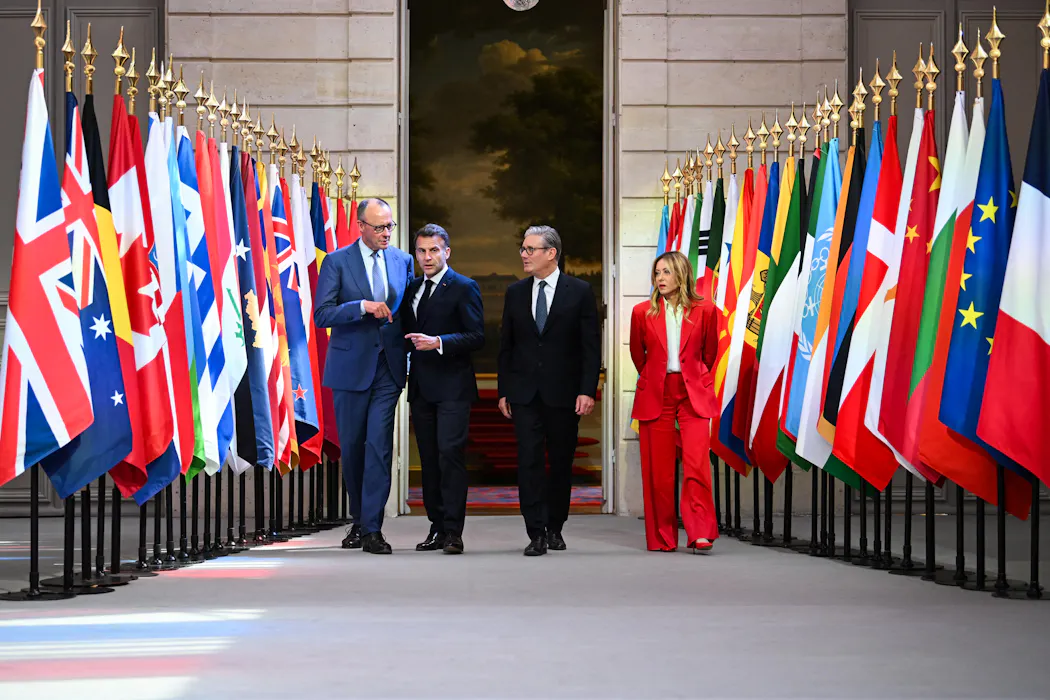
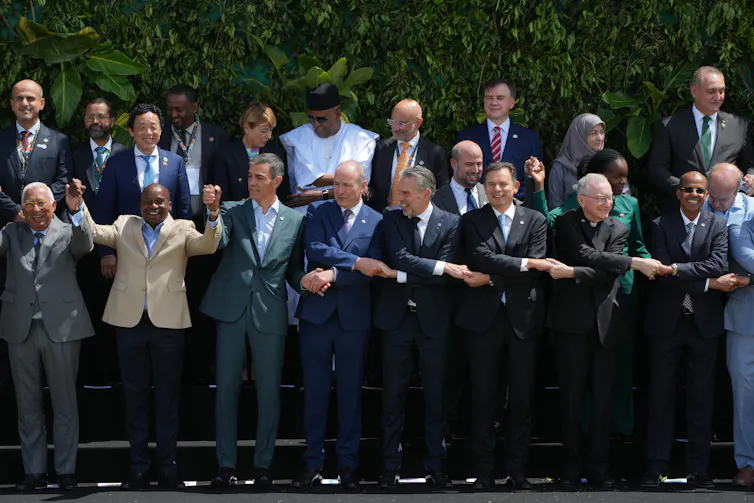
The 2026 Africa-France summit in Nairobi on May 11-12 is the first to be held in an African country that is not a former French colony. It is also the first to be held since the dramatic collapse of relations between France and a number of west African countries – notably Mali, Burkina Faso and Niger.

The 2026 summit can be understood as the latest example of President Emmanuel Macron’s new Africa doctrine, which he laid out in Burkina Faso in 2017. The doctrine’s three notable messages were:

  • an apology for colonial wrongs

  • a neoliberal small-business approach to assistance programmes

  • the French resolve to develop new alliances outside French Africa.

In keeping with the new doctrine, the French president hesitantly apologised in 2021 for some aspects of French colonial policy in Algeria. These include the torture and assassination of the Algerian nationalist hero Ali Boumendjel.

But mostly, Macron has looked to strengthen the position of Paris as old alliances were becoming weaker.


Read more:
France in Africa: why Macron’s policies increased distrust and anger


He has consciously invested time and effort beyond French west Africa. The official visit to Guinea-Bissau, a former Portuguese colony, is a case in point.

Right after his election in 2017, France’s development aid agency (AFD) and the Tony Elumelu Foundation signed an agreement in Nigeria to empower a new generation of business leaders. Tony Elumelu Foundation is a Lagos-based non-profit that promotes youth entrepreneurship across Africa.

Macron then promoted entrepreneurship during the New France-Africa Summit in 2021. He sought to inspire the youth of Africa to innovate and set up businesses.

This year’s conference is held under the banner: “Africa Forward: Partnerships between Africa and France for innovation and growth”. The business start-up vibe is no coincidence.

Kenya has also stressed the groundbreaking nature of the meeting for its focus on Africa as a major partner for Europe. Europe is looking for new allies in the midst of a war in Ukraine; and the US is unreliable, with Donald Trump imposing tariffs and questioning the North Atlantic Treaty Organisation.

As a historian of global north-global south relations, I see the meeting less as groundbreaking, and more as a continuation of an older, mutually beneficial relationship between Kenya and France.

Kenya hopes its relationship with France will elevate its influence across Africa, allowing it to rival the diplomatic weight of South Africa, which hosted the G20 summit in November 2025.

By transcending the classic divide between French and British Africa, Nairobi can present itself as a continental leader and as a diplomacy city.

History of the relationship between France and Kenya

The economic and diplomatic relationship goes back to the 1960s and 1970s. Back in September 1970 France sent a little-known legal expert called Jaques Mollet to advise the Kenyan Ministry of Industry and Commerce on the newly-formed East African Community.

France also sought cooperation with institutions of the East African Community such as the East African Development Bank. By becoming a close partner of a newly established regional economic bloc in Africa, in which Nairobi played a pivotal role, the French Ministry of Foreign Affairs sought to weaken the British influence of Africa while strengthening its own position within the European Economic Community, now the EU.

Paris somewhat cynically justified its meddling as a way to strengthen continental unity since a French and a British sphere of influence in Africa would lead to unnecessary internal competition between the Commonwealth countries in Africa and Françafrique.

Kenya sought to strengthen its trade relations with France and the EEC in the 1960s. This was partly an attempt to become more independent of the Commonwealth. When negotiating with the EEC in 1963, an east African delegation that included Kenya’s Minister of Labour Tom Mboya stressed that maintaining the East African Common Market was key – not the Commonwealth.

Ruto and Macron’s shared understanding

The similarities between Kenya’s President William Ruto and Macron further strengthen this historical bond between Kenya and France. They share the same diplomatic goals. They are both focusing on climate change funding and security, and they share a preference for neoliberal privatisation as a mode for governance at home and abroad.

Ruto’s election campaign in 2022 touted the “hustler nation” – a focus on enabling small businesses. Macron has acted as a businessman-diplomat abroad, pushing small businesses as a solution for underdevelopment.

It’s no accident therefore that the 2026 summit will host a business forum and talks will focus on the potential benefits of artificial intelligence. AI, climate initiatives and weapons manufacturing, as well as the small-business ventures that have emerged through these priorities, are areas of cooperation and investment between African countries and the former colonial powers. Politicians like to flaunt this.

Part of the reason is that these are yet unproven ventures with no long history of unequal exchange between the two sides. They are natural common ground for two sides seeking a renewed relationship that is less burdened by the dark history of colonial oppression.

Yet France and Kenya’s agreement about the need to address security, climate change and artificial intelligence obscures the fact that both countries often find themselves on opposing sides of these issues.

As the Russian invasion of Ukraine in 2022 has shown, African and European leaders do not necessarily share the same analysis of the global security situation. European countries assumed they would get complete support from African countries but only 28 out of 54 African countries voted in favour of a United Nations resolution that condemned the Russian invasion of Ukraine. Kenya abstained.

On issues like climate change and artificial intelligence, France and Kenya again agree on the broad principle that these issues require urgent action, but disagree on the form the action should take.

For instance, climate change has hit Kenya hard. Extended droughts require genuine climate action. At the same time, France and the EU have been talking about loosening climate regulations to address the energy crisis caused by the US war on Iran. This includes easing emission regulations for cars.

The same problem presents itself in relation to the AI economy, which is being championed by France. It is cheap labourers in Kenya that have been doing much of the legwork to keep AI applications going. Large language models and other applications need to be trained and monitored by humans and they are often trained in Kenya’s so-called “AI sweat shops”. Kenyans are doing much of the data labelling and content moderation AI work.

Long term relationship?

In essence, the summit illustrates how climate finance, security and AI are being used to bolster commercial interests in both Africa and France, a strategic attempt to redefine a relationship long shadowed by colonialism.

However, the future of this entrepreneur-led approach remains uncertain. Its success hinges on whether France and Kenya can ensure that the wealth generated by these emerging sectors is distributed broadly, or if it will merely enrich a small circle of tech elites.

The Conversation

Frank Gerits does not work for, consult, own shares in or receive funding from any company or organisation that would benefit from this article, and has disclosed no relevant affiliations beyond their academic appointment.

ref. Why Nairobi Africa-France summit bears the hallmarks of Macron and Ruto priorities – https://theconversation.com/why-nairobi-africa-france-summit-bears-the-hallmarks-of-macron-and-ruto-priorities-282414

Squeak up! I can’t hear you: pilot whales are shouting to hear themselves over ship noise

Source: The Conversation – Global Perspectives – By Vanessa Pirotta, Postdoctoral Researcher and Wildlife Scientist, Macquarie University

A pod of long-finned pilot whales near a cargo ship. CIRCE

In the Strait of Gibraltar – a famous marine road connecting the Mediterranean and the Atlantic – lives a critically endangered sub-population of a few hundred long-finned pilot whales (Globicephala melas).

Despite their name, these dark and blubbery marine mammals aren’t technically whales – they’re large oceanic dolphins which are believed to have a navigator or lead for each pod. Hence the “pilot” part of their name.

There are two types of pilot whales – short and long-finned. They’re generally found in deep offshore waters but can appear in coastal areas. And like other dolphins, they use high frequency sounds to talk to each other in their pods. These clicks and squeaks travel shorter distances compared with the melodic songs of humpback whales.

And as a new paper led by Milou Hegeman from Aarhus University in Denmark and published in the Journal of Experimental Biology shows, the pilot whales that live in the Strait of Gibraltar are having to shout at the upper limit of their range in order to hear each other over human noises.

What’s making all that noise?

The ocean is full of sounds.

Some of these are natural, such as the sounds from fish, seals and waves. Other sounds are produced by human activities, either deliberately (for example seismic and sonar exploration) or unintentionally (for example, the sound of moving ships or other vessels).

The ocean continues to get noisier because of human-made sound – even in isolated Arctic regions. And because of its strategic location, the Strait of Gibraltar is especially noisy with the drone of cargo ships.

Shipping noise that the pilot whales experience.
CIRCE587 KB (download)

Spying on pilot whales

To investigate the communication and behaviour of the population of pilot whales in the Strait of Gibraltar, scientists used 6-metre poles to attach small tags to the creatures (kind of like an Airtag used to track your suitcase) with sterile suction cups positioned between the dorsal fin and blowhole.

Between 2012 to 2015, the steam attached tags to 23 different long-finned pilot whales who live in the region year-round.

These tags remained on pilot whales for up to 24 hours collecting sounds and tracking individual behaviour. The tags then floated to the surface where scientists could locate them using an antenna and collect the data from their diving activities.

Two black dolphins with orange recorders attached to their back, swimming in the ocean.
Two long-finned pilot whales with recorders.
CIRCE

More than 84 hours of recordings were made, with 1,432 pilot whale calls extracted. The tags also recorded ship noise in the area.

The researchers found there was a scarcity of pilot whale calls during periods of shipping noise. And the volume of the calls they did make were louder by about half the increase in background noise.

This means the animals are adapting to communicate in times when it is noisy – kind of like having a conversation in a crowded place and you having to raise your voice to be heard.

A whale calling out for its group with ship noise in the background.
CIRCE376 KB (download)

Other noises, other impacts

This study focuses on just one location in the ocean. But there’s increasing evidence that human-made noise is also impacting other species in other places.

For example, a 2012 study found that ship noise increases stress in right whales. Another study from 2024 found sea turtles travelling in the Galapagos were more vigilant because of increased ship noise.

But it’s not just ship noise that is impacting the animals that live in the ocean. Sonar disrupts whale diving behaviour and feeding behaviour, sometimes even potentially resulting in strandings.

Thankfully, work is being done to reduce noise pollution in the ocean – from building quieter ships to rerouting ship activity, helping ship operators drive more quietly and dialling down the noise from all human activities.

This new study is just one of many scientific contributions to learning more about our impact on our blue backyard. We can only protect what we know. And as we celebrate the 100th birthday of Sir David Attenborough, it’s worth remembering one of his many pieces of wisdom: “If we save the sea, we save our world”.

Part of this involves being more aware of sound in our sea. Because sometimes, it’s not always the visible impacts such as plastic pollution that need our attention. It might also be the impacts we can only hear.

The Conversation

Vanessa Pirotta does not work for, consult, own shares in or receive funding from any company or organisation that would benefit from this article, and has disclosed no relevant affiliations beyond their academic appointment.

ref. Squeak up! I can’t hear you: pilot whales are shouting to hear themselves over ship noise – https://theconversation.com/squeak-up-i-cant-hear-you-pilot-whales-are-shouting-to-hear-themselves-over-ship-noise-282394

Silicon Valley’s AI ‘tokenmaxxing’ obsession has a big problem – and philosophers saw it coming

Source: The Conversation – Global Perspectives – By Victoria Lorrimar, Director, Centre for Technology and Human Futures, University of Notre Dame Australia

Some time earlier this year, an employee at tech giant Meta built a system to track how much each staff member was using artificial intelligence (AI).

Named “Claudeonomics” after the Claude chatbot, the system created a leaderboard ranked by the number of tokens each user was exchanging with AI models, with leaders given titles such as “Token Legend”. (Tokens are tiny chunks of text, each around four characters long, that language models use for processing.)

Meta is not alone in its fascination with “tokenmaxxing”: AI labs OpenAI and Anthropic, e-commerce company Shopify, and tech investment firm Sequoia capital are all reportedly monitoring AI usage and rewarding heavy users, some of whom burn billions of tokens in a week.

Reducing a person’s performance to a single metric can be appealing for management in large corporations. But the choice of what to measure isn’t a neutral one – and if we’re not careful, it can start to rewrite our vision of what we actually value.

The score keeps the score

One of the more full-throated advocates of tokenmaxxing is Jensen Huang, chief executive of chipmaker Nvidia, who envisions a future in which tech employees negotiate high token budgets and consume tokens at rates commensurate with their salaries. Around 80% of those tokens are currently processed via Nvidia’s chips, so Huang’s enthusiasm makes sense.

But is token consumption a helpful metric for those of us who do not profit directly from AI processing volume?

In a recent book, The Score, philosopher C. Thi Nguyen analyses the rise of metrics throughout modern society and offers some helpful insights.

As Nguyen emphasises, what we measure shapes our goals. We develop metrics as tools of convenience; they standardise our measurement of values so we can compare large numbers of otherwise disparate things.

This standardisation comes at the expense of variation and distinctiveness, Nguyen argues. In business, it can make workers seem interchangeable.

Determining which employees in a large organisation are consuming the most tokens in a week is fairly straightforward. But it tells us nothing about the quality or impact of their work.

Bad metrics, bad results

In the past, questionable metrics have contributed to dramatically bad outcomes.

Prior to the 2008 global financial crisis, for example, many financial institutions had sophisticated systems of measures designed to incentivise selling as many loans as possible, as quickly as possible. Perhaps unsurprisingly, many of those loans turned out to be far riskier than anyone realised.

Nguyen emphasises that these types of metrics can tempt us into thinking they are unavoidable. But one of the central lessons of moral philosophy is that we ought to pause at moments like these and ask a couple of basic questions: what is a good life, and what values are actually worth chasing?

Huang and others usually don’t present tokenmaxxing as an answer to these question. But that’s how it functions. What is worth devoting your professional and creative energy to? Simple: grinding through tokens.

A new vision of the good life?

Silicon Valley has, of late, produced a striking number of manifestos and quasi-constitutions.

Consider Anthropic’s Claude’s Constitution, published in January 2026, which sets out the company’s aspirations for its model’s values and speech. Or look at venture capitalist Marc Andreessen’s Techno-Optimist Manifesto, which makes the case for ambitiously accelerating technological advancements in the service of promoting human flourishing.

Some of the most influential texts in the history of moral and political philosophy take this form. Thomas Jefferson wrote one – the US Declaration of Independence. Karl Marx and Friedrich Engels wrote another – The Communist Manifesto.

One way to view these Silicon Valley proclamations, and trends like tokenmaxxing, is as repackaging familiar commonplaces of corporate life – recasting mission statements and key performance indicators in a loftier register. But another is to see them as attempts to do something far more ambitious: sketch the outlines of a new and far-reaching vision of the good life.

On that view, the metrics used to measure progress against the vision matter. Tokenmaxxing, for example, is already creeping beyond the bounds of the tech industry – one report from the Wharton School at the University of Pennsylvania suggests many organisations are prioritising staff AI usage and spending as metrics.

Metrics can be useful – if we’re careful

Metrics do have their place in an ordered and complex society. There are many instances in which we might happily defer to the scores produced by simple metrics, trading nuance for convenience. Aggregate ratings on product or restaurant review sites, for example, can simplify our decision-making, even if they aren’t tailored to our specific preferences.

The problem is what Nguyen calls “value capture” – when we uncritically allow external metrics to determine our own goals and behaviour. Resisting this process involves questioning what is being measured and reframing it.

Instead of counting tokens, for example, we might use an equivalent metric such as energy consumption. Energymaxxing might sound more like conspicuous wastage, rather than improved performance.

Counting tokens is one measure of AI activity, which is itself intended as a measure of productivity, which in turn leaves aside the question of what is being produced. Not only is tokenmaxxing a dubious metric in itself, but it may also distort our vision of what matters.

The Conversation

Victoria Lorrimar receives funding from the John Templeton Foundation.

Tim Smartt does not work for, consult, own shares in or receive funding from any company or organisation that would benefit from this article, and has disclosed no relevant affiliations beyond their academic appointment.

ref. Silicon Valley’s AI ‘tokenmaxxing’ obsession has a big problem – and philosophers saw it coming – https://theconversation.com/silicon-valleys-ai-tokenmaxxing-obsession-has-a-big-problem-and-philosophers-saw-it-coming-281530