Agents intelligents : quand 2025 réactive un imaginaire vieux de trente ans

Source: The Conversation – France (in French) – By Magali Gourlay-Bertrand, Enseignante en Management, Arts et Métiers ParisTech

La célèbre formule de Tancrède Falconeri dans le Guépard, « Il faut que tout change pour que rien ne change », peut-elle s’appliquer au monde de la tech ? En matière d’agents intelligents, si le contexte se modifie, les imaginaires persistent. Mais l’utopie d’hier est en train de se réaliser aujourd’hui.


« En vous connectant à votre ordinateur, vous voyez une liste de messages électroniques triés par ordre d’importance par votre assistant numérique personnel (PDA). Une liste similaire d’articles d’actualité vous est ensuite présentée ; l’assistant attire votre attention sur un article en particulier, qui décrit des travaux proches des vôtres. Après une discussion avec d’autres PDA, il a déjà récupéré pour vous un rapport technique pertinent depuis un site File Transfer Protocol (FTP), anticipant qu’il pourrait vous intéresser. »

Ce scénario ne date pas de 2025, mais de 1995. Il figure dans l’article fondateur Intelligent Agents : Theory and Practice, signé par Wooldridge et Jennings. Ce texte, cité plus de 12 000 fois sur Google Scholar, définit l’agent intelligent comme une entité dotée :

  • d’autonomie (agir sans intervention directe) ;
  • de réactivité (répondre aux stimuli) ;
  • de proactivité (poursuivre des buts) ;
  • et de sociabilité (interagir avec humains ou autres agents).

Autrement dit, un logiciel capable non seulement d’exécuter des tâches, mais aussi d’anticiper, de dialoguer et de coopérer dans un environnement distribué.

Et le « technoglobalisme » émergea

Cet imaginaire s’appuie sur des promesses techniques déjà esquissées, comme le Knowledge Navigator d’Apple (1987), cet assistant numérique dialoguant avec son utilisateur. En 1995, plusieurs projets prolongent cette ambition : au MIT, le projet Letizia explore une forme de navigation web assistée, et Microsoft tente d’humaniser l’ordinateur avec Bob. Dans le champ éducatif, AgentSheets ouvre la voie à des environnements multiagents interactifs.

Mais 1995, c’est aussi un moment charnière de la mondialisation. L’Organisation mondiale du commerce (OMC) succède à l’Accord général sur les tarifs douaniers et le commerce (General Agreement on Tariffs and Trade, ou GATT). L’Accord de libre-échange nord-américain (Alena) entre en vigueur. Le Marché commun du Sud (Mercosur) s’institutionnalise. Le G7 de Bruxelles consacre pour la première fois la « société de l’information ». L’Organisation de coopération et de développement économiques (OCDE) parle alors de « technoglobalisme » pour désigner l’interaction entre mondialisation économique et diffusion des technologies. Dans cette double dynamique – révolution numérique et accélération des flux mondiaux – l’agent intelligent s’impose comme la figure d’un futur du travail distribué, flexible et interconnecté.


À lire aussi :
« ChatGPT m’a dit que… » : l’illusion de la discussion avec l’IA nous mène à l’erreur


Cet imaginaire est également amplifié par la culture populaire de cette époque : Ghost in the Shell (1989) et Neon Genesis Evangelion (1995), ou encore les univers cyberpunk des romans Neuromancien de Gibson et Snow Crash de Stephenson, qui déploient des univers saturés de logiciels autonomes. Recherche, industrie et fiction participent d’un même imaginaire, dans lequel l’agent intelligent prend place comme une figure attendue du futur numérique.

La force des imaginaires sociotechnologiques

Il faut le rappeler : les agents intelligents, au sens strict, n’existent pas encore. Ni ChatGPT, ni Gemini, ni Copilot, ne réunissent les conditions posées par Wooldridge et Jennings, il y a trente ans. Aucun système n’allie aujourd’hui véritable autonomie, proactivité, réactivité et sociabilité.

Si vous préparez un voyage, ChatGPT peut répondre à vos questions, mais il ne va pas de lui-même comparer les vols ou réserver un hôtel. Même enrichi de plugins et d’extensions, ChatGPT reste un assistant conversationnel : il élargit ses capacités sans devenir pour autant un agent autonome capable d’anticiper, de s’ajuster ou de coopérer de sa propre initiative.

C’est là que réside la force des imaginaires technologiques. Comme l’ont montré Mads Borup et ses collègues, les attentes scientifiques et industrielles sont performatives. Elles structurent les investissements, attirent les talents et orientent les choix. Ces promesses fonctionnent comme des paris sur l’avenir, comme des « enchères » lancées pour rallier d’autres acteurs et ressources. L’idée de « superintelligence » ou « d’Artificial General Intelligence AGI », cette idée d’une intelligence artificielle (IA) capable de tout faire, joue à cet égard un rôle de parapluie protecteur, assez large pour abriter une diversité de tentatives.

IA et fantômes du passé

Et même lorsque ces projets échouent, ils laissent des traces durables, comme des « fantômes » du passé : des sentiers technologiques, des cadres de pensée et de conception qui nourrissent les promesses suivantes. C’est le principe de la « path dependency ». Exaltés en 1995, oubliés dans les années 2000, réincarnés avec Siri ou Alexa dans les années 2010, les agents intelligents ressurgissent aujourd’hui avec l’IA générative, selon un cycle de hype.

Cette résilience des imaginaires est confirmée par une vaste revue de littérature menée récemment par Hendriks, Karhunmaa et Delvenne. À partir de l’étude de plus de 300 articles académiques, ils montrent que la notion d’imaginaires sociotechniques – ces visions collectivement partagées et institutionnalisées de futurs désirables, portées par des représentations communes de l’ordre social et popularisées en 2015 par Jasanoff et Kim – s’est largement diffusée au-delà des Science and Technology Studies, dans des disciplines allant de la sociologie à l’anthropologie ou aux Media studies. L’idée que les technologies ne sont jamais neutres, mais qu’elles incarnent toujours une certaine conception de la société, s’est profondément ancrée dans les communautés scientifiques.

Hendriks et ses collègues identifient quatre axes analytiques, qui, appliqués aux agents intelligents, se déclinent de la manière suivante :

  • Le travail du futur se lit dans la manière dont ces systèmes sont toujours décrits comme inachevés mais inéluctablement en progrès et en cela performatifs, ce qui maintient vivante la promesse de leur accomplissement.

  • La question de la temporalité ne renvoie pas seulement aux cycles d’enthousiasme et d’oubli de hype, mais aussi à la persistance d’un même horizon narratif depuis 1995, malgré des incarnations techniques très différentes.

  • L’axe de la comparaison souligne que l’imaginaire de l’agent varie selon les échelles : il peut être conçu comme auxiliaire personnel (l’utilisateur individuel), comme levier de productivité (l’organisation) ou comme enjeu stratégique (les États et les blocs géopolitiques).

  • Le tournant spatio-matériel rappelle que ces visions ne tiennent pas seulement aux discours : elles s’ancrent dans des infrastructures – data centers, terminaux mobiles, plates-formes… – qui donnent corps aux promesses.

L’ombre de l’utopie

Aucun imaginaire ne va sans son ombre. Chaque utopie est hantée par sa dystopie : derrière l’assistant numérique bienveillant, surgit le spectre de la surveillance totale ; derrière l’abondance énergétique promise, la crainte d’une planète surconsommée ; derrière l’ami artificiel, la peur de l’isolement ou de la dépendance. Cet aller-retour constant entre espérance et crainte structure depuis trente ans la manière dont nos sociétés accueillent, financent et gouvernent les innovations.

France 24, 2020.

Un drame récent a brutalement rappelé les limites de ces systèmes. Aux États-Unis, un adolescent de 16 ans s’est suicidé après, présume-t-on, avoir suivi les conseils de ChatGPT, qu’il avait peu à peu investi comme ami, confident puis complice de son projet mortifère. Et ce ne serait pas un cas isolé. Ces faits tragiques interrogent : si déjà des systèmes incomplets suscitent de tels attachements, qu’en sera-t-il avec des agents plus aboutis ?

Une course à l’agent

En parallèle, l’industrie relance la promesse. Microsoft annonce l’avènement des human-agent teams, où chaque salarié devient un « agent boss », responsable de former et de superviser ses assistants numériques. Sam Altman, le CEO d’OpenAI, prédit une « intelligence trop bon marché pour être mesurée », annonçant un futur d’abondance. Google avance avec Project Mariner, la Chine mise sur Manus, l’Inde sur Kruti, et SoundHound dévoile Amelia 7.0. La course effrénée à l’agent intelligent s’accélère.

Comme en 1995, la culture populaire accompagne cet élan : la série Pantheon, diffusée cette année en France et adorée par les ingénieurs de la Silicon Valley, met en scène des intelligences numériques prolongées et Apple TV prépare une adaptation du roman culte Neuromancer. Trente ans après Wooldridge et Jennings, l’imaginaire des agents intelligents revient à ses sources littéraires, au moment même où l’industrie tente de les réaliser.

Trop d’attentes ?

Derrière la fascination, la question est politique : qui gouverne ces imaginaires ? Comme le rappellent les chercheurs Laurent Bibard et Nicolas Sabouret, « il n’y a pas de problème d’IA, il n’y a que le problème de nos attentes ». Autrement dit, ce ne sont pas les technologies elles-mêmes qui imposent une trajectoire, mais les récits et anticipations qui leur donnent sens et qui orientent les choix collectifs.

Les agents, réels ou rêvés, ne sont pas seulement une affaire technique : leurs infrastructures consomment massivement énergie et eau, et posent des défis de régulation. L’IA Act européen, entré en application cette année, tente d’en poser les premiers garde-fous.

En 1995, les agents intelligents s’inscrivaient dans l’élan de la mondialisation et de la dérégulation des marchés. En 2025, leur résurgence s’ancre dans un monde fracturé : tensions entre blocs (États-Unis, Chine, Europe, Inde), montée des populismes, multiplication des régulations. L’agent intelligent n’est plus le symbole d’une circulation fluide. Il devient un enjeu de souveraineté et de gouvernance globale, au cœur des rivalités technologiques. Jamais une technologie n’avait été si vite propulsée au rang d’enjeu politique global.

Les PDG de la tech parlent comme des chefs d’État ; les institutions réagissent en temps réel pour tenter de fixer des règles. Mais ce récit s’inscrit dans une tradition technosolutionniste, qui postule que chaque problème trouvera sa réponse dans l’innovation technique. À sa marge, certains courants, comme le dark enlightenment, idéologie néoréactionnaire, fantasment un futur gouverné par les élites technologiques plutôt que par les institutions démocratiques. L’agent intelligent devient une arme discursive, mobilisée pour légitimer de nouveaux ordres sociaux. La question n’est donc pas seulement qui gouverne ces imaginaires, mais jusqu’où ces imaginaires gouvernent nos choix, nos institutions et nos vies.

The Conversation

Magali Gourlay-Bertrand ne travaille pas, ne conseille pas, ne possède pas de parts, ne reçoit pas de fonds d’une organisation qui pourrait tirer profit de cet article, et n’a déclaré aucune autre affiliation que son organisme de recherche.

ref. Agents intelligents : quand 2025 réactive un imaginaire vieux de trente ans – https://theconversation.com/agents-intelligents-quand-2025-reactive-un-imaginaire-vieux-de-trente-ans-265042
Airbnb : comment les hôtes se racontent en ligne

Source: The Conversation – France in French (3) – By Victor Piganiol, Docteur en géographie du tourisme, rattaché au laboratoire UMR PASSAGES 5319 CNRS | enseignant d’histoire-géographie (Bordeaux), Université Bordeaux Montaigne

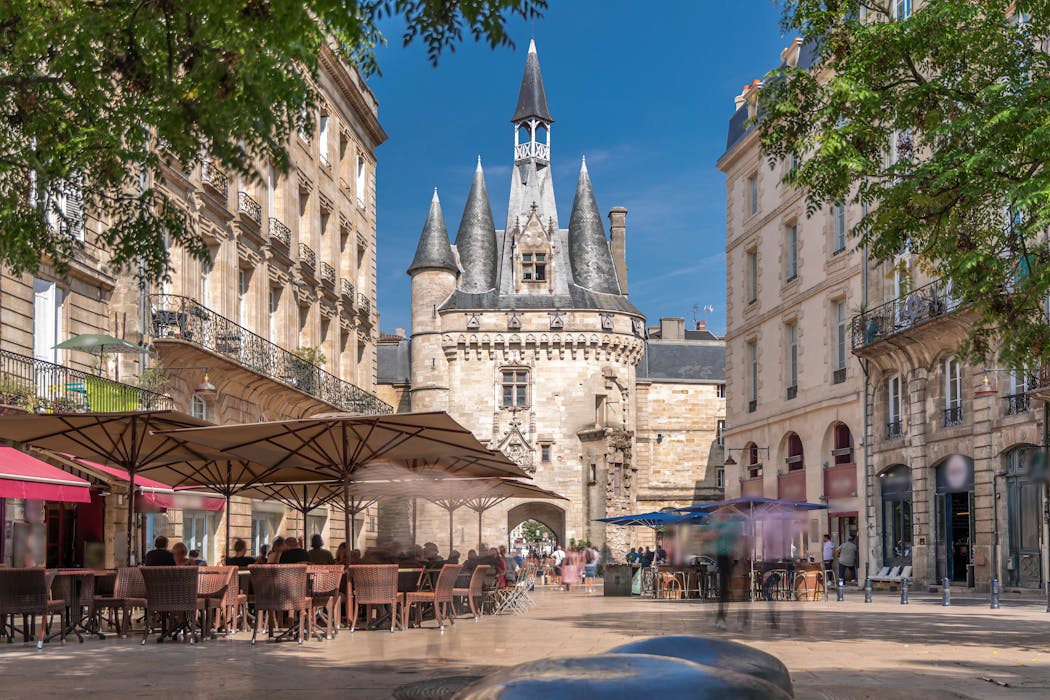
La porte Cailhau à Bordeaux (Gironde). Sur Airbnb, les annonces ne vendent pas qu’un hébergement : elles racontent une personne, un style de vie, un quartier… Kirill Neiezhmakov/Shutterstock

L’annonce Airbnb n’est pas un simple descriptif du logement à louer. À partir d’un corpus de trois cents annonces bordelaises et d’une centaine d’entretiens avec des loueurs de la ville, l’étude présentée ici montre qu’il s’agit d’un véritable médium narratif, où se jouent la mise en scène du chez-soi, le (re)placement du logement dans la ville et la construction d’un récit d’hospitalité.


À Bordeaux (Gironde), et ailleurs, les annonces ne vendent pas qu’un hébergement : elles racontent une personne, un style de vie, un quartier – entre « authenticité » et « prestige discret ». Titres, photographies, descriptifs et prix deviennent des leviers pour convaincre « vite et bien ». Ce faisant, l’hôte endosse tour à tour les rôles de marketeur, d’agent immobilier et, parfois, d’opérateur touristique, en scénarisant son logement pour inspirer confiance, justifier les prix et se démarquer de la concurrence.

De ce point de vue, les annonces Airbnb constituent un matériau empirique de premier ordre pour étudier cette fabrique discursive de l’hospitalité.

Le titre, premier élément lu

Le parcours des utilisateurs sur l’application est clair : les voyageurs commencent par l’annonce – ils lisent le titre, parcourent les photos puis vérifient la localisation sur la carte – et ne consultent le profil de l’hôte qu’ensuite, pour confirmer leur choix ou poser une question. Le titre de l’annonce condense ainsi en quelques mots la promesse du bien – et de l’expérience – proposée : il doit situer, qualifier et, si possible, distinguer.

Dans ce cadre, trois leviers dominent alors :

(1) L’emplacement, assorti d’un jugement de valeur subjectif : à propos du quartier, la proximité d’un (ou plusieurs) lieu repère, l’accès aux transports en commun (tram/gare), la possibilité de stationner son véhicule. Voici plusieurs exemples :

« 1 min pont de Pierre et Porte de Bourgogne » ;
« Hyper centre, rue de la Merci » ;
« Bordeaux centre-ville et parking ».

(2) La « qualité » intrinsèque du logement (type, surface, agencement, esthétique) :

« Magnifique appartement en pierre + cour privative » ;
« Vue sur les façades du 18e » ;
« Échoppe typique bordelaise ».

(3) Les équipements dits « rares » :

« Jacuzzi privatif » ;
« Profitez du toit-terrasse » ;
« Studio | wifi | garage | BBQ ».

Certains loueurs mixent les trois leviers dans des annonces cumulatives :

« Bel appartement avec parking en hypercentre » ;
« Charme, proximité tram, lit king size, plancha » ;
« Dans l’hypercentre – clim’ + douche à l’italienne ».

Lors d’un entretien, mené à Bordeaux en 2023, Romain, hôte, résume sa stratégie :

« J’ai écrit un titre qui pète puis mis une dizaine de photos sympas… c’est comme sur Tinder, mais avec les appartements. »

Laurie raconte quant à elle avoir revu titre, photos et descriptif, avec l’aide de ChatGPT, pour gagner en visibilité :

« Au départ, j’avais écrit un titre bateau, du style “Logement Bordeaux”, mais ça ne marchait pas trop. Tout n’était pas lié au titre, bien sûr, mais cela a sûrement renforcé mon invisibilisation. J’ai décidé de changer ma façon de faire, en modifiant le titre, les photos, le texte, les disponibilités… Je me suis appuyée sur ChatGPT et depuis c’est beaucoup mieux. »

Le titre actuel de son annonce – « Appartement cosy dans l’hypercentre de Bordeaux » – exemplifie la mobilisation des leviers d’emplacement et de qualité intrinsèque du logement.

« Faites de belles photos ! » : l’image qui précède l’usage

Airbnb incite explicitement à publier de nombreuses photos de qualité. La « photo d’accroche » – première image visible dans les résultats et en tête de l’annonce – a pour rôle d’attirer le clic et de servir de preuve visuelle à la promesse formulée dans le titre. Elle montre un intérieur impeccable – une « scène » – débarrassé des traces du quotidien, avec des configurations et une décoration standardisés, au point de faire exister un chez-soi idéal plutôt qu’un logement vécu.

La frontière public/privé, déjà travaillée par les catalogues d’ameublement et la presse déco, est ici déplacée : l’exhibition n’est plus seulement esthétique, elle est monétisée, géolocalisée, évaluée et orientée par l’algorithme – jusqu’à organiser l’entrée d’inconnus dans le chez-soi.

Quatre cadrages dominent pour la photo d’accroche :

Un schéma illustrant les quatre types de cadrages possibles sur les annonces Airbnb
Les quatre types de photographies dans les annonces Airbnb.
Image fournie par l’auteur, Fourni par l’auteur

(1) Le logement vu de l’extérieur (façade, porte, allée, parfois depuis un point haut, etc.).

Photographie prise depuis l’espace de la ville vers le logement.
Airbnb

(2) L’intérieur du logement : une pièce ou un équipement (salon, cuisine, jacuzzi, piscine, etc.).

Photographie prise à l’intérieur du logement.
Airbnb

(3) L’extérieur cadré depuis l’intérieur : vue à travers une fenêtre, une terrasse, un jardin, etc.

Photographie prise depuis l’intérieur du logement vers l’espace de la ville.
Airbnb

(4) L’extérieur du logement (paysage urbain, monument emblématique, plaque de rue, etc.) – quand l’environnement « vend » aussi bien ou mieux que l’intérieur.

Photographie prise depuis l’espace de la ville vers l’espace de la ville.
Airbnb

À Bordeaux intra-muros, l’immense majorité des annonces montrent d’abord un intérieur – la plupart des logements loués sont en effet des appartements sans balcon ni jardin. Dans les quartiers d’échoppes – petites maisons mitoyennes en pierre du XIXe siècle, typiques de Bordeaux, souvent avec une cour ou un jardin étroit –, ou dans la première couronne, on voit davantage d’images d’extérieurs (jardin, terrasse, piscine, coin plancha).

Au-delà du cadrage, les choix du moment de la journée et de la lumière, de l’angle, des retouches et, parfois, le recours à un photographe professionnel (préconisé par Airbnb) relèvent d’une stratégie : capitaliser sur l’atout principal du logement, masquer ses faiblesses, et faire coïncider l’image avec le récit de l’annonce, quitte à parfois assumer des écarts entre les photographies et la réalité.

Décrire l’hébergement : trois options narratives

Sur le plan textuel, dans la rubrique « À propos de ce logement », les hôtes mêlent librement récit, mode d’emploi et conseils. Malgré l’hétérogénéité des textes, trois options récurrentes structurent la description :

(1) Le logement comme point de chute : une base de séjour depuis laquelle rayonner facilement dans la ville. Le descriptif détaille alors l’emplacement (temps de marche, lignes de tram, monuments, marchés, lieux de sortie, écosystème culturel).

(2) Le logement comme destination en soi : esthétique, confort et équipements « rares » font du lieu une attraction liée à une activité (se reposer, se ressourcer, se détendre, profiter).

(3) Le mélange : bon emplacement et qualités intrinsèques du logement. C’est l’option la plus répandue.

Plusieurs extraits d’entretiens avec des loueurs illustrent l’alternance de ces trois options narratives :

« Mon appartement a un énorme avantage : sa localisation dans le cœur de ville. Je joue donc cette carte à fond… Le titre convainc les voyageurs qu’ils sont au bon endroit, l’appartement est facile d’accès, avec une vue imprenable sur la Grosse Cloche. Les touristes sont à 7 min à pied de (la place touristique de) Pey-Berland, à 10 min du Grand-Théâtre. Bordeaux est une ville à taille humaine, vous pouvez pratiquement tout faire à pied, revenir déjeuner à l’appartement, faire la sieste et repartir vous promener l’après-midi. » – Ayron, hôte bordelais.

« Nous sommes relativement loin du centre-ville (10 min à vélo), alors il nous a fallu mettre la lumière sur d’autres aspects que l’emplacement, notamment le côté “sympa” du quartier, la bonne ambiance, le voisinage, les commerces présents, le calme, la végétation surtout au printemps. […] Le barbecue et la terrasse permettent de faire des repas entre amis, d’accueillir d’autres invités que les seuls locataires, de se sentir chez soi mais ailleurs que chez soi. Nous avons beaucoup insisté sur cela dans l’annonce. » – Julie, hôtesse bordelaise.

Ces choix narratifs se forgent avec l’expérience : au fil des séjours et des retours, les hôtes ajustent leur discours aux attentes et aux profils (couples, familles, professionnels) et transforment la description en positionnement d’usage – séjour urbain à pied, halte familiale, retraite-détente, déplacement pro – qui oriente les attentes. En un mot : ils s’adaptent.

Construire un récit. Quand l’hôte devient opérateur touristique

Certains hôtes ne se contentent pas de décrire, mais racontent carrément un séjour possible. Dans la pratique, ce récit dépasse l’application. Dans le logement, on trouve un livret d’accueil ou un guide maison (imprimé ou en QR code), des cartes annotées, des affichettes « À savoir » ; en amont et pendant le séjour, des messages complètent l’ensemble. Ce dispositif cadre l’usage du logement et outille la découverte, en proposant par exemple des bons plans selon la météo, des itinéraires ou des repères dans le quartier.

Chez les plus investis, le récit dépasse même l’hébergement. Ils proposent des balades thématiques, rejoignent des réseaux de greeters – des habitants bénévoles qui font découvrir gratuitement leur quartier aux visiteurs – et adoptent plus largement une posture d’« aiguilleur » au fil des échanges. La plateforme encourage par ailleurs cette scénographie, en décernant des « badges » à certains propriétaires et en valorisant l’entraide entre loueurs et locataires.

Dans mon analyse de 600 commentaires laissés par des voyageurs sur 20 annonces bordelaises, entre 2019 et 2023, la reconnaissance explicite du rôle d’« opérateur touristique » de l’hôte reste minoritaire (env. 150 occurrences, dont env. 70 clairement formulées). Ce travail narratif aide certains hôtes à se distinguer, mais il n’est pas systématiquement relevé par les voyageurs dans leurs avis.

Stratégies d’emplacement vs déterminisme locatif

Des hôtes en position défavorable – éloignés des centres urbains et des pôles touristiques, ou proposant un logement qui n’est pas spécialement remarquable – renversent la contrainte grâce au récit de leur annonce. Ils ciblent les bons publics, reconfigurent leur récit (« accès voiture », « proximité rocade », « calme », « jardin », « piscine », « stationnement »), ou misent tout sur l’environnement, en détaillant par exemple les bars à proximité et l’histoire du quartier.

La maîtrise de « compétences spatiales » s’avère ici décisive. Par cette expression, j’entends la capacité à situer finement le logement (temps de marche, transports, accès), à rendre son accessibilité lisible en termes de repères concrets, puis à le relier à des usages (courses, culture, promenades) en changeant d’échelle selon le public. Maîtriser ces compétences – situer, rendre lisible, relier – est décisif pour transformer un simple point sur la carte en séjour désirable.

Dans le prolongement de ces stratégies de distinction, le prix traduit la mise en scène décrite plus haut : il aligne la promesse (titre, photos, récit) avec un segment de clientèle. Bas, il signale l’opportunité et déclenche les premières réservations/avis ; haut, il marque la qualité et filtre la demande.

Dans les faits, les hôtes prennent en compte un ensemble de variables d’ajustement (saisonnalité, week-end/semaine, remises de dernière minute, minimum de nuits, événements) et aiguillent leurs indicateurs de performance (taux d’occupation, rythme des réservations, avis) pour remonter dans les résultats de l’application ou se spécialiser sur un public précis.

Les annonces Airbnb, un observatoire des tensions économiques autour du logement

Dans une métropole comme Bordeaux, où l’accès au logement est dit « tendu », la tarification ouvre un enjeu central : l’arbitrage entre courte et longue durée. Quand le rendement attendu et la flexibilité perçue sont supérieurs en meublé touristique, des propriétaires basculent vers la courte durée, surtout dans les quartiers les plus demandés, avec à la clé une rareté accrue de l’offre longue durée et, indirectement, une pression sur les loyers. D’où la question décisive : que produisent, quartier par quartier, ces arbitrages tarifaires sur l’offre disponible et sur les prix – et que peuvent les dispositifs de régulation pour y répondre ?

La Métropole a déjà mis en place un arsenal de mesures : enregistrement obligatoire avec numéro à afficher, changement d’usage assorti d’une compensation à payer, plafonds de nuitées pour les résidences principales, contrôles et amendes administratives, ainsi que des obligations de partage de données imposées aux plateformes.

L’étude des annonces Airbnb est utile pour documenter et évaluer ces politiques : elle permet de cartographier les concentrations de meublés de tourisme par quartier, d’identifier les caractéristiques signalant des usages problématiques de la plateforme (location de logements entiers, multiannonces, « arrivée autonome » avec une boîte à clés, recours à des conciergeries), de repérer des signaux de professionnalisation, de suivre les évolutions avant/après règlementation, enfin de relier ces indicateurs aux tensions locales (offre disponible, niveaux de loyers). Autrement dit, les annonces ne sont pas seulement un discours : elles forment un observatoire de l’hospitalité et un baromètre spatial précieux pour ajuster la régulation, quartier par quartier.

The Conversation

Victor Piganiol ne travaille pas, ne conseille pas, ne possède pas de parts, ne reçoit pas de fonds d’une organisation qui pourrait tirer profit de cet article, et n’a déclaré aucune autre affiliation que son organisme de recherche.

ref. Airbnb : comment les hôtes se racontent en ligne – https://theconversation.com/airbnb-comment-les-hotes-se-racontent-en-ligne-265311

Restitutions du patrimoine culturel illicite : un nouveau projet de loi française pourrait changer la donne

Source: The Conversation – in French – By Catharine Titi, Research Associate Professor (tenured), French National Centre for Scientific Research (CNRS), Université Paris-Panthéon-Assas

Image tirée du film _Dahomey_ (2024), de Mati Diop, Ours d’or de la 74<sup>e</sup>&nbsp;Berlinale. Films du Losange

Sur la question des restitutions du patrimoine culturel illicite, la France entend aller plus loin avec un projet de loi qui pourrait devenir une loi phare en la matière. Quelles en sont les modalités, et pourquoi ce projet représente-t-il potentiellement un tournant historique ?


Le discours marquant d’Emmanuel Macron sur le patrimoine culturel africain, prononcé à Ouagadougou au Burkina Faso en 2017, a suscité l’espoir d’un tournant dans la question des restitutions. Depuis, les premiers résultats ont été modestes.

Les conclusions audacieuses du rapport Sarr-Savoy, publié un an plus tard, se cantonnaient au patrimoine culturel subsaharien. Les quelques restitutions qui ont suivi, notamment celles de 26 œuvres au Bénin, d’un objet au Sénégal et d’un autre à la Côte d’Ivoire, se sont révélées moins ambitieuses que celles entrevues.

Certes, deux lois-cadres sur la restitution des restes humains et sur des objets liés aux spoliations antisémites ont bien été adoptées en 2023, mais nous étions là à la traîne d’autres pays européens. Nos voisins d’outre-Manche, connus pour leur scepticisme vis-à-vis des restitutions, disposent de telles lois depuis de longues années.

Cependant, aujourd’hui, la France entend aller plus loin avec un projet de loi qui pourrait devenir une loi phare en matière de restitutions. La promesse date de 2021, quand le président de la République affirmait la nécessité d’une loi « qui permettra de cadrer dans la durée les choses […] pour établir véritablement une doctrine et des règles précises de restituabilité ». Aujourd’hui, les conditions de son adoption semblent enfin réunies.

Une dérogation ciblée au principe d’inaliénabilité

Le projet de loi vise à créer une dérogation ponctuelle au principe d’inaliénabilité qui empêche la vente ou le transfert des œuvres des collections publiques pour certains biens culturels. L’objectif est de faciliter le processus de restitution, afin qu’elle puisse s’effectuer par décret en Conseil d’État, sans que le législateur n’ait à intervenir.

Selon l’étude d’impact du projet, il serait « répétitif et pesant […] pour toutes les parties prenantes de proposer de nouveaux projets de loi ad hoc […] pour restituer au cas par cas » et le Parlement pourrait « être difficilement sollicité de façon répétée pour des lois d’espèce visant des œuvres spécifiques ».

Appropriation illicite entre 1815 et 1972

Les biens culturels concernés sont ceux qui ont fait l’objet d’une « appropriation illicite » entre le 10 juin 1815, lendemain de la signature de l’acte final du congrès de Vienne, qui a décrété la restitution des spoliations européennes de Napoléon, et le 23 avril 1972, veille de l’entrée en vigueur de la Convention de l’Unesco de 1970, qui a mis en place un cadre de lutte contre le trafic international de biens culturels.

Cette période pose question. Par exemple, toutes les antiquités et autres œuvres d’art qui auraient dû être restituées en 1815, selon l’accord établi à l’époque, ne l’ont pas été. Pourquoi ne pas couvrir toute la période napoléonienne ? Ne serait-ce pas aussi un moyen indirect d’exercer une pression sur nos voisins britanniques qui, à l’issue de la bataille du Nil (1798), ont emporté les antiquités égyptiennes de la campagne d’Égypte ?

Le texte du projet de loi retient comme date cruciale celle de l’appropriation illicite de l’objet. La loi pourrait aller encore plus loin en retenant comme date cruciale celle de l’acquisition de l’objet illicite par une collection nationale française. Dans ce cas, un objet volé avant 1815, mais acquis après cette date serait toujours protégé par la loi.

Mieux encore, a-t-on vraiment besoin d’une période de référence ? Ne serait-il pas suffisant de se concentrer sur le caractère illicite du bien ?

Il faut rappeler qu’aucune restitution ne sera automatique : un décret en Conseil d’État pris sur le rapport du ministre de la culture sera nécessaire. Il n’y a donc aucun risque de restitution précipitée.

Par ailleurs, le projet prévoit qu’un comité scientifique pourrait également être consulté pour avis. Il pourrait même être conçu comme un organe pérenne, ce qui lui permettrait de développer une pratique, équivalente à une « jurisprudence » constante.

Enfin, la dérogation ne couvre pas les biens archéologiques ayant fait l’objet d’un accord de partage de fouilles ou d’un échange à des fins d’étude scientifique ni les biens saisis par les forces armées et transformés en « biens militaires ». Ces exclusions pourraient sensiblement restreindre l’impact de la loi, d’autant que la définition du terme « bien militaire » est large et que certains anciens accords relatifs à des biens archéologiques pourraient être considérés comme une appropriation illicite aujourd’hui.

Vol ou exportation illicite à partir de 1972

Au-delà de la dérogation au principe d’inaliénabilité, le projet de loi vise les biens culturels qui ont été « volés ou illicitement exportés » à partir du 24 avril 1972, date d’entrée en vigueur de la Convention de l’Unesco de 1970. Comme la France n’a ratifié cette convention qu’en 1997, il a été décidé de l’appliquer rétroactivement à partir de 1972.

Ici, le processus de restitution est différent : la collection publique qui possède le bien culturel demande au juge d’ordonner sa restitution. L’inconvénient est qu’il concerne uniquement les objets « volés ou illicitement exportés » et donc pas forcément d’autres types d’« appropriation illicite » comme la cession d’un objet obtenue par contrainte.

En outre, on peut s’interroger sur l’intention du projet de loi qui est soit de proposer un cadre législatif nouveau, soit d’intégrer la Convention de l’Unesco de 1970 dans le droit interne français. Dans ce dernier cas, il pourrait involontairement intégrer aussi les limitations de celle-ci. Par exemple, les produits provenant de fouilles archéologiques clandestines n’entrent pas a priori dans le champ de protection de cette convention. Est-ce vraiment la volonté du législateur d’exclure les produits de fouilles clandestines du champ d’application de la loi ?

Politiques de restitution : l’exemple néerlandais

Ces dernières années, les politiques en matière de restitution ont radicalement changé presque partout dans le monde, prouvant que des pratiques, acceptables par le passé, ne le sont plus. À ce titre, l’exemple des Pays-Bas est particulièrement intéressant.

Depuis 2020, ce pays a mis en place une nouvelle politique et a constitué un comité scientifique chargé d’examiner les demandes de restitution émanant d’un État étranger. Il accepte désormais que les objets entrés dans le domaine public néerlandais à la suite d’un déséquilibre des pouvoirs soient restitués. Bien que le comité ait officiellement été créé pour traiter les demandes relatives aux objets coloniaux, son champ d’action s’étend à tous les types d’objets. En cas de doute quant à la manière dont un bien culturel s’est intégré dans une collection néerlandaise, le comité recommande sa restitution. Le doute profite donc à l’État demandeur.

Les mots ont leur importance. Lorsqu’il examine une demande de restitution, le comité néerlandais ne considère pas que l’objet « appartient » à la collection néerlandaise, mais seulement qu’il y est accueilli. Il est question d’objets « perdus involontairement » par l’État concerné (et non « volés » ou « obtenus par contrainte »). Plus important encore, cette nouvelle politique reconnaît que « la réparation de l’injustice est le point de départ du processus de restitution ».

Un projet de loi tourné vers l’avenir

Revenons au projet français de loi présenté par le gouvernement. Il a été déposé au Sénat, le 30 juillet 2025, où trois sénateurs, Max Brisson (LR), Catherine Morin-Desailly (Union centriste) et Pierre Ouzoulias (CRCE-K), particulièrement engagés en la matière, ont déjà été à l’origine d’un nombre de dossiers législatifs portant sur les restitutions.

Le projet de loi devait initialement être discuté en septembre 2025, mais la situation politique a repoussé cette échéance à une date pour l’instant indéterminée.

Le consensus politique qui semble émerger en faveur de ce projet est fondateur. Il permettra à la France de se positionner à l’avant-garde du débat sur la restitution des biens culturels acquis illicitement.

The Conversation

Catharine Titi ne travaille pas, ne conseille pas, ne possède pas de parts, ne reçoit pas de fonds d’une organisation qui pourrait tirer profit de cet article, et n’a déclaré aucune autre affiliation que son organisme de recherche.

ref. Restitutions du patrimoine culturel illicite : un nouveau projet de loi française pourrait changer la donne – https://theconversation.com/restitutions-du-patrimoine-culturel-illicite-un-nouveau-projet-de-loi-francaise-pourrait-changer-la-donne-267580

When coal smoke choked St. Louis, residents fought back − but it took time and money

Source: The Conversation – USA (2) – By Robert Wyss, Professor Emeritus of Journalism, University of Connecticut

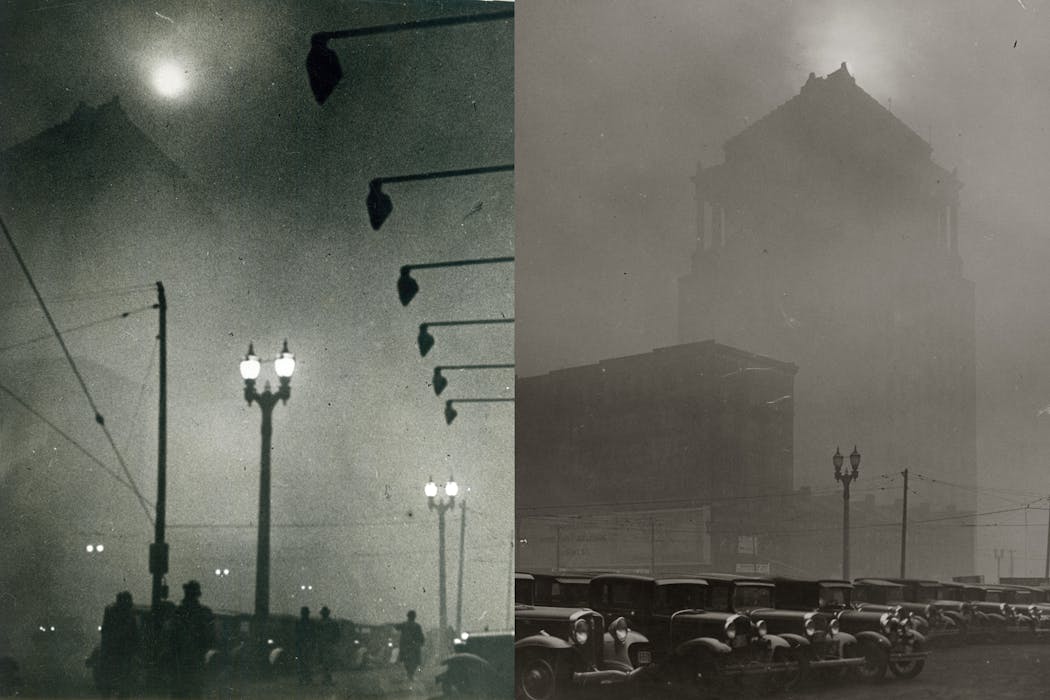
Scenes from downtown St. Louis on ‘Black Tuesday,’ Nov. 28, 1939, show how thick the smoke was even in the middle of the day. Missouri Historical Society

It was a morning unlike anything St. Louis had ever seen. Automobile traffic crawled as drivers struggled to peer through murky air. Buses, streetcars and trains ran an hour behind schedule. Downtown parking attendants used flashlights to guide vehicles into their lots. Streetlamps were ignited, and storefront windows blazed with light.

Residents called Nov. 28, 1939, “Black Tuesday.” Day turned to night as thick, acrid clouds blackened the sky. Even at street level, visibility was just a few feet. The air pollution was caused by homes, businesses and factories, which burned soft, sulfur-rich coal for heat and power. The soft coal was cheap and burned easily but produced vast amounts of smoke.

The murky morning was an extreme version of a problem St. Louis and dozens of other American cities had been experiencing for decades. Strict federal air pollution regulations were still 30 years away, and state and local efforts to limit coal smoke had failed miserably.

Today, as the Trump administration works to roll back air pollution limits on coal, the events in St. Louis more than 80 years ago serve as a reminder of how bad a situation can become before people’s objections finally force the government to act. And as I discuss in my book “Black Gold: The Rise, Reign and Fall of American Coal,” those events also highlight how successful that action can be.

The fight for cleaner air is a key part of St. Louis history.

A widespread civic effort

Days after Black Tuesday, St. Louis Mayor Bernard Dickmann responded to the crisis by creating a commission to investigate and recommend a solution to the continuing air pollution.

Just before Black Tuesday, Joseph Pulitzer II, publisher of the St. Louis Post-Dispatch, had launched his own anti-smoke newspaper campaign seeking fundamental change. In my research I found the first editorial, on Nov. 13, 1939, which declared “something must be done, or else.” A crack reporter, Sam J. Shelton, was assigned full time to what became the smoke beat. Post-Dispatch news stories, editorials and political cartoons championed the values of cleaner air and the dangers of toxic pollution.

Dickmann’s Smoke Elimination Committee met 13 times over a winter that seemed unrelenting in darkness. News and weather reports record that smoke blotted out the Sun on one out of every three days, and sometimes sunlight never pierced the darkness. Advice poured in, including from a Hollywood-style stuntman and flagpole sitter, Alvin “Shipwreck” Kelly, who offered to perch in the sky searching for dirty chimneys.

In late February 1940, the commission issued a report recommending restrictions on smoke emissions. The report said residents and industry should either pay more to buy coal with less sulfur or other fuel, or pay for and install new equipment to burn the sulfur-rich coal more cleanly. On April 5, the city’s Board of Aldermen convened to consider the changes in law that would enact the recommendations.

Newspapers reported that more than 300 protesters, including coal dealers, operators and miners, parked their trucks outside City Hall, waving banners. Black smoke spewed upward from coal stoves mounted atop one, newspaper reports said. The boisterous throng marched into City Hall, shouting and often drowning out city representatives. Amid catcalls and boos, the aldermen passed the ordinance 28-1.

St. Louis did a lot of work to control air pollution from burning coal.

Immediately, Raymond Tucker, the mayor’s deputy, began arranging for suppliers of more expensive low-sulfur coal for the city’s residents and businesses. He launched a slick public relations campaign urging residents to comply with the new law. He also hired a team of inspectors to block bootleg shipments of unauthorized sulfur-rich coal and to cite anyone whose chimney’s smoke ran too black.

Coal operators in Illinois, who sold the cheaper sulfur-rich coal, urged their state’s residents to boycott St. Louis goods and filed lawsuits challenging the legality of the new ordinance. Those actions appeared menacing but made little headway.

The true test of the ordinance would arrive with the winter chill.

A group of men in suits stand around a seated man, who is handing a pen to one of the standing men.
St. Louis Mayor Raymond Tucker, right, receives a pen from President Lyndon B. Johnson, who has just signed the Clean Air Act of 1963 into law.
Bettmann Archive/Getty Images

A winter of change

As winter arrived, legal coal was 10% to 30% more expensive than the high-sulfur coal had been, and some families struggled, especially in poorer areas of the city. Bootleg coal shipments arrived. More than once, Tucker’s armed inspectors fired at a suspect truck that ignored orders to stop, according to newspaper reports from the time.

While hopes were already high that the new, tough measures would clean the skies, the winter of 1940-41 defied even those rosy expectations. By mid-January, the city’s skies were so much cleaner than the year before that they were the talk of the town. They were clear blue, and even on days when there was smoke, it was far less than had been common before the city ordinance passed.

The national press picked up the news, and arriving visitors wrote letters to the editors of their hometown newspapers reporting being astounded by what St. Louis had accomplished that winter. Tucker compiled notes on how many communities in the U.S. and Canada sought details on the transformation. In that document, now held among his archives at Washington University in St. Louis, he listed 83.

A great city has washed its face,” Sam Shelton wrote for the Post-Dispatch. “St. Louis is no longer the grimy old man of American municipalities.” The “plague of smoke and soot” had been wiped away after a century in “a dramatic story of intelligent, courageous and co-operative effort.” No longer did residents have to endure “burning throats, hacking coughs, smarting eyes, sooty faces and soiled clothing.”

The newspaper was awarded a Pulitzer Prize for public service in 1941 for its campaign, the first time that a major award was conferred for an environmental story.

For years afterward, the coal industry argued that the St. Louis campaign was a fraud that needlessly forced residents to buy more expensive fuel and equipment. But even during World War II, when industrial restrictions meant pollution was worse in the name of driving the war economy, the city’s skies were never as blackened as they had been before.

Tucker, the mayor’s deputy, later used the fame he had achieved from the smoke campaign as a springboard to being elected mayor. He served 12 years. His former boss, Dickmann, was less fortunate, losing his reelection bid in 1941. He blamed it on having forced residents to pay more, even though it meant cleaner fuel for their homes and clearer skies for their community.

The Conversation

Robert Wyss does not work for, consult, own shares in or receive funding from any company or organization that would benefit from this article, and has disclosed no relevant affiliations beyond their academic appointment.

ref. When coal smoke choked St. Louis, residents fought back − but it took time and money – https://theconversation.com/when-coal-smoke-choked-st-louis-residents-fought-back-but-it-took-time-and-money-265934

Trump’s words aren’t stopping China, Brazil and many other countries from setting higher climate goals, but progress is slow

Source: The Conversation – USA (2) – By Shannon Gibson, Professor of Environmental Studies, Political Science and International Relations, USC Dornsife College of Letters, Arts and Sciences

Sea walls now ring much of the Marshall Islands’ capital, Majuro, as the ocean rises. Lt. Anna Maria Vaccaro/U.S. Coast Guard

In the Marshall Islands, where the land averages only 7 feet (2 meters) above sea level, people are acutely aware of climate change.

Their ancestors have lived on this string of Pacific islands for thousands of years. But as sea level rises, storms more easily flood communities and farmland with saltwater. Warming ocean water has triggered mass coral-bleaching events, harming habitats that are important for both tourism and fish that the islands’ economy relies on.

If the world fails to rein in the greenhouse gas emissions driving climate change, studies suggest low-lying islands like these could be uninhabitable within decades.

Marshall Islands President Hilda Heine talks about climate risks to her homeland while in New York for the United Nations General Assembly in September 2025.

Climate change isn’t just a problem for islands. Countries worldwide are experiencing intensifying storms, dangerous heat waves and rising seas as global temperatures rise.

Yet, after 30 years of international climate talks, 10 years of a global treaty promising to keep temperatures in check, and trillions of dollars in damage, the world is still not on track to stop rising global temperatures. Greenhouse gas emissions were at record highs in 2024, and it was Earth’s hottest year on record.

I study the dynamics of global environmental politics, including the United Nations climate negotiations. And I and my lab have been tracking countries’ latest climate pledges – known as nationally determined contributions, or NDCs – to see which countries have stepped up their efforts, which have slid back and who has ideas that can deliver a safer world for everyone.

While the Trump administration has been pressuring countries to back away from their climate commitments – and succeeded in delaying an International Maritime Organization vote on a global plan to tax greenhouse gas emissions from shipping after threatening other counties with sanctions, visa restrictions and port fees if they supported it – many countries are still pressing ahead.

Trump agitates, but many countries are steadfast

U.S. President Donald Trump, whose administration came into office vowing to eliminate climate regulations and boost the fossil fuel industry, derided concerns about climate change in his Sept. 23, 2025, speech to the U.N. General Assembly. He called climate change the “greatest con job ever perpetuated” and ridiculed green energy and climate science.

Trump’s language no longer surprises world leaders, though. More than 100 other countries announced new climate commitments during a high-level summit a few days later.

China, currently the world’s largest greenhouse gas emitter, was lauded for hitting its green energy targets five years early. Its rapid expansion of low-cost renewable energy and electric vehicle manufacturing has reduced pollution in Chinese cities while also boosting its economy and expanding the government’s influence around the world.

Chinese President Xi Jinping announced the country’s first absolute emissions reduction goal at the summit, committing to cut its net greenhouse gas emissions by 7% to 10% from peak levels by 2035. China also committed to nearly triple its solar and wind power capacity and expand reforestation efforts.

While advocates and other governments had hoped for a stronger announcement from China, the new goals mark an important shift from the country’s earlier carbon intensity targets, which aimed to decrease the amount of greenhouse gas emissions per unit of economic output but still allowed emissions to grow over time.

The European Union has yet to submit its new commitments, but the group of 27 European countries delivered a letter of intent, saying it would commit to a 66% to 72% collective decrease in net greenhouse gas emissions by 2035 compared with 1990 levels. Europe has seen a swift rise in renewable energy, up sharply since Russia’s invasion of Ukraine put the continent’s natural gas supplies in jeopardy.

The EU has also made waves by extending its carbon pricing rules beyond its borders.

The EU’s Carbon Border Adjustment Mechanism, scheduled to begin in January 2026, will be the first system to charge for the climate impact of imported goods coming into Europe from countries that don’t have carbon prices similar to the EU’s. The measure, meant to even the playing field for EU industries, sets a global precedent for linking carbon emissions to trade.

However, the EU’s climate plans are also facing some headwinds. Its parliament is moving toward softening new corporate sustainability requirements after pressure from companies. And it may face calls from some member countries to delay a new carbon market meant to cut emissions from road transportation and buildings, Politico reported.

The EU has pledged to mobilize up to 300 billion Euros (about US$350 billion) to support the global clean energy transition in developing countries.

The United Kingdom, Japan and Australia submitted their most ambitious targets to date. All three put them on track to reach net-zero emissions by 2050, meaning any greenhouse gases they emit will be offset by projects that avoid carbon emissions or remove carbon from the atmosphere.

In Australia, Queensland’s recent announcement that it would extend existing coal power plant use to the 2030s and 2040s may slow national progress. But Queensland also supports scaling up renewable energy and is still aiming for net-zero emissions by 2050.

Norway committed to reduce its greenhouse gas emissions by at least 70% by 2035 compared with 1990 levels, which would align with the Paris Agreement goal to keep global emissions below 1.5 degrees Celsius (2.7 degrees Fahrenheit). However, it plans to remain a major oil and gas exporter.

Notably, many developing countries also stepped up their commitments.

Brazil pledged a net emissions reduction of 59% to 67% by 2035 and is maintaining its 2050 net-zero target.

Free riding and taking cover behind the US

However, while some new climate commitments signal important momentum in the fight against climate change, the tug-of-war between global ambition to slow climate change and strategic self-interests was palpable at the New York summit. The responses to Trump’s remarks revealed both veiled critiques and deceleration of climate action by some governments.

China criticized backsliding by some countries, without naming names.

Brazil used the summit to call out countries that were late in submitting their updated climate commitments. Only about a third had submitted their updated pledges at that point.

Lula da Silva stands in a group talking, including heads of the UN and EU.
Brazilian President Luiz Inácio Lula da Silva, who will host the 30th annual U.N. climate conference, COP 30, in November 2025, talks with other world leaders at the U.N. in September 2025.
AP Photo/Peter Dejong

While it is difficult to parse out individual country motivations – economic stress, wars and political influence can all play a role – many scholars worry that U.S. backsliding will lead other countries to reduce their climate commitments, and some recent pledges appear to back this up.

Many petroleum-producing countries missed the U.N. pledge deadline. Qatar, which recently gifted the U.S. a jet plane for Trump’s use and has an economy largely bolstered by the oil and gas industry, has not updated its pledge since 2021. The six-member Gulf Cooperation Council’s average emissions reduction target is even lower than Qatar’s, at around 21.6% by 2030.

Similarly, Argentina, among the world’s top holders of shale oil and gas reserves, has not released its updated commitments. Progress on its previous commitment has been undermined by political shifts since President Javier Milei’s election in 2023.

Milei and Trump seated on a stage. Milei is holding a piece of paper up.
Argentine President Javier Milei meets with U.S. President Donald Trump during the United Nations General Assembly on Sept. 23, 2025, in New York. Trump offered Argentina a $20 billion currency swap to help Milei stabilize his struggling economy.
AP Photo/Evan Vucci

Milei initially vowed to abandon the 2030 agenda entirely and withdraw from the Paris Agreement, though his administration later backtracked. His dismissal of climate change as a “socialist lie” has aligned Argentina closely with Trump, culminating in a recently planned US$20 billion aid package from the U.S. to Argentina and raising questions about whether Argentina’s climate stance reflects genuine policy or geopolitical strategy.

Also noticeably absent are commitments from India, Mexico, South Africa and Saudi Arabia. Angola weakened its climate pledge, citing lack of international funding.

A new way to make climate commitments?

While many countries are promising progress to reduce greenhouse gas emissions, the commitments formally submitted as of Oct. 20 were still far below the level needed to keep global temperatures from rising by 2 C (3.6 F), let alone 1.5 C.

Chart shows slow progress
Countries’ new climate pledges – known as nationally determined contributions, or NDCs – as of Oct. 20, 2025, compiled by ClimateWatch, were still far from keeping global warming under 2 C (3.6 F), let alone 1.5 C (2.7 F). The total includes 62 countries that had submitted pledges, including a U.S. pledge submitted before the Trump administration took office. It does not include China’s announced pledge or the European Union’s expected pledge.
ClimateWatch, CC BY

To help boost national efforts and accountability, Brazil has proposed a new approach it calls a globally determined contribution. Unlike the 1997 Kyoto Protocol framework, which set fixed, country-specific emission reduction targets based on historical baselines, or the 2015 Paris Agreement’s pledge-as-you-can system, it would establish global targets aligned with the Paris Agreement’s temperature goals.

So, a globally determined contribution might state, for example, that the world will triple its renewable energy production and reverse deforestation by 2030. A target like that gives countries a clearer path of action. The new format would also allow city and state actions to be counted separately, increasing incentives for them to act.

As the host of the COP30 climate talks Nov. 10-21, 2025, Brazil is uniquely positioned to champion this concept. In the absence of U.S. leadership, the proposal could offer a rare opportunity for countries to collectively strengthen commitments and reshape treaty language in a way never seen before – leaving open the possibility for progress.

Wila Mannella, a research assistant and graduate student in environmental studies at USC, contributed to this article.

The Conversation

Shannon Gibson does not work for, consult, own shares in or receive funding from any company or organization that would benefit from this article, and has disclosed no relevant affiliations beyond their academic appointment.

ref. Trump’s words aren’t stopping China, Brazil and many other countries from setting higher climate goals, but progress is slow – https://theconversation.com/trumps-words-arent-stopping-china-brazil-and-many-other-countries-from-setting-higher-climate-goals-but-progress-is-slow-267194

Many Colorado homeowners are underinsured − here’s what to do before the next fire

Source: The Conversation – USA (2) – By Tony Cookson, Associate Professor of Finance, University of Colorado Boulder

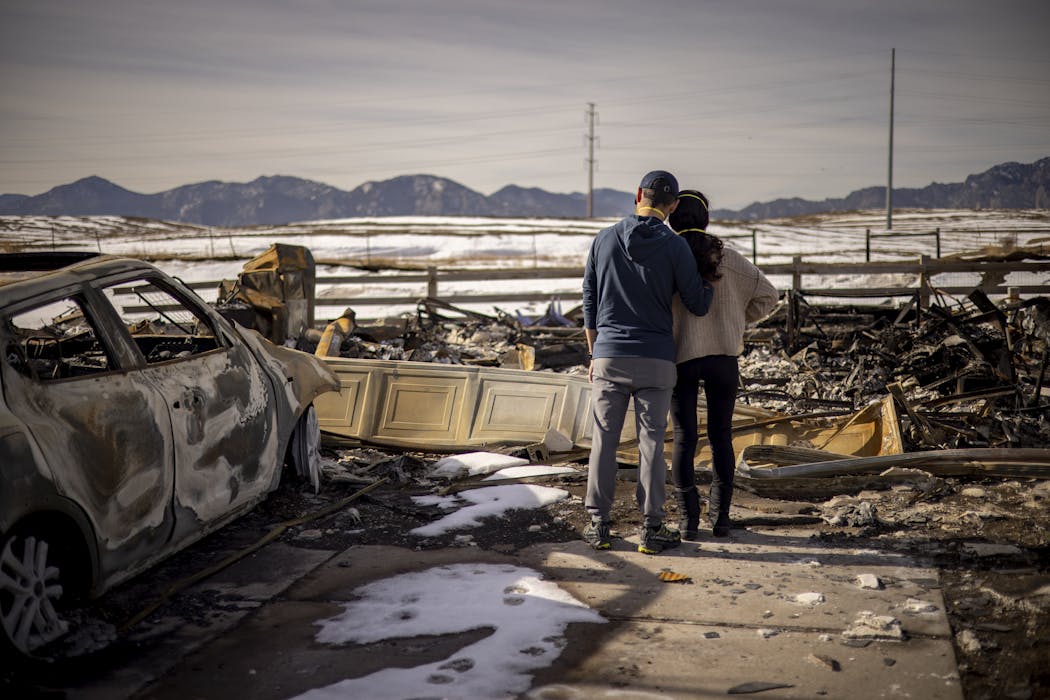
Many people who lost their homes in the Marshall Fire were underinsured. The Washington Post/GettyImages

Most Colorado homeowners do not have enough insurance coverage to rebuild their house after a total loss. That’s according to our new research examining whether homes destroyed in Colorado’s Marshall Fire — which burned more than 1,000 houses in suburban Boulder County — have been rebuilt.

We are economists who study the financial resources available to households to cope with disasters, including insurance, crowdfunding and federal disaster aid.

Over the past five years, insurance premiums in Colorado rose nearly 60%, driven by mounting losses from wildfire, hail and other disasters. These patterns are not unique to Colorado. They reflect a broader national reassessment of risks.

Our new research sheds light on this issue by linking confidential, contract-level data to real rebuilding outcomes.

Our study analyzes 3,089 policies from 14 major insurers held by people affected by the Marshall Fire. The findings offer concrete steps homeowners can take now to reduce the risk of holding insufficient coverage.

How common is underinsurance?

Underinsurance is determined by comparing the amount of coverage a homeowner carries to rebuild the physical structure of their home to the actual cost of rebuilding after a disaster.

To estimate each unique home’s rebuilding cost, the study used construction-cost software and adjusted the estimates to align with a sample of real-world construction quotes received by homeowners after the Marshall Fire.

We found that 74% of homeowners affected by the Marshall Fire were underinsured, and 36% were so severely underinsured that their policy covered less than 75% of the rebuild cost.

According to our research, underinsurance was not just a problem for poorer households. Even for households with incomes above US$180,000, 72% held policies that did not cover the cost of a complete rebuild.

Credit scores and mortgage debt amounts were unrelated to how underinsured people were.

Dozens of homes are in various stages of being built.
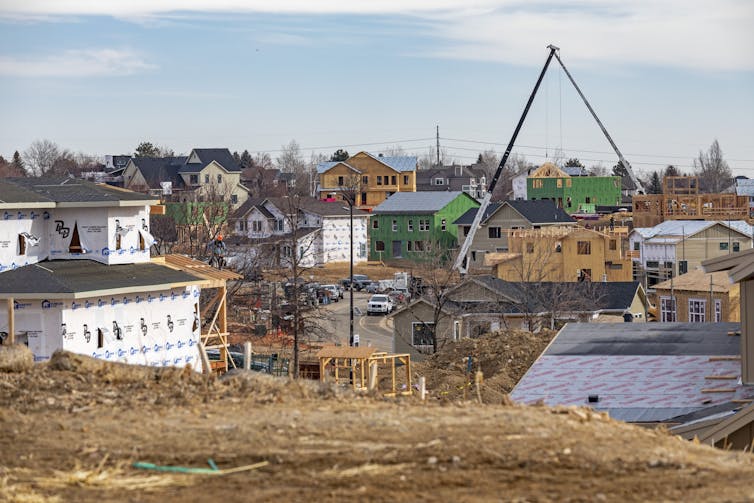
After the Marshall Fire, hundreds of homes were being rebuilt at once, which drove the costs of rebuilding up.
UCG/GettyImages

After major fires, construction costs typically spike as hundreds of survivors rebuild at once. To help manage this risk, many homeowners purchase an Extended Replacement Cost policy, which boosts coverage by a set percentage of the existing coverage limit if rebuilding costs end up higher than the coverage limit.

Eighty-seven percent of the Marshall Fire policies we studied included extended coverage. But nearly three-quarters of them still fell short of covering the full cost to rebuild. Our study found that while extended coverage policies cushion the impact of postfire construction cost inflation, they do not solve the deeper problem of underinsurance.

In other words, even without the surge in costs, most households had bought too little coverage from the outset.

Price shopping vs. the coverage you actually need

Our research finds that the insurance company a household chooses strongly predicts how much coverage the household has. That’s even after accounting for income, mortgage status, credit score, home value and property characteristics. In other words, insurers differ systematically in the coverage levels they tend to provide.

When shopping, homeowners attend to the headline premium, or the total cost of insurance, but not to how much coverage that premium actually buys. Indeed, if shoppers compared insurer quotes for the same coverage amount, they would gain about $290 per year in value, roughly 10% of the average annual homeowners insurance premium.

Why underinsurance slows recovery

Underinsurance isn’t an abstract problem offset by savings, loans and federal aid. It leaves real gaps in rebuilding.

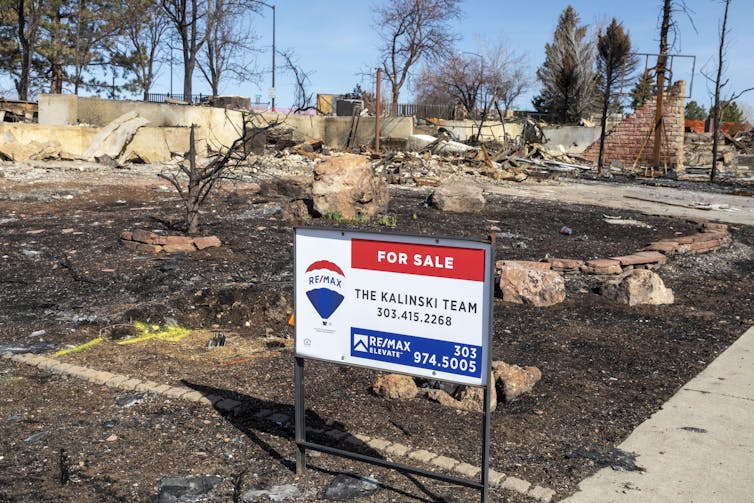
The study found that when a household’s insurance coverage falls short of the home’s replacement cost, the household is significantly less likely to rebuild after a total loss. Instead, some families end up selling and moving away.

A
A home lot for sale after the Marshall Fire.
UCG/GettyImages

In fact, the research shows that if all underinsured households in the sample had been fully insured, 25.4% of homeowners would have filed for reconstruction permits within a year of the fire, instead of the 18.8% that filed. In addition, only approximately 5.4% of homeowners would have sold their destroyed properties that year, as opposed to the 9.7% that did sell. Overall, this means more families could have rebuilt and stayed in their communities.

What Colorado homeowners can do now

Here are some practical steps Colorado homeowners can take to make sure their coverage keeps pace with rising risks and rebuilding costs:

  • When getting quotes or renewing, request a side-by-side comparison where coverage limits and any extended coverages are held constant across insurers. Shopping this way helps avoid underinsuring in pursuit of a lower premium.

  • Revisit limits after renovations and big economic changes. Construction costs in the region rose steeply in the lead-up to the Marshall Fire due to the pandemic and related inflation. If you haven’t updated your coverage recently, revisit it annually — especially if you remodeled or added square footage.

A good explainer of how to make a home inventory from the Minnesota Department of Commerce.

Consider insurer reputation and local presence. Different insurance companies will suggest different coverage limits for the exact same property. The study finds that companies with deeper roots in the community are less likely to underinsure, likely due to concerns about their reputation — something worth weighing alongside price.

The Front Range will continue to face wildfire seasons where wind, drought and human ignition interact in populated areas, and premiums are unlikely to snap back quickly. For households, the most practical step is to shop for insurance and renew policies as if a total loss could happen tomorrow.

The Conversation

Tony Cookson received funding from the National Bureau of Economic Research Household Finance Small Grants Program.

Emily Gallagher is affiliated with the Federal Reserve Bank of Philadelphia. The views expressed are solely hers and do not necessarily reflect the views of the Federal Reserve Bank of Philadelphia, the Federal Reserve Board of Governors, or the Federal Reserve System. No statements should be treated as legal advice or as an endorsement by the Federal Reserve System of a specific product or service.

ref. Many Colorado homeowners are underinsured − here’s what to do before the next fire – https://theconversation.com/many-colorado-homeowners-are-underinsured-heres-what-to-do-before-the-next-fire-263702

Bubble tea’s dark side: from lead contamination to kidney stones

Source: The Conversation – UK – By Adam Taylor, Professor of Anatomy, Lancaster University

norikko/Shutterstock.com

They’ve become as ubiquitous on British high streets as coffee shops – bubble tea outlets offering their Instagram-worthy drinks in countless flavour combinations. The Taiwanese beverage, a blend of black tea, milk, sugar and chewy tapioca pearls, has gained global popularity since its origins in the 1980s. But recent findings suggest this trendy drink may warrant closer scrutiny.

A Consumer Reports investigation revealed high lead levels in some bubble tea products in the US, echoing previous concerns about cassava-based foods. (No equivalent UK testing has been published.) The tapioca pearls – those signature “bubbles” – are made from cassava starch, and the root vegetable readily absorbs lead and other heavy metals from soil as it grows.

The tapioca pearls also pose other risks beyond contamination. Their starchy composition means that consuming large quantities can slow stomach emptying – a condition called gastroparesis – or, in some cases, lead to complete blockages.

Both can cause nausea, vomiting and abdominal pain, and symptoms can be particularly severe in people who already have slow-moving digestion. Even guar gum — a thickener often added to bubble tea and harmless in small amounts – can lead to constipation if you drink it often.

The drink’s composition also affects kidney health. In 2023, Taiwanese doctors removed over 300 kidney stones from a 20-year-old woman who’d been drinking bubble tea instead of water. Certain components, including oxalate and elevated phosphate levels, can contribute to stone formation. However, this extreme case probably reflects exceptionally high consumption.

For children, the risks are more immediate. The pearls can be a choking hazard – a risk that is well documented by paediatricians. Adults are not immune to this risk. According to media reports in Singapore, a 19-year-old woman died after inhaling three pearls when sucking harder on a partially blocked straw, while another woman narrowly avoided the same fate thanks to fast-acting bystanders.

Woman sitting on a toilet, holding her stomach in agony.
High consumption of bubble tea may contribute to constipation.
goffkein.pro/Shutterstock.com

The sugar problem

The sugar content raises longer-term health concerns. Most bubble teas contain 20–50g of sugar, comparable to or exceeding a can of Coca-Cola (35g). Research in Taiwan found that by age nine, children who regularly consumed bubble tea were 1.7 times more likely to have cavities in their permanent teeth.

In California, the drink is considered a contributing factor to the youth obesity epidemic, yet many young adults remain unaware of these risks. The high sugar and fat content increases the likelihood of developing type 2 diabetes, obesity and metabolic disease, while prolonged consumption may contribute to fatty liver disease – outcomes associated with any high-sugar product that spikes blood glucose and promotes fat storage in the liver.

Perhaps most surprisingly, emerging research suggests potential mental health implications. Studies of Chinese children who frequently consume bubble tea show an association with increased rates of anxiety and depression. Similar patterns appear in adults: research on Chinese nurses found that regular bubble tea consumption was associated with anxiety, depression, fatigue, job burnout and reduced wellbeing, even after controlling for other factors. The same study linked lower consumption to reduced thoughts of suicide, though establishing causation remains complex.

Strange scans

There’s even a curious medical phenomenon associated with consuming bubble tea: tapioca pearls appearing on scans of patients admitted for unrelated emergencies.

Doctors treating people after car accidents or with appendicitis have found dozens of pearls visible in stomachs and digestive tracts. These can occasionally cause diagnostic confusion, as they appear denser than the surrounding tissues and have stone-like properties similar to those seen with kidney- or gallstones.

This doesn’t mean bubble tea should be banned, but it does suggest we treat it as an occasional indulgence instead of a daily habit. And if you do indulge, consider skipping a straw. Drinking directly from the cup gives you better control, and allows your mouth’s sensory receptors to properly prepare for what’s coming.

The Conversation

Adam Taylor does not work for, consult, own shares in or receive funding from any company or organisation that would benefit from this article, and has disclosed no relevant affiliations beyond their academic appointment.

ref. Bubble tea’s dark side: from lead contamination to kidney stones – https://theconversation.com/bubble-teas-dark-side-from-lead-contamination-to-kidney-stones-266299

How higher states of consciousness can forever change your perception of reality

Source: The Conversation – UK – By Steve Taylor, Senior Lecturer in Psychology, Leeds Beckett University

Prostock-studio/Shutterstock

A few years ago I climbed over a gate and found myself gazing down at a valley. After I’d been walking for a few minutes, looking at the fields and the sky, there was a shift in my perception. Everything around me became intensely real. The fields and the bushes and trees and the clouds seemed more vivid, more intricate and beautiful.

I felt connected with my surroundings. What was inside me, as my own consciousness, was also “out there”. Within me, there was a glow of intense wellbeing.

This is an example of a higher state of consciousness – or, in my preferred term, an awakening experience. Awakening experiences are a temporary expansion and intensification of awareness that transforms our perception of the world.

As a psychologist, I have been studying such experiences for more than 15 years. Awakening experiences are sometimes viewed as mysterious and random, but I have found that, to a large degree, they can be explained.

My research has found that they have three main triggers.

The most common trigger may seem counter-intuitive. Around one-third of awakening experiences are linked to psychological distress, such as stress, depression and loss. For example, a man described to me, as part of my research, how he went through inner turmoil due to confusion about his sexuality, which led to the breakdown of his marriage.

But amid this turbulence, he experienced an awakening experiences in which, he said: “Everything just ceased to be. I lost all sense of time. I lost myself. I had a feeling of being totally at one with nature, with a massive sense of peace. I was a part of the scene. There was no ‘me’ anymore.”

Second, around one-quarter of the experiences are induced by the beauty and stillness of nature. A woman reported an awakening experience to me that occurred when she was swimming in a lake.

She said she “felt completely alone, but part of everything. I felt at peace… All my troubles disappeared and I felt in harmony with nature.” These types of experiences were often described by poets such as Wordsworth and Shelley.

The third most significant trigger (with a similar proportion to contact with nature) is spiritual practice. This primarily means meditation but also includes prayer and psycho-physical practices such as yoga or tai chi.

Perhaps surprisingly, I haven’t found that psychedelics are a major trigger of higher states. It may be that this is because my samples have been drawn from the general population, and not so many people have tried psychedelics. And psychedelics by no means always induce awakening experiences. They may simply induce perceptual distortions, or a state of dissociation.

Causes of awakening experiences

Some neuroscientists have suggested that awakening experiences are the result of stimulation of the temporal lobes (one of the most important parts of the brain, associated with memory, language comprehension and emotion). This is partly because some reports of higher states of consciousness come from people who suffer from temporal lobe epilepsy.

Illustration of scuba diver shining a torch on an iceberg.
There’s more going on in our minds than we know.
fran_kie/Shutterstock

Another theory is that experiences of oneness arise when the part of our brain responsible for our awareness of boundaries (the superior posterior parietal cortex) is less active than normal.

However, such theories have been criticised by other reseachers for a lack of control groups and successful replication. While some people who suffer from temporal lobe epilepsy may have awakening-type experiences, they are more likely to experience anxiety and disorientation.

In fact, other studies show no connection between seizures and higher states of consciousness. Other neuroscientists dispute the claim that spatial awareness is associated with the posterior parietal cortex.

Perhaps it makes more sense to explain awakening experiences in psychological rather than neurological terms.

Many awakening experiences are related to relaxation and mental quietness, induced by meditation or contact with nature. Normally, our awareness switches off to familiar objects and surroundings, as a way of saving energy.

But in moments of inner quietness, we expend less mental energy than normal. As a result, mental energy may intensify, generating more vivid awareness.

But how can we explain awakening experiences linked to psychological turmoil? A sense of shock and loss may bring a deconstruction of normal psychological processes.

In most states of turmoil, this may only cause further distress. But occasionally this may cause a transcendence of familiar modes of perception, and even a dissolution of our normal sense of ego, causing a sense of oneness.

Awakening experiences really are “higher states.” We tend to assume that our normal way of seeing the world is reliable and objective, offering a “true” vision of reality. But higher states teach the opposite: that our typical consciousness is limited and filtered.

We are normally trapped in a familiarised automatic perception of the world. This is why higher states carry a strong sense of revelation – because they reveal a wider reality to us.

As a result, even though awakening experiences typically only last from a few moments to a few hours, they often have a life-changing effect. Many people in my research described an awakening experience as the most significant moment of their lives.

In a study of 90 awakening experiences, my colleague Krisztina Egeto-Szabo and I found that the most significant after-effect was a positive shift, with increased trust in life, confidence and optimism. For example, one person reported that: “To know that it’s there (or here, I should say) is a great liberation.”

It would be a stretch to say that we can induce higher states of consciousness. However, we can create the conditions that make them more likely to occur. We do know that many are linked to relaxation and inner quietness. So we can create try to try to cultivate a still and relaxed state of mind – for example, through meditation and contact with nature. In doing so, we might find ourselves awakening to a wider and deeper reality.

The Conversation

Steve Taylor does not work for, consult, own shares in or receive funding from any company or organisation that would benefit from this article, and has disclosed no relevant affiliations beyond their academic appointment.

ref. How higher states of consciousness can forever change your perception of reality – https://theconversation.com/how-higher-states-of-consciousness-can-forever-change-your-perception-of-reality-265151

Louvre heist: the turbulent history of the stolen royal jewels

Source: The Conversation – UK – By Laura O’Brien, Associate Professor in Modern European History, Northumbria University, Newcastle

It sounds like the plot of a heist movie. On October 19, priceless items of jewellery and royal regalia were stolen, in broad daylight and in a matter of minutes, from the Louvre’s gilded Gallery of Apollo in Paris. The theft of these items from one of the world’s most famous museums, however, is merely the latest instalment in the chequered history of the crown jewels of France.

In many other countries, the term “crown jewels” is commonly understood as referring to regalia – in particular, the items used as part of the coronation ceremony for a monarch. In France, however, the crown jewels – or, to give them their French title, les joyaux de la Couronne de la France – is a more expansive term. It includes royal regalia, items of jewellery and precious stones.

The collection originated in the 16th century, when Francis I decreed that a set of jewels in his possession would become part of the inheritance of his successors. Eight items were stolen, including the reliquary brooch, diadem and large corsage-bow broach, and the 1855 crown of the Empress Eugénie, wife of Emperor Napoleon III.

The thieves also took an emerald necklace and earrings made for Empress Marie Louise, second wife of Napoleon I, and a sapphire diadem, necklace and single earring from a matching set linked to Queen Marie Amélie, wife of King Louis-Philippe.

Few items of royal jewellery and regalia survived the French Revolution in 1789. For centuries, the chapter of the Abbey of Saint-Denis, just outside Paris, had been the custodians of the coronation regalia as well as overseeing the preferred burial place of most French monarchs.

Most of the various crowns made for French kings since the Middle Ages were lost or destroyed in revolutionary attacks on the abbey, such as the Crown of Charlemagne and the 13th-century crown of Saint Louis. Both were melted down between 1793 and 1794.

The crown of Louis XV, created in 1722 and on permanent display in the Louvre since the late 19th century, is the only crown from the pre-revolutionary period to survive to this day. This crown was left untouched during the heist, suggesting that the thieves had done their research – the precious jewels that once adorned Louis XV’s crown were removed and replaced with glass replicas in the 1880s.

The history of the jewels

Napoleon I enhanced and expanded the French collection of crown jewels as part of the preparations for his coronation as emperor in 1804, commissioning a new crown and a replica of the medieval Hand of Justice sceptre.

As a nod to the ancient regalia – and, undoubtedly, as a way of cementing Napoleon’s own legitimacy as ruler – this new version of the sceptre included cameos and other jewels from the collection once held at Saint-Denis. This created a sense of continuity between the ancient French monarchies and the emperor born of the French Revolution.

Painting of Empress Marie Louise
Empress Marie Louise’s jewels were among the stolen haul.
Wiki Commons

The revolutionary upheavals of the 19th century raised questions about the future of the joyaux de la couronne and their place in post-revolutionary France. In 1848, following the creation of the French Second Republic, some republican politicians suggested that the jewels might be sold off. By 1852, however, the republic had fallen and a new emperor – Napoleon III, nephew of Napoleon I and erstwhile president of the republic – had come to power via a coup d’état.

Napoleon III and his wife, Eugénie, significantly expanded the crown jewels during the Second Empire (1852-1870). Yet this period also saw some of the collection go on public display for the first time.

Surviving items of coronation regalia were displayed alongside personal items belonging to previous French rulers as part of the Musée des Souverains (Museum of Sovereigns), which opened at the Louvre in 1852 and traced the history of France through displays devoted to the country’s various ruling dynasties. Here, the crown jewels were presented as an integral part of France’s national heritage, one that included both monarchical tradition and revolutionary transformation.

The fate of the jewels in the latter decades of the 19th century reflected broader debates about the meaning of this national heritage and how to preserve it. In 1878 a selection of the jewels – described in guidebooks as the “Diamonds of the Crown” – generated considerable public interest when they were displayed at the Paris Universal Exhibition.

Increased awareness of the collection prompted renewed calls for the jewels to be sold. Advocates of a sale argued that the Third Republic, founded after the fall of the Second Empire in 1870, should rid itself of these monarchical trappings once and for all and reinvest funds raised in social welfare schemes.

Their opponents pointed to the value of the joyaux de la couronne not just in monetary terms, but as examples of French craftsmanship worth preserving, and symbols of the complex history and heritage of modern France. Eventually, a compromise saw the most historically and aesthetically important items retained by the French Republic, and the rest auctioned off in 1887. Many of the items deemed worthy of preservation found a permanent home in the display cases of the Louvre’s Gallery of Apollo.

Responses to the recent heist suggest that in 21st-century republican France, the place of royal relics in the national heritage is no longer up for debate. Interior minister Laurent Nuñez has described the stolen jewels as having an “inestimable heritage value”. President Emmanuel Macron, meanwhile, commented on social media that the theft was “an attack on a heritage that we cherish because it is our history”.

Much of the immediate reaction to the audacious theft has concentrated on the Louvre’s security problems, rather than on the jewels themselves. The absence of these particular items from the museum’s collections is unlikely to bother most tourists.

Indeed, the Galerie d’Apollon and the crown jewels do not even feature on the Louvre’s suggested “masterpieces” visitor trail. However, the likelihood of increased security at the museum, particularly as it undergoes a major programme of renovation works, will affect every visitor to the Louvre – and potentially museums worldwide, as they tighten security measures in response to this extraordinary theft.


Looking for something good? Cut through the noise with a carefully curated selection of the latest releases, live events and exhibitions, straight to your inbox every fortnight, on Fridays. Sign up here.


The Conversation

Laura O’Brien does not work for, consult, own shares in or receive funding from any company or organisation that would benefit from this article, and has disclosed no relevant affiliations beyond their academic appointment.

ref. Louvre heist: the turbulent history of the stolen royal jewels – https://theconversation.com/louvre-heist-the-turbulent-history-of-the-stolen-royal-jewels-267994

Record-breaking CO₂ rise shows the Amazon is faltering — yet the satellite that spotted this may soon be shut down

Source: The Conversation – UK – By Paul Palmer, Professor of Quantitative Earth Observation, University of Edinburgh

titoOnz / shutterstock

Atmospheric carbon dioxide (CO₂) rose faster in 2024 than in any year since records began – far faster than scientists expected.

Our new satellite analysis shows that the Amazon rainforest, which has long been a huge absorber of carbon, is struggling to keep up. And worryingly, the satellite that made this discovery could soon be switched off.

Systematic measurements of CO₂ in the atmosphere began in the late 1950s, when the Mauna Loa observatory in Hawaii (chosen for its remoteness and untainted air) registered about 315 parts per million (ppm). Today, it’s more than 420ppm.

But just as important is the rate of change. The annual rise in global CO₂ has gone from below 1ppm in the 1960s to more than 2ppm a year in the 2010s. Every extra ppm represents about 2 billion tonnes of carbon – roughly four times the combined mass of every human alive today.

Across six decades of measurements, atmospheric CO₂ has gradually increased. There have been some large but temporary departures, typically associated with unusual weather caused by an El Niño in the Pacific. But the long-term trend is clear.

In 2023, CO₂ in the atmosphere grew by about 2.70ppm. That’s a large step up, but not too unusual. Yet in 2024, it was an unprecedented 3.73ppm.

How satellites observe atmospheric CO₂

Until recently, we could only monitor CO₂ through stations on the ground like the one in Hawaii. That changed with satellites such as Nasa’s Orbiting Carbon Observatory (OCO-2), launched in 2014.

The OCO-2 satellite analyses sunlight reflected from Earth. Carbon dioxide acts like a filter, absorbing specific wavelengths of light. By observing how much of that specific light is missing or dimmed when it reaches the satellite, scientists can accurately calculate how much CO₂ is in the atmosphere.

But air is always on the move. The CO₂ above any one point can come from many sources – local emissions, nearby forests, or air carried from far away. To untangle this mix, scientists use computer models that simulate how winds move CO₂ around the globe.

They then adjust these models until they match what the satellite sees. This gives us the most accurate estimate possible of where carbon is being released and where it’s being absorbed.

The decade-long data record from OCO-2 allows us to put 2023 and 2024 into historical context.

The result

From the satellite data, we infer that the largest changes in CO₂ emissions and absorption during 2023 and 2024, compared with the baseline year of 2022, were over tropical land.

shaded map of tropics
Data from 2023 and 2024 shows the areas where more carbon was emitted (in red) and withdrawn (blue) compared with the ‘normal’ year of 2022. The Amazon stands out in both years.
Feng et al

The largest change was over the Amazon, where much less CO₂ is being absorbed. Similar slowdowns also appeared over southern Africa and southeast Asia, parts of Australia, the eastern US, Alaska and western Russia.

Conversely, we detected more carbon being absorbed over western Europe, the US and central Canada.

Other data backs this up. For instance, plants emit a faint glow as they photosynthesise – remarkably, we can see this glow from space. Measurements of this glow along with vegetation greenness both show that tropical ecosystems were less active in 2023 and 2024.

Our analysis suggests that warmer temperatures explain most of the Amazon’s reduced capability to absorb carbon. Elsewhere in the tropics, changes in rainfall and soil moisture were more important.

Why 2023 and 2024 were special

In many ways, these years resembled previous El Niño years such as 2015-16, when drought and heat led to less carbon absorption and more wildfires. But what’s interesting about 2023-24 is that the responsible El Niño event was comparatively weak.

Something else must be amplifying the effect. The most likely culprit is the extensive, record-breaking drought that has gripped much of the Amazon basin. When plants are already stressed by a lack of water, even modest warming can push them beyond their tolerance, reducing their ability to absorb carbon.

Small boats in shallow water
Small boats left stranded as the Tapajós river (a major Amazon tributary) dries up in late 2023.
Tarcisio Schnaider / shutterstock

Roughly half of the CO₂ emitted by humans stays in the atmosphere. The other half is absorbed, more or less equally, by the land and the oceans. If drought or heat means plants are less able to absorb carbon, even temporarily, more of our emissions will remain in the air.

Our ability to meet climate targets relies on nature continuing to provide this vital carbon storage.

Satellite shutdown

It’s not yet clear whether 2023-24 is a short-term blip or an early sign of a long-term shift. But evidence points to an increasingly fragile situation, as tropical forests are stressed by hot and dry conditions.

Understanding exactly how and where these ecosystems are changing is essential if we want to know their future role in the climate, and whether drought will delay their recovery. One step is to urgently send scientists to tropical ecosystems to document recent changes in person.

That’s also where satellites like OCO-2 come in. They offer global and almost real-time coverage of how carbon dioxide is moving between the land, oceans and atmosphere, helping us separate temporary effects like El Niño from deeper changes.

Yet, despite being fit and healthy and having enough fuel to keep it going until 2040, OCO-2 is at risk of being shut down due to proposed Nasa budget cuts.

We wouldn’t be blind without it – but we’d be seeing far less clearly. Losing OCO-2 would mean losing our best tool for monitoring changes in the carbon cycle, and we will all be scientifically poorer for it.

The Amazon is sending us a warning. We must keep watching – while we still can.


Don’t have time to read about climate change as much as you’d like?

Get a weekly roundup in your inbox instead. Every Wednesday, The Conversation’s environment editor writes Imagine, a short email that goes a little deeper into just one climate issue. Join the 45,000+ readers who’ve subscribed so far.


The Conversation

The authors do not work for, consult, own shares in or receive funding from any company or organisation that would benefit from this article, and have disclosed no relevant affiliations beyond their academic appointment.

ref. Record-breaking CO₂ rise shows the Amazon is faltering — yet the satellite that spotted this may soon be shut down – https://theconversation.com/record-breaking-co-rise-shows-the-amazon-is-faltering-yet-the-satellite-that-spotted-this-may-soon-be-shut-down-264908