Navigating mental illness in the workplace can be tricky, but employees are entitled to accommodations

Source: The Conversation – USA (3) – By Julie Wolfe, Assistant Professor of Psychiatry, University of Colorado Anschutz Medical Campus
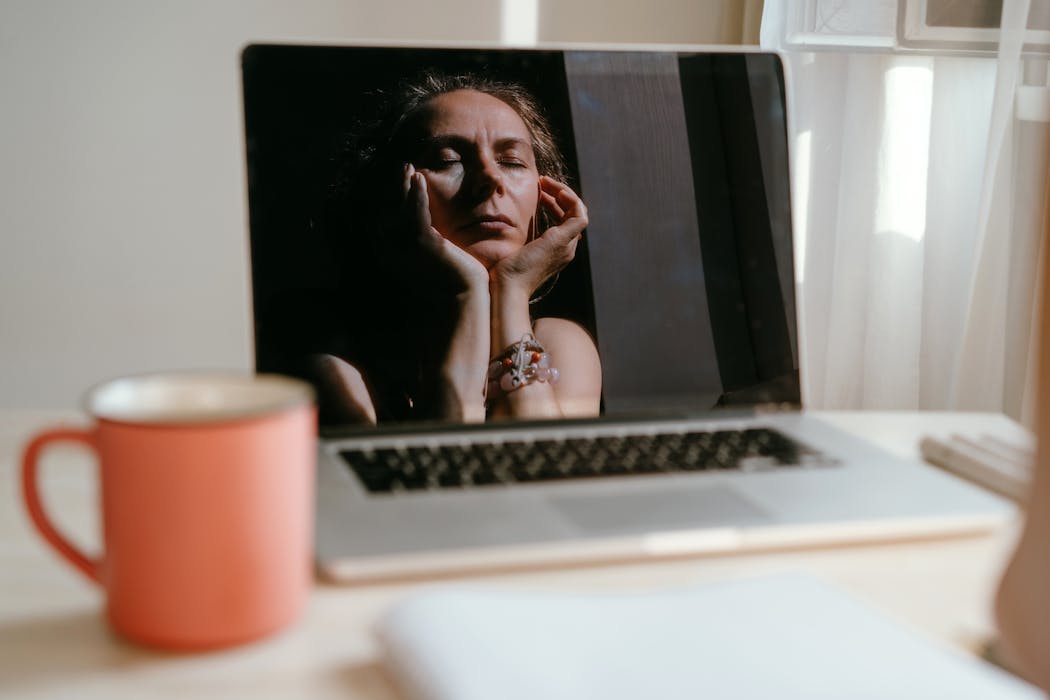
Coping with mental illness can make starting and completing simple tasks at work more difficult. Fiordaliso/Moment via Getty Images

Mental health challenges can affect anyone, regardless of background or circumstance, and they are becoming more common across the United States.

In 2022, a national survey found that about 60 million American adults – approximately 23% of the U.S. adult population – were living with a mental illness, defined as a diagnosable mental, emotional or behavioral disorder.

This translates to a nearly 37% increase over the past decade.

These conditions can have a profound and lasting effect on patients’ lives, including their ability to engage meaningfully and sustainably in the workforce.

Globally, depression and anxiety are estimated to lead to 12 billion lost working days annually, costing an estimated US$1 trillion per year in lost productivity worldwide and $47 billion in the United States.

I am a medical director and practicing psychiatrist. I work with graduate students, residents, faculty and staff on a health science campus, supporting their mental health – including when it intersects with challenges in the workplace.

I often meet with patients who feel unsure about how to approach conversations with their schools, programs or employers regarding their mental health, especially when it involves taking time off for care. This uncertainty can lead to delays in treatment, even when it’s truly needed.

Mental health by the numbers

Anxiety and depression are the most common mental health conditions in the U.S.. Nineteen percent of American adults suffer from an anxiety disorder, and more than 15% have depression.

Meanwhile, about 11% of Americans experience other conditions such as post-traumatic stress disorder, commonly known as PTSD, bipolar disorder, borderline personality disorder or obsessive-compulsive disorder.

Rates of anxiety and depression increased worldwide during the COVID-19 pandemic. But one positive consequence of the pandemic is that talking about mental health has become more normalized and less stigmatized, including in the workplace.

Struggling at work

For those with mental illness, the traditional expectation of maintaining a strict separation between personal and professional life is not only unrealistic, it may even be detrimental. The effect of mental illness on a person’s work varies depending on the type, severity and duration of their symptoms.

For instance, severe depression can affect basic self-care, making it difficult to complete tasks such as bathing, eating or even getting out of bed. Severe anxiety can also be profoundly debilitating and limit a person’s ability to leave the house due to intense fear or panic. The symptoms of such severe mental illness may make it difficult even to show up to work.

On the other hand, someone struggling with mild depression or anxiety may have a hard time initiating or completing tasks that they would typically manage with ease and find it difficult to interact with colleagues. Both depression and anxiety may affect sleep, which can contribute to cognitive lapses and increased fatigue during the work day.

Someone with PTSD may find that certain environments remind them of traumatic experiences, making it difficult to fully engage in their work. And a person experiencing a manic episode related to bipolar disorder might need to take time away from work entirely to focus on their stabilization and recovery.

Knowing when to ask for help

Identifying a trusted colleague, supervisor or human resources representative can be an important first step in managing your mental health at work. While selecting the right person to confide in may be challenging, especially given the vulnerability associated with disclosing mental health concerns, doing so can open pathways to appropriate resources and tailored support services.

For instance, it might encourage an employer to consider offering access to free or low-cost mental health care if it’s not already available, or to provide flexible scheduling that makes it easier for employees to get mental health treatment.

It’s also important to be aware of changes in your mental health. The earlier you can recognize signs of decline, the sooner you can get the support that you need, which might prevent symptoms from worsening.

On the other hand, sharing sensitive information with someone who is not equipped to respond appropriately could lead to unintended consequences, such as workplace gossip, unmet expectations and increased frustration due to perceived lack of support. However, even if your supervisor or manager is not understanding, that doesn’t change the fact that you have rights in the workplace.

In 2022, U.S. Surgeon General Vivek Murthy warned that American workplaces needed to change to better support employees’ well-being.

Consider exploring accommodations

The Americans with Disabilities Act provides critical protections for individuals with disabilities in the workplace. Under the act, it is unlawful for employers to discriminate against qualified individuals based on a disability.

The law also requires employers to provide reasonable accommodations so that people who qualify are able to participate fully in the workplace provided that they do not impose undue burden on the place of employment.

There are many reasonable accommodations for workers with mental illness. These can include protected time to attend mental health appointments and flexibility in work schedules and workplace.

For instance, if your job allows for it, working from home can be helpful. If your job requires being on site, a private work space is another reasonable accommodation. Someone with anxiety might find that working in a quiet, private space helps reduce distractions that trigger their symptoms, making it easier for them to stay focused and get things done.

Other possible accommodations include providing sick leave or flexible vacation time to use for mental health days or appointments, or allowing an employee to take breaks according to their individual needs rather than a fixed schedule. Employers can also provide support by offering equipment or technology such as white noise machines or dictation software.

The role of the workplace

An organization’s commitment to supporting employee mental health can play a large role in shaping how well employees perform at work – and, ultimately, the organization’s success.

Relying on individual employees to manage their mental health is not a sustainable long-term strategy for employers and may lead to significant workplace disruptions, such as more missed work days and lower productivity.

Studies show that when employers lead targeted initiatives promoting mental health, overall workplace functioning and resilience improve. These initiatives might include educating employees on mental health, providing accessible care, helping employees have better work-life balance and designing supportive workplace policies for those who are struggling. These steps help reduce stigma and signal to employees that it’s safe to seek support.

The Conversation

Julie Wolfe does not work for, consult, own shares in or receive funding from any company or organization that would benefit from this article, and has disclosed no relevant affiliations beyond their academic appointment.

ref. Navigating mental illness in the workplace can be tricky, but employees are entitled to accommodations – https://theconversation.com/navigating-mental-illness-in-the-workplace-can-be-tricky-but-employees-are-entitled-to-accommodations-259802

Demolishing the White House East Wing to build a ballroom embodies Trump’s heritage politics

Source: The Conversation – USA – By R. Grant Gilmore III, Director, Historic Preservation and Community Planning Program, College of Charleston

Demolition in process on the East Wing of the White House, Oct. 23, 2025. AP Photo/Jacquelyn Martin

From ancient Egypt to Washington, D.C., rulers have long used architecture and associated stories to project power, control memory and shape national identity. As 17th-century French statesman Jean-Baptiste Colbert observed:

“In the absence of brilliant deeds of war, nothing proclaims the greatness and spirit of princes more than building works.”

Today, the Trump administration is mobilizing heritage and architecture as tools of ideology and control. In U.S. historic preservation, “heritage” is the shared, living inheritance of places, objects, practices and stories – often plural and contested – that communities value and preserve. America’s architectural heritage is as diverse as the people who created, inhabited and continue to care for it.

As an archaeologist with three decades of practice, I read environments designed by humans. Enduring modifications to these places, especially to buildings and monuments, carry power and speak across generations.

In his first term as president, and even more so today, Donald Trump has pushed to an extreme legacy-building through architecture and heritage policy. He is remaking the White House physically and metaphorically in his image, consistent with his long record of putting his name on buildings as a developer.

In December 2020, Trump issued an executive order declaring classical and traditional architectural styles the “preferred” design for new federal buildings. The order derided Brutalist and modernist structures as inconsistent with national values.

Now, Trump is seeking to roll back inclusive historical narratives at U.S. parks and monuments. And he is reviving sanitized myths about America’s history of slavery, misogyny and Manifest Destiny, for use in museums, textbooks and public schools.

Yet artifacts don’t lie. And it is the archaeologist’s task to recover these legacies as truthfully as possible, since how the past is remembered shapes the choices a nation makes about its future.

The Trump administration tore down much of the White House East Wing without either consulting historians and preservation experts or opening the project to public comment.

Architecture as political power and legacy

Dictators, tyrants and kings build monumental architecture to buttress their own egos, which is called authoritarian monumentalism. They also seek to build the national ego – another word for nationalism.

Social psychologists have found that the awe we experience when we encounter something vast diminishes the “individual self,” making viewers feel respect and attachment to creators of awesome architecture. Authoritarian monumentalism often exploits this phenomenon. For example, in France, King Louis XIV expanded the Palace of Versailles and renovated its gardens in the mid-1600s to evoke perceptions of royal grandeur and territorial power in visitors.

Many leaders throughout history have built “temples to power” while erasing or overshadowing the memory of their predecessors – a practice known as damnatio memoriae, or condemnation to oblivion.

In the ancient world, the Sumerians, Babylonians, Egyptians, Romans, Chinese dynasties, Mayans and Incas all left behind architecture that still commands awe in the form of monuments to gods, rulers and communities. These monuments conveyed power and often served as instruments of physical and psychological control.

In the 19th century, Napoleon fused conquest with heritage. Expeditions to Egypt and Rome, and the building of Parisian monuments – the Arc de Triomphe and the Vendôme Column, both modeled on Roman precedents – reinforced his legitimacy.

Albert Speer’s and Hermann Giesler’s monumental neoclassical designs in Nazi Germany, such as the party rally grounds in Nuremberg, were intended to overwhelm the individual and glorify the regime. And Josef Stalin’s Soviet Union suppressed avant-garde experimentation in favor of monumental “socialist realist” architecture, projecting permanence and centralized power.

Now, Trump has proposed building his own triumphal arch in Arlington, Virginia, just across the Potomac River from the Lincoln Memorial, as a symbol to mark the 250th anniversary of the Declaration of Independence.

Four men in military uniforms with swastika arm bands inspect a large model of a stadium.
German Chancellor Adolf Hitler and architect Albert Speer in 1932, inspecting Speer’s model for a huge stadium to be built at Nuremberg.
Corbis via Getty Images

An American alternative

Born of Enlightenment ideals of John Locke, Voltaire and Adam Smith, the American Revolution rejected the European idea of monarchs as semidivine rulers. Instead, leaders were expected to serve the citizenry.

That philosophy took architectural form in the Federal style, which was dominant from about 1785 to 1830. This clear, democratic architectural language was distinct from Europe’s ornate traditions, and recognizably American.

Its key features were Palladian proportions – measurements rooted in classical Roman architecture – and an emphasis on balance, simplicity and patriotic motifs.

James Hoban’s White House and Thomas Jefferson’s Monticello embodied this style. Interiors featured lighter construction, symmetrical lines, and motifs such as eagles, urns and bellflowers. They rejected the opulent rococo styles associated with monarchy.

Americans also recognized preservation’s political force. In 1816, the city of Philadelphia bought Independence Hall, which was constructed in 1753 and was where the Declaration of Independence and the Constitution were debated and signed, to keep it from being demolished. Today the building is a U.S. National Park and a UNESCO World Heritage Site.

Early preservationists saved George Washington’s home, Mount Vernon, Jefferson’s Monticello, and other landmarks, tying democracy’s endurance to the built environment.

Architecture, memory and Trump

In remaking the White House and prescribing the style and content of many federal sites, Trump is targeting not just buildings but the stories they tell.

By challenging narratives that depart from white, Anglo-Saxon origin myths, Trump is using his power to roll back decades of work toward creating a more inclusive national history.

These actions ignore the fact that America’s strength lies in its identity as a nation of immigrants. The Trump administration has singled out the Smithsonian Institution – the world’s largest museum, founded “for the increase and diffusion of knowledge – for ideological reshaping. Trump also is pushing to restore recently removed Confederate monuments, helping to revive “Lost Cause” mythology about the Civil War.

Trump’s 2020 order declaring classical and traditional architectural styles the preferred design for government buildings echoed authoritarian leaders like Adolf Hitler and Stalin, whose governments sought to dictate aesthetics as expressions of ideology. The American Institute of Architects publicly opposed the order, warning that it imposed ideological restrictions on design.

Trump’s second administration has advanced this agenda by adopting many recommendations in the Heritage Foundation’s Project 2025 blueprint. Notably, Project 2025 calls for repealing the 1906 Antiquities Act – which empowers presidents to quickly designate national monuments on federal land – and for shrinking many existing monuments. Such rollbacks would undercut the framework that has safeguarded places like Devils Tower in Wyoming and Muir Woods in California for over a century.

Trump’s new ballroom is a distinct departure from the core values embodied in the White House’s Federal style. Although many commentators have described it as rococo, it is more aligned with the overwrought and opulent styles of the Gilded Age – a time in American history, from about 1875 through 1895, with many parallels to the present.

In ordering its construction, Trump has ignored long-standing consultation and review procedures that are central to historic preservation. The demolition of the East Wing may have ignored processes required by law at one of the most important U.S. historic sites. It’s the latest illustration of his unilateral and unaccountable methods for getting what he wants.

A man in a suit at a podium holds out a model of a white arch topped with a gilded statue.
At a press conference on Oct. 15, 2025, President Donald Trump holds a model of a proposed arch to be built across the Potomac River from the Lincoln Memorial.
Kevin Dietsch/Getty Images

Instruments of memory and identity

When leaders push selective histories and undercut inclusive ones, they turn heritage into a tool for controlling public memory. This collective understanding and interpretation of the past underpins a healthy democracy. It sustains a shared civic identity, ensures accountability for past wrongs and supports rights and participation.

Heritage politics in the Trump era seeks to redefine America’s story and determine who gets to speak. Attacks on so-called “woke” history seek to erase complex truths about slavery, inequality and exclusion that are essential to democratic accountability.

Architecture and heritage are never just bricks and mortar. They are instruments of memory, identity and power.

The Conversation

R. Grant Gilmore III does not work for, consult, own shares in or receive funding from any company or organization that would benefit from this article, and has disclosed no relevant affiliations beyond their academic appointment.

ref. Demolishing the White House East Wing to build a ballroom embodies Trump’s heritage politics – https://theconversation.com/demolishing-the-white-house-east-wing-to-build-a-ballroom-embodies-trumps-heritage-politics-264947

Influencers could learn a thing or two from traditional journalism about disclosing who’s funding their political coverage

Source: The Conversation – USA – By Edward Wasserman, Professor of Journalism, University of California, Berkeley

When influencers accept money and don’t disclose it, then they’re being influenced. Bambu Productions, Getty Images

Online influencers, through their postings on Instagram, Threads, TikTok and elsewhere, have created an exuberant universe of news and commentary that often outruns mainstream media in reach and even impact. They work the same waterfront as journalism and public relations, but their relationship with those mainstay practices built around fact and advocacy is an uneasy one.

And when it comes to the rules that are supposed to keep communicators honest, they have been slow to step up, as a raging controversy over undisclosed payments to freelance influencers shows.

For the past month, social media has been ablaze with postings about a provocative story alleging improper political influence among left-leaning online commentators. Headlined “A Dark Money Group is Secretly Funding High-Profile Democratic Influencers,” it ran in Wired, the San Francisco-based magazine that specializes in tech, and was written by Taylor Lorenz, a high-profile reporter who has built a stormy career of tech coverage for outlets including The Washington Post, The New York Times and The Atlantic.

The 3,600-word article focused on Chorus, described as a secretive arm of the Sixteen Thirty Fund, whose wide-ranging support for progressive causes totals more than US$100 million a year. Starting in spring 2025, Lorenz reported, Chorus quietly recruited and supported a coterie of liberal political influencers, with monthly stipends of anywhere from $250 to $8,000.

Just how tightly Chorus sought to control what the 90-some freelancers actually produce is somewhat unclear, and was sharply disputed in the reaction to the article.

But what is clear to me, as a journalist and student of media ethics, is that any creators who conceal financial support while weighing in on matters of interest to their funders are, by implication, falsely presenting themselves as independent voices. They are no less deceitful than the business journalist who covers a company they secretly invest in.

Furious response misses the point

The Wired story declared that the program supporting influencers, called the Chorus Creator Incubator Program, “was aimed at bolstering Democratic messaging on the internet.” Funded commentators got regular briefings with lawmakers and others, organized by Chorus, on newsworthy issues.

The paid influencers also allegedly agreed to forewarn Chorus about interviews with prominent sources, Lorenz wrote, saying “creators in the program must funnel all bookings with lawmakers and political leaders through Chorus. Creators also have to loop Chorus in on any independently organized engagements with government officials or political leaders.”

And, a big red flag for anyone concerned with ethical communications practices: Participating influencers were also prohibited from telling anybody about the money they were getting.

The Wired story plainly hit a nerve and triggered a spasm of angry postings on Instagram, TikTok, Bluesky, YouTube, X, Facebook and other social media sites. But for all their passion, the comments brought to light the disheveled state of online ethics.

Ad hominem attacks predominated. Posts denounced Lorenz as a liar and a hypocrite who had no business exposing the program because she herself admittedly receives similar funding. Some said her real motive was sabotaging the left. Others praised the Chorus program as a valuable attempt to sharpen the skills of participants and enrich their reporting. Still others asserted that Chorus is not hands-on, never assigns or edits anybody’s stories and is an overdue corrective that gives left-leaning influencers just the kind of support the political right has had for years.

Only rarely did the commentary touch on what should have been the white-hot core of the problem: The absence of a shared understanding of the basic responsibilities that online influencers have to the people they serve. Those responsibilities are no different from those of journalists or professional advocates – to come clean.

As Don Heider, head of the Markkula Center for Applied Ethics at Santa Clara University, told Lorenz with admirable clarity: “If the contract for getting money from a particular interest group says you can’t disclose it, then it’s pretty simple, you can’t take the money.” Or, said the influencer Overopinionatedbrit3 on TikTok: “If you are getting paid disclose or you are an influencer being influenced.”

An obligation to disclose

The principle of disclosure is one that is widely accepted by professional communicators.

From their earliest iterations a century ago, journalism codes have recognized that conflict of interest is perhaps the most toxic threat to the credibility of reporters and the trust they seek from audiences.

The Public Relations Society of America has based its efforts to professionalize advocacy in part on an insistence that practitioners not conceal support or withhold information about whose message they are conveying – prohibitions that, sadly, are not universally observed. One notorious breach was the use of on-air “military analysts” by CNN and other networks during the Iraqi invasion. They were typically former high-ranking officers now employed by arms contractors whose paychecks depended on cordial relations with the Pentagon, but who nevertheless proffered supposedly independent expert appraisals of the U.S. military campaign to CNN viewers. None of that was disclosed to the public.

Femi Redwood, who chairs the National Association of Black Journalists LGBTQ+ task force, was one of the few respondents among the flood of comments on the Wired story who zeroed in on the absence of online standards. Redwood defined the problem as “the intersection of news and influencing without the ethics of journalism,” and called for a code that would make the ethical obligations of influencers explicit.

The world of influencers is, admittedly, a bit of a Wild West. How universally ethical guidelines would be embraced and whether platforms might find the stomach to consider enforcement remain open – but pivotal – questions.

The lure of the high road

But the social media commentariat may be receptive.

Online practitioners have long claimed greater intellectual independence and cleaner hands than the legacy newspeople they challenge, who they say are trapped in the cobwebs of institutional bias and material thralldom. Much of their claim to the high road has rested on their greater candor – renamed transparency and hailed as the “new objectivity” – which calls for influencers to fess up about their predispositions and biases rather than go the traditional mainstream route and imply they have none. Secrecy over funding, plainly, is incompatible with such transparency.

Indeed, in the current moment, when colossal news organizations have been brought to heel by an administration in Washington that uses their owners’ financial ambitions to enforce ideological discipline, the influencers’ potential ability to claim moral superiority seems even stronger.

But the freelance model doesn’t ensure independence. It may only create a shifting roster of dependencies and allegiances that are wholly invisible to the audience being served and a potent source of corruption.

Disclosure is an imperfect remedy. But failing to adopt it as a minimum expectation leaves the robust online universe with a moral taint that is lethal to trust.

The Conversation

Edward Wasserman does not work for, consult, own shares in or receive funding from any company or organization that would benefit from this article, and has disclosed no relevant affiliations beyond their academic appointment.

ref. Influencers could learn a thing or two from traditional journalism about disclosing who’s funding their political coverage – https://theconversation.com/influencers-could-learn-a-thing-or-two-from-traditional-journalism-about-disclosing-whos-funding-their-political-coverage-267905

You’ve just stolen a priceless artifact – what happens next?

Source: The Conversation – USA (2) – By Leila Amineddoleh, Adjunct Professor of Law, New York University

The tiara of Empress Eugénie was one of eight priceless pieces of jewelry stolen from the Louvre in Paris on Oct. 19, 2025. Zhang Mingming/VCG via Getty Images

The high-profile heist at the Louvre in Paris on Oct 19, 2025, played out like a scene from a Hollywood movie: a gang of thieves steal an assortment of dazzling royal jewels on display at one of the world’s most famous museums.

But with the authorities hot in pursuit, the robbers still have more work to do: How can they capitalize on their haul?

Most stolen works are never found. In the art crime courses I teach, I often point out that the recovery rate is below 10%. This is particularly disturbing when you consider that between 50,000 and 100,000 artworks are stolen each year globally – the actual number may be higher due to underreporting – with the majority stolen from Europe.

That said, it’s quite difficult to actually make money off stolen works of art. Yet the types of objects stolen from the Louvre – eight pieces of priceless jewelry – could give these thieves an upper hand.

A visual of a museum in the middle of a city with text describing the seven-minute chain of events for the heist that took place on Oct. 17.
At 9:30 a.m. local time on Oct. 19, 2025, four thieves reportedly used a lift mounted on a vehicle to enter the Louvre’s Apollo Gallery.
Murat Usubali/Anadolu via Getty Images

A narrow market of buyers

Pilfered paintings can’t be sold on the art market because thieves can’t convey what’s known as “good title,” the ownership rights that belong to a legal owner. Furthermore, no reputable auction house or dealer would knowingly sell stolen art, nor would responsible collectors purchase stolen property.

But that doesn’t mean stolen paintings don’t have value.

In 2002, thieves broke into Amsterdam’s Van Gogh Museum through the roof and departed with “View of the Sea at Scheveningen” and “Congregation Leaving the Reformed Church in Nuenen” in tow. In 2016, Italian police recovered the relatively unscathed artworks from a Mafia safehouse in Naples. It isn’t clear whether the Mafia actually purchased the works, but it’s common for criminal syndicates to hold onto valuable assets as collateral of some sort.

Oil painting of a group of people with a church in the background.
Van Gogh’s 1884-85 oil on canvas painting ‘Congregation Leaving the Reformed Church in Nuenen’ was one of two of the artist’s works stolen from Amsterdam’s Van Gogh Museum in 2002.
Van Gogh Museum

Other times, stolen works do unwittingly end up in the hands of collectors.

In the 1960s in New York City, an employee of the Guggenheim Museum stole a Marc Chagall painting from storage. But the crime wasn’t even discovered until an inventory was taken years later. Unable to locate the work, the museum simply removed it from its records.

In the meantime, collectors Jules and Rachel Lubell bought the piece for US$17,000 from a gallery. When the couple requested that an auction house review the work for an estimate, a former Guggenheim employee at Sotheby’s recognized it as the missing painting.

Guggenheim demanded that the painting be returned, and a contentious court battle ensued. In the end, the parties settled the case, and the painting was returned to the museum after an undisclosed sum was paid to the collectors.

Some people do knowingly buy stolen art. After World War II, stolen works circulated on the market, with buyers fully aware of the widespread plunder that had just taken place across Europe.

Eventually, international laws were developed that gave the original owners the opportunity to recover looted property, even decades after the fact. In the U.S., for example, the law even allows descendants of the original owners to regain ownership of stolen works, provided they can offer enough evidence to prove their claims.

Jewels and gold easier to monetize

The Louvre theft didn’t involve paintings, though. The thieves came away with bejeweled property: a sapphire diadem; a necklace and single earring from a matching set linked to 19th-century French queens Marie-Amélie and Hortense; an opulent matching set of earrings and a necklace that belonged to Empress Marie-Louise, Napoleon Bonaparte’s second wife; a diamond brooch; and Empress Eugénie’s diadem and her corsage-bow brooch.

These centuries-old, exquisitely crafted works have unique historic and cultural value. But even if each one were broken to bits and sold for parts, they would still be worth a lot of money. Thieves can peddle the precious gemstones and metals to unscrupulous dealers and jewelers, who could reshape and sell them. Even at a fraction of their value – the price received for looted art is always far lower than that received for legitimately sourced art – the gems are worth millions of dollars.

A display case featuring an emerald-and-diamond necklace and a pair of emerald-and-diamond earrings.
An emerald-and-diamond necklace that belonged to Napoleon’s second wife, Empress Marie Louise, was among the items stolen from the Louvre on Oct. 19, 2025.
Maeva Destombes/Hans Lucas/AFP via Getty Images

While difficult to sell stolen goods on the legitimate market, there is an underground market for looted artworks. The pieces may be sold in backrooms, in private meetings or even on the dark web, where participants cannot be identified. Studies have also revealed that stolen – and sometimes forged – art and antiquities often appear on mainstream e-commerce sites like Facebook and eBay. After making a sale, the vendor may delete his or her online store and disappear.

A heist’s sensational allure

While films like “The Thomas Crown Affair” feature dramatic heists pulled off by impossibly attractive bandits, most art crimes are far more mundane.

Art theft is usually a crime of opportunity, and it tends to take place not in the heavily guarded halls of cultural institutions, but in storage units or while works are in transit.

Most large museums and cultural institutions do not display all the objects within their care. Instead, they sit in storage. Less than 10% of the Louvre’s collection is ever on display at one time – only about 35,000 of the museum’s 600,000 objects. The rest can remain unseen for years, even decades.

Works in storage can be unintentionally misplaced – like Andy Warhol’s rare silkscreen “Princess Beatrix,” which was likely accidentally discarded, along with 45 other works, during the renovation of a Dutch town hall – or simply pilfered by employees. According to the FBI, around 90% of museum heists are inside jobs.

In fact, days before the Louvre crime, a Picasso work valued at $650,000, “Still Life with Guitar,” went missing during its journey from Madrid to Granada. The painting was part of a shipment including other works by the Spanish master, but when the shipping packages were opened, the piece was missing. The incident received much less public attention.

To me, the biggest mistake the thieves made wasn’t abandoning the crown they dropped or the vest they discarded, essentially leaving clues for the authorities.

Rather, it was the brazen nature of the heist itself – one that captured the world’s attention, all but ensuring that French detectives, independent sleuths and international law enforcement will be on the lookout for new pieces of gold, gems and royal bling being offered up for sale in the years to come.

The Conversation

Leila Amineddoleh does not work for, consult, own shares in or receive funding from any company or organization that would benefit from this article, and has disclosed no relevant affiliations beyond their academic appointment.

ref. You’ve just stolen a priceless artifact – what happens next? – https://theconversation.com/youve-just-stolen-a-priceless-artifact-what-happens-next-267947

Relying heavily on contractors can cut attendance by 27% for museums, theaters and other arts nonprofits – new research

Source: The Conversation – USA (2) – By Hala Altamimi, Assistant professor of Public Administration, University of Kansas

Two researchers used attendance as a way to measure the groups’ success. MediaNews Group/Orange County Register via Getty Images

Many nonprofits face growing pressure from their donors and other funders to do more with less as their costs rise and their budgets don’t keep up. One way these organizations are responding is by trying to save money on their staffing by hiring contractors, consultants and temporary staff instead of full-time employees.

But those flexible labor arrangements can have drawbacks.

We are two nonprofit management scholars. We analyzed data collected from 2008-2018 that was drawn from 7,838 museums, theaters, community arts centers and other arts and cultural nonprofits across the country. As explained in studies published in two peer-reviewed journals around the same time, we identified a gap between the promise of flexible labor arrangements and their actual outcomes for arts and culture nonprofits.

First, we assessed the nonprofits’ operational performance using in-person attendance at theatrical performances, museum exhibits and other live events as a proxy for how well these nonprofits were delivering services and reaching their target audiences.

In one of the studies, published in July 2025 in the journal Public Management Review, we found that attendance for the groups that relied entirely on flexible labor was about 27% lower compared to those that relied instead on permanent, full-time employees. The attendance problem was more pronounced when nonprofits used contractors and other such arrangements for their core activities, including program delivery.

Operational performance was less affected when nonprofits used contractors only for administrative roles, such as IT or fundraising. In those cases, attendance was about the same as when the nonprofits employed permanent staff members for those jobs.

A big crowd gathers to hear musicians perform.
A crowd gathers at the ribbon-cutting ceremony of the Go-Go Museum & Cafe in Washington, D.C.’s Anacostia district on Nov. 18, 2024. The venue is a nonprofit.
Jahi Chikwendiu/The Washington Post via Getty Images

The picture wasn’t much better in terms of the nonprofits’ financial performance.

Our other study, published in June 2025 in Nonprofit Management & Leadership, found that while flexible labor may temporarily ease cash flow, it doesn’t improve long-term financial health.

In other words, while it may offer short-term relief, relying on flexible labor arrangements does not provide lasting financial benefits. It’s more of a Band-Aid than a cure.

We suspect that many nonprofits need employees with long-term commitments to their causes, communities and partners to succeed.

Why it matters

Flexible labor models are common in the private sector, where efficiency and cost-cutting are key performance metrics. Nonprofits, by contrast, generate value through trust, continuity and deep community relationships.

It takes time to build the necessary institutional knowledge and commitment required of strong nonprofit staff members.

Temporary staff members may not stick around long enough to build relationships or understand, let alone share, a nonprofit’s mission. When the person leading a youth program or managing community outreach is here today and gone tomorrow, that program’s quality will probably suffer.

The trust between a nonprofit and the people who benefit from it gets built through repeated, positive interactions. Because that trust can erode quickly, relying on flexible labor can be less useful for nonprofits than for-profit employers.

For most nonprofits, personnel costs are typically the largest part of a nonprofit’s budget, making them tempting to cut. But replacing permanent employees with contractors to save money risks cutting into the muscle of the organization, not just the fat.

What still isn’t known

We focused on arts and cultural nonprofits, which make up a majority of all arts groups. Almost 9 in 10 museums and visual arts institutions, 3 in 4 dance companies and about 6 in 10 theaters are nonprofits.

The advantages and disadvantages of using flexible labor arrangements may differ for other kinds of nonprofits, such as those engaged in health care or providing social services.

There could be other variables. Contractors who freely choose to not be a full-time, permanent employee – and are already familiar with the organization’s work and mission – may do their job much better than people with little relevant experience.

And because of data limitations, we grouped all flexible labor into a single category. Hiring independent contractors, on-call workers and temporary staff via contracting firms may have different effects on an organization’s performance.

The Conversation

The authors do not work for, consult, own shares in or receive funding from any company or organization that would benefit from this article, and have disclosed no relevant affiliations beyond their academic appointment.

ref. Relying heavily on contractors can cut attendance by 27% for museums, theaters and other arts nonprofits – new research – https://theconversation.com/relying-heavily-on-contractors-can-cut-attendance-by-27-for-museums-theaters-and-other-arts-nonprofits-new-research-266560

Navigating mental illness in the workplace can be fraught, but employees are entitled to accommodations

Source: The Conversation – USA (3) – By Julie Wolfe, Assistant Professor of Psychiatry, University of Colorado Anschutz Medical Campus

Coping with mental illness can make starting and completing simple tasks at work more difficult. Fiordaliso/Moment via Getty Images

Mental health challenges can affect anyone, regardless of background or circumstance, and they are becoming more common across the United States.

In 2022, a national survey found that about 60 million American adults – approximately 23% of the U.S. adult population – were living with a mental illness, defined as a diagnosable mental, emotional or behavioral disorder.

This translates to a nearly 37% increase over the past decade.

These conditions can have a profound and lasting effect on patients’ lives, including their ability to engage meaningfully and sustainably in the workforce.

Globally, depression and anxiety are estimated to lead to 12 billion lost working days annually, costing an estimated US$1 trillion per year in lost productivity worldwide and $47 billion in the United States.

I am a medical director and practicing psychiatrist. I work with graduate students, residents, faculty and staff on a health science campus, supporting their mental health – including when it intersects with challenges in the workplace.

I often meet with patients who feel unsure about how to approach conversations with their schools, programs or employers regarding their mental health, especially when it involves taking time off for care. This uncertainty can lead to delays in treatment, even when it’s truly needed.

Mental health by the numbers

Anxiety and depression are the most common mental health conditions in the U.S.. Nineteen percent of American adults suffer from an anxiety disorder, and more than 15% have depression.

Meanwhile, about 11% of Americans experience other conditions such as post-traumatic stress disorder, commonly known as PTSD, bipolar disorder, borderline personality disorder or obsessive-compulsive disorder.

Rates of anxiety and depression increased worldwide during the COVID-19 pandemic. But one positive consequence of the pandemic is that talking about mental health has become more normalized and less stigmatized, including in the workplace.

Struggling at work

For those with mental illness, the traditional expectation of maintaining a strict separation between personal and professional life is not only unrealistic, it may even be detrimental. The effect of mental illness on a person’s work varies depending on the type, severity and duration of their symptoms.

For instance, severe depression can affect basic self-care, making it difficult to complete tasks such as bathing, eating or even getting out of bed. Severe anxiety can also be profoundly debilitating and limit a person’s ability to leave the house due to intense fear or panic. The symptoms of such severe mental illness may make it difficult even to show up to work.

On the other hand, someone struggling with mild depression or anxiety may have a hard time initiating or completing tasks that they would typically manage with ease and find it difficult to interact with colleagues. Both depression and anxiety may affect sleep, which can contribute to cognitive lapses and increased fatigue during the work day.

Someone with PTSD may find that certain environments remind them of traumatic experiences, making it difficult to fully engage in their work. And a person experiencing a manic episode related to bipolar disorder might need to take time away from work entirely to focus on their stabilization and recovery.

Knowing when to ask for help

Identifying a trusted colleague, supervisor or human resources representative can be an important first step in managing your mental health at work. While selecting the right person to confide in may be challenging, especially given the vulnerability associated with disclosing mental health concerns, doing so can open pathways to appropriate resources and tailored support services.

For instance, it might encourage an employer to consider offering access to free or low-cost mental health care if it’s not already available, or to provide flexible scheduling that makes it easier for employees to get mental health treatment.

It’s also important to be aware of changes in your mental health. The earlier you can recognize signs of decline, the sooner you can get the support that you need, which might prevent symptoms from worsening.

On the other hand, sharing sensitive information with someone who is not equipped to respond appropriately could lead to unintended consequences, such as workplace gossip, unmet expectations and increased frustration due to perceived lack of support. However, even if your supervisor or manager is not understanding, that doesn’t change the fact that you have rights in the workplace.

In 2022, U.S. Surgeon General Vivek Murthy warned that American workplaces needed to change to better support employees’ well-being.

Consider exploring accommodations

The Americans with Disabilities Act provides critical protections for individuals with disabilities in the workplace. Under the act, it is unlawful for employers to discriminate against qualified individuals based on a disability.

The law also requires employers to provide reasonable accommodations so that people who qualify are able to participate fully in the workplace provided that they do not impose undue burden on the place of employment.

There are many reasonable accommodations for workers with mental illness. These can include protected time to attend mental health appointments and flexibility in work schedules and workplace.

For instance, if your job allows for it, working from home can be helpful. If your job requires being on site, a private work space is another reasonable accommodation. Someone with anxiety might find that working in a quiet, private space helps reduce distractions that trigger their symptoms, making it easier for them to stay focused and get things done.

Other possible accommodations include providing sick leave or flexible vacation time to use for mental health days or appointments, or allowing an employee to take breaks according to their individual needs rather than a fixed schedule. Employers can also provide support by offering equipment or technology such as white noise machines or dictation software.

The role of the workplace

An organization’s commitment to supporting employee mental health can play a large role in shaping how well employees perform at work – and, ultimately, the organization’s success.

Relying on individual employees to manage their mental health is not a sustainable long-term strategy for employers and may lead to significant workplace disruptions, such as more missed work days and lower productivity.

Studies show that when employers lead targeted initiatives promoting mental health, overall workplace functioning and resilience improve. These initiatives might include educating employees on mental health, providing accessible care, helping employees have better work-life balance and designing supportive workplace policies for those who are struggling. These steps help reduce stigma and signal to employees that it’s safe to seek support.

The Conversation

Julie Wolfe does not work for, consult, own shares in or receive funding from any company or organization that would benefit from this article, and has disclosed no relevant affiliations beyond their academic appointment.

ref. Navigating mental illness in the workplace can be fraught, but employees are entitled to accommodations – https://theconversation.com/navigating-mental-illness-in-the-workplace-can-be-fraught-but-employees-are-entitled-to-accommodations-259802

La qualité des médicaments anticancéreux en Afrique est préoccupante : une étude dans 4 pays sonne l’alerte

Source: The Conversation – in French – By Marya Lieberman, Nancy Dee Professor, Department of Chemistry and Biochemistry, University of Notre Dame

Plus de 800 000 personnes sur le continent sont diagnostiquées chaque année avec un cancer. Le nombre de personnes recevant un traitement contre cette maladie a considérablement augmenté au cours de la dernière décennie dans de nombreux pays africains. Par exemple, il y a dix ans, en Éthiopie et au Kenya, seuls quelques milliers de patients par an pouvaient bénéficier de soins contre le cancer dans quelques hôpitaux. Aujourd’hui, plus de 75 000 personnes reçoivent un traitement contre le cancer chaque année dans ces deux pays.

Mais les agences de réglementation des médicaments de nombreux pays n’ont pas la capacité de mesurer la qualité des médicaments anticancéreux. Cela pose deux problèmes majeurs. Premièrement, le coût élevé des médicaments incite à opter pour des médicaments non homologués. Deuxièmement, certains de ces médicaments sont très toxiques.

La forte demande, combinée à un manque de contrôle réglementaire, crée un terrain propice à la circulation de médicaments de qualité inférieure ou contrefaits. Des rapports inquiétants font état de ce type de produits causant des dommages aux patients dans plusieurs pays, notamment au Brésil, aux États-Unis et au Kenya. Mais aucune étude systématique sur la qualité des médicaments anticancéreux dans les pays à revenu faible et intermédiaire n’a été réalisée. Par conséquent, on sait peu de choses sur la qualité des médicaments utilisés pour traiter le cancer en Afrique.

Je suis chercheur en cancérologie aux États-Unis et je développe des technologies permettant de détecter les médicaments de qualité inférieure ou contrefaits dans les milieux défavorisés. En 2017, j’ai collaboré avec Ayenew Ashenef de l’université d’Addis-Abeba pour tester un dispositif conçu pour évaluer la qualité des médicaments anticancéreux. Nous avons été consternés de constater que la plupart des médicaments utilisés dans un hôpital en Éthiopie étaient de qualité inférieure. Nous avons alors élargi l’étude.

Ce que révèle notre étude dans 4 pays africains

Notre récente étude a examiné la qualité de sept médicaments anticancéreux dans quatre pays africains. Il s’agissait du cisplatine, de l’oxaliplatine, du méthotrexate, de la doxorubicine, du cyclophosphamide, de l’ifosfamide et de la leucovorine. La plupart de ces médicaments sont administrés aux patients par voie intraveineuse. Ils sont utilisés pour traiter le cancer du sein, le cancer du col de l’utérus, les cancers du cerveau et du cou, les cancers du système digestif et de nombreux autres types de cancers. Certains sont également utilisés pour traiter des maladies auto-immunes telles que le lupus.

Les membres de notre équipe de recherche ont collecté 251 produits anticancéreux au Cameroun, en Éthiopie, au Kenya et au Malawi en 2023 et 2024. Les échantillons provenaient de 12 hôpitaux et de 25 pharmacies publiques ou privées. Certains ont été achetés discrètement, d’autres de façon ouverte.

Nous avons analysé la teneur en principe actif de chaque médicament.

Nous avons alors découvert des médicaments anticancéreux de qualité inférieure ou falsifiés dans les quatre pays. Nous avons découvert que 32 (17 %) des 191 lots uniques de sept produits anticancéreux ne contenaient pas la quantité correcte de principe actif pharmaceutique. Des produits de qualité inférieure ou contrefaits étaient présents dans les principaux hôpitaux spécialisés sur le cancer et sur le marché privé dans ces quatre pays.

D’après nos conclusions, il est clair que les praticiens en oncologie et les systèmes de santé en Afrique subsaharienne doivent être conscients de la présence possible de produits anticancéreux de qualité inférieure dans leurs stocks. Nous recommandons donc de renforcer les systèmes de réglementation afin d’assurer une meilleure surveillance.

Comment nous avons testé la qualité des médicaments

Pour mesurer la quantité de principe actif présent dans un flacon ou un comprimé, nous avons utilisé la chromatographie liquide haute performance, ou CLHP. Cette technique permet de séparer et de quantifier les molécules et constitue la méthode de référence pour tester la quantité de principes actifs dans les comprimés, les gélules et les flacons de médicaments.

Avant de préparer les médicaments pour l’analyse, nous avons inspecté les médicaments et leurs emballages. Nous avons ensuite utilisé la HPLC pour mesurer la quantité d’ingrédient pharmaceutique actif présent afin de vérifier si elle correspondait à celle indiquée sur l’étiquette. Chaque produit pharmaceutique a une plage de dosage cible qui est définie dans sa monographie pharmacopée. Celle-ci correspond généralement à 90 %-110 % de la quantité d’ingrédient pharmaceutique actif indiquée sur l’emballage. Ainsi, par exemple, si un flacon indique contenir 100 milligrammes de doxorubicine, il est toujours considéré comme étant de « bonne qualité » s’il contient 93 milligrammes de doxorubicine, mais pas s’il en contient 38 mg ou 127 mg.

Sur les 191 numéros de lot uniques, 32 ont échoué au test, soit environ un sur six.

Plusieurs fabricants ont vu leurs produits échouer au test à des taux plus élevés. Il n’y avait pas de différences significatives dans le taux d’échec des produits collectés dans différents pays, dans les hôpitaux par rapport aux pharmacies, ou même pour les produits testés après leur date d’expiration par rapport à ceux testés avant leur date d’expiration.

La plupart des pays africains utilisent l’inspection visuelle pour identifier les médicaments anticancéreux suspects. De tels produits peuvent échouer à l’inspection visuelle s’ils ont une couleur incorrecte après reconstitution, s’ils contiennent des particules visibles ou s’il y a des irrégularités liées à l’emballage. Or, de manière surprenante, notre étude a montré que les produits ayant échoué au test de chromatographie liquide haute performance ne pouvaient être distingués visuellement des produits qui ont réussi le test. Seuls 3 des 32 produits ayant échoué présentaient des irrégularités visibles.

Les perspectives

La situation que nous avons mise au jour est probablement similaire dans d’autres pays à faible revenu. Nous espérons que la communauté scientifique mondiale accordera davantage d’attention à la qualité de cette catégorie de médicaments en intensifiant la recherche. C’est ce qui a été fait pour les antipaludiques dans les années 2000, ce qui a permis d’améliorer considérablement la qualité de ces médicaments.

Les informations sur la qualité des médicaments anticancéreux sont essentielles, car la chimiothérapie contre le cancer repose sur un équilibre très délicat : tuer les cellules cancéreuses sans mettre la vie du patient en danger. Si la dose administrée au patient est trop importante, celui-ci peut subir les effets secondaires toxiques du médicament. Si la dose est trop faible, le cancer peut continuer à se développer ou à se propager à d’autres parties du corps, et le patient peut alors perdre sa précieuse chance de guérison.

Nous avons partagé nos conclusions avec les autorités de réglementation des quatre pays où les échantillons ont été prélevés et nous nous efforçons de renforcer les capacités de surveillance post-commercialisation de ces médicaments essentiels.

The Conversation

Marya Lieberman reçoit un financement des National Institutes of Health (NIH) des États-Unis. Les recherches présentées dans cette publication ont été soutenues par le National Cancer Institute des NIH sous le numéro de subvention U01CA269195. Le contenu relève de la seule responsabilité de l’auteur et ne reflète pas nécessairement les opinions officielles des NIH.

ref. La qualité des médicaments anticancéreux en Afrique est préoccupante : une étude dans 4 pays sonne l’alerte – https://theconversation.com/la-qualite-des-medicaments-anticancereux-en-afrique-est-preoccupante-une-etude-dans-4-pays-sonne-lalerte-268235

La selección: ¿cómo arreglamos el sistema alimentario?

Source: The Conversation – (in Spanish) – By Lucía Caballero, Coordinadora internacional / Editora de Medio Ambiente y Energía, The Conversation

Perpis/Shutterstock

Somos más de ocho millones de humanos en la Tierra. Más de ocho millones de personas que necesitan comer todos los días. Afortunadamente, hemos desarrollado diferentes avances científicos y técnicos que nos han permitido producir y distribuir alimentos por gran parte del mundo, pero el coste ambiental ha sido enorme: la agricultura y la ganadería generan abundantes emisiones de gases de efecto invernadero, consumen mucha agua y provocan pérdida de biodiversidad, contaminación y deforestación.

La huella que deja este modelo en el planeta es insostenible, pero hay un amplio margen para el cambio.

Menos desperdicio y fertilizantes más eficientes

Una forma de mejora consiste en reducir el desperdicio. Ahora mismo, tiramos a la basura un tercio de los alimentos producidos en todo el mundo, tanto por parte de la industria como en los hogares. Y con ellos, desperdiciamos los recursos empleados para generarlos. Para frenar esta tendencia es necesario actuar en todos los niveles de la cadena alimentaria, desde el usuario final hasta los agricultores y distribuidores.

Otras estrategias se centran en modificar las prácticas agrícolas, por ejemplo, con una fertilización más eficiente (el nitrógeno no utilizado por las plantas contamina el suelo, la atmósfera y el agua), reduciendo la necesidad de riego y cuidando la salud del suelo y la biodiversidad.

También en el caso de la ganadería, es posible reducir el consumo de agua y priorizar las prácticas de pastoreo frente al modelo industrial.

Mayor consumo de algas e insectos

Incluir más productos vegetales y marinos, y disminuir el consumo de aquellos de origen animal en nuestra dieta, contribuye a limitar las emisiones de gases de efecto invernadero del sistema alimentario.

Pero además, existen otras alternativas más allá de los alimentos tradicionales. Por ejemplo, las algas y las microalgas constituyen fuentes interesantes de nutrientes cuya obtención tiene un bajo impacto ambiental (no requieren tierra cultivable, fertilizantes ni agua dulce) y puede, de hecho, contribuir a mitigar el cambio climático y la acidificación de los océanos.

Los insectos suponen otra opción innovadora con una baja huella ecológica. Su cría requiere menos recursos, emite menos gases de efecto invernadero y genera menos desechos que las fuentes tradicionales de proteína animal. La industria en torno a este alimento está creciendo considerablemente, y en Europa ya se han aprobado cuatro especies para el consumo humano.

Solo cambiando el actual esquema de producción y consumo de alimentos podremos alcanzar los objetivos de reducción de emisiones y de conservación de la biodiversidad, y garantizar la seguridad alimentaria de una población en constante crecimiento.

The Conversation

ref. La selección: ¿cómo arreglamos el sistema alimentario? – https://theconversation.com/la-seleccion-como-arreglamos-el-sistema-alimentario-267799

Who controls the air we breathe at home? Awaab’s law and the limits of individual actions

Source: The Conversation – UK – By Amber Yeoman, Postdoctoral Research Associate in Atmospheric Emissions, University of York

richardjohnson/Shutterstock

Awaab Ishak, a two-year-old child, died in 2020 after prolonged exposure to mould in his social housing association home. The inquest into his death found that, despite repeated reports by his parents about the property’s uninhabitable conditions, their concerns were dismissed and the housing association failed to take sufficient action.

In response to his tragic death, new legislation known as Awaab’s law now requires social housing associations in the UK to urgently address “all damp and mould hazards that present a significant risk of harm to tenants”.

This is a positive step forward in tackling damp and mould in social housing rented accommodation, which significantly contributes to poor indoor air quality. It also recognises that building occupants cannot always take the necessary actions to improve air quality themselves.


Read more:
Awaab’s law is a start but England needs whole new approach to ensure healthy homes for all


Efforts to maintain good indoor air quality often focus on changing individual behaviour, such as opening windows, using extractor fans and running dehumidifiers or air cleaners. While these measures can help, they are not always affordable or effective on their own. Even when occupants know there is a serious indoor air quality issue, which can have many sources such as mould, heating systems and building materials, they may lack the capability to do anything about it. This was the case for Awaab and his family, as the social housing association refused to act.

Our 2025 research paper explores how people’s ability – or capability – to make changes that improve air quality varies depending on housing tenure (for example, private rental, social housing, owner-occupied). In this context, capability refers to the level of control someone has to alter conditions that affect indoor air, such as fixing damp, improving ventilation, or replacing pollutant-emitting materials.

The figure below, also from our paper, shows the link between housing tenure type and capability. The blue bar represents the proportion of the English population living in each tenure type. The red bar below it shows how much control people have over sources of poor indoor air quality, with the most control on the right and the least on the left. Each box within the red bar represents a different activity or source that impacts air quality indoors.

Only one-third of these activities are accessible to those who do not own their home. Even property owners are often unable to influence major factors, such as the materials their house is built from or the outdoor air quality in their area. The activities that offer the least control, such as upgrading insulation, replacing heating systems, or renovating walls and floors to remove pollutant-emitting materials, usually require significant resources such as money, time and space. This highlights how unreasonable it is to blame household air quality issues on lifestyle choices when so many factors are outside an occupant’s control.

Awaab’s law acknowledges that renters face barriers to preventing and fixing damp and mould. It requires social housing associations to respond promptly to all reports of damp and mould, and it explicitly states that it is unacceptable to assume that these problems are caused by a tenant’s lifestyle. Housing associations are also prohibited from using lifestyle as an excuse for inaction.

In the future, Awaab’s law will expand to cover other hazards that tenants cannot easily control, such as extreme temperatures, falls, explosions, fires and electrical risks. However, it does not yet address other causes of poor indoor air quality, including building and decorating materials, heating systems and cooking practices. These sources can emit pollutants such as volatile organic compounds (VOCs) – gases released from paints, varnishes, cleaning products and furniture – and particulate matter – tiny solid or liquid particles produced by activities such as cooking, heating and burning candles. Both can enter the lungs and bloodstream, contributing to breathing problems, allergies, heart disease and, over time, even cancer. These pollutants, then, can be just as harmful to health as damp and mould.

But, unlike mould, which can usually be identified by sight or smell, these pollutants often go unnoticed. A lack of understanding about these pollutants and their sources limits what occupants can do to improve air quality in their homes. So it is essential that people have access to clear information about potential pollutant sources, such as the products and furniture they buy. If this information is not readily available, the responsibility unfairly falls back on occupants once again.

Awaab’s law is an important recognition that tenants are not solely responsible for damp and mould in their homes. It will help protect some of the most vulnerable people living in uninhabitable conditions, yet it stops short of addressing other contributors to poor indoor air quality.

Understanding and tackling these wider issues would benefit everyone, regardless of housing tenure. These broader structural factors include the age and design of buildings, the quality of construction materials, housing regulations, and the social inequalities that limit tenants’ ability to make improvements. Until these underlying conditions are addressed, indoor air quality in the UK will not truly improve.

The Conversation

Amber Yeoman receives funding from UKRI and Defra.

Douglas Booker is the Co-Founder and CEO of NAQTS Ltd, a business that develops tools and technologies to provide holistic indoor air quality information. He receives funding from UKRI, NIHR, and EPSRC. He is affiliated with the Clean Air Champions team as part of SPF Clean Air Programme.

Faisal Farooq does not work for, consult, own shares in or receive funding from any company or organisation that would benefit from this article, and has disclosed no relevant affiliations beyond their academic appointment.

ref. Who controls the air we breathe at home? Awaab’s law and the limits of individual actions – https://theconversation.com/who-controls-the-air-we-breathe-at-home-awaabs-law-and-the-limits-of-individual-actions-268060

How new renters’ rights could drive landlords out of the market

Source: The Conversation – UK – By Nikhil Datta, Assistant Professor, Economics, University of Warwick

Rawpixel.com/Shutterstock

The UK’s rental market has changed dramatically over recent decades, with the proportion of renters doubling to 30% since 2000. Over the same period, housing costs have increased far faster than wages.

Historically, the rental sector has faced less regulation in the UK than in many other European countries. But now new legislation aims to improve the security of tenancies in England and strengthen tenant protections against environmental hazards.

Many elements of the renters’ rights bill are likely to improve the lives of renters without harming landlords. But some of the improvements for tenants will make being a landlord more difficult or even, for some, undesirable. So far, we feel that the proposed measures fall into three groups – the good, the not-so-good, and the complicated.

The good

A government report from 2023 estimated that 3.6% of private rented properties had serious levels of damp and mould. One section of the bill will extend “Awaab’s law” (named after two-year-old Awaab Ishak, who died as a result of living in a mould-infested home) to the private rental sector, offering protection to tenants in problem properties.

Also, a new private rental sector landlord ombudsman will be able to help tenants resolve disputes without slow and costly legal proceedings. The creation of a private rented sector database will improve transparency for tenant and compliance with pre-existing laws by landlords.

The not-so-good

The bill seeks to end the practice of “rental bidding”, where landlords can effectively maximise the rent they receive. Landlords and letting agents will not be allowed to accept more than the initial rent advertised.

In practice, many landlords may simply raise their initial asking rents so the new rule has little actual effect on the prices tenants face. Additionally, evidence from other markets, such as eBay, suggests that auction-style price setting has in many cases resulted in lower prices relative to simply posting a price.

As such, it is not clear this policy will have the intended effect. But the bill does also seek to regulate rent increases for incumbent tenants.

One of the most important parts of the bill is the abolition of “section 21 evictions” (so-called “no fault” evictions). Abolishing section 21 would leave landlords relying on what’s known as a “section 8 notice”, a written document used when a tenant has broken the rules of their rental agreement.

And while a section 8 does allow landlords to recover costs, it also requires a full court hearing. Yet evidence suggests that landlords are often willing to forego the prospect of reclaiming losses in order to get their property back quickly.

A key reason for this is the stretched court system and the length of time repossession can take (often as long as a year). The bill missed an opportunity to tackle costly court delays by creating a specialist housing court – something that could have been easily funded by a tiny levy on the UK’s annual £55 billion in rental income.

The complicated

Overall, the reforms are likely to increase the cost (and decrease the income) of being a landlord. This may push some landlords to leave the sector and change the composition of landlords active in the market. There is strong evidence of net market exit in the case of rent controls from other countries, including the US and Spain.

UK landlords have seen negative impacts on profits from several recent policies, including the phasing out of mortgage interest tax deductibility, stamp duty on second properties, and the 2019 Tenant Fees Act which banned letting fees in the private sector. Our own research on this found that landlords ended up paying about 25% of the fee previously covered by tenants.

exterior shot of a block of flats with banners reading 'rent me' draped from the balconies.
Recent policy changes have come at a cost to landlords.
Zeynep Demir Aslim/Shutterstock

Landlords quitting the sector is not necessarily a major concern, but how it affects the functioning of the market could be.

When landlords sell their properties, a key question is who buys them? Basic economics suggests that landlords exiting the sector reduces prices in the property market, making it possible for some renters to buy.

But the realities of the UK housing market mean things are not so simple. The large deposits required and limited access to mortgages and credit will still prevent many renters from being able to buy a home.

In any case, it would apply only to a small share of renters. If the reform increases the cost of becoming a landlord, it is likely that part of that increase will be passed over to tenants.

The UK letting market is dominated by “mom-and-pop” landlords (those with just a small number of properties), while other countries such as the US have seen a rise in institutional investors. It is possible that the bill could contribute to a similar rise in the UK, which could lead to higher rents as those big players are more able to exert market power.

The immediate effects of the bill may be modest. But a bigger concern lies ahead. Will lower house prices reduce construction activity and ultimately depress housing supply? This is certainly possible, but the government has other levers it can – and should – pull with regard to modernising the planning system and making construction cheaper. These measures could boost supply and improve affordability for both renters and buyers alike.

The Conversation

The authors do not work for, consult, own shares in or receive funding from any company or organisation that would benefit from this article, and have disclosed no relevant affiliations beyond their academic appointment.

ref. How new renters’ rights could drive landlords out of the market – https://theconversation.com/how-new-renters-rights-could-drive-landlords-out-of-the-market-267671