China recently announced that it was putting new controls on the export of rare earth elements, sparking a new round in the country’s ongoing trade war with the US.
Donald Trump responded by threatening to ramp up tariffs on Chinese goods by a further 100%. This was under discussion when China’s president Xi Jinping and Trump met on October 30 at the Asia Pacific Economic Conference in South Korea.
Trump and Xi now say they have come an agreement over access to China’s valuable rare earths, but details of what this entails are not yet clear. But it was clear it was important for the US president to walk away with some agreement on this vital component of green tech.
China mines 70% and refines 92% of these increasingly important metals, and manufactures 98% of the world’s rare earth magnets used in EVs, electronics, medical devices and other clean tech. In recent years, these essential minerals have become a crucial part of China’s economic agenda as it tries to focus on “high quality development” in advanced and green technology
The recent announcement from Beijing has raised concerns about global access to these essential minerals. If the supply of rare earths available to the outside world diminishes, the cost of manufacturing green tech would rise and drive up prices worldwide. If there is anything that would stall the development of the green economy, this could be it.
In response to the earlier announcement, Trump initially suggested he might cancel the upcoming meeting with Chinese president Xi.
The battle to gain access to rare earth minerals is important to developing more green tech.
Trump had also announced that he was considering a ban on exports to China of all products made with US software such as laptops and jet engines, and industrial equipment. This might reduce Beijing’s ability to design essential components for AI chips, hampering its bid for dominance in clean tech.
Prior to the meeting, electric vehicles coming from China had already been hit by a 100% US tariff, while import duties for solar cells and lithium batteries stood at 50% and 25% respectively.
But the result might have surprised Trump. As US-made goods are exempt from tariffs from paying tariffs, Chinese firms have set up production sites in the US to circumvent Trump’s tariffs. Instead of helping domestic US companies, Trump’s policies have done the opposite.
For instance, the solar manufacturing capacity of Chinese firms based in the US has grown so large that it now accounts for 39% of all solar panel energy output in the country versus only 24% from US firms.
But even if Chinese clean tech sales in US were severely affected by the tariffs, most of China’s green tech is heading elsewhere.
Based on my estimations using data from the energy thinktank Ember, Chinese green tech exports globally in 2024 were valued at US$184.06 billion (£139 billion), while total exports to the US stood at US$20.66 billion. The US market accounted for only 11.2% of the total proportion of total Chinese green tech exports, while that number from January to September 2025 has dipped to 7.8%.
Compared to the EU (29.95%) and Asian market (27.97%) in 2024, the US market appears relatively small. So higher tariffs would harm China’s economy, but the damage may not be as substantial as Trump might imagine. However, the EU’s plans to meet climate targets is massively dependent on these Chinese exports.
Problems for Beijing?
The US had already put restrictions on which technologies China can buy from the US. China can still manufacture electric vehicles, solar panels and wind turbines without US software. But without the most advanced technologies from the US, Chinese firms will have fewer options.
While there are indications that the tech gap between Washington and Beijing may be shrinking, the US still possesses some of the most advanced technologies that are crucial for green tech development. These include advanced semiconductors, which are needed to make AI chips.
Such components and machinery are essential to China’s claim to green leadership since they allow users to automate EVs, solar panels and wind turbines, while ensuring their efficiency and optimising energy use. Simply put, without the best semiconductors and the AI chips, China won’t be able to create world-leading clean tech.
China may have metals but without US chips and software, it’s green economic momentum might stall – at least until China’s semiconductor and AI tech catches up with the US. Chinese economic progress and its green leadership may be dependent on gaining better trade deals, even if it does still have a massive advantage.
This story was updated on October 30 to include details of the meeting between presidents Trump and Xi.
Don’t have time to read about climate change as much as you’d like?
Chee Meng Tan does not work for, consult, own shares in or receive funding from any company or organisation that would benefit from this article, and has disclosed no relevant affiliations beyond their academic appointment.
Plaid Cymru’s overwhelming victory in the recent Caerphilly Senedd byelection shattered over a century of political tradition. Lindsay Whittle took the seat with 15,691 votes. Labour, which had held the seat since it was created, came away with just 3,713 votes.
Reform came second to Plaid, with 12,113 votes. And while this was an impressive performance, the fact that it failed to win Caerphilly even after vast amounts of time and money spent on the campaign has led to speculation that tactical voting played a part in this byelection.
A big clue that tactical voting was at work in Caerphilly was the recorded turnout. Typically, byelections in Wales have been low-key affairs. Turnouts are low and incumbents generally win. The national average for a Senedd vote in a constituency has never tipped over 50%. In Caerphilly, turnout climbed from 44% in the 2021 election to 50.4% in this byelection.
And while local voters clearly backed Plaid Cymru for plenty of reasons, the extremely low vote count for other parties does suggest at least some lent their vote to Plaid to keep out Reform. The Conservative vote collapsed to fewer than 700 votes and the Lib Dems and Greens, so often the recipients of tactical votes themselves, each took just 1.5% of the votes in Caerphilly.
Anecdotes from the vote count support this. The BBC recounted “extraordinary stories” of habitual supporters of the Conservatives, a pro-union party, voting Plaid to block Reform.
The increased turnout and Plaid’s 27.4% swing both suggest a mobilisation, triggered by polling and a wider national narrative which persuasively contends that Reform is ahead of other parties. Does the result therefore imply that Reform can be beaten elsewhere if voters take the right approach to tactical voting?
Reform entered the Caerphilly race with no prior foothold in the constituency. The party mobilised heavily and, it had seemed, effectively. Nigel Farage and other senior Reform figures made multiple visits to the area to campaign for their candidate, Llŷr Powell. Pre-election polls, including one by Survation which had Reform leading Plaid by 42% to 38%, raised expectations of a breakthrough.
And it is true that Reform’s ultimate 36% vote share reflects its growing appeal among disaffected working-class voters. It did capitalise on the same anti-establishment sentiment that has seen the party top UK-wide polls for much of the past year.
Yet, the result also exposes Reform’s vulnerabilities. As with the Hamilton, Larkhall and Stonehouse byelection for the Scottish parliament earlier in the summer, Reform failed to convert intensive campaigning into victory.
The role and reach of tactical voting
Underneath the hype, Farage is unpopular. Polls suggest as many as 60% of voters are opposed to him being prime minister. That presents an opportunity for opponents to unite behind a more broadly acceptable candidate.
In this volatile political era, where voters show little loyalty to tradition, smaller parties like Plaid Cymru, the SNP, Greens and even Pro-Gaza independents could frame themselves as the “real alternative” to Reform. Depending on local dynamics, they could attempt to draw tactical support.
It should be noted, however, that tactical voting cuts both ways. While it denied Reform a victory in Caerphilly, the party could attract tactical support from Conservative voters eager to oust Labour governments.
In England, without equivalents to Plaid or the SNP to siphon anti-establishment sentiment, Reform may consolidate its grip on working-class disillusionment. This trend was evident in Labour’s collapse in the Runcorn and Helsby Westminster byelection in May 2025, which enabled Reform to take the seat.
In Caerphilly, Labour’s vote fell amid grievances including the slow pace of change to improve living standards, policy u-turns and a fatigue with Welsh Labour, which has been in power in the Senedd since its creation in 1999.
Such grievances can be felt across the UK more broadly – with winter-fuel policy u-turns, and a general dissatisfaction with how long it is taking Labour to deliver on promises to improve living standards. Concern about immigration is also used to punish Labour in both the regular voting intention polls and at the ballot box in council byelections.
An anti-Reform majority does exist – and it has shown up in several contests, including in races Reform has ultimately won but on less than 50% of the vote. Harnessing this anti-Reform majority, however, requires a level of co-ordination rarely seen in the UK’s electoral history.
Unlike the 1997 anti-Conservative wave, there is no single opposition brand. Instead, the anti-Reform vote is split across Labour, Liberal Democrats, Greens, nationalists and independents – and, arguably, the Conservatives too.
In Caerphilly, we saw this fragmentation briefly turn into coalescence. This implies that a clear polling trigger, showing Reform ahead in a seat, can focus the minds of voters and drive tactical thinking. It also helped that these voters were offered a Plaid candidate with deep community roots and a strong, progressive message.
What is potentially harder in a general election is the presentation of a local contest as extremely high stakes in the media. Caerphilly drew unprecedented attention precisely because it was being framed as a test case for Reform in Wales, which may explain the level of anti-Reform vote.
In a multi-polar UK, the anti-Reform majority is real – but not pro-any one party by default. Importantly, it is anti-populist, anti-incumbent and regionally variable. Nearly all of the mainstream parties on the centre ground and left wing of politics are claiming to be the real alternative to Reform.
Reform’s path to power lies in building a lead that is too large for tactical voting to overcome, or in electoral systems which reward vote share over seat efficiency. This is why it remains hopeful of success in May 2026 in Wales, where the election is being held under a proportional voting system.
As the UK heads towards the 2026 devolved elections and a likely 2029-30 general election, Caerphilly offers a blueprint for resistance to Reform’s national surge. It also offers a warning for the other parties: stopping Reform is not the same as winning.
Thomas Lockwood does not work for, consult, own shares in or receive funding from any company or organisation that would benefit from this article, and has disclosed no relevant affiliations beyond their academic appointment.
Source: The Conversation – in French – By Gaspard Conseil, Docteur en écotoxicologie, attaché temporaire d’enseignement et de recherche à l’Université de Lorraine (UL, ENSAIA, L2A), Université de Lorraine
« Les étangs ne sont pas de simples plans d’eau, mais de véritables archives vivantes de l’activité humaine environnante. »Gaspard Conseil, Fourni par l’auteur
De l’autre côté du miroir d’eau paisible des étangs, on rencontre en réalité de véritables « fantômes moléculaires » laissés par les pesticides utilisés pour l’agriculture. Même lorsque la substance originelle a été depuis interdite, ses produits de transformation – parfois plus toxiques – peuvent persister longtemps. Et si l’on envisageait les étangs différemment ? Les considérer comme des archives biochimiques des pollutions passées pourrait nous aider à améliorer la surveillance sanitaire et à prendre de meilleurs décisions réglementaires aujourd’hui.
Sous la surface calme des étangs (et, en particulier, des étangs agricoles) se cache une contamination invisible mais omniprésente. Sur l’ensemble des substances chimiques surveillées en milieu aquatique, 86 % sont des produits de transformation de pesticides plutôt que des pesticides eux-mêmes. Ce paysage est dominé par des dérivés du chlorothalonil, pesticide pourtant interdit en Europe et en Suisse depuis 2019, qui ont depuis été détectés d’abord en Suisse, puis signalés au sein d’unités françaises de traitement de l’eau potable.
Ces « fantômes moléculaires », souvent ignorés des suivis classiques, sont pourtant impliqués dans la dégradation silencieuse de la qualité des eaux. Dans une recherche scientifique publiée en 2025, nous avons mis en évidence qu’ils modifient le comportement et le métabolisme de petits crustacés d’eau douce (ici, Gammarus roeseli) utilisés comme sentinelles biologiques.
À la fois témoins et victimes des pollutions chimiques successives de l’environnement, ces organismes livrent une histoire préoccupante, inscrite dans le vivant, que les simples mesures chimiques ne permettent pas de lire.
La mémoire chimique des étangs
Les étangs ne sont pas de simples plans d’eau, mais des archives vivantes de l’activité humaine environnante. Souvent connectés aux rivières, ils s’imprègnent de l’héritage chimique des pratiques agricoles, à travers les métabolites de produits phytopharmaceutiques, ou produits de transformation (PT), qui en résultent.
Il ne suffit pas de retirer un pesticide du marché pour résoudre tous les problèmes de pollution : son empreinte chimique peut persister très longtemps dans l’environnement. Gapard Conseil, Fourni par l’auteur
Quand bien même un pesticide est amené à être retiré du marché, son empreinte chimique demeure. Des PT issus de la dégradation d’une molécule mère peuvent ainsi persister longtemps dans l’eau, dans les sédiments ou dans les organismes vivants. Longtemps invisibles, car peu connus et peu étudiés, ils rappellent que la contamination environnementale n’est pas qu’une affaire du présent, mais aussi une mémoire du passé.
Nous vivons ainsi avec les cicatrices laissées par des produits chimiques utilisés à d’autres époques, lorsque leurs effets étaient encore mal connus. Et pourtant, nous continuons de répéter la même erreur : autoriser la commercialisation de produits aux effets mal compris. Nous déléguons alors de nouveaux problèmes à nos enfants.
Même lorsqu’on interdit un pesticide, ses descendants sont toujours là
L’herbicide atrazine, interdit depuis 2003, illustre très bien le problème. Ses métabolites sont encore détectés vingt ans après son interdiction dans de nombreuses masses d’eau françaises.
Les progrès de la recherche et les nouvelles connaissances acquises ont conduit à des réglementations plus strictes, comme le Règlement européen (CE) no 1107/2009, qui exclut l’autorisation de mise sur le marché de substances persistantes ou qui s’accumulent dans les organismes.
La relation entre l’humain et son environnement reste complexe. L’histoire que nous commençons à lire grâce aux outils analytiques mobilisés en écotoxicologie, qui intègrent à la fois des approches chimiques et biologiques, devrait éclairer nos choix présents et nous permettre d’éviter de les regretter demain.
Le fongicide chlorothalonil, interdit en 2019, fournit un exemple récent de ce décalage entre décision réglementaire et réalité environnementale. Son métabolite R471811 est aujourd’hui retrouvé dans de nombreuses eaux de surface et souterraines européennes. Il n’existe a priori pas de preuves qu’il présente un risque avéré, mais cela pourrait être réévalué dans cinq, dix ou trente ans.
Ces reliquats chimiques révèlent l’inertie propre des cycles environnementaux, souvent difficiles à cerner ou à mesurer. Ils soulignent aussi les limites de nos politiques de retrait, capables de réagir vite, mais impuissantes face à la persistance du passé et à la multiplicité des substances chimiques encore autorisées (422 en Europe en octobre 2025.
Expositions chimiques invisibles, ou difficiles à cerner ?
Les milieux aquatiques sont exposés à une mosaïque de contaminants que les scientifiques appellent exposome chimique, c’est-à-dire l’ensemble des substances auxquelles un organisme ou un écosystème est exposé au cours de sa vie.
Si les substances actives sont surveillées via la réglementation européenne, les PT passent souvent sous le radar. Un seul pesticide peut engendrer plusieurs molécules filles, parfois plus durables et plus mobiles que la molécule mère. Les connaissances sur leur toxicité sont encore très lacunaires, avec peu de tests de toxicité, peu de standards analytiques et très peu de données sur leurs effets cumulés. Ainsi, une part importante du risque nous échappe encore.
Dans un travail antérieur, mené en 2024, sur les étangs agricoles du nord-est de la France, nous avions déjà montré que plus d’une molécule détectée sur deux était un PT encore dépourvu de profil écotoxicologique connu. En d’autres termes, une partie du risque reste littéralement dans l’ombre.
Les grands cours d’eau font l’objet de suivis réguliers. Les étangs, eux, sont les parents pauvres de la limnologie (c’est-à-dire la science des lacs) et restent peu étudiés. Pourtant, ils ponctuent nos paysages et abritent souvent une large biodiversité constituée de poissons, d’oiseaux, de batraciens, de reptiles, d’insectes et de végétaux divers. Ils jouent aussi un rôle d’interface entre terres agricoles et nappes souterraines. Exposés aux polluants au fil du temps, ils jouent un rôle de « mémoire tampon » entre terres cultivées et milieux naturels, entre les eaux de surface et les nappes souterraines.
Pour explorer cette mémoire chimique, notre équipe a eu recours à une approche de biosurveillance active, où l’on utilise le vivant pour évaluer la qualité de l’eau. Cette méthode consiste à confronter des organismes sentinelles à l’environnement étudié afin d’observer leurs réactions biologiques, en parallèle de l’analyse chimique dite de l’exposome, décrit précédemment (l’ensemble des substances auxquelles le milieu est exposé, et de facto, nous aussi).
Gammarus roeseli est un petit crustacé utilisé en tant que sentinelle biochimique des étangs. Gaspard Conseil, Fourni par l’auteur
Croiser ces deux lectures, chimique et biologique, permet d’obtenir un indicateur global de l’état de santé d’une masse d’eau bien plus représentatif que la simple mesure de concentrations d’une liste de contaminants strictement définis.
Concrètement, nous avons placé dans sept étangs lorrains implantés le long d’un gradient de terres agricoles aux pratiques diversifiées (sans activité agricole, en agriculture biologique ou en agriculture conventionnelle) de petits crustacés d’eau douce, Gammarus roeseli, enfermés dans de fines cages perméables.
Ces gammares, discrets habitants des rivières, sont de véritables sentinelles biologiques. Leur respiration, leurs mouvements et leurs activités enzymatiques reflètent fidèlement la qualité du milieu où ils vivent. Pendant une semaine, ces organismes ont été exposés à l’eau et leur état de santé a été suivi. En parallèle, dans chaque étang, 136 substances (herbicides, insecticides, fongicides, et leurs PT) ont été recherchées.
Les résultats montrent une prédominance écrasante des produits de transformation, qui représentaient 86 % des contaminants détectés, dominés par les dérivés du chlorothalonil et du métazachlore.
Les gammares ont survécu, mais leur comportement et leur métabolisme ont changé. Ralentissement des déplacements, troubles de la respiration et activation des mécanismes de détoxification traduisent le signal précoce d’un potentiel stress toxique. Ces réactions biologiques confirment que la contamination, bien qu’étant une affaire de chimie, s’inscrit profondément dans le vivant. En d’autres termes, les organismes racontent ce que les analyses chimiques ne suffisent pas toujours à voir.
De la science au terrain : comment gouverner l’invisible ?
Reste à savoir comment intégrer au mieux ces signaux biologiques et cette mémoire chimique dans les décisions publiques et réglementaires.
Aujourd’hui, la surveillance réglementaire reste essentiellement centrée sur les substances actives autorisées. Pourtant, le risque dépasse largement ces molécules. Il s’étend dans le temps, change de forme, interagit avec d’autres contaminants et varie selon les conditions environnementales. L’environnement et sa biodiversité sont aussi le siège d’une diversité de voies de transformation et de transfert des contaminants.
La surveillance doit donc évoluer, élargir les listes de substances suivies, développer les outils biologiques, et, surtout, agir avec précaution dans un contexte où tout ne peut être mesuré ni anticipé : il serait illusoire de vouloir tout tester et suivre toutes les substances possibles et imaginables. L’enjeu est donc surtout de prioriser les composés les plus à risque et de protéger les milieux les plus vulnérables.
Il existe ainsi trois leviers pour mieux protéger les milieux aquatiques :
renforcer les outils biologiques capables de traduire la complexité chimique en signaux écologiques mesurables, par exemple, le recours à des organismes sentinelles,
enfin, prioriser localement les actions de gestion (par exemple, rotation des cultures, zones tampons sans traitement, meilleure gestion des effluents et du ruissellement, ou encore l’aménagement de réseaux de drainage) adaptées aux usages et aux vulnérabilités des territoires.
De récentes observations nous montrent que les dynamiques observées en Lorraine ressemblent à celles de sites agricoles en Suisse, dans le canton de Genève. Nous menons depuis l’été 2025 des recherches avec la Haute école du paysage, d’ingénierie et d’architecture de Genève (Hépia) à ce sujet.
Ces enjeux de pollution franchissent donc les frontières, mais les solutions doivent émerger localement, en combinant restauration de zones tampons (qui permettent d’atténuer les transferts de contaminants d’origine agricole vers les milieux aquatiques), diversification des pratiques et surveillance chimique et biologique intégrée.
Une écologie de la mémoire
Les étangs sont les miroirs de nos paysages agricoles, mais en constituent surtout des archives. Ils accumulent, filtrent et témoignent des usages passés. Reconnaître cette mémoire chimique, c’est accepter que certaines traces mettent des décennies à s’effacer.
Les produits de transformation des pesticides ne sont ni marginaux ni nouveaux. Ils incarnent une génération de micropolluants qui s’ancre dans la mémoire chimique de nos agroécosystèmes. Les inclure, les considérer, c’est comprendre qu’un étang, aussi petit soit-il, peut raconter une histoire de pollutions passées, mais aussi celle d’une vigilance à retrouver.
À l’heure où les politiques de transition agricole s’accélèrent, prendre en compte ces produits de transformation est essentiel pour éviter que ces fantômes chimiques ne pèsent sur les générations futures. Ce que nous faisons aujourd’hui s’inscrira dans la mémoire environnementale de demain. À nous de choisir l’histoire que ces étangs raconteront aux générations futures.
Gaspard Conseil a reçu des financements de l’Office français de la biodiversité (OFB).
Damien Banas a coordonné le projet CABARETox (ContAmination des matrices Biotiques et Abiotiques par les Résidus phytopharmaceutiques en Étangs : volet écotoxicologie), financé par l’Office Français de la Biodiversité (OFB), dont sont issus les résultats présentés dans le présent article.
Source: The Conversation – in French – By Sébastien Barot, Chercheur en écologie, IEES-Paris, vice-président du conseil scientifique de la Fondation pour la recherche sur la biodiversité (FRB), Institut de recherche pour le développement (IRD)
Souvent assimilée à un courant politique, l’écologie est avant tout une science à part entière, qui étudie les interactions du vivant avec son environnement. Pourtant, en France, ce terme est devenu symbole de militantisme au risque d’invisibiliser le travail précieux des écologues, alors même que leurs connaissances sont indispensables pour affronter la crise environnementale en cours.
Dans « l’Écologie est une science », publié par les éditions Belin, Sébastien Barrot, directeur de recherche à l’IRD, présente son domaine de recherche, encore trop méconnu du grand public. Nous reproduisons ci-dessous un extrait de son avant-propos.
À 10 ans, quand on me demandait quel métier je souhaitais faire plus tard, je répondais « Un -logue quelconque. » Je disais par là que je voulais devenir archéologue ou paléontologue. J’ai mal tourné, je suis devenu écologue, chercheur en écologie, et j’ai commencé à écrire ce livre parce que personne ne sait ce que ça veut dire. Si tout le monde a une idée, juste ou non, de ce qu’est un chercheur, quasiment personne ne sait en France, en dehors du cadre académique, que l’écologie est une science.
Même aujourd’hui, en pleine crise environnementale, je dois expliquer les études que j’ai faites (un master et une thèse en écologie), et on me le fait répéter au moins trois fois car ça ne paraît pas possible. Les gens pensent souvent que j’ai étudié la biologie. Cela paraît beaucoup plus sérieux, mais ce n’est pas le cas. D’autres personnes imaginent que la seule préoccupation d’un écologue est de protéger les petits oiseaux, ou que je développe de nouveaux moyens pour recycler les déchets.
Ce sont deux thématiques importantes, cependant l’écologie scientifique n’a pas uniquement pour but la protection de la nature, et seul le recyclage des déchets organiques entre, en fait, dans le champ des compétences de l’écologie puisqu’il fait intervenir des organismes décomposeurs, comme des bactéries ou des vers de terre.
La méconnaissance de l’écologie scientifique vient de trois facteurs complémentaires.
Tout d’abord, l’écologie est une science relativement jeune. Le mot a été inventé par Ernst Haeckel en 1866, mais les sciences écologiques ne se sont vraiment développées dans le monde académique qu’après la Seconde Guerre mondiale pour les Anglo-Saxons et durant les années 1970 en France. C’est donc un développement très récent, ce qui signifie que les bases de cette science doivent encore être consolidées, et sa structure affinée. Le système académique étant très conservateur, l’écologie scientifique a parfois du mal à trouver sa place parmi les disciplines plus anciennes. Malgré la gravité des problèmes environnementaux actuels, et contrairement à ce qu’on pourrait penser, il est souvent difficile d’augmenter le volume des enseignements d’écologie du primaire à l’université, et la recherche en écologie n’est pas particulièrement bien financée.
De plus, en France, le terme « écologie » est utilisé aussi bien pour désigner une science que des mouvements politiques environnementalistes ou verts, entraînant de fait une confusion entre le travail de recherche et l’action politique, ou même le militantisme. Il est important de souligner que, la plupart du temps, lorsque quelqu’un intervient dans les médias pour parler de protection de la nature, il s’agit d’un militant ou d’une militante (ou parfois même d’un chercheur d’une autre discipline !). Si ces derniers utilisent souvent les connaissances développées par l’écologie scientifique, ils ne sont pas chercheurs en écologie pour autant.
On pense facilement à de grandes figures, comme Hubert Reeves, qui ont joué et jouent un rôle important et utile dans la dissémination des savoirs et idées écologiques. Ces grandes figures médiatiques mêlent toujours dans leurs discours des messages environnementalistes et d’autres plus fondamentaux et proches des sciences écologiques. Tout cela entraîne des conséquences globalement positives, mais contribue à invisibiliser la science écologique et le travail des chercheuses et chercheurs qui la pratique. D’autant que dans les autres sciences (biologie, physique, chimie…), quand les médias ont besoin d’éclairages, c’est bien à un spécialiste du domaine que l’on fait appel en général.
Enfin, l’écologie est une science intégrative. C’est-à-dire qu’elle utilise les autres sciences (biologie, géologie, climatologie, chimie…) et qu’il est donc difficile de l’identifier en elle-même. Ce fonctionnement fait sa force, mais il rend son positionnement plus difficile. En effet, les systèmes académique et médiatique fonctionnent beaucoup « par boîtes » et la mauvaise identification d’une science et de ses spécialistes complique la prise en compte des connaissances qu’elle développe.
Cela explique en partie que les sociétés humaines soient si lentes à prendre des mesures pour atténuer la crise de la biodiversité et qu’elle reste moins bien prise en compte que la crise climatique par les pouvoirs publics (même si de ce côté-là, cela avance, bien que beaucoup trop lentement).
Ma définition préférée de l’écologie est la suivante : c’est la science qui étudie les interactions entre les êtres vivants (par exemple, entre les espèces de plantes d’une prairie) et leur environnement physico-chimique (par exemple, entre les plantes de cette prairie et les caractéristiques du sol comme son pH ou sa teneur en azote) et les conséquences de ces interactions à toutes les échelles temporelles (de la seconde à des millions d’années) et spatiales (de l’agrégat de sol d’un millimètre à la biosphère) possibles. Cette définition peut paraître un peu abstraite mais elle prendra tout son sens au cours du livre.
Il est important de retenir que l’écologie traite bien d’organismes vivants, tout en étant distincte de la biologie. Cette dernière a tendance à étudier le fonctionnement interne des êtres vivants. Historiquement, à l’aide de moyens techniques de plus en plus sophistiqués, la biologie les a découpés en parties de plus en plus petites (l’organe, la cellule, la molécule, le gène) pour analyser la manière dont le fonctionnement interne d’un organisme et de nombreux mécanismes de régulation permet aux organismes de grandir, de survivre et de se reproduire. C’est aussi grâce à la biologie que l’on comprend les mécanismes de développement d’un organisme à partir de ses gènes.
À l’inverse, les sciences de l’univers (géochimie, climatologie, hydrologie…) s’intéressent essentiellement au fonctionnement physico-chimique, aux éléments abiotiques, de l’environnement et de la planète Terre. Par exemple, ces sciences permettent de quantifier les flux d’eau (évaporation, précipitation, ruissellement…) à des échelles variées depuis le mètre carré jusqu’à la planète entière ou encore les flux d’azote, composante chimique essentielle de toute la matière vivante.
L’écologie se trouve exactement à mi-chemin entre la biologie et les sciences de l’univers : elle traite à la fois des organismes vivants et de leur environnement physico-chimique. Elle fait le lien entre les deux et étudie leurs interactions qui sont bidirectionnelles. Les organismes dépendent de leur environnement (température, humidité…) et des ressources qu’ils y puisent. Si les conditions physico-chimiques sont bonnes (ni trop chaud ni trop froid, suffisamment humide…), ils pourront grandir et se reproduire ; si les conditions sont un peu moins bonnes, cela devient plus difficile ; si elles empirent, les organismes ont de grandes chances de mourir. D’une manière peut-être moins évidente, mais tout aussi importante, les organismes modifient leur environnement physico-chimique en y puisant des ressources (CO2, eau et nutriments minéraux pour une plante), par des activités variées (galeries des vers de terre) ou simplement par leur présence (un arbre fait de l’ombre).
L’écologie est une science à part entière qui a développé son propre cadre conceptuel, ses écoles de pensée et ses outils. Elle fonctionne au quotidien comme les autres sciences : il y a des formations (masters, écoles doctorales), des chercheuses et des chercheurs, des laboratoires et des journaux internationaux en anglais spécialisés.
Elle s’appuie cependant, nous l’avons vu, sur de nombreuses sciences, de la biologie à la climatologie, en passant par la physique ou la chimie. Les résultats de ces différents domaines servent d’éléments de contexte et leurs méthodes et outils sont utilisés comme des couteaux suisses modulables pour répondre à des questions propres à l’écologie. Par exemple, l’étude des interactions entre un ver de terre et le sol peut nécessiter de connaître le fonctionnement interne du ver de terre, tel son mode de digestion (biologie), mais aussi l’impact de l’espèce sur la chimie du sol (chimie).
L’écologie peut aussi étudier comment le climat influence la croissance des plantes en prenant en compte la quantité d’énergie apportée par la lumière solaire et utilisable pour la photosynthèse, ou la température et l’humidité de l’air qui influencent la quantité d’eau transpirée par les plantes. Ou encore la manière dont les plantes influencent le climat en fixant plus ou moins de carbone par la photosynthèse ou en renvoyant plus ou moins de vapeur d’eau dans l’atmosphère. Ces résultats peuvent alors servir aux climatologues pour améliorer les prédictions climatiques.
Par ailleurs, l’écologie est indissociable de l’évolution des organismes vivants au sens darwinien, car ils présentent tous une histoire évolutive : ils ont été façonnés par une succession de pressions de sélection et de processus évolutifs qui ont conduit aux caractéristiques actuelles des organismes et ont contribué à leur diversité. De ce fait, les interactions écologiques entre eux ou avec leur milieu physico-chimique ont été façonnées par l’évolution. Il est important de le prendre en compte pour mieux comprendre et interpréter les fonctionnements écologiques actuels.
Ainsi, les plantes ont construit au cours de l’évolution des mutualismes avec leurs pollinisateurs. Étudier cette évolution peut aider à comprendre la pollinisation et ses conséquences. À l’inverse, les interactions écologiques, elles-mêmes, constituent un des principaux moteurs de l’évolution : la sélection naturelle est fondée sur le fait que les organismes les mieux adaptés à une situation écologique donnée (caractéristiques de l’environnement, existence d’un prédateur…) ont plus de descendants si bien que leurs caractéristiques deviennent dominantes au sein de l’espèce du fait de leur transmission génétique.
Dans ce contexte, les mécanismes conférant à certains individus un avantage sont liés à des interactions écologiques : certaines caractéristiques leur permettent de mieux interagir avec les autres organismes ou leur environnement physico-chimique, acquérant ainsi plus de ressources, augmentant leur survie ou leur fécondité. Tous ces mécanismes sont étudiés en écologie. On sait maintenant que l’évolution peut être suffisamment rapide pour interférer avec les processus écologiques à des échelles de temps communes. Cela signifie qu’il ne s’agit pas simplement d’un phénomène ancien qu’il faut étudier pour comprendre les organismes ayant disparu depuis longtemps, mais que les organismes continuent actuellement à évoluer.
De domaines en sous-domaines
Plus généralement, l’écologie aborde des sujets si variés qu’il est nécessaire de la diviser en sous-domaines.
L’écologie se compose de plusieurs sous-domaines. Sébastien Barrot/Belin, Fourni par l’auteur
Bien sûr, on peut en classer les différents champs selon le milieu étudié (écologie forestière, écologie aquatique, écologie des sols…), mais il est important de différencier également certaines approches. En effet, une partie importante de l’écologie, l’écologie des populations, se focalise sur les groupes d’individus d’une même espèce qui interagissent entre eux au sein d’un milieu donné (ce qu’on appelle une « population »). Elle se concentre donc sur les individus, sur ce qu’ils font et sur leur démographie (comme on le ferait pour des populations humaines), s’appuyant notamment pour cela sur leur recensement (on peut, par exemple, compter le nombre d’arbres dans une forêt). L’écologie des populations est fortement liée à l’écologie évolutive, qui étudie l’évolution darwinienne des organismes, puisque l’individu est l’unité de base dans tous les processus évolutifs.
Proche de l’écologie des populations, on trouve aussi celle du comportement qui cherche à analyser le comportement des individus au sein d’une population en fonction de leur environnement, avec souvent des interprétations liées à l’évolution darwinienne des organismes. On distingue ensuite l’écologie des communautés qui étudie les interactions entre populations (d’espèces différentes) dans un même milieu. Cela permet d’aborder, par exemple, les relations proie-prédateur, les symbioses, ou de décrire des communautés d’organismes (le nombre d’espèces, leur abondance relative, leurs caractéristiques, et les facteurs qui déterminent tout ça). On arrive alors à l’écologie fonctionnelle qui étudie la manière dont les organismes arrivent à puiser des ressources dans leur milieu et à les transformer en biomasse, ainsi que la quantité de matière et d’énergie qu’ils échangent avec leur milieu…
Enfin, l’écologie des écosystèmes est proche de l’écologie fonctionnelle puisqu’elle étudie la manière dont ils fonctionnent. Un écosystème comprend à la fois l’ensemble des populations en interaction dans un lieu donné et leur milieu physico-chimique (sol, climat…). Il s’agit donc d’intégrer tous les types d’interactions écologiques entre populations ainsi qu’entre elles et leur milieu physico-chimique, et de comprendre comment cela détermine les propriétés émergentes des écosystèmes, telle que leur production primaire. Là où l’écologie des populations est focalisée sur les individus, l’écologie fonctionnelle et celle des écosystèmes étudient plutôt les flux de matière (carbone, azote, eau…) et d’énergie entre les organismes et avec leur milieu. Ce type d’approche permet souvent d’aller vers des échelles spatiales de plus en plus grandes. On peut, par exemple, mesurer la biomasse de la végétation ou la quantité de carbone dans la matière organique du sol à l’échelle du mètre carré, mais aussi d’une prairie, d’une région, d’un continent…
Sébastien Barot ne travaille pas, ne conseille pas, ne possède pas de parts, ne reçoit pas de fonds d’une organisation qui pourrait tirer profit de cet article, et n’a déclaré aucune autre affiliation que son organisme de recherche.
This is the first in a two-part series. Read part two here.
For nearly four centuries, the world economy has been on a path of ever-greater integration that even two world wars could not totally derail. This long march of globalisation was powered by rapidly increasing levels of international trade and investment, coupled with vast movements of people across national borders and dramatic changes in transportation and communication technology.
According to economic historian J. Bradford DeLong, the value of the world economy (measured at fixed 1990 prices) rose from US$81.7 billion (£61.5 billion) in 1650, when this story begins, to US$70.3 trillion (£53 trillion) in 2020 – an 860-fold increase. The most intensive periods of growth corresponded to the two periods when global trade was rising fastest: first during the “long 19th century” between the end of the French revolution and start of the first world war, and then as trade liberalisation expanded after the second world war, from the 1950s up to the 2008 global financial crisis.
Now, however, this grand project is on the retreat. Globalisation is not dead yet, but it is dying.
Is this a cause for celebration, or concern? And will the picture change again when Donald Trump and his tariffs of mass disruption leave the White House? As a longtime BBC economics correspondent who was based in Washington during the global financial crisis, I believe there are sound historical reasons to worry about our deglobalised future – even once Trump has left the building.
The Insights section is committed to high-quality longform journalism. Our editors work with academics from many different backgrounds who are tackling a wide range of societal and scientific challenges.
Trump’s tariffs have amplified the world’s economic problems, but he is not the root cause of them. Indeed, his approach reflects a truth that has been emerging for many decades but which previous US administrations – and other governments around the world – have been reluctant to admit: namely, the decline of the US as the world’s no.1 economic power and engine of world growth.
In each era of globalisation since the mid-17th century, a single country has sought to be the clear world leader – shaping the rules of the global economy for all. In each case, this hegemonic power had the military, political and financial power to enforce these rules – and to convince other countries that there was no preferable path to wealth and power.
But now, as the US under Trump slips into isolationism, there is no other power ready to take its place and carry the torch for the foreseeable future. Many people’s pick, China, faces too many economic challenges, including its lack of a truly international currency – and as a one-party state, nor does it possess the democratic mandate needed to gain acceptance as the world’s new dominant power.
While globalisation has always produced many losers as well as winners – from the slave trade of the 18th century to displaced factory workers in the American Midwest in the 20th century – history shows that a deglobalised world can be an even more dangerous and unstable place. The most recent example came during the interwar years, when the US refused to take up the mantle left by the decline of Britain as the 19th century’s hegemonic global power.
In the two decades from 1919, the world descended into economic and political chaos. Stock market crashes and global banking failures led to widespread unemployment and increasing political instability, creating the conditions for the rise of fascism. Global trade declined sharply as countries put up trade barriers and started self-defeating currency wars in the vain hope of giving their countries’ exports a boost. On the contrary, global growth ground to a halt.
A century on, our deglobalising world is vulnerable again. But to chart whether this means we are destined for a similarly chaotic and unstable future, we first need to explore the birth, growth and reasons behind the imminent demise of this extraordinary global project.
French model: mercantilism, money and war
By the mid-1600s, France had emerged as the strongest power in Europe – and it was the French who developed the first overarching theory of how the global economy could work in their favour. Nearly four centuries later, many aspects of “mercantilism” have been revived by Trump’s US playbook, which could be entitled How To Dominate the World Economy by Weakening Your Rivals.
France’s version of mercantilism was based on the idea that a country should put up trade barriers to limit how much other countries could sell to it, while boosting its own industries to ensure that more money (in the form of gold) came into the country than left it.
England and the Dutch Republic had already adopted some of these mercantilist policies, establishing colonies around the globe run by powerful monopolistic trading companies that aimed to challenge and weaken the Spanish empire, which had prospered on the gold and silver it seized in the Americas. In contrast to these “seaborne empires”, the much larger empires in the east such as China and India had the internal resources to generate their own revenue, meaning international trade – although widespread – was not critical to their prosperity.
But it was France which first systematically applied mercantilism across the whole of government policy – led by the powerful finance minister Jean-Baptiste Colbert (1661-1683), who had been granted unprecedented powers to strengthen the financial might of the French state by King Louis XIV. Colbert believed trade would boost the coffers of the state and strengthen France’s economy while weakening its rivals, stating:
It is simply, and solely, the absence or abundance of money within a state [which] makes the difference in its grandeur and power.
In Colbert’s view, trade was a zero-sum game. The more France could run a trade surplus with other countries, the more gold bullion it could accumulate for the government and the weaker its rivals would become if deprived of gold. Under Colbert, France pioneered protectionism, tripling its import tariffs to make foreign goods prohibitively expensive.
At the same time, he strengthened France’s domestic industries by providing subsidies and granting them monopolies. Colonies and government trading companies were established to ensure France could benefit from the highly lucrative trade in goods such as spices, sugar – and slaves.
Colbert oversaw the expansion of French industries into areas like lace and glass-making, importing skilled craftsmen from Italy and granting these new companies state monopolies. He invested heavily in infrastructure such as the Canal du Midi, and dramatically increased the size of France’s navy and merchant marine to challenge its British and Dutch rivals.
Global trade at this time was highly exploitative, involving the forced seizure of gold and other raw materials from newly discovered lands (as Spain had been doing with its conquests in the New World from the late 15th century). It also meant benefiting from the trade in humans, with huge profits as slaves were seized and sent to the Caribbean and other colonies to produce sugar and other crops.
In this era of mercantilism, trade wars often led to real wars, fought across the globe to control trade routes and seize colonies. Following Colbert’s reforms, France began a long struggle to challenge the overseas empires of its maritime rivals, while also engaging in wars of conquest in continental Europe.
France initially enjoyed success in the 17th century both on land and sea against the Dutch. But ultimately, its state-run French Indies company was no rival to the ruthless, commercially driven activities of the Dutch and British East India companies, which delivered enormous profits to their shareholders and revenues for their governments.
Indeed, the huge profits made by the Dutch from the Far Eastern spice trade explains why they had no hesitation in handing over their small North American colony of New Amsterdam, in return for expelling the British from a small toehold of one of their spice islands in what is now Indonesia. In 1664, that Dutch outpost was renamed New York.
After a century of conflict, Britain gradually gained ascendancy over France, conquering India and forcing its great rival to cede Canada in 1763 after the Seven Years war. France never succeeded in fully countering Britain’s naval strength. Resounding defeats by fleets led by Horatio Nelson in the early 19th century, coupled with Napoleon’s defeat at Waterloo by a coalition of European powers, marked the end of France’s time as Europe’s hegemonic power.
The battle of Trafalgar, off southwestern Spain in October 1805, was decisive in ending France’s era of dominance. Yale Center for British Art/Wikimedia
But while the French model of globalisation ultimately failed in its attempt to dominate the world economy, that has not prevented other countries – and now President Trump – from embracing its principles.
France found that tariffs alone could not sufficiently fund its wars nor boost its industries. Its broad version of mercantilism led to endless wars that spread around the globe, as countries retaliated both economically and militarily and tried to seize territories.
More than two centuries later, there is an uncomfortable parallel with what the results of Trump’s endless tariff wars might bring, both in terms of ongoing conflict and the organisation of rival trade blocs. It also shows that more protectionism, as proposed by Trump, will not be enough to revive the US’s domestic industries.
British model: free trade and empire
The ideology of free trade was first spelled out by British economists Adam Smith and David Ricardo, the founding fathers of classical economics. They argued trade was not a zero-sum game, as Colbert had suggested, but that all countries could mutually benefit from it. According to Smith’s classic text, The Wealth of Nations (1776):
If a foreign country can supply us with a commodity cheaper than we ourselves can make, better buy it off them with some part of the produce of our own industry, employed in such a way that we have some advantages.
As the world’s first industrial nation, by the 1840s Britain had created an economic powerhouse based on the new technologies of steam power, the factory system, and railroads.
Smith and Ricardo argued against the creation of state monopolies to control trade, proposing minimal state intervention in industry. Ever since, Britain’s belief in the benefits of free trade has proved stronger and more long-lasting than any other major industrial power – more deeply embedded in both its politics and popular imagination.
This ironclad commitment was born out of a bitter political struggle in the 1840s between manufacturers and landowners over the protectionist Corn Laws. The landowners who had traditionally dominated British politics backed high tariffs, which benefited them but resulted in higher prices for staples like bread. The repeal of the Corn Laws in 1846 upended British politics, signalling a shift of power to the manufacturing classes – and ultimately to their working-class allies once they gained the right to vote.
An Anti-Corn Law League meeting held in London’s Exeter Hall in 1846. Wikimedia
In time, Britain’s advocacy of free trade unleashed the power of its manufacturing to dominate global markets. Free trade was framed as the way to raise living standards for the poor (the exact opposite of President Trump’s claim that it harms workers) and had strong working-class support. When the Conservatives floated the idea of abandoning free trade in the 1906 general election, they suffered a devastating defeat – the party’s worst until 2024.
As well as trade, a central element in Britain’s role as the new global hegemonic power was the rise of the City of London as the world’s leading financial centre. The key was Britain’s embrace of the gold standard which put its currency, the pound, at the heart of the new global economic order by linking its value to a fixed amount of gold, ensuring its value would not fluctuate. Thus the pound became the worldwide medium of exchange.
This encouraged the development of a strong banking sector, underpinned by the Bank of England as a credible and trustworthy “lender of last resort” in a financial crisis. The result was a huge boom in international investment, opening access to overseas markets for British companies and individual investors.
In the late 19th century, the City of London dominated global finance, investing in everything from Argentinian railways and Malaysian rubber plantations to South African gold mines. The gold standard became a talisman of Britain’s power to dominate the world economy.
The pillars of Britain’s global economic dominance were a highly efficient manufacturing sector, a commitment to free trade to ensure its industry had access to global markets, and a highly developed financial sector which invested capital around the world and reaped the benefits of global economic development. But Britain also did not hesitate to use force to open up foreign markets – for example, during the Opium Wars of the 1840s, when China was compelled to open its markets to the lucrative trade in opium from British-owned India.
By the end of the 19th century, the British empire incorporated one quarter of the world’s population, providing a source of cheap labour and secure raw materials as well as a large market for Britain’s manufactured goods. But that was still not enough for its avaricious leaders: Britain also made sure that local industries did not threaten its interests – by undermining the Indian textile industry, for example, and manipulating the Indian currency.
In reality, globalisation in this era was about domination of the world economy by a few rich European powers, meaning that much global economic development was curtailed to protect their interests. Under British rule between 1750 and 1900, India’s share of world industrial output declined from 25% to 2%.
But for those at the centre of Britain’s global formal and informal empire, such as the middle-class residents of London, this was a halcyon time – as economist John Maynard Keynes would later recall:
For middle and upper classes … life offered, at a low cost and with the least trouble, conveniences, comforts and amenities beyond the compass of the richest and most powerful monarchs of other ages. The inhabitant of London could order by telephone, sipping his morning tea in bed, the various products of the whole Earth, in such quantity as he might see fit, and reasonably expect their early delivery upon his doorstep.
US model: protectionism to neoliberalism
While Britain enjoyed its century of global dominance, the United States embraced protectionism for longer after its foundation in 1776 than all other major western economies.
The introduction of tariffs to protect and subsidise emerging US industries had first been articulated in 1791 by the fledgling nation’s first treasury secretary, Alexander Hamilton – Caribbean immigrant, founding father and future subject of a record-breaking musical. The Whig party under Henry Clay and its successor, the Republican Party, were both strong supporters of this policy for most of the 19th century. Even as US industry grew to overshadow all others, its government maintained some of the highest tariff barriers in the world.
Founding father Alexander Hamilton on the front of a US$10 note from 1934. Wikimedia
Tariff rates rose to 50% in the 1890s with the backing of future president William McKinley, both to help industrialists and pay for generous pensions for 2 million civil war veterans and their dependants – a key part of the Republican electorate. It is no accident that President Trump has festooned the White House with pictures of Hamilton, Clay and McKinley – all supporters of protectionism and high tariffs.
In part, the US’s enduring resistance to free trade was because it had access to an internal supply of seemingly limitless raw materials, while its rapidly growing population, fuelled by immigration, provided internal markets that fuelled its growth while keeping out foreign competition.
By the late 19th century, the US was the world’s biggest steel producer with the largest railroad system in the world and was moving rapidly to exploit the new technologies of the second industrial revolution – based on electricity, petrol engines and chemicals. Yet it was only after the second world war that the US assumed the role of global superpower – in part because it was the only country on either side of the war that had not suffered severe damage to its economy and infrastructure.
In the wake of global destruction in Europe and Asia, the US’s dominance was political, military and cultural, as well as financial – but the US vision of a globalised world had some important differences from its British predecessor.
The US took a much more universalist and rules-based approach, focusing on the creation of global organisations that would establish binding regulations – and open up global markets to unfettered American trade and investment. It also aimed to dominate the international economic order by replacing the pound sterling with the US dollar as the global medium of exchange.
Within a week of its entry in the second world war, plans were laid to establish US global financial hegemony. The US treasury secretary, Henry Morgenthau, began work on establishing an “inter-allied stabilisation fund” – a playbook for post-war monetary arrangements which would enshrine the US dollar at its heart.
This led to the creation of the International Monetary Fund (IMF) and World Bank at the Bretton Woods conference in New Hampshire in 1944 – institutions dominated by the US, which encouraged other countries to adopt the same economic model both in terms of free trade and free enterprise. The Allied nations who were simultaneously meeting to establish the United Nations to try to ensure future world peace, having suffered the devastating effects of the Great Depression and war, welcomed the US’s commitment to shape a new, more stable economic order.
How the 1944 Bretton Woods deal ensured the US dollar would be the world’s dominant currrency. Video: Bloomberg TV.
As the world’s biggest and strongest economy, there was (initially) little resistance to this US plan for a new international economic order in its own image. The motive was as much political as economic: the US wanted to provide economic benefits to ensure the loyalty of its key allies and counter the perceived threat of a communist takeover – in complete contrast to Trump’s mercantilist view today that all other countries are out to “rip off” the US, and that its own military might means it has no real need for allies.
After the war finally ended, the US dollar, now linked to gold at a fixed rate of $35 per ounce to guarantee its stability, assumed the role as the free world’s principal currency. It was both used for global trade transactions and held by foreign central banks as their currency reserves – giving the US economy an “exorbitant privilege”. The stable value of the dollar also made it easier for the US government to sell Treasury bonds to foreign investors, enabling it to more easily borrow money and run up trade deficits with other countries.
The conditions were set for an era of US political, financial and cultural dominance, which saw the rise of globally admired brands such as McDonald’s and Coca Cola, as well as a powerful US marketing arm in the form of Hollywood. Perhaps even more significantly, the relaxed, well-funded campuses of California would prove a perfect petri dish for the development of new computer technologies – backed initially by cold war military investment – which, decades later, would lead to the birth of the big-tech companies that dominate the tech landscape today.
The US view of globalisation was broader and more interventionist than the British model of free trade and empire. Rather than having a formal empire, it wanted to open up access to the entire world economy, which would provide global markets for American products and services.
The US believed you needed global economic institutions to police these rules. But as in the British case, the benefits of globalisation were still unevenly shared. While countries that embraced export-led growth such as Japan, Korea and Germany prospered, other resource-rich but capital-poor countries such as Nigeria only fell further behind.
From dream to despair
Though the legend of the American dream grew and grew, by the 1970s the US economy was coming under increasing pressure – in particular from German and Japanese rivals, who by then had recovered from the war and modernised their industries.
Troubled by these perceived threats and a growing trade deficit, in 1971 President Richard Nixon stunned the world by announcing that the US was going off the gold standard – forcing other countries to bear the cost of adjustment for the US balance of payments crisis by making them revalue their currencies. This had a profound effect on the global financial system: within a decade, most major currencies had abandoned fixed exchange rates for a new system of floating rates, effectively ending the 1944 Bretton Woods settlement.
US president Richard Nixon announces the US is leaving the gold standard on August 15 1971.
The end of fixed exchange rates opened the door to the “financialisation” of the global economy, vastly expanding global investment and lending – much of it by US financial firms. This gave succour to the burgeoning neoliberal movement that sought to further rewrite the rules of the financial world order. In the 1980s and ’90s, these policy prescriptions became known as the Washington consensus: a set of rules – including opening markets to foreign investment, deregulation and privatisation – that was imposed on developing economies in crisis, in return for them receiving support from US-led organisations like the World Bank and IMF.
In the US, meanwhile, the increasing reliance on the finance and hi-tech sectors increased levels of inequality and fostered resentment in large parts of American society. Both Republicans and Democrats embraced this new world order, shaping US policy to favour their hi-tech and financial allies. Indeed, it was the Democrats who played a key role in deregulating the financial sector in the 1990s.
Meanwhile, the decline of US manufacturing industries accelerated, as did the gap between the incomes of those in the hinterland, where manufacturing was based, and residents of the large metropolitan cities.
By 2023, the lowest 50% of US citizens received just 13% of total personal income, while the top 10% received almost half (47%). The wealth gap was even greater, with the bottom 50% only having 6% of total wealth, while a third (36%) was held by just the top 1%. Since 1980, real incomes of the bottom 50% have barely grown for four decades.
The bottom half of the US population was suffering from a surge in “deaths of despair” – a term coined by the Nobel-winning economist Angus Deaton to describe high mortality rates from drug abuse, suicide and murder among younger working-class Americans. Rising costs of housing, medical care and university education all contributed to widespread indebtedness and growing financial insecurity. By 2019, a study found that two-thirds of people who filed for bankruptcy cited medical issues as a key reason.
The decline in US manufacturing accelerated after China was admitted to the World Trade Organization in 2001, increasing America’s soaring trade and budget deficit even more. Political and business elites hoped the move would open up the huge Chinese market to US goods and investment, but China’s rapid modernisation made its industry more competitive than its American rivals in many fields.
Ultimately, this era of intensive financialisation of the world economy created a series of regional and then global financial crises, damaging the economies of many Latin American and Asian economies. This culminated in the 2008 global financial crisis, precipitated by reckless lending by US financial institutions. The world economy took more than a decade to recover as countries wrestled with slower growth, lower productivity and less trade than before the crisis.
For those who chose to read it, the writing was on the wall for America’s era of global domination decades ago. But it would take Trump’s victory in the 2016 presidential election – a profound shock to many in the US “liberal establishment” – to make clear that the US was now on a very different course that would shake up the world.
Making a bad situation more dangerous
In my view, Trump is the first modern-day US president to fully understand the powerful alienation felt by many working-class American voters, who believed they were left out of the US’s immense post-war economic growth that so benefited the largely urban American middle classes. His strongest supporters have always been lower-middle-class voters from rural areas who are not college-educated.
Yet Trump’s key policies will ultimately do little for them. High tariffs to protect US jobs, expulsion of millions of illegal immigrants, dismantling protections for minorities by opposing DEI (diversity, equality and inclusion) programmes, and drastically cutting back the size of government will have increasingly negative economic consequences in the future, and are very unlikely to restore the US economy to its previous dominant position.
US president Donald Trump unveils his global tariff ‘hit list’ on April 3 2025. BBC News.
Long before he first became president, Trump hated the eye-watering US trade deficit (he’s a businessman, after all) – and believed that tariffs would be a key weapon for ensuring US economic dominance could be maintained. Another key part of his “America First” ideology was to repudiate the international agreements that were at the heart of the US’s postwar approach to globalisation.
In his first term, however, Trump (having not expected to win) was ill-prepared for power. But second time around, conservative thinktanks had spent years outlining detailed policies and identifying key personnel who could implement the radical U-turn in US economic policy.
Under Trump 2.0, we have seen a return to the mercantilist point of view reminiscent of France in the 17th and 18th centuries. His assertion that countries which ran a trade surplus with the US “were ripping us off” echoed the mercantilist belief that trade was a zero-sum game – rather than the 20th-century view, pioneered by the US, that globalisation brings benefits to all, no matter the precise balance of that trade.
Trump’s tax-and-tariff plans, which extend the tax breaks to the very rich while reducing benefits for the poor through benefit cuts and tariff-driven inflation, will increase inequality in the US.
At the same time, the passing of the One Big Beautiful Bill is predicted to add some US$3.5 trillion to US government debt – even after the Elon Musk-led “Department of Government Efficiency” cuts imposed on many Washington departments. This adds pressure to the key US Treasury bond market at the centre of the world financial system, and raises the cost of financing the huge US deficit while weakening its credit rating. Continuing these policies could threaten a default by the US, which would have devastating consequences for the entire global financial system.
For all the macho grandstanding from Trump and his supporters, his economic policies are a demonstration of American weakness, not strength. While I believe his highlighting of some of the ills of the US economy were overdue, the president is rapidly squandering the economic credibility and good will that the US built up in the postwar years, as well as its cultural and political hegemony. For people living in America and elsewhere, he is making a bad situation more dangerous – including for many of his most ardent supporters.
That said, even without Trump’s economic and societal disruptions, the end of the US era of hegemonic dominance would still have happened. Globalisation is not dead, but it is dying. The troubling question we all face now, is what happens next.
This is the first of a two-part Insights long read on the rise and fall of globalisation. Read part two here: why the next global financial meltdown could be much worse with the US on the sidelines.
To hear about new Insights articles, join the hundreds of thousands of people who value The Conversation’s evidence-based news. Subscribe to our newsletter.
Steve Schifferes does not work for, consult, own shares in or receive funding from any company or organisation that would benefit from this article, and has disclosed no relevant affiliations beyond their academic appointment.
It is easy to see Halloween as an inappropriate time for children. With its mixture of bloody costumes and scary themes, it can often feel like it is luring kids into topics they are not ready to grapple with.
However, since the time of fairy tales, the gothic and the macabre have held a fascination for children.
Why?
If it’s good for Snow White …
Some of the most classic children’s stories are scary and, at times, brutal.
They involve wolves eating grandmothers, witches trying to eat kids, kids pushing witches into ovens and stepmothers trying to poison their step daughters or use them as slaves.
It is horrible stuff. But it is important to remember these stories give children a safe space to negotiate and learn resilience. Child psychologist Bruno Bettelheim argues
Fairy tales intimate that a rewarding, good life is within one’s reach despite adversity – but only if one does not shy away from the hazardous struggles.
Studies by psychologists suggest fairy tales also show children they can cope with challenges in their own lives, because their fears can be managed and overcome. As English fantasy writer G.K. Chesterton said:
The baby has known the dragon intimately ever since he had an imagination. What the fairy tale provides for him is a St. George to kill the dragon.
What about gore?
In the 1880s, many of the children of the Victorian British slums grew up reading the famed “Penny Dreadfuls” – cheap, sensational, serialised novels. These were stories including bloody characters such as Sweeney Todd, as well as wild adventures, while readers were waiting to hear the true news about the exploits of Jack the Ripper in Whitechapel.
These tales, like violent video games are demonised today, were seen as corrupting young people.
These stories gave working class children a gateway into literacy. Alfred Cox, an ironworker’s son who became a doctor and prominent member of the British Medical Association, explained “far from leading me into a life of crime, [Penny Dreadfuls] made me look for something better”.
Labour Party politician John Paton described reading these Penny Dreadfuls during his childhood in Aberdeen as “good healthy stuff for an imaginative boy”.
We can compare these stories to modern tales such as Harry Potter. By inviting children into amazing new worlds where there are fearful creatures and events, they helped to develop a love of reading.
‘Scary’ is also funny
While it’s easy to be shocked by a child dressing up as a zombie, these kinds of things are a regular feature of mainstream kids’ entertainment today.
For example, zombies lose heads, arms and legs all the time in the 2012 movie, Hotel Transylvania – and for laughs. And the Count from Sesame Street is inspired from Bela Lugosi’s classic portrayal of Dracula.
Is Halloween too scary for kids?
So, while Halloween is “scary”, we can see it as scary in a way that kids can control, enjoy and even learn from.
They are already exposed to other scary things in the books, shows and movies they consume. And this can help them navigate other (real) scary things in their lives.
They can also choose which scary thing to dress up as. After all, what could be braver than showing the scary monster they’re an outfit to be worn and cast off when the child feels like it?
What are adults watching?
While it’s easy to tut-tut at children for their fascination for gore and horror, it’s not that different from adults. Cast a glance at streaming or podcast rankings and they are full of gore, true crime and horror.
Perhaps before we begin to fret about the fascination children have with the gory, we should look at whether our own is truly healthy.
Matthew Thompson does not work for, consult, own shares in or receive funding from any company or organisation that would benefit from this article, and has disclosed no relevant affiliations beyond their academic appointment.
Silvia Mantovanini (ICRAR/Curtin) & the GLEAM-X Team
The Milky Way is a rich and complex environment. We see it as a luminous line stretching across the night sky, composed of innumerable stars.
But that’s just the visible light. Observing the sky in other ways, such as through radio waves, provides a much more nuanced scene – full of charged particles and magnetic fields.
For decades, astronomers have used radio telescopes to explore our galaxy. By studying the properties of the objects residing in the Milky Way, we can better understand its evolution and composition.
To reveal the radio sky, we used the Murchison Widefield Array, a radio telescope in the Australian outback, composed of 4,096 antennas spread over several square kilometres. The array observes wide regions of the sky at a time, enabling it to rapidly map the galaxy.
A view of the Murchison Widefield Array antenna layout.
Between 2013 and 2015, the array was used to observe the entire southern hemisphere sky for the GaLactic and Extragalactic All-sky MWA (or GLEAM) survey. This survey covered a broad range of radio wave frequencies.
The wide frequency coverage of GLEAM gave astronomers the first “radio colour” map of the sky, including the galaxy itself. It revealed the diffuse glow of the galactic disk, as well as thousands of distant galaxies and regions where stars are born and die.
With the upgrade of the array in 2018, we observed the sky with higher resolution and sensitivity, resulting in the GLEAM-eXtended survey (GLEAM-X).
The big difference between the two surveys is that GLEAM could detect the big picture but not the detail, while GLEAM-X saw the detail but not the big picture.
A beautiful mosaic
To capture both, our team used a new imaging technique called image domain gridding. We combined thousands of GLEAM and GLEAM-X observations to form one huge mosaic of the galaxy.
Because the two surveys observed the sky at different times, it was important to correct for the ionosphere distortions – shifts in radio waves caused by irregularities in Earth’s upper atmosphere. Otherwise, these distortions would shift the position of the sources between observations.
The algorithm applies these corrections, aligning and stacking data from different nights smoothly. This took more than 1 million processing hours on supercomputers at the Pawsey Supercomputing Research Centre in Western Australia.
The result is a new mosaic covering 95% of the Milky Way visible from the southern hemisphere, spanning radio frequencies from 72 to 231 MHz. The big advantage of the broad frequency range is the ability to see different sources with their “radio colour” depending on whether the radio waves are produced by cosmic magnetic fields, or by hot gas.
The emission coming from the explosion of dead stars appears in orange. The lower the frequency, the brighter it is. Meanwhile, the regions where stars are born shine in blue.
These colours allow astronomers to pick out the different physical components of the galaxy at a glance.
The new radio portrait of the Milky Way is the most sensitive, widest-area map at these low frequencies to date. It will enable a plethora of galactic science, from discovering and studying faint and old remnants of star explosions to mapping the energetic cosmic rays and the dust and grains that dominate the medium within the stars.
The power of this image will not be surpassed until the new SKA-Low telescope is complete and operational, eventually being thousands of times more sensitive and with higher resolution than its predecessor, the Murchison Widefield Array.
This upgrade is still a few years away. For now, this new image stands as an inspiring preview of the wonders the full SKA-Low will one day reveal.
Natasha Hurley-Walker receives funding from the Australian Research Council.
Silvia Mantovanini does not work for, consult, own shares in or receive funding from any company or organisation that would benefit from this article, and has disclosed no relevant affiliations beyond their academic appointment.
Climate change has been on the world’s radar for decades. Predictions made by scientists at oil giant Exxon in the early 1980s are proving accurate. The damage done by a hotter, more chaotic world is worsening and getting more expensive.
Even so, many countries around the world are failing to meet their emissions targets, with major gaps found even this week between the commitments and actions needed to hold global warming to 1.5°C.
This has put Earth on a dangerous path, as our new report on the state of the climate reveals.
Every year, we track 34 of the planet’s vital signs. In 2024, 22 of these indicators were at record levels. Carbon dioxide levels in the atmosphere and ocean heat both hit new highs, as did losses of trees to fire. Meat consumption kept rising and fossil fuels consumption reached new heights.
Examples of vital signs, including carbon dioxide emissions, global tree cover loss to fire and energy consumption from different sources. State of the Climate 2025
The consequences of climate inaction are ever more clear. In 2024, the world’s coral reefs suffered the most widespread bleaching ever recorded, affecting roughly 84% of the world’s coral reef area between January 2023 and May 2025.
Greenland and Antarctic ice mass fell to record lows. Deadly and costly disasters surged, including the flooding in Texas which killed at least 135 people while the Los Angeles wildfires have cost more than A$380 billion. Since 2000, global climate-linked disasters have now caused more than $27 trillion in damages.
Stories and statistics like this are sadly not new. Many other reports and warnings have been published before we started this annual snapshot in 2020. Therefore, our report this year focuses on three high-impact types of climate action, across energy, nature and food.
Energy
Combined solar and wind consumption set a new record in 2024 but is still 31 times lower than fossil fuel (oil, coal, gas) energy consumption. This is despite the fact renewables are now the cheapest choice for new energy almost everywhere. One reason for this are the ongoing subsidies for fossil fuels.
By 2050, solar and wind energy could supply nearly 70% of global electricity. But this transition requires restricting the influence of the fossil fuel industry and a full phase out of fossil fuel production and use, not the expansion we continue to see globally.
As a result of surging fossil fuel consumption, energy-related emissions rose 1.3% in 2024 and reached an all-time high of 40.8 gigatons (Gt) of carbon dioxide equivalent. In 2024, the greatest fossil fuel greenhouse gas emitters were China (30.7% of total), the United States (12.5%), India (8.0%), the European Union (6.1%), and Russia (5.5%). Together, they accounted for 62.8% of global emissions.
Sadly, much of the rise in fossil fuel electricity generation may be due to hotter temperatures and heat waves.
Although there are concerns over the environmental impacts of renewables, the greater threat to our biodiversity is climate change and biodiversity conservation and mitigation measures can be part of project planning.
Nature
Protecting and restoring ecosystems on land and in the ocean remains one of the most powerful ways to support climate change, and support biodiversity and human well-being.
Protecting and restoring ecosystems such as forests, wetlands, mangroves and peatlands could remove or avoid around 10 Gt of carbon dioxide emissions per year by 2050, which is equivalent to roughly 25% of current annual emissions.
But we must also stop destroying what we have. Global tree cover loss was almost 30 million hectares in 2024, the second highest area on record and a 4.7% increase over 2023. Tropical primary forest losses were particularly large in 2024, with fire-related losses reaching a record high of 3.2 million hectares, up from just 690 thousand hectares in 2023, a 370% increase.
Food
Approximately 30% of food is lost or wasted globally. Reducing food waste could greatly reduce greenhouse gas emissions since it accounts for roughly 8–10% of global emissions. Policies supporting plant-rich diets could also help slow climate change, while offering many benefits related to human health, food security, and biodiversity.
The technical mitigation potential associated with switching away from eating meat may be in the order of 0.7–8.0 gigatonnes of carbon dioxide equivalent per year by 2050. This is in part because methane emissions from cows, sheep and other ruminant livestock account for roughly half of all agricultural greenhouse gas emissions. Per capita meat consumption hit all-time highs in 2024, and we currently add 500,000 more ruminants per week.
In our report, we note that social tipping points can trigger climate action. These refer to moments when a small, committed minority triggers a rapid and large-scale shift in social norms, beliefs, or behaviours. Research shows sustained, nonviolent movements and protests involving just a small proportion of a population (about 3.5%) can help trigger transformative change.
Many people underestimate how much support there is globally for climate action. Wikimedia, CC BY-NC
Many people underestimate just how much support there is globally for climate action, with most people believing they are in a minority. This arguably fosters disengagement and isolation. But it also suggests that as awareness grows and people see their values reflected in others, the conditions for social tipping points may be strengthened.
Reaching this positive tipping point will require more than facts and policy. It will take connection, courage, and collective resolve. Climate mitigation strategies are available, cost effective and urgently needed, and we can still limit warming if we act boldly and quickly, but the window is closing.
Thomas Newsome receives funding from the Australian Research Council. He is immediate past-president of the Australasian Wildlife Management Society and President of the Royal Zoological Society of New South Wales.
William Ripple receives funding from the CO2 Foundation and University of Oregon donor Roger Worthington.
Democratic candidate for mayor of New York City Zohran Mamdani looks increasingly like the one to beat at next week’s election. But he is up against more than the usual political challenges.
Born in Uganda, and the first Muslim nominee for mayor of the biggest city in the US, the 34-year-old Mamdani is an obvious target. But it is his stance as a democratic socialist that has really invited the old-school “red-baiting”, aimed at discrediting him by invoking Cold War anxieties.
In fact, Mamdani’s approach to democratic socialism is less about an abstract political ideology than it is about practical solutions. As he has put it:
We want to showcase our ideals, not by lecturing people about how correct we are, but rather by delivering and letting that delivery be the argument itself.
Because of this, he has also been described as an heir to the historical tradition of “sewer socialism”, a brand of left-wing thinking that favoured incremental, practical reform over revolutionary rhetoric.
Delivering tangible results
Despite the long history of anticommunism in the United States, Milwaukee in Wisconsin was the nation’s socialist capital for decades.
A succession of socialist mayors focused on delivering basic services to the people of the city. Socialist candidates dominated city politics there for 50 years, from 1910 to 1960. It was the most successful political achievement for socialism in US history, largely because it appealed to the mainly German immigrant population.
The term “sewer socialist” was actually first used derisively by Morris Hillquit, national chairman of the Socialist Party, who ran unsuccessfully for mayor of New York several times.
At the 1932 party convention in Milwaukee, Hillquit was almost replaced as leader by local mayor Daniel Hoan. Mayor from 1916 to 1940, Hoan was justifiably proud of the city-owned sewer system. But he also established one of the first public bus systems in America, and built the country’s first public housing project.
This repeated success in city politics – despite the national opposition to socialism and Hillquitt’s “sewer socialist” slight – was built on delivering tangible results to the voters.
And it’s that approach that is seeing sewer socialism making a comeback in city politics today, as urban dwellers face an affordability crisis and declining quality of life.
Mamdani is not the only millennial socialist candidate running for mayor.
In Seattle, over on the US west coast, 43-year-old Katie Wilson is a strong contender in a tight race with the incumbent mayor, 67-year-old Bruce Harell. Wilson is the founder of the local Transit Riders Union and has expanded her progressive activism to social housing, public safety and homelessness.
I’m a socialist. I’m fine being called a democratic socialist […] We’re in a moment where most people don’t care that much. People are not that hung up on labels and want to see results on issues that affect their daily lives.
Beautiful, contradictory, unfinished
Like Wilson, Mamdani lacks the experience of his opponent, former New York governor Andrew Cuomo (67).
Mamdani replied that his opponents “speak only in the past because that is all they know”.
Perhaps inevitably, some are saying Mamdani’s ability to connect with voters not only promises to deliver an improved quality of city life, but may also make him a viable presidential candidate who could “save” the Democratic Party in 2028.
Speaking on the 4th of July, Mamdani said: “America is beautiful, contradictory, unfinished, I am proud of our country even as we constantly strive to make it better.”
Vice President JD Vance responded the next day: “There is no gratitude here […] We should demand that our people, whether first or tenth generation Americans, have gratitude for this country.”
Intended as an insult, Vance also accurately described Mamdani’s surprise win in the primary: “Last week, a 33-year-old communist running an insurgent campaign beat a multi-million-dollar establishment machine…”.
But it might have been Fiorello La Guardia, mayor of New York during the Depression, who best described how such a turnaround could have happened: “There is no Republican or Democratic way to pick up the garbage.”
In other words, basic municipal services don’t depend on party politics. And if neither major party cares enough about those essential quality of life issues to actually deliver, maybe a younger “sewer socialist” will be the one to pick up the trash.
Garritt C. Van Dyk has received funding from the Getty Research Institute.
Source: The Conversation – (in Spanish) – By José Miguel Soriano del Castillo, Catedrático de Nutrición y Bromatología del Departamento de Medicina Preventiva y Salud Pública, Universitat de València
El 9 octubre de 2025, Italia dio un paso sin precedentes en Europa al aprobar una ley que reconoce legalmente la obesidad como una enfermedad crónica, progresiva y con tendencia a la recaída. Su entrada en vigor se produjo el pasado 25 de octubre.
Hasta la fecha, ningún otro país europeo ha promulgado una ley nacional que reconociera la obesidad con tal amplitud: como una patología crónica y con garantías específicas de prevención, tratamiento y seguimiento incluidas en la atención sanitaria pública.
Pasos en la misma dirección
No obstante, algunos países del entorno también han avanzado parcialmente en la misma dirección. Así, mediante el Despacho n.º 12634/2023, Portugal aprobó en diciembre de 2023 implementar un Modelo Integrado de Cuidados para la Prevención y Tratamiento de la Obesidad, dentro de su Servicio Nacional de Salud. Aunque no se trata de una ley, la define como un problema crónico de salud pública e impulsa redes especializadas de tratamiento.
En Alemania, el Bundestag la reconoció en 2020 como una enfermedad en sentido médico y social, dentro de la Estrategia Nacional contra la Diabetes y la Obesidad, aunque sin dotarla aún de un marco legal que garantice prestaciones o cobertura sanitaria específica.
Y, por último, Reino Unido tampoco cuenta con una ley como la de Italia, pero su Servicio Nacional de Salud sí incluye la obesidad entre las condiciones crónicas de manejo prioritario, con énfasis en la prevención y el tratamiento a largo plazo.
Durante décadas, la acumulación anormal de grasa en el cuerpo fue interpretada como una consecuencia de malos hábitos, falta de disciplina o elecciones alimentarias equivocadas. Sin embargo, la evidencia científica ha demostrado que su origen es complejo, resultado de la interacción entre factores genéticos, ambientales, metabólicos y sociales.
La nueva legislación italiana asume esa visión moderna, y al hacerlo, rompe con el estigma que ha acompañado a millones de personas. Reconocer la obesidad como enfermedad significa reconocer también que requiere atención médica especializada, no juicios morales.
Una pandemia silenciosa
La Organización Mundial de la Salud ha calificado la expansión de la obesidad como “globesidad”, una pandemia en constante aumento. El World Obesity Atlas 2025 estima que su prevalencia mundial habrá aumentado entre 2010 y 2030 más de un 115 %. Si no se mejoran las medidas de prevención y tratamiento, el coste económico podría alcanzar 4,32 billones de dólares anuales en 2035, casi el 3 % del PIB mundial. Esta cifra es comparable al impacto de la covid-19 en 2020, o al del cambio climático en la actualidad.
Este problema no se limita a la salud individual: está asociado a un incremento sustancial en enfermedades cardiovasculares, metabólicas y oncológicas. Los investigadores incluso han introducido un nuevo término, adiponcosis, para describir la relación entre exceso de tejido adiposo y el desarrollo de hasta 13 tipos de cáncer.
Más allá de la atención médica
Al reconocer la obesidad como una enfermedad crónica con implicaciones sanitarias, sociales y económicas, la Ley n. º 149 del 3 de octubre de 2025 también impulsa políticas integradas para su prevención y tratamiento. Su enfoque combina prevención, educación, investigación y asistencia, mediante la creación de un programa nacional y un observatorio especializado
Entre sus disposiciones, promueve campañas de información y educación sobre alimentación saludable y actividad física, así como iniciativas comunitarias y escolares destinadas a crear entornos que favorezcan estilos de vida sanos. Aunque no contempla medidas fiscales ni de etiquetado, la norma sienta las bases para una estrategia nacional multisectorial.
Cambio de mentalidad
El reconocimiento de la obesidad como una enfermedad crónica con repercusiones sociales y sanitarias implica un cambio simbólico importante: las personas afectadas pasan a ser consideradas sujetos de derecho sanitario, merecedores de atención y respeto. La nueva norma promueve la educación, sensibilización y formación profesional para mejorar la comprensión social del problema, sentando las bases para reducir el estigma y fomentar una visión más sensible y estructurada de la obesidad.
En definitiva, el reconocimiento oficial puede contribuir a cambiar el discurso público, promoviendo empatía y comprensión en lugar de juicio y culpa.
Un modelo para el mundo
Ahora, el desafío radica en implantar con eficacia y sostenidamente las medidas que impulsa, garantizando la coordinación entre los niveles institucionales y el seguimiento continuo de los resultados. Pero si el modelo tiene éxito, podría inspirar una transformación global en la manera de entender y afrontar la obesidad.
Como concluyen los autores del artículo en The Lancet, la decisión italiana “representa un paso crucial para reducir los costes del tratamiento y frenar la mortalidad”.
En una época en la que las enfermedades crónicas amenazan la sostenibilidad de los sistemas sanitarios, reconocer la obesidad como una enfermedad es, ante todo, un acto de realismo y de justicia sanitaria, que debe ser tratada por los profesionales de la nutrición.
José Miguel Soriano del Castillo no recibe salario, ni ejerce labores de consultoría, ni posee acciones, ni recibe financiación de ninguna compañía u organización que pueda obtener beneficio de este artículo, y ha declarado carecer de vínculos relevantes más allá del cargo académico citado.







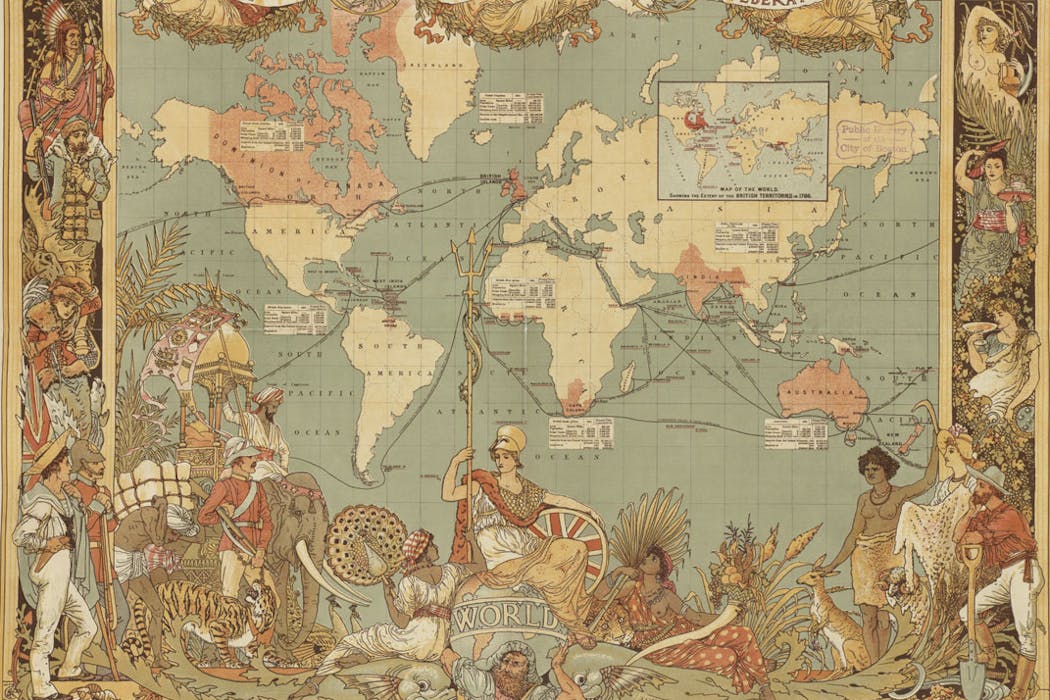






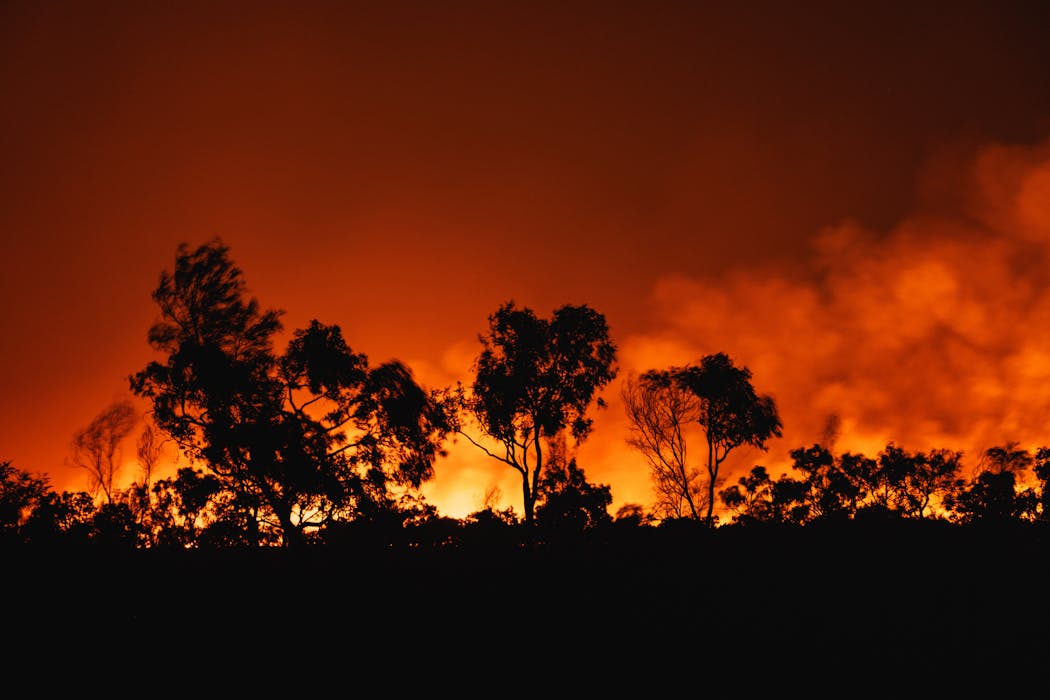





.jpg)