American border crackdown forces Venezuelan migrants on a perilous journey back south

Source: The Conversation – Canada – By Guillermo Candiz, Assistant Professor, Human Plurality, Université de l’Ontario français

Since February 2025, thousands of Venezuelan asylum-seekers have been turned away from the United States-Mexico border and denied the right to apply for protection in the U.S. Along with other Venezuelans who were living in the U.S. and have been deported, they’ve been forced to head south, either back to Venezuela or to other countries in Central and South America.

This phenomenon — commonly described as reverse migration — raises important questions about the capacity or willingness of countries in the region to ensure the safety and security of these migrants.

As part of ongoing research, we talked to asylum-seekers and collected their insights during our field work in Costa Rica in November and December 2025. Our interviews revealed that those who abandoned the hope of crossing into the U.S. made the decision for many reasons.

Expecting a better life in Venezuela was not among them. Instead, many faced repeated obstacles along the way, which accumulated over time into what can be described as journey fatigue.

Exhaustion

The migrants we interviewed experienced physical exhaustion from long periods of waiting, economic hardship, fear and incidents of violence in Mexico, as well as fraud and theft, while access to institutional or humanitarian support steadily declined.

The final blow for most of them came from changes in the U.S. asylum and temporary protection policies. These included the termination of the two‑year humanitarian parole program, the freezing of asylum application processing for Venezuelans and nationals of 18 other countries and the inclusion of Venezuelans in travel bans restricting entry for citizens of 39 countries.

These policy shifts were combined with the abrupt cancellation of what was known as the CBP One mobile application and all previously approved appointments made using the app.

The U.S. Customs and Border Protection’s app allowed asylum-seekers to submit biographic information to set up an appointment prior to their scheduled arrival at a port of entry. This sudden change dashed the hopes of thousands who had been waiting for an opportunity to request asylum at the U.S. border.

Decisions to head back south rather than continue pursuing entry into the U.S. are made under conditions of high uncertainty. Migration regimes, support infrastructure and facilitation networks change rapidly — some disappearing as others emerge — and often without clear mechanisms for sharing information among migrants or those trying to help them.

In this environment, many people remain trapped for months in waiting spaces, with no real possibility of moving forward and no means of survival while waiting, resorting to begging or informal work.

A Venezuelan couple we interviewed at the Costa Rica–Panama border described how they often sang in restaurants or begged to feed their family, pay for bus travel between countries, and, at times, secure a roof over their heads when shelters run by religious organizations were unavailable.

Not safe to return

For international organizations and receiving countries, “voluntary return” is often presented as a preferred solution.

The International Organization for Migration (IOM) administers the Assisted Voluntary Return and Reintegration (AVRR) Program. As we learned during our Costa Rican field work, the IOM facilitates the return of Venezuelans to their home country when they reach Panama.

But whether a return is feasibile depends directly on conditions in the country of origin. Most Venezuelan migrants we interviewed didn’t think it was safe for them to return home.

U.S. intervention creates more uncertainty

The recent U.S. intervention in Venezuela and the capture of President Nicolás Maduro did nothing to change this political scenario.

Instead, it has injected regional uncertainty that transcends Venezuela’s borders. After Maduro’s capture, Vice President Delcy Rodríguez assumed the role of interim president, suggesting the country’s authoritarian regime can survive the U.S. intervention.


Read more:
The Colombian border is one of the biggest obstacles to building a new Venezuela


The Trump administration says it will oversee Venezuela during an unspecified transition period, but the implications are unclear.

The post-invasion situation does not include the transition of power to opposition leaders like González Urrutia or Corina Machado, even though Machado just handed over her Nobel Peace Prize to Trump.

Settling elsewhere

Within this tense and uncertain climate, many displaced Venezuelans heading south consider settling in Chile, Colombia or Costa Rica as alternative destinations.

That’s despite the fact that these countries lack the institutional capacity and infrastructure to absorb sustained reverse migration and are showing growing signs of rejecting Venezuelans.

This is evident with the recent election of Jose Antonio Kast in Chile, whose campaign focused on controlling “irregular immigration,” threatening mass deportations of migrants — mostly Venezuelans — and fuelling a climate of social hostility.

As we found during our research in Costa Rica, the country’s asylum system is stretched to the limit and appointments to put in a refugee claim can take more than two years to be scheduled, not counting the adjudication process.

These delays and the uncertainty of outcomes for migrants cause anxiety among displaced people and discourage them from attempting to seek protection in Costa Rica.

Research on transit migration to the U.S. or Europe has shown that these movements are fragmented, multi-directional and often circular. Policy changes — both in countries of destination and transit — new opportunities for social support or jobs, new intimate relationships or new information on possibilities of border crossing reshape migration trajectories.

Venezuelan reverse migration reflects similar dynamics, but unfolds in even more uncertain and precarious ways because the capacity of various states to meet the needs of displaced people is severely limited. This leads to even more severely fragmented routes for return migrants than for those travelling north.

Global North must step up

In light of these dynamics, it’s crucial to reaffirm the international protection regime and to recognize the historical responsibility of northern countries — including the United States, Canada and EU member states — to ensure effective access to asylum for people displaced by violence, conflict and persecution.

Any reform of regional migration governance must begin from this core principle.

We therefore call on governments, international organizations, humanitarian groups and civil society to uphold international protection regimes and to design responses that reflect the complex realities of shifting migration flows and the rights of people on the move.

The Conversation

Guillermo Candiz receives funding from Social Sciences and Humanities Research Council.

Tanya Basok receives funding from Social Science and Humanities Research Council of Canada

ref. American border crackdown forces Venezuelan migrants on a perilous journey back south – https://theconversation.com/american-border-crackdown-forces-venezuelan-migrants-on-a-perilous-journey-back-south-272974


Greenland: Staying with the Polar Inuit. How a secret military base helped trigger the silent collapse of an Arctic world

Source: The Conversation – France – By Ludovic Slimak, Archéologue, penseur et chercheur au CNRS, Université de Toulouse

Today, as Greenland once again becomes a strategic prize, history seems poised to repeat itself. Staying with the Polar Inuit means refusing to speak of territory while erasing those who inhabit it.

On 16 June 1951 Jean Malaurie was travelling by dog sled along the north-west coast of Greenland. He had set out alone, almost on a whim, with a modest grant from the French National Centre for Scientific research (CNRS), officially to study periglacial landscapes. In reality, this encounter with peoples whose relationship with the world followed an entirely different logic would shape a singular destiny.

That day, after many months among the Inuit, at the critical moment of the spring thaw, Malaurie was travelling with a few hunters. He was exhausted, filthy and emaciated. One of the Inuit touched his shoulder: “Takou, look.” A thick yellow cloud was rising in the sky. Through his binoculars, Malaurie first thought it was a mirage:

“A city of hangars and tents, of metal sheets and aluminium, dazzling in the sunlight, amid smoke and dust… Three months earlier, the valley had been calm and empty of people. I had pitched my tent there, on a clear summer day, in a flowering, untouched tundra.”

The breath of this new city, he would later write, “would never let us go.” Giant excavators hacked at the ground, trucks poured debris into the sea, aircraft circled overhead. Malaurie was hurled from the Stone Age into the Atomic Age. He had just discovered the secret American base of Thule, codenamed Operation Blue Jay.

The American base at Thule in the early 1950s.
U.S. Army, The Big Picture — Operation Blue Jay (1953), CC BY

Behind this innocuous name lay a colossal logistical operation. The United States feared a Soviet nuclear attack via the polar route. In a single summer, some 120 ships and 12,000 men were deployed to a bay that had previously known only the silent glide of kayaks. Greenland’s population at the time numbered barely 23,000 people. In just 104 days, on permanently frozen ground, a technological city capable of hosting giant B-36 bombers carrying nuclear warheads emerged. More than 1,200 kilometres north of the Arctic Circle, and in almost total secrecy, the United States built one of the largest military bases ever constructed outside its continental territory. A defence agreement was signed with Denmark in the spring of 1951, but Operation Blue Jay was already underway: the American decision had been taken in 1950.


A weekly e-mail in English featuring expertise from scholars and researchers. It provides an introduction to the diversity of research coming out of the continent and considers some of the key issues facing European countries. Get the newsletter!


The annexation of the Inuit world

Malaurie immediately grasped that the sheer scale of the operation amounted, in effect, to an annexation of the Inuit world. A system founded on speed, machinery and accumulation had violently and blindly entered a space governed by tradition, cyclical time, hunting and waiting.

The blue jay is a loud, aggressive, fiercely territorial bird. Thule lies halfway between Washington and Moscow along the polar route. In the era of intercontinental hypersonic missiles, once Soviet and now Russian, it is this same geography that still underpins the argument of “vital necessity” invoked by Donald Trump in his calls to annex Greenland.

The Thule base has a strategic position between the USA and Russia.
U.S. Army, The Big Picture — Operation Blue Jay (1953), CC BY

The most tragic immediate outcome of Operation Blue Jay was not military, but human. In 1953, to secure the perimeter of the base and its radar installations, authorities decided to relocate the entire local Inughuit population to Qaanaaq, roughly 100 kilometres further north. The displacement was swift, forced and carried out without consultation, severing the organic bond between this people and their ancestral hunting territories. A “root people” was uprooted to make way for an airstrip.

It is this brutal tipping point that Malaurie identifies as the moment when traditional Inuit societies began to collapse. In these societies, hunting is not merely a survival technique but an organising principle of the social world. The Inuit universe is an economy of meaning, made of relationships, gestures and transmission through the generations that confer recognition, role and place in relation to each individual. This intimate coherence, which constitutes the strength of these societies, also renders them acutely vulnerable when an external system suddenly destroys their territorial and symbolic foundations.

After the collapse of traditional structures

Today, Greenlandic society is largely sedentary and urbanised. More than a third of its 56,500 inhabitants live in Nuuk, the capital, and nearly the entire population now resides in permanent coastal towns and settlements. Housing reflects this abrupt transition. In the larger towns, many people live in concrete apartment blocks built in the 1960s and 1970s, often deteriorating and overcrowded. The economy is heavily dependent on industrial fishing geared toward export. Subsistence hunting and fishing are still commonplace. Modern rifles, GPS devices, snowmobiles and satellite connections now work hand in hand with old habits. Hunting remains a marker of identity, but it no longer shapes either the economy or intergenerational transmission.

The fallout on a human level from this shift is massive. Greenland today has one of the highest suicide rates in the world, particularly among young Inuit men. Contemporary social indicators, suicide rates, alcoholism, domestic violence, are widely documented. Many studies link them to the speed of social transformation, forced sedentarization and the breakdown of traditional systems of transmission.

American military maneuvers at Thule.
U.S. Army, The Big Picture — Operation Blue Jay (1953), CC BY

Spaces and radioactive contamination

The logic underpinning Thule reached a point of no return on 21 January 1968. During a continuous nuclear alert mission, a US Air Force B-52G bomber under the Chrome Dome programme, crashed into the sea ice some ten kilometres from Thule. It was carrying four thermonuclear bombs. The conventional explosives designed to initiate the nuclear reaction detonated on impact. There was no nuclear explosion, but the blast scattered plutonium, uranium, americium and tritium over a vast area.

In the days that followed, Washington and Copenhagen launched Project Crested Ice, a large-scale recovery and decontamination operation ahead of the spring thaw. Around 1,500 Danish workers were mobilised to scrape the ice and collect contaminated snow. Decades later, many of them initiated legal proceedings, claiming they had worked without adequate information or protection. These cases continued until 2018–2019 and resulted only in limited political compensation, without any legal recognition of responsibility. No comprehensive epidemiological study has ever been conducted among the local Inuit populations.

Now renamed “Pituffik Space Base”, the former Thule base is one of the major strategic nodes of the US military apparatus. Integrated into the US Space Force, it plays a central role in missile warning and space surveillance in the Arctic, under maximum security conditions. It is not a relic of the Cold War, but an active pivot of contemporary geopolitics.

In The Last Kings of Thule (1953), Malaurie shows that indigenous peoples have never had a place at the heart of Western strategic thinking. Amid the great manoeuvres of the world, Inuit existence becomes as peripheral as that of seals or butterflies.

Donald Trump’s statements do not herald a new world. They seek to generalise a system that has been in place in Greenland for seventy-five years. Yet the position of one man cannot absolve us of our collective responsibilities. To hear today that Greenland “belongs” to Denmark and therefore falls under NATO, without even mentioning the Inuit, is to repeat an old colonial gesture: conceiving territories by erasing those who inhabit them.

Portrait of a Greenlandic Inuit.
Popular Science Monthly Volume 37

The Inuit remain invisible and unheard. Our societies continue to imagine themselves as adults facing infantilised, indigenous populations. Their knowledge, values and ways of being are relegated to secondary variables. Difference does not fit within the categories that our societies know how to handle.

Following Jean Malaurie, my own research approaches humanity through its margins. Whether studying hunter-gatherer societies or what remains of Neanderthals once stripped of our projections, the “Other” remains the blind spot for our perceptions. We fail to see how entire worlds collapse when difference ceases to be thinkable.

Malaurie ended his first chapter on Thule with these words:

“Nothing was planned to imagine the future with any sense of elevation.”

What must be feared above all is not the sudden disappearance of a people, but their silent and radical relegation within a world that speaks about them without ever seeing or hearing them.

The Conversation

Ludovic Slimak ne travaille pas, ne conseille pas, ne possède pas de parts, ne reçoit pas de fonds d’une organisation qui pourrait tirer profit de cet article, et n’a déclaré aucune autre affiliation que son organisme de recherche.

ref. Greenland: Staying with the Polar Inuit. How a secret military base helped trigger the silent collapse of an Arctic world – https://theconversation.com/greenland-staying-with-the-polar-inuit-how-a-secret-military-base-helped-trigger-the-silent-collapse-of-an-arctic-world-273853

AI cannot automate science – a philosopher explains the uniquely human aspects of doing research

Source: The Conversation – USA – By Alessandra Buccella, Assistant Professor of Philosophy, University at Albany, State University of New York

Human scientists lay the foundations for every scientific breakthrough. Qi Yang/Moment via Getty Images

Consistent with the general trend of incorporating artificial intelligence into nearly every field, researchers and politicians are increasingly using AI models trained on scientific data to infer answers to scientific questions. But can AI ultimately replace scientists?

The Trump administration signed an executive order on Nov. 24, 2025, that announced the Genesis Mission, an initiative to build and train a series of AI agents on federal scientific datasets “to test new hypotheses, automate research workflows, and accelerate scientific breakthroughs.”

So far, the accomplishments of these so-called AI scientists have been mixed. On the one hand, AI systems can process vast datasets and detect subtle correlations that humans are unable to detect. On the other hand, their lack of commonsense reasoning can result in unrealistic or irrelevant experimental recommendations.

While AI can assist in tasks that are part of the scientific process, it is still far away from automating science – and may never be able to. As a philosopher who studies both the history and the conceptual foundations of science, I see several problems with the idea that AI systems can “do science” without or even better than humans.

AI models can only learn from human scientists

AI models do not learn directly from the real world: They have to be “told” what the world is like by their human designers. Without human scientists overseeing the construction of the digital “world” in which the model operates – that is, the datasets used for training and testing its algorithms – the breakthroughs that AI facilitates wouldn’t be possible.

Consider the AI model AlphaFold. Its developers were awarded the 2024 Nobel Prize in chemistry for the model’s ability to infer the structure of proteins in human cells. Because so many biological functions depend on proteins, the ability to quickly generate protein structures to test via simulations has the potential to accelerate drug design, trace how diseases develop and advance other areas of biomedical research.

As practical as it may be, however, an AI system like AlphaFold does not provide new knowledge about proteins, diseases or more effective drugs on its own. It simply makes it possible to analyze existing information more efficiently.

AlphaFold draws upon vast databases of existing protein structures.

As philosopher Emily Sullivan put it, to be successful as scientific tools, AI models must retain a strong empirical link to already established knowledge. That is, the predictions a model makes must be grounded in what researchers already know about the natural world. The strength of this link depends on how much knowledge is already available about a certain subject and on how well the model’s programmers translate highly technical scientific concepts and logical principles into code.

AlphaFold would not have been successful if it weren’t for the existing body of human-generated knowledge about protein structures that developers used to train the model. And without human scientists to provide a foundation of theoretical and methodological knowledge, nothing AlphaFold creates would amount to scientific progress.

Science is a uniquely human enterprise

But the role of human scientists in the process of scientific discovery and experimentation goes beyond ensuring that AI models are properly designed and anchored to existing scientific knowledge. In a sense, science as a creative achievement derives its legitimacy from human abilities, values and ways of living. These, in turn, are grounded in the unique ways in which humans think, feel and act.

Scientific discoveries are more than just theories supported by evidence: They are the product of generations of scientists with a variety of interests and perspectives, working together through a common commitment to their craft and intellectual honesty. Scientific discoveries are never the products of a single visionary genius.

Group of people wearing white lab coats and protective eye equipment working in a lab
Breakthroughs are possible through collaboration across generations of scientists.
Jacob Wackerhausen/iStock via Getty Images Plus

For example, when researchers first proposed the double-helix structure of DNA, there were no empirical tests able to verify this hypothesis – it was based on the reasoning skills of highly trained experts. It took nearly a century of technological advancements and several generations of scientists to go from what looked like pure speculation in the late 1800s to a discovery honored by a 1953 Nobel Prize.

Science, in other words, is a distinctly social enterprise, in which ideas get discussed, interpretations are offered, and disagreements are not always overcome. As other philosophers of science have remarked, scientists are more similar to a tribe than “passive recipients” of scientific information. Researchers do not accumulate scientific knowledge by recording “facts” – they create scientific knowledge through skilled practice, debate and agreed-upon standards informed by social and political values.

AI is not a ‘scientist’

I believe the computing power of AI systems can be used to accelerate scientific progress, but only if done with care.

With the active participation of the scientific community, ambitious projects like the Genesis Mission could prove beneficial for scientists. Well-designed and rigorously trained AI tools would make the more mechanical parts of scientific inquiry smoother and maybe even faster. These tools would compile information about what has been done in the past so that it can more easily inform how to design future experiments, collect measurements and formulate theories.

But if the guiding vision for deploying AI models in science is to replace human scientists or to fully automate the scientific process, I believe the project would only turn science into a caricature of itself. The very existence of science as a source of authoritative knowledge about the natural world fundamentally depends on human life: shared goals, experiences and aspirations.

The Conversation

Alessandra Buccella does not work for, consult, own shares in or receive funding from any company or organization that would benefit from this article, and has disclosed no relevant affiliations beyond their academic appointment.

ref. AI cannot automate science – a philosopher explains the uniquely human aspects of doing research – https://theconversation.com/ai-cannot-automate-science-a-philosopher-explains-the-uniquely-human-aspects-of-doing-research-272477

Iran’s universities have long been a battleground, where protests happen and students fight for the future

Source: The Conversation – USA – By Pardis Mahdavi, Professor of Anthropology, University of La Verne; University of California, Berkeley

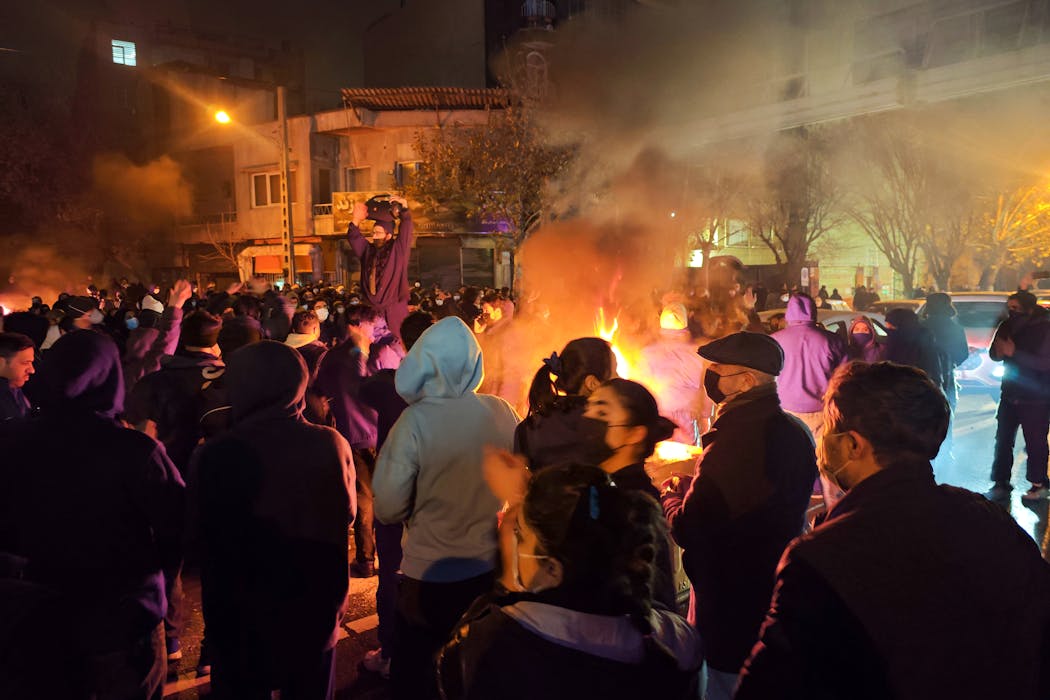
Anti-government Iranian protesters rally on Jan. 8, 2026, in Tehran. Anonymous/Getty Images

Iran’s current wave of protests continues to spread across the country, as the United States weighs military intervention. Meanwhile, many Iranian people continue to struggle to pay for basic necessities amid a collapsing currency.

The anti-government demonstrations began in Tehran’s Grand Bazaar, one of the largest and oldest covered markets in the world, in December 2025. From there, they quickly reached Iran’s university campuses.

The government’s response was swift and familiar: Authorities ordered universities to move classes online, citing weather concerns. When students continued organizing, the regime closed universities entirely.

I am an Iranian-American who has studied Iranian social movements for more than 25 years. As an educator, I have also led American universities, while maintaining ties to Iranian academic institutions.

I also witnessed firsthand the systematic assault on academic freedom during the presidency of Mahmoud Ahmadinejad from 2005 through 2013.

Iran’s universities tell the story of the nation itself: a story of persistent hope confronting relentless repression, and of intellectual life refusing to be extinguished even under extraordinary pressure.

Iranian universities have long been places of political reform and imagination – and where the Islamic Republic’s authoritarian impulses collide with people’s demands for freedom.

The heartbeat of reform

Iran has 316 accredited universities across the country, including the University of Tehran and Islamic Azad University.

Iranian universities have been hubs of political activity and protest since at least the mid-1900s.

Student-led protest movements emerged forcefully in the 1940s following the abdication of Reza Shah, an Iranian military officer who led Iran as its shah, or monarch, from 1925 to 1941.

These groups gained momentum during the oil nationalization movement led by the democratically elected Prime Minister Mohammad Mossadegh. Students supported Mossadegh’s promises of a democratic and free Iran, where the benefits of resources – like oil – would be reaped by Iranians first, before extending to the rest of the world.

The United States led a CIA-backed military coup that overthrew Mossadegh and reinstated Mohammad Reza Pahlavi as shah of Iran in 1953.

College campuses again became critical spaces for political consciousness and opposition.

A long-established pattern

This pattern continued for decades. Universities were central to the 1979 revolution, with students joining clerics, leftists and nationalists in overthrowing the monarchy.

Yet once consolidated, the Islamic Republic quickly turned against the institutions that had helped make the revolution possible.

The 1980s and 1990s saw widespread purges of faculty, with the imprisonment of professors in such numbers that the notorious Evin Prison came to be grimly nicknamed “Evin University.”

Academic life was tightly policed, books were routinely banned, and government surveillance became routine. As Azar Nafisi later documented in the 2003 book “Reading Lolita in Tehran,” intellectual engagement often survived only through clandestine reading groups and private gatherings.

Yet repression never succeeded in erasing student activism. When formal organizing became impossible, it moved underground. When campuses were locked down, ideas continued to circulate.

Thaw, reversal and academic repression

The election of Mohammad Khatami in 1997 briefly altered this trajectory of academic repression.

Khatami ran for office as a reformist candidate with strong support from young people. As president, he presided over a limited thaw in academic life. Universities reopened slightly as spaces for debate and research.

I conducted fieldwork on the youth movement and sexual revolution in Iran beginning in 1999 – research that would have been unthinkable just a few years earlier.

But the opening proved fragile. Ahmadinejad’s rise to power in 2005 marked a return to aggressive repression. Universities were again treated as ideological threats. Some faculty members were arrested or dismissed, student organizations were dismantled, and coursework and readings were heavily censored.

A group of young people, some of them with headscarves, sit on the grass near trees and look toward a man wearing a suit, with his finger in the air.
Iranian students listen to the lecture of a professor on the campus of Tehran University in October 2006.
ATTA KENARE/AFP via Getty Images

The irony was stark. By the mid-2000s, Iran had one of the highest literacy rates and highest proportions of college graduates per capita in the region.

Yet the government began restricting which majors women could study and which subjects could be taught. Entire fields, including engineering, education and counseling, were deemed suspect. Professors who resisted faced harassment and dismissal. Student protests were met with force and detention.

Despite this, youth-led mobilization persisted. Every major protest cycle over the past two decades – including the 1999 student uprising – has been driven by young people, many of them university students.

Universities in the current uprising

Recent Iranian university closures underscore the regime’s likely fears of resistance – not simply because of what is taught in classrooms, since curricula can be controlled – but also because of the power that young people can gain when they physically gather in shared spaces.

Dormitories, libraries and cafeterias are where political awareness coalesces, where individual grievances become collective demands, and where dissent acquires momentum.

Today, by systematically alienating young people through economic mismanagement, social repression and the erosion of academic freedom, the government has created its most formidable opposition: young protesters. Analysts have increasingly identified this pattern as one of the regime’s central strategic failures.

A group of young people push together against police in black, as seen through the spaces of a large fence.
Iranian students scuffle with police at the University of Tehran during a demonstration in December 2017.
STR/AFP via Getty Images

Universities are a lens into Iran

What happens inside Iran’s universities today is not a side story – it is one of the clearest indicators of where the country may be headed.

The freedom to teach, read, question and debate mirrors the freedom Iranian citizens seek in public life more broadly. Just as women have pushed back against state control of their bodies one millimeter at a time, universities have pushed back against intellectual confinement one page at a time – expanding the boundaries of permissible thought even under threat of punishment.

For decades, Iranian students and professors have demonstrated extraordinary courage in sustaining these small but vital acts of defiance. They have kept alive what Iranians call “koorsoo”: a small, stubborn flame of hope that endures even in darkness.

History suggests that societies which wage war on their intellectual institutions ultimately lose more than control – they lose legitimacy. Iran’s universities have long been the heartbeat of reform. Today, that heartbeat is growing louder – and it may once again shape the course of the nation’s history.

The Conversation

Pardis Mahdavi does not work for, consult, own shares in or receive funding from any company or organization that would benefit from this article, and has disclosed no relevant affiliations beyond their academic appointment.

ref. Iran’s universities have long been a battleground, where protests happen and students fight for the future – https://theconversation.com/irans-universities-have-long-been-a-battleground-where-protests-happen-and-students-fight-for-the-future-273742

Les agriculteurs du Sahel obtiennent de meilleurs rendements en combinant plusieurs innovations

Source: The Conversation – in French – By Lateef Olalekan Bello, Project Researcher, University of Tokyo

Les petits exploitants agricoles du Sahel, en Afrique de l’Ouest, sont confrontés à un climat difficile qui ne cesse de se détériorer. Les précipitations sont irrégulières, les températures augmentent, les sols se dégradent et les sécheresses sont de plus en plus fréquentes.

Au Mali et au Niger, des millions de ménages ruraux dépendent de l’agriculture pluviale. Ces contraintes constituent une menace pour la sécurité alimentaire et les moyens de subsistance.

En tant qu’économistes agricoles, nous menons des recherches sur l’impact des interventions climato-intelligentes sur les revenus agricoles et les revenus des agriculteurs. Nos dernières recherches se sont concentrées sur cinq cultures de base largement cultivées dans le Sahel : le niébé, l’arachide, le maïs, le millet et le sorgho. Nous avons examiné quelles technologies offraient les meilleurs avantages et quels facteurs favorisaient ou limitaient leur adoption.

Les données provenant de 3 371 petits exploitants agricoles dans huit régions agricoles du Mali et du Niger ont montré que les technologies intelligentes face au climat amélioraient considérablement le bien-être des agriculteurs. Les technologies agricoles intelligentes face au climat comprennent des variétés de semences améliorées, des produits agrochimiques et une gestion durable des terres. Elles sont conçues pour augmenter la productivité des cultures et renforcer la résilience face au stress climatique.

Les agriculteurs qui utilisent ces technologies ont déclaré des revenus et des recettes plus élevés que leurs homologues qui s’appuient uniquement sur des méthodes agricoles traditionnelles.

Les technologies intelligentes face au climat ont augmenté les rendements, réduit les pertes liées au climat et augmenté la production commercialisable. Par exemple, les variétés de semences améliorées ont stimulé la productivité et la tolérance à la sécheresse. Les produits agrochimiques ont renforcé la fertilité des sols et la santé des cultures. Et les pratiques de gestion durable des terres ont préservé l’humidité et la qualité des sols. Ensemble, elles ont rendu les exploitations agricoles plus résistantes aux précipitations irrégulières et aux chocs climatiques.

Cependant, un résultat clé est ressorti : des gains substantiels n’ont été enregistrés que lorsque les technologies ont été utilisées conjointement. Par exemple, la combinaison de semences améliorées et de produits agrochimiques a permis de maximiser le potentiel de production des cultures. La combinaison d’une gestion durable des terres et de produits agrochimiques a amélioré l’efficacité des nutriments et la santé à long terme des sols.

L’utilisation de combinaisons complètes ou partielles de ces technologies a permis de générer les bénéfices les plus élevés. Elle permet d’augmenter les revenus les revenus agricoles de plus de 181 000 francs CFA (307 dollars US) par hectare. Le recours à une seule innovation n’a offert que des avantages bien moindres.

Ces résultats mettent en évidence une idée simple mais puissante : l’agriculture intelligente face au climat est plus efficace qu’en tant que système cohérent et non comme une simple juxtaposition d’outils isolés.

Technologies agricoles intelligentes face au climat utilisées par les agriculteurs

Nous avons étudié trois catégories de technologies intelligentes face au climat couramment promues en Afrique subsaharienne.

  • Variétés de semences améliorées : variétés de cultures de base résistantes à la sécheresse, à maturation précoce ou résistantes aux maladies.

  • Gestion durable des terres : conservation des sols et de l’eau, cultures intercalaires, rotation des cultures, paillage, amélioration de l’espacement et travail minimal du sol.

  • Produits agrochimiques : engrais et pesticides.

La recherche a identifié six modes d’utilisation, allant des non-utilisateurs aux agriculteurs qui utilisaient les trois technologies en même temps.

Lieu de la recherche

L’étude a porté sur huit grandes régions agricoles du Mali (Kayes, Koulikoro, Sikasso, Ségou) et du Niger (Tillabéry, Dosso, Maradi, Zinder).

Ces régions constituent l’épine dorsale de la production céréalière et légumineuse au Sahel, mais elles font également partie des zones les plus vulnérables au climat dans le monde. Les précipitations sont faibles et irrégulières, les sols sont lessivés et la plupart des agriculteurs dépendent entièrement des systèmes pluviaux.

Les ménages agricoles sélectionnés pour l’étude couvrent 32 communes et 320 villages, ce qui offre une bonne représentation des conditions agricoles locales.

Nos recherches ont montré qu’environ 85,5 % des agriculteurs ont adopté au moins une technologie intelligente face au climat. Le groupe le plus important – 25,1 % (845 agriculteurs) – a utilisé deux technologies ensemble, le plus souvent des produits agrochimiques combinés à une gestion durable des terres. Seuls 14,86 % (501 agriculteurs) ont utilisé les trois technologies simultanément.

Les modèles d’adoption différaient entre le Mali et le Niger, en fonction de la qualité des sols, des précipitations, de l’accès au marché et des services de vulgarisation.

La combinaison des technologies a apporté les plus grands avantages

Une conclusion claire s’est dégagée : les technologies fonctionnent mieux ensemble. Les agriculteurs qui ont utilisé conjointement des semences améliorées, des produits agrochimiques et une gestion durable des terres ont gagné environ 181 100 francs CFA (307 dollars US) de revenus de vente de récoltes par hectare et 115 000 francs CFA (195 dollars US) de revenus agricoles par hectare de plus que ceux qui ont utilisé des méthodes traditionnelles.

Les agriculteurs qui ont combiné les technologies ont obtenu des revenus de vente de récoltes et des revenus agricoles nettement plus élevés que ceux qui ont utilisé les technologies séparément.

Les agriculteurs qui ont utilisé uniquement des produits agrochimiques ont gagné environ 112 260 francs CFA (190 dollars américains) de plus en revenus de vente de récoltes par hectare que ceux qui ont utilisé des méthodes traditionnelles.
Ils ont également obtenu 56 290 francs CFA (95 dollars américains) de plus en revenus agricoles par hectare.

Les résultats de nos recherches montrent un effet globalement similaire au Mali et au Niger.

Cela signifie que les programmes politiques devraient encourager des paquets de technologies et non des interventions isolées.

Facteurs favorisant ou entravant l’adoption

La recherche a en outre révélé que les décisions d’adoption des agriculteurs étaient influencées non seulement par les conditions agroécologiques (telles que le sol et la pluie), mais aussi par les caractéristiques des ménages et les ressources disponibles (actifs des ménages, revenus non agricoles, nombre total d’unités de bétail). Le soutien institutionnel, notamment le crédit formel, les services de vulgarisation et les organisations d’agriculteurs, joue également un rôle important dans ces décisions.

Ces facteurs augmentent la probabilité pour les agriculteurs d’utiliser les technologies. Ils agissaient comme des « facilitateurs d’adoption ». Sans eux, même les technologies efficaces pouvaient rester hors de portée.

Cependant, nous avons constaté que la taille importante des ménages, l’âge avancé des agriculteurs et les distances plus longues à parcourir pour se rendre aux champs décourageaient l’adoption.

Ces contraintes démographiques et infrastructurelles avaient autant d’influence que les conditions agronomiques, soulignant la nécessité d’investissements plus importants dans le développement rural.

Enseignements pour les politiques publiques

Le climat du Sahel devient plus rude, et non plus doux. Avec des températures qui augmentent 1,5 fois plus vite que la moyenne mondiale, les systèmes agricoles doivent s’adapter rapidement. Les conclusions de cette étude orientent les décideurs politiques vers les interventions qui produiront les meilleurs résultats :

Promouvoir des ensembles de technologies plutôt que des interventions isolées : les programmes devraient encourager les agriculteurs à utiliser plusieurs technologies simultanément, plutôt qu’une seule à la fois.

Renforcer les services de vulgarisation : il est essentiel de former les agriculteurs à la bonne utilisation des technologies.

Améliorer l’accès au crédit : des prêts à faible taux d’intérêt pourraient favoriser l’adoption simultanée de plusieurs technologies.

Soutenir les organisations d’agriculteurs : les ONG et les agences gouvernementales peuvent aider à créer des groupes d’agriculteurs.

Investir dans les infrastructures rurales : la revitalisation des réseaux routiers ruraux réduirait les obstacles liés aux longues distances à parcourir pour se rendre aux parcelles agricoles et améliorerait l’accès aux intrants et aux marchés.

The Conversation

Lateef Olalekan Bello travaille comme chercheur de projet à l’université de Tokyo et a été chercheur à l’Institut international d’agriculture tropicale (IITA) au Nigeria et au Sahel Hub. Il est également chercheur à l’université Walter Sisulu en Afrique du Sud. Il a précédemment reçu un financement du Fonds international de développement agricole (FIDA) et a également été boursier du MEXT japonais.

ref. Les agriculteurs du Sahel obtiennent de meilleurs rendements en combinant plusieurs innovations – https://theconversation.com/les-agriculteurs-du-sahel-obtiennent-de-meilleurs-rendements-en-combinant-plusieurs-innovations-273274

Entretien annuel : le danger du marketing de soi

Source: The Conversation – France (in French) – By George Kassar, Full-time Faculty, Research Associate, Ascencia Business School

L’effet Dunning-Kruger caractérise cette tendance : les moins compétents surestiment leurs capacités tandis que les plus compétents se montrent plus prudents dans leur jugement. StockHolm/Shutterstock

Nous sommes bel et bien en janvier. Le mois du blanc est surtout celui du grand théâtre des entretiens d’évaluation individuelle de performance dans bien des entreprises. Alors, comment les cadrer au mieux pour distinguer les salariés qui se mettent en scène de ceux qui créent réellement de la valeur, mais sous-estiment leur capacités ?


L’entretien annuel de performance est devenu un passage obligé dans la plupart des organisations. Il ne s’agit pas d’une simple discussion informelle, mais d’un moment qui pèse sur les primes, les promotions ou les opportunités de carrière. Très différent des entretiens de parcours professionnels qui sont une obligation légale, les salariés y voient un verdict sur leur année ; les managers doivent trancher, classer, justifier. La pression est forte des deux côtés de la table.

Dans ce contexte tendu, le collaborateur entre, armé de son powerpoint mental avec ses objectifs atteints, ses initiatives personnelles ou son leadership exemplaire. Le manager, lui, soucieux de préserver l’éthique dans ce processus, coche des cases, écoute poliment et note des mots-clés : confiance, dynamisme, vision, etc. Tout semble sérieux, objectif, quantifié. En réalité, la scène tient parfois plus du théâtre qu’une vraie application scientifique de la gestion de la performance.

De ce fait, ces entretiens, pourtant censés évaluer les résultats concrets, finissent souvent par mesurer autre chose, celle de la capacité à se vendre. Ce glissement ne serait qu’un détail s’il n’avait pas de conséquences bien réelles sur la motivation et la rétention des « talents ».

Quand la confiance se déguise en compétence

Durant le mois de janvier, un paradoxe managérial devient presque une tradition. Ceux qui maîtrisent tout juste leur sujet arrivent sûrs d’eux, brandissant leurs « grandes réussites » et occupent l’espace. Les vrais compétents, eux, minimisent leurs exploits, soulignent ce qui reste à améliorer… et passent sous le radar. Résultat : on récompense ceux qui parlent le plus fort, pas forcément ceux qui contribuent le plus. On s’étonne ensuite de voir les meilleurs partir.

Le phénomène a un nom : l’effet Dunning-Kruger. Décrit dès 1999 par les psychologues David Dunning et Justin Kruger, il désigne la tendance des moins compétents à surestimer leurs capacités tandis que les plus compétents se montrent plus prudents dans leur jugement.

Les études contemporaines confirment que ce biais ne s’arrête pas à la salle de classe, au laboratoire ou même sur le champ. Transposé au bureau, ce syndrome donne une situation paradoxale : plus on est limité, plus on risque de se croire excellent, plus on est bon, plus on doute et plus on voit ce qui pourrait être mieux.

Marketing de soi-même

Si le manager ne s’appuie que sur le discours tenu pendant l’entretien, sans preuves solides, il a toutes les chances de se laisser influencer par cette confiance parfois mal placée. L’aisance orale, la capacité à « vendre » un projet ou à reformuler ses tâches en succès stratégiques deviennent des critères implicites d’évaluation.

Cette surestimation omniprésente pourrait entraîner de graves atteintes au bon jugement professionnel. Elle déforme la perception des compétences réelles et favorisent une culture d’apparence plutôt qu’une culture de résultats.

Les vrais performants, souvent modestes, finissent par comprendre que la reconnaissance interne ne récompense pas les résultats et l’impact de leur travail, mais le récit qu’on en fait et la capacité à se mettre en scène.

Ces derniers peuvent ressentir un décalage entre ce qu’ils apportent réellement et ce que l’organisation valorise. Leur engagement s’érode, leur créativité aussi. Ce qui est un facteur bien documenté de démotivation et de départ.

Le plus ironique ? Ceux qui doutent d’eux-mêmes sont souvent ceux qu’on aimerait garder. Les études sur la métacognition montrent que la capacité à se remettre en question est un signe de compétence. À l’inverse, les plus sûrs n’évoluent pas. Persuadés d’avoir déjà tout compris, ils s’enferment dans leur propre suffisance durable.

L’entreprise perd, dans le silence, celles et ceux qui faisaient avancer les projets les plus exigeants et les plus sensibles. Elle garde ceux qui savent surtout parler de leurs succès.

Cadrer l’évaluation sur des faits

La bonne nouvelle est qu’il est possible de corriger cette dérive. Les pistes sont connues mais rarement appliquées.

Tout commence par un bon cadre pour la mise en place de l’évaluation de la performance. Une formation adaptée aux managers, évaluateurs et collaborateurs est encouragée, avec un système de revue fréquente de la performance, un dispositif de mesure clairement défini et un groupe d’évaluateurs multiples.


À lire aussi :
Parler salaires, un tabou en France ? Vraiment ?


Il est important de fonder les évaluations sur des faits en revenant à des concepts fondamentaux tels que le management by objectives (MBO). L’enjeu : définir des objectifs clairs, mesurables, ambitieux mais réalistes, suivi à l’aide d’indicateurs alignés sur l’impact réel, avec une stratégie de mesure fondée sur les données pour évaluer des résultats concrets, et pas seulement le récit de la personne évaluée.

L’avis d’un seul manager ne devrait pas suffire à juger la performance d’une personne qui travaille en équipe. Il faut regarder sa contribution au collectif.

Les dispositifs de « feed-back à 360° » permettent de diversifier les retours
– collègues, clients, revues de projets, etc. Quand plusieurs personnes confirment la contribution d’un collaborateur discret, il devient plus difficile de l’ignorer. À l’inverse, un profil très visible mais peu fiable sera plus vite repéré.

Distinguer assurance et compétence

Il est important de garder à l’esprit que la gestion de la performance est un processus social. Les recherches montrent que le feed-back formel, donné lors de l’entretien annuel, est bien plus efficace lorsqu’il est soutenu par un feed-back informel et des échanges réguliers. Ces discussions spontanées renforcent la confiance et créent le contexte nécessaire pour que l’évaluation finale soit juste, non biaisée, acceptée et réellement utile.

Il est essentiel de former les managers à mieux reconnaître et anticiper les biais cognitifs, en particulier ceux du jugement, dont le fameux décalage entre confiance affichée et compétence réelle. Comprendre que l’assurance n’est pas une preuve en soi, et que la prudence peut être le signe d’une réelle expertise, change la manière de conduire un entretien.

Tant que les entreprises confondront assurance et compétence, elles continueront à promouvoir les plus confiants et à perdre, peu à peu, leurs meilleurs éléments.

Dans un marché où les talents ont le choix, ce biais n’est pas qu’un détail psychologique : mais un véritable risque stratégique. Après tout, ceux qui parlent le plus fort ne sont pas toujours ceux qu’il faudrait écouter !

The Conversation

George Kassar ne travaille pas, ne conseille pas, ne possède pas de parts, ne reçoit pas de fonds d’une organisation qui pourrait tirer profit de cet article, et n’a déclaré aucune autre affiliation que son organisme de recherche.

ref. Entretien annuel : le danger du marketing de soi – https://theconversation.com/entretien-annuel-le-danger-du-marketing-de-soi-271897

Opera is not dying – but it needs a second act for the streaming era

Source: The Conversation – USA (2) – By Christos Makridis, Associate Research Professor of Information Systems, Arizona State University; Institute for Humane Studies

American soprano Renee Fleming performs at a dress rehearsal for a Metropolitan Opera production of ‘The Merry Widow’ in New York in 2014. Jack Vartoogian/Getty Images

Every few years, you’ll hear a familiar refrain: “Opera is dying.”

National surveys point to slumping attendance at live performances. Audiences are aging, leaving fewer fans to fill seats at productions of “La Bohème,” “Carmen,” “The Magic Flute” and the like, while production costs grow.

I’m a labor economist who studies the economics of art and culture. To
assess the state of opera in the U.S., I analyzed financial data collected by Opera America, an association whose roughly 600 members are overwhelmingly nonprofit opera companies.

After crunching the numbers, as I explained in a 2026 paper published in the Journal of Arts Management, Law, and Society, I reached a surprising conclusion about the state of those nonprofits.

Funding model is faltering

Although opera companies are experiencing financial stress, opera isn’t a dying art form. Instead, I found that the public’s demand for meaningful, live cultural experiences – including opera – remains strong.

That said, opera’s traditional business model is faltering.

Opera is, for the most part, stuck in the past. Many companies still depend on a business model that relies on season ticket sales and a small circle of big donors. This approach worked better in the 20th century than it does now.

Few opera companies have embraced strategies the rest of the entertainment industry regularly uses: audience data analysis, experimentation with digital content and streaming, and engagement through online platforms rather than brochures.

In other words, opera management practices, metrics and audience development tactics didn’t change much even as the world transitioned into the digital age.

Change is needed because subscriptions and individual ticket sales have declined for many companies, especially those with budgets above US$1 million.

The number of opera tickets those companies sold fell 21% between 2019 and 2023. Ticket revenue fell 22% over the same period.

Meanwhile, opera companies received 19% of their budgets from donations and grants in 2023, down from roughly 25% in 2019, as earned revenue weakened and fundraising failed to fully recover.

Opera companies receive more than twice as much funding from philanthropy as from government sources. Government support was low and relatively stable prior to 2020 and rose sharply during the first two years of the COVID-19 pandemic before declining again to roughly 8% of operating revenue by 2023.

A couple reads program notes in a theater.
Many audience members at operas skew older.
Robert Nickelsberg/Getty Images

Managing institutions in trouble

I don’t dispute that opera’s economic woes are troubling. But I don’t see them as a sign that this art form is in cultural decline. Instead, I believe that opera institutions need to modernize how they operate.

Audiences continue to respond to the repertoire when companies find new ways to tell familiar stories.

Productions of canonical works such as La Traviata and Don Giovanni that place well-known narratives in contemporary settings or reframe them through modern staging have drawn strong attendance and critical attention. Crossover projects that bring operatic voices into dialogue with jazz, musical theater or popular musical performance have also sold out limited runs aimed at new audiences.

And smaller-scale formats, including chamber operas and performances staged in studios or alternative venues, have consistently filled seats – even as large main-stage productions struggle to sell tickets.

Those examples point to underlying demand for experiencing operas – even if fewer people are buying season tickets.

To be sure, there are some signs of progress. Some opera companies are taking their digital productions seriously.

Boston Baroque is primarily an orchestra and chorus, but it also produces staged operas. It offered livestreams of its performances during the pandemic to earn extra money.

New York City’s Metropolitan Opera has maintained a standalone direct-to-consumer subscription product, Met Opera on Demand, that anyone in the world can access. But it illustrates the strategic tension many companies face: Digital expansion can broaden reach, but it may also complicate efforts to fill empty seats.

This 1968 recording of Luciano Pavarotti conveys the power of the opera at its best.

Grappling with an economic problem

Opera’s biggest challenge is structural, not artistic.

Live performance is inherently labor intensive – and expensive. You cannot automate a string quartet or speed up an aria without destroying what makes it valuable.

Notably, opera companies have nearly doubled administrative costs as a share of their budgets since the mid-2000s, while spending on artistic programming has remained flat.

Some of the increase in administrative spending reflects the growing complexity of fundraising, compliance and labor management. But the magnitude of the shift strongly suggests declining organizational efficiency, with managerial and overhead functions expanding faster than opera’s capacity to stage productions or build its audience in the United States.

Meanwhile, ticket sales have declined and the number of major opera donors has declined.

Facing a similar turning point

Financial distress is not unique to opera.

Many U.S. orchestras have confronted serious financial stress, including bankruptcies and closures in places like Honolulu, Syracuse, N.Y. and Albuquerque, N.M..

The orchestras that survived tended to diversify revenue, analyze data and treat innovation as part of their mission – three strategies opera companies have failed to pursue consistently.

Reaching the public where it already is

The assumption that younger generations do not care about classical music is unfounded.

When opera companies put performances on streaming platforms during the pandemic, many younger listeners tuned in.

A 2022 survey of music consumption in the United Kingdom conducted by the Royal Philharmonic Orchestra; Deezer, one of several global services tracking the digital consumption of classical music; and the British Phonographic Industry found that 59% of people under 35 streamed orchestral music during the COVID-19 lockdown, compared with a 51% national average across all age groups.

Meanwhile, classical music streaming rose sharply across digital platforms during the first months of the pandemic. Deezer reported a 17% increase in classical streams in the 12 months beginning in April 2019.

These patterns suggest that younger audiences can become interested in opera and classical music when access to those genres is easy, and that digital formats can meaningfully expand the base of younger listeners.

But younger audiences usually encounter the music they listen to through algorithms or short-form video.

Treating performances as content

The lesson is not that opera should abandon live performance – if anything, everyone needs more, not less, in-person interaction in this hybrid-work era. Instead, I believe that opera companies should treat performances as content that can be accessed both in person and in digital spaces.

That way, they can spread those fixed artistic costs across multiple formats and markets, whether they’re recordings, livestreams, educational licenses or smaller-scale spinoff events.

Opera has survived wars, depressions, technological revolutions and cultural upheavals because it evolved. Today, the risk is not that people have stopped caring about music; it’s that opera companies have presumed that upholding tradition requires a rigidity at odds with their own success.

The Conversation

Christos Makridis is also a co-founder of Living Opera and the Living Opera Foundation and founder of CM Culture Management. He is also an affiliate and contributor to several think tank communities across the aisles.

ref. Opera is not dying – but it needs a second act for the streaming era – https://theconversation.com/opera-is-not-dying-but-it-needs-a-second-act-for-the-streaming-era-271376

Comprender antes de juzgar: ¿qué enseñan los fallos ferroviarios del pasado sobre el accidente de Adamuz?

Source: The Conversation – (in Spanish) – By José Ygnacio Pastor Caño, Catedrático de Universidad en Ciencia e Ingeniería de los Materiales, Universidad Politécnica de Madrid (UPM)

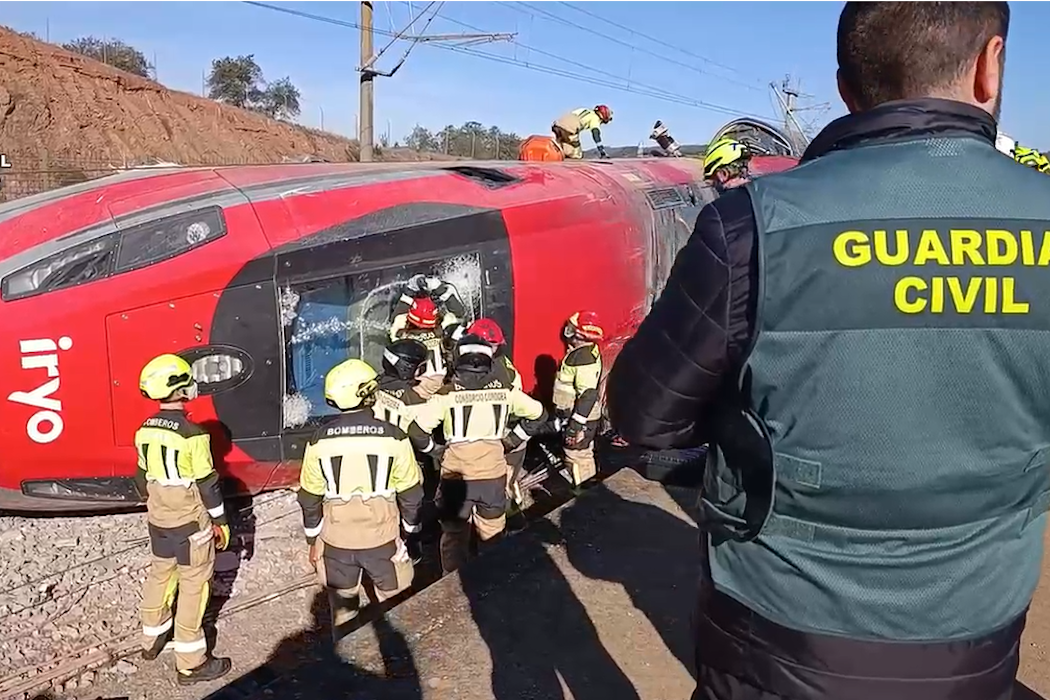
Los bomberos trabajan en la cabecera del tren Iryo siniestrado en Adamuz. Guardia Civil.

La primera vez que entendí de verdad la palabra fatiga no fue en un laboratorio, sino en el salón de casa: una silla aparentemente nueva decidió, sin aviso previo, convertirse en cuatro patas y en un argumento filosófico sobre la gravedad. Nadie la había maltratado. Nadie la había sobrecargado. Simplemente, tras miles de ciclos de carga, una microscópica grieta creció hasta alcanzar su tamaño crítico y se propagó, fracturando el material. Y ahí estaba yo: indignado, tentado de buscar culpables… y, al mismo tiempo, obligado a admitir lo obvio: los fallos complejos rara vez se explican con un dedo acusador.

Con el siniestro de tren en Adamuz ocurre algo parecido, solo que la silla pesa cientos de toneladas, se movía a 200 km/h y transportaba vidas. En este caso, lo mínimo exigible es no convertir la tragedia en una tertulia especulativa de barra de bar.

Búsqueda de evidencias para la identificación de víctimas e investigación del accidente ferroviario el 19 de enero de 2026. Guardia Civil de España.

En busca de un culpable

Lo demás –la causa raíz– es, por definición, una investigación en curso. Aun así, el ser humano necesita cerrar historias rápido: “fue el maquinista”, “fue la vía”, “fue el tren”, “fue algo con nombre propio”.

La información disponible apunta, precisamente, a que no estamos ante el relato fácil del culpable único: fuentes oficiales señalan que se exploran fallos de infraestructura o mecanismos como indicios de una posible anomalía (¿grieta?) en el carril o en elementos del tren. En cualquier caso, no hay que pensar en un sabotaje, ya que, en ese caso, hubiera descarrilado todo el tren.

Esquema simplificado de cómo se investiga un accidente ferroviario.
José Ygnacio Pastor, Universidad Politécnica de Madrid, CC BY-NC

Investigar lleva tiempo

Las investigaciones serias tienen un defecto insoportable: tardan lo que tardan y no entienden de prisas. La normativa europea exige publicar el informe final antes de doce meses; si no se llega a ese plazo, debe emitirse un avance intermedio. Es decir, incluso con presión pública, el sistema está diseñado para que la prisa no sea la autora intelectual del informe.

Accidente ferroviario en Angrois cerca de Santiago de Compostela, el 24 de julio de 2023.
Wikimedia Commons., CC BY

Para hacernos una idea, el accidente de Santiago de Compostela (24 de julio de 2013) obtuvo el informe final en mayo de 2014. En Hatfield (Reino Unido, 2000), la combinación de análisis técnico, responsabilidades y reformas operativas duró años, porque un fallo material puede ser solo el primer dominó de una cadena organizativa.

La seguridad se aprende a partir de los errores del pasado: análisis de las enseñanzas de tres accidentes europeos recientes.
José Ygnacio Pastor, Universidad Politécnica de Madrid, CC BY-NC

Tres lecciones del pasado (sin necesidad de adivinar el futuro)

–A veces, el material es el tren, no la vía.

El accidente de Eschede (Alemania, 1998) es el recordatorio más cruel de que una fisura por fatiga en un componente puede desencadenar una catástrofe, aunque el resto del sistema “parezca” correcto. El detalle relevante es la idea de iniciación y propagación de grietas bajo cargas no críticas repetidas y la importancia de su detección antes del umbral crítico.

–A veces el material es la vía, y el problema es invisible… hasta que deja de serlo.

La fatiga por contacto rodante es una especialidad de la física con mala educación: trabaja en silencio, en la interfaz rueda–carril, con tensiones que pueden alcanzar magnitudes enormes en la zona superficial, y va sembrando grietas. Es lo que pasó en Hatfield, en 2000.

–A veces la causa dominante no es materiales, sino operación y barreras.

El siniestro de 2013 en Santiago de Compostela muestra otra familia: velocidad, factores humanos, transición entre sistemas de protección… y, sobre todo, el debate sobre cuántas capas debe tener un sistema para que un solo error no sea fatal. No es el mismo patrón que el de un descarrilamiento en recta tras una renovación reciente, pero sí enseña el mismo método: no buscar una bala de plata, sino una cadena de eventos.

Esquema simplificado.
Árbol de familias causales del accidente y diferentes tipos de pruebas de peritaje científico que pueden usarse para discriminar entre ellas.
José Ygnacio Pastor, Universiad Politécncia de Madrid, CC BY-NC-ND

¿Y Adamuz? Hipótesis razonables

Si el foco mediático insiste en que la vía era moderna y renovada y el tren era reciente, lo técnico debe responder con humildad: precisamente, por eso, el abanico plausible incluye fallos súbitos o defectos que escaparon a las inspecciones rutinarias. Algunas hipótesis, o todas ellas, podrías responder a nuestra curiosidad:

-Posible problema de unión-soldadura-fatiga de carril: las pruebas habría que buscarlas desde la fractografía (análisis de las superficies de fractura): marcas de avance por fatiga frente a rotura bruca. También, en el historial de ensayos no destructivos en el punto y soldaduras cercanas, en la geometría de vía y asentamientos (registros de auscultación) y en evidencias de campo (fragmentos, deformaciones, “marca de inicio” del descarrilamiento…).

-Si fuera material rodante (rueda-eje-rodamiento/bogie), lo que suele delatarlo son señales previas en los registradores (vibraciones, alarmas, temperatura de los rodamientos), daño característico en la rueda o el eje y en su superficie de fractura y correlación con el mantenimiento real.

-Si no se tratara de un problema de materiales, seguirían siendo hipótesis plausibles —hasta ahora no descartables— la colisión con un obstáculo en la vía, una anomalía local de geometría, el fallo de sujeciones o de un aparato de vía cercano, así como efectos del viento o tensiones térmicas locales, menos habituales en enero, pero relevantes porque la vía responde a la variación cíclica de la temperatura del carril.

En la interacción constante entre las ruedas del ferrocarril, pueden formarse grietas debido al desgaste continuo, al incremento cíclico de las temperaturas y a las cargas repetitivas que provocan la fatiga de los materiales implicados.
José Ygnacio Pastor, Universidad Politécnica de Madrid, CC BY-NC

La seguridad del futuro: más velocidad, más sensores, más humildad

China ha presentado prototipos como el CR450, que operarán hasta 450 km/h. La promesa de seguridad no está en la magia del récord, sino en el ecosistema: instrumentación, mantenimiento predictivo, inspección automatizada, gemelos digitales y una cultura donde un aviso pequeño no se archiva como molestia.

Al final, vuelvo a mi silla rota. Si me hubiera fiado de la intuición, habría culpado a la carpintería, al destino o a esa pata coja. Pero cuando uno analiza, aparece la cadena: un diseño con sus compromisos, una unión que concentra tensiones, un microdefecto, miles de cargas repetidas… y, por fin, un último ciclo que no fue el más fuerte, sino el primero que alcanzó al umbral de rotura.

Comprender antes de juzgar

El análisis forense obliga a leer las huellas del fallo como si fueran un texto, desde la fractografía submicrométrica hasta el macrocosmos del sistema, donde cada decisión humana y técnica deja también su firma.

Con Adamuz, la única postura seria es comprender antes de juzgar. Porque si algo nos enseñan las grandes catástrofes ferroviarias del pasado es que el progreso en seguridad no nace del análisis más rápido, sino de las evidencias más pacientes. Y esas evidencias, como las grietas, no se aprecian fácilmente… pero inevitablemente existen.

Se inspeccionan cabeza y alma del carril, juntas y soldaduras para detectar defectos internos subcríticos invisibles a simple vista.
Comprobación de raíles con un equipo de ultrasonidos manual (Túnel de Base del Gotardo, Suiza).
Wikimedia Commons., CC BY

The Conversation

José Ygnacio Pastor Caño recibe fondos del proyecto PID2022-137274NB-C33, financiado por el Plan Estatal 2021–2023 de la
Agencia Española de Investigación del Gobierno de España.

ref. Comprender antes de juzgar: ¿qué enseñan los fallos ferroviarios del pasado sobre el accidente de Adamuz? – https://theconversation.com/comprender-antes-de-juzgar-que-ensenan-los-fallos-ferroviarios-del-pasado-sobre-el-accidente-de-adamuz-273879

Manger sans viande est-il bon pour la santé ? Un débat récurrent dans l’histoire de la diététique

Source: The Conversation – in French – By Bruno Laurioux, Professeur émerite, Université de Tours

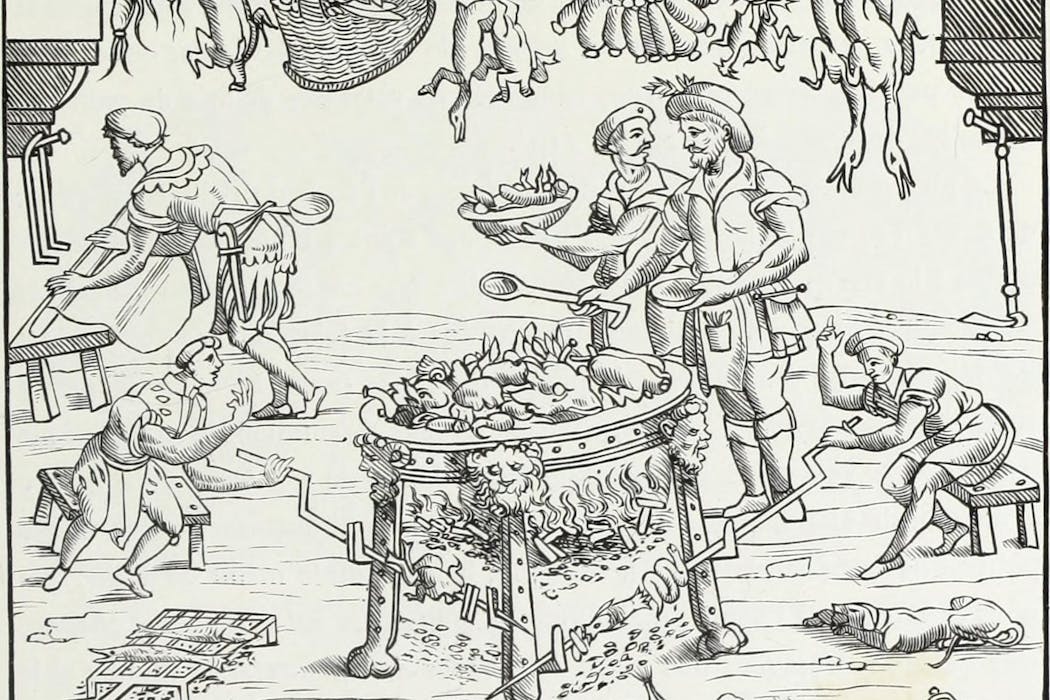
Image extraite de _Mœurs, usages et costumes au Moyen Âge et à l’époque de la Renaissance_ (1871), de Paul Lacroix, illustré par F. Kellerhoven., CC BY

De l’intérêt de limiter sa consommation de viande, voire de s’en priver, au bénéfice de sa santé. C’est un des arguments avancés par celles et ceux qui promeuvent le végétarisme. Mais savez-vous que cette question, ô combien d’actualité, divise les spécialistes depuis… le Moyen Âge ? C’est ce que nous raconte Bruno Laurioux, professeur émérite à l’université de Tours et président de l’Institut européen d’histoire et des cultures de l’alimentation dans Une histoire de la diététique. D’Hippocrate au Nutri-Score (éditions du CNRS, 2025).


Dans la longue histoire du végétarisme, trois arguments principaux ont été avancés pour justifier le refus – ou le rejet – de la viande. Le plus ancien est d’ordre éthique ; on le retrouve chez certains néo-pythagoriciens de l’Antiquité tardive, qui stigmatisent la violence faite à l’animal lorsqu’on le met à mort pour le consommer. L’argument le plus récent – il date du XXe siècle – est de nature environnementale et pointe les impacts très négatifs de l’élevage intensif, en termes de rejet de gaz à effet de serre ou de prélèvement des eaux.

Mais, on l’oublie souvent, l’une des motivations de ceux qui se privent totalement de viande peut être le souci de leur santé. Entretenue par les crises sanitaires à répétition qui touchent le secteur de la production animale depuis le déclenchement de l’encéphalopathie spongiforme bovine (ESB, surnommée communément « maladie de la vache folle ») à la fin des années 1990, puis ravivée par la mise en évidence des effets cancérogènes d’une consommation soutenue de viande rouge, une méfiance certaine envers la viande s’est installée dans notre paysage.


À lire aussi :
Pour promouvoir l’alimentation végétale, l’argument santé serait plus efficace que l’argument écologique


Or, cette ligne de contestation de la consommation carnée a été également utilisée dans un passé parfois lointain, qui va du Moyen Âge au XXe siècle. C’est ce que nous décrivons dans Une histoire de la diététique. D’Hippocrate au Nutri-Score.

La défense du régime chartreux « sans viande » : Arnaud de Villeneuve

Le traité De esu carnium (en français, Sur la consommation des viandes) a été composé entre 1302 et 1305 par l’un des plus grands médecins du temps, le Catalan Arnaud de Villeneuve ; la version originale intégrale de cet ouvrage intégrale étant De esu carnium d’Arnaldus de Villanova, éd. Dianne M. Bazell, Barcelone (Arnaldi de Villanova Opera medica Omnia, XI), 1999).

Professeur renommé à l’université de Montpellier, très bon connaisseur des textes médicaux traduits récemment de l’arabe, Arnaud de Villeneuve met ses talents de praticien au service du roi d’Aragon comme du pape. Il prend ici la défense des Chartreux ; cet ordre monastique rigoriste, fondé par saint Bruno, est accusé de laisser mourir ses membres malades, en leur refusant absolument l’usage de la viande. Or, la possibilité d’en manger avait été ouverte, précisément pour les malades, par la règle bénédictine, la plus répandue en Occident.

De manière générale, l’interdiction de la viande des animaux terrestres et aériens, qui constituait le cœur du carême pour les fidèles et s’imposait aux moines à perpétuité, s’était notablement assouplie. Et ceci sous l’effet du système de représentation dominant dans la société laïque qui valorisait la consommation carnée ; un système face auquel les petites communautés de Chartreux apparaissaient comme des pôles de résistance.

Contre les détracteurs des Chartreux qui les présentent comme cruels ou dénués de toute humanité en ne permettant pas la viande aux malades en grand danger de mort, Arnaud de Villeneuve veut prouver qu’on agit plus efficacement en leur administrant des médicaments et que les mets végétaux ne présentent aucun danger supplémentaire par rapport aux mets carnés – bien au contraire. Il pose ainsi une série d’arguments médicaux tirés des auteurs de référence qu’il maîtrise à merveille.

D’abord, démontre-t-il, prescrire de la viande ne sert à rien quand le malade a juste besoin de médicaments. Ensuite, la chaleur supplémentaire que procure la graisse contenue dans la viande, invoquée par certains détracteurs des Chartreux, n’apporte rien aux malades et peut même être très nuisible à leur guérison.

Troisième argument : la viande restaure certes les muscles mais non la force vitale tout entière ; si le sang « épais et glutineux » qu’elle engendre peut certes aider le corps au quotidien, le vin et les jaunes d’œuf (qui font partie du régime monastique ordinaire), parce qu’ils sont « légers et subtils », se révèlent, juge-t-il, bien plus utiles pour restaurer l’ensemble de ses fonctions physiques et cognitives. (La « prescription » de vin à des malades peut surprendre aujourd’hui, à raison. Mais à l’époque, leur donner du vin, donc de l’alcool, ne fait pas débat, ndlr).

Le médecin catalan, qui se pique aussi de théologie, rappelle au passage que la Bible ne présente jamais la viande comme une nourriture saine ni nécessaire. Et il constate que les Chartreux, même s’ils se privent totalement de viande, vivent fort vieux, atteignant couramment 80 ans, à l’instar des patriarches des premiers âges du monde, où la viande n’était pas encore d’usage.

La conclusion s’impose : la consommation de viande n’est nullement une nécessité en cas de maladie et, par conséquent, s’en priver ne constitue pas un danger ; ceux qui prétendent nécessaire l’usage de la viande ont en réalité mal compris ses effets sur l’alimentation. Conclusion forte, qui intéressa les lecteurs mais n’eut guère d’impact sur les pratiques. Le De esu carnium fut souvent copié et parfois cité mais n’empêcha pas le vaste courant favorable à la viande de se développer et d’emporter tout sur son passage.

Les bienfaits du carême : Andry contre Hecquet

Pourtant le plaidoyer anti-viande ressurgit au début du XVIIIe siècle, sous la plume du bouillant Philippe Hecquet. Ce « self-made-man », devenu médecin du prince de Condé et doyen de la faculté parisienne, manifeste ses talents de polémiste en s’attaquant aux libertés que des fidèles toujours plus nombreux ont pris avec les obligations du carême. Et, scandale majeur pour le rigoureux janséniste qu’il est, sur les conseils mêmes de leur médecin traitant !

Car le contexte a bien changé depuis Arnaud de Villeneuve. Le carême s’est retrouvé au cœur de la contestation que la Réforme protestante a menée contre bien des dogmes et des pratiques catholiques non attestés dans l’Écriture. Avec le siècle des Lumières s’amorce un mouvement encore plus profond dans la société d’Ancien Régime, celui d’une déchristianisation progressive. S’ensuit une forte augmentation de la vente de viande, qui, durant le carême, est traditionnellement détenue par l’Hôtel-Dieu, en vertu des dispenses accordées aux malades.

C’est contre cette évolution que s’élève Hecquet, lorsqu’il publie en 1709 son Traité des dispenses du carême.

Il entend notamment y établir « par l’histoire, par l’analyse et par l’observation », la « convenance » que les aliments maigres entretiennent « avec la santé ». Au bout de quelque 73 chapitres, Hecquet a réussi l’exploit de démontrer à la fois

« que le Carême n’a rien de si extraordinaire » ni de « trop austère » et « que les fruits, les grains et les légumes sont », contrairement à la viande, « les aliments les plus à naturels à l’homme ».

Pour cela, il dresse le profil diététique d’un grand nombre de produits végétaux.

La conclusion qu’il en tire est sans appel :

« Il est vrai de dire que le maigre est plus naturel à l’homme que le gras, qu’il fait moins de maux, et guérit plus de maladies. »

C’est un renversement complet du système de valeur diététique qui est ici proposé, avec l’affirmation d’une absolue supériorité médicale des céréales, fruits et légumes.

Le traité de Philippe Hecquet connait un retentissement immédiat. Mais il indispose fort la plupart des collègues. Dans l’ombre, l’un d’entre eux fourbit ses armes en vue d’un ouvrage qui va en prendre le contrepied. Pour ce Nicolas Andry, l’abstinence de viande n’est ni plus ni moins que « l’écueil de la santé ». Or, Hecquet affirme exactement le contraire, en voyant dans l’antériorité du régime végétal mentionnée dans la Bible la preuve de sa supériorité sur le régime carné : Dieu n’a-t-il pas ainsi manifesté sa préférence ?

D’autre part, tout à sa volonté de combattre les dispenses abusives de carême, Hecquet a déniché, dans les statistiques sur les consommations carnées de Paris, les preuves d’un fâcheux relâchement des pratiques d’abstinence. Ce faisant, il touche les puissants intérêts professionnels des bouchers comme ceux des médecins. Il semble aussi franchir une ligne rouge aux yeux de l’Église, en faisant de la privation de viande non plus une pénitence mais un choix, semblant revenir à d’anciennes hérésies.

Défaite du végétarisme médical en France, au XVIIIᵉ siècle

C’en est trop. Andry réfute point par point les arguments de Hecquet dans les deux volumes de son Traité des dispenses de Carême parus en 1713. L’une de ses affirmations les plus fortes se fonde sur un retournement de son raisonnement : c’est précisément parce que les aliments de carême nourrissent mal que l’Église en a prescrit l’usage, afin de ne pas satisfaire complètement les besoins du corps. En 1714, l’intervention du plus grand médecin du temps, Jean Astruc, qui affirme clairement la supériorité nutritive du gras sur le maigre, marque la défaite du végétarisme médical. Tout au moins en France.

Car, outre-Manche, le courant végétarien qui se développe à partir du XIXe siècle s’appuie sur des arguments médicaux, auxquels une figure comme Anna Klingsford donnera la forme d’un axiome :

« Non seulement les substances végétales renferment tous les éléments nécessaires à la nutrition et à la production de force et de chaleur, mais […] même elles en contiennent plus que les substances animales. »

Paradoxalement, c’est dans la citadelle du carnisme qu’était devenue la faculté de Paris qu’elle soutiendra sa thèse en 1880.

The Conversation

Bruno Laurioux ne travaille pas, ne conseille pas, ne possède pas de parts, ne reçoit pas de fonds d’une organisation qui pourrait tirer profit de cet article, et n’a déclaré aucune autre affiliation que son organisme de recherche.

ref. Manger sans viande est-il bon pour la santé ? Un débat récurrent dans l’histoire de la diététique – https://theconversation.com/manger-sans-viande-est-il-bon-pour-la-sante-un-debat-recurrent-dans-lhistoire-de-la-dietetique-272844

Juice cleanses, charcoal supplements and foot patches – is detoxing worth the hype?

Source: The Conversation – UK – By Katie Edwards, Commissioning Editor, Health + Medicine and Host of Strange Health podcast, The Conversation

If you’re healthy, do you need to do a charcoal detox? AtlasStudio/Shutterstock

January arrives with a familiar hangover. Too much food. Too much drink. Too much screen time. And suddenly social media is full of green juices, charcoal supplements, foot patches and seven-day “liver resets”, all promising to purge the body of mysterious toxins and return it to a purer state.

In the first episode of Strange Health, a new visualised podcast from The Conversation, hosts Katie Edwards and Dan Baumgardt put detox culture under the microscope and ask a simple question: do we actually need to detox at all?

Strange Health explores the weird, surprising and sometimes alarming things our bodies do. Each episode takes a popular health or wellness trend, viral claim or bodily mystery and examines what the evidence really says, with help from researchers who study this stuff for a living.

Katie Edwards, a health and medicine editor at The Conversation and Dan Baumgardt, a GP and lecturer in health and life sciences at the University of Bristol share a longstanding fascination with the body’s improbabilities and limits, plus a healthy scepticism for claims that sound too good to be true.

This opening episode dives straight into detoxing. From juice cleanses and detox teas to charcoal pills, foot pads and coffee enemas, Katie and Dan watch, wince and occasionally laugh their way through some of the internet’s most popular detox trends. Along the way, they ask what these products claim to remove, how they supposedly work, and why feeling worse is often reframed online as a sign that a detox is “working”.

The episode also features an interview with Trish Lalor, a liver expert from the University of Birmingham, whose message is refreshingly blunt. “Your body is really set up to do it by itself,” she explains. The liver, working alongside the kidneys and gut, already detoxifies the body around the clock. For most healthy people, Lalor says, there is no need for extreme interventions or pricey supplements.

That does not mean everything labelled “detox” is harmless. Lalor explains where certain ingredients can help, where they make little difference and where they can cause real damage if misused.

Real detoxing looks less like a sachet or a foot patch and more like hydration, fibre, rest, moderation and giving your liver time to do the job it already does remarkably well. If you’re buying detox patches and supplements then it’s probably your wallet that is about to be cleansed, not your liver.


Strange Health is hosted by Katie Edwards and Dan Baumgardt. The executive producer is Gemma Ware, with video and sound editing by Sikander Khan. Artwork by Alice Mason.

Dan and Katie talk about two social media clips in this episode, one from 30.forever on TikTok and one from velvelle_store on Instagram.

Listen to Strange Health via any of the apps listed above, download it directly via our RSS feed or find out how else to listen here. A transcript is available via the Apple Podcasts or Spotify apps.

The Conversation

Katie Edwards works for The Conversation and co-hosts the Strange Health podcast.

Dan Baumgardt and Trish Lalor do not work for, consult, own shares in or receive funding from any company or organisation that would benefit from this article, and have disclosed no relevant affiliations beyond their academic appointment.

ref. Juice cleanses, charcoal supplements and foot patches – is detoxing worth the hype? – https://theconversation.com/juice-cleanses-charcoal-supplements-and-foot-patches-is-detoxing-worth-the-hype-273394