Do mega-sporting events like the World Series pay off? Here’s the economic reality behind them

Source: The Conversation – Canada – By Frédéric Dimanche, Professor and former Director (2015-2025), Ted Rogers School of Hospitality and Tourism Management, Toronto Metropolitan University

Whether it’s the World Series, the FIFA World Cup or the Olympic Games, the hope for hosting mega sporting events is that the economy will emerge as the true winner.

A quick search shows how expensive World Series tickets are, or how much it costs for accommodations, food and transportation. Similar spending patterns can be predicted for the 2026 FIFA World Cup, which Canada is hosting with Mexico and the United States.

Visitor spending provides direct economic benefits, generating revenue for businesses and providing jobs. There are also indirect benefits through suppliers and staffing, and induced benefits as staff spend their wages locally.

Mega-events can also generate significant reputations benefits for host cities and countries, including heightened global media exposure, enhanced national branding and greater confidence among international investors who see the city as capable of managing large-scale events.

These intangible outcomes can translate into sustained tourism growth, increased economic vitality and a lasting “feel-good” effect that boosts civic pride among residents and visitors.

While hosting large sporting events appears to be great for communities, research suggests the actual financial outcomes are often more modest than anticipated. Nonetheless, many politicians remain eager to host them.

The math doesn’t always add up

Tourism and event scholars suggest being cautious about the so-called multiplier effect. This is the idea that mega-events ripple throughout the economy, providing benefits for others.

Meta-analyses of such events show highly variable economic outcomes and frequent overestimation of long-term benefits. A lot of spending is lost due to export leakage, where additional gain goes to non-local businesses, event organizers and ticketing agencies instead of local businesses.

Often, mega sporting events cause tourism displacement, as regular tourists avoid the destination due to crowds and high prices, sometimes even after the event finishes.

Politicians, tourism offices and event organizers are quick to claim large economic benefits when bidding for and hosting events.

Yet some academics warn that “most economic impact studies are commissioned to legitimize a political position rather than to search for economic truth.” In other words, government-commissioned studies are often biased toward positive results.

A World Series boost — but for how long?

The Toronto Blue Jays post-season run and the World Series has produced a concentrated burst of spending: sold-out home games, fuller hotels at higher prices, restaurants and bars crowded for watch parties and heavy merchandise sales.

Local media and business surveys commonly report measurable upticks in hospitality and retail during playoff runs, and small business owners cite increased footfall and merchandise revenue.

Sports economists, however, urge caution in extrapolating short-term spikes into lasting gains. They describe playoff-driven forecasts as “overstated,” pointing to limited duration, substantial leakage and limited job creation beyond temporary hospitality shifts. While people may spend more on a game night, they often spend less elsewhere, meaning net spending is usually smaller than headline numbers suggest.

A World Series may be excellent for civic morale and a short retail bump, but it rarely transforms a city’s economic trajectory on its own.

Canada’s FIFA World Cup moment

The FIFA World Cup is a multi-week, globally televised event with millions of spectators and huge international attention. For Canada’s co-host role in 2026, official and municipal assessments project substantial economic benefits.

A City of Toronto impact assessment projects roughly $940 million in positive economic output for the Greater Toronto Area, including hundreds of millions in GDP and several thousand jobs from June 2023 to August 2026.

British Columbia also estimates significant provincial output and thousands of roles tied to hosting in Vancouver. These are significant short-term impacts that reflect visitor spending and operational expenditures.

But will hosting the World Cup add much to cities that are already well-known? Some are doubtful, but the visibility can help achieve tourism marketing objectives and support bids for future international events often central to destination strategies.

Counting the real costs

Mega-events often come with significant financial and environmental costs. While they can create jobs, these are typically short-term, low-wage positions concentrated in hospitality and service sectors.

Public funds directed at event staging or stadium upgrades could finance affordable housing, transit or health services with potentially higher social returns for local residents. There have also been repeated cases where promised mega-event legacies failed to materialize.

Environmentally, mega-events produce significant carbon footprints from global fan travel, temporary construction, energy use and waste, with many events having more negative than positive environmental outcomes. This is particularly relevant for transnational tournaments that attract long-distance travellers and temporary stadium retrofits.

Cities seeking to maximize gains should prioritize local community benefits and measure net economic impact, not gross receipts, by accounting for displacement and export leakage.

For the World Series, that means leveraging short-run enthusiasm into repeat visitation and accrued local spending habits. For FIFA 2026, the focus should be on converting global attention into long-term tourism and business flows while ensuring community benefits and limiting environmental costs.

Only then will the reputational windfall translate into durable economic value.

Measuring the real impact of mega-events

Sports events can deliver meaningful short-term revenue, reputational exposure and long-term benefits, but those outcomes are neither automatic nor evenly distributed.

Thoughtful policy design, transparent evaluation and binding community and environmental safeguards determine whether a World Series run or a World Cup week becomes a fleeting headline or a lasting city asset.

The main benefactor of the World Cup will be FIFA, not host cities. As The Economist noted in its review of economist Andrew Zimbalist’s Circus Maximus, there is “little doubt that under current conditions, prudent city governments should avoid the contests at all costs.”

Canada is now in it as the World Series returns to Toronto. How it plays out remains to be seen, but at a minimum, we will certainly host a good party.

The Conversation

The authors do not work for, consult, own shares in or receive funding from any company or organisation that would benefit from this article, and have disclosed no relevant affiliations beyond their academic appointment.

ref. Do mega-sporting events like the World Series pay off? Here’s the economic reality behind them – https://theconversation.com/do-mega-sporting-events-like-the-world-series-pay-off-heres-the-economic-reality-behind-them-268447

Girlbands Forever: BBC documentary charts the highs and lows of British girl groups – with one glaring omission

Source: The Conversation – UK – By Joel Gray, Associate Dean, Sheffield Hallam University

There can be no doubt that any conversation about British girlbands of the last 30 years would be dominated by Spice Girls.

In whichever corner of the globe you are, they were the defacto pop force of the late 1990s – and their impact has been long-lasting. From Adele to Beyonce Knowles-Carter, many contemporary world-class artists cite them as an inspiration.

However, new BBC documentary series Girlbands Forever focuses on many other girlbands who have emerged in British pop music from the early ’90s (Eternal) to the present day (Little Mix). It takes a broadly chronological overview, charting their development, releases and eventual splits in almost forensic detail.

As both a girlband fan and researcher, I was, though, disappointed that it offers little discussion of the impact these artists have had on their fans. Also absent from discussion is the link to queer audiences – something many girlband members have made specific reference to themselves.

One celebratory theme that is strong throughout this three-episode series is diversity and sisterhood. Eternal, All Saints, Atomic Kitten, Sugababes and Little Mix were all made up of racially diverse singers. And as each girlband passed the baton to the next generation, both media and society seemed more and more at ease with this concept.

Other topics of discussion include changes in the media (from newspapers to gossip magazines to reality television to social media) and society more broadly (rave culture, “Cool Britannia” and changing governments). This grounds the girlband discussions in a wider context.

Particular attention is paid to Little Mix as the girlband who won TV talent show The X Factor in 2011 – yet no mention is made that Girls Aloud did it nearly ten years earlier, when they won Popstars The Rivals in 2002.

Indeed, the fact Girls Aloud are not mentioned at all in the series is a glaring omission. While Little Mix faced abuse from anonymous social media trolls and the Spice Girls were constantly targeted by ’90s tabloid newspapers, Girls Aloud were the defining girlband of the celebrity gossip magazine era in the mid-2000s. Experts such as author Michael Cragg have written about the band’s impact on pop culture, and fans are likely to be disappointed by their omission.

The absence of a band which produced superstar (and later X Factor judge) Cheryl Cole highlights another area which a future series could go into: the solo career struggles and successes of these girlband members. Cole had two solo no.1 albums, and joins Spice Girl Geri Halliwell as one the most successful British female artists of all time.

Girls Aloud are a notable absence from the documentary.

The success of girlbands has always nurtured rich careers in the entertainment industries for its individual members. Both Jade Thirlwall and Perrie Edwards of Little Mix had top-five albums in the same month recently. Spice Girl Mel B is an international TV icon, judging talent shows on multiple continents; Atomic Kitten Natasha Hamilton has established her own record label; and Eternal’s Louise Redknapp had a top-10 album in 2025.

Spice Girl Melanie C and the All Saints’ offshoot Appleton (composed of sisters Natalie and Nicole Appleton) have been seen in the studio this year, with projects rumoured for 2026.

There are also plentiful non-music projects to mention. Many girlband members go on to support charities and philanthropic causes. Halliwell recently received an honorary doctorate from my university, Sheffield Hallam, for her work advancing rights for women and children on projects with the United Nations and Royal Commonwealth Society for Literacy. And Mel B has received awards for raising awareness of domestic abuse.

But for every number-one record and charity ambassadorship role, there is a member who may have not had the same luck. All Saints star Melanie Blatt, for example, has taken on a “chef residency” at a London pub which, while no bad thing, feels rather different to filming television shows in LA, or the solo efforts of her Girls Aloud and Spice Girls peers.

In contrast to the documentary’s omissions, I am glad it spotlights the brilliance of Atomic Kitten stalwarts Jenny Frost and Natasha Hamilton, who were quintessential noughties pop stars and gay icons.

In lieu of much Spice Girls and Girls Aloud discussion, their energy and charisma brings a welcome feeling of personal nostalgia – and a reminder of why the world needs fantastic popstars. Their cheeky charm, which first won me over 25 years ago, still makes me smile today.


Looking for something good? Cut through the noise with a carefully curated selection of the latest releases, live events and exhibitions, straight to your inbox every fortnight, on Fridays. Sign up here.


The Conversation

Joel Gray does not work for, consult, own shares in or receive funding from any company or organisation that would benefit from this article, and has disclosed no relevant affiliations beyond their academic appointment.

ref. Girlbands Forever: BBC documentary charts the highs and lows of British girl groups – with one glaring omission – https://theconversation.com/girlbands-forever-bbc-documentary-charts-the-highs-and-lows-of-british-girl-groups-with-one-glaring-omission-268677

A brief history of comic book vampires – including a homage to Donald Trump

Source: The Conversation – UK – By Andrew Edwards, Student Learning Developer, The University of Law

In Bram Stoker’s novel Dracula (1887), an English solicitor (Jonathan Harker) is sent to Transylvania to assist Count Dracula, an aristocrat, in his move to England. When Harker discovers Dracula lying in a coffin after feeding on blood, he understands the threat that Dracula poses to England.

Vampires have long represented our political and social attitudes to race, immigration and the threat of foreign invasion – reflecting the prejudices of their times.

My research explores how comic books and graphic novels interrogate political, social and cultural issues. Dracula became a 20th-century pop culture phenomenon, appearing in several films and TV programs. But American comic books were relatively slow to feature vampires.

In 1954, the US Senate Subcommittee on Juvenile Delinquency investigated the comic book industry. Hearings were held to testify about the perceived harm caused by crime and horror comics. To allay threats to their business, publishers banded together to form the Comics Magazine Association of America and established The Comics Code of 1954, which banned crime and horror content, including stories featuring vampires. A revision and relaxation of the code in 1971 enabled vampires to be used when “handled in the classic tradition” of novels such as Dracula “and other high calibre literary works written by Edgar Allen Poe, Saki, Conan Doyle and other respected authors whose works are read in schools around the world”.

This led to the creation of the character Morbius the Living Vampire, who debuted in Amazing Spider-Man #101 in July 1971. Morbius was a scientist with a blood disease whose experimental cure using vampire bats led to his transformation.

Dracula appeared in the animated series Avengers Assemble (2013).

Soon after, Dracula himself joined the Marvel comic universe in Tomb of Dracula #1 (November 1971), a series that ran until 1979. Writer Marv Wolfman and artist Gene Colan had to work within the limitations of the code by ensuring that they adhered to a traditional depiction of Dracula in line with Stoker’s original version. This could have limited the style and content of their stories, which were set in the modern era, but the inclusion of a newly created supporting cast kept the narrative fresh and engaging.

Vampires in American comic books retained this outsider status – invariably they were European immigrants like Morbius, who was born in Nafplio, Greece. In this way, comic vampires continue the literary vampire tradition of tapping into the fear of foreigners.

Doctor Doom: anti-immigrant populist politician

Comic book writer Ryan North explored a variation of this theme with Doctor Doom, the Marvel Comics’ super-villain, in issues of Fantastic Four released this year. Doom will be played by Robert Downey Jr. in the new film Avengers: Doomsday, due in 2026.

Doom rules Latveria, a fictional European country. He has recently declared himself Emperor of the World, supported by leaders of nations across the globe. Doom also uses Trump-style populism by propagating prejudice and fear-mongering against vampires.

In Fantastic Four #29 (February, 2025) Susan Storm, Ben Grimm and Jennifer Walters (also known as the Invisible Woman, the Thing and She-Hulk respectively) meet for lunch in a New York diner. They discuss Doom’s recent activities, which their waitress agrees are wrong before asserting that “at least he’s doing something about those horrid vampires”.

Outside, sat on the sidewalk, is a dishevelled, slumped vampire holding a sign that reads: “Anything Helps.” Apart from slightly elongated nails and subtly pointed canine teeth, there is nothing to distinguish him from any other normal person begging on a street.

A film of Morbius was released in 2022.

Sue, Ben and Jen then leave the diner and encounter a terrified family of four being chased by an angry crowd. The father exclaims “Please! Leave us alone!!” and “Please don’t kill us” as they try to outrun the mob. The family, dressed in normal casual clothes, are vampires.

Protected by the heroes, the parents explain that they are starving. Having been turned away from a blood bank, and not wanting to harm people, they had resorted to eating a pigeon, which prompted the chase. Members of the crowd scream “Vampires!”, “Kill them!” and call them “monsters”. The parents are killed by a member of the mob, but the vampire children are saved by the Fantastic Four. This leads to Reed Richards (Mr. Fantastic) creating a synthetic food substance that quenches vampires’ bloodlust, before ensuring the children are re-homed with their aunt.

Thinking that solving vampires’ hunger for blood will render Doom’s propaganda impotent, the story ends on a foreboding scene: a normal suburban house in America, with parents waving off their children to school. However, their house is bedecked with Maga-style pro-Doctor Doom flags and signs. It seems that Doctor Doom is still winning the hearts and minds of many Americans.

In One World Under Doom #3 (April, 2025) a group of superheroes and super-villains team up against their common enemy and find out how Doom has manipulated the world’s leaders. Using their own powers, they discover that he has not used magic, telepathy or mind control. He has merely negotiated with other leaders to become World Emperor. His populist policies have been embraced by the public.

This, along with the anti-vampire rhetoric and misinformation, creates a powerful allegory of the far-right ideologies that are currently being propagated by politicians across our own world. This current portrayal of Dr Doom as a proxy for public figures and politicians who use anti-immigrant rhetoric, harmful stereotypes and egregious misinformation, strongly suggests that they are the real monsters. Not the immigrants – or vampires for that matter.


Looking for something good? Cut through the noise with a carefully curated selection of the latest releases, live events and exhibitions, straight to your inbox every fortnight, on Fridays. Sign up here.


This article features references to books that have been included for editorial reasons, and may contain links to bookshop.org. If you click on one of the links and go on to buy something from bookshop.org The Conversation UK may earn a commission.

The Conversation

Andrew Edwards does not work for, consult, own shares in or receive funding from any company or organisation that would benefit from this article, and has disclosed no relevant affiliations beyond their academic appointment.

ref. A brief history of comic book vampires – including a homage to Donald Trump – https://theconversation.com/a-brief-history-of-comic-book-vampires-including-a-homage-to-donald-trump-266188

The shutdown – and the House’s inaction – helps pave Congress’ path to irrelevance

Source: The Conversation – USA – By Charlie Hunt, Associate Professor of Political Science, Boise State University

Where’s Congress? The institution is unwilling to assert itself as an equal branch of government. 4X6, iStock/Getty Images Plus

Many Americans will be voting on Election Day – or have already cast votes – in races for statewide office, local positions and on ballot initiatives with major implications for democracy.

Congress is not on the ballot this November, but it will be in the 2026 midterms. A year from now, Americans in every state and district will get to vote for whom they want representing their interests in Washington.

But right now, Congress isn’t giving the American people much to go on.

As the shutdown of the federal government passes the one-month mark, the U.S. House of Representatives has been in recess for over 40 days. That’s the longest it’s ever stayed out of town outside of its typical summer recesses or the weeks leading up to their own elections.

Notably, the shutdown does not mean that Congress can’t meet. In fact, it must meet to end the shutdown legislatively. The Senate, for example, has taken votes recently on judicial nominations, a major defense authorization bill and a resolution on tariff policy.

Senators have also continued to hold bipartisan behind-the-scenes negotiations to end the shutdown impasse.

But with dwindling SNAP benefits, skyrocketing health care premiums and other major shutdown impacts beginning to set in, the House has all but abdicated its position as “The People’s Chamber.”

Long ‘path to irrelevance’

In addition to not meeting for any votes, Speaker of the House Mike Johnson has refused to swear in Democratic U.S. Rep.-elect Adelita Grijalva of Arizona. Despite Johnson’s assurances, the shutdown does not prevent the House from meeting in a brief session to swear in Grijalva as a member for Arizona’s 7th District, which has been without representation since March.

Along with Casey Burgat and SoRelle Wyckoff Gaynor, I am co-author of a textbook, “Congress Explained: Representation and Lawmaking in the First Branch.” In that book, it was important to us to highlight Congress’ clear role as the preeminent lawmaking body in the federal government.

But throughout the shutdown battle, Congress – particularly the House of Representatives – has been unwilling to assert itself as an equal branch of government. Beyond policymaking, Congress has been content to hand over many of its core constitutional powers to the executive branch. As a Congress expert who loves the institution and profoundly respects its constitutionally mandated role, I have found this renunciation of responsibility difficult to watch.

And yet, Congress’ path to irrelevance as a body of government did not begin during the shutdown, or even in January 2025.

It is the result of decades of erosion that created a political culture in which Congress, the first branch of government listed in the Constitution, is relegated to second-class status.

A man in a suit with a blue tie, holding a folder with a white document in it.
President Donald Trump holds one of the many executive orders he has signed during his second term.
Alex Wroblewski/AFP via Getty Images

The Constitution puts Congress first

The 18th-century framers of the Constitution viewed Congress as the foundation of republican governance, deliberately placing it first in Article 1 to underscore its primacy. Congress was assigned the pivotal tasks of lawmaking and budgeting because controlling government finances was seen as essential to limiting executive power and preventing abuses that the framers associated with monarchy.

Alternatively, a weak legislature and an imperial executive were precisely what many of the founders feared. With legislative authority in the hands of Congress, power would at least be decentralized among a wide variety of elected leaders from different parts of the country, each of whom would jealously guard their own local interests.

But Trump’s first 100 days turned the founders’ original vision on its head, leaving the “first branch” to play second fiddle.

Like most recent presidents, Trump came in with his party in control of the presidency, the House and the Senate. Yet despite the lawmaking power that this governing trifecta can bring, the Republican majorities in Congress have mostly been irrelevant to Trump’s agenda.

Instead, Congress has relied on Trump and the executive branch to make changes to federal policy and in many cases to reshape the federal government completely.

Trump has signed more than 210 executive orders, a pace faster than any president since Franklin D. Roosevelt. The Republican Congress has shown little interest in pushing back on any of them. Trump has also aggressively reorganized, defunded or simply deleted entire agencies, such as the U.S. Agency for International Development and the Consumer Financial Protection Bureau.

These actions have been carried out even though Congress has a clear constitutional authority over the executive branch’s budget. And during the shutdown, Congress has shown little to no interest in reasserting its “power of the purse,” content instead to let the president decide which individuals and agencies receive funding, regardless of what Congress has prescribed.

Many causes, no easy solutions

There’s no one culprit but instead a collection of factors that have provided the ineffectual Congress of today.

One overriding factor is a process that has unfolded over the past 50 or more years called political nationalization. American politics have become increasingly centered on national issues, parties and figures rather than more local concerns or individuals.

This shift has elevated the importance of the president as the symbolic and practical leader of a national party agenda. Simultaneously, it weakens the role of individual members of Congress, who are now more likely to toe the party line than represent local interests.

A brown-haired woman in a red jacket stands at a microphone in front of three American flags, speaking.
U.S. Rep.-elect Adelita Grijalva, an Arizona Democrat who won a special election on Sept. 23, 2025, has not been sworn in by House Speaker Mike Johnson.
Bill Clark/CQ-Roll Call, Inc via Getty Images

As a result, voters focus more on presidential elections and less on congressional ones, granting the president greater influence and diminishing Congress’ independent authority.

The more Congress polarizes among its members on a party-line basis, the less the public is likely to trust the legitimacy of its opposition to a president. Instead, congressional pushback − sometimes as extreme as impeachment − can thus be written off not as principled or substantive but as partisan or politically motivated to a greater extent than ever before.

Congress has also been complicit in giving away its own power. Especially when dealing with a polarized Congress, presidents increasingly steer the ship in budget negotiations, which can lead to more local priorities – the ones Congress is supposed to represent – being ignored.

But rather than Congress staking out positions for itself, as it often did through the turn of the 21st century, political science research has shown that presidential positions on domestic policy increasingly dictate – and polarize – Congress’ own positions on policy that hasn’t traditionally been divisive, such as funding support for NASA. Congress’ positions on procedural issues, such as raising the debt ceiling or eliminating the filibuster, also increasingly depend not on bedrock principles but on who occupies the White House.

In the realm of foreign policy, Congress has all but abandoned its constitutional power to declare war, settling instead for “authorizations” of military force that the president wants to assert. These give the commander in chief wide latitude over war powers, and both Democratic and Republican presidents have been happy to retain that power. They have used these congressional approvals to engage in extended conflicts such as the Gulf War in the early 1990s and the wars in Iraq and Afghanistan a decade later.

What’s lost with a weak Congress

Americans lose a lot when Congress hands over such drastic power to the executive branch.

When individual members of Congress from across the country take a back seat, their districts’ distinctly local problems are less likely to be addressed with the power and resources that Congress can bring to an issue. Important local perspectives on national issues fail to be represented in Congress.

Even members of the same political party represent districts with vastly different economies, demographics and geography. Members are supposed to keep this in mind when legislating on these issues, but presidential control over the process makes that difficult or even impossible.

Maybe more importantly, a weak Congress paired with what historian Arthur Schlesinger called the “Imperial Presidency” is a recipe for an unaccountable president, running wild without the constitutionally provided oversight and checks on power that the founders provided to the people through their representation by the first branch of government.

This is an updated version of a story that first published on May 15, 2025.

The Conversation

Charlie Hunt does not work for, consult, own shares in or receive funding from any company or organization that would benefit from this article, and has disclosed no relevant affiliations beyond their academic appointment.

ref. The shutdown – and the House’s inaction – helps pave Congress’ path to irrelevance – https://theconversation.com/the-shutdown-and-the-houses-inaction-helps-pave-congress-path-to-irrelevance-268536

‘Only death can protect us’: How the folk saint La Santa Muerte reflects violence in Mexico

Source: The Conversation – USA (3) – By Myriam Lamrani, Associate Researcher, Department of Anthropology, Harvard University

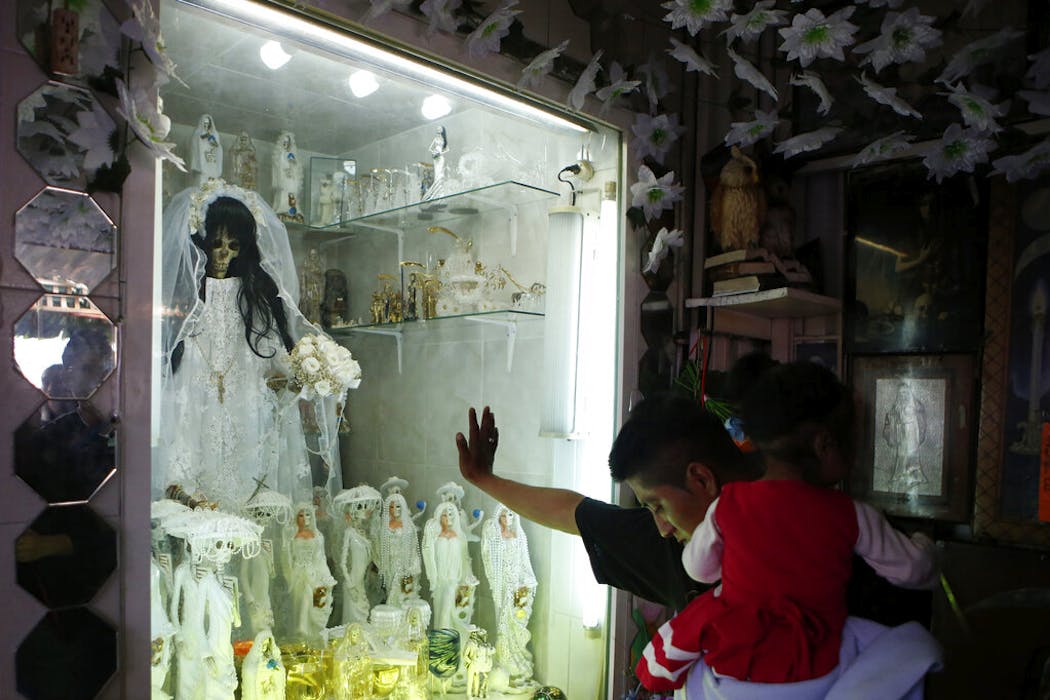
A devotee carrying his daughter rests his hand on the glass to an altar to La Santa Muerte in Tepito in Mexico City. AP Photo/Rebecca Blackwell

When a life-size skeleton dressed like the Grim Reaper first appeared on a street altar in Tepito, Mexico City, in 2001, many passersby instinctively crossed themselves. The figure was La Santa Muerte – or Holy Death – a female folk saint cloaked in mystery and controversy that had previously been known, if at all, as a figure of domestic devotion: someone they might address a prayer to, but in the privacy of their home.

She personifies death itself and is often depicted holding a scythe or globe. And since the early 2000s, her popularity has steadily spread across Mexico and the Americas, Europe and beyond.

The idea and image of death made into a saint is both unthinkable and magnetic. Her association with drug traffickers and criminal rituals makes many people wary of the skeletal figure. La Santa Muerte also faces significant opposition from the Catholic Church, which condemns her veneration as heretical and morally dangerous. High-ranking church figures such as Cardinal Norberto Rivera Carrera in Mexico have publicly denounced her devotion, warning that it promotes superstition and goes against Christian values.

This criticism highlights a profound tension between official religion and the grassroots devotion. Many Mexicans who feel abandoned by government and church institutions embrace her as a source of hope. Indeed, based on my research, La Santa Muerte represents strength, protection and comfort to her devotees, which include prisoners, police officers, sex workers, LGBTQ+ people, migrants, the working class and others among less vulnerable populations. Despite her fearsome appearance, she offers a form of care they are often denied elsewhere.

As an anthropologist who has studied La Santa Muerte in Mexico, I believe her power reflects a paradoxical Mexican understanding of death – not only as a symbol of fear but as an intimate part of everyday life that has become one of resilience and resistance amid the country’s chronic violence.

Death and the state

In my recent book, “The Intimacy of Images,” I examine how devotion to La Santa Muerte in Oaxaca – the state famed for its Day of the Dead tradition – draws on Mexico’s long-standing, often playful relationship with the image of death.

A person holding a picture of a religious icon.
A person holds a picture during a visit to the Santa Muerte temple in Tepito, Mexico City, on April 1, 2025.
Gerardo Vieyra/NurPhoto via Getty Images

Based on over a decade of ethnographic fieldwork, I found how people’s prayers, offerings and promises to her are part of a desire for solutions to everyday problems such as illness, economic hardship and protection from harm. Her frequent representation in images such as altars, tattoos and artistic productions also reflects an evolving social understanding of death that has long been a pervasive symbol of Mexican culture, identity and the power of the state.

Following the Mexican Revolution in the early 20th century, death as a symbol of the new Mexican nation was popularized by artists such as José Guadalupe Posada, especially through La Catrina, the caricature of the dandy skeleton often associated with the Day of the Dead. Whereas death and its personification were once part of an ethos of celebration and fearlessness in the face of death, they have now become disturbing reminders of the mounting insecurity and violence in Mexico.

This transformation, and the role the skeletal saint plays in providing protection in this dangerous context, reflects Mexico’s broader descent into turmoil. In the 2000 national elections, the Institutional Revolutionary Party was unseated after 71 years of uninterrupted rule. The election of the conservative National Action Party, or PAN, in its place saw the fracturing of informal alliances between the state and criminal networks that had previously tamped down on crime through systems of patronage.

In 2006, newly elected PAN President Felipe Calderón launched a militarized war on crime after the yearslong evolution of these early criminal networks into ruthless organizations.

In the following decades, cartel violence has surged, civilian deaths and femicides have escalated, and state institutions have been accused of either direct complicity or a refusal to intervene. The 2014 disappearance of 43 students in Iguala – a case that revealed the degree of state and criminal organizations’ collusion and remains unresolved – only crystallized public outrage. Such rampant violence continues to this day.

Since the beginning of the Mexican drug war in 2006, an estimated 460,000 people have been murdered, and more than 115,000 people are officially listed as missing in the country – roughly one in every 1,140 residents. In heavily affected states such as Guerrero and Jalisco, that ratio is likely far higher, revealing the uneven geography of violence and disappearance across the country.

Claudia Sheinbaum, the country’s first female president – who took office in October 2024 – has promised to dismantle organized crime. Yet the violence and widespread public perceptions of insecurity persist.

An image amid broken glass.
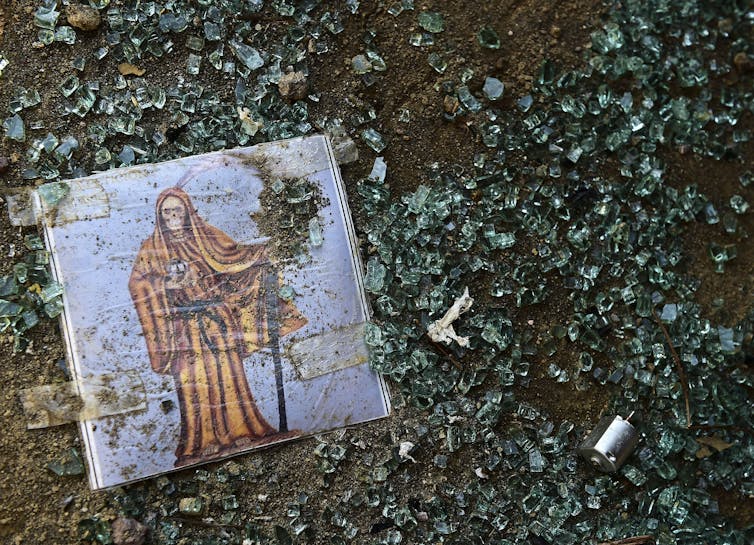
A religious image of La Santa Muerte is pictured next to a truck damaged by gunfire in Mexico’s Durango state.
Ronaldo Schemidt/AFP via Getty Images

A violent mirror

For most devotees, La Santa Muerte is not an ally of the criminals, despite its use by cartel-linked groups. Instead, she is one of the few remaining forms of help amid a terrifying social reality. She offers no illusion that the situation of political dysfunction or rampant violence will improve – only presence and protection. Her image reflects a brutal truth: Survival is no longer guaranteed by a state whose ties to the cartels run deep.

This political and spiritual vacuum is seen in the rise of other lay figures of devotion – folk saints such as Jesús Malverde, more official ones such as San Judas Tadeo, or even devotion to the devil.

La Santa Muerte is distinct, however. She is death personified, the end of life, the ultimate judge and a symbol of shared mortality, regardless of status, race or gender. As one devotee told me: “If you open us, you’ll find the same bones.” La Santa Muerte is also imbued with care and love by her followers. Some address her as kin, an aunt or a revered mother incarnating maternal protection and a kind of strength more commonly associated with the masculine. As many say: “She’s a badass.”

In a country where state protection is scarce and the boundaries between authorities and cartels blur, she represents the people and also shields her believers through miraculous protection. Her followers turn to her because, as they say, only death can protect them from death.

Given her devotees’ vulnerability and the wholehearted trust they place in their skeletal saint, La Santa Muerte is more than mere folklore. She is the patron saint of the many in a country where death walks close. She is a figure of personal solace and collective resilience. Above all, she is a mirror – reflecting a society in crisis and engulfed in violence, and a people reaching for meaning, dignity and protection in the face of it all.

The Conversation

Myriam Lamrani does not work for, consult, own shares in or receive funding from any company or organization that would benefit from this article, and has disclosed no relevant affiliations beyond their academic appointment.

ref. ‘Only death can protect us’: How the folk saint La Santa Muerte reflects violence in Mexico – https://theconversation.com/only-death-can-protect-us-how-the-folk-saint-la-santa-muerte-reflects-violence-in-mexico-263885

How teen friendships may predict self harm

Source: The Conversation – UK – By Holly Crudgington, Postdoctoral Researcher in Adolescent Mental Health, University of Oxford

PeopleImages/Shutterstock

Most of us know what it’s like to be a teenager at school – and how it feels to fit into (or fall outside of) a school’s social hierarchy. This typically includes some version of the popular kids, the loners and the in-betweeners, who have friendships that span across different groups.

However, teen hierarchies are more than a passing social order. Research suggests that these social networks and positions can shape mental health too. In a recently published study, my colleagues and I found that they also relate to one of the most serious health challenges among young people today: self-harm.

Self-harm – hurting yourself on purpose – is common in adolescence. While it is likely that some self-harm goes unreported, around 16%-22% of adolescents report having harmed themselves at least once. The behaviour appears to be increasing, particularly among adolescent girls. Worryingly, adolescents who self-harm have an increased risk of worsening health and mental health, including fatal outcomes like suicide.

There may be many reasons someone engages in self-harm. For example, it can be a coping mechanism to relieve emotional distress (intra-personal) by focusing on a physical sensation. Or it can be shaped by social factors (inter-personal) such as peer relationships.

For example, teenagers may be being influenced by the behaviour of others or use it as a means of communicating distress. Indeed, research has found that peer relationships are deeply important in adolescence and matter for self-harm.

However, little research has focused on how the school-based friendship networks of teens relate to self-harm. We addressed this gap by analysing data on teen friendship networks and self-harm from a cohort study of adolescent mental health in the UK called the Resilience Ethnicity and Adolescent Mental Health (Reach) study, which follows a large a group of people over time.

Reach has collected data from around 4,000 adolescents from 12 mainstream secondary schools in inner-city south London. Pupils at the schools completed questionnaires on their mental health and social networks (among other measures) over time. To date, Reach is the largest and most recent cohort study of adolescent mental health among young people from diverse inner-city areas in the UK.

In this study, we focused on the first year of Reach data collection, when adolescents were aged 11 to 14 years old. Adolescents were asked to report if they had “ever tried to harm or hurt themselves”, with 14% reporting yes. They were also asked to name friends within their school year. This is the first time a cohort study in the UK has collected data on both school friendship networks and self-harm.

We used social network analysis to “map” out teens’ friendship networks and to calculate several measures reflecting young people’s social positions within their networks.

This included: “popularity” (how many people named you as a friend), “bridging” (being an in-betweener and connecting otherwise disconnected friendship groups) and social isolation (having zero or one friend only), among other measures. We also looked at how many of their friends had reported self-harm, and then explored if and how these different network measures related to self-harm.

Social networks and self-harm

We found that both who adolescents are friends with in school and how they are connected to their friends were linked in different ways with self-harm. Strikingly, nearly half of adolescents had at least one friend who reported self-harm. This was linked to adolescents being more likely to report engaging in self-harm themselves, which might suggest peer-influence.

Various social positions in teen networks were also linked to self-harm. Some positions were protective, meaning adolescents were less likely to self-harm, whereas other positions were risky, meaning they were more likely to self-harm. Risky positions included social isolation, but also to some extent popularity and bridging (in-betweener).

While popularity is often seen as a desirable social status, it could also bring with it social pressures which may indirectly lead to self-harm. Bridging may reflect adolescents who are “between” different friendship groups, which may be socially taxing and link to self-harm.

Protective positions included “sociality” (nominating lots of people as friends) and being part of a tight-knit friendship group with friends who are friends with each other. However, the strongest links were for social isolation and having friends who report self-harm.

We also tested if there were any differences by gender. We expected the effects to be stronger among girls compared with boys. However, we found little evidence of this – which suggests that social networks relate to self-harm the same across boys and girls from our diverse, inner-city London sample.

It is important to note that these findings come from data that was collected at a single point in time. This means our findings are associations, and we cannot imply causation, or establish which direction the associations might be in. For example, do social networks predict self-harm, or does self-harm predict social networks? This needs to be further studied.

Our study highlights that self-harm is an important health challenge to tackle in adolescence – and considering teens’ social networks in school may be an important part of tackling that challenge. Specifically, self-harm is not something to be understood in isolation – but there may be social elements to the behaviour for some, and it may be shaped by teens’ social networks.

It also suggests that if both connection (such as having friends who self-harm) and disconnection (social isolation) from peers are associated, then there is a need for more than one approach to self-harm prevention in schools. While it may be tempting to focus on those who are socially isolated, it is also important to consider friendship group dynamics, and how adolescent’s self-harm may affect the wider peer-network.

Ultimately, peer relationships in adolescence deeply affect us and can continue to shape mental health for decades. The more we understand teen social networks, the better we can support young people’s mental health.

The Conversation

This research was conducted as part of a PhD project supported by the Economic and Social Research Council (ESRC), Centre for Society and Mental Health at King’s College London (ES/S012567/1), the European Research Council (REACH 648837), and the London Interdisciplinary Social Science Doctoral Training Partnership (LISS-DTP). The author declares no competing interests.

ref. How teen friendships may predict self harm – https://theconversation.com/how-teen-friendships-may-predict-self-harm-267553

Conflict and the climate crisis may mean it’s time to rethink what we mean by responsible investing

Source: The Conversation – UK – By Chau Le, Senior Lecturer in Banking and Finance, University of Lincoln

Melnikov Dmitriy/Shutterstock

Sustainable or responsible investing has experienced huge growth over the past decade. This investment approach is anchored in environmental, social and governance principles and is known as ESG. This set of standards is designed to ensure that funds are directed toward companies that protect the environment, have a positive impact on people through things such as labour standards, and operate ethically, transparently and with accountability.

Global ESG assets are predicted to hit US$40 trillion (£30 trillion) by 2030. Yet, despite the rise, inconsistencies in standards and data across ESG providers make responsible investing far more complex than it should be.

The world today faces compounding crises – climate change, geopolitical instability and what economists call “macroeconomic fragmentation”. This refers to the breaking apart of global economic cooperation: countries are turning inward, imposing tariffs, pursuing divergent monetary policies, and allowing political tensions to impede cooperation on shared challenges.

The traditional boundaries of ESG are now being tested – and difficult questions emerge. Should ESG funds continue to exclude arms and defence firms? Or perhaps it is time to reconsider what sustainability really means in today’s volatile world.


Ever wondered how to spend or invest your money in ways that actually benefit people and planet? Or are you curious about the connection between insurance and the climate crisis?

Green Your Money is a new series from the business and environment teams at The Conversation exploring how to make money really matter. Practical and accessible insights from financial experts in the know.


For decades, defence companies were lumped into the same category as tobacco firms or fossil fuel giants – excluded from ESG portfolios for being damaging to society or incompatible with peace. For example, an EU report in early 2022 recommended that investments in weapons be formally classified as “socially harmful” and therefore excluded from funds marketed as ethical.

But since the full-scale Russian invasion of Ukraine in 2022, public sentiment – and investor perception – has begun to shift. Security is being reframed as a prerequisite for sustainability. Without peace and stability, there can be no climate action.

Several countries have already begun adapting their policies. Germany, for instance, has reclassified defence as part of its national sustainability strategy.

SEB, one of the Sweden’s largest banks, had long prohibited its funds from investing in the arms industry. But after the war in Ukraine, it reversed this policy to allow selective investments in the defence sector. The bank cited a changing geopolitical landscape for its decision.

And more recently, the European Commission’s ReArm Europe plan was released in March 2025. This aims to mobilise €800 billion (£697 billion) in defence investments over the next four years.

These changes raise a critical question: can defence spending now be seen as part of a responsible investment strategy?

A world of grey zones

Despite the growing push to integrate defence into the ESG framework, the EU has yet to formally clarify whether such investments are consistent with its sustainable finance criteria. Without guidance, businesses and financial institutions face a confusing and often contradictory landscape.

As sustainable investing becomes more mainstream, it’s increasingly vulnerable to greenwashing, political pressures and competing ethical values. What qualifies as “ethical” in one country may be unacceptable in another.

For example, large-scale hydroelectric projects in southeast Asia may satisfy the “E” (environmental) component of ESG by producing low-carbon energy. But they can also lead to the displacement of Indigenous communities – undermining the “S” (social) element.

large body of water around the Bakun Dam in malaysia surrounded by mountains
The Bakun Dam in Malaysia was built to provide green electricity for the country – but around 9,000 people were displaced when the area was flooded.
IzzTony/Shutterstock

Individual investors appear to be increasingly interested in making their money matter. But many remain unaware of how ESG funds are constructed – or what they may include. The presence or exclusion of defence companies is rarely disclosed clearly in fund documentation. This lack of transparency makes it difficult to align investments with personal ethics.

To make more informed choices, investors should demand clearer reporting, especially regarding dual-use technologies. This is tech that can be used for both civilian and military purposes and controversial sectors such as nuclear energy and surveillance technologies.

Investors could consider asking whether the fund explicitly discloses its position on defence, arms or dual-use technologies, as well as how it balances short-term geopolitical realities with long-term environmental sustainability. Fundamentally, they should consider whether what they know of the fund’s ethical stance aligns with their own values.

In an age of accelerating climate risks and geopolitical fragmentation, the ESG landscape is far from black and white. The inclusion of arms and defence in “ethical” or “responsible” investing may seem paradoxical, but it reflects a deeper shift.

These days, security and sustainability are increasingly intertwined. The real challenge is not just how we invest – but how we define the good we aim to achieve. As the world grows more complex, so too must the frameworks for responsible finance.

The Conversation

Chau Le does not work for, consult, own shares in or receive funding from any company or organisation that would benefit from this article, and has disclosed no relevant affiliations beyond their academic appointment.

ref. Conflict and the climate crisis may mean it’s time to rethink what we mean by responsible investing – https://theconversation.com/conflict-and-the-climate-crisis-may-mean-its-time-to-rethink-what-we-mean-by-responsible-investing-259486

Why an armed group linked to al-Qaida is gaining ground in Mali

Source: The Conversation – UK – By Tessa Devereaux, Assistant Professor in Politics, SOAS, University of London

Mali’s military regime is coming under increasing pressure from Jama’a Nusrat ul-Islam wa al-Muslimin (JNIM), an armed group linked to al-Qaida that now controls large swathes of territory across the Sahel region of western and north-central Africa. The group is blockading major highways in Mali and torching tanker lorries, with dwindling fuel supplies threatening to suffocate the country economically.

Expert observers have described JNIM as one of “Africa’s deadliest jihadist groups”, with the insurgency responsible for an estimated 64% of violent events in the Sahel area since 2017. It is rapidly expanding its territorial reach, and has launched a series of coordinated attacks across Mali in recent months.

The group has seized army infrastructure, carried out strikes on convoys of fuel tankers, and assaulted foreign-owned factories and mines. It has also kidnapped foreign nationals for ransom. Some experts anticipate that the group may soon start a full siege on the Malian capital, Bamako.

So what is behind JNIM’s success? On the surface, the explanations are clear. Mali’s government has struggled for decades to assert control over the northern and central regions of the country. Decades of neglect, corruption and state brutality have eroded public trust in state institutions, while human rights abuses perpetrated by the military have deepened these grievances.

A wave of military coups across the Sahel in recent years has been met with cautious optimism in some quarters, raising anticipation of a more effective counterinsurgency strategy against JNIM forces. Yet the group’s recent successes in Mali suggest a militarised approach has done little to increase the region’s stability.

A map showing JNIM's area of operations in western Mali.
Jama’a Nusrat ul-Islam wa al-Muslimin has been escalating its attacks in western Mali in recent months.
Critical Threats Project

Explaining JNIM’s success

JNIM has provided security and justice in a context where state efforts have failed. As an amalgamation of several preexisting armed groups, the group has deep local roots across the Sahel – encompassing people from the Tuareg, Arab, Fulani, Songhai and Bambara ethnic communities.

This has allowed it to intervene effectively in communal conflicts, from tackling banditry to solving disputes over resource access. With some parts of Mali having been governed exclusively by the group for 11 years, it is clear that JNIM is providing an attractive offer to much of the civilian population.

Research shows that JNIM also appeals to local populations in other, more unexpected, ways. One overlooked factor is the group’s emphasis on social mobility. Its leaders have criticised and attacked local elites for neglecting social welfare provisions and employment opportunities, while maintaining rigid social hierarchies.

This social justice message means the group appeals especially to formerly enslaved populations and marginalised pastoralists, some of whom have reported seeing recruitment as “an opportunity for social liberation”.

As a nomadic herder from central Mali’s Mopti region described in a 2016 interview with Leiden University researcher Boukary Sangaré: “The only feeling that animates us is that we can free ourselves from the yoke of the domination of our elites. We have long been subjected to all forms of exploitation by the administration in complicity with our elites … This is why many of us are in the bush with weapons.”

Rigid gender norms are another piece of the puzzle, with access to marriage being at the heart of the group’s appeal to disenfranchised youth. Marriage is a key social institution in Mali. Yet soaring bride prices – payments made to a bride’s family that are almost universal across Mali – mean marriage is largely out of reach for young men.

Islamist groups have offered practical solutions to this gendered grievance. In one survey from 2020, carried out by the NGO International Alert, 100% of women and 90% of men surveyed in the Mopti region said JNIM affiliates had improved access to marriage.

As one man described in an interview in 2022: “The jihadists have helped to reduce the celibacy of women. Now everyone finds someone … They reduce all the expenses of the ceremonies that prevented young people from getting married, so they get married more easily.”

Focus groups conducted in central Mali demonstrate similar findings. One respondent in the village of Siniré reported in 2020 that “high bride prices are now prohibited; they have to be reasonable … Nowadays you’re free to marry without money being demanded from you.”

These strategies have even boosted support for JNIM among women. Known for enforcing strict dress codes and curbs on freedom of movement, Islamist groups like JNIM are often assumed to be straightforwardly oppressive to women – yet evidence suggests the story is more complicated.

By appealing directly to them and capitalising on gender grievances in Mali, the group is able to undermine powerful local elites and establish social control over large areas of territory.

In the context of widespread gendered discrimination, Islamist courts are sometimes seen as more likely to rule in favour of women. In focus groups held in the central Malian villages of Sampara, Siniré and Torodi, one woman described how “if a girl is forced into marriage, she may now appeal to the armed extremists to uphold her right to consent”.

Other women see Islamist governance as a worthwhile trade-off, noting that the group offers protection from sexual violence. A survey conducted across Mali in 2019 identified physical protection as a primary motivation for Malian women to support Islamist groups.

In 2020, during an interview with International Alert, a female public figure in Mopti compared the jihadists favourably to other armed groups, as well as state actors. She explained: “The jihadists are responsible for less sexual abuse compared with the others … and any of their people who are found guilty of these kinds of acts are executed.”

The rapid recent expansion of JNIM across the Sahel, and the increasing threat it poses to the city of Bamako, make it clear the group should not be underestimated. Meanwhile, the scorched-earth campaign pursued by Mali’s military government has done little but exacerbate resentment.

JNIM has proved adept at navigating the social and political fault lines which the Malian state and international community have long ignored. Unless these root causes are addressed, the group is unlikely to be defeated.

The Conversation

Tessa Devereaux has received funding from the Harry Frank Guggenheim Foundation, United States Institute of Peace and the International Studies Association. She is an Assistant Professor in Politics at SOAS, University of London.

ref. Why an armed group linked to al-Qaida is gaining ground in Mali – https://theconversation.com/why-an-armed-group-linked-to-al-qaida-is-gaining-ground-in-mali-268787

Scary stories for kids: Monster House is a kid’s film for serious and budding horror buffs alike

Source: The Conversation – UK – By Matt Jacobsen, Senior Lecturer in Film History in the School of Society and Environment, Queen Mary University of London

In Alfred Hitchcock’s Psycho (1960), Marion Crane looks up at the house looming in the night sky behind the Bates Motel, its hybrid New England/Victorian style oddly out of place. We’re left with the odd, impossible feeling of a face made up of windows for eyes and a door for a mouth.

That uncanny sense of a building being unconsciously anthropomorphised became a well-used horror trope, from the New England clapboard home of The Amityville Horror (1979) and at scale in Kubrick’s The Shining (1980), the vast Overlook Hotel’s lit windows strongly suggesting a brooding, malevolent giant looking back at the camera.

Part of an early 2000s wave of horror-tinged animated family films, Monster House (2006) takes that eerie suspicion that houses are looking back at us and makes it brilliantly literal. The house really is looking back at DJ and Chowder, two pals who believe they see sinister goings-on across the street in the house of cranky, gap-toothed Mr Nebbercracker (Steve Buscemi).

As the film’s plot unfolds, we see the shutters of the top windows open and shut like eyelids, sharpened slats flip up and become teeth in the mouth of the front doors and the clapboard exterior creak and contort into frowns and sneers.


Read more:
Scary stories for kids: Gremlins and the terror of normal, even cute, things becoming horrific


From the opening shot that follows an orange autumn leaf as it floats to the ground, Monster House oozes Halloween atmosphere. Co-written by beloved American comedy creator Dan Harmon (Rick and Morty and Community), it’s a perfect film for horror aficionados and a brilliant first taste of the genre’s delights for the young novice.

In the first three minutes alone there are visual references to The Shining, Rear Window, Creature from the Black Lagoon, Psycho and others I likely missed. Behind its quirky horror-lite surface there is a surprisingly emotional story of a devoted husband and wife, and a charming depiction of childhood friendship.


This article is part of a series of expert recommendations of spooky stories – on screen and in print – for brave young souls. From the surprisingly dark depths of Watership Down to Tim Burton’s delightfully eerie kid-friendly films, there’s a whole haunted world out there just waiting for kids to explore. Dare to dive in here.


This film is ostensibly for a family audience but I don’t mind admitting it scares me. It carries a PG certificate and I might place the age range at 8+ for this film, not least because of the (apparent) onscreen death that occurs in the first ten minutes.

I regularly recommend it to seasoned grownup horror fans for how well it understands and executes the conventions of the genre. Watching it almost 20 years after its release, the CGI animation is clearly a bit clunky but the atmosphere remains deeply creepy.

The film is particularly brilliant in its execution of the “Lewton Bus” variety of fake-out jumpscares. These creative acts of trickery are named for a moment in the Val Lewton-produced 1942 film Cat People where the audience fears that Jane Randolph will be mauled by a growling off-screen feline only to be startled by the engine of a bus pulling up to the kerbside. This iconic scene became the basis for similar jump scares in classics of the horror genre, from Halloween to The Descent.


Read more:
A brief history of the haunted house in western cinema and literature


Centring on friendship between a group of industrious kids and the inherent creepiness of American small town suburbia, the film is also a nostalgic love letter and a gateway to the fiction of Stephen King. It is particularly inspired by IT, whose dilapidated “House on Neibolt Street” provides the scariest sections of King’s book and its 2017 film adaptation. King fans will also spot the cymbal clattering toy monkey as a reference to King’s short story The Monkey.

While some of the film’s eerie tension is lost once the house uproots itself and goes on a small-scale, Godzilla-like suburban rampage, it’s a film that is unafraid to try out fun ideas and follow through on its weird promise. Monster House is one of my favourite family films and, for its sheer love and enthusiasm for the genre, one of my favourite haunted house films full stop.

Monster House is suitable for children 7+


Looking for something good? Cut through the noise with a carefully curated selection of the latest releases, live events and exhibitions, straight to your inbox every fortnight, on Fridays. Sign up here.


The Conversation

Matt Jacobsen does not work for, consult, own shares in or receive funding from any company or organisation that would benefit from this article, and has disclosed no relevant affiliations beyond their academic appointment.

ref. Scary stories for kids: Monster House is a kid’s film for serious and budding horror buffs alike – https://theconversation.com/scary-stories-for-kids-monster-house-is-a-kids-film-for-serious-and-budding-horror-buffs-alike-268518

Why are so few environmental criminals on Interpol’s ‘most wanted’ list?

Source: The Conversation – UK – By Diogo Veríssimo, Research Fellow in Conservation Marketing, University of Oxford

Environmental crime is big business, often listed among the world’s top five criminal activities, just behind counterfeiting and drug crime. So it would be reasonable to think it is a big priority for global law enforcement.

But our new research suggests this is not the case. For each country using a global list to track down wanted individuals, less than 2% of the crimes they were wanted for were environmental, on average.

Interpol’s red notices are one of the few ways to understand international law enforcement priorities. When nations submit a red notice, these alert Interpol’s 196 member nations of the details of a wanted person, including physical characteristics and a description of the crime.

Once approved, Interpol publishes this on its list of red notices, and requests that law enforcement agencies including police forces assist in locating the named person – then provisionally arrest them pending extradition or other legal action.

Red notices do help. Recently, Simon Leviev, an alleged fraudster dubbed the “Tinder Swindler”, was arrested after a red notice was issued for allegations of defrauding multiple women he met on the dating app of large sums of money. The notice flagged him as a wanted person when making an international border crossing, promoting cross-border cooperation between police and border forces. He was arrested at the Georgian border for crimes committed predominantly in Norway.

Our research examined how frequently this is used to combat environmental crime, compared with other crimes such as fraud or murder. By analysing red notices, we wanted to know if environmental crime is a global priority.

Our results showed that this tool is rarely used for environmental offences. Of more than 4,400 active Interpol red notices when we did the study in December 2023, just 21 were categorised as environmental crimes. That’s less than 0.5% of the total.


Read more:
Explainer: what is an Interpol red notice and how does it work?


figure by Sally Sinclair, based on Interpol Red List data
Figure by Sally Sinclair, based on Interpol red list data.
CC BY

If you’re thinking maybe this tool only works for high-profile individuals, that isn’t the case. Earlier this year, Interpol coordinated a global operation involving 138 countries and regions to arrest 365 suspects and seize 20,000 endangered animals.

And in 2023, Tanzania requested the publication of two red notices which led to cooperation between Tanzania, Thailand and Egypt to track down a wanted individual for tortoise trafficking. The publication of the red notice flagged their wanted status as they crossed an international border, leading to their arrest.

Red notices can evidently be a useful tool in the fight against growing environmental crime.

Why this matters

Environmental crime is vast, including illegal logging, mining, waste trafficking, and the poaching and smuggling of wildlife. Together, these activities generate billions of dollars each year, often ranking just behind the global trade in drugs and arms.

They drive deforestation, pollution and biodiversity loss, while fuelling corruption and violence as they converge with other violent, organised crimes.
They can be incredibly harmful not just to the environment but people too.

There is a growing recognition of the impact of pollution on people’s health, for example. Without tackling this crime, growing global commitments to protecting biodiversity, such as through the 30×30 target – where nations commit to protecting and conserving a minimum of 30% of land and sea for biodiversity by 2030 – risk becoming symbolic.

The near-absence of environmental criminals from Interpol’s red notice list matters because it reflects how low environmental enforcement still ranks in global policing priorities. As long as these crimes are treated as less important, they will continue to thrive in the shadows, with enormous social and ecological costs.

Strengthening cooperation between national police forces through means such as Interpol red notices could make a big difference, especially in the face of cuts to international development funding, which may leave some enforcement agencies under-resourced.

Environmental crime isn’t a niche issue, it’s a threat to global security, public health, and issues such as pollution and water quality that the public depend on. If governments truly consider it a crisis, why aren’t more of its perpetrators on the world’s most-wanted list?

The problem may not simply be that governments don’t care. Environmental crime often crosses borders and legal systems. It’s not always clear who is responsible, or even which laws apply.

A crime such as illegal fishing or waste dumping may affect multiple countries, making prosecution difficult. Some nations still treat environmental offences as minor, while others lack the capacity to investigate the crime enough to find out who is responsible.

It is important to understand why nations aren’t using Interpol’s red list more effectively to prosecute environmental crime. Finding out if it’s lack of will, resourcing, or understanding of how to prosecute the perpetrators could be key to tackling environmental crime more effectively.


Don’t have time to read about climate change as much as you’d like?

Get a weekly roundup in your inbox instead. Every Wednesday, The Conversation’s environment editor writes Imagine, a short email that goes a little deeper into just one climate issue. Join the 45,000+ readers who’ve subscribed so far.


The Conversation

Diogo Veríssimo receives funding from the UK Government’s Illegal Wildlife Trade Challenge Fund.

Sally Sinclair receives funding from The Leverhulme Trust Space for Nature Doctoral Scholarships.

ref. Why are so few environmental criminals on Interpol’s ‘most wanted’ list? – https://theconversation.com/why-are-so-few-environmental-criminals-on-interpols-most-wanted-list-268346