Milei’s win should lock in financial backing from Trump. But at what cost to Argentinians?

Source: The Conversation – UK – By Matt Barlow, Lecturer International Political Economy, University of Glasgow

In late October Argentina’s president, Javier Milei, won a decisive victory in the country’s midterm elections. The scale of the result caught most political commentators off-guard. It now gives the president the legislative capacity to push through his much touted programme of labour and tax reforms.

While voter turnout hit a historic low, those who did vote overwhelmingly supported Milei’s Liberty Advances party, strengthening his chances of consolidating his radical economic agenda of austerity and free-market capitalism.

Milei’s defeat in local legislative elections in Buenos Aires province only a month earlier had led me to ask whether his economic agenda was at risk of being derailed. But this time around, in the same province – a traditional stronghold of the opposition Peronist party – Milei’s party took most of the seats.

Even in his historic presidential election victory in 2023, this was a province that Milei had been unable to win. So victory now could be seen as a validation of his wider austerity policies – and a mark of his popularity.

It is a popularity that seemingly transcends borders – all the way to the White House. In the run-up to the election, much was written on US intervention into Argentine politics. US president Donald Trump offered a US$40 billion (£30 billion) bailout while simultaneously warning the country’s electorate that the offer was conditional on strong voter support for Milei in the midterms.

Immediately after his electoral victory, members of the Trump administration heaped praise on Milei, calling him a patriot and freedom fighter who would make Argentina great again.

Such is the deepening of relations between the US and Argentina that even during the fanfare of President Trump’s east Asia trip, US Treasury Secretary Scott Bessent talked with Milei and posted support for his political and economic agenda on social media. Meanwhile, Milei thanked the US for its “unwavering” support.

Bessent’s post also alluded to the fact that the market should easily meet the “republic’s financing needs for 2026”. This is a bold statement when the market has long been sceptical about Argentina, even when its governments have pursued market-friendly policies.

Investors reacted enthusiastically to the election result, however, pushing the value of the Argentine peso up by 10% (at one point) against the US dollar on the Monday after the vote.

Uncertainty about future government policies towards the peso, which floats in an exchange rate band that prevents it from moving beyond upper and lower levels, meant that all the currency gains had been virtually wiped out by the Tuesday.

Yet there remains an optimism in Argentina that Milei’s electoral victory opens up opportunities for debt sales that could provide a pathway for much needed US dollars to make their way into the economy.

Argentinian oil companies YPF and Tecpetrol have sparked an early bond rush by issuing fresh debt into the markets, while provincial governments are reportedly negotiating with banks to package and sell debt to investors abroad. All of this signals growing investor confidence and could bolster the value of the peso.

A bumpy road ahead

It is of course not all plain sailing. While Milei’s policies have so far tamed inflation – and delivered a surplus for the government finances – they come with risks and high social costs.

Many Argentinians do not, as yet, feel better off. A fall in purchasing power thanks to things like rising supermarket prices and transport costs has meant that many citizens are not feeling the benefit of the lower overall rate of inflation. Some 250,000 jobs have been lost across public and private sectors and 18,000 business have closed, leading to high unemployment and underemployment. Many people must now borrow money to make it to the end of the month.

Milei has previously employed vetoes to stall funding increases in higher education, disability allowances and pensions. These are all emotive policy areas and are likely to generate public backlash as well as placing some of the most vulnerable at risk.

The national budget could also come under renewed pressure. Debt repayments including US$3.3 billion to the IMF are due next year and investment is badly needed into Argentine infrastructure.

Milei has sought investment into extractive industries such as lithium and shale gas and oil as part of his growth strategy. But the infrastructure projects that allow for the transportation of these commodities – and which attract investment – fell under his chainsaw as part of major austerity cuts in 2024.

Half of the 2,700 public work projects unfinished from former president Alberto Fernández’s administration have seen no progress during Milei’s presidency.

Meanwhile, the US bailout is not free money, and voters have voiced worries around the potential costs of Trump’s support. This is not just about economic costs but also autonomy, with some commentators describing Argentina as a new US colony.

It is easy to see why. The Argentine government removed export taxes on grain to increase sales and boost dollar reserves in September, only to re-impose them 72 hours later.

This occurred at the same time as leaked messages show there was concern in the US government that Argentina had an unfair advantage through not paying export taxes. This led Bessent to reassure American farmers that the tax advantage enjoyed by farmers in Argentina would end soon, which it did.

The midterms were both an incredible result for Milei and a moment of reflection for the opposition and political analysts. The vote ended a volatile period of Argentine politics, which was recently described to me as being like a Netflix series.

But as with all good series, there are often sequels. Milei has weathered his first electoral challenge, but many others remain that could hinder the economic growth and prosperity that he has promised.

The Conversation

Matt Barlow does not work for, consult, own shares in or receive funding from any company or organisation that would benefit from this article, and has disclosed no relevant affiliations beyond their academic appointment.

ref. Milei’s win should lock in financial backing from Trump. But at what cost to Argentinians? – https://theconversation.com/mileis-win-should-lock-in-financial-backing-from-trump-but-at-what-cost-to-argentinians-268806


Bonfire Night: why it’s never a good idea to mess around with fireworks

Source: The Conversation – UK – By Adam Taylor, Professor of Anatomy, Lancaster University

Sparklers can also be harmful. CandyRetriever/ Shutterstock

Around 2,000 people visit A&E every year due to injuries caused by fireworks. Although fireworks are an essential part of Bonfire Night celebrations for many revellers, these colourful pyrotechnics can be as dangerous as they are spectacular. And the injuries you might sustain from them can range from minor to downright gruesome if you aren’t careful.

The most common injuries caused by fireworks are, of course, burns. These account for approximately two-thirds of injuries caused by fireworks – typically due to people holding onto a firework when lighting them or when they explode. This is also why approximately 40% of fireworks-related injuries occur in the hands or wrist.

But the force generated in these blasts won’t just burn you. They’re also powerful enough to deglove fingers or hands, which, as the name suggests, is where the skin is removed like a glove.

These blasts can also snap or separate bones – either from each other or from the hand completely. While the skin and bones of the fingers can sometimes be reattached and regain function, this isn’t always the case.

Standing too close to fireworks, treading on smouldering debris or being impaled by a firework that has been launched at spectators are also all risks for injury. Alongside burns, fractures and breaks, there have been cases where the shards of metal that give fireworks their colour have become lodged in the skin and underlying tissue of the feet. Sadly, in one instance, a man had to have his leg amputated after he tripped over a firework mortar and it hit his leg.

Typically, the most common head injuries are those affecting the ears – such as ringing in the ears and perforated ear drums. These injuries happen when fireworks go off in close proximity to the head. Eye injuries are also not uncommon. In fact, one charity reports that ten people in the UK are blinded each year due to fireworks-related accidents – with another 300 suffering eye injuries.

More significant, traumatic injuries to the eye, eye socket and skull itself have been reported. This includes burns, eyeball rupture, damage to soft tissues and blood vessel damage in the skull and throat, which can affect breathing.

A lit firework is being launched into the sky.
Fireworks can cause all sorts of injury if proper precautions aren’t taken.
marco martins/ Shutterstock

Injuries to the head and neck are often challenging to recover from and require multiple specialist teams to repair. Still, in many cases, visual impairment can persist long after recovery.

Teeth may also be at risk on Bonfire Night. In 2021, a UK woman ate what she thought was popping candy – but turned out to be fun snaps. These snaps are mini-fireworks made of sand or gravel mixed with explosive silver fulminate, all wrapped in paper. These exploded in her mouth, breaking her tooth and leaving her with burns to her lips and mouth.

More dangerous than fireworks

Perhaps even more dangerous than fireworks in general are sparklers specifically, which many see as a harmless way to join in on the Bonfire Night fun. But sparklers account for a significant proportion of injuries that are caused by fireworks.

Children are most at risk of sparkler injuries. Two-thirds of sparkler injuries happen to children under five. They burn at incredibly hot temperatures, some close to 1000°C. This is ten times hotter than boiling water. As you’d expect the most typical injuries from sparklers are burns affecting the fingers and hands. But since many people wave sparklers around while using them, this could put the face, eyes and many other parts of the body at risk of injury if not careful.

Younger children have thinner skin, so heat that an adult could normally tolerate will cause more significant damage to a child’s skin.

There’s also the possibility of sparklers igniting children’s clothing, which can result in significant burns across their whole body. One case saw a child receive full thickness burns – where all layers of the skin are destroyed and the underlying muscle and bone is damaged – across nearly 50% of their body after a sparkler ignited their clothes.

Wearing gloves can help prevent against burn injuries from sparklers, however the glove material can be a fire risk if it’s synthetic. If gloves do set on fire, they can melt to the skin, so do not try to remove them as this may cause more damage to the skin.

Approximately 75% of fireworks injuries occur in men and the majority of fireworks injuries occur at private or family displays rather than professionally organised events. So if you are planning to celebrate Bonfire Night at home with some fireworks, be sure to wear sensible clothing made of natural fibres which cover as much skin as possible.

If you are organising Bonfire Night celebrations at home, whoever is in charge of lighting fireworks should be wearing protective equipment, such as goggles and gloves. They should only launch fireworks from sturdy ground – and launch away from observers. Keep material on-hand to extinguish any stray fireworks and water for any potential burns. All these can help reduce the risk of significant injury.

Take extra precautions if you use sparklers. Wearing gloves made of natural fibres may help prevent burns and aim to keep them at arm’s length, away from the face. Always keep children under close supervision and remember they’re a risk to themselves and others with sparklers.

Emergency services also advocate for attending organised events for Bonfire Night, which have stringent safety protocols in place for fireworks displays.

The Conversation

Adam Taylor does not work for, consult, own shares in or receive funding from any company or organisation that would benefit from this article, and has disclosed no relevant affiliations beyond their academic appointment.

ref. Bonfire Night: why it’s never a good idea to mess around with fireworks – https://theconversation.com/bonfire-night-why-its-never-a-good-idea-to-mess-around-with-fireworks-263766

How narcissism ruins teamwork – and why it matters in the workplace

Source: The Conversation – UK – By Claire Hart, Associate Professor of Psychology, University of Southampton

BearFotos/Shutterstock

Teamwork can bring out both the best and the worst in people. Working together means sharing ideas and coordinating actions. But sometimes, it can also involve swallowing pride, particularly when people with strong personalities, such as those with narcissism, take charge.

In our new study, we explored how grandiose narcissism – the inflated belief that you’re brighter, bolder and more capable than everyone else – affects cooperation in a team.

Instead of running surveys in a lab, we took narcissism into the wild: with more than 100 people locked in commercial escape rooms, racing the clock to solve puzzles together.

Personality psychologists distinguish between two sides of grandiose narcissism. Narcissistic admiration is the charming, confident, magnetic side that wins people over. Narcissistic rivalry, by contrast, is the defensive, combative side – quick to take offence when its status feels threatened.

Both protect a grandiose self-image, but in different ways: admiration draws people in, rivalry pushes them away. We wanted to see which side helps or harms teamwork when the pressure’s on.

The escape-room experiment

Participants were split into small teams of four or five, most meeting for the first time. After a quick ice-breaker, they entered a jungle-themed escape room with 60 minutes to find clues and escape. Success depended on communication, trust and problem-solving: exactly what makes real-world teams thrive.

Before and after the escape-room challenge, players rated themselves and one another on traits like likeability, empathy and confidence. This let us see how first impressions held up when the pressure kicked in.

We also measured the two sides of narcissism – admiration (charm, confidence, leadership) and rivalry (defensiveness, competitiveness). Finally, we tracked how well the teams gelled together, how much conflict emerged and how successful they were – not just how successful they felt, but how many rooms they actually escaped.

This was what’s called a round-robin design: every team member rated both themselves and each of their teammates. This let us capture not just how narcissistic people see themselves, but how they’re actually seen by others – giving a rare glimpse into real-time reputation and perception within teams.

Rivalry wrecks performance

The findings were striking. Teams high in narcissistic rivalry performed worse than others, making around one-third less progress in the escape challenge. They solved fewer puzzles, reported less unity and generally found the experience more frustrating.

Why? Rivalry undermined team cohesion: the sense of unity that keeps people working towards a shared goal. Under pressure, rivalrous people tended to withdraw, dismiss others’ suggestions or hold back information. They didn’t always start arguments, but their defensiveness quietly slowed the group down.

The takeaway is simple: ego doesn’t just make teammates annoying, it breaks the collective bond that gets the job done.

The admiration side of narcissism told a more seductive story. Those high in admiration looked confident, likeable and ready to lead. Early on, they seemed to boost morale. But by the end of the task, teammates saw them as more arrogant and less empathic.

In other words, the charisma that first impressed others soon wore thin once teamwork required genuine give and take. It’s the office classic: the confident self-promoter who dazzles in the meeting, but frustrates everyone by the project’s end.

Modern workplaces run on collaboration: hybrid meetings, agile teams, constant “visibility”. Yet confidence and self-promotion are still too often mistaken for competence.

Our research shows that the wrong kind of confidence can quietly undermine trust, creativity and performance. As organisations rethink leadership and teamwork in the wake of the pandemic and remote work, it’s worth asking: are we rewarding charisma over collaboration? Are our “team players” actually playing for themselves?

Narcissistic business manager pointing to herself.
People get bored with narcissists in the end.
Nicoleta Ionescu/Shutterstock

The fix isn’t to sideline confident people. But it’s to value good listeners as much as good talkers. Leaders who prize only assertiveness risk breeding rivalry instead of cooperation.

Building psychologically safe teams, where members can speak up without fear of ridicule, helps counteract the corrosive effects of ego.

Even team-building games reveal this dynamic. Escape rooms, often sold as fun bonding exercises, also expose who dominates, who supports and who quietly gives up when they’re not centre stage. Those moments tell you far more about teamwork than any personality test.

The escape-room setting gave us a rare window into narcissism in motion. Participants couldn’t hide behind screens or polish their image: every decision, glance and interruption played out in real time.

What we saw was clear: rivalry isolates, admiration impresses but fades.
The most successful teams weren’t the loudest, but the ones that stayed cohesive, communicative and generous – even when the clock was ticking.

The Conversation

The authors do not work for, consult, own shares in or receive funding from any company or organisation that would benefit from this article, and have disclosed no relevant affiliations beyond their academic appointment.

ref. How narcissism ruins teamwork – and why it matters in the workplace – https://theconversation.com/how-narcissism-ruins-teamwork-and-why-it-matters-in-the-workplace-268460

How 18th-century politician Charles Fox mastered personality politics long before Trump and Farage

Source: The Conversation – UK – By Callum Smith, Historian of Modern British History & Head of Online Learning, Aberystwyth University

It’s hard to think about politics today without immediately picturing the face of a party’s leader, charismatic or otherwise. Whether delivering a rousing conference speech, squirming through a TV interview, or being caught by a “hot mic”, figures like Nigel Farage, Jeremy Corbyn, Donald Trump and Boris Johnson have dominated the political landscape in recent years.

We often talk about them more than the parties they represent. In many ways, the party has become a faction of its leader. But is this rise in personality politics really anything new? History – particularly 18th-century history – suggests otherwise.

Nobody embodied this form of politics better than Charles James Fox, as my latest book explores. Fox was as famous for his charisma and scandals as he was for his statesmanship. Though an aristocrat, he was known as the “man of the people”, with a loyal following within and outside of parliament.

Fox might technically have belonged to the Whig party, over its rival the Tory party. But such distinctions in his day were almost useless. Politics in Fox’s era was factional and centred around personality as much as politics.

So strong was the draw and bond of the Foxites’ leader, that when Fox died in 1806, his movement collapsed, and his followers scattered. A testament to the fragility of leader-based politics.

Rather than voting or speaking in terms of party we often talk of “Faragists”, “Corbynistas” or “Trumpites”. Just as with the Foxites, these terms can not only describe the popular following, but also the political group itself. These factions are often not united by a shared or defined political philosophy, but more by allegiance to their chosen leader.

Which raises the question, have we returned to the Foxite era of factionalism and the cult of personality? Modern case studies indicate that this trend is not just a phenomenon of the right or left, but a theme across the political spectrum. And it’s evident on both sides of the Atlantic.

From Fox to Farage and Corbyn

Take Nigel Farage. He led Ukip into mainstream notoriety in the early 2010s, but the party fractured as its leader grew. It was always more about brand Farage than brand Ukip.

In quick succession the party morphed into the Brexit party, and now Reform UK. Just as Fox did during the election of 1784, Farage positioned himself as the “man of the people”, never far from his trademark pint of ale, an enduring symbol of working-classness. He spoke not as the leader of a political machine, but as an individual apparently freed from the constraints of conventional internal party structures.

Former Labour leader Jeremy Corbyn essentially mirrored this approach. Momentum – created to mobilise his supporters – took on a life of its own. It expanded into Corbyn’s primary political and organisational body, faction in all but name. Rather than riding to victory under Corbyn’s popular appeal, the Labour party struggled with internal conflict, overshadowed by its leader.

Personality politics persists on the left, with the recent election of outspoken Zack Polanski beginning to dominate Green party output. The party’s traditional milder-mannered eco focus is transforming under Polanksi’s banner to become an insurgent electoral force and a threat to Labour. Are we seeing the genesis of the Polanski faction?

None of the aforementioned politicians – Fox included – ever reached the highest political office. But personality politics did catapult Boris Johnson to Number 10 and Donald Trump to the Oval Office. Both show how leader-led movements can insulate a figure from traditional political and media accountability.

Johnson’s carefully crafted popular appeal endured a number of scandals. It took a global pandemic, and public outcry at lockdown partying, to finally oust the then prime minister.


Read more:
The Conservatives always adapt to survive – or do they?


Much like the Foxites in 1806, the Tory party fractured in Johnson’s wake. Not only as a result of scandal, but because their previous electoral success was build on the bedrock of Johnson’s popularity.

Far from being a British phenomenon, Trump’s two terms in office are the very epitome of personality politics. You would be forgiven for forgetting that the president has any relationship with the Republican party. Maga has fast become the faction of Trump. As with Fox, the man eclipsed the institution.

An oil painting depicting Charles Fox in a suit and top hat holding a piece of paper.
Portrait of Charles Fox by Karl Anton Hickel from 1794.
Anton Hickel/National Portrait Gallery

The charisma trap

This form of politics was and is only possible because of the media attention awarded to individual leaders at the expense of party. In the 18th century, Fox was satirised and simultaneously promoted to the public. He could attract a cult following, because the media inflated his cult status.

Although forms of media have evolved from caricatures and broadside, television, tabloids and social media continue to favour individual charisma and controversy over collectivism and party unity.

But, as my book argues, as the importance of the factional leader grows, so too do the risks of sudden and dramatic downfall. History suggests that we are destined to repeat and follow the patterns of Fox’s era. But it also suggests that such factions rarely outlast their leaders. Which raises the question, what comes next?

The Conversation

Callum Smith has previously received research funding from the AHRC, a branch of UKRI, more specifically from the South, West and Wales DTP.

ref. How 18th-century politician Charles Fox mastered personality politics long before Trump and Farage – https://theconversation.com/how-18th-century-politician-charles-fox-mastered-personality-politics-long-before-trump-and-farage-267480

Reptiles, los grandes olvidados: cómo mejorar su bienestar ayuda a cambiar su mala imagen

Source: The Conversation – (in Spanish) – By Alicia Bartolomé, Investigadora Doctora en Etología y Bienestar Animal, Universitat de València

Una familia de escincos (_Egernia stokesii_) en el zoo de Londres. Alicia Bartolomé, CC BY-SA

Los reptiles tienen mala reputación. ¿Cuántas veces hemos visto a una serpiente como símbolo del mal u otro animal escamoso en el papel del villano? En Occidente solemos asociarlos con el pecado y la traición, imagen heredada de la tradición judeocristiana. Sin embargo, sería un error pensar que esta ha sido la visión predominante en todas las culturas. Cocodrilos, serpientes, tortugas… todos han sido dioses, guardianes o símbolos de transformación en distintos folclores.

A pesar de esta riqueza cultural, muchas creencias populares sobre reptiles siguen siendo negativas. Aunque el folclore haya influido en nuestra percepción, su impacto resulta difícil de precisar. De hecho, la aversión hacia los reptiles parece derivar de una combinación de factores evolutivos y socioculturales.

Estudios en primates sugieren que estamos predispuestos a temer ciertas características de las serpientes por su potencial peligrosidad. Por otro lado, la falta de expresiones faciales y su disimilitud con los humanos contribuyen a su percepción como animales extraños y poco inteligentes.

Por último, los reptiles son un grupo diverso del cual sabemos relativamente poco, algo que, junto a su mala imagen, puede influir en su trato.

Invisibles, pero presentes

Aunque suelen pasar desapercibidos frente a aves y mamíferos, los reptiles conviven con nosotros. En el último informe de la Unión Europea (2022) sobre animales utilizados en investigación, el 0,1 % fueron reptiles. Aunque parezca poco, implica a más de 4 500 individuos, un número que ha crecido casi un 200 % en cuatro años. Además, estos datos solo incluyen animales en procedimientos autorizados, excluyendo reptiles capturados temporalmente.

Este número indeterminado de animales es a menudo alojado en condiciones deficientes que no cubren sus necesidades básicas, un problema que no solo afecta a animales retenidos transitoriamente. Los reptiles mascota o que habitan en zoológicos suelen pasar toda su vida en cautividad. Aunque escasos, varios estudios indican que sus necesidades rara vez se satisfacen, derivando en problemas de salud o comportamentales, como la interacción repetitiva con los cristales del terrario, que puede provocar lesiones en el hocico.

Estrategias para mejorar su bienestar

El enriquecimiento ambiental surgió para paliar estas deficiencias y ofrecer a los animales algo que hacer en entornos apenas cambiantes. Hoy es un campo de estudio y una herramienta para mejorar su bienestar. Sus objetivos van más allá de paliar carencias: buscan que los animales prosperen.

En la práctica, implica añadir cambios en el entorno (juguetes, estructuras, estimulación sensorial o social) que promuevan comportamientos naturales. La clave no está solo en introducir cambios, sino en ajustarlos a las necesidades específicas de cada especie y comprobar que realmente mejoran su bienestar.

El entrenamiento se considera una forma de enriquecimiento. En la imagen, un cocodrilo del Nilo (Crocodylus niloticus) está siendo entrenado para esperar a escuchar un silbato antes de lanzarse a por la comida.
Alicia Bartolomé, CC BY-SA

En un estudio derivado de mi tesis doctoral abordamos la escasa atención que los reptiles han recibido en este campo. Primero, contactamos con zoológicos europeos para evaluar cómo aplican el enriquecimiento. Aunque la mayoría lo llevaban a cabo, muchas de las prácticas llamadas de “enriquecimiento” no iban más allá de cubrir necesidades básicas, como mantener un gradiente térmico adecuado.

A continuación, diseñamos y evaluamos propuestas de enriquecimiento para dos especies de lagartijas del género Podarcis. Uno consistió en introducir en los terrarios olores (en trozos de papel) de otros individuos, estímulos naturales que estas lagartijas exploran diariamente en el campo. Otro consistió en un tocón de madera con agujeros que las lagartijas debían trepar y explorar para encontrar comida. Por último, incrementamos la complejidad estructural y térmica del terrario, añadiendo plataformas a diferentes alturas.

Para evaluar los efectos del enriquecimiento sobre el bienestar de las lagartijas, observamos su comportamiento. Cuando el terrario estaba enriquecido, se rozaban menos contra el cristal, reduciendo el riesgo de lesiones. También dedicaban más tiempo a moverse y sacar la lengua, comportamientos que reflejan un aumento de la exploración en respuesta a nuevos estímulos. Los animales tenemos una motivación innata por investigar y obtener información, y esa exploración puede resultar gratificante por sí misma.

Además, también medimos la corticosterona, una hormona del estrés (como el cortisol) que puede analizarse en heces de forma no invasiva. Vimos que sus niveles aumentaban con el tiempo en cautividad, excepto durante las fases de enriquecimiento, lo que sugiere que este atenúa la respuesta al estrés. Aunque preliminares, los datos apuntan a un impacto fisiológico positivo del enriquecimiento en estas lagartijas.

Un macho de lagartija roquera (Podarcis muralis) en el laboratorio, subido al tocón nutricional, uno de los enriquecimientos evaluados.
Alicia Bartolomé, CC BY-SA

Un largo camino por recorrer

Los hallazgos pueden contribuir a mostrar lo errónea que es la imagen estereotipada de los reptiles. La evidencia indica que son animales con capacidades cognitivas y vidas sociales complejas –exhibiendo incluso conductas de juego– y que tienen más necesidades de las que les reconocemos.

Aunque quede mucho por hacer, los reptiles y otros animales tradicionalmente ignorados despiertan cada vez más interés. La situación actual así lo exige. La mayoría de reptiles cautivos provienen del comercio de especies, un negocio rentable para algunos, pero que se cobra muchas vidas.

Hasta un 36 % de las especies de reptiles son comercializadas, a menudo de manera ilegal. De muchas, apenas conocemos nada de su biología y comportamientos, y sin embargo comerciamos con ellas como si fuesen objetos de colección. Su sufrimiento queda en segundo plano: antes de su venta, los ejemplares son mantenidos en condiciones insalubres, sin considerar requerimientos de espacio, nutrición, temperatura o humedad.

Tras su venta, la tasa de muerte prematura supera el 70 %. Además de los problemas de bienestar, el comercio de animales exóticos también produce perjuicios ecológicos, como la sobreexplotación o la introducción de especies invasoras.

En este contexto, el enriquecimiento ambiental es una oportunidad para educar y concienciar, ayudando a comprender mejor el comportamiento, capacidades y necesidades de animales a menudo ignorados. Mientras sigamos manteniendo animales en cautividad, garantizar su bienestar será nuestra obligación moral.


Artículo ganador del I Premio de Comunicación Científica de la Universitat de València en la modalidad de Ciencias Básicas


The Conversation

Alicia Bartolomé ha recibido fondos del Ministerio de Universidades (contrato predoctoral).

ref. Reptiles, los grandes olvidados: cómo mejorar su bienestar ayuda a cambiar su mala imagen – https://theconversation.com/reptiles-los-grandes-olvidados-como-mejorar-su-bienestar-ayuda-a-cambiar-su-mala-imagen-268312

Cuando los subtítulos y el doblaje de una película no coinciden (ni tienen por qué)

Source: The Conversation – (in Spanish) – By Marta González Quevedo, Profesora de la Facultad de Traducción e Interpretación de la Universidad de Las Palmas de Gran Canaria, Universidad de Las Palmas de Gran Canaria

En _Cantando bajo la lluvia_ el personaje de Debbie Reynolds acaba teniendo que doblar a la protagonista de la película que están rodando. IMDB

La necesidad de traducir películas es tan antigua como el cine sonoro. Desde principios de los años 20 del siglo pasado se empezaron a escuchar, casi como si fuera magia, las voces de los personajes que se veían en la pantalla grande.

Sin embargo, con esa nueva tecnología, surgió también un nuevo problema: “¿qué estaban diciendo esos actores y actrices?”. En la mayoría de las películas se hablaba inglés, pues Hollywood era uno de los mayores exportadores de la época, por lo que, en nuestro caso, para aquellos que no conocían el idioma hacía falta “trasladarlo” al español.

Hay muchas formas (llamadas modalidades) de traducir un filme o una serie, pero las dos más conocidas son el doblaje y el subtitulado.

Diferencias entre modalidades

Cuando hablamos de doblaje, entendemos que, al ver el producto audiovisual, podemos escuchar las voces de los personajes en nuestro idioma tras haber sido traducidas y reinterpretadas por actores. Por el contrario, con los subtítulos escuchamos las voces originales y lo que dicen está escrito en pantalla, normalmente en el idioma del receptor, aunque puede ser también el mismo que se habla.

Muchas veces podemos elegir la modalidad que más nos guste en las salas de cine: en ocasiones preferimos disfrutar una película en nuestro idioma; en otras, queremos escuchar la actuación original. En casa, la mayor parte de las plataformas online ofrecen la posibilidad de elegir la versión que queramos.

Sin embargo, llegar hasta ese punto, hasta entender la película en un idioma diferente al que fue creada, es más difícil de lo que parece.

Los traductores audiovisuales no solo tienen que traducir lo que se dice, sino que deben ser muy cuidadosos con cómo se dice (el tono, el sentido, la ironía). Aunque importan mucho los diálogos, también lo hace la imagen, tanto los objetos que se ven en pantalla como los movimientos que hacen los actores u otros elementos. Por ejemplo, si un personaje asiente con la cabeza, no podemos traducir su frase en negativo. Tendremos que reformularla para expresarla en afirmativo, siempre dando la misma información que en el original.

¿Por qué a veces no coinciden?

Para complicarlo aún más, los elementos que hay que tener en cuenta no siempre coinciden en el doblaje y el subtitulado.

Cuando traducimos para doblaje, debemos analizar el movimiento de la boca de los actores, si ellos aparecen en pantalla o no, e incluso si hay una voz en off.

El subtitulado es algo diferente. Hay que tener en cuenta el espacio disponible en pantalla para escribir (¡no podemos llenarla de letras!) o la velocidad a la que aparecen y desaparecen las palabras, para que dé tiempo a leerlas bien. Entre otras cosas, se deben evitar las frases demasiado largas.


Leer más:
¿Cómo aprender y enseñar inglés a través de la traducción audiovisual?


A veces, las referencias culturales deben adaptarse al idioma del público y considerar si, en la escena que estamos traduciendo, hay algo en la imagen que requiera la atención del espectador.

Además, es necesario recordar que es imposible leer a la misma velocidad a la que hablamos. Por tanto, en un doblaje se puede dar mucha más información que en los subtítulos, que son escritos. ¿Eso significa que con ellos perderemos información importante? Definitivamente, no. Aunque los subtítulos deban resumir el contenido, los traductores profesionales saben cómo reescribir las frases para que no se pierda nada importante.

Por ejemplo, en inglés alguien comenta: “I’ll be right back” (que significa “Volveré enseguida”). En doblaje puede sonar “Ahora vuelvo” mientras que en los subtítulos puede poner “Vuelvo ya”. Todas las versiones dicen lo mismo, pero han sido adaptadas a cada formato.


¿Quiere recibir más artículos como este? Suscríbase a Suplemento Cultural y reciba la actualidad cultural y una selección de los mejores artículos de historia, literatura, cine, arte o música, seleccionados por nuestra editora de Cultura Claudia Lorenzo.


Preferencia personal

Sabiendo todo esto, ¿cuál es la forma “correcta” de ver un filme en un idioma diferente al nuestro? Pues no hay una respuesta acertada. O más bien, la respuesta es: “Ambas”.

Tanto la modalidad de doblaje como la de subtitulado, siempre que las lleven a cabo traductores profesionales, ofrecen la información y el cuidado necesarios. Además, cada una de ellas aporta beneficios diferentes. El doblaje es cómodo, y proporciona cercanía y naturalidad, ya que imita nuestra forma de hablar. El subtitulado permite ver las actuaciones reales de los actores, y puede mejorar nuestra lectura. ¡Incluso puede motivarnos a practicar un idioma!

La elección de una u otra no dependerá de cuál es mejor, sino de la voluntad del espectador y de la disponibilidad que exista. Incluso, en algunos casos, se pueden elegir ambas. Después de todo, el mundo audiovisual ofrece cada vez más posibilidades, ¿por qué no aprovecharlas todas?

The Conversation

Marta González Quevedo no recibe salario, ni ejerce labores de consultoría, ni posee acciones, ni recibe financiación de ninguna compañía u organización que pueda obtener beneficio de este artículo, y ha declarado carecer de vínculos relevantes más allá del cargo académico citado.

ref. Cuando los subtítulos y el doblaje de una película no coinciden (ni tienen por qué) – https://theconversation.com/cuando-los-subtitulos-y-el-doblaje-de-una-pelicula-no-coinciden-ni-tienen-por-que-267771

Los parques no son solo para el verano

Source: The Conversation – (in Spanish) – By María Del Carmen Moreno Garcia, Profesora jubilada honorífica en el Área de Geografía Física, Universitat de Barcelona

Parque de la Ciutadella, en Barcelona. Nito/Shutterstock

Con las olas de calor del pasado verano en España, se ha hablado tanto sobre los refugios climáticos urbanos que incluso esa expresión se ha hecho ya popular entre los ciudadanos, oyéndose con frecuencia esos términos en cualquier conversación cotidiana.

Las redes de refugios climáticos existentes en algunas ciudades están integradas por diferentes espacios o equipamientos municipales, algunos interiores, como bibliotecas o centros cívicos, y otros exteriores, como parques, jardines o interiores de manzana. Es previsible que su número siga aumentando.

Es en este contexto cuando no está de más recordar las razones que explican por qué los parques y jardines urbanos siguen siendo el refugio climático natural por excelencia, el más sostenible. Tal como se ha comprobado para Barcelona, la mayoría de las personas adultas de más edad (54 %) prefieren utilizarlos de forma habitual para mitigar el calor. No obstante, también ofrecen en los meses más fríos otras ventajas socioambientales: mitigan el frío y el viento, mejoran la calidad del aire, atenúan el ruido y sirven de lugar de encuentro.

Árboles para el verano y árboles para el invierno

Los parques y espacios verdes desempeñan un importante papel en las ciudades, ya que amortiguan las oscilaciones de temperatura, aportan oxígeno a la atmósfera urbana, refrescan el aire y moderan las velocidades extremas de viento.

El diseño de la vegetación en los parques urbanos puede adecuarse para interceptar la radiación solar en situaciones de excesivo calor, o bien para no interferirla cuando lo que se desea es el efecto opuesto.

Los árboles, por ejemplo, interceptan cantidades de radiación solar directa que varían dependiendo de la densidad de su follaje, del tipo de copa y de si forman una capa o dosel suficientemente espeso. De la radiación que incide, una parte es reflejada (10-25%), mientras que entre un 15 y un 35 % queda absorbida por el árbol para utilizarla en los procesos de transpiración y fotosíntesis durante las horas de máxima insolación, dejando pasar, finalmente, entre un 30 y un 50 %.

Algunas especies de los géneros Acer y Quercus, como el arce y el roble, pueden llegar a absorber y reflejar en torno al 90 % de la radiación directa.

En los climas templados de latitudes medias, la necesidad de interceptar parte de la radiación solar directa varía según la época estacional. En los meses cálidos es deseable reducir al máximo la cantidad de radiación incidente que llega a la superficie. En cambio, en los meses fríos, será al contrario. Por esta razón son recomendables los grandes árboles de hoja caduca (plátano de sombra, almez, sófora, tipuana…), ya que se comportan como “persianas perfectas”: proporcionan sombra en verano y, en cambio, dejan pasar en mayor medida la radiación en invierno.

Plátanos de sombra.
Tiago Fioreze/Wikimedia Commons, CC BY-SA

Efectos en la precipitación y el viento

El arbolado urbano también participa en el control de la precipitación, al interceptar una parte y, con ello, aminorar el impacto de las gotas en el suelo.

Los árboles y las plantas, debido al proceso de transpiración, desprenden vapor de agua a través de los estomas (poros) de las hojas, por lo que son indispensables para rehidratar el ambiente excesivamente seco del medio urbano.

Los árboles pueden reducir, asimismo, la velocidad del viento y crear áreas protegidas, interfiriendo en los procesos de enfriamiento del aire por la evaporación. Con ellos se puede controlar el viento ya sea por obstrucción, conducción, desviación o filtración. El efecto y el grado de control varían, en todo caso, con el tamaño de las especies, así como con su forma y densidad. Árboles de hoja perenne, como los cipreses, se emplean como cortavientos.

Amortiguación de la temperatura

La vegetación concentrada en los parques y jardines influye también directamente sobre la temperatura de la ciudad, amortiguando los valores elevados del verano y, en especial, disminuyendo la intensidad del efecto de la isla de calor urbano.

Mapa de temperaturas que muestra un color azul dentro del Parque de la Ciutadella por su temperatura más baja
Mapa de de temperaturas del Parque de la Ciutadella (Barcelona). El color azul indica temperaturas más frescas.
Moreno García y Baena (2019), CC BY-SA

Así, es frecuente que en los parques (sobre todo, si son de ciertas dimensiones) se observe una significativa disminución de la temperatura en comparación con los lugares edificados de alrededor. Este efecto queda reflejado en los mapas de temperaturas de algunas ciudades, donde los parques aparecen como islas, islotes o células de frescor, con una menor temperatura, una mayor humedad relativa y producción de oxígeno.

El efecto se deja sentir, sobre todo, con vientos débiles o en calma y en noches claras o despejadas, justo cuando la isla de calor urbana está bien desarrollada. En ocasiones, la diferencia térmica provoca ligeros flujos de aire fresco que se extienden por las calles próximas, llamados “brisas de parque”.

En las ciudades españolas este efecto microclimático se conoce particularmente bien en el caso de Madrid, con varios estudios sobre el Parque de El Retiro, la Casa de Campo y otros. En un parque característicamente urbano como El Retiro (120 hectáreas de extensión) es bastante frecuente la aparición de una célula fresca de varios grados de diferencia en relación con las temperaturas de los barrios limítrofes.


Leer más:
El Retiro de Madrid, un oasis urbano que actúa como climatizador frente al calor


De igual modo ocurre en el caso de Barcelona, con algunos de sus parques como el Turó Parc o el Parque de la Ciutadella. En este último, el más extenso de la ciudad (31 hectáreas), se ha llegado a medir a primeras horas de la noche una diferencia térmica de algo más de 5 °C entre un punto central del parque y las calles de su entorno.

Los parques urbanos son, por tanto, un elemento indispensable en el proceso de reverdecimiento de las ciudades. Un auténtico refugio climático natural que hay que seguir cuidando y fomentando.

The Conversation

María Del Carmen Moreno Garcia no recibe salario, ni ejerce labores de consultoría, ni posee acciones, ni recibe financiación de ninguna compañía u organización que pueda obtener beneficio de este artículo, y ha declarado carecer de vínculos relevantes más allá del cargo académico citado.

ref. Los parques no son solo para el verano – https://theconversation.com/los-parques-no-son-solo-para-el-verano-268258

Si me ‘baiteas’ te ‘bursteo’: cómo puede influir el léxico de los videojuegos en el idioma español

Source: The Conversation – (in Spanish) – By Iván Ramírez Sánchez, Profesor de Lengua española, Universidad de Las Palmas de Gran Canaria

La industria del videojuego ha experimentado en las últimas décadas un crecimiento exponencial. En España, en 2023 el sector facturó más de 152 000 millones de euros contando las transacciones en tres plataformas: consolas, móviles y ordenador. A nivel global, son 3 422 millones de personas las que dedican parte de su ocio a estas actividades, un 4,5 % de la población mundial. Si agrupamos los habitantes de Estados Unidos, China y la India todavía nos faltarían 200 millones de personas para acercarnos a esa cifra.

La lengua es un reflejo de la sociedad y también de los cambios en tendencias, gustos y hábitos de los hablantes. En la vigesimosegunda edición del Diccionario de la lengua española, de 2001, se añadió la palabra videoconsola con el sentido de ‘consola para videojuegos’.

En la actual edición se incorporaron, en el año 2022, la palabra videojugador y la variante videojugadora con el sentido de ‘persona que juega a videojuegos, especialmente de forma habitual’. Son pequeñas muestras de que el léxico vinculado a este sector va permeando poco a poco en el español general.

Los híbridos ortográficos

Desde el año 2020, se publica anualmente la Crónica de la lengua española. En estas obras las academias de la lengua tanto de España como de los países Hispanoamericanos tratan, entre otros asuntos, cuestiones actuales sobre la lengua y la literatura españolas. En la primera edición, el académico Salvador Gutiérrez Ordóñez dedica un capítulo a los híbridos ortográficos, es decir, palabras que tienen elementos de lenguas distintas y que, en ocasiones, presentan peculiaridades con respecto a su ortografía.

Dentro de este capítulo, Gutiérrez Ordóñez estudia el léxico de los jugadores de videojuegos y señala que, de manera regular, emplean híbridos ortográficos para referirse a procesos que ocurren dentro de la propia actividad. Lejos de lo que podría pensarse, esta práctica “no se trata de un fenómeno esporádico, sino de una técnica de formación muy común y generalizada”.

En inglés, es habitual que algunos sustantivos y verbos presenten la terminación –ing, como camping, footing u overbooking. Tal es el rendimiento de este sufijo que la lengua española, en ocasiones, permite crear híbridos que pasan por anglicismos camuflados, como puenting o, más recientemente, balconing. Lo que ocurre en ambos casos es que existe una base léxica española (puente y balcón, respectivamente), a la que se añade un sufijo de una lengua extranjera, –ing. Tenemos lo que Gutiérrez Ordóñez llama un híbrido ortográfico.

El caso de los videojuegos

La fórmula que emplean los gamers es inversa: se toma una base inglesa y se le añade un sufijo español que, sistemáticamente, parece ser –ear.

En una pequeña investigación que no pretende ser exhaustiva, Gutiérrez Ordóñez cita hasta diecinueve palabras formadas con este esquema: baitear (de bait ‘cebo’), banear (de ban ‘prohibir’), bindear (de bind ‘ligar’), bugeado (de bugs ‘errores’), burstear (de burst, ‘ráfaga’), carrear (de carry ‘arrastrar’), charmear (de charme ‘encanto, encantar’), chasear (de chase ‘perseguir’), craftear (de craft ‘elaborar’), dropear (de drop ‘soltar, dejar caer’), dupear (de dup ‘engañar’), farmear (de farming ‘cultivar’), feedear (de feed ‘alimentar’), ghostear (de ghost ‘fantasma’), grindear (de grind ‘moler’), junglear (de jungle ‘jungla’), kitear (de kite ‘cometa’), levelear (de level ‘nivel’), mainear (de main ‘principal’).

Pero hay que hacer algunos matices a su selección. La mayoría de estas palabras tienen un significado muy próximo al de la base inglesa, que de forma consistente se une al sufijo –ear para designar una práctica o acción. Por ejemplo, la palabra burstear se refiere a la acción de ‘causar una gran cantidad de daño en muy poco tiempo’. Es razonable pensar que la acepción de burst que se aplica en este contexto no sería sin embargo la que señala Gutiérrez Ordóñez, ‘ráfaga’, sino ‘reventar’, que suele ser lo que le ocurre al jugador o a un enemigo cuando le burstean.

Por otro lado, la palabra ghostear, que en la jerga juvenil y en el contexto de las relaciones sentimentales se suele entender –bajo la forma ghosting– como ‘cortar la comunicación con una persona sin explicación’, no se emplea con este sentido en el mundo que nos ocupa.

Es frecuente que los jugadores de videojuegos en línea profesionales sean también consumidores de streaming, por ejemplo en Twitch. Algunos de los mejores emiten sus partidas en directo, aunque estén compitiendo con otros. Y entre los espectadores, aficionados al videojuego o seguidores del streamer, pueden encontrarse precisamente los rivales, que aprovechan esta circunstancia para verlos al mismo tiempo que juegan contra ellos en directo, con el fin de aprovechar la ventaja que esto aporta. Esta práctica se conoce como ghostear o snipear (de sniper ‘francotirador’).

Las que ya se admiten

Desde luego, ni ghosting ni ghostear forman parte, de momento, del español general, pero hay otras candidatas que podrían dar el salto de categoría.

Banear significa ‘restringir a alguien el acceso a una plataforma o servicio’, de forma general, aunque también se aplica al contexto de los videojuegos. En un primer caso, banear alude a la restricción que se aplica a un jugador que emplea herramientas ilícitas en juegos en línea (lo que se conoce como cheats o hacks). Un segundo sentido se emplea en el contexto de un enfrentamiento entre jugadores que pueden usar varios personajes, y mutuamente banean a uno de esos individuos especialmente poderoso.

Ya hay ejemplos de palabras vinculadas a la tecnología formadas a partir de este mecanismo y recientemente añadidas al DLE. Son los casos de hackear (hack y –ear), textear (text y –ear), tipear (type y –ear), trolear (troll y –ear) o vapear (vape y –ear). En el Diccionario de términos de videojuegos recogemos 52 híbridos ortográficos con base inglesa y sufijo –ear. Serán los hablantes quienes juzguen si alguna de estas palabras merece formar parte del español general a través del medio más democrático que tiene la lengua: el uso.


La versión original de este artículo ha sido publicada en la revista Telos, de Fundación Telefónica.


The Conversation

Iván Ramírez Sánchez no recibe salario, ni ejerce labores de consultoría, ni posee acciones, ni recibe financiación de ninguna compañía u organización que pueda obtener beneficio de este artículo, y ha declarado carecer de vínculos relevantes más allá del cargo académico citado.

ref. Si me ‘baiteas’ te ‘bursteo’: cómo puede influir el léxico de los videojuegos en el idioma español – https://theconversation.com/si-me-baiteas-te-bursteo-como-puede-influir-el-lexico-de-los-videojuegos-en-el-idioma-espanol-266954

La selección: metáforas que nos confunden

Source: The Conversation – (in Spanish) – By Laura G. de Rivera, Ciencia + Tecnología, The Conversation

HAKINMHAN/Shutterstock

Me van a decir que siempre hablo de inteligencia artificial y tienen razón. Lo hago sin querer, como una especie de exorcismo inconsciente, como si de tanto desgastar el término pudiera pulir y limpiar de todo eso que tiene que nos confunde. Empezando por la palabra “inteligencia” misma. ¿Qué ganamos y qué perdemos cuando la IA deja de ser un mero artefacto para convertirse, lingüísticamente, en un alter ego humano: un ente que “piensa”, “siente” e, incluso, “cuida” de las personas?

La ciencia (y eso incluye a la filosofía, que sería algo así como la ciencia del amor al conocimiento) se ha volcado en los últimos cinco años en analizar las complejas implicaciones que tienen las nuevas herramientas digitales en nuestras vidas. Pueden servir para algo tan bello como hacer poesía, pero también para fines perversos, como facilitar la pederastia en plataformas de videojuegos online. Tenemos que alertar sobre los riesgos, no para asustar a nadie, sino para dar la oportunidad a la gente de prevenirlos. Seguramente, en eso pensaba Günter Anders, conocido por sus colegas como “sembrador del pánico” y firme defensor de que la tecnología jamás será neutral.

Y es que la realidad, a veces, resulta incómoda, sobre todo cuando la producción de conocimiento está moldeada por intereses geopolíticos, desigualdades estructurales y presiones económicas. O cuando desafía mantras generalizados, como la falsa creencia de que tecnología es siempre equivalente a progreso. También tiene su cara oculta: puede emplear mano de obra barata en condiciones infrahumanas –los nuevos esclavos digitales–, tener un gran impacto medioambiental o trastocar la salud mental de jóvenes y adolescentes.

¿Pero quién es el responsable de hacer que los beneficios de la tecnología sean accesibles para todos y, al mismo tiempo, de protegernos de sus riesgos? Podemos empezar por hacer algunas cosas en nuestra esfera individual, sí. Pero el grueso de la tarea cae en los reguladores y, antes de eso, en todos estos investigadores que se lanzan a estudiar y producir evidencia sobre riesgos, consecuencias, novedades que los avances tecnológicos traen la sociedad. Necesitamos, sin duda, científicos más comprometidos y gobernantes mejor informados.

The Conversation

ref. La selección: metáforas que nos confunden – https://theconversation.com/la-seleccion-metaforas-que-nos-confunden-268736

Bangladesh’s accession to the UN Water Convention has a ripple effect that could cause problems with India

Source: The Conversation – Global Perspectives – By Pintu Kumar Mahla, Research Associate at the Water Resources Research Center, University of Arizona

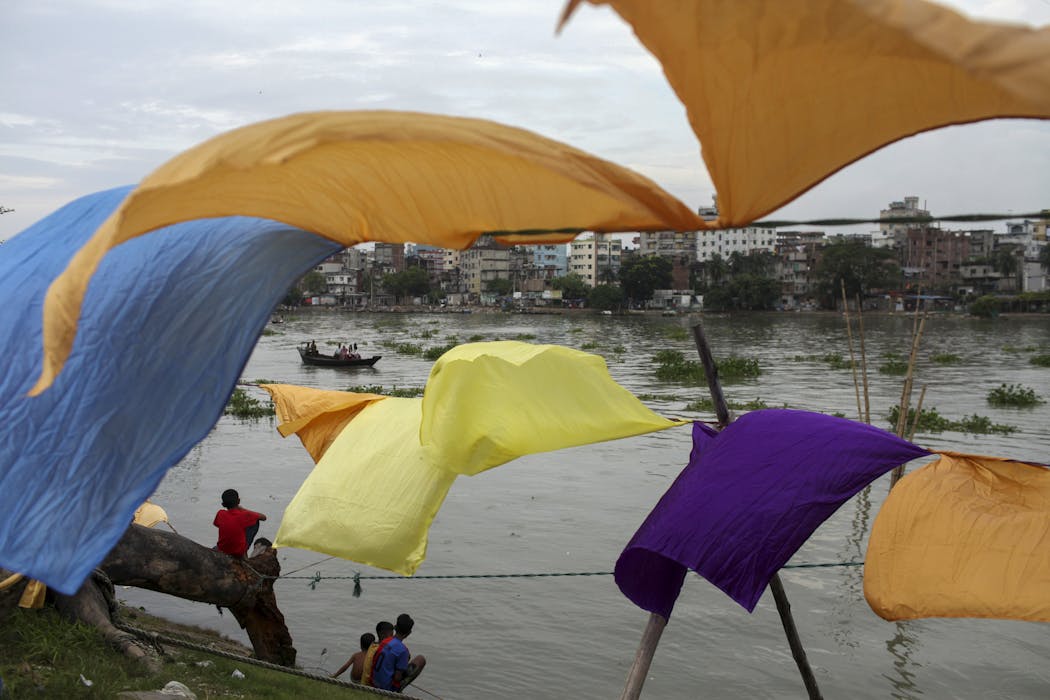
A boat crosses the Buriganga River in Dhaka, Bangladesh, on Oct. 5, 2025. MD Abu Sufian Jewel/NurPhoto via Getty Images

When Bangladesh became the first country in South Asia to join the U.N.’s Water Convention earlier this year, it was presented as a win-win.

Signing up to the Convention on the Protection and Use of Transboundary Watercourses and International Lakes would help Bangladesh safeguard and manage waterways that represent a “lifeline to peace and prosperity,” according to the United Nations. At the same time, it was hoped that the South Asian nation’s addition might encourage better cross-border cooperation in a region where shared rivers are often fought over.

As a scholar who works on issues of water security and grew up in South Asia, I understand the drivers behind Bangladesh’s decision to join the convention – recent hydro-political events have raised water security risks for the country of around 174 million.

But contrary to the intention of the convention, I believe Bangladesh joining could actually heighten tensions in South Asia, especially with India.

The need for water security

Bangladesh’s hydro challenges are multifaceted. Half of Bangladeshis live in areas that suffer severe drought. Around 60% of the population is vulnerable to high flood risks. And on average, floods inundate 20% to 25% of the country’s land each year. Moreover, more than 65 million residents still lack access to safe and properly managed sanitation facilities. These overlapping vulnerabilities show why water governance is such a key issue for security, diplomacy and development.

Additionally, the country’s rising population along with the effects of climate change add to this domestic water stress. At least 81 of the 1,415 rivers that flow through Bangladesh have either perished or are on the brink of extinction, according to a recent report.

At the same time, Bangladesh relies almost exclusively on rivers that cross borders. With India and China, it shares one of the world’s most complicated transboundary water systems: the Ganges-Brahmaputra-Meghna Basin.

Joining the UN Water Convention

A number of recent developments underscore the reasons Bangladesh sought greater legal and international protection.

In July 2025, China announced what is expected to be the world’s largest hydropower dam, the Motuo Hydropower Station in the Tibet Autonomous Region in southwestern China.

China starts construction on world’s biggest hydropower project in Tibet • FRANCE 24 English.

The Chinese government is promoting the dam as a clean energy project that will help the area’s economy grow, even though it will cost 1.2 trillion yuan (about US$167 billion) to build.

But countries close by are worried about how the dam will affect the region’s environment and politics.

Both Bangladesh and India have complained that the project could make the region less stable. The Yarlung Tsangpo River on which the dam is built runs into India’s Arunachal Pradesh state, which has long been a flashpoint in China-India relations. China claims the region as its own and calls it Zangnan.

Because of where it is situated, the dam could allow China to control or limit the flow of water into India. Similarly, Bangladesh, a downstream country, is concerned that Chinese upstream intervention could hurt its agriculture and make it harder to get water.

Already, the government of Bangladesh has limited control over the country’s water supply because only about 7% of the watershed area of the Brahmaputra, Meghna and Ganges – the three main rivers that flow into the country – are within Bangladesh. Moreover, the amount of water that ultimately reaches Bangladesh is significantly reduced because dam activities by China and India have limited the flow.

Climate change has made the situation worse by changing the way water flows across the Himalayas and the Ganges-Brahmaputra-Meghna basin. For instance, the Bangladesh delta, one of the most fertile and densely populated areas in the world, is already experiencing problems, including salinity intrusion, rising sea levels and the loss of arable land.

In 2019, the Bangladesh High Court ruled that the country’s rivers had the same status as a “legal person” in a bid to award them further protection. This was then followed by a decision by Bangladesh to join the U.N. Water Convention.

Created in 1996, the convention seeks to promote cooperation and sustainable management of shared water resources. At first, it was intended only for European and Central Asian countries. But in 2016, it became available to all U.N. member countries.

Bangladesh had initially delayed signing due to a mix of diplomatic, regional and institutional reasons and out of a concern over how it would affect relations with its powerful neighbor, India.

Implications for India

India has traditionally preferred bilateral agreements to resolve cross-border water issues, such as the Indus Waters Treaty with Pakistan and the 1996 Ganges water-sharing treaty with Bangladesh.

However, India’s bilateral strategy is fraying. The Indus Waters Treaty has been temporarily suspended following fighting between Pakistan and India.

Similarly, New Delhi’s water cooperation with Bangladesh is being tested. The sharing of water from the Teesta, a major tributary of the Brahmaputra, has long been a source of conflict between the two countries, with Bangladesh pushing for what it sees as a fairer distribution.

Bangladesh has also opposed Indian dams, such as the Tipaimukh on the Barak, over concerns about how they will affect the environment and people’s lives. For similar reasons, Bangladesh has objected to India’s plans to connect 30 rivers as part of a massive irrigation project.

The ripple effect

While India’s government has issued no official comment on Bangladesh’s joining the U.N. Water Convention, there are fears in New Delhi that it could undermine India’s negotiating power in future water disputes and when the Ganges River Treaty is due for renewal in 2026.

The original 1996 agreement sets out that India and Bangladesh would each get a guaranteed share of 35,000 cubic feet per second of water. The concern in New Delhi is that Bangladesh may ask for more water than originally specified and that being part of the U.N. Water Convention gives the Bangladesh government a more powerful negotiation platform. As such, Bangladesh’s proposition in September 2025 to create a new institutional framework to manage water-sharing agreements with India for 14 transboundary rivers was viewed with suspicion in India.

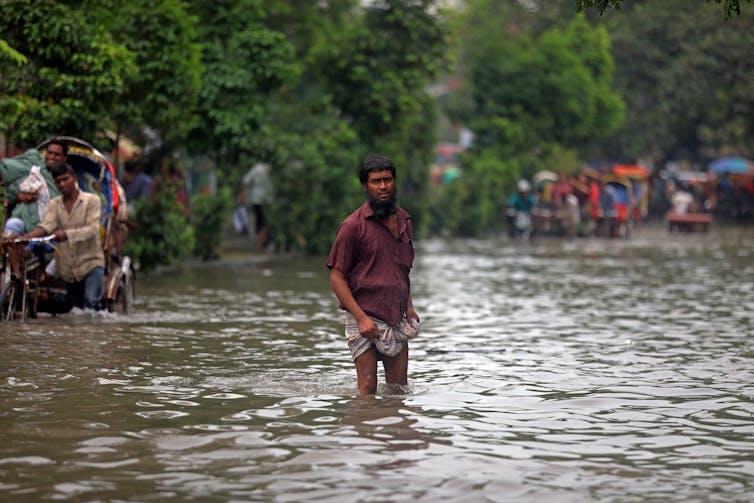
A man stands in a street flooded with water.
Incessant rainfall submerges the streets of Dhaka, Bangladesh, on Oct. 1, 2025.
Maruf Rahman/NurPhoto via Getty Images

Renewing the Ganges River Treaty with a framework that gives Bangladesh more water may put more stress on eastern India, an area already experiencing water scarcity, and test India’s water storage capacity, especially during dry seasons.

Shifting political currents

A further concern for India is that Bangladesh signing onto the U.N. Waters Treaty may set a precedent for other countries in the region, such as Nepal and Bhutan.

Meanwhile, Bangladesh has mulled the idea of forming a trilateral hydro-cooperation with China and Pakistan – two of India’s biggest rivals. A day before signing the U.N. convention, Bangladesh joined China and Pakistan in announcing a ‘trilateral cooperation’ on the economy, climate and social development.

For Bangladesh, the potential catastrophe of not tackling cascading environmental challenges justifies the risk of alienating its far more powerful neighbor. But where does this leave India? Ultimately, New Delhi must make a strategic choice: Either stick with bilateralism or adopt new multilateral norms to safeguard its water security and regional power.

The Conversation

Pintu Kumar Mahla is affiliated with the Water Resources Research Center, the University of Arizona.

He is also a member of the International Association of Water Law (AIDA).

Pintu Kumar Mahla has not received funding related to this article. The perspectives presented in this article reflect the personal positions of the author alone.

ref. Bangladesh’s accession to the UN Water Convention has a ripple effect that could cause problems with India – https://theconversation.com/bangladeshs-accession-to-the-un-water-convention-has-a-ripple-effect-that-could-cause-problems-with-india-264969