Lower revenues, pricier loans: how flooding in Europe affects firms and the financial system they depend on

Source: The Conversation – (in Spanish) – By Serena Fatica, Principal Economist — Team Leader, Joint Research Centre (JRC)

In Europe, the fastest-warming continent, the intensification of extreme weather events and changes in precipitation patterns have led to widespread and catastrophic flooding. Last year, storms and flooding affected an estimated 413,000 people, resulting in the loss of at least 335 lives. Material damage is estimated to amount to at least €18 billion, according to the 2024 European State of the Climate report from the Copernicus Climate Change Service and the World Meteorological Organization.

The flooding in October that hit southeastern Spain and the Valencia province in particular took the heaviest toll. Intense and prolonged rainfall and river flooding led to 232 fatalities, and infrastructure damage and economic losses totalled around €16.5 billion. More than seven months later, the local economy has rebounded, thanks in part to public aid packages worth 0.5% of the country’s GDP. However, in early May, the same part of Spain found itself exposed again to the disruptive consequences of climate change when extreme weather hit.

The costs of flooding

The direct costs from the damage to public infrastructure and private assets are only part of the economic losses originating from flooding. The indirect costs might not be immediately visible, but they are certainly not less significant. Business interruptions reduce firms’ revenue and cash flows, straining liquidity and, in the worst cases, threatening their survival. In addition, the increasing likelihood of future flooding may be priced into the valuation of assets and real estate in areas exposed to these types of climate risks. Firms impacted by climate-related hazards might find it difficult to pay back loans or bonds, or to raise finance as physical assets that can be pledged as collateral for bank credit lose value. Ultimately, this can affect the stability of the financial system.

For these reasons, climate change is not just a long-term environmental issue, but a threat to our economy and financial systems now. Economists at the European Commission’s Joint Research Centre (JRC) have been conducting research to better understand how the links between the business sector and the financial system amplify its impact.

A JRC study of flood events between 2007 and 2018 finds that flooding significantly worsened the performance of European firms. Manufacturers exposed to flooding experienced reductions in sales, number of employees and the value of their assets. These impacts occurred in the year following the flooding and tended to be persistent, with no clear signs of recovery seven years after the disaster. Some firms even went out of business. The study also finds that companies in flood-prone areas were better able to weather the shock than businesses exposed to less frequent flooding. This is consistent with the fact that adaptation and protection measures reduce the impacts of flooding.

Threats to smaller firms

Water damage is particularly disruptive for companies that are highly indebted. A second JRC study zooms in on the mechanisms whereby financing choices, and reliance on bank loans in particular, amplify the impact of climate change. This study focuses on loans extended to small and medium-sized enterprises (SMEs) in Italy, Spain and Belgium between 2008 and 2019. It was motivated by the idea that smaller firms, which are more financially fragile than larger ones, might also be more vulnerable to the localised impact of climate-related hazards, not least because of their limited capacity to geographically diversify their operations and access market-based finance. The study shows that flood episodes under analysis strained SMEs’ ability to meet their debt obligations. Flooded firms were more likely to incur delays in servicing their loans and eventually fail to repay them, even two years after the disaster.

In turn, this entails losses for the banks that finance these firms. In general, if banks anticipate the impact of flooding on business operations, they could be expected to divert lending toward safer borrowers or charge a higher interest rate on credit extended to at-risk firms. Indeed, the study finds evidence that prospective flood risk is priced into new loans. In the period under analysis, the “flood risk premium” was especially high for loans to smaller firms and for those granted by local, specialised banks, both of which tend to have geographically concentrated activities that are more exposed to disaster impacts. Loans to borrowers exposed to high flood risk were 12 percent more expensive, all things being equal.


A weekly e-mail in English featuring expertise from scholars and researchers. It provides an introduction to the diversity of research coming out of the continent and considers some of the key issues facing European countries. Get the newsletter!


Thus, flooding causes worse financial conditions for businesses and exposes the banking sector to losses on their loan portfolios. The numbers can be staggering: days after the October 2024 flooding, the Spanish Central Bank said that banks’ exposure in the affected areas would total €20 billion, with €13 billion in household loans and €7 billion in business loans (60% to SMEs), impacting 23,000 companies and 472,000 individuals.

With extreme weather events becoming more frequent and severe, the direct and indirect costs of climate change are projected to increase, unevenly affecting households, firms and territories across Europe. Increasing investments in adaptation, eg in flood defence, and closing the climate insurance protection gap – the uninsured portion of economic losses caused by natural hazards – are crucial to increase the resilience of our economies and financial systems and preserve the wellbeing of our societies. The complex structure of investment incentives calls for a multilayered approach, with a mix of private and public funding and risk-sharing mechanisms.

The Conversation

Serena Fatica ne travaille pas, ne conseille pas, ne possède pas de parts, ne reçoit pas de fonds d’une organisation qui pourrait tirer profit de cet article, et n’a déclaré aucune autre affiliation que son organisme de recherche.

ref. Lower revenues, pricier loans: how flooding in Europe affects firms and the financial system they depend on – https://theconversation.com/lower-revenues-pricier-loans-how-flooding-in-europe-affects-firms-and-the-financial-system-they-depend-on-258755


Testing between intervals: a key to retaining information in long-term memory

Source: The Conversation – (in Spanish) – By Émilie Gerbier, Maîtresse de Conférence en Psychologie, Université Côte d’Azur

The proverb “practice makes perfect” highlights the importance of repetition to master a skill. This principle also applies to learning vocabulary and other material. In order to fight our natural tendency to forget information, it is essential to reactivate it in our memory. But, how often?

Research in cognitive psychology provides answers to this question. However, it is also important to understand underlying principles of long-term learning to apply them in a useful and personalised way.

The ‘spacing effect’

There are two key principles for memorising information in the long term.

First, test yourself to learn and review content. It is much more effective to do this using question-and-answer cards than just to reread the material. After each attempt to recall pieces of information, review the one that could not be retrieved.

The second principle is to space out reactivations over time. This phenomenon, known as the “spacing effect”, suggests that when reviews of specific content are limited to, for instance, three sessions, it is preferable to space them over relatively longer periods (eg every three days) rather than shorter ones (every day).

Reviewing material at long intervals requires more effort, because it is more difficult to recall information after three days than one. However, it is precisely this effort that reinforces memories and promotes long-term retention.

When it comes to learning, we must therefore be wary of effortlessness: easily remembering a lesson today does not indicate how likely we are to remember it in a month, even though this feeling of easiness can cause us to mistakenly believe that review is unnecessary.

Robert Bjork of the University of California coined the term “desirable difficulty” to describe an optimal level of difficulty between two extremes. The first extreme corresponds to learning that is too easy (and therefore ineffective in the long run), while the other extreme corresponds to learning that is too difficult (and therefore ineffective and discouraging).

Finding the right pace

There is a limit to how much time can pass between information retrievals. After a long delay, such as a year, information will have greatly declined in memory and will be difficult, if not impossible, to recall. This situation may generate negative emotions and force us to start learning from scratch, rendering our previous efforts useless.

The key is to identify the right interval between retrievals, ensuring it is not too long and not too short. The ideal interval varies depending on several factors, such as the type of information that needs to be learned or the history of that learning. Some learning software use algorithms taking these factors into account, to test each piece of information at the “ideal” time.

There are also paper-and-pencil methods. The simplest method is to follow an “expansive” schedule, which uses increasingly longer intervals between sessions. This technique is used in the “méthode des J” (method of days), which some students may be familiar with. The effectiveness of this method lies in a gradual strengthening of the memory.


A weekly e-mail in English featuring expertise from scholars and researchers. It provides an introduction to the diversity of research coming out of the continent and considers some of the key issues facing European countries. Get the newsletter!


When you first learn something, retention is fragile, and memorised content needs to be reactivated quickly not to be forgotten. Each retrieval strengthens the memory, allowing the next retrieval opportunity to be delayed. Another consequence is that each retrieval is moderately difficult, which places the learner at a “desirable” level of difficulty.

Here is an example of an expansive schedule for a given piece of content: Day 1, Day 2, D5, D15, D44, D145, D415, etc. In this schedule, the interval length triples from one session to the next: 24 hours between Day 1 and Day 2, then three days between D2 and D5, and so on.

Gradually incorporating new knowledge

There is no scientific consensus on the optimal interval schedule. However, carrying out the first retrieval on the day after the initial moment of learning (thus, on D2) seems beneficial, as a night’s sleep allows the brain to restructure and/or reinforce knowledge learned the previous day. The subsequent intervals can be adjusted according to individual constraints.

This method is flexible; if necessary, a session can be postponed a few days before or after the scheduled date without affecting long-term effectiveness. It is the principle of regular retrieval that is key here.

The expansive schedule also has a considerable practical advantage in that it allows new information to be gradually integrated. For instance, new content can be introduced on D3, because no session on the initial content is scheduled for that day. Adding content gradually makes it possible to memorise large amounts of information in a lasting way without spending more time studying it.

The other method is based on the Leitner box system. In this case, the length of interval before the next retrieval depends on the outcome of the attempt to retrieve information from memory. If the answer was easily retrieved, the next retrieval should happen in a week. If the answer was retrieved with difficulty, then three days need to elapse before the next test. If the answer could not be retrieved, the next test should take place the following day. With experience, you will be able to adjust these intervals and develop your own system.

In short, effective and lasting learning not only requires that a certain amount of effort be made to retrieve information from memory, but a regular repetition of this process, at appropriate intervals, to thwart the process of forgetting.

The Conversation

Émilie Gerbier ne travaille pas, ne conseille pas, ne possède pas de parts, ne reçoit pas de fonds d’une organisation qui pourrait tirer profit de cet article, et n’a déclaré aucune autre affiliation que son organisme de recherche.

ref. Testing between intervals: a key to retaining information in long-term memory – https://theconversation.com/testing-between-intervals-a-key-to-retaining-information-in-long-term-memory-246511

From Scrooge to science: how dairy might disrupt your sleep and dreams

Source: The Conversation – UK – By Timothy Hearn, Senior Lecturer in Bioinformatics, Anglia Ruskin University

New Africa/Shutterstock

Ebenezer Scrooge tried to wave away the ghost of Jacob Marley by blaming the apparition on “an undigested bit of beef … a crumb of cheese”. Charles Dickens might have been writing fiction, but the idea that late-night dairy can warp dreams has now gained scientific support.

Researchers in Canada surveyed 1,082 university students about their eating habits, sleep patterns and dreams.  Remarkably, 40% reported that certain foods affected their sleep. Of that group, 20% blamed dairy – suggesting that Scrooge’s midnight cheese might have had more of an impact than he realised.

Just 5.5% believed food changed their dreams, but among those respondents dairy again loomed large, second only to sugary desserts as a perceived trigger for bizarre or disturbing dreams.

The researchers asked about everything from nightmare frequency to food allergies and intolerances. A clear pattern emerged: participants who reported lactose intolerance were significantly more likely to have frequent nightmares. And the link was strongest in people who also experienced bloating or cramps.


Get your news from actual experts, straight to your inbox. Sign up to our daily newsletter to receive all The Conversation UK’s latest coverage of news and research, from politics and business to the arts and sciences.


Statistical modelling suggested the stomach distress partly explains the bad dreams. In other words, food that keeps the gut churning can also set the imagination spinning.

That gut–brain route makes physiological sense. Abdominal discomfort can jolt sleepers into lighter stages of sleep where vivid or negative dreams are most common. Inflammation and spikes in cortisol (a stress hormone) triggered by digestive upset may further shape the emotional tone of dreams, especially by amplifying anxiety or negativity.

Earlier work backs the idea. A 2015 survey of Canadian undergraduates found that nearly 18% linked what they ate to their dreams, with dairy the top suspect, while a 2022 online study of 436 dream enthusiasts reported that people who ate more sugary snacks remembered more nightmares.

The new study from Canada echoes a wider literature on diet and sleep. Diets rich in fibre, fruit and vegetables are associated with deeper, more refreshing sleep, whereas meals high in saturated fat and sugar predict lighter, more fragmented rest.

A man waking from a bad dream.
Stomach distress partly explains bad dreams.
Lysenko Andrii/Shutterstock

Eating late in the evening has been tied to poorer sleep quality and to an “evening chronotype” (that is, night owls), itself linked to nightmare frequency.

If future work confirms the cheese–nightmare connection, the implications could be practical. Nightmares affect about 4% of adults worldwide and are particularly common in post-traumatic stress disorder.

Drug treatments exist but carry side-effects. Adjusting the timing or composition of evening meals, or choosing low-lactose dairy options, would be a far cheaper, lower-risk intervention.

Gut-friendly diets such as the Mediterranean diet are already being explored for mood disorders; nightmares may be another frontier for nutritional psychiatry.

What the research can’t prove

That said, the new findings come with caveats. The sample was young, mostly healthy psychology students filling out online questionnaires. Food intake, lactose intolerance and nightmare frequency were all self-reported, so “recall biases” (inaccurate memory) or the power of suggestion could inflate the associations.

Only 59 participants believed food influenced their dreams, so small-number effects (unreliable results from too few data) are possible. And a survey can only reveal associations – it can’t prove that cheese causes bad dream.

Cheese keeps cropping up in nightmare stories, and people who struggle to digest dairy report the worst of it. Scientists still have to match meal diaries, gut clues and lab-monitored dreams to prove the link. In the meantime, try eating earlier or choosing low-lactose options. Your stomach – and your dreams – may calm down.

The Conversation

Timothy Hearn does not work for, consult, own shares in or receive funding from any company or organisation that would benefit from this article, and has disclosed no relevant affiliations beyond their academic appointment.

ref. From Scrooge to science: how dairy might disrupt your sleep and dreams – https://theconversation.com/from-scrooge-to-science-how-dairy-might-disrupt-your-sleep-and-dreams-260328

Why the l-carnitine sport supplement is controversial

Source: The Conversation – UK – By Julia Haarhuis, PhD student – Food, Microbiomes and Health, Quadram Institute

Miljan Zivkovic/Shutterstock

Sport supplements are hard to get away from if you like to exercise regularly. Even if you’re not interested in them, there’s a good chance your gym will have posters extolling their virtues or your sporty friends will want to talk to you about them.

It can be hard to know what supplements to take as there is a lot of mixed information out there. L-carnitine is among the more controversial supplements. While there is evidence it supports muscle recovery and enhances exercise performance, research has also shown it can contribute to cardiovascular disease.

In a new study, my colleagues and I found it may be possible to counter the negative effects of l-cartinine by eating pomegranate with it.

First, it’s important to understand what l-carnitine is. Your body produces a small amount of l-carnitine naturally. This happens in the kidneys, liver and brain.

When l-carnitine was first identified in humans in 1952, it was thought to be a vitamin and it was referred to as vitamin BT. After years of research on this compound, l-carnitine is now considered a quasi-vitamin because for most people the human body can produce enough l-carnitine itself.


Get your news from actual experts, straight to your inbox. Sign up to our daily newsletter to receive all The Conversation UK’s latest coverage of news and research, from politics and business to the arts and sciences.


L-carnitine can be bought as a dietary supplement, but the nutrient is also added to energy drinks and some protein powders by manufacturers to try and enhance the value of their products. Manufacturers normally clearly state it on the product if it contains l-carnitine – it’s not something a company will try to hide.

Some foods naturally contain l-carnitine, such as meat and in tiny amounts in dairy products. L-carnitine is not fed to livestock but it is present in muscle tissue. L-carnitine was first found in meat in 1905. It is for this reason that the name carnitine is derived from the Latin word carnis, meaning “of the flesh”.

Jar and scoop filled with powder against yellow background.
L-carnitine is sold in sport supplements.
9dream studio/Shutterstock

The harmful effects of l-carnitine supplements

It is not thought to be intrinsically harmful. Your gut microbes are to blame for the risks associated with l-carnitine.

Less than 20% of l-carnitine supplements can be taken in by the human body. The unabsorbed l-carnitine travels down the gastrointestinal tract and reaches the colon. The colon is home to trillions of microbes, including bacteria, viruses and fungi.

When the remaining 80% of the l-carnitine supplement arrives in the colon, the microbes start absorbing the nutrient and they use it to produce something else: trimethylamine (TMA). TMA is a compound the human body can efficiently absorb, and that is where the potentially harmful effects of l-carnitine supplements arise.

Once the body absorbs TMA, it goes to the liver via the blood stream. The liver converts TMA to trimethylamine N-oxide (TMAO). Research has shown that high levels of TMAO in the blood can contribute to cardiovascular disease.

For example, a research group at the Cleveland Clinic in the US gave human participants a nutrient similar to l-carnitine that is also converted into TMA by gut microbes. The researchers found that the nutrient caused an increased risk of thrombosis (blood clots) in their participants.

L-carnitine itself is a beneficial nutrient. When it is produced by our bodies, which happens in the kidneys, brain and liver, it’s not metabolised by the gut microbiota and isn’t converted to TMAO. Your body can absorb more l-carnitine from meat than from supplements, which makes it less harmful as that means less of it ends up in the colon.

Dietary intervention can reduce harmful effects

In my team’s lab at the Quadram Institute in Norwich, England, we simulated what happens when the l-carnitine supplement reaches the microbes in the colon. We fed a culture of gut microbes with l-carnitine and measured the TMA that the microbes produced.

Then, we fed a culture of gut microbes with l-carnitine together with a pomegranate extract, which is rich in polyphenols. Polyphenols are plant compounds with antioxidant, antimicrobial, and anti-inflammatory properties that may help keep you healthy and protect you against diseases.

The main polyphenols in pomegranate belong to a group called ellagitannins, a type of polyphenol that can reach the colon almost entirely intact, where they can interact with the gut microbiota. When we measured the TMA that the gut microbes produced in the second experiment, we saw much less TMA.

Our experiments in the lab show that a polyphenol-rich pomegranate extract can reduce microbial TMA production and eliminate the potentially harmful effects of l-carnitine supplements.

Our laboratory experiments showed that the pomegranate extract can reduce the production of TMA. Ellagitannins are also abundant in other fruits and nuts, such as raspberries and walnuts. So, if you take l-carnitine supplements, our research suggests that it may be a good idea to include ellagitannin-rich foods in your diet. Eating more fruits and nuts can be good for your health, so including these in your diet will probably be beneficial anyway.

Our group is now moving the science outside of the lab. We are testing in human participants how effective the pomegranate extract is at reducing TMAO production from l-carnitine supplements. This study will tell us whether taking an l-carnitine supplement along with a pomegranate extract may be better than taking the supplement on its own.

The Conversation

Julia Haarhuis works at the Quadram Institute and receives funding from the Wellcome Trust.

ref. Why the l-carnitine sport supplement is controversial – https://theconversation.com/why-the-l-carnitine-sport-supplement-is-controversial-219520

Most plant-friendly fungi are a mystery to scientists

Source: The Conversation – UK – By Katie Field, Professor in Plant-Soil Processes, University of Sheffield

Fly agaric mushrooms partner with trees. Magnus Binnerstam/Shutterstock

If you walk through a forest and look down, you might think you’re stepping on dead leaves, twigs and soil. In reality, you’re walking over a vast underground patchwork of fungal filaments, supporting life above ground.

These are mycorrhizal fungi, which form partnerships with the roots of nearly all plants. Found everywhere from tropical rainforests to boreal forests and farmland, these underground fungi sustain life above ground, often without us realising they’re even there.

A recent academic review argues that up to 83% of ectomycorrhizal (ECM) fungi species, which form partnerships with trees, may be unknown to science.

Mycorrhizal fungi grow around root tips and form webs between root cells or penetrate root cells, then make structures inside them. They scavenge nutrients such as phosphorus and nitrogen from the soil and, in return, receive carbon from their host plants.

Traces of these unidentified fungi are often found in soil DNA. The researchers surveyed global DNA databases to see how many DNA traces that seemed to belong to ECM fungi matched to a species. Only 17% could. Scientists call these “dark taxa” – organisms that have been detected, but not formally described, named or studied.

Many of these fungi produce large fruiting bodies such as mushrooms and are foundational to forest ecosystems.

One example is the fly agaric (Amanita muscaria) which produces the iconic red and white spotted toadstools often linked to folklore and can have a range of host trees. It typically associates with birch, pine and spruce, especially in colder climates, helping trees survive in nutrient-poor soils.

Porcini fungi, (for example Boletus edulis), produce delicious mushrooms prized for their rich, nutty flavor, are ECMs too. These fungi grow with pines, firs and oaks. And the chanterelle is highly sought-after by mushroom collectors and often found near oaks, beech and conifers.

Chanterelles thrive in undisturbed, healthy forests. Their presence often signals a well-functioning forest ecosystem. They have a fruity, apricot-like scent that may attract insects to help spread spores.

Yellow mushrooms grow on forest floor.
Chanterelle mushrooms are highly sought after.
Nitr/Shutterstock

The new report shows how little we know about the world beneath our feet. This ignorance has important implications. Entire landscapes are being reshaped by deforestation and agriculture.

But reforestation efforts are happening without fully understanding how these changes affect the fungal life that underpins these ecosystems. For example, in the Amazon, deforestation for farming continues at an alarming pace with 3,800 square miles (equivalent to 1.8 million football fields) of tropical rainforest destroyed for beef production in 2018-19 alone.

Meanwhile, well-meaning carbon offset schemes often involve planting trees of a single species, potentially severing ancient relationships between native trees and their fungal partners. This is because the mycorrhizal fungi in these area will have developed in partnership with the native plants for many years – and may not be compatible with the tree species being planted for these schemes.

Although not all trees have specific fungal partners, many ECM fungi will only form symbioses with certain trees. For example, species within the Suillus genus (which includes the sticky bun mushroom) are specific to certain species of pine.

Introducing non-native plantation species may inadvertently drive endemic fungi, including species not yet known to science, toward extinction. We may be growing forests that look green and vibrant, but are damaging the invisible systems that keep them alive.

The problem isn’t limited to ECM fungi. Entire guilds (species groups that exploit resources in a similar way) of mycorrhizal fungi, remain virtually unexplored.

These dark guilds are ecologically crucial, yet most of their members have never been named, cultured or studied.

Ericoid Mycorrhizal Fungi (ERM)

These fungi form symbioses with many ericaceous shrubs, including heather, cranberry and rhododendrons. They dominate in some of the world’s harshest landscapes, including the Arctic tundra, the boreal forest (also known as snow forest), bogs and mountains.

Research suggests ERM fungi not only help plants thrive in harsh environments but also drive some of the carbon accumulation in these environments, making them potentially part of an important carbon sink.

Despite their abundant coverage across some of the most carbon-rich soils on Earth, the ecology of ERM fungi remains somewhat mysterious. Only a small number have been formally identified. However, even the few known species suggest remarkable potential.

Their genomes contain vast repertoires of genes for breaking down organic matter. This is important because it suggests ERM fungi are not just symbionts living in close interaction with other species but also active decomposers, influencing both plant nutrition and soil carbon cycling. Their dual lifestyle may play a critical role in nutrient-poor ecosystems.

Mucoromycotina fine root endophytes (MFRE)

MFRE are another group of enigmatic fungi that form beneficial relationships with plants. Long mistaken for the arbuscular mycorrhizal (AM) fungi until distinguished in 2017, MFRE are also found across a range of ecosystems including farmland and nutrient-poor soils and often live alongside AM fungi.

MFRE appear to be important in helping plants access nitrogen from within the soil, while AM fungi are more associated with phosphorus uptake. Like ERM fungi, MFRE appear to also alternate between free-living and symbiotic lifestyles.

As researchers begin to uncover their roles, MFRE are emerging as important players in plant resilience and sustainable agriculture.

These fungi frequently appear in plant roots. They are characterised by darkly pigmented, segmented fungal filaments, or hyphae, but their role is highly context-dependent.

Some DSEs appear to enhance host stress tolerance or nutrient uptake. Others may act as latent pathogens, potentially harming the host plant. Most DSEs remain unnamed and poorly understood.

Time is running out

Many of the ecosystems connected to these dark guilds of fungi are among the most vulnerable on the planet. The Arctic and alpine regions which are strongholds for ERMs, DSEs and potentially MFREs, are warming at two to four times the global average.

Peatlands have been drained and converted for agriculture or development while heathlands are increasingly targeted for tree-planting initiatives meant to sequester carbon.

Planting fast-growing, non-native species in monocultures may improve short-term carbon metrics above ground, but it could come at the cost of soil health and belowground biodiversity. Many fungi are host-specific, co-evolving with native plants over millions of years.

Replacing those plants with non-native trees or allowing invasive plants to spread could lead to local extinctions of fungi we’ve never had the chance to study. Soil fungi also mediate processes from nutrient cycling to pathogen suppression to carbon sequestration.

We are changing landscapes faster than we can understand them and in doing so we may be unravelling critical ecological systems that took millennia to form.

The Conversation

Katie Field receives funding from the European Research Council, the Biotechnology and Biological Research Council and the Natural Environment Research Council.

Tom Parker receives funding from The Scottish Government’s Rural and Environment Science and Analytical Services Division and Natural Environment Research Council

ref. Most plant-friendly fungi are a mystery to scientists – https://theconversation.com/most-plant-friendly-fungi-are-a-mystery-to-scientists-259705

What makes a good football coach? The reality behind the myths

Source: The Conversation – UK – By Alan McKay, Senior Research Assistant for the Centre for Football Research in Wales, University of South Wales

With Women’s Euro 2025 underway, attention is turning not just to the players hoping for glory, but to the head coaches tasked with leading them.

These include England’s Sarina Wiegman, who guided the Netherlands to Euro victory in 2017 and repeated the feat with England in 2022; Spain’s Montse Tomé, the reigning world champions’ first female head coach; and Rhian Wilkinson, who is preparing Wales for their first ever appearance at a major tournament.

The pressure is immense, but what actually makes a good football coach? My colleagues and I recently conducted a study on behalf of the Uefa Academy to better understand this topic.

There are plenty of myths. That the best coaches eat, sleep and breathe football 24/7. That they’re “natural leaders” who inspire through sheer charisma. That success demands constant self-sacrifice. But when coaches try to live up to these ideas, it can leave them feeling burnt out – physically and emotionally exhausted, disconnected from their personal lives and questioning their ability.

In reality, effective coaching is about much more than tactics or motivation. It’s about performance, not just on the pitch, but in the way coaches manage themselves, their staff and their players. A good coach must balance their responsibilities with time for rest and recovery. They must communicate clearly, stay calm under pressure and create an environment where everyone knows their role.

Sarina Wiegman discusses the importance of creating positive environments.

Sarina Wiegman has described her approach in just these terms: “We try to turn every stone to get as best prepared as we can be before we go into the tournament… to perform under the highest pressure.”

But coaches don’t arrive at this mindset by accident. It’s developed through experience and, importantly, through structured education.

One important finding was that the most effective coaches have a strong sense of who they are – including their values, their communication style, and their strengths and limitations. These are things which affect the players and staff with whom they work.

Even top coaches need support

This type of self-awareness is often shaped through formal coach education programmes, where participants work closely with a mentor. These mentors can offer honest feedback, challenge assumptions and help coaches develop a philosophy they can share with their team.

That process is essential at every level, whether it’s grassroots football or the international stage. Coaches who understand themselves and who can use their education are better able to adapt their approach to the context they’re working in. They can build trust, foster unity and know when to step back.

Gareth Southgate, former England men’s head coach, is a fantastic example of this. He has spoken about the importance of supporting the person first and the player second. He has discussed the value of empathy and empowering players to make decisions on and off the pitch.

Through this process, Southgate helped players focus on the “joy of playing for their country” rather than simply achieving results. This may have helped to relieve some of the inevitable pressure and expectations placed on the England squad by the media, fans and English Football Association to win tournaments.

After qualifying, a good coach will continue to seek out their mentor for advice on both professional and personal issues they may be experiencing in their role. Emma Hayes, head coach of the US women’s team, has credited her own mentor with helping her fine tune her leadership style and build team cohesion. Her ability to create a safe, supportive environment was central to Team USA’s gold medal win at the 2024 Paris Olympics.

Hayes’ methods demonstrate that coaching is not a destination but a lifelong process. It requires constant learning, reflection and adaptation. The best coaches don’t just chase trophies. They aim to build something lasting – a culture of trust, a resilient team and a space where people can thrive.

As Euro 2025 continues, it’s worth keeping an eye, not just on the scorelines, but on the sidelines. The real mark of a good coach isn’t always found on the scoreboard. It’s found in how a team plays, how they talk about each other and whether they’re still smiling at the end.

The Conversation

Alan McKay received funding from the Union of European Football Associations (UEFA) to conduct the research mentioned in this article. Alan wishes to acknowledge Professor Brendan Cropley, who was instrumental in conducting this research.

ref. What makes a good football coach? The reality behind the myths – https://theconversation.com/what-makes-a-good-football-coach-the-reality-behind-the-myths-259947

A brief history of the slogan T-shirt

Source: The Conversation – UK – By Liv Auckland, Lecturer in Fashion Communication and Creative Direction and Curation for Fashion, Nottingham Trent University

You probably have a drawer full of T-shirts. They’re comfy, easy to style, cheap and ubiquitous. But the T-shirt is anything but basic. For 70 years, they’ve been worn as a tool for self-expression, rebellion and protest. And in 2025, the slogan T-shirt is as powerful as it has ever been.

Previously worn as an undergarment, the T-shirt became outerwear after the second world war. Snugly dressed on the bodies of physically fit young men, it came to signify heroism, youth and virility.

The T-shirt was adopted by sub-cultural groups such as bikers and custom car fanatics. And it was popularised by Hollywood stars, including Marlon Brando and James Dean. By the mid-1950s, it had become a symbol of rebellion and cool.


Looking for something good? Cut through the noise with a carefully curated selection of the latest releases, live events and exhibitions, straight to your inbox every fortnight, on Fridays. Sign up here.


From the 1960s onwards, slogan T-shirts gained momentum in America and Britain, and women began wearing them as the fashions became more casual. In the postmodern era, language became less about function and more about individualistic expression and exploration. This playful approach to words, combined with an emphasis on design and social commentary, made the T-shirt an ideal canvas for the championing of individual thought.

Anti-war messaging dominated slogans in the US during the Vietnam war and amid the increasing threat of nuclear war. Perhaps the most recognised slogan featured the artwork from John Lennon and Yoko Ono’s famous 1969 “War is Over” campaign, a T-shirt which is still being replicated today. Messages of peace on clothing, whether featuring words or symbols, have stayed in our collective wardrobe ever since, from high fashion to high street.

In the 1970s, the New York Times called T-shirts the “the medium of the message”, and the message itself was becoming ever more subversive. Slogan tees sought to provoke, whether through humour or controversy.

Punks were especially good at it. They constructed what subculture theorist Dick Hebdige called a “guttersnipe rhetoric” in his 1979 study Subculture: The Meaning of Style. Designers Vivienne Westwood and Malcolm McLaren paved the way for a DIY approach where slogans were often scrawled, expressive and upended social codes.

The slogan shirt in the fight for LGBTQ+ rights

Manufacturing and printing advancements in the postmodern era also meant that more designs could be printed en masse – a development used by the LGBTQ+ community and its allies.

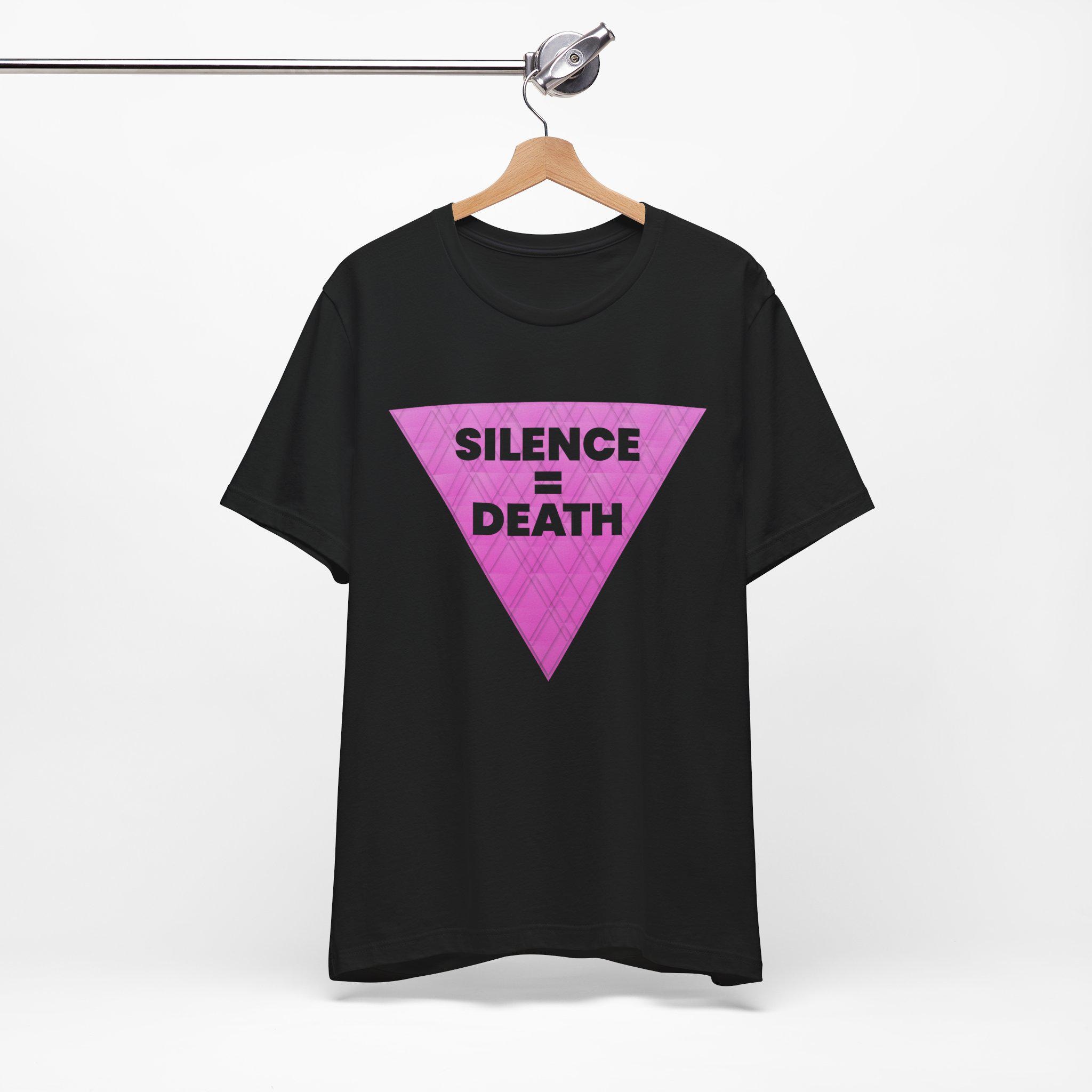
Some of the most memorable slogan T-shirts in history were created in response to the Aids epidemic in the 1980s. The most poignant simply read “Silence = Death”. Originally a poster, the design was printed on T-shirts by the Aids Coalition to Unleash Power (known as “Act Up”) for protesters to wear.

Those affected by Aids were demonised and largely ignored, so the queer community was reliant on activism to incite action from government and their fellow citizens.

In After Silence: A History of Aids through Its Images (2018), author Avram Finkelstein describes the grassroots activism of the time as an “act of call and response, a request for participation” for the lives at stake. In a pre-internet world, T-shirts provided a platform to make the fight visible.

The 80s also saw slogan T-shirts enter pop cultural spaces as well as political ones, most notably with designs from Katharine Hamnett. Known for their oversized fit, their politically charged messages adorned the torsos of celebrities including George Michael and Debbie Harry. In 1984, Hamnett made fashion history when she met then-prime minister Margaret Thatcher while wearing a T-shirt emblazoned with “58% Don’t Want Pershing”, referencing her anti-nuclear sentiment.

That same year, Hamnett’s “Choose Life” design gained icon status when it was worn in a music video by Wham!. Originally a reference to the central teachings of Buddhism, “Choose Life” took on complex meaning when read in the context of the Aids epidemic, Thatcherism and economic instability.

The Choose Life shirt featured in Wham!‘s video for Wake Me Up Before You Go-Go.

The slogan was later used in the opening monologue of the cult film Trainspotting (1996), which is set in an impoverished and drug-fuelled Edinburgh. The design has been reworked countless times, including by Hamnett herself for the refugee charity Choose Love.

In author Stephanie Talbot’s 2013 book Slogan T-shirts: Cult and Culture, she explains that slogan tees can move through time to achieve iconic status. While the Choose Life tee has transcended time and generations, it also shows how the intended message of a slogan can change depending on the wearer and the observer, and the environment within which it’s worn.

Today, to Hamnett’s consternation, Choose Life has been co-opted by pro-life campaigners, not only taking on a different meaning but flipping across the political spectrum.

Who gets to wear a slogan shirt?

When we wear a slogan T-shirt, we are transferring our internal self to an external, public self, creating an extension of ourselves that invites others to perceive us. This creates opportunities for conflict as well as connection and community, putting our bodies (particularly those that are marginalised) at risk.

In 2023 for example, numerous peaceful protesters were arrested for wearing Just Stop Oil T-shirts, highlighting how unsafe – and potentially unlawful – it can be to wear a slogan T-shirt.

Actor Pedro Pascal wears the 'Protect the Dolls' shirt with a brown coat.
Actor Pedro Pascal wears the ‘Protect the Dolls’ shirt by Connor Ives.
Fred Duval/Shutterstock

However, the LGBTQ+ community is continuing to seize the power of the slogan T-shirt – not in spite of law changes, but because of them.

Designer Connor Ives closed his 2025 London Fashion Week show wearing a T-shirt that read “Protect the Dolls”, during a time of increasing politicisation of trans lives and gender healthcare. The term “dolls” is one of endearment in queer spaces that refers to those who identify as feminine, including trans women.

After receiving a “groundswell” of support, the T-shirt went into production to raise money for American charity Trans Lifeline. Numerous celebrities have since worn the design, including actor Pedro Pascal and musician Troye Sivan, to show their support in the face of multiple law changes.

In a world that increasingly feels like it’s in turmoil, for many, the humble T-shirt still feels like a space where we can express how we truly feel.

This article features references to books that have been included for editorial reasons, and may contain links to bookshop.org. If you click on one of the links and go on to buy something from bookshop.org The Conversation UK may earn a commission.

The Conversation

Liv Auckland does not work for, consult, own shares in or receive funding from any company or organisation that would benefit from this article, and has disclosed no relevant affiliations beyond their academic appointment.

ref. A brief history of the slogan T-shirt – https://theconversation.com/a-brief-history-of-the-slogan-t-shirt-258766

What Elio can help teach us about eye patching, stigma and the developing brain

Source: The Conversation – UK – By Rebecca Willis, Doctoral Researcher in Clinical Neurosciences, University of Oxford

Disney Pixar’s latest film, Elio, follows a familiar-sounding character, a lovable and imaginative young hero who dreams of finding a place where he truly belongs. But amid the colour and chaos of the film’s outer space setting, one subtle detail stands out: Elio wears an eye patch.

In the real world, eye patches are commonly used to treat amblyopia, or “lazy eye”, a neurodevelopmental visual condition projected to affect 175.2 million people globally by 2030. In amblyopia, the brain favours one eye over the other, leading to reduced vision in the weaker eye.

Treatment often involves covering the stronger eye with a patch, encouraging the brain to rely on the weaker eye and improve its function. This therapy is most effective during early childhood and can take months of daily commitment.

Yet, despite how common visual conditions are, positive representation of patch-wearing is rare in popular media.

Animated films have long shaped childhood imaginations, but historically, characters with eye patches or other visual markers often fall into negative stereotypes.

Think Mr Potato Head’s alter ego One-Eyed Bart in Toy Story, or Madagascar’s Dr. Blowhole: characters where an eye patch signals villainy. Glasses, meanwhile, are more often seen on older characters like Carl Fredrickson from Up or Roz from Monsters Inc.

Characters with strabismus (misaligned eyes), like Ed from The Lion King, are often portrayed as unintelligent or clumsy. One recent study found that strabismus in children’s animated films is consistently associated with negative character traits – something that can reinforce harmful stigma.

These portrayals matter. Film plays a powerful role in shaping beliefs, especially for young children who are developing a sense of identity, belonging and how to relate to others. When visual conditions are stereotyped, it can reinforce feelings of embarrassment and difference.

For children wearing a patch, these feelings can lead to skipping treatment days and poorer outcomes. In contrast, authentic, positive representation can build self-esteem, promote acceptance, and provide relatable role models.

A subtle but powerful shift

Happily, things are starting to change. In recent Disney/Pixar films, we’ve seen characters with glasses portrayed as dynamic, central figures: Encanto’s Mirabel, Turning Red’s Priya and Mei, and Big Hero 6’s scientist-superhero Honey Lemon, for example. These characters challenge old stereotypes and broaden the narrative around vision.

Elio continues that progress. The young protagonist’s eye patch is not a plot point, nor is it used to symbolise frailty, villainy or wisdom. It simply exists – a quiet part of his identity, not something to overcome.

That subtlety is powerful. For children who wear patches, seeing someone like Elio leading a space mission, not sidelined by his visual condition, can be deeply affirming.

Beyond the screen, Elio has sparked conversation and awareness. Prevent Blindness launched a campaign around the film to raise public understanding of amblyopia and the importance of early detection. Eye care organisations have also used the film as an educational tool, while individuals have shared their stories of patching and treatment across social media.

When amblyopia is recognised and treated early, patching can be remarkably effective. But awareness is key, and so is reducing stigma that might discourage children from wearing their patch.

Childhood amblyopia research

Although patching often restores vision, it doesn’t work for every child – and we still don’t fully understand why. There is limited research into how patching affects the developing brain, and this lack of insight hinders improvements in treatment.

Our research with Holly Bridge, Vision Group leader at Oxford University, aims to change that. We’re studying how patching changes brain chemistry in young children.

Adult studies suggest that chemical shifts in visual parts of the brain may be linked to patching outcomes. To explore this in children, we’re running a study of five to eight-year-olds with amblyopia or healthy vision.

In our study, children with amblyopia receive a safe, non-invasive brain scan before and after patching treatment. We also measure their vision using child-friendly tests. We then compare these results to children with healthy vision who don’t wear a patch, helping us to understand both visual changes and brain development.

We hope Elio marks the beginning of more inclusive storytelling, where difference isn’t erased or exaggerated, but simply woven into the fabric of character and adventure. Like Elio’s journey through space, the path to better understanding and representation of childhood visual conditions has faced challenges.

But perhaps this is the launch we needed: towards better awareness, better research, and a future where every child feels seen – on screen and beyond.

The Conversation

Rebecca Willis receives funding from a Royal Society Studentship.

Betina Ip is funded by The Royal Society (Dorothy Hodgkin Research Fellowship, DHFR1201141) and the UKRI-MRC (MR/V034723/1).

Megan Groombridge receives funding from the MRC (MR/V034723/1).

ref. What Elio can help teach us about eye patching, stigma and the developing brain – https://theconversation.com/what-elio-can-help-teach-us-about-eye-patching-stigma-and-the-developing-brain-259946

The pandemic is still disrupting young people’s careers

Source: The Conversation – UK – By Sviatlana Kroitar, Honored Research Visiting Fellow, Labour Studies, University of Leicester

Goksi/Shutterstock

Unlike previous economic downturns, the COVID pandemic created a crisis that disrupted both education and employment, abruptly halting young people’s emerging careers and clouding their hopes for the future. It doubly affected those transitioning into adulthood, out of school or university and into work, and it threatened the job security of those embarking on their careers when the pandemic began.

There has been a disproportionate and often hidden cost borne by young people which has had a lasting impact on their career paths, financial independence and mental wellbeing.

The pandemic sparked widespread educational disruption. Schools were closed, there was a rapid switch to online learning and exams were cancelled. This hindered young people’s ability to acquire essential knowledge, skills and qualifications.

This aggravated existing educational gaps, particularly between students from different backgrounds, and those with and without reliable digital access and learning support.

The cancellation of internships and work placements – vital for practical experience – left many with a gap in their skills. This may have increased the pressure to undertake unpaid work for employability.


Get your news from actual experts, straight to your inbox. Sign up to our daily newsletter to receive all The Conversation UK’s latest coverage of news and research, from politics and business to the arts and sciences.


Young people are heavily concentrated in precarious, in-person employment sectors such as hospitality and retail. These jobs are characterised by temporary contracts, low wages and limited benefits.

This instability made them acutely vulnerable during the pandemic. Precarious roles offered few safety nets, leading to immediate job losses or reduced hours. Labour markets contracted sharply, especially in in-person sectors. This affected young people in particular, who faced higher job losses and unemployment.

Graduate recruitment also plummeted as companies froze or reduced entry-level hiring, creating a bottleneck for university leavers. This convergence of job losses and a shrinking graduate market made securing stable employment exceptionally difficult.

The pandemic also magnified existing vulnerabilities. It exacerbated hardship and job insecurity for young people who were already marginalised and disadvantaged. Young people already in non-standard employment – such as gig work, zero-hours contracts or temporary roles – experienced disproportionately severe outcomes.

The situation was the same for young people from lower-income backgrounds, women and disabled young people.

Less affluent young people often lack financial support from their families. This means deeper financial instability, increased debt and housing insecurity. These issues were exacerbated by the impact of the pandemic on employment.

Precarity carries elevated long-term risks, including prolonged low wages and stunted career progression. This often delays the achievement of typical adult milestones such as financial autonomy and independent living.

Woman stressed with laptop
Young people may have been more inclined to take any available work.
Raushan_films/Shutterstock

Economic uncertainty destabilised emerging careers, forcing young people to rethink their options – a situation dubbed “precarious hope”. Many graduates, feeling less prepared, lowered their expectations.

They may well have prioritised finding any available work, taking jobs that didn’t match their qualifications, leading to lower wages and poorer working conditions.

Transitions to adulthood

Research has found that the pandemic created significant disruptions to the typical transition to adulthood. A prominent trend was the rise of “boomerang” trajectories: young adults returning to live with parents due to economic hardship or job loss.

More broadly, the pandemic contributed to delayed milestones such as leaving home, achieving financial independence and building stable relationships, creating prolonged dependence for many.

The pandemic also blurred young professional identities. Disrupted final years of study and remote transitions stripped away traditional markers of closure. Cancelled exams, internships and graduations plunged many into prolonged limbo.

This absence of clear rites of passage and the unexpected conclusion to studies added ambiguity to young people’s ideas of their own identity and life paths. This lack of clear professional selves left young people feeling helpless, their future out of their hands.

The psychological toll

The pandemic inflicted a profound psychological burden on young people. The loss of expected life passages, social and professional connections and routines fostered feelings of isolation, stagnation and diminished control. This distress was amplified by relentless uncertainty surrounding disrupted education, altered qualifications and a volatile job market.

A “COVID echo” continues to resonate for young people. Graduates from the pandemic period may still feel that they lag behind in their careers.

The early disruptions it caused through lost entry-level job opportunities, fewer chances to build networks and hindered skill development continue to cast a shadow over the further career prospects of these young people.

Enduring negative consequences like this are termed “scarring”, threatening to affect employment and earning potential for years.

Addressing these potential long-term scars requires an overhaul of the youth labour market. This means tackling precarious work, enhancing training and re-skilling, and strengthening social safety nets. Robust support, as well as listening to what young people have to say about their futures, will be vital in empowering this generation to overcome the crisis and reach their full potential.

The Conversation

Sviatlana Kroitar does not work for, consult, own shares in or receive funding from any company or organisation that would benefit from this article, and has disclosed no relevant affiliations beyond their academic appointment.

ref. The pandemic is still disrupting young people’s careers – https://theconversation.com/the-pandemic-is-still-disrupting-young-peoples-careers-258768

Have you noticed that Nigel Farage doesn’t talk about Donald Trump anymore?

Source: The Conversation – UK – By Martin Farr, Senior Lecturer in Contemporary British History, Newcastle University

Each is the main political subject in their country, and one is the main political subject in the world. Each rode the populist wave in 2016, campaigning for the other. In 2024 the tandem surfers remounted on to an even greater breaker. Yet, though nothing has happened to suggest that bromance is dead, neither Donald Trump nor Nigel Farage publicly now speak of the other.

Trump’s presidential campaign shared personnel with Leave.eu, the unofficial Brexit campaign. Farage was on the stump with Trump, and his “bad boys of Brexit” made their pilgrimage to Trump Tower after its owner’s own triumph in the US election. Each exulted in the other’s success, and what it portended.

Trump duly proposed giving the UK ambassadorship to the United States to Farage. Instead, Farage became not merely MP for Clacton, but leader of the first insurgent party to potentially reset Britain’s electoral calculus since Labour broke through in 1922.

Then, Labour’s challenge was to replace the Liberals as the alternative party of government. It took two years. Reform UK could replace the Conservatives in four.


Get your news from actual experts, straight to your inbox. Sign up to our daily newsletter to receive all The Conversation UK’s latest coverage of news and research, from politics and business to the arts and sciences.


Trump, meanwhile, has achieved what in Britain has either been thwarted (Militant and the Labour party in the 1980s) or has at most had temporary, aberrant, success (Momentum and the Labour party in the 2010s): the takeover of a party from within. Farage has been doing so – hitherto – from without.

At one of those historic forks in a road where change is a matter of chance, after Brexit finally took place, Farage considered his own personal leave – to go and break America.

The path had been trodden by Trump-friendly high-profile provocateurs before him: Steve Hilton, from David Cameron’s Downing Street, via cable news, now standing to be governor of California; Piers Morgan, off to CNN to replace the doyen of cable news Larry King, only to crash, but then to burn on, online. Liz Truss, never knowingly understated, has found her safe space – the rightwing speaking circuit.

But Farage remained stateside. He knew his domestic platform was primed more fully to exploit the voter distrust that his nationalist crusade had done so much to provoke.

The Trump effect

Genuine peacetime transatlantic affiliations are rare, usually confined to the leaders of established parties: Ronald Reagan and Margaret Thatcher, Bill Clinton and Tony Blair. One consequence of the 2016 political shift is that the US Republicans and the British Conservatives, the latter still at least partially tethered to traditional politics, have become distanced.

During the first Trump administration, and even in the build up to the second, it was Farage who was seen as the UK’s bridge to the president. But today, at the peak of their influence, for Farage association can only be by inference, friendship with the US president is not – put mildly – of political advantage. For UK voters, Trump is the 19th most popular foreign politician, in between the King of Denmark and Benjamin Netanyahu.

There is, moreover, the “Trump effect”. Measuring this is crude – circumstances differ – but the trend is that elections may be won by openly criticising, rather than associating with, Trump. This was the case for Mark Carney in Canada, Anthony Albanese in Australia, and Nicușor Dan in Romania.

Trump’s second state visit to the UK will certainly be less awkward for Farage than it will be Starmer, the man who willed it. Farage will likely not – and has no reason to – be seen welcoming so divisive a figure.

Starmer has no choice but to, and to do so ostentatiously. It is typical of Starmer’s perfect storm of an administration that he will, in the process, do nothing to appeal to the sliver of British voters partial to Trump while further shredding his reputation with Labour voters. Farage would be well served in taking one of his tactical European sojourns for the duration. Starmer may be tempted too.

Outmanoeuvring the establishment

Reflecting the historic cultural differences of their countries, Trump’s prescription is less state, Farage’s is more. The Farage of 2025 that is. He had been robustly Thatcherite, but has lately embraced socialist interventionism, albeit through a most Thatcherite analysis: “the gap in the market was enormous”.

Reform UK now appears to stand for what Labour – in the mind of many of its voters – ought to. Eyeing the opportunity of smokestack grievances, Farage called for state control of steel production even as Trump was considering quite how high a tariff to put on it. Nationalisation and economic nationalism: associated restoratives for national malaise.

Aggressively heteronormative, Trump and Farage dabble in the natalism burgeoning in both countries – as much a cultural as an economic imperative. Each has mastered – and much more than their adversaries – social media. Each has come to recognise the demerits in publicly appeasing Putin.

And Reform’s rise in a hitherto Farage-resistant Scotland can only endear him further to a president whose Hebridean mother was thought of (in desperation) as potentially his Rosebud by British officials preparing for his first administration.

Given their rhetorical selectivity, Trump and Farage’s rolling pitches are almost unanswerable for convention-confined political opponents and reporters. These two anti-elite elitists continue to confound.

Unprecedentedly, for a former president, Trump ran against the incumbent; Farage will continue to exploit anti-incumbency, despite his party now being in office. Most elementally, the pair are bound for life by their very public near-death experiences. Theirs is, by any conceivable measure, an uncommon association.

Farage’s fleetness of foot would be apparent even without comparison with the leaden steps of the leaders of the legacy parties. His is a genius of opportunism. That’s why he knows not to remind us of his confrere across the water.

The Conversation

Martin Farr does not work for, consult, own shares in or receive funding from any company or organisation that would benefit from this article, and has disclosed no relevant affiliations beyond their academic appointment.

ref. Have you noticed that Nigel Farage doesn’t talk about Donald Trump anymore? – https://theconversation.com/have-you-noticed-that-nigel-farage-doesnt-talk-about-donald-trump-anymore-258333