Australia’s cutest mammal is now Australia’s cutest three mammals

Source: The Conversation – Canada – By Cameron Dodd, PhD Student in Evolutionary Biology and Taxonomy, The University of Western Australia

The long-eared kultarr (_A. auritus_) is the middle child in terms of body size, but it has by far the biggest ears. Ken Johnson

Australia is home to more than 60 species of carnivorous marsupials in the family Dasyuridae. Almost a quarter of those have only been scientifically recognised in the past 25 years.

Other than the iconic Tasmanian devil, chances are most of these small, fascinating species have slipped under your radar. One of the rarest and most elusive is the kultarr (Antechinomys laniger), a feisty insect-eater found in very low numbers across much of the outback.

To the untrained eye, the kultarr looks very much like a hopping mouse, with long legs, a long tail and a tendency to rest on its hind legs. However, it runs much like a greyhound – but its tiny size and high speed makes it look like it’s hopping.

Kultarr or kultarrs?

Until now, the kultarr was thought to be a single widespread species, ranging from central New South Wales to the Carnarvon Basin on Australia’s west coast. However, a genetic study in 2023 suggested there could be more than one species.

With backing from the Australian Biological Resources Study, our team of researchers from the University of Western Australia, Western Australian Museum and Queensland University of Technology set out to investigate.

We travelled to museums in Adelaide, Brisbane, Darwin, Melbourne, Sydney and Perth to look at every kultarr that had been collected by scientists over the past century. By combining detailed genetic data with body and skull measurements, we discovered the kultarr isn’t one widespread species, but three distinct species.

Three species of kultarrs

The eastern kultarr (A. laniger) is the smallest of the three, with an average body length of about 7.5cm. It’s darker in colour than its relatives, and while its ears are still big, they are nowhere near as big as those of the other two species.

The eastern kultarr is now found on hard clay soils around Cobar in central NSW and north to around Charleville in southern Queensland.

A small mouselike creature.
The eastern kultarr (A. laniger) is the smallest of the three species.
Pat Woolley

The gibber kultarr (A. spenceri) is the largest and stockiest, with an average body length of around 9cm. They are noticeably chunkier than the other two more dainty species, with big heads, thick legs and much longer hindfeet.

As its name suggests, the gibber kultarr is restricted to the extensive stony deserts or “gibber plains” in southwest Queensland and northeast South Australia.

A small mouselike creature.
The gibber kultarr (A. spenceri) is largest and stockiest.
Ken Johnson

The long-eared kultarr (A. auritus) is the middle child in terms of body size, but its ears set it apart. They’re nearly as long as its head.

It’s found in patchy populations in the central and western sandy deserts, living on isolated stony plains.

A very cute mouse-like animal in front of a fallen branch.
The long-eared kultarr (A. auritus) is the middle child in terms of body size, but it has by far the biggest ears.
Ken Johnson

Are they threatened?

All three species of kultarr are hard to find, making it difficult to confidently estimate population sizes and evaluate extinction risk. The long-eared and gibber kultarrs don’t appear to be in immediate danger, but land clearing and invasive predators such as cats and foxes have likely affected their numbers.

Map of Australia showing past and present ranges of the three species of kultarr.
The three species of kultarr seem to now inhabit smaller areas than in the past.
Cameron Dodd

The eastern kultarr, however, is more of a concern. By looking at museum specimens going back all the way to the 1890s, we found it was once much more widespread.

Historic records suggest the eastern kultarr used to occur across the entirety of arid NSW and even spread north through central Queensland and into the Northern Territory. We now think this species may be extinct in the NT and parts of northwest Queensland.

What’s next?

To protect kultarrs into the future, we need targeted surveys to confirm where each species still survives, especially the eastern kultarr, whose current range may be just a shadow of its former extent. With better knowledge, we can prioritise conservation actions where they’re most needed, and ensure these remarkable, long-legged hunters don’t disappear before we truly get to know them.

Australia still has many small mammal species that haven’t been formally described. Unless we identify and name them, they remain invisible in conservation policy.

Taxonomic research like this is essential – we can’t protect what we don’t yet know exists. And without action, some species may disappear before they’re ever officially recognised.


The authors wish to acknowledge the important contributions of Adjunct Professor Mike Westerman at La Trobe University to the research discussed in this article.

The Conversation

Cameron Dodd receives funding from the Australian Biological Resources Study and Society of Australian Systematic Biologists.

Andrew M. Baker receives funding from the Federal Government, State Governments, Australian Biological Resources Study and various Industry sources.

Kenny Travouillon receives funding from Australian Biological Resources Study.

Linette Umbrello receives funding from the Australian Biological Resources Study (ABRS) National Taxonomy Research Grant Program (NTRGP)

Renee Catullo does not work for, consult, own shares in or receive funding from any company or organisation that would benefit from this article, and has disclosed no relevant affiliations beyond their academic appointment.

ref. Australia’s cutest mammal is now Australia’s cutest three mammals – https://theconversation.com/australias-cutest-mammal-is-now-australias-cutest-three-mammals-260006

Around 250 million years ago, Earth was near-lifeless and locked in a hothouse state. Now scientists know why

Source: The Conversation – Canada – By Andrew Merdith, DECRA Fellow, School of Earth Sciences, University of Adelaide

Some 252 million years ago, almost all life on Earth disappeared.

Known as the Permian–Triassic mass extinction – or the Great Dying – this was the most catastrophic of the five mass extinction events recognised in the past 539 million years of our planet’s history.

Up to 94% of marine species and 70% of terrestrial vertebrate families were wiped out. Tropical forests – which served, as they do today, as important carbon sinks that helped regulate the planet’s temperature – also experienced massive declines.

Scientists have long agreed this event was triggered by a sudden surge in greenhouse gases which resulted in an intense and rapid warming of Earth. But what has remained a mystery is why these extremely hot conditions persisted for millions of years.

Our new paper, published today in Nature Communications, provides an answer. The decline of tropical forests locked Earth in a hothouse state, confirming scientists’ suspicion that when our planet’s climate crosses certain “tipping points”, truly catastrophic ecological collapse can follow.

A massive eruption

The trigger for the Permian–Triassic mass extinction event was the eruption of massive amounts of molten rock in modern day Siberia, named the Siberian Traps. This molten rock erupted in a sedimentary basin, rich in organic matter.

The molten rock was hot enough to melt the surrounding rocks and release massive amounts of carbon dioxide into Earth’s atmosphere over a period as short as 50,000 years but possibly as long as 500,000 years. This rapid increase in carbon dioxide in Earth’s atmosphere and the resulting temperature increase is thought to be the primary kill mechanism for much of life at the time.

On land it is thought surface temperatures increased by as much as 6°C to 10°C – too rapid for many life forms to evolve and adapt. In other similar eruptions, the climate system usually returns to its previous state within 100,000 to a million years.

But these “super greenhouse” conditions, which resulted in equatorial average surface temperatures upwards of 34°C (roughly 8°C warmer than the current equatorial average temperature) persisted for roughly five million years. In our study we sought to answer why.

The forests die out

We looked at the fossil record of a wide range of land plant biomes, such as arid, tropical, subtropical, temperate and scrub. We analysed how the biomes changed from just before the mass extinction event, until about eight million years after.

We hypothesised that Earth warmed too rapidly, leading to the dying out of low- to mid-latitude vegetation, especially the rainforests. As a result the efficiency of the organic carbon cycle was greatly reduced immediately after the volcanic eruptions.

Plants, because they are unable to simply get up and move, were very strongly affected by the changing conditions.

Before the event, many peat bogs and tropical and subtropical forests existed around the equator and soaked up carbon

However, when we reconstructed plant fossils from fieldwork, records and databases around the event we saw that these biomes were completely wiped out from the tropical continents. This led to a multimillion year “coal gap” in the geological record.

These forests were replaced by tiny lycopods, only two to 20 centimetres in height.

Enclaves of larger plants remained towards the poles, in coastal and in slightly mountainous regions where the temperature was slightly cooler. After about five million years they had mostly recolonised Earth. However these types of plants were also less efficient at fixing carbon in the organic carbon cycle.

This is analogous in some ways to considering the impact of replacing all rainforests at present day with the mallee-scrub and spinifex flora that we might expect to see in the Australian outback.

A slab of grey rock marked with fossils.
Post-extinction lycopod fossils.
Zhen Xu

Finally, the forests return

Using evidence from the present day, we estimated the rate at which plants take atmospheric carbon dioxide and store it as organic matter of each different biome (or its “net primary productivity”) that was suggested in the fossil record.

We then used a recently developed carbon cycle model called SCION to test our hypothesis numerically. When we analysed our model results we found that the initial increase in temperature from the Siberian Traps was preserved for five to six million years after the event because of the reduction in net primary productivity.

It was only as plants re-established themselves and the organic carbon cycle restarted that Earth slowly started to ease out of the super greenhouse conditions.

Maintaining a climate equilibrium

It’s always difficult to draw analogies between past climate change in the geological record and what we’re experiencing today. That’s because the extent of past changes is usually measured over tens to hundreds of thousands of years while at present day we are experiencing change over decades to centuries.

A key implication of our work, however, is that life on Earth, while resilient, is unable to respond to massive changes on short time scales without drastic rewirings of the biotic landscape.

In the case of the Permian–Triassic mass extinction, plants were unable to respond on as rapid a time scale as 1,000 to 10,000 years. This resulted in a large extinction event.

Overall, our results underline how important tropical and subtropical plant biomes and environments are to maintaining a climate equilibrium. In turn, they show how the loss of these biomes can contribute to additional climate warming – and serve as a devastating climate tipping point.


Zhen Xu was the lead author of the study, which was part of her PhD work.

The Conversation

Andrew Merdith receives funding from the Australian Research Council as part of the Discovery Early Career Researcher Award.

Benjamin J. W. Mills receives funding from UK Research and Innovation.

Zhen Xu receives funding from UK Research and Innovation and the National Natural Science Foundation of China.

ref. Around 250 million years ago, Earth was near-lifeless and locked in a hothouse state. Now scientists know why – https://theconversation.com/around-250-million-years-ago-earth-was-near-lifeless-and-locked-in-a-hothouse-state-now-scientists-know-why-260203

More and more tourists are flocking to Antarctica. Let’s stop it from being loved to death

Source: The Conversation – Canada – By Darla Hatton MacDonald, Professor of Environmental Economics, University of Tasmania

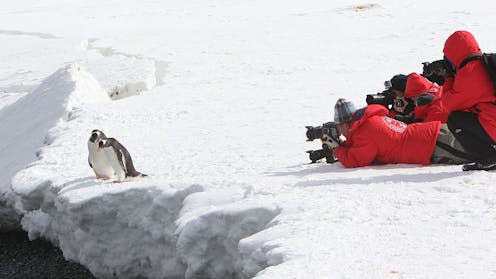
VCG via Getty Images

The number of tourists heading to Antarctica has been skyrocketing. From fewer than 8,000 a year about three decades ago, nearly 125,000 tourists flocked to the icy continent in 2023–24. The trend is likely to continue in the long term.

Unchecked tourism growth in Antarctica risks undermining the very environment that draws visitors. This would be bad for operators and tourists. It would also be bad for Antarctica – and the planet.

Over the past two weeks, the nations that decide what human activities are permitted in Antarctica have convened in Italy. The meeting incorporates discussions by a special working group that aims to address tourism issues.

It’s not easy to manage tourist visitors to a continent beyond any one country’s control. So, how do we stop Antarctica being loved to death? The answer may lie in economics.

Future visitor trends

We recently modelled future visitor trends in Antarctica. A conservative scenario shows by 2033–34, visitor numbers could reach around 285,000. Under the least conservative scenario, numbers could reach 450,000 – however, this figure incorporates pent-up demand from COVID shutdowns that will likely diminish.

The vast majority of the Antarctic tourism industry comprises cruise-ship tourism in the Antarctic Peninsula. A small percentage of visitors travel to the Ross Sea region and parts of the continent’s interior.

Antarctic tourism is managed by an international set of agreements together known as the Antarctic Treaty System, as well as the International Association of Antarctica Tour Operators (IAATO).

The Treaty System is notoriously slow-moving and riven by geopolitics, and IAATO does not have the power to cap visitor numbers.

Pressure on a fragile continent

About two-thirds of Antarctic tourists land on the continent. The visitors can threaten fragile ecosystems by:

  • compacting soils
  • trampling fragile vegetation
  • introducing non-native microbes and plant species
  • disturbing breeding colonies of birds and seals.

Even when cruise ships don’t dock, they can cause problems such as air, water and noise pollution – as well as anchoring that can damage the seabed.

Then there’s carbon emissions. Each cruise ship traveller to Antarctica typically produces between 3.2 and 4.1 tonnes of carbon, not including travel to the port of departure. This is similar to the carbon emissions an average person produces in a year.

Global warming caused by carbon emissions is damaging Antarctica. At the Peninsula region, glaciers and ice shelves are retreating and sea ice is shrinking, affecting wildlife and vegetation.

Of course, Antarctic tourism represents only a tiny fraction of overall emissions. However, the industry has a moral obligation to protect the place that maintains it. And tourism in Antarctica can compound damage from climate change, tipping delicate ecosystems into decline.

Some operators use hybrid ships and less polluting fuels, and offset emissions to offer carbon-neutral travel.

IAATO has pledged to halve emissions by 2050 – a positive step, but far short of the net-zero targets set by the International Maritime Organization.

Can economics protect Antarctica?

Market-based tools – such as taxes, cap-and-trade schemes and certification – have been used in environmental management around the world. Research shows these tools could also prevent Antarctic tourist numbers from getting out of control.

One option is requiring visitors to pay a tourism tax. This would help raise revenue to support environmental monitoring and enforcement in Antarctica, as well as fund research.

Such a tax already exists in the small South Asian nation of Bhutan, where each tourist pays a tax of US$100 (A$152) a night. But while a tax might deter the budget-conscious, it probably wouldn’t deter high income, experience-driven tourists.

Alternatively, a cap-and-trade system would create a limited number of Antarctica visitor permits for a fixed period. The initial distribution of permits could be among tourism operators or countries, via negotiation, auction or lottery. Unused permits could then be sold, making them quite valuable.

Caps have been successful at managing tourism impacts elsewhere, such as Lord Howe Island, although there are no trades allowed in that system.

Any cap on tourist numbers in Antarctica, and rules for trading, must be based on evidence about what the environment can handle. But there is a lack of precise data on Antarctica’s carrying capacity. And permit allocations amongst the operators and nations would need to be fair and inclusive.

Alternatively, existing industry standards could be augmented with independent schemes certifying particular practices – for example, reducing carbon footprints. This could be backed by robust monitoring and enforcement to avoid greenwashing.

Looking ahead

Given the complexities of Antarctic governance, our research finds that the most workable solution is a combination of these market-based options, alongside other regulatory measures.

So far, parties to the Antarctic treaty have made very few binding rules for the tourism industry. And some market-based levers will be more acceptable to the parties than others. But doing nothing is not a solution.


The authors would like to acknowledge Valeria Senigaglia, Natalie Stoeckl and Jing Tian and the rest of the team for their contributions to the research upon which this article was based.

The Conversation

Darla Hatton MacDonald receives funding from the Australian Research Council, the Australian Forest and Wood Innovations Centre, the Department of Climate Change, Energy, the Environment and Water, and the Soils CRC. She has received in-kind support from Antarctic tour operator HX.

Elizabeth Leane receives funding from the Australian Research Council, the Dutch Research Council, and DFAT. She also receives in-kind support and occasional funding from Antarctic tourism operator HX and in-kind support from other tour operators.

ref. More and more tourists are flocking to Antarctica. Let’s stop it from being loved to death – https://theconversation.com/more-and-more-tourists-are-flocking-to-antarctica-lets-stop-it-from-being-loved-to-death-258294

Thumbs up: good or passive aggressive? How emojis became the most confusing kind of online language

Source: The Conversation – Canada – By Brittany Ferdinands, Lecturer in Digital Content Creation, Discipline of Media and Communications, University of Sydney

The Conversation, CC BY

Emojis, as well as memes and other forms of short-form content, have become central to how we express ourselves and connect online. Yet as meanings shift across different contexts, so too does the potential for misunderstanding.

A senior colleague of mine recently encountered some commentary about the “slightly smiling” face emoji: 🙂

They approached me, asking whether it represented joy, as they had assumed, or if it had a more ominous meaning.

As a chronically-online millennial, who unironically identifies as a gen Z, I bore the news that I, along with most younger internet users, only ever use it sarcastically.

“It doesn’t actually signify happiness – more so fake happiness, or dry humour,” I explained.

I also told them how the thumbs up emoji is often interpreted as passive aggressive, and that the only time I’d use the laughing-crying (“face with tears of joy”) emoji is under duress.

Despite seeming like a universal language – and sometimes they do function that way – emojis can be at once more vague, and more specific, than words. That’s because you can’t separate the meaning of a smiley from the person who sent it, nor from the person receiving it.

Markers of age and identity

While emojis were originally developed in the late 1990s by Japanese artist Shigetaka Kurita to add emotional nuance to text-based messaging, their function has since evolved.

Today, emojis are not just emotional cues; they also operate as cultural symbols and markers of identity.

Research published last year highlights how these symbols can create subtle communication barriers across age groups. For instance, a study of Chinese-speaking WeChat users found younger and older people differed not only in how frequently they used emojis, but in how they interpreted and aesthetically preferred them.

One emoji that’s increasingly becoming a distinct marker of age is the previously mentioned laughing-crying emoji (😂). Despite being named Oxford Dictionary’s 2015 word of the year, and frequently topping the most-used emoji charts, this smiley is on the decline among gen Z – who decided in 2020 that it wasn’t cool anymore.

Instead, they prefer the skull emoji (💀), which is shorthand for the gen Z catch phrase “I’m dead”. This means something is funny (not that they’re literally deceased).

Such shifts may understandably be perplexing for older generations who are unfamiliar with evolving norms and slang.

A digital body language

Emojis can also take on distinct meanings on different platforms. They are embedded within “platform vernaculars”: the ever-evolving styles of communication that are unique to specific digital spaces.

For example, a thumbs up emoji (👍) from your boss at work is seemingly more acceptable, and less anxiety inducing, than from a romantic interest you’ve just sent a risky text to.

This dilemma was echoed in a recent viral TikTok by user @kaitlynghull, which prompted thousands to comment about their shared confusion over emoji use in the workplace.

This reaction highlights a deeper communication issue.

A survey of 10,000 workers across the US, France, Germany, India and Australia, conducted by YouGov and software company Atlassian, found 65% of workers used emojis to convey tone in the workplace. But while 88% of gen Z workers thought emojis were helpful, this dropped to 49% for baby boomers and gen X.

The survey concluded some emojis can be interpreted in multiple ways, and these double meanings aren’t always safe for work.

In with the ‘it’ crowd

Another example of platform-specific emoji use comes from social media content creators who deploy emojis to curate a certain aesthetic.

Under the Tiktok tag #emojicombo, you’ll find thousands of videos showcasing emoji combinations that provide aesthetic “inspo”. These combinations are used to represent different online identities or subcultures, such as “that girl”, “clean girl” or “old money”.

Users may include the combinations in their captions or videos to signal their personal style, or to express the mood or vibe of their online persona. In this way, the emojis help shape how they present themselves on the platform.

This example of emoji use is also a display of symbolic capital. It signals social alignment, in an environment where a user’s visibility (and popularity) is determined by their platform fluency.

Emojis, then, aren’t just tools for expression. They are badges of identity that index where a user stands in the online cultural hierarchy.

There’s a fragmentation in how we relate

A single emoji might communicate irony, sincerity or sarcasm, depending on who is using it, what platform they’re using it on, and what generation they belong to.

This gap points to deeper questions around online access and participation, and the systems that shape online cultures.

And when the meaning of an emoji is platform-dependent and socially stratified, it can become as much about fitting in with a cultural in-group than conveying emotion.

The Conversation

Brittany Ferdinands does not work for, consult, own shares in or receive funding from any company or organisation that would benefit from this article, and has disclosed no relevant affiliations beyond their academic appointment.

ref. Thumbs up: good or passive aggressive? How emojis became the most confusing kind of online language – https://theconversation.com/thumbs-up-good-or-passive-aggressive-how-emojis-became-the-most-confusing-kind-of-online-language-259151

Scientists look to black holes to know exactly where we are in the Universe. But phones and wifi are blocking the view

Source: The Conversation – Canada – By Lucia McCallum, Senior Scientist in Geodesy, University of Tasmania

ESA / Hubble / L. Calçada (ESO), CC BY

The scientists who precisely measure the position of Earth are in a bit of trouble. Their measurements are essential for the satellites we use for navigation, communication and Earth observation every day.

But you might be surprised to learn that making these measurements – using the science of geodesy – depends on tracking the locations of black holes in distant galaxies.

The problem is, the scientists need to use specific frequency lanes on the radio spectrum highway to track those black holes.

And with the rise of wifi, mobile phones and satellite internet, travel on that highway is starting to look like a traffic jam.

Why we need black holes

Satellites and the services they provide have become essential for modern life. From precision navigation in our pockets to measuring climate change, running global supply chains and making power grids and online banking possible, our civilisation cannot function without its orbiting companions.

To use satellites, we need to know exactly where they are at any given time. Precise satellite positioning relies on the so-called “global geodesy supply chain”.

This supply chain starts by establishing a reliable reference frame as a basis for all other measurements. Because satellites are constantly moving around Earth, Earth is constantly moving around the Sun, and the Sun is constantly moving through the galaxy, this reference frame needs to be carefully calibrated via some relatively fixed external objects.

As it turns out, the best anchor points for the system are the black holes at the hearts of distant galaxies, which spew out streams of radiation as they devour stars and gas.

These black holes are the most distant and stable objects we know. Using a technique called very long baseline interferometry, we can use a network of radio telescopes to lock onto the black hole signals and disentangle Earth’s own rotation and wobble in space from the satellites’ movement.

Different lanes on the radio highway

We use radio telescopes because we want to detect the radio waves coming from the black holes. Radio waves pass cleanly through the atmosphere and we can receive them during day and night and in all weather conditions.

Radio waves are also used for communication on Earth – including things such as wifi and mobile phones. The use of different radio frequencies – different lanes on the radio highway – is closely regulated, and a few narrow lanes are reserved for radio astronomy.

However, in previous decades the radio highway had relatively little traffic. Scientists commonly strayed from the radio astronomy lanes to receive the black hole signals.

To reach the very high precision needed for modern technology, geodesy today relies on more than just the lanes exclusively reserved for astronomy.

Radio traffic on the rise

In recent years, human-made electromagnetic pollution has vastly increased. When wifi and mobile phone services emerged, scientists reacted by moving to higher frequencies.

However, they are running out of lanes. Six generations of mobile phone services (each occupying a new lane) are crowding the spectrum, not to mention internet connections directly sent by a fleet of thousands of satellites.

Today, the multitude of signals are often too strong for geodetic observatories to see through them to the very weak signals emitted by black holes. This puts many satellite services at risk.

What can be done?

To keep working into the future – to maintain the services on which we all depend – geodesy needs some more lanes on the radio highway. When the spectrum is divided up via international treaties at world radio conferences, geodesists need a seat at the table.

Other potential fixes might include radio quiet zones around our essential radio telescopes. Work is also underway with satellite providers to avoid pointing radio emissions directly at radio telescopes.

Any solution has to be global. For our geodetic measurements, we link radio telescopes together from all over the world, allowing us to mimic a telescope the size of Earth. The radio spectrum is primarily regulated by each nation individually, making this a huge challenge.

But perhaps the first step is increasing awareness. If we want satellite navigation to work, our supermarkets to be stocked and our online money transfers arriving safely, we need to make sure we have a clear view of those black holes in distant galaxies – and that means clearing up the radio highway.

The Conversation

Lucia McCallum does not work for, consult, own shares in or receive funding from any company or organisation that would benefit from this article, and has disclosed no relevant affiliations beyond their academic appointment.

ref. Scientists look to black holes to know exactly where we are in the Universe. But phones and wifi are blocking the view – https://theconversation.com/scientists-look-to-black-holes-to-know-exactly-where-we-are-in-the-universe-but-phones-and-wifi-are-blocking-the-view-259977

On her new album, Lorde creates pop at its purest – performative, playful and alive to paradox

Source: The Conversation – Canada – By Rosemary Overell, Senior Lecturer in Communication Studies, University of Otago

✏️Describe the vibe” goes the demand to commenters underneath the YouTube video for Lorde’s latest single, “Hammer”. Fans form a flow; a “vibe check” in Zillenial parlance:

The pure rawness … (@lynmariegm)

A more raw true-to-self form … (@m3lodr4matic)

This is pure art … (@anishm-g1r)

Lorde’s 2013 debut album was titled Pure Heroine. But, she tells us – and fans and critics agree – Virgin is the first album which “does not lie”. Pure pop. Not lying is not necessarily synonymous with truth, however. Rather, not lying in the present cultural moment is more akin to the careful articulation of a whole vibe.

For women in particular, truth, authenticity – dare I say realness – mean modulating their feelings, but also a particular calibration and presentation of their bodies in media.

Such a balancing act is captured in that YouTube imperative which moves between the pencil (“✏️”) – the demand to describe – and the “vibe”, the very thing we often find too hard to write down or put into words.

Pop music is often at the nexus of these two seemingly opposite moves. Think about going to a gig and afterwards being asked “how was it?”, and all you can say is “you had to be there”.

Of course it is not so simple. We are always putting our feeling into words – describing all manner of bodily responses. Lorde herself sings in “Broken Glass” about how her eating disordered body was marked by language: the “arithmetic” of calorie counting. Elsewhere, she lists other social signifiers in which she is enmeshed: daughter (“Favourite Daughter”), siren, saint (“Shapeshifter”).

Words and the body

Nonetheless, the repeated theme in press interviews is that Virgin moves beyond language, towards a pure woman’s body, free of the mark of sexuality. At the same time, the album is also “ravenously horny” according to one review. She is both as pure as a newborn (a “Virgin”), but marked by her sexuality.

The song “Current Affairs” most clearly demonstrates proximity between the sexed body and its description in lyrics. Lorde collapses into her lover’s body (“He spit in my mouth”). But when he breaks her heart, she cannot put into language the hurt. Rather she blames her anguish on the news: “current affairs”.

Pop music and pop culture thrives off the market exchange and saleability of sex, particularly young women’s sex. When I first wrote about Lorde 11 years ago, I pitted her against Miley Cyrus, noting the outrage at Miley’s “growing up” (from Hannah Montana to adulthood), which mapped onto her perceived new working class, tasteless identity.

Against the crass vulgarity of Miley, I argued then, we had the middle-class intellectualism of Lorde. The argument stands. Virgin certainly adds a heightened sexiness to Lorde, but it is far from crude. She is branded, not just by the market (the cost of tour tickets and merchandise), but also by her identity as a tasteful and hip woman.

More fleshy (“wide hips/soft lips” she sings in “GRWM”) than the teen “Royal” of 2012, but still on Universal Music Group’s repertoire and still circulated as an “alt” option for pop fans.

We can also think of Lorde’s collaboration with her current working class alter, and last year’s popstar commodity, Charli XCX. In Lorde’s verse in “Girl, so confusing” she notes Charli is, essentially, a “Chav” – “still a young girl from Essex”. But in the same verse, Lorde shows her awareness of both women’s function on the market:

People say we’re alike

They say we’ve got the same hair

It’s you and me on the coin

The industry loves to spend

This knowing wink to how women move within the pop-culture marketplace produces a different kind of purity, one based on an intimacy between the popstar and her listeners. We all know Lorde’s difference from Charli is about image: the “poet” versus the party girl.

Intimacy as purity is part of what cultural theorist Anna Kornbluh recently dubbed the pressure of “immediacy”, characterised by an apparently ceaseless flow and demand to constantly share images and video of our bodies, afforded by the scroll of social media.

While the depiction of our bodies and selves on screens is fundamental to this moment, according to Kornbluh, we contradictorily lose sight of this screening. Feeling as though we are #NoFilter – present and real. Key to this is the exhibition of our feelings and emotions.

For all women, but particularly those in the public eye, the sharing of these feelings materialise into “coin”. Vulnerability, pleasure, all-the-feels-all-the-time – especially for women – make “bank”.

Intimacy and knowingness

Vulnerability has been a catch-cry in media characterisations of Virgin. Critics and fans equate Lorde’s lyrical confessions and press tour patter with a market-valuable “purity”, equated with immediate access (to quote the YouTube fan above) to a “true-to-self” Lorde.

One of her more amusing (but fitting) press engagements was on Bella Freud’s Fashion Neurosis podcast. On the couch, we hear Lorde, wearing a Yohji Yamamoto blazer, musing about vulnerability, gender and her mother – with the great granddaughter of Sigmund Freud.

Fashion Neurosis: Lorde on the psychiatrist’s couch.

While the Charli XCX track shows Lorde’s intimacy through her knowingness about her role as “coin” for the music industry, the music videos from Virgin offer a more embodied intimacy. The clip for the album’s first single, “What Was That?”, features an extreme closeup inside her mouth. The album cover itself is an X-ray showing her hips and her IUD.

Kornbluh suggests this emphasis on often literal bodily interiors – people’s “insides” – produces an ersatz sense of closeness and sociality, as our relationships become more and more beholden to the alienating circuits of “social” media.

Virgin does not lie. It traces a truth of our times – a paradoxical truth – that we are at our most intimate, our most pure, when we are unmediated, all the while bearing out the imperative to “✏️Describe the vibe” – to mediate and expose ourselves onscreen.

My own vibe check? I love the album. It is pop at its purest – performative, playful and certainly worth paying attention to.

The Conversation

Rosemary Overell does not work for, consult, own shares in or receive funding from any company or organisation that would benefit from this article, and has disclosed no relevant affiliations beyond their academic appointment.

ref. On her new album, Lorde creates pop at its purest – performative, playful and alive to paradox – https://theconversation.com/on-her-new-album-lorde-creates-pop-at-its-purest-performative-playful-and-alive-to-paradox-259994

From sovereignty to sustainability: a brief history of ocean governance

Source: The Conversation – (in Spanish) – By Kevin Parthenay, Professeur des Universités en science politique, membre de l’Institut Universitaire de France (IUF), Université de Tours

The United Nations Ocean Conference (UNOC 3) will open in Nice, France, on June 9, 2025. It is the third conference of its kind, following events in New York in 2017 and Lisbon in 2022. Co-hosted by France and Costa Rica, the conference will bring together 150 countries and nearly 30,000 individuals to discuss the sustainable management of our planet’s oceans.

This event is presented as a pivotal moment, but it is actually part of a significant shift in marine governance that has been going on for decades. While ocean governance was once designed to protect the marine interests of states, nowadays it must also address the numerous climate and environmental challenges facing the oceans.

Media coverage of this “political moment” however should not overshadow the urgent need to reform the international law applicable to the oceans. Failing that, this summit will risk being nothing more than another platform for vacuous rhetoric.

To understand what is at stake, it is helpful to begin with a brief historical overview of marine governance.

The meaning of ocean governance

Ocean governance changed radically over the past few decades. The focus shifted from the interests of states and the corresponding body of international law, solidified in the 1980s, to a multilateral approach initiated at the end of the Cold War, involving a wide range of actors (international organizations, NGOs, businesses, etc.).

This governance has gradually moved from a system of obligations pertaining to different marine areas and regimes of sovereignty associated to them (territorial seas, exclusive economic zones (EEZs), and the high seas) to a system that takes into consideration the “health of the oceans.” The aim of this new system is to manage the oceans in line with the sustainable development goals.

Understanding how this shift occurred can help us grasp what is at stake in Nice. The 1990s were marked by declarations, summits and other global initiatives. However, as evidenced below, the success of these numerous initiatives has so far been limited. This explains why we are now seeing a return to an approach more firmly rooted in international law, as evidenced by the negotiations on the international treaty on plastic pollution, for example.

The “Constitution of the Seas”

The law of the sea emerged from the Hague Conference in 1930. However, the structure of marine governance gradually came to be defined in the 1980s, with the adoption of the United Nations Convention on the Law of the Sea (UNCLOS) in 1982.

UNOC 3 is a direct offshoot of this convention: discussions on sustainable ocean management stem from the limitations of this founding text, often referred to as the “Constitution of the Seas”.

UNCLOS was adopted in December 1982 at the Montego Bay Convention in Jamaica and came into force in November 1994, following a lengthy process of international negotiations that resulted in 60 states ratifying the text. At the outset, the discussions focused on the interests of developing countries, especially those located along the coast, in the midst of a crisis in multilateralism. The United States managed to exert its influence in this arena without ever officially adopting the Convention. Since then, the convention has been a pillar of marine governance.

It established new institutions, including the International Seabed Authority, entrusted with the responsibility of regulating the exploitation of mineral resources on the seabed in areas that fall outside the scope of national jurisdiction. UNCLOS is the source of nearly all international case law on the subject.

Although the convention did define maritime areas and regulate their exploitation, new challenges quickly emerged: on the one hand, the Convention was essentially rendered meaningless by the eleven-year delay between its adoption and implementation. On the other hand, the text also became obsolete due to new developments in the use of the seas, particularly technological advances in fishing and seabed exploitation.

The early 1990s marked a turning point in the traditional maritime legal order. The management of the seas and oceans came to be viewed within an environmental perspective, a process that was driven by major international conferences and declarations such as the Rio Declaration (1992), the Millennium Declaration (2005), and the Rio+20 Summit (2012). These resulted in the 2030 Agenda and the Sustainable Development Goals (SDGs), the UN’s 17 goals aimed at protecting the planet (with SDG 14, “Life Below Water”, directly addressing issues related to the oceans) and the world’s population by 2030.


A weekly e-mail in English featuring expertise from scholars and researchers. It provides an introduction to the diversity of research coming out of the continent and considers some of the key issues facing European countries. Get the newsletter!


The United Nations Conference on Environment and Development (UNCED, or Earth Summit), held in Rio de Janeiro, Brazil, in 1992, ushered in the era of “sustainable development” and, thanks to scientific discoveries made in the previous decade, helped link environmental and maritime issues.

From 2008 to 2015, environmental issues became more important as evidenced by the regular adoption of environmental and climate resolutions.

A shift in UN language

Biodiversity and the sustainable use of the oceans (SDG 14) are the two core themes that became recurring topics in the international agenda since 2015, with ocean-related issues now including items like acidification, plastic pollution and the decline of marine biodiversity.

The United Nations General Assembly resolution on oceans and the law of the seas (LOS is a particularly useful tool to acknowledge this evolution: drafted annually since 1984, the resolution has covered all aspects of the United Nations maritime regime while reflecting new issues and concerns.

Some environmental terms were initially absent from the text but have become more prevalent since the 2000s.

This evolution is also reflected in the choice of words.

While LOS resolutions from 1984 to 1995 focused mainly on the implementation of the treaty and the economic exploitation of marine resources, more recent resolutions have used terms related to sustainability, ecosystems, and maritime issues.

Toward a new law of the oceans?

As awareness of the issues surrounding the oceans and their link to climate change has grown, the oceans gradually became a global “final frontier” in terms of knowledge.

The types of stakeholders involved in ocean issues have also changed. The expansion of the ocean agenda has been driven by a more “environmentalist” orientation, with scientific communities and environmental NGOs standing at the forefront of this battle. This approach, which represents a shift away from a monopoly held by international law and legal practitioners, clearly is a positive development.

However, marine governance has so far relied mainly on non-binding declaratory measures (such as the SDGs) and remains ineffective. A cycle of legal consolidation toward a “new law of the oceans” therefore appears to be underway and the challenge is now to supplement international maritime law with a new set of measures. These include:

Of these agreements, the BBNJ is arguably the most ambitious: since 2004, negotiators have been working toward filling the gaps of the United Nations Convention on the Law of the Sea (UNCLOS) by creating an instrument on marine biodiversity in areas beyond national jurisdiction.

The agreement addresses two major concerns for states: sovereignty and the equitable distribution of resources.

Adopted in 2023, this historic agreement has yet to enter into force. For this to happen, sixty ratifications are required and to date, only 29 states have ratified the treaty (including France in February 2025, editor’s note).

The BBNJ process is therefore at a crossroads and the priority today is not to make new commitments or waste time on complicated high-level declarations, but to address concrete and urgent issues of ocean management, such as the frantic quest for critical minerals launched in the context of the Sino-American rivalry, and exemplified by Donald Trump’s signing of a presidential decree in April 2025 allowing seabed mining – a decision that violates the International Seabed Authority’s well established rules on the exploitation of these deep-sea resources.

At a time when U.S. unilateralism is leading to a policy of fait accompli, the UNOC 3 should, more than anything and within the framework of multilateralism, consolidate the existing obligations regarding the protection and sustainability of the oceans.

The Conversation

Kevin Parthenay is a member of the Institut Universitaire de France (IUF).

Rafael Mesquita ne travaille pas, ne conseille pas, ne possède pas de parts, ne reçoit pas de fonds d’une organisation qui pourrait tirer profit de cet article, et n’a déclaré aucune autre affiliation que son organisme de recherche.

ref. From sovereignty to sustainability: a brief history of ocean governance – https://theconversation.com/from-sovereignty-to-sustainability-a-brief-history-of-ocean-governance-258200

How a postwar German literary classic helped eclipse painter Emil Nolde’s relationship to Nazism

Source: The Conversation – (in Spanish) – By Ombline Damy, Doctorante en Littérature Générale et Comparée, Sciences Po

Emil Nolde, Red Clouds, watercolour on handmade paper, 34.5 x 44.7 cm. Emil Nolde/Museo Nacional Thyssen-Bornemisza, Madrid, CC BY-NC-ND

Paintings by German artist Emil Nolde (1867-1956) were recently on display at the Musée Picasso in Paris as part of an exhibition on what the Nazis classified as “degenerate art”. At first glance, his works fit perfectly, but recent research shows that Nolde’s relationship to Nazism is much more nuanced than the exhibition revealed.

The German Lesson: a postwar literary classic

While Nolde was one of the many victims of the Third Reich’s repressive responses to “degenerate art”, he was also one of Nazism’s great admirers. The immense popularity of The German Lesson (1968) by author Siegfried Lenz, however, greatly contributed to creating the legend of Nolde as a martyr of the Nazi regime.

La Leçon d’allemand, Siegfried Lenz, pavillons Poche

The cover of the French edition, which was on sale in the Musée Picasso bookstore, subtly echoes one of Nolde’s works, Hülltoft Farm, which hung in the exhibition.

Set against the backdrop of Nazi policies on “degenerate art”, the novel is about a conflict between a father and son. It addresses in literary form the central postwar issue of Vergangenheitsbewältigung, a term referring to the individual and collective work of German society on coming to terms with its Nazi past.

The German Lesson was met with huge success upon publication. Since then, it has become a classic of postwar German literature. Over 2 million copies have been sold across the world, and the novel has been translated into more than 20 languages. It is still studied in Germany as part of the national school curriculum. Adding to its popularity, the book was adapted for the screen in 1971 and in 2019. More than 50 years after its publication, The German Lesson continues to shape the way we think about Nazi Germany.

Max Ludwig Nansen, a fictional painter turned martyr

Set in Germany in the 1950s, the novel is told through the eyes of Siggi, a young man incarcerated in a prison for delinquent youths. Asked to pen an essay on the “joys of duty”, he dives into his memories of a childhood in Nazi Germany as the son of a police officer.

He remembers that his father, Jens Ole Jepsen, was given an order to prevent his own childhood friend, Max Ludwig Nansen, from painting. As a sign of protest against the painting ban, Nansen created a secret collection of paintings titled “the invisible pictures”. Because he was young enough to appear innocent, Siggi was used by his father to spy on the painter.

Siggi found himself torn between the two men, who related to duty in radically opposite ways. While Jepsen thought it his duty to follow the orders given to him, Nansen saw art as his only duty. Throughout the novel, Siggi becomes increasingly close to the painter, whom he sees as a hero, all the while distancing himself from his father, who in turn is perceived as a fanatic.

The novel’s point of view, that of a child, demands of its reader that they complete Siggi’s omissions or partial understanding of the world around him with their adult knowledge. This deliberately allusive narrative style enables the author to elude the topic of Nazism – or at least to hint at it in a covert way, thus making the novel acceptable to a wide German audience at the time of its publication in 1968.

Nevertheless, the book leaves little room for doubt on the themes it tackles. While Nazism is never explicitly named, the reader will inevitably recognize the Gestapo (the political police of the regime) when Siggi speaks of the “leather coats” who arrest Nansen. Readers will also identify the ban on painting issued to Nansen as a part of Nazi policies on “degenerate art”. And, what’s more, they will undoubtedly perceive the real person hiding behind the fictional character of Max Ludwig Nansen: Emil Nolde, born Hans Emil Hansen.


A weekly e-mail in English featuring expertise from scholars and researchers. It provides an introduction to the diversity of research coming out of the continent and considers some of the key issues facing European countries. Get the newsletter!


Emil Nolde, a real painter become legend

Much like his fictional counterpart Max Ludwig Nansen, the painter Emil Nolde fell victim to Nazi policies aimed at artists identified as “degenerate”. More than 1,000 of his artworks were confiscated, some of which were integrated into the 1937 travelling exhibition on “degenerate art” orchestrated by the regime. Nolde was banned from the German art academy, and he was forbidden to sell and exhibit his work.

A photograph of Nazi propagandist Joseph Goebbels’ visit to the exhibition titled Entartete Kunst (Degenerate Art) in Munich, 1937. At left, from top, two paintings by Emil Nolde: Christ and the Sinner (1926) and the Wise and the Foolish Virgins (1910), a painting that has disappeared
A photograph of Nazi propagandist Joseph Goebbels’ visit to the exhibition titled Entartete Kunst (Degenerate Art) in Munich, 1937. At left, from top, two paintings by Emil Nolde: Christ and the Sinner (1926) and the Wise and the Foolish Virgins (1910), a painting that has disappeared.
Wikimedia

After the collapse of the Nazi regime, the tide turned for this “degenerate” artist. Postwar German society glorified him as a victim and opponent of Nazi politics, an image which Nolde carefully fostered. In his memoirs, he claimed to have been forbidden to paint by the regime, and to have created a series of “unpainted pictures” in a clandestine act of resistance.

Countless exhibits on Nolde, in Germany and around the world, served to perpetuate the myth of a talented painter, fallen victim to the Nazi regime, who decided to fight back. His works even made it into the hallowed halls of the German chancellery. Helmut Schmidt, chancellor of the Federal Republic of Germany from 1974 to 1982, and Germany’s former chancellor Angela Merkel decorated their offices with his paintings.

The popularity of The German Lesson, inspired by Nolde’s life, further solidified the myth – until the real Nolde and the fictional Nansen became fully inseparable in Germany’s collective imagination.

Twilight of an idol

Yet, the historical figure and the fictional character could not be more different. Research conducted for exhibits on Nolde in Frankfurt in 2014 and in Berlin in 2019 revealed the artist’s true relationship to Nazism to the wider public.

Nolde was indeed forbidden from selling and exhibiting his works by the Nazi regime. But he was not forbidden from painting. The series of “unpainted pictures”, which he claimed to have created in secret, are in fact a collection of works put together after the war.

What’s more, Nolde joined the Nazi Party as early as 1934. To make matters worse, he also hoped to become an official artist of the regime, and he was profoundly antisemitic. He was convinced that his work was the expression of a “German soul” – with all the racist undertones that such an affirmation suggests. He relentlessly tried to convince Goebbels and Hitler that his paintings, unlike those of “the Jews”, were not “degenerate”.

Why, one might ask, did more than 70 years go by before the truth about Nolde came out?

Yes, the myth built by Nolde himself and solidified by The German Lesson served to eclipse historical truth. Yet this seems to be only part of the story. In Nolde’s case, like in many others that involve facing a fraught national past, it looks like fiction was a great deal more attractive than truth.

In Lenz’s book, the painter Nansen claims that “you will only start to see properly […] when you start creating what you need to see”. By seeing in Nolde the fictional character of Nansen, Germans created a myth they needed to overcome a painful past. A hero, who resisted Nazism. Beyond the myth, reality appears to be more complex.

The Conversation

Ombline Damy received funding from la Fondation Nationale des Sciences Politiques (National Foundation of Political Sciences, or FNSP) for her thesis.

ref. How a postwar German literary classic helped eclipse painter Emil Nolde’s relationship to Nazism – https://theconversation.com/how-a-postwar-german-literary-classic-helped-eclipse-painter-emil-noldes-relationship-to-nazism-258310

Defence firms must adopt a ‘flexible secrecy’ to innovate for European rearmament

Source: The Conversation – (in Spanish) – By Sihem BenMahmoud-Jouini, Associate Professor, HEC Paris Business School

In the face of US President Donald Trump’s wavering commitments and Russian President Vladimir Putin’s inscrutable ambitions, the talk in European capitals is all about rearmament.

To that end, the European Commission has put forward an €800 billion spending scheme designed to “quickly and significantly increase expenditures in defence capabilities”, in the words of Commission President Ursula von der Leyen.

But funding is only the first of many challenges involved when pursuing military innovation. Ramping up capabilities “quickly and significantly” will prove difficult for a sector that must keep pace with rapid technological change.

Of course, defence firms don’t have to do it alone: they can select from a wide variety of potential collaborators, ranging from small and medium-sized enterprises (SMEs) to agile start-ups. Innovative partnerships, however, require trust and a willingness to share vital information, qualities that appear incompatible with the need for military secrecy.

That is why rearming Europe requires a new approach to secrecy.

A paper I co-authored with Jonathan Langlois of HEC and Romaric Servajean-Hilst of KEDGE Business School examines the strategies used by one leading defence firm (which we, for our own secrecy-related reasons, renamed “Globaldef”) to balance open innovation with information security. The 43 professionals we interviewed – including R&D managers, start-up CEOs and innovation managers – were not consciously working from a common playbook. However, their nuanced and dynamic approaches could serve as a cohesive role model for Europe’s defence sector as it races to adapt to a changing world.

How flexible secrecy enables innovation

Our research took place between 2018 and 2020. At the time, defence firms looked toward open innovation to compensate for the withdrawal of key support. There was a marked decrease in government spending on military R&D across the OECD countries. However, even though the current situation involves more funding, the need for external innovation remains prevalent to speed up access to knowledge.

When collaborating to innovate, firms face what open innovation scholars have termed “the paradox of openness”, wherein the value to be gained by collaborating must be weighed against the possible costs of information sharing. In the defence sector – unlike, say, in consumer products – being too liberal with information could not only lead to business losses but to grave security risks for entire nations, and even prosecution for the executives involved.

Although secrecy was a constant concern, Globaldef’s managers often found themselves in what one of our interviewees called a “blurred zone” where some material could be interpreted as secret, but sharing it was not strictly off-limits. In cases like these, opting for the standard mode in the defence industry – erring on the side of caution and remaining tight-lipped – would make open innovation impossible.

A weekly e-mail in English featuring expertise from scholars and researchers. It provides an introduction to the diversity of research coming out of the continent and considers some of the key issues facing European countries. Get the newsletter!

Practices that make collaboration work

Studying transcripts of more than 40 interviews along with a rich pool of complementary data (emails, PowerPoint presentations, crowdsourcing activity, etc.), we discerned that players at Globaldef had developed fine-grained practices for maintaining and modulating secrecy, even while actively collaborating with civilian companies.

Our research identifies these practices as either cognitive or relational. Cognitive practices acted as strategic screens, masking the most sensitive aspects of Globaldef’s knowledge without throttling information flow to the point of preventing collaboration.

Depending on the type of project, cognitive practices might consist of one or more of the following:

  • Encryption: relabelling knowledge components to hide their nature and purpose.

  • Obfuscation: selectively blurring project specifics to preserve secrecy while recruiting partners.

  • Simplification: blurring project parameters to test the suitability of a partner without revealing true constraints.

  • Transposition: transferring the context of a problem from a military to a civilian one.

Relational practices involved reframing the partnership itself, by selectively controlling the width of the aperture through which external parties could view Globaldef’s aims and project characteristics. These practices might include redirecting the focus of a collaboration away from core technologies, or introducing confidentiality agreements to expand information-sharing within the partnership while prohibiting communication to third parties.

When to shift strategy in defence projects

Using both cognitive and relational practices enabled Globaldef to skirt the pitfalls of its paradox. For example, in the early stages of open innovation, when the firm was scouting and testing potential partners, managers could widen the aperture (relational) while imposing strict limits on knowledge-sharing (cognitive). They could thereby freely engage with the crowd without violating Globaldef’s internal rules regarding secrecy.

As partnerships ripened and trust grew, Globaldef could gradually lift cognitive protections, giving partners access to more detailed and specific data. This could be counterbalanced by a tightening on the relational side, eg requiring paperwork and protocols designed to plug potential leaks.

As we retraced the firm’s careful steps through six real-life open innovation partnerships, we saw that the key to this approach was in knowing when to transition from one mode to the other. Each project had its own rhythm.

For one crowdsourcing project, the shift from low to high cognitive depth, and high to low relational width, was quite sudden, occurring as soon as the partnership was formalised. This was due to the fact that Globaldef’s partner needed accurate details and project parameters in order to solve the problem in question. Therefore, near-total openness and concomitant confidentiality had to be established at the outset.

In another case, Globaldef retained the cognitive blinders throughout the early phase of a partnership with a start-up. To test the start-up’s technological capacities, the firm presented its partner with a cognitively reframed problem. Only after the partner passed its initial trial was collaboration initiated on a fully transparent footing, driven by the need for the start-up to obtain defence clearance prior to co-developing technology with Globaldef.

How firms can lead with adaptive secrecy

Since we completed and published our research, much has changed geopolitically. But the high-stakes paradox of openness is still a pressing issue inside Europe’s defence firms. Managers and executives are no doubt grappling with the evident necessity for open innovation on the one hand and secrecy on the other.

Our research suggests that, like Globaldef, other actors in Europe’s defence sector can deftly navigate this paradox. Doing so, however, will require employing a more subtle, flexible and dynamic definition of secrecy rather than the absolutist, static one that normally prevails in the industry. The defence sector’s conception of secrecy must also progress from a primarily legal to a largely strategic framework.

The Conversation

Les auteurs ne travaillent pas, ne conseillent pas, ne possèdent pas de parts, ne reçoivent pas de fonds d’une organisation qui pourrait tirer profit de cet article, et n’ont déclaré aucune autre affiliation que leur organisme de recherche.

ref. Defence firms must adopt a ‘flexible secrecy’ to innovate for European rearmament – https://theconversation.com/defence-firms-must-adopt-a-flexible-secrecy-to-innovate-for-european-rearmament-258302

No packaging, no problem? The potential drawbacks of bulk groceries

Source: The Conversation – (in Spanish) – By Fanny Reniou, Maître de conférences HDR, Université de Rennes 1 – Université de Rennes

High-income professionals over the age of 50 make up 70% of all consumers of bulk products.
DCStudio/Shutterstock

The bulk distribution model has been in the news again lately, with well-known brands such as The Laughing Cow making their way into French supermarkets. Stakeholders in the bulk sector are seeking to introduce innovations in order to expand and democratise the concept. But is the bulk model such a clear-cut approach to consuming in a sustainable way?

Bulk can be described as a consumer practice with a lower impact on the environment, since it involves the sale of products with no packaging, plastic or unnecessary waste and the use of reusable containers by consumers. In this type of distribution, predetermined manufacturer packaging becomes a thing of the past.

In this model, distributors and consumers take on the task of packaging the product themselves to ensure the continuity of the multiple logistical and marketing functions that packaging usually fulfils. Unaccustomed to this new role, stakeholders in the bulk sector may make mistakes or act in ways that run counter to the environmental benefits that are generally expected to result from this practice.

Contrary to the usually positive discourse on bulk products, our research points to the perverse and harmful effects of bulk distribution. When bulk stakeholders are left to “cope with” this new task of packaging products, can bulk still be described as ecologically sound?

A new approach to packaging

Packaging has always played a key role. It performs multiple functions that are essential for product distribution and consumption:

  • Logistical functions to preserve, protect and store the product: packaging helps to limit damage and loss, particularly during transport.

  • Marketing functions for product or brand recognition, which is achieved by distinctive colours or shapes to create on-shelf appeal. Packaging also has a positioning function, visually conveying a particular range level, as well as an informative function, serving as a medium for communicating a number of key elements such as composition, best-before date, etc.

  • Environmental functions, such as limiting the size of packaging and promoting certain types of materials – in particular recycled and recyclable materials.

In the bulk market, it is up to consumers and distributors to fulfil these various functions in their own way: they may give them greater or lesser importance, giving priority to some over others. Insofar as manufacturers no longer offer predetermined packaging for their products, consumers and distributors have to take on this task jointly.

Assimilation or accommodation

Our study of how consumers and retailers appropriate these packaging functions used a variety of data: 54 interviews with bulk aisle and store managers and consumers of bulk products, as well as 190 Instagram posts and 428 photos taken in people’s homes and in stores.

The study shows that there are two modes of appropriating packaging functions:

  • by assimilation – when individuals find ways to imitate typical packaging and its attributes

  • by accommodation – when they imagine new packaging and new ways of working with it

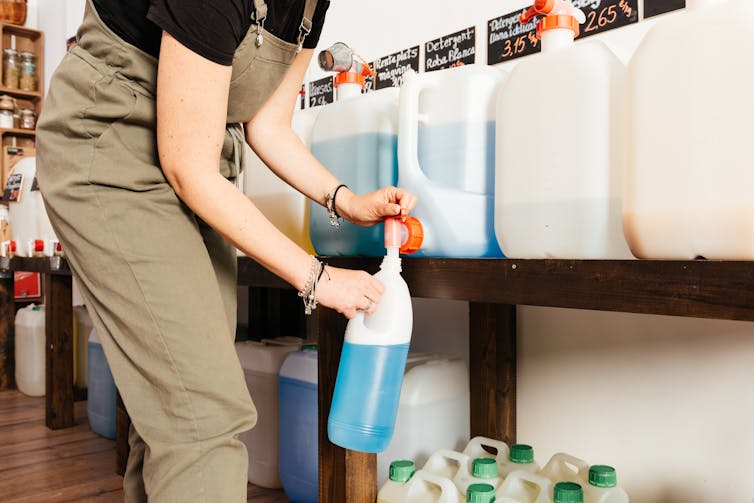
Woman filling her container with detergent
Bulk packaging can lead to hygiene problems if consumers reuse packaging for a new purpose.
GaldricPS/Shutterstock

Some consumers reuse industrial packaging, such as egg cartons and detergent cans, because of their proven practicality. But packaging may also mirror its owners’ identity. Some packaging is cobbled together, while other packaging is carefully chosen with an emphasis on certain materials like wax, a fabric popular in West Africa and used for reusable bags.


A weekly e-mail in English featuring expertise from scholars and researchers. It provides an introduction to the diversity of research coming out of the continent and considers some of the key issues facing European countries. Get the newsletter!


Once packaging disappears, so does relevant information

Appropriating the functions of packaging is not always easy. There is a “dark side” to bulk, with possible harmful effects on health or the environment, and social exclusion. Bulk can lead, for example, to hygiene-related problems or misinformation when consumers fail to label their jars correctly, or use packaging for another purpose. For example, using a glass juice bottle to store detergent can be hazardous if a household member is unaware of its contents.

Bulk shopping can also appear exclusive for people with less culinary education. (High-income professionals over the age of 50 make up 70% of all consumers of bulk products.) Once the packaging disappears, so does the relevant information. Some consumers actually do need packaging to recognize, store and know how to cook a product. Without this information, products may end up in the garbage can!

Our study also shows the ambivalence of the so-called “environmental function” of bulk shopping – the initial idea being that bulk should reduce the amount of waste generated by packaging. In fact, this function is not always fulfilled, as many consumers tend to buy a great deal of containers along with other items, such as labels, pens and so on, to customise them.

Some consumers’ priority is not so much to reuse old packaging, but to buy new storage containers, which are often manufactured in faraway lands! The result is the production of massive amounts of waste – the exact opposite of the original purpose of the bulk trade.

Lack of consumer guidance

After a period of strong growth, the bulk sector went through a difficult period during the Covid-19 pandemic, leading to closures for many specialist stores in France, according to a first survey on bulk and on reuse. In supermarkets though, some retailers invested to make their bulk aisles more attractive – though in the absence of any effective guidance, consumers failed to make them their own. Bulk aisles have become just one among a host of other aisles.

Things seem to be improving however, and innovation is on the rise. In France, 58% of the members of the “Bulk and Reuse Network” (réseau Vrac et réemploi) reported an increase in daily traffic between January and May 2023 compared with 2022.

Distributors need to adapt to changing regulations. These stipulate that, by 2030, stores of over 400 m2 will have to devote 20% of their FMCG (Fast-Moving Consumer Goods) sales areas to bulk sales. Moreover, bulk sales made their official entry into French legislation with the law on the fight against waste and the circular economy (loi relative à la lutte contre le gaspillage et à l’économie circulaire) published in the French official gazette on February 11, 2020.

In this context, it is all the more necessary and urgent to support bulk stakeholders, so that they can successfully adopt the practice and develop it further.

The Conversation

Fanny Reniou has received funding from Biocoop as part of a research partnership.

Elisa Robert-Monnot has received funding from Biocoop as part of a research partnership and collaboration.

Sarah Lasri ne travaille pas, ne conseille pas, ne possède pas de parts, ne reçoit pas de fonds d’une organisation qui pourrait tirer profit de cet article, et n’a déclaré aucune autre affiliation que son organisme de recherche.

ref. No packaging, no problem? The potential drawbacks of bulk groceries – https://theconversation.com/no-packaging-no-problem-the-potential-drawbacks-of-bulk-groceries-258305