No land, no future: The dilemma facing rural youth in Indonesia

Source: The Conversation – France (in French) – By Dr Christina Griffin, Research fellow, Crawford School of Public Policy, Australian National University

Every morning, Indah (18 years old) wakes early to catch the company bus from her coastal village in Maros Regency, South Sulawesi. She travels for over one hour to a shrimp manufacturing warehouse in the urban outskirts of Makassar City—the capital of the province.

Despite living in a rural village, she does not have any land to establish herself in farming. She works at a factory, just like many other young women in her village, as there are few options left.

The rural landscape has changed rapidly, driven by expanding urbanisation, mining activities, commodity crops, and infrastructure development—displacing once-fertile agricultural land. As a result, fewer rural young people have access to adequate amounts of farmland to make a viable living from agriculture alone, and lingering informality in the workplace makes stable off-farm employment difficult to find.

Indah’s story is representative of many youth in rural Indonesia, who are seeking new pathways to achieve their livelihood hopes and aspirations.

To understand the changing nature of young people’s livelihoods, aspirations, and hopes, we conducted in-depth fieldwork in four villages spanning different geographies in the Maros Regency. In each village, we heard how young people—including Indah—face similar challenges as they imagine, realise and recalibrate their future aspirations.

Rising rates of tertiary education, but jobs not guaranteed

Over the past few decades, Maros has undergone rapid agrarian and economic changes. The creation of the Bantimurung-Bulusaraung National Park has limited local communities access to candlenut forests.

Additionally, the conversion of rice fields into shrimp ponds during the 1990s shrimp boom led to soil degradation and dependency on unstable commodities.

These changes, along with the expansion of mines, railways, factories, and housing on productive farmland, have pushed rural youth away from land-based livelihoods. Today, they are increasingly drawn to retail and manufacturing jobs in cities or consider migrating to other islands.

This situation means that education is seen as a gateway to “modern” jobs outside agriculture. Finishing senior high school is considered essential to secure a dream job—whether as a civil servant, salaried retail worker, or in mechanical-oriented jobs.

However, educational achievements do not always guarantee the anticipated pathways to a better future. Local job market conditions do not always deliver for educated youth. As a result, many young people seek creative pathways to employment, entrepreneurship, or to “escape” to cities or even abroad.

Our research documented the trajectories that rural youth pursue.

  • Gendered factory work

Factory work in Makassar’s industrial zone, such as KIMA, is an increasingly important livelihood for rural young women lacking access to land or the finances needed to study.

These women are collected from the village by a company bus at 6 am. They work in a shrimp processing factory from 8 am until 5 pm, sometimes continuing with overtime shifts until 10 pm. While the availability of this work is reasonably steady, workers lack formal contracts.

A 19-year-old female working in shrimp processing said,

“Actually, I want to work at a convenience store, but only those who have the money to continue through to high school can. If you have lower levels of schooling, you have to go to KIMA.”

  • Cyclical migration

Many rural youth choose migration to pursue a better future. Sometimes, they keep one foot in either world, as they cyclically move between rural village life, fishing, plantation work, or urban opportunities.

Young women have found work as domestic helpers in Saudi Arabia and Malaysia, while others commute to factories in Makassar’s industrial zone. Meanwhile, young men secure jobs in oil palm plantations, labouring for land conversions, transportation, or construction work across Sulawesi, Papua, Kalimantan, or Malaysia.

Some migrate closer to home, to towns like Maros and Makassar City, to access schools, universities, labouring jobs, manufacturing work, or opportunities as drivers and mechanics.

One 42-year-old male landowner remarked,

“The unemployment rate here is high, if young people don’t migrate, they will stay unemployed in the village.”

  • Becoming an entrepreneur

Youth also respond to the uncertainty of agriculture and labour force opportunities through the pursuit of entrepreneurial activities.

Becoming an entrepreneur is seen as a pathway to business ownership, financial stability, and a better rural future. These pursuits may involve the opening of small automobile workshops, fashion boutiques, trading petty goods on social media platforms, or tourism ventures, all within the village.

“Even if it’s a small business, if that person is the boss, that’s a successful person,” said a 30-year-old male entrepreneur.

Hopeful future-making

Rural youth in Indonesia do not reject education or hard work, but their social and economic conditions often limit their options. These include access to land and agricultural capital, as well as the ability to secure finances for tertiary education.

Despite these challenges, they continue to shape their lives through hope, recalibrating their aspirations to the realities they face.

Rural youth are not passive and actively pursue their hopes for a better future, whether through migration, local entrepreneurship, education, or for some, farm ownership.

Listening to the hopes of South Sulawesi’s rural youth teaches us an important lesson: development must go beyond infrastructure. We need to understand how youth envision their futures and support their choices—including those who choose to stay in their villages—through fair and inclusive policies.

Indonesia could actively support young people to prosper in rural areas through ongoing investment in rural revitalisation policies, improving access to land, capital, education, job opportunities, and social services in rural areas. Our research shows that youth are still interested in farming. Yet, they require access to an adequate amount of securely tenured farmland and capital to realise this opportunity.

If we are serious about making rural areas viable places to live, greater efforts are needed to sustain rural opportunities for young people. The voices and hopes of rural youth deserve to be heard, not pitied.

The Conversation

Dr Christina Griffin is affiliated with the Australian National University dan University of Melbourne. This research was funded by the Partnership for Australia Indonesia Research (PAIR). We thank the Forest and Society research group at Hasanuddin University for leading the fieldwork

Muhammad Alif K. Sahide, Nurhady Sirimorok, dan Wolfram Dressler tidak bekerja, menjadi konsultan, memiliki saham, atau menerima dana dari perusahaan atau organisasi mana pun yang akan mengambil untung dari artikel ini, dan telah mengungkapkan bahwa ia tidak memiliki afiliasi selain yang telah disebut di atas.

ref. No land, no future: The dilemma facing rural youth in Indonesia – https://theconversation.com/no-land-no-future-the-dilemma-facing-rural-youth-in-indonesia-254598

Gandang Ahung of the Dayak people: More than a gong ensemble, a way of life at risk

Source: The Conversation – France (in French) – By Muhammad Rayhan Sudrajat, Ethnomusicologist & Lecturer, Universitas Katolik Parahyangan

It was first started one morning in 2015. I travelled 109 kilometres from Palangka Raya to a village in the Katingan River basin, Central Kalimantan. When I entered the village, I could feel the sound of the Gandang Ahung, the sacred gong ensemble used in the Tiwah death ceremony, vibrating in my chest. Its frequency filled the entire space, uniting humans, spirits, and nature in a single breath. Some people closed their eyes; even the forest outside seemed to hum along.

Amidst the chanting, the ritual began: participants danced around the field where the Tiwah ceremony was held. Their distinctive hand and foot movements followed the rhythm. Baram, a traditional liquor from Katingan, was then shared among the dancers.

The sound of Gandang Ahung lingered in the air, summoning spirits from the river’s rise and fall to partake in the sacred offering of blood. It opened the path to the upper realm —Lewu Rami je dia Kasene Beti Lewu Tatau Habaras Bulau Rundung Janah dia Bakalesu Uhat — the radiant village beyond time, where souls find rest in Hindu-Kaharingan cosmology.

Gandang Ahung is not only a form of cultural heritage, but an inseparable part of how the Katingan Awa Dayak community understands life, death, and their relationship with nature.

However, this sacred ritual is now threatened due to the rampant deforestation in Kalimantan. Cultural shifts brought by modernisation are also slowly eroding not only the physical environment, but also the soundscape, cosmology, and rituals like Tiwah. If these sounds disappear, so too might the worldview passed down through generations..

Tiwah ceremony: The echo of living tradition

In the Katingan Awa Dayak tradition, Tiwah is regarded as the second-level death ceremony, conducted long after the initial or first-level funeral. The first stage involves the immediate handling of the body, burial, and essential rites to initiate the soul’s journey—considered a temporary phase, as the soul remains in transition.

The second-level Tiwah, serves as the final ritual to guide the soul to the afterlife, reunite it with ancestors, and restore harmony between humans, spirits, and nature. It includes the exhumation and ceremonial cleansing of the bones, reburial in a family bone house (pambak), and is marked by extensive communal offerings, music, and dance.

There are no “spectators” in the ceremony: all villagers are participants. Children help, the pisur (religious leaders) lead, and the entire community listens not just with their ears but with their full presence. For months, families, neighbors, and religious leaders work together to prepare this procession.

In Tiwah, sound is not merely entertainment. It becomes a language to speak to spirits, to remember the departed, and to reconnect the fragile web of life.

Gandang Ahung, with its echoes and vibrations, plays a central role in the ceremony: It opens the way for the liau (spirits) to reach Lewu Tatau.

Gandang Ahung can be carried anywhere, depending on the needs of the ritual. Interestingly, the instrument never sounds the same from one location to another, corresponding to the space where it is played. This shows how its sound is inseparable from surrounding land, rivers, and trees.

Unlike how music comes through notation, tempo, and technique in the West, sound flows from relationships in the Katingan Awa community. The player, the community, and the spirits shape the sound. The player does not simply follow the beat – he adjusts his strokes to the dancer’s body movements.

The tone is not dictated by a written score but arises from feeling — what is “right” in the moment. Here, in the ritual space, sound becomes a mode of communication, not merely a performance.

Some pisur I spoke with explained that the rhythm of Gandang Ahung is not measured in beats, but guided by breath and intuition. The beats are slow for the Tiwah ceremony to accompany the Manganjan dance, a dance specifically for the Tiwah ceremony.

Fading with forest loss

Deforestation, river pollution, and the displacement of Indigenous communities threaten not only the physical environment and its biodiversity — they also erase the acoustic landscapes embedded in local rituals and cosmology.

When forests are lost, sounds like Gandang Ahung and their profound meanings also slowly fade. The Gandang Ahung is not merely played — it is brought to life in rituals deeply rooted in nature: from the wood used to craft the drums, to the ceremonial space in the village heart, to the spirits believed to inhabit trees, rivers, and lakes.

As forests are cleared for palm oil plantations, the space for these sacred sounds disappears — along with the communities’ ways of understanding life, death, and their bond with nature.

Nurturing sound, nurturing life

Hindu-Kaharingan itself, though recognised by the government, is often dismissed as mere ‘folklore’ or an ‘outdated tradition.’ Practices like Tiwah rarely appear in mainstream media – let alone gain recognition in national academic discourse.

If Indonesia is truly committed to education and cultural preservation, we must start viewing traditions like Gandang Ahung not simply as artefacts, but as living philosophies and practices.

Like classical music theory, these traditions are built on their own systems, ethics, and methodologies. They need to be taught, respected, and lived — not just documented and then forgotten.

Concrete steps include protecting customary forests as soundscapes, integrating local music traditions into school curricula, and involving communities in the documentation of rituals.

The Schools of Living Traditions (SLT) program in the Philippines, run by the National Commission for Culture and the Arts (NCCA), offer a powerful example. The program has successfully preserved traditional arts and music through non-formal education that involves local cultural experts as teachers. It is recognized by UNESCO as a best practice in safeguarding intangible cultural heritage.

Such measures are vital to ensure that sounds like Gandang Ahung transcend nostalgia and continue to thrive — not just in ceremonies, but in the everyday lives of the Katingan Awa community and Indonesians more broadly.

The Conversation

Muhammad Rayhan Sudrajat tidak bekerja, menjadi konsultan, memiliki saham, atau menerima dana dari perusahaan atau organisasi mana pun yang akan mengambil untung dari artikel ini, dan telah mengungkapkan bahwa ia tidak memiliki afiliasi selain yang telah disebut di atas.

ref. Gandang Ahung of the Dayak people: More than a gong ensemble, a way of life at risk – https://theconversation.com/gandang-ahung-of-the-dayak-people-more-than-a-gong-ensemble-a-way-of-life-at-risk-256809

Journal indexation: The misconception of guaranteed quality

Source: The Conversation – France (in French) – By Ilham Akhsanu Ridlo, Assistant professor, Universitas Airlangga

Higher education institutions and research institutes are no strangers to commercial scientific journal indexers such as Scopus and Web of Science (WoS). These platforms serve as primary benchmarks for academic success and research performance evaluation. Within the scientific community, indexers function as a credibility currency for research’s perceived prestige and reliability.

This requirement has led to the misconception that indexation equates to research quality — while it does not necessarily guarantee high-quality research.

The indexation process merely demonstrates compliance with administrative requirements set by indexers. These include a peer review system, transparent editorial policies, and properly structured metadata or supporting data.

In other words, journal indexation alone cannot serve as the sole metric for research performance. Instead, evaluation systems should prioritise impact-driven indicators.

Journal indexation vs research quality

There are many factors that contribute to research quality, including the compatibility between the research question and the chosen methodology, the integrity and transparency of the research process, and the accessibility of data or supplementary research materials (such as datasets, methods of analysis, and research logs). Peer review processes typically evaluate these aspects.

Take Nature journal, for example. This prestigious publication retracted an article titled A Specific Amyloid-ß Protein Assembly in the Brain Impairs Memory in 2024 after it was proven that the lead researcher had manipulated images. Unfortunately, before the retraction, the article had already been cited 2,375 times and accessed by more than 74,000 readers.

According to the indexer Web of Science, Nature has an impact factor of 50.5 and is classified in journal quartile Q1 (18.51) in the ScimagoJR indexer (Scopus) under the multidisciplinary category.

Despite being widely regarded as a reputable reference, bibliometric indicators — statistical analyses of published books and articles — have inherent limitations.

For instance, the impact factor only measures the average number of citations per article in a journal over the past two years. However, citation distribution is often uneven — while some articles receive many citations, others may receive none. As a result, the impact factor does not necessarily reflect the overall quality of all published articles in a given journal.

The misconception impacts

This misconception about journal quality has negatively affected the academic climate, particularly in developing countries like Indonesia. Many policies prioritise the quantity of publications and citation rates over research quality.

As a result, policymakers in higher education and research direct academics to focus on topics with global appeal to increase their chances of publication in indexed journals recognised by international indexing institutions.

Regrettably, this trend often leads to the neglect of local social and humanities issues, such as environmental sustainability and community-based problems, which are considered less appealing to an international audience.

The pressure to publish in indexed journals also increases the risk of unethical academic practices. Misconduct such as plagiarism, data fabrication, and ‘salami slicing’ — the practice of splitting a single study into multiple smaller papers to inflate publication counts — has become more prevalent. In fact, paper mills—cartels of publishing companies that sell fabricated scientific articles — are a documented issue.

These practices not only damage researchers’ credibility but also undermine the integrity of the academic community as a whole. As publicly funded institutions, universities and research institutes must prioritise disseminating inclusive and impactful knowledge to society.

What are the alternatives?

Research quality appraisal requires a more inclusive and holistic paradigm to counter the negative effects of indexation-based performance evaluation. Several global science initiatives advocate for such changes, including the Declaration on Research Assessment (DORA), launched in 2012, the Leiden Manifesto in 2021, and the Coalition for Advancing Research Assessment (COARA) in 2023.

Reforming academic policies at both institutional and national levels is crucial to fostering a thriving research ecosystem. Relevant ministries must promote evaluation systems that prioritise research impact, while bibliometric indicators should serve as complementary rather than primary assessment tools.

Governments and academic institutions can also offer incentives for research that addresses strategic national issues rather than focusing solely on indexation standards.

Additionally, academic institutions should enhance capacity-building programmes for journal editors and researchers, including training in academic writing and editorial management. This approach can help local journals meet international standards while retaining their unique identity.

Transparency is equally vital. One concrete step is facilitating researchers’ storage of raw data and related materials in the National Scientific Repository (RIN), ensuring public accessibility.

Scientific articles undergoing peer review can also be shared as pre-prints, allowing the public to read and provide feedback. For publicly funded research, adhering to transparency principles demonstrates the researcher’s accountability to the society that finances their work.

While journal indexation improves the accessibility of scientific articles, it should not be the sole performance metric — let alone a measure of research quality. Relying on bibliometric indicators as a ‘shortcut’ for performance appraisal could ultimately reduce the research’s relevance and societal impact in Indonesia.


Kezia Kevina Harmoko contributes in this translation process

The Conversation

Ilham Akhsanu Ridlo tidak bekerja, menjadi konsultan, memiliki saham, atau menerima dana dari perusahaan atau organisasi mana pun yang akan mengambil untung dari artikel ini, dan telah mengungkapkan bahwa ia tidak memiliki afiliasi selain yang telah disebut di atas.

ref. Journal indexation: The misconception of guaranteed quality – https://theconversation.com/journal-indexation-the-misconception-of-guaranteed-quality-250829

Summer break brings uncertainty for children, and kindness at home matters

Source: The Conversation – Global Perspectives – By Amina Yousaf, Associate Head, Early Childhood Studies, University of Guelph-Humber

Transitions, even positive ones, can be tough on children. (kahar erbol/Unsplash)

As the school year wraps up, many children are keen for summer break. Summer means sunshine, and hopefully popsicles and lots of playtime. But for many families, summer also brings a combination of excitement and uncertainty.

In the aftermath of the COVID-19 pandemic, this transition may feel particularly challenging. In recent years, children across age groups have faced significant disruptions to their social and emotional development. Both parents and education experts say lockdowns and ongoing pandemic disruptions left lingering impacts, with some children still struggling with anxiety, emotional regulation, social skills and difficulties focusing in school.

As summer kicks off, an effective tool for parents and caregivers is kindness. In early childhood development, kindness serves as a foundation for empathy and strong relationships, both of which are essential for social-emotional learning (SEL).


Read more:
Kindness: What I’ve learned from 3,000 children and adolescents


Foundation for strong relationships

Kindness is more than just being polite. It’s an essential element of emotional well-being and a core part of building resilience in children.

Experiences between children and parents or their caregivers matter to how children navigate life. Learning at school also matters: Recent research shows that children aged nine to 12 who received structured SEL instruction showed notable improvements in emotional well-being, peer relationships and overall happiness.

These benefits were especially pronounced during transitional periods, like starting a new school year, which parallels the shift into summer. The study highlighted that reinforcing SEL at home through kindness and emotional support helps children feel more grounded, confident and connected.

A father stands behind a child at a stove helping them with a stir fry.
Experiences between children and parents or their caregivers matter to how children navigate life.
(Shutterstock)

Lingering pandemic effects

This is particularly important now. A Canadian study that followed nearly 1,400 children between the ages of nine and 14 found that their mental health didn’t bounce back after COVID. After an initial period of adjustment, symptoms like anxiety, depression, trouble focusing and restlessness got worse again once life returned to “normal.”

By 2023, more children were struggling with their mental health than at any point during the pandemic.

Challenges also extend to younger learners. For example, a 2023 Toronto District School Board report found many kindergarten-aged children entered school with delays, including in emotional regulation, communication and social interaction.


Read more:
Pandemic effects linger, and art invites us to pause and behold distance, time and trauma


While much public discourse has centred on academic recovery, these findings suggest that emotional recovery must be just as urgent a priority.

Kindness, offered consistently and sincerely, can help lay the groundwork for this healing process.

Grounding force during period of change

Transitions, even positive ones, can be tough on children.

This is where kindness becomes a practical strategy. A soft voice, a patient ear and an empathetic response can be grounding forces during periods of change.

When your child expresses nervousness about summer activities or feels lost without school structure, simple but supportive responses like “It’s OK to feel unsure, is there something you’re curious or excited about?” can go a long way in helping them feel safe and understood.

Kindness isn’t about coddling or sheltering children. It’s about creating the emotional security they need to develop strong coping skills.

Emotionally supportive environments empower children to regulate their emotions and form meaningful relationships.

Adult hands holding a child's hands.
Kindness is about creating the emotional security children need to develop strong coping skills.
(Shutterstock)

5 ways to support children

Here are five evidence-informed ways you can combine kindness with everyday parenting to support your children during summer transitions:

Maintain predictable routines: Even in a relaxed summer setting, consistencies like regular mealtimes, rest and play help children feel secure. Research shows routines buffer children from behavioural challenges during periods of change.

Name and validate emotions: Help children identify what they’re feeling. For example: “You seem frustrated,” or “You seem sad,” and prompting “Would you like to talk?” supports brain development and emotional regulation.

Offer age-appropriate choices: Providing children with simple choices fosters autonomy and reduces power struggles. A 2020 child development study linked this practice to improved emotional outcomes.

Practice co-regulation: When you stay calm and use tools like deep breathing, soft tones and physical presence, children learn by example how to manage big feelings.

Prioritize play and connection: Pediatric specialists emphasize that unstructured play promotes creativity, resilience and emotional healing, especially important after prolonged stress.

Small, kind gestures, like offering a hug when your child is upset or sitting quietly with them, signal emotional availability and build trust. These simple acts help children feel safe, valued and ready to face the changes that summer may bring.

A collective recovery, one act at a time

Of course, kindness alone cannot solve all the challenges children face, but it offers a vital anchor during uncertain times.

Parents and caregivers don’t need to craft perfect summer plans. What children truly need is to feel emotionally safe. As summer brings change, acts of kindness can guide children and families toward healing and growth, fostering emotional resilience.

The Conversation

Amina Yousaf does not work for, consult, own shares in or receive funding from any company or organisation that would benefit from this article, and has disclosed no relevant affiliations beyond their academic appointment.

ref. Summer break brings uncertainty for children, and kindness at home matters – https://theconversation.com/summer-break-brings-uncertainty-for-children-and-kindness-at-home-matters-258332

Autonomous AI systems can help tackle global food insecurity

Source: The Conversation – Global Perspectives – By Woo Soo Kim, Professor, Mechatronic Systems Engineering & Founding Director, Global Institute for Agritech, Simon Fraser University

There is a growing and urgent need to address global food insecurity. This urgency is underscored by reports from the Food and Agriculture Organization of the United Nations, which states that nearly 828 million people suffer from hunger worldwide.

Climate change is further escalating these issues, disrupting traditional farming systems and emphasizing the need for smarter, resource-efficient solutions.

But imagine a future where indoor farming systems can operate entirely on their own, managing water, nutrients and environmental conditions without human oversight. Such autonomous systems, driven by artificial intelligence (AI) and powered by robotics, could revolutionize how we produce food, especially in regions with limited arable land.

Tackling food and water insecurity requires innovative solutions like precision agriculture, using AI and robotics to foster sustainable development.

My research team at Simon Fraser University’s (SFU) School of Mechatronics Systems Engineering has developed a prototype of an AI-powered sensing robot capable of autonomously monitoring the water needs of tomato plants.

people posing for a group photo
Simon Fraser University researchers and students at the Arusha Climate and Environmental Research Centre, Aga Kahn University, a 3700-acre ecological reserve, tested drone technology to improve farming operations in Tanzania.
(Woo Soo Kim)

AI-powered farming

In conventional greenhouses, several water management techniques are used to enhance efficiency and minimize waste. These include drip irrigation and using soil moisture sensors and automated irrigation systems.

Despite their effectiveness, these methods have limitations in responsiveness and accuracy, and can lead to over- or under-watering, wasting resources and impacting crop health.

Agriculture takes up the vast majority of the water humanity uses. As water scarcity affects over two billion people worldwide, it is critical to find innovative ways to more efficiently use water.

At SFU, we’ve built an innovative robot that uses electrical signals from plants, also known as plant electrophysiology responses, as real-time indicators of plant health and hydration needs. The system integrates advanced AI algorithms to interpret these signals and determine when water should be supplied.

This technology eliminates the traditional guesswork and manual labour involved in irrigation, promoting efficient water use and reducing waste while optimizing plant health.

Recent research highlights the potential of integrating AI innovations into agriculture. AI-powered systems can significantly improve water efficiency, reduce chemical runoff and optimize crop yields.

Advances in robotics are also facilitating non-invasive and continuous monitoring of plant health, enabling interventions that are both precise and timely.

Recent advances in plant physiological signal monitoring have shown that sensors capable of capturing electrical signals reflecting plant stress, hydration and overall health can provide highly specific, real-time data.

An illustration of a robot with a robotic arm next to a tomato plant
A research team at SFU has developed an AI-powered sensing robot capable of autonomously monitoring water needs of tomato plants using the plant’s own electrical signals.
(Woo Soo Kim)

Our non-invasive sensing robot improves this process by enabling continuous and efficient monitoring of plant health, making automation more responsive and effective.

When combined with AI, these signals enable precision watering that is dynamically adapted to the plant’s actual needs, representing a significant leap in intelligent plant care.

Furthermore, recent innovations using multi-spectral imaging and machine learning have vastly improved our ability to detect disease and when plants are stressed. This can be integrated with electrical sensing robots like ours to develop comprehensive systems to monitor plant health.

With these improvements fully autonomous agriculture is becoming feasible. This technology goes beyond irrigation, using robotic sensing to interpret plant signals and enable autonomous nutrient management and environmental monitoring.

These multifunctional robots aim to optimize resource use, reduce waste, and increase crop yields, supporting global food security through holistic plant health management.

From greenhouses to fields

Our prototype shows promise in greenhouses. However, the real potential of AI water management lies in scalable, adaptable solutions. Addressing global food and water security requires international collaboration to share knowledge, technology and develop region-specific strategies for areas impacted by scarcity and climate change.

In recent years, our team has engaged deeply with agricultural communities in Tanzania and Asia-Pacific nations such as Singapore, Philippines, Japan and South Korea, understanding their unique challenges.

These regions face acute water shortages, limited access to sophisticated technology and the adverse impacts of climate change. To be effective, solutions developed in controlled environments must be adapted and made accessible to farmers.

This means developing sensor tools that are affordable and simple to use, and scalable AI and robotic systems that can operate effectively under variable environmental and infrastructural conditions.

An illustration of a robotic arm used to water blueberry plants
The real potential of AI water management lies in developing scalable, adaptable solutions.
(Alana McPherson)

International collaboration plays a vital role here. Sharing knowledge through cross-border research partnerships, capacity-building programs and technology transfer initiatives can accelerate the deployment of smart agriculture solutions worldwide.

The Food and Agriculture Organization, the Association of Pacific Rim Universities and the World Bank are actively fostering such collaborations, emphasizing that sustainable agriculture progress depends on integrating cutting-edge technology with local knowledge.

Our goal is to develop affordable, easy-to-deploy AI sensing robots for smallholder farms that can provide real-time plant monitoring to reduce waste and improve yields.

These systems can foster resilient farming ecosystems, and contribute toward meeting the UN’s sustainable development goal of ending hunger and malnutrition.

Ultimately, scaling prototypes like ours from greenhouses to global agriculture requires strong international collaboration. Supportive policies and knowledge sharing will accelerate the deployment of intelligent water management systems. This will empower farmers globally to achieve more sustainable and resilient food production.

The Conversation

Woo Soo Kim receives funding from Natural Sciences and Engineering Research Council of Canada and Mitacs.

ref. Autonomous AI systems can help tackle global food insecurity – https://theconversation.com/autonomous-ai-systems-can-help-tackle-global-food-insecurity-258788

How Israel’s domestic crises and Netanyahu’s aim to project power are reshaping the Middle East

Source: The Conversation – Global Perspectives – By Spyros A. Sofos, Assistant Professor in Global Humanities, Simon Fraser University

Israel’s recent strikes on Iranian territory have been widely framed as an act of deterrence or yet another episode in a protracted regional rivalry.

Such interpretations overlook the deeper motivations behind Israel’s actions.

As a global humanities scholar who specializes in Middle Eastern politics, I believe the world is watching the convergence of a domestic political crisis and a profound strategic shift as Israel evolves into a more aggressive entity in a fragmented international order.

Political survival

At the centre of Israel’s current strategic turn lies Prime Minister Benjamin Netanyahu — a beleaguered leader fighting for political survival, but also considered a calculating, opportunistic operator with a particular vision of the Middle East.

At home, Netanyahu, confronting an unprecedented convergence of challenges — multiple corruption indictments, mass protests against what many consider a self-serving judicial overhaul and a fragile governing coalition — has leaned into military escalation as both a defensive reflex and a political instrument. He’s seemingly deploying it to both mute dissent at home and assert control abroad.

A sea of people carrying white and blue flags surround a bonfire.
Israelis opposed to Prime Minister Benjamin Netanyahu’s judicial overhaul plan set up bonfires and block a highway during a protest in March 2023.
(AP Photo/Ohad Zwigenberg)

But Netanyahu’s ambitions appear to extend beyond his immediate political survival. He seems to be striving for a legacy-defining “1967 moment” — a transformative reordering of the regional landscape in the Middle East that sidelines the Palestinian issue and entrenches Israeli supremacy.

This dual imperative — domestic survival and amassing power in the region — likely shapes Netanyahu’s recent actions, including the strike on Iran, the expanded occupation of Syrian territory, the October 2024 attack on Lebanon and the ongoing assaults on Gaza and the West Bank.

By describing each military campaign as a reluctant necessity — forced upon him by Iran, Hamas or even his coalition hardliners — Netanyahu maintains public support as he consolidates power. His government has used war-time conditions to suppress public protest, push forward its radical constitutional agenda and advance his geopolitical vision.

The result is a volatile but calculated strategy that is likely to mark Netanyahu’s tenure, though with significant repercussions for regional stability.

Israel’s grand strategy

While Netanyahu’s actions could serve his immediate political ends, they also reflect a longer-term shift in Israeli grand strategy. Following the Oct. 7, 2023 Hamas attacks, Israel intensified a long-standing pattern of pre-emptive strikes and campaigns to neutralize its adversaries. This strategy has been pursued at an unprecedented scale in Gaza, but often without a clearly articulated political endgame.

This pattern echoes a regional policy doctrine Netanyahu laid out in his 1993 book A Place Among the Nations when he asserted “the only peace that will endure in the region is the peace of deterrence.”

This policy advocates the projection of overwhelming Israeli power, the emasculation of regional challengers and efforts to radically reorder the Middle East.

Netanyahu’s doctrine, a more aggressive revision of Israel’s earlier pre-emptive security traditions, stands in sharp contrast to the approach pursued by the Oslo Accords-era leadership of the 1990s and 2000s — figures such as Yitzhak Rabin, Shimon Peres, and later Ehud Barak.

They emphasized diplomacy over coercive leverage and perpetual confrontation. They sought genuine political settlements and a negotiated co-existence with Palestinians and neighbouring Arab states. This strategy — rooted in compromise and limited reconciliation — has now been decisively eclipsed by Netanyahu’s highly militarized approach and his vision for achieving strategic power in the Middle East.

This approach underpins all of Israel’s modern-day actions — from its reoccupation of parts of Lebanon to its growing military footprint in Syrian territory, the obliteration of Gaza, its aggression against Iran and the increasing calls for Iranian regime change from the current Israeli cabinet.

From buffer to power projection

Nowhere is this clearer than in Israel’s expanding operations across its northern front. In Syria, Israel seized upon the post-Bashar al-Assad vacuum to entrench military control over at least 12 square kilometres of new terrain, constructing infrastructure and outposts far beyond prior ceasefire lines.

This had less to do with protecting minority populations or deterring Iranian proxies — as officials claimed — and more with establishing long-term buffer zones and projecting dominance into a fragile post-war Syria.

A similar pattern is evident in Lebanon. Following months of border escalation, Israel has sought not only to undermine Hezbollah’s capacity but to create no-go zones controlled by the Israeli military along the frontier. These operations reflect older strategic instincts but are now integrated in the ongoing process of Israel’s northern border redesign.

Finally, Israel’s bombing campaign against Iran reflects a doctrine to move beyond containment toward strategic dismantlement of the Iranian regime’s regional power and to erode its ability to control its own territory.

The escalation is the outcome of Israel’s pursuit of a favourable regional moment — the weakening of the so-called “Axis of Resistance” following the Abraham Accords of 2020 aimed at establishing diplomatic relations between Israel and several Arab nations — and months of war in Lebanon and Syria.

From ‘western ally’ to regional challenger

A constellation of domestic and international changes has enabled Israel’s transformation.

These include a shift in Israeli political culture encouraged by Netanyahu’s rejection of efforts to pursue some sort of regional co-existence and co-operation; the far right’s growing influence in government; and the ongoing disruption of the international order amid Donald Trump’s second presidency in the United States that gave Israel more room to manoeuvre.

This constellation has eroded the few constraints the liberal international order had in the past imposed on Israel’s pursuit of its regional policies amid an era of expansionism, permanent conflict and the aggressive management — not resolution — of the Palestinian issue.

Israel is now heading down the same path as Russia and Turkey, capitalizing on vast disparities in military and intelligence capabilities among regional powers to its advantage, disregarding international norms, undermining diplomacy and preferring transactional alliances instead of long-term peace processes.

The U.S. has facilitated this transformation. Former president Joe Biden and now Trump have made very little effort to constrain Netanyahu.

Trump’s “Gaza Riviera” plan, along with his isolationist rhetoric, have effectively left regional decision-making to Israel while he continues to underwrite Israeli military dominance and its use of overwhelming force to reshape its regional environment.


Read more:
Why Israel and the U.S. are sure to encounter the limits of air power in Iran


Netanyahu’s reluctance to accept the current ceasefire as a definitive end to hostilities with Iran reveals his and his cabinet’s regional revisionist reflexes.

Broader regional destabilization lies ahead as Israel seeks to destroy threats with immense military power without any strategic foresight.

The Conversation

Spyros A. Sofos does not work for, consult, own shares in or receive funding from any company or organisation that would benefit from this article, and has disclosed no relevant affiliations beyond their academic appointment.

ref. How Israel’s domestic crises and Netanyahu’s aim to project power are reshaping the Middle East – https://theconversation.com/how-israels-domestic-crises-and-netanyahus-aim-to-project-power-are-reshaping-the-middle-east-259359

Non-traditional sports like pickleball and bouldering are helping Canadians get active this summer

Source: The Conversation – Global Perspectives – By Sarah Woodruff, Professor, Director of the Community Health, Environment, and Wellness Lab, University of Windsor

While gym memberships and traditional sports will always have their place, more people are choosing leisure activities that are fun, flexible and social. (Shutterstock)

On a warm summer Canadian evening, you might hear the pop-pop of a pickleball game, spot someone scaling a climbing wall at a community centre or catch players rallying on a padel court — a fast-growing racquet sport that looks like a mix between tennis and squash.

What may once have seemed like fringe hobbies are now part of a growing movement. Canadians are seeking alternative ways to stay physically active, connect socially and improve their mental and physical well-being.

While gym memberships and traditional sports will always have their place, more people are choosing leisure activities that are fun, flexible and social.

Activities like pickleball, climbing, padel, disc golf, cricket, ultimate frisbee and stand-up paddleboarding are gaining momentum, offering a fresh approach to fitness that suits all ages, skill levels and motivations.

Why are these activities booming?

The COVID-19 pandemic played a big role in reshaping how people get physically active. With gyms closed and organized sports on hold, people turned to parks, driveways and community spaces for movement.

What began as temporary adjustments soon evolved into permanent shifts for some. Many people realized that being active didn’t have to be rigid or repetitive; it could be more social and genuinely enjoyable. TikTok videos and Instagram reels showcasing everything from “how to videos” to “beginner fails” have also helped pique curiosity and increase participation in these activities.

According to Pickleball Canada, 1.54 million Canadians are playing the sport in 2025 — a 57 per cent increase in participation over the past three years. Meanwhile, Padel, which is already popular in Europe and Latin America, is gaining ground in major Canadian cities like Toronto and Vancouver because of how accessible and easy to learn it is.

Sales increases in paddleboards, the debut of sport climbing at the Tokyo 2020/2021 Olympics and the increase in popularity of spikeball (also known as roundnet) all signal a broader shift toward fun, accessible and social forms of physical activity.

More than just exercise

The physical and mental health benefits of being physically active are well established, and yet many Canadians are still not active enough to meet the 24-Hour Movement Guidelines. The guidelines recommend that adults get at least 150 minutes of moderate-to-vigorous aerobic activity per week, perform muscle-strengthening activities twice a week, limit sedentary time and aim for seven to nine hours of quality sleep each night.

Alternative sports may help address this gap by offering new routes into physical activity. Beyond the well-known physical health benefits, such as cardiovascular health, strength, agility and co-ordination, these activities are equally effective at supporting mental health and social well-being.

For example, a recent study by Canadian researchers looked at 28 studies that investigated health and/or well-being of adult pickleball players. The results suggested positive social and psychological effects — in addition to health and fitness benefits — were evident, particularly for older adults.


Read more:
Light exercise can yield significant cognitive benefits, new research shows


Sports like pickleball, padel and ultimate frisbee thrive on social connection, as players and partners often chat, laugh, build relationships and have potlucks or social time afterwards, all which help build community and foster a sense of belonging.

Other activities, such as bouldering and climbing, encourage mental concentration, resilience and problem-solving, as routes are often designed to be attempted several times before being successful. This helps get people stronger and more confident, as they learn to keep trying even when something feels hard at first. This sense of progress and enjoyment keeps people motivated.

When an activity is fun, social and rewarding, people are more likely to stick with it over time. When people want to be active, rather than feeling like they have to, they’re more likely to reap the long-term benefits of being active. This is known as intrinsic motivation, a key factor for maintaining long-term physical activity because people are more likely to do something they genuinely like.

Because these alternative sports are fun, low-pressure and easy to try at any level, they offer a great starting point for anyone, regardless of age, experience or ability.

Embracing the movement

Across Canada, cities are increasingly investing in these growing recreational activities. Municipal parks and empty buildings are rapidly being repurposed for new pickleball and padel courts. According to an industry journal, the number of climbing gyms across Canada increased from 136 in 2021 to 169 in 2024.

Part of the appeal lies in accessibility. These types of activities are beginner-friendly. Unlike many traditional sports where skills and speed are expected upfront, there is no need to be in peak physical shape or have the best gear. Most people can try these activities with little more than a pair of shoes and a rental.

These activities are also adaptable and low-impact, making them accessible to a wide range of participants. They’re often intergenerational and focused more on enjoyment than competition.

Just as importantly, they support physical literacy — the confidence and competence to stay active throughout one’s life. Building physical literacy early and sustaining it throughout adulthood is a cornerstone of long-term health promotion and chronic disease prevention.

If you’ve been meaning to try one of these activities, this summer might be your chance. After all, fitness doesn’t have to be a chore; sometimes it starts with just showing up and saying yes to something different.

The Conversation

Sarah Woodruff receives funding from the Social Sciences and Humanities Research Council and We Spark Health Institute.

ref. Non-traditional sports like pickleball and bouldering are helping Canadians get active this summer – https://theconversation.com/non-traditional-sports-like-pickleball-and-bouldering-are-helping-canadians-get-active-this-summer-258771

How to deal with racism in an intimate relationship

Source: The Conversation – Global Perspectives – By Maya A. Yampolsky, Associate Professor, School of Psychology, Université Laval

Intimate racism can take many forms, ranging from hostile insults and racial slurs to more subtle, pervasive everyday microaggressions. (Shutterstock)

Relationships between people of different ethnic or racial backgrounds have become increasingly common. Research indicates that more adolescents and young adults are entering into inter-ethnic relationships, and survey data from the United States shows that an increasing number of people have a favourable view of these relationships.

Inter-ethnic relationships are often seen as an act of love that conquers racism since people from different backgrounds overcome marginalization to create inter-ethnic families.

While these bonds can potentially decrease prejudice against members of racialized groups, cross-cultural connections are also vulnerable to the far-reaching influence of racism.


No one’s 20s and 30s look the same. You might be saving for a mortgage or just struggling to pay rent. You could be swiping dating apps, or trying to understand childcare. No matter your current challenges, our Quarter Life series has articles to share in the group chat, or just to remind you that you’re not alone.

Read more from Quarter Life:


Intimate racism

Racism is a system of domination and oppression that is deeply rooted in colonization and slavery, where whiteness was idealized and every other ethnic group was dehumanized. Racialized people who are not white are also susceptible to endorsing this false hierarchy, leading to racism between racialized minority groups.

We use the term “intimate racism” (inspired by the term intimate partner violence) to highlight that racism exists in close relationships, and that it requires special attention.

Intimate racism can take many forms, ranging from hostile insults and racial slurs to more subtle, pervasive everyday microaggressions (for example, a parent stereotyping their child as less smart because of their racialized identity).

Intimate racism can also touch on prejudices against racialized people that are particular to physical and emotional intimacy, which show up differently in our familial and romantic relationships.

Racism in family

From childhood, we depend on our parents and family to support and guide us, helping us form secure attachments as well as stable and loving bonds within our families and with others as we grow and expand our social connections.

These days, multiracial families are more common. However, parents of multiracial children may not always understand their children’s realities with racism, they may not be able to support their racialized children against racism and they may discriminate against their racialized children, shaking the very foundations of the family bonds.

A sad girl sitting next to a window
These days, multiracial families are more common. However, parents of multiracial children may not always understand their children’s realities with racism.
(Shutterstock)

Mixed-race children have reported favouritism for lighter skin colour and isolation within their families, as well as having their racial identities denied and stereotyped by family members.

In a study on microaggressions in families, one mixed-race research participant told researchers:

“Even though my skin was darker, I had straight hair, I had the white features and I behaved the way a white girl should behave, and so my grandmother always favoured me and was much nicer to me and horrible to my sister.”

In addition, transracial adoption has a long history of racialized children being forced into white families and institutions in order to erase their heritage and cultural identity.

This legacy has endured, with many white adoptive families thinking they need to “save” racialized children from their minority families by erasing their backgrounds and cutting them off from their community.

Racialized adoptees in white families have shared that they experience identity erasure, denial of racism’s existence and microaggressions and insults from the very people who are supposed to protect them. Such experiences expose them to racial isolation and violence.

Racism in romantic relationships

Our close relationships are supposed to be safe from racism; our meaningful connections with people who we know accept us, love us and see us for who we are can act as a protection from the harms of oppression.

So when we experience racism from our loved ones, it is a violation of the shared trust, safety and intimacy that we need from those who are supposed to be closest to us.

When it comes to romantic partners, our attractions can sometimes be coloured by exposure to media and messages that frame racialized people as “exotic” or inferior.

People in inter-ethnic romantic relationships have shared experiences where their partner sought them out to fulfil fantasies based on degrading racist sexual stereotypes. Racialized people can also be stereotyped by their partners.

close up image of two people holding hands
When people experience intimate racism, they also experience greater distress and trauma and negative impacts on their well-being.
(Shutterstock)

These stereotypes can also be echoed by family and friends, who may view an inter-ethnic relationship as unserious and hold negative views of a partner based on racial stereotypes.

In a study of intimate racism conducted by one of us (Maya A. Yampolsky) and colleagues, a Black participant said: “My former partner accused all Jamaican males of being cheaters and liars.”

When people experience intimate racism, they also experience greater distress, trauma and negative impacts on their well-being. The impact extends beyond individual hurt to the relationship dynamic, rupturing trust and affection for our loved ones, and leading to strained or even dissolved relationships.

Groups that are subject to more than one source of marginalization (because of race, gender, class, ability and so on) face multiple oppressions with intimate racism. Racialized women face sexist expectations of submissiveness, and queer racialized people often experience both racism in LGBTQ2S+ spaces and homophobia or transphobia in their racial communities.

What can you do to address intimate racism?

There isn’t enough research that looks at resolving intimate racism yet, but we can draw on findings from couples conflict, anti-racism repairs and social therapy for inspiration.

Interracial couples who value the importance of ethnic identities and multiculturalism are more likely to recognize racism at large, and how it can influence their relationship, which may help prevent intimate racism from showing up in these relationships.

We know that repairing harm from racism involves acknowledging the impact rather than the intent of our actions, recognizing our own biases and how they appear in our life, apologizing sincerely and committing to changing our behaviour in the future.

Social therapy can also provide tools to address racial tensions and change harmful relationship dynamics by encouraging open conversations about race, and allowing partners and families to explore how history has shaped their ways of loving, accepting or rejecting one another.

Ultimately, tackling intimate racism is part of our work to dismantle racism at the roots of all our social institutions so that racism doesn’t creep into our cherished connections.

The Conversation

Maya A. Yampolsky has received funding from both the Social Sciences and Humanities Research Council and the Fonds de recherche du Québec.

Iman Sta-Ali, Libera Amadiwakama Mochihashi, and Renaud Dion-Pons do not work for, consult, own shares in or receive funding from any company or organisation that would benefit from this article, and have disclosed no relevant affiliations beyond their academic appointment.

ref. How to deal with racism in an intimate relationship – https://theconversation.com/how-to-deal-with-racism-in-an-intimate-relationship-247870

Neurodiverse kids at camp: How programs can become places where all children belong

Source: The Conversation – Global Perspectives – By Nicole Neil, Associate professor, Faculty of Education, Western University

For many families, summer camp is a rite of passage representing friendship, fun and freedom. But for families of children with neurodevelopmental disabilities, it can be a season of rejection, stress and exclusion.

While other children pack their bags for campfires and canoeing, many children with disabilities are told there’s no space for them, not because they don’t belong, but because the camp isn’t prepared. This is a reality faced by families of children with disabilities.

That’s why colleagues and I created the Inclusive Camp Hub (inclusivecamp.ca), a free, research-informed platform to help camps become places where every child can participate.

Why we needed to act

In Canada, about one in 11 children are diagnosed with a neurodevelopmental disability, such as autism, attention-deficit/hyperactivity disorder (ADHD) and intellectual disabilities. And yet, despite legal protections like the Accessibility for Ontarians with Disabilities Act, many camps report difficulties in creating inclusive environments.

Our research into inclusion in community settings, such as camps and museums, revealed consistent barriers: staff lacked training, resources were scarce and families were left with few options. As a result, children with neurodevelopmental disabilities were excluded from the same joyful, formative experiences their peers enjoyed.

These barriers have real consequences. Families often struggle to find respite during the summer, and children miss out on opportunities for social development, peer interaction and community belonging.

Building the Hub

Well-trained and supportive staff play a crucial role in fostering inclusion in camps. Interviews with families revealed the importance of staff who are kind, responsive and equipped to support a wide range of needs. It was clear that staff training needed to be a central focus of our work.

We designed The Inclusive Camp Hub to feature practical tools grounded in research from inclusive education to focus on staff training modules, tip sheets and real-world strategies that are easy to implement.

In studying and following a module about Universal Design for Learning, for example, camp directors or staff can consider strategies for providing multiple means of representation, engagement and expression — while ensuring physical spaces and materials are universally accessible.

Less awareness of cognitive accessibility

While many community settings have made strides in improving physical accessibility, adding ramps, accessible washrooms and mobility-friendly spaces, there has been far less attention paid to cognitive accessibility.

This includes designing environments that support different ways to participate, such as by making routines predictable and by making activities flexible enough to accommodate different ways of learning.

In developing the Inclusive Camp Hub, we drew on evidence-based practices identified in our research.

These include staff training, peer-mediated interventions and behavioural supports such as reinforcement systems and prompting. Reinforcement systems are structured ways to encourage behaviour by offering rewards or positive outcomes when those behaviours happen. Prompting means giving a child cues, like pictures, words or gestures, to help them complete a task such as using a visual schedule to show what comes next.

We also found that families with children with neurodevelopmental disabilities valued hands-on, multi-sensory learning experiences, clear signage, quiet spaces and staff who are kind and responsive. By incorporating these strategies into our training site, we aimed to make inclusion achievable and sustainable for camps of all types.

A model camp

To test and refine our approach to inclusion, we launched a model inclusive camp, called the S3 camp, at Western University.

We welcomed children ages nine to 14 — with and without neurodevelopmental disabilities — and focused on STEM activities, disability awareness and, most importantly, a sense of belonging.

The camp was staffed by students in a school psychology program, as well as education and STEM-field students who received specialized training and used inclusive design tools from the Hub. They learned how to create accessible activities, use behavioural supports, support communication differences and foster inclusive group dynamics.

The results were promising. We saw campers who had difficulty at other camps fully engaged in activities. Staff reported feeling more confident and capable in supporting children with disabilities, and parents said their children came home happy, proud and excited to return the next year.

Why camp inclusion matters

At first glance, summer camps might seem like a luxury — a fun experience rather than a critical developmental one. But camps offer more than just fun: they are powerful spaces for growth, learning and connection.

Research shows that children in inclusive settings experience improved social skills, stronger peer relationships and increased self-esteem. They learn through play, build friendships and develop a sense of belonging, all which are foundational for healthy development.

These benefits extend to all campers. Neurotypical children gain empathy, communication skills and a broader understanding of diversity

Looking forward

Inclusive Camp Hub is now expanding its reach, with plans to partner with more camps and extend its impact while continuing to refine our tools based on feedback from families, staff and community organizations.

Camp leaders can take the first step by exploring the free tools and training available through the Hub. Families and advocates can continue to ask questions, share their experiences and push for environments where all children are welcomed and supported.

As a researcher, I’ve spent years studying inclusion. But nothing compares to seeing it in action, watching a child find joy, friendship and confidence at camp. Every child deserves a summer of belonging.

The Conversation

Nicole Neil’s work is supported in part by funding from the Social Sciences and Humanities Research Council.

ref. Neurodiverse kids at camp: How programs can become places where all children belong – https://theconversation.com/neurodiverse-kids-at-camp-how-programs-can-become-places-where-all-children-belong-258793

A chance discovery of a 350 million-year-old fossil reveals a new type of ray-finned fish

Source: The Conversation – Global Perspectives – By Conrad Daniel Mackenzie Wilson, PhD candidate in Earth Sciences, Carleton University

An artist’s rendition of the newly discovered fish, _Sphyragnathus tyche_. (C. Wilson), CC BY

In 2015, two members of the Blue Beach Fossil Museum in Nova Scotia found a long, curved fossil jaw, bristling with teeth. Sonja Wood, the museum’s owner, and Chris Mansky, the museum’s curator, found the fossil in a creek after Wood had a hunch.

The fossil they found belonged to a fish that had died 350 million years ago, its bony husk spanning nearly a metre on the lake bed. The large fish had lived in waters thick with rival fish, including giants several times its size. It had hooked teeth at the tip of its long jaw that it would use to trap elusive prey and fangs at the back to pierce it and break it down to eat.

For the last eight years, I have been part of a team under the lead of paleontologist Jason Anderson, who has spent decades researching the Blue Beach area of Nova Scotia, northwest of Halifax, in collaboration with Mansky and other colleagues. Much of this work has been on the tetrapods — the group that includes the first vertebrates to move to land and all their descendants — but my research focuses on what Blue Beach fossils can tell us about how the modern vertebrate world formed.

a man stands agains a tall cliff
Blue Beach Fossil Museum curator Chris Mansky below the fossil cliffs.
(C. Wilson), CC BY

Birth of the modern vertebrate world

The modern vertebrate world is defined by the dominance of three groups: the cartilaginous fishes or chondrichthyans (including sharks, rays and chimaeras), the lobe-finned fishes or sarcopterygians (including tetrapods and rare lungfishes and coelacanths), and the ray-finned fishes or actinopterygians (including everything from sturgeon to tuna). Only a few jawless fishes round out the picture.

This basic grouping has remained remarkably consistent — at least for the last 350 million years.

Before then, the vertebrate world was a lot more crowded. In the ancient vertebrate world, during the Silurian Period (443.7-419.2 MA) for example, the ancestors of modern vertebrates swam alongside spiny pseudo-sharks (acanthodians), fishy sarcopterygians, placoderms and jawless fishes with bony shells.

Armoured jawless fishes had dwindled by the Late Devonian Period (419.2-358.9 MA), but the rest were still diverse. Actinopterygians were still restricted to a few species with similar body shapes.

By the immediately succeeding early Carboniferous times, everything had changed. The placoderms were gone, the number of species of fishy sarcopterygians and acanthodians had cratered, and actinopterygians and chondrichthyans were flourishing in their place.

The modern vertebrate world was born.

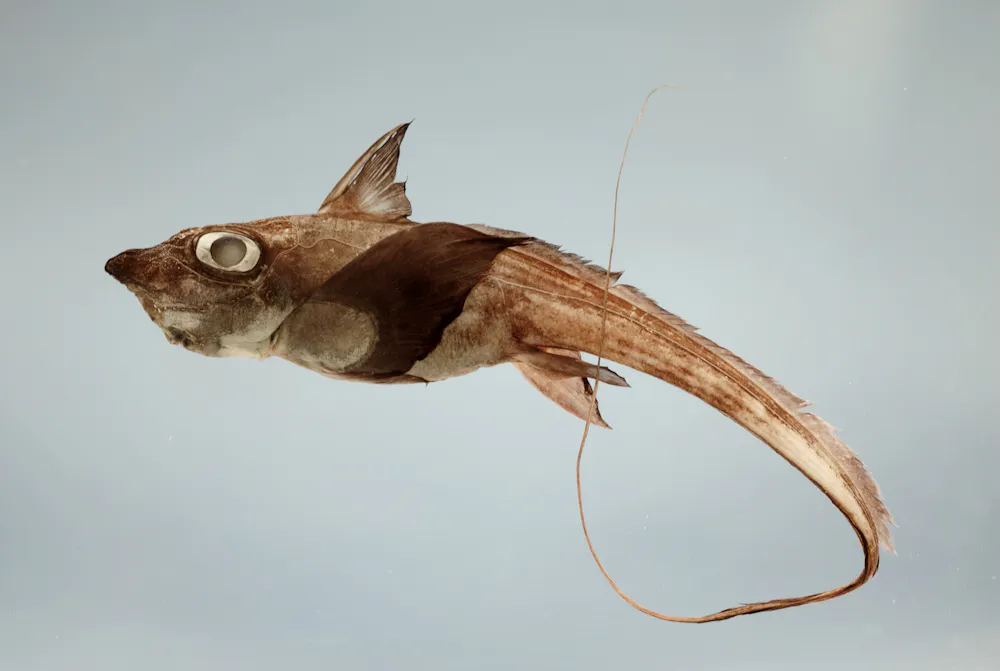
a small fish with a long wispy tail
A shortnose chimaera, belonging to the chondrichthyan group of vertebrates.
(Shutterstock)

A sea change

Blue Beach has helped build our understanding of how this happened. Studies describing its tetrapods and actinopterygians have showed the persistence of Devonian-style forms in the Carboniferous Period.

Whereas the abrupt end-Devonian decline of the placoderms, acanthodians and fishy sarcopterygians can be explained by a mass extinction, it now appears that multiple types of actinopterygians and tetrapods survived to be preserved at Blue Beach. This makes a big difference to the overall story: Devonian-style tetrapods and actinopterygians survive and contribute to the evolution of these groups into the Carboniferous Period.

But significant questions remain for paleontologists. One point of debate revolves around how actinopterygians diversified as the modern vertebrate world was born — whether they explored new ways of feeding or swimming first.

three lower jaw bones on the left, two reconstructions of prehistoric fish on the right
Comparing the jawbones of Sphyragnathus, Austelliscus and Tegeolepis.
(C. Wilson), CC BY

The Blue Beach fossil was actinopterygian, and we wondered what it could tell us about this issue. Comparison was difficult. Two actinopterygians with long jaws and large fangs were known from the preceding Devonian Period (Austelliscus ferox and Tegeolepis clarki), but the newly found jaw had more extreme curvature and the arrangement of its teeth. Its largest fangs are at the back of its jaw, but the largest fangs of Austelliscus and Tegeolepis are at the front.

These differences were significant enough that we created a new genus and species: Sphyragnathus tyche. And, in view of the debate on actinopterygian diversification, we made a prediction: that the differences in anatomy between Sphyragnathus and Devonian actinopterygians represented different adaptations for feeding.

Front fangs

To test this prediction, we compared Sphyragnathus, Austelliscus and Tegeolepis to living actinopterygians. In modern actinopterygians, the difference in anatomy reflects a difference in function: front-fangs capture prey with their front teeth and grip it with their back teeth, but back-fangs use their back teeth.

Since we couldn’t observe the fossil fish in action, we analyzed the stress their teeth would experience if we applied force. The back teeth of Sphyragnathus handled force with low stress, making them suited for a role in piercing prey, but the back teeth of Austelliscus and Tegeolepis turned low forces into significantly higher stress, making them best suited for gripping.

We concluded that Sphyragnathus was the earliest actinopterygian adapted for breaking down prey by piercing, which also matches the broader predictions of the feeding-first hypothesis.

Substantial work remains — only the jaw of Sphyragnathus is preserved, so the “locomotion-first” hypothesis was untested. But this represents the challenge and promise of paleontology: get enough tantalizing glimpses into the past and you can begin to unfold a history.

As for the actinopterygians, current research indicates that they first diversified in the Devonian Period and shifted into new roles when the modern vertebrate world was born.

The Conversation

Conrad Daniel Mackenzie Wilson receives funding from the Natural Sciences and Engineering Research Council of Canada, the Ontario Student Assistance Program, and the Society of Vertebrate Paleontology.

ref. A chance discovery of a 350 million-year-old fossil reveals a new type of ray-finned fish – https://theconversation.com/a-chance-discovery-of-a-350-million-year-old-fossil-reveals-a-new-type-of-ray-finned-fish-254246