Lessons from Aceh: How language unites and segregates in conflicts

Source: The Conversation – Indonesia – By Saiful Akmal, Chair professor, Universitas Islam Negeri Ar-Raniry

20 years have passed since the Aceh tsunami, leaving deep scars on Indonesia, especially for those directly affected. Aceh was also recovering from a three-decade armed conflict between the Free Aceh Movement and the national government

Throughout December 2024, The Conversation Indonesia, in collaboration with academics, is publishing a special edition honouring the 20 years of efforts to rebuild Aceh. We hope this series of articles preserves our collective memory while inspiring reflection on the journey of recovery and peace in the land of ‘Serambi Makkah.’


In December 2022, the Aceh People’s Representative Council (DPR) officially enacted the 2022 Qanun (regional regulation) on the Acehnese language. This regulation mandates that the use of Indonesian, in any form of communications, from scientific works to public services, must be accompanies by Acehnese translations. This move reflects Aceh’s autonomy in preserving local cultures, a key demand of the now-defunct Free Aceh Movement (GAM), which sought independence from Indonesia.

The Aceh conflict that ended with the signing of a peace agreement in August 2005, less than a year after the Aceh devastating tsunami, stemmed from locals’ dissatisfaction with the central government. The separatist movement was triggered by economic inequality and natural resource exploitation.

The Qanun reaffirms the Indonesian government and GAM’s commitment to peace following three-decade armed conflict, as outlined in the 2005 Helsinki Agreement. Language — as an important element in culture — can aid in resolving conflicts. It can reduce psychological barriers and foster trust. Local languages, in particular, can strenthen nationalism by promoting empathy and cultural appreciation.

Language for political mobilisation

The use of language can excarcebate conflicts. It can be used to agitate and mobilise people, create hostile narratives, and be used as a propaganda tool to assert group identity and define friends and foes.

During Soeharto’s dictatorship era, the government’s nationalism policy emphasised the exclusive use of Indonesian as national language, even in regions with strong local cultures and languages like Aceh. Local languages are considered less important than Indonesian. This has led to a decline in the use and teaching of local languages in schools, which in turn can threaten the survival and development of these languages.

During the conflict, using Acehnese could be risky, especially in areas sympathetic to GAM. Speaking local language could lead to accusation of supporting the movement, often resulting in intimidation and arrests by the Indonesian military.

GAM, on the other hand, used Acehnese to raise people’s spirit and gather support during the conflict. Cassettes with songs in local languages played in villages created a sense of solidarity while drawing a stark line between “us” and “them.” This demonstrates how language can be a powerful tool in social and political mobilisation.

Language for conflict resolution

In Aceh, the role of local language in promoting conflict resolution is significant for the following reasons:

1. Reduces psychological barriers

In 2005, Hamid Awaluddin, a Bugis descendant and former Minister of Justice and Human Rights who represented the government in the negotiation of conflict resolution in Aceh, read ‘pantun’, a traditional Malay poem, in Acehnese:

pat ujeun yang hana pirang, pat prang yang hana reuda,” (is there rain that will not stop? Is there a war that cannot be ended?).

Although his Acehnese was not fluent, Hamid’s efforts were warmly received by Wali Nanggroe, Aceh’s cultural leadership, and other people who represented the local communities. His decision to use the local language had created an intimate atmosphere, which then helped reduce tension and increased mutual trust between the two parties.

Language in such contexts becomes a powerful instrument in a peace negotiation process, serving not only as a technical communication tool, but also as a symbol of empathy and respect. It allows the conflicting parties to feel more valued and share emotions, which then can pave the way for a more constructive and inclusive dialogue.

2. Strengthening the sense of nationalism

Case studies show that the recognition of the Acehnese language, identity and culture by the central government can foster Indonesian nationalism among the local communities. According to a research, building something from within, and respecting local conditions contributes to a more permanent peace-building effort.

The government’s move to acknowledge local languages of Aceh and Gayo as intangible heritages has allowed the people to use them in public spaces. As a result, this strengthened the sense of belonging of Acehnese people to the state

By providing space to local languages, the state shows respect for existing cultural diversity–allowing local communities feel more integrated with the national framework.

An inclusive approach

The establishment of the Acehnese Language Qanun is not without risks. While it is true that the Acehnese Language Qanun can increase nationalism because it makes people feel appreciated and recognised, it may negatively impact other ethnic languages.

Aceh is home to 13 other local languages. Enacting Acehnese as an official regional language can make non-Acehnese groups feel isolated, as evidenced by past protests from the Gayo community and other minorities.

For example, protests arose when being fluent in Acehnese became one of the requirements to become a local leader such as a Wali Nanggroe. Additionally, replacing the Gayo hymn with the Acehnese hymn in ceremonial activities has angered the Gayo people as the majority ethnic group in the area.

Without proper mitigation, this policy risks alienating minority groups, potentially leading to feelings of forced assimilation for minority languages. This will harm the efforts to build sustainable peace in Aceh. Therefore, an inclusive approach to language policy is very important.

The efforts to promote the Acehnese language should be accompanied by similar steps to recognise and preserve the languages and cultural expressions of other ethnic groups in Aceh.

This inclusive approach is crucial to building long-term peace and social cohesion in the region. After all, Aceh’s experience teaches us that language has two sides in conflict resolution: as a tool that strengthens peace, or sharpens differences.

The Conversation

Saiful Akmal received funding from the Ministry of Religion of the Republic of Indonesia in 2024 for research entitled “Language, Identity, and Conflict Resolution: The Case of Aceh and Patani.”.

Melly Masni menerima dana dari Kementerian Agama Republik Indonesia tahun 2024 untuk riset berjudul “Language, Identity, and Conflict resolution: The Case of Aceh and Patani”.

ref. Lessons from Aceh: How language unites and segregates in conflicts – https://theconversation.com/lessons-from-aceh-how-language-unites-and-segregates-in-conflicts-245481

High skills, low protection: the legal hurdles for foreign workers in Indonesia

Source: The Conversation – Indonesia – By Wayne Palmer, Senior Research Fellow, Bielefeld University

ilikeyellow/Shutterstock

Developing countries like Indonesia use foreign high-skilled and high-wage workers to drive economic growth and innovation. However, protection of their legal rights is often neglected, affecting these workers’ productivity and well-being and Indonesia’s reputation as a destination country for employment.

My research delves into the flaws of Indonesia’s labour market institutions, such as the national labour dispute settlement system, revealing that current mechanisms are inadequate in protecting the rights of high-skilled foreign workers.

The study

My findings show the national dispute settlement system exhibits significant systemic shortcomings, such as processing cases slowly and siding with employers, which limit its capacity to protect all workers effectively. But disputes involving foreign workers are further complicated by the fact that immigration law allows employers to cancel residence permits, meaning that the government requires the workers to leave the country even though the workers may have been unfairly dismissed.

Foreign workers are mainly from Northeast Asia (China, Japan and Korea), and their use on investment-tied projects coupled with Indonesia’s downstreaming programme will ensure their numbers continue to grow. In 2023, the Indonesian government issued 168,048 permits for foreigners to work in Indonesia with the top three destinations being Central Sulawesi (18,678), Jakarta (13,862) and West Java (10,807). By July 2024, the government had already issued more than 14% more permits than by the same time the previous year.

My study examined 92 labour disputes involving foreign workers between 2006 (when the new national dispute settlement system was implemented) and 2022, which were settled by the Industrial Relations Court. One additional dispute was filed in 2023, but the Industrial Relations Court has not yet published the settlement despite a legal requirement to do so.

I complemented these court settlements with 98 qualitative interviews with other stakeholders, including policymakers, labour rights activists, legal professionals, and other foreign workers, such as foreign spouses, remote workers and digital nomads.

As in other countries too, the number of registered labour disputes is only the tip of the iceberg, as workers tend to cut their losses and move on rather than invest time, energy and limited financial resources in challenging their better-resourced employers.

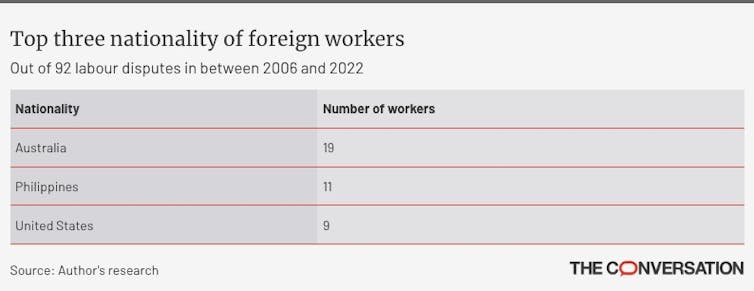
Employers were all Indonesian companies, so no foreign workers who filed a lawsuit worked for a multinational company, and those who did so had at least 20 nationalities.


CC BY

In terms of geographical distribution, the studied disputes were settled in 13 local jurisdictions, and were mostly lodged by workers rather than employers.

The nature of the disputes mostly involved claims that an employment contract had been terminated prematurely (87 cases), while a much smaller number involved resignation (4 cases) or were unknown (1 case). Of the 92 claims, 83 were initiated by workers, and eight by an employer. In one case, the lodging party was not recorded in the final decision.

Hiring a private lawyer

Employers used the Immigration Law to undermine the protective role of the Manpower Law – as it stands foreign workers are only entitled to employment protection if they hold a valid residence permit, which employers can and do shorten. Doing so shows that the Indonesian government prioritizes the flexibility of employers at the expense of employment protection for foreign workers.

In at least 92% cases, foreign workers used paid assistance of a private lawyer to represent themselves at formal meetings and hearings required by the Disputes Settlement Law, the cost of which could be hefty.

As one foreign worker explained:

It’s always in the back of your mind, to do whatever to make employers happy if you want to stay. No matter what the work permit and contract say, they can ask immigration to kick us out within a week!“

A retired government official responsible for designing policy regarding foreign workers was surprised when he heard this, explaining that:

I thought they could look after themselves because they earn such high wages. Well, higher than the average Indonesian worker, that is.

Hiring a private lawyer is the only way to represent themselves throughout the dispute resolution process because they need to leave Indonesia once they are fired. Not having the legal right to remain in Indonesia makes it very difficult – even impossible – to do it without them.

Addressing institutional failures

Engaging a private lawyer served as an ‘institutional fix’ that enabled most foreign workers to engage with Indonesia’s labour dispute settlement system by attending formal meetings and hearings, as well as filling out required paperwork and sending essential letters and replies.

Addressing this institutional failure requires a shift in law and policy. Firstly, legal reforms are essential to ensure that immigration and employment laws are integrated to enable foreign workers to have access to legal processes intended to help protect labour rights. At a minimum, this would involve amending policy to prevent employers from cancelling residence permits so that foreign workers need to leave the country prematurely.

Alternatively, the Directorate-General of Immigration could still permit employers to do so, but then provide the affected foreign workers with a limited-stay visa so that they can remain in Indonesia to engage with the legal process. The Hong Kong Immigration Department does this for Indonesian migrant workers.

Secondly, there is a need for enhanced support systems that provide immediate and effective assistance to foreign workers. Government agencies tasked with settling labour disputes, such as local manpower offices and the Industrial Relations Court, should be equipped with adequate resources and trained personnel to handle migrant labour issues. Doing so would decrease the reliance of foreign workers on private lawyers.

Failure to protect the employment rights of foreign workers has the potential to damage Indonesia’s reputation as a destination country for employment. Such damage could undermine Indonesia’s ambitious plans to build a new capital city (Ibu Kota Nusantara) with the assistance of foreign workers, and undermine the government’s downstreaming programme, which helps Indonesia earn more from the export of raw minerals.

The Conversation

Wayne Palmer has received research funding from the International Labour Organization, the Freedom Fund, and the Australian Research Council.

ref. High skills, low protection: the legal hurdles for foreign workers in Indonesia – https://theconversation.com/high-skills-low-protection-the-legal-hurdles-for-foreign-workers-in-indonesia-230795

There’s gold trapped in your iPhone – and chemists have found a safe new way to extract it

Source: The Conversation – Canada – By Justin M. Chalker, Professor of Chemistry, Flinders University

A sample of refined gold recovered from mining and e-waste recycling trials. Justin Chalker

In 2022, humans produced an estimated 62 million tonnes of electronic waste – enough to fill more than 1.5 million garbage trucks. This was up 82% from 2010 and is expected to rise to 82 million tonnes in 2030.

This e-waste includes old laptops and phones, which contain precious materials such as gold. Less than one quarter of it is properly collected and recycled. But a new technique colleagues and I have developed to safely and sustainably extract gold from e-waste could help change that.

Our new gold-extraction technique, which we describe in a new paper published today in Nature Sustainability, could also make small-scale gold mining less poisonous for people – and the planet.

Soaring global demand

Gold has long played a crucial role in human life. It has been a form of currency and a medium for art and fashion for centuries. Gold is also essential in modern industries including the electronics, chemical manufacture and aerospace sectors.

But while global demand for this precious metal is soaring, mining it is harmful to the environment.

Deforestation and use of toxic chemicals are two such problems. In formal, large-scale mining, highly toxic cyanide is widely used to extract gold from ore. While cyanide can be degraded, its use can cause harm to wildlife, and tailings dams which store the toxic byproducts of mining operations pose a risk to the wider environment.

In small-scale and artisanal mining, mercury is used extensively to extract gold. In this practice, the gold reacts with mercury to form a dense amalgam that can be easily isolated. The gold is then recovered by heating the amalgam to vaporise the mercury.

Small-scale and artisanal mining is the largest source of mercury pollution on Earth, and the mercury emissions are dangerous to the miners and pollute the environment. New methods are required to reduce the impacts of gold mining.

A bucket full of telephone circuit board parts.
In 2022, humans produced an estimated 62 million tonnes of electronic waste.
DAMRONG RATTANAPONG/Shutterstock

A safer alternative

Our interdisciplinary team of scientists and engineers has developed a new technique to extract gold from ore and e-waste. The aim was to provide a safer alternative to mercury and cyanide and reduce the health and environmental impacts of gold mining.

Many techniques have previously been reported for extracting gold from ore or e-waste, including mercury- and cyanide-free methods. However, many of these methods are limited in rate, yield, scale and cost. Often these methods also consider only one step in the entire gold recovery process, and recycling and waste management is often neglected.

In contrast, our approach considered sustainability throughout the whole process of gold extraction, recovery and refining. Our new leaching technology uses a chemical commonly used in water sanitation and pool chlorination: trichloroisocyanuric acid.

When this widely available and low-cost chemical is activated with salt water, it can react with gold and convert it into a water-soluble form.

To recover the gold from the solution, we invented a sulphur-rich polymer sorbent. Polymer sorbents isolate a certain substance from a liquid or gas, and ours is made by joining a key building block (a monomer) together through a chain reaction.

Our polymer sorbent is interesting because it is derived from elemental sulphur: a low-cost and highly abundant feedstock. The petroleum sector generates more sulphur than it can use or sell, so our polymer synthesis is a new use for this underused resource.

Our polymer could selectively bind and remove gold from the solution, even when many other types of metals were present in the mixture.

The simple leaching and recovery methods were demonstrated on ore, circuit boards from obsolete computers and scientific waste. Importantly, we also developed methods to regenerate and recycle both the leaching chemical and the polymer sorbent. We also established methods to purify and recycle the water used in the process.

In developing the recyclable polymer sorbent, we invented some exciting new chemistry to make the polymer using light, and then “un-make” the sorbent after it bound gold. This recycling method converted the polymer back to its original monomer building block and separated it from the gold.

The recovered monomer could then be re-made into the gold-binding polymer: an important demonstration of how the process is aligned with a circular economy.

A long and complex road ahead

In future work, we plan to collaborate with industry, government and not-for-profit groups to test our method in small-scale mining operations. Our long-term aim is to provide a robust and safe method for extracting gold, eliminating the need for highly toxic chemicals such as cyanide and mercury.

There will be many challenges to overcome including scaling up the production of the polymer sorbent and the chemical recycling processes. For uptake, we also need to ensure that the rate, yield and cost are competitive with more traditional methods of gold mining. Our preliminary results are encouraging. But there is still a long and complex road ahead before our new techniques replace cyanide and mercury.

Our broader motivation is to support the livelihood of the millions of artisanal and small-scale miners that rely on mercury to recover gold.

They typically operate in remote and rural regions with few other economic opportunities. Our goal is to support these miners economically while offering safer alternatives to mercury. Likewise, the rise of “urban mining” and e-waste recycling would benefit from safer and operationally simple methods for precious metal recovery.

Success in recovering gold from e-waste will also reduce the need for primary mining and therefore lessen its environmental impact.

The Conversation

Justin M. Chalker is an inventor on patents associated with the gold leaching and recovery technology. Both patents are wholly owned by Flinders University. This research was supported financially by the Australian Research Council and Flinders University. He has an ongoing collaboration with Mercury Free Mining and Adelaide Control Engineering: organisations that supported the developments and trials reported in this study.

ref. There’s gold trapped in your iPhone – and chemists have found a safe new way to extract it – https://theconversation.com/theres-gold-trapped-in-your-iphone-and-chemists-have-found-a-safe-new-way-to-extract-it-259817

Bats get fat to survive hard times. But climate change is threatening their survival strategy

Source: The Conversation – Canada – By Nicholas Wu, Lecturer in Wildlife Ecology, Murdoch University

Rudmer Zwerver/Shutterstock

Bats are often cast as the unseen night-time stewards of nature, flitting through the dark to control pest insects, pollinate plants and disperse seeds. But behind their silent contributions lies a remarkable and underappreciated survival strategy: seasonal fattening.

Much like bears and squirrels, bats around the world bulk up to get through hard times – even in places where you might not expect it.

In a paper published today in Ecology Letters, we analysed data from bat studies around the world to understand how bats use body fat to survive seasonal challenges, whether it’s a freezing winter or a dry spell.

The surprising conclusion? Seasonal fattening is a global phenomenon in bats, not just limited to those in cold climates.

Even bats in the tropics, where it’s warm all year, store fat in anticipation of dry seasons when food becomes scarce. That’s a survival strategy that’s been largely overlooked. But it may be faltering as the climate changes, putting entire food webs at risk.

Climate shapes fattening strategies

We found bats in colder regions predictably gain more weight before winter.

But in warmer regions with highly seasonal rainfall, such as tropical savannas or monsoonal forests, bats also fatten up. In tropical areas, it’s not cold that’s the enemy, but the dry season, when flowers wither, insects vanish and energy is hard to come by.

The extent of fattening is impressive. Some species increased their body weight by more than 50%, which is a huge burden for flying animals that already use a lot of energy to move around. This highlights the delicate balancing act bats perform between storing energy and staying nimble in the air.

Sex matters, especially in the cold

The results also support the “thrifty females, frisky males” hypothesis.

In colder climates, female bats used their fat reserves more sparingly than males – a likely adaptation to ensure they have enough energy left to raise young when spring returns. Since females typically emerge from hibernation to raise their young, conserving fat through winter can directly benefit their reproductive success.

Interestingly, this sex-based difference vanished in warmer climates, where fat use by males and females was more similar, likely because more food is available in warmer climates. It’s another clue that climate patterns intricately shape behaviour and physiology.

Climate change is shifting the rules

Beyond the biology, our study points to a more sobering trend. Bats in warm regions appear to be increasing their fat stores over time. This could be an early warning sign of how climate change is affecting their survival.

Climate change isn’t just about rising temperatures. It’s also making seasons more unpredictable.

Bats may be storing more energy in advance of dry seasons that are becoming longer or harder to predict. That’s risky, because it means more foraging, more exposure to predators and potentially greater mortality.

The implications can ripple outward. Bats help regulate insect populations, fertilise crops and maintain healthy ecosystems. If their survival strategies falter, entire food webs could feel the effects.

Fat bats, fragile futures

Our study changes how we think about bats. They are not just passive victims of environmental change but active strategists, finely tuned to seasonal rhythms. Yet their ability to adapt has limits, and those limits are being tested by a rapidly changing world.

By understanding how bats respond to climate, we gain insights into broader ecosystem resilience. We also gain a deeper appreciation for one of nature’s quiet heroes – fattening up, flying through the night and holding ecosystems together, one wingbeat at a time.

The Conversation

Nicholas Wu was the lead author of a funded Australian Research Council Linkage Grant awarded to Christopher Turbill at Western Sydney University.

ref. Bats get fat to survive hard times. But climate change is threatening their survival strategy – https://theconversation.com/bats-get-fat-to-survive-hard-times-but-climate-change-is-threatening-their-survival-strategy-259560

What’s the difference between an eating disorder and disordered eating?

Source: The Conversation – Canada – By Gemma Sharp, Researcher in Body Image, Eating and Weight Disorders, Monash University

PIKSEL/Getty

Following a particular diet or exercising a great deal are common and even encouraged in our health and image-conscious culture. With increased awareness of food allergies and other dietary requirements, it’s also not uncommon for someone to restrict or eliminate certain foods.

But these behaviours may also be the sign of an unhealthy relationship with food. You can have a problematic pattern of eating without being diagnosed with an eating disorder.

So, where’s the line? What is disordered eating, and what is an eating disorder?

What is disordered eating?

Disordered eating describes negative attitudes and behaviours towards food and eating that can lead to a disturbed eating pattern.

It can involve:

  • dieting

  • skipping meals

  • avoiding certain food groups

  • binge eating

  • misusing laxatives and weight-loss medications

  • inducing vomiting (sometimes known as purging)

  • exercising compulsively.

Disordered eating is the term used when these behaviours are not frequent and/or severe enough to meet an eating disorder diagnosis.

Not everyone who engages in these behaviours will develop an eating disorder. But disordered eating – particularly dieting – usually precedes an eating disorder.

What is an eating disorder?

Eating disorders are complex psychiatric illnesses that can negatively affect a person’s body, mind and social life. They’re characterised by persistent disturbances in how someone thinks, feels and behaves around eating and their bodies.

To make a diagnosis, a qualified health professional will use a combination of standardised questionnaires, as well as more general questioning. These will determine how frequent and severe the behaviours are, and how they affect day-to-day functioning.

Examples of clinical diagnoses include anorexia nervosa, bulimia nervosa, binge eating disorder and avoidant/restrictive food intake disorder.

How common are eating disorders and disordered eating?

The answer can vary quite radically depending on the study and how it defines disordered behaviours and attitudes.

An estimated 8.4% of women and 2.2% of men will develop an eating disorder at some point in their lives. This is most common during adolescence.

Disordered eating is also particularly common in young people with 30% of girls and 17% of boys aged 6–18 years reporting engaging in these behaviours.

Although the research is still emerging, it appears disordered eating and eating disorders are even more common in gender diverse people.

Can we prevent eating disorders?

There is some evidence eating disorder prevention programs that target risk factors – such as dieting and concerns about shape and weight – can be effective to some extent in the short term.

The issue is most of these studies last only a few months. So we can’t determine whether the people involved went on to develop an eating disorder in the longer term.

In addition, most studies have involved girls or women in late high school and university. By this age, eating disorders have usually already emerged. So, this research cannot tell us as much about eating disorder prevention and it also neglects the wide range of people at risk of eating disorders.

Is orthorexia an eating disorder?

In defining the line between eating disorders and disordered eating, orthorexia nervosa is a contentious issue.

The name literally means “proper appetite” and involves a pathological obsession with proper nutrition, characterised by a restrictive diet and rigidly avoiding foods believed to be “unhealthy” or “impure”.

These disordered eating behaviours need to be taken seriously as they can lead to malnourishment, loss of relationships, and overall poor quality of life.

However, orthorexia nervosa is not an official eating disorder in any diagnostic manual.

Additionally, with the popularity of special diets (such as keto or paleo), time-restricted eating, and dietary requirements (for example, gluten-free) it can sometimes be hard to decipher when concerns about diet have become disordered, or may even be an eating disorder.

For example, around 6% of people have a food allergy. Emerging evidence suggests they are also more likely to have restrictive types of eating disorders, such as anorexia nervosa and avoidant/restrictive food intake disorder.

However, following a special diet such as veganism, or having a food allergy, does not automatically lead to disordered eating or an eating disorder.

It is important to recognise people’s different motivations for eating or avoiding certain foods. For example, a vegan may restrict certain food groups due to animal rights concerns, rather than disordered eating symptoms.

What to look out for

If you’re concerned about your own relationship with food or that of a loved one, here are some signs to look out for:

  • preoccupation with food and food preparation

  • cutting out food groups or skipping meals entirely

  • obsession with body weight or shape

  • large fluctuations in weight

  • compulsive exercise

  • mood changes and social withdrawal.

It’s always best to seek help early. But it is never too late to seek help.


In Australia, if you are experiencing difficulties in your relationships with food and your body, you can contact the Butterfly Foundation’s national helpline on 1800 33 4673 (or via their online chat).

For parents concerned their child might be developing concerning relationships with food, weight and body image, Feed Your Instinct highlights common warning signs, provides useful information about help seeking and can generate a personalised report to take to a health professional.

The Conversation

Gemma Sharp receives funding from an NHMRC Investigator Grant. She is a Professor and the Founding Director and Member of the Consortium for Research in Eating Disorders, a registered charity.

ref. What’s the difference between an eating disorder and disordered eating? – https://theconversation.com/whats-the-difference-between-an-eating-disorder-and-disordered-eating-256787

‘Do not eat’: what’s in those little desiccant sachets and how do they work?

Source: The Conversation – Canada – By Kamil Zuber, Senior Industry Research Fellow, Future Industries Institute, University of South Australia

towfiqu ahamed/Getty Images

When you buy a new electronic appliance, shoes, medicines or even some food items, you often find a small paper sachet with the warning: “silica gel, do not eat”.

What exactly is it, is it toxic, and can you use it for anything?

The importance of desiccants

That little sachet is a desiccant – a type of material that removes excess moisture from the air.

It’s important during the transport and storage of a wide range of products because we can’t always control the environment. Humid conditions can cause damage through corrosion, decay, the growth of mould and microorganisms.

This is why manufacturers include sachets with desiccants to make sure you receive the goods in pristine condition.

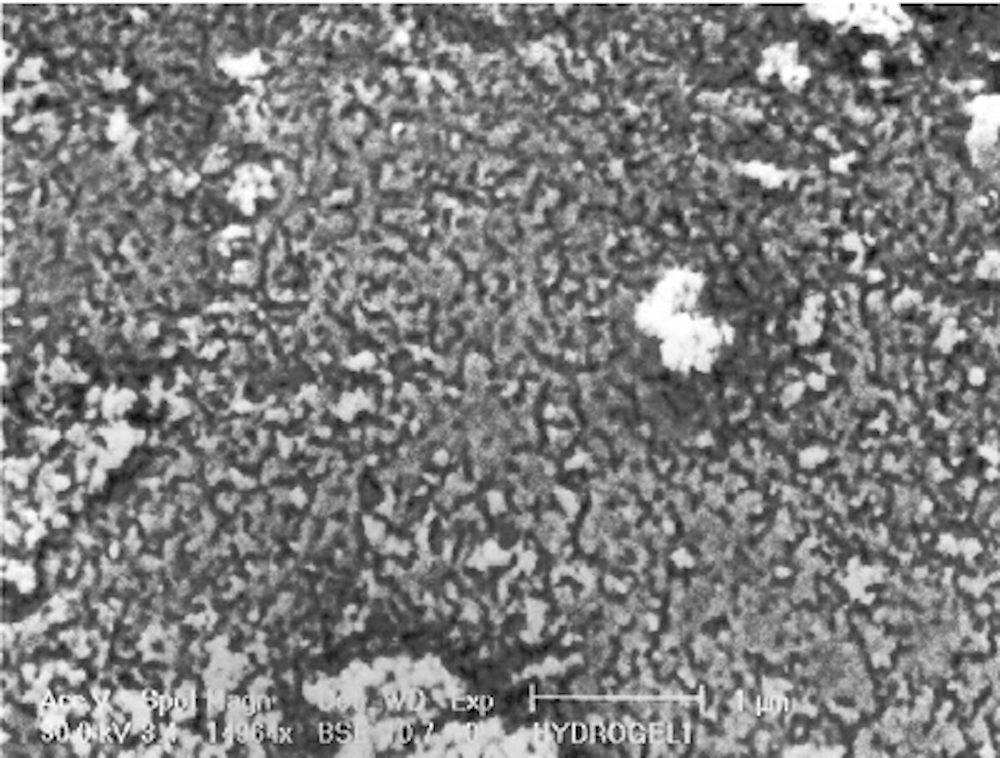
The most common desiccant is silica gel. The small, hard and translucent beads are made of silicon dioxide (like most sands or quartz) – a hydrophilic or water-loving material. Importantly, the beads are porous on the nano-scale, with pore sizes only 15 times larger than the radius of their atoms.

Silica gel looks somewhat like a sponge when viewed with scanning electron microscopy.
Trabelsi et al. (2009), CC BY-NC-ND

These pores have a capillary effect, meaning they condense and draw moisture into the bead similar to how trees transport water through the channelled structures in wood.

In addition, sponge-like porosity makes their surface area very large. A single gram of silica gel can have an area of up to 700 square metres – almost four tennis courts – making them exceptionally efficient at capturing and storing water.

Is silica gel toxic?

The “do not eat” warning is easily the most prominent text on silica gel sachets.

According to health professionals, most silica beads found in these sachets are non-toxic and don’t present the same risk as silica dust, for example. They mainly pose a choking hazard, which is good enough reason to keep them away from children and pets.

However, if silica gel is accidentally ingested, it’s still recommended to contact health professionals to determine the best course of action.

Some variants of silica gel contain a moisture-sensitive dye. One particular variant, based on cobalt chloride, is blue when the desiccant is dry and turns pink when saturated with moisture. While the dye is toxic, in desiccant pellets it is present only in a small amount – approximately 1% of the total weight.

Two plastic containers, one with blue translucent beads, one with pink.
Indicating silica gel with cobalt chloride – ‘fresh’ on the left, ‘used’ on the right.
Reza Rio/Shutterstock

Desiccants come in other forms, too

Apart from silica gel, a number of other materials are used as moisture absorbers and desiccants. These are zeolites, activated alumina and activated carbon – materials engineered to be highly porous.

Another desiccant type you’ll often see in moisture absorbers for larger areas like pantries or wardrobes is calcium chloride. It typically comes in a box filled with powder or crystals found in most hardware stores, and is a type of salt.

Kitchen salt – sodium chloride – attracts water and easily becomes lumpy. Calcium chloride works in the same way, but has an even stronger hygroscopic effect and “traps” the water through a hydration reaction. Once the salt is saturated, you’ll see liquid separating in the container.

A shelf in a wardrobe with a purple box with white powder inside in the corner.
Closet and pantry dehumidifiers like this one typically contain calcium chloride which binds water.
Healthy Happy/Shutterstock

I found something that doesn’t seem to be silica gel – what is it?

Some food items such as tortilla wraps, noodles, beef jerky, and some medicines and vitamins contain slightly different sachets, labelled “oxygen absorbers”.

These small packets don’t contain desiccants. Instead, they have chemical compounds that “scavenge” or bond oxygen.

Their purpose is similar to desiccants – they extend the shelf life of food products and sensitive chemicals such as medicines. But they do so by directly preventing oxidation. When some foods are exposed to oxygen, their chemical composition changes and can lead to decay (apples turning brown when cut is an example of oxidation).

There is a whole range of compounds used as oxygen absorbers. These chemicals have a stronger affinity to oxygen than the protected substance. They range from simple compounds such as iron which “rusts” by using up oxygen, to more complex such as plastic films that work when exposed to light.

A pile of various sachets and sheets found inside products.
Some of the sachets in your products are oxygen absorbers, not desiccants – but they may look similar.
Sergio Yoneda/Shutterstock

Can I reuse a desiccant?

Although desiccants and dehumidifiers are considered disposable, you can relatively easily reuse them.

To “recharge” or dehydrate silica gel, you can place it in an oven at approximately 115–125°C for 2–3 hours, although you shouldn’t do this if it’s in a plastic sachet that could melt in the heat.

Interestingly, due to how they bind water, some desiccants require temperatures well above the boiling point of water to dehydrate (for example, calcium chloride hydrates completely dehydrate at 200°C).

After dehydration, silica gel sachets may be useful for drying small electronic items (like your phone after you accidentally dropped it into water), keeping your camera dry, or preventing your family photos and old films from sticking to each other.

This is a good alternative to the questionable method of using uncooked rice, as silica gel doesn’t decompose and won’t leave starch residues on your things.

The Conversation

Kamil Zuber does not work for, consult, own shares in or receive funding from any company or organisation that would benefit from this article, and has disclosed no relevant affiliations beyond their academic appointment.

ref. ‘Do not eat’: what’s in those little desiccant sachets and how do they work? – https://theconversation.com/do-not-eat-whats-in-those-little-desiccant-sachets-and-how-do-they-work-258398

How old are you really? Are the latest ‘biological age’ tests all they’re cracked up to be?

Source: The Conversation – Canada – By Hassan Vally, Associate Professor, Epidemiology, Deakin University

We all like to imagine we’re ageing well. Now a simple blood or saliva test promises to tell us by measuring our “biological age”. And then, as many have done, we can share how “young” we really are on social media, along with our secrets to success.

While chronological age is how long you have been alive, measures of biological age aim to indicate how old your body actually is, purporting to measure “wear and tear” at a molecular level.

The appeal of these tests is undeniable. Health-conscious consumers may see their results as reinforcing their anti-ageing efforts, or a way to show their journey to better health is paying off.

But how good are these tests? Do they actually offer useful insights? Or are they just clever marketing dressed up to look like science?

How do these tests work?

Over time, the chemical processes that allow our body to function, known as our “metabolic activity”, lead to damage and a decline in the activity of our cells, tissues and organs.

Biological age tests aim to capture some of these changes, offering a snapshot of how well, or how poorly, we are ageing on a cellular level.

Our DNA is also affected by the ageing process. In particular, chemical tags (methyl groups) attach to our DNA and affect gene expression. These changes occur in predictable ways with age and environmental exposures, in a process called methylation.

Research studies have used “epigenetic clocks”, which measure the methylation of our genes, to estimate biological age. By analysing methylation levels at specific sites in the genome from participant samples, researchers apply predictive models to estimate the cumulative wear and tear on the body.

What does the research say about their use?

Although the science is rapidly evolving, the evidence underpinning the use of epigenetic clocks to measure biological ageing in research studies is strong.

Studies have shown epigenetic biological age estimation is a better predictor of the risk of death and ageing-related diseases than chronological age.

Epigenetic clocks also have been found to correlate strongly with lifestyle and environmental exposures, such as smoking status and diet quality.

In addition, they have been found to be able to predict the risk of conditions such as cardiovascular disease, which can lead to heart attacks and strokes.

Taken together, a growing body of research indicates that at a population level, epigenetic clocks are robust measures of biological ageing and are strongly linked to the risk of disease and death

But how good are these tests for individuals?

While these tests are valuable when studying populations in research settings, using epigenetic clocks to measure the biological age of individuals is a different matter and requires scrutiny.

For testing at an individual level, perhaps the most important consideration is the “signal to noise ratio” (or precision) of these tests. This is the question of whether a single sample from an individual may yield widely differing results.

A study from 2022 found samples deviated by up to nine years. So an identical sample from a 40-year-old may indicate a biological age of as low as 35 years (a cause for celebration) or as high as 44 years (a cause of anxiety).

While there have been significant improvements in these tests over the years, there is considerable variability in the precision of these tests between commercial providers. So depending on who you send your sample to, your estimated biological age may vary considerably.

Another limitation is there is currently no standardisation of methods for this testing. Commercial providers perform these tests in different ways and have different algorithms for estimating biological age from the data.

As you would expect for commercial operators, providers don’t disclose their methods. So it’s difficult to compare companies and determine who provides the most accurate results – and what you’re getting for your money.

A third limitation is that while epigenetic clocks correlate well with ageing, they are simply a “proxy” and are not a diagnostic tool.

In other words, they may provide a general indication of ageing at a cellular level. But they don’t offer any specific insights about what the issue may be if someone is found to be “ageing faster” than they would like, or what they’re doing right if they are “ageing well”.

So regardless of the result of your test, all you’re likely to get from the commercial provider of an epigenetic test is generic advice about what the science says is healthy behaviour.

Are they worth it? Or what should I do instead?

While companies offering these tests may have good intentions, remember their ultimate goal is to sell you these tests and make a profit. And at a cost of around A$500, they’re not cheap.

While the idea of using these tests as a personalised health tool has potential, it is clear that we are not there yet.

For this to become a reality, tests will need to become more reproducible, standardised across providers, and validated through long-term studies that link changes in biological age to specific behaviours.

So while one-off tests of biological age make for impressive social media posts, for most people they represent a significant cost and offer limited real value.

The good news is we already know what we need to do to increase our chances of living longer and healthier lives. These include:

  • improving our diet
  • increasing physical activity
  • getting enough sleep
  • quitting smoking
  • reducing stress
  • prioritising social connection.

We don’t need to know our biological age in order to implement changes in our lives right now to improve our health.

The Conversation

Hassan Vally does not work for, consult, own shares in or receive funding from any company or organisation that would benefit from this article, and has disclosed no relevant affiliations beyond their academic appointment.

ref. How old are you really? Are the latest ‘biological age’ tests all they’re cracked up to be? – https://theconversation.com/how-old-are-you-really-are-the-latest-biological-age-tests-all-theyre-cracked-up-to-be-257710

Pope Leo XIV’s recent predecessors at the Vatican defended migrants. Will he do the same?

Source: The Conversation – (in Spanish) – By Speranta Dumitru, Maitre de Conférences, Université Paris Cité

Political language is sometimes used to describe the orientations of the Vatican. When the late Pope Francis defended migrants, it was suggested that he was a “left-wing” pope. Today, people are wondering whether Pope Leo XIV will adopt a “progressive” path or, on the contrary, a philosophy on immigration different from that of Francis.

To answer this question, it is helpful to look at what successive popes have said about welcoming foreigners. We can see that they have defended not only migrants but also a right of immigration. Their approach has been universalist and it rejected all discrimination. Could it change?

Supporting the right of immigration

During the period between the second world war and the election of Leo XIV, the Vatican had six popes. The first, Pius XII (1939-1958), seems to have been more in favour of immigration than the United Nations. In 1948, when the UN adopted the Universal Declaration of Human Rights, emigration was enshrined as a fundamental right: “Everyone has the right to leave any country, including his own.”

This wording does not mention the right to enter a country that is not one’s own, and Pius XII called this vagueness into question. In his 1952 Christmas message, he argued that it resulted in a situation in which “the natural right of every person not to be prevented from emigrating or immigrating is practically annulled, under the pretext of a falsely understood common good.”

Pius XII believed that immigration was a natural right, but linked it to poverty. He therefore asked governments to facilitate the migration of workers and their families to “regions where they could more easily find the food they needed.” He deplored the “mechanisation of minds” and called for a softening “in politics and economics, of the rigidity of the old framework of geographical boundaries.”

In the Apostolic Constitution on the Exiled Family, also in 1952, he wrote about why migration was essential for the Church.

Pope John XXIII (1958-1963) extended this argument in two encyclicals: Mater et magistra in 1961 and Pacem in terris in 1963. Whereas Pius XII had thought that the natural right to emigrate only applied to people in need, John XXIII included everyone: “Among man’s personal rights we must include his right to enter a country in which he hopes to be able to provide more fittingly for himself and his dependents.” (Pacem in terris 106.)

A refusal of discrimination

For Paul VI (1963-1978), the Christian duty to serve migrant workers must be fulfilled without discrimination. In a 1965 encyclical, he maintained that “a special obligation binds us to make ourselves the neighbour of every person without exception and of actively helping him when he comes across our path, whether he be an old person abandoned by all, a foreign labourer unjustly looked down upon, a refugee…” He also stated the requirement “to assist migrants and their families.” (Gaudium et spes.)

John Paul II (1978-2005) made numerous statements in favour of immigration. For example, his speech for World Migration Day in 1995 was devoted to undocumented migrants. He wrote:

“The Church considers the problem of illegal migrants from the standpoint of Christ, who died to gather together the dispersed children of God (cf Jn 11:52), to rehabilitate the marginalized and to bring close those who are distant, in order to integrate all within a communion that is not based on ethnic, cultural or social membership.”

Benedict XVI (2005-2013) acknowledged the “feminization of migration” and the fact that “female emigration tends to become more and more autonomous. Women cross the border of their homeland alone in search of work in another country.” (Message, 2006.)

Welcoming the entry into force of the International Convention on the Protection of the Rights of All Migrant Workers and Members of Their Families, he recalled:

“The Church encourages the ratification of the international legal instruments that aim to defend the rights of migrants, refugees and their families.” (Message 2007.)

Pope Francis (2013-2025) embraced this globally inclusive tradition. His encyclical on “Fraternity and Social Friendship” calls for “recognizing that all people are our brothers and sisters, and seeking forms of social friendship that include everyone.” (Fratelli tutti, 2020.)

He insisted that “for a healthy relationship between love of one’s native land and a sound sense of belonging to our larger human family, it is helpful to keep in mind that global society is not the sum total of different countries, but rather the communion that exists among them.” (Fratelli tutti, 2020.)

On the question of migration, Francis maintained that “our response to the arrival of migrating persons can be summarized by four words: welcome, protect, promote and integrate.” (Fratelli tutti, 2020.)

Not a political preference

It appears that the pontificate of Leo XIV will reflect a similar commitment. However, this cannot be explained by political preference, or by personal and family history (the US-born pope is the grandson of immigrants and became a naturalized citizen of Peru). Popes do not defend immigrants because they are left-wing or progressive, but because they are at the head of an institution whose raison d’être is “to act in continuity with the mission of Christ.”

For Christians, welcoming foreigners is meant to be a fundamental duty, a condition of salvation. In the gospel, Matthew has Jesus say that this is one of the criteria for the Last Judgement. Those who welcome the stranger will receive the kingdom of God “as an inheritance.” Others will receive eternal punishment:

“For I was hungry and you gave me no food, I was thirsty, and you gave me no drink, I was a stranger, and you did not welcome me, naked and you did not clothe me, sick and in prison and you did not visit me.” [Matthew, 25:42-43]

The stranger is at the heart of the New Testament revolution. Of course, the imperatives of hospitality are found in both the Old and New Testaments. It is a hospitality that is demanding

“You shall treat the stranger who sojourns with you as the native among you, and you shall love him as yourself, for you were strangers in the land of Egypt.” [Leviticus 19:34]

and unconditional

“Show hospitality without complaining.” [Peter 4:9]

But the New Testament revolution endows Christianity with a universal aspiration: human beings, by virtue of their origin, all become brothers. Belonging to Christianity itself is reflected by faith in this universality:

“We know that we love the children of God when we love God.” [John 5:2]

With this message, Christianity blurs the distinction between strangers and relatives:

“You are no longer strangers and foreigners, but fellow citizens with the saints and members of God’s household.” [Ephesians 2:19]

According to the Letter to Diognetus, this is what makes Christians unique:

“They reside each in his own country, but as dwelling strangers. Every foreign land is a homeland to them, and every homeland is a foreign land to them.”

In his very first homily, Leo XIV suggested that the Christian faith might seem “absurd, reserved for the weak or the less intelligent.” But the institution of which he declared himself a “faithful administrator” has been preaching “universal mercy” for over 2,000 years.

The Conversation

Les auteurs ne travaillent pas, ne conseillent pas, ne possèdent pas de parts, ne reçoivent pas de fonds d’une organisation qui pourrait tirer profit de cet article, et n’ont déclaré aucune autre affiliation que leur organisme de recherche.

ref. Pope Leo XIV’s recent predecessors at the Vatican defended migrants. Will he do the same? – https://theconversation.com/pope-leo-xivs-recent-predecessors-at-the-vatican-defended-migrants-will-he-do-the-same-256377

AI methods help predict the emergence of ‘gazelles’ and other high-growth firms, but challenges remain

Source: The Conversation – (in Spanish) – By Tatiana Beliaeva, Enseignante–chercheuse en entrepreneuriat, UCLy (Lyon Catholic University)

Predicting whether or not companies will be successful is crucial for guiding investment decisions and designing effective economic policies. However, past research on high-growth firms – enterprises thought to be key for driving economic development – has typically shown low predictive accuracy, suggesting that growth may be largely random. Does this assumption still hold in the AI era, in which vast amounts of data and advanced analytical methods are now available? Can AI techniques overcome difficulties in predicting high-growth firms? These questions were raised in a chapter I co-authored in the De Gruyter Handbook of SME Entrepreneurship, which reviewed scientific contributions on firm growth prediction with AI methods.

According to the Eurostat-OECD (Organisation for Economic Co-operation and Development) definition, high-growth firms are businesses with at least 10 employees in the initial growth period and “average annualised growth greater than 20% per annum, over a three year period”. Growth can be measured by the firm’s number of employees or by its turnover. A subset of high-growth firms, known as “gazelles”, are young businesses – typically start-ups – that are up to five years old and experience fast growth.

A weekly e-mail in English featuring expertise from scholars and researchers. It provides an introduction to the diversity of research coming out of the continent and considers some of the key issues facing European countries. Get the newsletter!

High-growth firms drive development, innovation and job creation. Identifying firms with high-growth potential enables investors, start-up incubators, accelerators, large companies and policymakers to spot potential opportunities for investment, strategic partnerships and resource allocation at an early stage. Forecasting outcomes for start-ups is more challenging than doing so for large companies due to limited historical data, high uncertainty, and reliance on qualitative factors like founder experience and market fit.

How random is firm growth?

Accurate growth forecasting is especially crucial given the high failure rate of start-ups. One in five start-ups fail in their first year, and two thirds fail within 10 years. Some start-ups can also contribute significantly to job creation: research analysing data from Spanish and Russian firms between 2010 and 2018 has shown that while “gazelles” represented only about 1-2% of all businesses in both countries, they were responsible for approximately 14% of employment growth in Russia and 9% in Spain.

High-growth firms are “widely considered essential for stimulating economic growth and employment” but are difficult to identify. Stakeholders need accurate growth predictions to help optimize decision-making and minimize risks by identifying firms with the highest potential for success.

In an effort to understand why some firms grow faster than others, researchers have looked into various factors including the personality of entrepreneurs, competitive strategy, available resources, market conditions and macroeconomic environment. These factors, however, only explained a small portion of the variation in firm growth and were limited in their practical application. This led to the suggestion that predicting the growth of new businesses is like playing a game of chance. Another viewpoint argued that the problem of growth prediction might stem from the methods employed, suggesting an “illusion of randomness”.

As firm growth is a complex, diverse, dynamic and non-linear process, adopting a new set of methods and approaches, such as those driven by big data and AI, can shed new light on the growth debate and forecasting.

AI offers new opportunities for predicting high-growth firms

AI methods are being increasingly adopted to forecast firm growth. For example, 70% of venture capital firms are adopting AI to increase internal productivity and facilitate and speed up sourcing, screening, classifying and monitoring start-ups with high potential. Crunchbase, a company data platform, claims that internal testing has shown that its AI models can predict start-up success with “95% precision” by analysing thousands of signals. These developments promise to fundamentally change how investors and businesses approach decision-making in private markets.

The advantages of AI techniques lie in their ability to process a far greater volume, variety and velocity of data about businesses and their environments compared to traditional statistical methods. For example, machine learning methods such as random forest (RF) and least absolute shrinkage and selection operator (LASSO) help identify key variables affecting business outcomes in datasets with a large number of predictors. A “fused” large language model has been shown to predict start-up success using both structured (organized in tables) fundamental information and unstructured (unorganized and more complex) textual descriptions. AI techniques help enhance the accuracy of firm growth predictions, identify the most important growth factors and minimize human biases. As some scholars have noted, the improved prediction indicates that perhaps firm growth is less random than previously thought. Furthermore, the ability to capture data in real time is especially valuable in fast-paced, dynamic environments, such as high-technology industries.

Challenges remain

Despite AI’s rapid progress, there is still considerable potential for advancement. Although the prediction of high-growth firms has been improved with modern AI techniques, studies indicate that it continues to be a challenge. For instance, start-up success often depends on rapidly changing and intangible factors that are not easily captured by data. Further methodological advances, such as incorporating a broader range of predictors, diverse data sources and more sophisticated algorithms, are recommended.

One of the main challenges for AI methods is their ability to offer explanations for the predictions they make. Predictions generated by complex deep learning models resemble a “black box”, with the causal mechanisms that transform input into output remaining unclear. Producing more explainable AI has become one of the key objectives set by the research community. Understanding what is explainable and what is not (yet) explainable with the use of AI methods can better guide practitioners in identifying and supporting high-growth firms.

While start-ups offer the potential for significant investment returns, they carry considerable risks, making careful selection and accurate prediction crucial. As AI models evolve, they will increasingly integrate diverse and unstructured data sources and real-time market signals to detect early indicators of potential success. Advancements are expected to further enhance the scalability, accuracy, speed and transparency of AI-driven predictions, reshaping how high-growth firms are identified and supported.

The Conversation

Tatiana Beliaeva ne travaille pas, ne conseille pas, ne possède pas de parts, ne reçoit pas de fonds d’une organisation qui pourrait tirer profit de cet article, et n’a déclaré aucune autre affiliation que son organisme de recherche.

ref. AI methods help predict the emergence of ‘gazelles’ and other high-growth firms, but challenges remain – https://theconversation.com/ai-methods-help-predict-the-emergence-of-gazelles-and-other-high-growth-firms-but-challenges-remain-255907

Social platform Stocktwits and other sources of ‘alternative data’ may be hurting financial analysts’ long-term forecasts

Source: The Conversation – (in Spanish) – By Thierry Foucault, Professeur de Finance, HEC Paris Business School

Since the beginning of the century, the number of satellites orbiting Earth has increased more than 800%, from less than 1,000 to more than 9,000. This profusion has had a number of strange and disturbing repercussions. One of them is that companies are selling data from satellite images of parking lots to financial analysts. Analysts then use this information to help gauge a store’s foot traffic, compare a retailer to competitors and estimate its revenue.

This is just one example of the new information, or “alternative data”, that is now available to analysts to help them make their predictions about future stock performance. In the past, analysts would make predictions based on firms’ public financial statements.

A weekly e-mail in English featuring expertise from scholars and researchers. It provides an introduction to the diversity of research coming out of the continent and considers some of the key issues facing European countries. Get the newsletter!

According to our research, the plethora of new sources of data has improved short-term predictions but worsened long-term analysis, which could have profound consequences.

Tweets, twits and credit card data

In a paper on alternative data’s effect on financial forecasting, we counted more than 500 companies that sold alternative data in 2017, a number that ballooned from less than 50 in 1996. Today, the alternative data broker Datarade lists more than 3,000 alternative datasets for sale.

In addition to satellite images, sources of new information include Google, credit card statistics and social media such as X or Stocktwits, a popular X-like platform where investors share ideas about the market. For instance, Stocktwits users share charts showing the evolution of the price of a given stock (e.g. Apple stock) and explanations of why the evolution predicts a price increase or decrease. Users also mention the launch of a new product by a firm and whether it makes them bullish or bearish about the firm’s stock.

Using data from the Institutional Brokers’ Estimate System (I/B/E/S) and regression analyses, we measured the quality of 65 million equity analysts’ forecasts from 1983 to 2017 by comparing analysts’ predictions with the actual earnings per share of companies’ stock.

We found, as others had, that the availability of more data explains why stock analysts have become progressively better at making short-term projections. We went further, however, by asking how this alternative data affected long-term projections. And we found that over the same period that saw a rise in accuracy of short-term projections, there was a drop in validity of long-term forecasts.

More data, but limited attention

Because of its nature, alternative data – information about firms in the moment – is useful mostly for short-term forecasts. Longer-term analysis – from one to five years into the future – is a much more important judgment.

Previous papers have proved the common-sense proposition that analysts have a limited amount of attention. If analysts have a large portfolio of firms to cover, for example, their scattered concentration begins to yield diminishing returns.

We wanted to know whether the increased accuracy of short-term forecasts and declining accuracy of long-term predictions – which we had observed in our analysis of the I/B/E/S data – was due to a concomitant proliferation of alternative sources for financial information.

To investigate this proposition, we analyzed all discussions of stocks on Stocktwits that took place between 2009 and 2017. As might be expected, certain stocks like Apple, Google or Walmart generated much more discussion than those of small companies that aren’t even listed on the Nasdaq.

We conjectured that analysts who followed stocks that were heavily discussed on the platform – and so, who were exposed to a lot of alternative data – would experience a larger decline in the quality of their long-term forecasts than analysts who followed stocks that were little discussed. And after controlling for factors such as firms’ size, years in business and sales growth, that’s exactly what we found.

We inferred that because analysts had easy access to information for short-term analysis, they directed their energy there, which meant they had less attention for long-term forecasting.

The broader consequences of poor long-term forecasting

The consequences of this inundation of alternative data may be profound. When assessing a stock’s value, investors must take into account both short- and long-term forecasts. If the quality of long-term forecasts deteriorates, there is a good chance that stock prices will not accurately reflect a firm’s value.

Moreover, a firm would like to see the value of its decisions reflected in the price of its stock. But if a firm’s long-term decisions are incorrectly taken into account by analysts, it might be less willing to make investments that will only pay off years away.

In the mining industry, for instance, it takes time to build a new mine. It’s going to take maybe nine, 10 years for an investment to start producing cash flows. Companies might be less willing to make such investments if, say, their stocks may be undervalued because market participants have less accurate forecasts of these investments’ impacts on firms’ cash flows – the subject of another paper we are working on.

The example of investment in carbon reduction is even more alarming. That kind of investment also tends to pay off in the long run, when global warming will be an even bigger issue. Firms may have less incentive to make the investment if the worth of that investment is not quickly reflected in their valuation.

Practical applications

The results of our research suggest that it might be wise for financial firms to separate teams that research short-term results and those that make long-term forecasts. This would alleviate the problem of one person or team being flooded with data relevant to short-term forecasting and then also expected to research long-term results. Our findings are also noteworthy for investors looking for bargains: though there are downsides to poor long-term forecasting, it could present an opportunity for those able to identify undervalued firms.

The Conversation

Thierry Foucault a reçu des financements du European Research Council (ERC).

ref. Social platform Stocktwits and other sources of ‘alternative data’ may be hurting financial analysts’ long-term forecasts – https://theconversation.com/social-platform-stocktwits-and-other-sources-of-alternative-data-may-be-hurting-financial-analysts-long-term-forecasts-244102