Is AI sparking a cognitive revolution that will lead to mediocrity and conformity?

Source: The Conversation – USA (2) – By Wolfgang Messner, Clinical Professor of International Business, University of South Carolina

The Industrial Revolution mechanized production. Today, there’s a similar risk with the automation of thought. kutaytanir/E+ via Getty Images

Artificial Intelligence began as a quest to simulate the human brain.

Is it now in the process of transforming the human brain’s role in daily life?

The Industrial Revolution diminished the need for manual labor. As someone who researches the application of AI in international business, I can’t help but wonder whether it is spurring a cognitive revolution, obviating the need for certain cognitive processes as it reshapes how students, workers and artists write, design and decide.

Graphic designers use AI to quickly create a slate of potential logos for their clients. Marketers test how AI-generated customer profiles will respond to ad campaigns. Software engineers deploy AI coding assistants. Students wield AI to draft essays in record time – and teachers use similar tools to provide feedback.

The economic and cultural implications are profound.

What happens to the writer who no longer struggles with the perfect phrase, or the designer who no longer sketches dozens of variations before finding the right one? Will they become increasingly dependent on these cognitive prosthetics, similar to how using GPS diminishes navigation skills? And how can human creativity and critical thinking be preserved in an age of algorithmic abundance?

Echoes of the Industrial Revolution

We’ve been here before.

The Industrial Revolution replaced artisanal craftsmanship with mechanized production, enabling goods to be replicated and manufactured on a mass scale.

Shoes, cars and crops could be produced efficiently and uniformly. But products also became more bland, predictable and stripped of individuality. Craftsmanship retreated to the margins, as a luxury or a form of resistance.
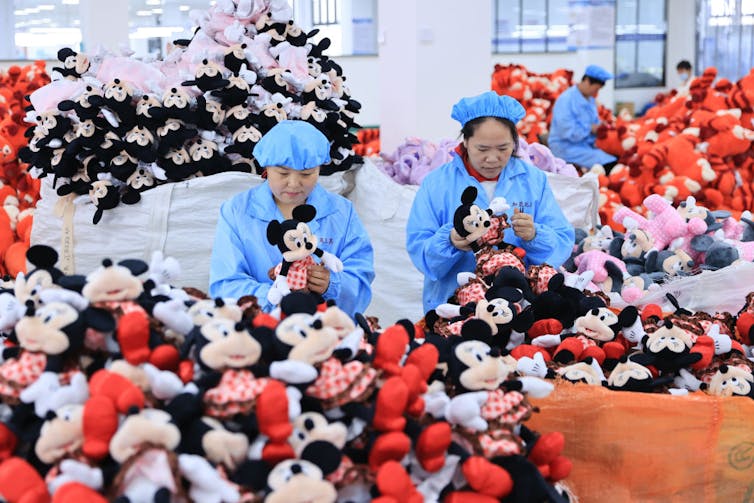
Two female workers wearing blue surrounded by piles of stuffed animals.
Mass production strips goods of their individuality.
Costfoto/NurPhoto via Getty Images

Today, there’s a similar risk with the automation of thought. Generative AI tempts users to conflate speed with quality, productivity with originality.

The danger is not that AI will fail us, but that people will accept the mediocrity of its outputs as the norm. When everything is fast, frictionless and “good enough,” there’s the risk of losing the depth, nuance and intellectual richness that define exceptional human work.

The rise of algorithmic mediocrity

Despite the name, AI doesn’t actually think.

Tools such as ChatGPT, Claude and Gemini process massive volumes of human-created content, often scraped from the internet without context or permission. Their outputs are statistical predictions of what word or pixel is likely to follow based on patterns in data they’ve processed.

They are, in essence, mirrors that reflect collective human creative output back to users – rearranged and recombined, but fundamentally derivative.

And this, in many ways, is precisely why they work so well.

Consider the countless emails people write, the slide decks strategy consultants prepare and the advertisements that suffuse social media feeds. Much of this content follows predictable patterns and established formulas. It has been there before, in one form or the other.

Generative AI excels at producing competent-sounding content – lists, summaries, press releases, advertisements – that bears the signs of human creation without that spark of ingenuity. It thrives in contexts where the demand for originality is low and when “good enough” is, well, good enough.

When AI sparks – and stifles – creativity

Yet, even in a world of formulaic content, AI can be surprisingly helpful.

In one set of experiments, researchers tasked people with completing various creative challenges. They found that those who used generative AI produced ideas that were, on average, more creative, outperforming participants who used web searches or no aids at all. In other words, AI can, in fact, elevate baseline creative performance.

However, further analysis revealed a critical trade-off: Reliance on AI systems for brainstorming significantly reduced the diversity of ideas produced, which is a crucial element for creative breakthroughs. The systems tend to converge toward a predictable middle rather than exploring unconventional possibilities at the edges.

I wasn’t surprised by these findings. My students and I have found that the outputs of generative AI systems are most closely aligned with the values and worldviews of wealthy, English-speaking nations. This inherent bias quite naturally constrains the diversity of ideas these systems can generate.

More troubling still, brief interactions with AI systems can subtly reshape how people approach problems and imagine solutions.

One set of experiments tasked participants with making medical diagnoses with the help of AI. However, the researchers designed the experiment so that AI would give some participants flawed suggestions. Even after those participants stopped using the AI tool, they tended to unconsciously adopt those biases and make errors in their own decisions.

What begins as a convenient shortcut risks becoming a self-reinforcing loop of diminishing originality – not because these tools produce objectively poor content, but because they quietly narrow the bandwidth of human creativity itself.

Navigating the cognitive revolution

True creativity, innovation and research are not just probabilistic recombinations of past data. They require conceptual leaps, cross-disciplinary thinking and real-world experience. These are qualities AI cannot replicate. It cannot invent the future. It can only remix the past.

What AI generates may satisfy a short-term need: a quick summary, a plausible design, a passable script. But it rarely transforms, and genuine originality risks being drowned in a sea of algorithmic sameness.

The challenge, then, isn’t just technological. It’s cultural.

How can the irreplaceable value of human creativity be preserved amid this flood of synthetic content?

The historical parallel with industrialization offers both caution and hope. Mechanization displaced many workers but also gave rise to new forms of labor, education and prosperity. Similarly, while AI systems may automate some cognitive tasks, they may also open up new intellectual frontiers by simulating intellectual abilities. In doing so, they may take on creative responsibilities, such as inventing novel processes or developing criteria to evaluate their own outputs.

This transformation is only at its early stages. Each new generation of AI models will produce outputs that once seemed like the purview of science fiction. The responsibility lies with professionals, educators and policymakers to shape this cognitive revolution with intention.

Will it lead to intellectual flourishing or dependency? To a renaissance of human creativity or its gradual obsolescence?

The answer, for now, is up in the air.

The Conversation

Wolfgang Messner receives funding from Center for International Business Education and Research (CIBER) at the University of South Carolina.

ref. Is AI sparking a cognitive revolution that will lead to mediocrity and conformity? – https://theconversation.com/is-ai-sparking-a-cognitive-revolution-that-will-lead-to-mediocrity-and-conformity-256940

The Michelin Guide is Eurocentric and elitist − yet it will soon be an arbiter of culinary excellence in Philly

Source: The Conversation – USA (2) – By Tulasi Srinivas, Professor of Anthropology, Religion and Transnational Studies, Emerson College

Could a Philly cheesesteak joint actually get a Michelin star?

The Michelin Red Guide is coming to Philadelphia, and inspectors are already scouting local restaurants to award the famed Michelin star.

Michelin says the selected restaurants will be announced in a Northeast cities edition celebration later this year. Boston will also be included for the first time.

As an anthropologist of ethics and religion who has an expertise in food studies, I read the announcement with some curiosity and a lot of questions. I had seen this small red guide revered by chefs and gourmands alike around the globe.

How did the Michelin guide begin reviewing restaurants? And what makes it an authority on cuisine worldwide?

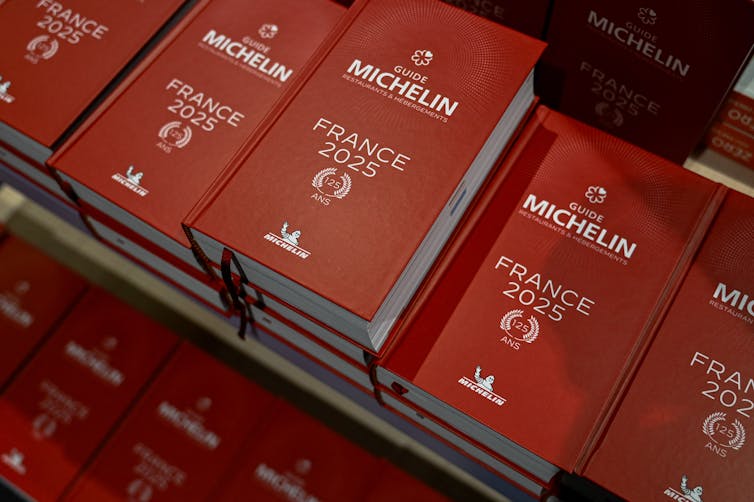
Hardback copies of a red book that says 'Michelin France 2025'
The Michelin Guide has retained its iconic red cover for more than a century.
Matthieu Delaty/Hans Lucas/AFP via Getty Images

From tires to terrines

It all began in 1889 in the small town of Clermont-Ferrand in the Auvergne-Rhône-Alpes region of France. Brothers Andre and Edouard Michelin founded their world-famous Michelin tire company, fueled by a grand vision for France’s automobile industry – though there were fewer than 3,000 cars at the time in the whole of France.

To encourage travel, they distributed a red-bound guide filled with maps and helpful tips on routes and destinations. Initially free to automobile owners, it soon started to sell for seven francs – roughly US$1.50 at the time. The guide later added lists of restaurants and eateries along with other points of travel interest.

Being French, readers had questions about the quality of the food at these establishments, so the brothers started a rating system of a single star to denote high-quality establishments worthy of their elite customers and their fancy automobiles.

But that wasn’t enough for discerning diners. So the guide created a discriminating hierarchy of one-, two- and three-star establishments: one star for “high-quality cooking worth a stop,” two stars for “excellent cooking worth a detour,” and three stars for “exceptional cuisine worth a special journey.”

An army of anonymous inspectors

How do restaurants get a Michelin star – or three? According to the guide, restaurants have to be consistently extraordinary to garner three stars. To ensure a restaurant’s excellence is consistent, Michelin has to surveil them repeatedly, which it does using a stable of mysterious diners called “inspectors.”

You might be thinking of Inspector Clouseau, the klutzy, misguided detective from the Pink Panther movies played by the inimitable Peter Sellers.

Mais non!

Michelin inspectors are dreaded anonymous restaurant reviewers. They dine at restaurants unannounced and undercover, and inevitably write scathing critiques of everything – ingredients, food, chefs and dishes – in their reports.

In the 2015 Bradley Cooper movie “Burnt,” the restaurant is obsessed with the mystery Michelin inspectors, who dine incognito. Restaurateur Tony, played by Daniel Bruhl, instructs the dining room staff on how to spot them:

“No one knows who they are. No one. They come. They eat. They go. But they have habits. One orders the tasting menu, the other orders a la carte. Always. They order a half a bottle of wine. They ask for tap water. They are polite. But attention! They may place a fork on the floor to see if you notice.”

Woman in crisp white chef uniform stands in sleek restaurant
Japan’s Chizuko Kimura, a Michelin-star chef, at her restaurant Sushi Shunei in Paris.
Julien De Rosa/AFP via Getty Images

Holy grail for chefs

The inherent elitism of the iconic Michelin Guide was central, though left unspoken.

To counteract the guide’s existential classist bias, Michelin introduced the Bib Gourmand award in 1997 to identify affordable “best value for money restaurants.” Bib Gourmand restaurants are easier on the wallet than Michelin-starred establishments and offer casual dining. The award’s logo is the Bibendum, also known as the inflatable Michelin Man, licking his lips.

In 2020, the guide introduced yet another award: the green star for eateries with farm-to-table fresh quality.

Today, the Michelin Guide has become a vaunted yet controversial subjective yardstick by which restaurants are measured.

Getting a Michelin star has become a holy grail for many chefs, a Nobel prize of cuisine. Chefs speak of earning a star as an honor they have envisaged for a lifetime, and starred chefs often become celebrities in their own right.

The 2022 dark comedy “The Menu” stars Ralph Fiennes as one such celebrity Michelin chef, whose exclusive island restaurant has a lavish modern menu that culminates in a mystery performance. His greatest fear is losing his Michelin star – a cause for lament, mental health crises and, sometimes, murder.

Three stars for Eurocentrism

The Michelin Guide evaluates restaurants on the quality of their ingredients, the mastery of their flavors, the chef’s personality in their cooking, the harmony of flavors, and the consistency of the cuisine over the course of numerous visits.

Yet somehow, all these factors, seemingly easily translatable across the world’s cuisines, has led to an intensely parochial guide.

Only in 2007, 118 years after its inception, did the guide recognize Japanese cuisine as worthy of its gaze. Soon after, stars rained down on Tokyo’s many stellar eateries.

On a contemporary map charting where the Michelin Guide is found, huge swathes of the world are missing. There is no Michelin Guide in India, one of the world’s greatest and oldest cuisines, or in Africa with its multiplicity of cultural flavors.

Perhaps a side of racism with the boeuf bourguignon?

Despite a movement to decolonize food by rethinking colonial legacies of power and extractive ways of eating, Michelin has derived its stellar reputation primarily from reviewing metropolitan European cuisine. It has celebrated obscure European gastronomic processes such as “fire cooking” in Stockholm’s famous Ekstedt restaurant, and new chemical processes such as “molecular gastronomy” in Spain’s famed el Bulli eatery.

One could say Michelin is a somewhat conservative enterprise. Rather than leading the way, it has followed consumers’ expanding palates.

In 2024, in a rare break with tradition, Michelin awarded one star to a small family-run taqueria, El Califa De León, in Mexico City. The taqueria is known for its signature tacos de gaonera – thinly sliced rib-eye steak cooked in lard on fresh corn masa tortillas with a squeeze of lime.

Some discerning diners worried that Michelin had gone downhill.

Quelle horreur!

The decision to give a star to a Mexican restaurant that is essentially just a steel counter, fridge and griddle was so unlike Michelin that it resorted to describing El Califa tacos as “elemental and pure”; language previously reserved only to describe elite cuisine.

A man in blue uniform and black apron places thin slices of meat on a griddle
The Michelin-starred taqueria El Califa de León in Mexico City is known for its tacos de gaonera.
Apolline Guillerot-Malick/SOPA Images/LightRocket via Getty Images

A big bill

Soon-to-be-reviewed Philadelphia boasts a portfolio of epicurean excellence, with contributions from a global diaspora of culinary creators. Restaurants such as Zahav, Kalaya and Mawn – which serve Israeli, Thai and Cambodian food, respectively – are surely eyeing their prospects for a starry future.

That Boston and Philadelphia’s tourism boards likely paid for the pleasure of the guide visiting their cities has been a topic of discussion among food cognoscenti. Reportedly, the Atlanta Tourism Board paid nearly $1 million for Michelin to visit their city. Is Michelin merely a well-regarded shakedown? A few stars in exchange for a million dollars?

After indirectly footing that big bill, what can local diners look forward to in the wake of Michelin awards scattering across the Northeast?

Since Michelin restaurants are notoriously difficult to get into – the award invariably prompts a surge in customers and reservations – the enhanced reputation of the restaurants might translate to price increases for diners.

Starred restaurants will also likely feel tremendous pressure to maintain high food quality and service, and this too can add to cost – particularly in an era of tariffs on foreign ingredients and alcohols.

Diners won’t escape unscathed. Industry officials suggest that Michelin stars add an average of $100 per diner per star. But, on the upside, diners may be able to gawk at local and international celebrities at dinner, since hanging out at Michelin-starred establishments has long been a celebrity preoccupation.

So if you have a favorite hot restaurant in Philadelphia, better make that reservation immediately, before a Michelin star makes it impossible to get in.

Read more of our stories about Philadelphia.

The Conversation

Tulasi Srinivas does not work for, consult, own shares in or receive funding from any company or organization that would benefit from this article, and has disclosed no relevant affiliations beyond their academic appointment.

ref. The Michelin Guide is Eurocentric and elitist − yet it will soon be an arbiter of culinary excellence in Philly – https://theconversation.com/the-michelin-guide-is-eurocentric-and-elitist-yet-it-will-soon-be-an-arbiter-of-culinary-excellence-in-philly-256667

In pardoning reality TV stars Todd and Julie Chrisley, Trump taps into a sense of persecution felt by his conservative Christian base

Source: The Conversation – USA (2) – By Diane Winston, Professor and Knight Center Chair in Media & Religion, USC Annenberg School for Communication and Journalism

Savannah Chrisley, left, spearheaded a campaign to pardon her mother, Julie, and father, Todd, right. Noel Vasquez/Getty Images

President Donald Trump has never met Todd Chrisley, the reality TV star that he pardoned on May 27, 2025, along with Chrisley’s wife, Julie.

But the pair have much in common.

Both are admired by their fans for their brash personas and salty ripostes. Both enjoy lavish lifestyles: Trump is known for his real estate deals and rococo White House redecoration, and Chrisley for his entrepreneurial skill and acquisitions of sprawling properties.

Quick-tempered tycoons, they live large and keep score – especially when people cross them.

And maybe most importantly, both have run into legal trouble with Georgia prosecutors. In 2019, The U.S. Attorney’s Office for the Northern District of Georgia indicted the Chrisleys for fraud and tax evasion, and the Fulton County district attorney filed charges against Trump in 2023.

In 2022, Todd and Julie Chrisley were tried in Fulton County, found guilty and sentenced to 12- and seven-year sentences, respectively. A year later, a Fulton County grand jury indicted Trump as part of an alleged conspiracy to overturn the 2020 presidential election results in Georgia, a case that’s currently in limbo.

After the Chrisleys went to prison, their daughter Savannah began campaigning for their release. Her efforts to win over prominent conservatives – including her outspoken support for Trump – led to a prime-time appearance at the 2024 Republican National Convention.

“My family has been persecuted by rogue prosecutors due to our public profile and conservative beliefs,” she told the delegates and a television audience of 15 million viewers.

Turning an insult into an accolade, she claimed prosecutors had called them the “Trumps of the South.”

Her framing of her parents’ imprisonment aligns with Trump’s broader campaign narrative of victimization, redemption and retribution, which critics say he has continued to promote and carry out during his second term.

Preaching perfection

Like Trump, who starred on “The Apprentice” for 11 years, the Chrisleys had their own reality television show.

Chrisley Knows Best” aired on USA Network from 2014 to 2023. I’m familiar with the Chrisleys because I wrote about Todd in a 2018 book I co-edited on religion and reality television. The show was particularly popular among viewers in their 30s, who were fascinated by the Chrisleys’ extravagant lifestyle and Todd’s over-the-top personality.

The self-proclaimed “patriarch of perfection,” Todd flew twice a month to Los Angeles from Atlanta, and later Nashville, to have his hair cut and highlighted. He spoke freely about using Botox and invited viewers into his room-size closet where his clothes were organized by color. No matter the time of day, Todd was camera-ready: buffed, manicured and dressed in designer clothes.

The family enjoyed all the trappings of success: fancy cars, a palatial home and expensive vacations. Yet, in almost every episode, Todd made clear that his life, and theirs by extension, centered on family, religion and responsibility. In fact, many episodes revolved around Todd’s efforts to promote these values through his parenting lessons.

On the one hand, Todd tried to teach responsibility and the value of hard work to his five children. On the other hand, he bribed and cajoled them into doing what he wanted. Todd seemed to have it both ways: His strictness and traditional values appealed to Christian viewers, but his sass and cussing won over secular audiences.

Yet sometimes his words rang hollow. Todd talked a lot about work, but viewers rarely saw him at a job. He frequently quoted the Bible, but audiences seldom saw him in church. He extolled family, but a few years into the series, his two older children, Lindsie and Kyle, disappeared from the show.

In 2023, the series disappeared, too. By then, the Chrisleys were in prison.

Trump knows best

On the day of his inauguration, when Trump pardoned or commuted the sentences of the roughly 1,500 people involved in the Jan. 6, 2021, insurrection, he vowed to “take appropriate action to correct past misconduct by the Federal Government related to the weaponization of law enforcement.”

According to the president, the imprisonment of Todd and Julie Chrisley and his pardoning of them is just that.

“Your parents are going to be free and clean and I hope that we can do it by tomorrow,” Trump told Savannah Chrisley in a recorded phone conversation. “They’ve been given a pretty harsh treatment based on what I’m hearing.”

Trump’s pardons, which have freed a number of conservatives convicted of fraud, may stem from his belief that he and many others have been falsely accused and persecuted by the elite, liberal establishment.

But the pardons also strike home for his right-wing religious supporters, many of whom think that Democrats will do anything to quash their faith, including using the justice system to specifically target Christians.

“We live in a nation founded on freedom, liberty and justice for all. Justice is supposed to be blind. But today, we have a two-faced justice system,” Savannah Chrisley said during her RNC speech. “Look at what they are doing to countless Christians and conservatives that the government has labeled them extremists or even worse.”

While those claims have been disputed, eradicating anti-Christian bias, at home and abroad, has nevertheless become a centerpiece of Trump’s policies during his second term.

The lawyers who prosecuted the Chrisleys had a different perspective. They called Todd and Julie “career swindlers who have made a living by jumping from one fraud scheme to another, lying to banks, stiffing vendors and evading taxes at every corner,” and whose reputations were “based on the lie that their wealth came from dedication and hard work.”

The couple were ultimately found guilty of defrauding Atlanta-area banks of US$36 million by using falsified papers to apply for mortgages, obtaining false loans to repay older loans, and not repaying those loans. They also were convicted of hiding their true income from the IRS and owing $500,000 in back taxes.

At his sentencing, Todd said that he intended to pay it all back. At a press conference after his pardon, he said he was convicted for something he did not do.

Todd Chrisley holds a press conference on May 31, 2025, after his release from prison.

In the days since their release, the Chrisleys announced they were filming a new reality show, which will air on Lifetime. The series will focus on the couple’s legal struggles, imprisonment, pardon and reunification.

Thanks to the constitutional protections of the presidency, Trump’s reelection has shielded him from ongoing federal criminal prosecution. And now, thanks to the stroke of Trump’s pen, the “Trumps of the South” are back in business, too.

The Conversation

Diane Winston does not work for, consult, own shares in or receive funding from any company or organization that would benefit from this article, and has disclosed no relevant affiliations beyond their academic appointment.

ref. In pardoning reality TV stars Todd and Julie Chrisley, Trump taps into a sense of persecution felt by his conservative Christian base – https://theconversation.com/in-pardoning-reality-tv-stars-todd-and-julie-chrisley-trump-taps-into-a-sense-of-persecution-felt-by-his-conservative-christian-base-257932

‘The Eternal Queen of Asian Pop’ sings one last encore from beyond the grave

Source: The Conversation – USA (2) – By Xianda Huang, PhD student in Asian Languages and Cultures, University of California, Los Angeles

Teresa Teng, who died in 1995, still has legions of fans around the world. Nora Tam/South China Morning Post via Getty Images

Several years ago, an employee at Universal Music came across a cassette tape in a Tokyo warehouse while sorting through archival materials. On it was a recording by the late Taiwanese pop star Teresa Teng that had never been released; the pop ballad, likely recorded in the mid-1980s while Teng was living and performing in Japan, was a collaboration between composer Takashi Miki and lyricist Toyohisa Araki.

Now, to the delight of her millions of fans, the track titled “Love Songs Are Best in the Foggy Nightwill appear on an album set to be released on June 25, 2025.

Teng died 30 years ago. Most Americans know little about her life and her body of work. Yet the ballads of Teng, who could sing in Mandarin, Cantonese, Japanese and Indonesian, continue to echo through karaoke rooms, on Spotify playlists, at tribute concerts and at family gatherings across Asia and beyond.

I study how pop music has served as a tool of soft power, and I’ve spent the past several years researching Teng’s music and its legacy. I’ve found that Teng’s influence endures not just because of her voice, but also because her music transcends Asia’s political fault lines.

From local star to Asian icon

Born in 1953 in Yunlin, Taiwan, Teresa Teng grew up in one of the many villages that were built to house soldiers and their families who had fled mainland China in 1949 after the communists claimed victory in the Chinese civil war. Her early exposure to traditional Chinese music and opera laid the foundation for her singing career. By age 6, she was taking voice lessons. She soon began winning local singing competitions.

“It wasn’t adults who wanted me to sing,” Teng wrote in her memoir. “I wanted to sing. As long as I could sing, I was happy.”

At 14, Teng dropped out of high school to focus entirely on music, signing with the local label Yeu Jow Records. Soon thereafter, she released her first album, “Fengyang Flower Drum.” In the 1970s, she toured and recorded across Taiwan, Hong Kong, Japan and Southeast Asia, becoming one of Asia’s first truly transnational pop stars.

Teng’s career flourished in the late 1970s and 1980s. She released some of her most iconic tracks, such as her covers of Chinese singer Zhou Xuan’s 1937 hit “When Will You Return?” and Taiwanese singer Chen Fen-lan’s “The Moon Represents My Heart,” and toured widely across Asia, sparking what came to be known as “Teresa Teng Fever.”

In the early 1990s, Teng was forced to stop performing for health reasons. She died suddenly of an asthma attack on May 8, 1995, while on vacation in Chiang Mai, Thailand, at the age of 42.

China catches Teng Fever

Perhaps the most remarkable aspect of Teng’s story is that Teng Fever peaked in China.

Teng was ethnically Chinese, with ancestral roots in China’s Shandong province. But the political divide between China and Taiwan following the Chinese civil war had led to decades of hostility, with each side refusing to recognize the legitimacy of the other.

Black and white headshot of smiling young woman.
Teng speaks at a press conference in Hong Kong in 1980.
P.Y. Tang/South China Morning Post via Getty Images

During the late 1970s and 1980s, however, China began to relax its political control under Deng Xiaoping’s Reform and Opening Up policy. This sweeping initiative shifted China toward a market-oriented economy, encouraged foreign trade and investment, and cautiously reintroduced global cultural influences after decades of isolation.

Pop music from other parts of the world began trickling in, including Teng’s tender ballads. Her songs could be heard in coastal provinces such as Guangdong and Shanghai, inland cities such as Beijing and Tianjin, and even remote regions such as Tibet. Shanghai’s propaganda department wrote an internal memo in 1980 noting that her music had spread to the city’s public parks, restaurants, nursing homes and wedding halls.

Teng’s immense popularity in China was no accident; it reflected a time in the country’s history when its people were particularly eager for emotionally resonant art after decades of cultural propaganda and censorship.

For a society that had been awash in rote, revolutionary songs like “The East is Red” and “Union is Strength,” Teng’s music offered something entirely different. It was personal, tender and deeply human. Her gentle, approachable style – often described as “angelic” or like that of “a girl next door” – provided solace and a sense of intimacy that had long been absent from public life.

Teng performs ‘Fly Me to the Moon’ in Taipei in 1984.

Teng’s music was also admired for her ability to bridge eras. Her 1983 album “Light Exquisite Feeling” fused classical Chinese poetry with contemporary Western pop melodies, showcasing her gift for blending the traditional and the modern. It cemented her reputation not just as a pop star but as a cultural innovator.

It’s no secret why audiences across China and Asia were so deeply drawn to her and her music. She was fluent in multiple languages; she was elegant but humble, polite and relatable; she was involved in various charities; and she spoke out in support of democratic values.

A sound of home in distant lands

Throughout the 1990s and early 2000s, the Chinese immigrant population in the United States grew to over 1.1 million. Teng’s music has also deeply embedded itself within Chinese diasporic communities across the country. In cities such as Los Angeles, San Francisco and New York, Chinese immigrants played her music at family gatherings, during holidays and at community events. Walk through any Chinatown during Lunar New Year and you’re bound to hear her voice wafting through the streets.

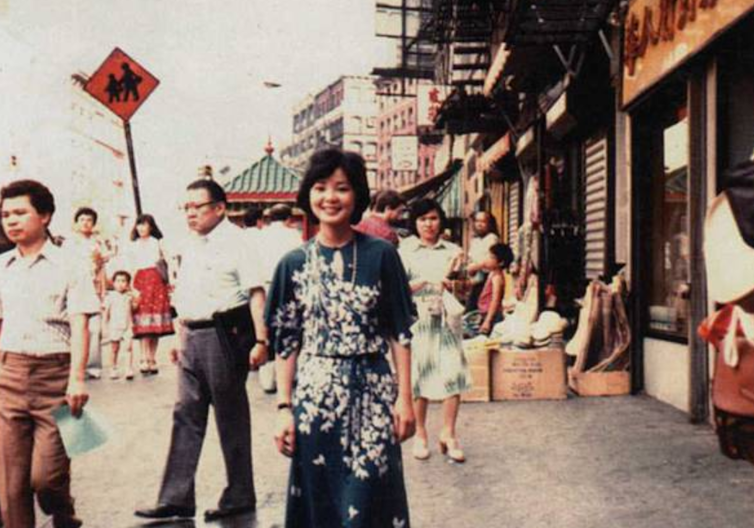
Young woman wearing blue dresse smiles and poses on a sidewalk filled with pedestrians.
Teng visits New York City’s Chinatown during her 1980 concert tour in the U.S.
Wikimedia Commons

For younger Chinese Americans and even non-Chinese audiences, Teng’s music has become a window into Chinese culture.

When I was studying in the U.S., I often met Asian American students who belted out her songs at karaoke nights or during cultural festivals. Many had grown up hearing her music through their parents’ playlists or local community celebrations.

The release of her recently discovered song is a reminder that some voices do not fade – they evolve, migrate and live on in the hearts of people scattered across the world.

Teresa Teng’s music is still celebrated in Chinatowns across the U.S.

In an age when global politics drive different cultures apart, Teng’s enduring appeal reminds us of something quieter yet more lasting: the power of voice to transmit emotion across time and space, the way a melody can build a bridge between continents and generations.

I recently rewatched the YouTube video for Teng’s iconic 1977 ballad “The Moon Represents My Heart.” As I read the comments section, one perfectly encapsulated what I had discovered about Teresa Teng in my own research: “Teng’s music opened a window to a culture I never knew I needed.”

The Conversation

Xianda Huang does not work for, consult, own shares in or receive funding from any company or organization that would benefit from this article, and has disclosed no relevant affiliations beyond their academic appointment.

ref. ‘The Eternal Queen of Asian Pop’ sings one last encore from beyond the grave – https://theconversation.com/the-eternal-queen-of-asian-pop-sings-one-last-encore-from-beyond-the-grave-255560

Dismal ticket sales, grumblings from fans and clubs – is FIFA’s latest attempt to establish a global club game doomed before it starts?

Source: The Conversation – USA (2) – By Stefan Szymanski, Professor of Sport Management, University of Michigan

FIFA is hoping that Lionel Messi can draw the crowds. Megan Briggs/Getty Images

The FIFA World Club Cup, which kicks off in the U.S. on June 14, 2025, may seem like a new competition.

Certainly, soccer’s governing body, FIFA, is promoting it as is it were, marketing the monthlong competition between 32 of the world’s biggest soccer teams as the “pinnacle of club football,” with up to US$125 million in prize money for the winning team and $250 million set aside for promoting “football solidarity.”

In reality, the competition is the latest chapter in FIFA’s long-running quest – going all the way back to 1960 – to create a global championship that would determine which club really is the best in the world.

The organizing body has trumpeted a $1 billion prize pot for the World Club Cup. But FIFA has been less vocal about the broadcasting deal underpinning the event, which is being financed by Saudi Arabia reportedly to tune of $1 billion. That deal was announced just days before Saudi Arabia was confirmed as the host of the men’s 2034 World Cup – a lucrative prize for the Gulf kingdom.

This sounds more like the FIFA we all know, with the whiff of corruption and dodgy dealing that has dogged the organizing body for decades.

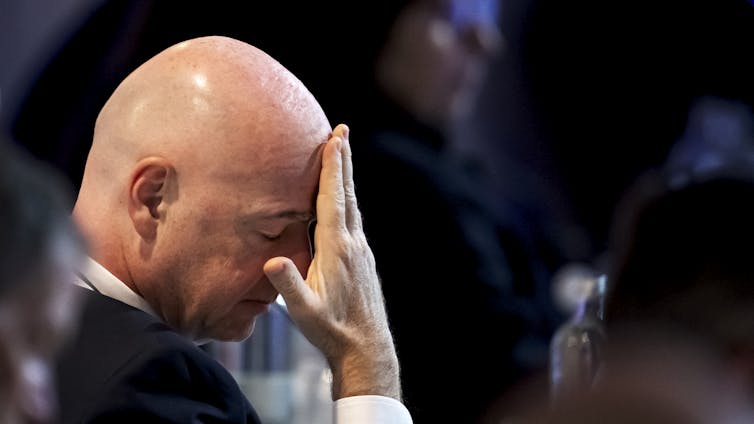
A bald man places his hand on his face.
FIFA’s president, Gianni Infantino.
Fabrice Coffrini/AFP via Getty Images

FIFA’s critics argue that the competition is nothing more than an attempt to line the governing body’s coffers. FIFA’s line is that it will not keep “one dollar” from the event, and instead plans to distribute revenue to the clubs.

Not helping FIFA’s case is the fact that clubs and players are similarly unimpressed, protesting that the event is an unnecessary addition to an already-overburdened soccer calendar.

As always, the litmus test for success will come from the fans. So far, things are not going well on that front. Falling prices on Ticketmaster bode ill for the competition. Just days before the games were due to begin, FIFA slashed prices for the opening match: MLS club Inter Miami against Egypt’s Al-Ahly. Reports suggest that less than a third of tickets at the 65,000-seat venue for the opener, Hard Rock Stadium in Miami, had sold – despite the likely presence of soccer superstar Lionel Messi.

Of course, the declining number of tourists coming to the U.S. since the second inauguration of Donald Trump – and the president’s recently announced travel ban affecting 19 countries – hasn’t helped encourage fans of the global game to the U.S., even if none of the competing clubs come from one of those countries.

FIFA vs. UEFA

So, given all the problems and controversies, why is FIFA so invested?

As someone who has long researched the nexus of soccer, money and power, I see the World Club Cup as part of a struggle between UEFA, the European governing body that runs the Champions League – currently seen as the pinnacle of soccer club competition – and FIFA, which wants to supplant the Champions League with its own competition.

UEFA’s power stems from hosting the world’s biggest clubs. Only one club from outside Europe appears in soccer data website Transfermarkt’s list of the 50 most valuable squads – with Palmeiras from Brazil squeaking in at 50.

Top players in their prime rarely quit Europe to play on another continent – the high-profile names that opt to play in the U.S. or Saudi leagues tend to be veterans cashing in on their name.

Meanwhile, the world’s soccer talent flocks to European clubs. It’s not just that big clubs like Real Madrid, Liverpool or Bayern Munich that can pay top dollar for the star players – less storied clubs like Brentford, Real Sociedad or VfB Stuttgart have the wherewithal to fish in the global player market.

The wealth and status of these clubs form the muscle behind UEFA. And the jewel in the UEFA crown is the Champions League, an annual competition that brings together the best clubs in Europe.

A game of two halves

While UEFA also has its own national competition, the Euros, its pull is nowhere near as great as FIFA’s World Cup.

This division – with FIFA dominating the international team competition and UEFA the club competition – dates back to the 1960s and the early years of mass television.

When the 1966 World Cup was hosted by England, it was one of the very first global sports events, watched by an estimated audience of 400 million people worldwide.

The 1970 World Cup, a legendary event in the eyes of boomer soccer fans, established the four-year ritual that surpasses even the Olympics as a global sporting event.

At this time, UEFA’s Euros were barely a competition at all. The 1968, 1972 and 1976 editions – played in Italy, Belgium and Yugoslavia, respectively – each had only four teams and only four or five games.

UEFA had by then established its role in club competition. The European Cup, as the Champions League was then called, started in 1955.

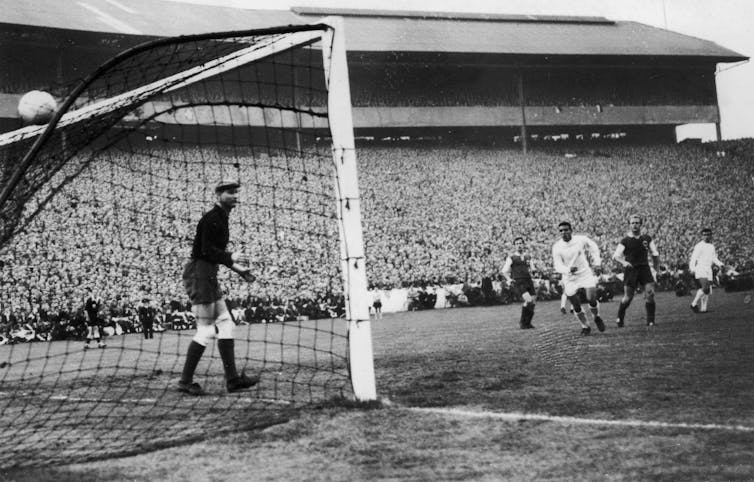
But the game remembered today for establishing the dominance of European club competition is the 1960 final between Real Madrid and Eintract Frankfurt – a 10-goal thriller that Los Blancos won 7-3.

A black-and-white photo shows a goal in the back of a soccer net and players on a field.
Ferenc Puskas of Real Madrid scores his team’s sixth goal during the European Cup final against Eintracht Frankfurt at Hampden Park in Glasgow, Scotland, on May 18, 1960.
Keystone/Getty Images

Witnessed by a crowd of 128,000 at Hampden Park in Glasgow, Scotland, the more important statistic was the estimated 70 million television audience in Europe.

The 1968 final at London’s Wembley Stadium, when Manchester United overcame Benfica in honor of the “Busby Babes” – Manchester players who died in a 1958 Munich air disaster while traveling home from a European Cup game – saw a TV audience of 270 million.

A history of failure

The ambition to create a club world cup to rival the European Cup goes back to the 1950s. Soccer powerhouses Brazil and Argentina in particular promoted the idea that the top clubs in Europe should face off against the top South American teams.

The resulting Intercontinental Cup ran from 1960 to 2004, with the top teams from UEFA and CONMEBOL, the South American soccer federation, taking part.

But played in midseason, it barely made an impression on the fans.

In 2000, FIFA created the Club World Championship, with eight teams drawn from the five international federations.

It also attracted little love, and the 2001-to-2004 editions had to be canceled for lack of financial backing.

In the early years, it seemed like an excuse to emulate the Intercontinental Cup, and the first three winners were South American. However, since 2006, all the winners bar one – Brazil’s Corinthians in 2012 – have been European.

Europe is ‘on the beach’

Then, in 2017, Gianni Infantino, the FIFA president, announced plans to expand the competition and move it to the summer. With 32 teams, the competition will look more like the World Cup and will receive a lot of TV coverage.

The fact that it will be free to watch will help. So too will the presence of Messi.

Yet the overwhelming feeling going into the competition is that, like its predecessors, the revamped FIFA club competition is destined for failure.

With the European domestic leagues all completed and the Champions League final – the unofficial marker of the end of the soccer season – having taken place on May 31, players and fans appear to be “on the beach,” to use a favorite phrase of soccer commentators.

Ultimately, FIFA’s revamped World Club Cup faces the same issues that beset its forerunners: European teams are overwhelmingly tipped to win.

Rather than the global soccer “solidarity” that FIFA hopes, the competition sets to reinforce the dominance of European clubs – and of Europe’s governing body when it comes to club competition.

The Conversation

Stefan Szymanski does not work for, consult, own shares in or receive funding from any company or organization that would benefit from this article, and has disclosed no relevant affiliations beyond their academic appointment.

ref. Dismal ticket sales, grumblings from fans and clubs – is FIFA’s latest attempt to establish a global club game doomed before it starts? – https://theconversation.com/dismal-ticket-sales-grumblings-from-fans-and-clubs-is-fifas-latest-attempt-to-establish-a-global-club-game-doomed-before-it-starts-258378

Gay Men’s Health Crisis showed how everyday people stepped up when institutions failed during the height of the AIDS epidemic – providing a model for today

Source: The Conversation – USA (3) – By Sean G. Massey, Associate Professor of Women, Gender and Sexuality Studies, Binghamton University, State University of New York

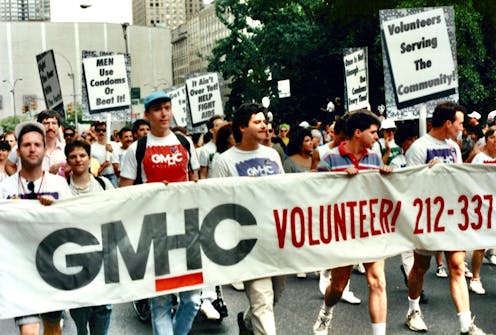
GMHC was the world’s first AIDS service organization.
Sean Massey, CC BY-ND

The story of the AIDS movement is one of regular people: students, bartenders, stay-at-home mothers, teachers, retired lawyers, immigrants, Catholic nuns, newly out gay men who had just arrived in New York, and many others. Some had lost friends or lovers. Some felt a moral calling. Some were just trying to balance their sexual karma. Many were angry. Most had no medical background or professional credentials – just a sense of urgency, tenacity and an unwillingness to look away.

When Gay Men’s Health Crisis, the world’s first AIDS service organization, was founded in 1982, it was regular people trying to meet the needs of all people living with AIDS. Its workforce of volunteers provided HIV prevention education as well as physical, emotional and legal support.

At the start of the epidemic, AIDS was considered a “gay plague,” and to be openly queer was to risk abandonment, eviction, assault or worse. Families disowned their children. Hospitals turned patients away. Funeral homes refused bodies. And many people with AIDS found themselves alone and in need.

Public officials didn’t just fail to act – they refused to acknowledge that anything was happening at all. Elected leaders such as President Ronald Reagan and Sen. Jesse Helms stoked the moral panic guiding public policy by declaring people with AIDS “perverted human being(s).”

In 2025, with the Trump administration cutting federal funding for HIV research and support services and restricting protections and services for LGBTQ+ people, studying how everyday people approached the early AIDS crisis provides a model for surviving through innovation, commitment and community.

Stories informing the present

“I think 26,000 people died before (Reagan) even bothered to utter the word ‘AIDS,’” said Tim Sweeney, former executive director of Gay Men’s Health Crisis.

This quote is featured in the GMHC Stories Oral History Project, a collection of over 100 interviews with former volunteers, staff and donors from the first 15 years of the organization. Along with our colleague Julia Haager, we and our team at Binghamton University’s Human Sexualities Lab compiled these interviews. Acquired by the Manuscripts and Archives Division of The New York Public Library, the collection is scheduled to open in fall 2025, showcasing how everyday people responded to the AIDS crisis.

These stories document how a community presented with a set of circumstances threatening their very existence built a self-sustaining organization to advocate for and provide care to each other outside institutional support. They did this while enduring grief, standing up to external threats and navigating internal tensions.

Group of people holding signs reading 'Fight to Live, Fight to Love, Fight AIDS' and marching in a parade behind a banner reading 'FIGHT AIDS'
The GMHC stood up for the community when other institutions would not.
Sean Massey, CC BY-ND

Improvisation for survival

The work was an ongoing challenge. Organizations dedicated to aiding people affected by AIDS such as Gay Men’s Health Crisis were left to fund their own survival – and defend their right to do the work. When North Carolina Sen. Jesse Helms moved in 1988 to eliminate federal support for AIDS service programs that mentioned homosexuality, it severely limited AIDS prevention efforts nation wide. However, GMHC had the foresight to fund its more explicit education materials with private donations.

At the beginning of the epidemic, queer New Yorkers and their allies had to improvise new systems of care in the absence of state and federal support. “People often (ask) me, what was the model you worked off of?” said Sweeney. “And I said, there was no model, there was just a muddle. We just made it up the whole time.”

What they created almost overnight was staggering. “There were over 1,000 volunteers in the agency,” recalled staff member Tom Weber, who started at GMHC as an office volunteer in 1988. “We would have orientations every single week, and they would flood in.”

One of the most well-known expressions of that volunteer labor was the buddy program, where lay caregivers provided emotional and practical support to people living with AIDS. “A lot of people were not alone in their death because of the work that we did,” said Barbara Danish, who led the buddy program from 1996 to 2002.

Person holding a pamphlet reading 'I have AIDS,' beside a poster of a handshake, a toilet, a doorknob and an empty plate, reading 'None of these will give you AIDS.'
Community members took it upon themselves to educate each other about AIDS.
AP Photo/Marty Lederhandler

Education and prevention were also grounded in queer culture and community. Unlike early depictions of AIDS in the media that reduced patients to “vectors” of transmission, it was defiantly sex-positive. “We came up with shit that no one in the world had ever done,” Sweeney said. “Because finally it was gay men saying … we’re going to talk to each other about how to stay safe, healthy and sexy.”

When that sense of mission extended to emotional survival, humor and unapologetically queer culture were critical to bearing the weight of the work. “Sometimes you just break down and cry for an hour. But that’s how you survive it – by staying authentic to your emotions,” said Tommy Thomson, former director of client programs. She recalled how staff member “Carolotta,” or Carl, would sometimes put condoms and chocolate in a basket and go from office to office, frequently in drag. He would offer either or both to make people feel better. “He’d make you remember that you weren’t alone, and that we all know how hard it is. That’s part of what held you together.”

Internal tensions

Although Gay Men’s Health Crisis remained mission-driven, its internal politics were never simple. As it grew in size and national stature, it confronted the limits of its founding identity.

Founded by, and initially serving, primarily white gay men, GMHC sometimes struggled to adapt to the emerging realities of the epidemic. While AIDS also affected people of color, women and intravenous drug users from the outset, much of the agency’s early prevention and outreach work was designed with gay men in mind.

By the late 1980s, the increase in AIDS cases among white gay men had begun to plateau, while rates among Black and Latino people, women and IV drug users continued to rise sharply into the next decade. Women and people of color who were deeply embedded in GMHC’s operations nonetheless had to navigate assumptions about whose needs were prioritized – assumptions that often manifested in how resources were allocated and services were designed. As GMHC expanded its outreach to Black and Latino populations, it struggled to be culturally responsive and build trust in communities that had long been underserved and stigmatized.

Racial disparities in HIV persist.

As GMHC grew, it became more and more successful in fundraising and visibility, while smaller organizations sometimes struggled to access resources. This led to growing tensions, particularly in communities of color, where local groups feared that GMHC’s expansion would limit funding and undercut their efforts at community-specific approaches to care and prevention. In addition, efforts to address racism, sexism and cultural insensitivity encountered both support and indifference.

Yet, staff and volunteers continued to push – reshaping messaging, fighting for inclusive programming, and holding conversations about race, gender, power and public health. For staff and volunteers, the agency was a complicated institution that could both empower and marginalize. Its strength, and its struggle, was learning how to expand without losing sight of the legacy and history it was built on.

A guide for today

Forty years later, LGBTQ+ people face a new set of crises in a landscape riddled with dangers.

Trans health care is being banned in multiple states. Book bans and surveillance laws are targeting queer youth. Anti-LGBTQ+ rhetoric is fueling violence and censorship. Funding for HIV prevention and research is disappearing even as new infections persist. Black and brown communities still face disproportionate barriers to health care and housing. Decades of scientific progress and medical discoveries are coming to a halt with funding cuts under the Trump administration.

Aerial shot of a large crowd of people holding signs inside a building; two of the signs read 'SILENCE=DEATH' and 'TRANS RIGHTS ARE HUMAN RIGHTS'
Protesters at the Iowa state Capitol in February 2025, demonstrating against a bill that would remove protections based on gender identity from the state civil rights code.
AP Photo/Charlie Neibergall

And yet many of the same questions and challenges remain: Who gets left behind when public health systems collapse under political pressure or moral panic? Who will do the work when institutions fail? What does it mean to care for one another in the midst of the wreckage? How do people come together across differences?

The history of GMHC is more than memory – it is a lesson in the possibility of care, creativity and community, especially in the face of fear and uncertainty today. It shows how people can come together – not just to demand policy change, but to directly meet one another’s needs with whatever resources they have. It is a reminder that mutual aid is powerful; that grief can coexist with joy; and that queer resilience has always included laughter, desire and shared vulnerability. In a time of renewed political backlash and public health failures, GMHC’s story is more than history – it’s a guide. Today, the staff and volunteers at GMHC continue their work to confront the epidemic and uplift the lives of all people affected by AIDS.

“We’d say to them, ‘You’re just ordinary citizens doing extraordinary things,’” Sweeney said. “And we really meant that.”

The Conversation

Sean G. Massey was a volunteer and staff member at Gay Men’s Health Crisis (GMHC), the organization that is being discussed in this article, from 1988-1998.

Casey W. Adrian and Eden Lowinger do not work for, consult, own shares in or receive funding from any company or organization that would benefit from this article, and have disclosed no relevant affiliations beyond their academic appointment.

ref. Gay Men’s Health Crisis showed how everyday people stepped up when institutions failed during the height of the AIDS epidemic – providing a model for today – https://theconversation.com/gay-mens-health-crisis-showed-how-everyday-people-stepped-up-when-institutions-failed-during-the-height-of-the-aids-epidemic-providing-a-model-for-today-258139

Sleep loss rewires the brain for cravings and weight gain – a neurologist explains the science behind the cycle

Source: The Conversation – USA (3) – By Joanna Fong-Isariyawongse, Associate Professor of Neurology, University of Pittsburgh

Getting enough sleep is one of the most effective ways to restore metabolic balance in the brain and body. SimpleImages/Moment via Getty Images

You stayed up too late scrolling through your phone, answering emails or watching just one more episode. The next morning, you feel groggy and irritable. That sugary pastry or greasy breakfast sandwich suddenly looks more appealing than your usual yogurt and berries. By the afternoon, chips or candy from the break room call your name. This isn’t just about willpower. Your brain, short on rest, is nudging you toward quick, high-calorie fixes.

There is a reason why this cycle repeats itself so predictably. Research shows that insufficient sleep disrupts hunger signals, weakens self-control, impairs glucose metabolism and increases your risk of weight gain. These changes can occur rapidly, even after a single night of poor sleep, and can become more harmful over time if left unaddressed.

I am a neurologist specializing in sleep science and its impact on health.

Sleep deprivation affects millions. According to the Centers for Disease Control and Prevention, more than one-third of U.S. adults regularly get less than seven hours of sleep per night. Nearly three-quarters of adolescents fall short of the recommended 8-10 hours sleep during the school week.

While anyone can suffer from sleep loss, essential workers and first responders, including nurses, firefighters and emergency personnel, are especially vulnerable due to night shifts and rotating schedules. These patterns disrupt the body’s internal clock and are linked to increased cravings, poor eating habits and elevated risks for obesity and metabolic disease. Fortunately, even a few nights of consistent, high-quality sleep can help rebalance key systems and start to reverse some of these effects.

How sleep deficits disrupt hunger hormones

Your body regulates hunger through a hormonal feedback loop involving two key hormones.

Ghrelin, produced primarily in the stomach, signals that you are hungry, while leptin, which is produced in the fat cells, tells your brain that you are full. Even one night of restricted sleep increases the release of ghrelin and decreases leptin, which leads to greater hunger and reduced satisfaction after eating. This shift is driven by changes in how the body regulates hunger and stress. Your brain becomes less responsive to fullness signals, while at the same time ramping up stress hormones that can increase cravings and appetite.

These changes are not subtle. In controlled lab studies, healthy adults reported increased hunger and stronger cravings for calorie-dense foods after sleeping only four to five hours. The effect worsens with ongoing sleep deficits, which can lead to a chronically elevated appetite.

Sleep is as important as diet and exercise in maintaining a healthy weight.

Why the brain shifts into reward mode

Sleep loss changes how your brain evaluates food.

Imaging studies show that after just one night of sleep deprivation, the prefrontal cortex, which is responsible for decision-making and impulse control, has reduced activity. At the same time, reward-related areas such as the amygdala and the nucleus accumbens, a part of the brain that drives motivation and reward-seeking, become more reactive to tempting food cues.

In simple terms, your brain becomes more tempted by junk food and less capable of resisting it. Participants in sleep deprivation studies not only rated high-calorie foods as more desirable but were also more likely to choose them, regardless of how hungry they actually felt.

Your metabolism slows, leading to increased fat storage

Sleep is also critical for blood sugar control.

When you’re well rested, your body efficiently uses insulin to move sugar out of your bloodstream and into your cells for energy. But even one night of partial sleep can reduce insulin sensitivity by up to 25%, leaving more sugar circulating in your blood.

If your body can’t process sugar effectively, it’s more likely to convert it into fat. This contributes to weight gain, especially around the abdomen. Over time, poor sleep is associated with higher risk for Type 2 diabetes and metabolic syndrome, a group of health issues such as high blood pressure, belly fat and high blood sugar that raise the risk for heart disease and diabetes.

On top of this, sleep loss raises cortisol, your body’s main stress hormone. Elevated cortisol encourages fat storage, especially in the abdominal region, and can further disrupt appetite regulation.

Sleep is your metabolic reset button

In a culture that glorifies hustle and late nights, sleep is often treated as optional. But your body doesn’t see it that way. Sleep is not downtime. It is active, essential repair. It is when your brain recalibrates hunger and reward signals, your hormones reset and your metabolism stabilizes.

Just one or two nights of quality sleep can begin to undo the damage from prior sleep loss and restore your body’s natural balance.

So the next time you find yourself reaching for junk food after a short night, recognize that your biology is not failing you. It is reacting to stress and fatigue. The most effective way to restore balance isn’t a crash diet or caffeine. It’s sleep.

Sleep is not a luxury. It is your most powerful tool for appetite control, energy regulation and long-term health.

The Conversation

Joanna Fong-Isariyawongse does not work for, consult, own shares in or receive funding from any company or organization that would benefit from this article, and has disclosed no relevant affiliations beyond their academic appointment.

ref. Sleep loss rewires the brain for cravings and weight gain – a neurologist explains the science behind the cycle – https://theconversation.com/sleep-loss-rewires-the-brain-for-cravings-and-weight-gain-a-neurologist-explains-the-science-behind-the-cycle-255726

When developing countries band together, lifesaving drugs become cheaper and easier to buy − with trade-offs

Source: The Conversation – USA (3) – By Lucy Xiaolu Wang, Assistant Professor, Department of Resource Economics, UMass Amherst

Pooling procurement of drugs could increase the availability of essential treatments around the globe. narvo vexar/iStock via Getty Images Plus

Procuring lifesaving drugs is a daunting challenge in many low- and middle-income countries. Essential treatments are often neither available nor affordable in these nations, even decades after the drugs entered the market.

Prospective buyers from these countries face a patent thicket, where a single drug may be covered by hundreds of patents. This makes it costly and legally difficult to secure licensing rights for manufacturing.

These buyers also face a complex and often fragile supply chain. Many major pharmaceutical firms have little incentive to sell their products in unprofitable markets. Quality assurance adds another layer of complexity, with substandard and counterfeit drugs widespread in many of these countries.

Organizations such as the United Nations-backed Medicines Patent Pool have effectively increased the supply of generic versions of patented drugs. But the problems go beyond patents or manufacturing – how medicines are bought are also crucially important. Buyers for low- and middle-income countries are often health ministries and community organizations on tight budgets that have to negotiate with sellers that may have substantial market power and far more experience.

We are economists who study how to increase access to drugs across the globe. Our research found that while pooling orders for essential medicines can help drive down costs and ensure a steady supply to low- and middle-income countries, there are trade-offs that require flexibility and early planning to address.

Understanding these trade-offs can help countries better prepare for future health emergencies and treat chronic conditions.

Pooled procurement reduces drug costs

One strategy low-income countries are increasingly adopting to improve treatment access is “pooled procurement.” That’s when multiple buyers coordinate purchases to strengthen their collective bargaining power and reduce prices for essential medicines. For example, pooling can help buyers meet the minimum batch size requirements some suppliers impose that countries purchasing individually may not satisfy.

Diagram comparing countries individually purchasing drugs from suppliers to a group of countries buying from suppliers
Compared with decentralized procurement, pooled procurement eases transactions by connecting buyers and sellers in groups.
Lucy Xiaolu Wang and Nahim Bin Zahur, CC BY-NC-ND

Countries typically rely on four models for pooled drug procurement:

  • One method, called decentralized procurement, involves buyers purchasing directly from manufacturers.

  • Another method, called international pooled procurement, involves going through international institutions such as the Global Fund’s Pooled Procurement Mechanism or the United Nations.

  • Countries may also purchase prescription drugs through their own central medical stores, which are government-run or semi-autonomous agencies that procure, store and distribute medicines on behalf of national health systems. This method is called centralized domestic procurement.

  • Finally, countries can also go through independent nonprofits, foundations, nongovernmental organizations and private wholesalers.

We wanted to understand how different procurement methods affect the cost of and time it takes to deliver drugs for HIV/AIDS, malaria and tuberculosis, because those three infectious diseases account for a large share of deaths and cases worldwide. So we analyzed over 39,000 drug procurement transactions across 106 countries between 2007 and 2017 that were funded by the Global Fund, the largest multilateral funder of HIV/AIDS programs worldwide.

We found that pooled procurement through international institutions reduced prices by 13% to 20% compared with directly buying from drug manufacturers. Smaller buyers and those purchasing drugs produced by only a small number of manufacturers saw the greatest savings. In comparison, purchasing through domestic pooling offered less consistent savings, with larger buyers seeing greater price advantages.

The Global Fund and the United Nations were especially effective at lowering the prices of older, off-patent drugs.

Trade-offs with pooled procurements

Cost savings from pooled drug procurement may come with trade-offs.

While the Global Fund reduced unexpected delivery delays by 28%, it required buyers to place orders much earlier. This results in longer anticipated procurement lead time between ordering and delivery – an average of 114 days more than that of direct purchases. In contrast, domestic pooled procurement shortened lead times by over a month.

Our results suggest a core tension: Pooled procurement improves prices and reliability but can reduce flexibility. Organizations that facilitate pooled procurement tend to prioritize medicines that can be bought at high volume, limiting the availability of other types of drugs. Additionally, the longer lead times may not be suitable for emergency situations.

With the spread of COVID-19, several large armed conflicts and tariff wars, governments have become increasingly aware of the fragility of the global supply chain. Some countries, such as Kenya, have sought to reduce their dependence on international pooling since 2005 by investing in domestic procurement.

But a shift toward domestic self-sufficiency is a slow and difficult process due to challenges with quality assurance and large-scale manufacturing. It may also weaken international pooled systems, which rely on broad participation to negotiate better terms with suppliers.

Person in protective covering watches a large batch of pills coming out of a machine
Scaling up drug production in low-income countries can be difficult.
Rafiq Maqbool/AP Photo

Interestingly, we found little evidence that international pooled procurement influences pricing for the U.S. President’s Emergency Plan for AIDS Relief, a major purchaser of HIV treatments for developing countries. PEPFAR-eligible products do not appear to benefit more from international pooled procurement than noneligible ones.

However, domestic procurement institutions were able to secure lower prices for PEPFAR-eligible products. This suggests that the presence of a large donor such as PEPFAR can cut costs, particularly when countries manage procurement internally.

USAID cuts and global drug access

While international organizations such as the Medicines Patent Pool and the Global Fund can address upstream barriers such as patents and procurement in the global drug supply chain, other institutions are essential for ensuring that medicines actually reach patients.

The U.S. Agency for International Development had played a significant role in delivering HIV treatment abroad through PEPFAR. The Trump administration’s decision in February 2025 to cut over 90% of USAID’s foreign aid contracts amounted to a US$60 billion reduction in overall U.S. assistance globally. An estimated hundreds of thousands of deaths are already happening, and millions more will likely die.

The World Health Organization warned that eight countries, including Haiti, Kenya, Nigeria and Ukraine, could soon run out of HIV treatments due to these aid cuts. In South Africa, HIV services have already been scaled back, with reports of mass layoffs of health workers and HIV clinic closures. These downstream cracks can undercut the gains from efforts to make procuring drugs more accessible if the drugs can’t reach patients.

Because HIV, tuberculosis and malaria often share the same treatment infrastructure – including drug procurement and distribution networks, laboratory systems, data collection, health workers and community-based services – disruption in the management of one disease can ripple across the others. Researchers have warned of a broader unraveling of progress across these infectious diseases, describing the fallout as a potential “bloodbath” in the global HIV response.

Research shows that supporting access to treatments around the world doesn’t just save lives abroad. It also helps prevent the next global health crisis from reaching America’s doorstep.

The Conversation

The authors do not work for, consult, own shares in or receive funding from any company or organization that would benefit from this article, and have disclosed no relevant affiliations beyond their academic appointment.

ref. When developing countries band together, lifesaving drugs become cheaper and easier to buy − with trade-offs – https://theconversation.com/when-developing-countries-band-together-lifesaving-drugs-become-cheaper-and-easier-to-buy-with-trade-offs-255383

Nostalgic foods and scents like fresh-cut grass and hamburgers grilling bring comfort, connection and well-being

Source: The Conversation – USA (3) – By Chelsea Reid, Associate Professor of Psychology, College of Charleston

The foods and scents we associate with our childhoods can provide a meaningful source of comfort and connection. zeljkosantrac/E+ via Getty Images

Walking around my neighborhood in the evening, I am hit by the smells of summer: fresh-cut grass, hamburgers grilling and a hint of swimming pool chlorine. These are also the smells of summers from my adolescence, and they remind me of Friday evenings at the community pool with my friends and our families gathered around picnic tables between swims. The memories always brings a smile to my face.

As a social psychologist, I shouldn’t feel surprised to experience this warm glow. My research focuses on nostalgia – a sentimental longing for treasured moments in our personal pasts – and how nostalgia is linked to our well-being and feelings of connection with others.

Triggered by sensory stimuli such as music, scents and foods, nostalgia has the power to mentally transport us back in time. This might be to important occasions, to moments of triumph and – importantly – moments revolving around close family and friends and other important people in our lives.

As it turns out, this experience is good for us.

How the concept of nostalgia evolved

For centuries, nostalgia was considered unhealthy.

In the 1600s, a Swiss medical student named Johannes Hofer studied mercenaries in the Italian and French lowlands who longed desperately for their mountain homelands. Witnessing their weeping and despondency, he coined the term nostalgia and attributed it to a brain disease. Other thinkers of the time echoed this view, which persisted through the 18th and 19th centuries.

However, early thinkers made an error: They assumed that nostalgia was causing unpleasant symptoms. It may have been the reverse. Unpleasant experiences, such as loneliness and grief, can arouse nostalgia, which can then help people cope more effectively with these hardships.

Today, researchers view nostalgia as a predominantly positive, albeit bittersweet, emotional experience that serves as a source of psychological well-being. Importantly, this view has been supported by scientific research.

Part of what makes nostalgia so intense is the bittersweet blend of feelings that it brings up.

How nostalgia inspires connection and belonging

Nostalgia provides many benefits. It enhances feelings of optimism and inspiration and makes people view themselves more positively. When people feel nostalgic, they feel a greater sense that their lives are meaningful.

The social benefits of nostalgia are particularly well supported. Nostalgia increases empathy and the willingness of people to give to those around them, such as volunteering for community events and donating to charities.

Nostalgia also makes people feel more socially connected to their loved ones by enhancing feelings that they are loved by, connected to, protected by and trusting of others. Nostalgia helps people feel more secure in their close relationships and enhances relationship satisfaction.

While nostalgia is a universal experience, it is also deeply personal. The moments for which we are each nostalgic and the stimuli that might trigger our nostalgic memories can vary from one person to the next depending on the experiences that each of us have. But people within the same culture may find similar stimuli to be nostalgic for them. In a 2013 study, for instance, my team found that American participants rated pumpkin pie spice as the most nostalgia-evoking scent out of a variety of options.

A pumpkin pie sits on a table with a couple of slices cut from it.
Many nostalgia-inducing scents vary from person to person, but pumpkin pie spice may be one of the most evocative scents in the U.S.
Redjina Ph/Moment via Getty Images

The nostalgic power of scents and foods

In 1922, the French novelist Marcel Proust wrote about the strength of scents and foods to elicit nostalgia. He vividly described how the experience of smelling and eating a tea-soaked cake mentally transported him back to childhood experiences with his aunt in her home and village. This sort of experience is now often referred to as the Proust effect.

Science has confirmed what Proust described. Our olfactory system, the sensory system responsible for our sense of smell, is closely linked to brain structures associated with emotions and autobiographical memory. Smells combine with tastes to create our perception of flavor.

Foods also tend to be central to social gatherings, making them easily associated with these memories. For instance, a summer barbecue might feel incomplete to some without slices of juicy watermelon. And homemade pumpkin pie may be an essential dessert at many Thanksgiving tables. The watermelon or pie may then serve as what are known in social psychology as social surrogates, foods that serve as stand-ins for valued relationships due to their inclusion at past occasions with loved ones.

My research team and I wanted to know how people benefited from feeling nostalgic when they encountered the scents and foods of their pasts. We began in 2011 by exposing study participants to 33 scents and chose 12 of them for our study. Participants rated some scents, such as pumpkin pie spice and baby powder, as highly evocative of nostalgia, while rating others – such as money and cappuccino –as less evocative.

Those who experienced more nostalgia when smelling the scents experienced greater positive emotions, greater self-esteem, greater feelings of connection to their past selves, greater optimism, greater feelings of social connectedness and a greater sense that life is meaningful.

We came to similar conclusions when we studied nostalgia for foods. Foods seemed to be more strongly linked to nostalgia than either scents or music when comparing the amount of nostalgia our participants experienced for foods to what previous research participants experienced for scents and songs. More recently, we found that nostalgic foods are comforting and that people find nostalgic foods comforting because those nostalgic foods remind them of important or meaningful moments with their loved ones.

A woman and three young kids sit around an outdoor table eating picnic foods, including watermelon in the foregound.
For some, a summer barbecue wouldn’t be complete without the smell and taste of juicy watermelon.
GMVozd/E+ via Getty Images

Balancing benefits and trade-offs

Although nostalgia can be associated with foods that should be eaten only in moderation – such as burgers and cookies – there are other ways to channel our nostalgia through foods.

We can have nostalgia with healthy foods. For instance, orange slices remind me of halftime at childhood soccer matches. And many people, including our research participants, feel intense nostalgia around watermelon. Other researchers have found that tofu is a nostalgic food for Chinese participants.

But when nostalgia does involve consumption of unhealthy foods, there are still other ways to experience it without the health trade-offs. We found that participants experienced the benefits of food-evoked nostalgia just from imagining and writing about the foods – no consumption necessary. Other researchers have found that drawing comforting foods can enhance well-being. Even consuming less healthy foods more mindfully helps people enjoy their food while reducing their caloric consumption.

Once seen as detrimental to our health, nostalgia provides us with an opportunity to reap numerous rewards. With nostalgic foods, we might be able to nourish both our bodies and our psychological health.

The Conversation

Chelsea Reid does not work for, consult, own shares in or receive funding from any company or organization that would benefit from this article, and has disclosed no relevant affiliations beyond their academic appointment.

ref. Nostalgic foods and scents like fresh-cut grass and hamburgers grilling bring comfort, connection and well-being – https://theconversation.com/nostalgic-foods-and-scents-like-fresh-cut-grass-and-hamburgers-grilling-bring-comfort-connection-and-well-being-256192

When you lose your health insurance, you may also lose your primary doctor – and that hurts your health

Source: The Conversation – USA (3) – By Jane Tavares, Senior Research Fellow and Lecturer of Gerontology, UMass Boston

Seeing the same doctor on a regular basis is good for your health. Morsa Images/DigitalVision via Getty Images

When you lose your health insurance or switch to a plan that skimps on preventive care, something critical breaks.

The connection to your primary care provider, usually a doctor, gets severed. You stop getting routine checkups. Warning signs get missed. Medical problems that could have been caught early become emergencies. And because emergencies are both dangerous and expensive, your health gets worse while your medical bills climb.

As gerontology researchers who study health and financial well-being in later life, we’ve analyzed how someone’s ties to the health care system strengthen or unravel depending on whether they have insurance coverage. What we’ve found is simple: Staying connected to a trusted doctor keeps you healthier and saves the system money. Breaking that link does just the opposite.

And that’s exactly what has us worried right now. Members of Congress are debating whether to make major cuts to Medicaid and other social safety net programs. If the Senate passes its own version of the tax-and-spending package that the House approved in May 2025, millions of Americans will soon face exactly this kind of disruption – with big consequences for their health and well-being.

How people end up uninsured

Someone can lose their health insurance for a number of reasons. For many Americans, coverage is tied to employment. Being fired, retiring before you turn 65 and become eligible to enroll in the Medicare program, or even getting a new job can mean losing insurance. Others wind up uninsured due to a different array of changes: moving to a different state, getting divorced or aging out of a parent’s plan after their 26th birthday.

And those who buy their own coverage may find that they can no longer afford the premiums. In 2024, average premiums on the individual market exceeded more than US$600 per month for many adults, even with subsidies.

Government-sponsored insurance programs can also leave you vulnerable to this predicament. The Senate is currently considering its own version of a tax-and-spending bill the House of Representatives passed in May that would make cuts and changes to Medicaid. If the provisions in the House bill are enacted, millions of Americans who get health insurance through Medicaid – a health insurance program jointly run by the federal government and the states that is mainly for people who have low incomes or disabilities – would lose their coverage, according to the nonpartisan Congressional Budget Office.

Medicaid was established in the 1960s, explains a scholar of the program’s history.

Consequences of becoming uninsured

Health insurance is more than a way to pay medical bills; it’s a doorway into the health care system itself. It connects people to health care providers who come to know their medical history, their medications and their personal circumstances.

When that door closes, the effects are immediate. Uninsured people are much less likely to have a usual source of care – typically a doctor or another primary care provider or clinic you know and trust. That relationship acts as a foundation for managing chronic conditions, staying current with preventive screenings and getting guidance when new symptoms arise.

Researchers have found that adults who go uninsured for even six months become significantly more likely to postpone care or forgo it altogether to save money. In practical terms, this means they’re less likely to be examined by someone who knows their medical history and can spot red flags early.

The Affordable Care Act, the landmark health care law enacted during the Obama administration, made the number of Americans without insurance plummet. The share of people without insurance fell from 16% in 2010 to 7.7% in 2023.

The people who got insurance coverage, particularly those who were middle age, saw big improvements in their health.

Researching the results

In research that looked at data collected from 2014 to 2020, we followed what happened to 12,000 adults who were 50 or older and lived across the nation.

Our research team analyzed how their experiences changed when they lost, and sometimes later regained, a regular source of care during those six years.

Many of the participants in this study had multiple chronic conditions like diabetes, hypertension and heart disease.

The results were striking.

Those who didn’t see the same provider on a regular basis were far less likely to feel heard or respected by health care professionals. They had fewer medical appointments, filled fewer prescriptions and were less likely to follow through with recommended treatments.

Their health also deteriorated considerably over the six years. Their blood pressure and blood sugar levels rose, and they had more elevated indicators of kidney impairment compared with their counterparts who had regular care providers.

The longer they went without consistent health care, the worse these clinical markers became.

Warning signs

Preventive care is one of the best tools that both patients and their health care providers have to head off major health problems. This care includes screenings like cholesterol and blood pressure checks, mammograms, PAP smears and prostate exams, as well as routine vaccinations. But most people only get preventive care when they stay engaged with the health care system.

And that’s far more likely when you have stable and comprehensive health insurance coverage.

Our research team also examined what happened to preventive care based on whether the participants had a regular doctor. We found that those who kept seeing the same providers were almost three times more likely to get basic preventive services than those who did not.

Over time, these missed preventive care opportunities can add up to a big problem. They can turn what could have been a manageable issue into an emergency room visit or a long, expensive hospital stay.

For example, imagine a man in his 50s who no longer gets cholesterol screenings after losing insurance coverage. Over several years, his undiagnosed high cholesterol leads to a heart attack that could have been prevented with early medication. Or a woman who skips mammograms because of out-of-pocket costs, only to face a late-stage cancer diagnosis that might have been caught years earlier.

People in scrubs work and mill about in a hospital emergency room.
Waiting too long to deal with a health condition can mean you make a trip to the emergency room, increasing the cost of care for you and others.
FS Productions/Tetra images via Getty Images

Shifting the costs

Patients whose conditions take too long to be diagnosed aren’t the only ones who pay the price.

We also studied how stable care relationships affect health care spending. To do this, we linked Medicare claims cost data to our original study and tracked the medical costs of the same adults age 50 and older from 2014 to 2020. One of our key findings is that people with regular care providers were 38% less likely to incur above-average health care costs.

These savings aren’t just for patients – they ripple through the entire health care system. Primary care stability lowers costs for both public and private health insurers and, ultimately, for taxpayers.

But when people lose their health care coverage, those savings disappear.

Emergency rooms see more uninsured patients seeking care that could have been handled earlier and more cheaply in a clinic or doctor’s office. While hospitals are legally required to provide emergency care regardless of a patient’s ability to pay, much of the resulting cost goes unreimbursed.

Hospitals foot the bill for about two-thirds of those losses. They pass the other third along to private insurance companies through higher hospital fees. Those insurers, in turn, raise their customers’ premiums. Larger taxpayer subsidies can then be required to keep hospitals open.

Seeing Medicaid as a lifeline

For the nearly 80 million Americans enrolled in Medicaid, the program provides more than coverage.

It contributes to the health care stability our research shows is critical for good health. Medicaid makes it possible for many Americans with serious medical conditions to have a regular doctor, get routine preventive services and have someone to turn to when symptoms arise – even when they have low incomes. It helps prevent health care from becoming purely crisis-driven.

As Congress considers cutting Medicaid funding by hundreds of billions of dollars, we believe that lawmakers should realize that scaling back coverage would break the fragile links between millions of patients and the providers who know them best.

The Conversation

Jane Tavares receives funding from the SCAN Foundation, the RRF Foundation for Aging, and Milbank Memorial Fund .

Marc Cohen receives funding from the SCAN Foundation, the RRF Foundation for Aging and Milbank Memorial Fund .

ref. When you lose your health insurance, you may also lose your primary doctor – and that hurts your health – https://theconversation.com/when-you-lose-your-health-insurance-you-may-also-lose-your-primary-doctor-and-that-hurts-your-health-258380