Behind the scenes in Belém: The Conversation’s report from Brazil’s UN climate summit

Source: The Conversation – UK – By Anna Turns, Senior Environment Editor, The Conversation

This roundup of The Conversation’s climate coverage was first published in our award-winning weekly climate action newsletter, Imagine.

As the UN climate summit Cop30 progresses in the Brazilian city of Belém, there’s much debate about the specifics of climate finance targets, whether the transition away from fossil fuels really can be ethical and how renewables are shaping the global economy. Luciana Julião, editor at The Conversation Brasil, has been busy meeting scientists and experts in Belém, the host city in the heart of the Amazon. She shares her behind-the-scenes insights.

What’s it really like on the ground there, aside from negotiations?

This is a huge event with two official venues. The first is the blue zone, where each country has a pavilion with their own event programme featuring academics, activists and environmental changemakers. This is also where the diplomatic negotiations are taking place.

It’s enormous – about the size of 17 football pitches. Discussions have ranged from the mathematical modelling being used to design disaster alerts to the new tech that’s bringing renewables to traditional communities.

About a mile away from that, the other official venue is the green zone which is open to the public. Slightly smaller (the size of 14 football pitches), this is where side events take place, with representatives from environmental charities and other movements plus universities.

Events are happening all over the city and free buses are shuttling delegates and participants between venues. For example, the free zone is a cultural space where there have been artistic gatherings, cultural shows and Brazilian food. The agrizone is a hub for discussions about farming and food production. The science house is inside the beautiful Emilio Goeldi museum of Pará, the first botanic garden in Brazil. And the Cúpula dos Povos (people’s summit) at the Federal University of Pará (home to the world’s biggest Amazon research centre) is where Indigenous communities are hosting events.

Which side events have been most fascinating?

Kerstin Bergentz, a researcher at the Scripps Institution of Oceanography at the University of California, San Diego, is doing her PhD in physical oceanography. At an event in the ocean pavilion, we spoke about how, even though half of the air we breathe comes from plankton, the oceans don’t get a mention in the Paris climate agreement or in most Cop negotiation texts.

“[The ocean is] such an important part of our climate system and our global earth system, but it’s still not getting enough attention on the global climate agenda,” says Bergentz. “We are all 65% water, and billions of people around the world rely on the ocean for their daily food, for sustenance, for their way of life … [The ocean] has absorbed 30% of anthropogenic CO₂ emissions and 90% of the excess heat associated with those emissions.

“Why do we talk about the Amazon rainforest so much but we don’t talk about the ocean? Maybe [it’s partly] a marketing issue … [because the oceans don’t get as much attention as land-based climate issues]. I also think it’s the fact that 41% of the ocean is in what’s called EEZs or exclusive economic zones. So that’s 200 nautical miles from the coastline, right? And that’s governed by individual countries.”

That, she explains, leaves almost 60% of the ocean – the high seas – as no man’s land. “That’s the biggest ecosystem on this planet, but who’s going to be responsible for that?” Of course, in 2026, a new high seas treaty is due to come into force which heralds a new era of ocean governance – if states can balance conservation with a growing scramble for deep-sea resources.

Another session that really resonated with me was about environmental racism.

Mauricio Paixão, professor at the Federal University of Rio Grande do Sul, Brazil, is studying how the consequences of intense floods in 2024 in Brazil’s most southernmost state are far from fair. “We hear a lot in Rio Grande do Sul, that the disaster was democratic, that it affected rich and poor, white and black, but in practice, despite affecting everyone, the recovery was not and is not being equal for all these groups.”

He has been observing how environmental racism has unfolded in two badly affected neighbourhoods: Menino Deus, a wealthy part of the city, and Sarandí, a poor neighbourhood with a large presence of Black people among its residents.

While the disaster affected everyone, the cleanup took longer to reach the neighbourhoods with the largest Black population. Paixão says that it’s “impossible” to separate the economic issues from the social, ethnic and gender issues. “When the water receded two weeks later, it looked like Menino Deus had never experienced a flood before, while Sarandí was still covered in accumulated garbage and mud. This is a very clear indicator of environmental racism.”

He spoke about removing ideas of intention from the environmental racism debate: “I can’t conceive that someone in a management position would say or think, ‘I’m going to take an action thinking about harming the Black population.’ I don’t think that happens. The idea of environmental racism isn’t in the intention, it’s in the consequence. So the fact that people in management positions don’t consider the demands of Sarandí because they are unaware of the demands of Sarandí, shows a disconnect from reality. And if you’re not connected to what’s happening in the city, you’re going to commit an injustice, and injustice in a racialised context implies environmental racism.”

Who is here, who is not?

Officially, 194 parties are here (that is 193 countries plus the EU delegation, out of a total of 198), with 56,118 delegates registered. But there are not many leaders of those nations present. According to official stats, presidents or official representatives are here from only about 70 countries. The absence of the US president is the most noted and commented on. There are so many people here from Indigenous and traditional communities coming closer to climate negotiations than ever before.

What is the Amazon setting actually like?

Belém is in the forest. Take a small boat for a few minutes, and you can navigate through its rivers to an island covered in tropical forest. It’s a wonderful experience.

It’s a very hot city with temperatures around 30-34°C. It’s humid here so it feels so much hotter than that. It also rains a lot. People here in Belem have a saying that they have two different seasons in the year: one in which it rains every day and another in which it rains all day long.

Right now, it’s raining every day. There’s lots of sunshine but usually in the afternoon, rain is torrential and fast. Then within about 15 minutes, the sun is shining again. People often joke when making arrangements by asking, when are we going to meet, before or after the rain?

Is the atmosphere one of hope or frustration?

I’m not covering official negotiations, but the many scientists and participants I have been talking to have told me two things. First, this is the Cop with the highest presence of Indigenous and traditional people. This elevates their perspectives and contributes to a feeling of hope rather than frustration.

Second, this Cop30 needs to be the Cop of implementation, not just discussion. We already have enough paperwork and knowledge, now it’s time to put those decisions and insights into practice and make the changes happen.

So we still don’t know if there will be any significant advances, but I can tell you the feeling is of hope. Let’s see. Time will tell.


Don’t have time to read about climate change as much as you’d like?

Get a weekly roundup in your inbox instead. Every Wednesday, The Conversation’s environment editor writes Imagine, a short email that goes a little deeper into just one climate issue. Join the 47,000+ readers who’ve subscribed so far.


The Conversation

ref. Behind the scenes in Belém: The Conversation’s report from Brazil’s UN climate summit – https://theconversation.com/behind-the-scenes-in-belem-the-conversations-report-from-brazils-un-climate-summit-269869
Medieval peasants enjoyed a surprising range of sick, annual and bereavement leave benefits

Source: The Conversation – UK – By Alex Brown, Associate Professor of Medieval History, Durham University

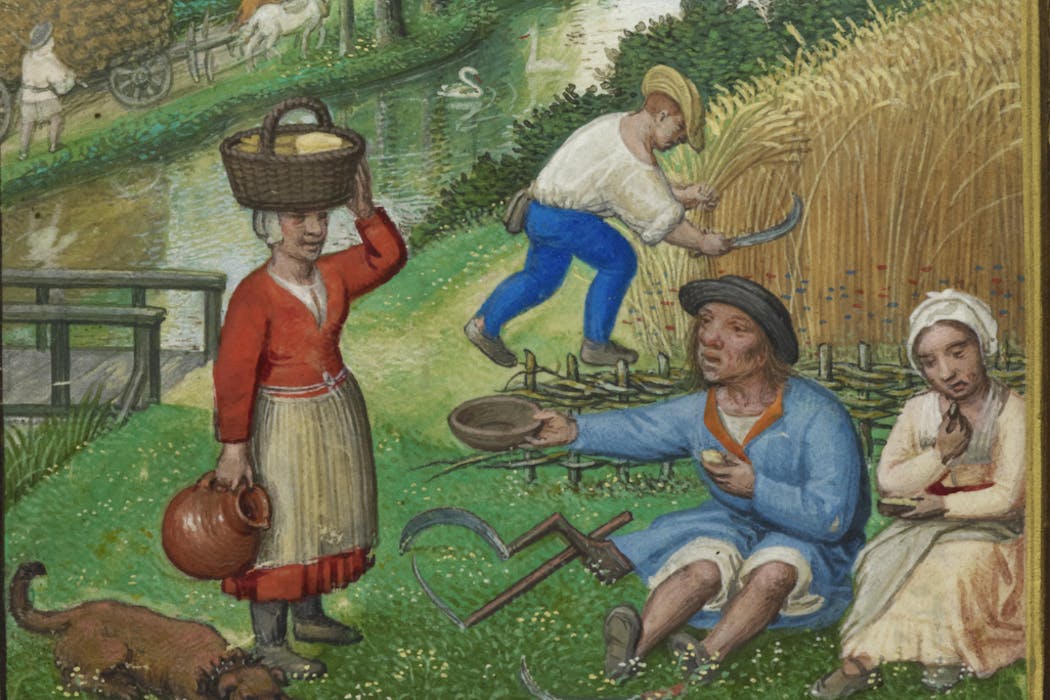
Peasants working, begging and enjoying leisure time in The Golf Book (1520-1530). From the British Library archive

In medieval England, peasants on some estates were entitled to a range of sick, annual and bereavement leave that could rival those of many workers in the UK today.

British workers are among the least likely in Europe to take sick leave, and lose an estimated 44 days’ worth productivity every year through working while sick. And although most workers are entitled to at least 28 days of annual leave, there is currently no statutory right for employees to take bereavement leave except after the loss of a child under the age of 18.

By comparison – as our new paper shows – peasants on the estate of Ramsey Abbey in Huntingdonshire, England, were entitled to up to a year and a day of leave from working on the lord’s lands if they were sick. Meanwhile widows were granted leave upon the death of their husbands and workers enjoyed plenty of religious feast days and festivals every year.

Not all peasants enjoyed the same level of benefits. Leave entitlements were negotiated between lords and their tenants. Practices, therefore, varied between manors across medieval England. Elsewhere, arrangements were less generous than on the Ramsey estate, and tenants were more generally entitled to a fortnight or month of sick leave.

At the other end of the spectrum, some peasants received no leave if they were ill, such as the tenants of Wisbech in Cambridgeshire, who were instructed that if “he is ill nevertheless, he will do the labour services he owes”.

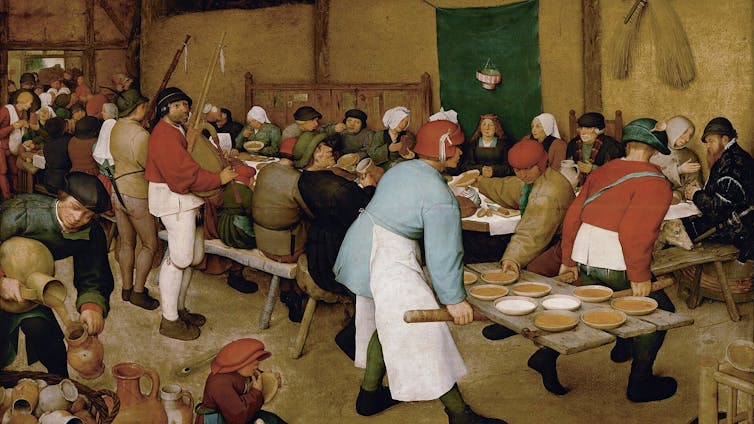
Painting of peasants at a wedding feast
The Peasant Wedding by Pieter Bruegel the Elder (circa 1567).
Kunsthistorisches Museum

Customary tenants – known as villeins – were required to perform unpaid work on the lord’s lands in lieu of rent. These obligations were known as labour services or “works”. Depending on the size of a tenant’s landholding, they might be required to work for between a day and three days per week.

The above entitlements did not constitute paid leave in the modern sense but, because tenants were not required to work on the lord’s lands while they were sick, they were effectively excused from many of their rental obligations.

When were peasants sick?

A high number of absences were recorded during the harvest on the Ramsey estate. This may have been for a variety of reasons, including that peasants were overworked and succumbed to exhaustion during the busy harvest season.

With tiredness, workplace accidents that resulted in infirmity were also more likely. Lords may even have been more diligent in tracking absences during the crucial harvest period because replacement labour was so expensive. Finally, tenants themselves may have exaggerated their own illnesses in examples of sick-leave fraud.

Although tenants were entitled to a year and a day of sick leave on the Ramsey estate, most absences did not run for nearly so long in practice. Some sicknesses were very short, such as that of Richard Berenger who was ill for just two days after the harvest in 1343. He missed half a “work” on the lord’s lands.

Peasants carrying bread, bleeding a pig in an illustrated page
Peasants as depicted in The Golf Book (1520-1530).
From the British Library archive

In contrast, others suffered chronic and debilitating infirmities, such as Richard Colleson of Warboys in Cambridgeshire, who was absent for an entire year in 1347/48, missing 156 “works”.

Such sick leave could cost the lord if they were forced to find a replacement worker. For example, in the absence of the ploughman who was sick for 84 days in 1420/21, the accounts of Battle Abbey in Sussex record a payment of 14 shillings to a man hired in his stead.

Alongside sick leave, tenants were also entitled to a range of other absences. Widows were granted 30 days of leave from performing their labour services upon the death of their husbands. In an unusual example of compassionate leave one Agnes le Reve of Upwood in Huntingdonshire was excused from a single work on two occasions in the winter of 1342/43 because of two deaths in her household.

Peasants also enjoyed a wide range of feast days and religious festivals. In theory, medieval people were not supposed to work on such days, though in practice some were fined in the church courts for working, often on their own lands or earning additional wages on someone else’s lands.

The number of feast days observed varied widely, even between neighbouring manors. On the Ramsey estate, this ranged from just a handful of religious festivals a year to an upper number of around 30.

We should not eulogise the lives of medieval peasants. They were subject to many restrictions which were greatly resented and resulted in punishments such as leyrwite – a fine on villein women for fornication. Yet, given the harsh and repressive realities of life for many medieval peasants, it is all the more surprising that at least some of them were entitled to such a wide range of sick, annual and bereavement leave.


Looking for something good? Cut through the noise with a carefully curated selection of the latest releases, live events and exhibitions, straight to your inbox every fortnight, on Fridays. Sign up here.


The Conversation

Research for this article was conducted thanks to funding from a Leverhulme Trust research project grant, ‘Modelling the Black Death and Social Connectivity in Medieval England’.

Dr Grace Owen is a postdoctoral research associate on the Leverhulme-Trust funded project, ‘Modelling the Black Death and Social Connectivity in Medieval England’.

ref. Medieval peasants enjoyed a surprising range of sick, annual and bereavement leave benefits – https://theconversation.com/medieval-peasants-enjoyed-a-surprising-range-of-sick-annual-and-bereavement-leave-benefits-260163

Asylum is not illegal migration – why the UK government shouldn’t conflate the two

Source: The Conversation – UK – By Nando Sigona, Professor of International Migration and Forced Displacement and Director of the Institute for Research into International Migration and Superdiversity, University of Birmingham

Ajdin Kamber/Shutterstock

The UK government’s latest proposals on asylum rest on an incorrect premise. In announcing them, home secretary Shabana Mahmood argued that “illegal migration is tearing our country apart”. But asylum-seeking is not illegal migration.

Asylum is a form of protection granted by a country to a non-citizen who faces persecution in their home country. The right to seek asylum is enshrined in international law, and applies irrespective of how the person travelled to the place where they are seeking protection.

Yet the policies being rolled out collapse two distinct categories into a single threat, to be addressed through deterrence and control. In effect, the category of the asylum seeker is equated to that of “illegal migrant”. Both are discussed as “abusing the system”, “flouting the rules” and “undermining communities”.

The underlying implication is that all asylum seekers are “illegal migrants”. Any system that follows will therefore be built on a distortion. Its consequences will fall not on the minority who try to game the system, but on the overwhelming majority who have legitimate claims for protection.

In 2024, 84,200 applications for asylum were made in the UK, relating to 108,100 individuals. More than 36,500 asylum appeals were lodged against negative decisions, with 48% of them allowed. Recent data show that in the months to March 2025, 47% of initial decisions resulted in the applicant being granted refugee status.

The new asylum measures promise faster decisions on asylum applications, tougher thresholds to be granted status, and expanded detention and removals. In continuity with the previous Conservative government, the rhetoric of “restoring control” makes the direction clear: restrict access to protection, harden the conditions for claiming it, and speed up refusals.

Labour is not hiding its reasoning for this approach. The government explicitly argues that firmer control is needed to prevent “darker forces” from coming into power. This is presented not as a concession to the far right, but as a public rationale for tightening the system. The message is clear: these policies are needed to keep politics steady, not because they improve the asylum system.

The issue is not simply that the proposals are harsh, unethical or likely to be ineffective. They represent a deeper shift: redefining protection as a discretionary favour rather than a legal obligation. Control becomes the primary focus, leaving less space for discussing refugee rights, protection and international obligations.

If asylum is framed as illegality, and settlement is reshaped into a privilege that must be endlessly earned, then our understanding of equal membership – the idea that those lawfully in the UK should enjoy stability and a clear path to full inclusion – is fundamentally altered.

A lifetime review

One of the key proposals is to extend the length of time it takes for a refugee to achieve settlement from five to 20 years. Until recently, settlement – the immigration status that allows a non-UK citizen to live, work and study in the UK without time restrictions – was the expected outcome for anyone granted refugee status. It is also a prerequisite for applying for British citizenship.

The new proposals transform settlement into something that must be continually earned. The path has become longer, more conditional and far more easily disrupted.

This aligns closely with other recent announcements on policies relating to migrants more generally. Higher salary thresholds, more enforcement, extended probationary periods and more complex routes to settlement have all been tabled.

These changes would build a structural disadvantage into the migration system. Non-citizens can live, work and contribute, but their belonging remains conditional. They become long-term residents on a form of probation, their status always open to review. This is more than an administrative change. It creates a hierarchy of membership that shapes lives, futures and families.

For a refugee family, this can mean years of uncertainty: parents unable to plan long-term careers or mortgages; partners and children living with the fear that a change in income, a missed renewal deadline or a shift in political priorities could jeopardise their right to remain.

It can also mean delays or barriers to family reunification, with spouses or children abroad left in limbo while the principal applicant waits to demonstrate continuous compliance. In practice, what should be a path to stability becomes a prolonged period of vulnerability, in which everyday life is overshadowed by the possibility of losing one’s status.

The Conversation

Nando Sigona receives funding from UKRI, Grant No.10061538.

ref. Asylum is not illegal migration – why the UK government shouldn’t conflate the two – https://theconversation.com/asylum-is-not-illegal-migration-why-the-uk-government-shouldnt-conflate-the-two-270106

Are peanut allergies actually declining?

Source: The Conversation – UK – By Sheena Cruickshank, Professor in Immunology, University of Manchester

Changing allergy guidelines may be behind the decline. Roman Rybaleov/ Shutterstock

Peanut allergy is one of the most common food allergies, affecting between 1% and 2% of people living in the west. And, for many years, their prevalence has been rising.

But a recent study out of the US shows that the rate of peanut allergy diagnoses in infants has actually declined. It appears this decline may be due to changes in allergy guidelines – highlighting the importance of introducing this common allergen early on.

A food allergy is a type of allergic reaction which occurs when your immune system reacts inappropriately to things it should ignore – such as pollen or certain types of foods. The most common allergic condition is hayfever – a reaction to pollen. Peanut allergy is one of the most common true food allergies – and also the most common cause of fatal food reactions.

The proportion of people with food allergies in England has more than doubled between 2008 and 2018. Similar data in the US showed more than triple the number of people developed a food allergy between 1997 and 2008.

The reasons for these increases are complex and due to many factors – including exposure to environmental pollutants, alterations in the gut microbiome and genetic predisposition. There also appears to be a link between certain inflammatory health conditions (such as atopic dermatitis and an infant’s likelihood of developing a food allergy.


Read more:
What’s behind the large rise in food allergies among children in the UK?


But this latest study has shown that the US appears to have deviated from this overall trend, with peanut allergies actually falling in infants.

The study examined changes in the rates of peanut allergies since 2015. This was the year allergy guidelines in the US changed to encourage infants considered most at risk of food allergy (such as those with atopic dermatitis) to be introduced to peanuts early in life.

Previous research had shown that these guideline changes had resulted in an increase in the number of parents introducing peanuts into their child’s diet by one year of age. The research team wanted to assess whether this had had any affect on peanut allergy rates, too.

They enrolled almost 39,000 children during the pre-guidelines phase (when advice was to avoid peanuts) and around 47,000 in the post-guidelines phase (after 2015). Allergy incidence in both groups was tracked for one to two years.

A young girl eats whole peanuts.
Early exposure to peanuts is linked with reduced likelihood of developing an allergy.
triocean/ Shutterstock

The research showed that the total rate of peanut allergy decreased from almost 0.8% to 0.5%. This meant fewer at-risk infants developed a peanut allergy following the guideline change.

These findings mirror prior work in the UK showing that early exposure to peanuts before the age of five was linked to a reduced likelihood of developing an allergy.

Food allergy guidelines

In the late-1990s and early 2000s, the burgeoning incidence of food allergies and their life-threatening implications prompted sweeping policy changes in many western countries.

In the UK in 1998 and the US in 2000, guidelines changed to recommend high-risk allergens (such as peanuts) were completely avoided by pregnant women, breastfeeding mothers and infants considered at high risk for allergy.

But these guidelines were made in the absence of any rigorous studies actually showing they’d have a positive effect. Indeed, animal studies had suggested there may be no benefits – showing that eating potential allergens early in life actually invokes an important phenomenon called oral tolerance.

Oral tolerance is where the immune system ignores a potential allergen after it has been introduced to the gut through diet. How oral tolerance develops isn’t fully understood, but involves several mechanisms that help immune cells to be effectively “switched off” so they don’t mistake certain foods for a threat.

But despite the change in advice to avoid peanuts, rates of peanut allergies did not fall.

A major UK review conducted in 2008 consequently showed there was no clear evidence that eating or not eating peanuts (or foods containing peanuts) during pregnancy, while breastfeeding or in early childhood had any effect on the chances of a child developing a peanut allergy. As such, the advice in the UK to avoid peanuts (and eggs) during pregnancy and early childhood was reversed in 2009.

A randomised trial conducted since this policy change came into place showed that among infants considered at high risk of allergy, consistent consumption of peanuts from 11 months of age resulted in an over 80% lower rate of peanut allergy by the age of five compared with children who had avoided peanuts.

Other studies confirmed these findings, which subsequently led to guidelines changing in the US in 2015.

Many questions remain

It’s now increasingly clear that the early introduction of potentially allergic foods may actually benefit us and reduce our risk of developing a life-changing allergy. Nonetheless, there’s much we still don’t understand.

For example, while the mechanisms underpinning oral tolerance are being elucidated, we still don’t know what the best window of age is for safely invoking it.

We also don’t understand why infants with atopic dermatitis are most at risk of developing a food allergy. The hypothesis is that early exposure to food proteins through a disrupted skin barrier is what leads to allergy, as the immune system becomes sensitised to the food.

It’s also important to note that overall, the incidence of food allergies is still increasing. While this recent US study offers hope for preventing some types of food allergies, questions still remain. For example, some people can develop food allergies during adolescence and adulthood. More must be done to understand why this happens.

There are also still barriers impeding access to diagnosis for severe food allergies. This means many at-risk patients have not been diagnosed, so they also have been prescribed potentially life-saving treatments. These trends are magnified for people living in more deprived areas of the country.

Much more needs to be done to answer these questions and tackle food allergies more broadly.

The Conversation

Sheena Cruickshank receives funding from EPSRC and MRC to investigate how environmental factors impact respiratory and gut conditions

ref. Are peanut allergies actually declining? – https://theconversation.com/are-peanut-allergies-actually-declining-269739

Baseball in Canada is thriving — but not on campus

Source: The Conversation – Canada – By George S. Rigakos, Professor of the Political Economy of Policing, Carleton University

Baseball in Canada is thriving, from the grassroots to the professional level.

Recent Toronto Blue Jays viewership numbers have been extraordinary, youth participation continues to climb, elite player showcasing and recruiting is expanding — and a new 19U national championship has just been announced by Baseball Canada.

When I’m not researching or writing about policing and security — an area requiring reflection about the interplay of structures, power and bureaucracy — I devote my energies to doing my small part to help the state of baseball in Canada, both as general manager of the Carleton Ravens baseball team and as a researcher.

I helped found the Ottawa chapter of the Society for American Baseball Research, co-authored a peer-reviewed article for the Baseball Research Journal and have reflected on the state Canadian university baseball for the Canadian Baseball Network.

My research and experience points to an an unavoidable conclusion: university baseball in Canada is shaped less by a lack of interest than by a series of persistent organizational barriers.

Formal recognition lacking

To start, outside Ontario, no major university sport body formally recognizes baseball.

University teams in Atlantic and Western Canada operate only because coaches and students organize their own schedules, pay their own way and operate outside the formal sport-administration structure that supports varsity teams. The notable exception is the UBC Thunderbirds, who play in the U.S.-based National Association of Intercollegiate Athletics.

The bodies overseeing university sport in Western Canada, the Maritimes and Québec don’t sanction or host university baseball in any capacity.

A three-game season

While Ontario University Athletics (OUA) formally recognizes university baseball, the organization’s official university baseball schedule is woeful, consisting of three, maybe four games. Under the OUA structure, the only sanctioned competition is a single regional weekend in October, followed by an underwhelming two-game provincial championship for the four teams that win their regions. This represents the entire formal university baseball calendar in Ontario.

A team that doesn’t move past the regional stage, therefore, completes its entire OUA “season” in one weekend.

This would be extraordinary for any major sport, but it is especially remarkable in baseball: a game built around long schedules, repeat matchups and consequential sample sizes. The 20 or more games that teams actually do play in September and early October are not acknowledged by the OUA in any formal way.

There are no official standings, statistics, athlete profiles or an official league website. For most of the fall, university baseball effectively takes place outside the provincial athletic system.

Held together by volunteers

Because the OUA acknowledges only a small fraction of the schedule, coaches organize every game, secure fields, arrange umpires, co-ordinate travel and compile statistics that are published by yet another savvy volunteer.

Some programs receive modest institutional support; most rely on player fees. Some Ontario universities treat baseball as varsity sport while most classify it as a “club” or “varsity club.”

By contrast, for student athletes participating in the three other major Canadian sports — hockey, football and basketball — established provincial and national structures provide visibility, scheduling and predictable competitive pathways.

Baseball’s exclusion from the varsity system in Ontario and its complete absence from university athletics bodies in the remainder of the country simply does not square with fan interest and participation.

Despite its tremendous popularity, baseball has been treated as the odd man out.

Baseball athlete exodus

This structural absence contributes to the large number of athletes who leave the country to pursue collegiate competition. According to data compiled by the Canadian Baseball Network for 2025, 1,187 Canadian baseball players are currently competing at U.S. colleges across NCAA, NAIA and junior college levels.

To put this into some perspective, Canadian collegiate baseball rosters typically carry about 25 to 30 athletes. The Canadians now playing south of the border therefore represent approximately 45 fully rostered university and college baseball teams.

Even if only a small fraction of these players remained in Canada, it would dramatically expand the competitive landscape and provide enough depth for a robust college and university system. As I wrote this article, there were only 26 recognized university programs competing in Canada.

The cost of this exodus is not merely athletic. Canadian colleges and universities are currently facing a serious financial crisis.

Assuming an average annual undergraduate tuition of $7,573 per year, the Canadian student-athletes now playing baseball at U.S. colleges represent up to $36 million dollars in foregone four-year domestic tuition revenue alone.

This is not simply a story of elite prospects seeking professional opportunities. Many players leave because there is no structured, visible or reliable university baseball pathway at home.

A dead zone

Even so, the experience of university baseball is meaningful to those who play.

Coaches, managers and other volunteers record results, manage schedules and transform the fall season into consequential competition, counting the results toward qualification for a grassroots championship involving teams from Ontario, Québec and the Maritimes.

The broader problem is institutional. Public interest is high, youth development is strong and the talent exists in abundance. University baseball in Canada is active, committed and culturally meaningful — but left outside the structures that ordinarily support and sustain collective achievement, it struggles to thrive.

In sociological terms, it operates in a state once described by the late, great social anthropologist David Graeber: a “dead zone.”

For Graeber, a “dead zone” is fostered when a system creates obstacles that frustrate and silence people, effectively making them unseen. Often these zones operate outside formal rules, and are dependent on unpaid labour. As a consequence, they’re prone to crises and collapse.

How could this change?

Despite the apparent fragility of the current system, change would be neither complicated nor costly. Indeed, as we have noted, a “rogue” national championship already exists.

In late October, coaches from Ontario, Québec, New Brunswick, Prince Edward Island and Nova Scotia organize their own Canadian “national” tournament, selecting teams, setting the schedule and administering the entire event.

Teams from Alberta and B.C. compete in the Canadian College Baseball Conference with a different calendar. A fuller national tournament — a “Canadian University World Series” — could incorporate these teams, even by using final placement from the previous year as a qualifier if necessary.

In a 2019 research paper, statistics student Mitchell Thompson and I explored the utility of a simple mathematical model used in NCAA baseball to determine “at-large” qualifiers and seeding for their College World Series.

We examined how useful the NCAA’s Ratings Percentage Index (RPI) would be for a potential Canadian University World Series, which would see teams across Canada compete for a national championship.

Nothing, of course, beats head-to-head qualifiers but most programs currently lack the resources for athletes and staff to travel on short notice. Any viable system will therefore have to respect limits of time, distance and funding.

But what’s missing is not data, talent or competitive interest. It’s a willingness by provincial sport organizations, Baseball Canada and, most importantly, universities to build and resource a structure that addresses their shared constraints.

At this point, even modest institutional co-ordination would move university baseball out of its current dead zone and into a system where student-athletes could be seen, recognized and supported.

The Conversation

George S. Rigakos is affiliated with the Carleton University Ravens baseball team but writes here as an independent researcher. His views are his own and do not represent Carleton University or Carleton University Athletics.

ref. Baseball in Canada is thriving — but not on campus – https://theconversation.com/baseball-in-canada-is-thriving-but-not-on-campus-269785

We can’t ban AI, but we can build the guardrails to prevent it from going off the tracks

Source: The Conversation – Canada – By Simon Blanchette, Lecturer, Desautels Faculty of Management, McGill University

Artificial intelligence is fascinating, transformative and increasingly woven into how we learn, work and make decisions.

But for every example of innovation and efficiency — such as the custom AI assistant recently developed by an accounting professor at the Université du Québec à Montréal — there’s another that underscores the need for oversight, literacy and regulation that can keep pace with the technology and protect the public.

A recent case in Montréal illustrates this tension. A Québec man was fined $5,000 after submitting “cited expert quotes and jurisprudence that don’t exist” to defend himself in court. It was the first ruling of its kind in the province, though similar cases have occurred in other countries.

AI can democratize access to learning, knowledge and even justice. Yet without ethical guardrails, proper training, expertise and basic literacy, the very tools designed to empower people can just as easily undermine trust and backfire.

Why guardrails matter

Guardrails are the systems, norms and checks that ensure artificial intelligence is used safely, fairly and transparently. They allow innovation to flourish while preventing chaos and harm.

The European Union became the first major jurisdiction to adopt a comprehensive framework for regulating AI with the EU Artificial Intelligence Act, which came into force in August 2024. The law divides AI systems into risk-based categories and rolls out rules in phases to give organizations time to prepare for compliance.

The act makes some uses of AI unacceptable. These include social scoring and real-time facial recognition in public spaces, which were banned in February.

High-risk AI used in critical areas like education, hiring, health care or policing will be subject to strict requirements. Starting in August 2026, these systems must meet standards for data quality, transparency and human oversight.

General-purpose AI models became subject to regulatory requirements in August 2025. Limited-risk systems, such as chatbots, must disclose that users are interacting with an algorithm.

The key principle is the higher the potential impact on rights or safety, the stronger the obligations. The goal is not to slow innovation, but to make it accountable.

Critically, the act also requires each EU member state to establish at least one operational regulatory sandbox. These are controlled frameworks where companies can develop, train and test AI systems under supervision before full deployment.

For small and medium-sized enterprises that lack resources for extensive compliance infrastructure, sandboxes provide a pathway to innovate while building capacity.

Canada is still catching up on AI

Canada has yet to establish a comprehensive legal framework for AI. The Artificial Intelligence and Data Act was introduced in 2022 as part of Bill C-27, a package known as the Digital Charter Implementation Act. It was meant to create a legal framework for responsible AI development, but the bill was never passed.

Canada now needs to act quickly to rectify this. This includes strengthening AI governance, investing in public and professional education and ensuring a diverse range of voices — educators, ethicists, labour experts and civil society — are involved in shaping AI legislation.

A phased approach similar to the EU’s framework could provide certainty while supporting innovation. The highest-risk applications would be banned immediately, while others face progressively stricter requirements, giving businesses time to adapt.

Regulatory sandboxes could help small and medium-sized enterprises innovate responsibly while building much needed capacity in the face of ongoing labour shortages.

The federal government recently launched the AI Strategy Task Force to help accelerate the country’s adoption of the technology. It is expected to deliver recommendations on competitiveness, productivity, education, labour and ethics in a matter of months.

But as several experts have pointed out, the task force is heavily weighted toward industry voices, risking a narrow view on AI’s societal impacts.

Guardrails alone aren’t enough

Regulations can set boundaries and protect people from harm, but guardrails alone aren’t enough. The other vital foundation of an ethical and inclusive AI society is literacy and skills development.

AI literacy underpins our ability to question AI tools and content, and it is fast becoming a basic requirement in most jobs.

Yet, nearly half of employees using AI tools at work received no training, and over one-third had only minimal guidance from their employers. Fewer than one in 10 small or medium-sized enterprises offer formal AI training programs.

As a result, adoption is happening informally and often without oversight, leaving workers and organizations exposed.

AI literacy operates on three levels. At its base, it means understanding what AI is, how it works and when to question its outputs, including awareness of bias, privacy and data sources. Mid-level literacy involves using generative tools such as ChatGPT or Copilot. At the top are advanced skills, where people design algorithms with fairness, transparency and accountability in mind.

Catching up on AI literacy means investing in upskilling and reskilling that combines critical thinking with hands-on AI use.

As a university lecturer, I often see AI framed mainly as a cheating risk, rather than as a tool students must learn to use responsibly. While it can certainly be misused, educators must protect academic integrity while preparing students to work alongside these systems.

Balancing innovation with responsibility

We cannot ban or ignore AI, but neither can we let the race for efficiency outpace our ability to manage its consequences or address questions of fairness, accountability and trust.

Skills development and guardrails must advance together. Canada needs diverse voices at the table, real investment to match its ambitions and strong accountability built into any AI laws, standards and protections.

More AI tools will be designed to support learning and work, and more costly mistakes will emerge from blind trust in systems we don’t fully understand. The question is not whether AI will proliferate, but whether we’ll build the guardrails and literacy necessary to accommodate it.

AI can become a complement to expertise, but it cannot be a replacement for it. As the technology evolves, so too must our capacity to understand it, question it and guide it toward public good.

We need to pair innovation with ethics, speed with reflection and excitement with education. Guardrails and skills development, including basic AI literacy, are not opposing forces; they are the two hands that will support progress.

The Conversation

Simon Blanchette does not work for, consult, own shares in or receive funding from any company or organisation that would benefit from this article, and has disclosed no relevant affiliations beyond their academic appointment.

ref. We can’t ban AI, but we can build the guardrails to prevent it from going off the tracks – https://theconversation.com/we-cant-ban-ai-but-we-can-build-the-guardrails-to-prevent-it-from-going-off-the-tracks-268172

Gaza y la ingeniería del escombro: manual para rehacer una ciudad pulverizada y sin recursos

Source: The Conversation – (in Spanish) – By José Ygnacio Pastor Caño, Catedrático de Universidad en Ciencia e Ingeniería de los Materiales, Universidad Politécnica de Madrid (UPM)

Decían los viejos canteros de las logias masónicas que toda piedra recuerda su catedral. En Gaza, cada grano de polvo recuerda una casa. El viento, que no entiende de política, levanta ese polvo por las avenidas colapsadas; y nadie imagina una hormigonera paciente, dispuesta a devolverle a la arena su forma de muro, patio o escuela.

¿Cuánto se destruyó?

Las cifras son, sencillamente, sobrecogedoras: la cartografía satelital de UNOSAT de agosto identifica más de 102 000 estructuras destruidas, 17 421 severamente dañadas y 41 895 afectadas. Conjuntamente, la fracción alcanza dos tercios del terreno edificado, con picos del 84–92 % en Beit Hanoun, Shujaiya, Khan Younis y el norte de la ciudad de Gaza. El coste de reconstrucción en vivienda, agua, salud y educación supera los 70 000 millones de dolares, según datos de la ONU/UNDP.

Los escombros tampoco son metáfora: con más de 50 millones de toneladas de escombros que contienen entre un (5 % y un 10 % de las bombas lanzadas que no detonaron, lo que agrava la complejidad del reciclaje de materiales.

Tras la perplejidad inicial, la cuestión deja de ser poética y se vuelve urgente: reconstruir con lo que queda sin repetir errores pasados.


Leer más:
Comienza la reconstrucción de Gaza con mucha cautela y una paz imperfecta


Eeconstrucción rápida, ecológica, sostenible y barata

Toda reconstrucción sostenible exige una secuencia clara de acciones. En Gaza, el proceso podría dividirse en tres fases principales:

Seguridad: despeje de accesos, trabajos de cartografía y neutralización de UXO (siglas en inglés de “municiones sin explotar”), es decir, bombas o proyectiles que no detonaron al impactar y permanecen entre los escombros. Además, requiere crear zonas de acopio segregadas y controlar el polvo, reduciendo las partículas que dañan la salud.

Planta de escombros: aquí se separan metales, se trituran y lavan los hormigones y se eliminan contaminantes, registrándose origen y calidad.

Fabricación rápida: reacciones químicas entre polvos ricos en sílice y aluminio, activados con soluciones alcalinas y curados a baja temperatura.

Para garantizarían la eficacia y transparencia precisamos cinco decisiones clave: normas de árido reciclado (materia prima secundaria obtenida de escombros); mezclas de cementos de bajo carbono (LC3), menos contaminantes; sistemas autónomos de agua y energía; métricas simples de control (€/m², m²/día y emisiones de CO₂); y prioridad a los equipamientos básicos.

Convertir ruina en materia prima

Los escombros, lejos de ser un desecho, pueden transformarse en recursos si se tratan con técnicas modernas de circularidad:

  • Áridos: el árido es arena y grava. El hormigón triturado puede utilizarse para sustituir del 30 al 100 % de la grava.

  • Cementos: compuestos principalmente por clinker, mezcla de caliza y arcilla calentada a más de 1.400 °C que forma los pequeños granos que vemos en los sacos de cemento. Producir una tonelada libera unas 0,8 y 0,9 toneladas de CO₂. Utilizando impresión 3D de hormigón, la literatura científica muestra reducciones del 20-40 %, según las formulaciones, manteniendo la resistencia.


Leer más:
El asedio pone en situación crítica el débil sistema sanitario de Gaza


  • Geopolímeros de CDW: restos en polvo pueden transformarse en un “cemento alternativo” sin clínker, mezclándolos con activadores suaves, para fabricar bloques y paneles resistentes con menor impacto ambiental.

  • LC3: esta formulación moderna limita el uso de clínker (sustituyéndolo por arcilla calcinada y caliza), reduce la liberación de CO₂ hasta el 40 % y mejora la resistencia a cloruros y sulfatos. Estos últimos provocan la corrosión del acero de refuerzo al romper la capa protectora del hormigón y causan la degradación y expansión del propio hormigón. Un caso exitoso de utilización de LC3 es el aeropuerto de Noida, en India.

  • Materias primas: se pueden usar arcillas y calizas locales de baja pureza, evitando costosas importaciones y simplificando la logística.

  • Prefabricados de montaje rápido: losas alveolares, paneles sándwich con núcleo de árido de hormigón reciclado (RCA) y pequeñas cerchas de acero recuperado.

  • Impresión 3D: permite construir muros, aulas o depósitos con una boquilla robótica, sin encofrado ni moldes, lo que acelera y abarata la obra. También integra conductos y oquedades para instalaciones.

Implicaciones para la reconstrucción y para la paz

El escombro como recurso cambia la economía política de la ayuda: implica menos divisas para importar áridos y cemento, más empleo local, trazabilidad pública –registro transparente, en tiempo real y preciso, de cada acción y decisión– y plazos mensurables.

La Evaluación Rápida Provisional de Daños y Necesidades (IRDNA), realizada conjuntamente por Naciones Unidas, la Unión Europea y el Banco Mundial, cifraba en 2024 el desempleo en la Franja de Gaza en casi un 80 %. Poner en marcha “plantas” locales de reciclaje y prefabricado, que transformen los escombros en nuevos materiales de construcción, permitiría crear un tejido productivo propio, con empleo, formación y capacidad técnica.


Leer más:
Edificios que se montan y se desmontan: la economía circular se cuela en la construcción


Más allá de la palabra “verde” en una tierra estéril

Desde el punto de la sostenibilidad ecocológica, estos son los posibles abordajes:

  • CO₂: LC3 y geopolímeros disminuyen sustancialmente el consumo de clínker y energía.

  • Agua: los geopolímeros reducen el curado hídrico, mientras que el 3DCP (impresión 3D de hormigón) minimiza lavados y encofrados (moldes para dar forma al hormigón fresco).

  • Resiliencia costera: El LC3, que resiste cloruros y sulfatos, es vital frente a la intrusión marina y las aguas salobres.

  • Agricultura: exige geotextiles y gaviones (estructuras de cestas de malla metálica rellenas de piedras) de árido reciclado para controlar la erosión y drenaje de suelos salinizados. La superficie agrícola dañada alcanza un 84 % en el norte y altos valores en el resto.

¿Qué infraestructuras son prioritarias?

La materia destruida vuelve a levantar la ciudad, cumpliendo la metáfora inicial de que la materia tiene memoria:

  • Vivienda modular incremental y edificios escolares y sanitarios (76,6 % con impacto directo) prefabricados mediante impresión 3D de hormigón.

  • Redes de agua y saneamiento: anillos de tubería de polímero reforzado y pozos de infiltración impresos en 3D.

  • Viales y drenaje: subbases (capa de material que se coloca entre el suelo y la capa principal de un pavimento), firmes con árido reciclado estabilizado y alcantarillas impresas.

  • Energía: microrredes solares con almacenamiento modular para desalinización, emergencia y bombeo.

Cierre del círculo de la memoria

En la primera mañana sin sirenas, una niña recoge un fragmento rojo, un ladrillo hecho trizas de tristeza por su destrucción. Años después, la nueva casa tiene un alféizar templado al sol; sobre él, la niña, ahora adulta, deja el mismo fragmento. No es reliquia: es materia prima que volvió a una casa ecológica y económica.

La ciudad, que nunca olvidó su forma, respira.

The Conversation

José Ygnacio Pastor Caño no recibe salario, ni ejerce labores de consultoría, ni posee acciones, ni recibe financiación de ninguna compañía u organización que pueda obtener beneficio de este artículo, y ha declarado carecer de vínculos relevantes más allá del cargo académico citado.

ref. Gaza y la ingeniería del escombro: manual para rehacer una ciudad pulverizada y sin recursos – https://theconversation.com/gaza-y-la-ingenieria-del-escombro-manual-para-rehacer-una-ciudad-pulverizada-y-sin-recursos-267926

¿Por qué tenemos huellas dactilares y para qué sirven realmente?

Source: The Conversation – (in Spanish) – By Juan Carlos Alvarez, Profesor de Criminalística en el Grado en Criminología. Especialista en Identificación Genética Humana, Universidad de Granada

Frettie/Wikimedia Commons, CC BY

Este artículo forma parte de la sección The Conversation Júnior, en la que especialistas de las principales universidades y centros de investigación contestan a las dudas de jóvenes curiosos de entre 12 y 16 años. Podéis enviar vuestras preguntas a tcesjunior@theconversation.com


Pregunta formulada por Juan, de 16 años, del IES Sierra de las Villas, Villacarrillo (Jaén)


Si examinas cuidadosamente la punta de tus dedos, observarás una red de curvas, espirales y ramificaciones. Se llaman crestas papilares y permiten que, junto con los surcos que hay entre ellas y las secreciones de nuestra piel (sudor y grasa) se forme un “dibujo” o huella dactilar al tocar un objeto.

El desarrollo de esas crestas papilares se produce en el feto –entre las semanas 10 y 16 de gestación– y depende de la interacción entre nuestros genes, el crecimiento del tejido de la piel y los movimientos, las presiones y la posición del feto dentro del útero.

Este proceso tan complejo hace que ni siquiera los gemelos idénticos tengan las mismas huellas. Aunque eso sirve para que la policía resuelva delitos, en realidad surgieron para ayudarnos a tocar, agarrar y explorar lo que nos rodea.

Tenerlas da muchas ventajas

Las huellas dactilares tienen, por lo tanto, una función básica: nos ayudan a interactuar con el mundo. Los científicos coinciden en que cumplen tres funciones principales:

1. Mejorar el agarre. Las crestas papilares aumentan el roce o fricción, igual que los dibujos de un neumático o tus zapatillas. Gracias a ellas podemos sujetar objetos pequeños o resbaladizos sin que se nos escapen, incluso con las manos húmedas.

2. Distribuir la presión. Al agarrar algo, las crestas reparten mejor la fuerza y evitan que la piel se dañe o se desgaste con facilidad.

3. Aumentar la sensibilidad táctil. Bajo las crestas hay terminaciones nerviosas que detectan vibraciones y texturas muy finas. Las crestas actúan, pues, como “amplificadores” del tacto, permitiéndonos sentir con mucha más precisión.

En otras palabras, nuestras huellas son una adaptación evolutiva que ha hecho posible que manipulemos herramientas, trepemos o toquemos con más eficacia. Gracias a ellas, acciones tan cotidianas como desbloquear el móvil o abrir un tarro resultan mucho más fáciles.

Pero, además, las crestas papilares tienen otra misión: canalizar el sudor. En la cima de muchas crestas se abren los poros de las glándulas sudoríparas ecrinas, que liberan pequeñas cantidades de agua y sales. Esto no solo ayuda a regular la temperatura corporal, sino que también mejora el contacto con las superficies, aumentando la fricción.

De la evolución al laboratorio forense

Aunque nuestras huellas evolucionaron con esos fines táctiles, tres propiedades la convierten en una herramienta indispensable para la identificación humana:

Recogida de huellas dactilares en el escenario de un robo.
Wikimedia Commons, CC BY

1. Son únicas: cada persona tiene un diseño que hasta el momento nunca se ha visto repetido.

2. No cambian: permanecen invariables toda la vida, salvo que haya heridas muy profundas.

3. Son perennes: aparecen desde antes de nacer y persisten incluso tras la muerte.

Gracias a esto, la dactiloscopia (la ciencia que estudia las huellas, nacida a finales del siglo XIX) se ha convertido en apoyo fundamental en la investigación criminal.

Nacidos sin huellas

Sin embargo, algunas personas nacen con la piel de los dedos completamente lisa. Sufren un trastorno genético muy raro, localizado en el gen SMARCAD1, que recibe el nombre adermatoglifia. Tan infrecuente es este trastorno que las familias afectadas en el mundo se pueden contar con los dedos de una mano… aunque esa mano no tenga huellas.

En realidad, las personas con adermatoglifia llevan una vida normal, pero pueden tener más dificultades para manipular objetos o regular el sudor en esas zonas. En su día a día, pueden encontrarse con obstáculos curiosos: desde problemas en el control de pasaportes, hasta la dificultades para utilizar los sistemas de reconocimiento dactilar en el móvil.

Mucho más que una “firma” biológica

Ahora que conoces todo esto, la próxima vez que desbloquees el móvil con el dedo o dejes tu huella en un vaso, piensa que las huellas dactilares son el resultado de millones de años de evolución que te ayudan a agarrar, a sentir y a explorar el mundo con las manos.

Al fin y al cabo, cada una de nuestras huellas nos susurra un secreto: nacemos únicos, vivimos únicos y dejamos una marca única en el mundo porque no hubo ni habrá nadie como tú.


El museo interactivo Parque de las Ciencias de Andalucía y su Unidad de Cultura Científica e Innovación colaboran en la sección The Conversation Júnior.


The Conversation

Juan Carlos Alvarez no recibe salario, ni ejerce labores de consultoría, ni posee acciones, ni recibe financiación de ninguna compañía u organización que pueda obtener beneficio de este artículo, y ha declarado carecer de vínculos relevantes más allá del cargo académico citado.

ref. ¿Por qué tenemos huellas dactilares y para qué sirven realmente? – https://theconversation.com/por-que-tenemos-huellas-dactilares-y-para-que-sirven-realmente-267462

Los hijos deciden cada vez más sobre gastos familiares, pero sin saber cuánto ganan sus padres

Source: The Conversation – (in Spanish) – By Beatriz Feijoo, Profesora Titular de Publicidad, Universidad Villanueva

BearFotos/Shutterstock

Los hijos participan cada vez más en las decisiones de consumo del hogar: opinan sobre dónde ir de vacaciones, qué tecnología comprar en el hogar o incluso qué productos de cuidado personal entran en casa. Sin embargo, la mayoría desconoce el presupuesto familiar. Dos elementos que avanzan en direcciones opuestas: más poder para decidir, pero menos información para comprender lo que implican esas decisiones.

Esta es una de las conclusiones más llamativas del proyecto MARK&TEEN, una investigación que hemos realizado en la Universidad Villanueva con el apoyo de la Fundación BBVA. Se encuestaron a 1 088 adolescentes de entre 12 y 17 años y a uno de sus progenitores (en total, 2 176 personas de toda España) para analizar el fenómeno del consumo familiar desde dos perspectivas: la de los jóvenes y la de los adultos.

Lo que los hijos sienten y lo que los padres creen

Cuando se pregunta a los adolescentes por su participación en las decisiones familiares, la imagen que describen es la de una presencia activa, aunque no siempre decisoria. La mitad afirma que las vacaciones se eligen entre todos y un 5,4 % siente que en esa elección su opinión ha tenido más peso. En decisiones sobre tecnología del hogar el porcentaje de participación conjunta baja al 35 %, y en la decoración o el mobiliario, al 25 %. Es decir, los adolescentes están en la conversación, pero no siempre tienen la sensación de estar determinando el resultado.

Esa percepción cambia cuando se trata de decisiones sobre sí mismos. En ropa, tecnología personal, productos de cuidado corporal u ocio, alrededor del 50 % de los adolescentes señala que son ellos principalmente quienes deciden. Aquí la voz juvenil sí se experimenta como autónoma, como parte de su construcción identitaria y de su forma de estar en el mundo.

Incluso más allá de su propio consumo, los adolescentes describen un espacio de influencia hacia los padres. Un 10 % dice intervenir en la elección de la ropa de los adultos, un 20 % en sus planes de ocio y hasta un 29 % en decisiones relacionadas con los productos de higiene y cuidado personal.

Desde la perspectiva adulta, la imagen es aún más participativa. Seis de cada diez padres consideran que las decisiones sobre vacaciones, decoración o servicios compartidos, como las plataformas de streaming, se toman de forma democrática. En lo relativo a su propio consumo, uno de cada cuatro admite que sus hijos participan y casi un 30 % reconoce que, cuando se trata de productos destinados a los adolescentes, la decisión la toman preferentemente ellos.

Los datos muestran familias que se conciben a sí mismas como espacios dialogados, donde la participación juvenil no solo es aceptada, sino valorada. Pero también revelan un matiz importante: los padres tienden a percibir más democracia de la que los propios adolescentes sienten.

Participan en la decisión, pero sin toda la información

La autonomía de consumo de los adolescentes no llega solo a la elección de productos: también se refleja en su relación cotidiana con el dinero. Casi el 65 % de los menores afirma manejarlo con frecuencia y, en la mayoría de los casos (85 %), las cantidades pueden ascender a los 100 euros mensuales, algo que padres e hijos reconocen de forma coincidente. Además, cerca de seis de cada diez tiene una cuenta bancaria a su nombre y un 18 % puede ingresar o retirar dinero de manera autónoma. Uno de cada cuatro dispone incluso de tarjeta con capacidad de compra. Es decir, estamos ante jóvenes que no solo consumen, sino que administran y gestionan recursos reales en el día a día.

Sin embargo, cuando trasladamos la conversación a la economía familiar, la fotografía cambia. El 68 % de los adolescentes no sabe cuánto ganan sus padres. Esta falta de información no es anecdótica: se combina con otro dato significativo, el 86 % nunca ha recibido educación financiera.

En términos prácticos, están aprendiendo a tomar decisiones de consumo sin conocer los límites económicos reales que las sustentan. Pueden sugerir cambiar de destino de vacaciones, suscribirse a una nueva aplicación de streaming o incorporar un nuevo producto de cuidado, pero no conocen el esfuerzo material, o simbólico, que implica asumir ese gasto dentro del conjunto de necesidades familiares.

Lo que está ocurriendo es una de falta de contexto. Parece evidenciarse que la conversación sobre el dinero continúa siendo, incluso en hogares dialogados, un espacio reservado al mundo adulto.

Participación, sí, pero con reflexión conjunta

En este contexto, el reto no es frenar la autonomía de los adolescentes ni volver a modelos jerárquicos. La clave reside en acompañar esa participación con información. Si los adolescentes están presentes en la toma de decisiones también deben conocer el contexto y comprender lo que implica decidir. Educar para el consumo no es sólo comprar sino ayudar a pensar qué necesitamos, qué deseamos, qué podemos permitirnos y qué sentido tiene lo que hacemos con el dinero que circula en una familia.

La democratización del consumo familiar es una oportunidad extraordinaria para formar ciudadanos conscientes, capaces de tomar decisiones informadas y responsables. Los adolescentes ya están dentro de la mesa de decisiones. Lo que falta, en muchos casos, es que también estén dentro de la conversación sobre los límites, las prioridades y los valores. Consumir es elegir, y elegir siempre debe implicar conocer y comprender.

La pregunta no es si deben participar. La pregunta es: ¿vamos a darles las herramientas para entender lo que están decidiendo?

The Conversation

Beatriz Feijoo recibe fondos de la Beca Leonardo de Investigación Científica y Creación Cultural 2024 de la
Fundación BBVA. La Fundación BBVA no se responsabiliza de las opiniones, comentarios y contenidos incluidos en el
proyecto y/o los resultados obtenidos del mismo, los cuales son total y absoluta responsabilidad de
sus autores.

ref. Los hijos deciden cada vez más sobre gastos familiares, pero sin saber cuánto ganan sus padres – https://theconversation.com/los-hijos-deciden-cada-vez-mas-sobre-gastos-familiares-pero-sin-saber-cuanto-ganan-sus-padres-268529

Criar a los hijos en una lengua no materna: lo que dice la ciencia

Source: The Conversation – (in Spanish) – By Irene Gassín Mondaca, Profesora de Enseñanza Bilingüe en el Máster en Profesorado, Universidad Pablo de Olavide

PeopleImages.com /Shutterstock

Cada vez es más frecuente que los padres decidan criar a sus hijos en un idioma que no es ni su lengua nativa ni la lengua de la sociedad en la que viven. Por ejemplo, en España resulta cada vez más común escuchar a padres españoles hablando a sus hijos en inglés en el parque o a la salida del colegio. A menudo, son padres que han logrado un nivel avanzado en inglés tras muchos años de esfuerzo y que pretenden ahorrarles ese “sufrimiento” a sus hijos o abrirles las puertas a un mundo cultural internacional.

Este fenómeno, conocido como “bilingüismo no nativo” o como “inmersión lingüística en el hogar”, no es nuevo ni se da solo en España. Los primeros casos datan de los años 60, y se ha constatado la práctica en más de 14 países, entre los que destacan Eslovaquia, España, Turquía, Polonia y Corea.

Los precursores del fenómeno

El primer caso documentado de inmersión lingüística en el hogar se remonta a 1965, en la antigua Yugoslavia. A lo largo de siete años, el lingüista N. R. Dimitrijević (nativo de serbio) habló con su hijo únicamente en inglés y analizó el desarrollo lingüístico del niño en serbio (lengua del entorno) y en inglés.

La práctica no tuvo ninguna repercusión negativa en el nivel de serbio del niño. No obstante, este autor sí observó que su hijo entendía el inglés mejor que lo hablaba, y que además su nivel en esta lengua iba disminuyendo poco a poco a medida que su entorno social fue adquiriendo mayor peso, especialmente los amigos del colegio. Esto consolidó el serbio como su lengua dominante.

En la Australia de los años 70, un profesor de alemán llamado George Saunders crió a sus tres hijos en alemán (pese a que él era nativo en inglés) y analizó su desarrollo lingüístico a lo largo de 12 años con vídeos y pruebas de nivel. En este caso, los niños alcanzaron un gran dominio en ambos idiomas, comparable al de otros niños bilingües de padres nativos. Este autor recogió su experiencia en dos manuales, de lectura recomendada.

Tras estos dos casos pioneros, el interés académico sobre esta política lingüística familiar fue cada vez mayor, intensificándose en la última década. En un reciente proyecto, hemos realizado una revisión sistematizada de lo investigado, analizando los 46 estudios y 13 manuales que han tratado la inmersión lingüística en el hogar hasta la fecha. Estos resultados pueden organizarse en torno a los tres grandes agentes implicados: los padres, los niños y el entorno social.

Los padres: miedos y estrategias

Miedos recurrentes de los padres a la hora de tomar esta decisión son transmitir errores lingüísticos que los niños heredarán (al no tratarse de un idioma nativo) o provocar un retraso en el lenguaje de los niños por confundirlos con dos lenguas. Esto no es nuevo: en las primeras décadas del siglo XX, el bilingüismo familiar se consideraba una práctica poco recomendable e incluso perjudicial para el desarrollo lingüístico e intelectual de los niños, aunque se tratase de una familia en la que los progenitores tuvieran lenguas maternas distintas (por ejemplo, una madre china y un padre francés).

A finales de siglo, sin embargo, ya se demostró que el bilingüismo no resulta negativo para el desarrollo de los niños, y recientemente incluso que puede llegar a ser igual de beneficioso que otros estímulos intelectuales, como la música. Dicho esto, los padres que se decidan por esta práctica deben considerar si se sentirán cómodos en todos los escenarios que la crianza involucra, que van desde gestionar una rabieta y cantar una canción infantil hasta tratar temas complejos como política y religión. Puede que estos padres nunca se hayan enfrentado a esos contextos, pero podrán adquirir el vocabulario necesario a través de vídeos, libros o consultas a amigos.

En cualquier caso, los errores lingüísticos menores no deberían ser una preocupación, puesto que los niños escucharán el inglés de muchas más fuentes que neutralizarán esa transmisión (películas, cuentos, canciones, otros hablantes, etcétera).


Leer más:
No soy nativo: ¿debería hablar a mis hijos en inglés? Diez claves prácticas para conseguirlo


Otra decisión es la política lingüística familiar concreta. ¿Serán uno o los dos progenitores los que hablarán la lengua extranjera, o lo harán solo en determinados lugares o rutinas? Ante esto, es importante aclarar que se suele establecer como guía que para que un niño sea bilingüe ha de escuchar la lengua minoritaria un mínimo del 25 % de las horas que pasa despierto.

Por otro lado, ¿se usarán técnicas más monolingües (como fingir que no entienden el español si su hijo se dirige a ellos en esa lengua) o más bilingües (como seguir adelante en inglés, como si nada)? En principio, son las primeras las que más éxito tienen en el desarrollo lingüístico de los hijos, aunque hay que tener en cuenta siempre el bienestar de los niños y la armonía del hogar. Es decir: si usar una estrategia más estricta causa estrés o frustración en el niño, será conveniente usar otra mas flexible.


Leer más:
Bilingüismo no nativo: pros y contras


Por último, serán muy importantes los recursos de apoyo externos que favorecen que los niños se expongan a otras fuentes escritas y auditivas en la lengua extranjera, además de la de los padres: libros o cuentos en inglés, series o dibujos en la televisión, canciones, tutores privados o incluso viajes al extranjero en familia.

Los niños: su desarrollo lingüístico en las dos lenguas

La mayoría de los estudios concluye que el desarrollo lingüístico de los niños bilingües por inmersión lingüística en el hogar es comparable al de otros niños bilingües o monolingües. En etapas tempranas ocurren fenómenos como la interferencia lingüística (por ejemplo, el uso de palabras que se parecen en inglés y en español o estructuras que se calcan de una a otra lengua). No obstante, al poco tiempo los niños controlan este valioso recurso de transferencia lingüística.

En todos los estudios, sin embargo, se describe el mismo patrón: la lengua del entorno suele acabar consolidándose como la dominante. Así, el inglés, en el caso de un contexto español, tiende a ocupar una posición subordinada. Los niños muestran más capacidad para entenderlo que para hablarlo, debido a las escasas oportunidades de entrar en contacto con este idioma en comparación con el español. Este desequilibrio se acentúa cuando entran en el colegio y comienzan a socializar con otros niños y adultos en español. Por esta razón, la apuesta más segura sería que los dos progenitores hablen la lengua extranjera en casa, estrategia conocida como “lengua minoritaria en el hogar”.

Por último, son pocos los estudios que se centran en los sentimientos de los niños. Aunque la experiencia suele ser positiva, en algunos casos se menciona un cierto rechazo o resistencia hacia el uso del inglés en el hogar, especialmente cuando los niños entran en el colegio. Es ahí cuando empiezan a ser más conscientes de su realidad lingüística y se dan cuenta de que sus padres saben hablar la lengua que se habla en el colegio y que hablan sus amigos. En ocasiones, estas dificultades llevan incluso al abandono de la práctica de la inmersión lingüística en el hogar por parte de las familias.

La sociedad: el impacto del entorno

La sociedad desempeña un papel bastante relevante en este tipo de bilingüismo. Frecuentemente, las personas del entorno no comprenden por qué una familia iba a renunciar al uso de su lengua materna.

Cuestiones como la identidad o la transmisión de emociones, a menudo muy ligadas a la lengua materna, entran en juego en este tipo de debates, aunque en ninguno de los 59 estudios se identifica el problema de la falta de afecto. Es más, frente a la inmersión lingüística en el hogar en lenguas no nativas pero que tienen gran difusión (como el inglés), hay casos constatados de familias que han criado a sus hijos en esperanto, una lengua artificial o planificada.

En contraposición, hay familias que sí reciben un apoyo social que refuerza la práctica de la inmersión lingüística en el hogar. En estos casos, la armonía familiar no se ve afectada, y se pueden concentrar los esfuerzos en la transmisión de la lengua.

Hacia dónde vamos

¿Merece la pena todo este esfuerzo? ¿Aprenden mejor los niños una segunda lengua si se emplea la inmersión lingüística en el hogar? Los testimonios de los padres estudiados así lo indican. Incluso los que abandonan la práctica afirman que ha sido una experiencia muy enriquecedora de la que no se arrepienten.

No obstante, son pocos los autores que realizan medición lingüística del nivel de los niños, y se confía en la percepción de los padres. Por ello, si ha llevado a cabo la inmersión lingüística en el hogar o conoce a alguien que lo haya hecho, le invitamos a participar en nuestra investigación. Queremos analizar qué factores resultan clave para un desarrollo adecuado y cuáles son las estrategias más efectivas. Su colaboración es fundamental.

The Conversation

Las personas firmantes no son asalariadas, ni consultoras, ni poseen acciones, ni reciben financiación de ninguna compañía u organización que pueda obtener beneficio de este artículo, y han declarado carecer de vínculos relevantes más allá del cargo académico citado anteriormente.

ref. Criar a los hijos en una lengua no materna: lo que dice la ciencia – https://theconversation.com/criar-a-los-hijos-en-una-lengua-no-materna-lo-que-dice-la-ciencia-268113